Sorting and Categorising
Re thinking and re-evalating :
Rethinking and re-evaluating and going back to my original passions in regards to materiality and the found material – adding this dimension to my work as part of a a narrative of issues concerns explored, ie, femaleness, female mental health and time/decay what is abandoned, saved, lost.
RE-considering the proposed questions below:
1 Femaleness. Exploring this collaborative inclusive concept aimed at venerating the notion of what it means to be female in society today. How does it fit into the second wave of feminism and what are its current artistic representations? –
2.What is the definition of ‘Femaleness’ in art culture today. Can it be seen as a collaborative and inclusive concept/viewpoint across a global society?
3. “How does semiotics in art contribute to the understanding and deconstruction of gender stereotypes in visual media through a feminist lens?”
4.“In what ways can semiotic analysis be employed to examine the portrayal of women in art, and how does this analysis intersect with feminist perspectives on representation and empowerment?”
Cont:
After further research into the artist Matt Mullican, ( as advised by Dr .M. Whiting) and exploring his bold, strong semiotic narrative I felt I was coming from a different place, a quieter voice, a less influenced by mass media imagery and more from the hidden or overlooked cultural influences
Despite my work on Shrines ( ‘Veneration’ ) being a strong semiotic with a complimentary narrative there was a softer undertone to it and it was, in hindsight , just the beginning or ‘Logo’ of work to come with out being a consistent to come back to in regards to style or medium of the work. It will however serve as a strong overall and encompassing theme.
‘Femaleness; will continue to be visible through out my work as this this is the place I occupy and present, identifying and inhabiting a female artist and a feminist.
With this comes the delicate condition of mental health and in particular female mental health bound and framed by cultural conditioning. This concern and and theme will be part of future works fulled by the experiences I have encountered and by others around me. It will be part of the hidden narrative ‘ of the female voice.
Planning – out ideas in bold uninhibited format was significant in realising the common theme and message that continually informs my work.
Large format notes:
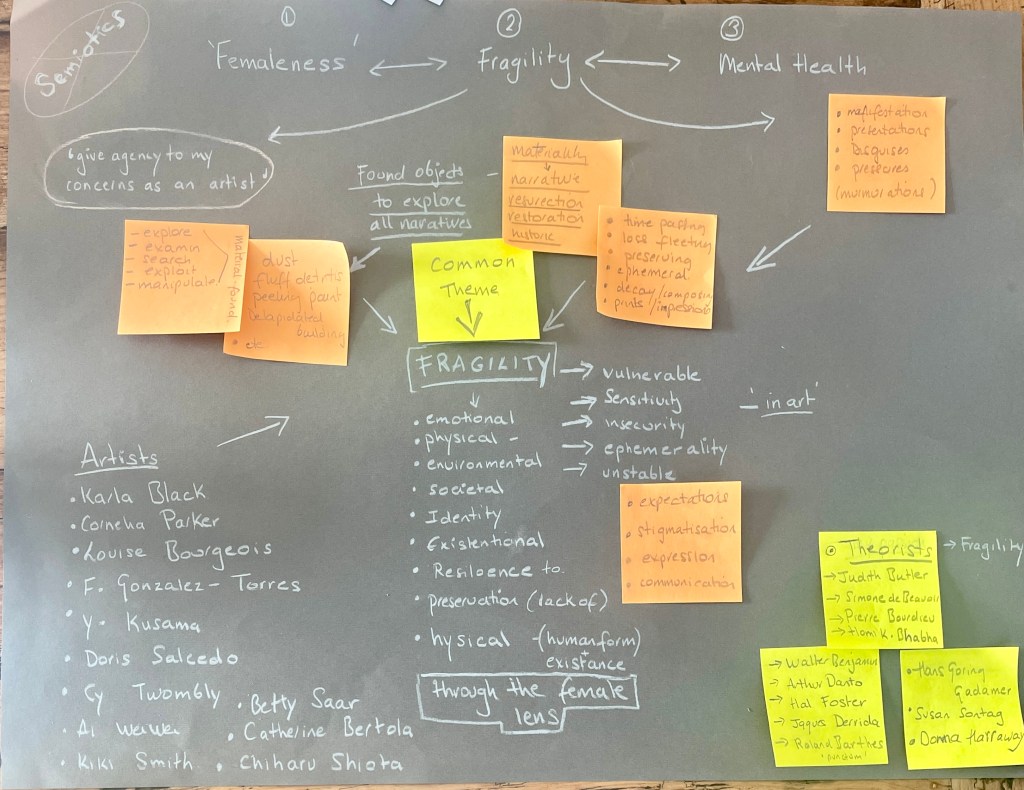
Transcript to X’cel sheet.
Photographed image of sheet.
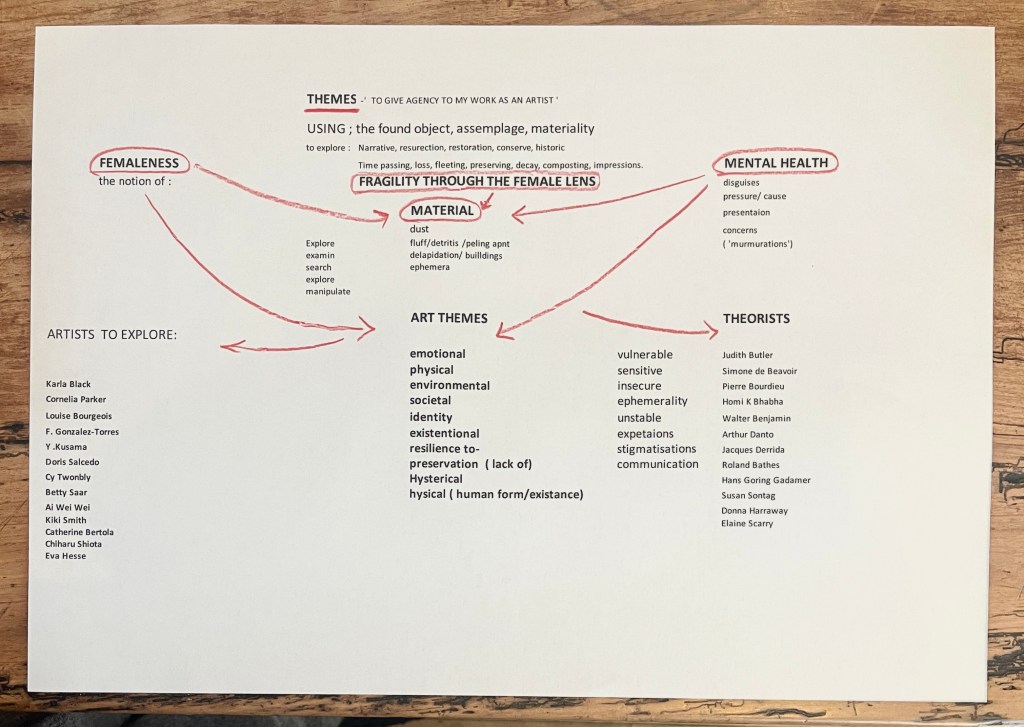
I began to re consider my question as : ( 1)
‘Discuss how artists explore the fragility of materials as a metaphor to explore and express concerns in their work.
Looking at examples of how the deliberate and ephemeral mediums in art and installations convey the transient and vulnerable nature of human emotion and existence.
How does the inherent fragility of materials become a powerful symbol allowing artists to capture the nuances of emotions, impermanence and the ephemeral qualities of being.
Who are the artists and theorists that exemplify this approach and what is the intended impact transferred to the viewer through the interpretation and emotional engagement with the artwork
Data /RESEARCH – exploring and uncovering:
Re-evaluating…..
Swamped by too much information I was not able to pin point a specific area of investigation and concern.
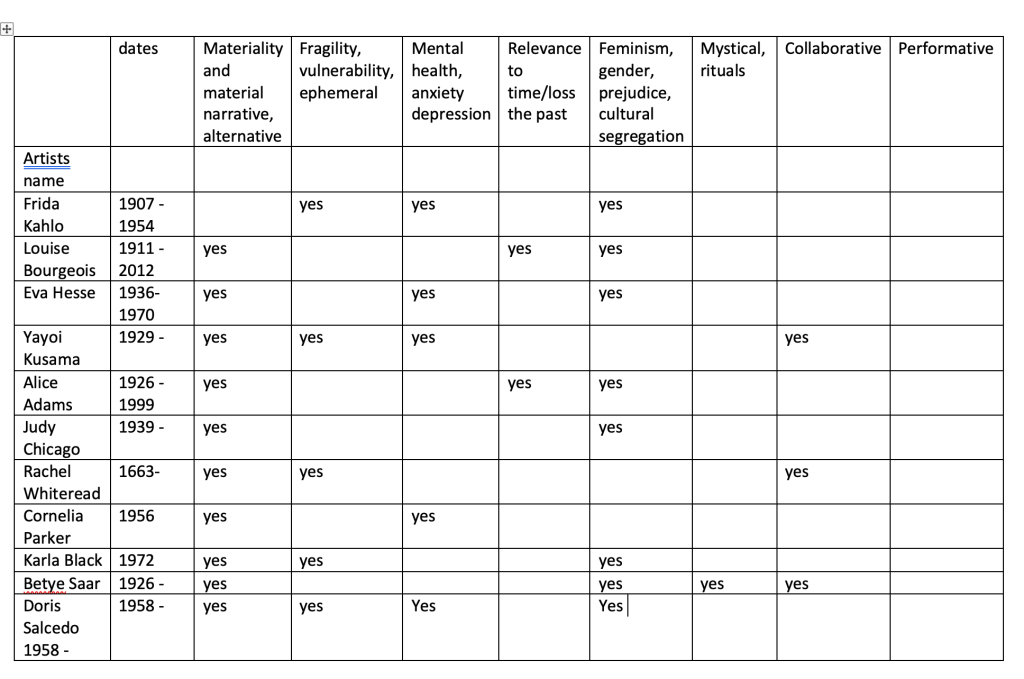
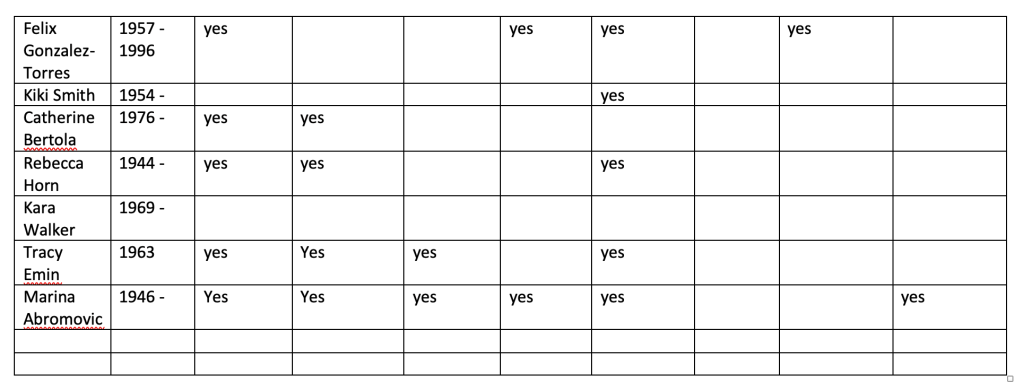
I started again with the 3 areas – Materiality, Mental Health “femaleness’.
I wanted to explore the combination of these concerns together…
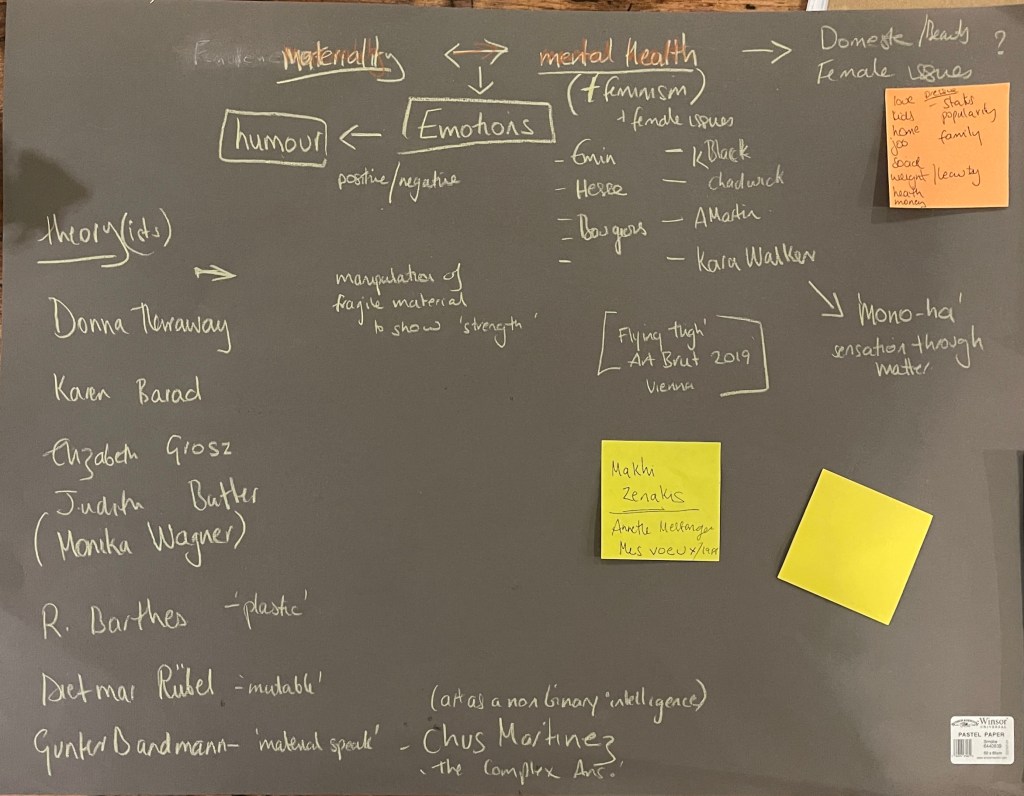
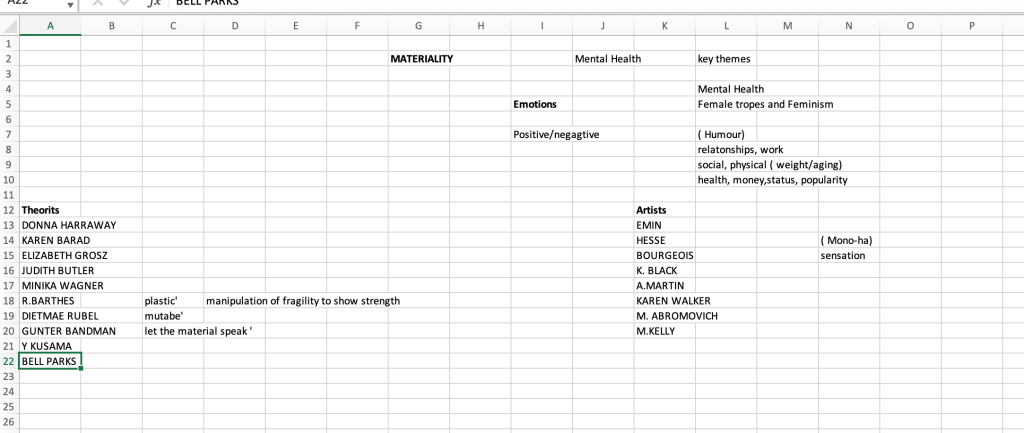
Formulating Key Artists and concepts :
Theorists relevant to concerns:
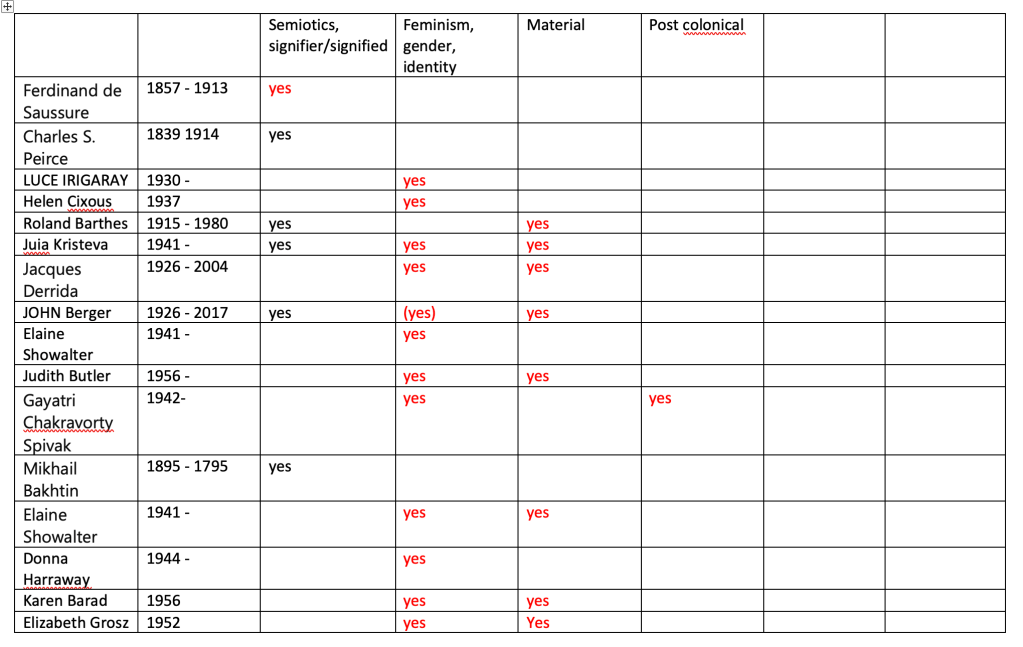

Re – evaluating Questions to pose : eg:
How might artists use the fragility and mutability of materials to express emotion? (particularly negative feelings of anxiety , depression)
How can the fragility of materiality lead to concerns regarding ‘femaleness’ and wider reaching concerns of feminism.
Might materiality change the viewer concept of these issues leading to a deeper understanding of artistic and emotional expression?
Explore the positive impacts of this?
State the main feature of the argument.
Ex 1.2 Consider : Questioning Voices
Karan Barad: – “How did language become more trust worthy than matter`’ …..why is matter passive and immutable ?
Focusing on fragility as a universal theme overlooks the diverse experiences and perspectives of individuals. They may argue that fragility is not inherently meaningful or relevant to everyone and may resonate more strongly with certain cultural or social contexts.
Romanticising fragility and vulnerability ( of material ) can perpetuate harmful stereotypes or reinforce narratives of victimhood. It might glorify suffering or weakness and advocate for representations of strength, resilience, and empowerment in works.
Reducing complex human experiences to the metaphor of fragility oversimplifies the richness and complexity of human emotions and existence. They may advocate for a more nuanced understanding of vulnerability that considers its relationship with other factors such as power, privilege, and social context.
counter arguments: ( examples )
Donna Haraway:
Haraway’s work on cyborg theory and multi- species kinship offers alternative frameworks for understanding vulnerability and agency, emphasising the interconnectedness of human and non-human beings in shaping experiences of fragility and resilience.
Judith Butler: Butler’s theories of vulnerability explore the ways in which fragility and vulnerability is socially constructed and unevenly distributed across different groups, challenging essentialist notions of cultural fragility and resilience.
(Susan Sontag: Sontag’s writings on illness, suffering, and photography offer insights into the complexities of representing vulnerability and fragility in art, challenging simplistic or romanticised portrayals of human suffering.)
Ex 1.3 – Revisit/Refine
My main topics of concern refer back to materiality its perceived definitions and its positive emotional impact on the viewer. The notion of ‘femaleness’ is becoming problematic, might it cause division in the work/argument? The holistic concept of ‘femaleness’ whilst new may not be considered embracing across all cultures and gender diversities and hence lead to a bias understanding.
My consideration of refinement going forward at this stage is to either drop this concept and explore materiality and its connections and relationship to overall mental health and well being,
Or;
Explore the concept of ‘femaleness’ ( kinship) in artworks concerning materiality and the and interconnectedness across all beings relating to new materials of our current Anthropocene.
Project 2. ( to complete )
Project 3.
2 potential – Title of draft question :
This dissertation aims to investigate how artists employ the fragility of materials as a metaphor to express and explore issues of the fragility of the human condition concerns in their work. Focusing on deliberate and ephemeral mediums in art and installations, the study will analyse how these choices convey the transient and vulnerable aspects of human emotion and existence.
Key areas of exploration will include understanding how the inherent fragility of materials serves as a powerful symbol, allowing artists to capture the nuances of emotions, impermanence, and the ephemeral qualities of being examining the techniques employed by artists to evoke a sense of fragility.
The study will also identify and analyse the contributions of artists and theorists who exemplify this approach, assessing their influence on the conceptualisation and execution of artworks. Additionally, the research will investigate the intended impact transferred to the viewer through the interpretation and emotional engagement with the artwork, exploring the ways in which fragility becomes a conduit for profound aesthetic experiences.
In summary, I will seek to provide a comprehensive examination of the role of material fragility in contemporary art, investigating its metaphorical implications and the emotional resonance it imparts to the viewer. Through a study of specific artists and theorists, the research aims to contribute to a deeper understanding of how fragility in materials becomes a powerful tool for artistic expression and exploration of existential themes.
OR;
What do we look for in art, and why do we need to relate to it? What elements contribute to our desire for familiarity, comfort, and a sense of belonging? Does the recognition of material qualities enhance our ability to relate to artwork, particularly when everyday materials are utilized as a means of engagement? How do inclusive narratives in art foster a sense of connectivity and belonging?
Drawing upon the theories of Harraway, which emphasise kinship and connectivity, how crucial is the materiality of art in cultivating these feelings?
Furthermore, what contemporary artists are actively working with inclusivity and femaleness, and how do they employ materiality to promote inclusivity and connectivity in their work?
This dissertation will investigate the multifaceted relationship between art, materiality, inclusivity, and connectivity. It will explore the psychological and sociological aspects of why humans seek connection and familiarity in art, and how materiality can serve as a conduit for this connection. Moreover, it will examine the role of artists in creating inclusive narratives that transcend societal barriers and foster a sense of kinship among diverse audiences. Through an analysis of contemporary artists who prioritise inclusivity and femaleness in their work, this dissertation will elucidate how the materiality of art can be harnessed to promote connectivity and inclusivity in today’s diverse and interconnected world.
 The Sharpe Gallery