Project 2. Ongoing Reflective Commentary
Work Presented – ‘Homemaker’ Mixed media . Approx 25cm x 30cm
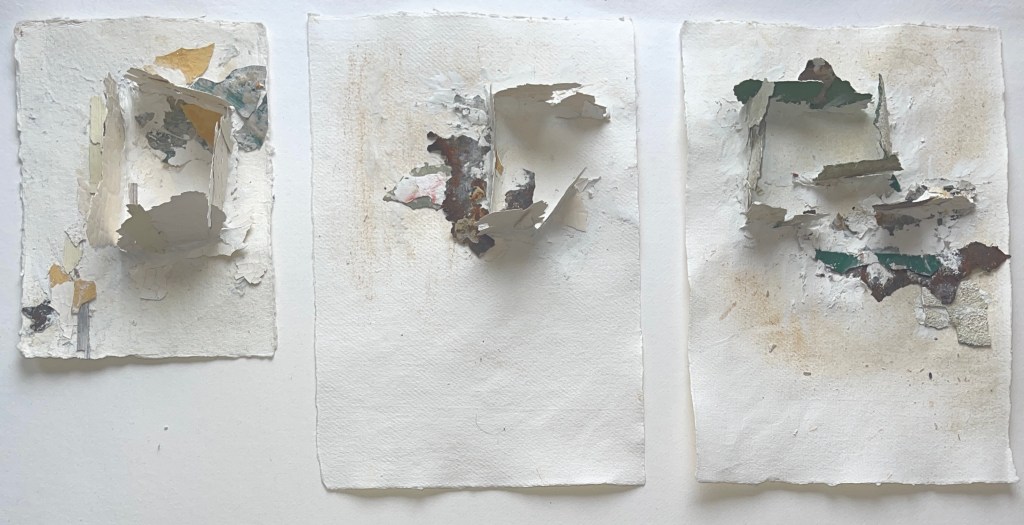
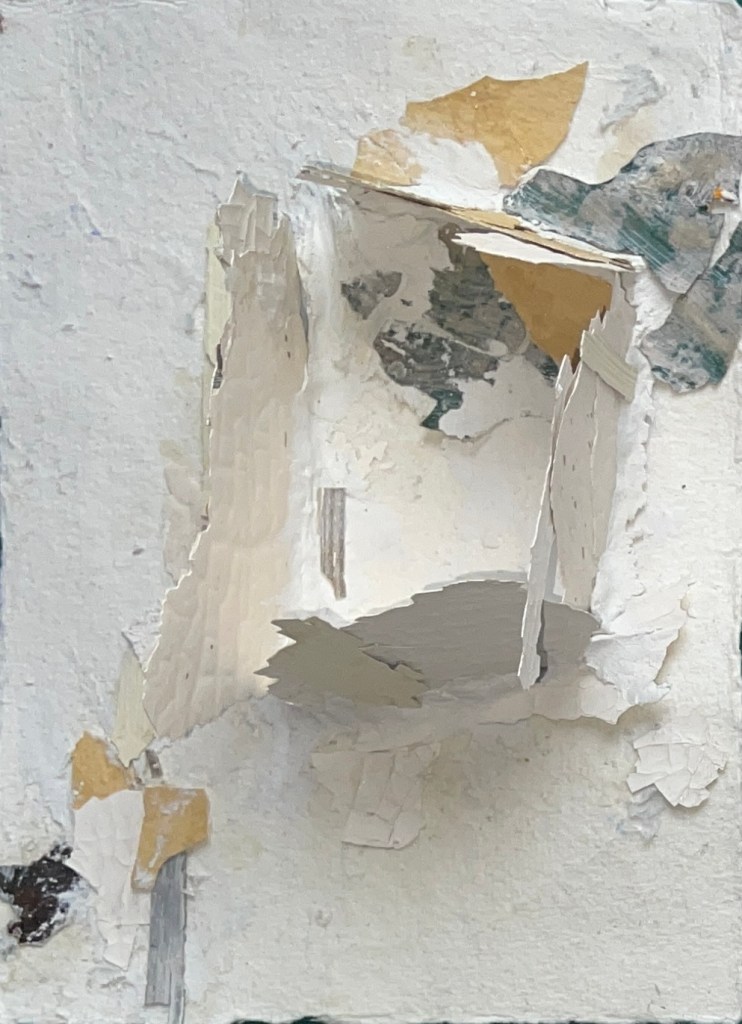
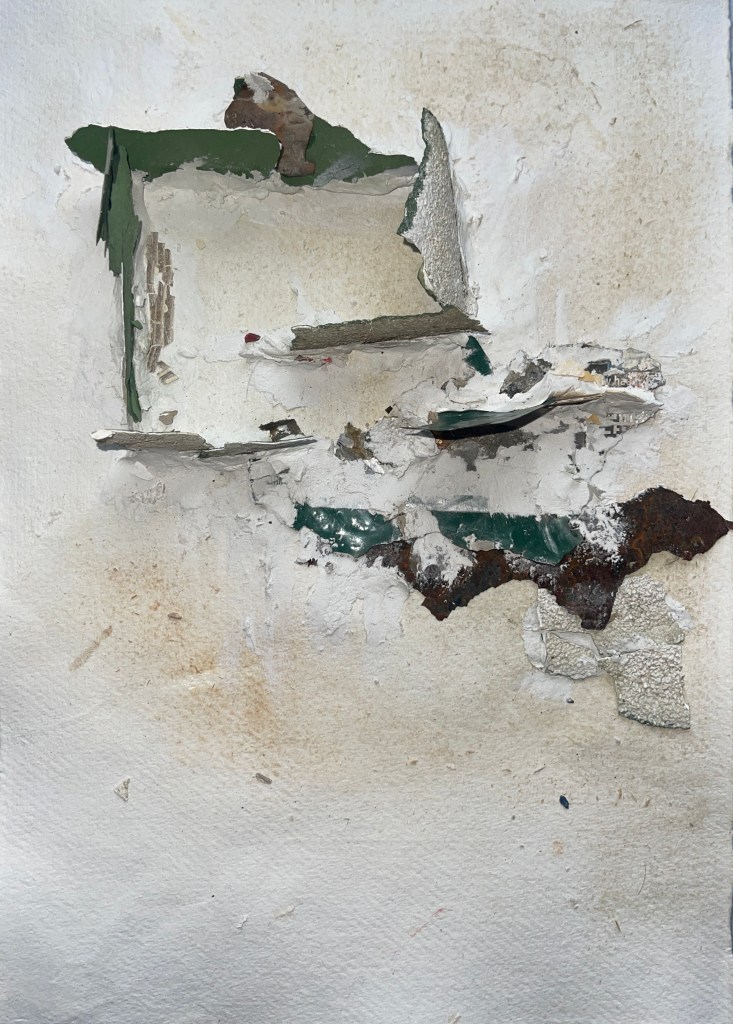
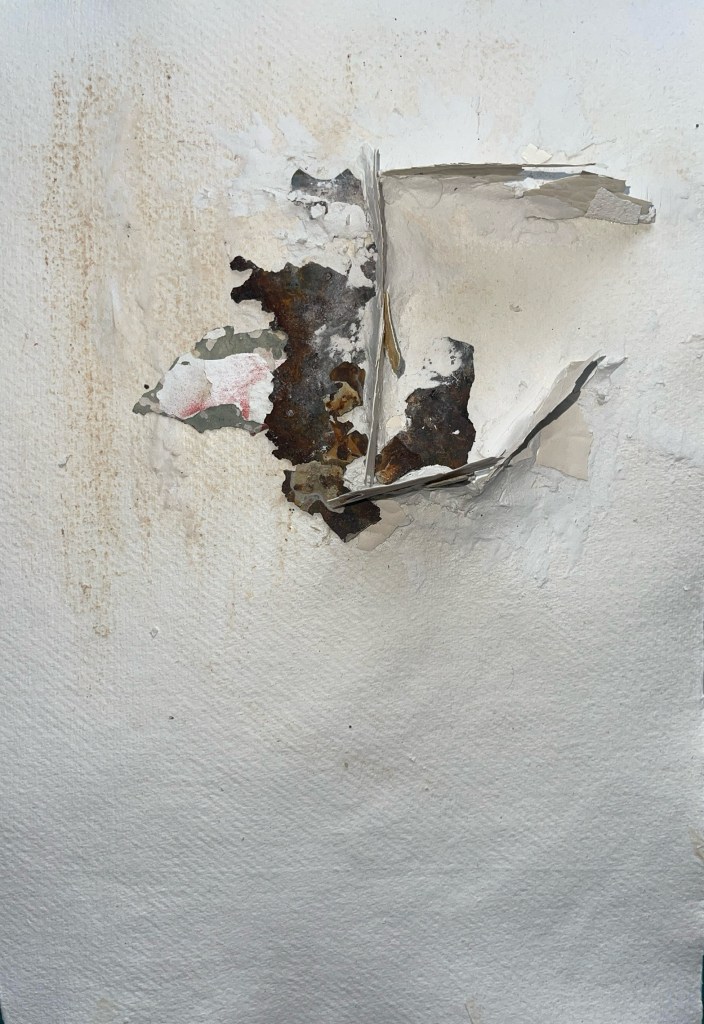
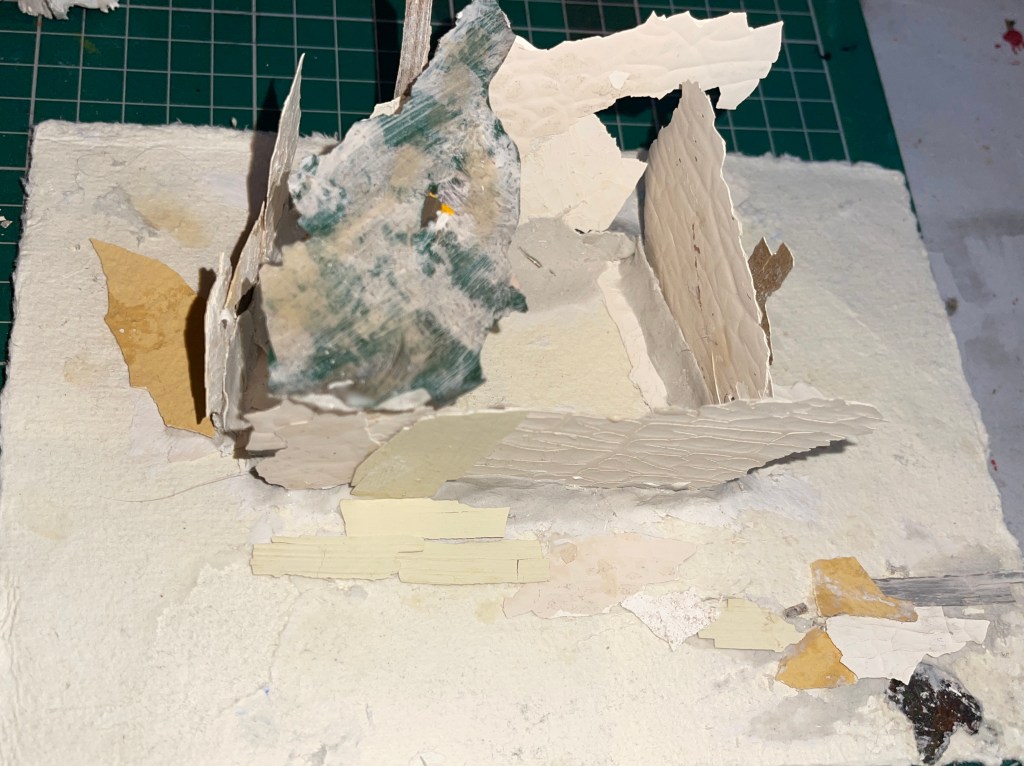
The OCA ‘silent crit’ was a platform to expose my creative work to my peer group, it was a new experience for me personally where the focus was very much on individual work and not a shared topic. It was however a positive and productive discussion with a plethora of comments and questioning regarding all the work and full group participation.
There was a variety of working practices on display, from painting with digital interaction to clothing made from found items, assemblage/ collage work and drawing. This in itself was an engaging start point as it encouraged such a diversity of discussion and topic.
Like myself, most of my group worked in a solitary or isolated way and so the opportunity for feedback was greeted very positively and we were all eager to participate.
There was diverse narrative and concerns in the artworks presented and all of the group were able to articulate and respond passionately when asked to comment on our own work. This was particularly insightful and showed a range of work that was material, trauma, technology and historically led. Whilst we did not have time to fully explore studio space and making/ working practices it was clear that there was a selection of material craftsmanship, delicate computing and surveillance application, a variety of mark making experiments with unusual media and collections of found material. Current world themes and issues were touched upon by many of the group and were reflected in their current works or used as part of questioning narratives.
The threads and connections running through the work I presented came under the heading of ‘Fragility’ and ‘Homemaker’ . This alluded to the female, traditional trope of homemaker and the fragility and complications surrounding the notion of home. The necessity of home is instinctive and inherent within humans. Obtaining and keeping one is challenging, fraught and may be out of reach for some.
This work looks to encompass the fragility of home and emphasise the enormity of what is represents and holds s positive and negative undertones. This was specifically through eyes of the traditional female ‘homemaker’ with undercurrents regarding, domestic abuse, homelessness, and refugees.
The comments from the group were diverse although not so disparate that there wasn’t a cohesion of content or presumed narrative which was encouraging. The student whose own work concerned surveillance and drones and current war fare felt my work resembled bombed out, war torn ruins and commented on the destruction of homes and the increase in mass homelessness globally. This was a new angle of consideration that was echoed by another student who had experienced some of the horrors of war personally. She explained that she felt an immediate connection to the work, recognising the waste material used to create them and the fragile imprint of structures they become. This sense of shelter from the war torn and destruction of the home spoke to her as did the perceived ruined remains. The concept of “ruins’ from an archaeological standpoint were also commented upon by a fellow student, linking the work to perhaps a Pompei type setting with entropic overtones of decline and disorder.
The only clue to the nature of my work was the one word title “homemaker’ but my tutor questioned whether this might be a better as simply ‘home’? Perhaps this would offer up a wider range of potential narrative and engagement?
Many of the comments received related to very specific physical concerns, less to do with the mental fragility and pressures of establishing and keeping a home and the chaotic, internal manifestations I had intended the work to evoke. There was little discussion as to the symbolic nature of the work and it seemed to resonate more literally with my group with interpretations of the work that were less conceptual and more literal and actual .
Going forward I will now look further into some of the suggested themes of ruins, destruction of homes in the Anthropocene of global wars, how my work relates to archaeology ( archaeology of the future) and the vast narrative of past lives, civilisations, investigations in physical matter , the joy of uncovering fragments of the past, the importance of understanding the past in order to cement and justify our place of now. The show at the Tate Britain entitled ‘ Ruin Lust’ (2014) was suggested by my tutor as an interesting place to start.
The comments raised were positive and insightful and have shown the varied responses one can experience when considering an artwork. Art should be able to evoke a varied voice and narrative as the context of the viewer will always be relevant and pertinent. The viewer engagement will be all the more so if there are multiple – levels of potential connectivity and interaction with a work. The silent crit’ was a an essential and ideal platform to experience viewer reaction.
Overall the ‘ silent crit’ was an insightful and explorative experience. I have seen my work through new eyes and future possibilities of exploration and context have been revealed.
 The Sharpe Gallery