1.1 Audit of Practice
transient/ ephemeral/human relationships to objects/ materiality/ presence and absence / materiality evoking ephemeral state of time/ fleeting/ historic/ impressions of the past/ traces and remains/historic links/ fragments / relics/ particles/ inevitable presence of materiality/ repurposed materials. mental health.
Looking through past working practices I can see a visible move away from representative work to a level of greater enquiry and deeper process. Influenced by the likes of Bourgeois; Parker and Mary Kelly who have looked beyond the representative to philosophical questioning and alternative materials. I have since worked with a range of found material from rubble and peeling paint, to plastics and wax, cloth and wood and metals. The narrative of the material is of key importance and influence. Disrupted cyanotype printing, clay moulds and reliefs have all so far been included in my work. Some of which I have been lucky enough to sell at a gallery.
I seek to question several themes:
Human traces of the past on found objects and places and spaces.
Female mental health and its artistic representations/depictions through history and how they might be interpreted going forward. Looking at anxiety, depression, self-worth, celebration, ageing through material experimentation and enquiry.
Focussing in on the small and unseen and overlooked, bringing an awareness of material, structure, physicality to the forefront.
An overall explorative and experimental approach to working with unusual materials that will lead on to inform my practice with a speculative open approach.
Ephemeral work as a theme and and combining this with material, rotting structures, decaying, fading material and subject.. both human and mineral.
An overall collection of practice and disciplines with a stronger focus on 3D work at this stage.
Research Point: Describing Reflective Practice:
John Dewey, Donald Schon, Graham Gibbs, David A Kolb.
“We do not learn from experience. We learn from reflecting on experience.” – John Dewey (1933)
A great thinker and philosopher Dewey ( 1910 – ) considered Reflective Practice refers to ‘the active, persistent and careful consideration of any belief or supposed form of knowledge in the light of the grounds that support it’.
A rounded, continual questioning and appraisal approach to anything considered or believed. A planned and considered approach that will enable us to be efficeient. concise and purposeful in our next and or following actions.
Schon ( 1983 – ) went on to develop this theory with a two pronged approach: Regarding reflection as having two aspects,
1- Reflection- in-action – thinking on your feet in the here and now
2 – Reflection – on -action where you consider and appraise the situation post event, looking at the options you chose at the time and why etc, looking at the new information available, and feelings and processes.
Kolbs experiential learning style theory is a four stage learning cycle.
- ‘Concrete Experience – the learner encounters a concrete real life experience. This might be a new experience or situation, or a reinterpretation of existing experience in the light of new concepts.
- Reflective Observation of the New Experience – the learner reflects on the new experience in the light of their existing knowledge. Of particular importance are any inconsistencies between experience and understanding.
- Abstract Conceptualization – reflection gives rise to a new idea, or a modification of an existing abstract concept (the person has learned from their experience).
- Active Experimentation – the newly created or modified concepts give rise to experimentation. The learner applies their idea(s) to the world around them to see what happens.’
I think it is fair to say that ‘learning from experience’ is a phrase used commonly to account for good or bad event, incident or episode in todays society. We reflect and evaluate continually, using this process of thought cycle .
Gibbs (1988 ) Reflective Cycle is a more complex 6 stage cycle of thought,
- Description of the experience
- Feelings and thoughts about the experience
- Evaluation of the experience, both good and bad
- Analysis to make sense of the situation
- Conclusion about what you learned and what you could have done differently
- Action plan for how you would deal with similar situations in the future, or general changes you might find appropriate.
Below left to right: Reflective Learning Cycles: Schon, Kolb, Gibbs, Dewy.
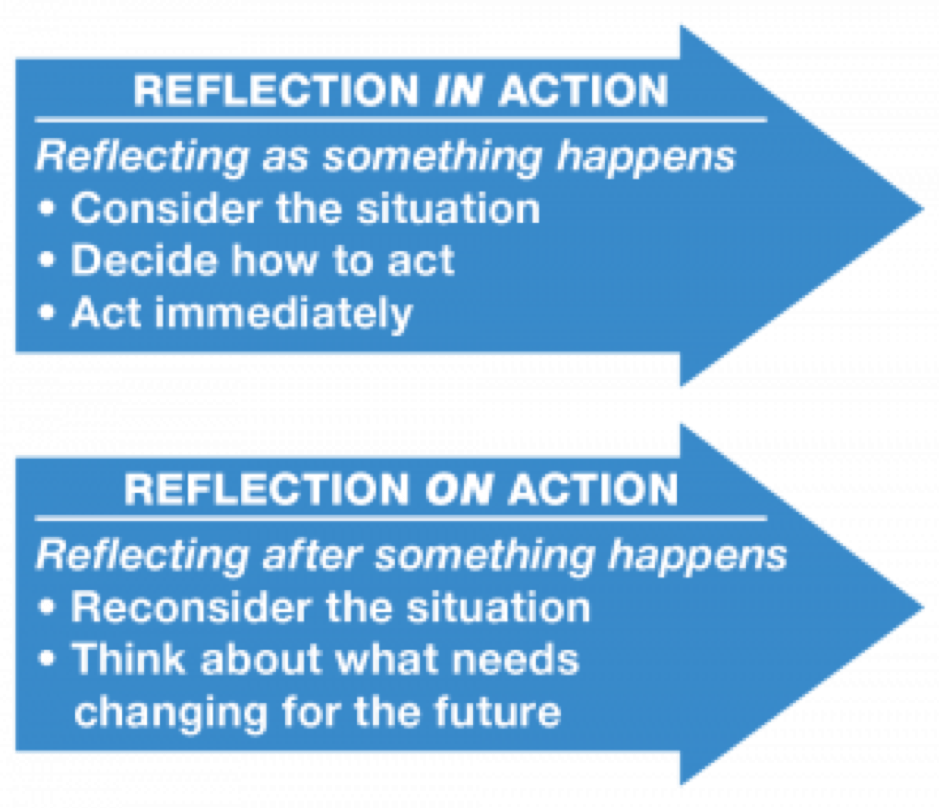
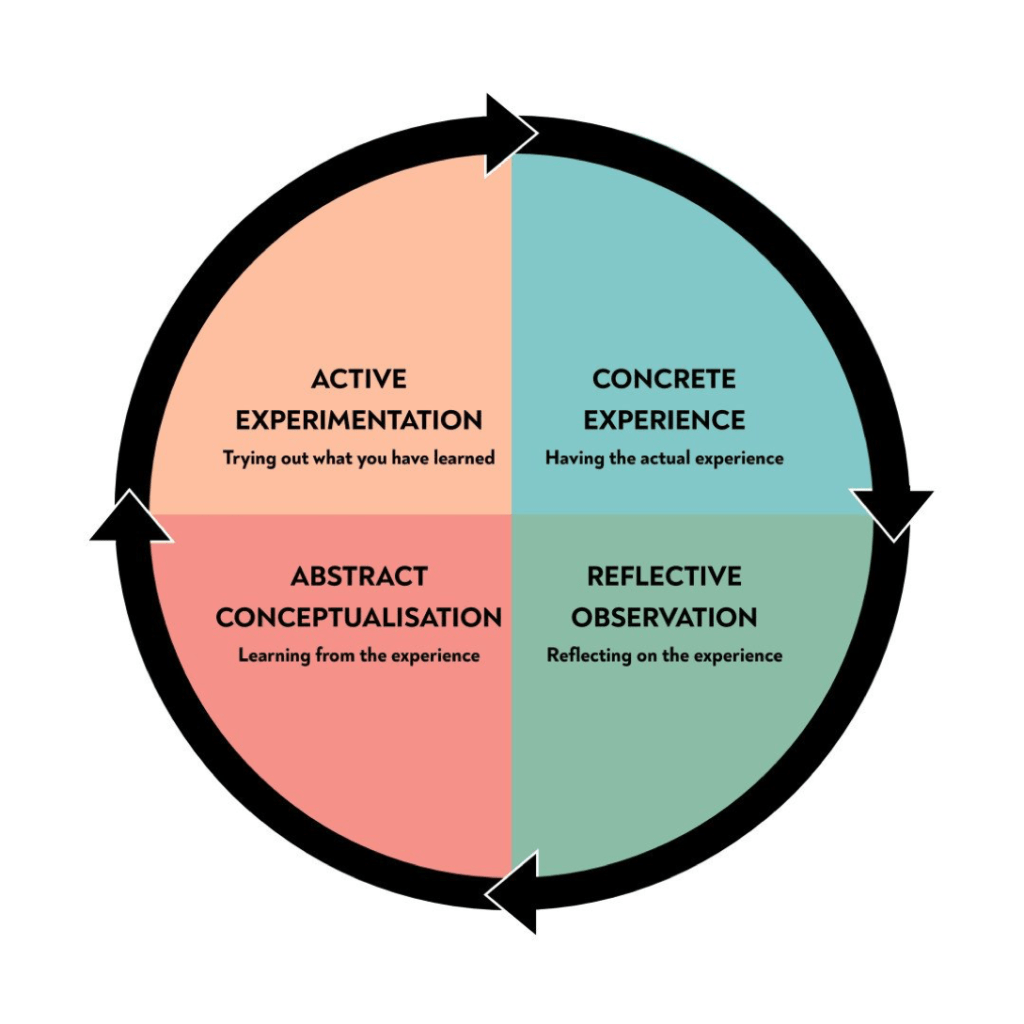
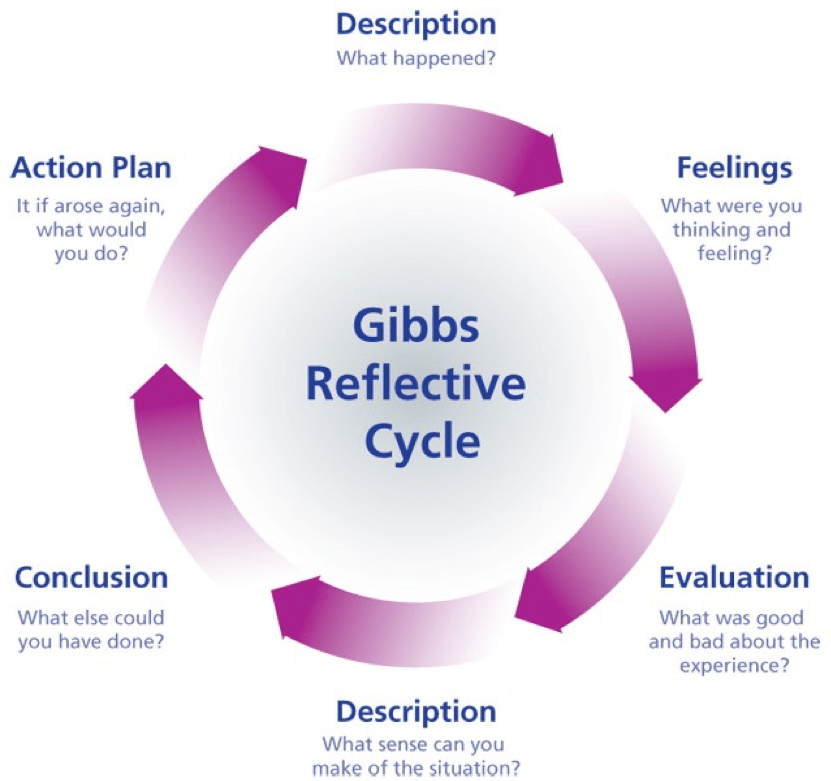
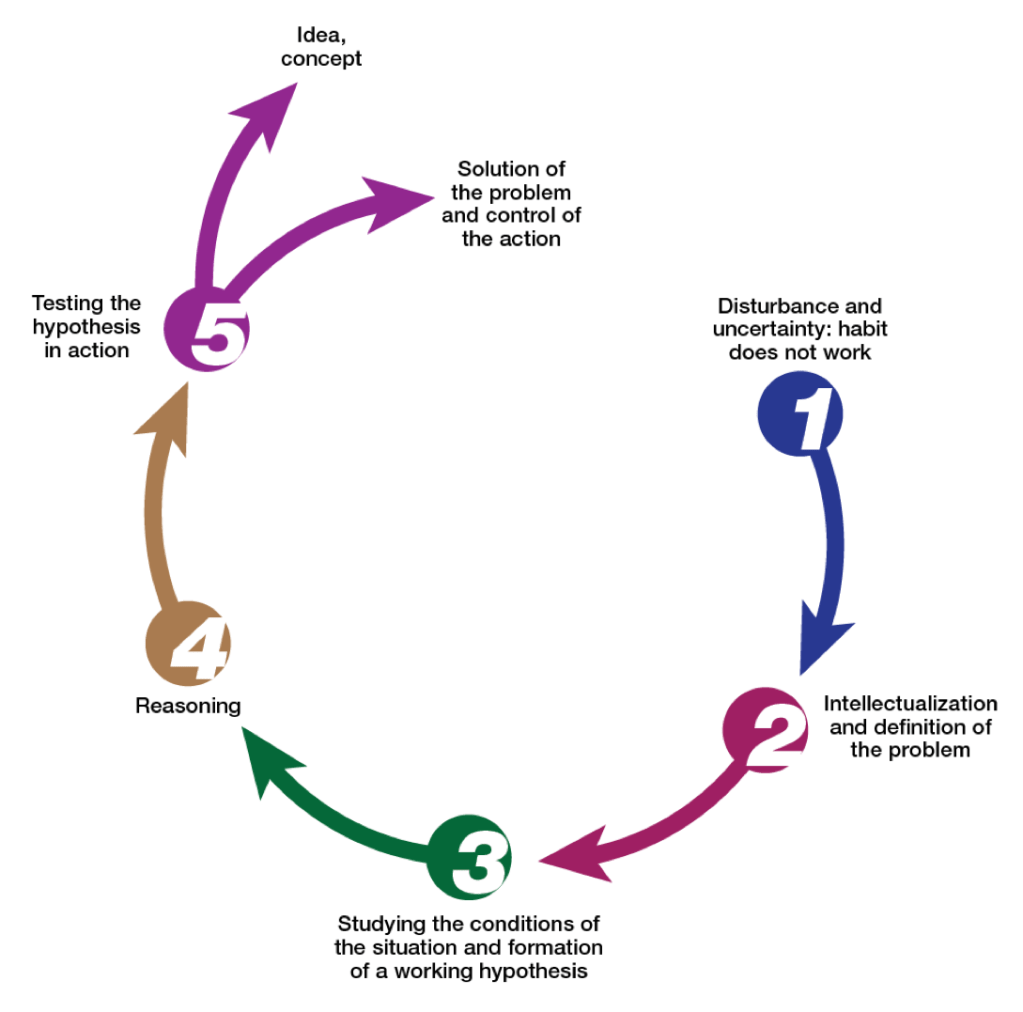
‘the active, persistent and careful consideration of any belief or supposed form of knowledge in the light of the grounds that support it’. ( Dewey)
Although subtle differences occur thorough out the “Refelective Learing ‘ theories they are linked by a theme of process. They do not advocate rash thinking with out consideration. They value the thinking process more than the outcome, which is always to be learnt by and considered for next time. We hold stored responses and prejudices inherent in culture and society that we perhaps jump to in a flight or fight moment, but must avail ourselves to the notion of reflection and consideration post such an event or action.
Thinking viscerally and deeply , learning from process and experience consciously or sub-consciously is a way to see the wider picture unfolding with greater potential for outcome, learning and consequence. Ambiguity, being uncertain or initially negative is part of the creative process in seeking knowledge and conclusions and greater deliberation. Circular thinking, reviewing, experimenting and questioning are key creative content.
1.2 Diagrammatic Model of Reflective Practice
I have produced a diagram using a Reflective Learning concept to show my process of create production. I used ink and bleach on blotting aper to infer to the burst of idea and its formation and change.
My work originates from the point object or material – it is this that sparks/ignites my creative process. I jump from seeing an end result to a concept to reflection endlessly depending on the subject and how easy, difficult or comfortable I am with it and its use creatively. Hence my diagram has a central core of ‘being’ that sparks off in many directions but with a circular process of thinking that will surround it and enable it to grow.
1. Object ad Material
2. Concept and idea
3. Reflection and Clarity ( of idea )
3. Experimenting and Testing ( of ideas)
4. Fine tuning the work post eperiment
5. Evaluation and Observation
6. Tweaking and Reworking
7. Feelings and Instinct ( towards the work)
8. Conclusion and Action Plan
500 word reflective commentary.
A development in my recent work concerned exploring and uncovering women’s mental health as depicted by the male gaze over the last few centuries of art. It was indeed reflective and eye opening to see such well documented misogyny and judgement aimed at the female. My work ‘Traces’ looked at the life of these women in asylums concerned with the physicality of the structures, walls and materials that surrounded and contained them. Crumbing, stained, run down, neglected and derelict, these remains were alive with physical and mental traces of their existence. I combined collected physical material with other descriptive matter to create a concept of work steeped in actual history commenting on the visceral tragedy of existence that was conducted within them. The actual evidence of human DNA within the remains was also intriguing and exciting.
My process is often long thought out, opting for a distorted or deeper layer of contemplation around a topic. This is also true of found materials and materiality in general. Experimentation and manipulation of the found material, objects and narrative are key to informing my practice. Aiming to look more ‘reflectively’ and deeply at each step in my process will be key for my future development.
My projects/work seems to carry elements of the past and time in narrative and content. Searching out the more unusual, discarded and ephemeral for collage and mixed media work which seem to stem from an influence of what has been left, or ignored. I am interested in women’s wellbeing, mental health the many roles we have to play in society. This will be another recurring theme in my practice. Combining material enquiry along side the female commentary to engage in a full circle of narrative, commentary and materiality .
Working across disciplines of found, mixed media brings with it an open degree of context and history, plus opportunity for juxtaposition and disruption. There is an excitement when combining objects, drawing and materials to explore new possibilities of engagement and concept.
I would like to up – scale my work to some extent – I am aware of my restrictions and comfort zones surrounding size. Primarily this is in direct relation to subject matter more often, looking at the unnoticed or lost is often an exploration of smaller things but has the potential to be bigger. Looking at containment and surroundings and the traces there in could allow for large layered 3D work with a collection of materials on a mass scale. Perhaps revisiting mental health and the spaces we feel comfortable and uncomfortable within would be pertinent to this . Up-scaling intricate, personal and in depth small scale work will be a challenging process but I recognise this is a viable concept if I consider volume of small scale works placed together in an artwork.
Currently I have worked on very few site specific instillations, this is an area of great interest, opening the art up to a wider audience in unexpected locations stepping out of a gallery surrounding. The dream of being an artist with relatable and engaging content is nothing new. I hope to explore topics that are current and pertinent to women today but also engage a wider audience in looking back to the past our ephemeral lives, and habits
Exercise 1.4
Write a letter to yourself : Done !
Project 2.
Artist at WORK :
Artist as a researcher :
Current / continuing projects – Experimentation and reworking ….
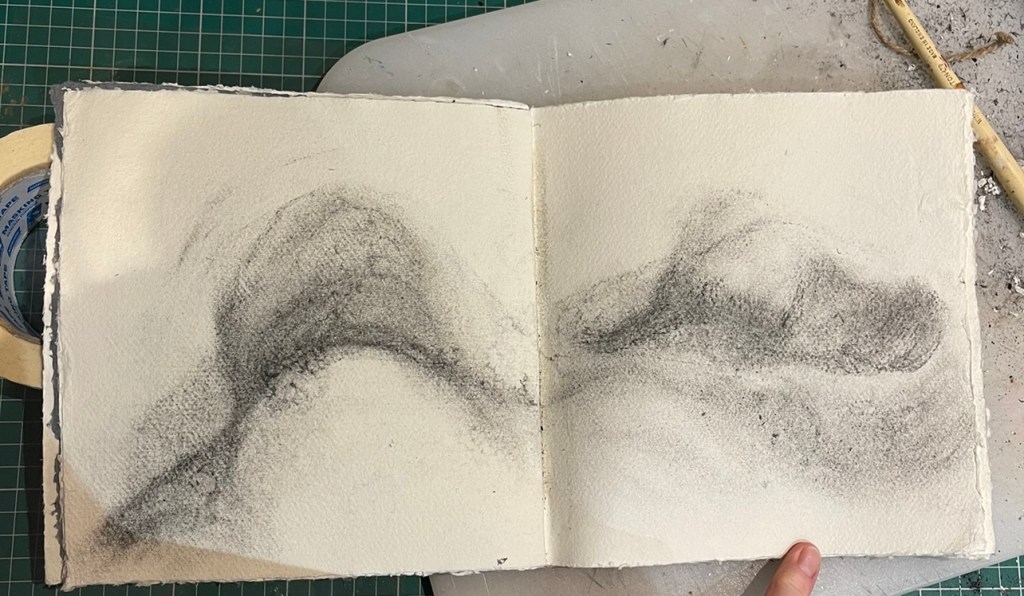
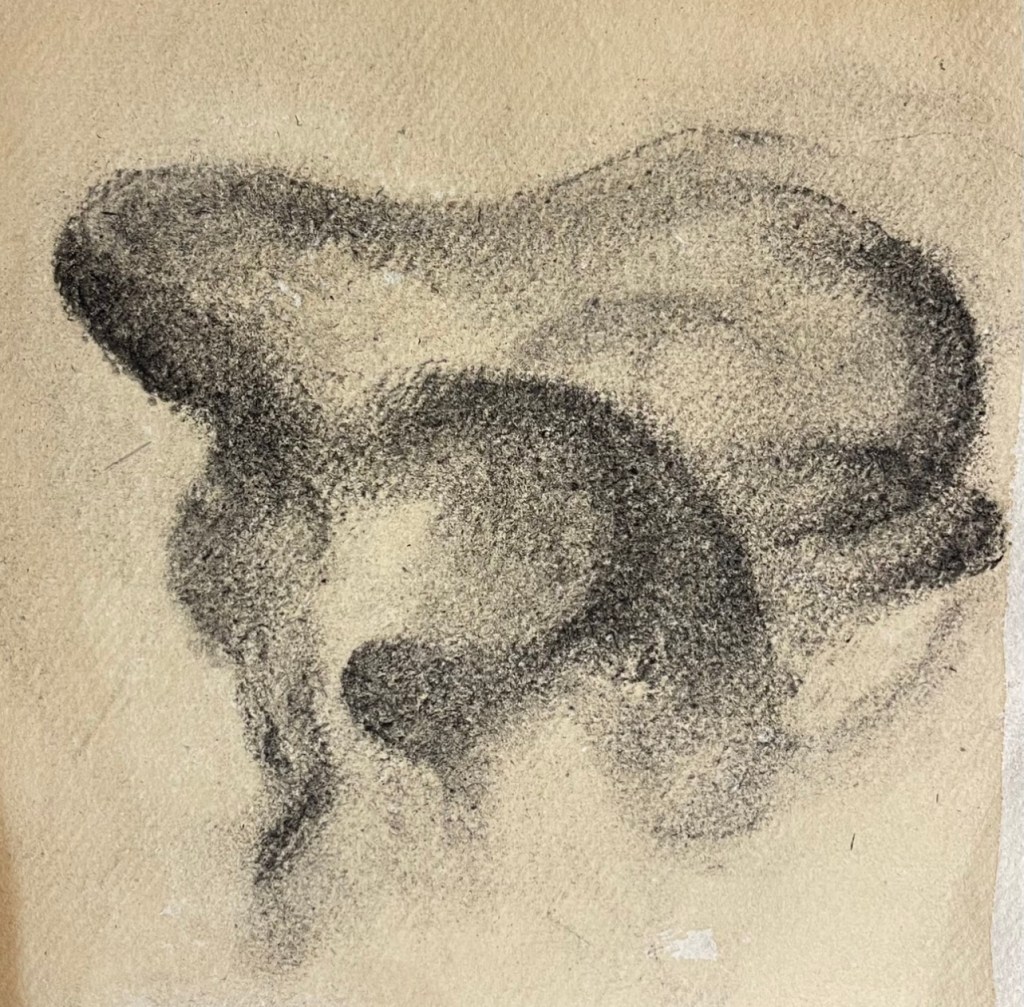
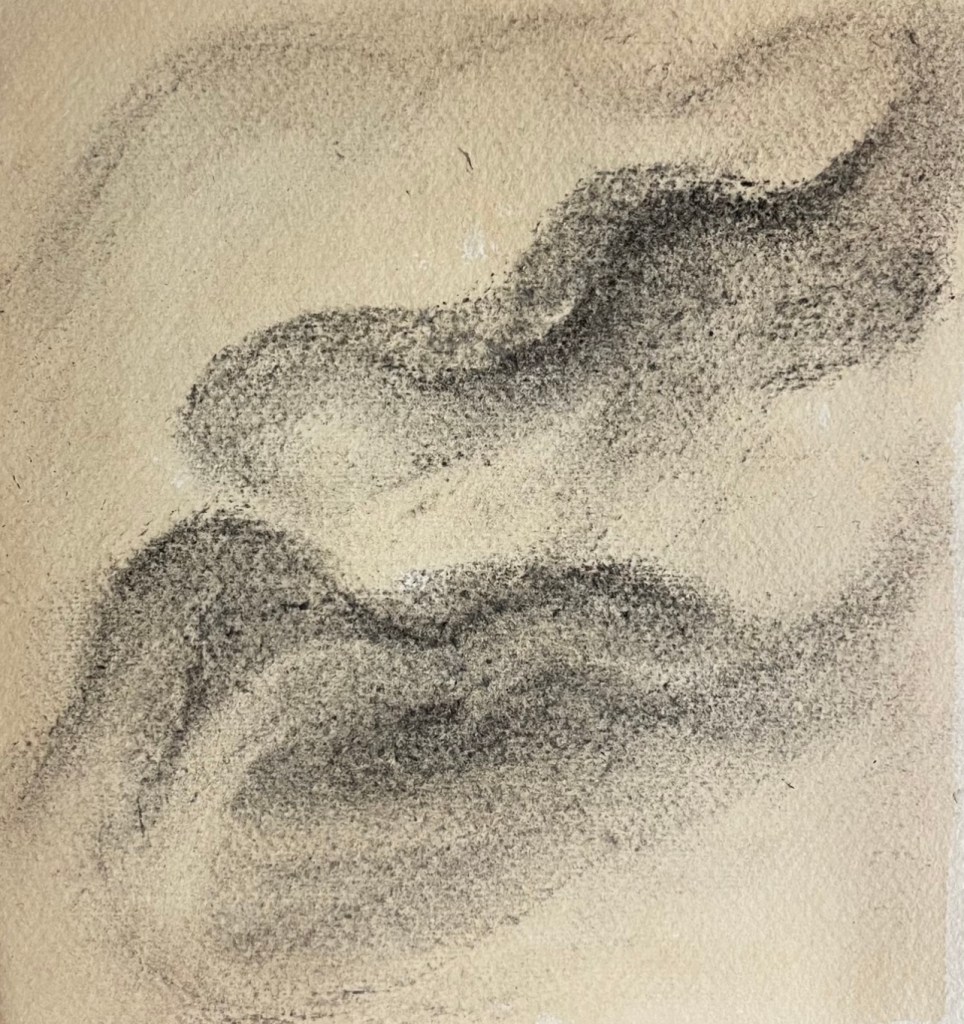
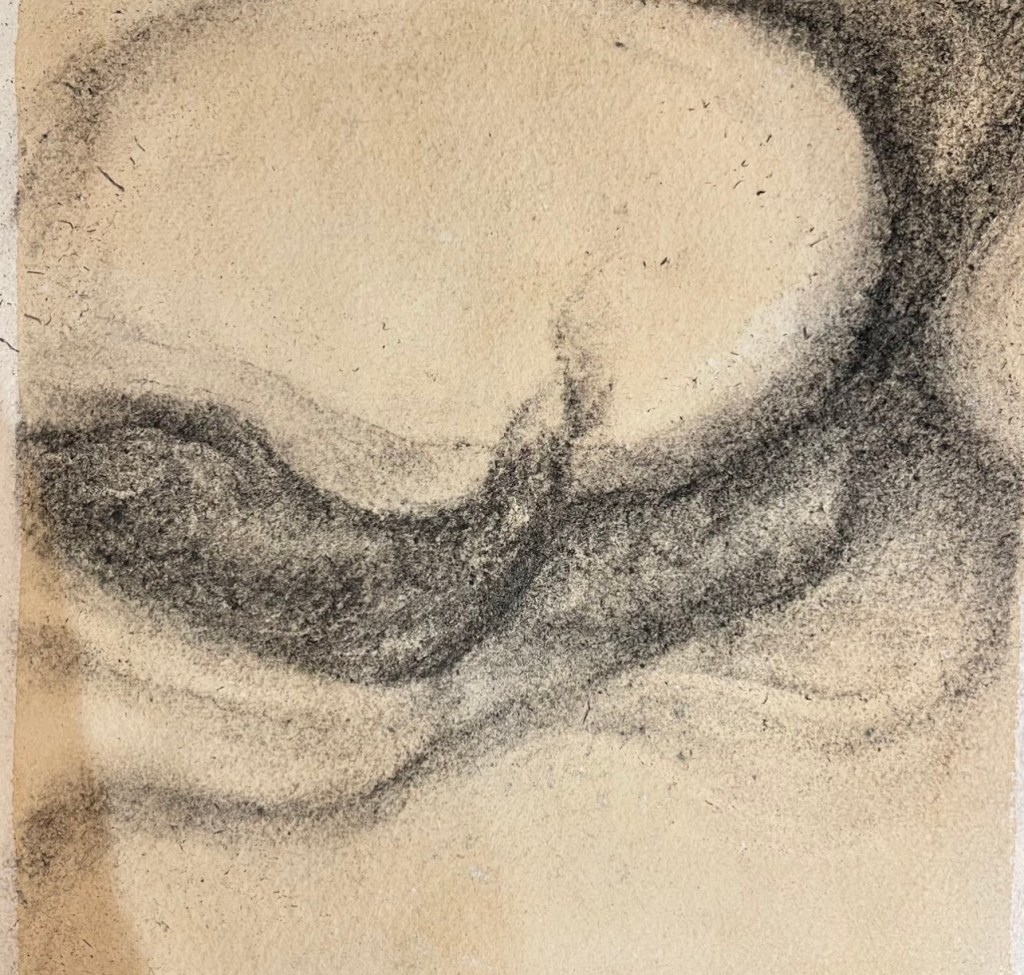
1 – ‘Murmuration’. ‘ Fear like Starlings’ – hanging over us at night – gaining ground and presence.. dark and foreboding, consuming overwhelming, swooping in as night draws in. Insomnia. What is the worry, fear….waves of movement .. panic … shadowy recesses of our brain activating in the solitude of the night….
the soft medium of charcoal was ideal for the moving swirling murmuration, I studies videos and photographs to capture this mass – I felt it had Harry Potter “dementor ‘ qualities to it as it hung so dark and foreboding n the sky swooping low and stealth like as if it woul d swallow up anything in its path. It resonated so much with the feeling of fear and worry, anxiety, depression etc and yet at the same time is a thing of beauty to behold and hear.
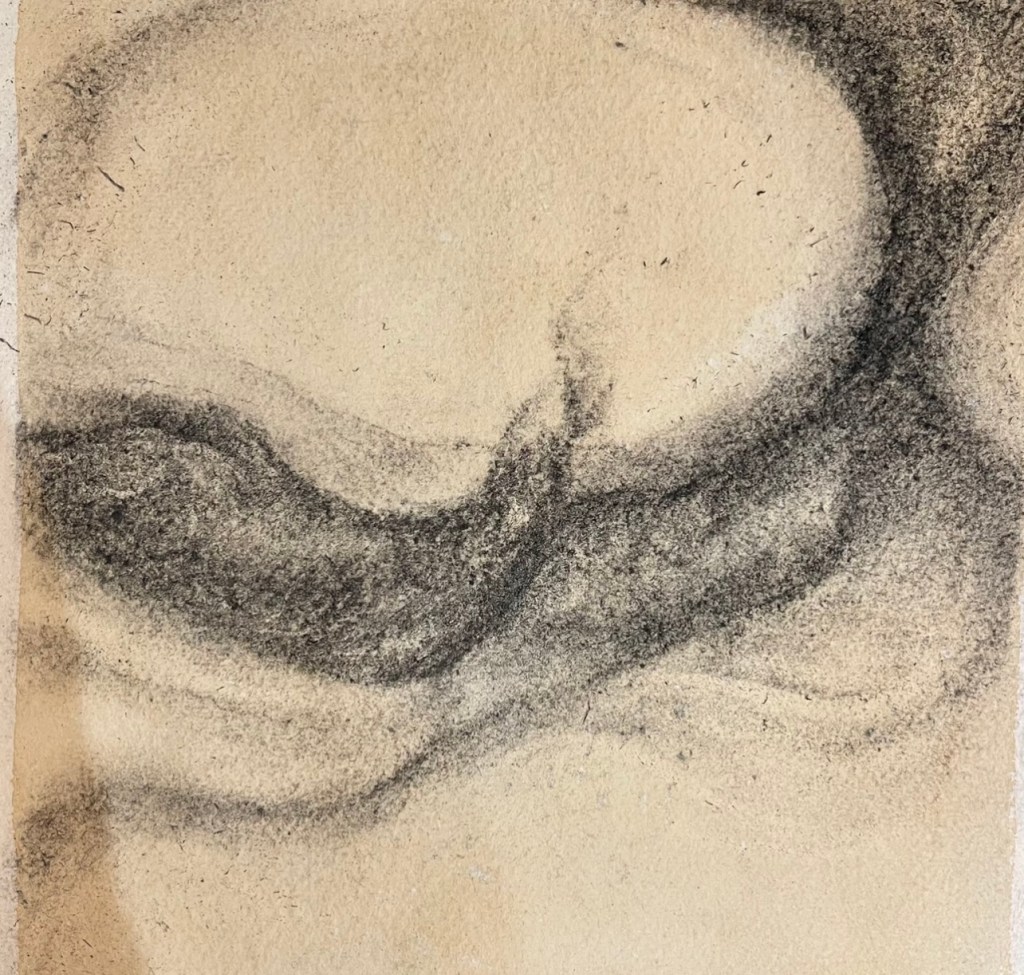
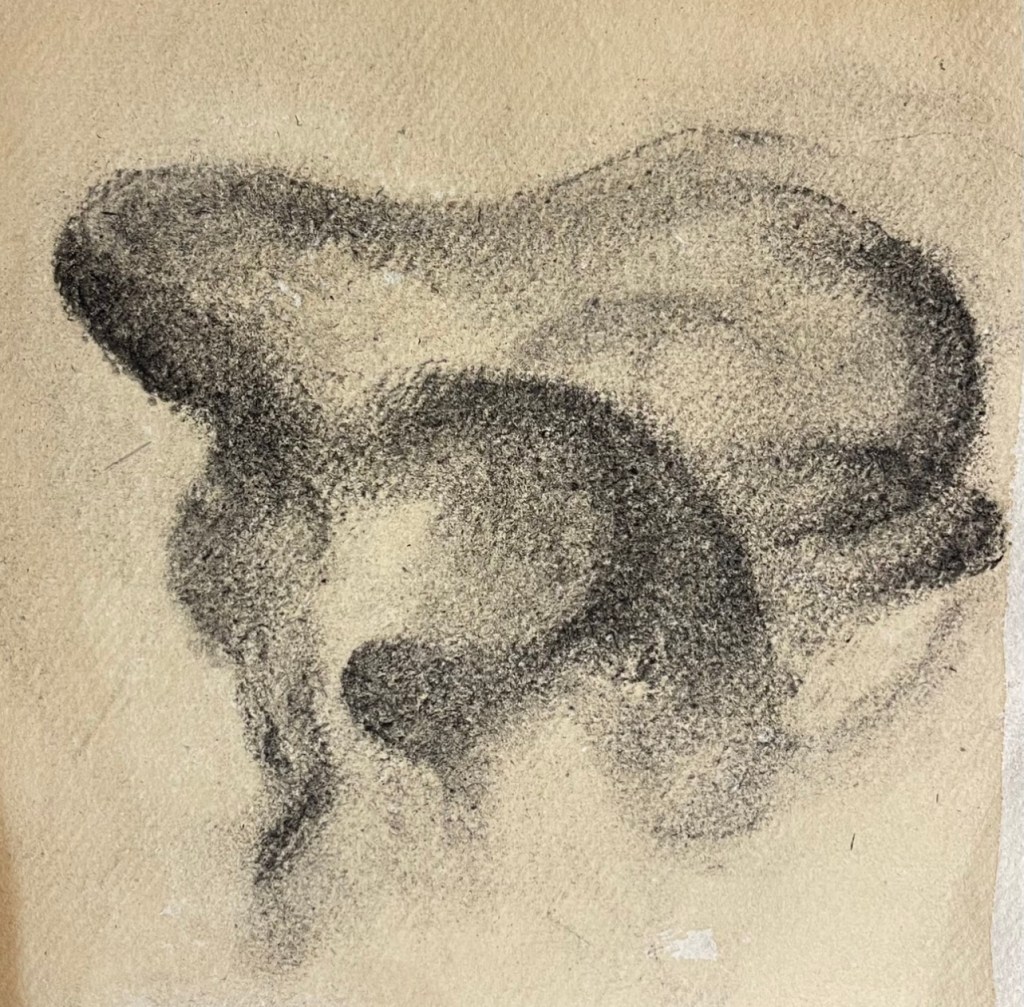
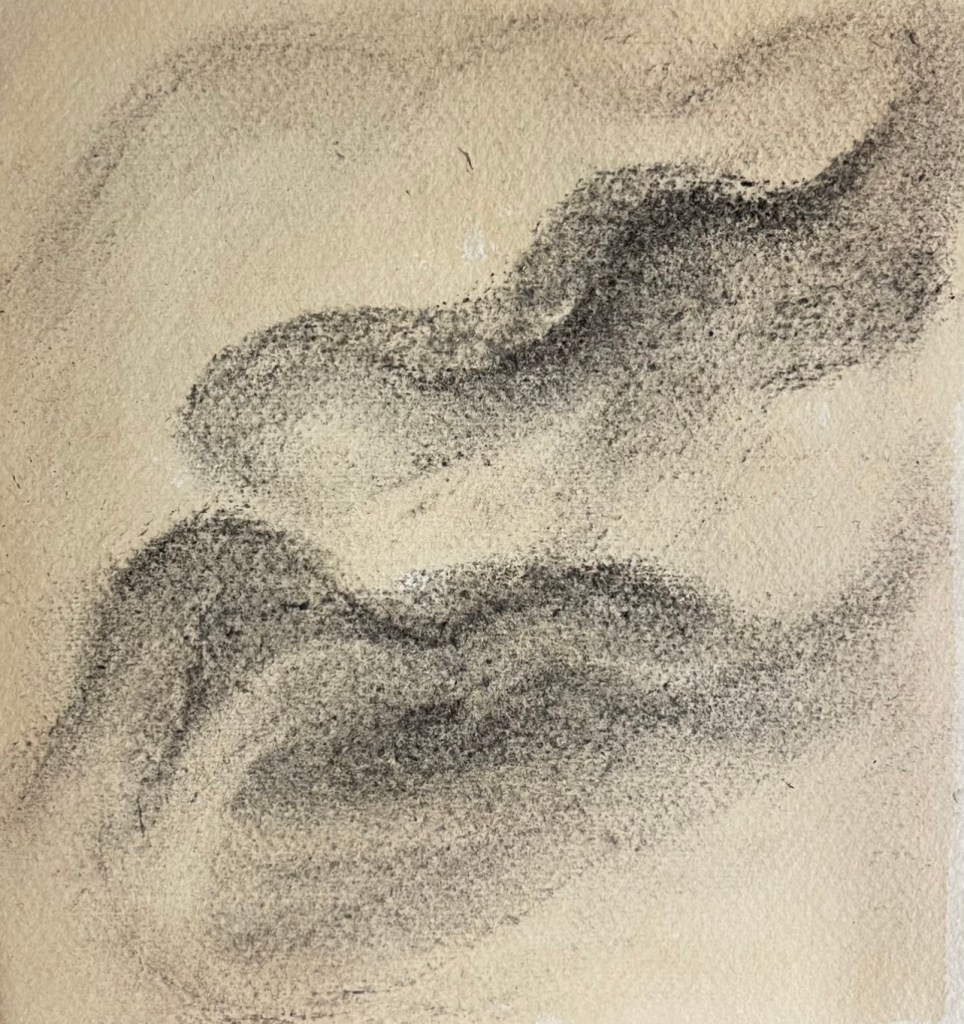
The individual, unencumbered bird – The Starling..
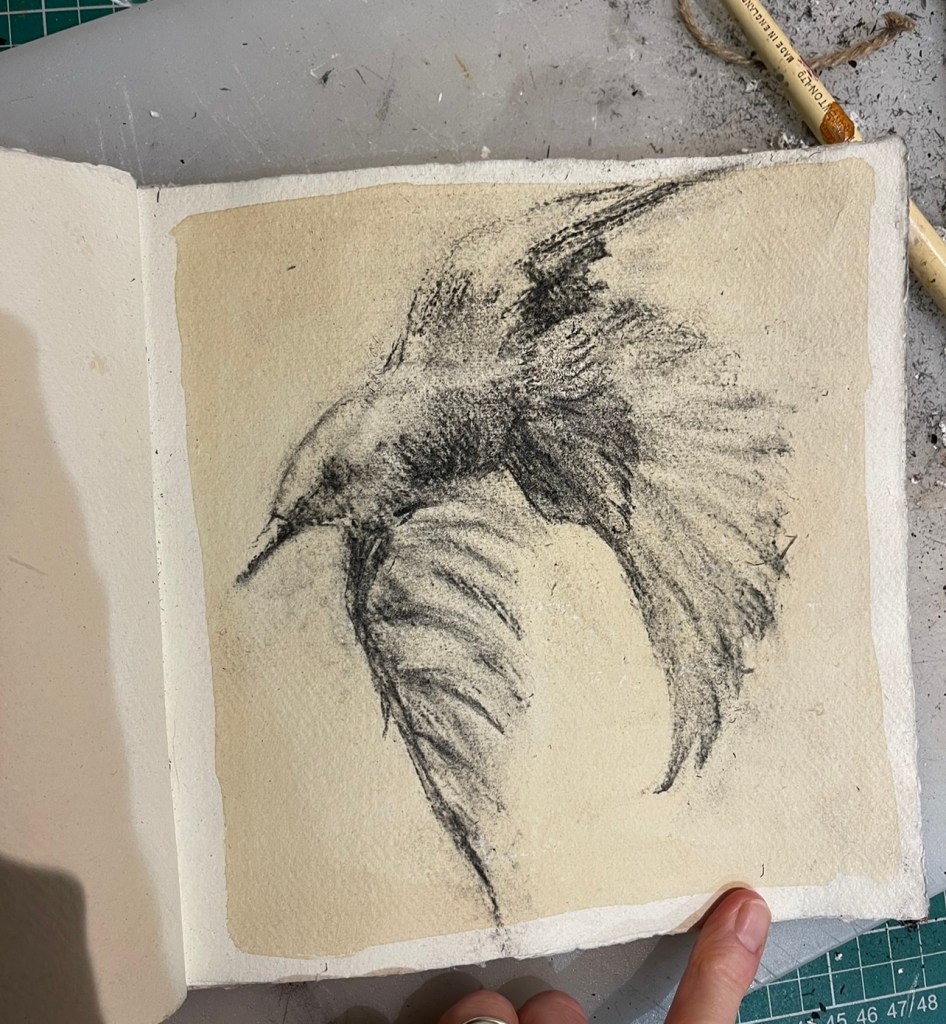
Erase the Fear ‘ turn it black and white ‘ – a well-known mindful coping method to dissipate worry/ fear etc.. to minimise the impact of it and make is less significant .
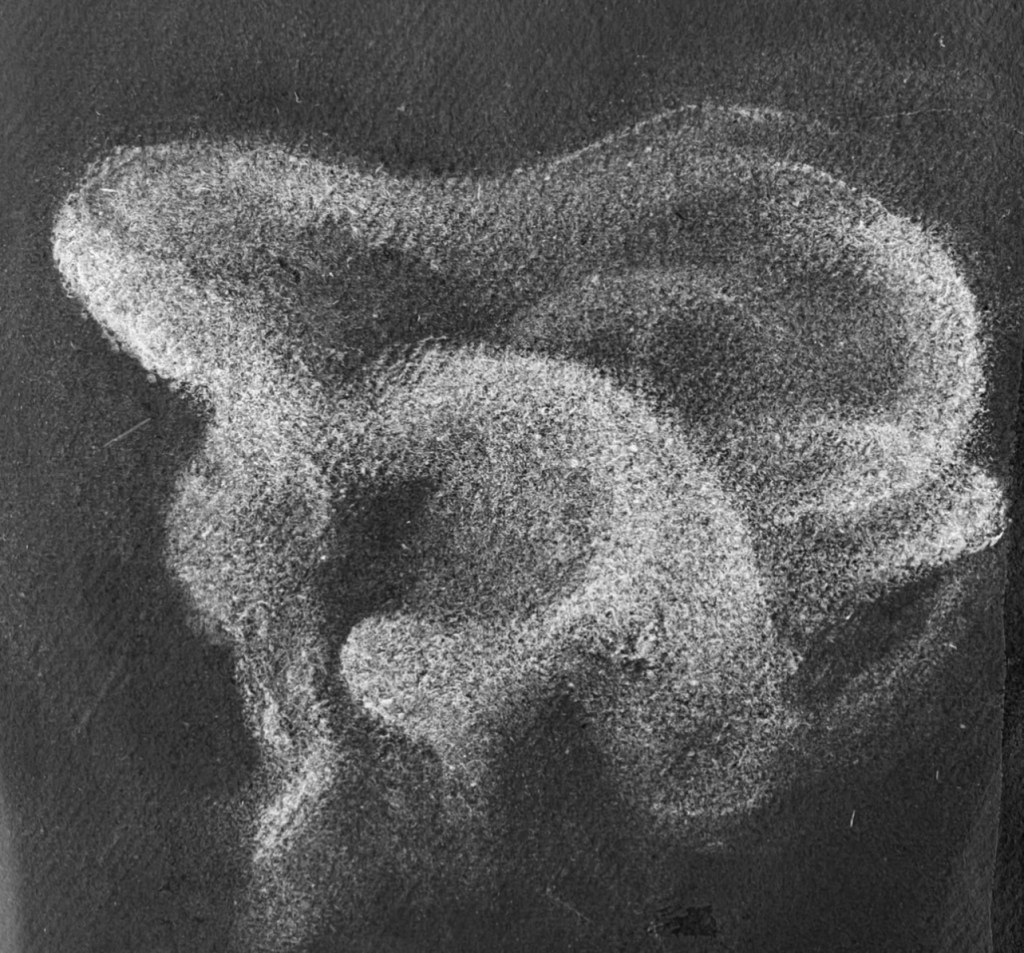
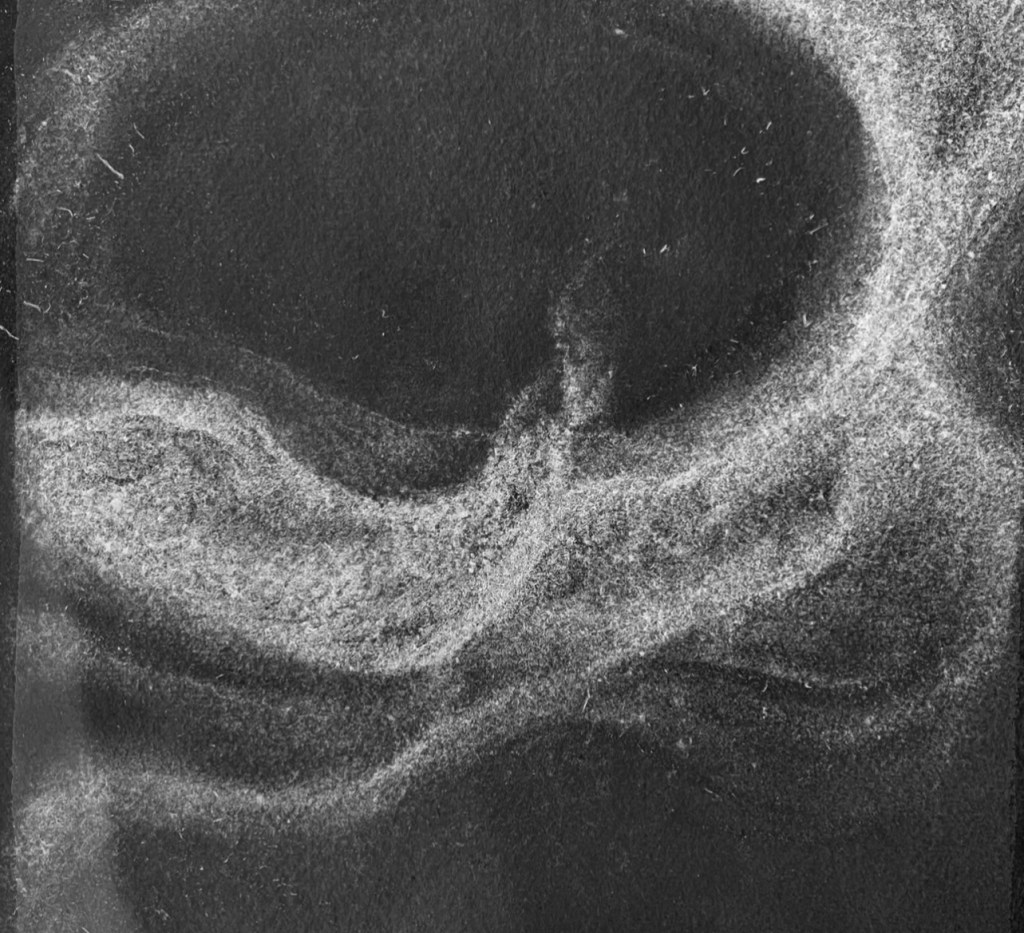
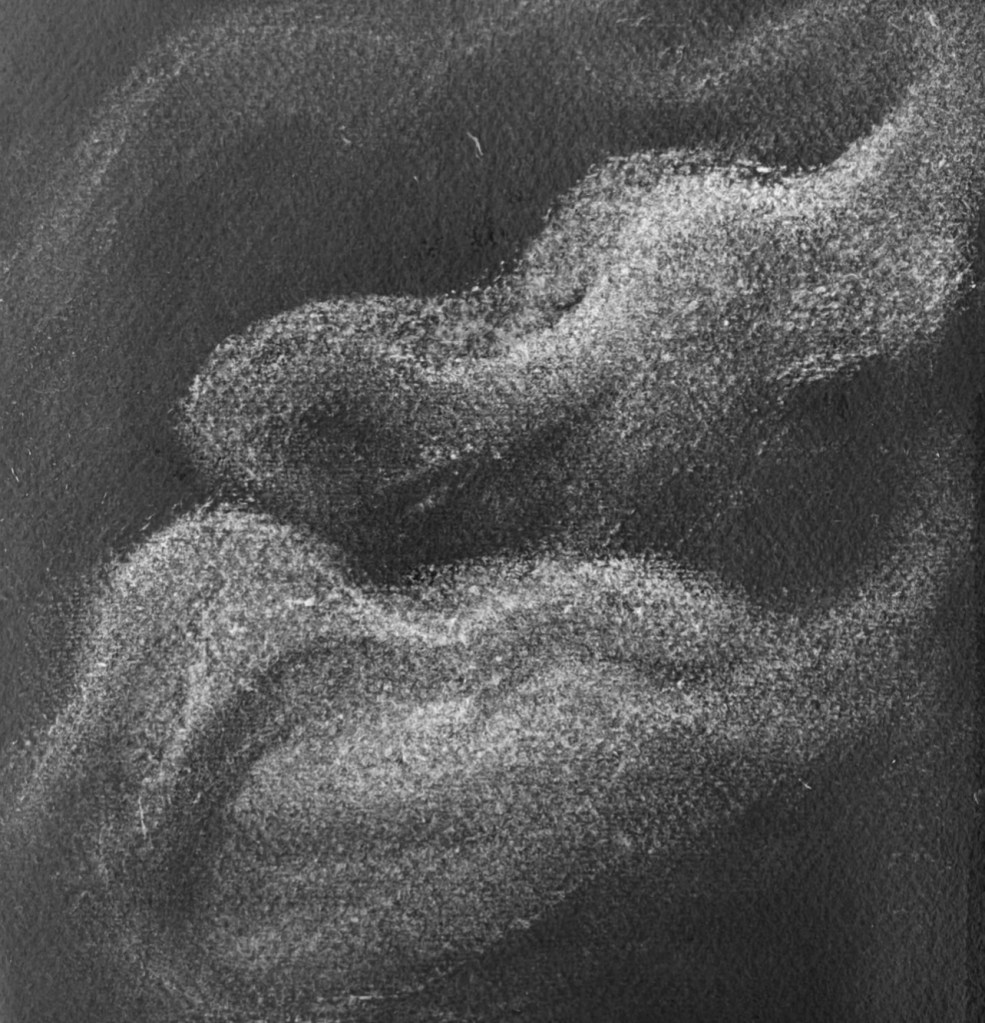
Working on these images in my sketch book have been so immersive – moving, erasing and spreading the charcoal across the pages create a sense of movement and changing form… Looking at this in 3D format perhaps.. larger scale ….???
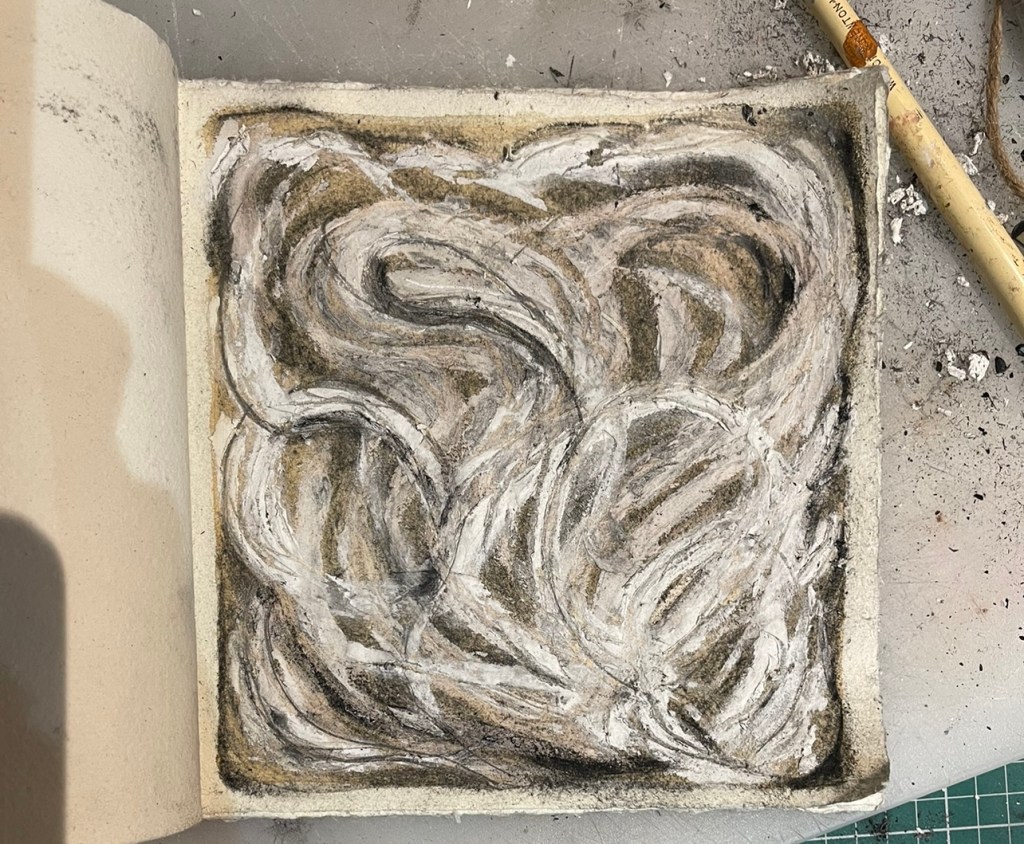
Layering of media looking at movement of form…..
Drawing with charcoal onto an essentially ‘feminine’ piece of found linen. A delicately embroidered napkin – representing a narrative of the gentle, unassuming activities that a woman in the past might have had to occupy herself with … juxtaposed with the dark imagery of despair and anxiety.
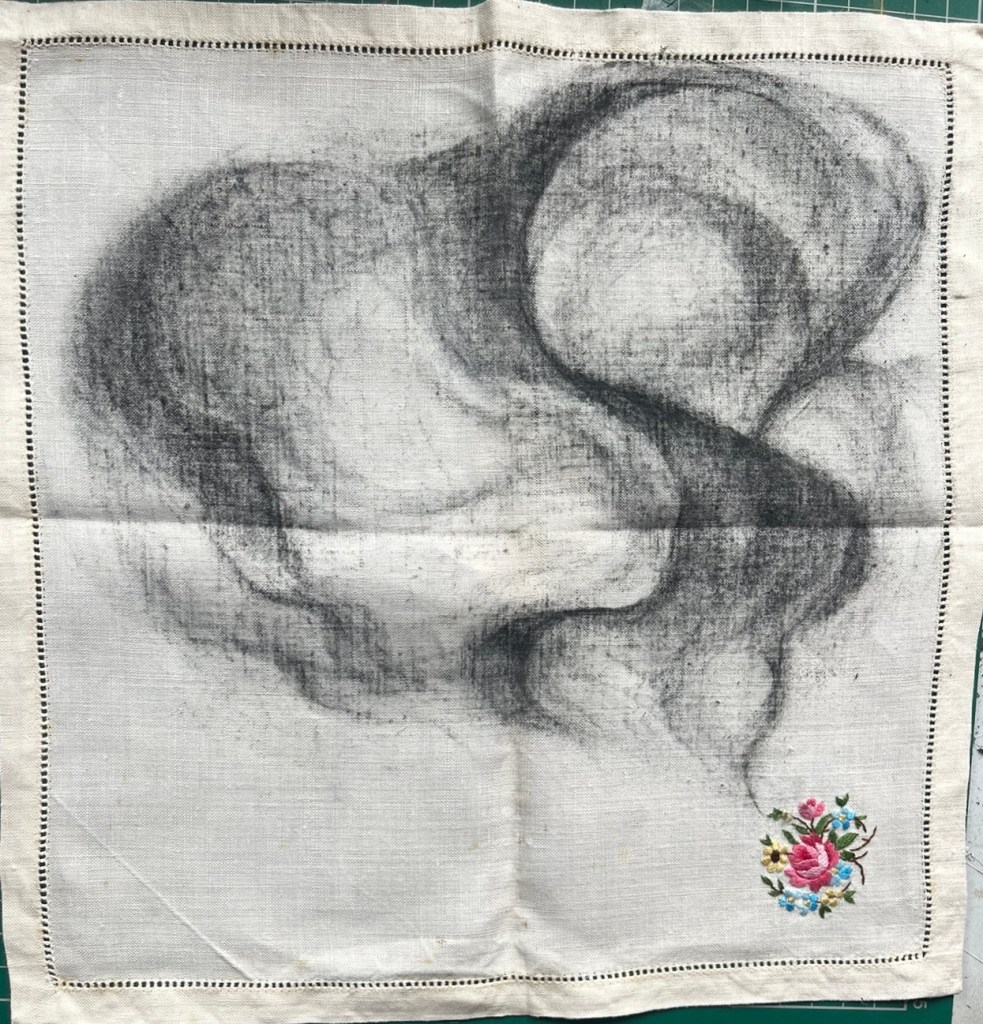
2 – ‘ Traces’ – Art Therapy = Good Mental Health / Womens Good Mental Health. Possible recurring themes in my process as relevant to me as a woman and the society I live in today and in contrast with the past. Looking at the ‘male gaze’ in the here and now and historically. look at surroundings and containment of a local Women’s mental asylum and the infamous Paris Pitié-Salpêtrière Hospital. Relics of walls containing the human essence physically and ephemerally. – Link to previous work below:
http://www.studiopracticedotblog.wordpress.com/personal-project/
New exploration/experimentation: Video content :
Keeping with the theme of Women and Health I looked to the subservient, traditional role women occupied in society. In Western cultures and civilisations, we can historically see the giant shift against forms of repression, in equality, chauvinism and misogyny the female finding a strong and growing voice. We are, however, painfully aware of the countries and cultures that have not opened their hearts and minds to equality and hence women remain silenced, subservient and enslaved.
Using vintage dolls heads and an age old expression originally from Japanese Muromachi period ” See no evil, hear no evil and speak no evil’ to express those who choose to turn a blind eye – was also relevant to the women who have no voice or power to be heard or seen – hence they are forced to exist in a society that is mute, blinded and deaf to their necessity.
This experimental video ( a totally new medium for me ) depicts this cyclical turmoil and despair.
Concerned with continuing issues of individual voice and power in a similar way with emphasis on political. social, commercial and environmental concerns :
Again these are fragments of process to move forward with:
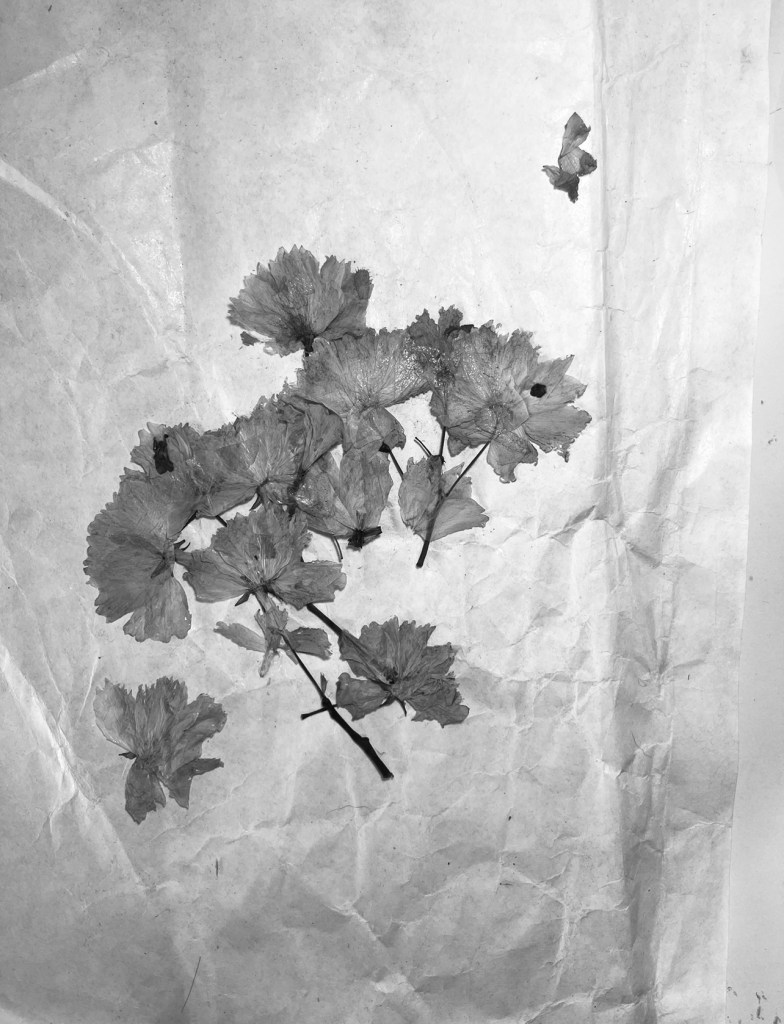
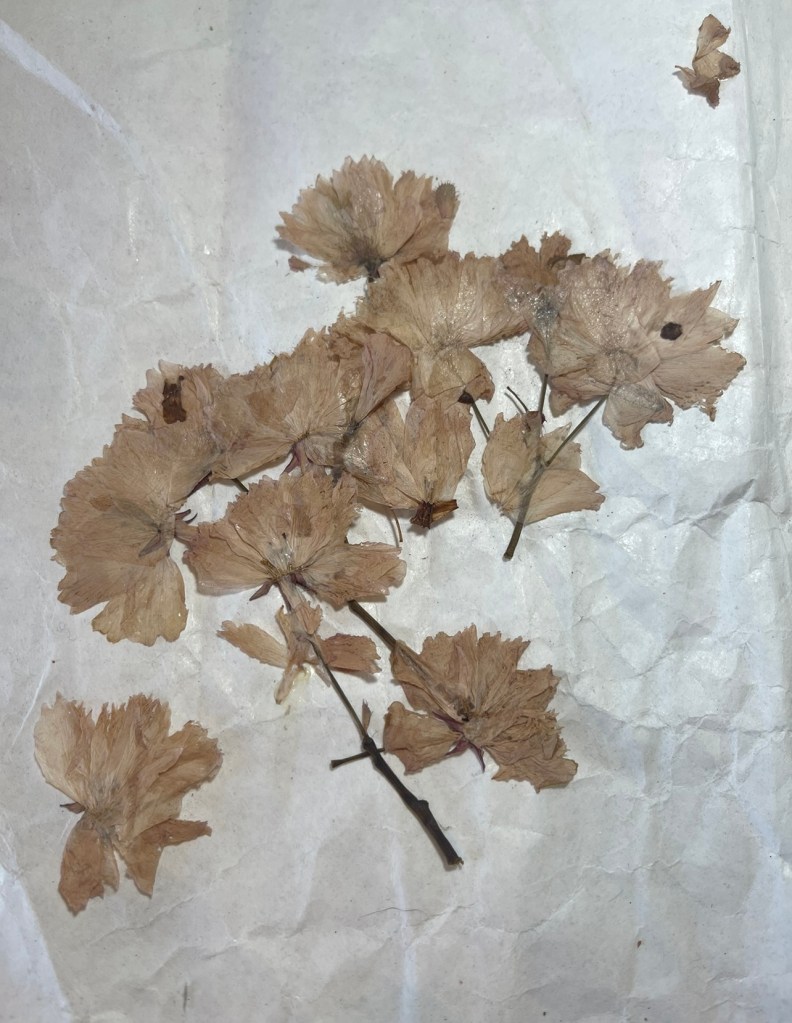
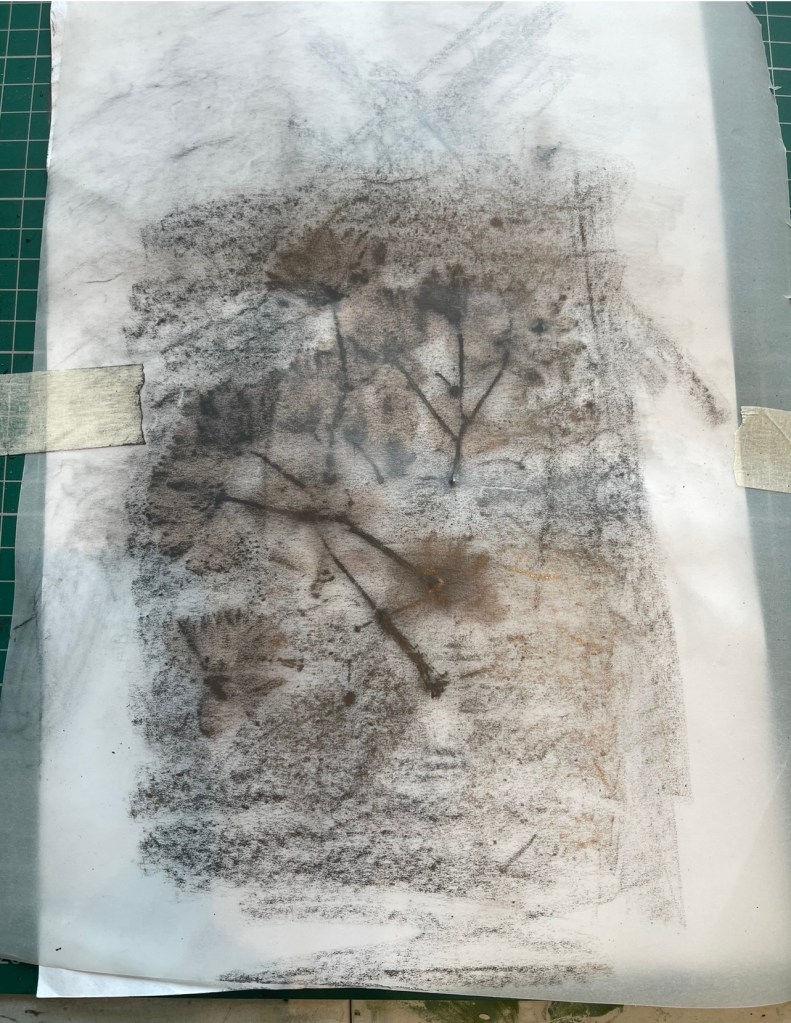
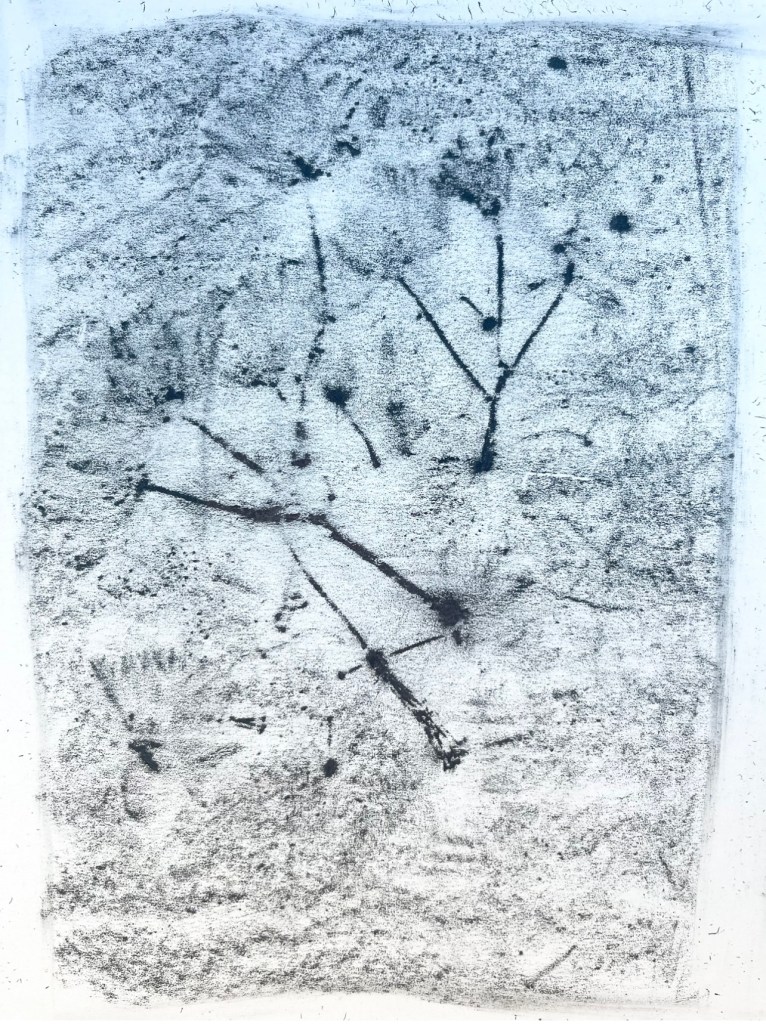
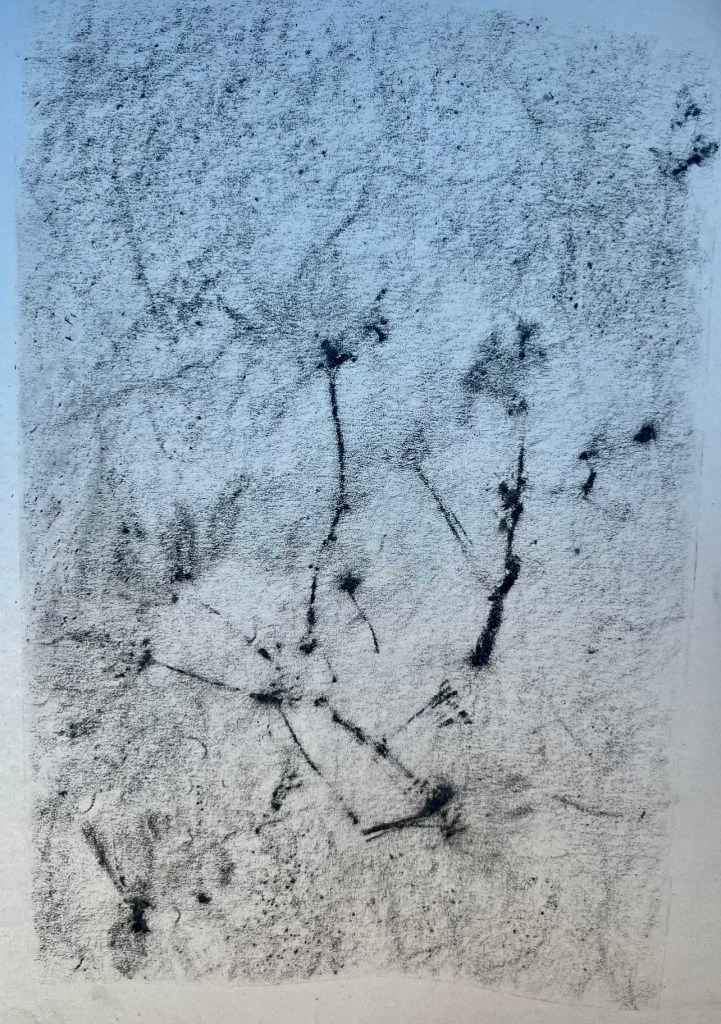
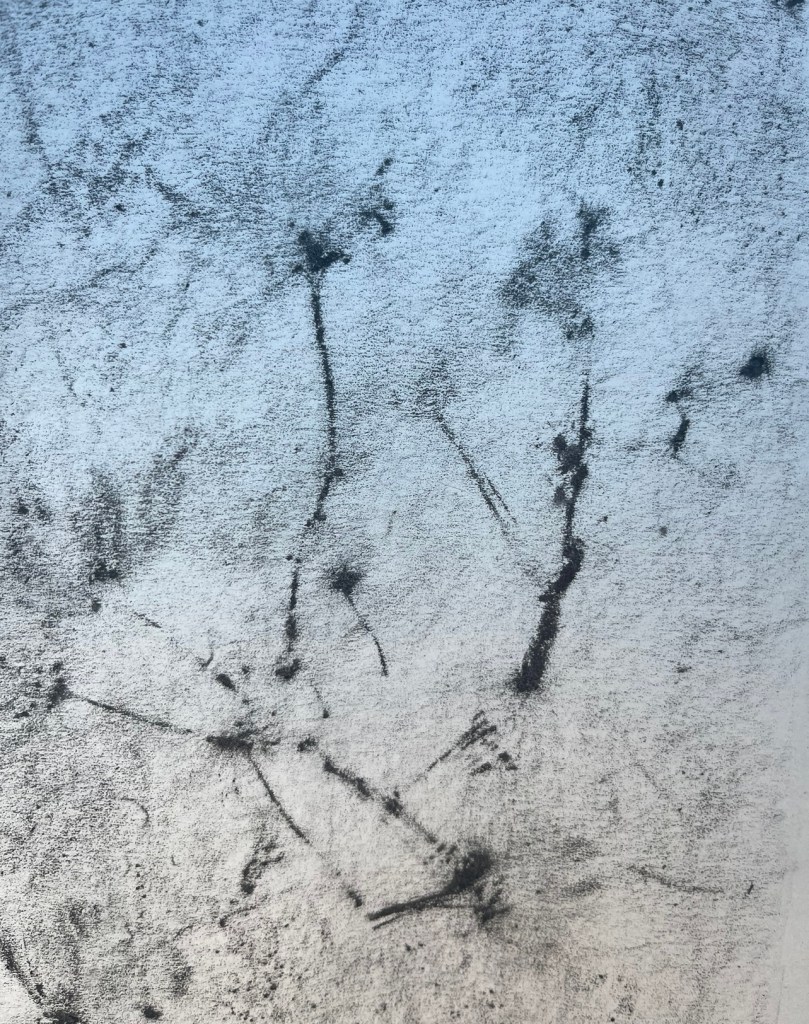
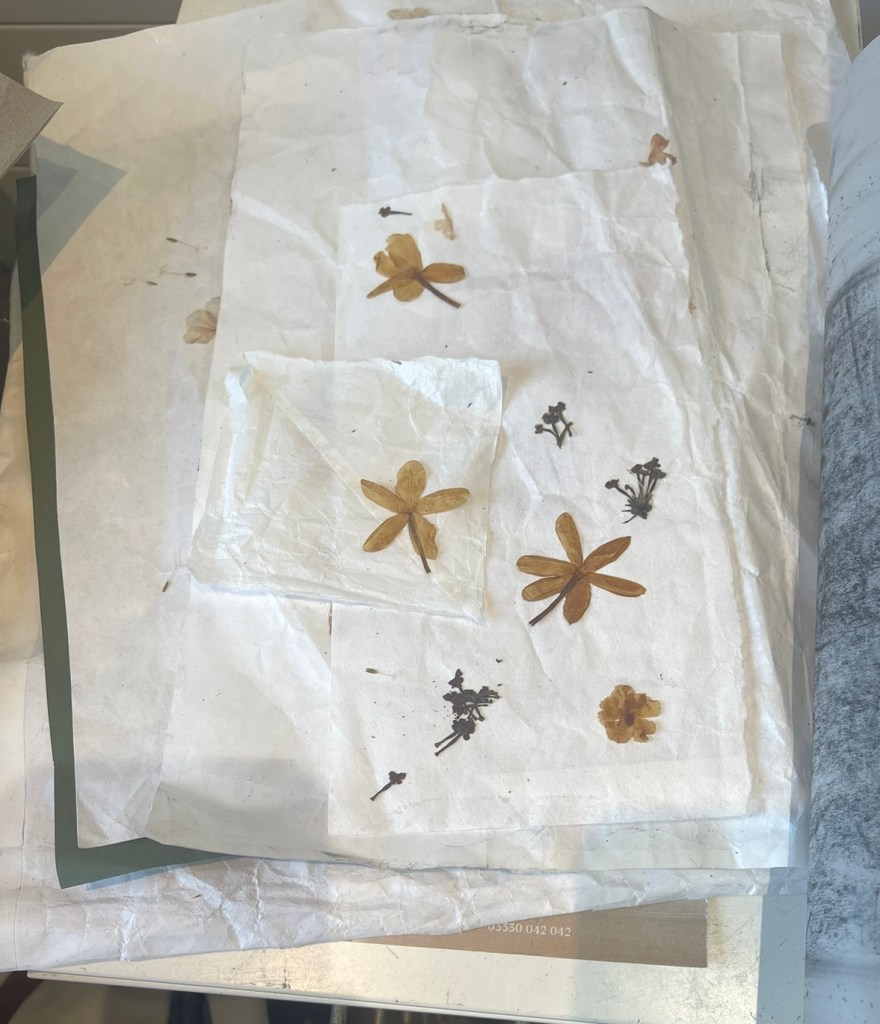
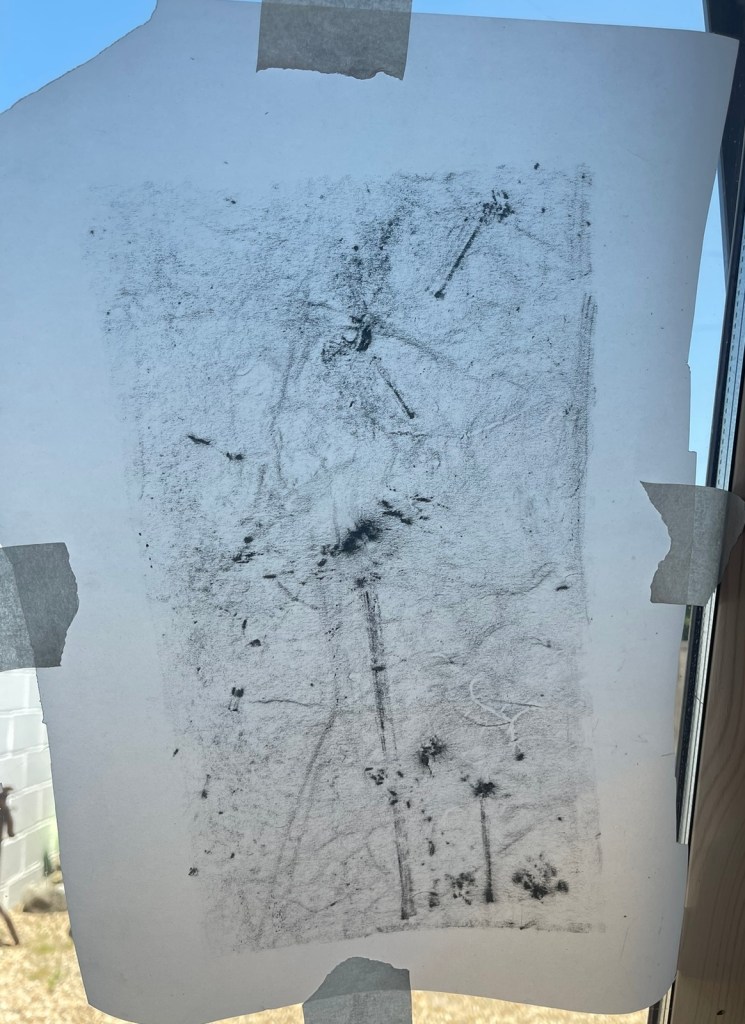
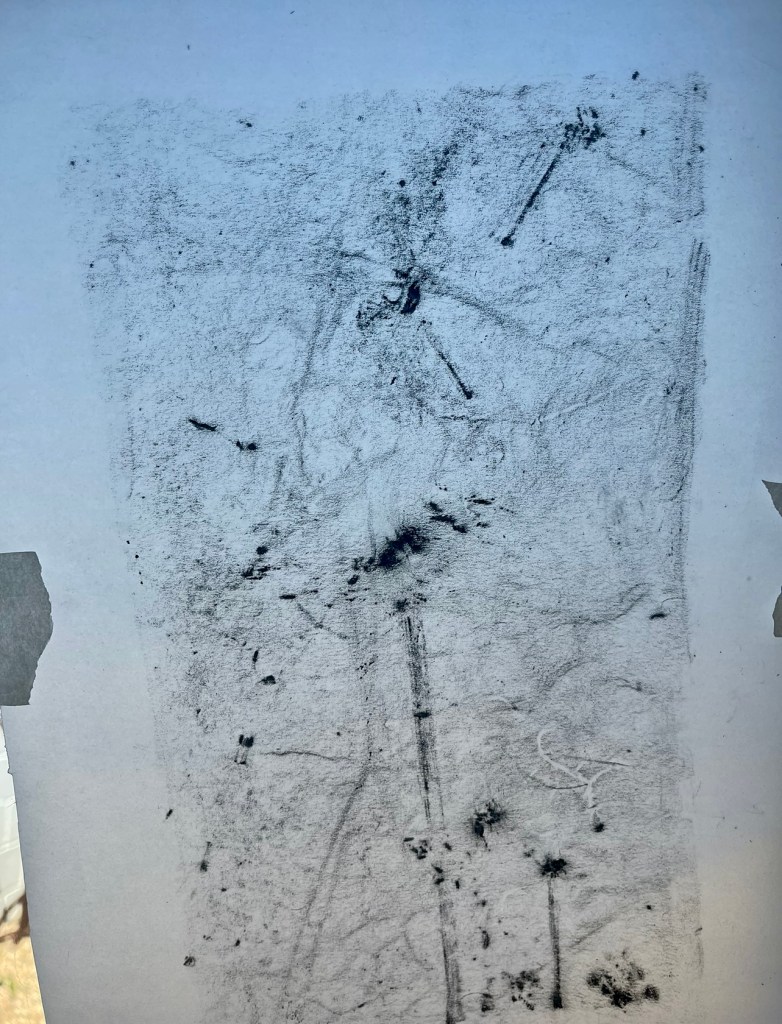
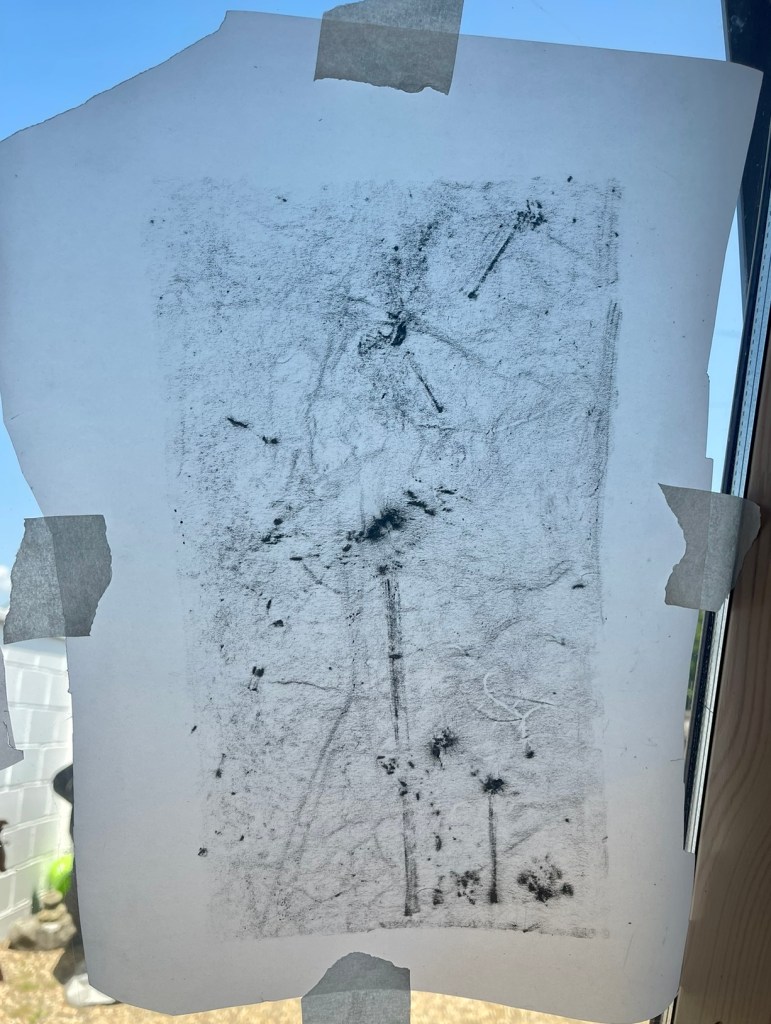
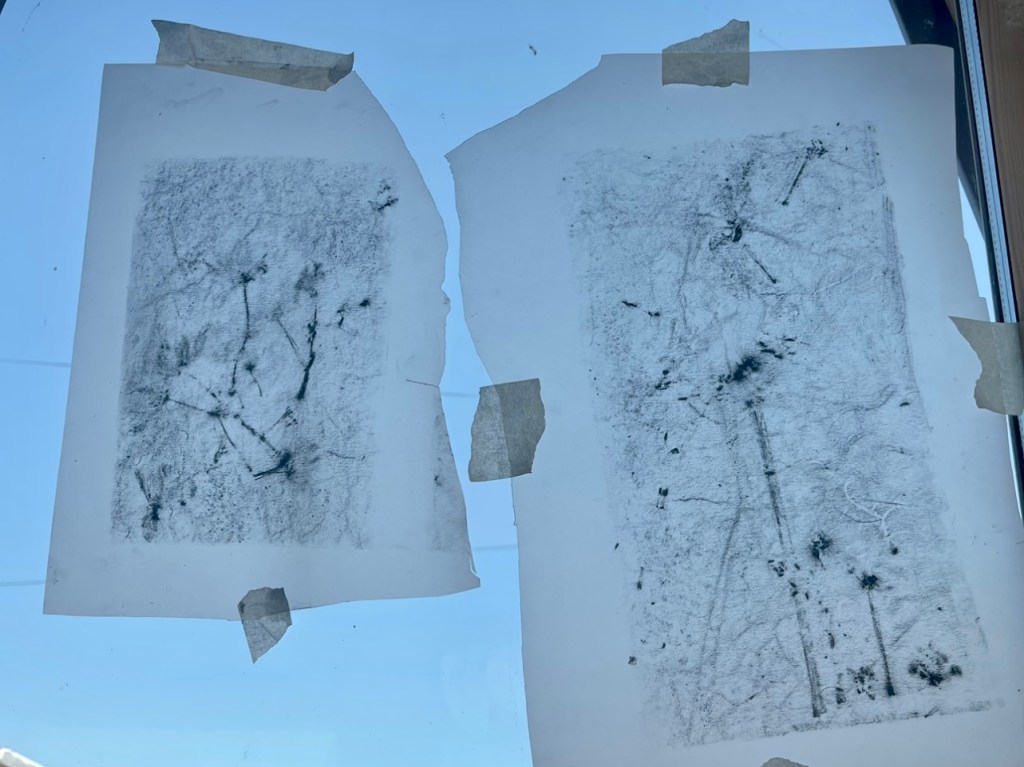
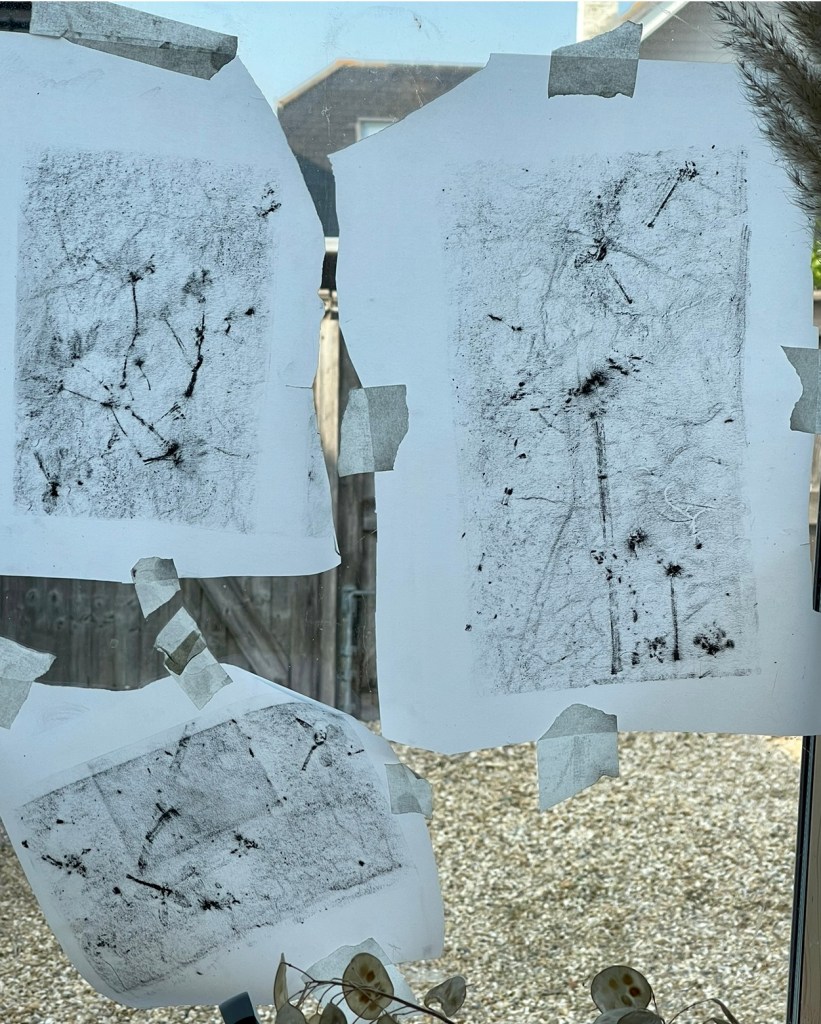
Traces Continued ‘Frailty and Memory’ – Frottage on tracing paper over plant and flower pressing from site of old mental asylum and places of tranquility I have found….
3 – ‘Book Worm’ – Consuming Knowledge The tiny ancient creatures ( not one specific type) that eat into our knowledge.. consume our books and paper… the ephemeral and changing knowledge base – the desire for more knowledge, the changing face of knowledge storage.. how do we store for the future ? What format will they be able to access 1000 years from now – Will it be like looking at ancient scrolls? How do we store the tech to regain the information ( think of VHS video recorders or analog computers) What is a sound and secure base for information/ images art ? Will the written word be the most accessible – free of tech issues/virus etc ..Or on Plastic ? The non biodegradable material consuming our planet could be recycled and used as a storage medium for images and the written word/ instruction/ diagrams/ maps /art … etc on ancient like tablets? engravings ? ( plastic phone cases or covers have a longer life span that the tech they surround… )
The work was informed by found material – I came upon some very old notebooks filled with inked Chinese characters drawn down every page of approx that was approximately a third the size of an A4 page. The beauty of the books ( possibly old school notebooks ) was enhanced by the abundance of book worm holes and markings that were crated by these little insects down each side of the pages. They were almost lace-like in design with an uninhibited and otherworldly sense about them. Surviving on the tiny fragments of paper nutrients they consumed, carelessly devouring the books in pursuit of their survival. Our human traces and importance lost upon them in their microscopic entomological world.
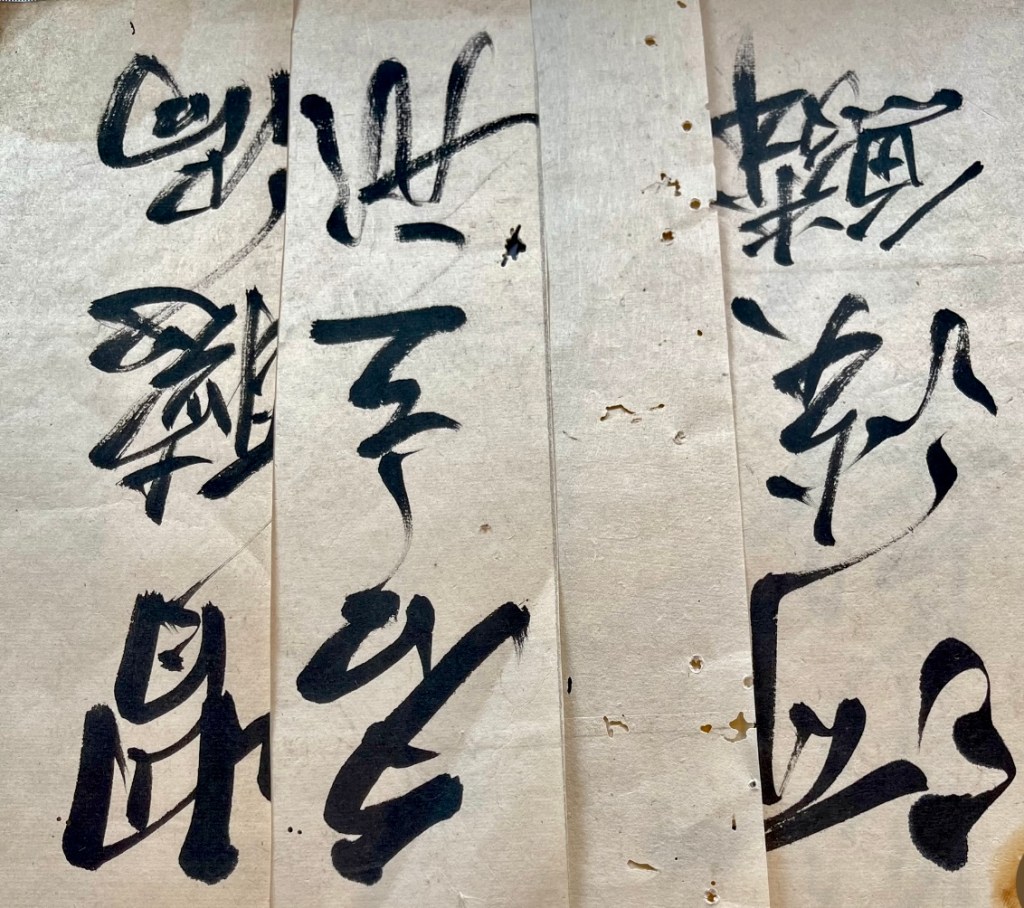
I sought to create a greater sense of importance or recognition of them – perhaps only by their design ..
I wanted to record the markings in some way – to document them in another format – other than their own them. They were in a way a perfect stencil so the cyanotype work I had previous success with seemed to be an initial way of documenting:
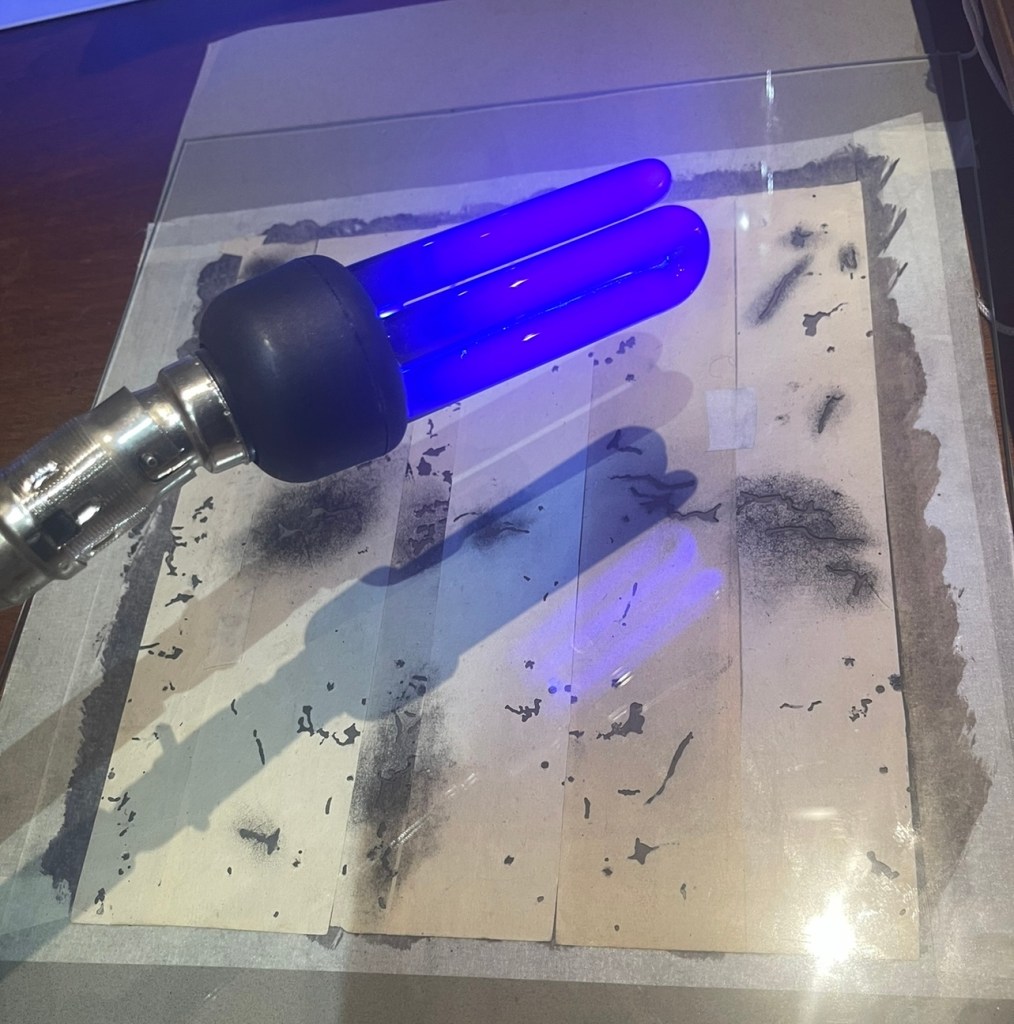
I experimented with an array of results….
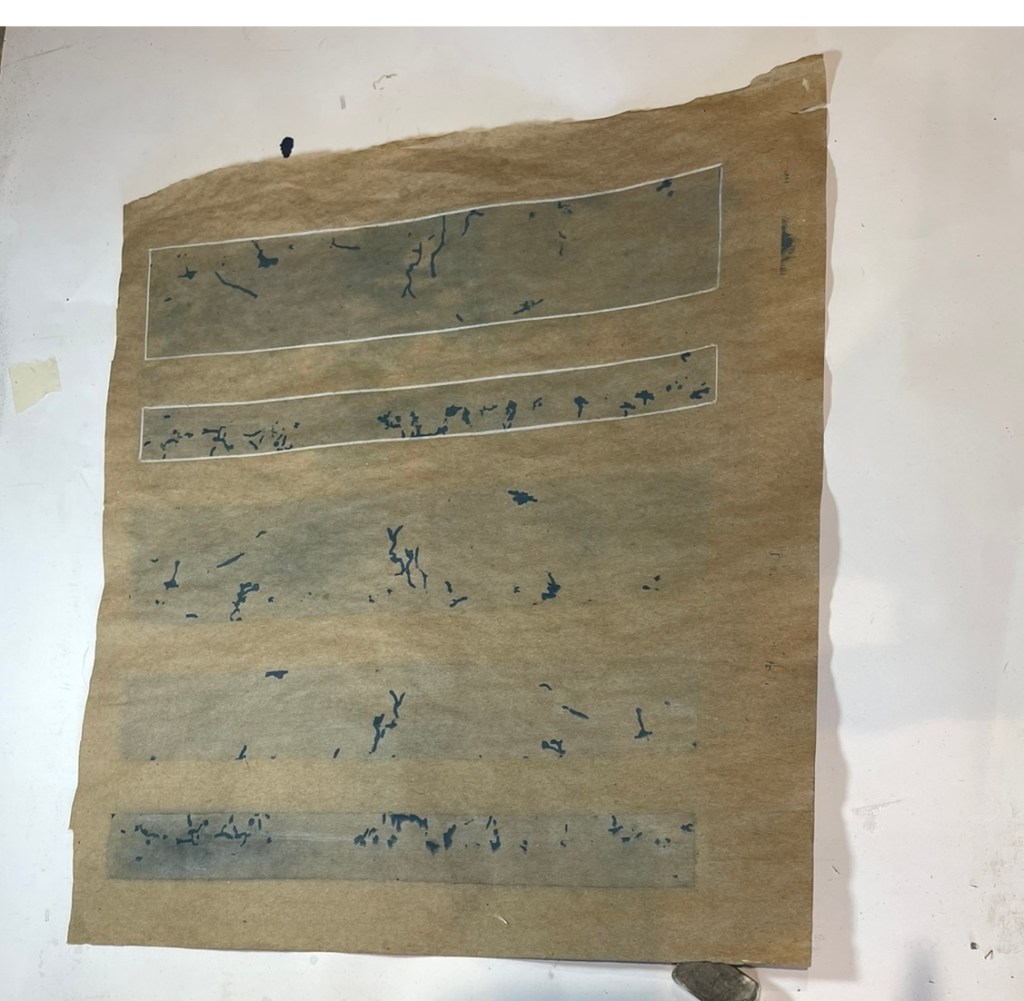
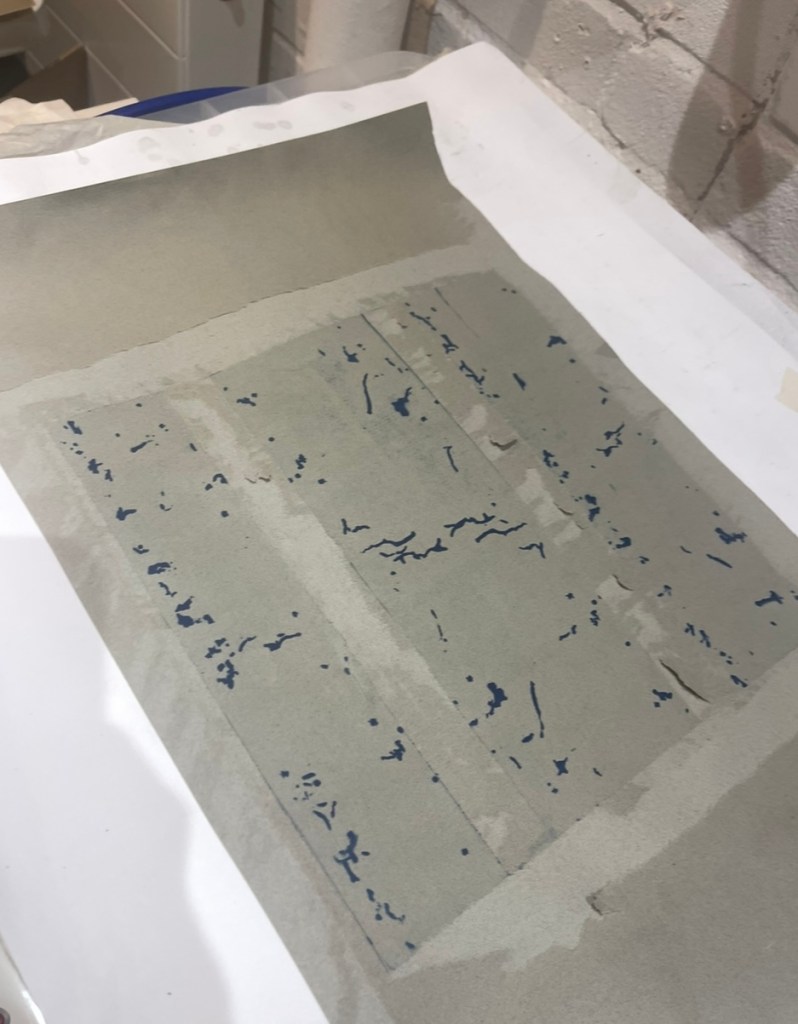
The tiny dark blue images appearing on the paper – I choose to use a neutral coloured papers for this work wanting to avoid the harshness of a bleached white allowing for a more naturel canvas.
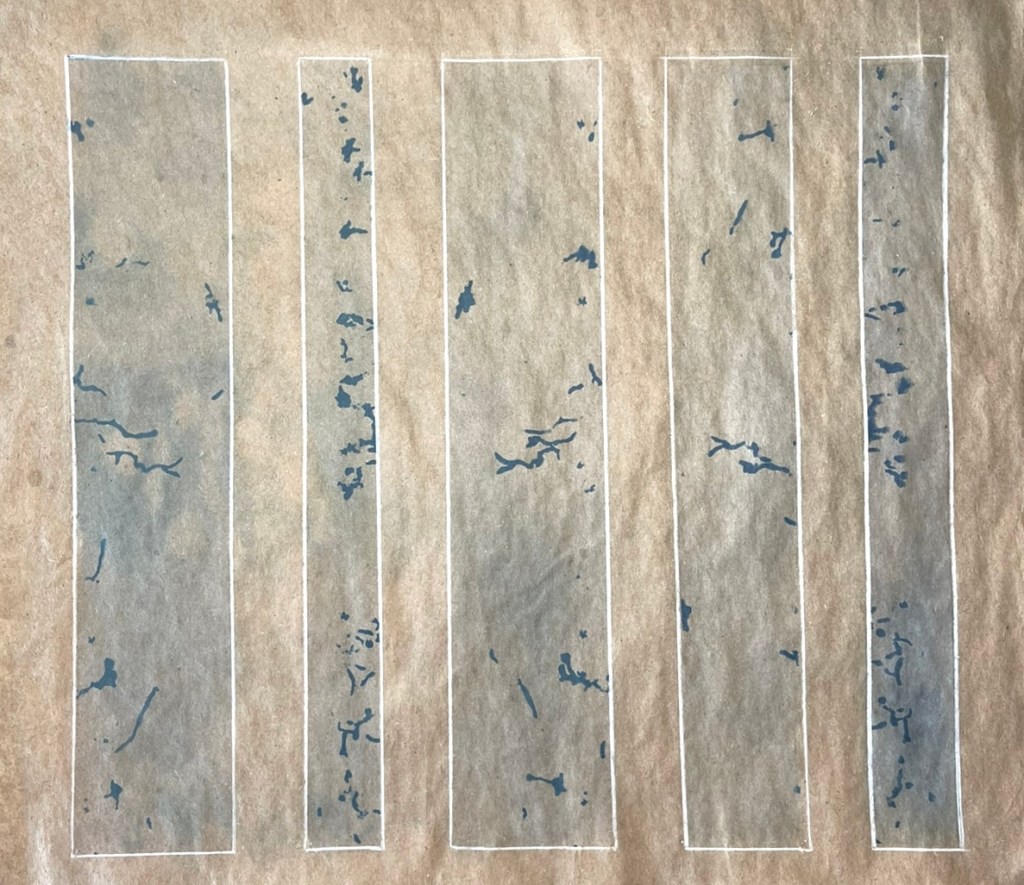
I manipulated the strips of paper to form varying design options: This one below on a sheet of A3 found brown paper from some packaging also retained some of the washed out blues of the cyanotype – It has a strong Japanese feel to the work with its elongated triptych qualities and simple wood block feel. I drew around each strip with a white chalk pencil to highlight the colours and shades of the cyanotype and the ombre effect.
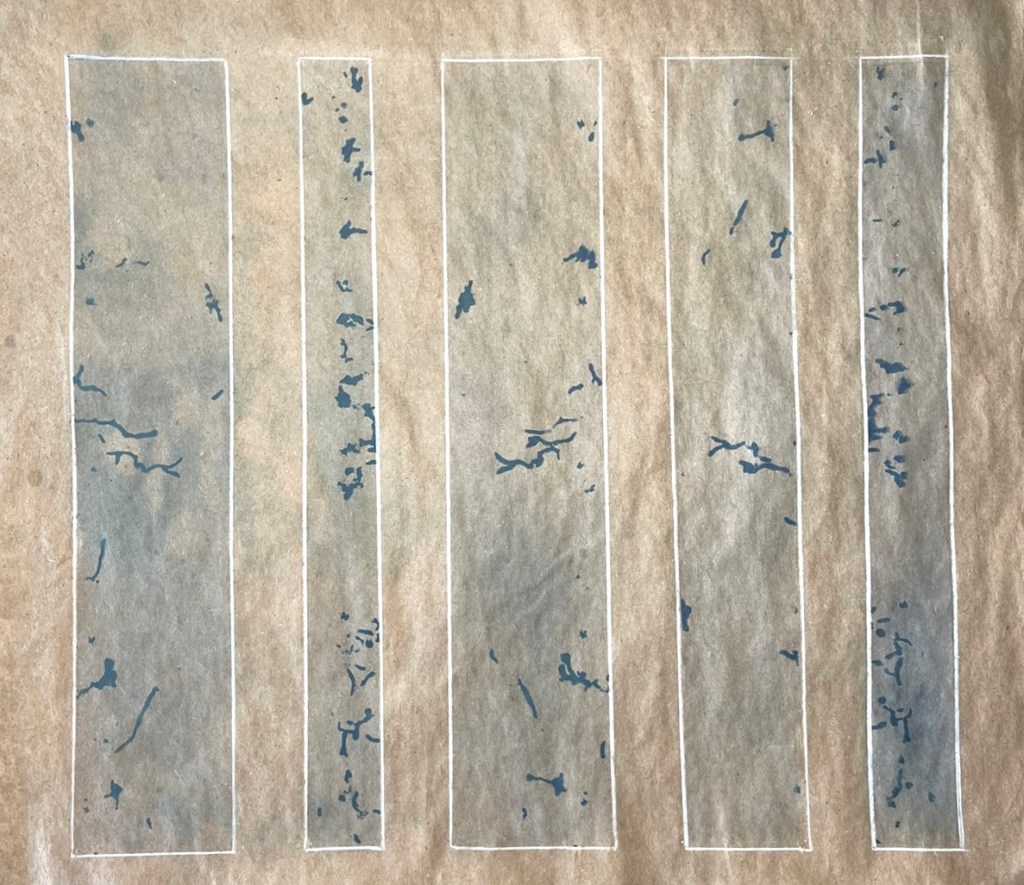
The paper remained slightly crinkled from the water immersion but this only added to the texture and interest in the piece.
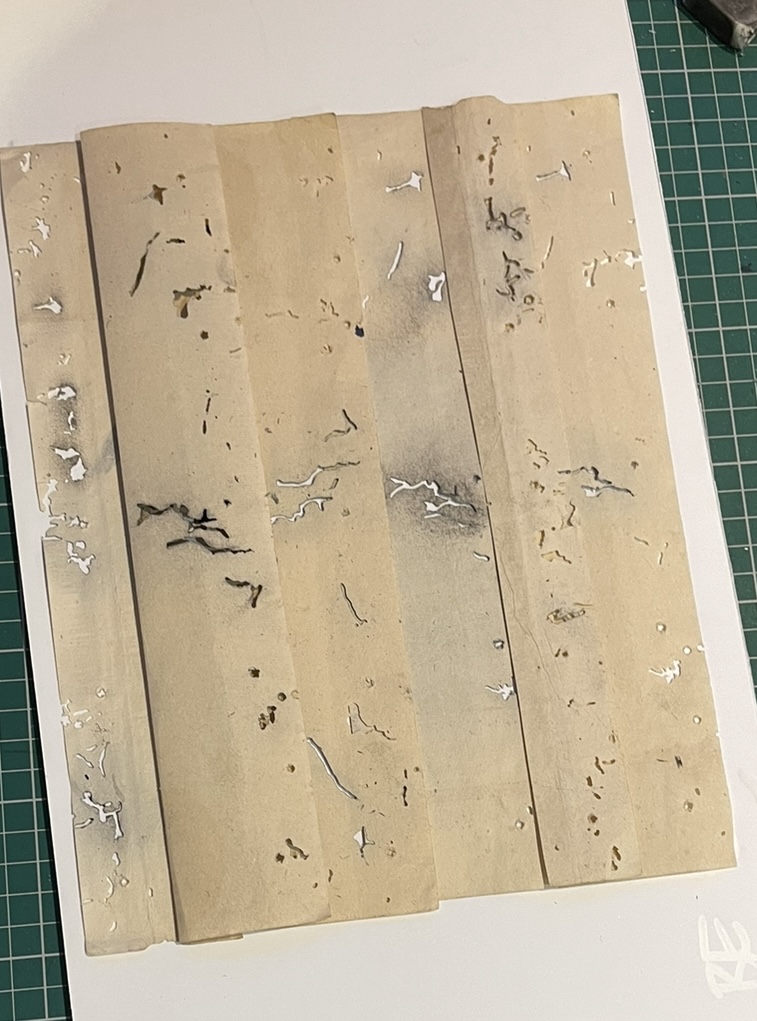
Using new found paper I worked on a second piece:
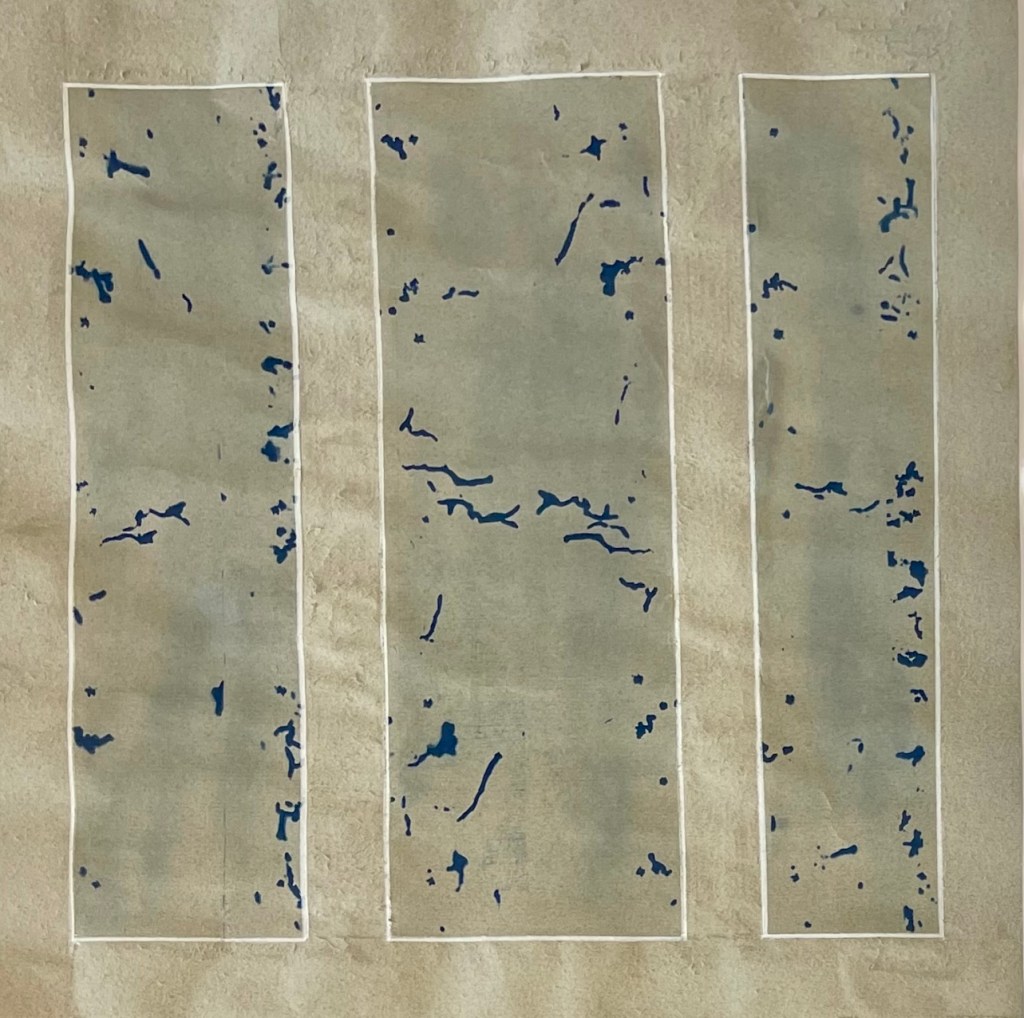
When photographing these images the lines of the blocks look wavy – this was due to the crinkled nature of the paper – If under glass they would flatten out and appear straight – However less easy to photograph under glass. Surrounding these images I peeled away a layer of paper so the image inside the white rectangle is smooth and contrasts with the rougher paper outside if it.
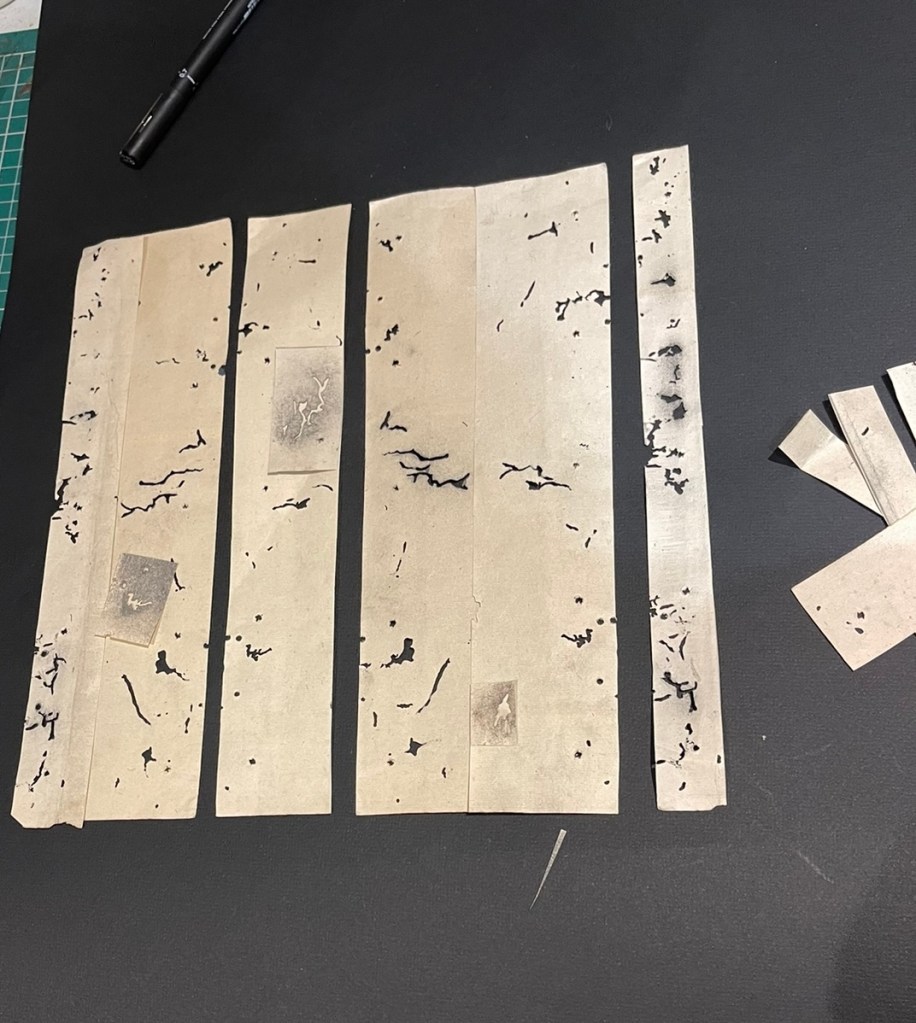
My final one was a play on the printed cyanotype and the actual pieces of book worm paper.
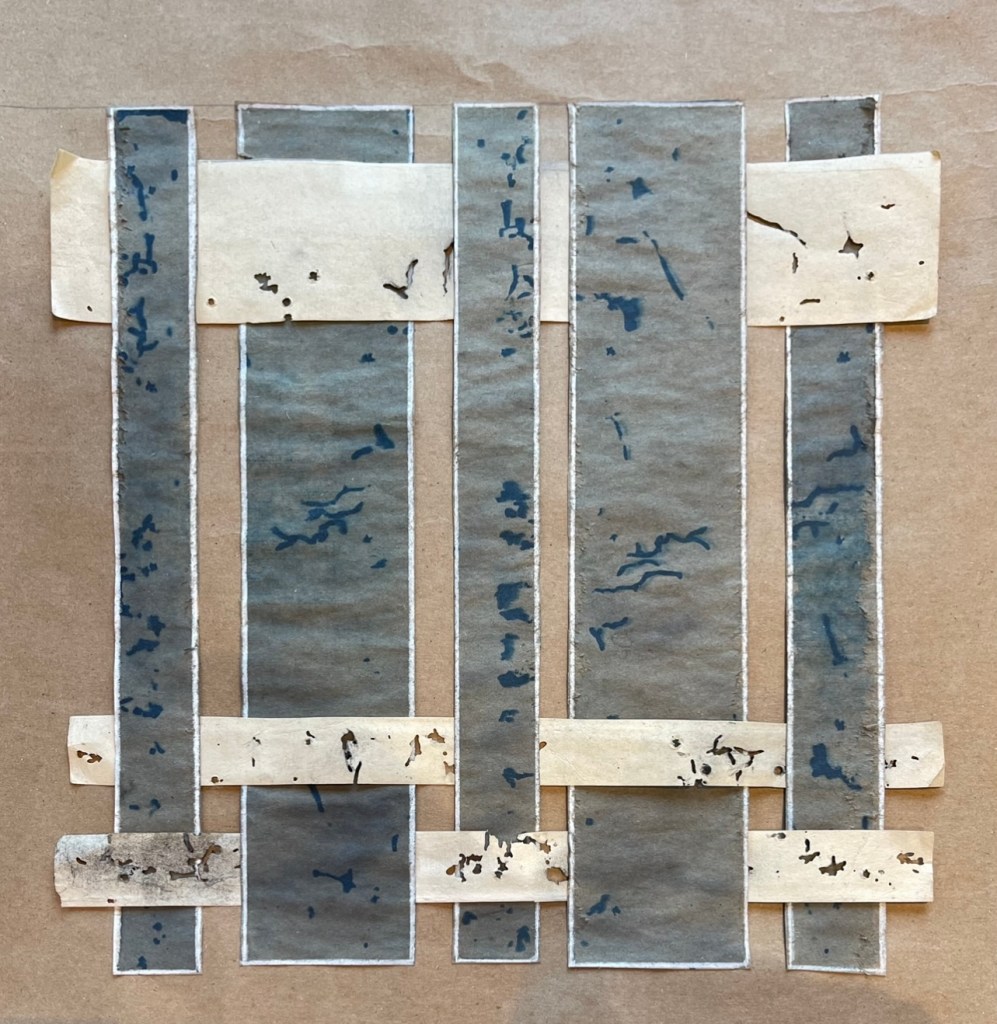
It was a woven effect of paper collage …
The final one in the set was a large full area of the varius strips all touching to give an overall image. I added to this piece some paint flakes that not only had a similar colour with a dramatic hint of red but also similar sized and shaped holes. It elevated the level of narrative, decay, decomposing, remnants looking a the the ‘un- noticed’ and passed over – bringing finite detail to the forefront.
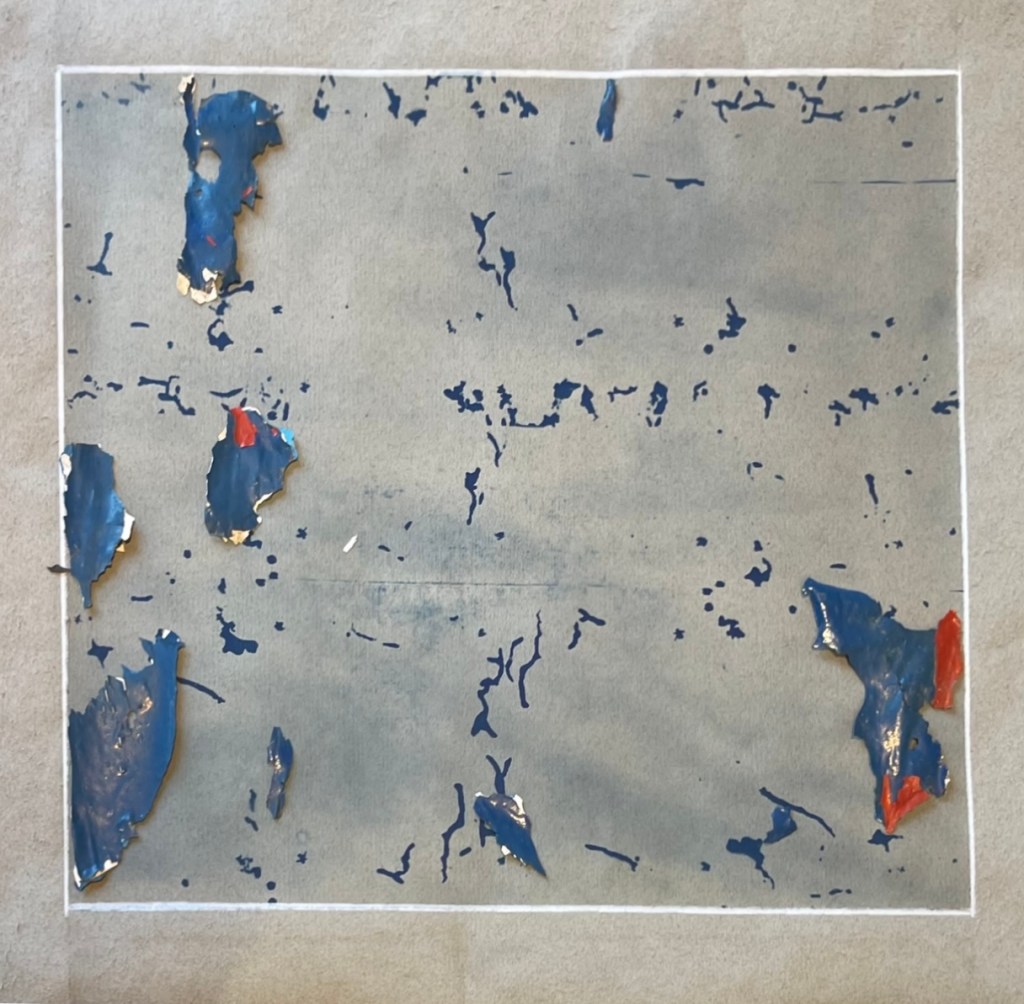
Further exploration and documentation of this narrative led me onto a more traditional method of working with stencil using charcoal rubbing and moving the tiny little cut outs across a page to recreate the designs..
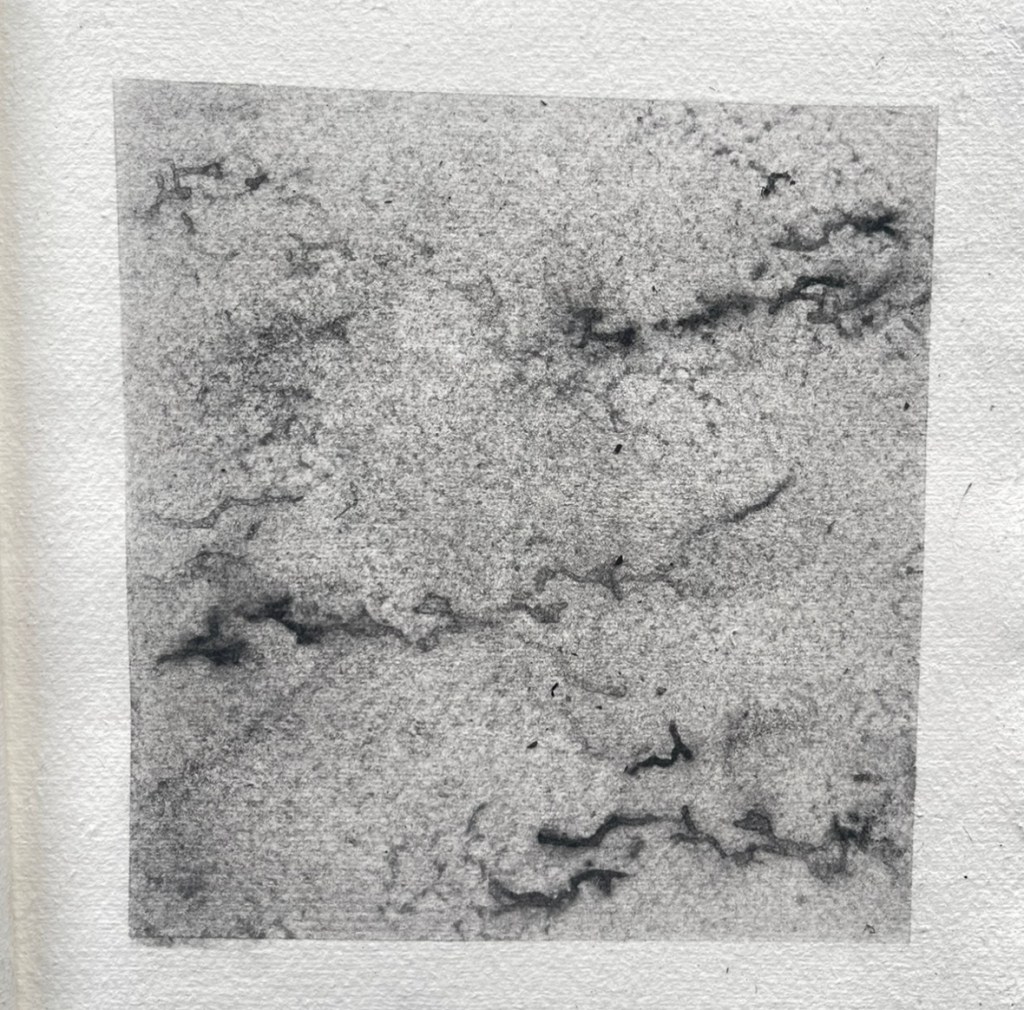
Using fixative I sprayed and reworked the images across the page to layer up the tonal qualities.
Not wanting to limit the investigation to the stencil only I played with some small-scale work using both the worm stencils and the beautiful inked letters.
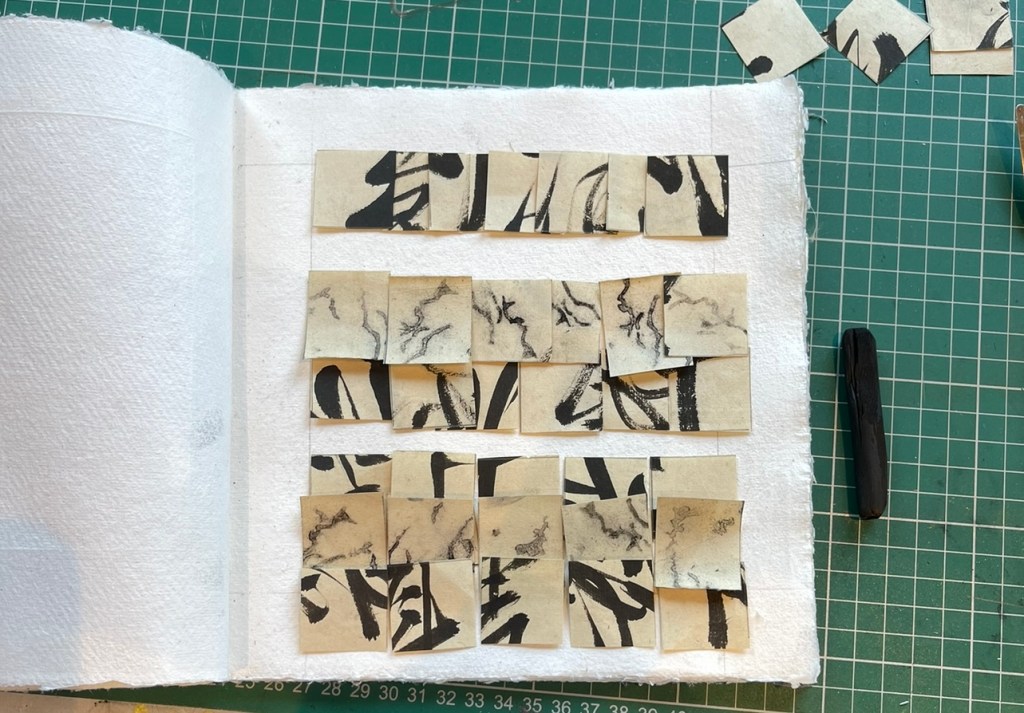
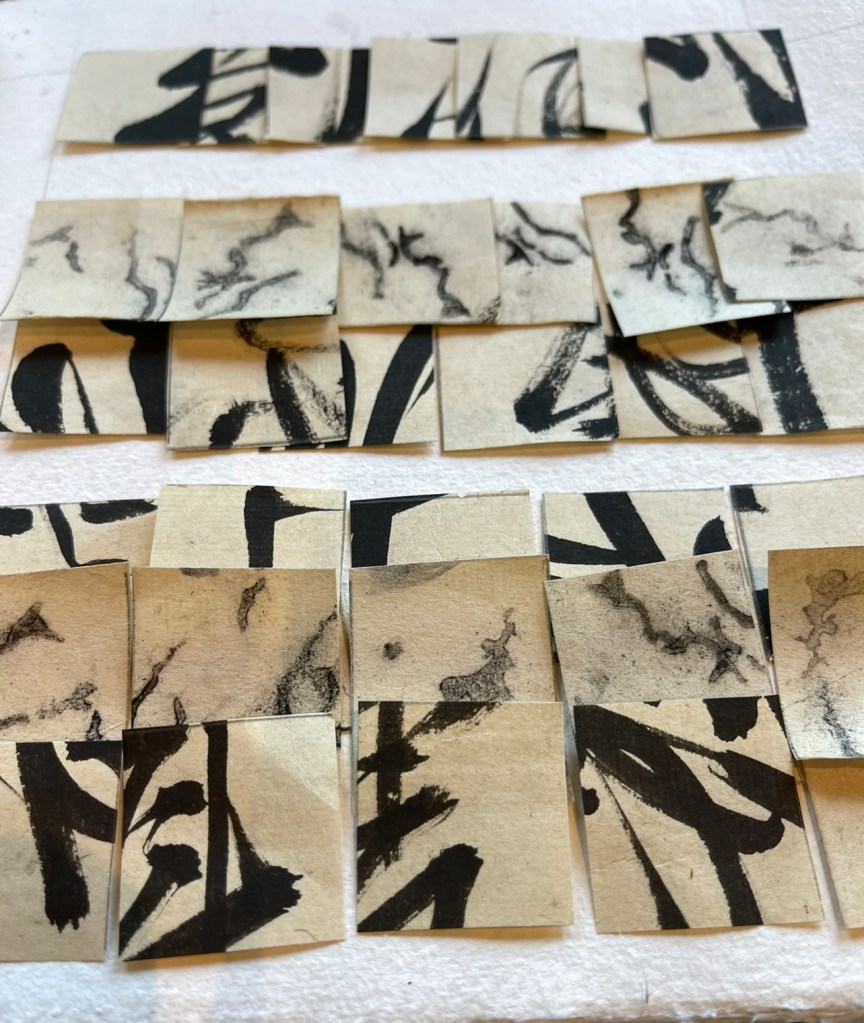
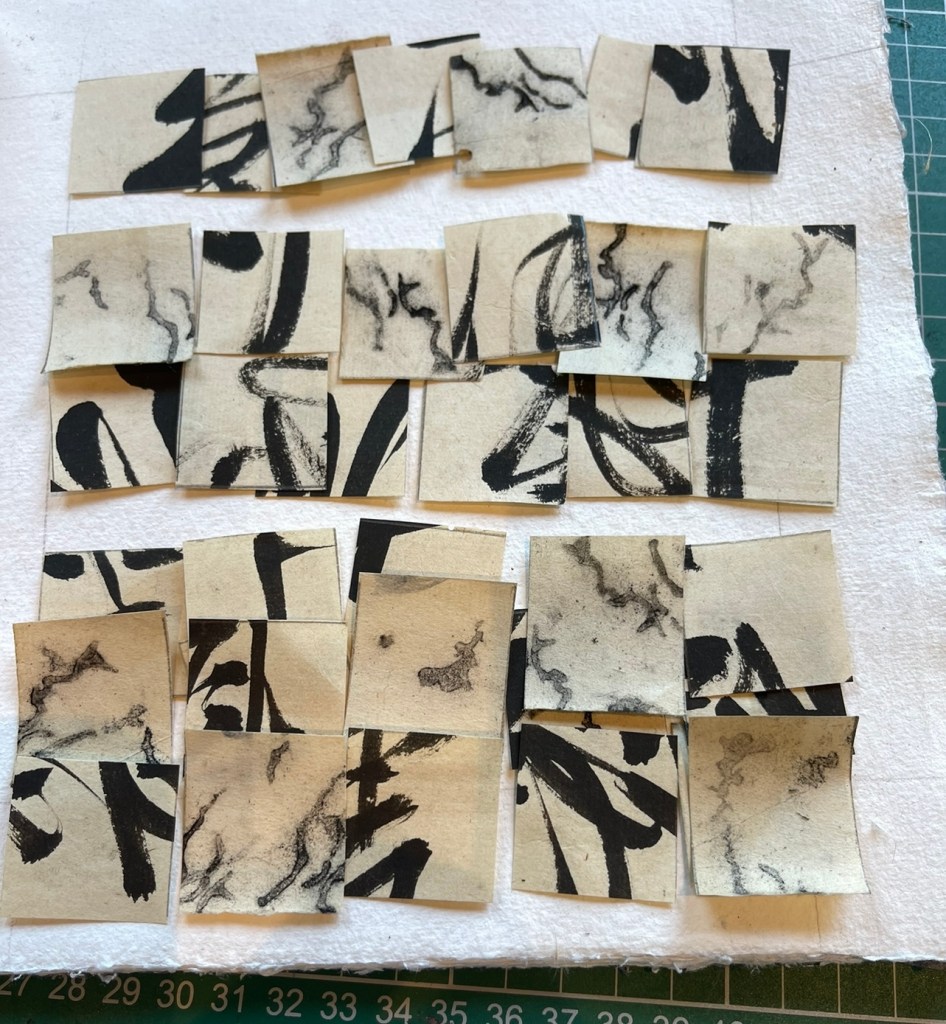
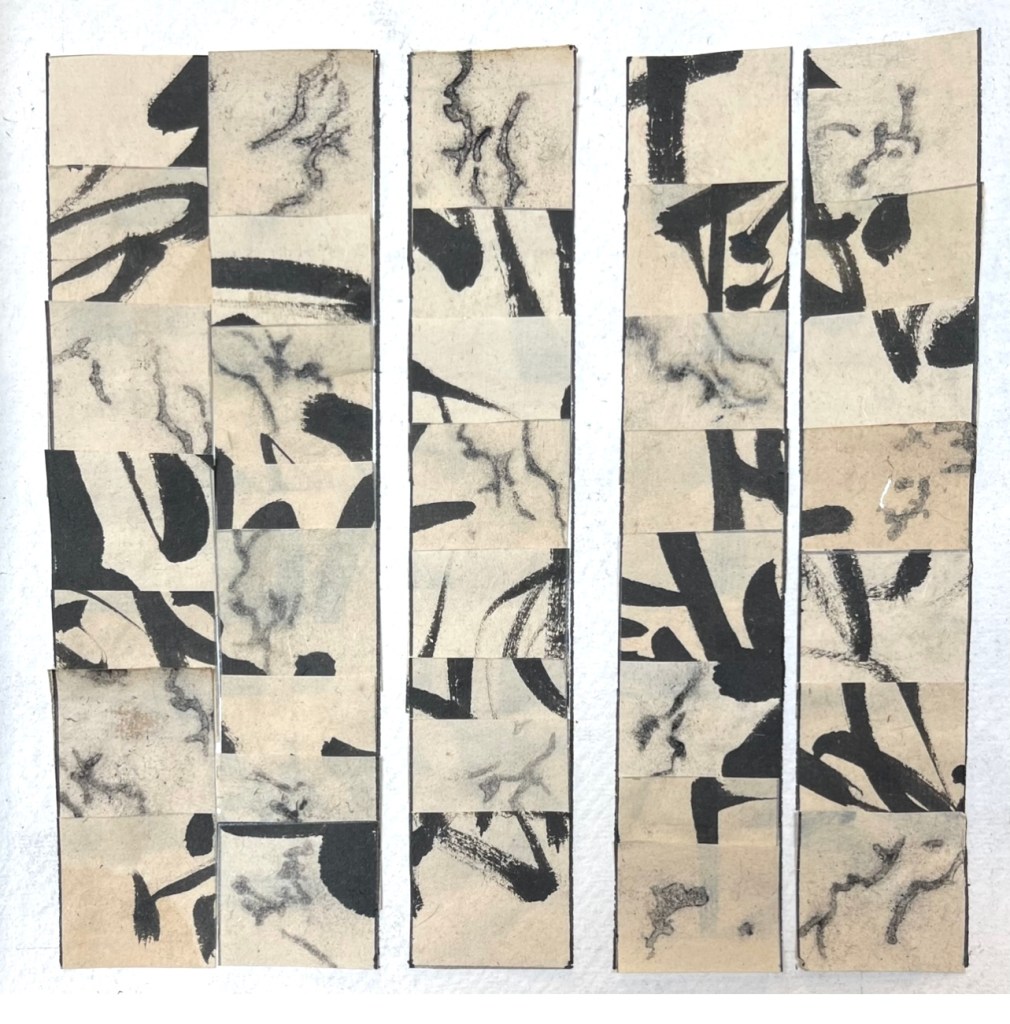
More pages from the sketch book :
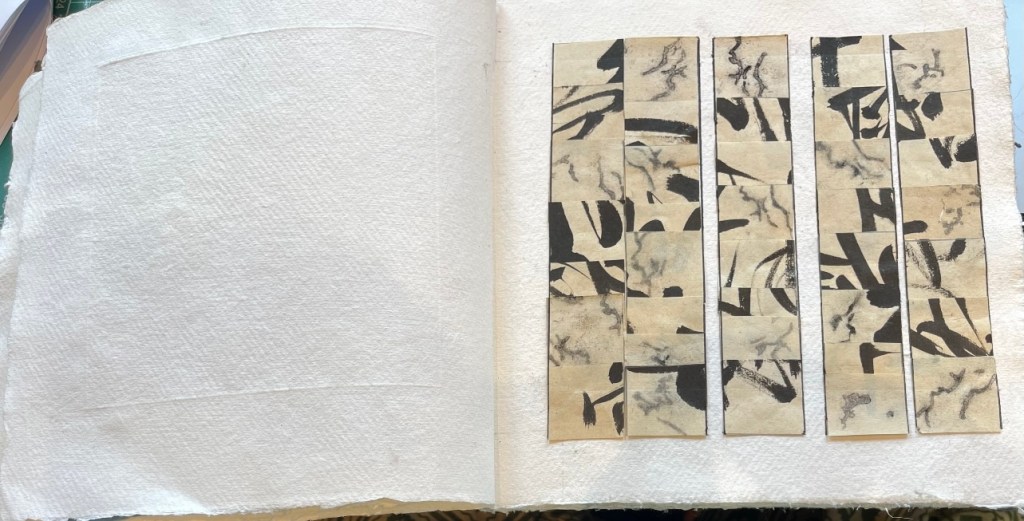
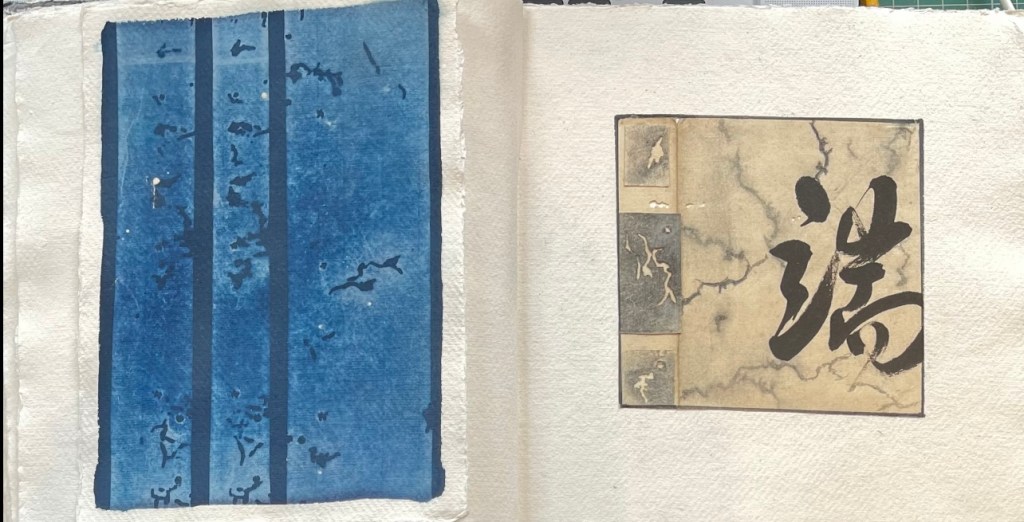
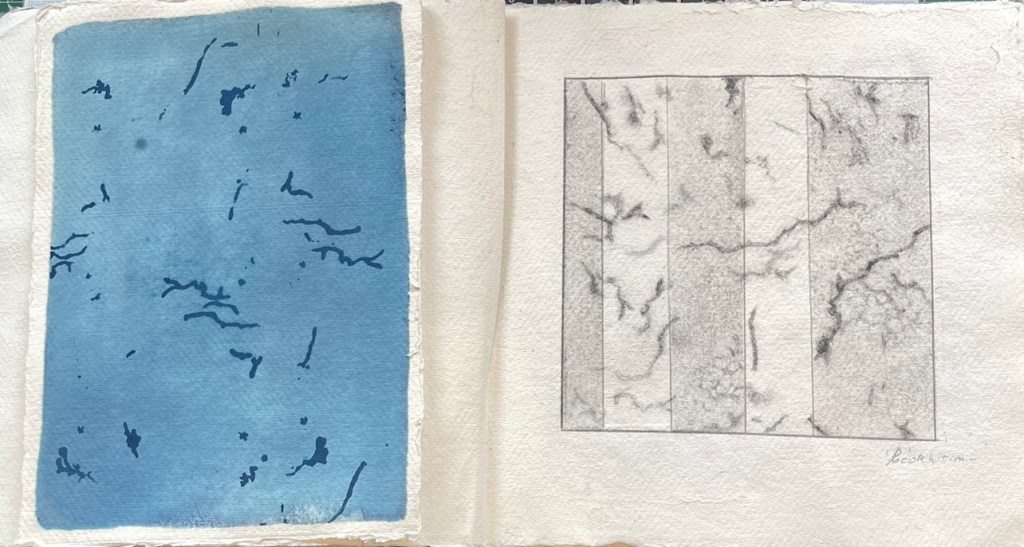
Giacometti inspired 3D structures. Balance of Life.
Post a visit to the Tate in London I came across some small delicate works by Giacometti :
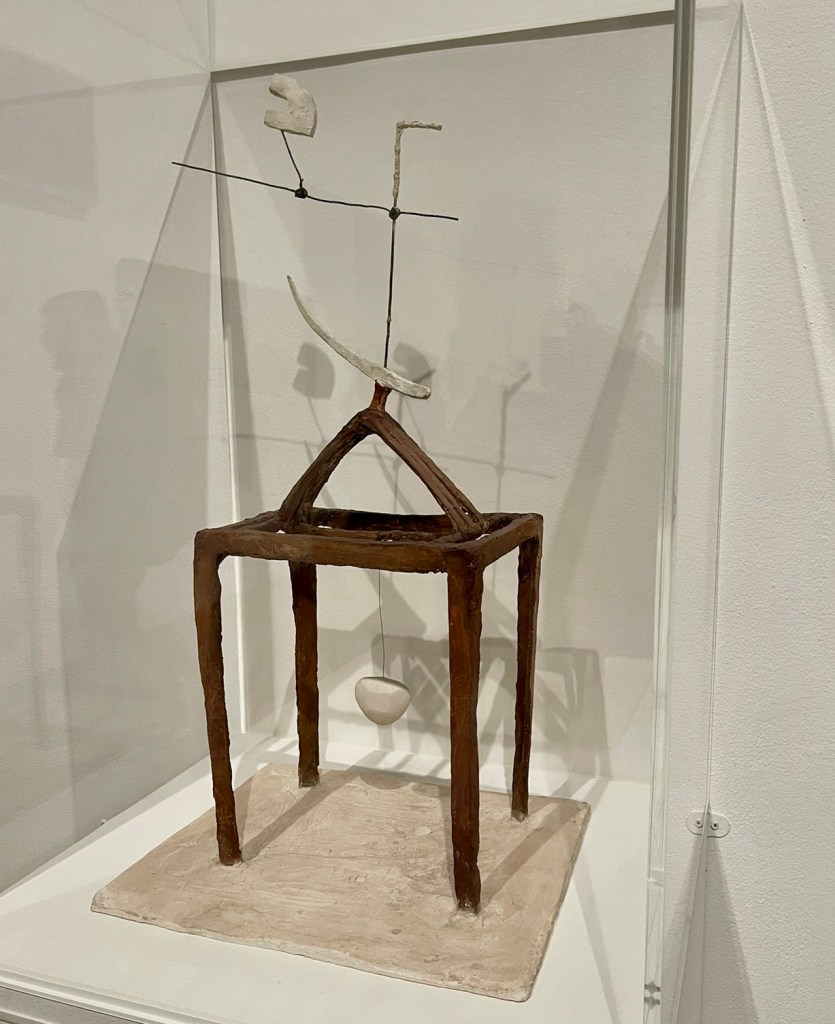
The curator comments suggested that `Giacometti said when making his sculptures he reproduced images that were ‘complete in my minds eye… with out stopping to ask myself what they might mean.’
Hence the meaning of the above piece is for the viewer to complete, it is indeed as Giacometti suggested from his unconscious so allows the viewer to ponder and explore the sculpture in their own context.
I was drawn to create a sculpture with a similar process of thought – looking at form rather than meaning. I had a number of toy broken wooden boat sail masts and collected found objects .. some small clay moulds of dolly hands and arms I had produced various other items… I began an open creative ‘making process’ .
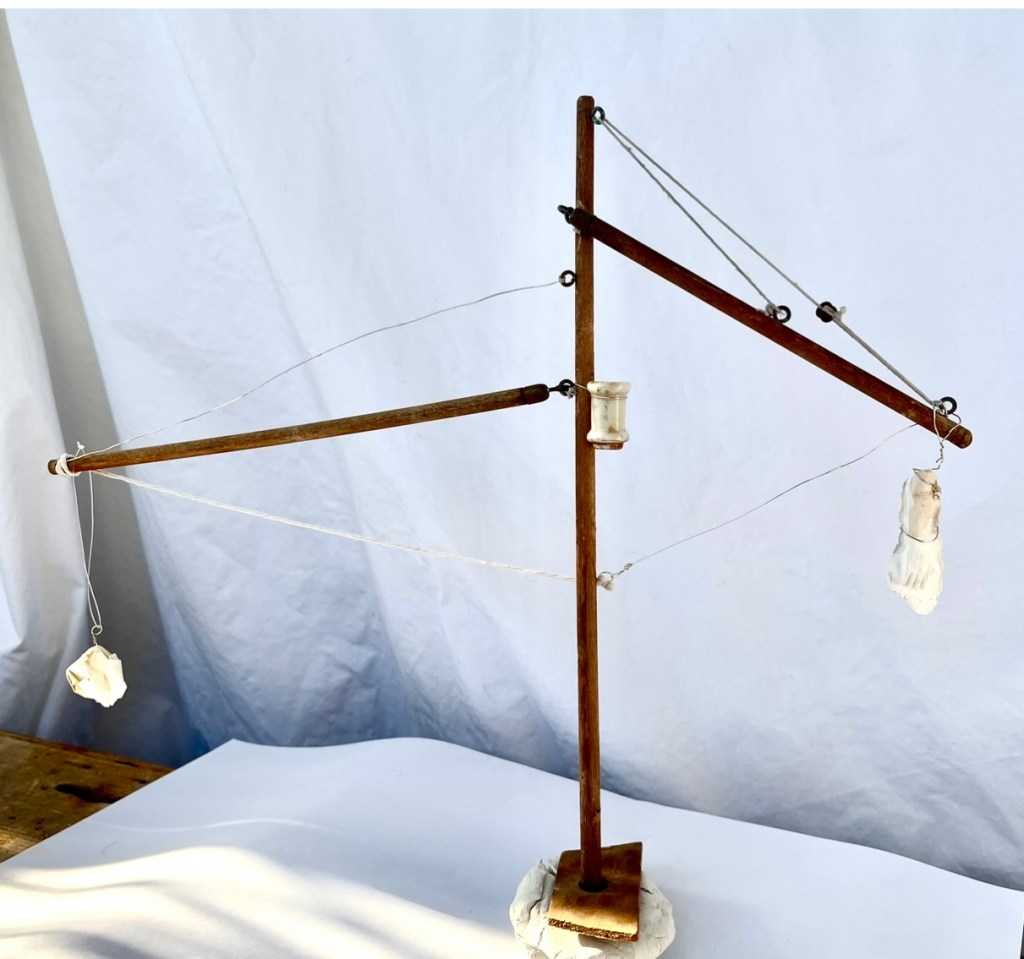
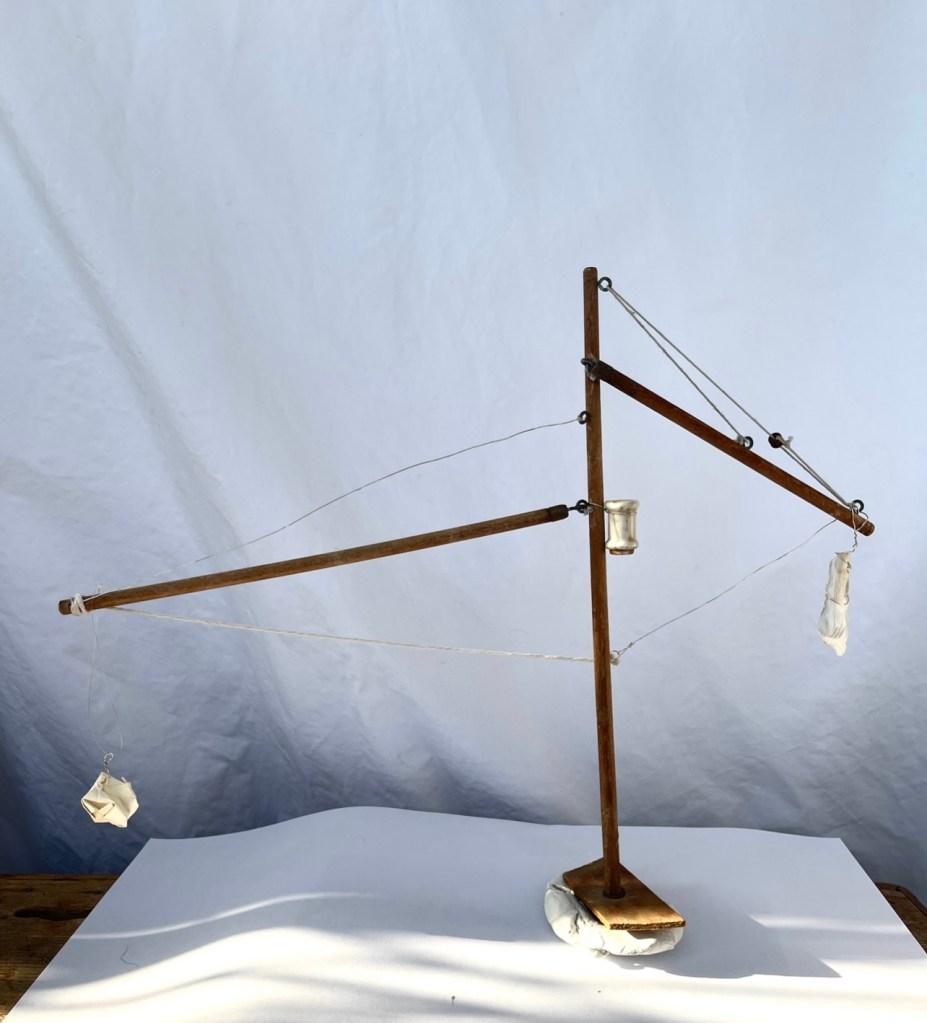
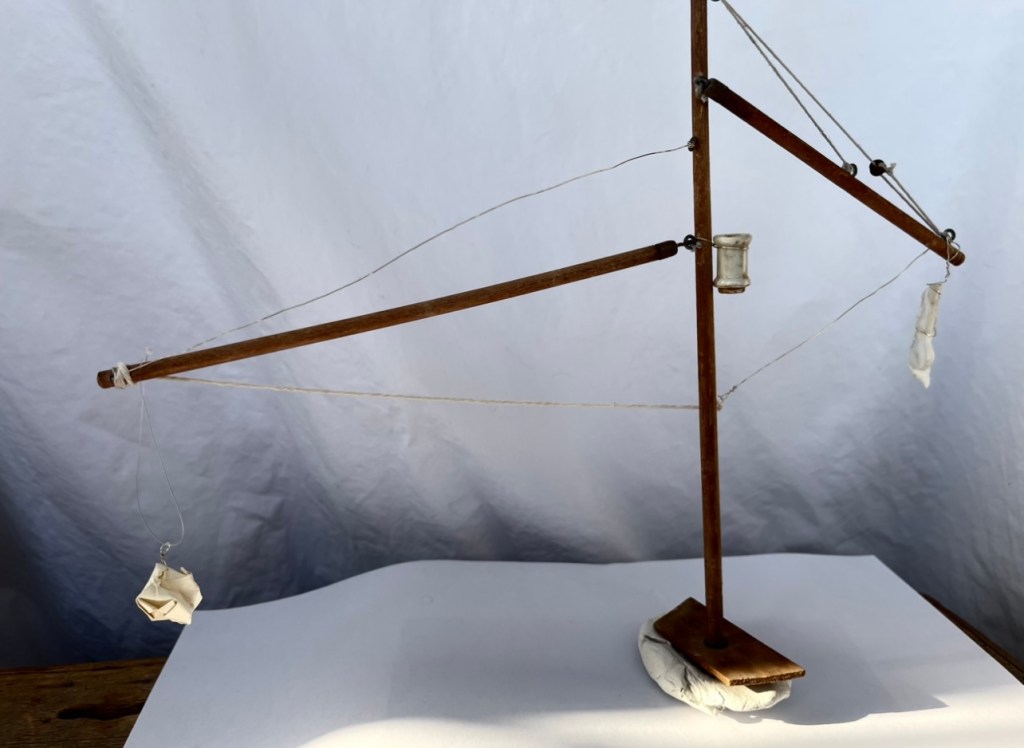
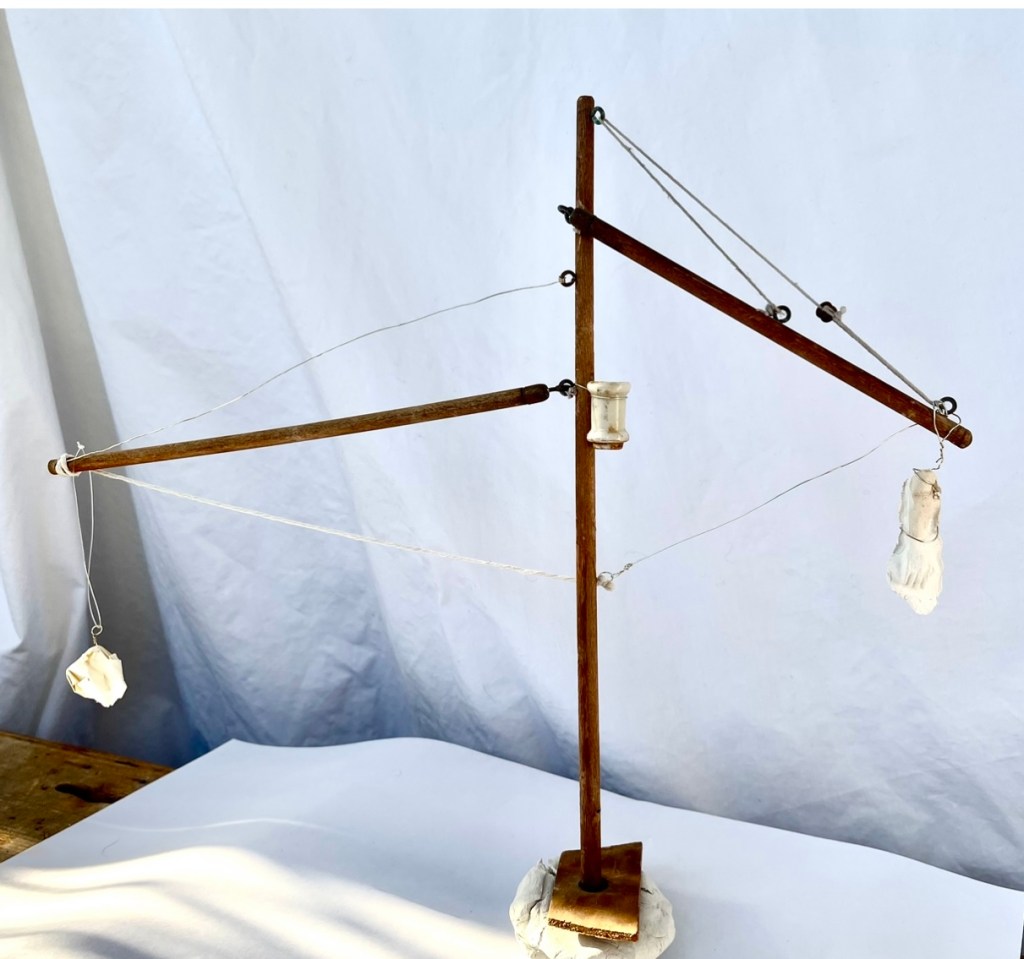
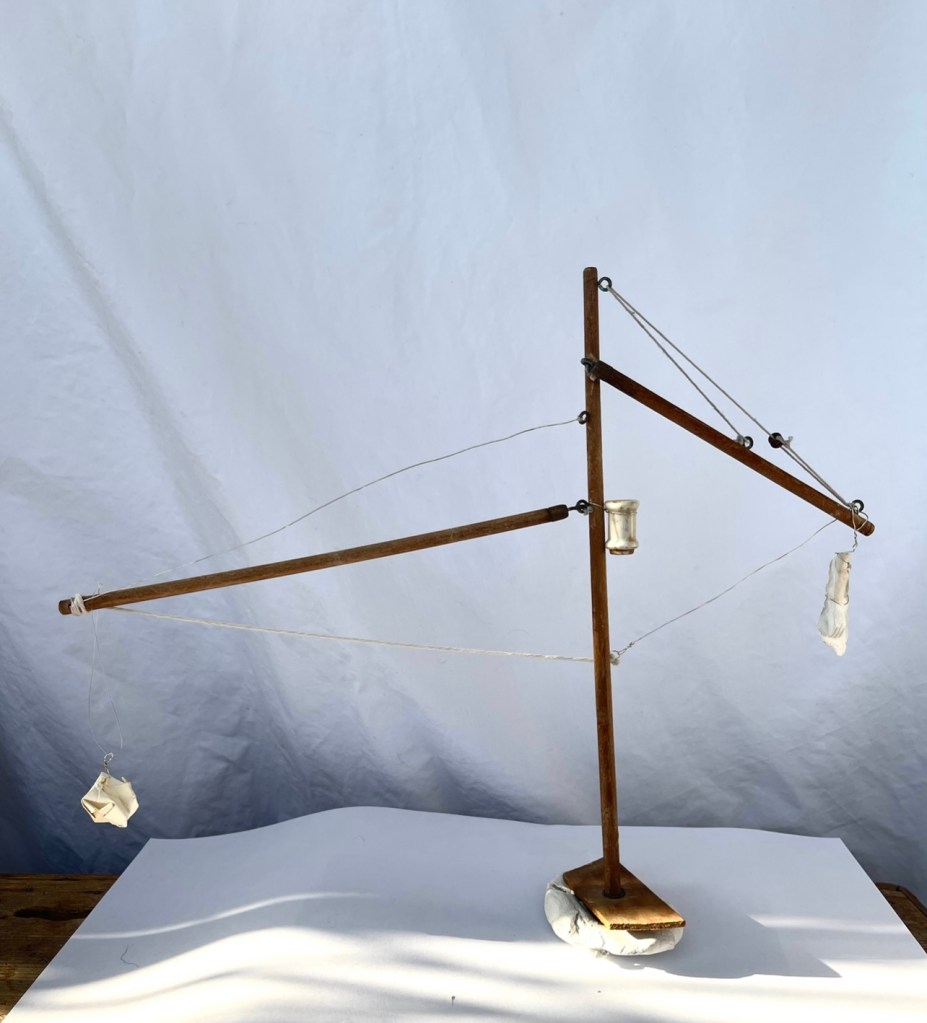
The sculpture became about ‘balance’ due to the delicate and small wooden base I had attached to the long willowy structure… this gave the piece some immediate narrative and as I attached and constructed the shape to allow a construction that could stand alone. The making process began to reveal the meaning behind the work. The complex and delicate life balances we navigate through. From my perspective I felt this should be about female life balances, echoing with the demands ‘we’ and society places on upon us/ ourselves. Making an origami paper box filled with my breath to expand it on one end of the piece and a solid relatively heavy mould of a dolls hand and forearm on the other side. The two objects offering contrasting narratives of children, work, motherhood, and the other the llightness and peace of being and living in the moment …
Early days with concepts and thoughts going forward to explore and examine all these projects further ….
Exercise 2.2 Artists at work – research
Anthony Cairns ( 1980 -)
Cairns seems like an artist who has stumbled across the exaggerated media of photography. Surprised and excited by the differing levels of image capture on a similar subject matter. Varying his media from Japanese paper printing, digital ink books, unplugged screen shots etc to create a diversity of media based work. His has an experimental approach but sticking to a subject matter formula, taking fresh captured media from outside the studio to developing new ways of reproduction and diversification of image representation. He has an open minded view of how this may happen and seems open to new technology but also ancient printing methods. There was an ongoing energy and newness about his work and his concepts.
Amy Silmans ( 1955 – ) enviable studio allowed for two spaces, one for mess and one for clarity. On viewing her process of work it was clear why she needs these distinct spaces. The painting space also seems to act like a gallery space where she is able to hang her large canvas and constantly review and rework them. Some times post exhibition. She continues to reject and transform her work over long periods of time. I wonder if this is perhaps the case with many artists work, the longer he artist self reviews a work the more they may want to change it as their process, clarity and technique is ever progressing. There is always room for tweaking and adjustment it is an ever present learning process to create and hence part of that process is to be for ever striving for a better result. Is an artist ever fully satisfied or is the nature of creativity to be constantly looking to push oneself ? Silman shows that this is indeed the case and ‘sitting’ with her work allows a deep level of contemplation and further exploration.
Gerhardt Richter (1932 – ) I studied this master artist at work in his studio in his later years. A confident and commercially successful man who was unafraid to experiment and strive for new ways of working. We see him with a giant squeezy board working a large canvas – playing with its mark making and commenting to an assistant that he is not happy with the result and wishes the canvas to be removed so he may start again. He does not seem to want to repeat past success stories and roll out a string of similar work, he looks for newness and variety. He too is seen over-painitng spending weeks at a time on each work, with multiple pieces in progress He is a quiet recluse seeming not to want the interference of commentary of other creatives around him content and absorbed in is process.
Fabienne Verdier ( 1962 – ) – A powerful female creator who uses her full physicality and strength during her studio process. Moving enormous machine driven brushes around vast canvases that at times seem to overwhelm her. There is an immediacy to her work – the giant brushes and Verdier seem to become one as she manipulates them across the canvas. There is a nod to the extreme physicality of a Jackson Pollock to her work as she uses her whole self to harness creative energy. There was an image of some work being erased by Verdier before committing to the process of making again, not unlike any other artist but there was more immediacy of content and passion that seemed to drive her practice. Further research did show Verdier working at her studio desk on ideas to inform her next practice. She explores how a subject has been represented previously and how she can further its artistic evolution. the is a long process of collation, reflection and consideration which happens in a tranquil environment away from her studio. It is here she claims the work and the spirit come to life and reveals itself.
The practice and process of creating art is a visceral one and so despite what might seem an immediate creation process may well have come from months of thought and contemplation. Artists are driven to produce work that allows their inner emotion to come to the surface, the work informed by a deeper layer of meaning and context. Would the absence of this make the work appear shallow or two dimensional and perhaps not engage or connect with the viewer on a more visceral level? Is a loaded question full of dilemmas and exceptions with with viewer context and experience varying hugely and will directly relate to their option of the art work in front of them. Personally I will think and over think a project or an idea prior to making and during the process of making. Allowing a particular thought process to guide the work but also mindful of the materiality of the piece and its found a narrative.
Some sense of a continued reproduction is part of my practice by way of experimentation and refining a process and end result. As yet it is not an essential and committed part of my process of work unless the project warranted it. I imagine a sense of boredom and lack of immediacy with process for process sake by manner of unnecessary repetition.
Project 3 – Mapping the Forward Path.
Exercise 3.1
Mapping Techniques:
SCOR Charts – showing strengths /challenge
Lists of words when I think of a new topic: flow of consciences…
excited, enthusiastic, adrenalin rush, positive, challenging, experimental, skills sets, under-experienced, over achieving, under achieving, under-confident, too ambitious,/under ambitious
Alex Kershaw – Mapping the Territory: – A comprehensive mapping of process of practice : to include; inspiration, projection, relationships to work and projects, type of medium and artwork, research, influences, related theories, new incorporations etc…through to final conclusions of presentation, situation and promotion.
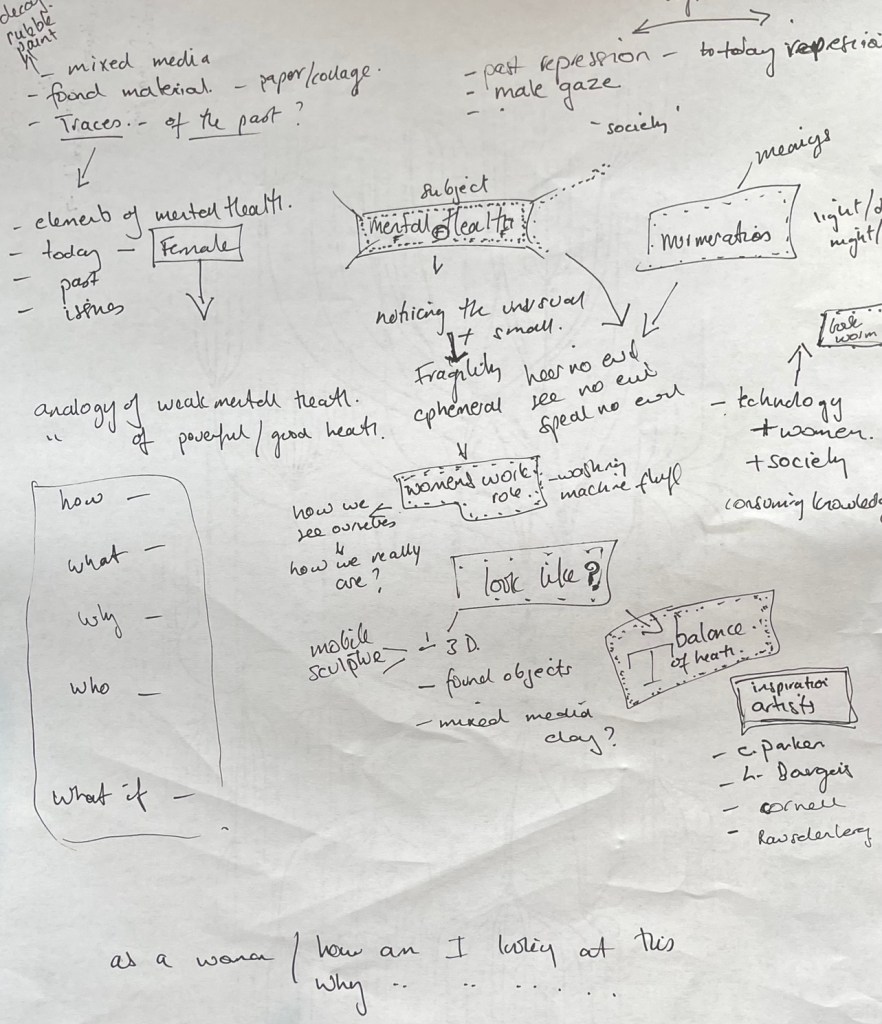
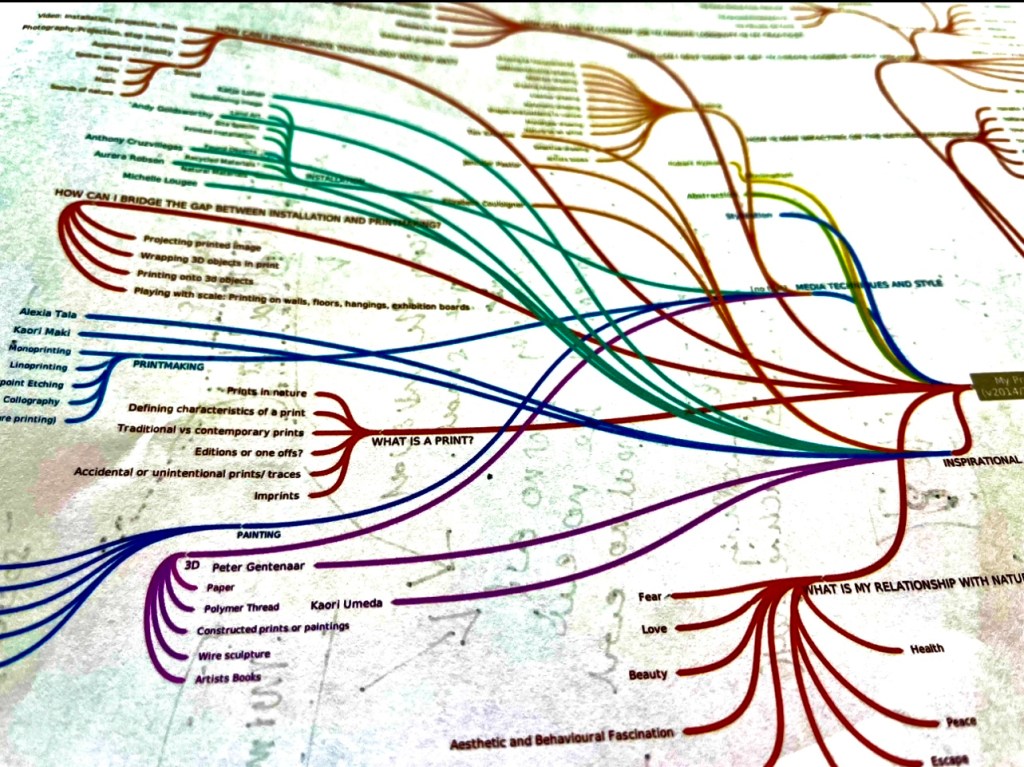
– using my wire grid board for 3D mapping – coloured wool paper/ photo/ found materials etc etc
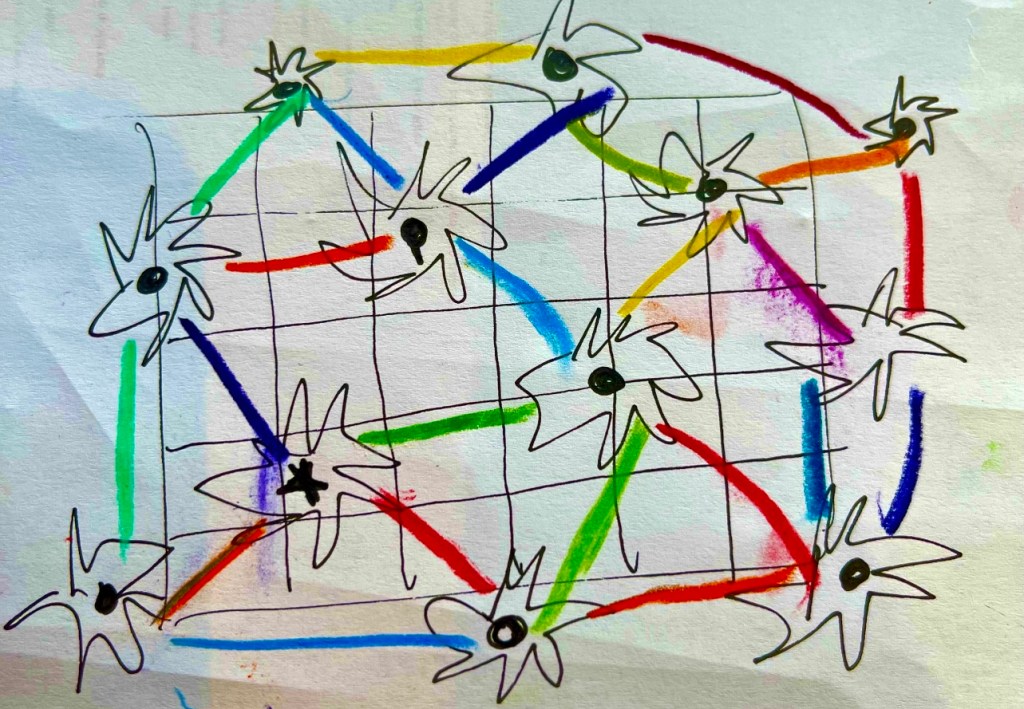
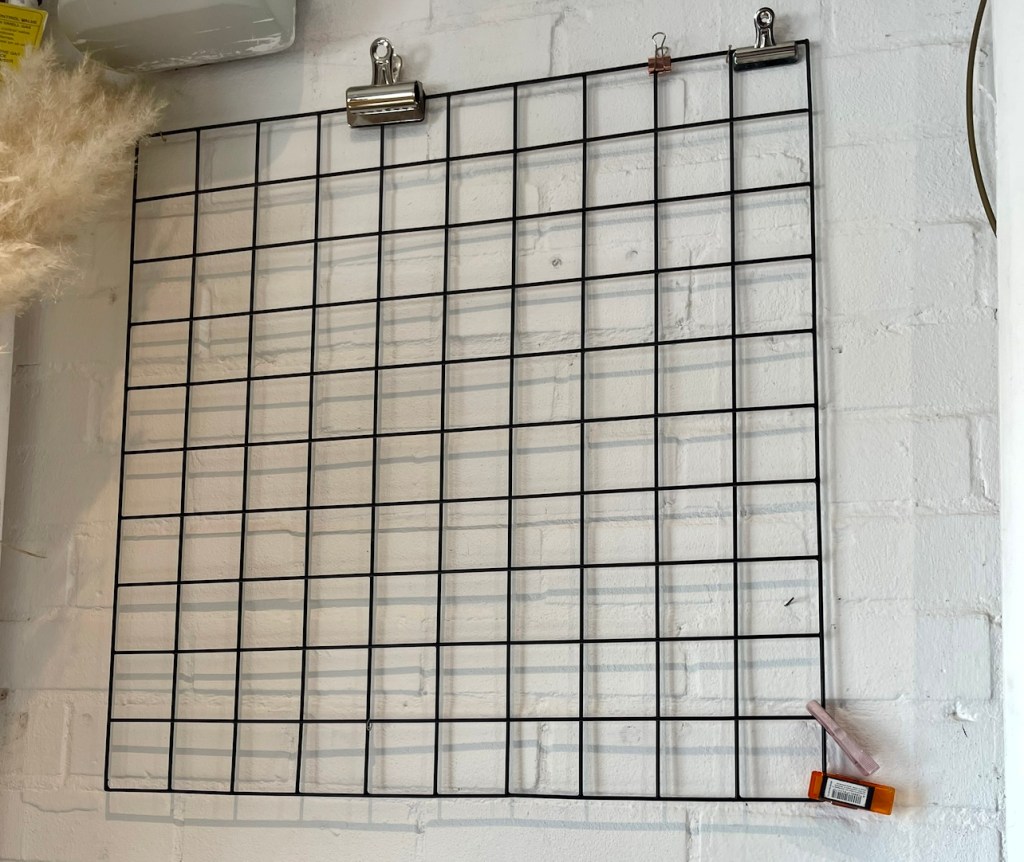
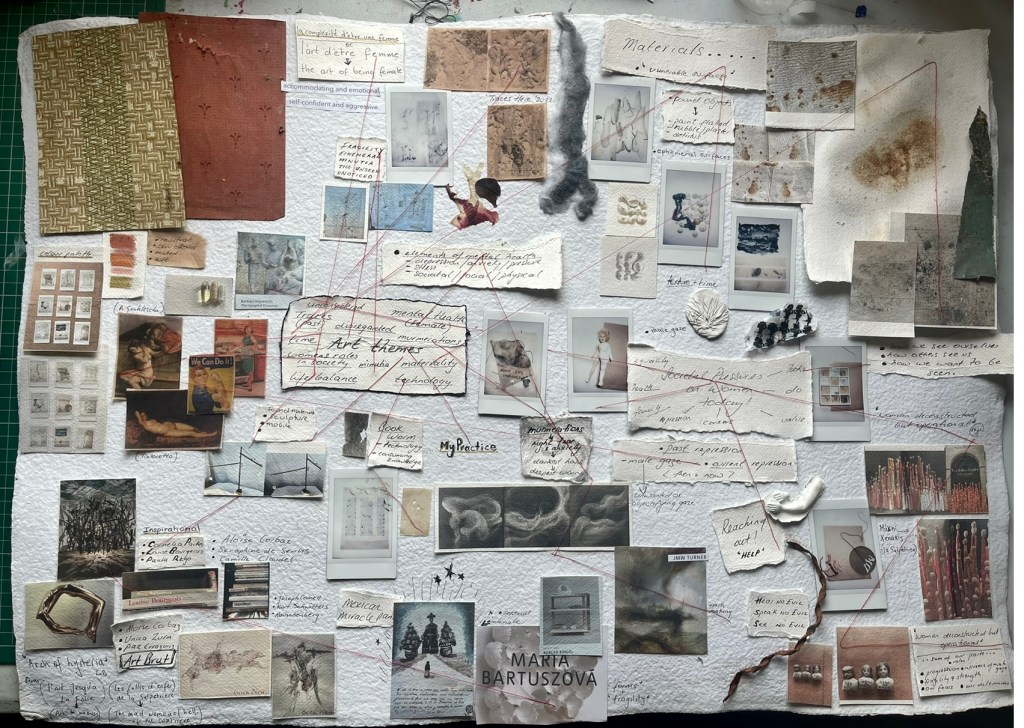
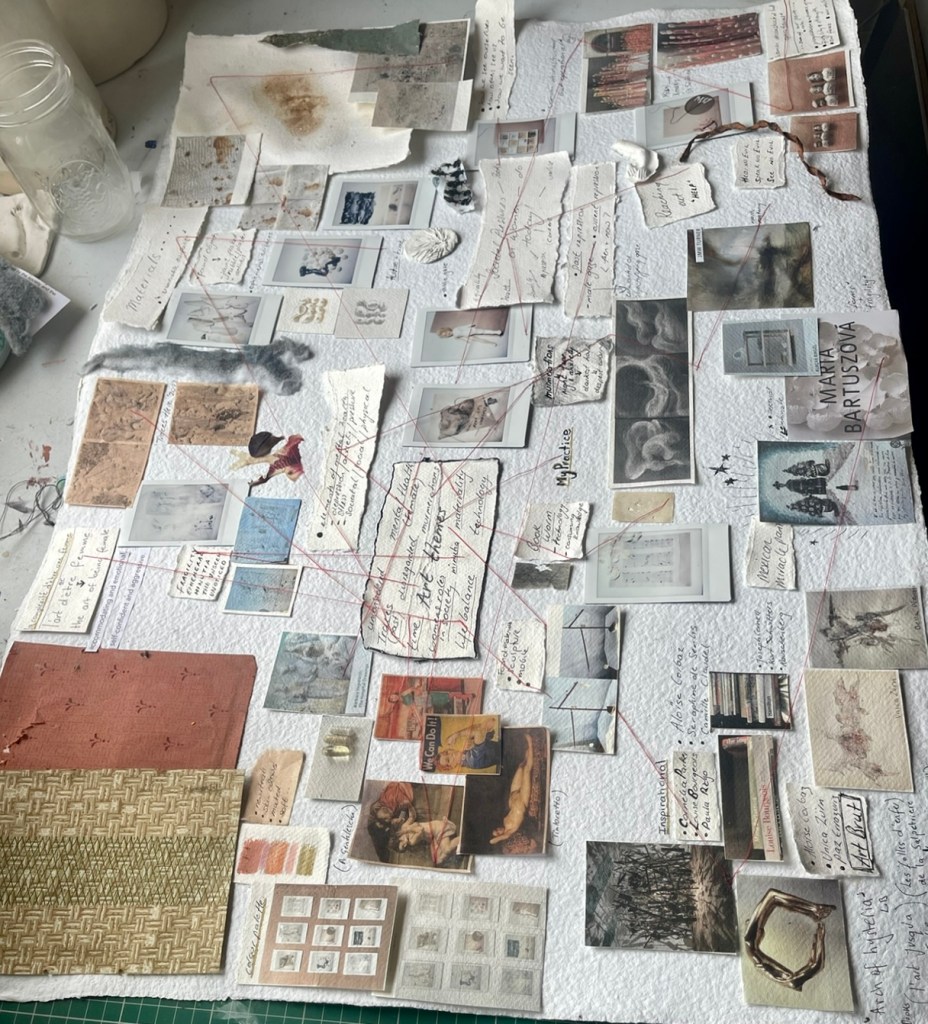
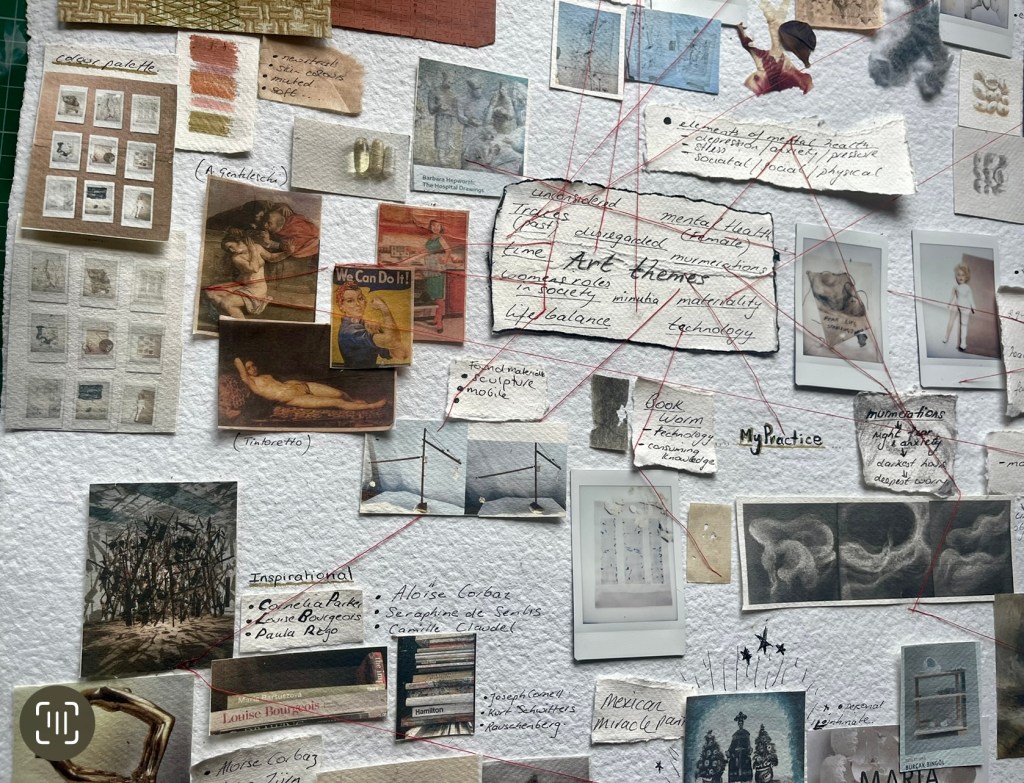
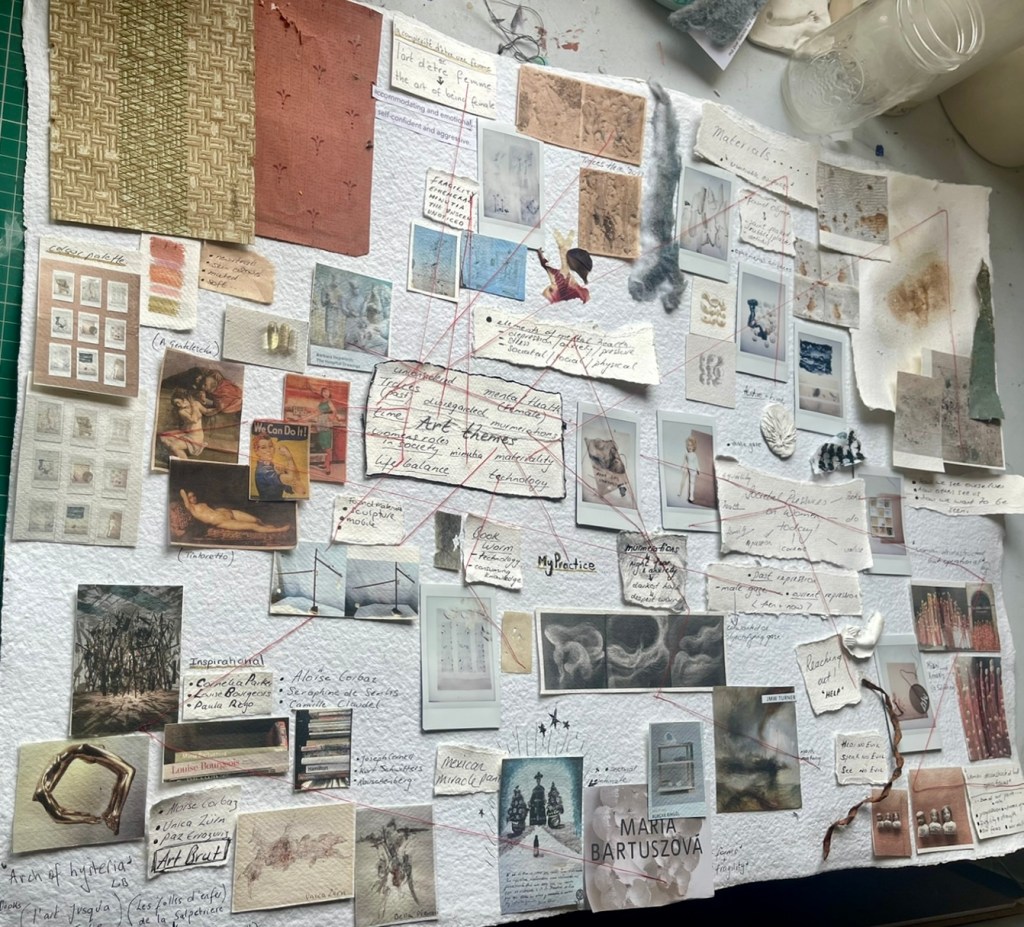
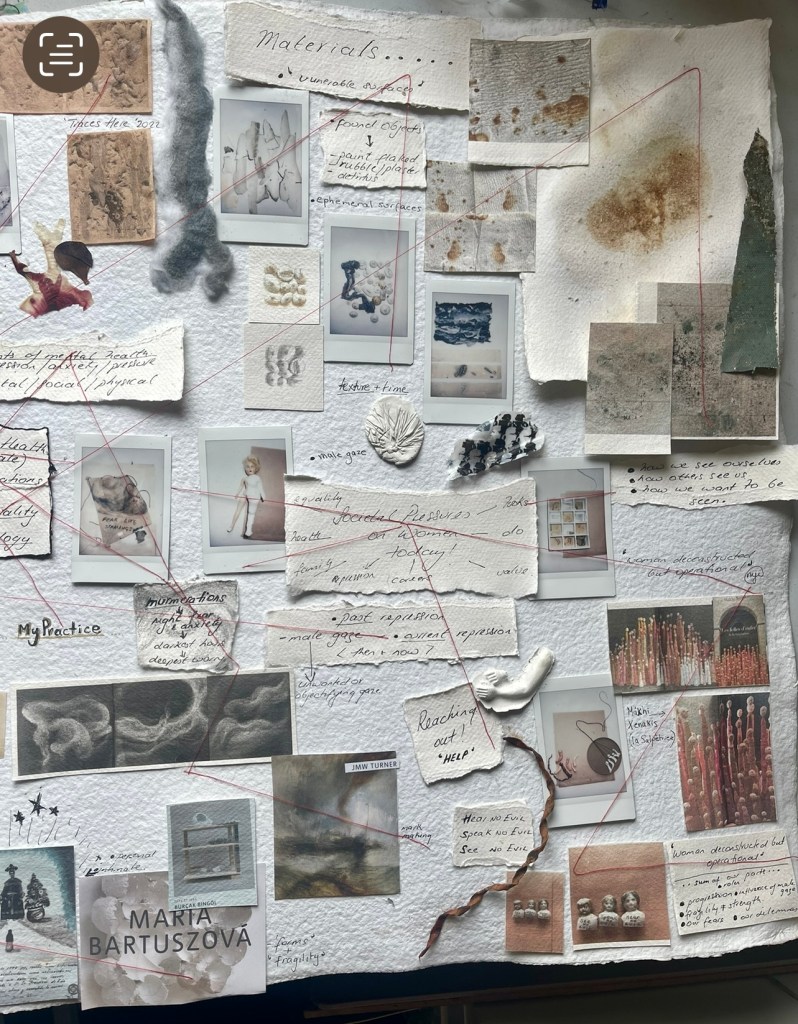
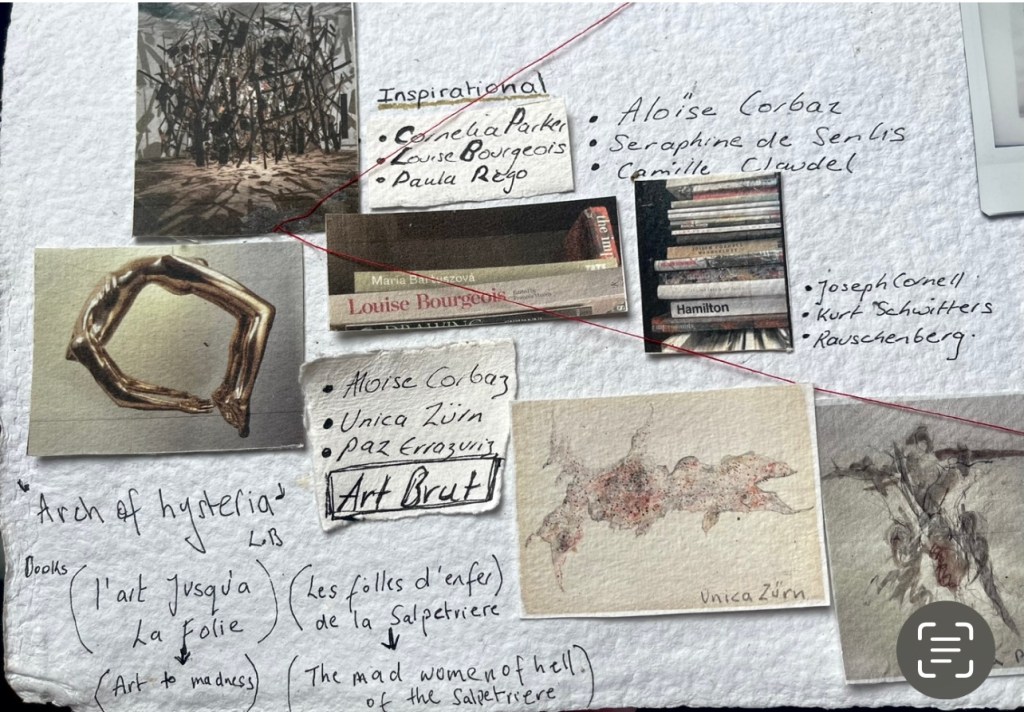
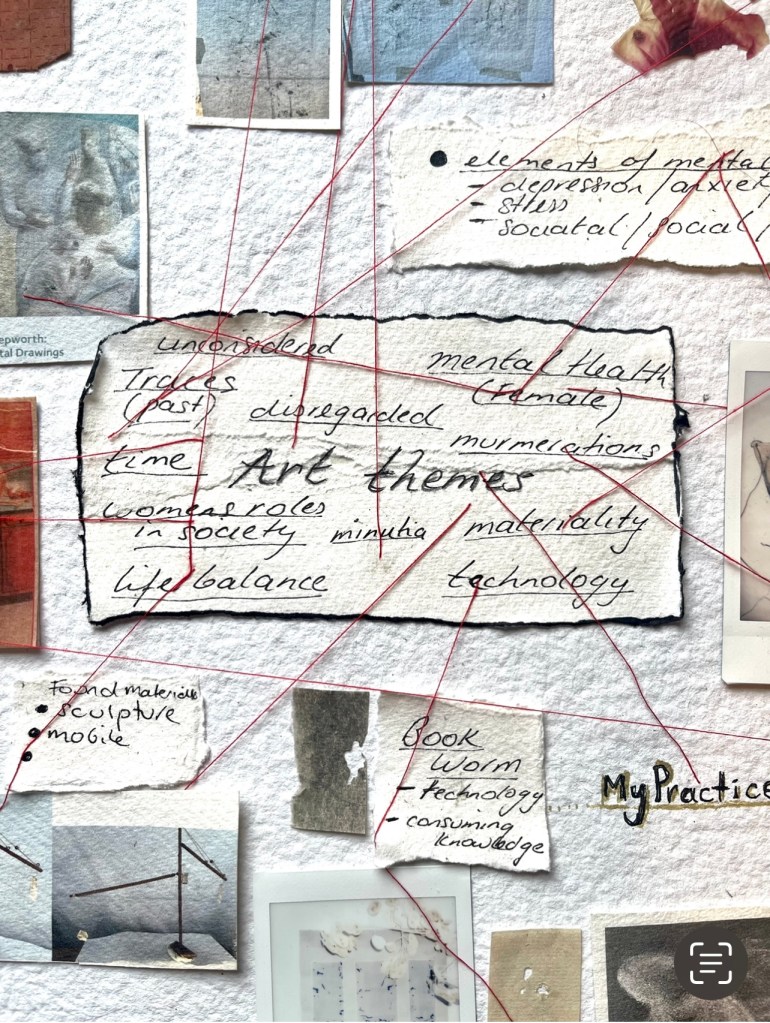
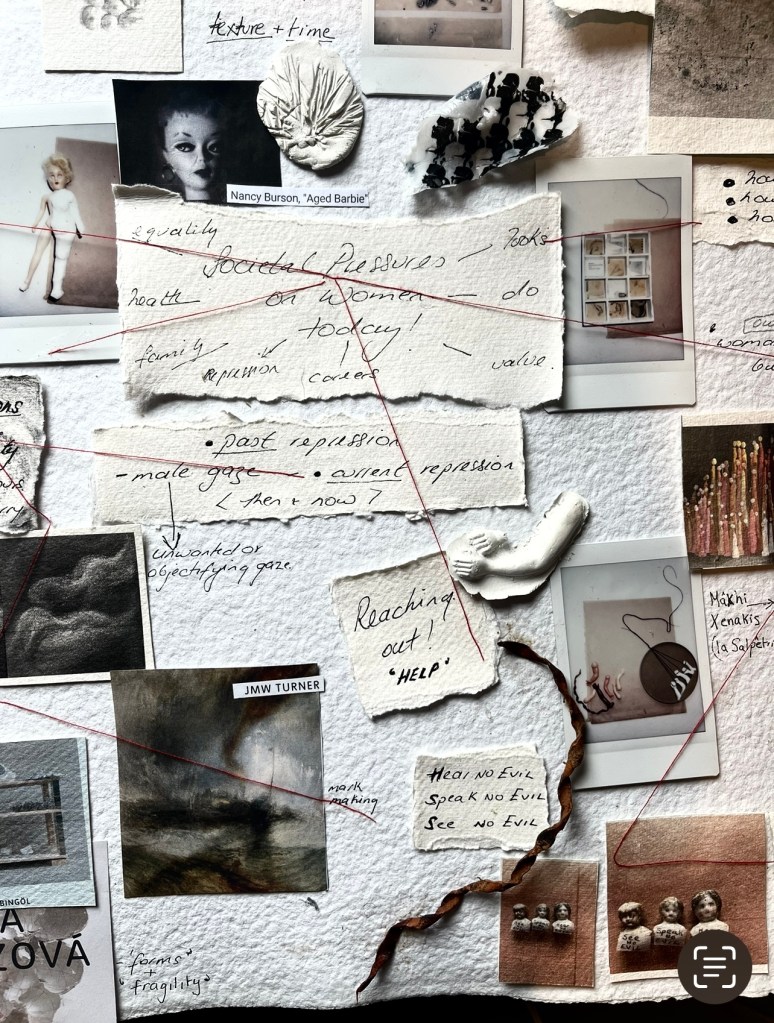
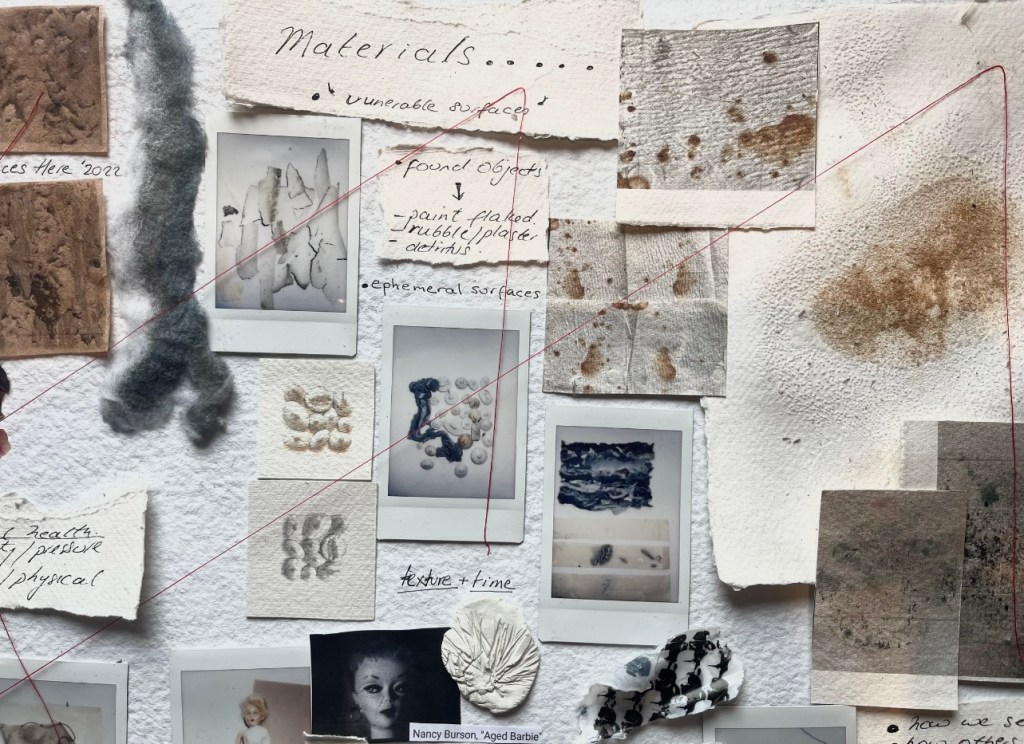
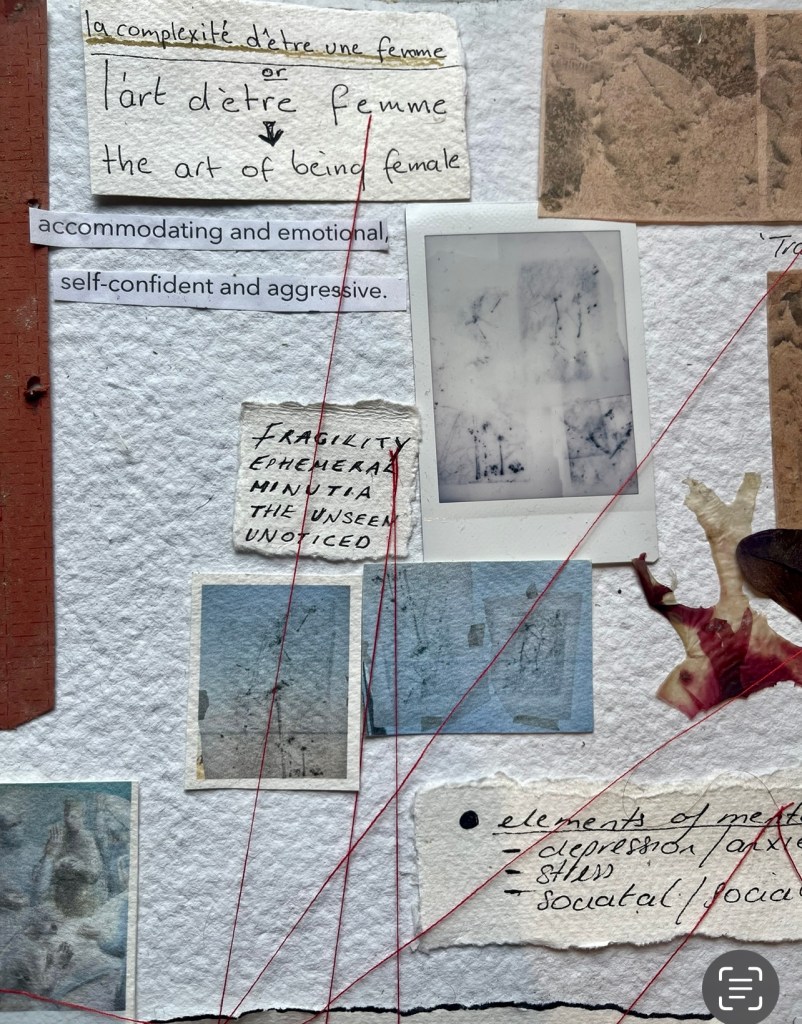
Ultimately my mapping technique fell to a slightly familiar format – A tonal collage of ideas, rambling and processes that has helped me to clarify a little more of what I would like to push ahead with.
I have combined photography of past work, themes, inspiration materials. colour ideas and other information to help inform my practice. The mapping seems to have culminated in a potential project I have called ” la complexie de’etre femme’ or the ‘Complexities of being female’ The French influence has come from my research surrounding the La Salpetriere and the female artists held in that asylum and others like it. Its emerging to be a multi-piece project focussing in on the issues women face today and the evolving societal pressures upon us to be ‘everything all at once ‘. This potential line of interest is still in embryonic stages and still has he potential to diversify….
Initial Work Plan:
Working Title: The Complexities of the Female / La Complexite d’etre une Femme.
Explore : Several pieces of work as Body of Work ( BOW) using – mixed media / found objects/ natural media
Working with 2 D collage on canvas horizontal / vertical
Possible 3 D sculptural – mobile structure concerning balance of objects and forms .
Jigsaw/ Puzzles format of description and narrative . ” Woman Deconstructed but Operational ‘.
Craft material – embroidery of the past / juxtaposed with new start imagery.
Every Day Practice of recording self – emotionally, physically, expectations etc
Develop:
2D/ 3 D concepts ideas of work. Create macaques of forms and structures. Formalise what the work might look like. How many pieces or a collection of pieces to form a BOW.
Materials to best describe the narrative.
Site specific or general?
Research:
Artists working in similar fields of concern . The Gorilla Girls of today. Past works and narrative.
Male gaze
Barbie Culture – Outward perfection.
Strength /Fragility
Balance of wife mother, provider, male equal, indipendent. Cultural divide and less equality in other countries.
Art and Mental Health – the female artists , the work, the stories behind them;
Art Collaboration – Susan Cutts – paper sculpture ( susancuttspaper – instagram)
Articles: How Female Artists are Subverting Mainstream Portrayals of Women .(Salome Gomez -Upegui – Jan 18th 2021 )
Female artists pushing identity norms and stereotypes .
Kicking against the ‘nice girls’ wall. Destroying expectations of agreeability/sensitivity and expected niceness. ( Matthew Syed – July 2023)
Women Seeking Mental Healthcare still dismissed as “dramatic’ ( Georgia Aspinall – Grazia Magazine July 26th 2023 )
Reflection:
Refine Ideas and body of work to be produced.
What will it actually look like and what form will it take?
What is the key theme and message ?
What are the materials needed?
Can I include video and or photography…to present the idea?
Evaluation:
Does the piece say something new/different? Can I enhance it ?
Does the medium and form work ?
Is it ambitious enough? – Look back over work and research.
Is it relatable or too fuzzy?
Does it make sense?
Is the material ephemeral / vulnerable? How can I stabilise it ?
Outcome:
A B.O.W or single piece that is impactful, visceral, unusual , diverse and relatable.
Current and long lasting theme.
Site flexibility.
Timings:
T.B.C – with help from tutor.
 The Sharpe Gallery