Selection of Learning Logs 1.
500 word reflective commentary.
A development in my recent work concerned exploring and uncovering women’s mental health as depicted by the male gaze over the last few centuries of art. It was indeed reflective and eye opening to see such well documented misogyny and judgement aimed at the female. My work ‘Traces’ looked at the life of these women in asylums concerned with the physicality of the structures, walls and materials that surrounded and contained them. Crumbing, stained, run down, neglected and derelict, these remains were alive with physical and mental traces of their existence. I combined collected physical material with other descriptive matter to create a concept of work steeped in actual history commenting on the visceral tragedy of existence that was conducted within them. The actual evidence of human DNA within the remains was also intriguing and exciting.
My process is often long thought out, opting for a distorted or deeper layer of contemplation around a topic. This is also true of found materials and materiality in general. Experimentation and manipulation of the found material, objects and narrative are key to informing my practice. Aiming to look more ‘reflectively’ and deeply at each step in my process will be key for my future development.
My projects/work seems to carry elements of the past and time in narrative and content. Searching out the more unusual, discarded and ephemeral for collage and mixed media work which seem to stem from an influence of what has been left, or ignored. I am interested in women’s wellbeing, mental health the many roles we have to play in society. This will be another recurring theme in my practice. Combining material enquiry along side the female commentary to engage in a full circle of narrative, commentary and materiality .
Working across disciplines of found, mixed media brings with it an open degree of context and history, plus opportunity for juxtaposition and disruption. There is an excitement when combining objects, drawing and materials to explore new possibilities of engagement and concept.
I would like to up – scale my work to some extent – I am aware of my restrictions and comfort zones surrounding size. Primarily this is in direct relation to subject matter more often, looking at the unnoticed or lost is often an exploration of smaller things but has the potential to be bigger. Looking at containment and surroundings and the traces there in could allow for large layered 3D work with a collection of materials on a mass scale. Perhaps revisiting mental health and the spaces we feel comfortable and uncomfortable within would be pertinent to this . Up-scaling intricate, personal and in depth small scale work will be a challenging process but I recognise this is a viable concept if I consider volume of small scale works placed together in an artwork.
Currently I have worked on very few site specific instillations, this is an area of great interest, opening the art up to a wider audience in unexpected locations stepping out of a gallery surrounding. The dream of being an artist with relatable and engaging content is nothing new. I hope to explore topics that are current and pertinent to women today but also engage a wider audience in looking back to the past our ephemeral lives, and habits
Selection of Learning Log Selection 2.
Project 3 – Mapping the Forward Path.
Exercise 3.1
Mapping Techniques:
SCOR Charts – showing strengths /challenge
Lists of words when I think of a new topic: flow of consciences…
excited, enthusiastic, adrenalin rush, positive, challenging, experimental, skills sets, under-experienced, over achieving, under achieving, under-confident, too ambitious,/under ambitious
Alex Kershaw – Mapping the Territory: – A comprehensive mapping of process of practice : to include; inspiration, projection, relationships to work and projects, type of medium and artwork, research, influences, related theories, new incorporations etc…through to final conclusions of presentation, situation and promotion.
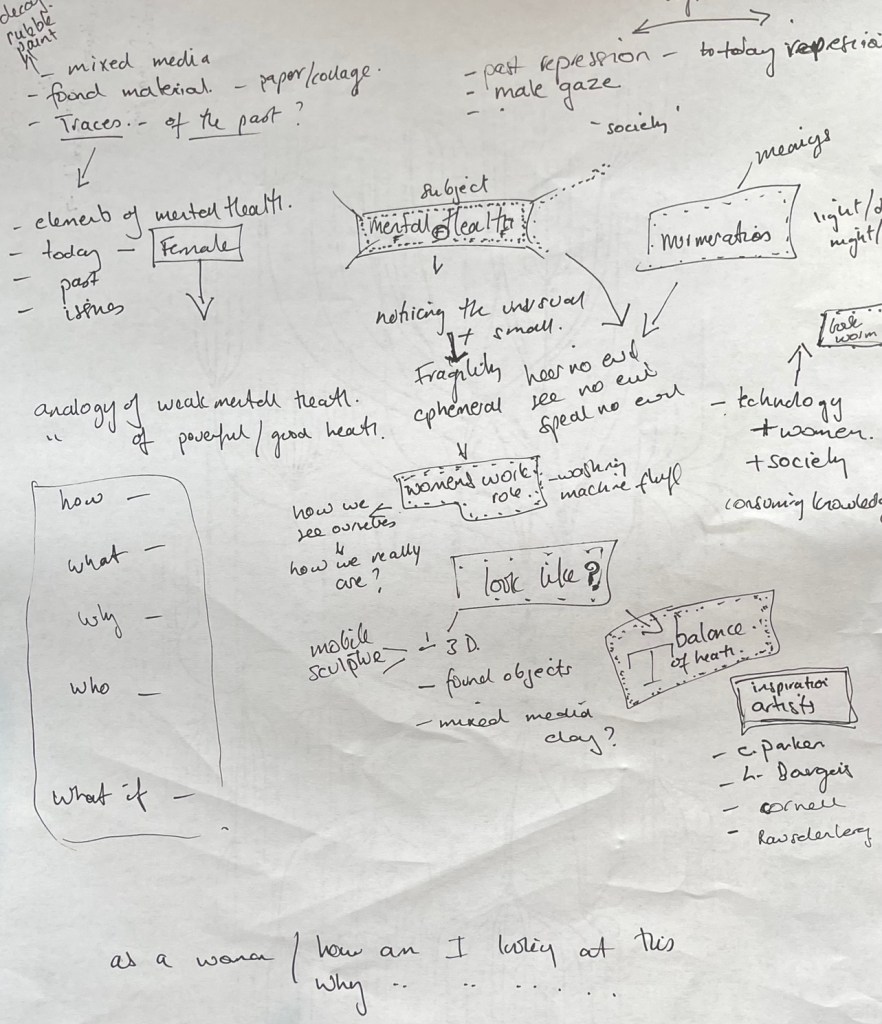
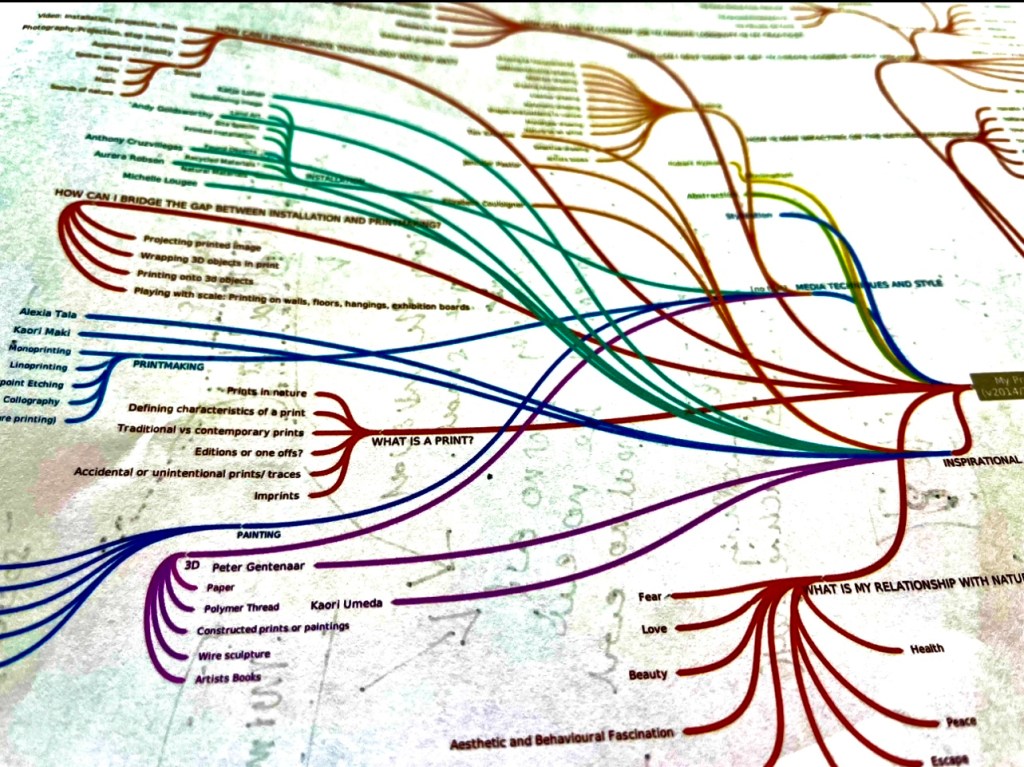
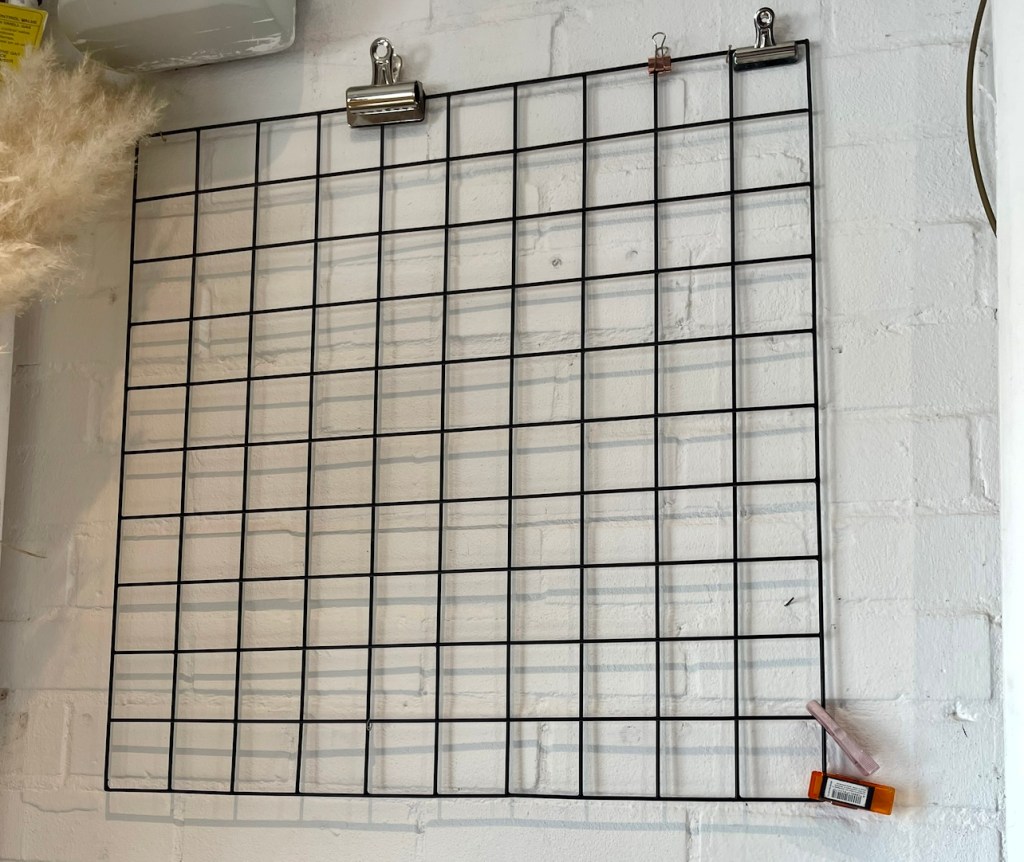
– using my wire grid board for 3D mapping – coloured wool paper/ photo/ found materials etc etc
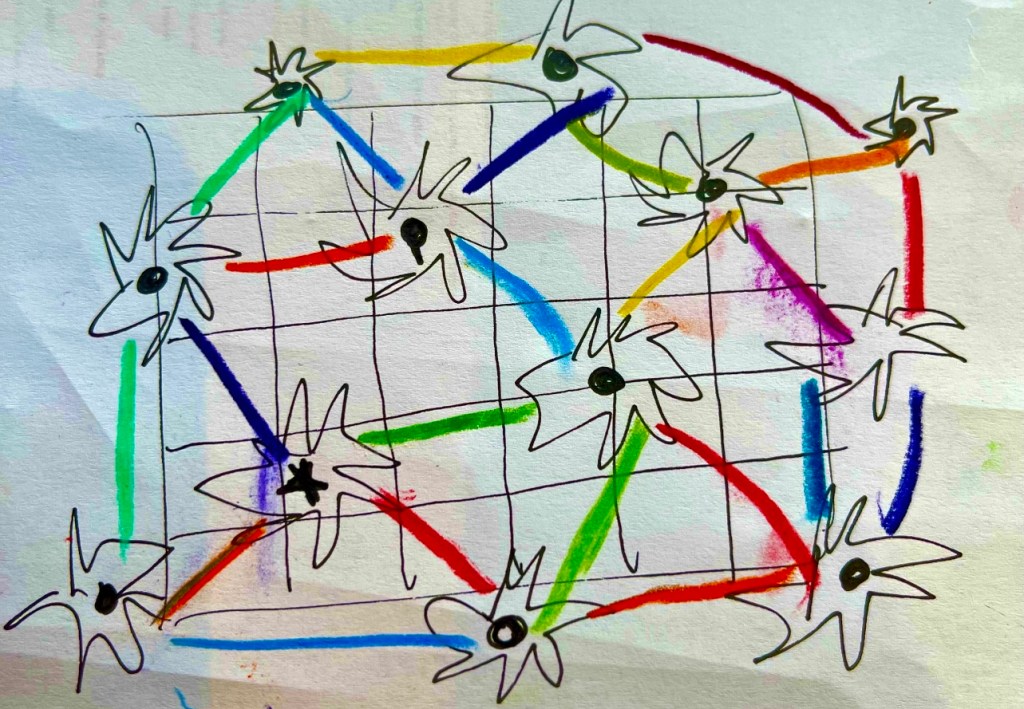
Ultimately my mapping technique fell to a slightly familiar format – A tonal collage of ideas, rambling and processes that has helped me to clarify a little more of what I would like to push ahead with.
I have combined photography of past work, themes, inspiration materials. colour ideas and other information to help inform my practice. The mapping seems to have culminated in a potential project I have called ” la complexie de’etre femme’ or the ‘Complexities of being female’ The French influence has come from my research surrounding the La Salpetriere and the female artists held in that asylum and others like it. Its emerging to be a multi-piece project focussing in on the issues women face today and the evolving societal pressures upon us to be ‘everything all at once ‘. This potential line of interest is still in embryonic stages and still has he potential to diversify….
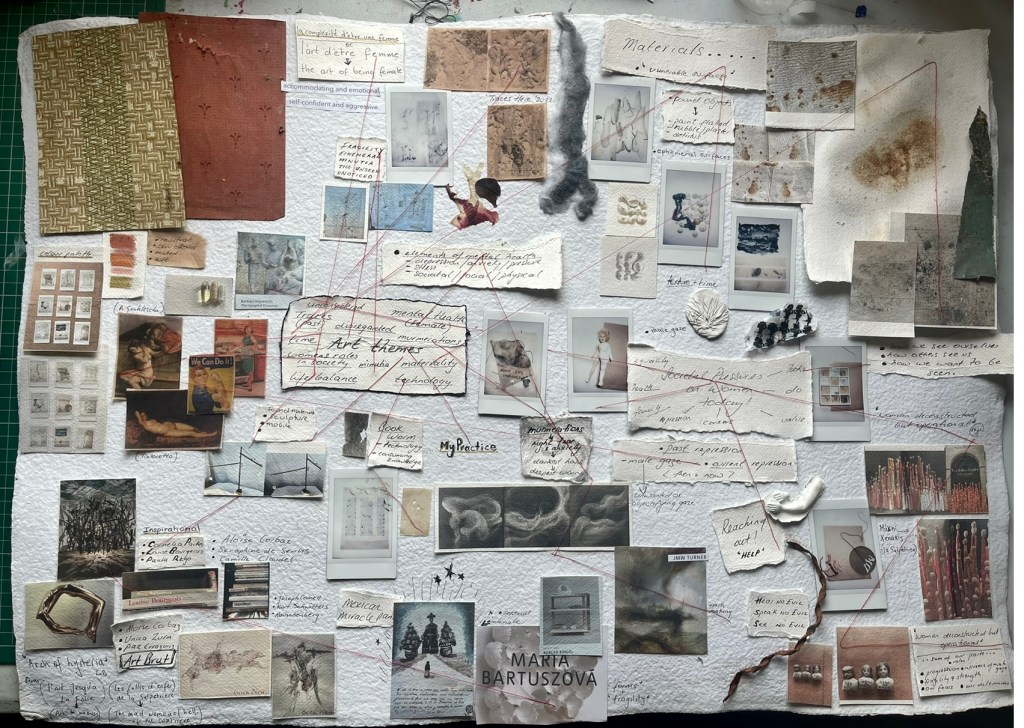
Early machine detritus …
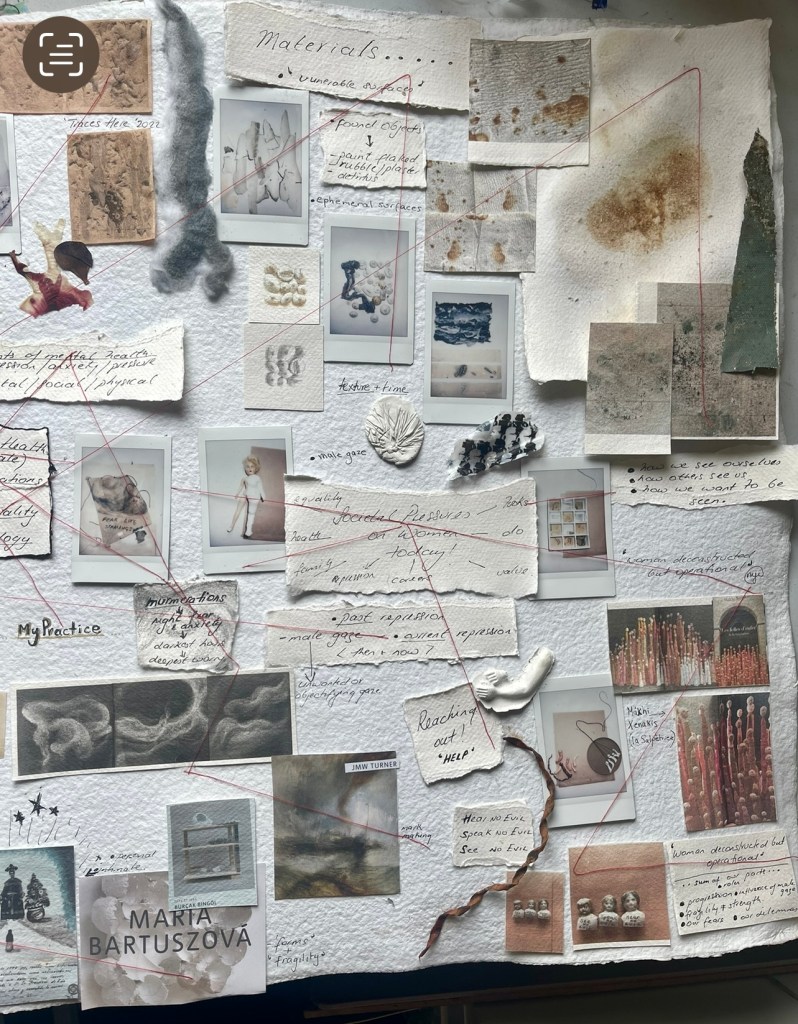
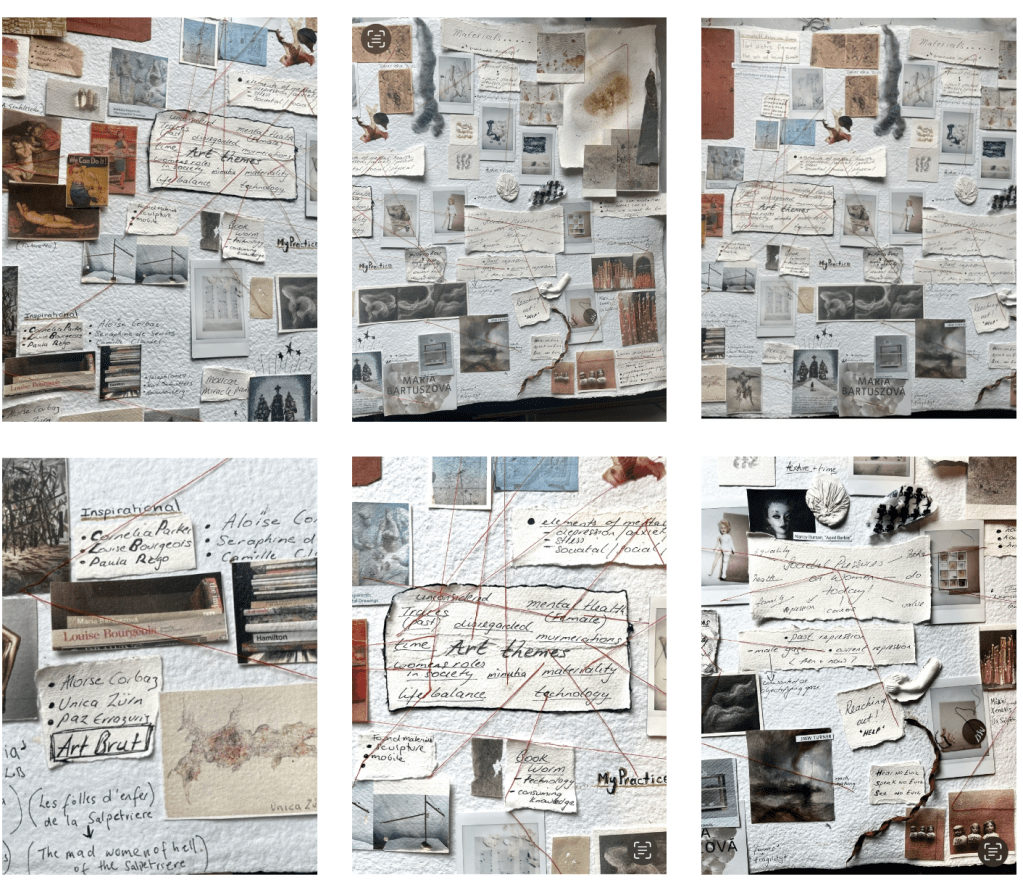
Initial Work Plan:
Working Title: The Complexities of the Female / La Complexite d’etre une Femme.
Explore : Several pieces of work as Body of Work ( BOW) using – mixed media / found objects/ natural media
Working with 2 D collage on canvas horizontal / vertical
Possible 3 D sculptural – mobile structure concerning balance of objects and forms .
Jigsaw/ Puzzles format of description and narrative . ” Woman Deconstructed but Operational ‘.
Craft material – embroidery of the past / juxtaposed with new start imagery.
Every Day Practice of recording self – emotionally, physically, expectations etc
Develop:
2D/ 3 D concepts ideas of work. Create macaques of forms and structures. Formalise what the work might look like. How many pieces or a collection of pieces to form a BOW.
Materials to best describe the narrative.
Site specific or general?
Research:
Artists working in similar fields of concern . The Gorilla Girls of today. Past works and narrative.
Male gaze
Barbie Culture – Outward perfection.
Strength /Fragility
Balance of wife mother, provider, male equal, indipendent. Cultural divide and less equality in other countries.
Art and Mental Health – the female artists , the work, the stories behind them;
Art Collaboration – Susan Cutts – paper sculpture ( susancuttspaper – instagram)
Articles: How Female Artists are Subverting Mainstream Portrayals of Women .(Salome Gomez -Upegui – Jan 18th 2021 )
Female artists pushing identity norms and stereotypes .
Kicking against the ‘nice girls’ wall. Destroying expectations of agreeability/sensitivity and expected niceness. ( Matthew Syed – July 2023)
Women Seeking Mental Healthcare still dismissed as “dramatic’ ( Georgia Aspinall – Grazia Magazine July 26th 2023 )
Reflection:
Refine Ideas and body of work to be produced.
What will it actually look like and what form will it take?
What is the key theme and message ?
What are the materials needed?
Can I include video and or photography…to present the idea?
Evaluation:
Does the piece say something new/different? Can I enhance it ?
Does the medium and form work ?
Is it ambitious enough? – Look back over work and research.
Is it relatable or too fuzzy?
Does it make sense?
Is the material ephemeral / vulnerable? How can I stabilise it ?
Outcome:
A B.O.W or single piece that is impactful, visceral, unusual , diverse and relatable.
Current and long lasting theme.
Site flexibility.
Selection of Learning Log .3
Reflective Commentary
This section of research has been explorative and has focussed on finding a pathway through a plethora of ideas to a satisfactory conclusion in order to drive my final year project.
There were a number of enquiries I was concerned with that didn’t initially appear to have any cohesion or obvious link.
With hindsight I realised I needed to discover why these themes have been of interest to me and my what is my personal perception and connection to them.
They appear to all contain elements that relate to me personally with the many hats we wear as females, artist, mother, wife, business woman etc and the
The murmuration work was inspired by a poem concerning night fears, using the dark amassing shapes of a starling murmuration as symbol of this condition. When awake in the dark, small hours our mind wanders, imaginations are amplified and logic seems to have escaped. As a child and as mother with young children who wouldn’t sleep this struck a chord with me.
Playing around with video was a new area of exploration and these rough clips were inspired by some vintage dolls heads that felt quite menacing. The Hear no Evil/ Speak no Evil and See no Evil seemed an ideal label to place upon them as I themed the work with cultural and societal imagery and a ‘dumb insolence ‘ concerning them as we are seen to turn our back on key environmental, cultural and sexism issues.
Looking at found material and detritus was a theme I worked with in past projects and am continually inspired by materiality for theme and content. The dried and aged blossom flowers with connotations of ‘lost bloom’ and lost youth’ informed some work using simple frottage to produce delicate traces of the stems on the opaque paper, offering a seemingly fleeting and transient feel to the work
Book worm was solely inspired by the discovery of these wonderfully ancient marks made by insects. Their beautiful and relentless eating of the transcripts was fascinating as they literally ate their way through the pages of knowledge. Unassuming of the world we occupy the analogy of their presence a synonym for knowledge consumption, denial and disregard.
These initial explorations and subsequent mind mapping have helped to make some decisions regrading my process of work and themes going forward. Combining them to an overall concept surrounding the “complexities of being female’. , expectations around femininity, womanhood, and the female body. I imagine a body of work will be more suitable rather than focussing in on a single piece and concept:
Selection of Learning Log.4
Reading Point: Archive.
Work below – ‘Palma Bird’ – Mixed media
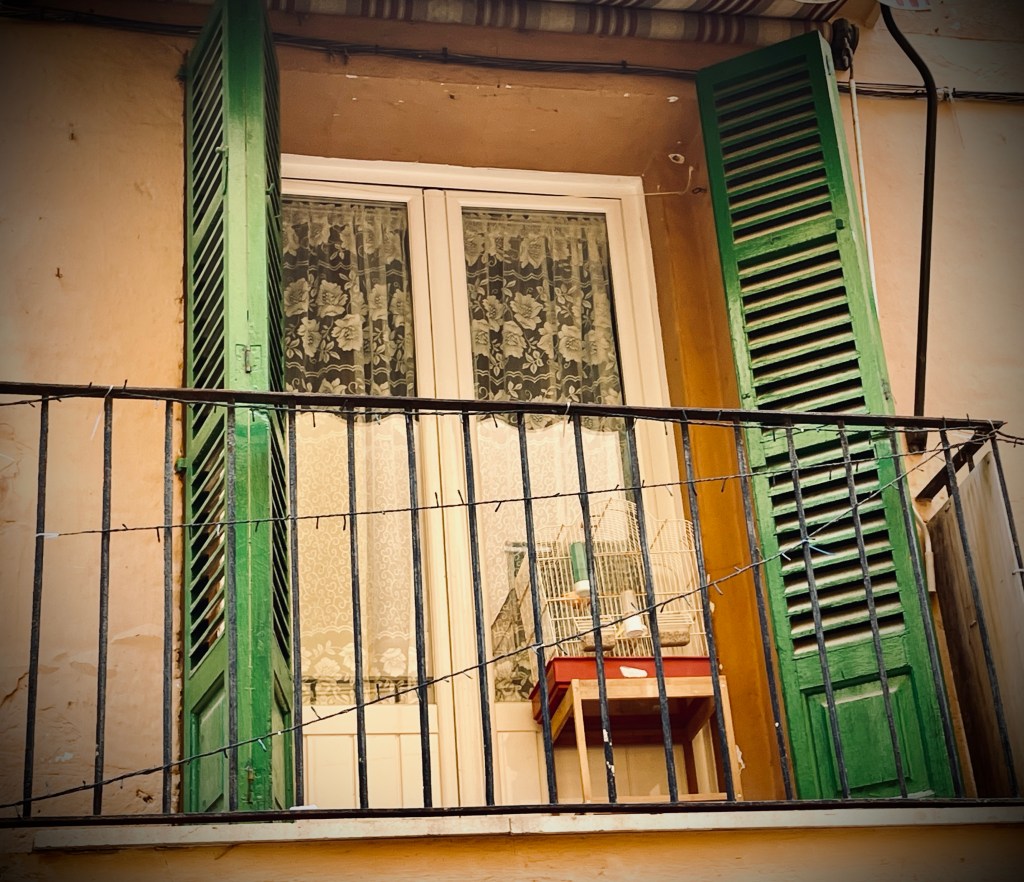
The work below was produced after a trip to Palma in Spain. I had photographed a small balcony window with a bird in cage sitting on top of a table. The bird inside was flitting around the cage cheeping noisily, perhaps from the excitement of being out in the fresh air or the desperate need to break free. The scene was both charming and tinged with sadness at the caged bird. The colours were beautifully muted and traditional of the area. It was situated in a less affluent part of the city.
At this time I was interested in preservation and the passage of time. Wanting to retain and capture the essence of a place/building. Aiming to hold onto some part of it to make it more real and tangible for the viewer. Being able to share a greater part of the image encompassing the materiality of the actual place. To own and retain a discarded part of it, to better understand visualise it.
Below the crumbling building I recovered flaked paint and plaster both from the brick work ad the green blinds.
On my return I printed the image onto the slightly vulnerable surface of Khadi paper. To create a distorted and aged look I used an eraser over the surface to rub away some of the images clarity.
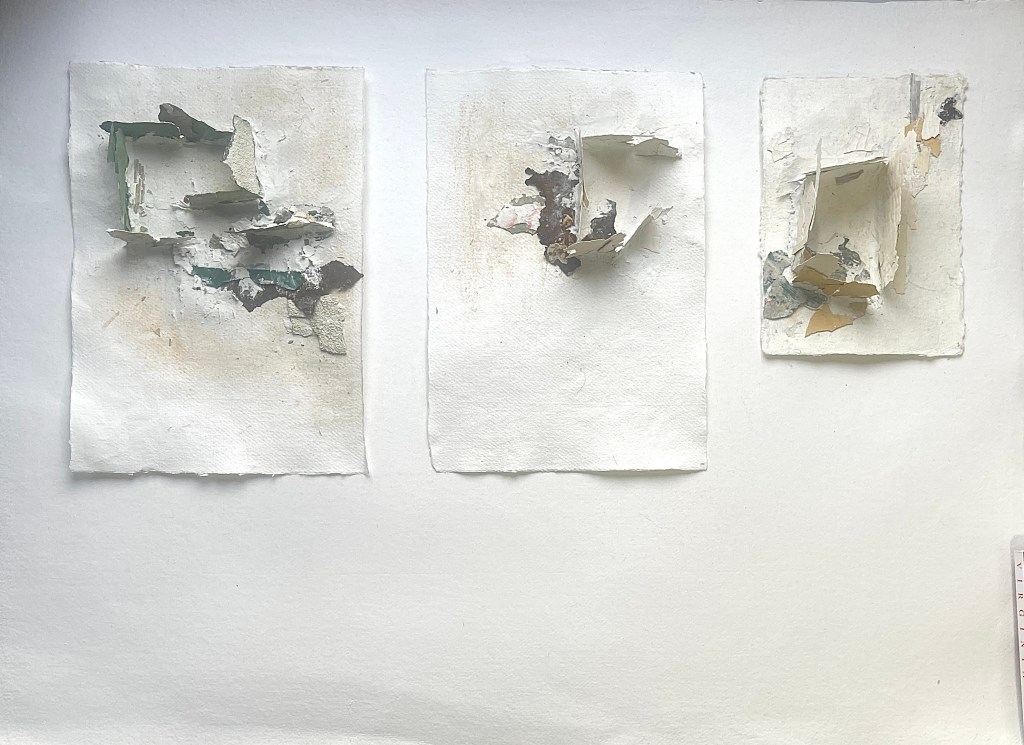
Next to the image in a similar sized aperture I began arranging the found material to loosely represent the photographed scene. The image of the bird can is loosely represented in each piece but this was initially by chance, but repeated on my second image. The ‘almost ‘mirror images are purposeful but do not have to be viewed as one piece.
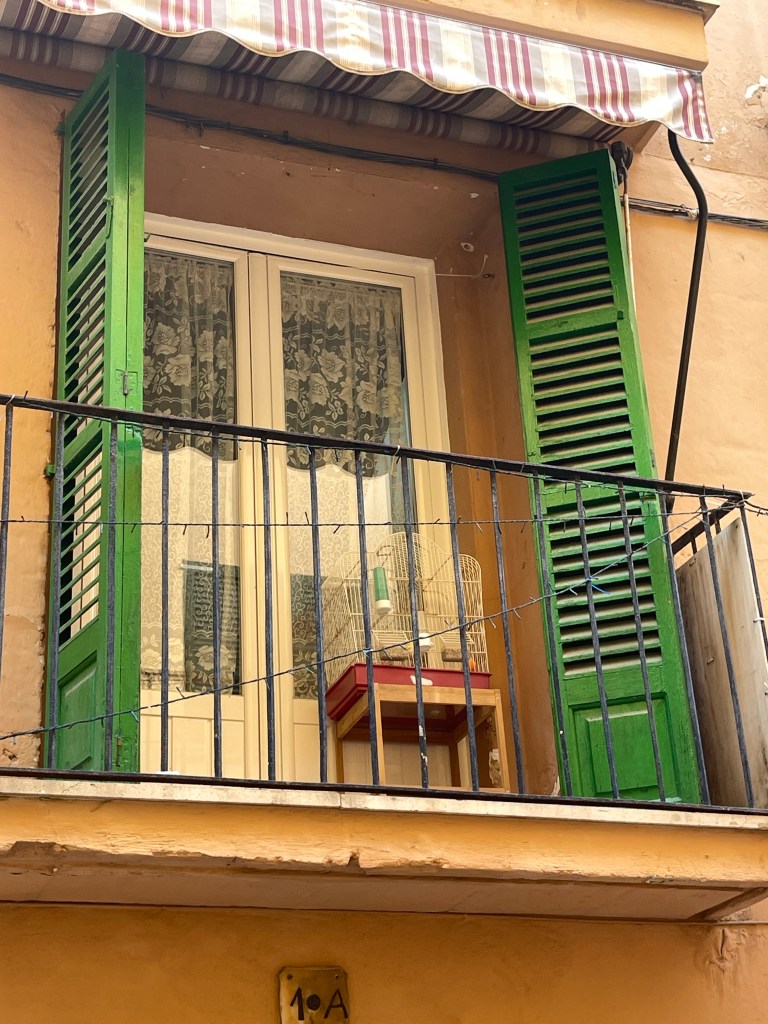
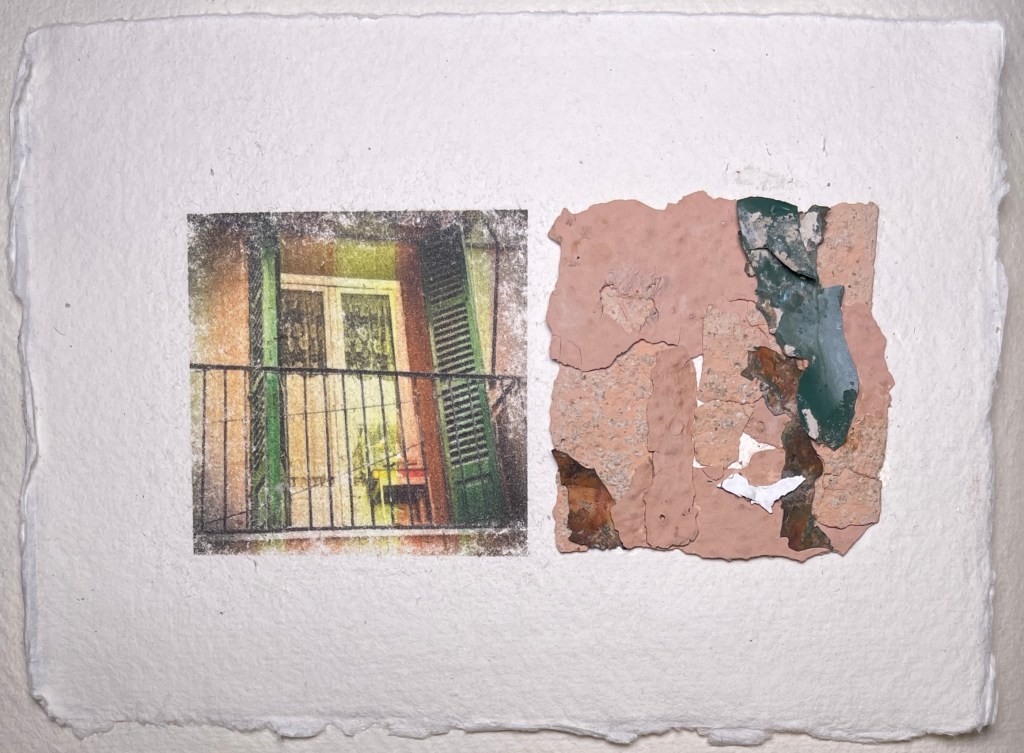
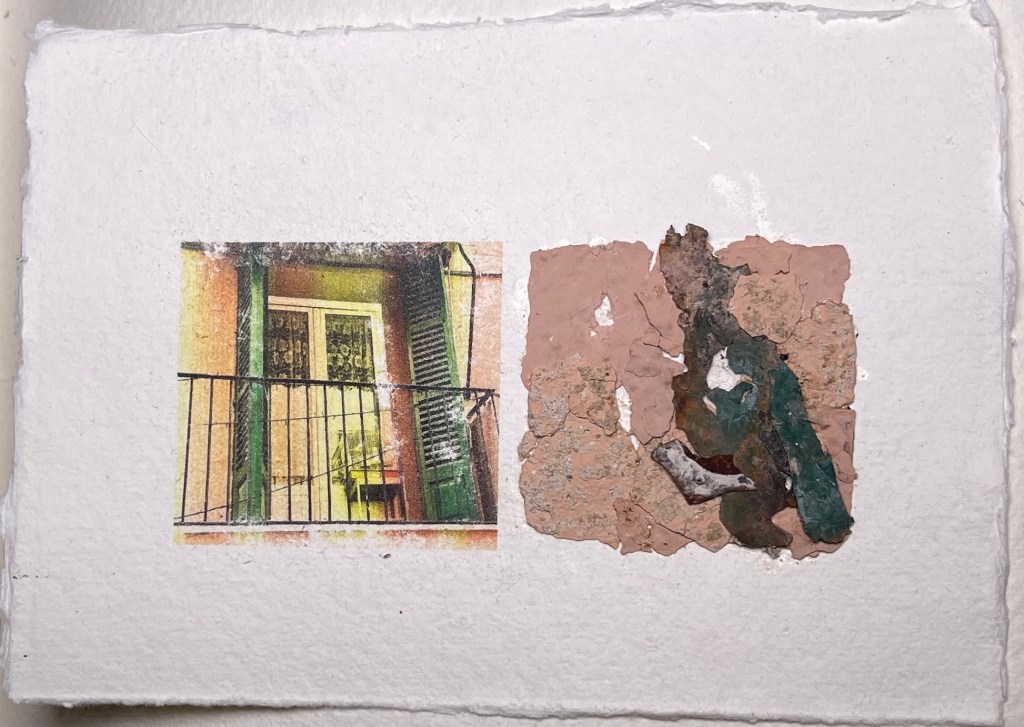
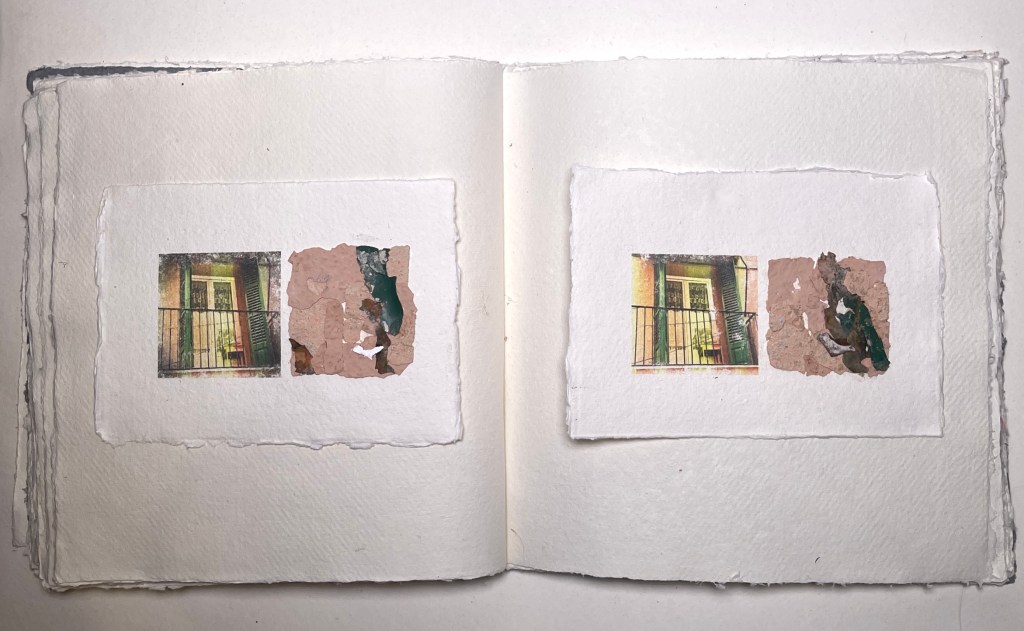
( follow up work – May 2024)
Middle work : Ravaged wreck – Tarifa
Bottom work: Old beach house – West Sussex.
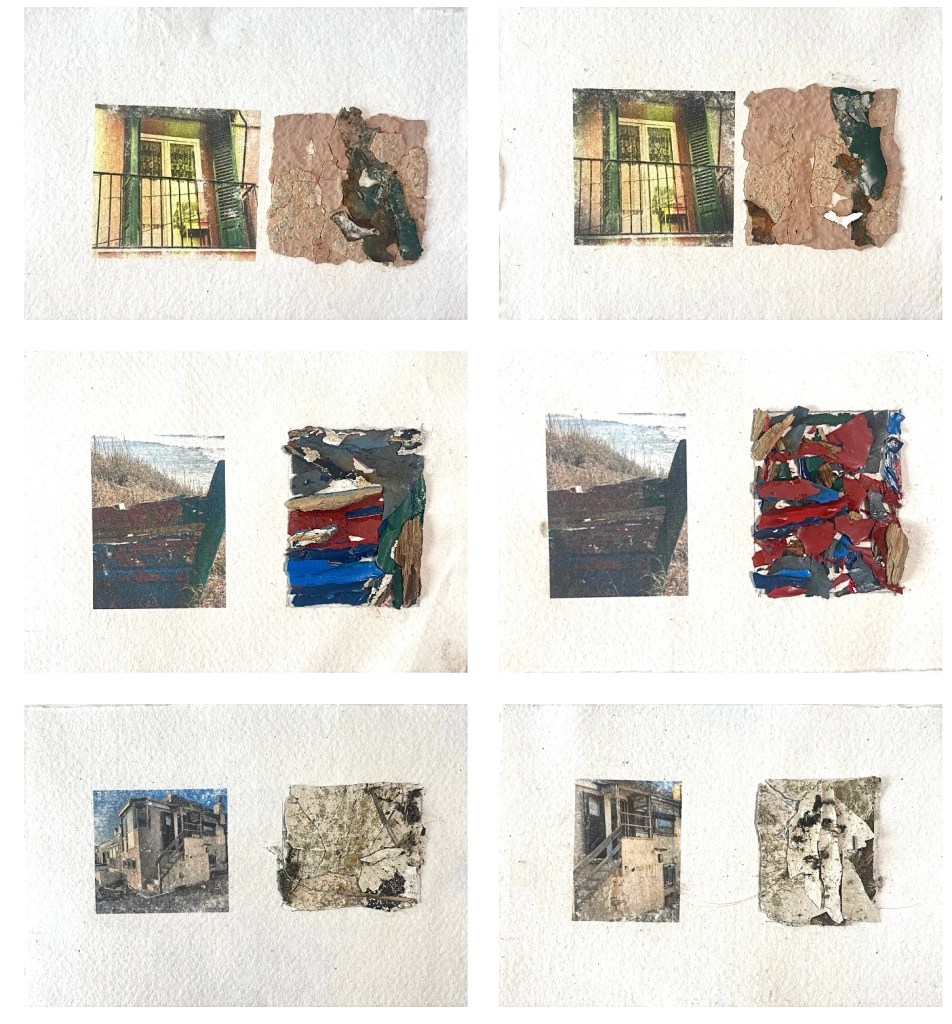
Looking back on this work was a mindful experience as I have not revisited this concept or process for some time. It is a work that is part of a longer concern but not one that I have fully realised or finished with, it is still active.
Almost a year on, Im very much intrigued by the photographic image by way of its momentary capture of time. Less about the art of the photograph itself and more about what it holds.: ie the moment never to be repeated, lost and intangible to those that were not there. My project was looking to bring the image to life in some way to make it more relatable and physical. I felt the inclusion of the materiality shown in the shot would help this connection to it.
Perhaps in hindsight , there is a sense of memento or memorabilia about the work, a subject I had also previously explored. Mindful of the insensitivity of this and the ‘show and tell’ sensationalism of that concept which did not intend associate with this particular piece. Going forward I can see other areas of interest I would like to explore within this theme. My current work on Murmurations and its links to mental health might benefit from a further tactile application to the work, certainly presenting its imagery on more common objects photographed in appropriate settings could be an addition, combining photographic placement of the work alongside the actual piece.
The photograph and the work is an archive in itself, capturing that moment on that balcony in that town at that moment on. Septemeber 2022, 3pm ish. Producing a series of this work chronological curation would be ideal as it directly concerns the capture of time and the retelling of those moments.
Derrida’s notion of nostalgia and compulsion to return to the original and the beginning I feel are inherent within us. For the very notions he underlines, to find truth, authority, confirmation, identity and a greater purpose we seek out the archive for these answers. Artistically a personal archive explores a diary of artistic development and this retrospective can be explored over chronological time periods, despite time gaps and returns to projects at a later late that can show the development of process, vision and narrative.
Notes : The concept of a bias free archive – it is linked to the context of its creation.
It should be a place that generates ideas, there is no one fixed meaning to any archive document. Archives should state no opinion.
How do we archive everything ? We need to search out original context – how do we do this in the future?
WIll we be deprived of the memory if we are deprived of the actual thing/object that the memory is connected to?
We cant collect and keep everything – we become bogged down by memories associated to objects etc
When we place an object in a vitrine ( museum) it stops its process midway, it looses function and its identity – it becomes untouchable , sterile, lost.
Considering Work:– Interviews with artists ..
Jeremy Deller (b. 1966 in London; lives and works in London) studied Art History at the Courtauld Institute and at Sussex University. He began making artworks in the early 1990s, often showing them outside conventional galleries. Deller won the Turner Prize in 2004 and represented Britain in the 55th Venice Biennale in 2013. He has been producing projects over the past two decades which have influenced the map of contemporary art.
Jeremy Deller – This Cultural Life Interview with John Wilson . Radio 4. Mon 12th June 2023.
Deller’s early love of museums, art history vitrine curiosities/artefacts have been the spark to artistic pursuits. He was blown away by the rock musical/opera ‘Tommy’ as this extraordinary art form captured so much of what he was concerned interested in as a teenage boy: Music, religion, politics etc. He found the chaos of it inspiring and a far cry away from the regimented culture of art he had experienced at school.
Viewing works by Francis Bacon was another seminal moment for Deller – the combination of gothic horror of the Crucifixion triptych and his passion at the the time for Goth music. Having managed to speak to Bacon at a gallery for some time he was further inspired by him and his generosity and understanding and respect.
Deller was extremely lucky to spend time with Andy Wahol in his factory for a year as a young man, experiencing and exploring the world of Wahol at this prolific time for him. Deller states that this was one of the the most inspiring times for a young artist. The lack of boundaries and mass media expansiveness that Wahol occupied with a mischevious presence. He credits the openess and variety of media that Wahol worked with was eye opening and exciting.
His Turner prize winning piece in 2004 ‘ Texas Memory Bucket’ featured supporters and opponents of the then American President ‘George Bush’. He dedicated the prize to everyone who cycles in London, everyone who looks after wildlife and The Quaker movement.
His own clubbing experience and passion for music led onto collaborations with Acid Brass – performing all over the country continually, a combination of raves and classical industrial music , bringing these two great entities together with great success.
His art work is bold, conceptual. thoughtful, moving. His work for the centenary of the Battle of the Somme took the memorial to the public in a beautifully performed work , the soldiers dressed in full combat last from 7am -7pm and covered the width and breadth of th eUK. Each soldier gave out a card to th epublic with the name regiment of the soldier represented the age ( if known) on the day he diesd on 1st July 1916.
This work was truly beautiful, moving and visceral and a monumental move away from a static memorial of some kind. Deller continues to push artist boundaries in many medias.
The experienced interviewer was able to take Deller back to very early childhood influences to find a source of inspiration and push gently at further life events that allowed new work and ideas to flow. Some unexpected consequences out of genuine desire or interest to explore themes with out fully understanding outcomes. Deller is a risk taker and has a confidence about him but is gentle and intellectual in his explorations and executions. Able to convey and convince with out arrogance. His work is very much for the people and seems less commercially orientated.
I was able to see some of his diverse work recently in the Esbaluard Museu D’ast Contemporani De Palma – Spain. October 2023.
In this exhibition ‘ Music as a Foreign Language’ we become immersed in a two-way connection/conversation between Carles Congost and Jeremy Deller, two artists who have never met each other personally but whose work has a lot in common, Music and politics. An inspiring collaboration between two artists who had yet to meet!
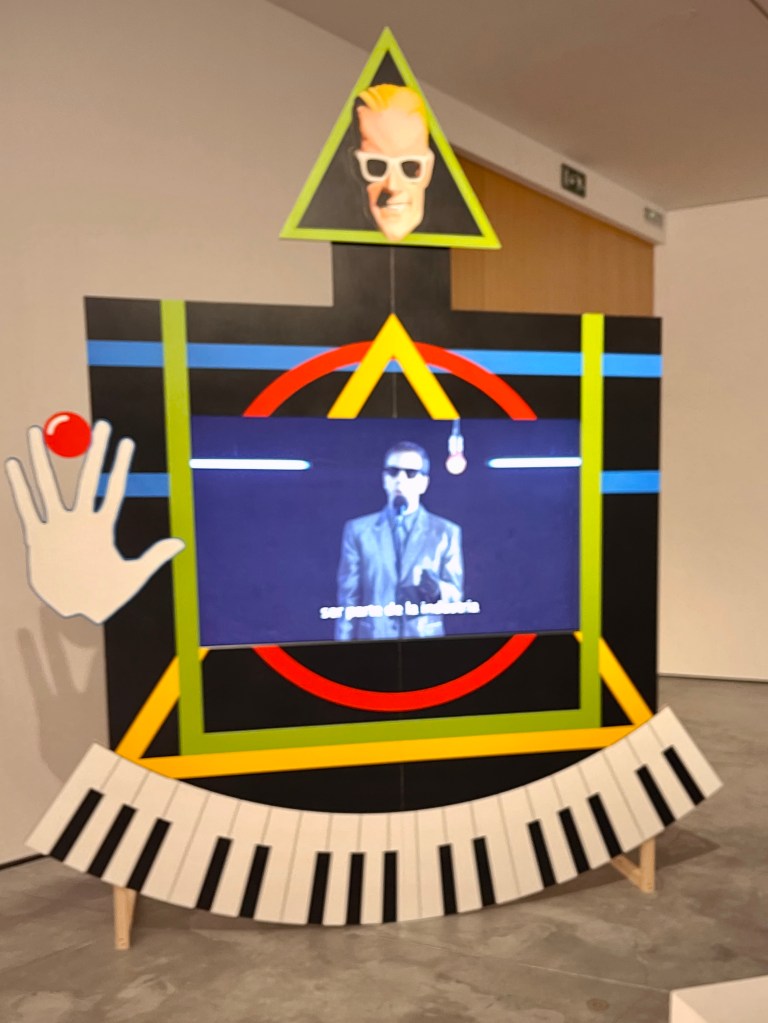
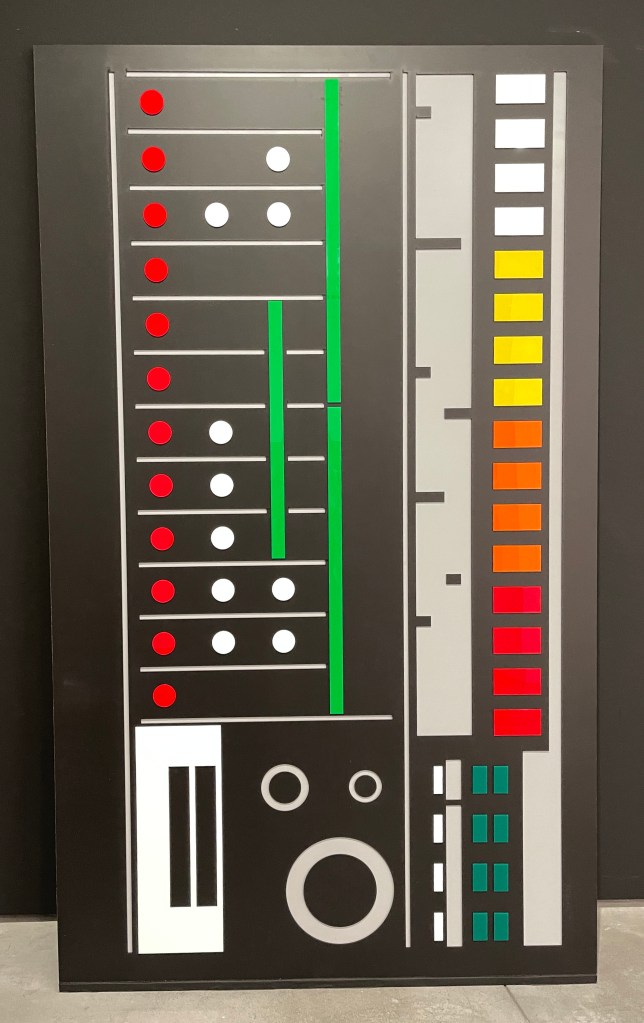
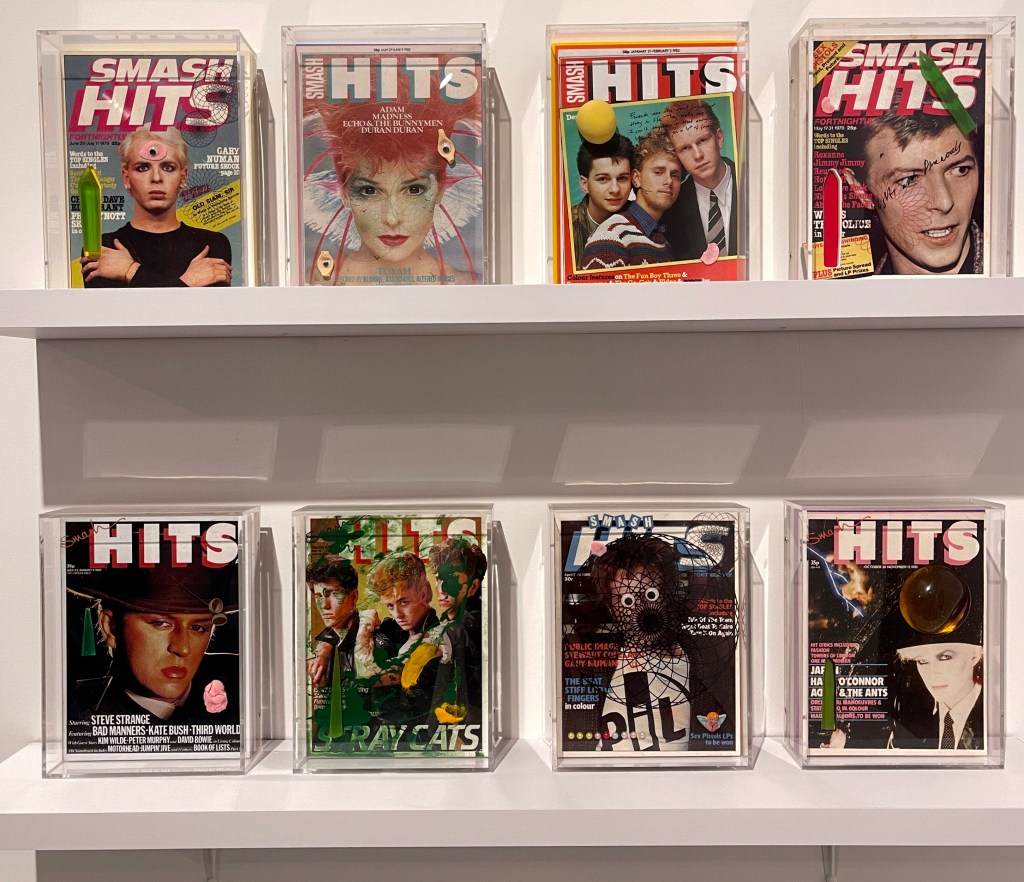
From Left :
Drum Machine ( Roland 808) 2023. Middle : Bravo 1998 . Left : HITS 2018
Exercise 2.1 Understanding Risk.
Lack of confidence initially stops my artistic practice being .. ‘risky.’… It is hard to stop these demons of doubt getting in the way when moving an artwork forward. Perhaps being based from home and not in a university red brick building also accentuates these doubts with lack of peer encouragement, a team environment does spur you on and encourage experimentation. There are good and bad days of confidence and gusto. I doubt anything will fully allay these doubts or fears they are they to conquer and spur you onto better things things, doubt is not always a negative if viewed as a way to always want to do better.
I imagine that to be overconfident is an artistic negative – does an artist ever sit back and experience true happiness with the end result? Are we not always chasing the next thing, the improvement the development of the next work? It is this essential drive that encourages the next piece of work to be an advancement or development on the previous.
I have not taken huge risks with work previously but I came close when using clay directly onto paper by way of describing crumbling, flaked and decaying walls. It was applied with out previous material knowledge. The previous media I used was not successful enough so in desperation I reached for the air dried clay and smeared and scraped the medium directly onto the paper in frustration. The results were surprisingly good and allowed me to continue to work with the project and convey the illusion I had wanted. The risk level was not high in regards to required out come but I was in a place that allowed my despair to create a new creative channel that resulted in a a satisfactory conclusion.
Traces ( Below ) Mixed Media
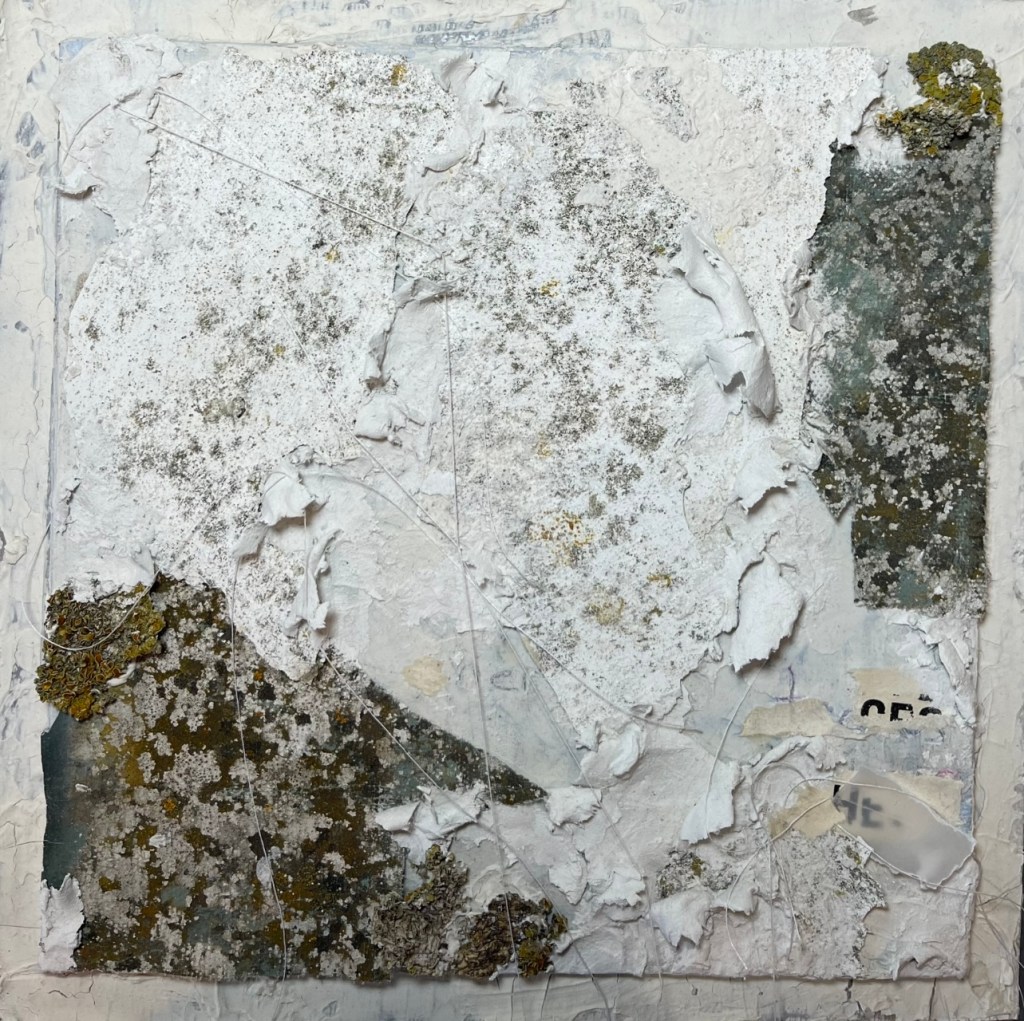
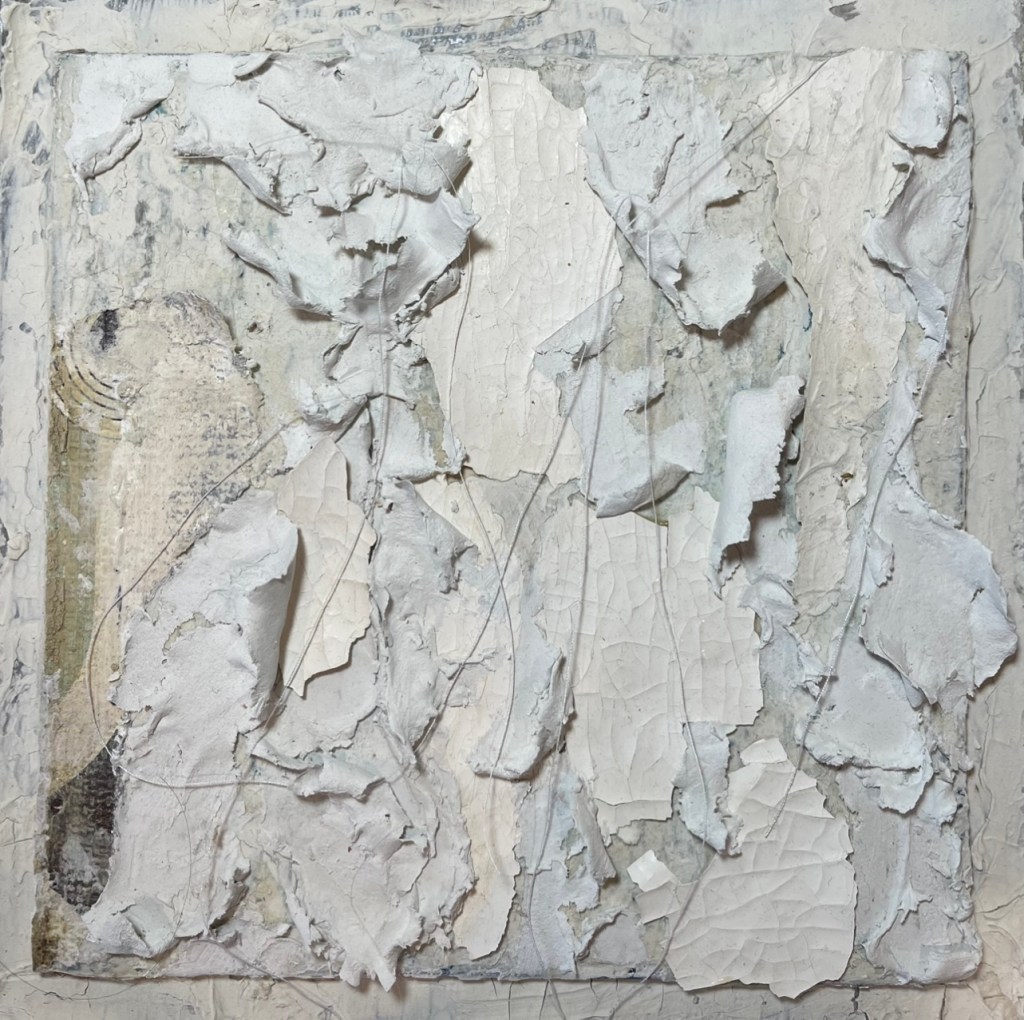
As yet I am not able to pinpoint any particular moment of failure as a stand alone positive practice. I have had many unsuccessful attempts at work and I think I have readily discarded these attempts, only to work harder, better or smarter at the next. In conclusion I would say that it is a continual desire to do better and trying to understand where a work has failed that drives me on to the next work or project.
Selection of Learning Log.5
Reflect and Review
- Beginning Stage 3 of the course signalled a time for review for me . I felt I had run down too many rabbit holes in the previous sections , reviewing and focussing in on work that took me away from what my interests and passions were and are.
- It was pertinent that this section was very much focussed on looking back and ‘returning’ as my sense of slight despair abated when I reconsidered the pathway I wanted to peruse going forward.
- Whilst not dissatisfied with my work on “Shrine” or Veneration it was taking me into a narrative that was incredibly complex and muti layered, the subject matter was getting in the way of my creativity as I sought to match the narrative with the creative process and making of a final outcome.
- I have returned the drawing board with a clearer focus and will continue to work with the areas that I am passionate about that excite and invigorate my creative process. For the purpose of these exercises and my own needs I have re-set where I would like to proceed from and rediscovered my passions. The themes I return to over and over again are:
- Fragility
- – times relentless passing
- Loss and the fleetness of moments it brings
- Preserving what or will be lost
- Ephermeral qualities within that preservation of material
- The beauty of decay, decomposition
- Bringing the narrative back to life, reimagined, re purposed reconsidered.
Female Mental Health –
- Shrouding it.
- Its manifestations
- Is presentations
- Its similes – ( manifestations of)
- Its disguises
- Societal pressures
Materials – Found Objects –
- The materiality of the objects
- Their resurrection/restoration
- Their New purpose
- Their appreciation
- ‘ where matter and emotions meet ‘ Tom Mc Carthy .
- Historic and environmental attributes and story
- Human essence with in them.
- These objects/materials consist of :
- Rubbish/ detritus from old buildings, crumbling walls and paint work.
- Fluff and dust – historic rich with past presence and essence
- Prints and impressions wither from pressing, cyanotype, marks etc (mould) and impressions.
Selection of Learning Log.6
Project exploration :
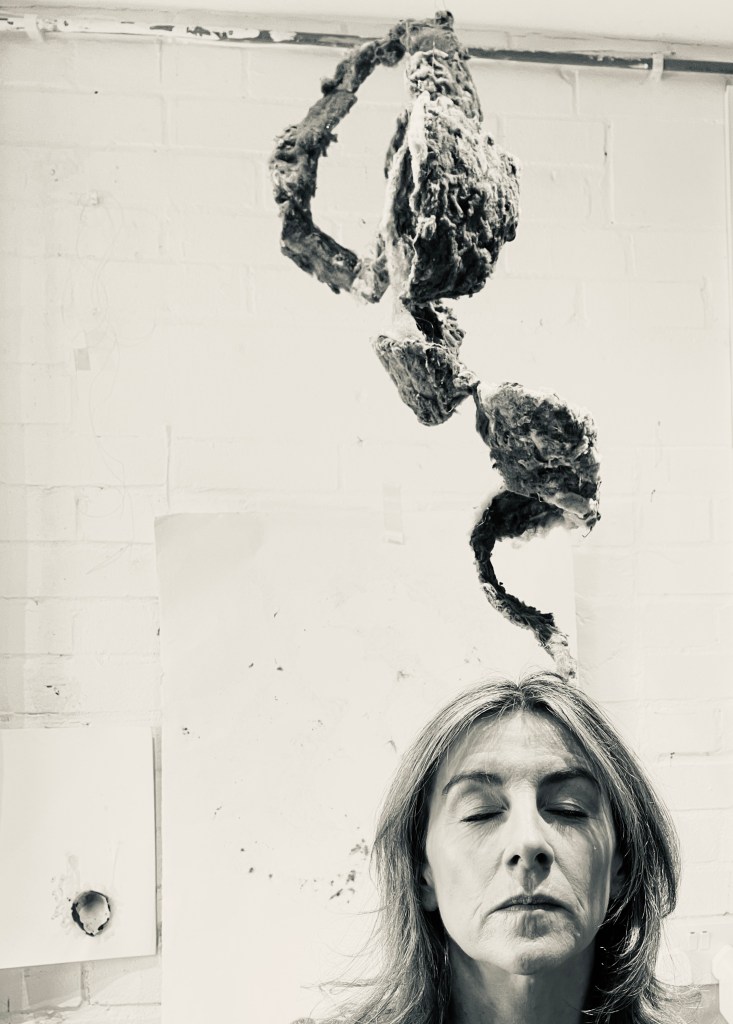
Looking to a more visceral, tactile and immediate sense of presence with a 3D work that could be hung.
Placement - directly above a human head when standing.
‘ Murmuration’ - Using found material – detritus, dust, fluff etc.
Collective narrative symbolic of time passing, overwhelming narrative of material collected, time, places , people, ( physical ) people ( metaphorical) place , distance.
Other material – Sculpting wire and mesh, clear water based glue.
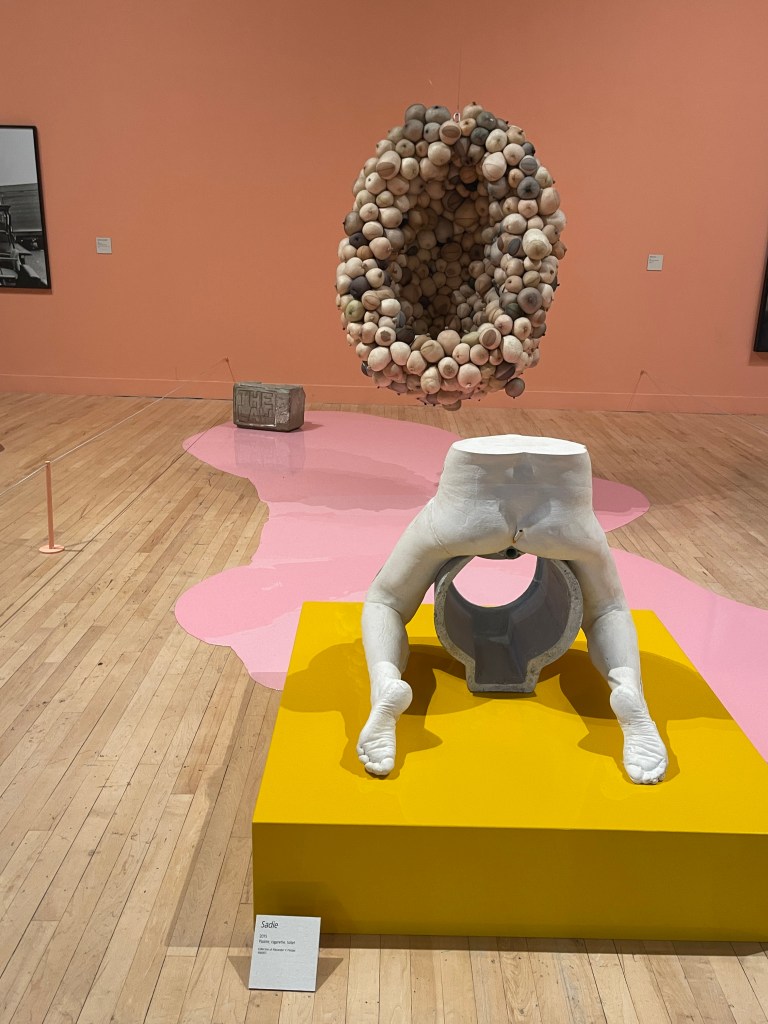
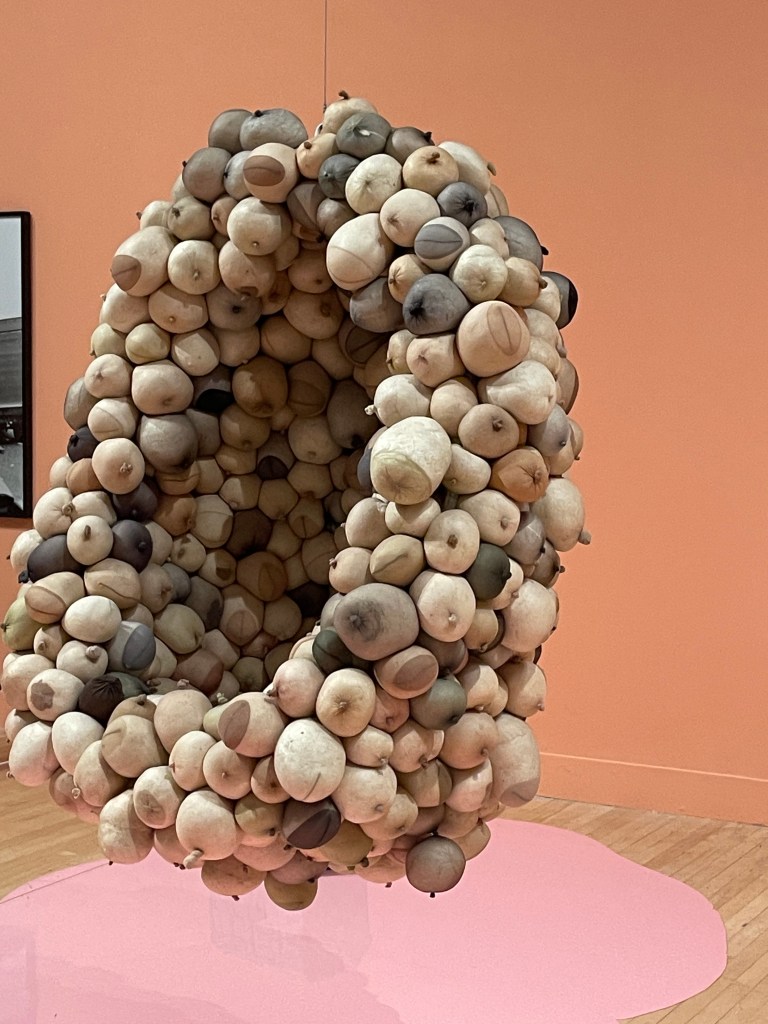
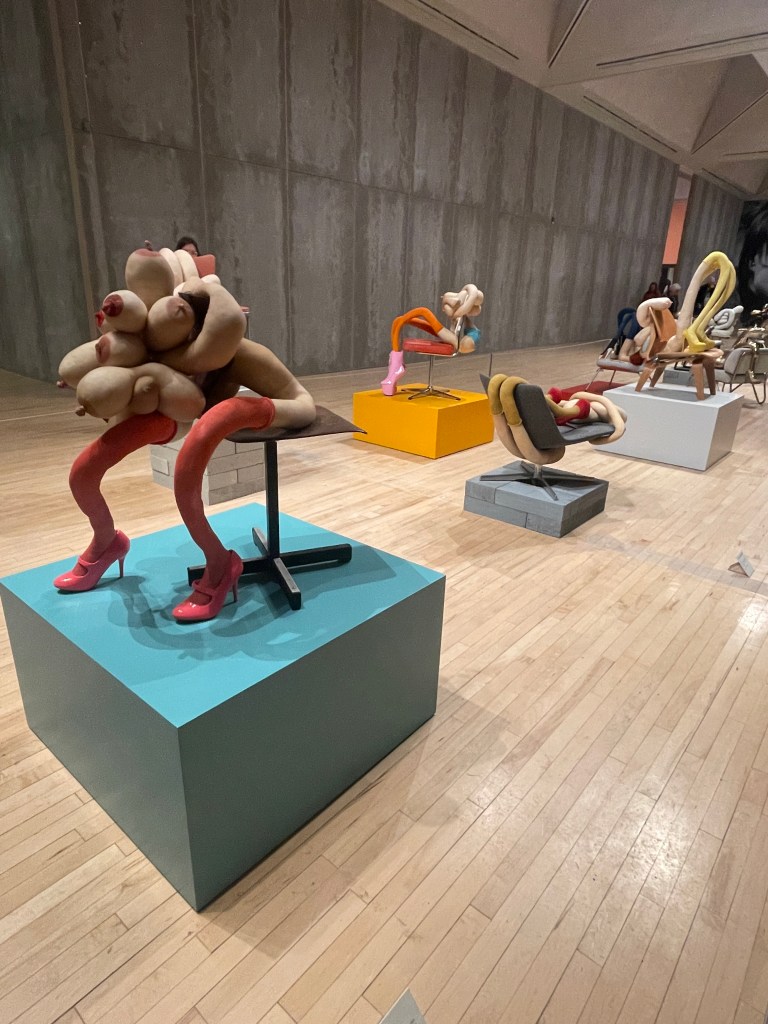
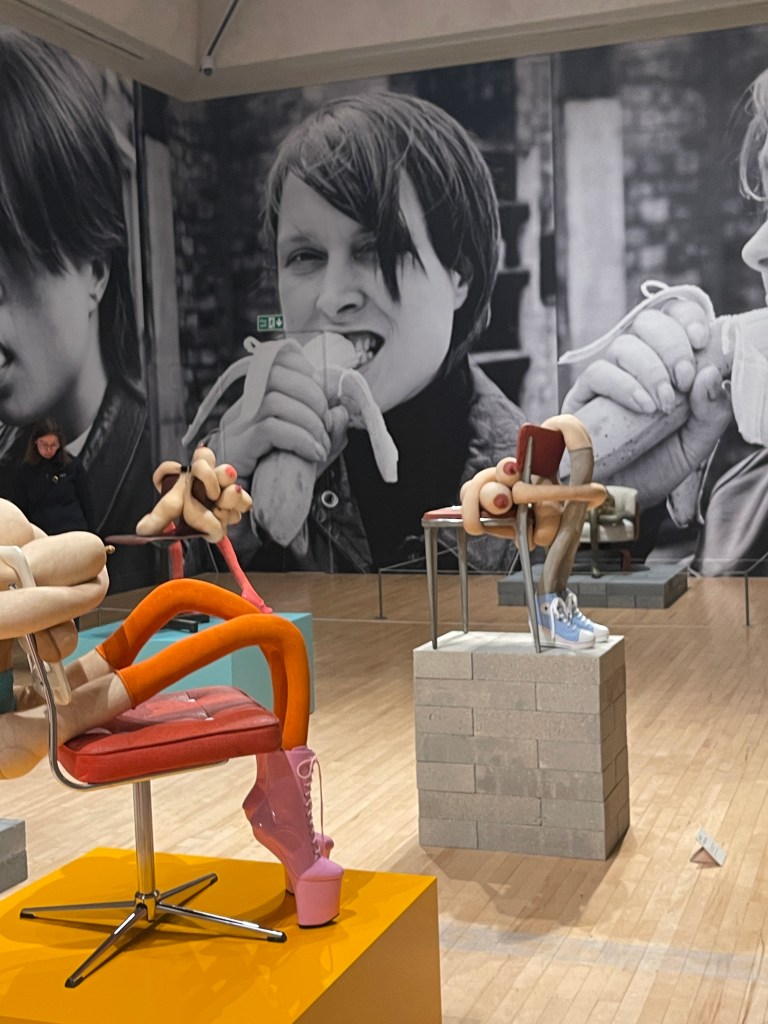
Recent exhibition : Sarah Lucas @Tate Gallery :
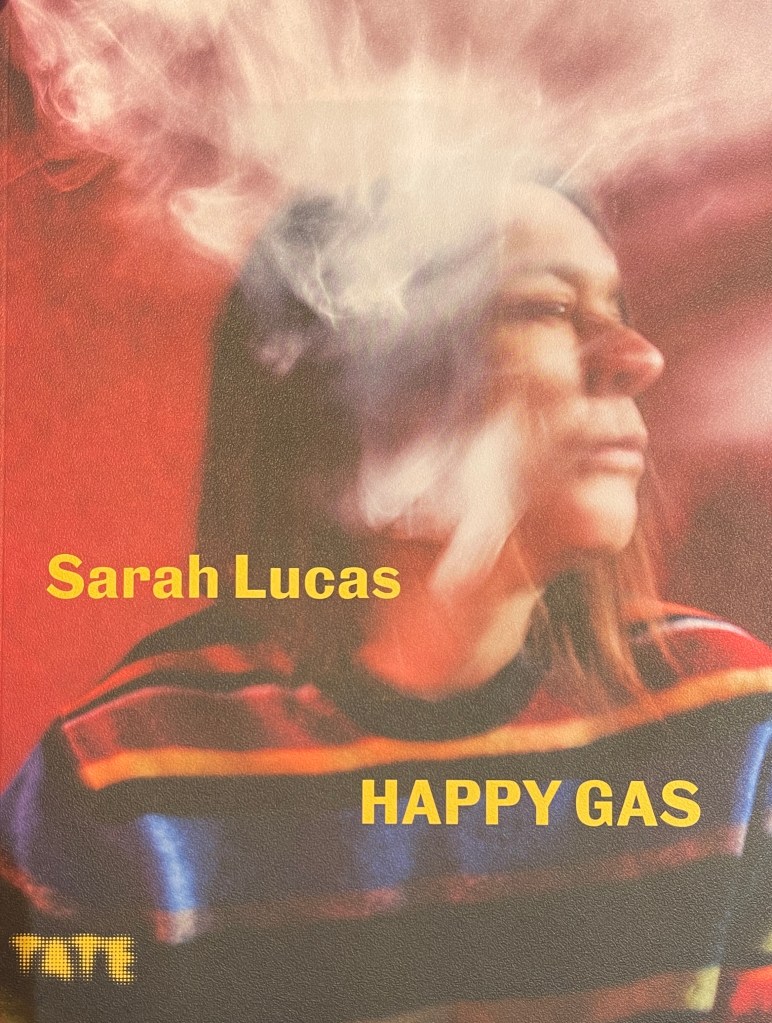
‘I make things spontaneously – materiality orientated process – difficult to always plan and formulate in advance – ideas come from the material them selves and possibilities I see in its manipulation. The process of creation comes from ideas inspired by the material and its possibilities – current themes are ever present – mental health , women , fragility time, trace.’ ( Lucas)
Lucas’s exhibition helped me to accept this way of thinking and generating work. Her manly 3D retrospective was enquiring and complex with themes and narrative ranging from radical feminism to the everyday, comical and pedestrian.
Her portaits from the 1990’s are vast wall paper hangings in one of the exhibition rooms, presenting a strong and powerful confidence of self and self belief. The ‘Eating a bananna pictures ‘ were quick pics by the artist Gary Hume ( who shared the studio) . It was only later Lucas felt the image was arresting and obviously contained a sexual connotations as if part of an advertising campaign. The images whilst ‘girlie’ in content are actually quite masculine, as are many of her images. Her more current ‘Red Sky ‘ portraits are are more considered and purposeful and relate to death and Mexico and energy. They were photographed while Lucas span around in a chair to give a sense of energy. They have a ghostly and supernatural quality with a strong sense of the fleeting, a tiny moment captured in time. A theme that again resonates with my work.
Lucas chair sculptures were bold and colourful , her use of found materials was clear and they contained a craft like quality to them , no apologies for the every day materials used. The occasional one is cast in bronze for a ‘higher level’ of presence and permanence. ( and collaboration) With out the existence of the found material sculptures the shiny bronze statues would hold less presence and purpose and narrative. There is great initial humour and bawdiness to the works with underlying deeper meanings, a common theme through out the exhibition. Questioning every day objects and the meanings associated with them.
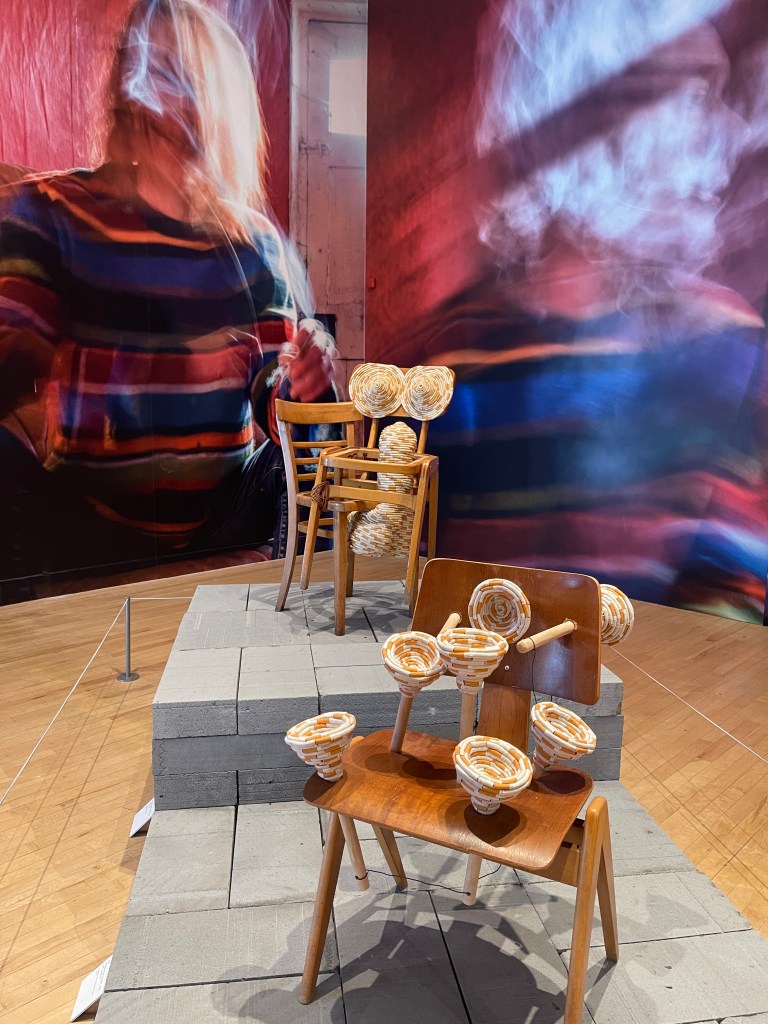
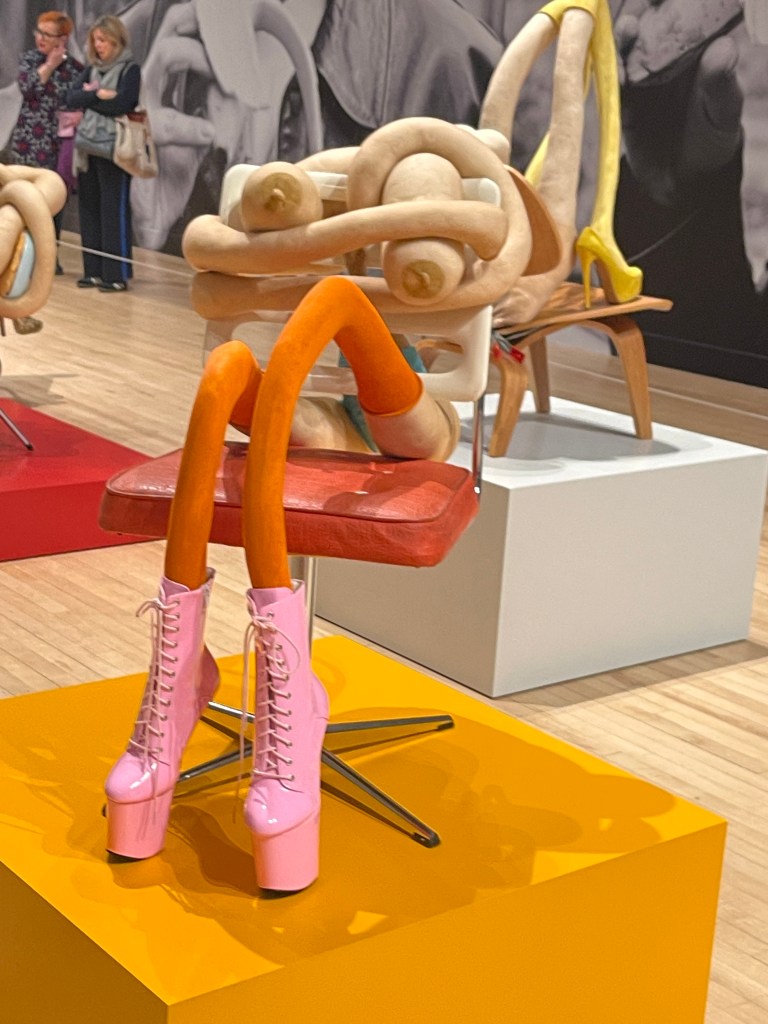
Key Themes Lucas include :
Fragile and tough
Male and female
Vulnerable and tough
Sad and Funny
Lucas pushes us to explore our own meanings and preconceptions .
Sculpture by Women: This fascinating book was honest and open and contained texts and essays by artists and curators.
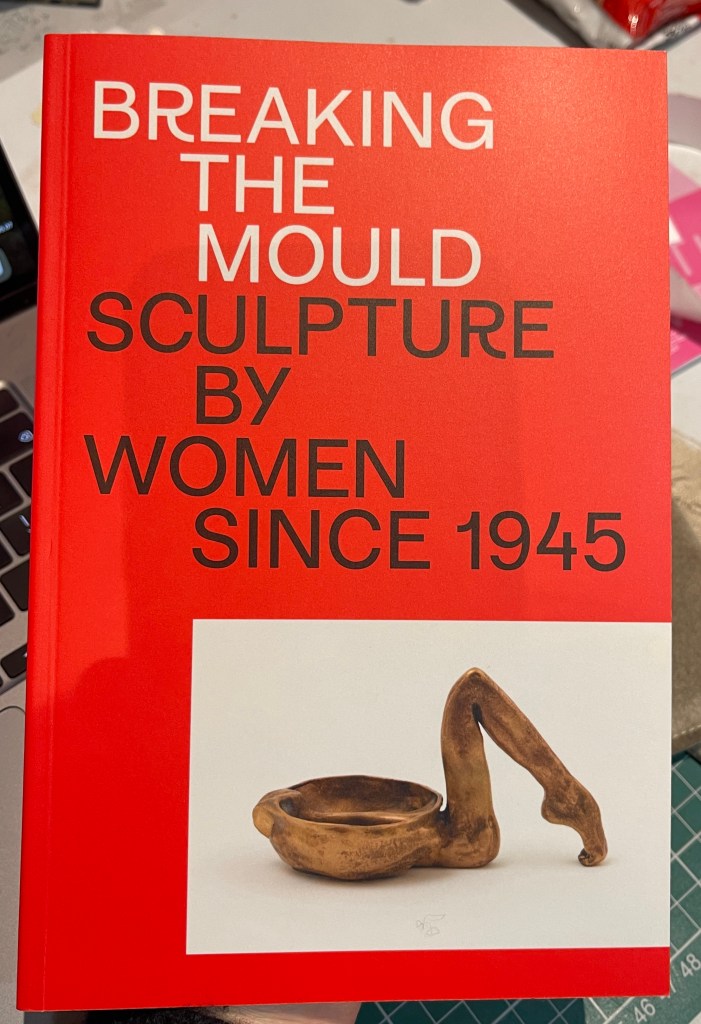
SHOUT AND WHISPER
In a 2002 interview with the feminist art historian Lisa Tickner, the artist Cornelia Parker commented: ‘I think we’re all made up of male and female parts in our psyches and we manifest whatever, depending, Parker goes on to state: ‘Sometimes you want to shout out loud, make a dramatic statement and sometimes you want to whisper.’
Parker’ work across a range of sensibilities manifests itself in layers of varied materiality. Bold ad physical exploding sheds to the study of the minuscule detritus
Rachel Whiteread, is equally experimental, bold and dextrous as exemplified in Untitled .
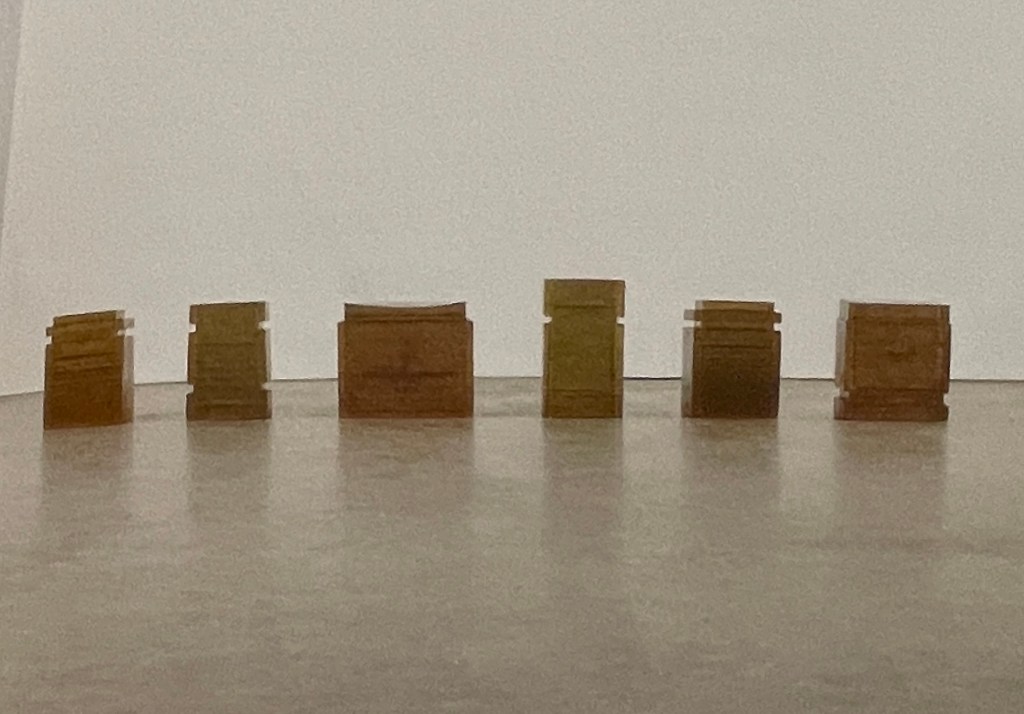
Untitles ( 6 spaces) 1994
Whiteread’s cast the void spaces found beneath six domestic chairs using translucent resin. The formed objects exude a lightness and weight despite at first seeming heavy and blocky. They are minimalist, seemingly bland and with out narrative yet heavy , on closer inspection, their surfaces reveal other stories – ‘the ethereal traces of our lives as imprinted on the worn surfaces of the objects that surround us. This powerful work prompts our recollection of both ‘male’ and ‘female’ precedents.’
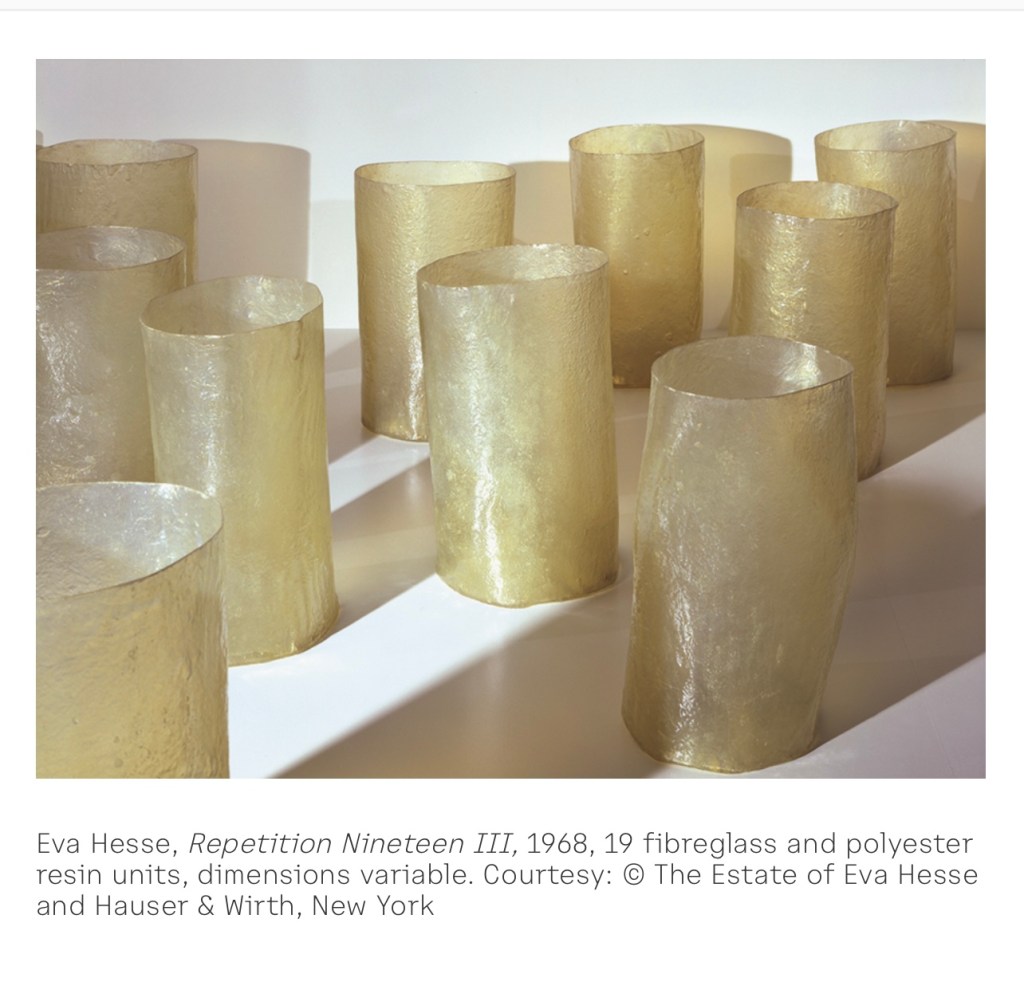
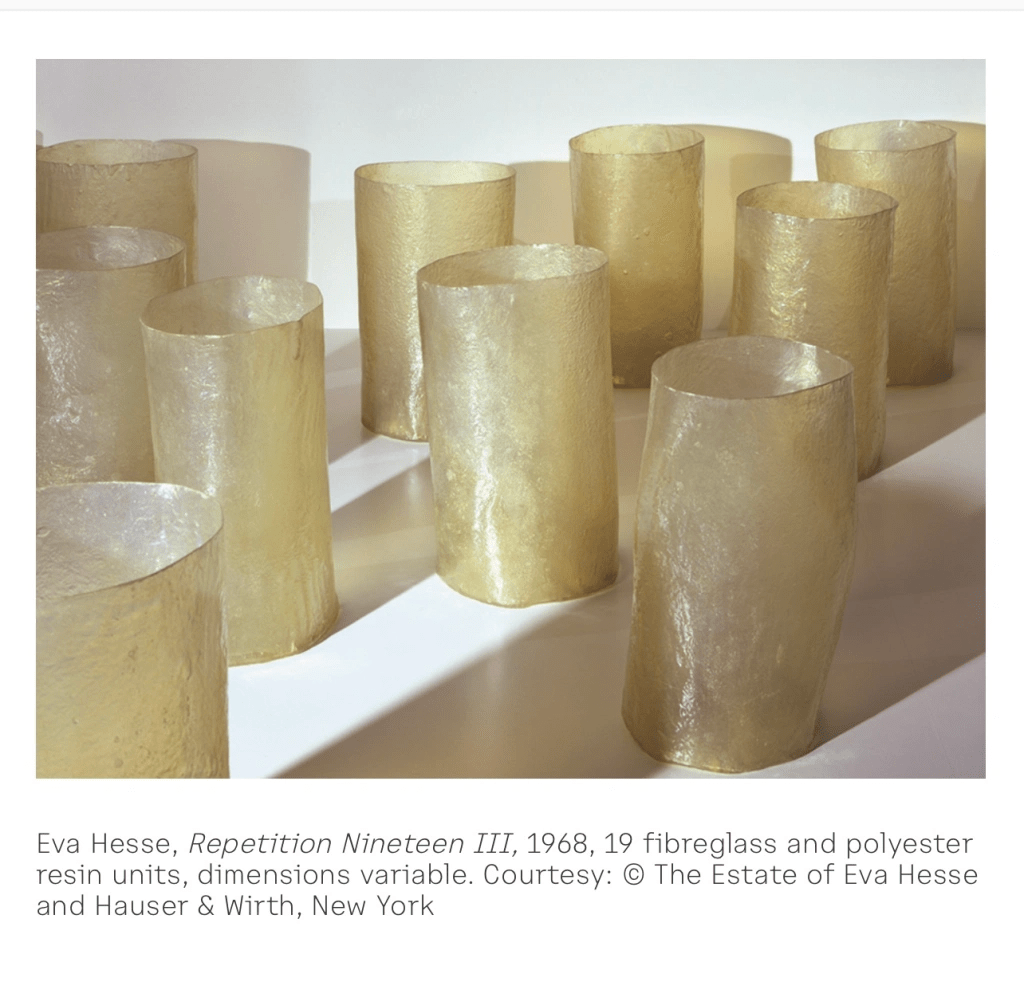
The translucent forms of Eva Hesse’s multi-part installations engaging with a non -binary, male and female representation of form and narrative. Hesse continued to be experimental with her form and substance and continued to be informed by the ebb and flow of female cycles of decay.
The ‘YBA’ generation of female sculpture was poignant and bold. Tracy Emin’s, tent and unmade bed left a visceral impression to the viewing public issues concerning, relationships, depression and mental health were not shied away from. Sarah Lucas played a large part in this open representation with everyday objects used to address issues of gender, sexuality and discrimination.
I was inspired by the sense of freedom and possibility of sculpture and the 3D form – a platform that serves the ‘found object’ and narrative of materiality so well with infinite potential. New media art, performance and film have to be part of the final representation of creativity as we present images on the global media platform. The opportunity to show animation is a bonus and an additional attribute to a work, engaging further in 3D imagery and movement feeds the hungry screen viewing public. I have experimented with this in regards to “Murmuration’. Its narrative is inclusive of fear, anxiety and degeneration of clarity and being.
Original inspiration sketches for ‘Murmuration’
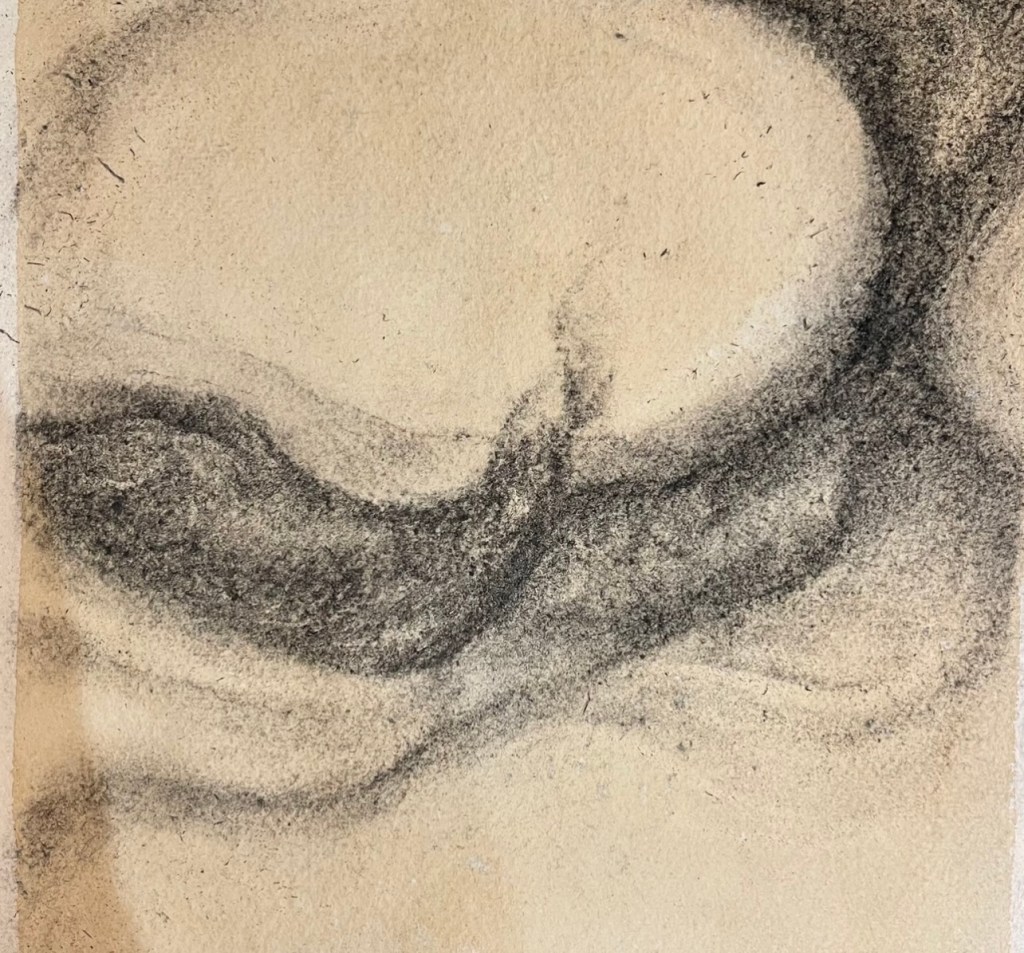
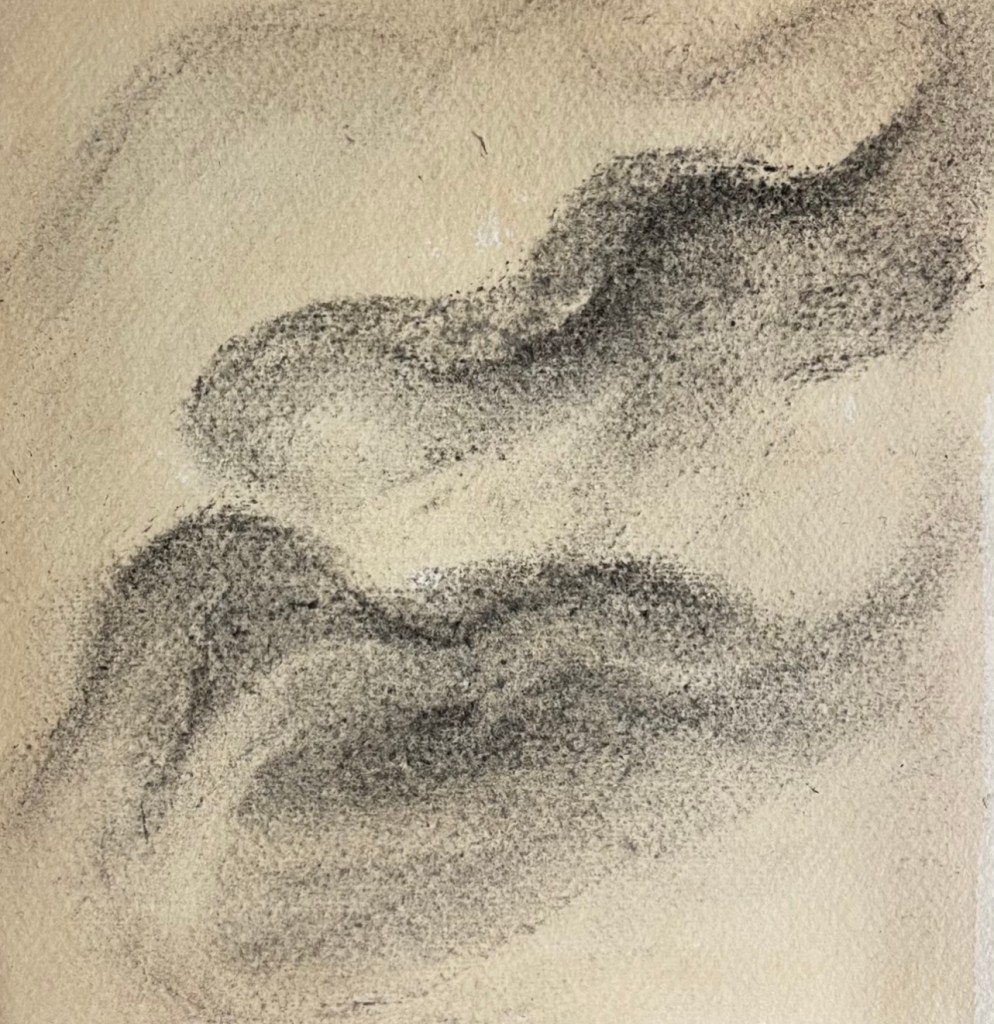
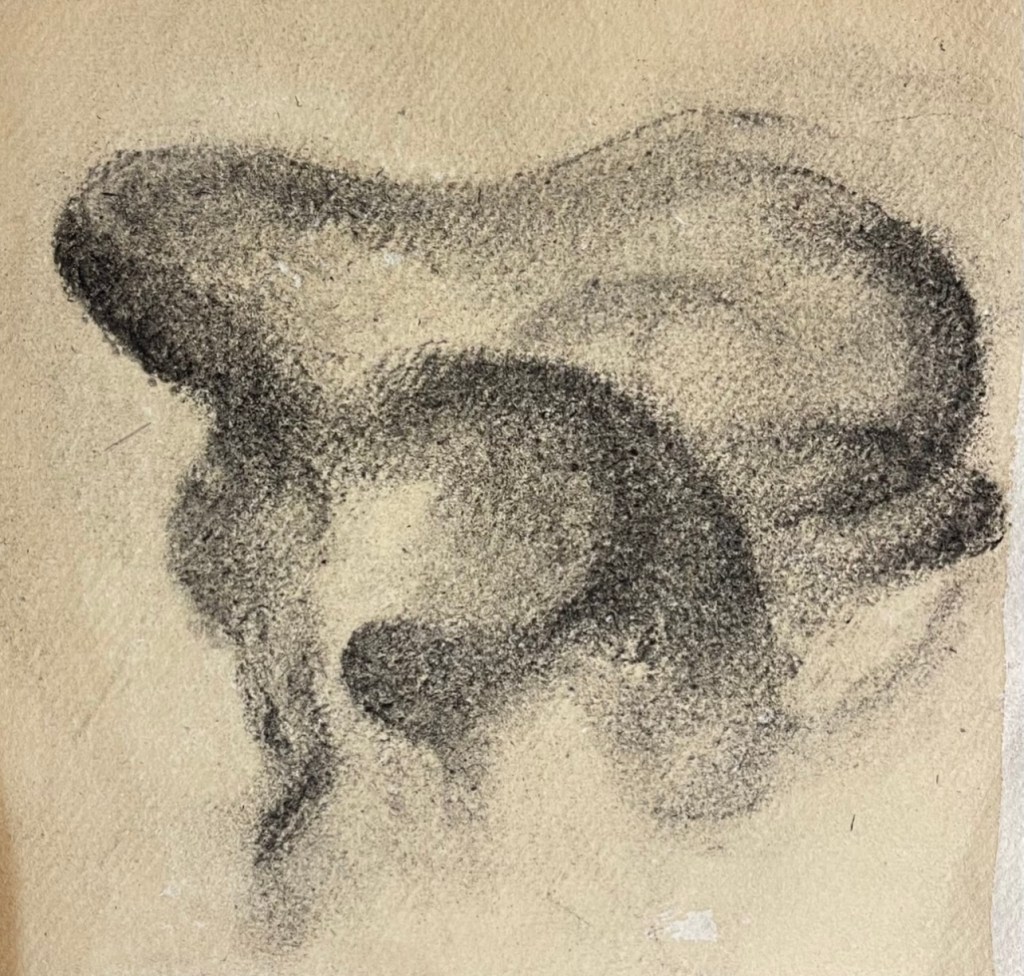
Exhibition – Tate Britain
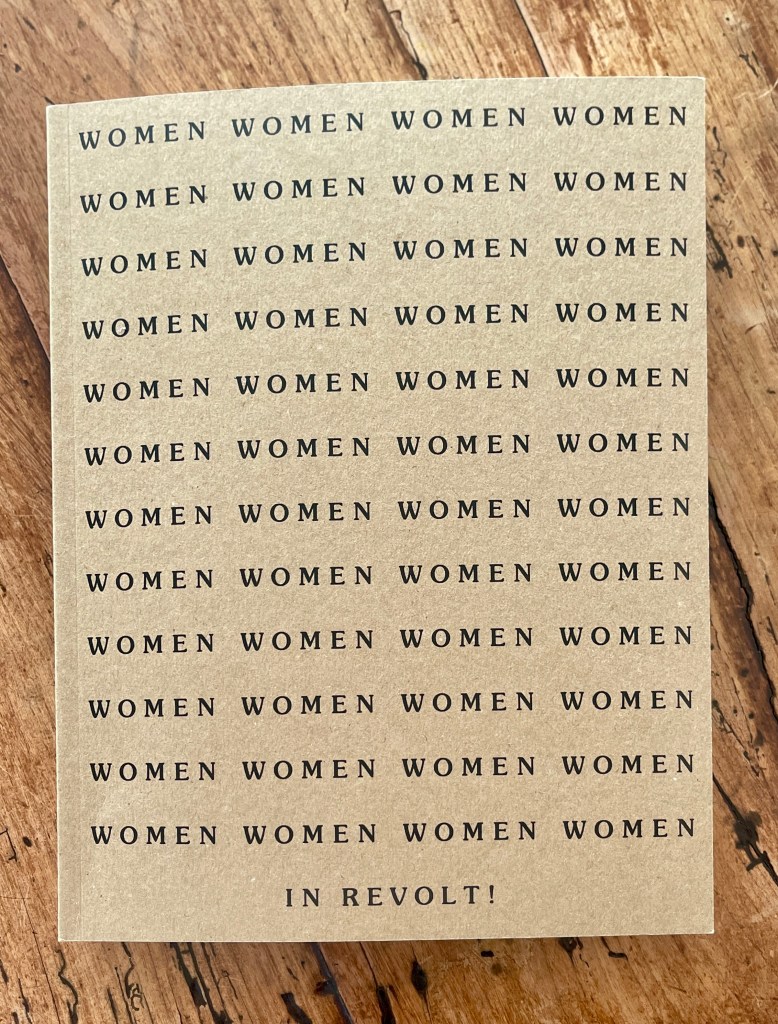
A visit to Tate Britain in January 2024 exhibition ’Women in Revolt’ unearthed the diverse struggles and issues surrounding second wave feminism circa 1970 - 1990. It surveyed the work produced by women artists of these two decades focussing on the British narrative of culture and politics of that era. The 5 year research project sought to highlight these female artists that art history overlooked or obscured. It served to shed light on the countries hard fought social change.
The exhibition illuminated and clarified that feminism was not just concerned with female power and rights but and over-all movement that was to reshape culture, class, race and sexuality with a focus on overthrowing the injustices surrounding these issues.
The exhibition is an important cultural and historical document of this time. It was a feast of visual narrative and varied art medium, powerful, angry and explicit it was an emotive, insightful and inspiring experience.
So much of the work on display was relevant to my narrative on ‘femaleness’ and ‘Veneration’ ( Shrine) a celebration of the female and empowering its attributes.
The work below by Helen Chadwick sees the artist wearing sculptural objects from PVC ‘skins’ stretched over metal frames. They included a cooker, sink, refrigerator, washing machine and cupboards.
Chadwick wrote: ‘The kitchen must inevitably be seen as the archetypal female domain where the fetishism of the kitchen appliance reigns supreme. By highlighting and manipulating this familiar domestic milieu, I have attempted to express the conflict that exists between … the manufactured consumer ideal/physical reality, plastic glamour images/banal routine, conditioned role-playing/ individuality.’
My work involving the material detritus from the ‘washing machine/tumble dryer’ carries with it the domestic narrative of the trope of the female domestic domain being in the home and continually performing mundane and bleak housework tasks. Weaving this material into the ‘murmuration’ works expands the conversation and meaning behind the work and is a purposeful in its inclusion to this end exploring avenues and causes of depression, anxiety and feeling unfulfilled.
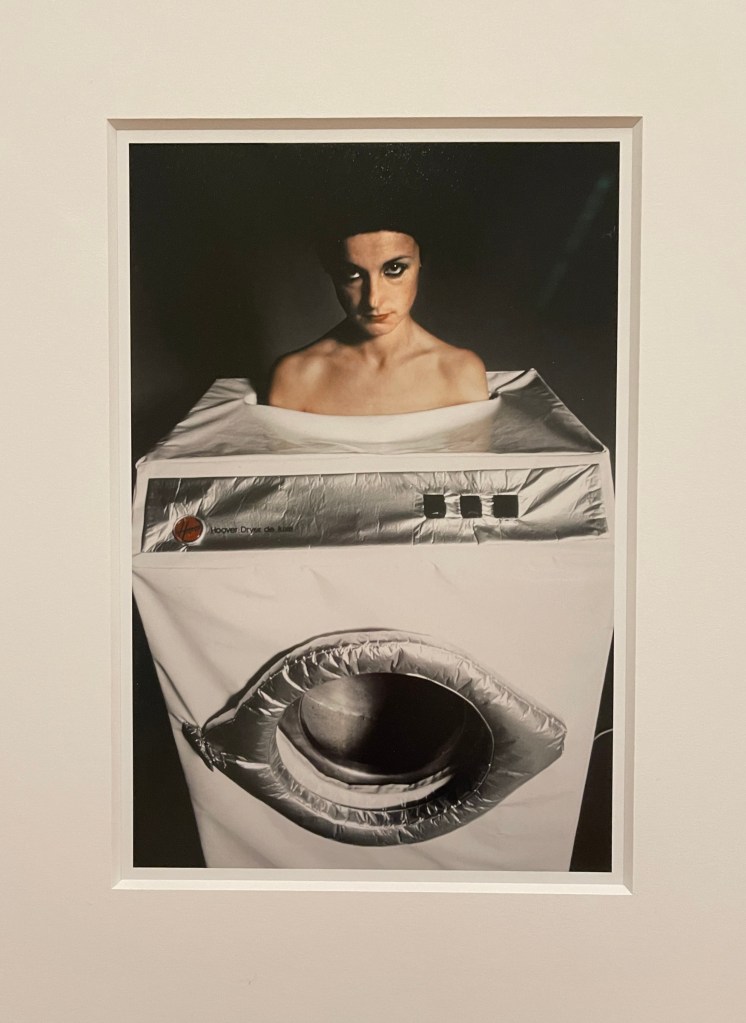
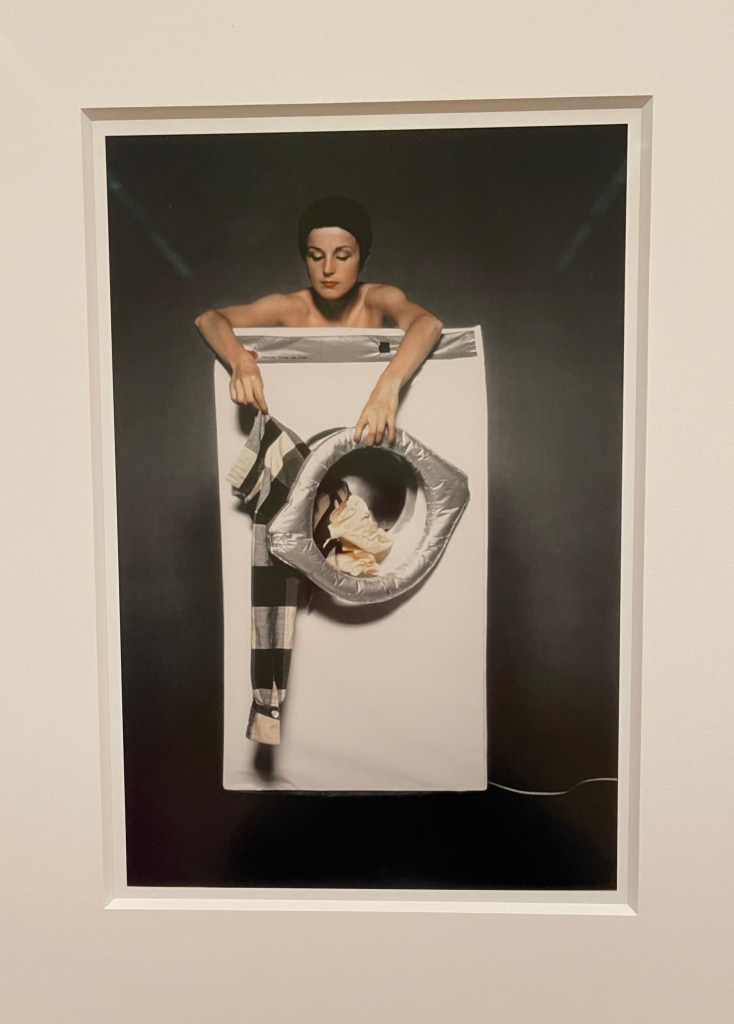
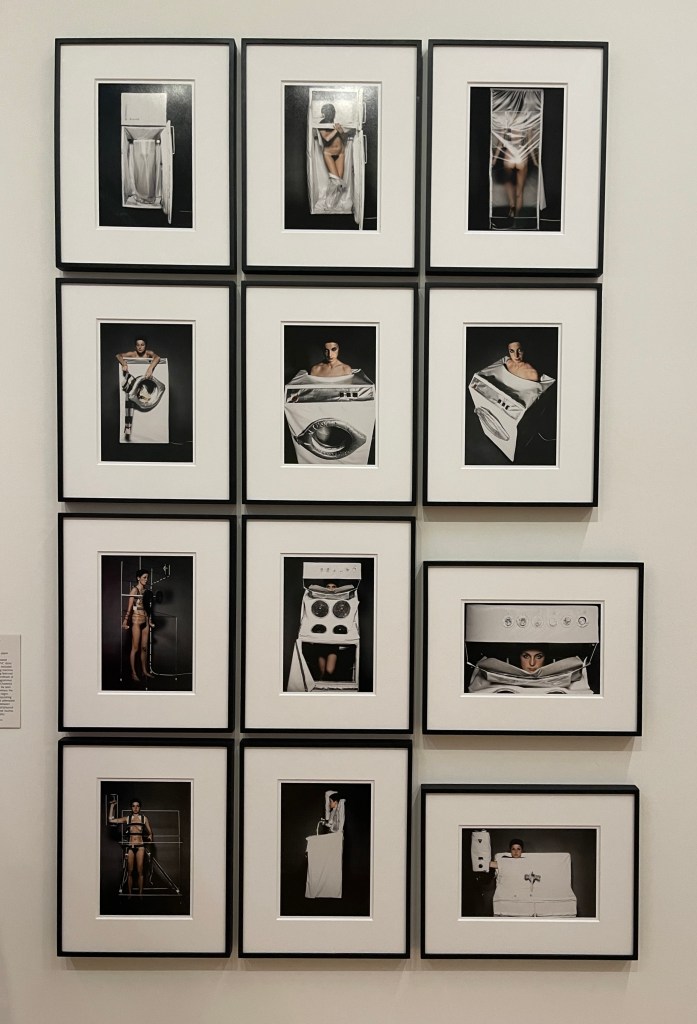
‘ In the Kitchen’ - Helen Chadwick 1977
Domestic Detritus
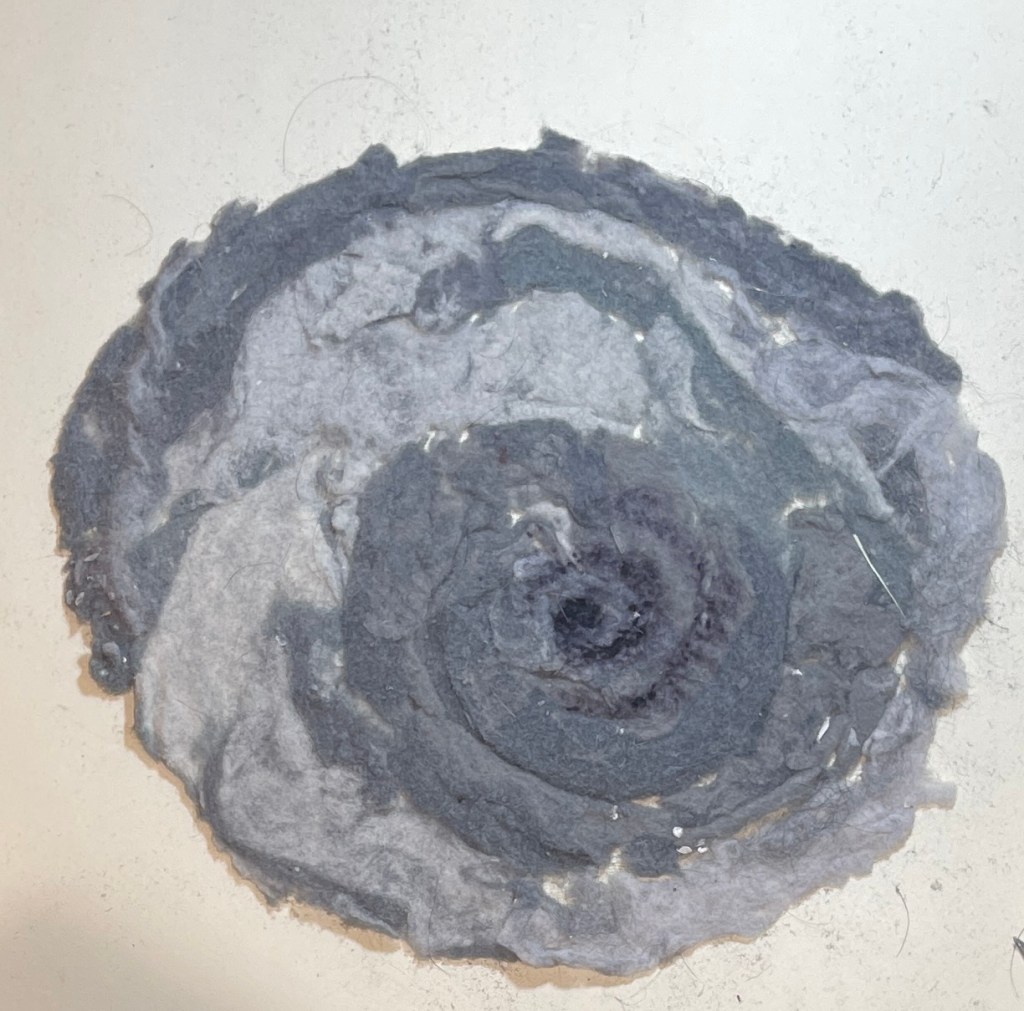
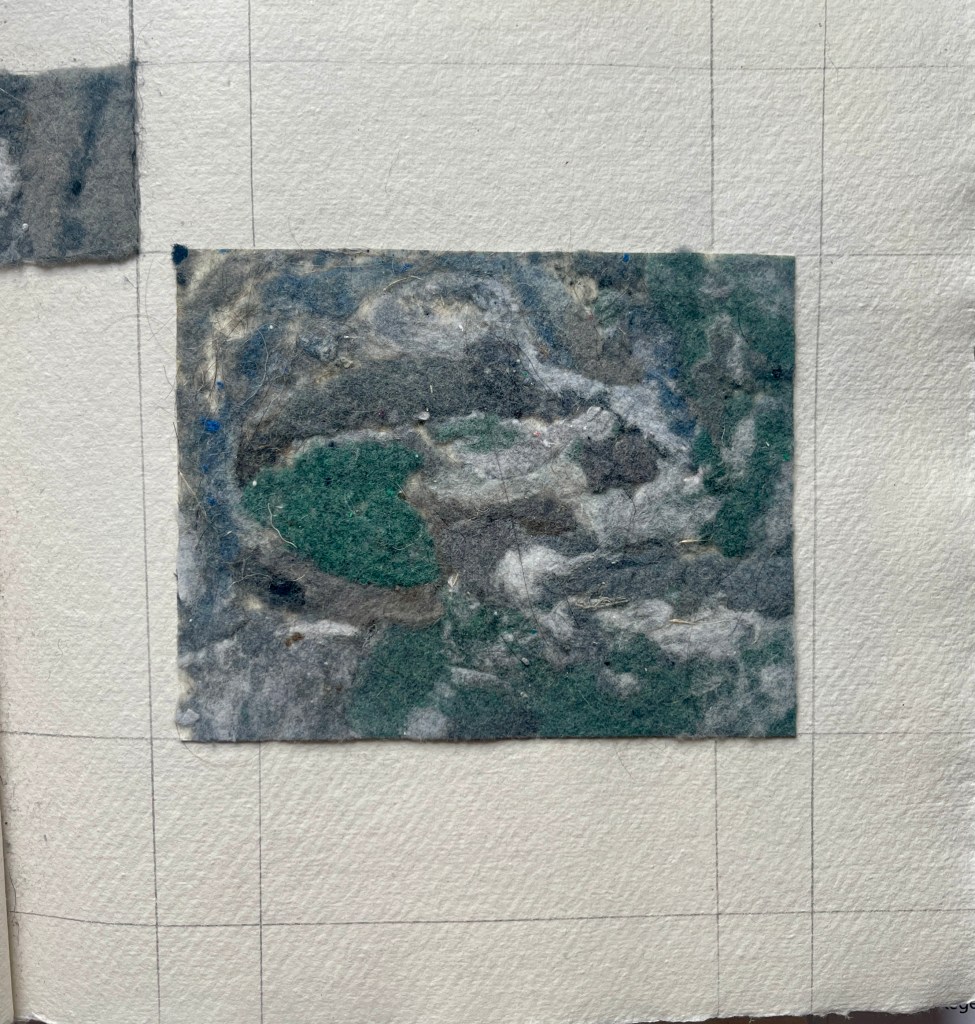
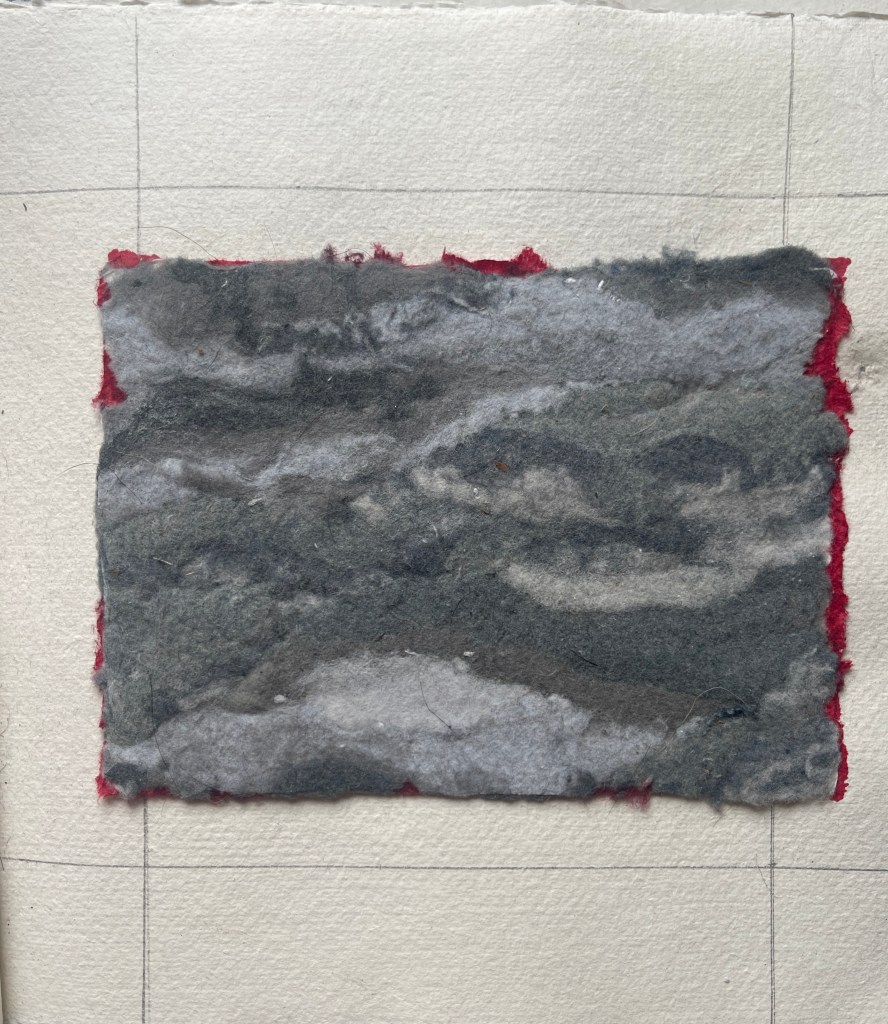
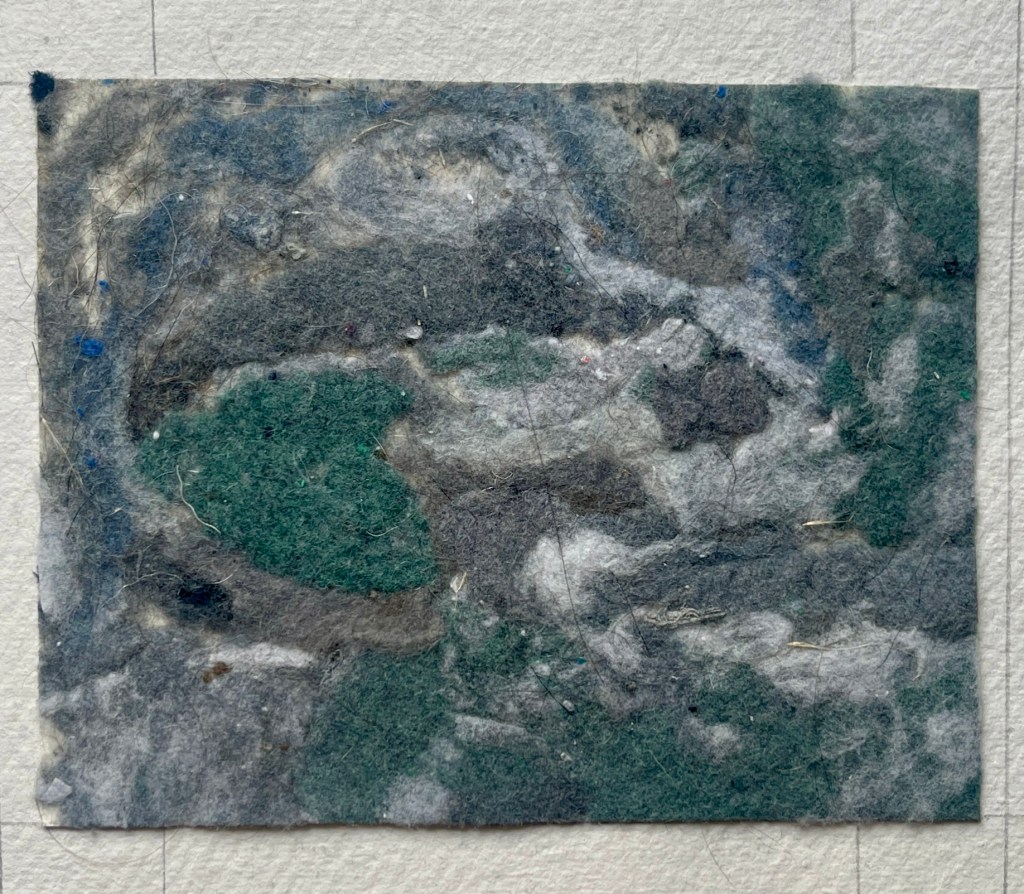
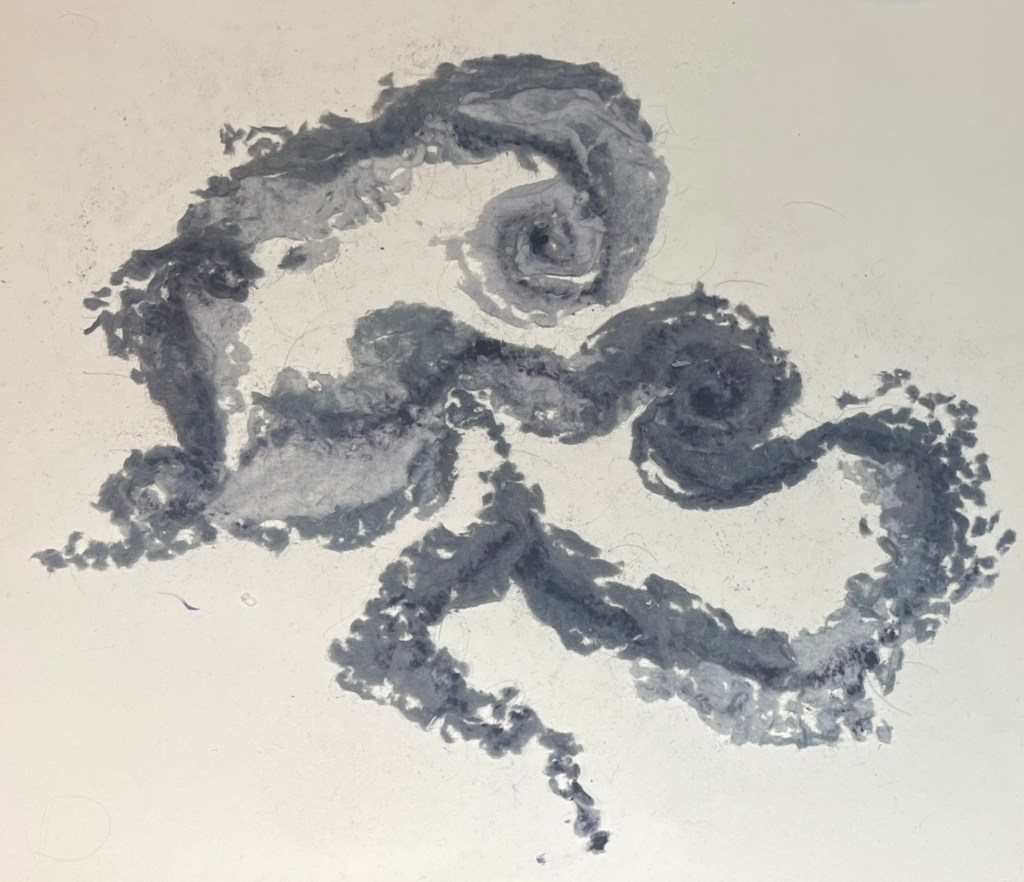
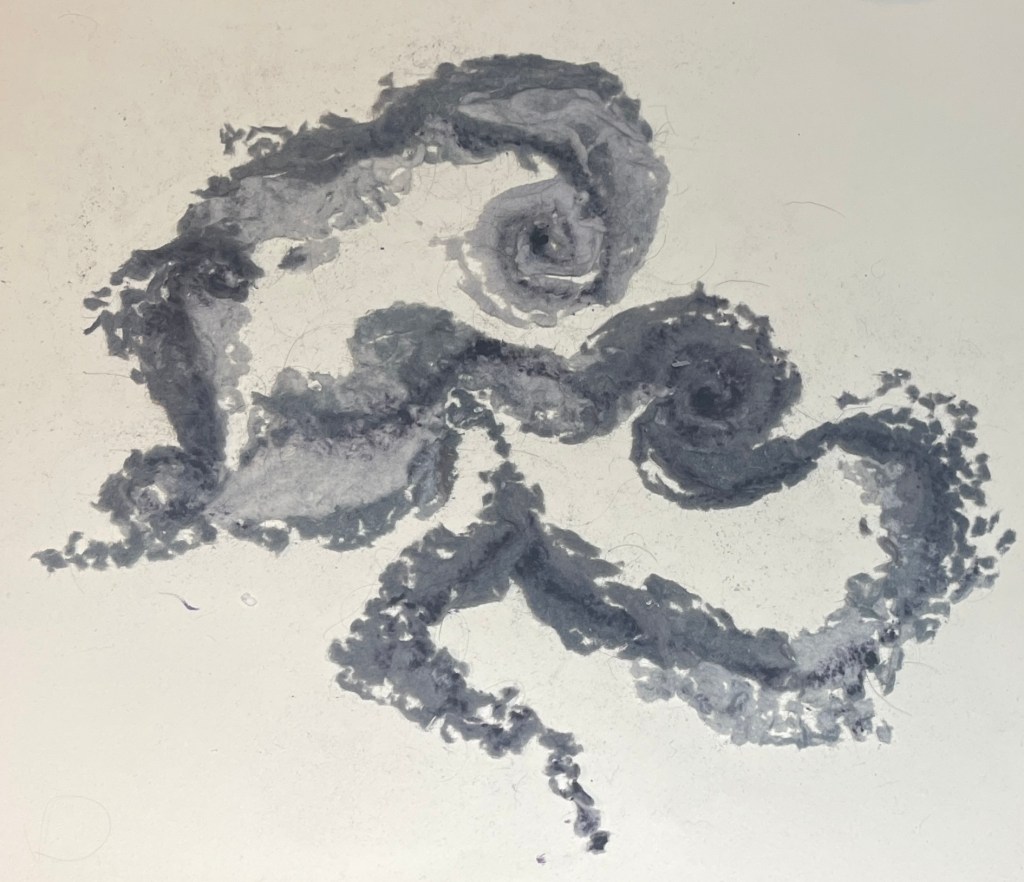
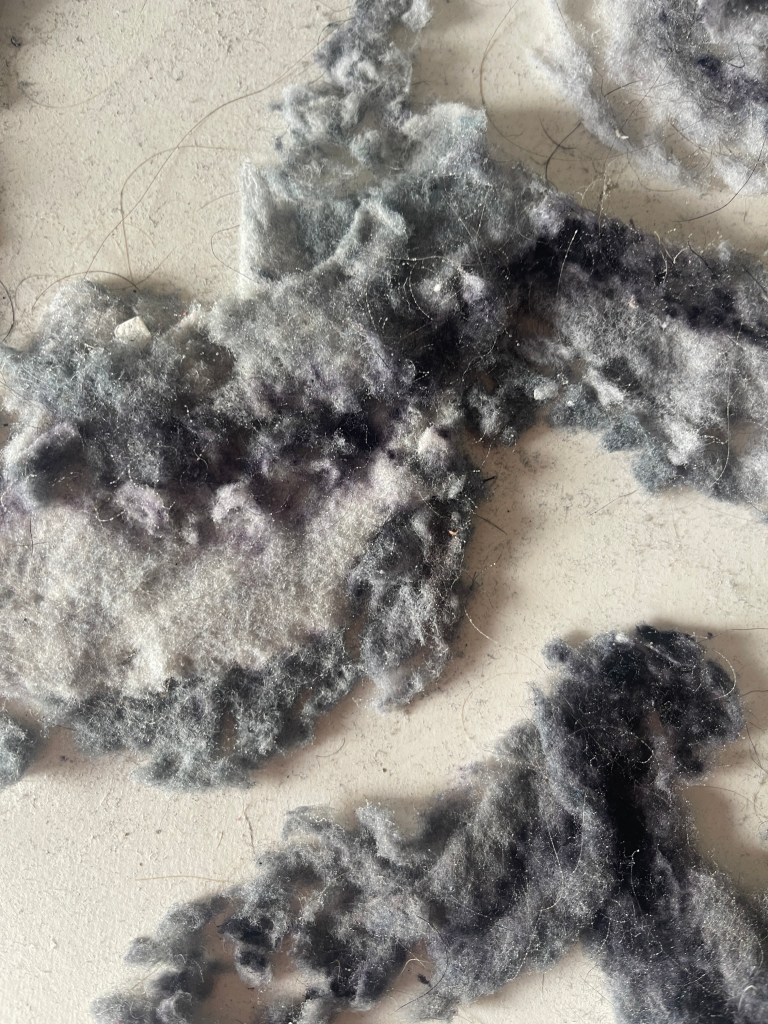
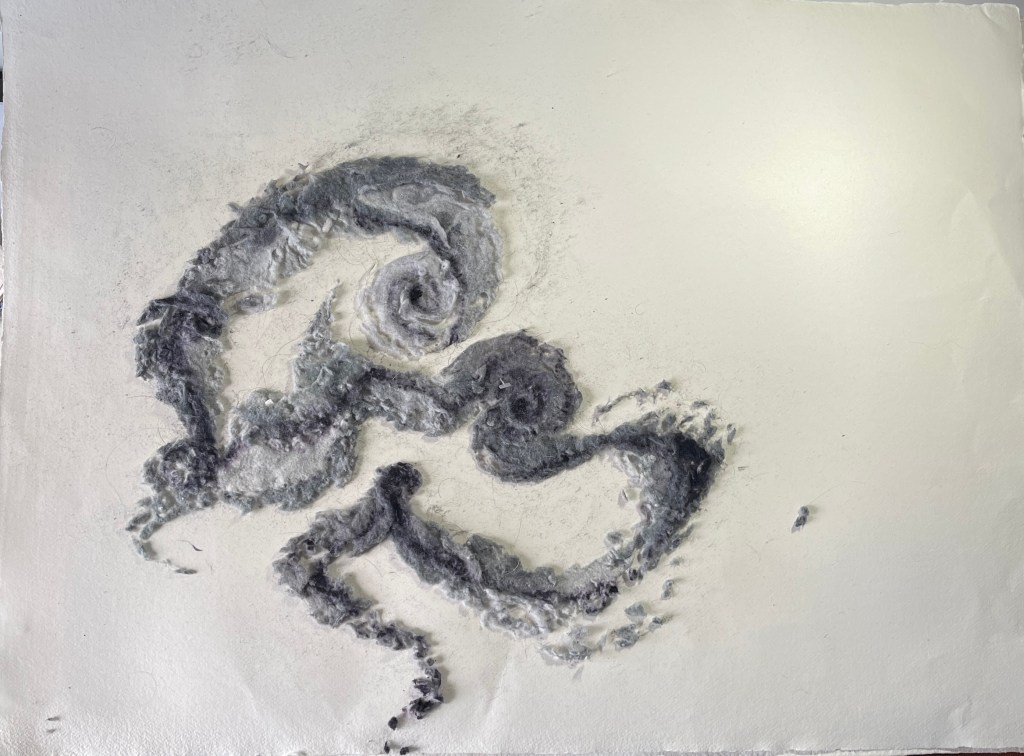
Working away from the ‘flattened ‘ contained imagery of my daily detritus to expand and open up the material I began to make a framework of wire sculpting mesh that would serve as the solid base on which to layer the dust and fluff debris …
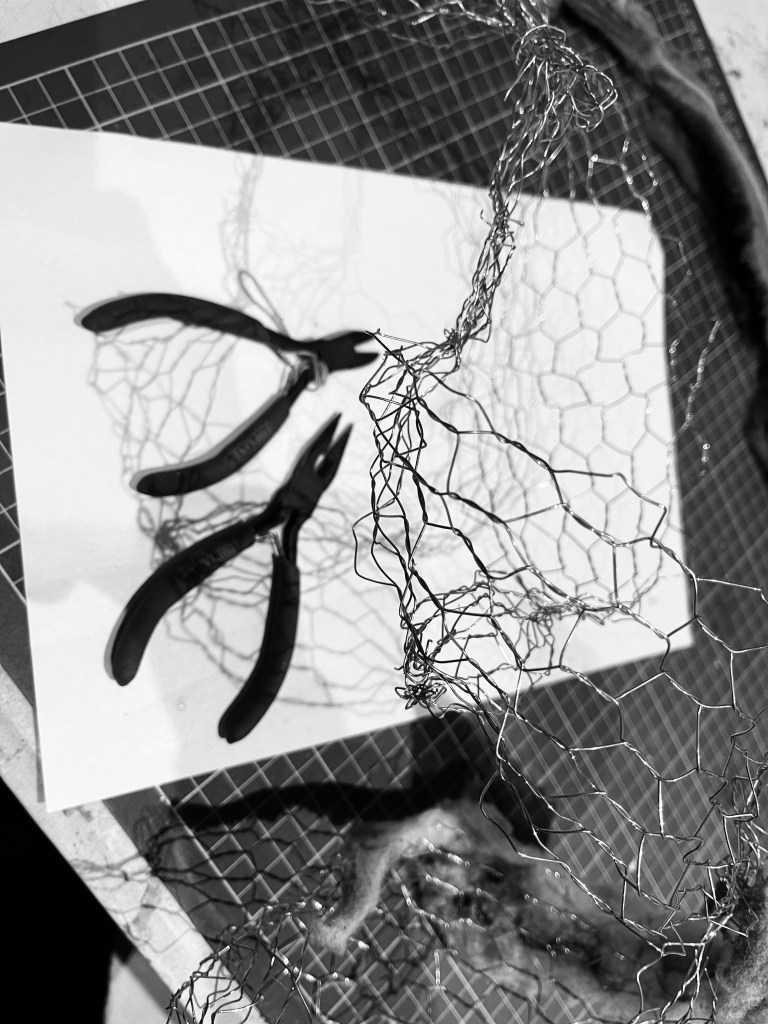
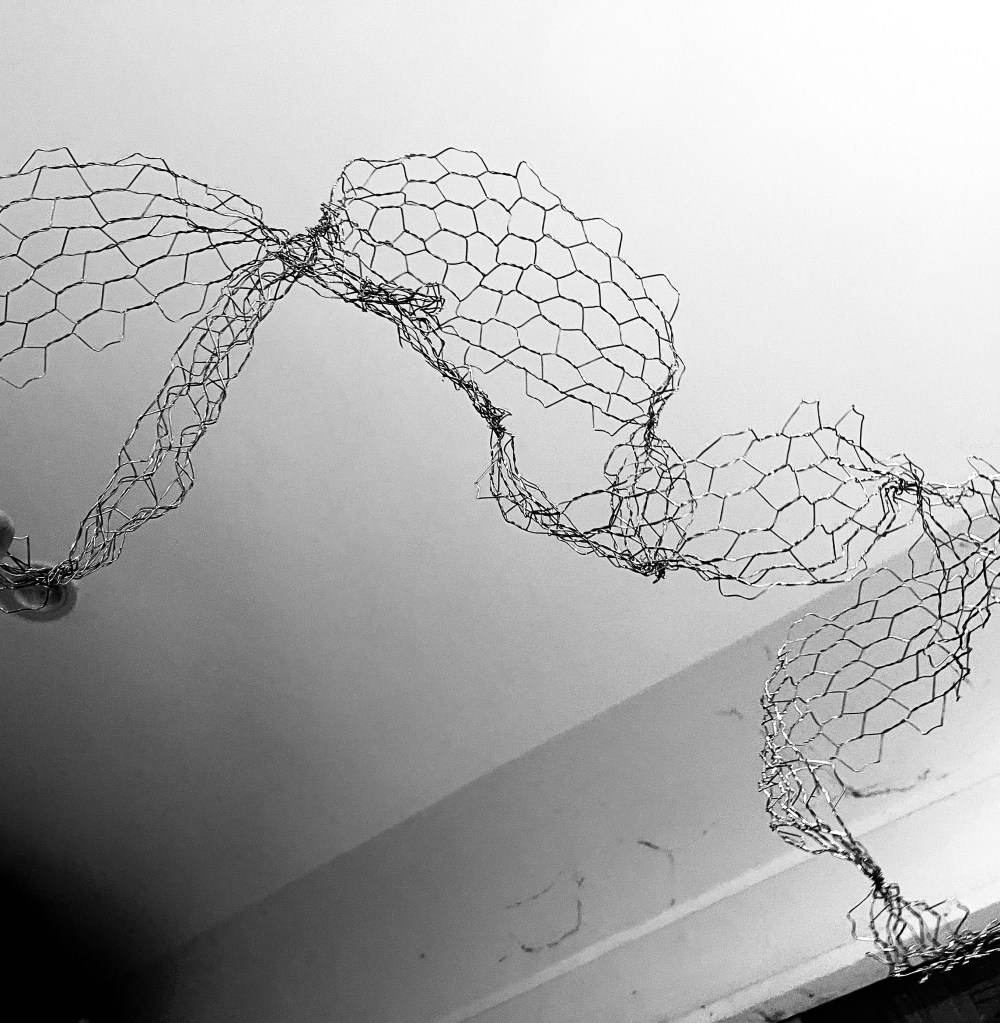
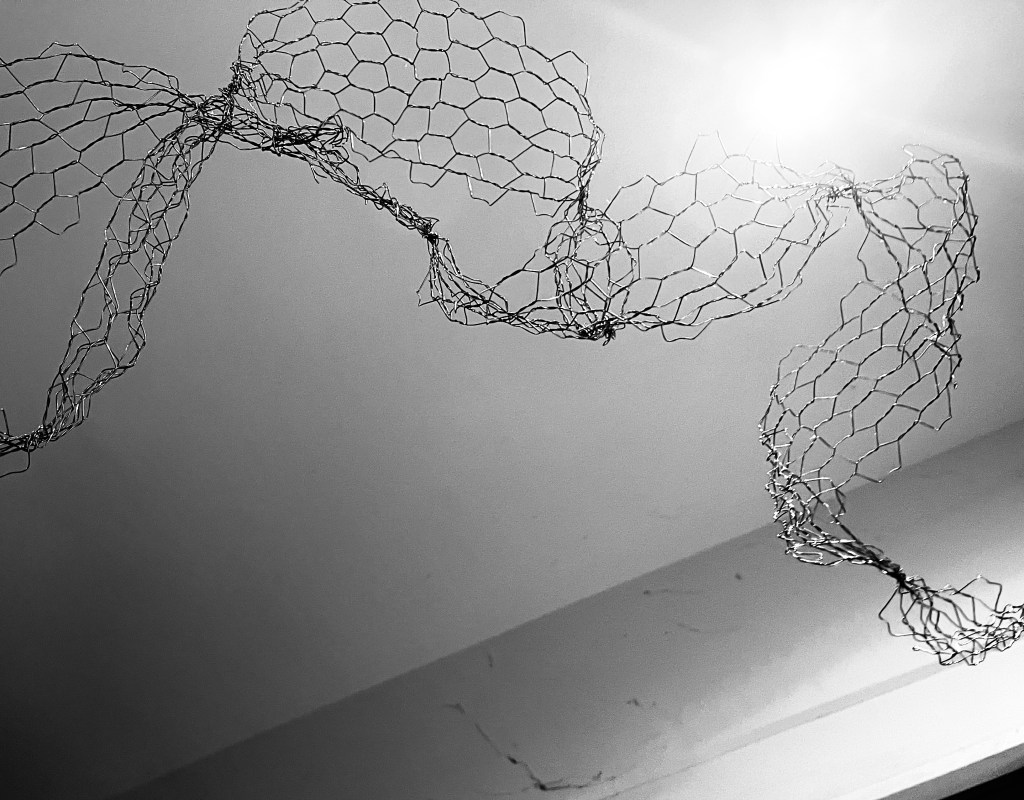
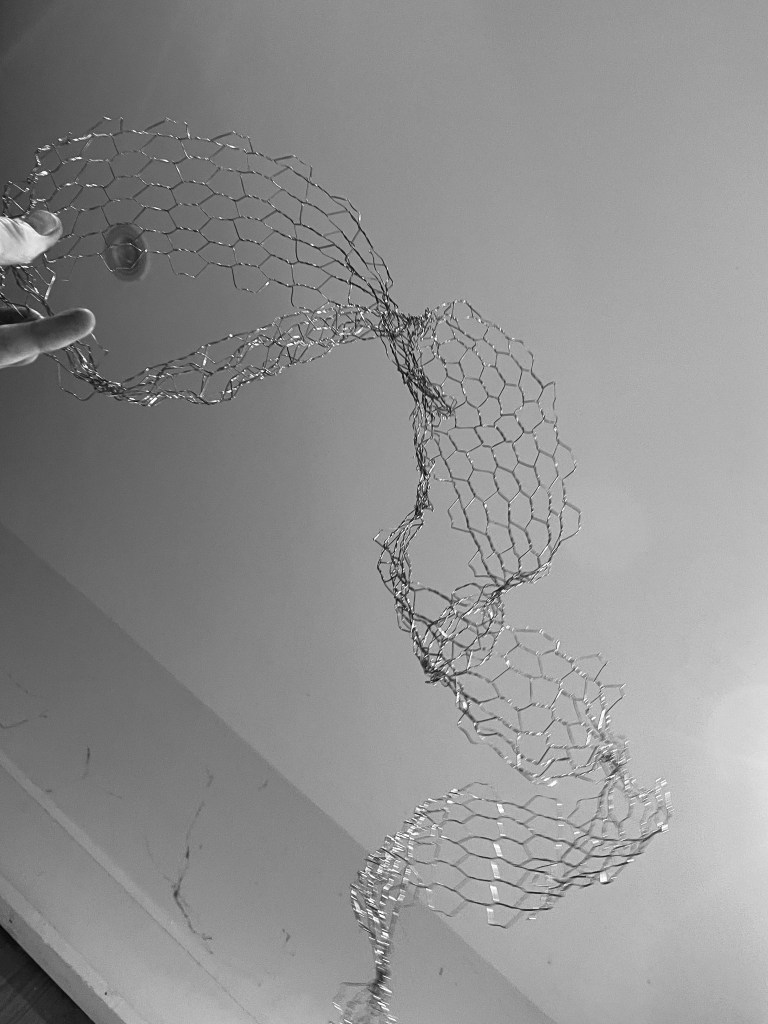
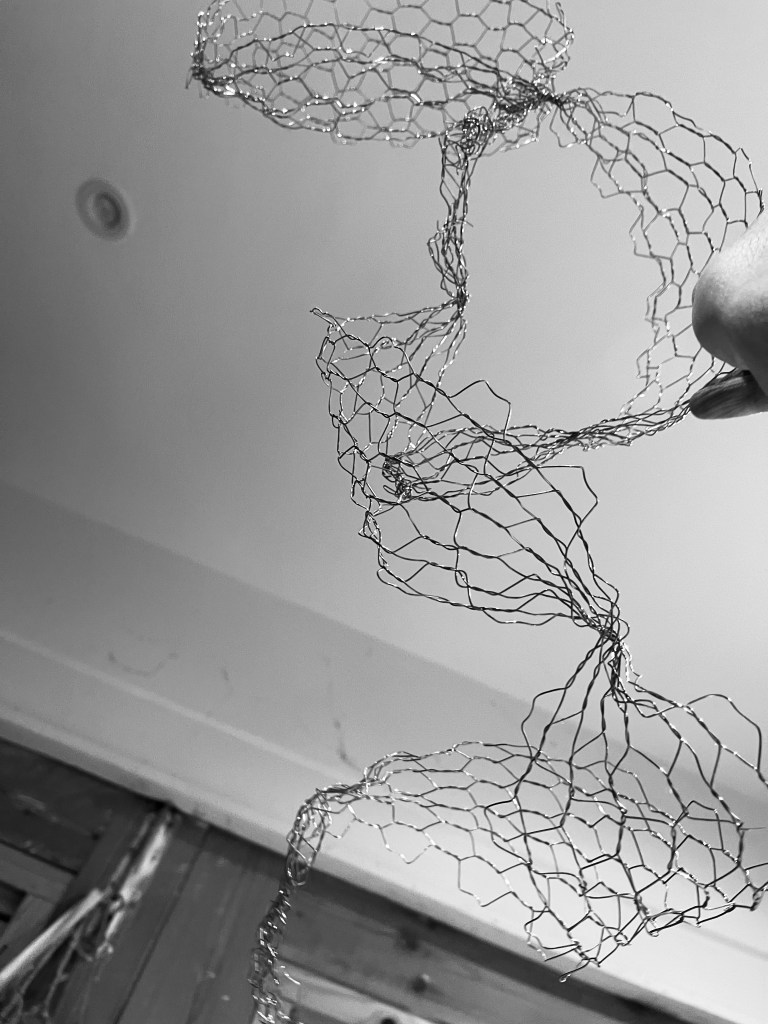
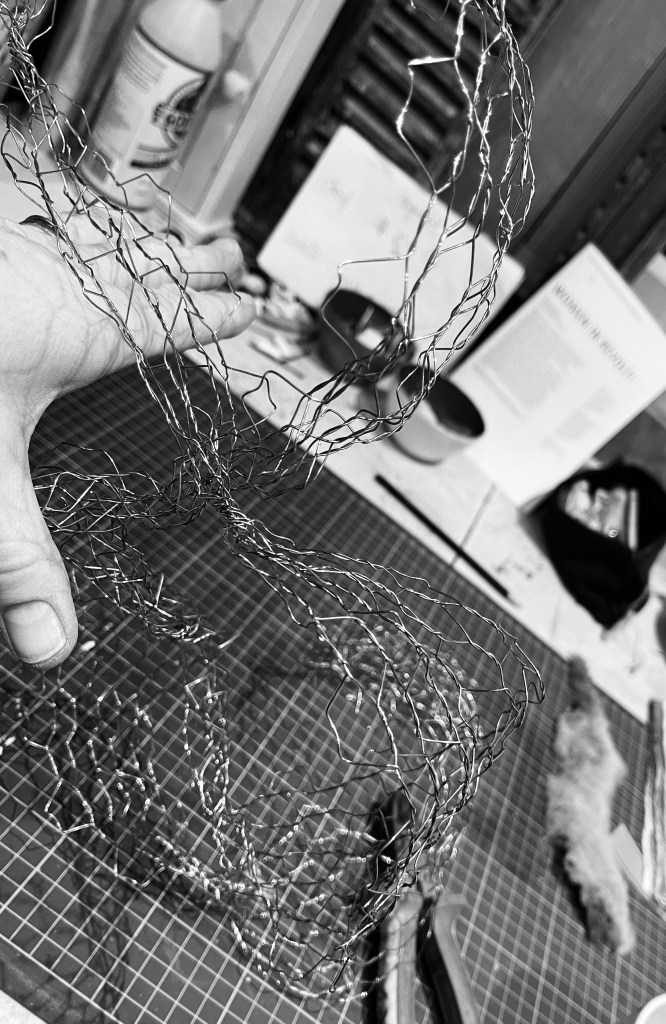
Layering up the sheets and lumps of dust, fluff and fibres. ( clothes fibres, hair, feathers etc ) Using clear PVA glue to attach to each other and the twisted frame, contorted nto an organic flowing shape reminiscent of a murmuration form.
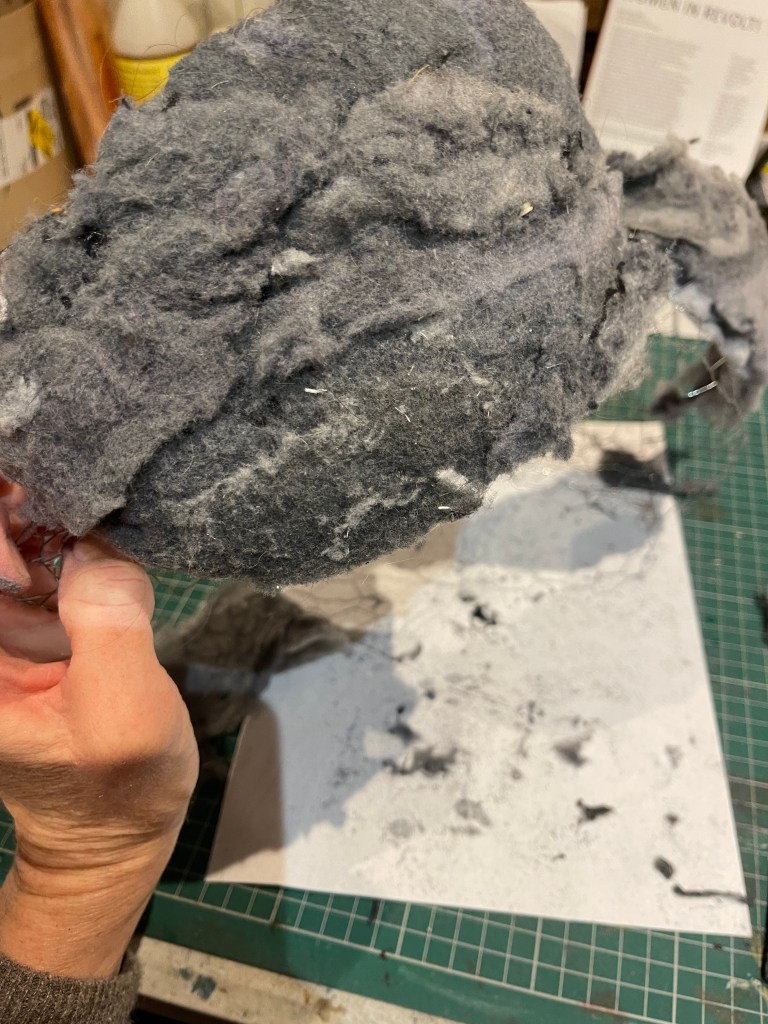
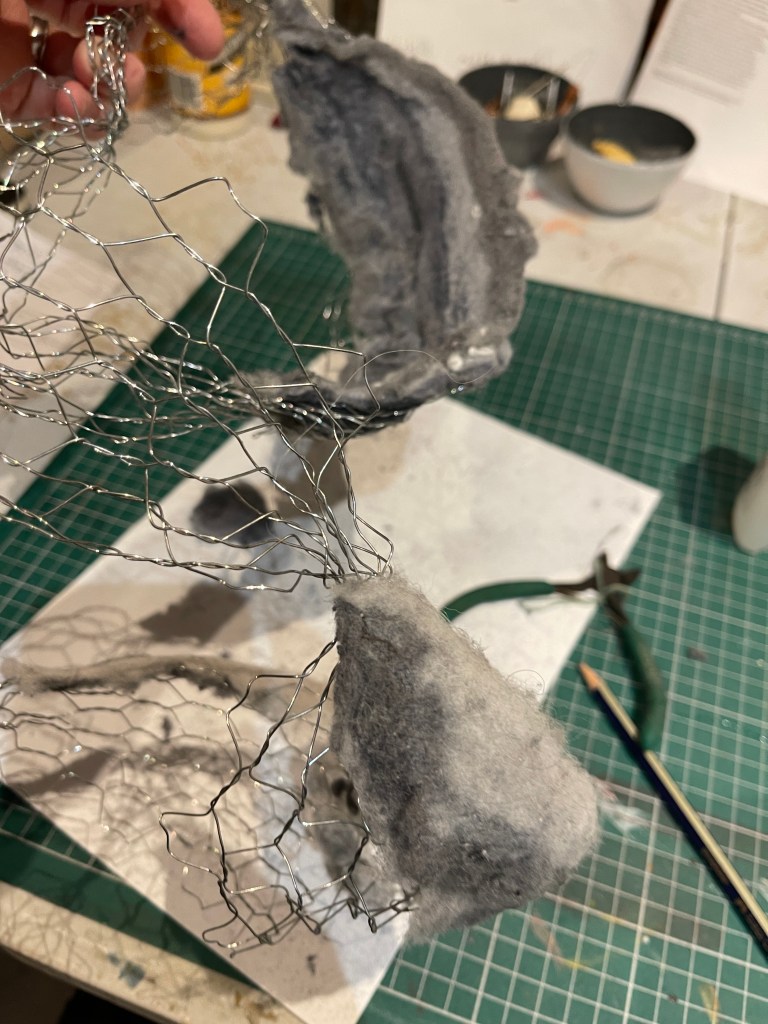
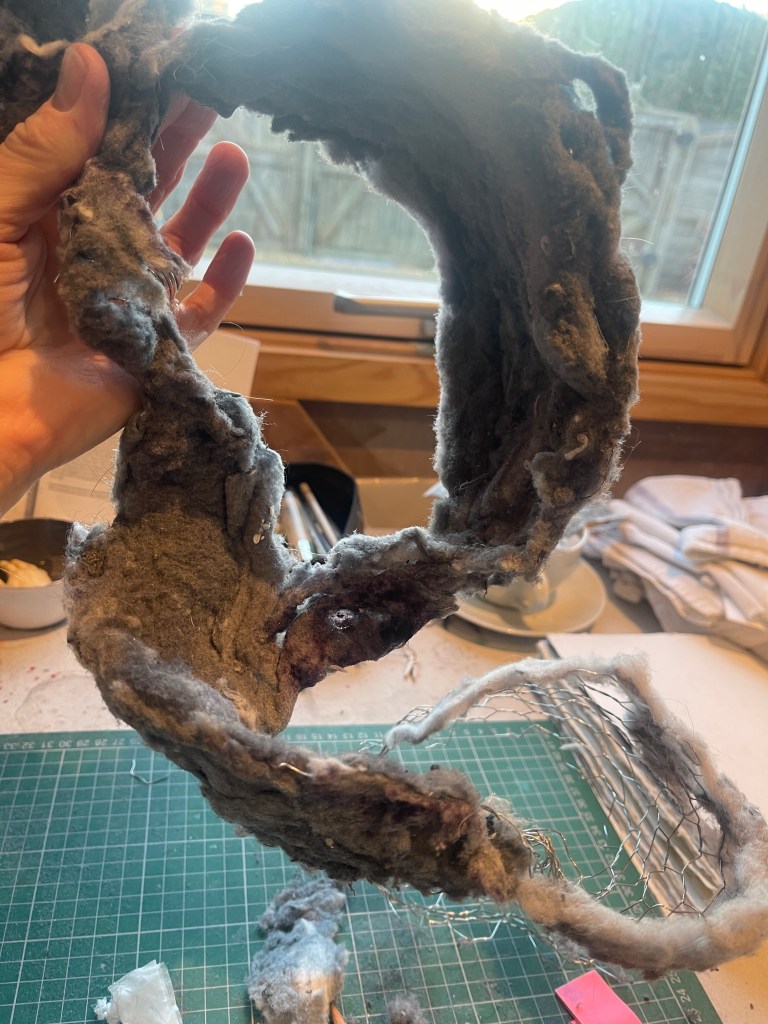
Unfinished images of first sculpture part – almost fully covered. Lying flat on surface. Approx size – 600mm x 400mm
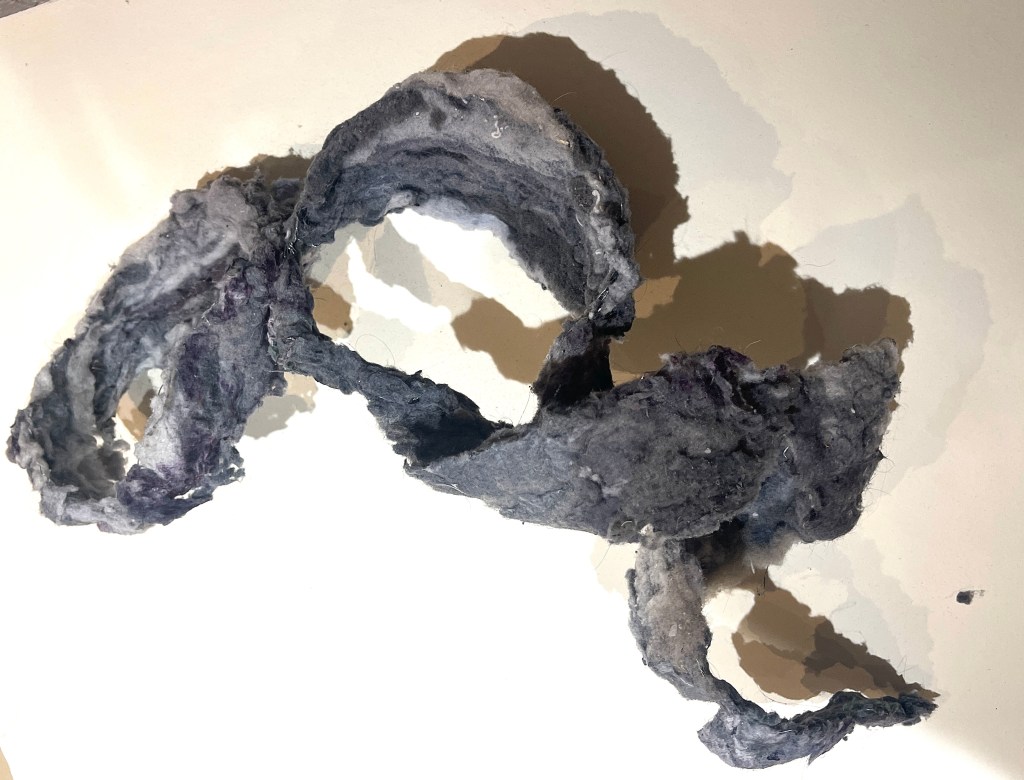
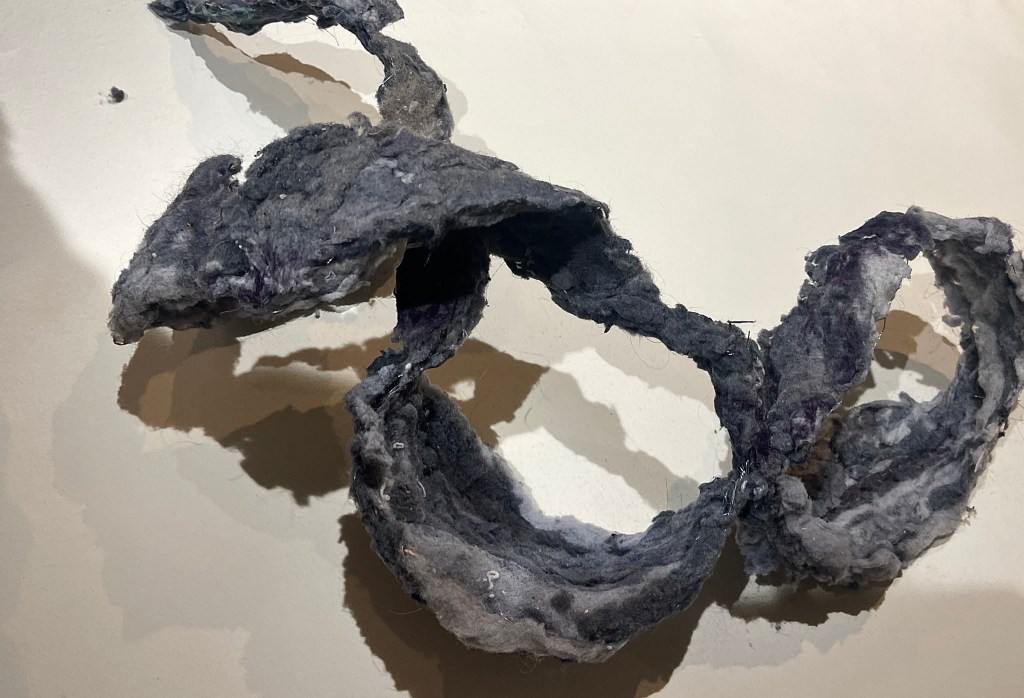
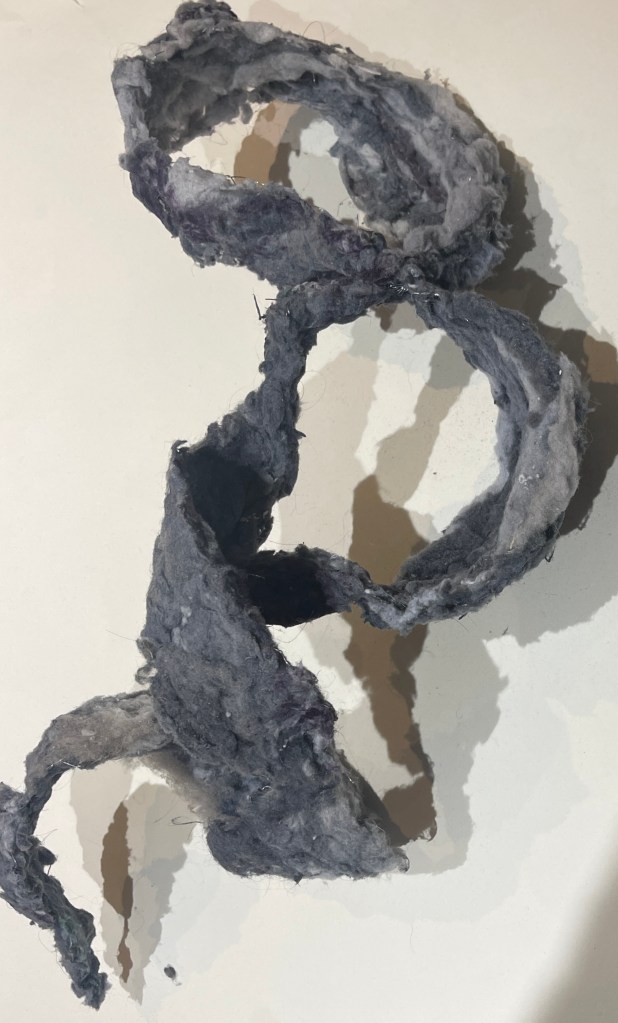
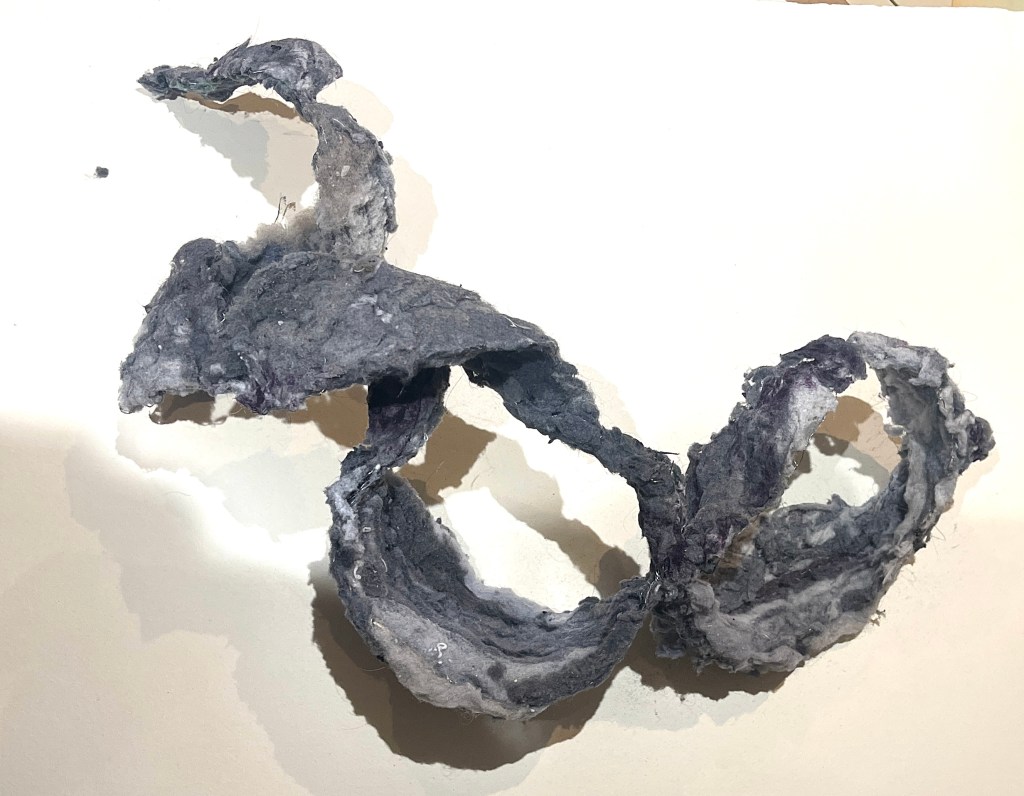
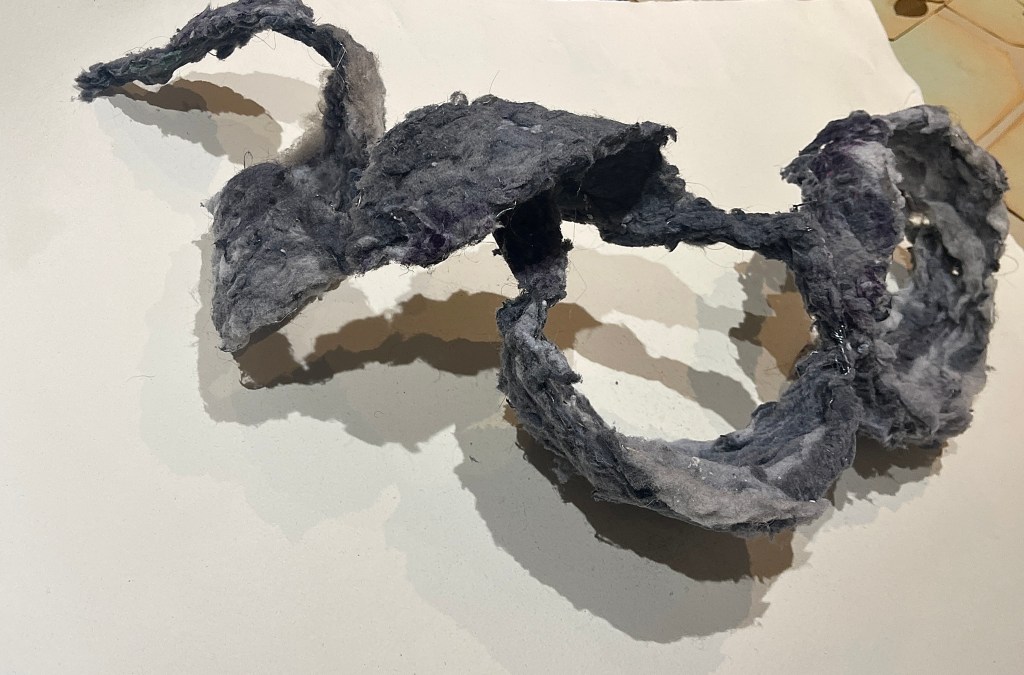
To do – Expand another section, Add more material , possible thinning with occasional aperture added.
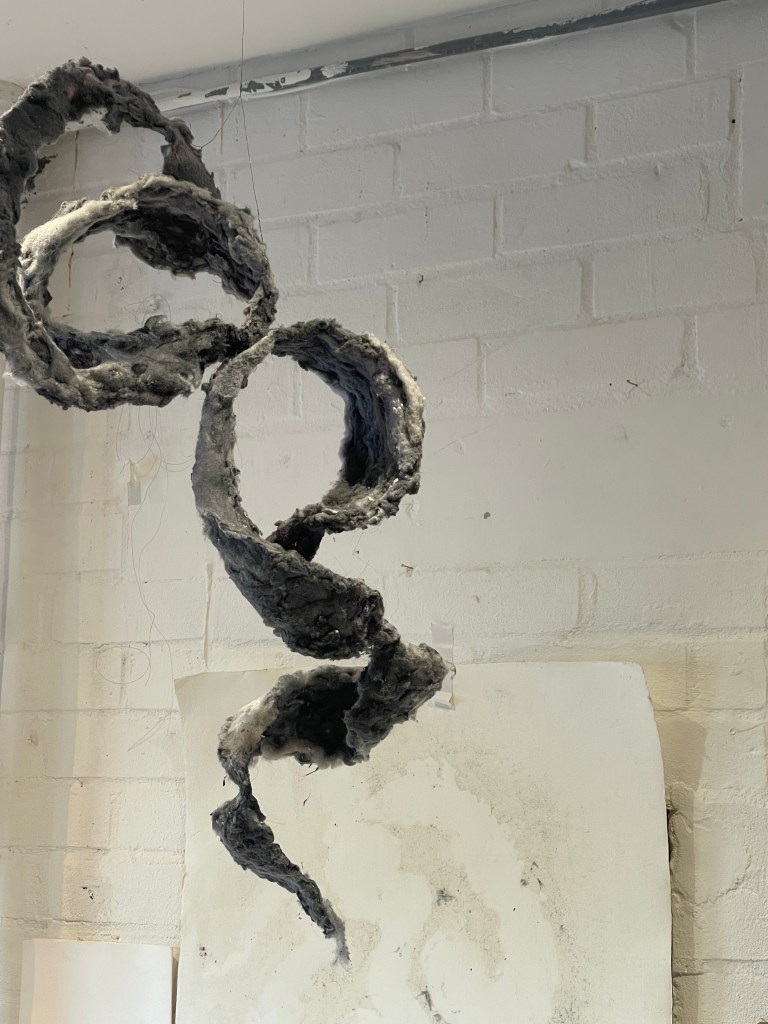
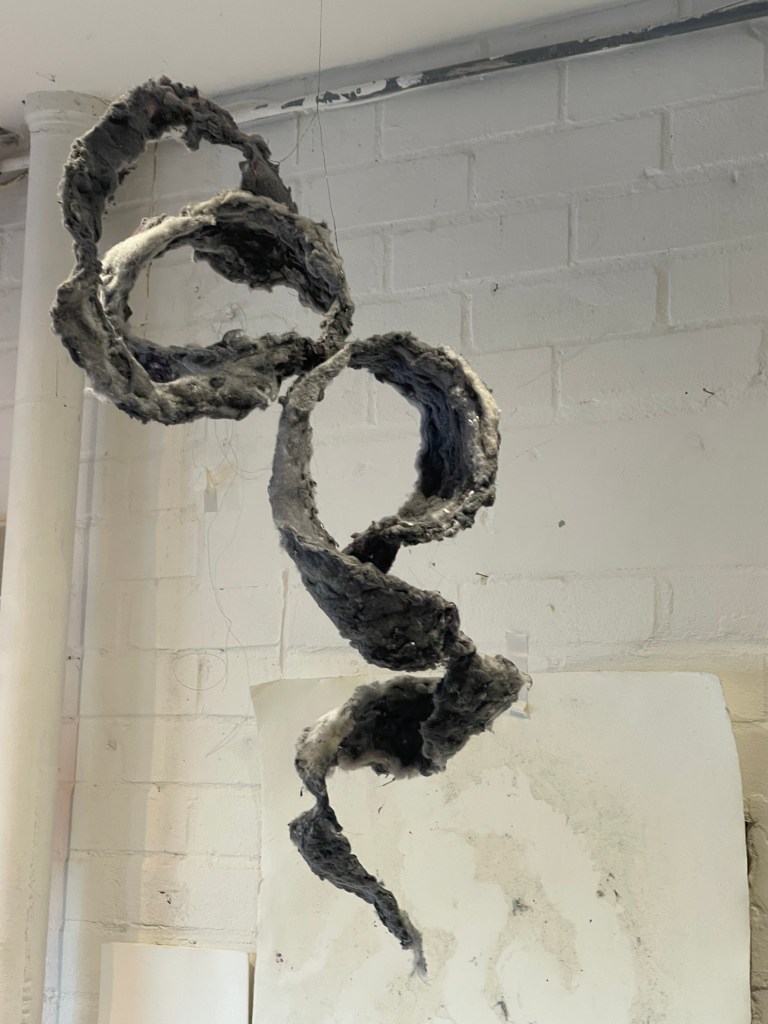
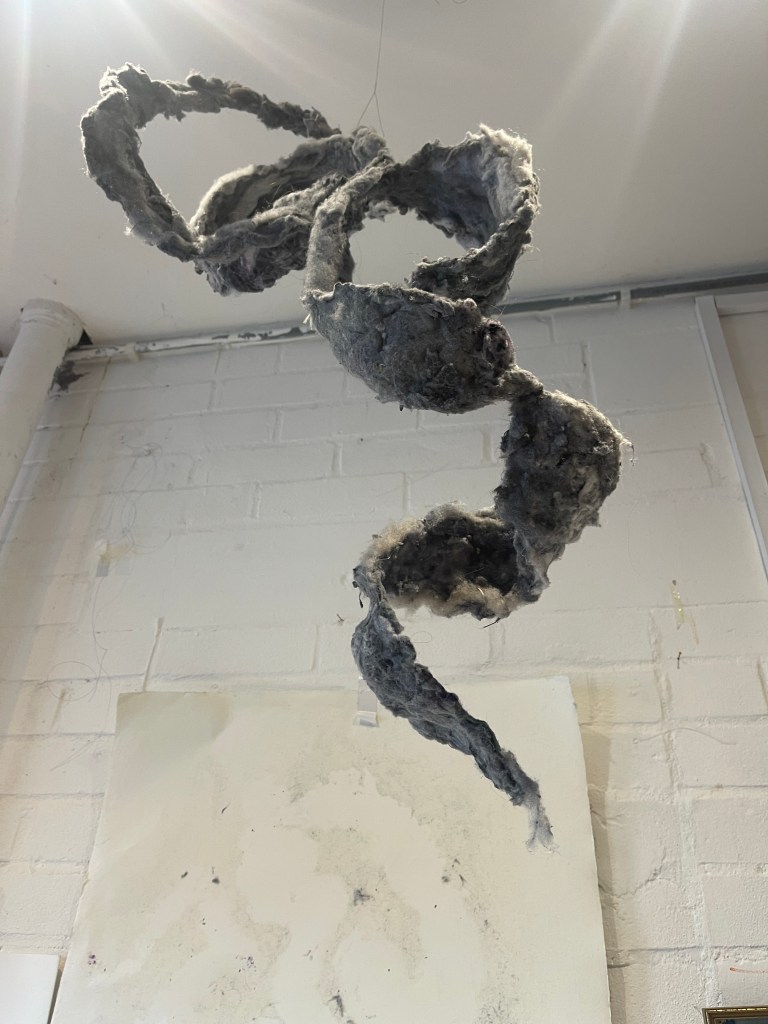
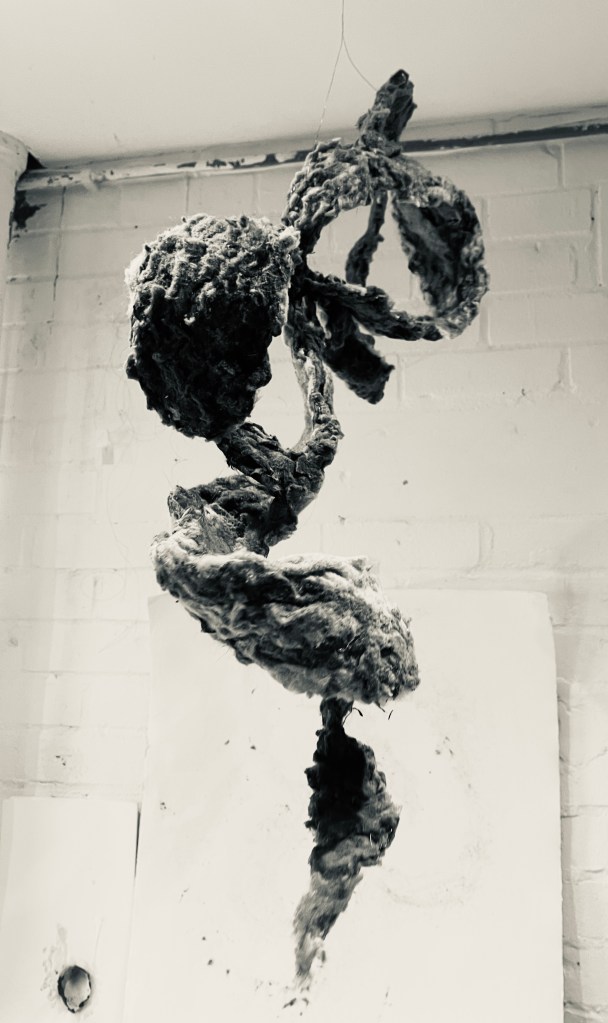
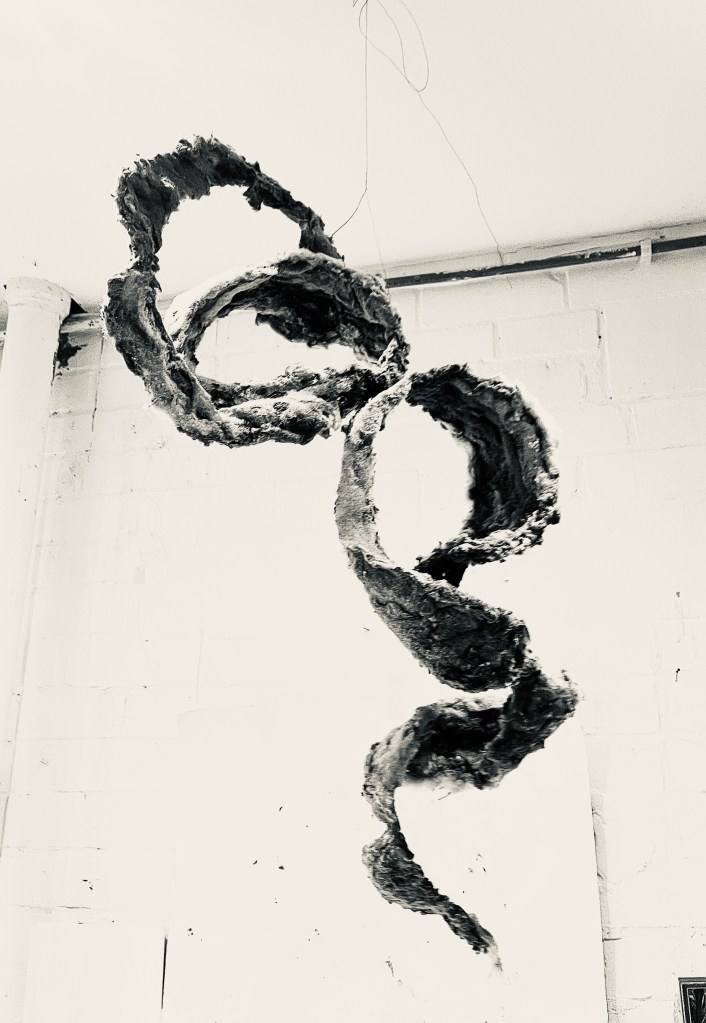
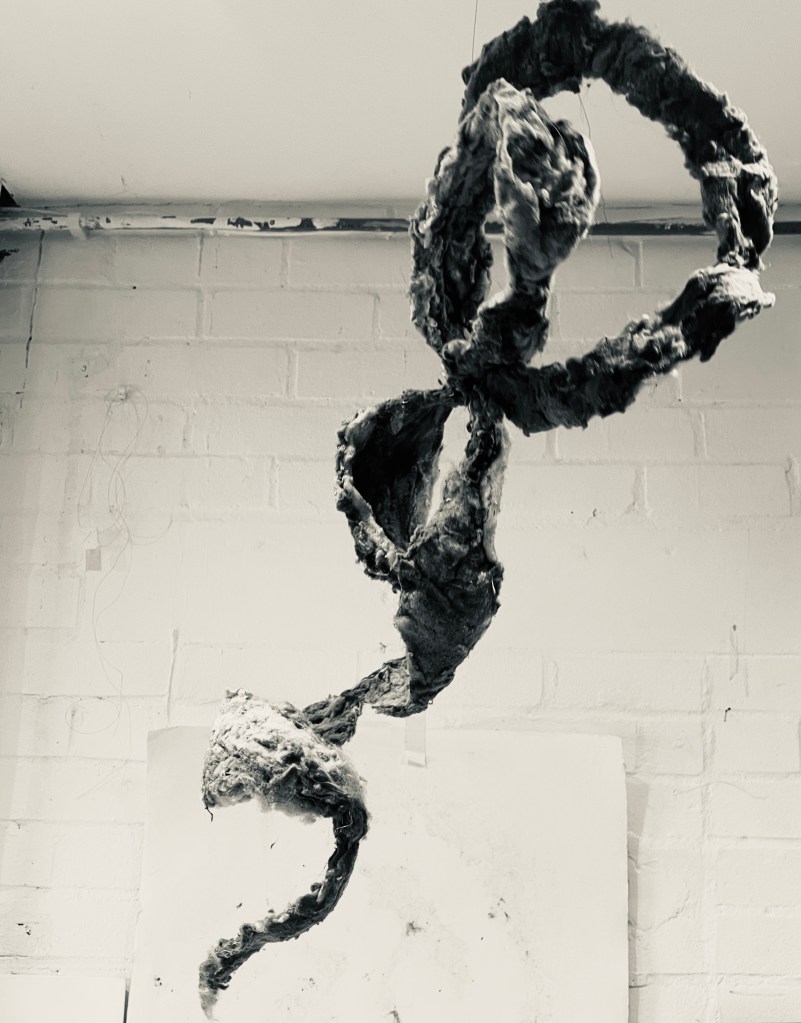
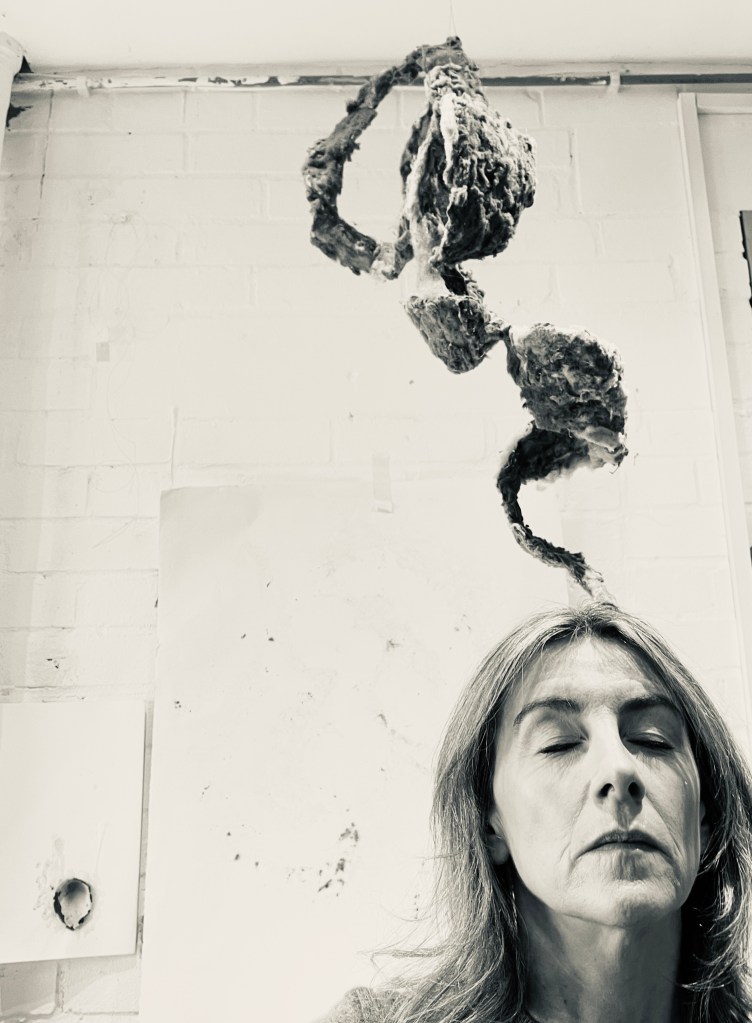
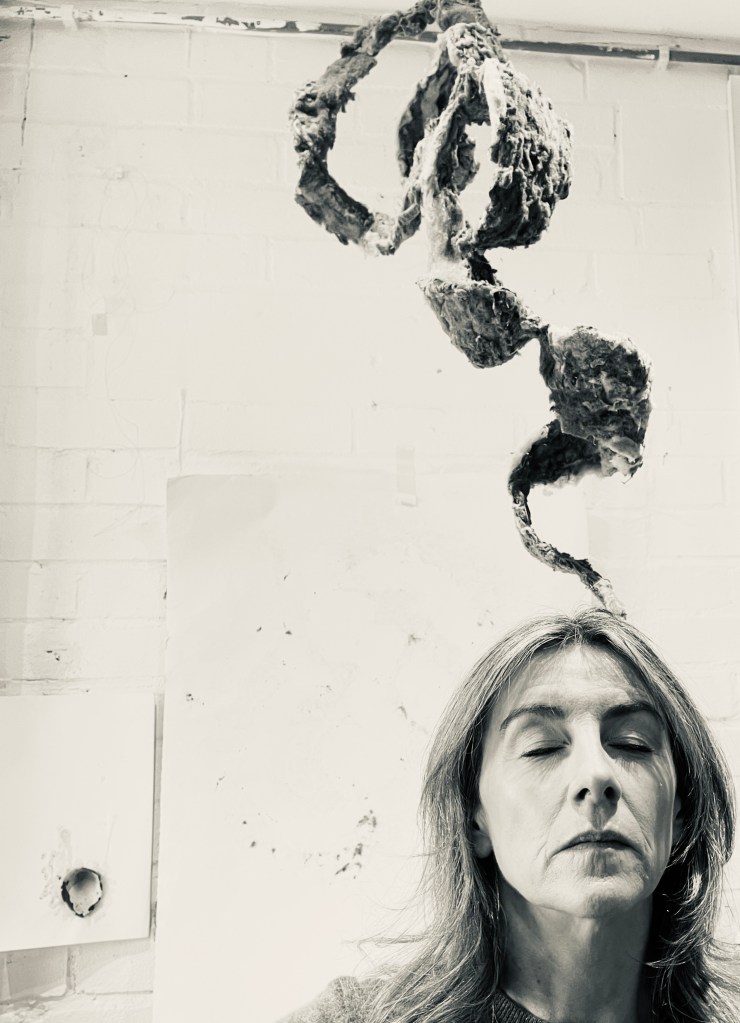
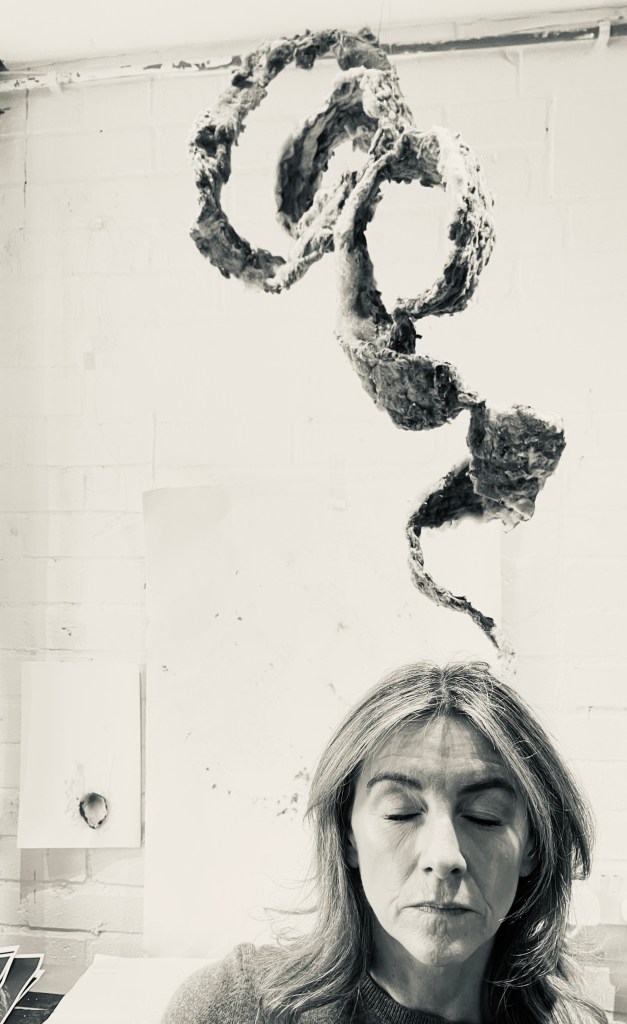
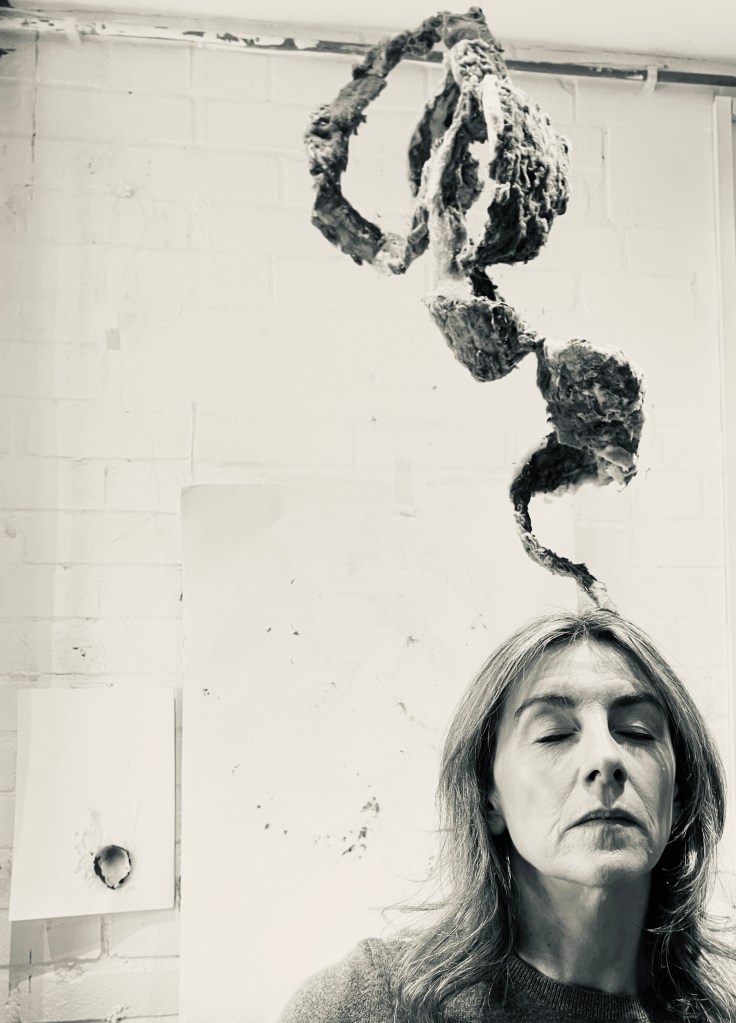
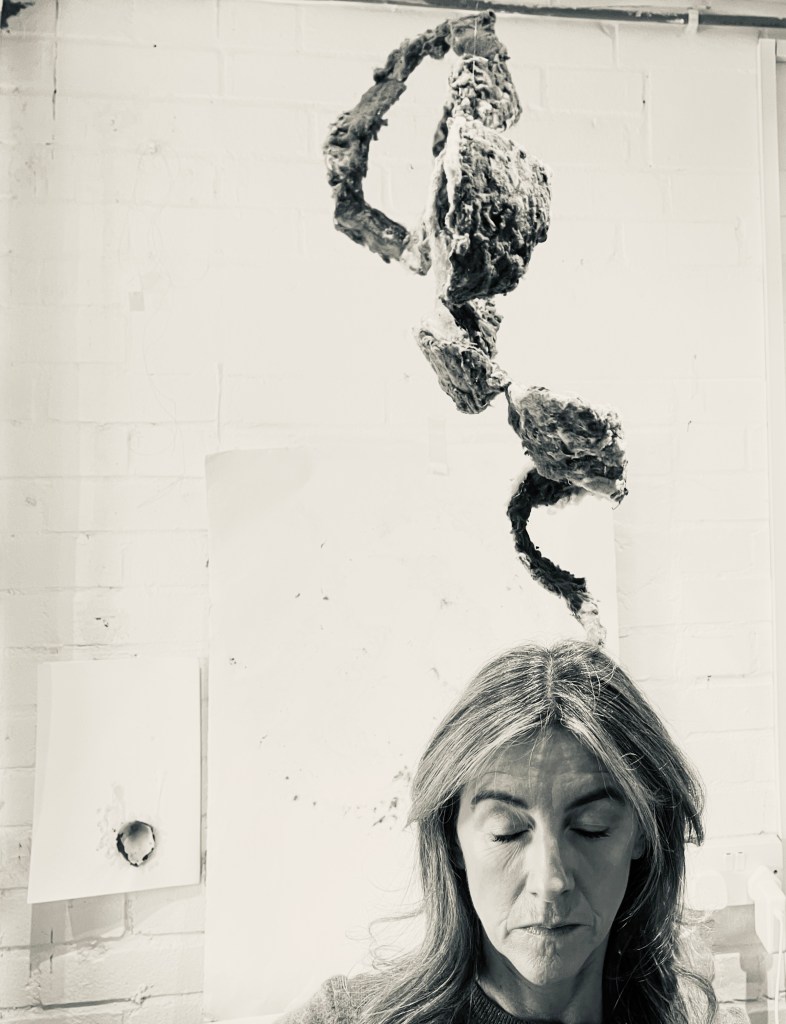
Invisible angst!
– the physical apparition of the anxiety, worry and fear hovering above us. The material embodying the uncomfortable, lumpy, nightmarish shape and form as it slowly rotated above me. Worming its way deep into my head.
Photographed in my studio. 2024.
Selection of Learning Log. 7
HOMEMAKER – : One who manages a household especially as a spouse or parent. The term was first used in 1861 – “woman considered as a domestic agent’
- a typically female rope and embedded in years of tradition fuelled by a patriarchic society and culture. It has been an ever present image in media from the earliest advertising in paper and print to film and all manner of social media. It was well documented by John Berger in ways of seeing and despite years of feminism and braking barriers the role of house keeper and home maker still traditionally and seemingly the majority falls upon the female. However looking beyond this narrative I wanted to explore the idea of home, its connection not only to ‘femaleness’ but the more visceral and darker side of the ‘home ‘ and its connotations to our being and presence.
Home has a grounded, positive narrative for many, it is a place of refuge, comfort, safety and security, perhaps even a haven. We are not all able to experience this basic human need, the physicality of home can be destroyed by war, violence, politics, relationships, financial struggles, mental and physical illness and all other related factors. The charity Shelter estimated that 309,000 were homeless in the UK alone in December 2023 , 30 % of that are female and includes 123.000 children. Globally the figure is mounting every day it stands at an estimated 1 billion people are home less and many more living in poor below standard. ( http://www.develoopmentaid.org. )
The necessity of home is instinctive and inherent within humans. Obtaining and keeping one is challenging, fraught and may be out of reach for some.
This work looks to encompass the fragility of home and emphasise the enormity of what is represents and holds. Specifically through eyes of the traditional ‘homemaker’.
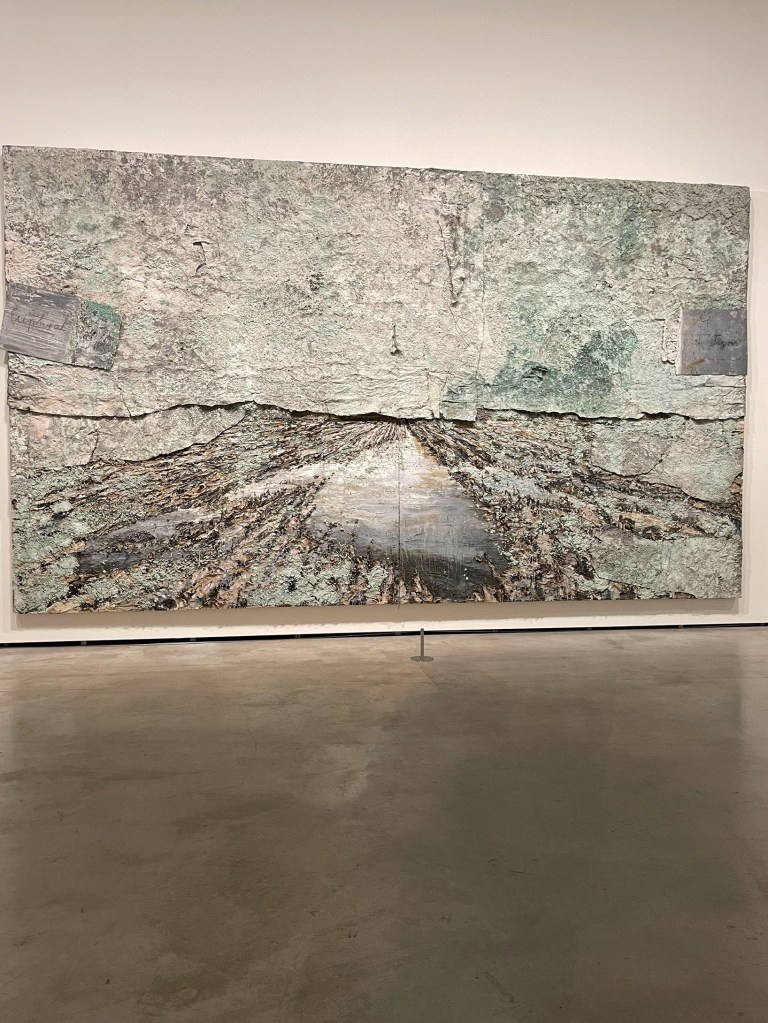
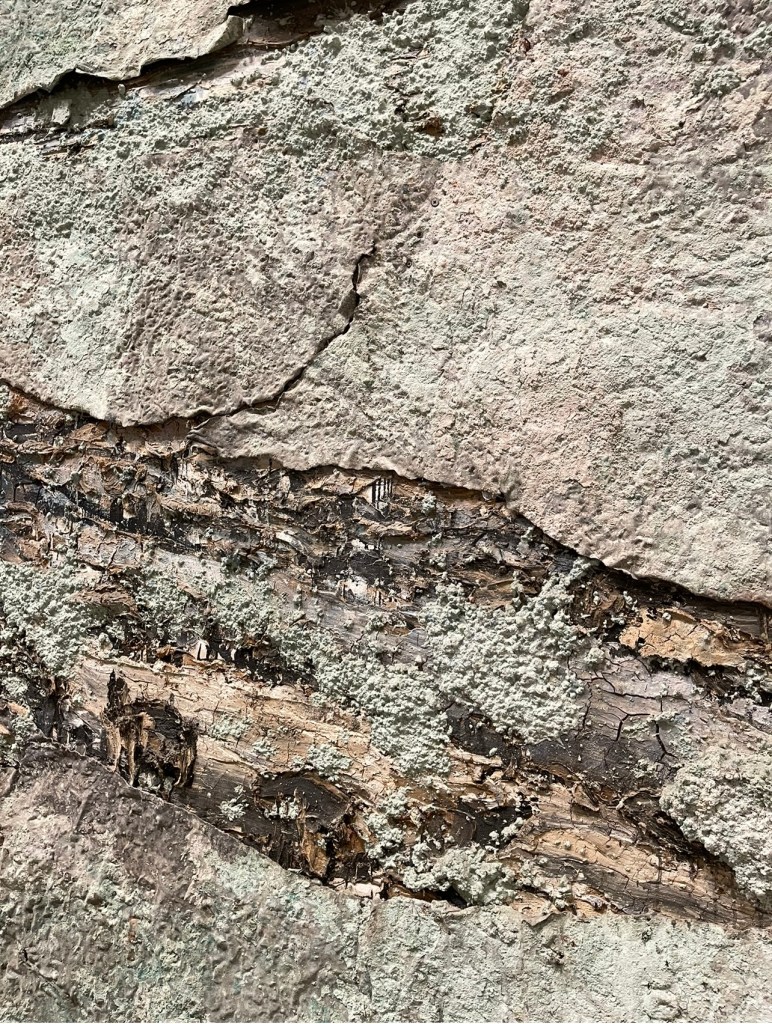
A visit last year to the Guggenheim in Bilbao allowed me to take in the enormous expansive work of Anselm Kiefer ( 1945 – ). One vast room was dedicated to a number of his works but it was one particular work that struck me, primarily the scale but also the diverse use of material. I took the pictures below knowing I would come back to explore Kiefer’s use of material and the quality and diversity of texture he was able to create .
Anselm Kiefer – The Land of the Two Rivers ( Zweistromland ) 1995
Detail below:
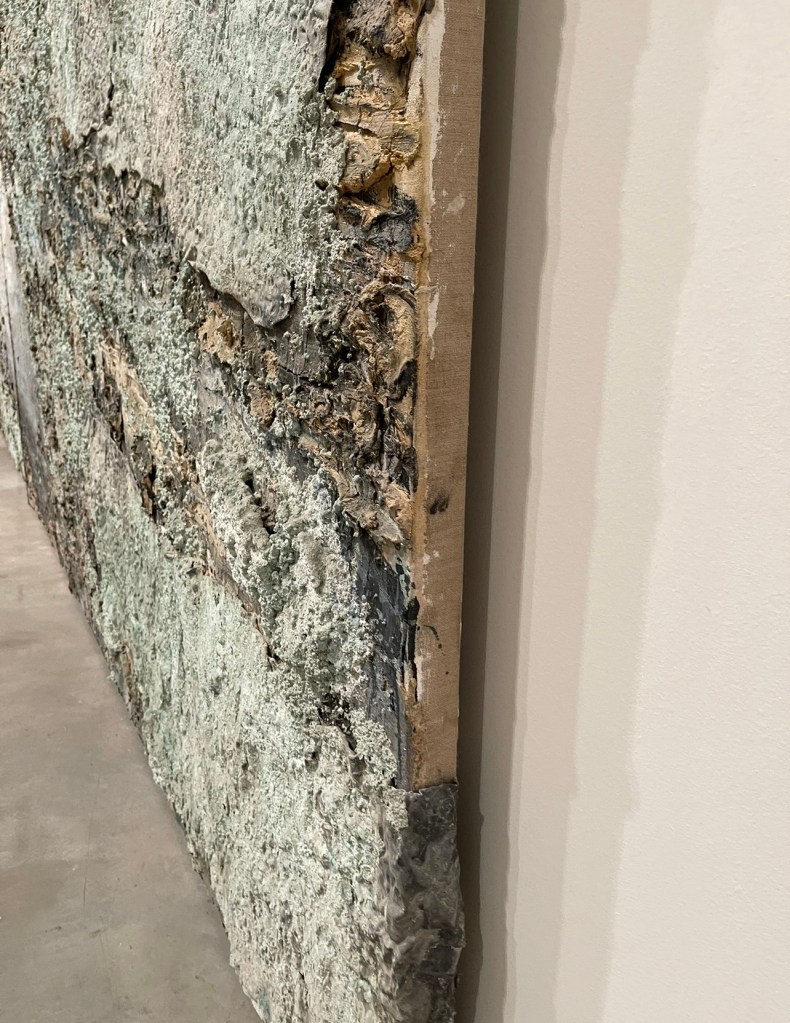
My local Pallant Art Gallery in Chichester has long exhibited a work that I was continually drawn to. On a vast scale, its focus on material quality of the work beautifully and exactly depicts the scene of a Thames Estuary.
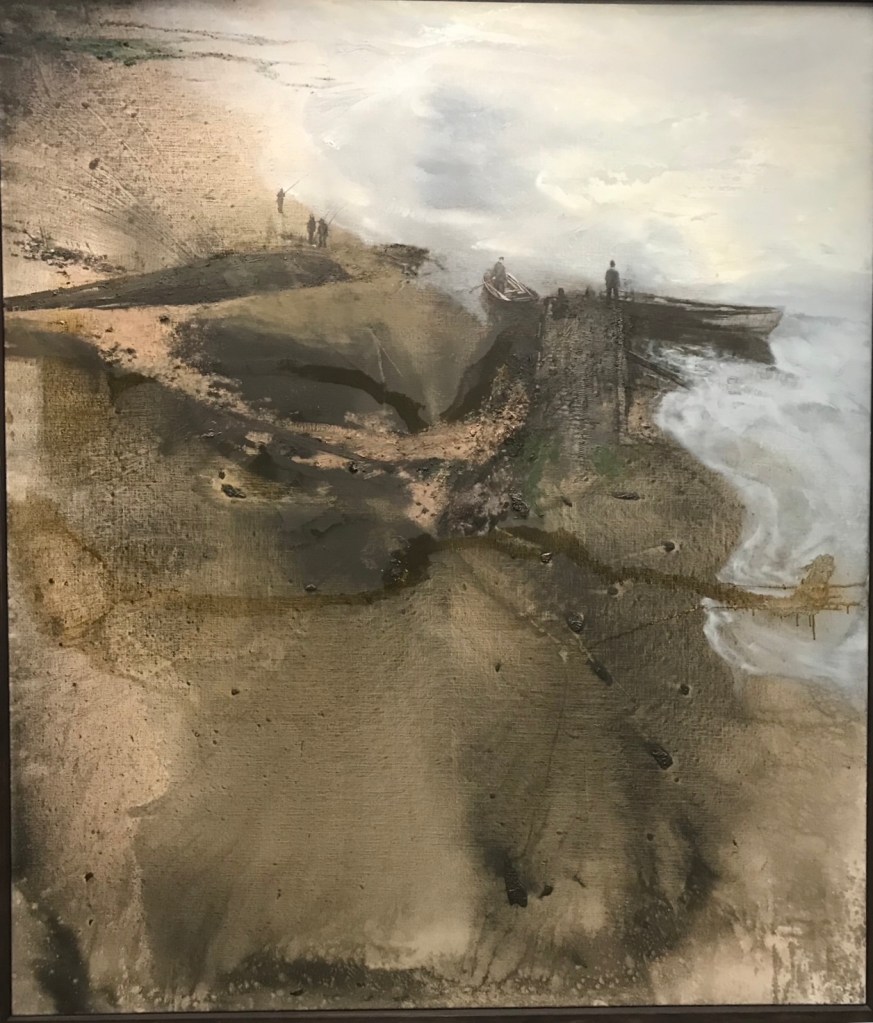
Michael Andrews ( 1928 – 1995)
Thames Painting : The Estuary. ( OIl and mixed media on canvas) 1994 -5)
detail :
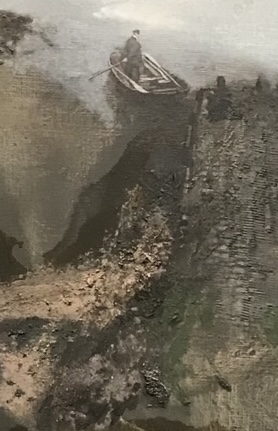
Inspired by the layering and colour of the emulsion, acrylic, lead, salt - produced by electrolysis using a zinc – plates condenser on canvas – (perhaps a little ot of my current league) by Kiefer and the colour and quality of material in Andrews work I was inspired to bring some core, raw material to my work. As yet these have been in found material of rubble , paint and plaster, clay but having worked with them I can see the enormous potential of creating depth , texture and viewer engagement with this array of material narrative.
This new work has come from directly from he material narrative of the found material, obtained from crumbling properties and structures I have explored The paint, plaster and rubble holds its own narrative of the past, dilapidation and debris. Working with the brittle material gave agency to the narrative and allowed the found matter to be heard.
Using a fixing modelling plaster and clay - to hold the separate pieces of found material together I began to construct work that spoke of th estress and necessity of creating a home.
Its fragile beginnings
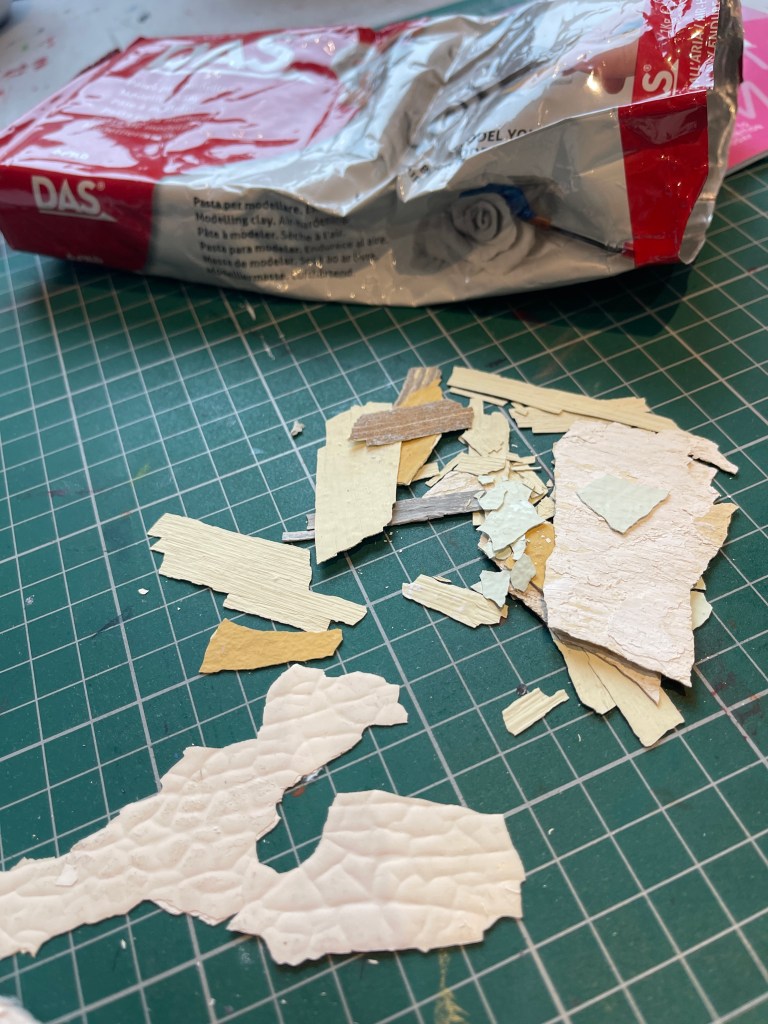
The fragility of the material is representative of the thoughts and anxieties that can surround the home… maybe its not a haven , not secure, safe, embracing and warm?
Is it metaphorically crumbling a under the weight of outside pressure, Is it physically destroyed, will it be taken away and lost.
Is there dread and fear when you think of home?
Do you want to come home?
Do you feel the enormity of creating home for you and for others?
Abandoned domesticity ?
Below – beginning to layer and build …..
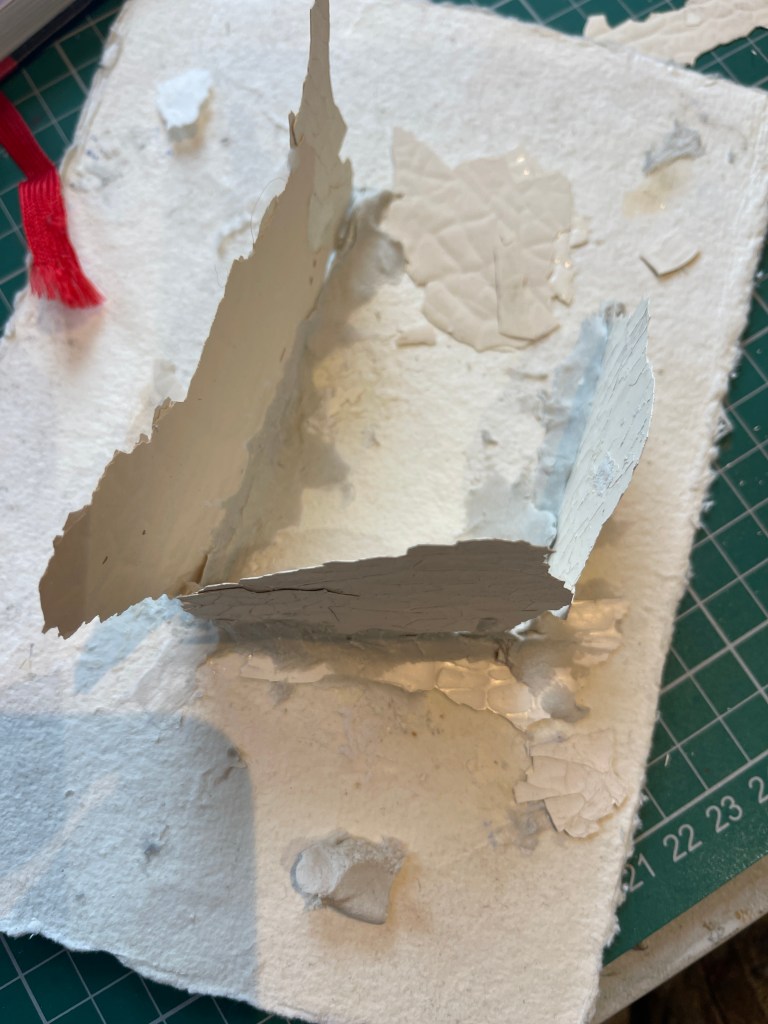
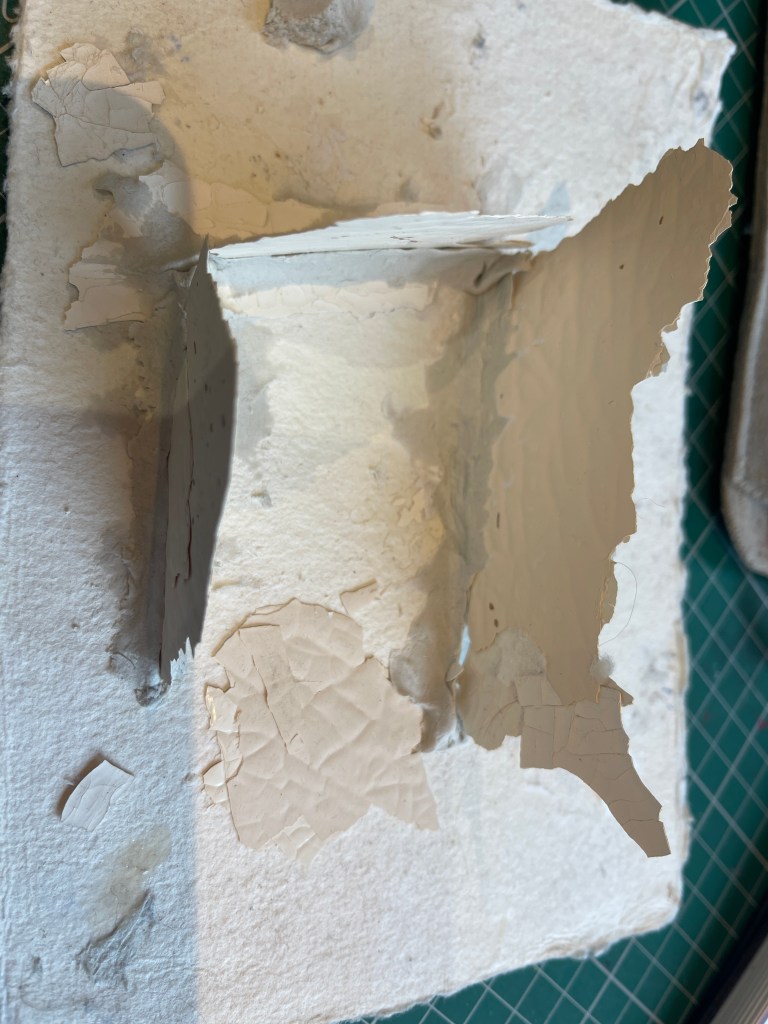
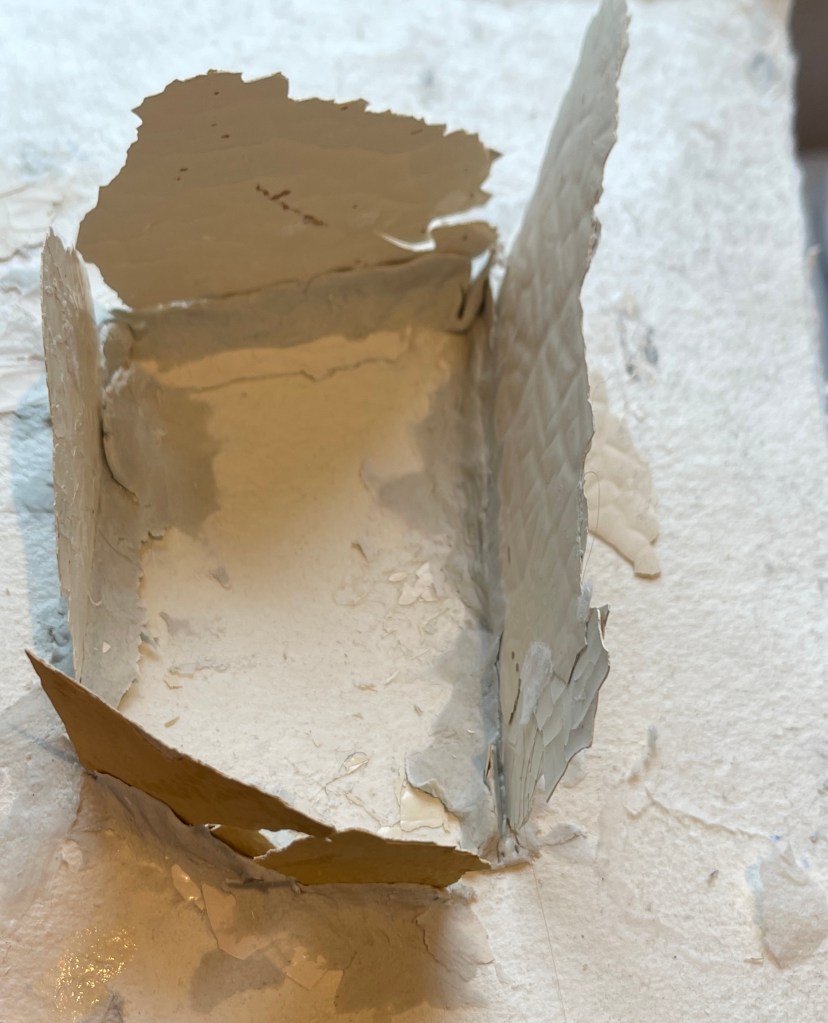
The structure is not a model of a house or trying to be – it is a notion of ‘Home’ and how the viewer might interpret this with positive or negative emotions corresponding to their own experiences of the place.
I was looking to find a concept or point that evoked a build but also a destruction. An ephemeral, fleeting quality usually unrelated to “home’ but perhaps now more poignant. Something beautiful and positive but also ugly and decaying, untouchable, out of reach.
Working with clay molding plaster and detritus from buildings..
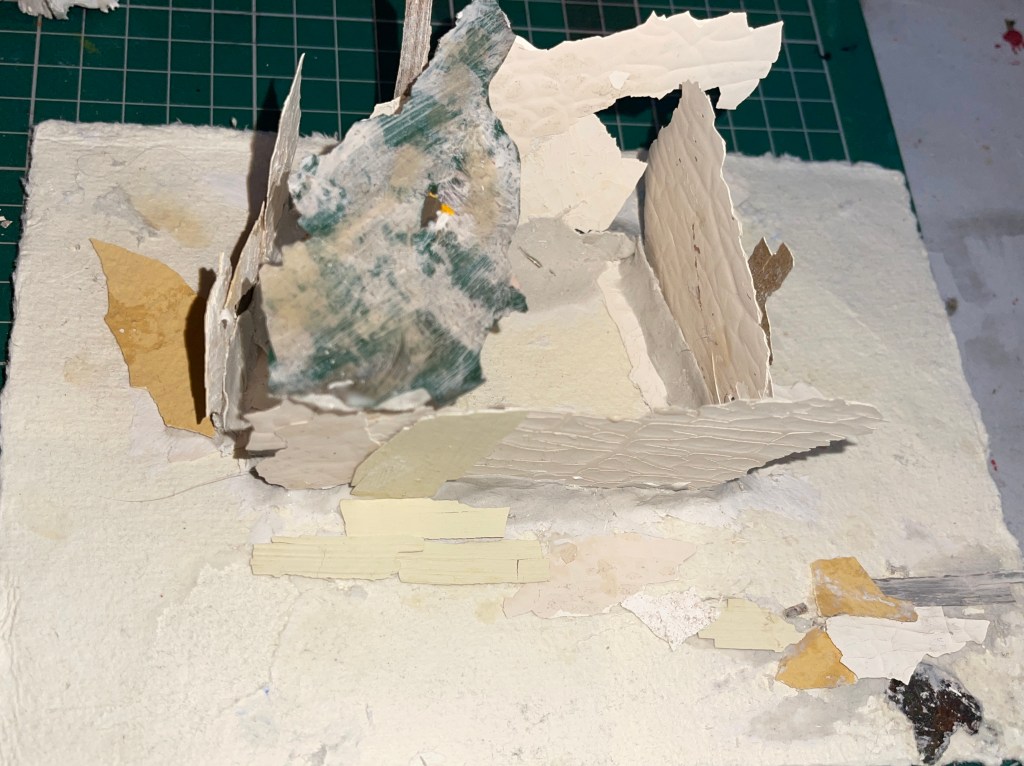
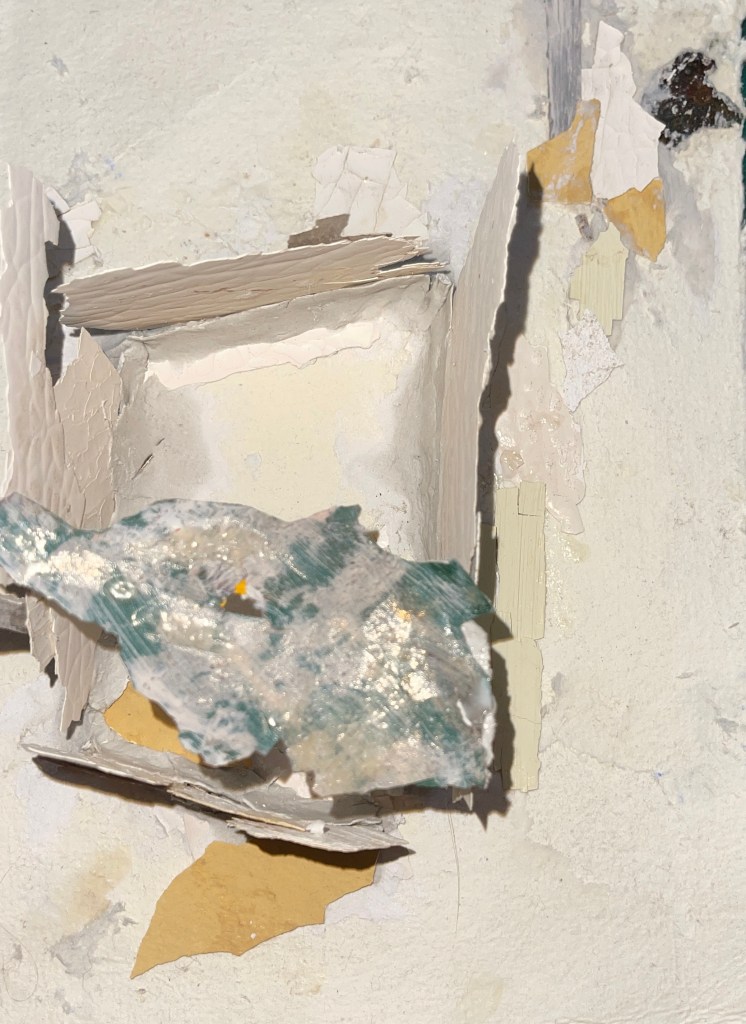
I used 350g Khadi paper for the bases as it was absorbant and strong. I wanted to create with out the use of glue so I had to structure and think carfully regarding the structural integrity of the sculpted forms.
I was aware-of creating home like imprints and spaces that sat on the surface almost as if in a garden like context – with their allotted space surrounding them. Each one was placed slightly differently in scale reminiscent of a row of dwellings…
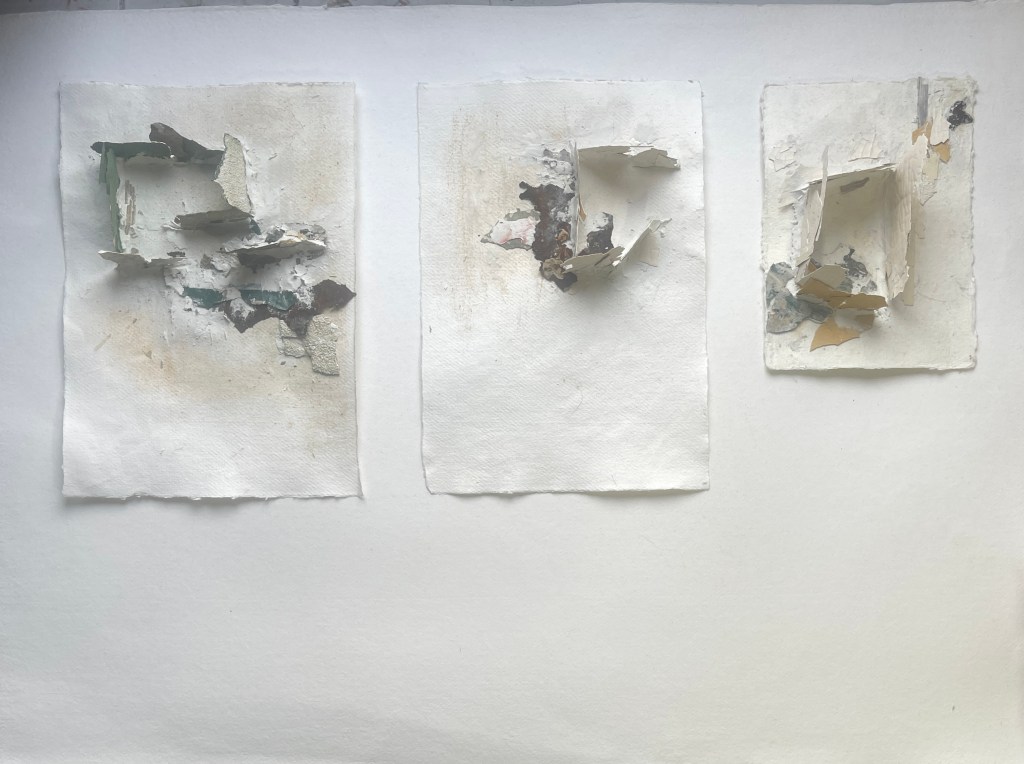
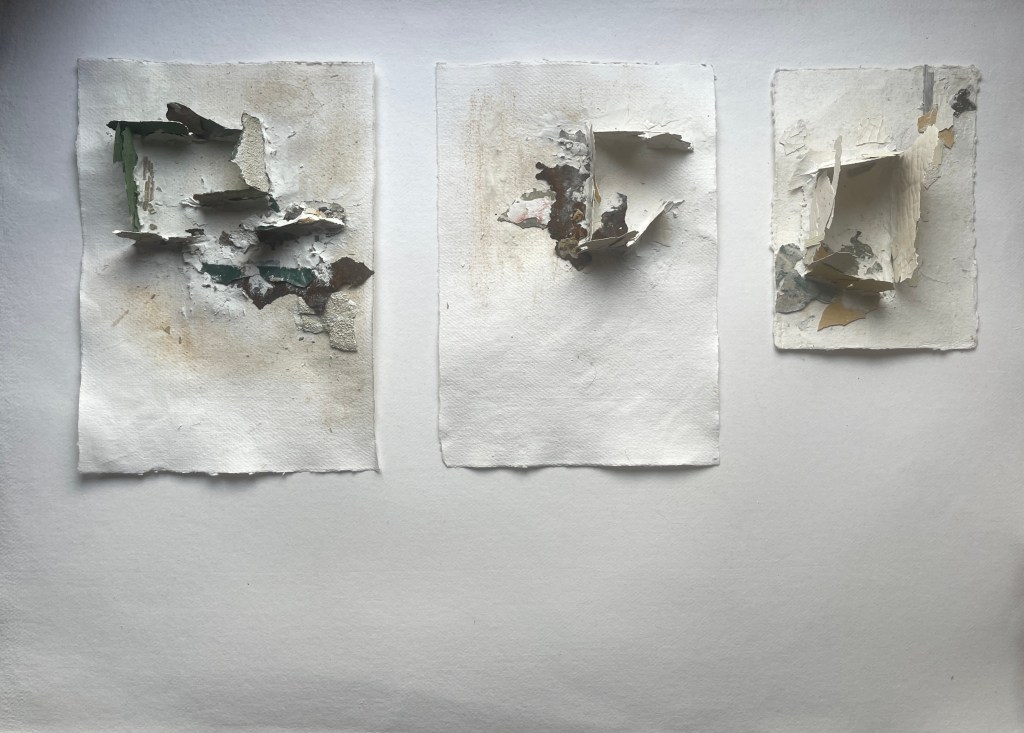
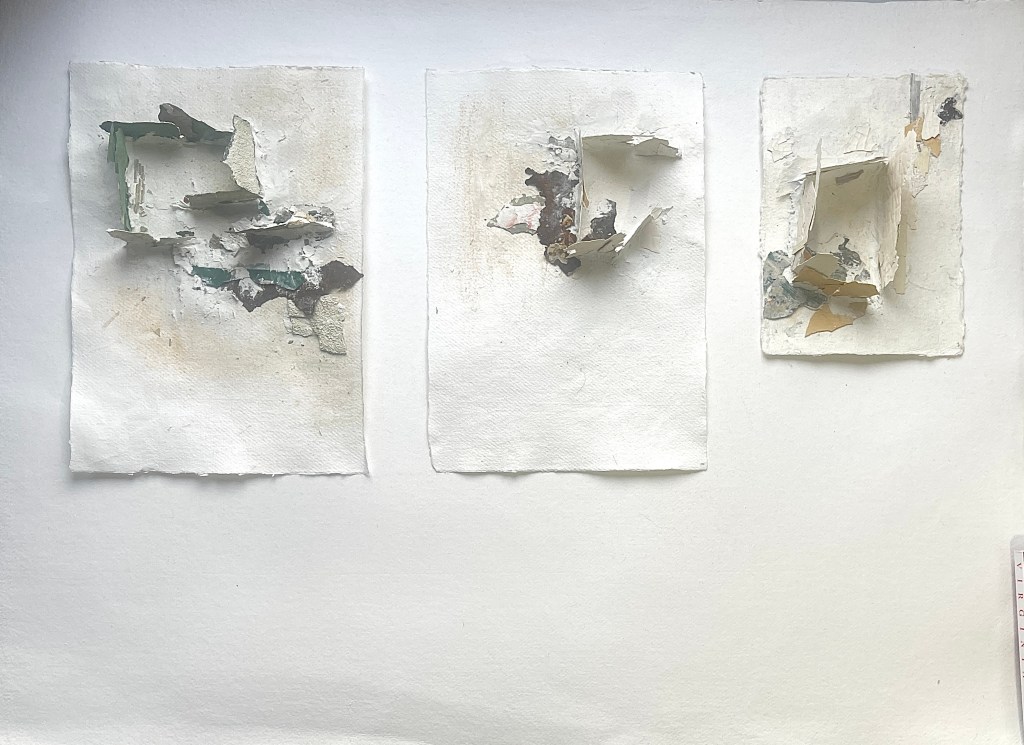
The images are difficult to photograph as they have a great play with light and shade on the varied sides and shapes of the structure.
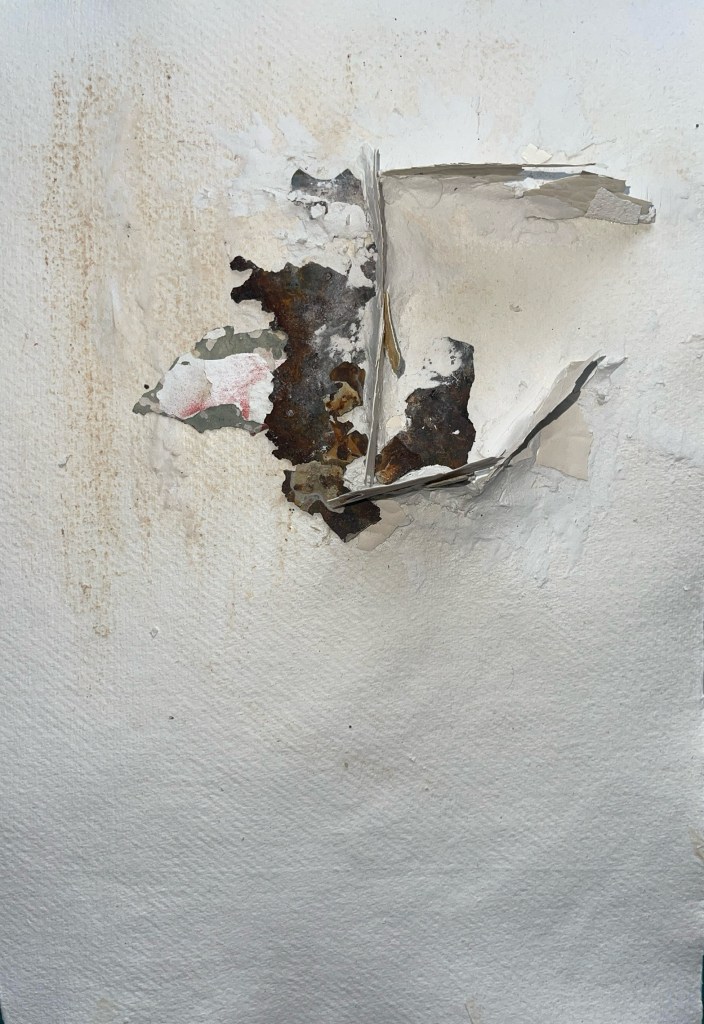
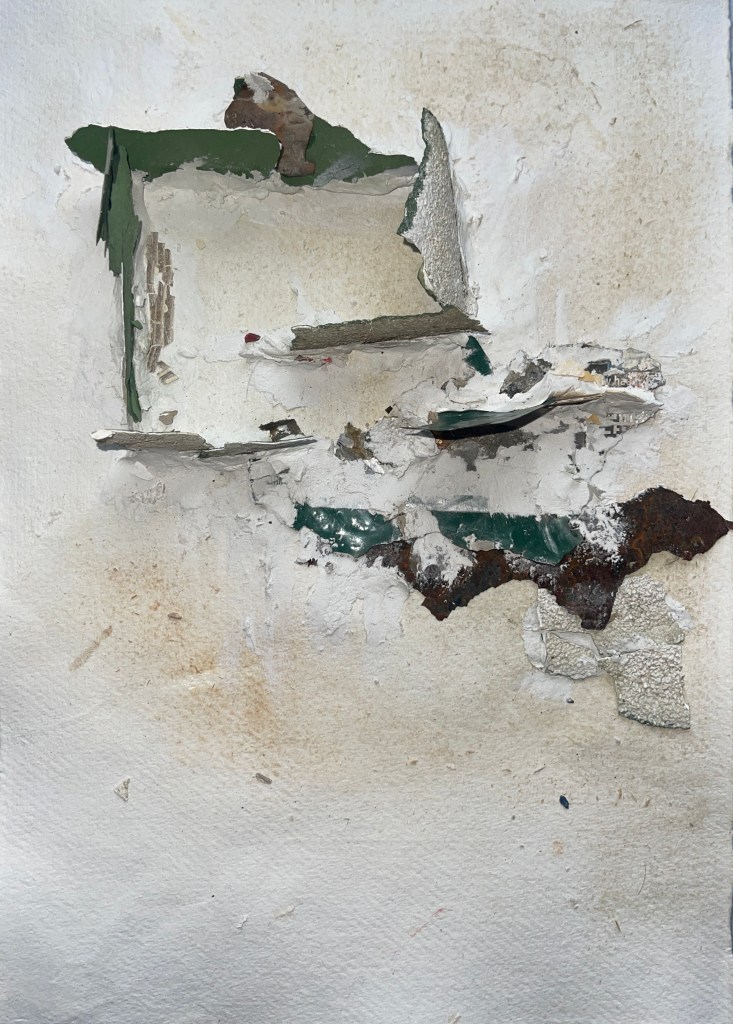
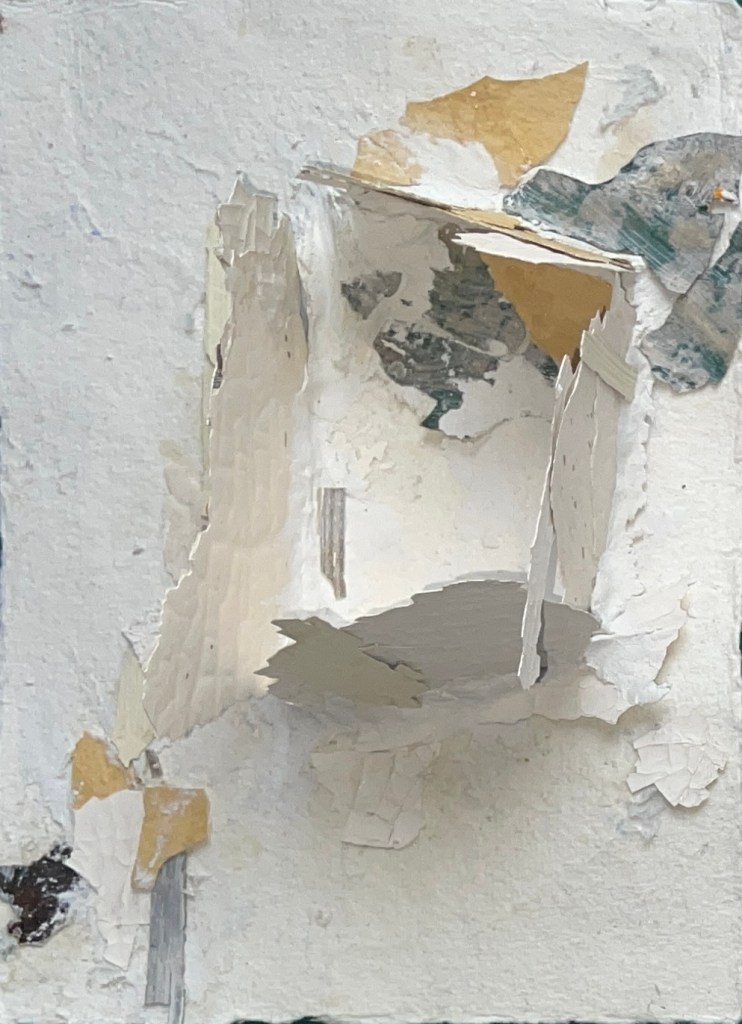
The work is 3D placed onto thick paper - it can be viewed flat and looked down upon or placed on a wall. These positioning arrangements disrupt the image, its shadow and light depending on viewpoint .
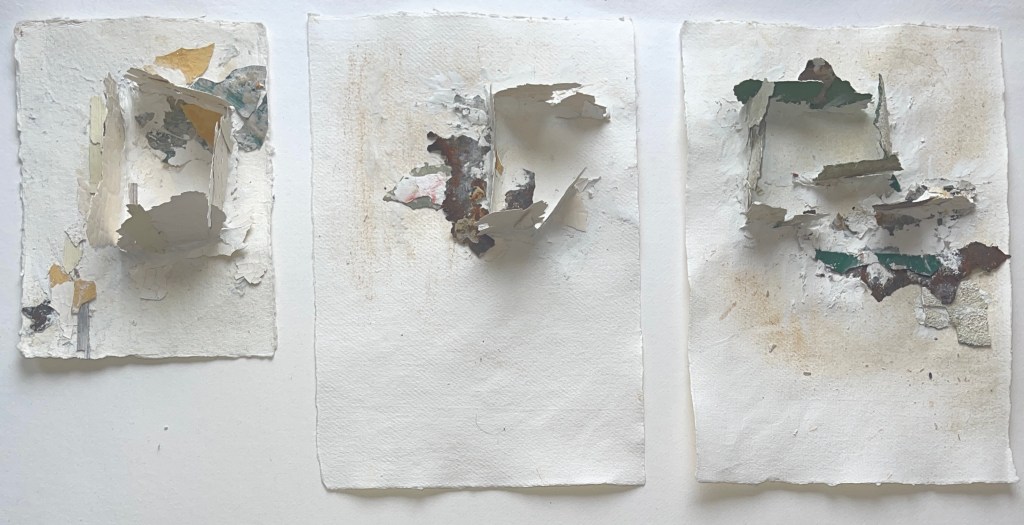
My recent ‘silent crit’ work has offered me more areas for exploration and contemplation for this wok ranging from war torn environments and the human implications and cost of global homelessness/ migration, land loss and the overall concept of ‘home’ plus the archaeological nature of past homes and our interest in the ruin.
Post the feedback I looked to upscale the works to a larger sheet format – I had collected some bigger pieces of detritus and rubble previously and was unsure to their suitability but with an A1 heavy duty Khadi paper I began to layer and explore the suitability of scale…
My method includes using the material to create colour and texture on the canvas. Scrapping and rubbing the paint pieces , dirt and fine clay and plaster onto the canvas to then immerse the objects into…. creating an area of layered material, the beginning of the narrative of the work before coming upon the 3D aspects – its scene setting and places the work in a specific area of the canvas and is the beginning of my composition…allowing the material to be manipulated in another way, exploring its other qualities such as colour and mark making.
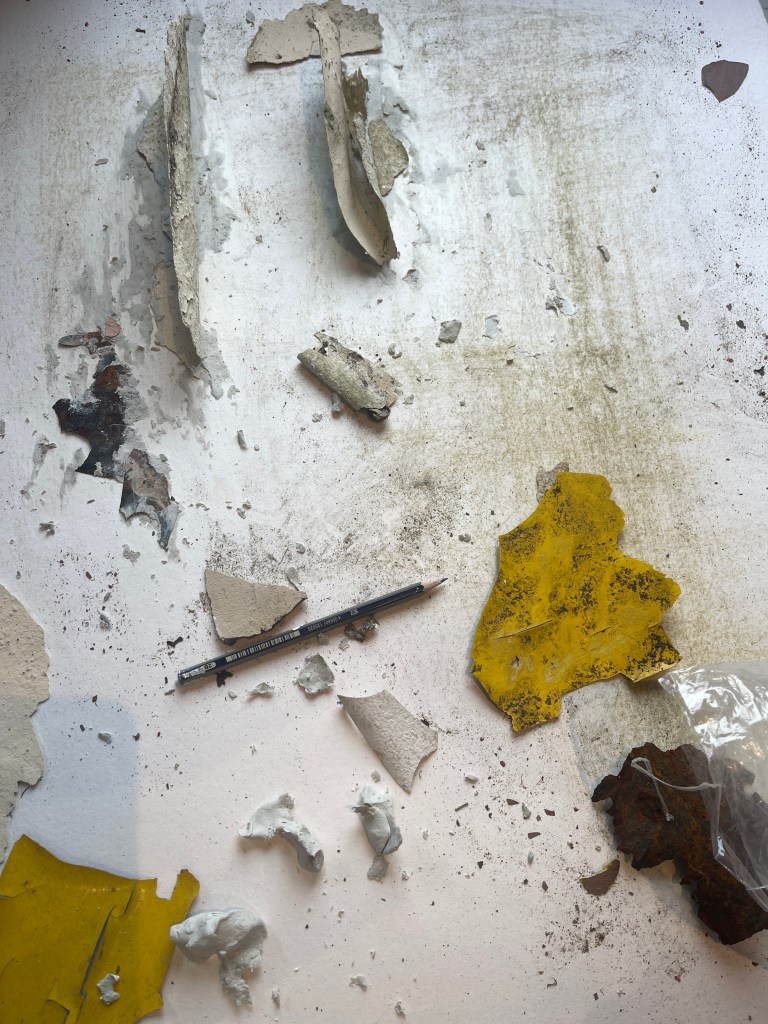
Begging to layer and create the structure that mimics a home or dwelling, ..
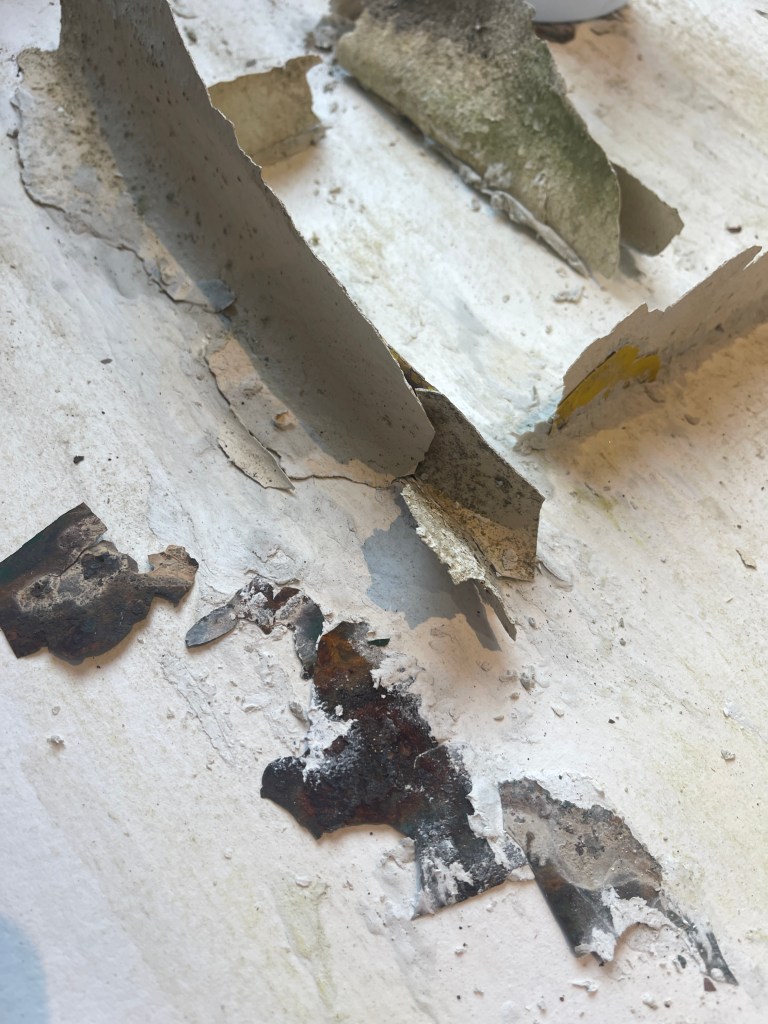
The clay and modelling plaster is key in assemblage of the material – using it t lay foundation and support for the larger structural pieces….
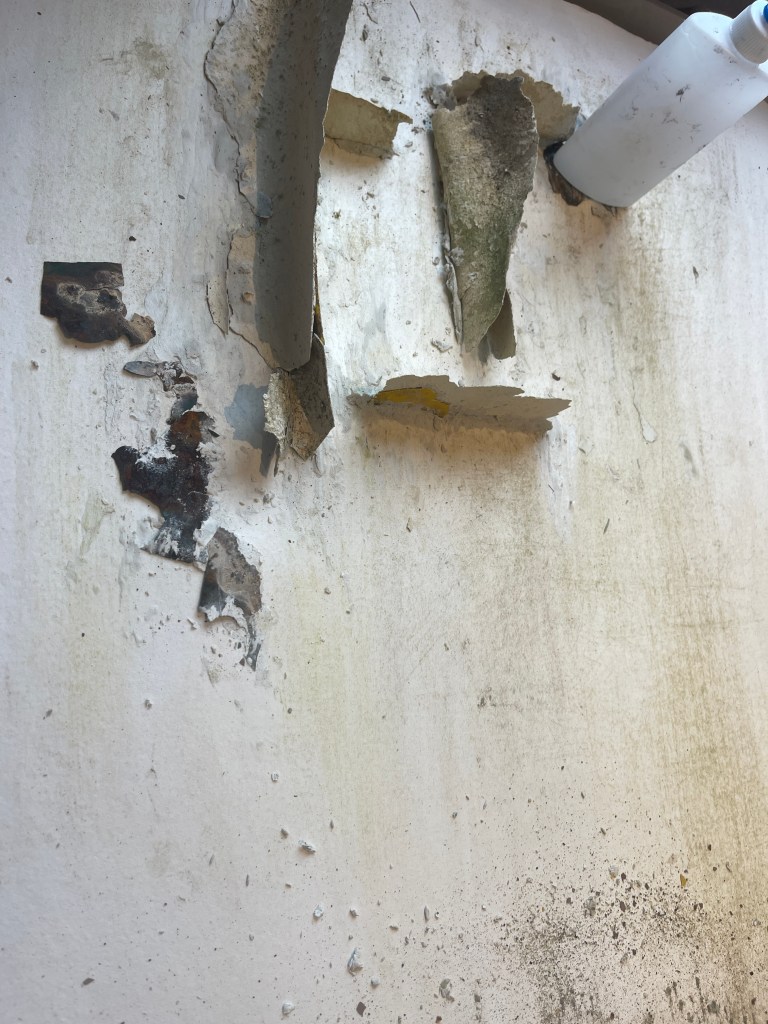
I wanted to include greater visual texture with this work and include as much of the remanent pieces that littered the canvas – primarily die to the size of the work so adding to narrative and texture – at this stage it was loose with more being generated as I worked.
It was important to be mindful of scale at this time in regards to practicality. Against my instinct to work only with natural or similar raw material I used some clear glue to allow more support and permanence to the work when hung on a wall for instance. At this stage I am unsure the work should sit on a flat surface to be viewed from above or hung traditionally. The nature of the subject matter suggests a flat surface to underline the necessity of actual land space with resonance to solidity and permanence would be pertinent…..
Section detail.
Showing the internal ‘wall’ of the structure with a strip of bright yellow denoting a more positive existance or presenceof being about the structure now in its fragile, desperate and unformed condition. A nod to the past existence or usage of the structure or alluding to some hope and positivity that it may become.
There is a literal and metaphorical interpretation of the work that came through clearly during the ‘silent crit’. The structures forming the manifestation of a state of mind or they are seen as an actual state of structural being ?
The detail below shows the inclusion the finer material placed and scattered around the work.
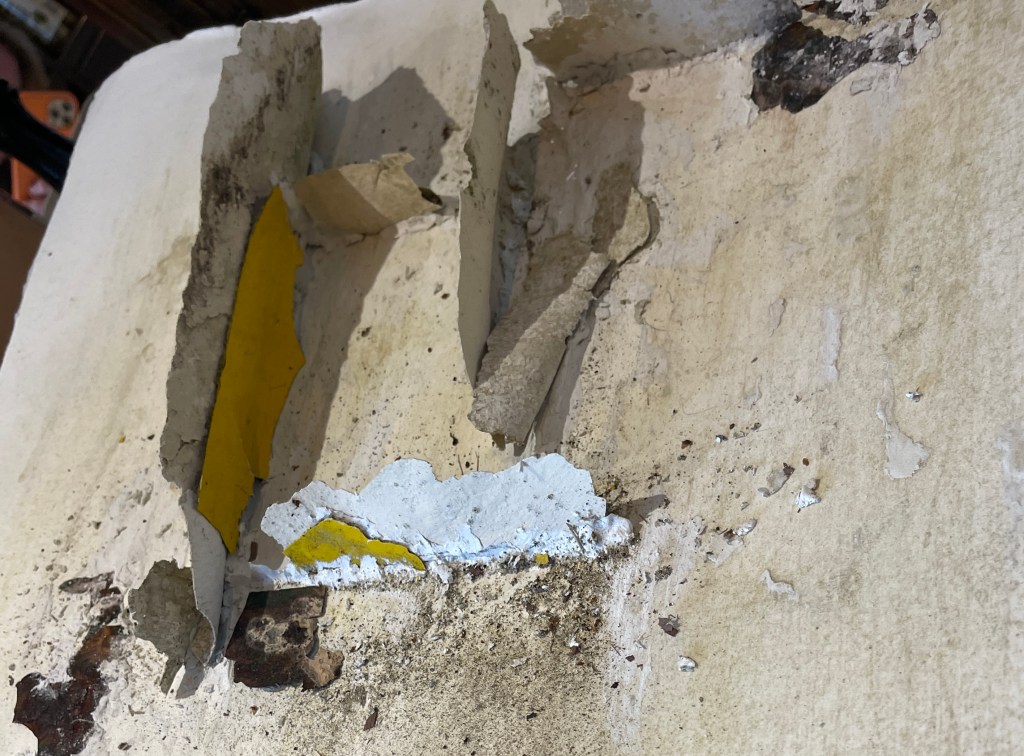
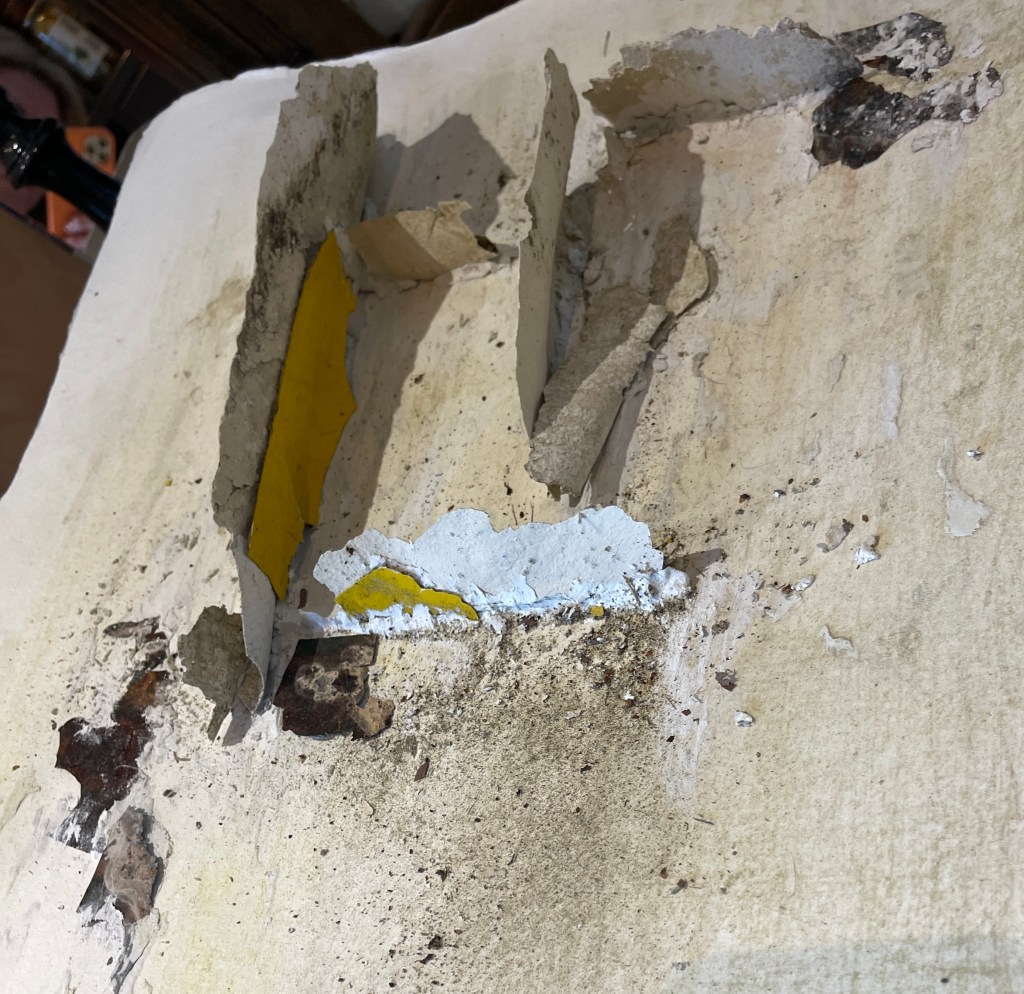
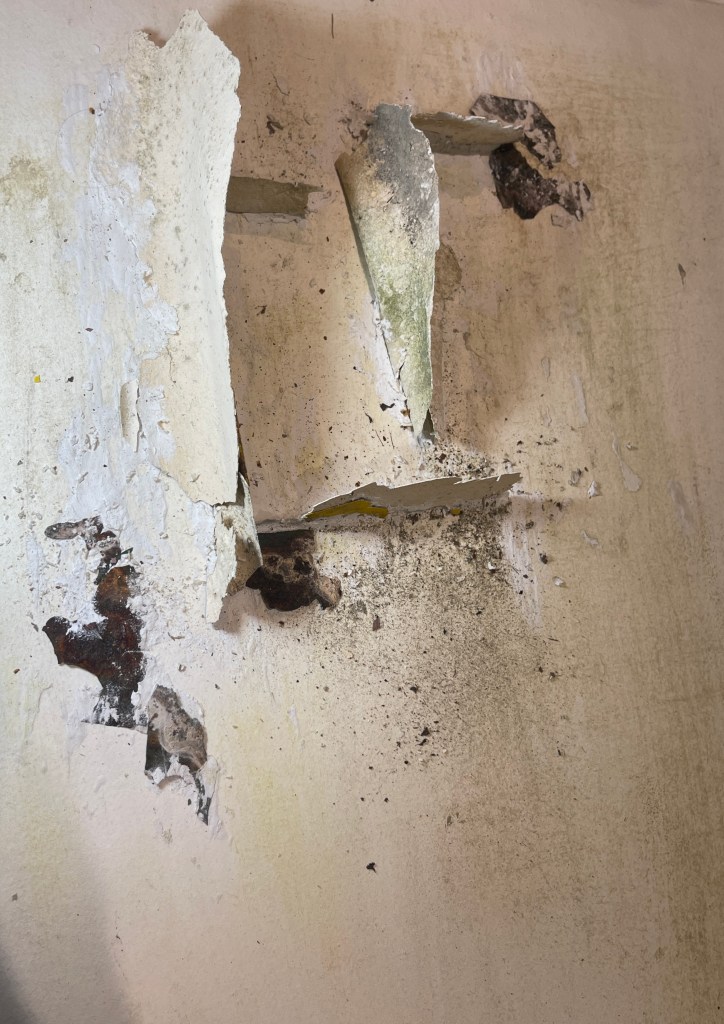
The works is viewed better interacting with it , moving around the canvas, viewing it from different angles reveals in internal and external structures, the layering and variety of material used and the variety of colour. Directly facing the work does not allow the richness and sculptural quality to be fully apparent.
Light and shade also playing a role in the perception and narrative …
This section shows a range of light positions as if the sunlight were passing over a structure at various times of the day…
Changing position :
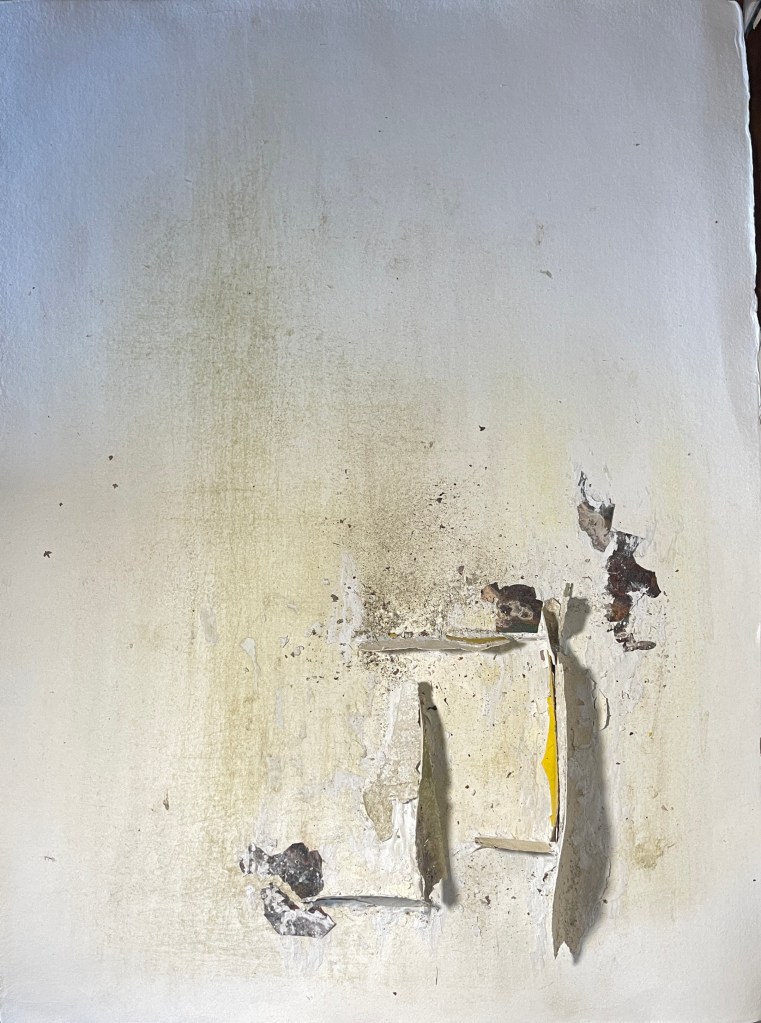
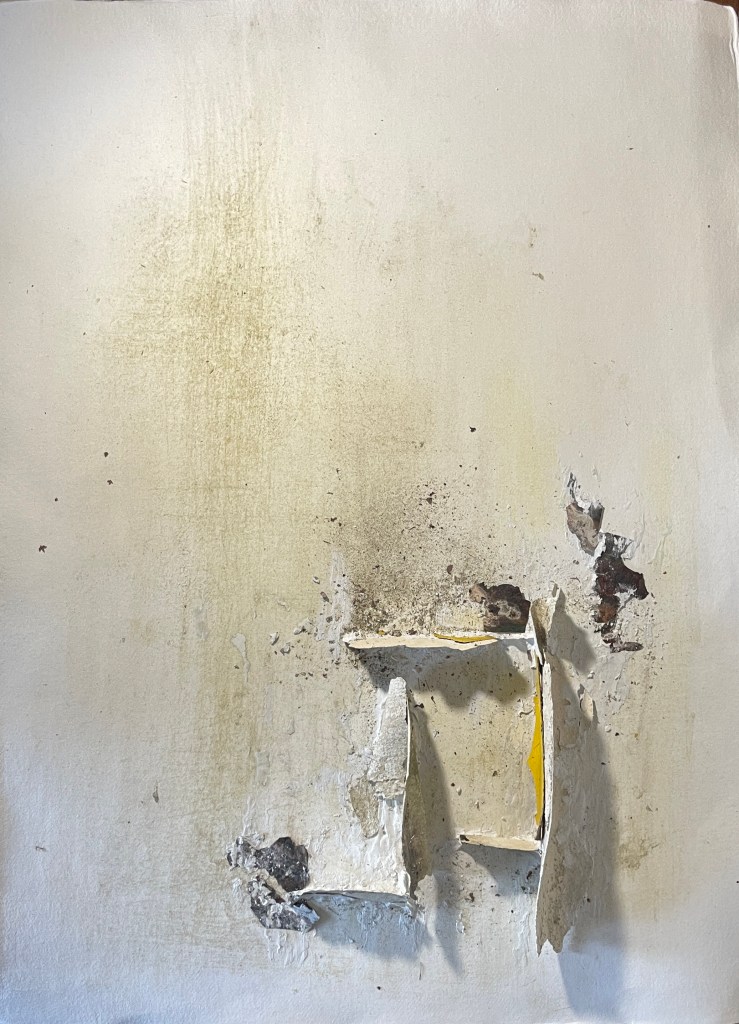
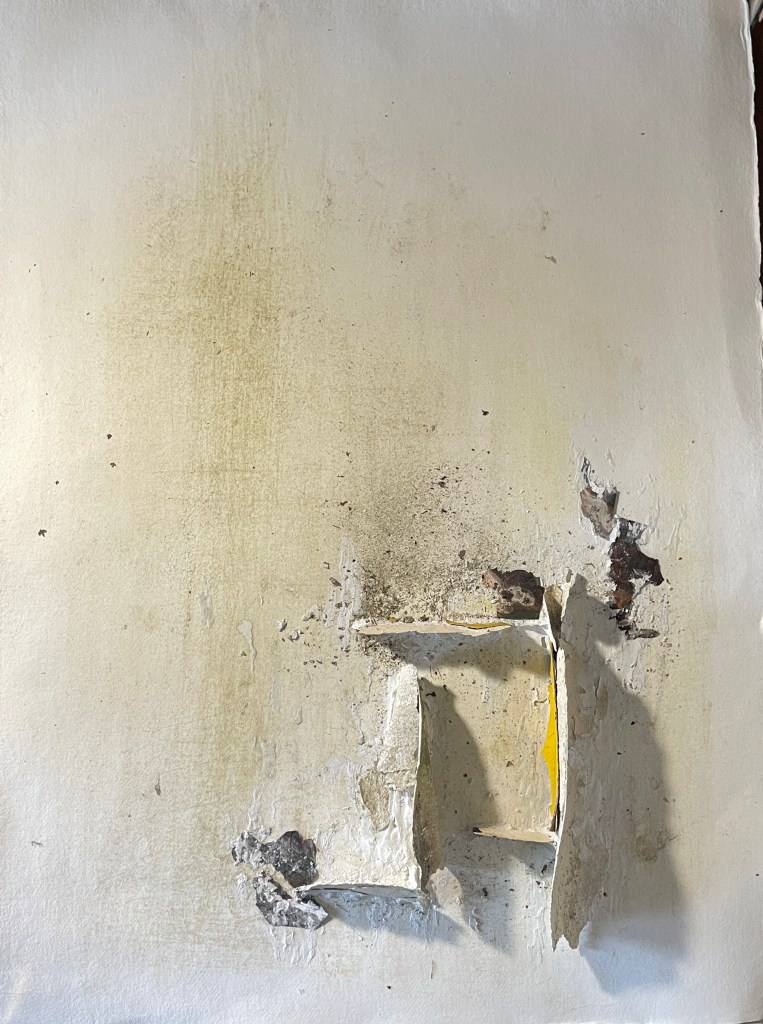
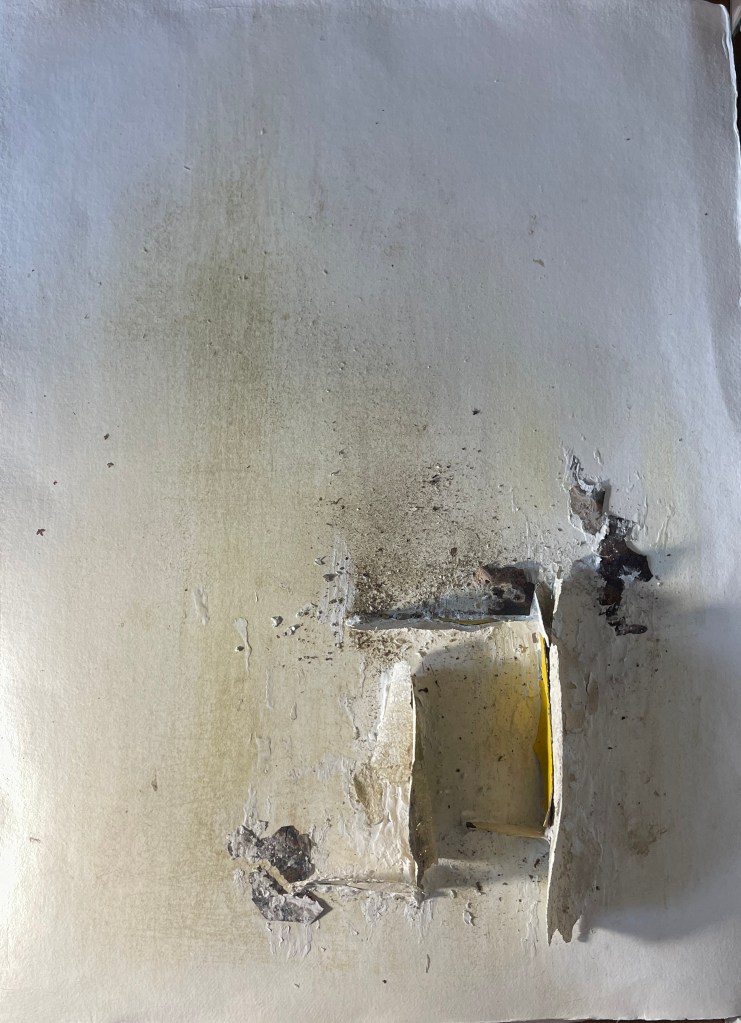
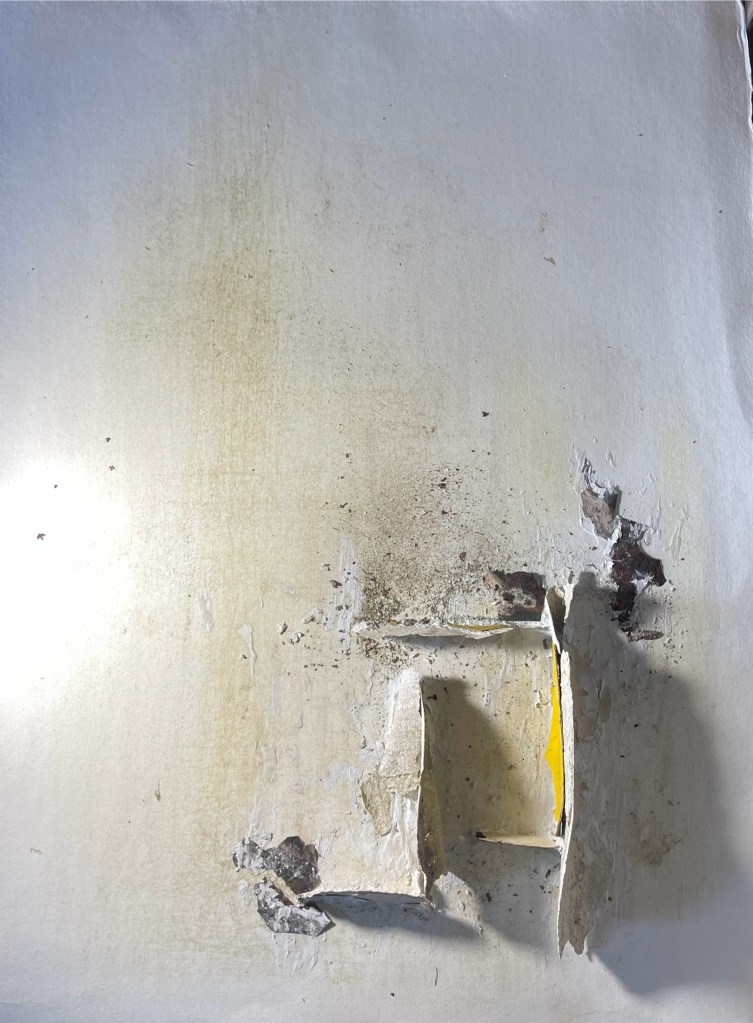
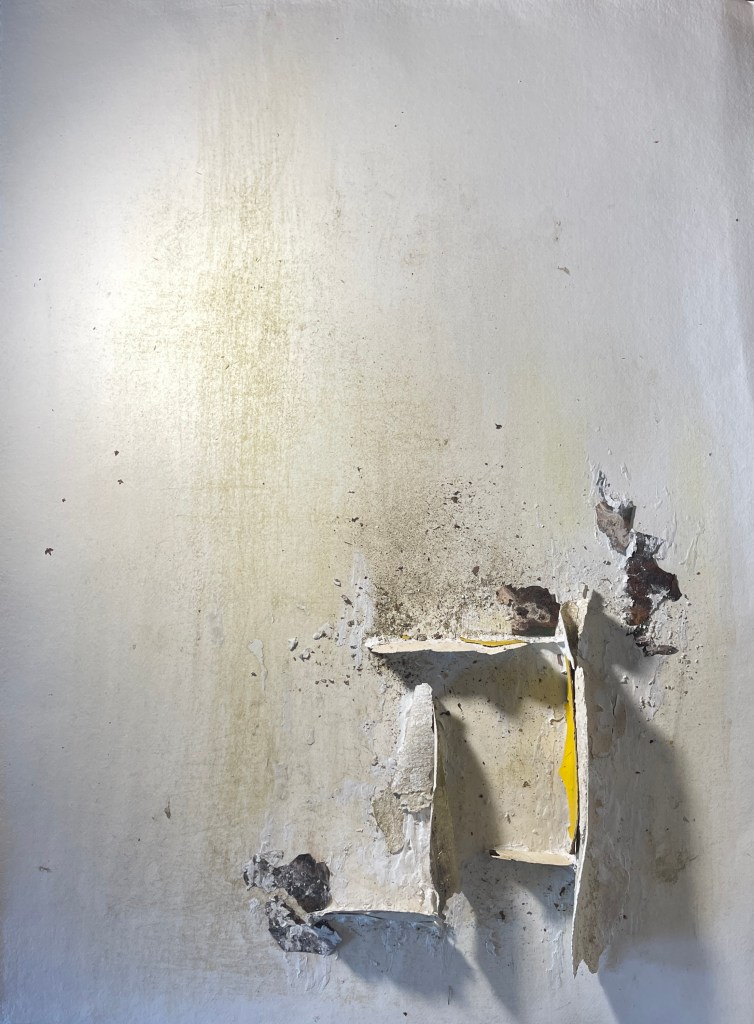
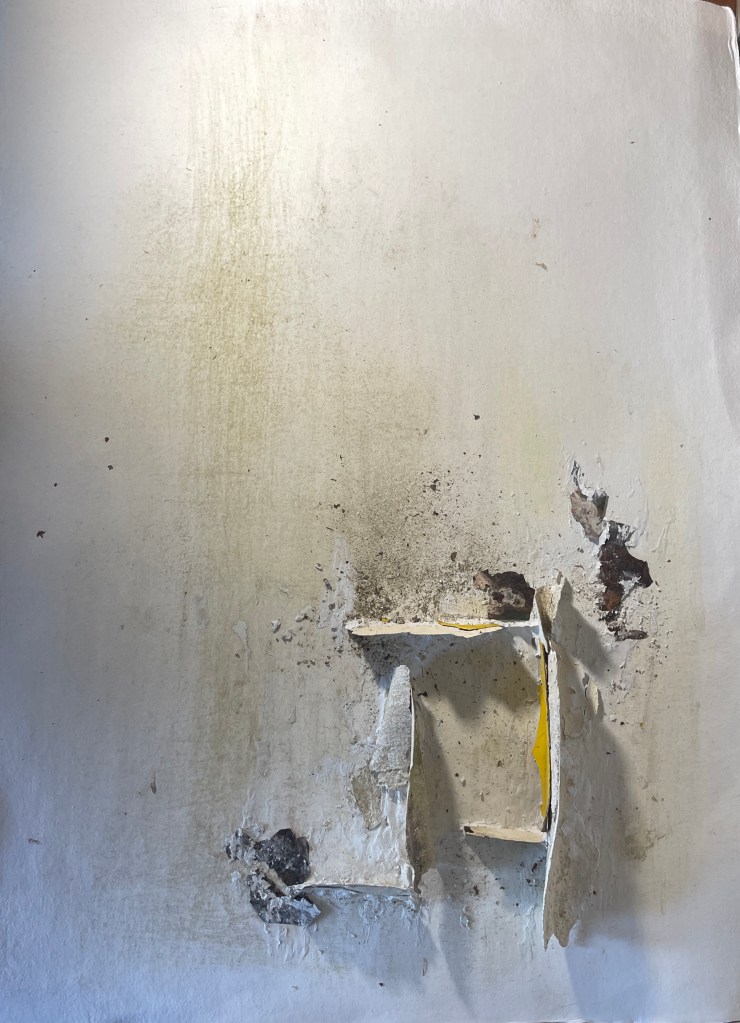
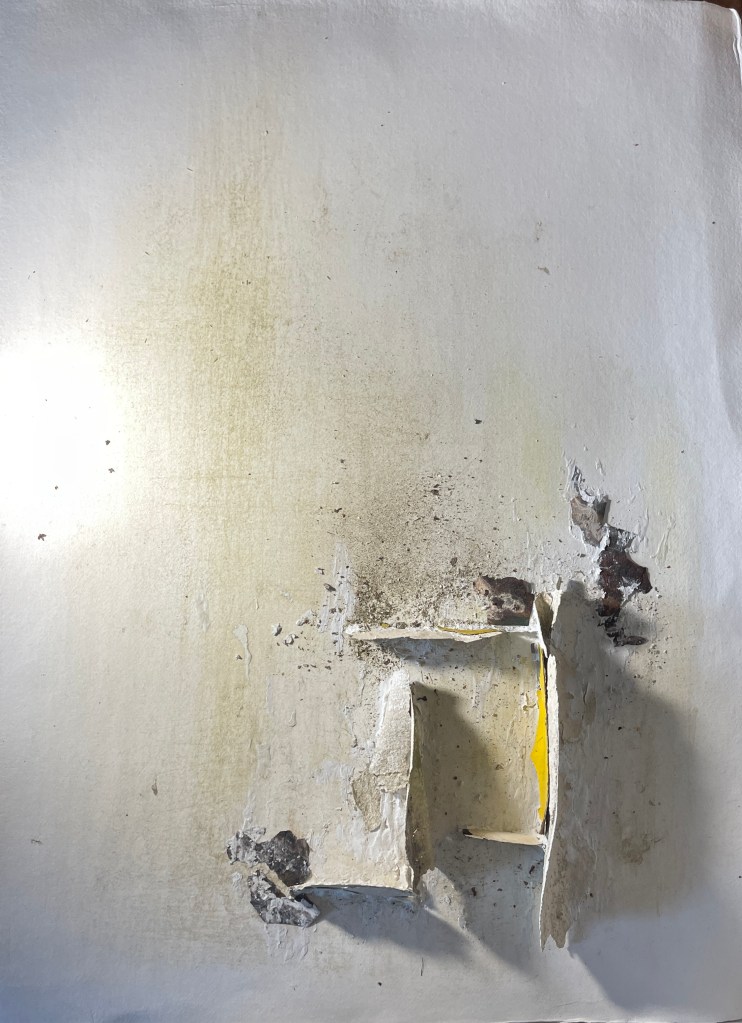
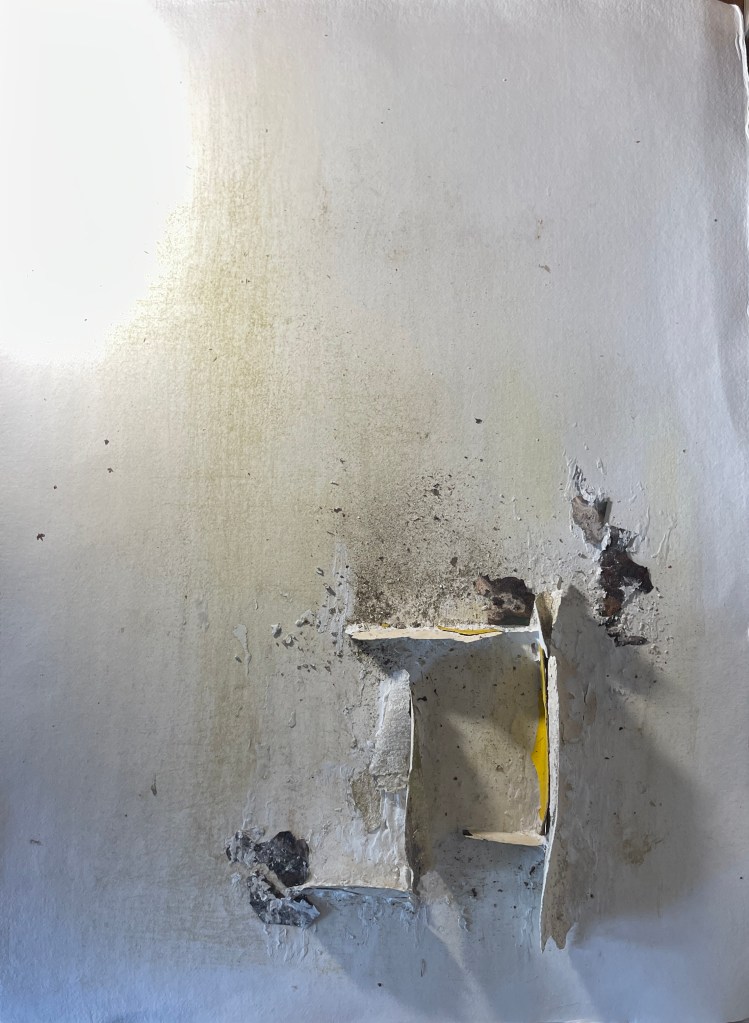
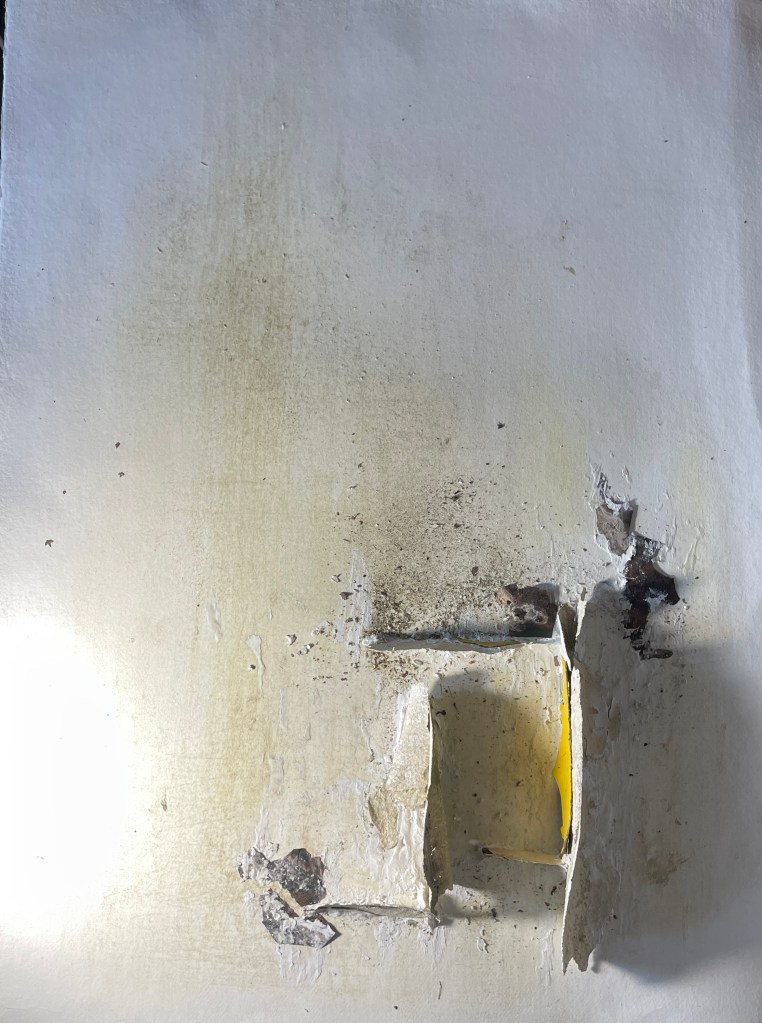
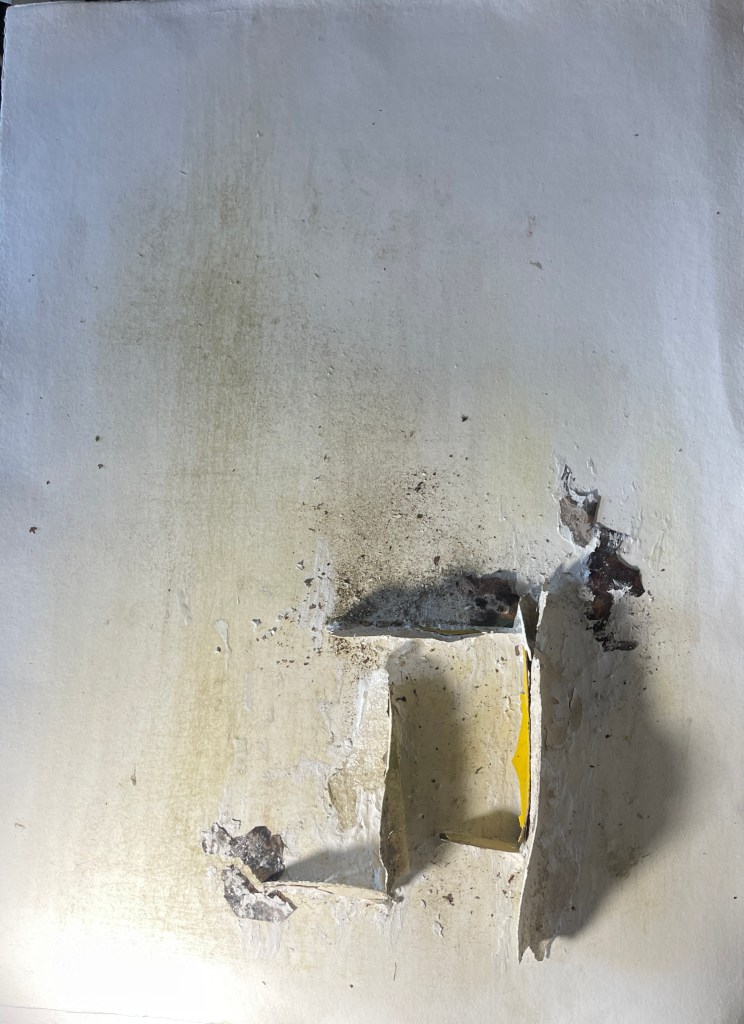
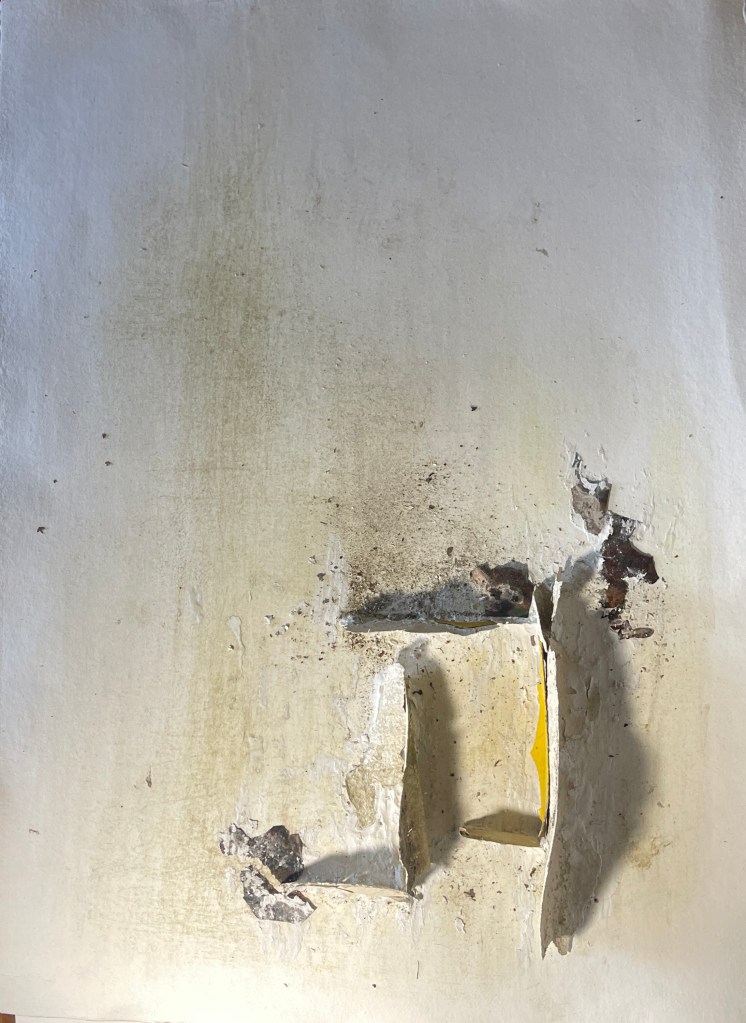
The work might take on a more literal feel with the notion of sunlight and physical structure. As a fragile notion of the mind concerned with the pressure or need to find a ‘home’ mentally and physically) perhaps this can also be relevant as the shadows cast doubt and distort the concerns pt and the image.
Variety of canvas size ‘Home’ series.
Selection of Learning Log. 8
The translucent forms of Eva Hesse’s multi-part installations engaging with a non -binary, male and female representation of form and narrative. Hesse continued to be experimental with her form and substance and continued to be informed by the ebb and flow of female cycles of decay.
In regards to the female trope of domesticity and the ‘invisible woman ‘ concept as continually seen in society today as it was during the fist and second wave of feminism my concerns surrounding this and exploring this bias are numerous. Creating a work with a narrative regarding the woman and her relationship to home was important to me. Underpinning previous work concerning the notion of ‘home’ but including: family and nurturing as positive active roles, in the wider sense of community and directly with as family.
Taking Eva Hesse notions of female decay further and more literally….
Elevating the role of ‘home-maker ‘ to be cherished, admired and with the equal status of ‘provider’ or ‘hunter, gathering’ traditional male trope. I recognise that the ‘femaleness ‘ surrounding this trope is continuing to be broken down by society with gender diversity and fluidity.
My material for this work will be rich with narrative concerning; physical presence, time, routines of humanity and the existence that surrounds these routines. There are transient, etherial and traces of life in the material, plus physical aspects of human debris, hair, skin etc that we all live with and encounter on a daily. There is decay and a breaking down of material and a redistribution of part of us that might be washed or blown away. This delicate escaping or deconstruction of ourselves bit by bit is fascinating to consider as we ‘shed’ continually. Taking Eva Hesse notion of non binary and female decay further by using a material that directly reflects this inclusive narrative of living or decaying, literally and metaphorically.
The works evoke a sense of family and human form with out it actually being there, non binary and unspecific we are inherently drawn to see a group of object as relation able to each other, not individual as such. What is interesting about my chosen material of detritus /fluff from a domestic washing machine is that is brings together all various waste matter and remnants from a range of garments and individuals into one reconstituted mass.
Domestic Pelts
Perhaps a rather unpleasant or even repulsive to some the raw ‘domestic pelts’ from ( as I have named them) harvested from the tumble dryer, laid out ready to be put to work.
The material was highly fibrous, odourless, all of similar colour palette contained feathers, hair ( dog and human) cotton string and white tissue in dried ball format.
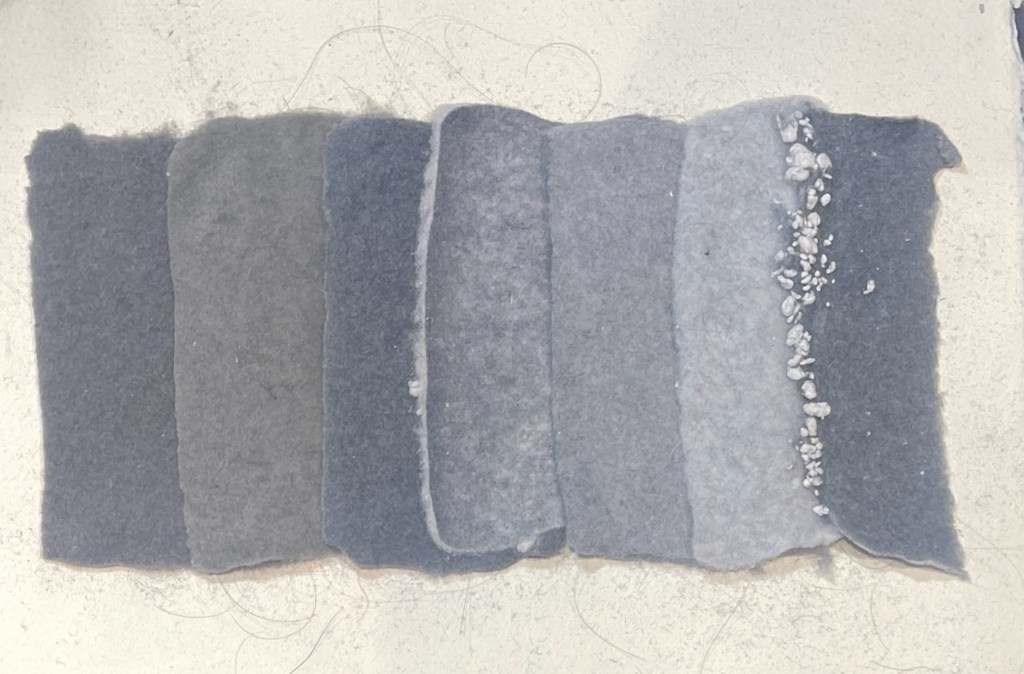
Working with the collected pelts over a period of weeks.
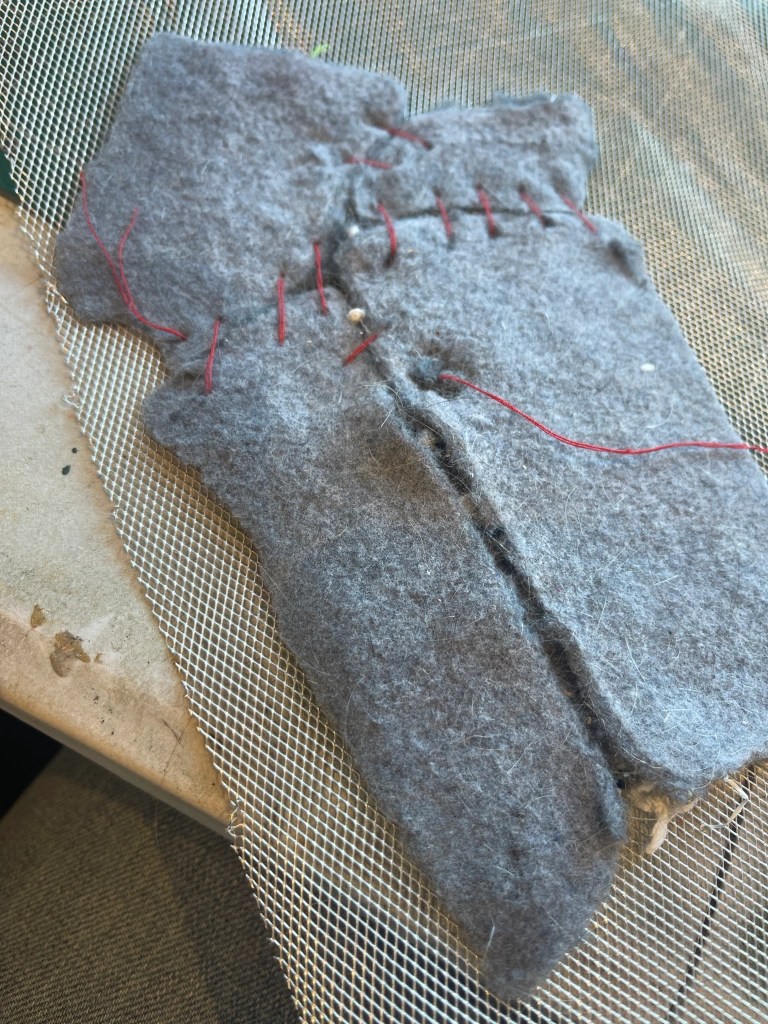
exploring sewing on mesh…
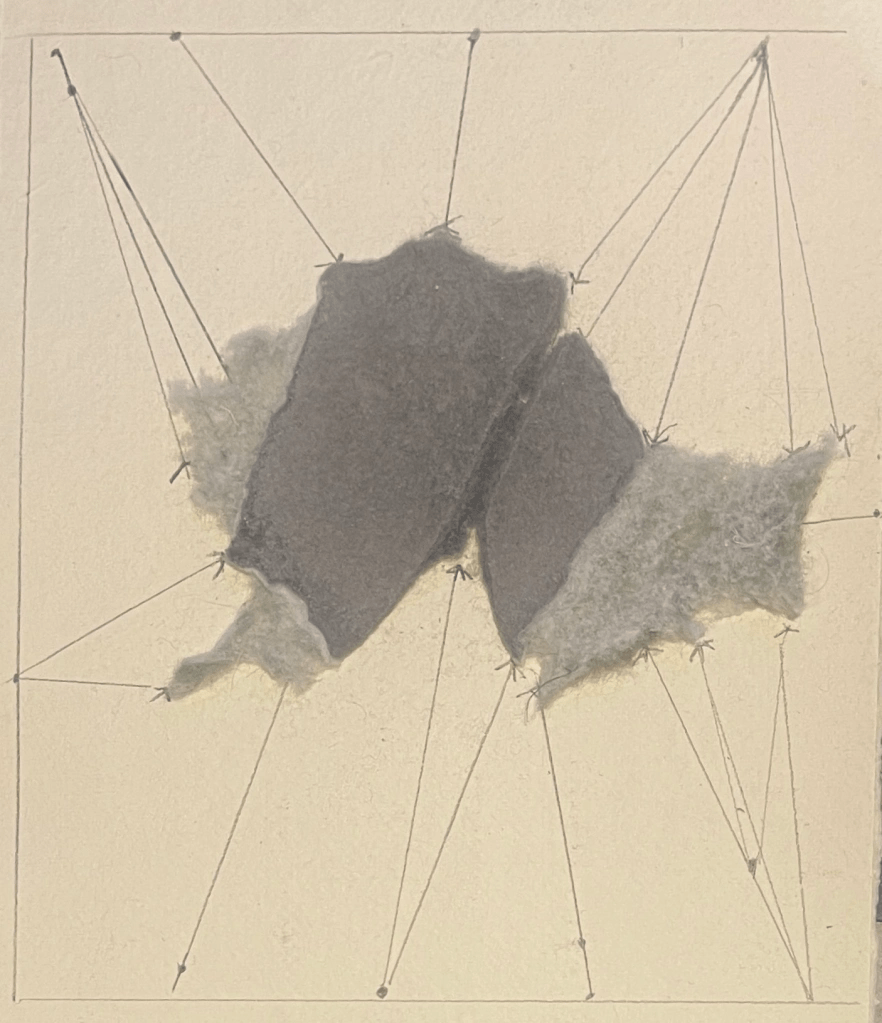
Pelt shape mock up on paper :
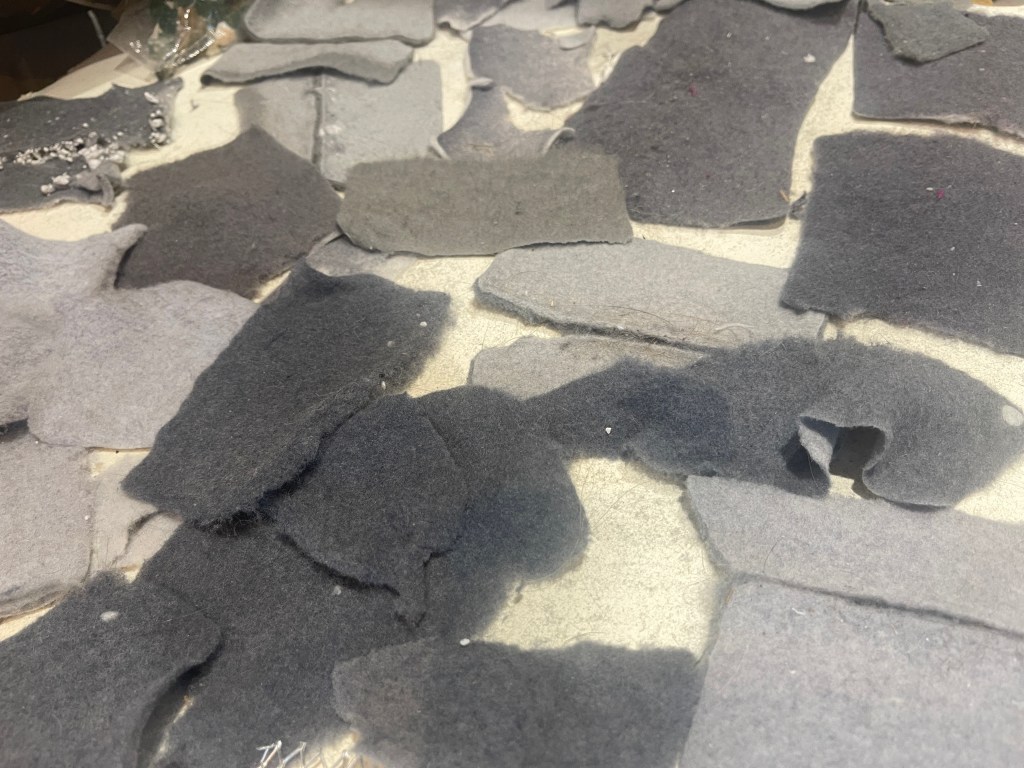
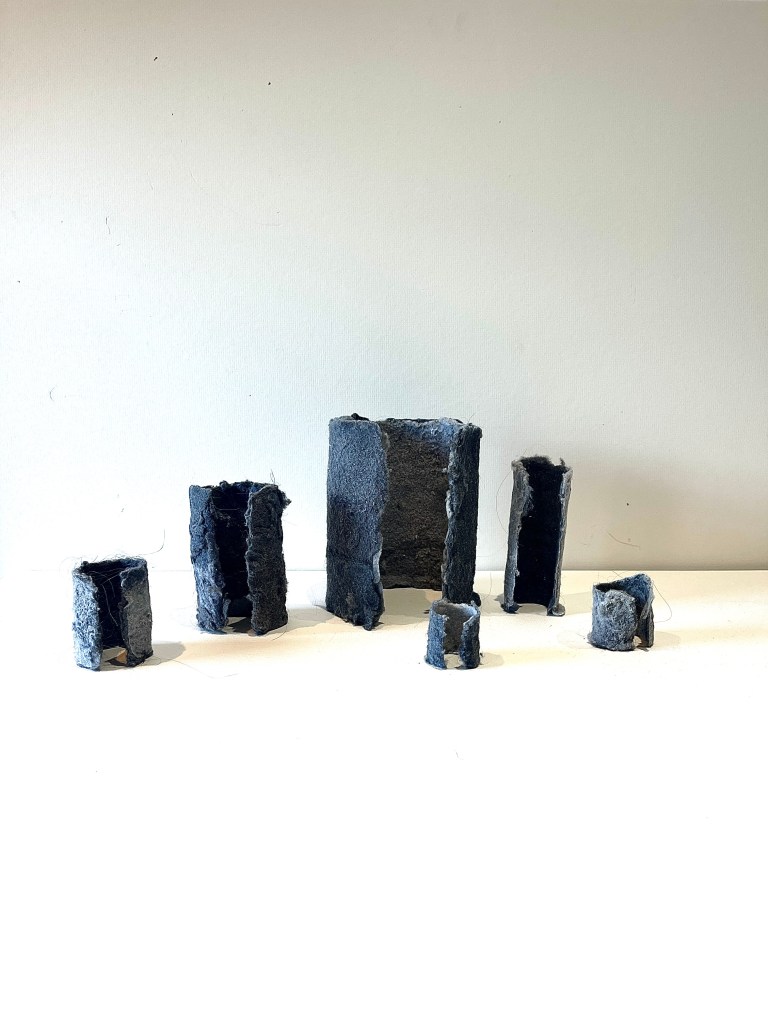
Using sculpting mesh I worked the felted matter into both sides of the fine wire. Rubbing and using a felting pin so the two sides would adhere to each other and bind between the mesh. This worked surprising well and meant th euse of glue was minimal to the adherence process.
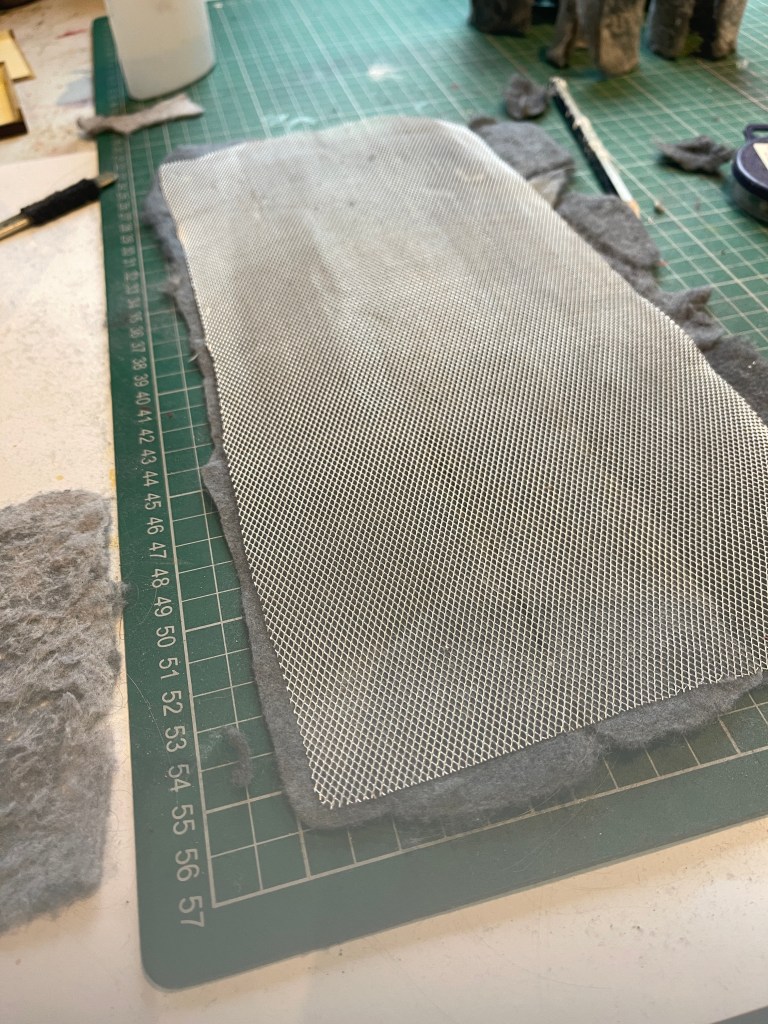
This process was repeated a number of times changing colours and size. The shaping of the forms was manipulated by hand rolling and pressing them into each shape. The variety in size of the pelts did dictate some of the forms, with the large piece being a patchwork of the dark felt colours.
‘The big one ‘ – size 170mm x 120mm ( D)
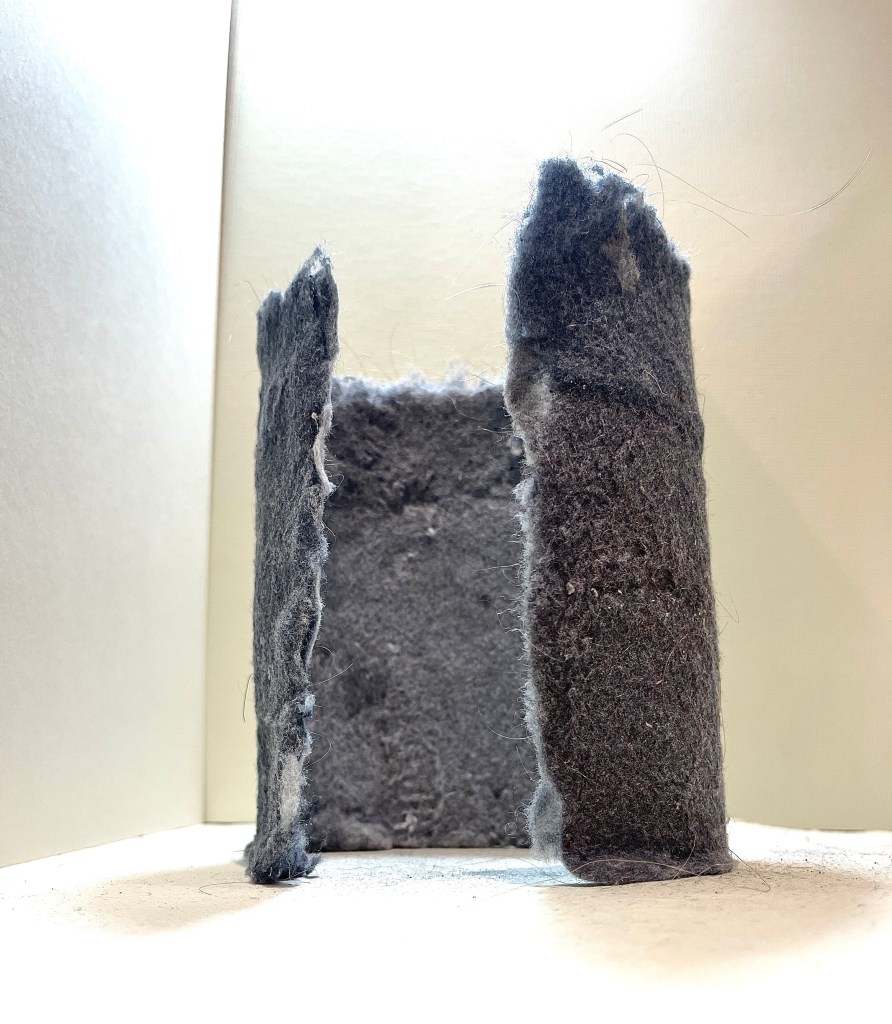
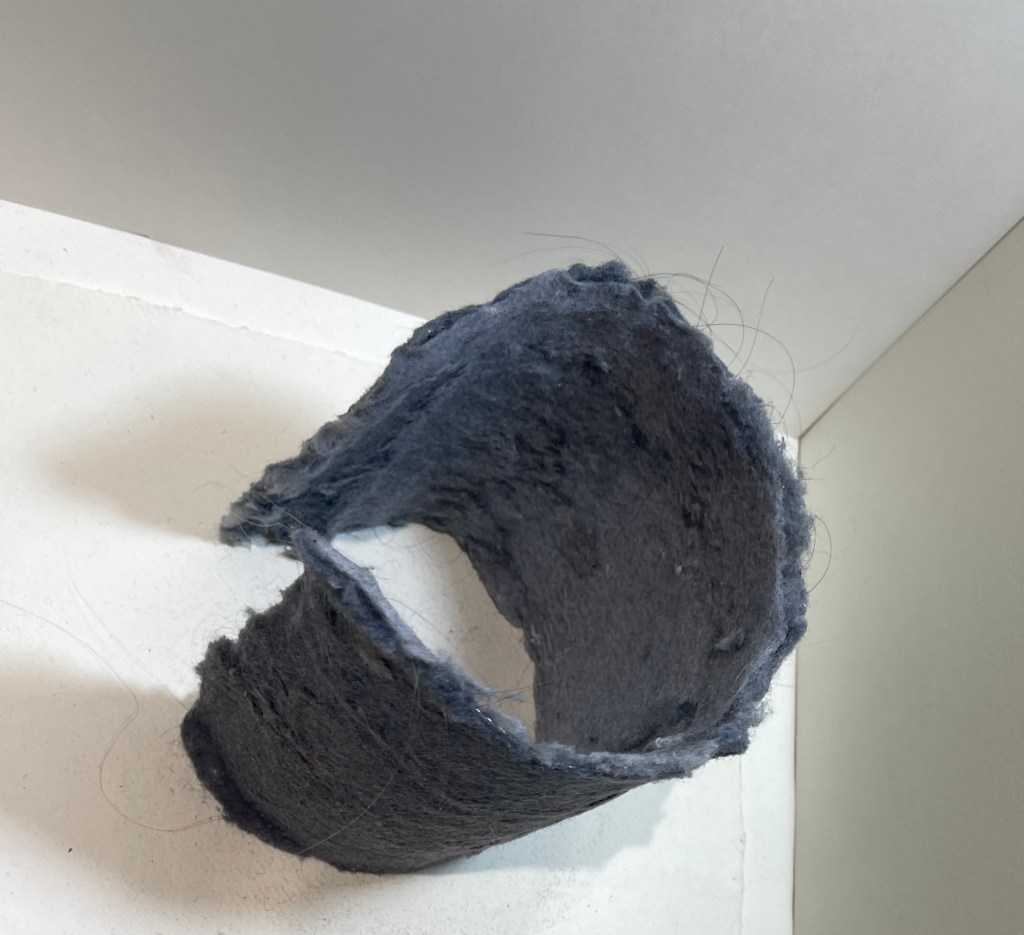
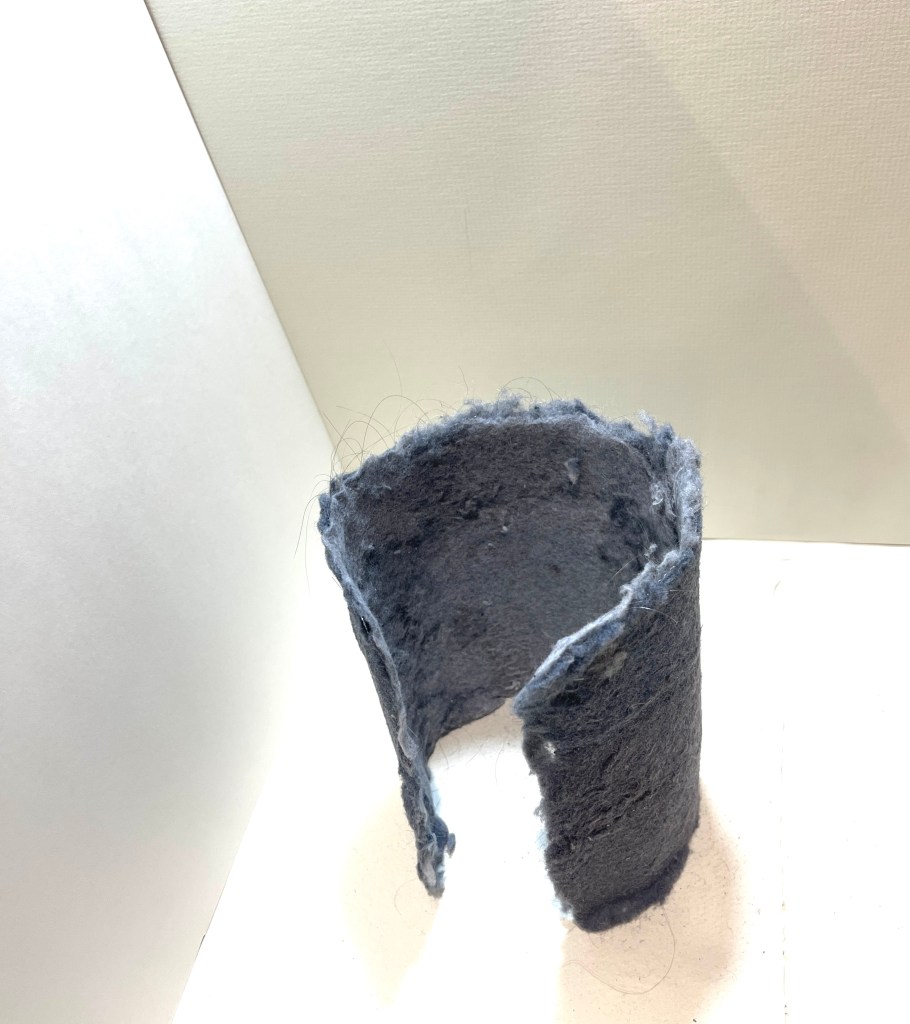
Perhaps too large considering limited material, it ate up a volume of pelts and stood rather proud and awkwardly. Its internal was lighter in colour than externally….It needed a reference and other sculptures to share space and offer narrative.
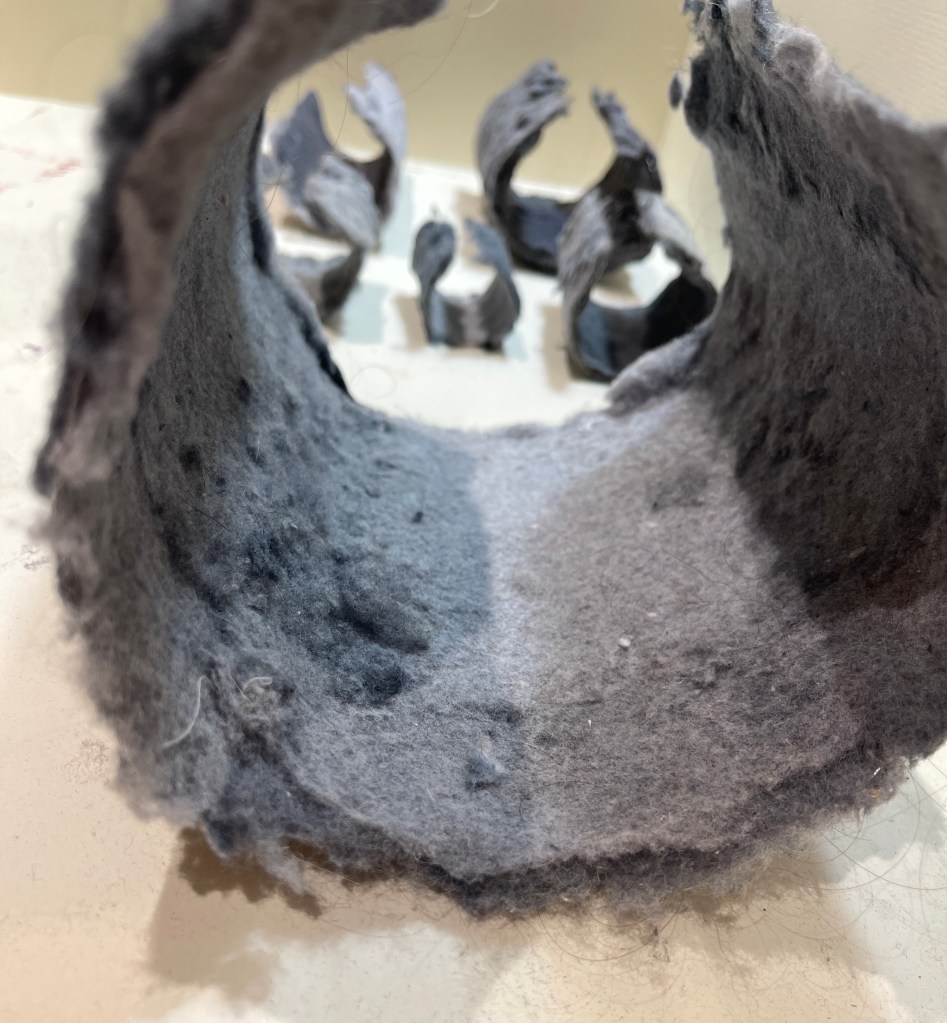
The next ones constructed were smaller and of varied size. I used the subtle colour as prominently as possible with each one. Below I began to look at the necessary curation of the objects and how they could be considered and related to, It became clear that this was an essential part of the work ..
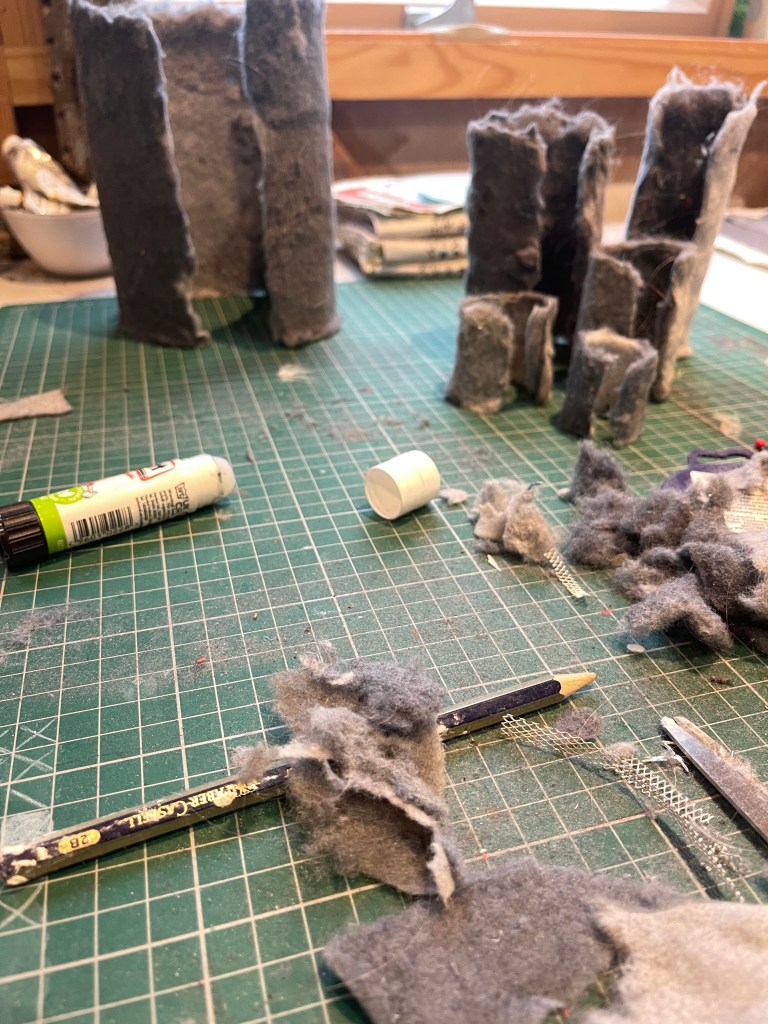
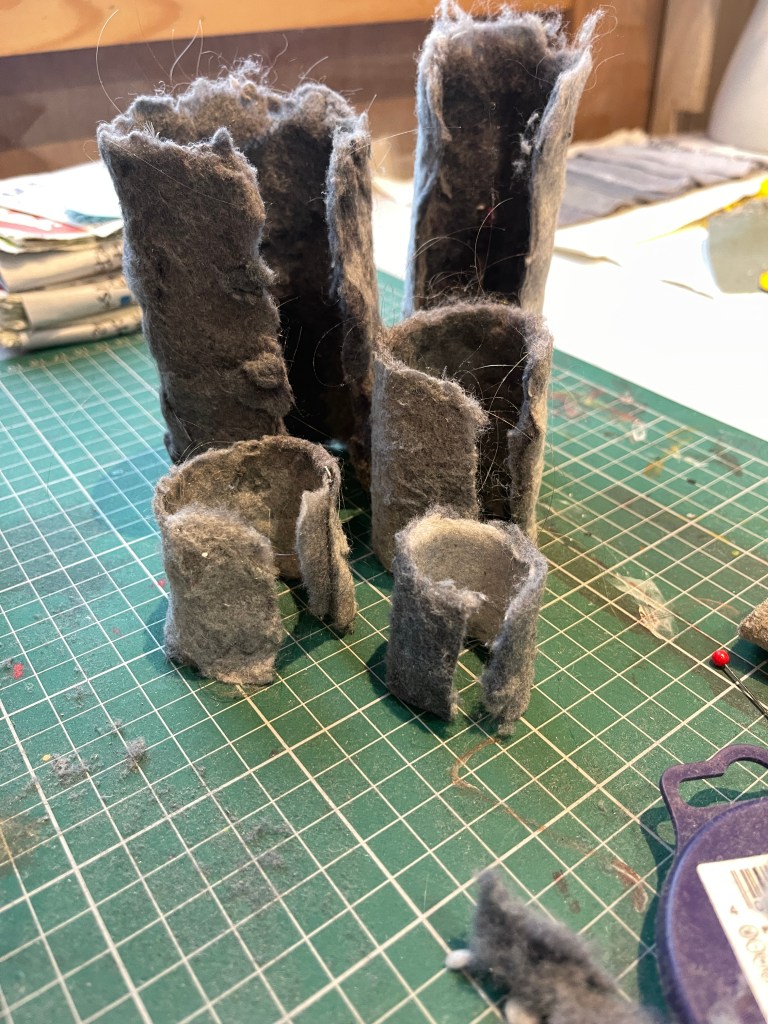
Placing them in a neutral setting for curation :
Open and lying down..
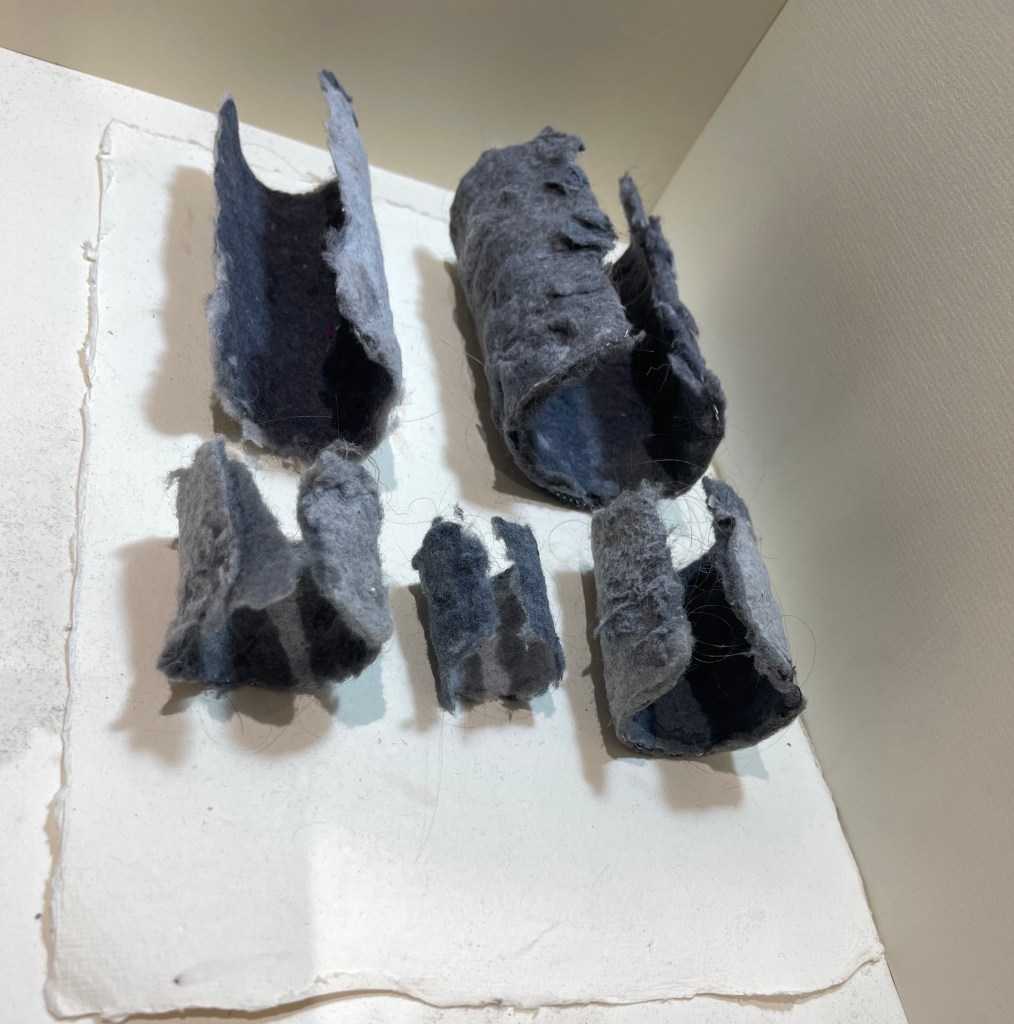
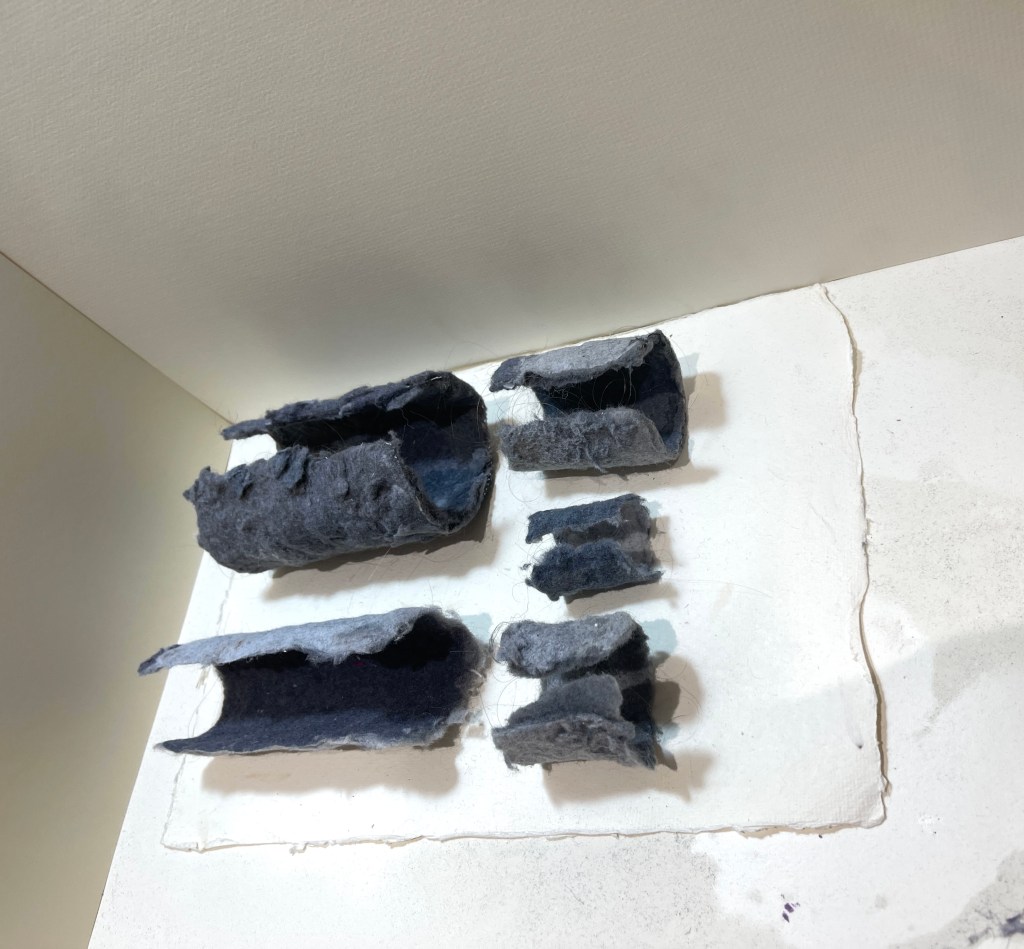
Viewed through the largest form…
Selection of Learning Log. 9
Wet Felting.
Learning the process from an established paper artist and sculpture ‘Susan Cutts’ during a mini work shop with her was an ideal way of playing with the material and learning its further qualities and potential.
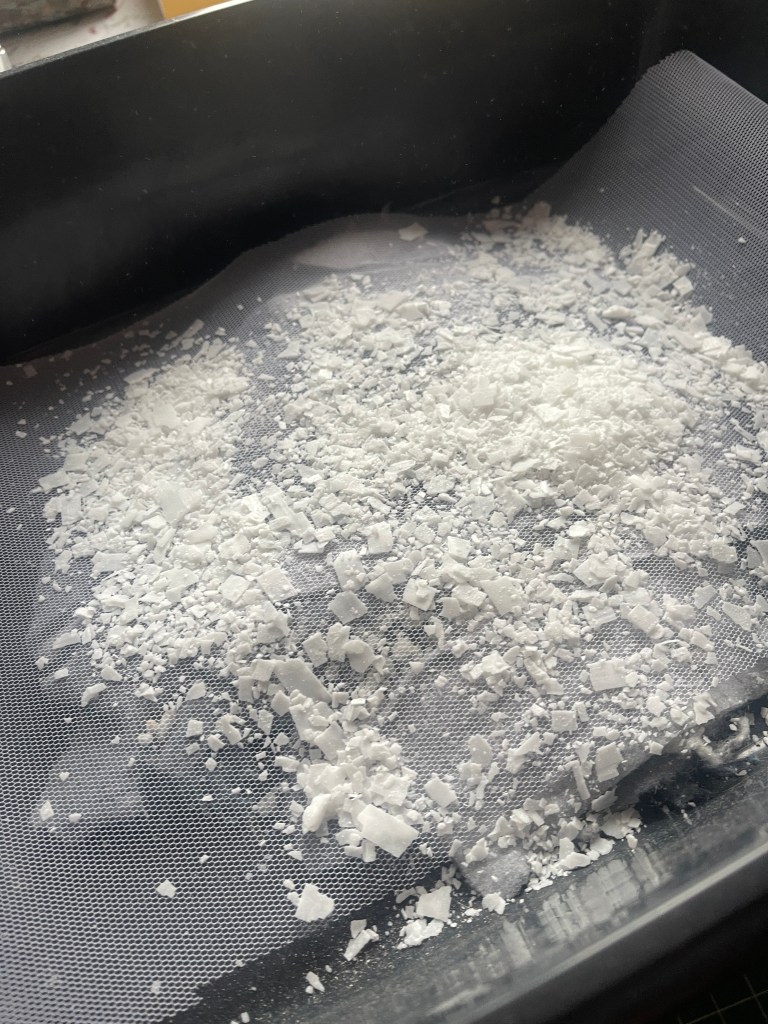
Laying out the felt pieces in the tray. In a cross hatch fashion. Adding a net/mesh over the top.
Sprinkling soap flakes on top of the mesh and pouring hot water over it. Working and rubbing the melting soap flakes into the mesh and into the layers of felt using my hands in a rubbing and spreading action.
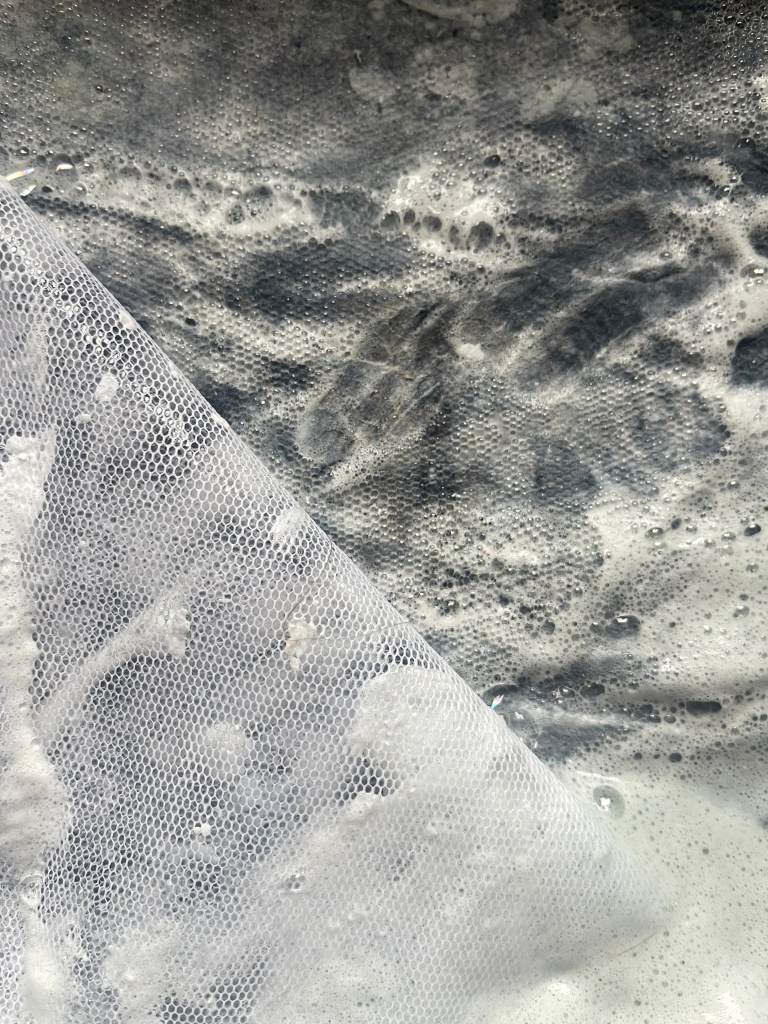
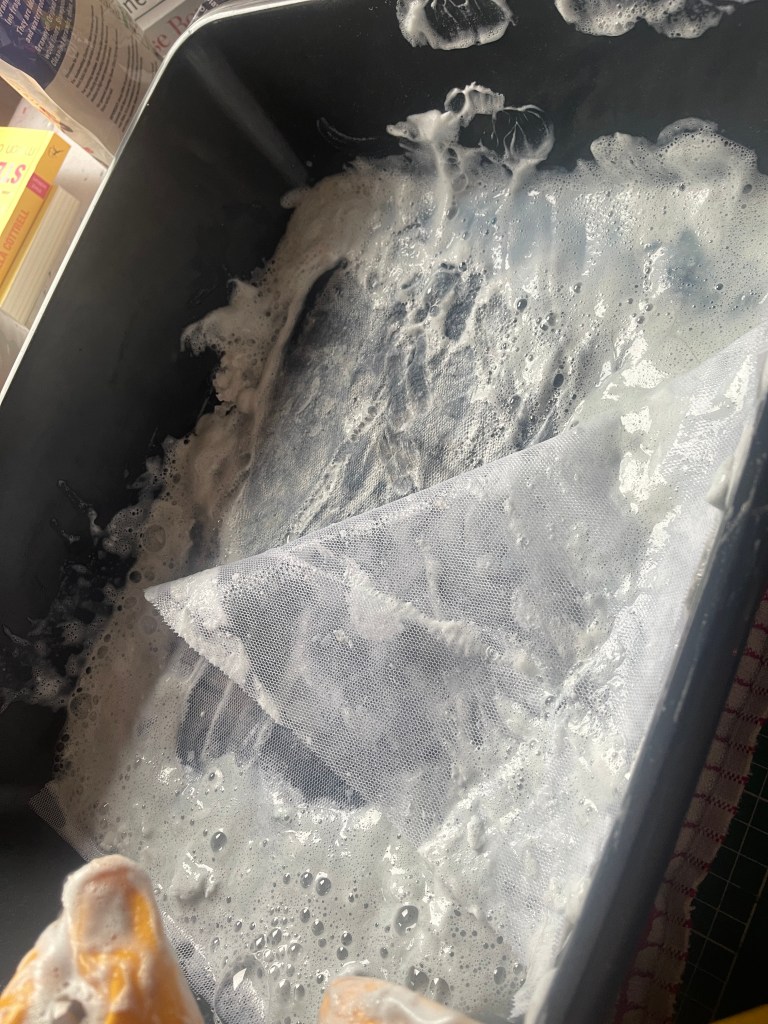
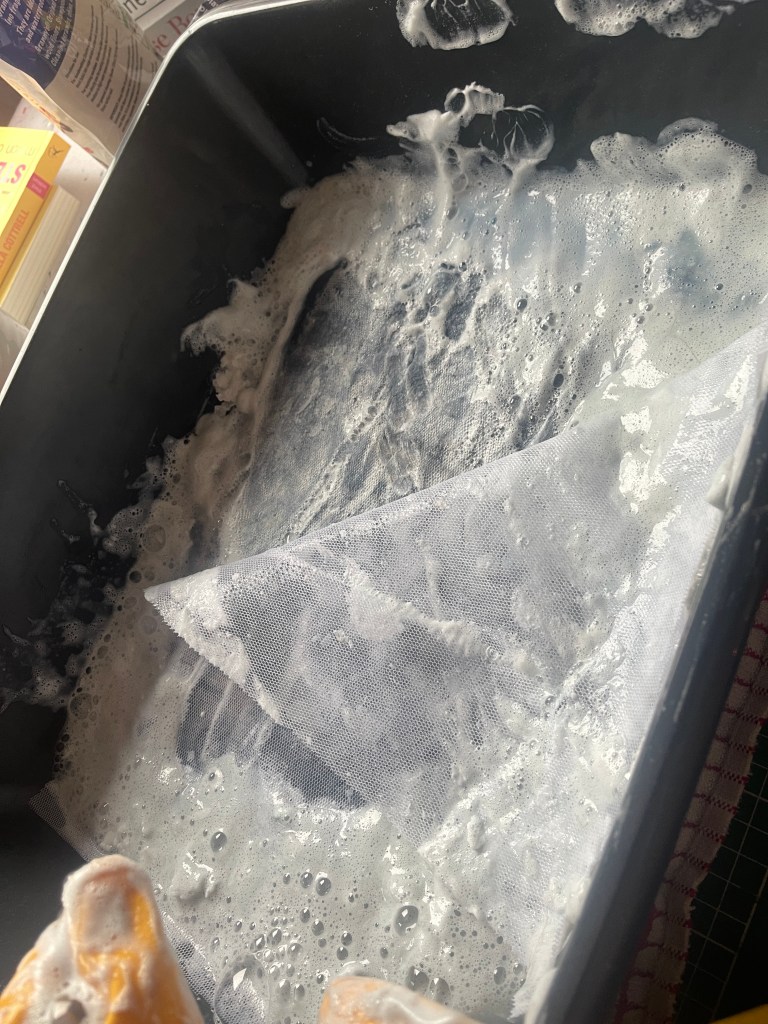
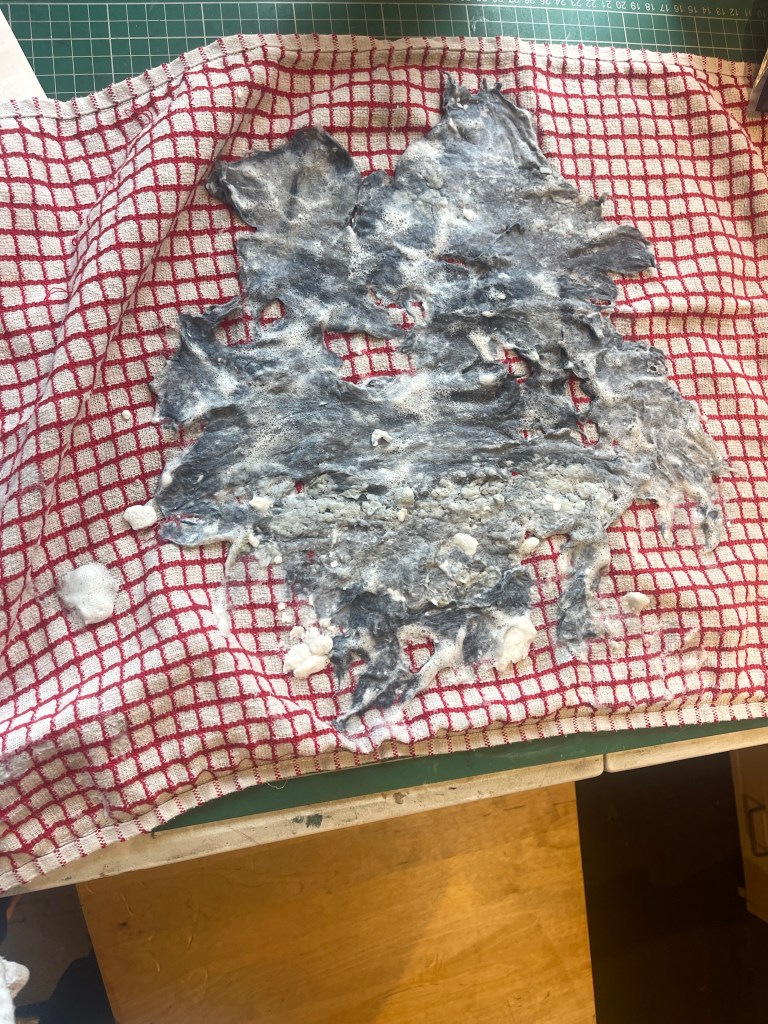
Removing the sodden, felted and soaped material onto a t-towel.
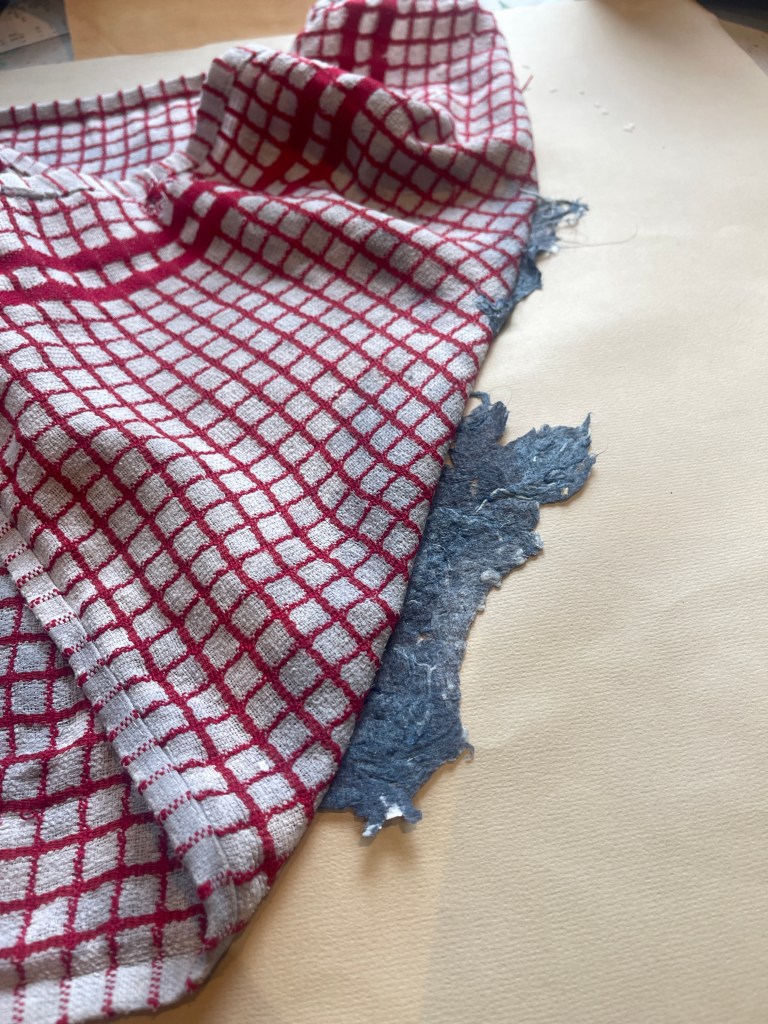
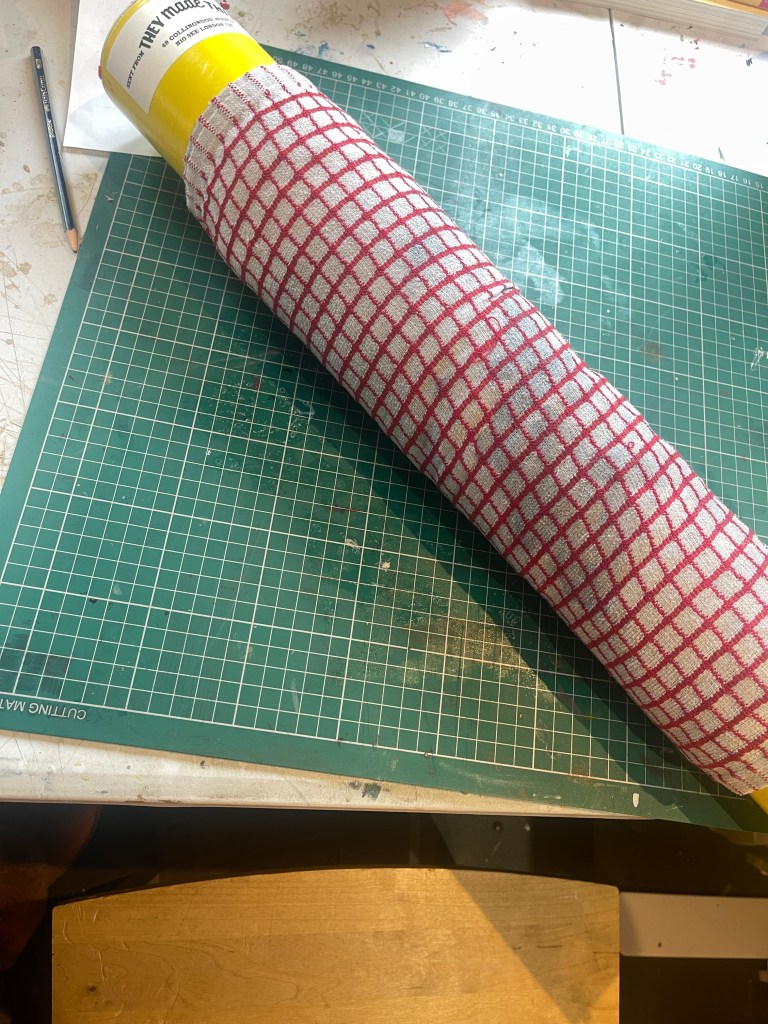
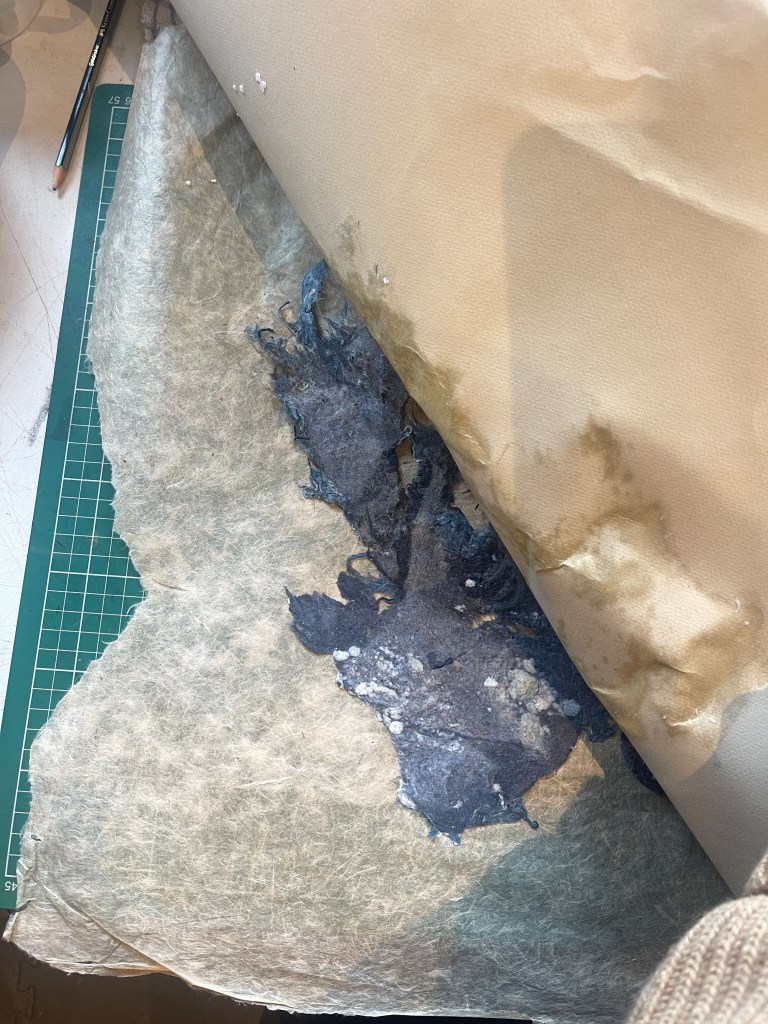
Then placing a further dry towel over the wet material and rolling across the surface of the sandwiched felt up to 50 times in many directions, squeezing all the water and soap from from it as the moved.
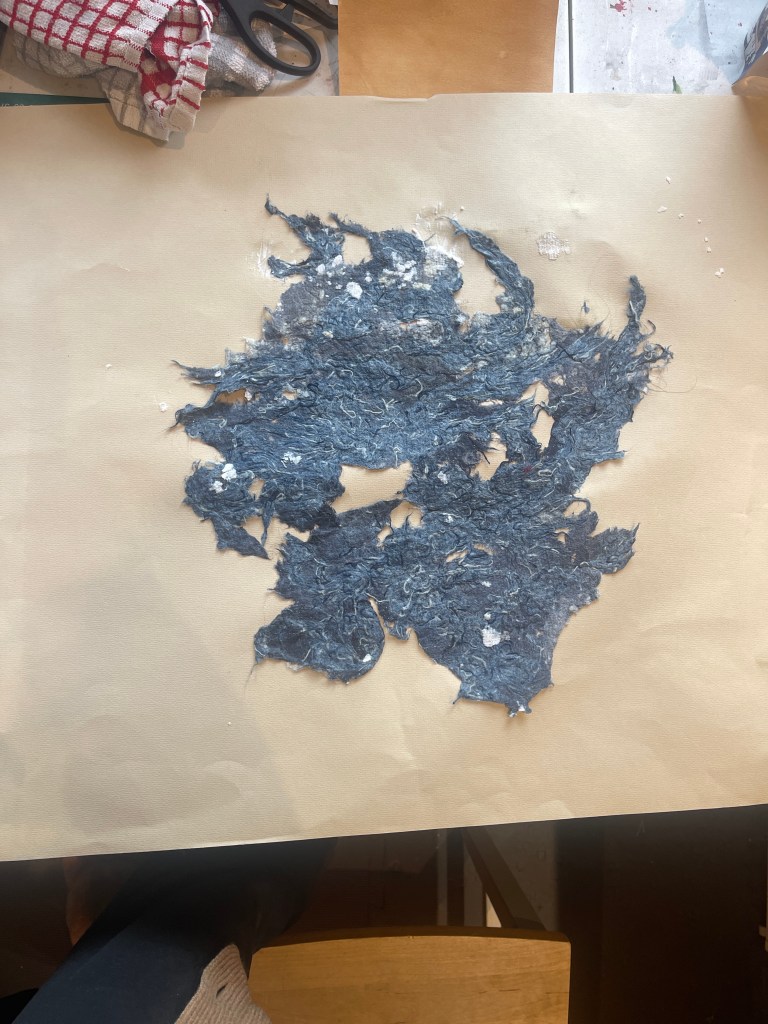
Laying the wet material down onto dry paper as it come off the roller and towel. Placing another pice of dry paper on top and resuming more lighter rolling movements.
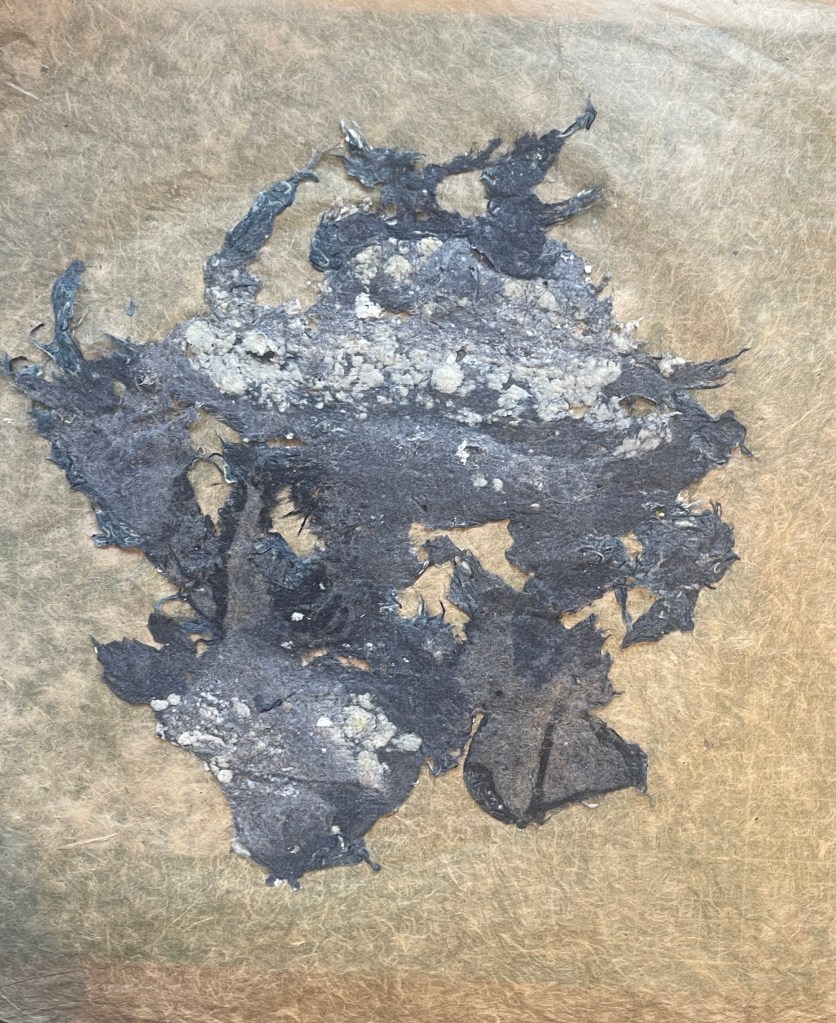
Finally laying the pice out to dry.
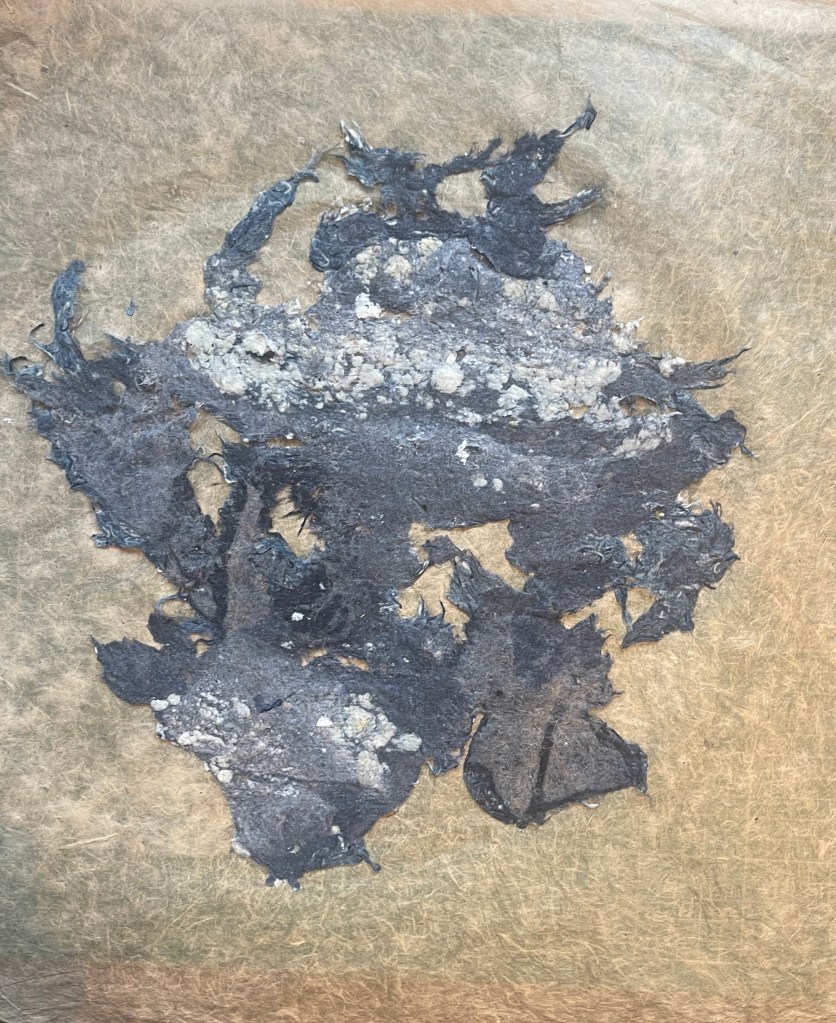
For me this was much more the metamorphose I was hoping for in regards to playing with this material. Bringing out its fragility but also its surprising toughness now. The shapes of the felted pieces still visible, as is the colour variations . Excited that the large ‘washed’ balls of tissue have remained, squashed but present in the ‘pelt like’ form created. There is good narrative in the varied patten shape and texture, a range of colours and mini- histories created from each section.
I went onto do more of the process varying, water and soap volume, amount of material, the rubbing and rolling process etc.
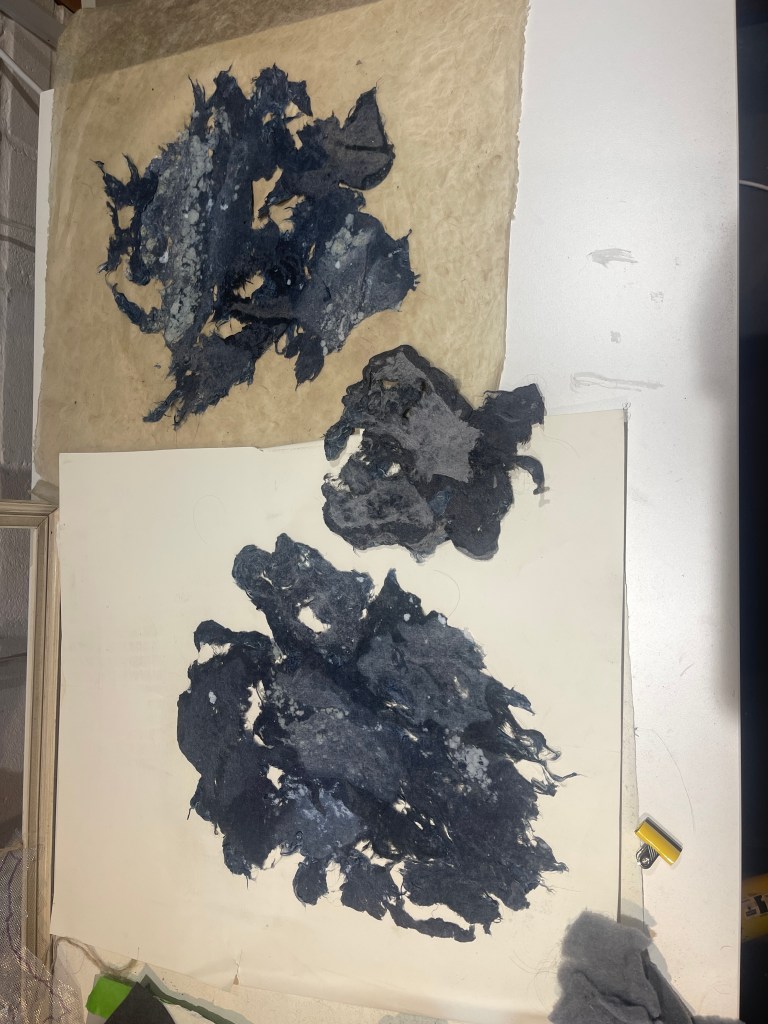
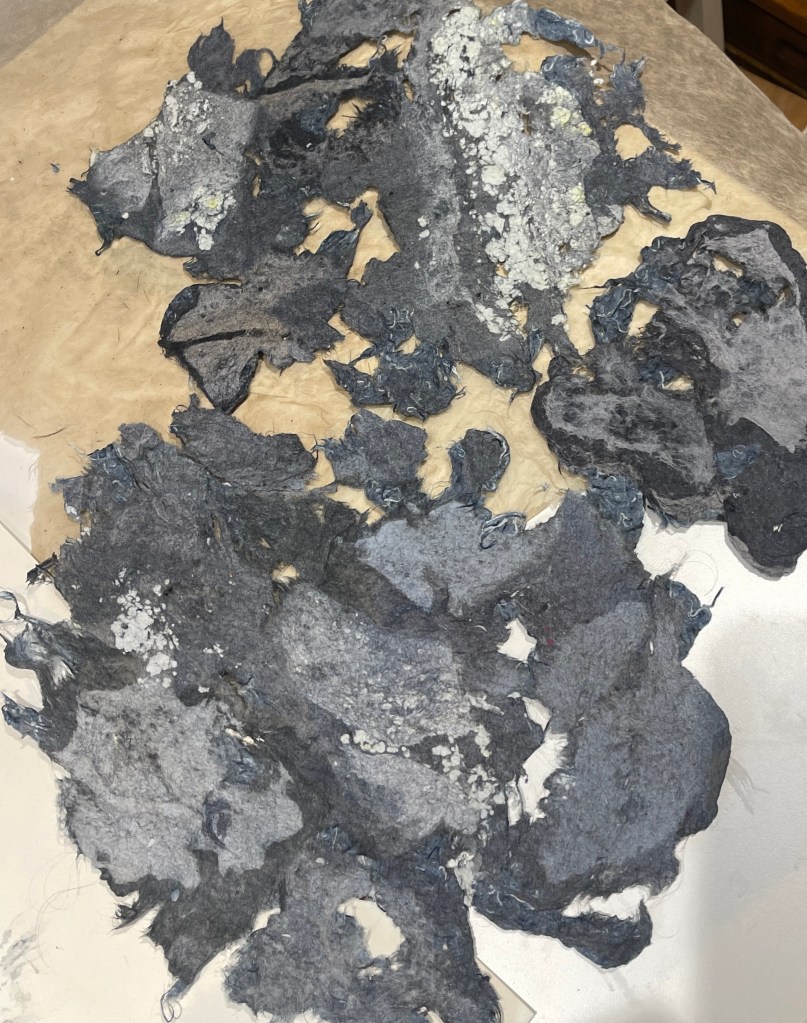
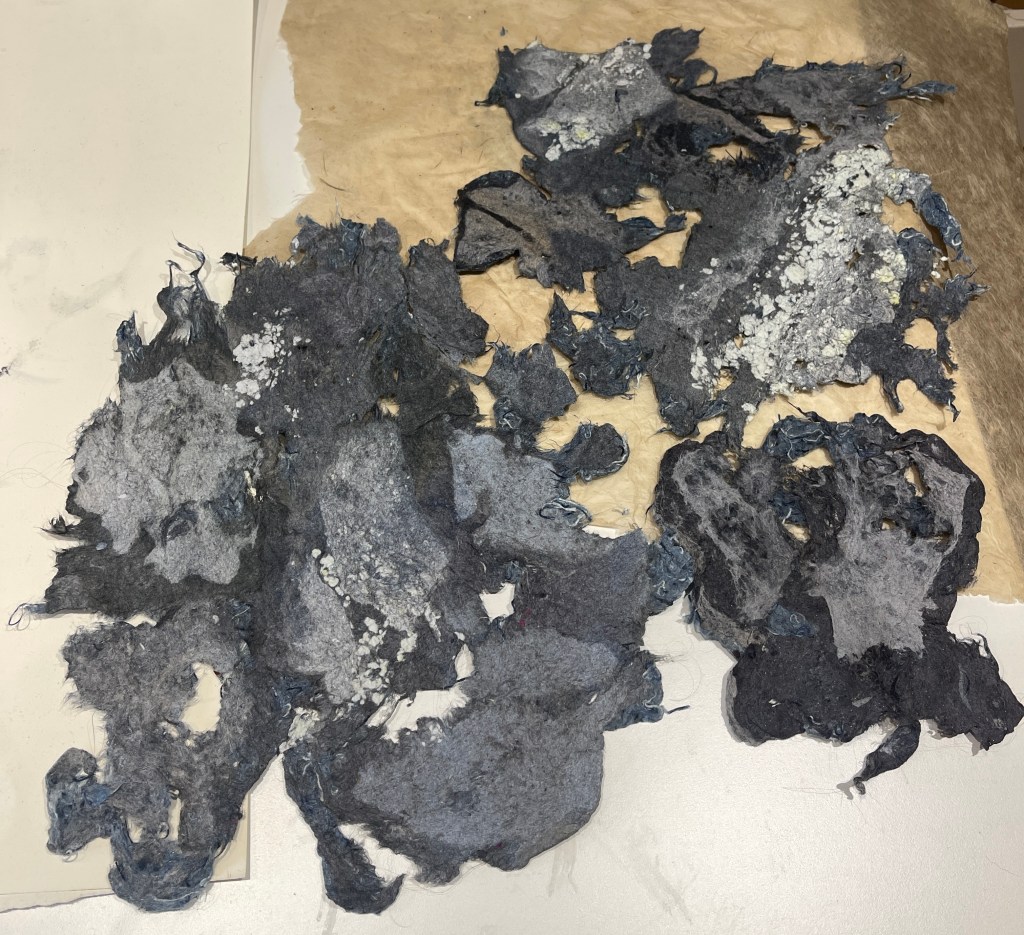
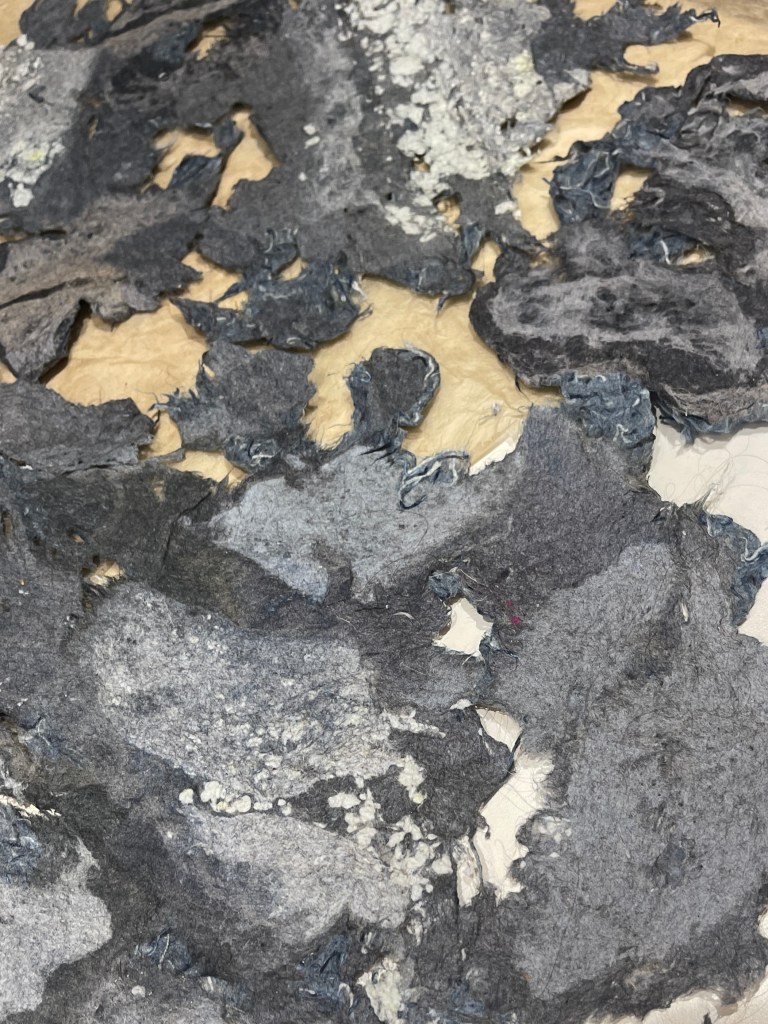
I was thrilled to see potential of upscaling my work during this process and merging or connecting the material together.
Unexpected outcome to see the wet felting process had in – printed dye marks into the paper it sat to dry on :
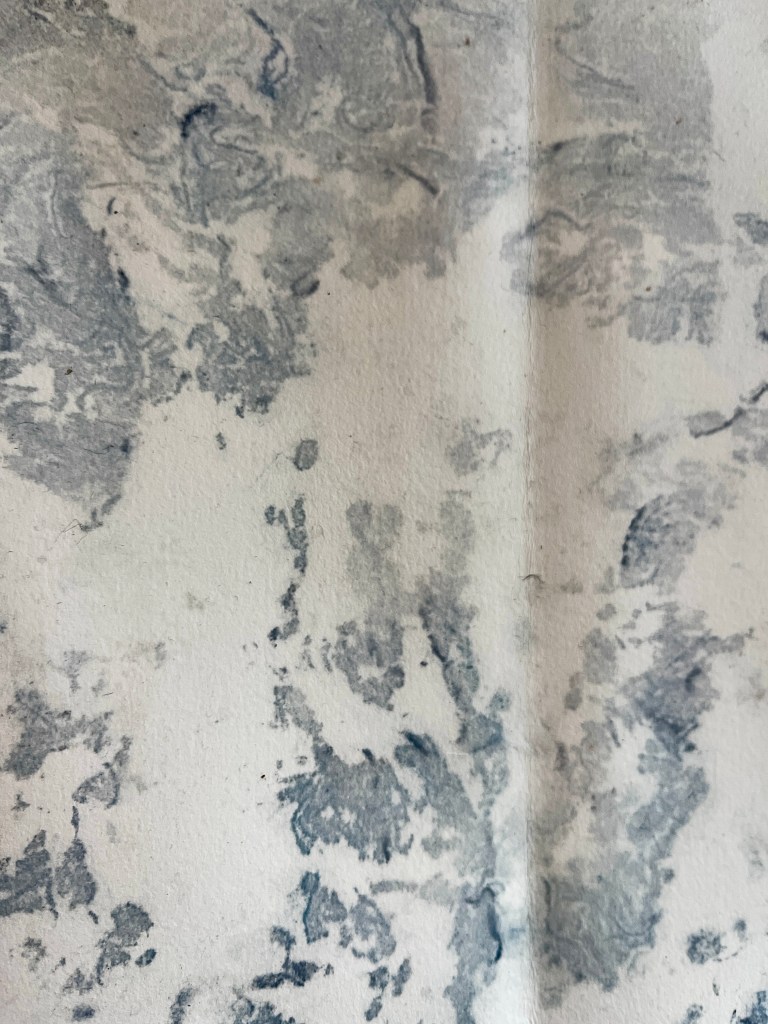
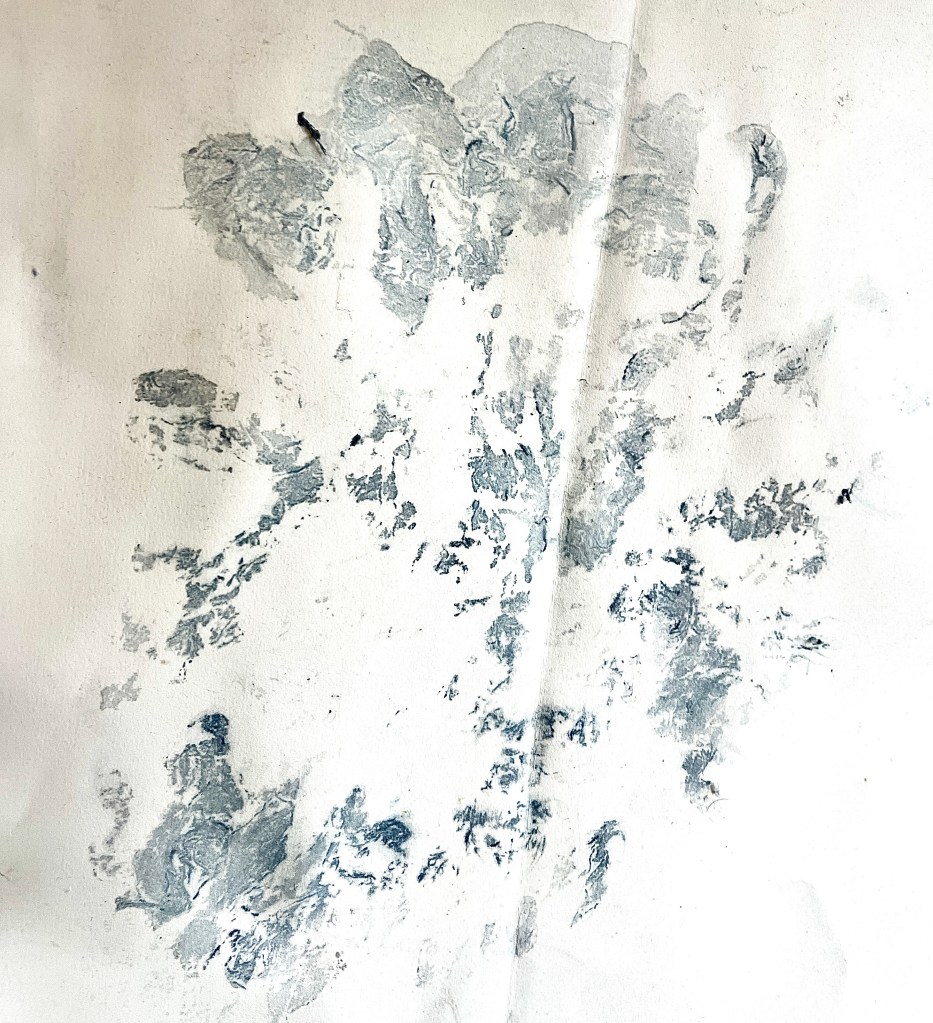
Collecting the felted pieces together I woul dbe able to increase the scale of the work quite dramatically…. creating a wall of work, or a large ‘shroud’ to drape or wear even ?
I photographed them together outside on a 1m x 1m sheet of paper….
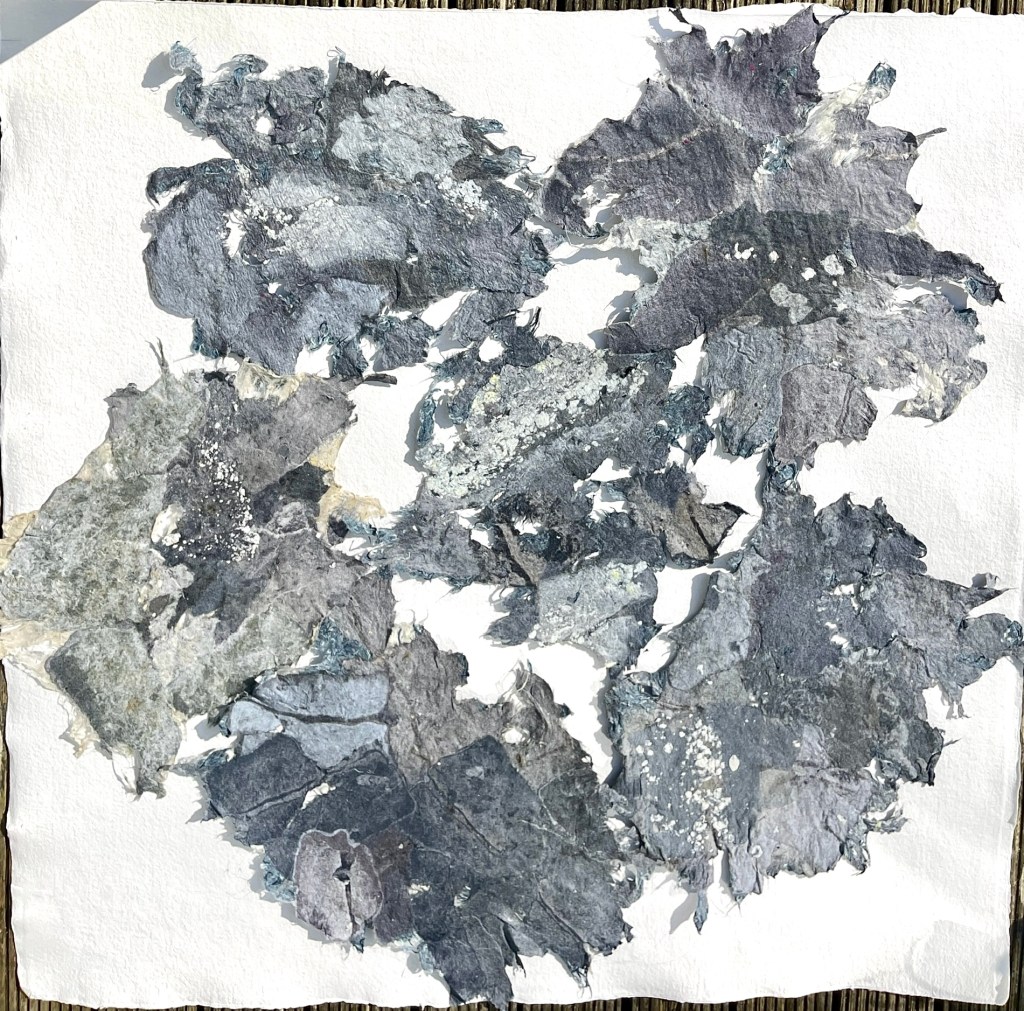
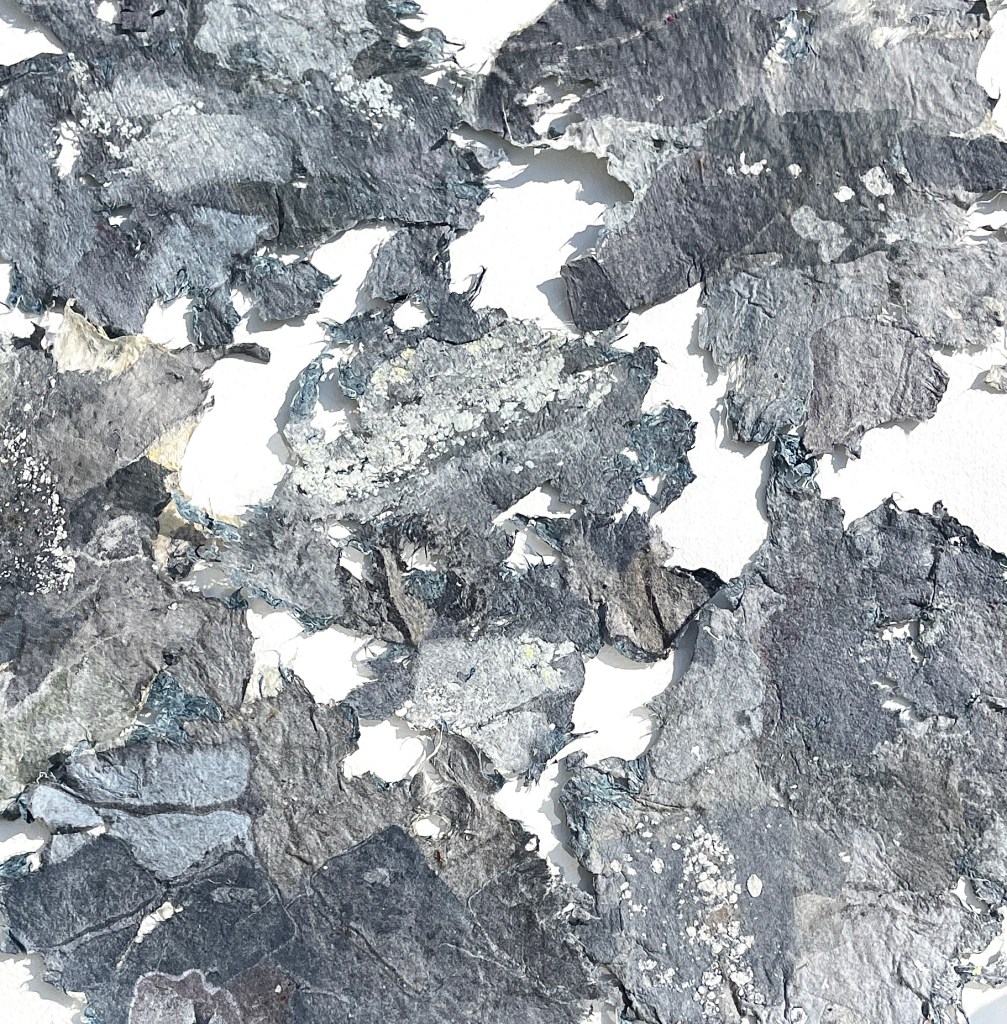
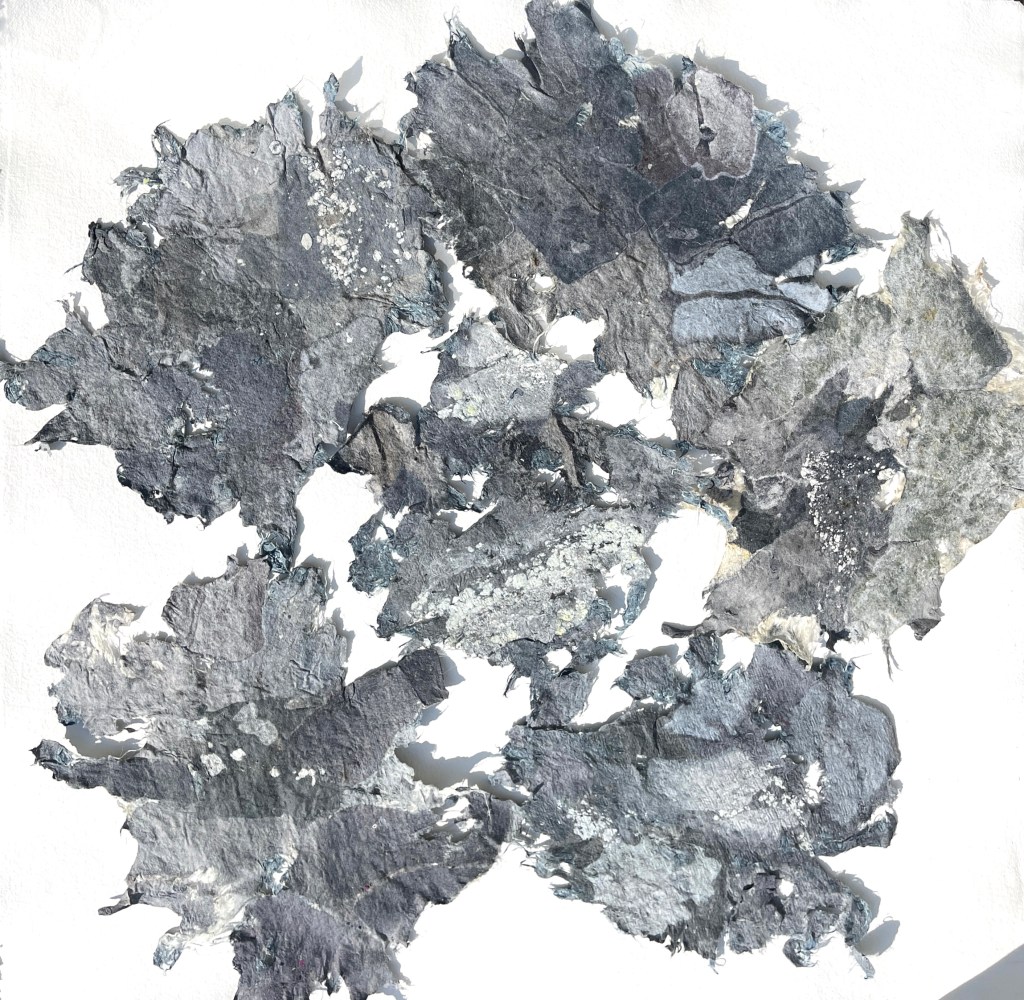
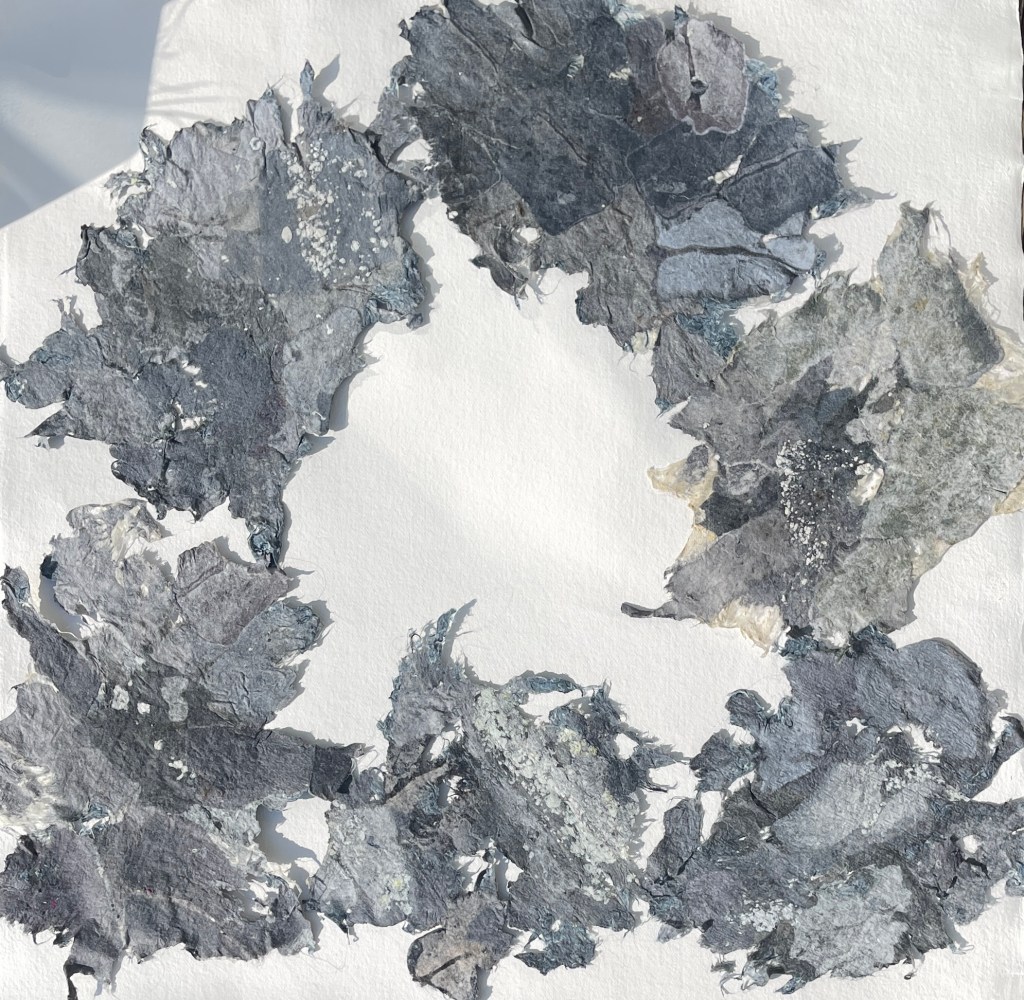
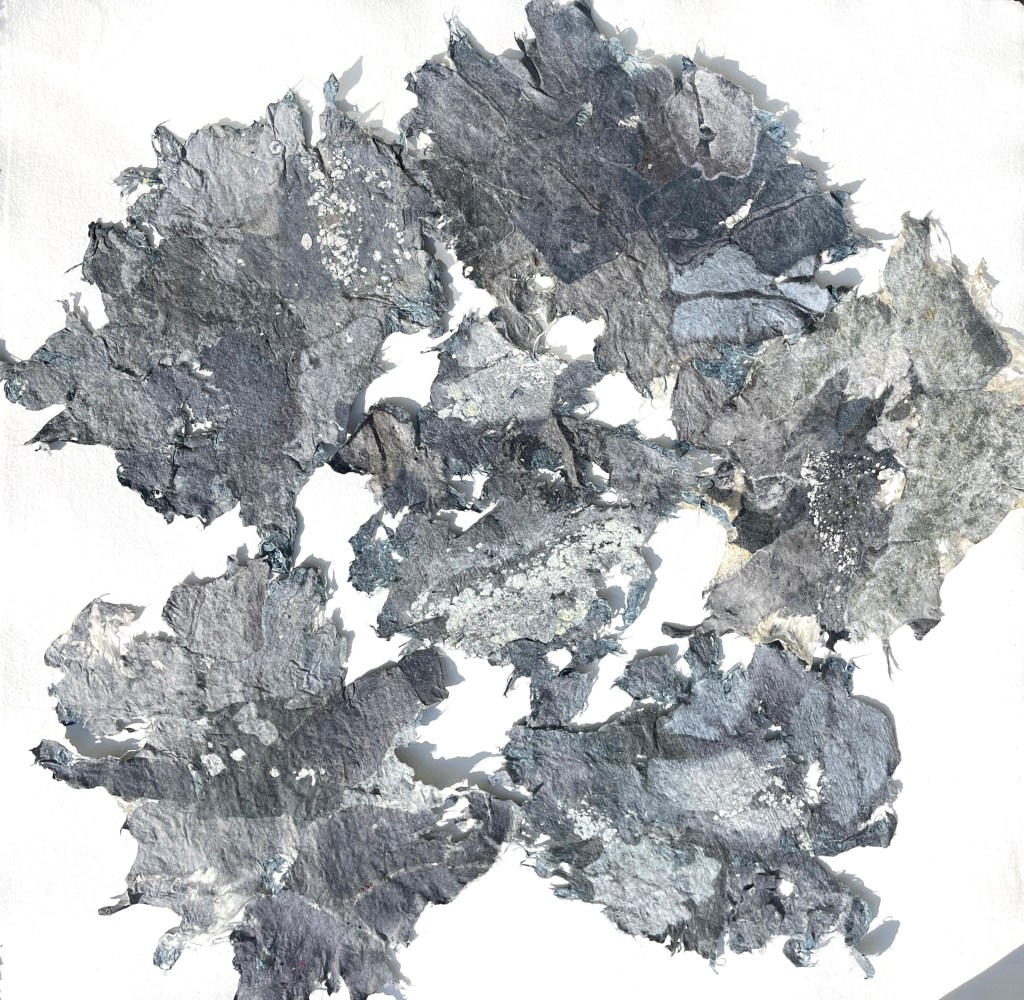
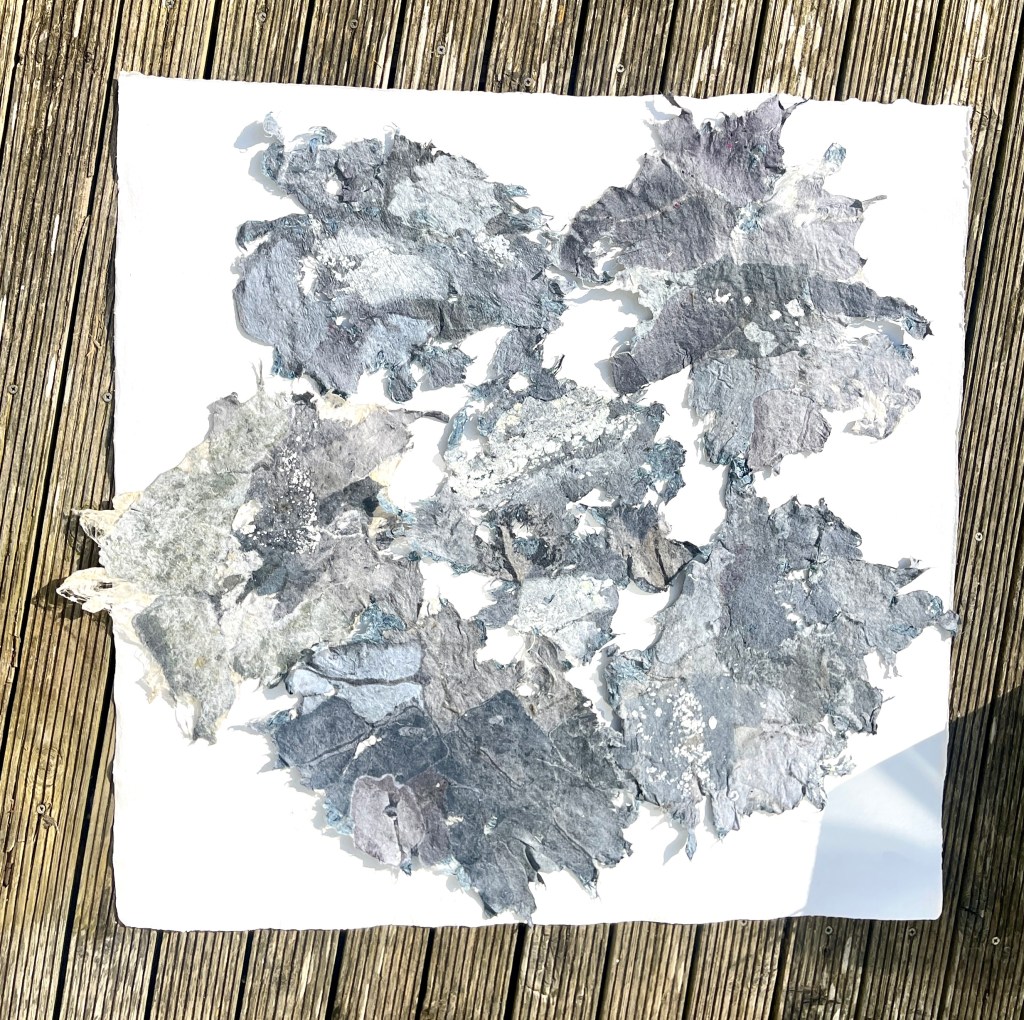
Going forward I need to find a way to securely attach them to each other.. possibly by using thread to connect them. The felting has stiffened the fabric but this has also increased its malleability and durability. I will also explore using a bigger tray and see if I can expand on the individual size of the ‘pelt’.
Photographing the work:
Photography has become a more pressing part of my creative journey as a way of presenting and exposing the artwork – especially in light of the student blog and the need for work to be assessed photographically rather than in real life. This has been advantageous as it has allowed me to explore and push work into new dimentions.
Using some basic media techniques I turned the lage felted ‘pelts ‘ into a negative format with subtle tints. The work too on an unexpected narrative of a flower like /organic shape. the textures and tones visible and enquiring.
adjusting colour/negative
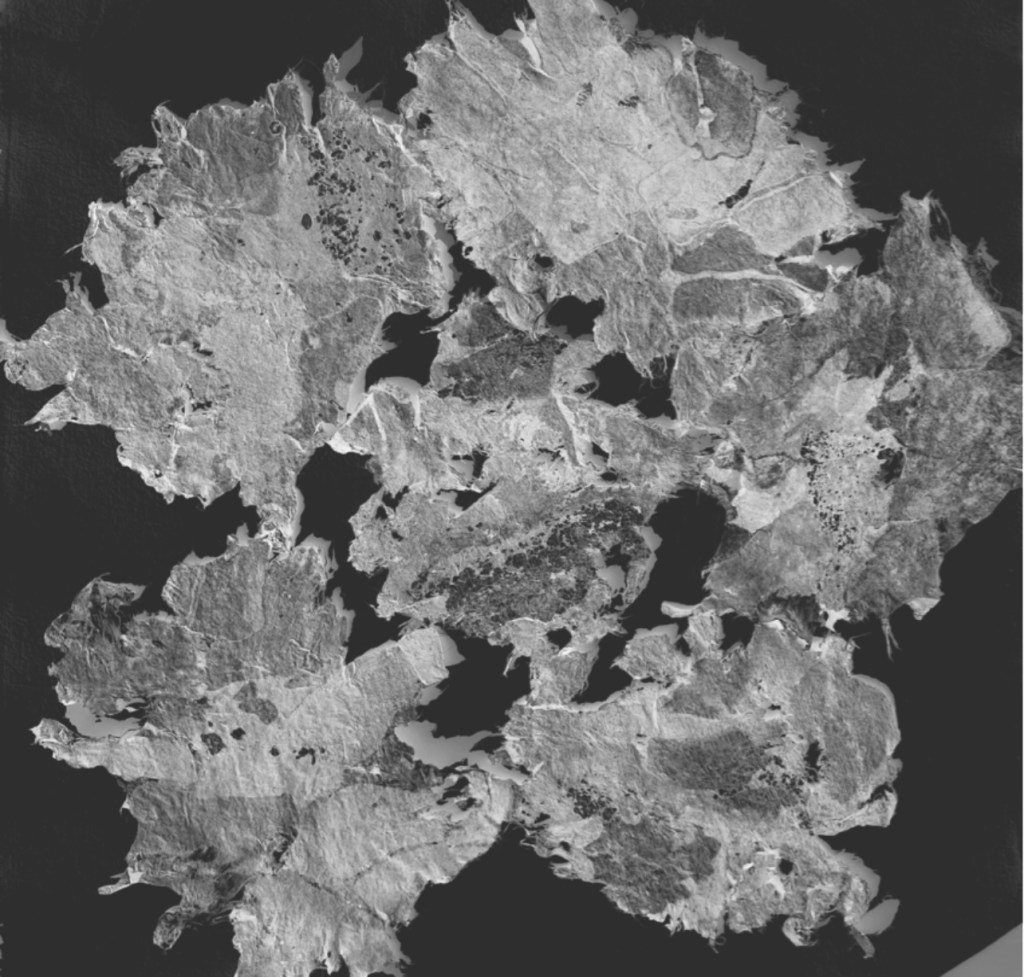
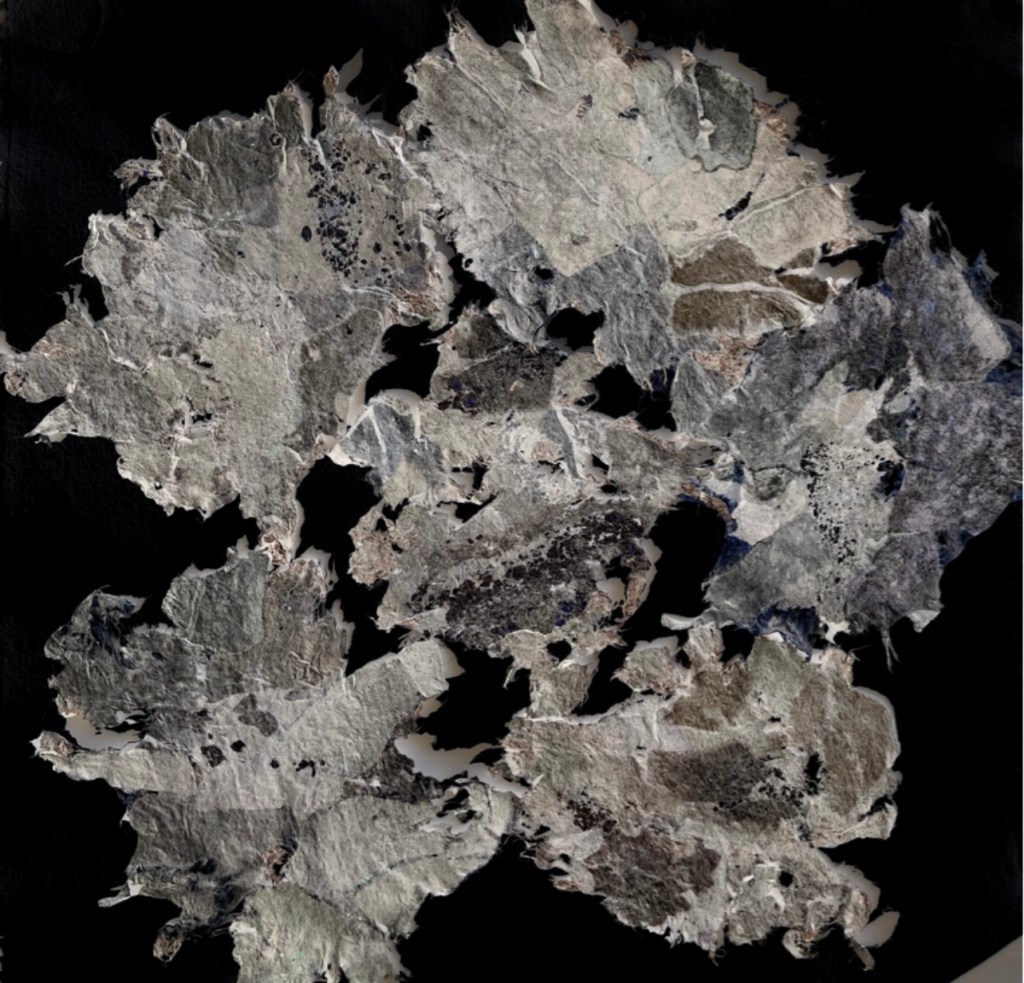
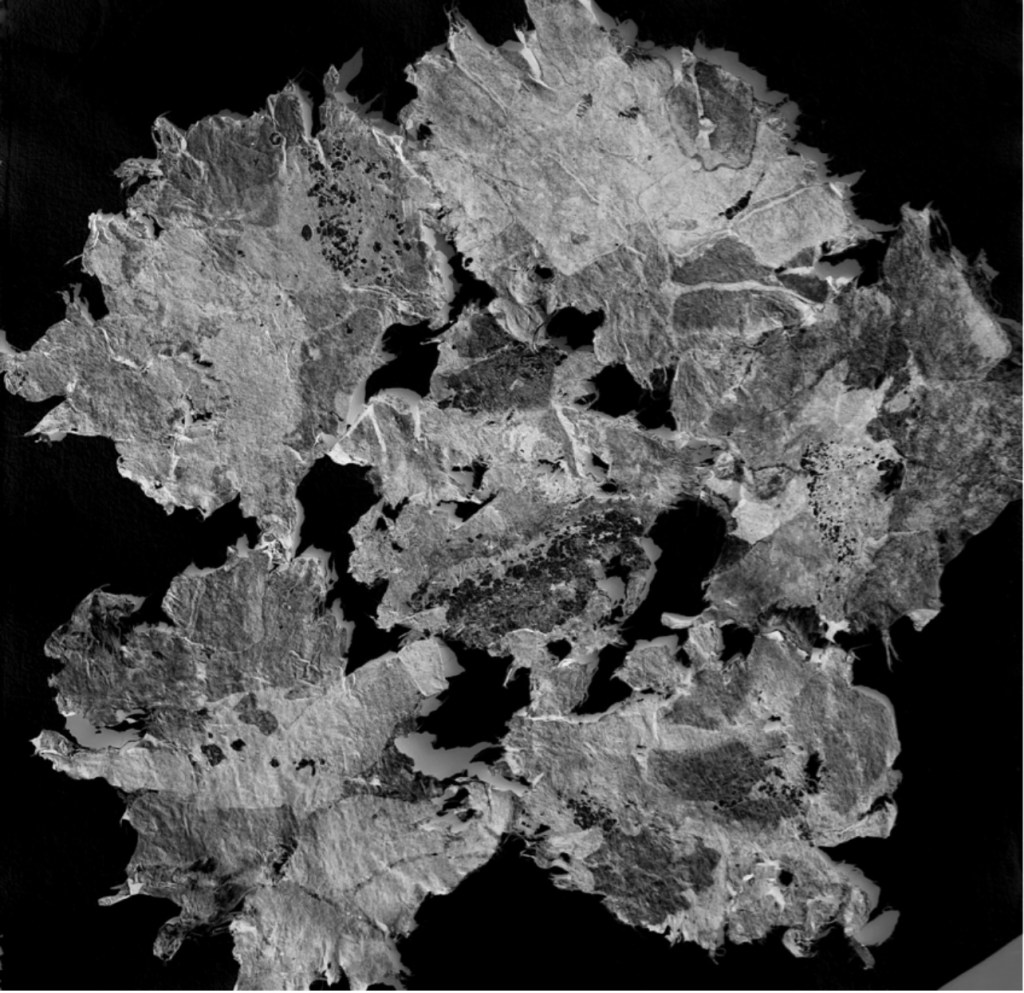
I went onto to curate the image further : Printing them with onto A3 Khadi paper. I gave the work the title ;
‘Abject Materiality’
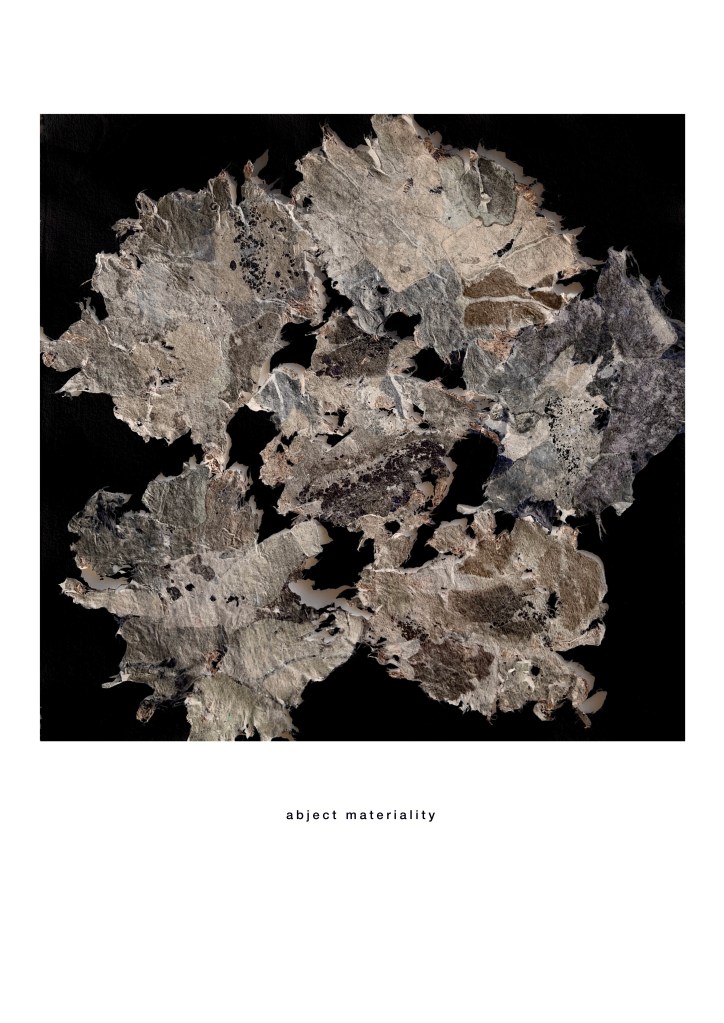
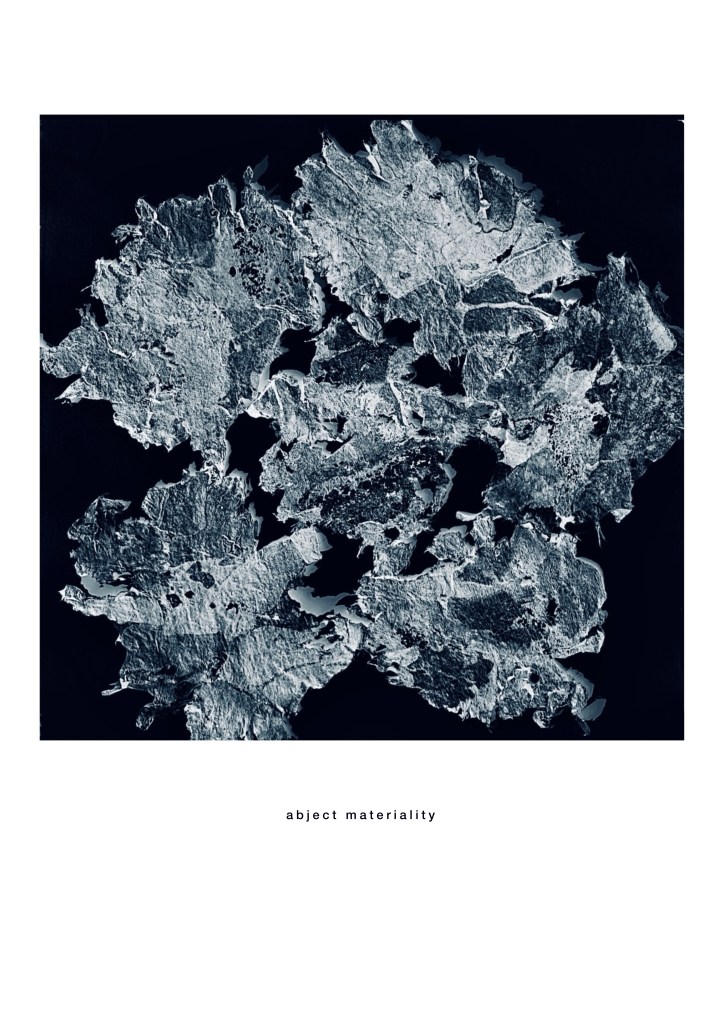
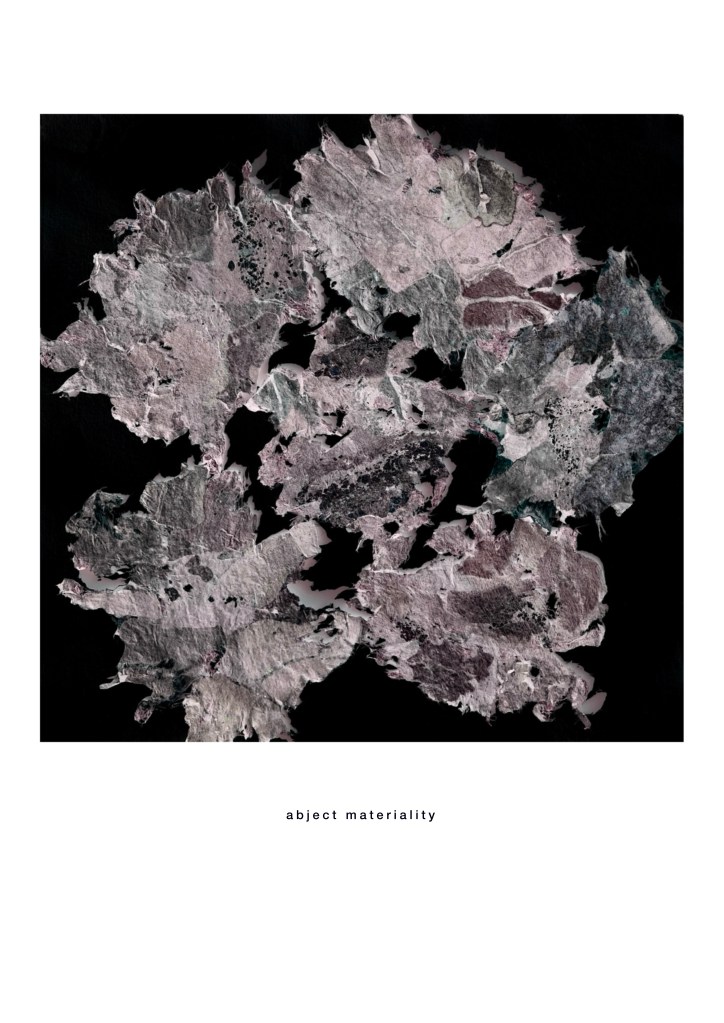
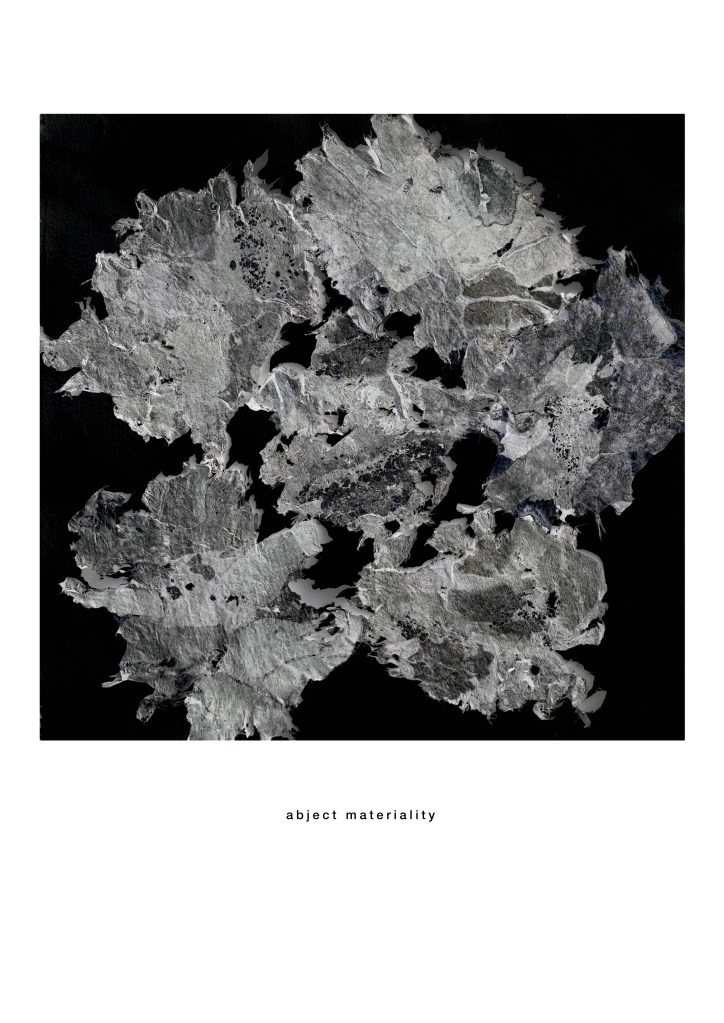
I mounted them in black and framed them in advance of the Chichester Art Trail that I was taking part in and opening my studio space to the public. This was a nerve-racking but timely event as it allowed me to have a platform for feedback from peers and the public in line with the requirements of Project 3.
Work mounted in studio space.
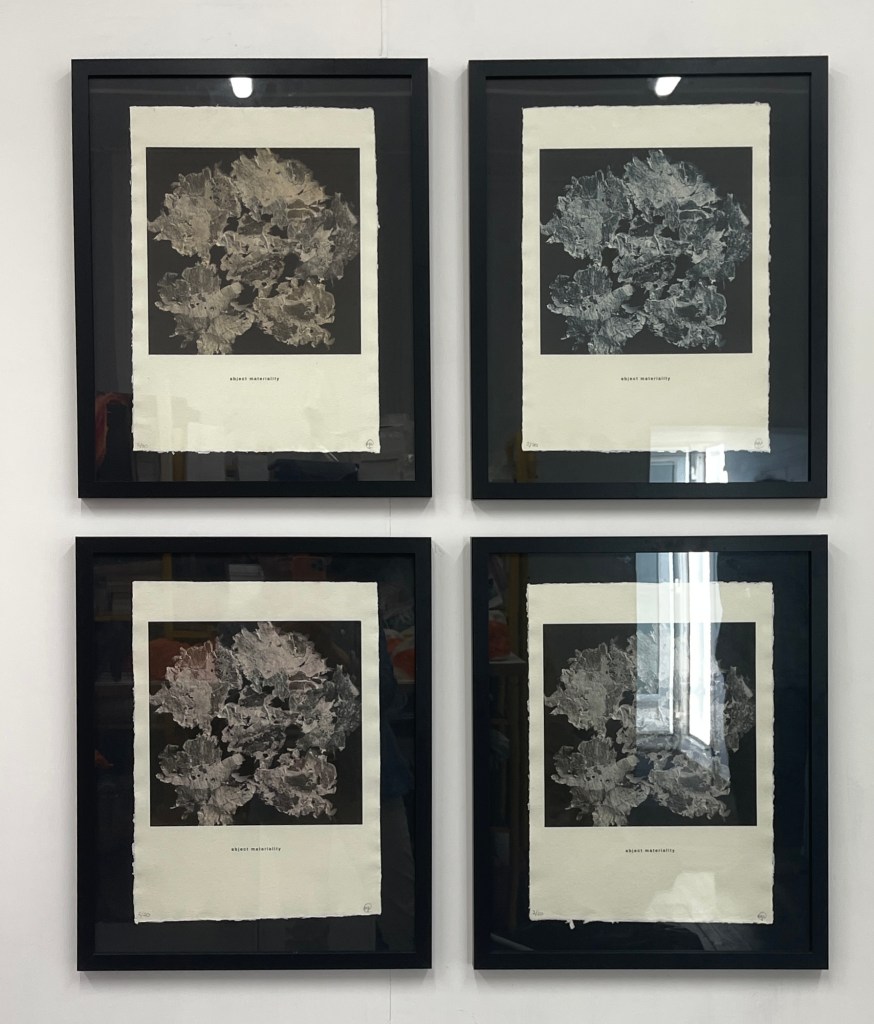
Narrative :
I was satisfied with the narrative “Abject Materiality’ offered, I spoke at length about :
The concept of washing away the dirt and experiences our clothes have encountered, they serve as our shell/protection from the outside, elements and notions of privacy and expression. However, we are not able to wash away ourselves we remain and absorb and contain all those experiences of the the week and the day in side us , we can not wash those away.
It is traditionally a female orientated role – a relentless ritual of the house keeper and manager. A chore and responsibility of family management. Interestingly all the women I spoke to (over 200 of them over the 5 day event ) stated they were still almost solely in charge of managing the household washing and the various stages of work that involved. This was despite holding down jobs out side the home there was a lack of equality around this and many other tasks in the home.
The ‘felt is a narrative and history of the weeks washing, where you went what was encountered, what was the weather etc… it also holds large volumes of our DNA.
It is full of micro plastic. What we discard from our dryer filters is the beginning of the plastic micro fibres that enter into the water and food chain. When we wash man made fibres it breaks down and the particles of fabric made from polyester, nylon etc are released from the fabric, some are washed away into the water table, too tiny to e filted out by a sewage system they end up in our seas and rivers eventually entering our food chain.
The felt has a metaphorical notion of self and our history and may also be a material to consider more fully in regards to its disposal and future up-cycled usages.
Selection of Learning Log. 10
Exploring the felted material further:
The wet felting had shown the malleable qualities of the material so I look ed to create shape and volume with the pieces experimenting as I worked with no set outcome or agenda ;
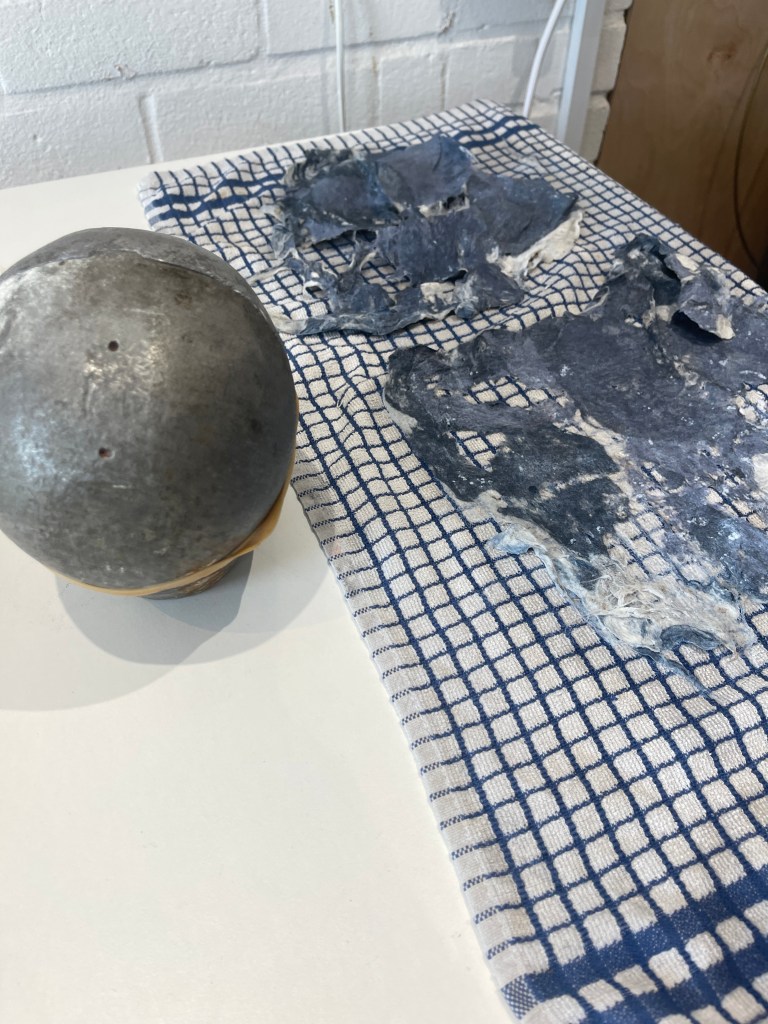
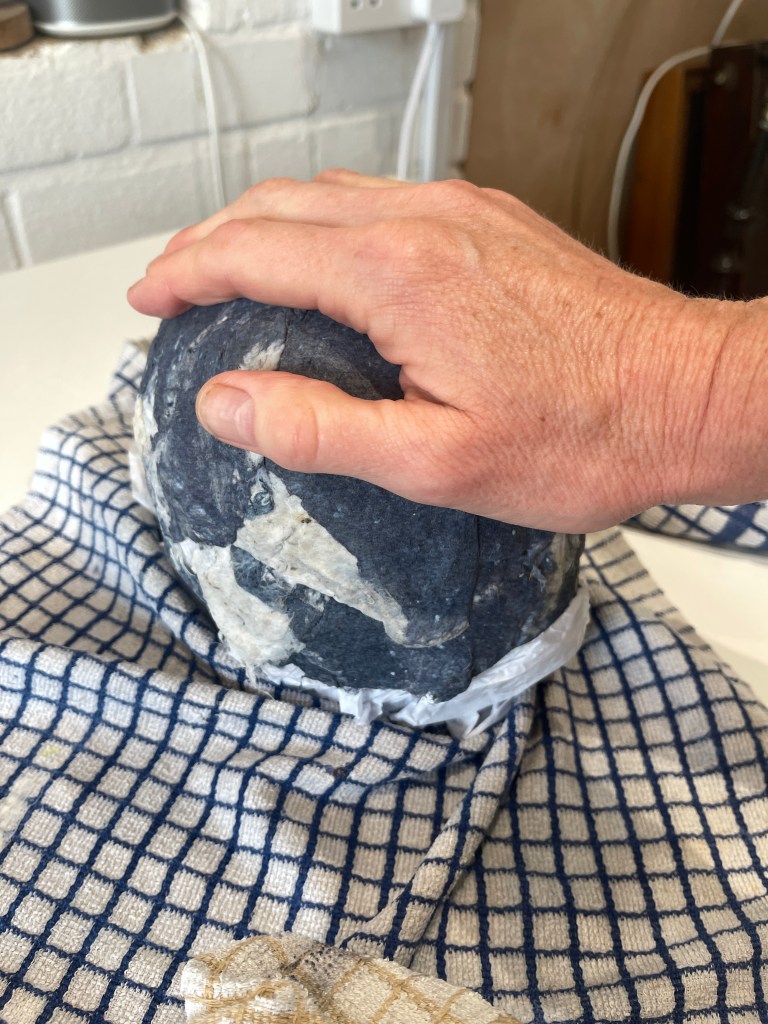
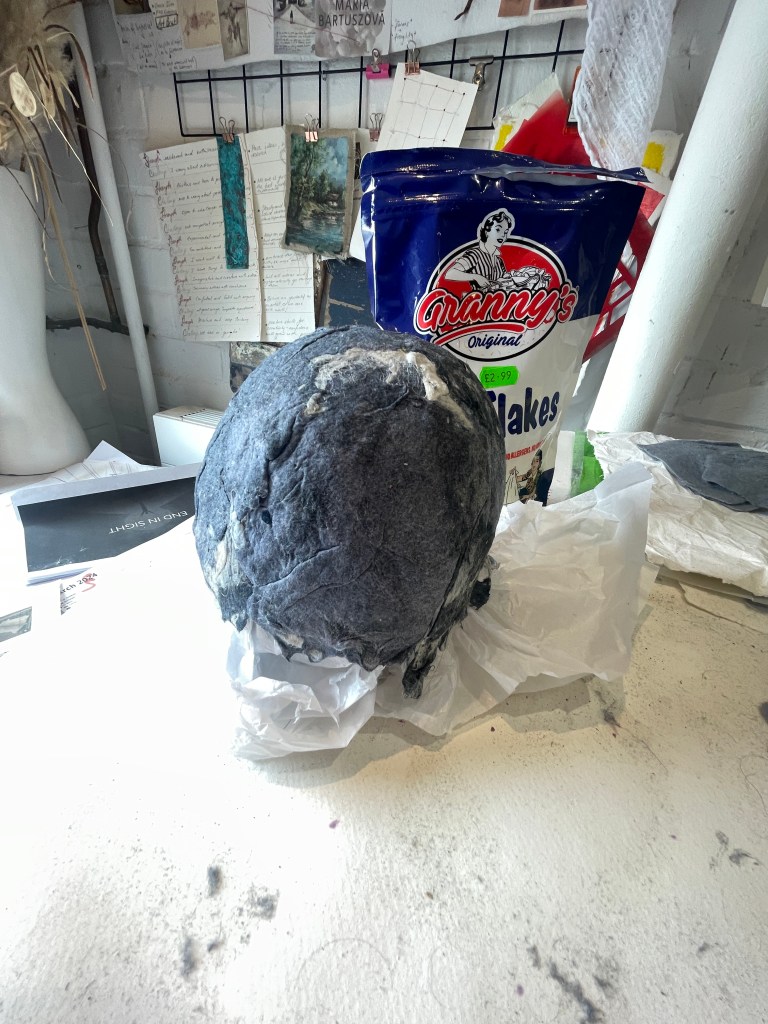
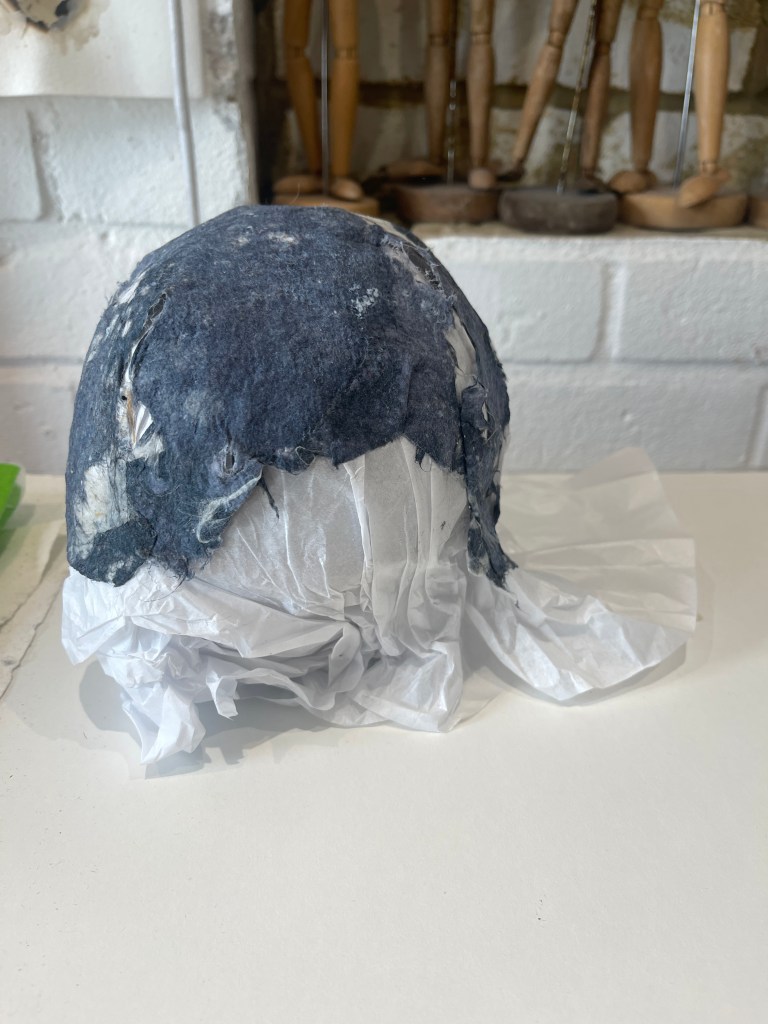
I placed the wet felt over a vintage dolls head mould prepping it with tissue over the head firt to allow for easy extraction.
This was a process I repeated a number of times with various other items: Leaving them to dry for a few days before removing them. In my haste to prepare for the open studio I did not photograph all the objects.
It was a great success with the felt maintaining its moulded shape. There was a wonderful hollowness about the objects a void that spoke volumes about the materials origins, a shell, a covering of us and the hollow rituals of the washing process.
I collected the individual pieces together in a cluster arrangement and called them,
‘Hollow Objects
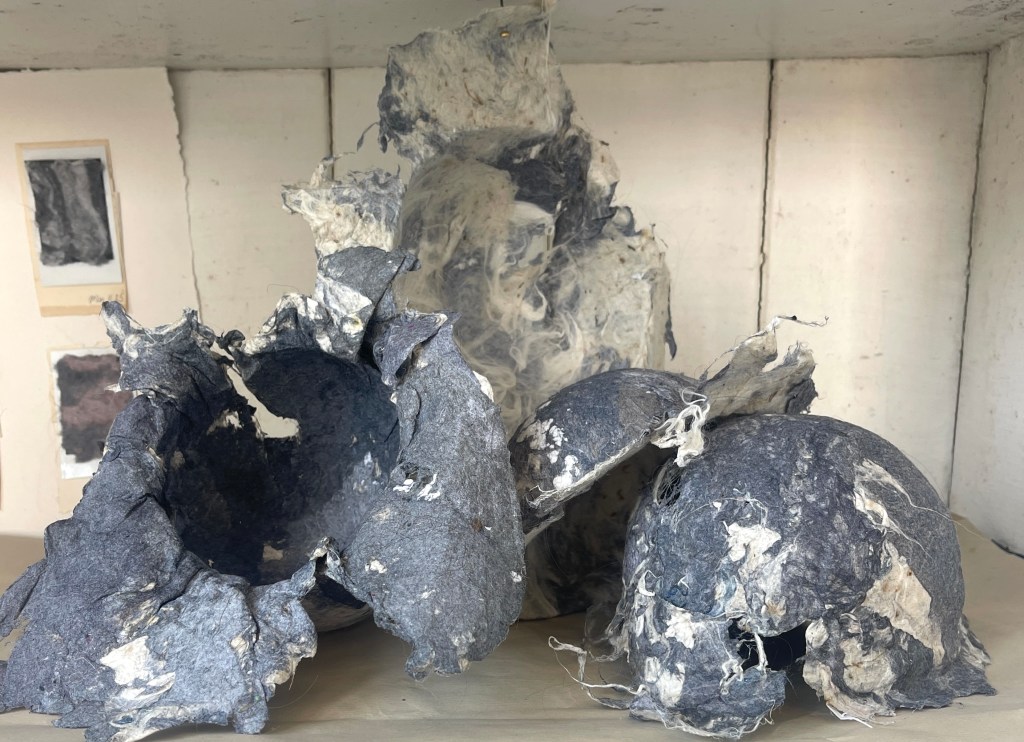
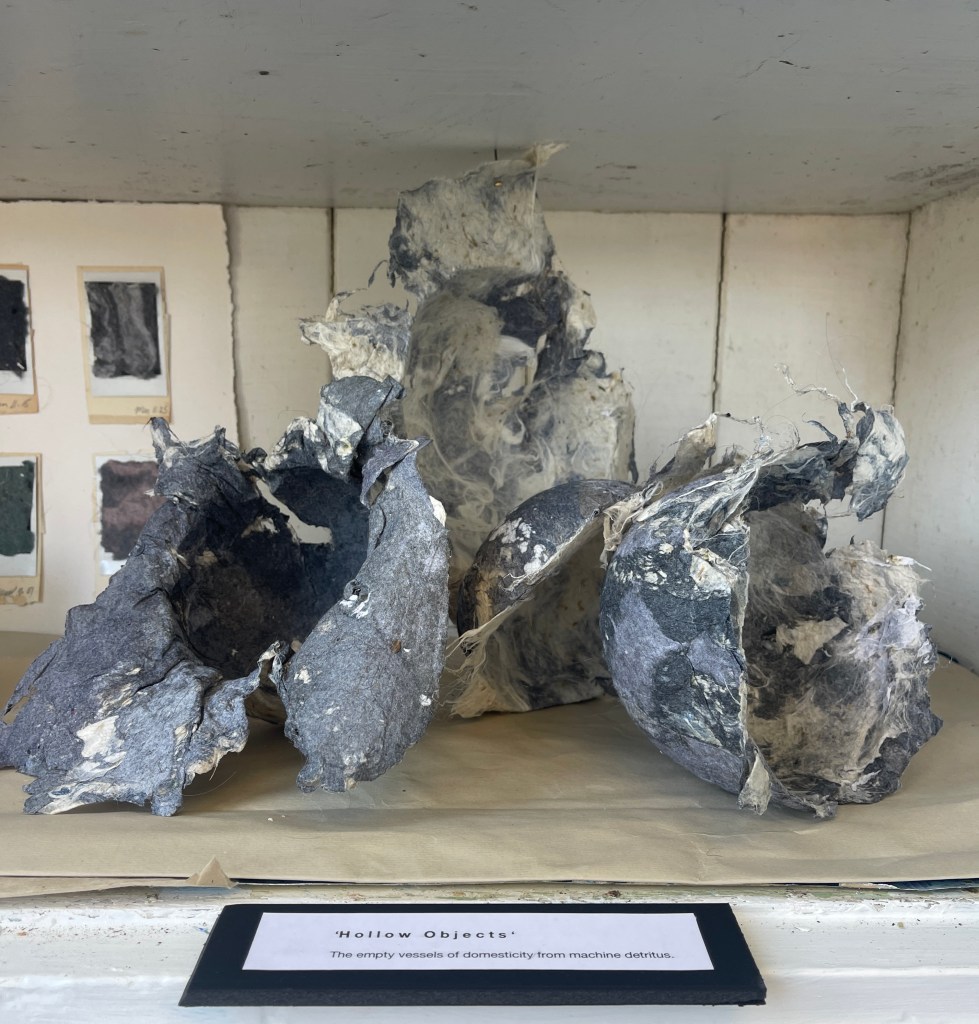
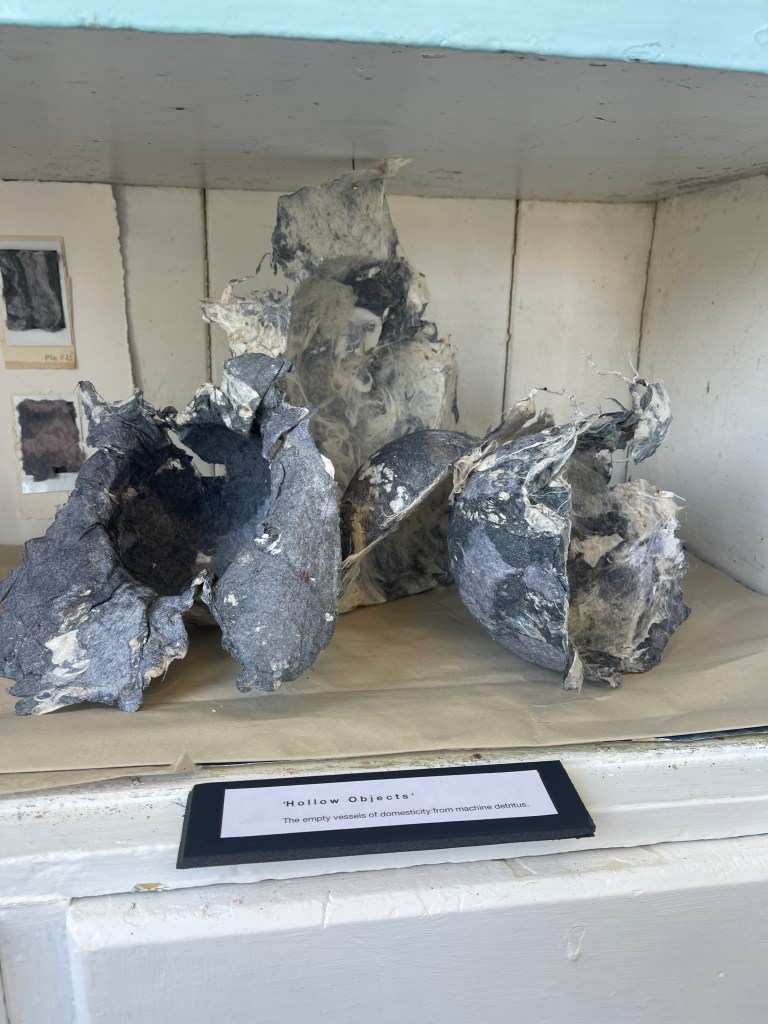
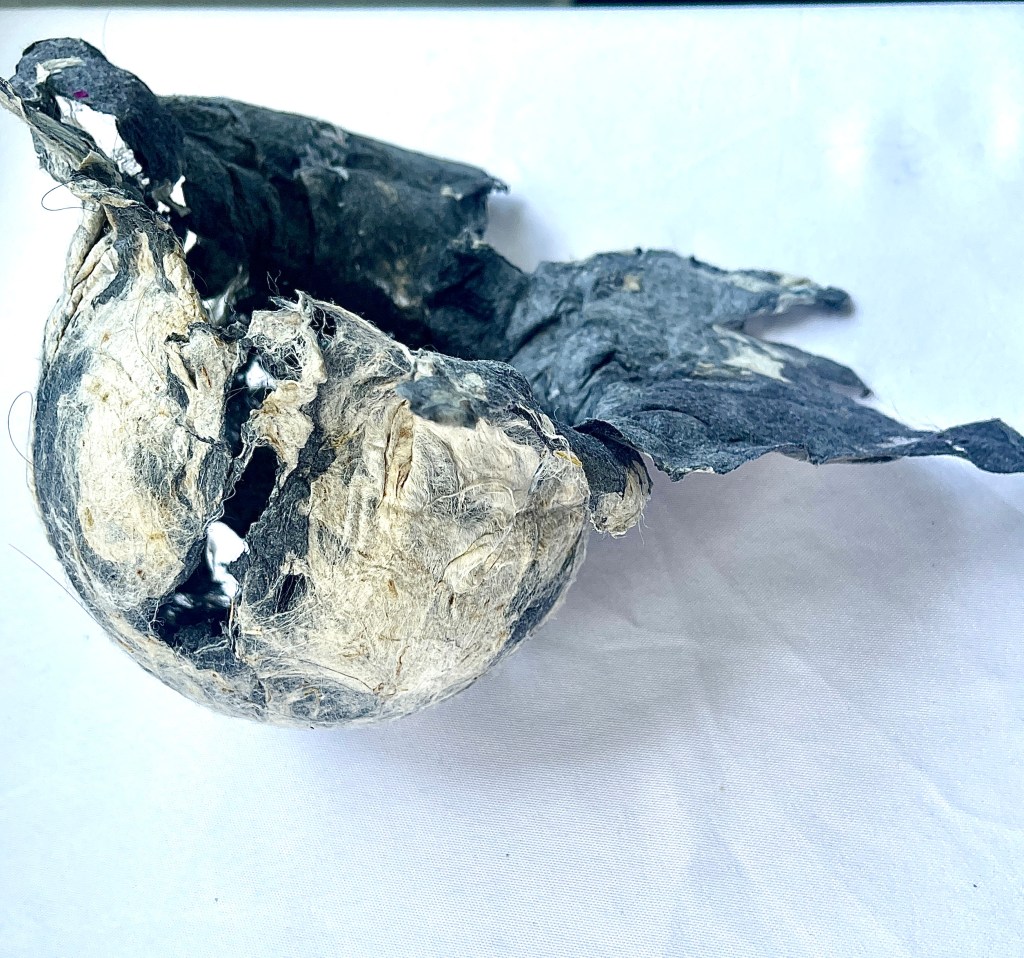
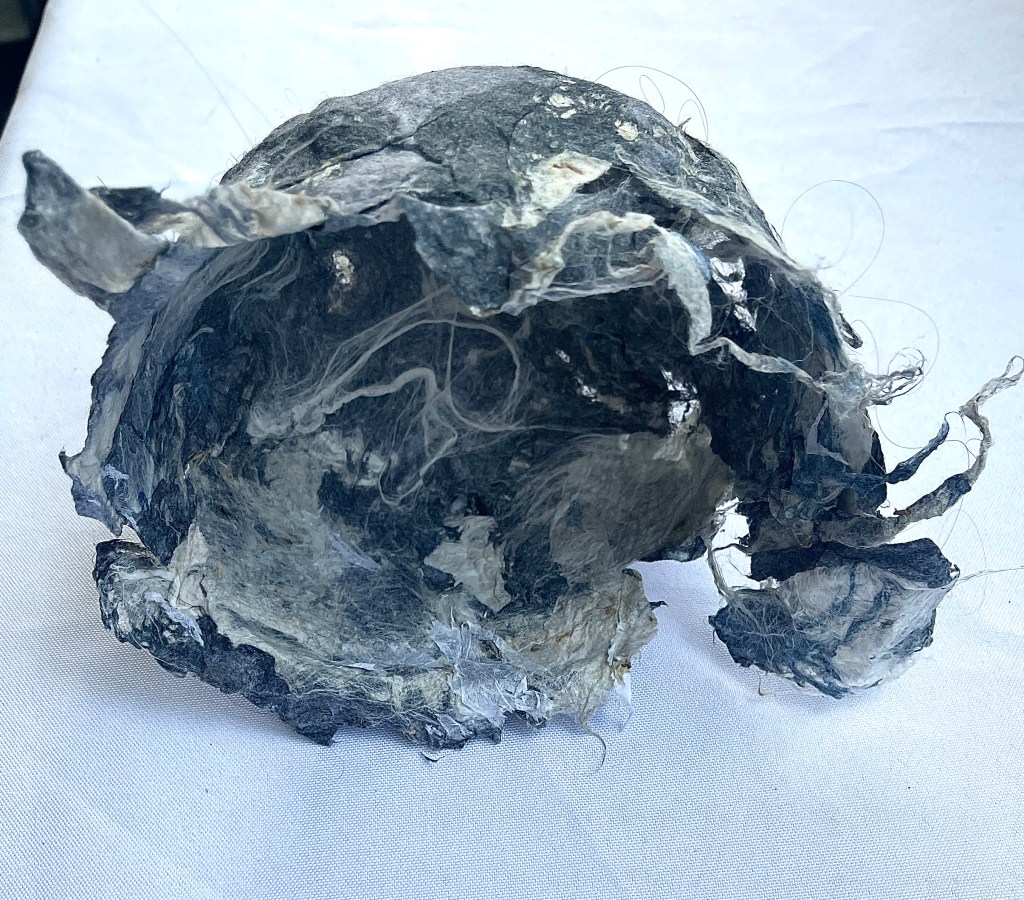
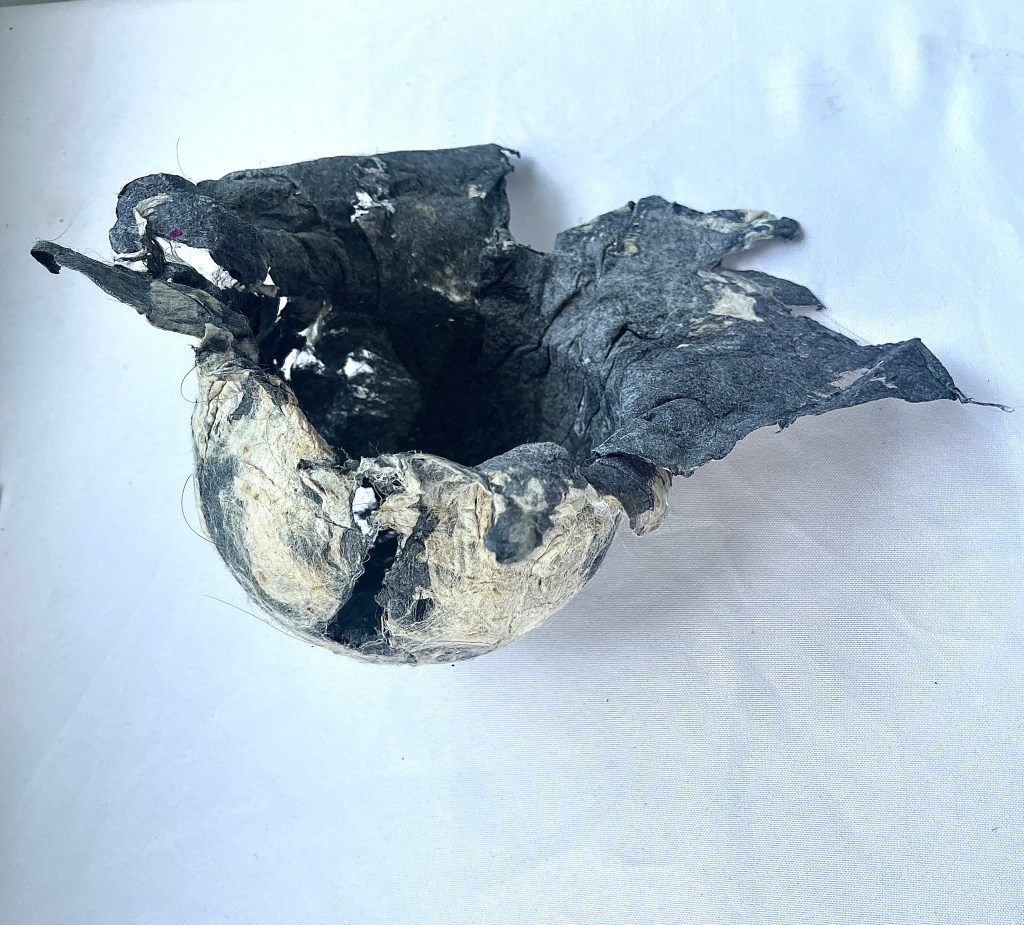
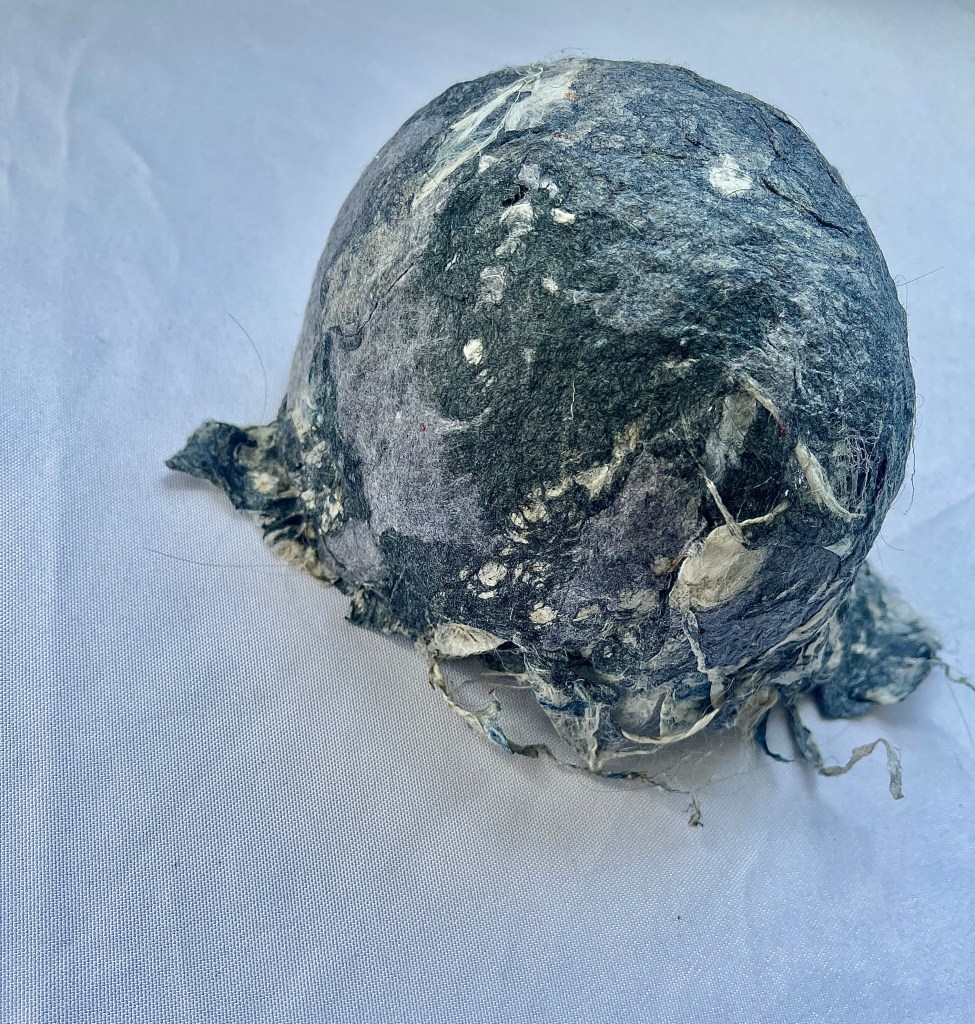
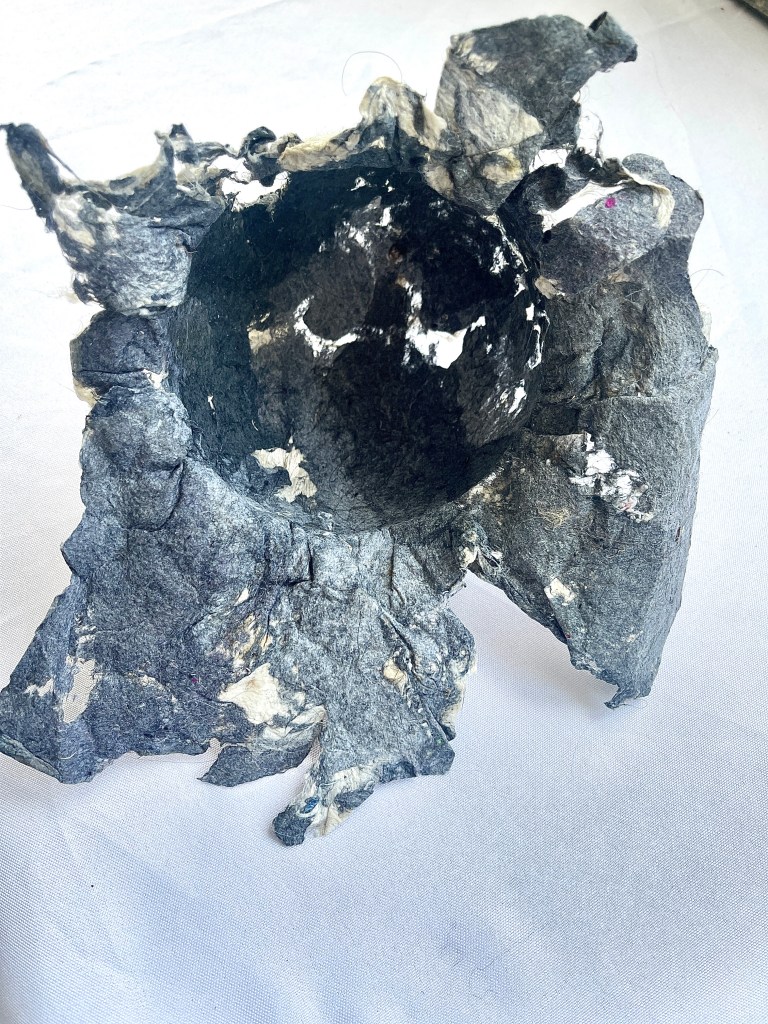
The larger scale pieces were now paid flat out to dry initially from the felting process they are double the size of previous work:
..
The larger scale pieces were now paid flat out to dry initially from the felting process they are double the size of previous work:
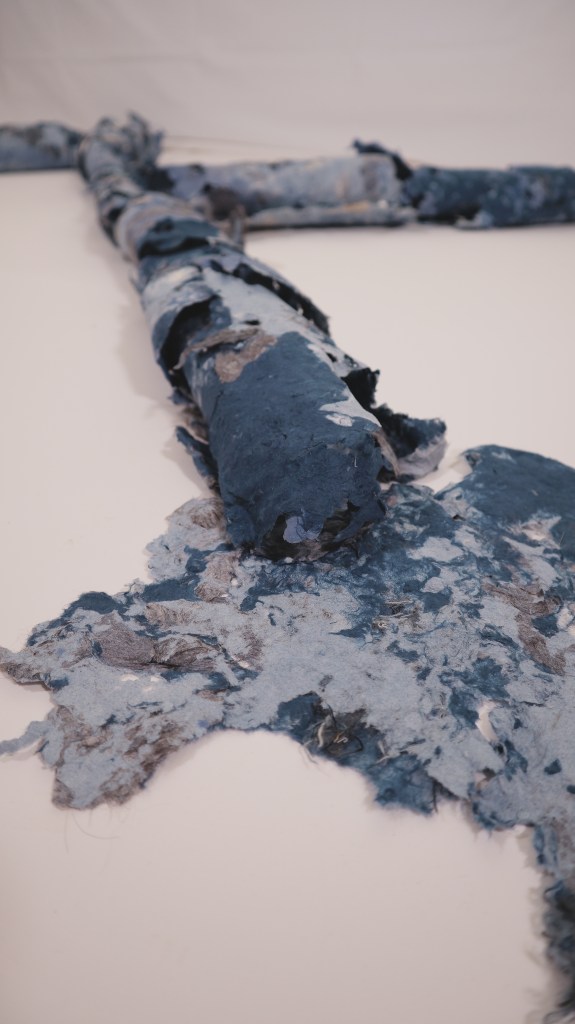
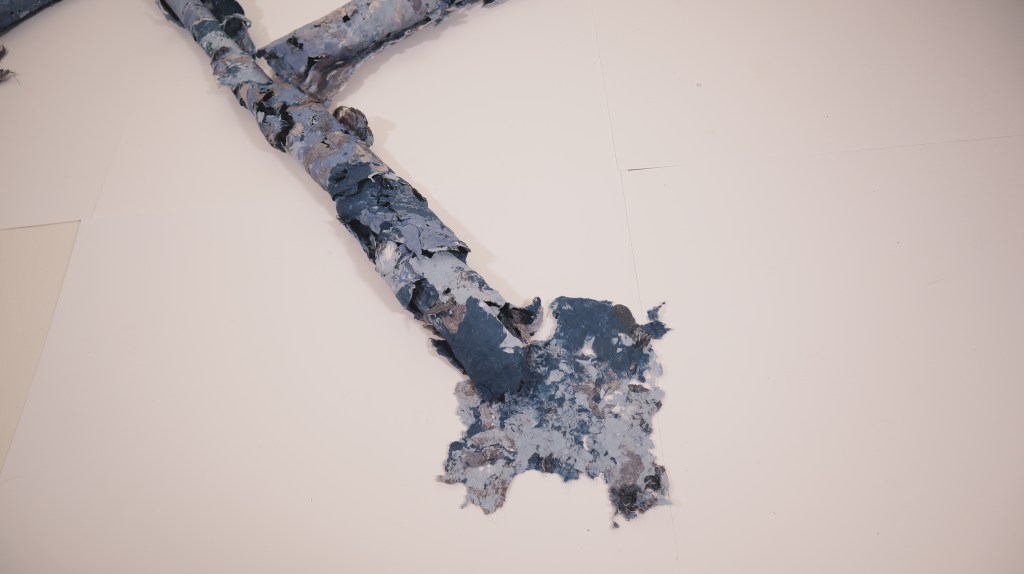
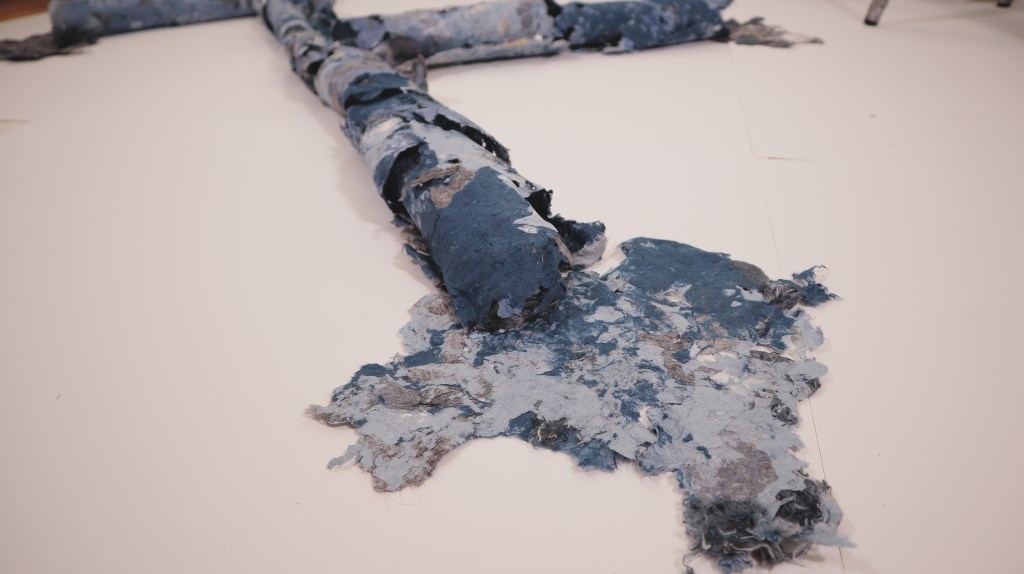
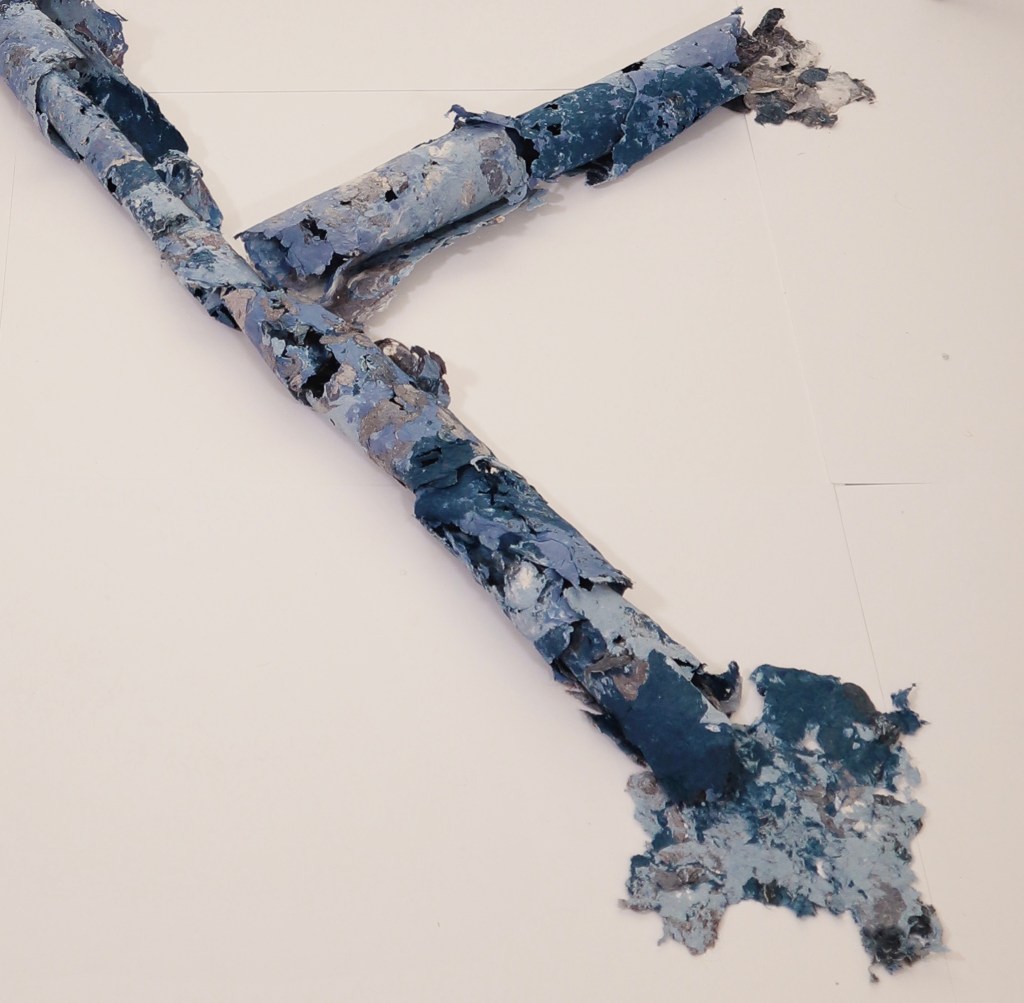
I wrapped the wet felt around a roll of sculpting wire to dry …
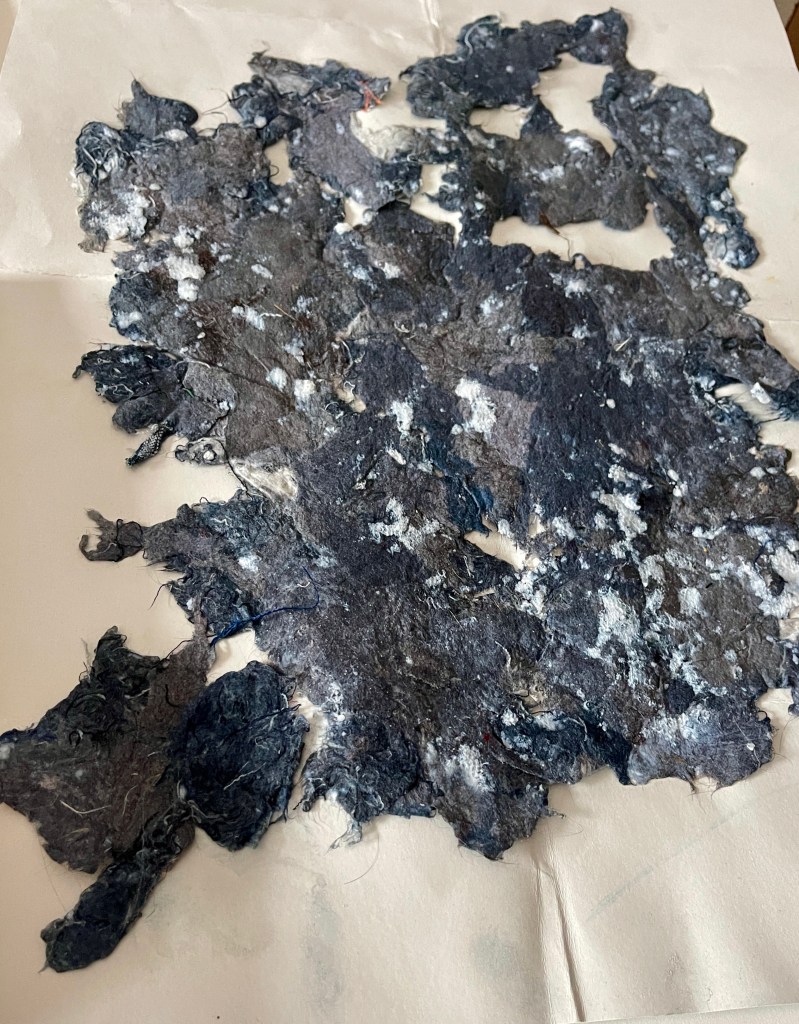
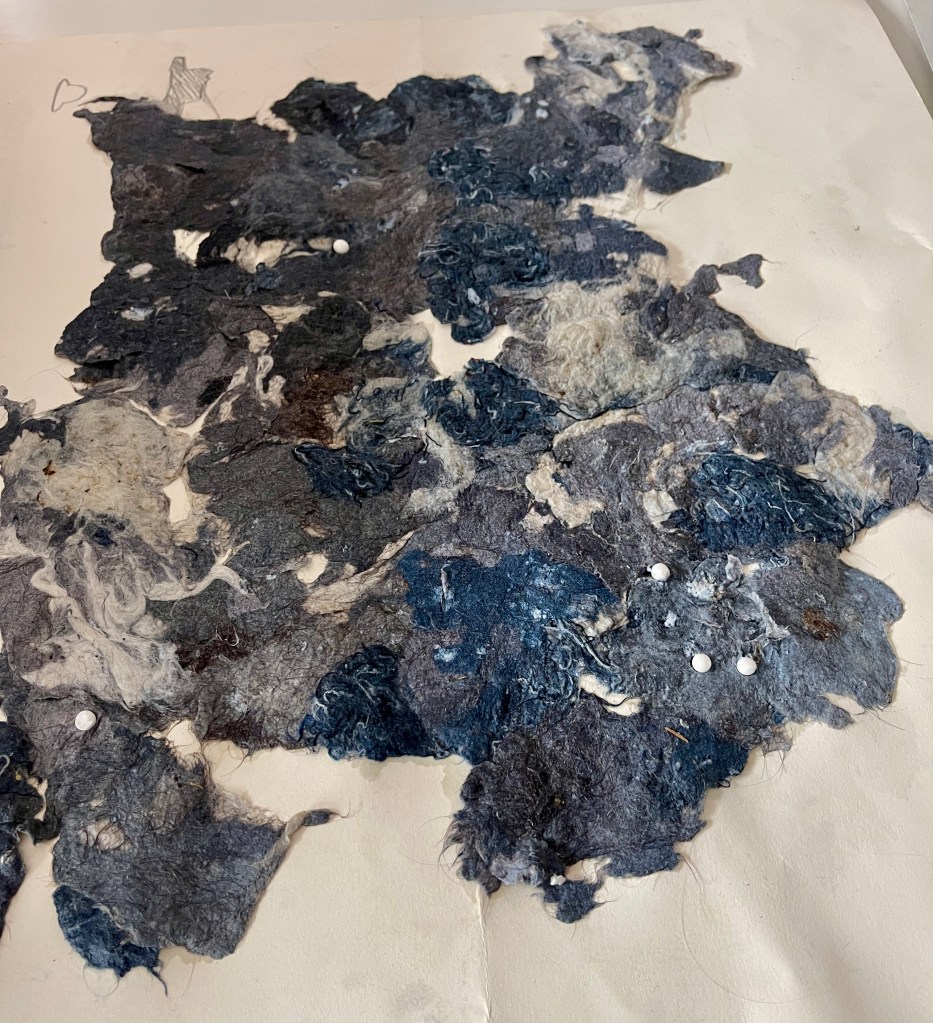
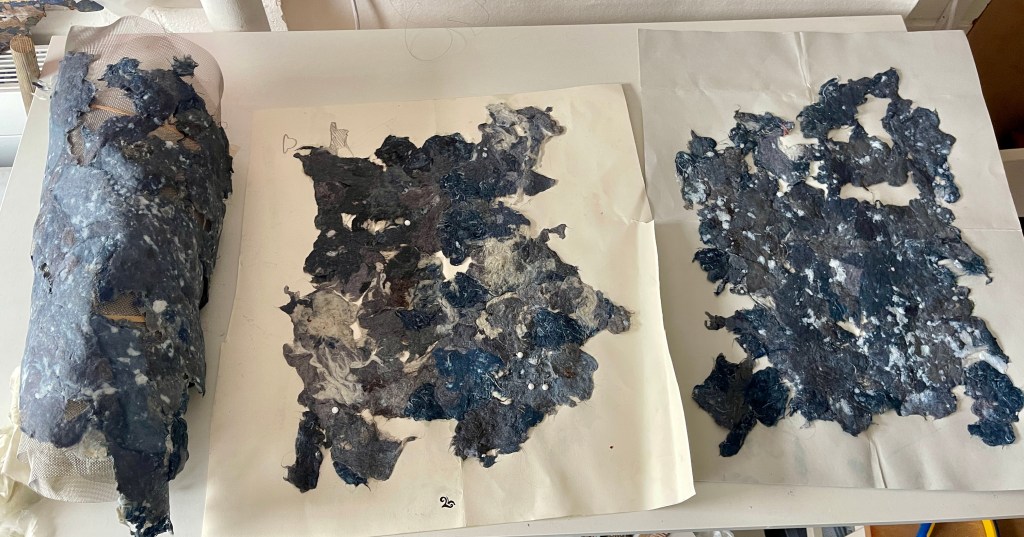
Continuing to do this with the other pieces, folding the wet felt around cardboard rolls and wire, using rubber bands to secure them in places.
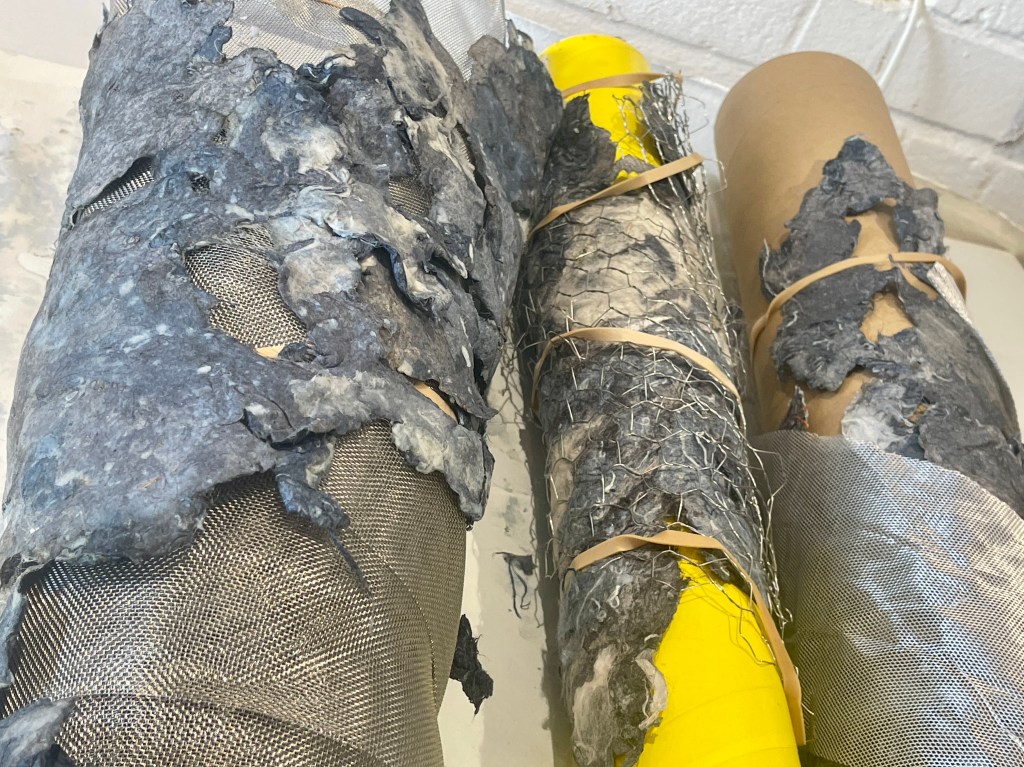
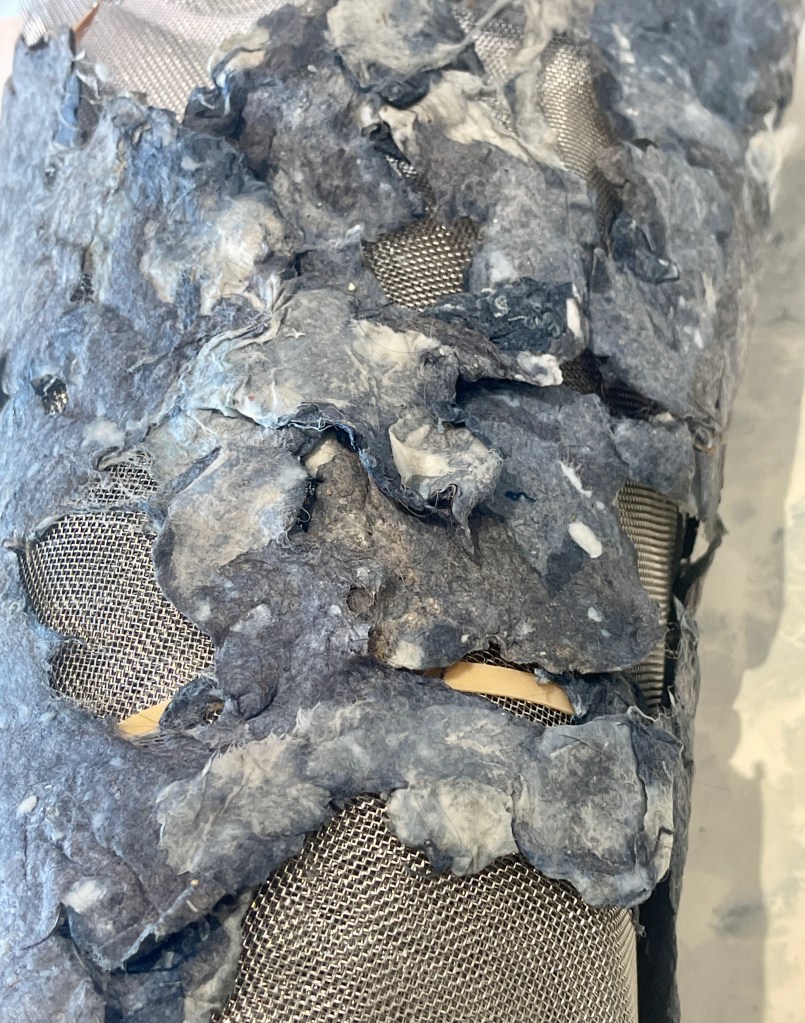
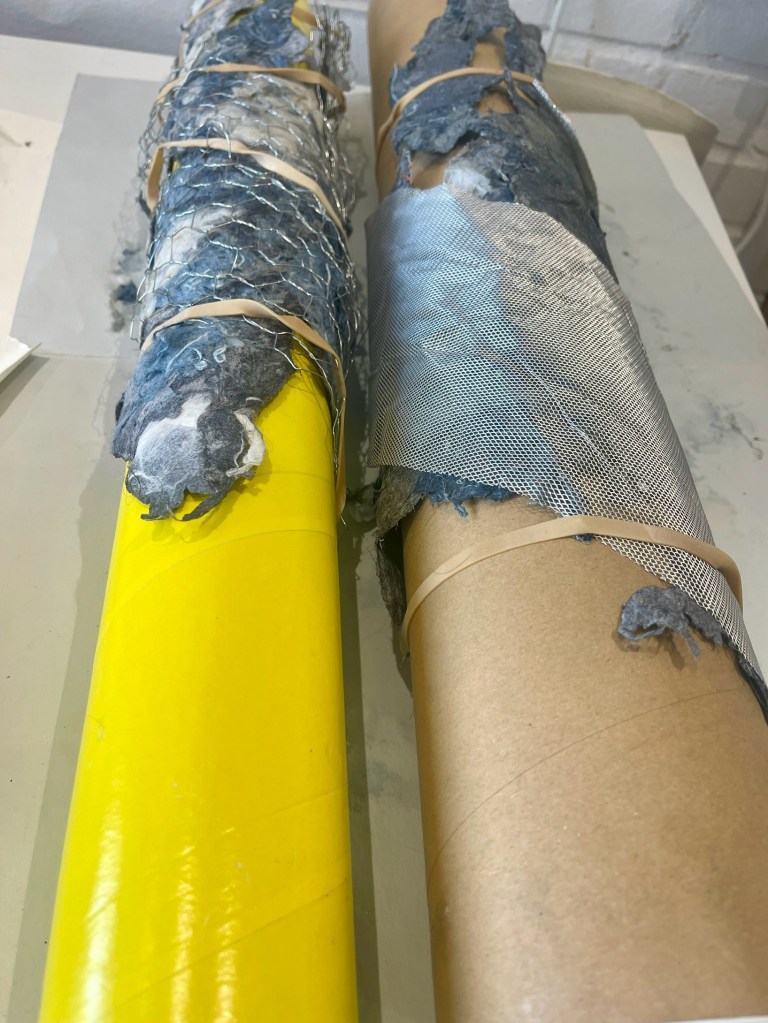
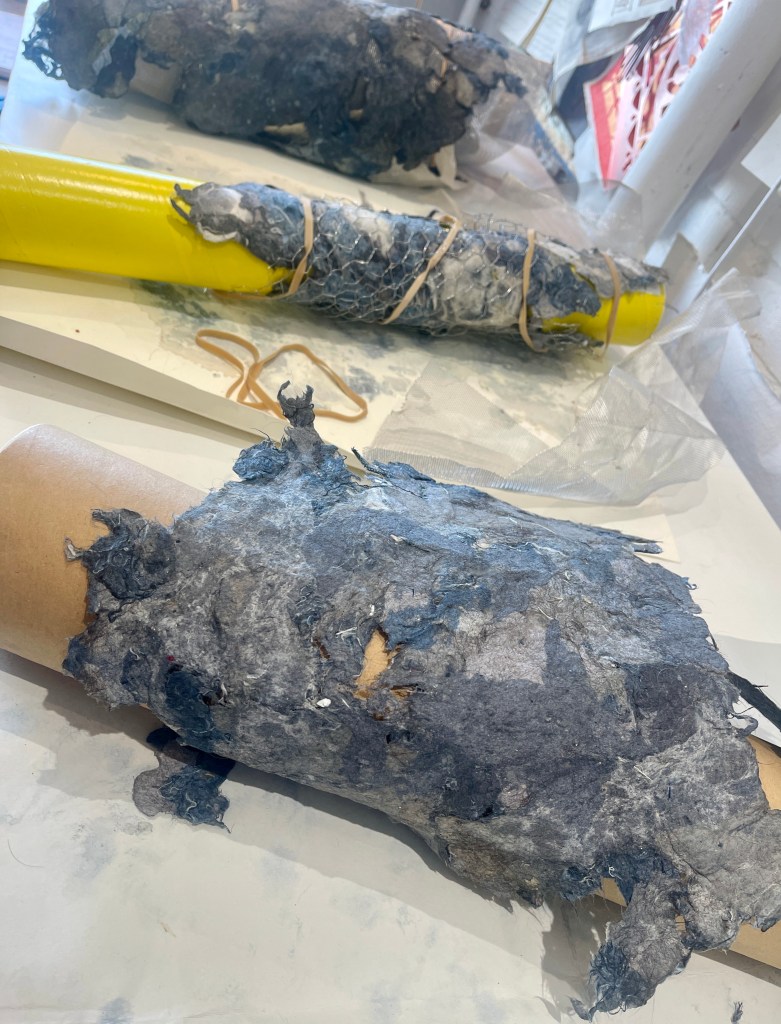
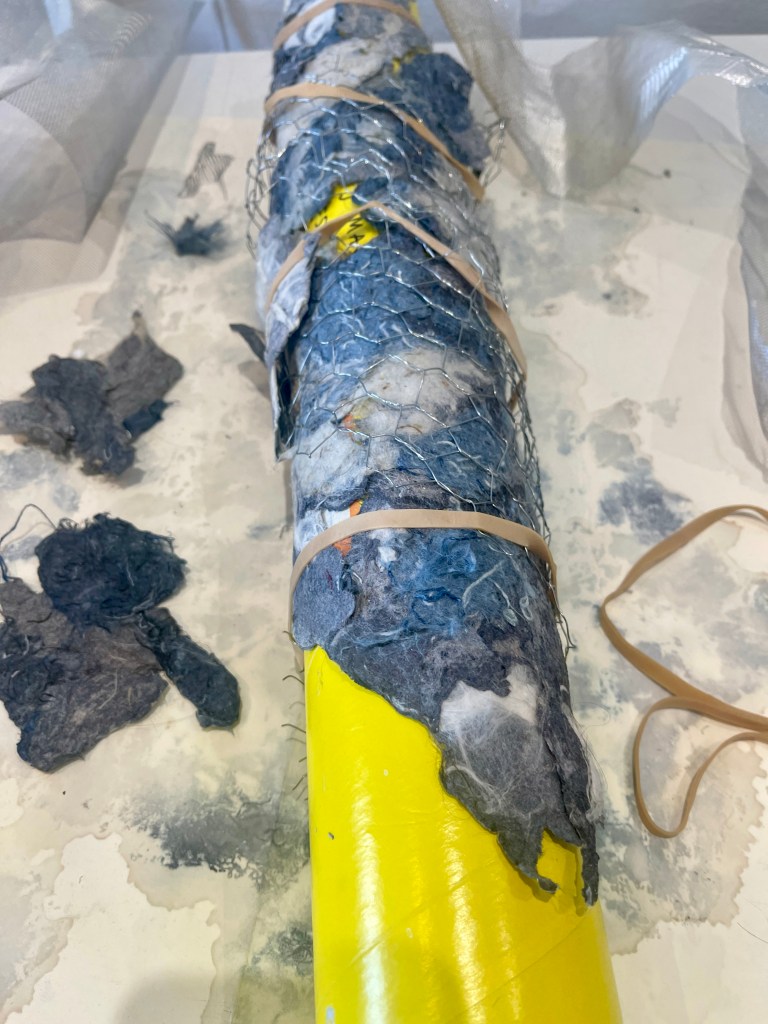
Taking the pieces off their moulds;
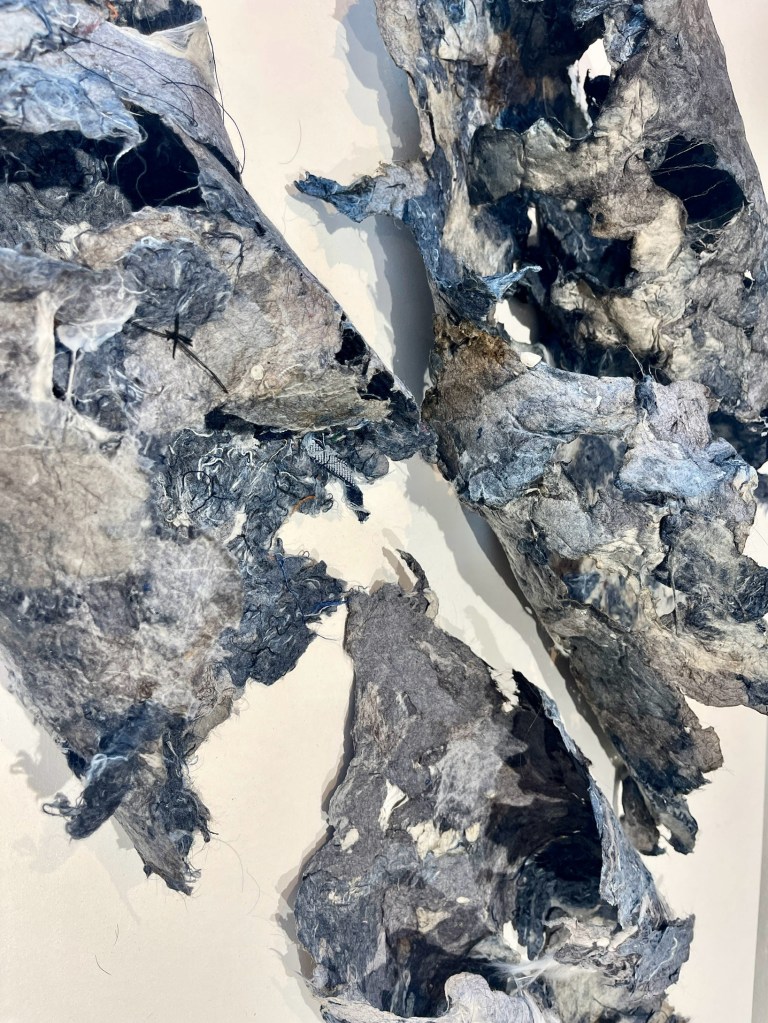
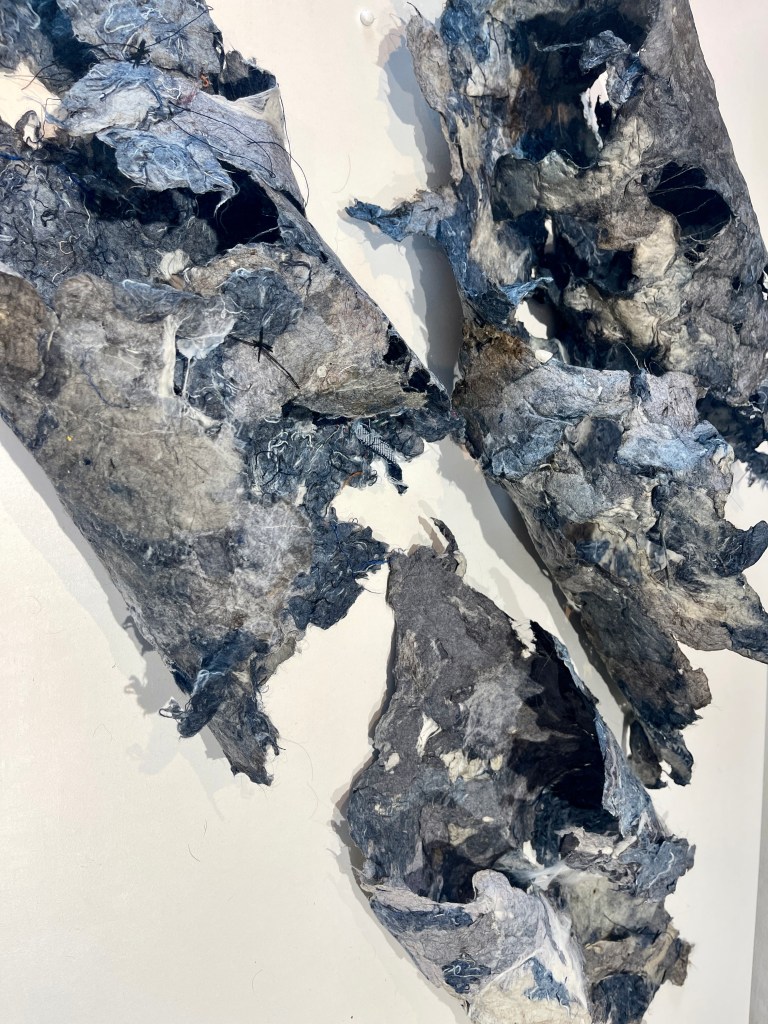
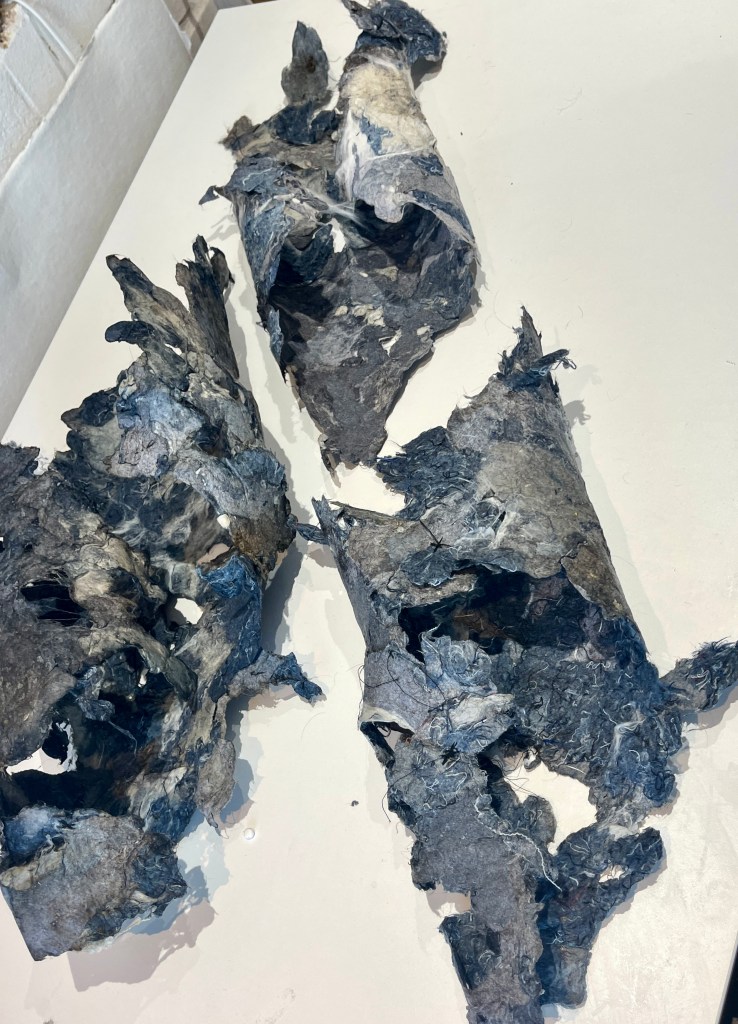
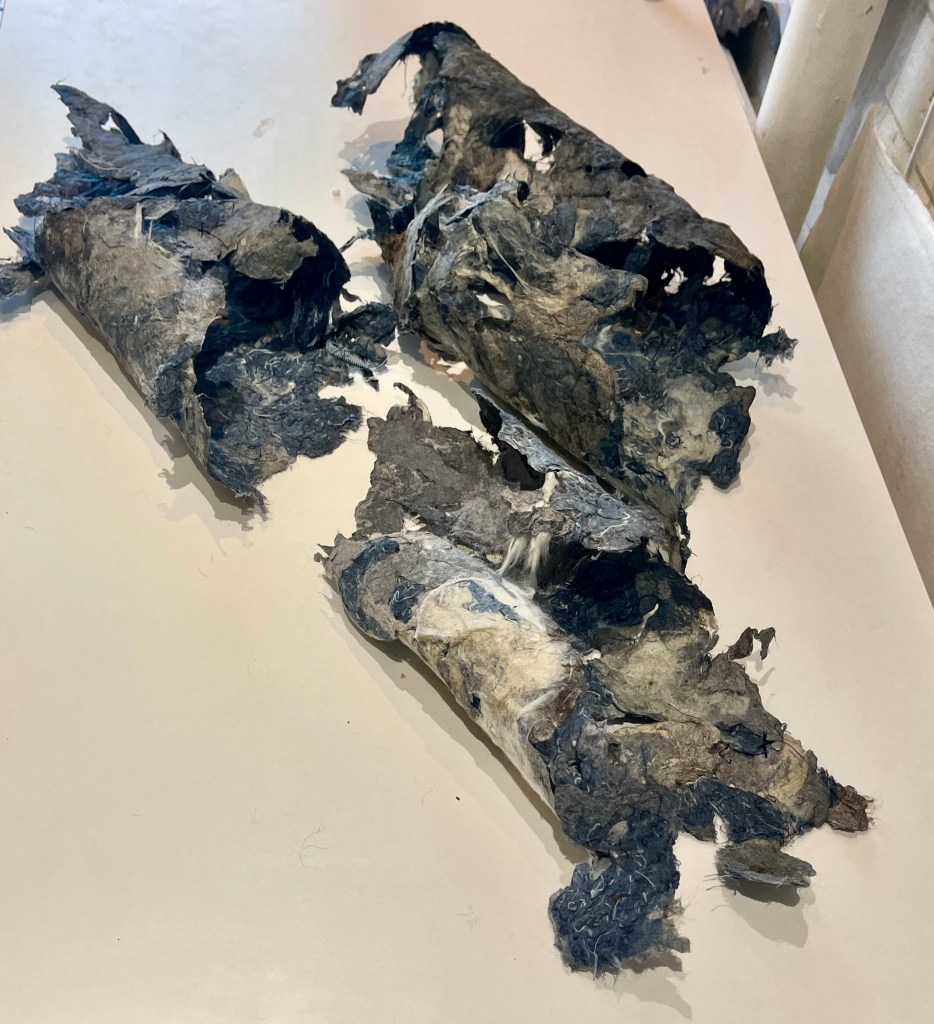
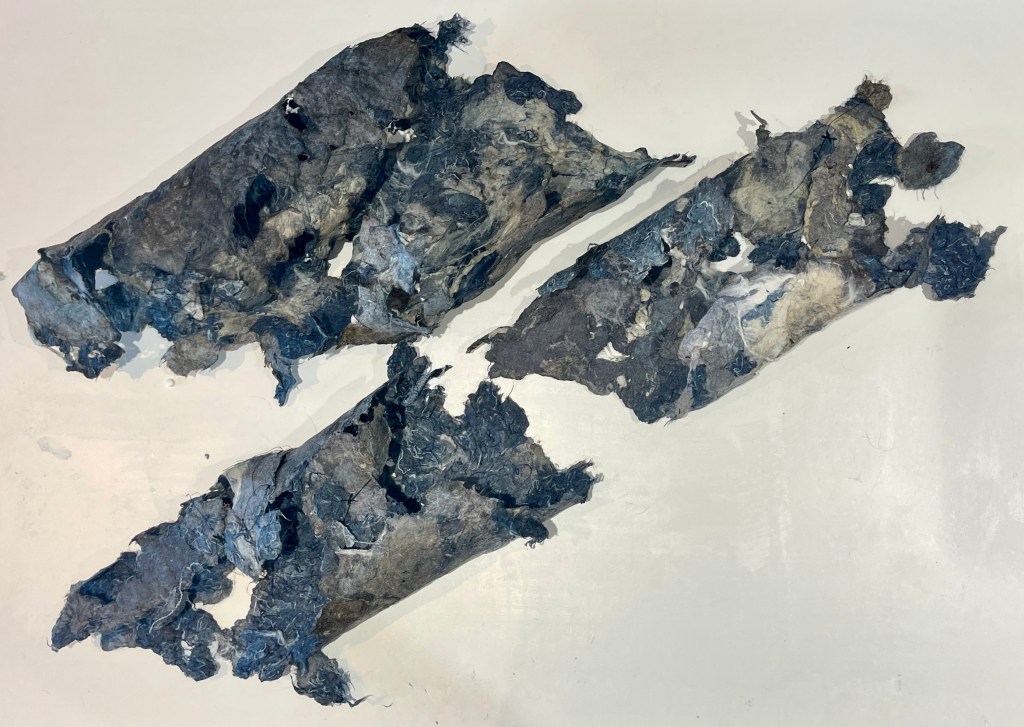
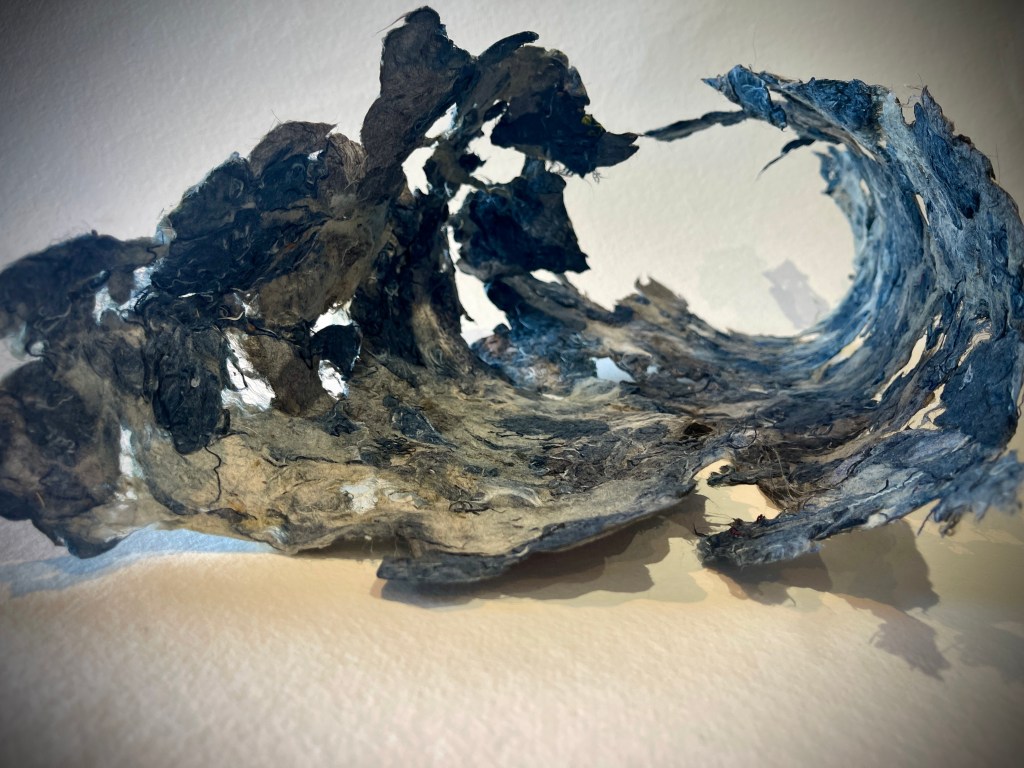
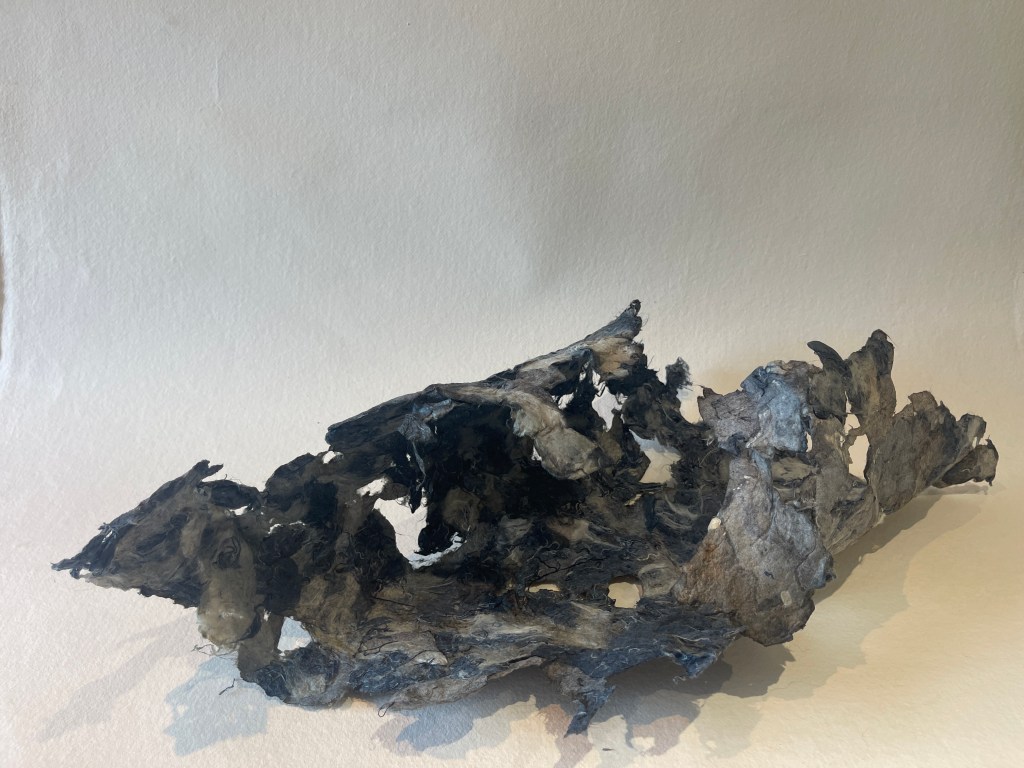
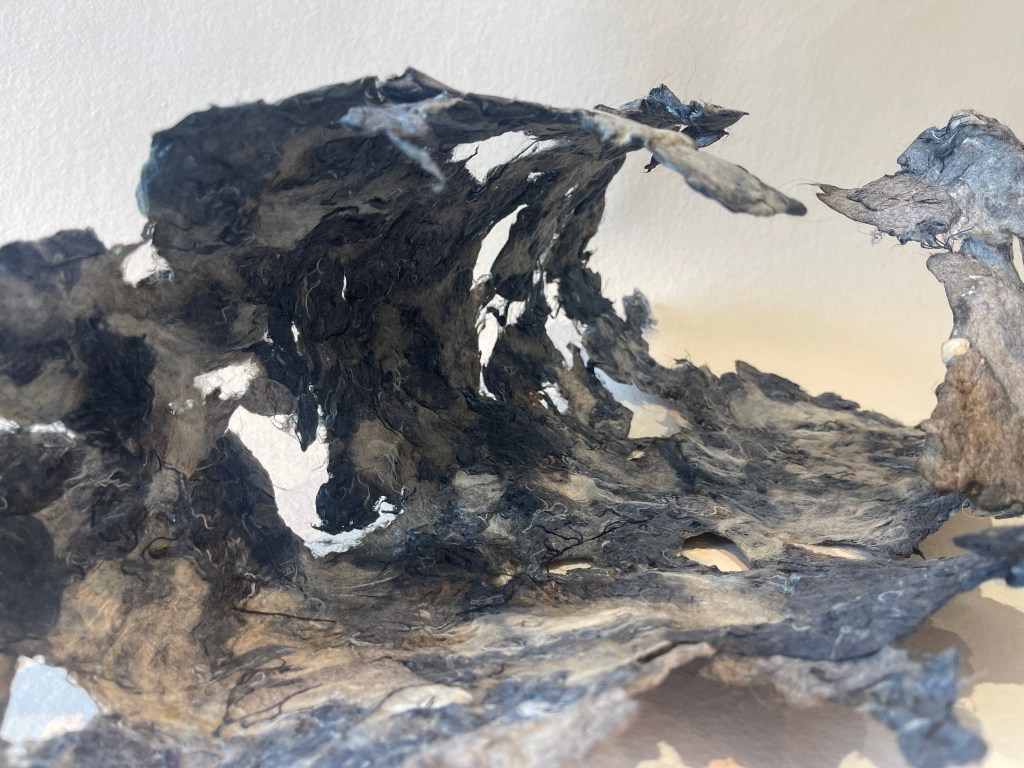
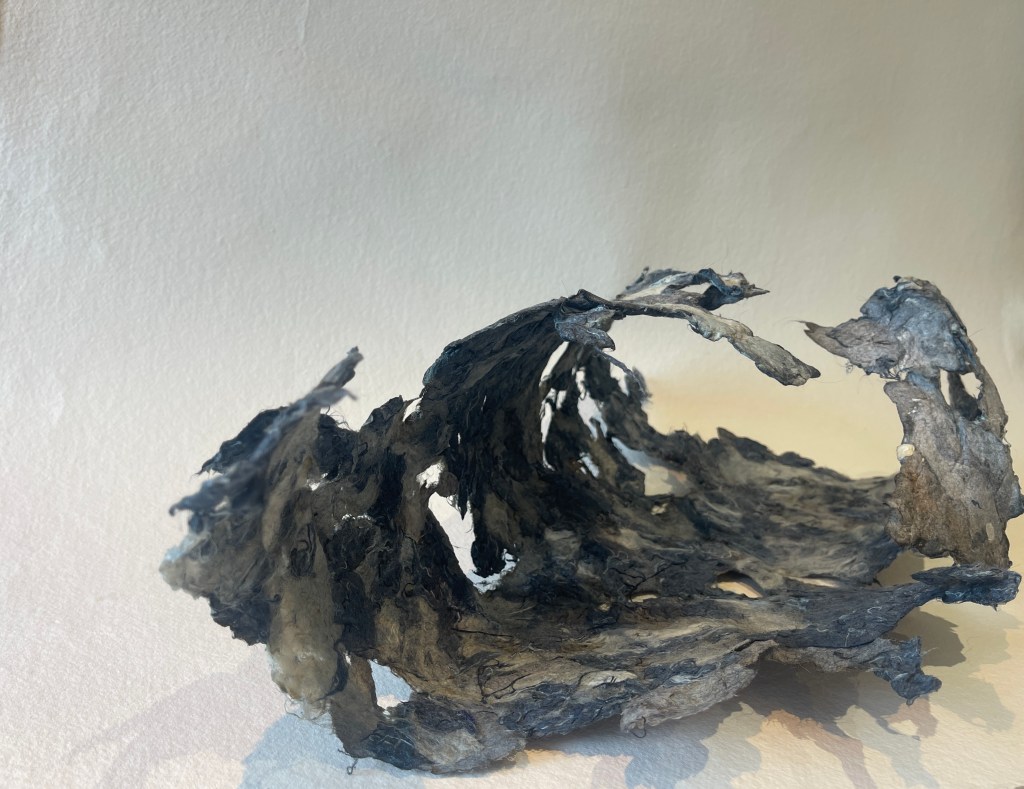
The forms began to visually look so different, as if decaying or rotting structures or pieces of structures, they had a bleakness and frailty to them. They were secure enough to hold the more rounded forms but not solid or firm enough not to move and and collapse when handling them.
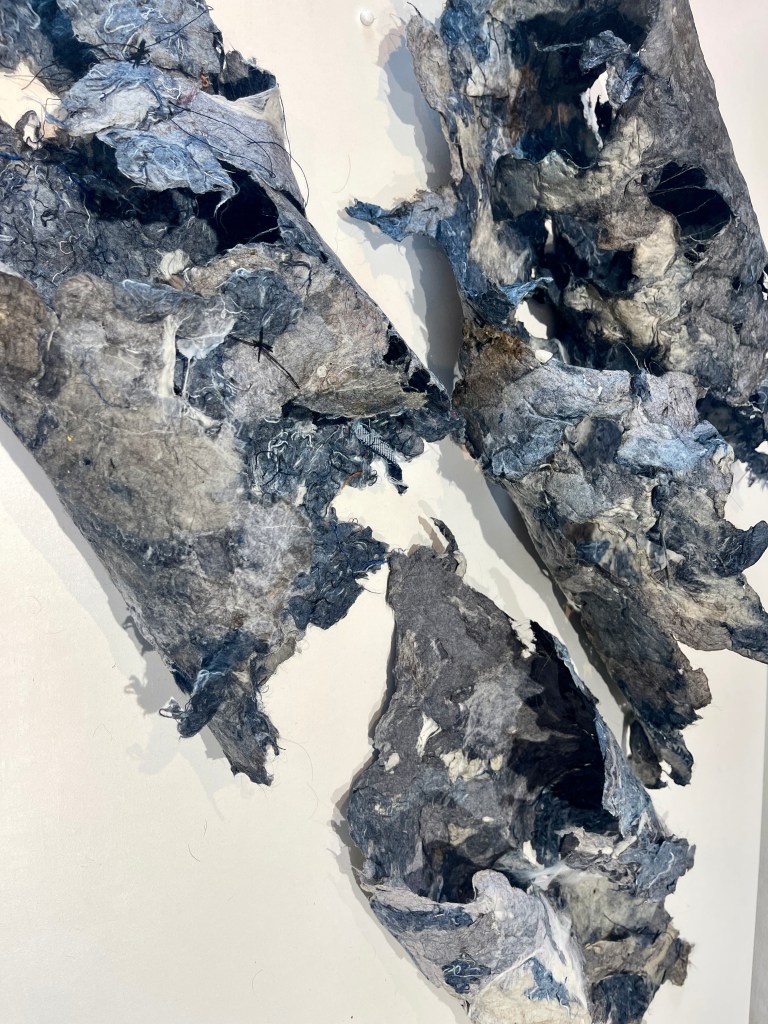
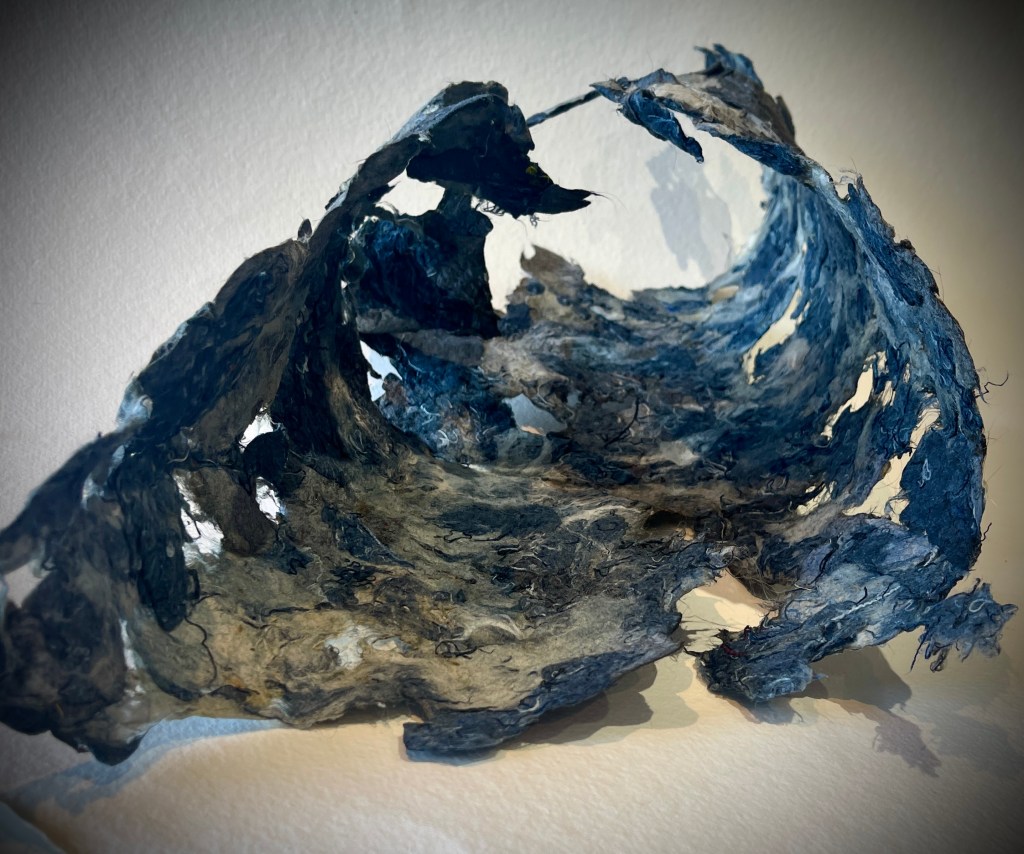
This line of enquiry led to me begin photographing them at various angles and positions looking inside the forms at the space and volume they created and the distortion of colour and light within.
They have taken on ‘murmuration ‘ like forms…
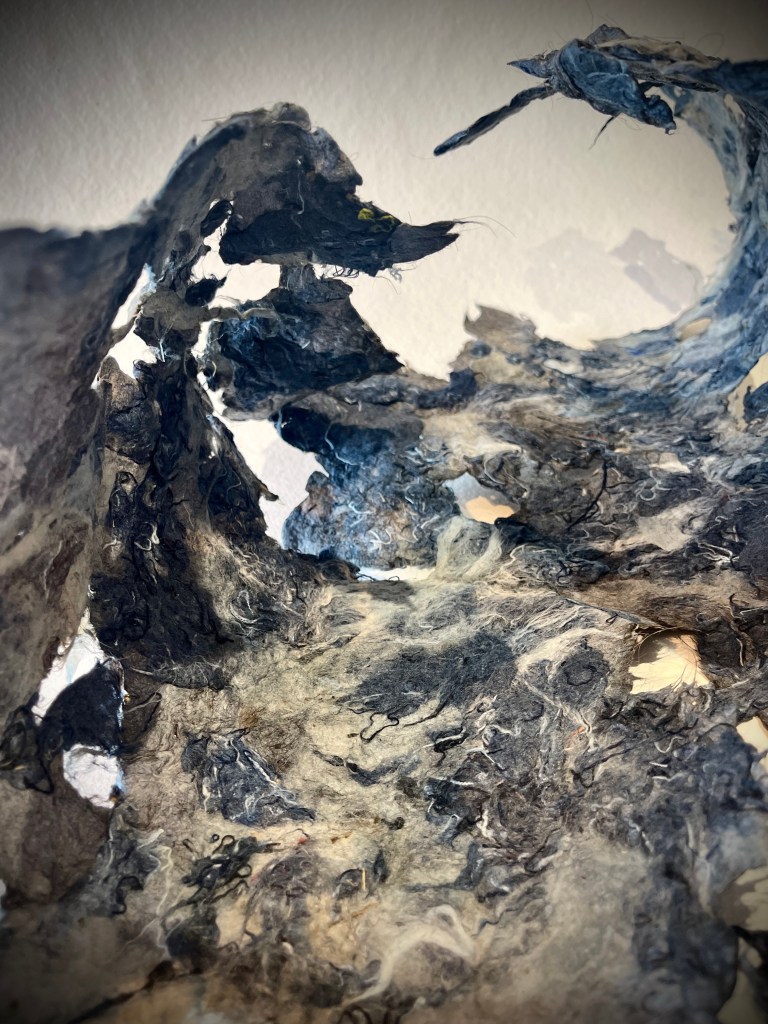
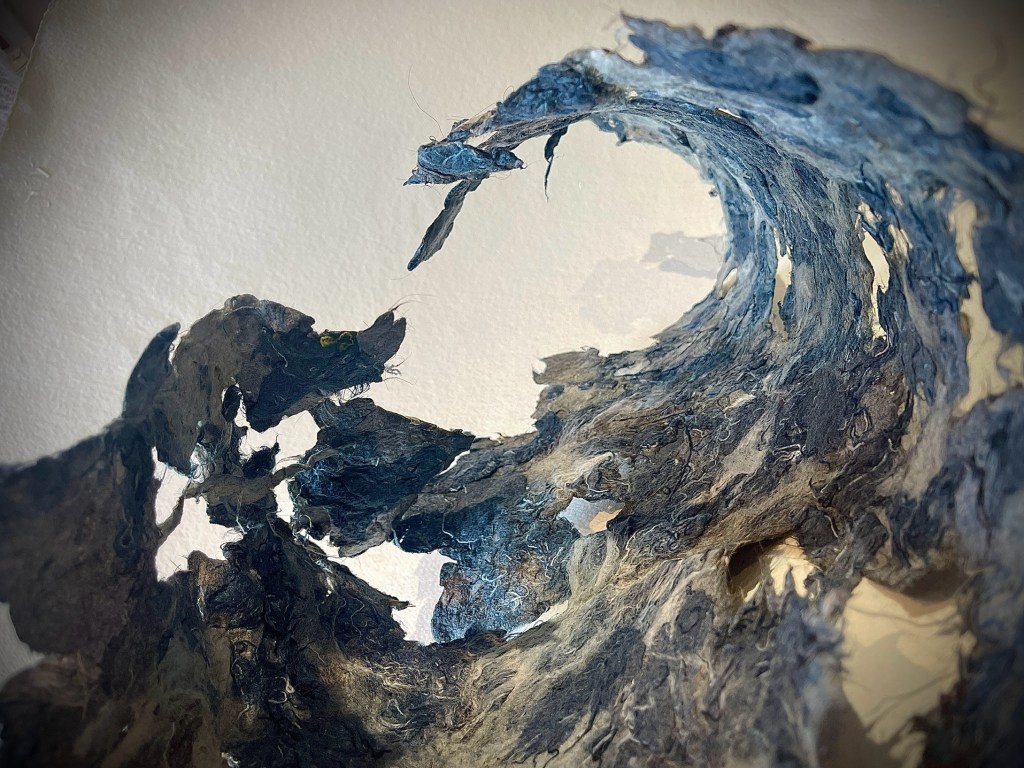
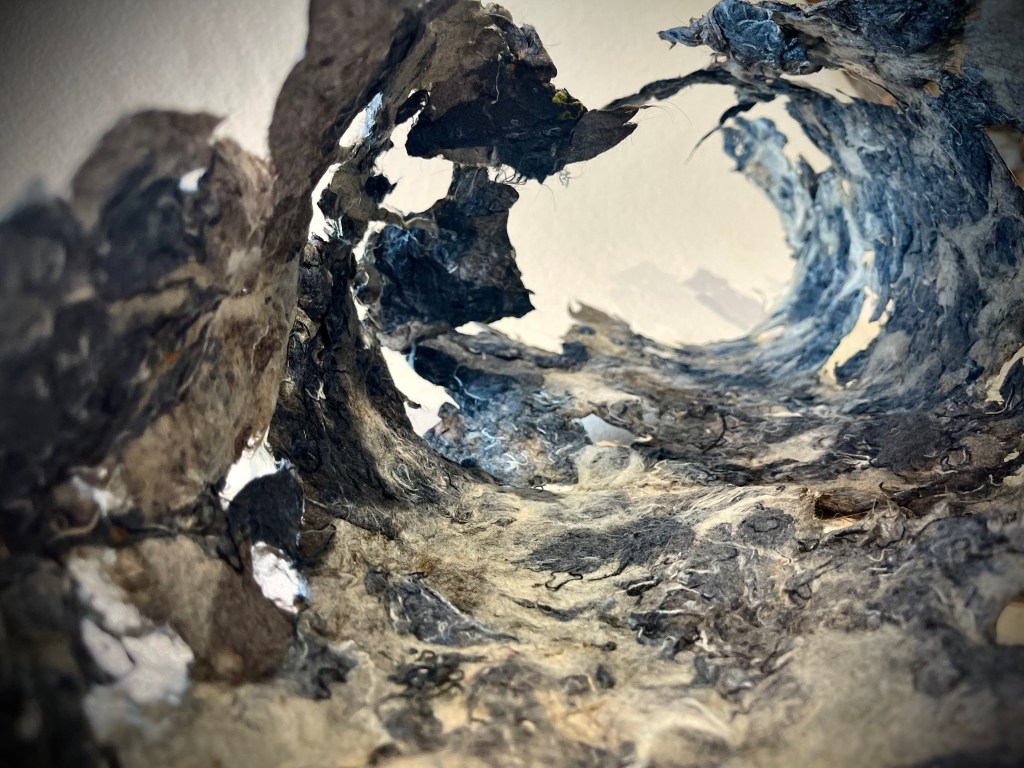
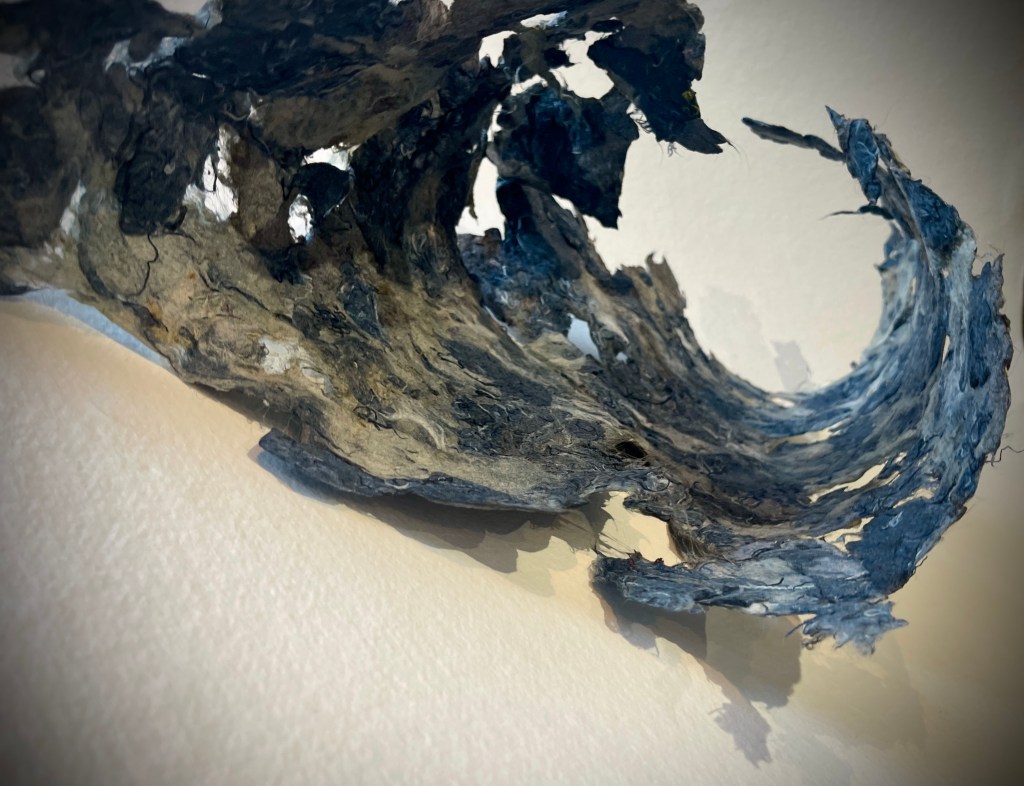
Selection of Learning Log. 11
The photographed work above has its own dark narrative with the unsettling and disturbing forms the abject material is taking , metaphorically similar to the complex visual expressions of worry, anxiety and depressions. The tunnelling effects evoke a sense of void or way through . They are uncanny and explorative but retain a looseness and an ambiguity that was important aspect to the narrative, as i sought to incorporate them into the ‘ murmuration’ metaphor I had explored concerning anxiety and mental health visualisation.
I began to consider ways to mount these from the hoop created … using simple black thread and looping it around the pre-made holes in the work.
As they material was fragile and unstable in places I used simple cross stitch in the same black cotton to secure a few vulnerable sites : I kept this adjustment visible – repairing / patching showing creation and manipulation of form, support of structure and concept.
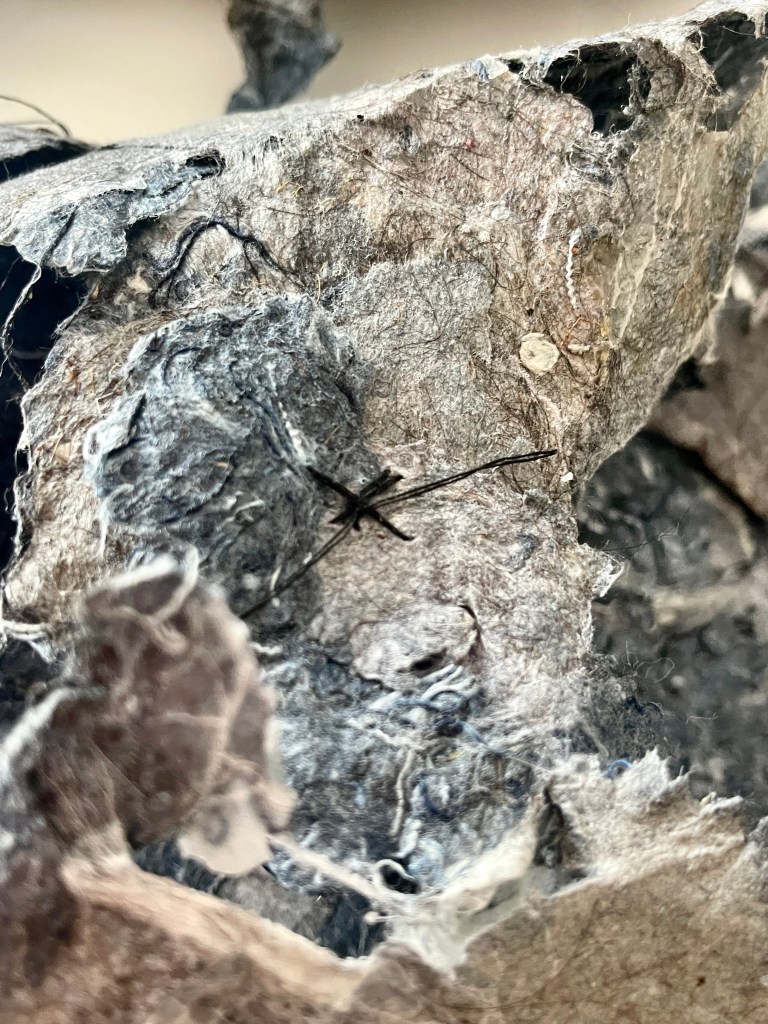
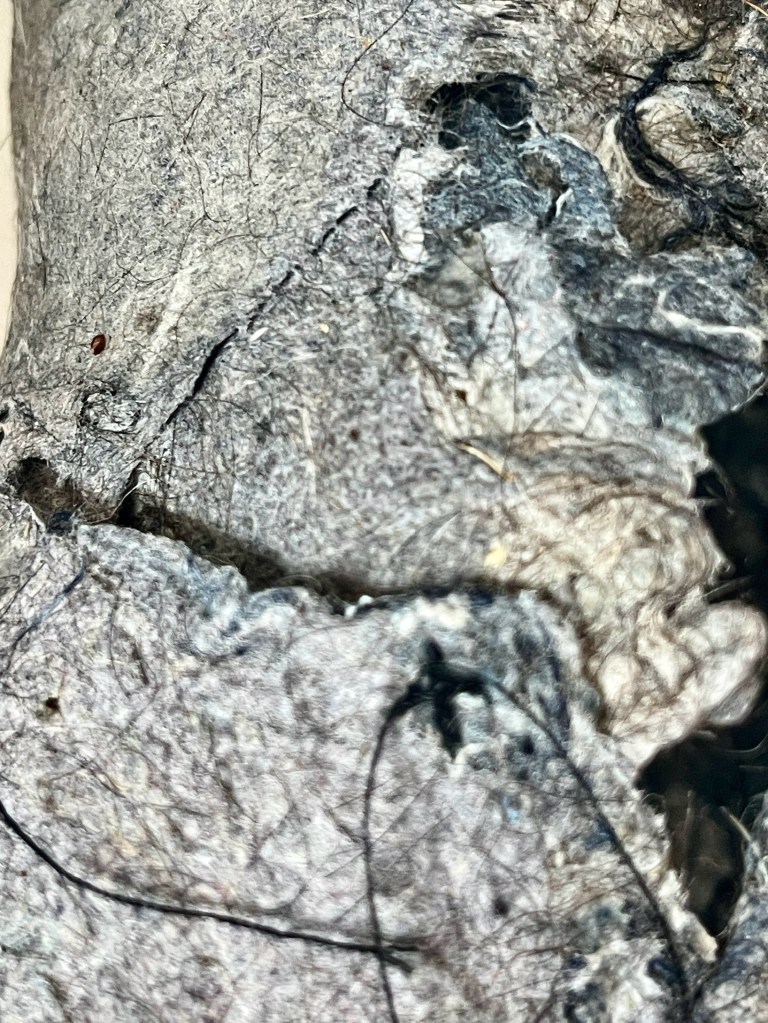
Beginning to hang:
The first two pieces hung loosely from the metal hoop as I begin to create the spiralling sculpture with the black threads visible at this sage to allow for adjustment of height and position .
The shapes have continued to keep a looseness and vagueness about them , as they continue hold their own presence and retain a fluidity movement, enquiry and fragility. I had been concerned that I might loose this during this process and hoped as the other pieces are added that this ‘presence’ will remain.
Their presence in the living area was reminiscent of Phlyllida Barlows early sculptures at home placements where the objects take on a strange at home reality and become part of the everyday. Living with the art object is pertinent to my practice and connects to my ongoing concerns regarding domesticity:
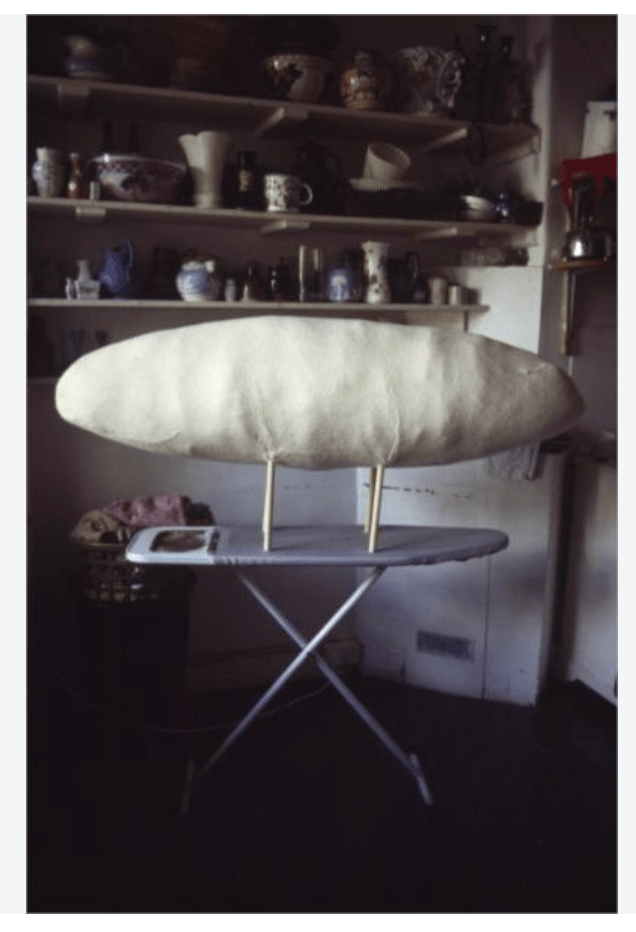
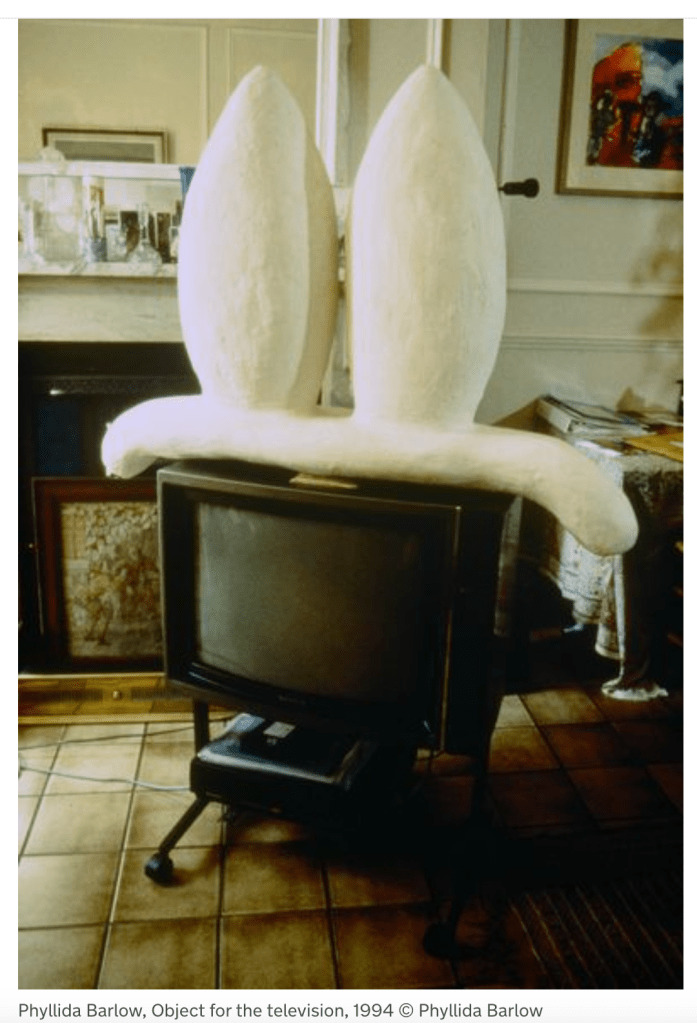
Murmuration in progress and eerily uncomfortable in the living space as it grows and begins to take a presence… perhaps something that would not be encountered in a studio setting that has offered up new ideas for works going forward.
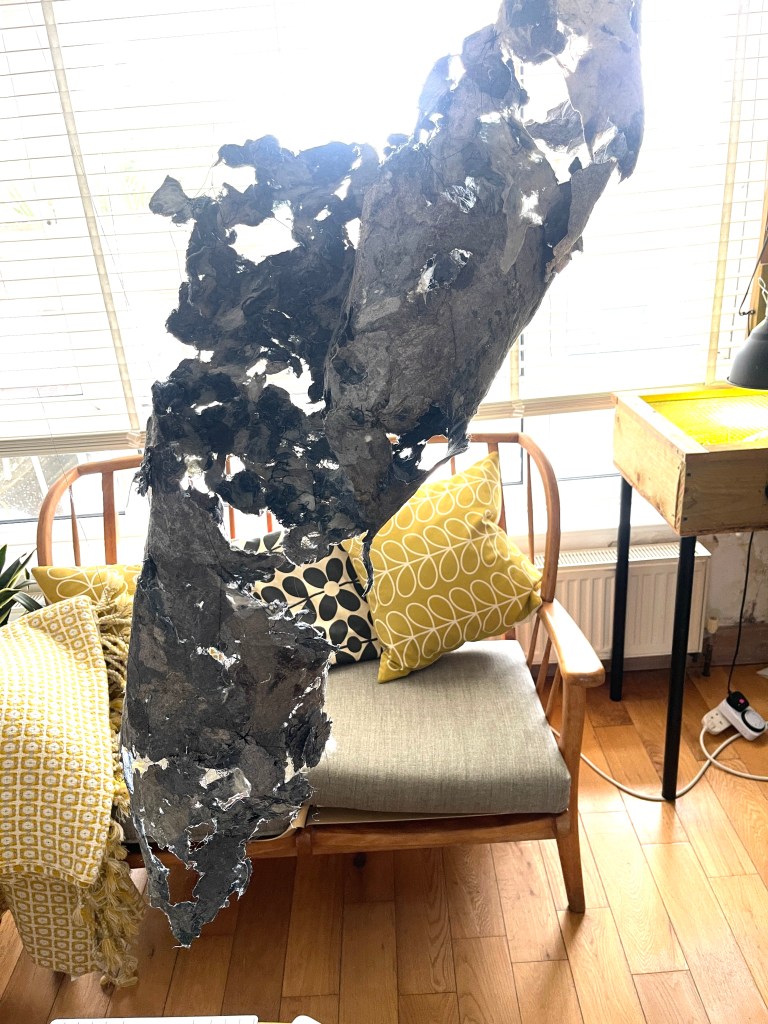
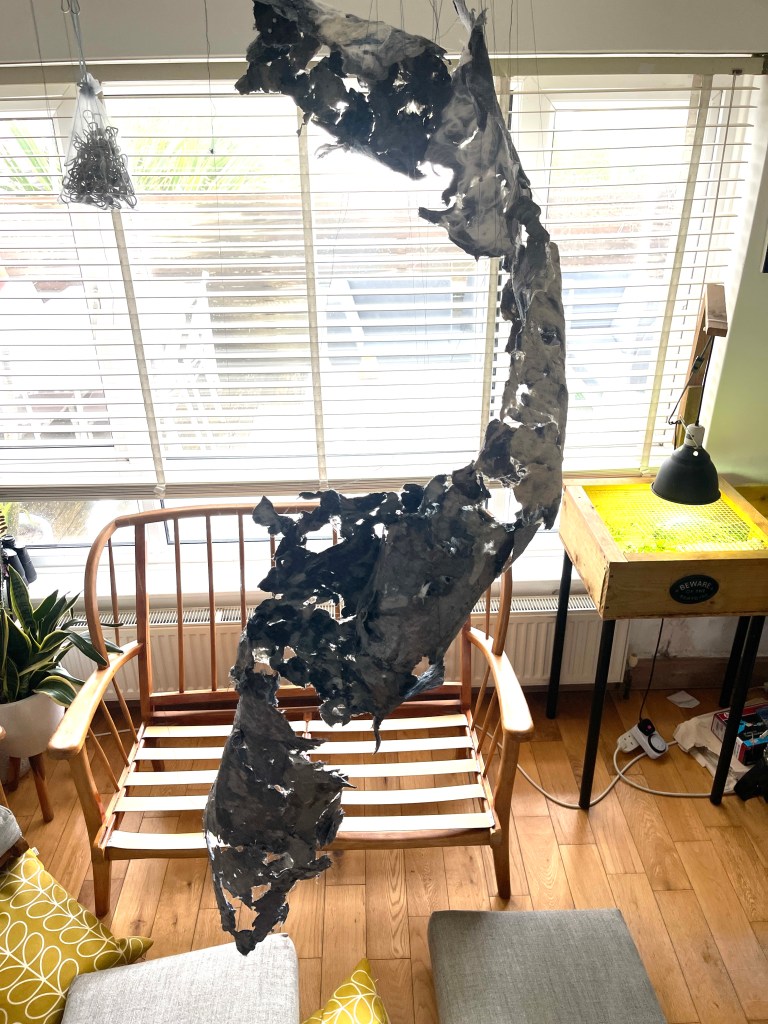
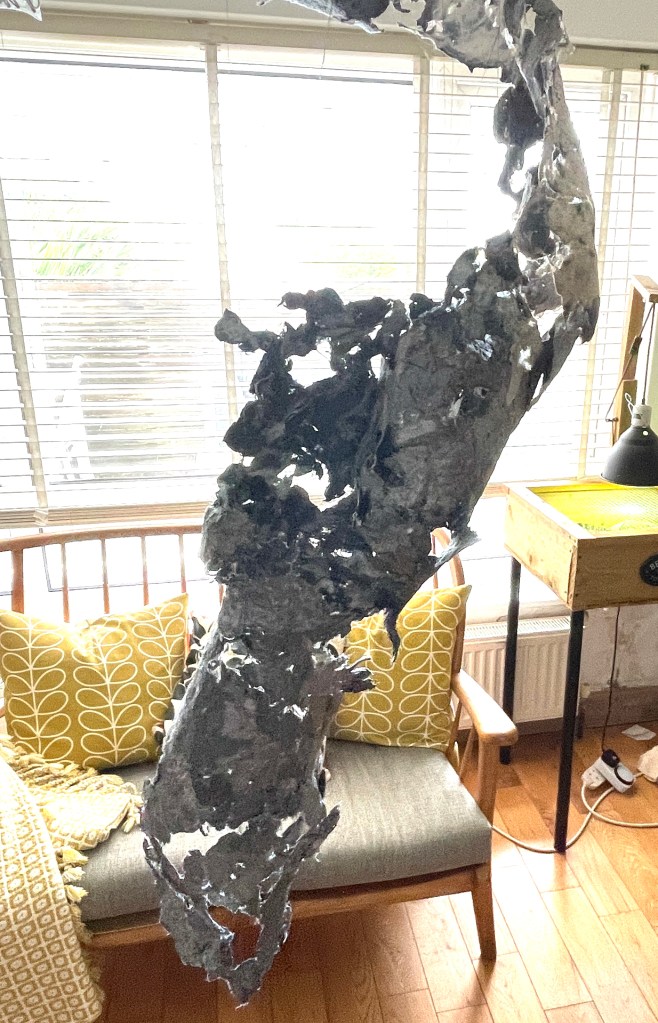
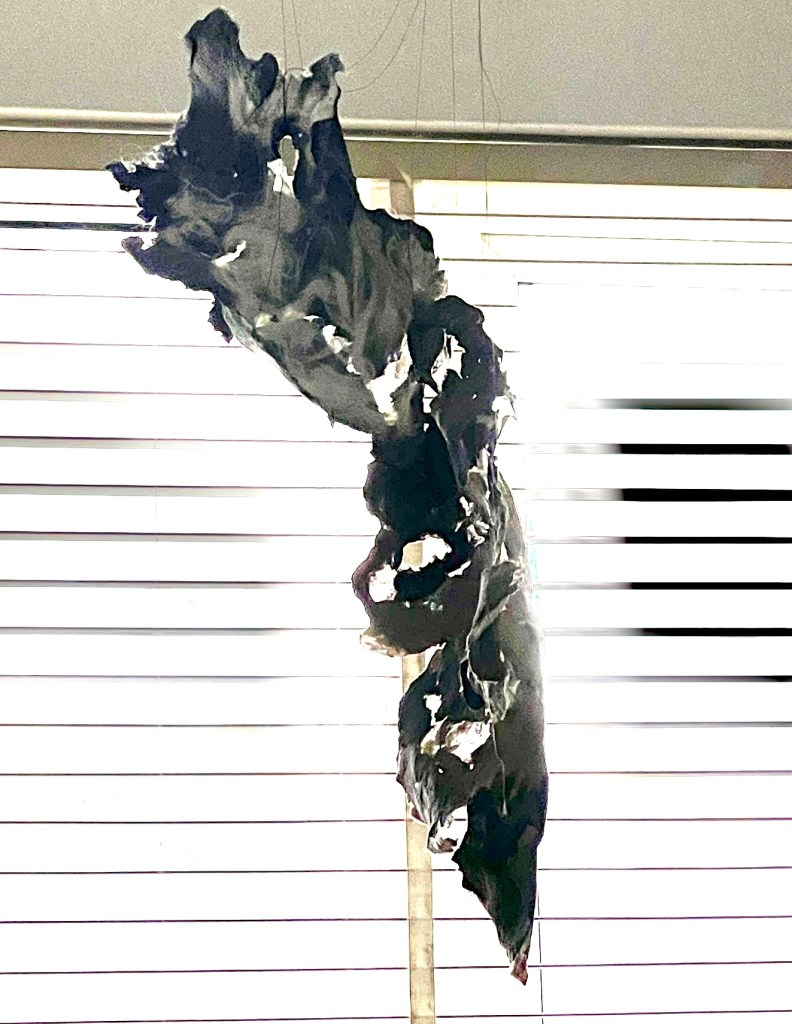
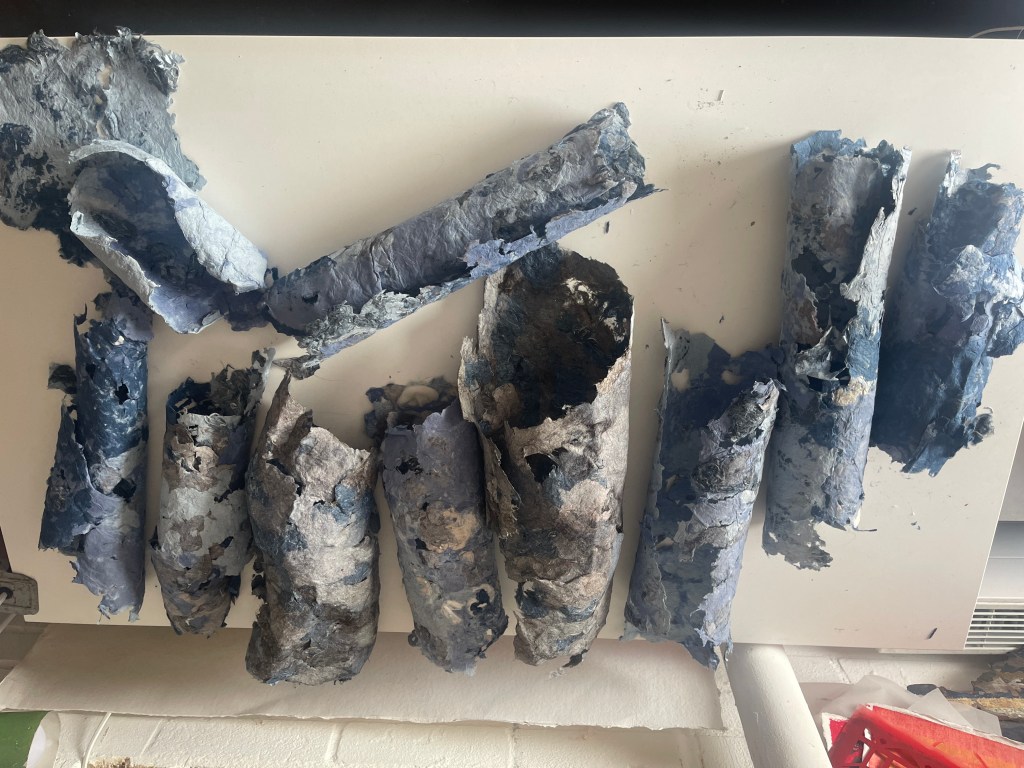
Further felting of the collected material, wet wrapped around the tubes and mesh roll allowed the continuation of this sculptural vortex – It began to take the shape of the of the murmurations. This was achieved by placing the tubular sculpted pieces in specific The wet felting process was long and laborious with varying results. The pieces were heavy and I wanted to explore further a notion of lightness with the work that more closely mimicked the starlings etherial murmuration that also aligned it more closely as a metaphor for the swirling fleeting intangible nature of thoughts and emotions. I hoped the lighter material would adhere more to the shapes I had tried to emulate.
With this in mind I took my work to an artists studio who made paper. I was allowed by the artist ‘Susan Cutts’ to use her facilities to blend down and distort the material detritus from the machine into a finer constitution. Mixing in a small amount of soap powder and layering the wet substance over sheets of J.Cloths and pressing it between an old printing press in order to squeeze excess water out.
I used buckets of various blended fibres depending on how ling they had been pulverised – added the water and soap and combined the pulp with the unblended whole pieces of material detritus. This way I created layers bu talso a more secure and solid substance that would dry lighter and firmer. I used a frame to press the material pulp onto the wet cloth.
Process pictures below:
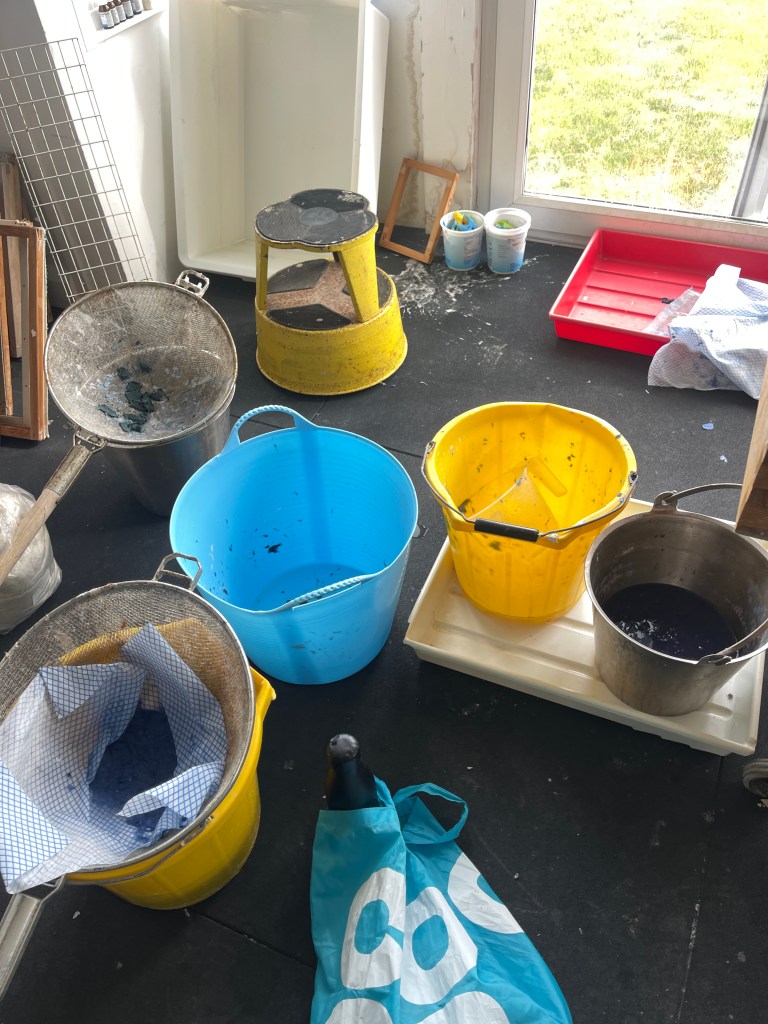
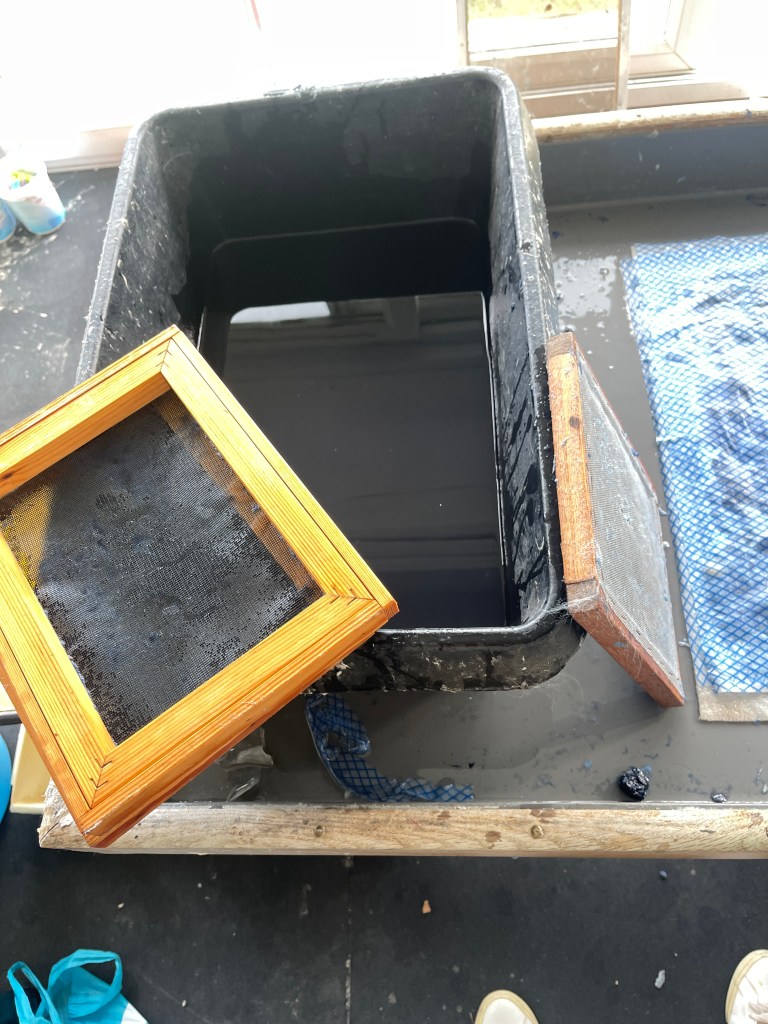
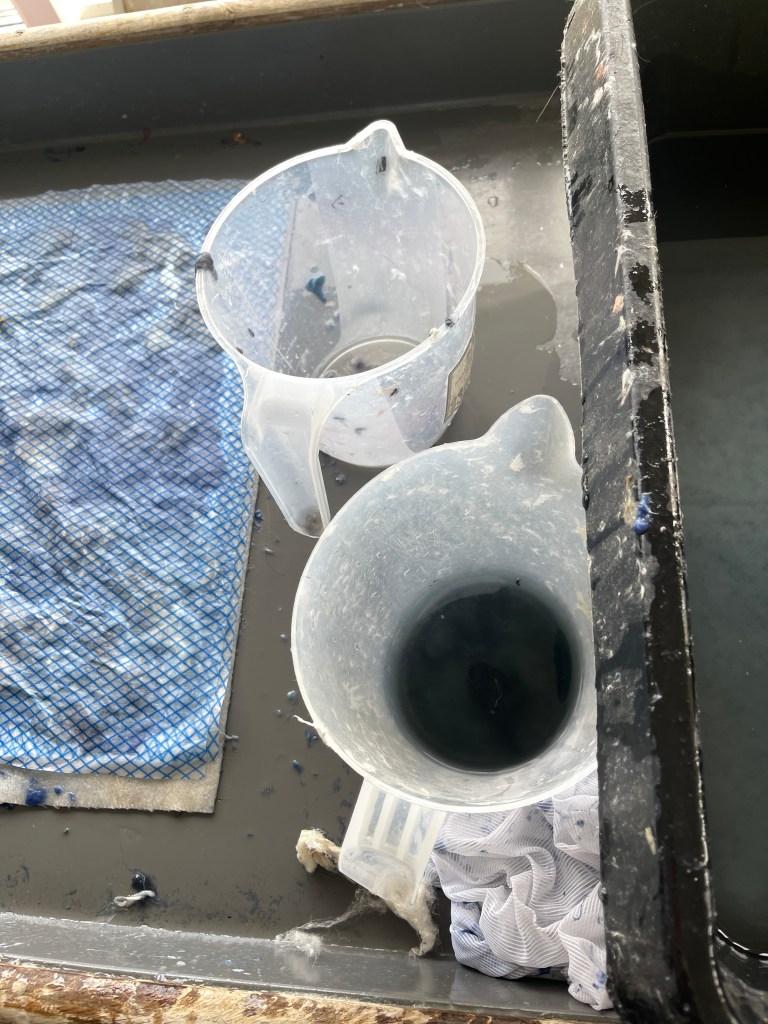
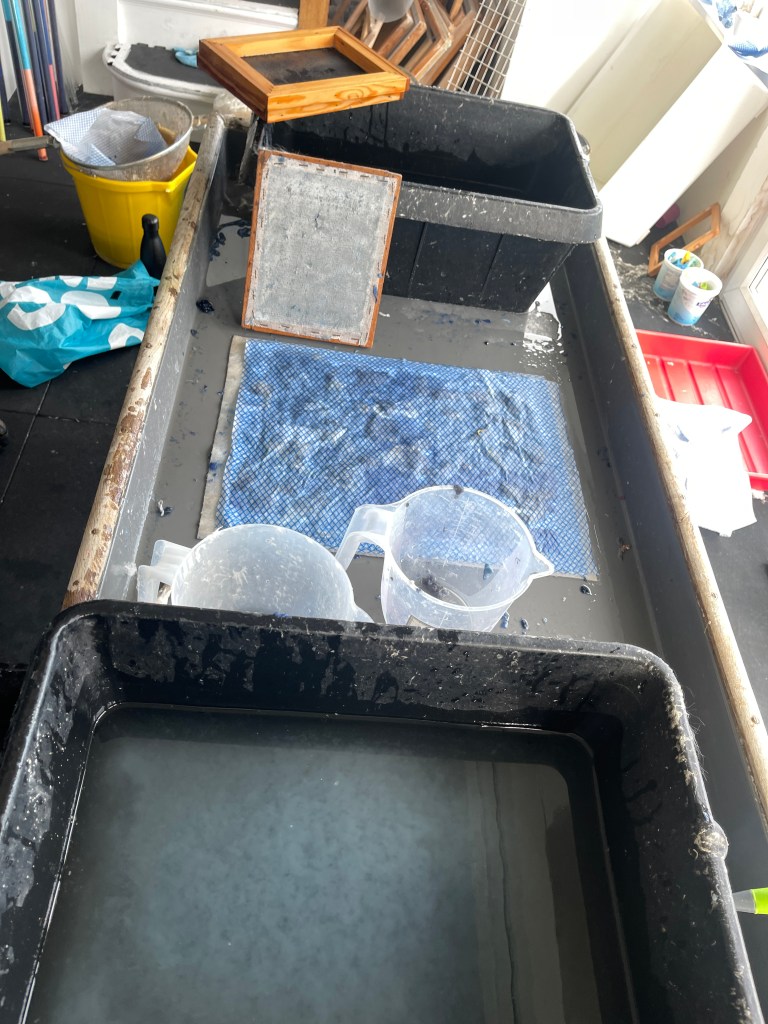
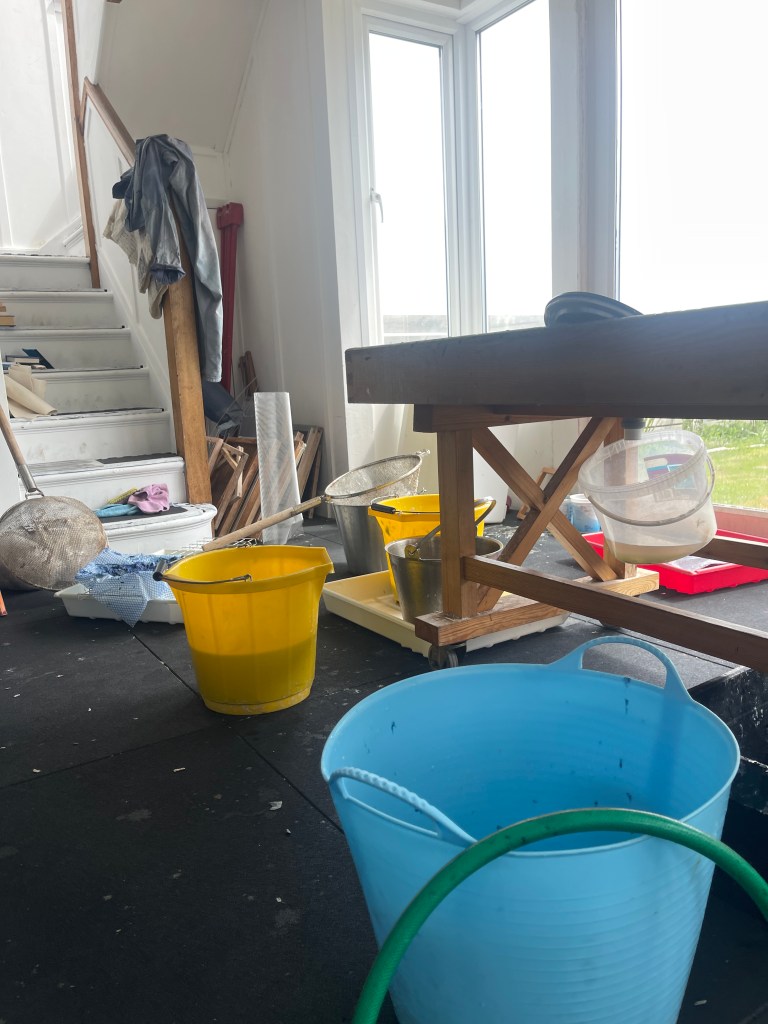
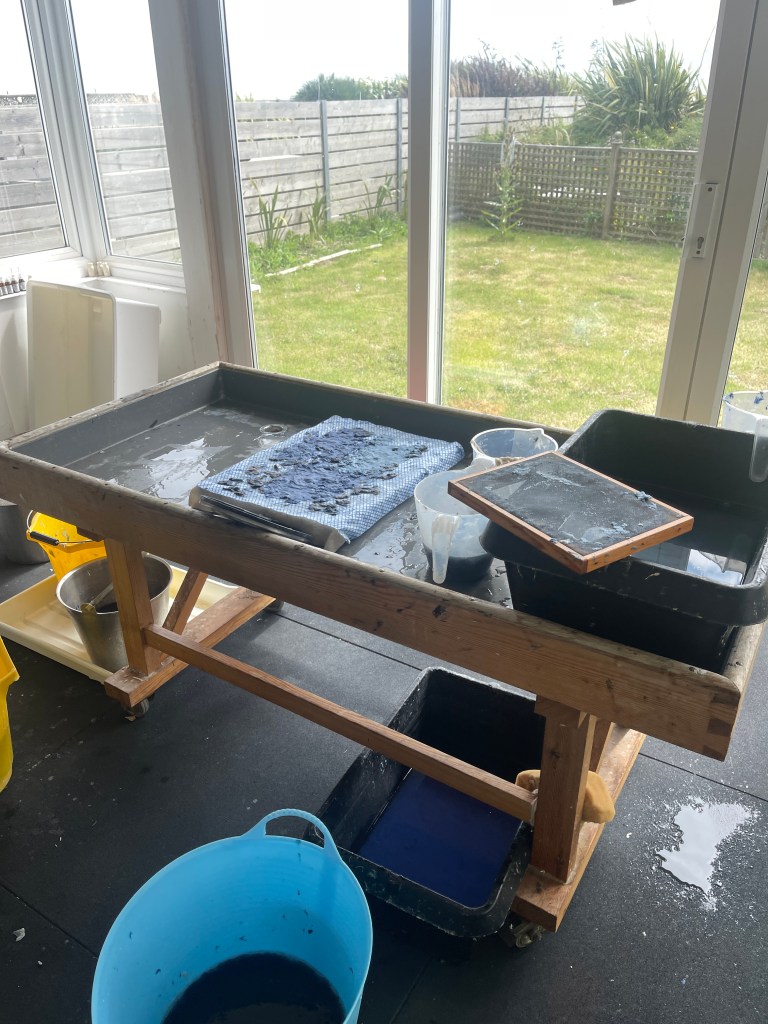
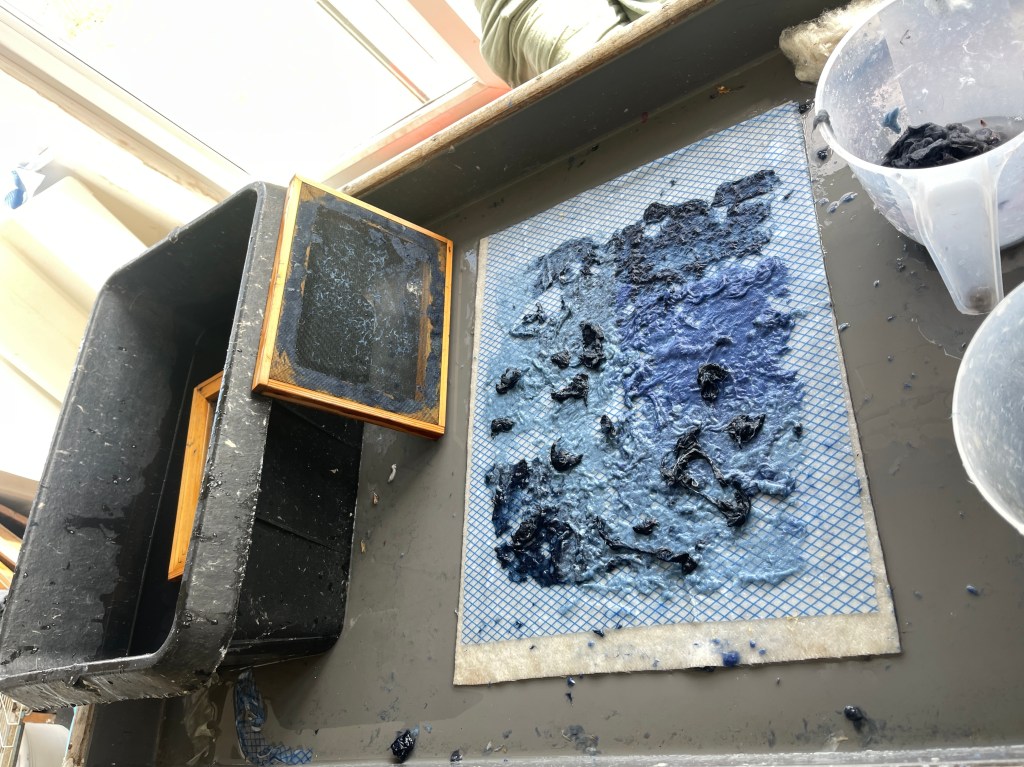
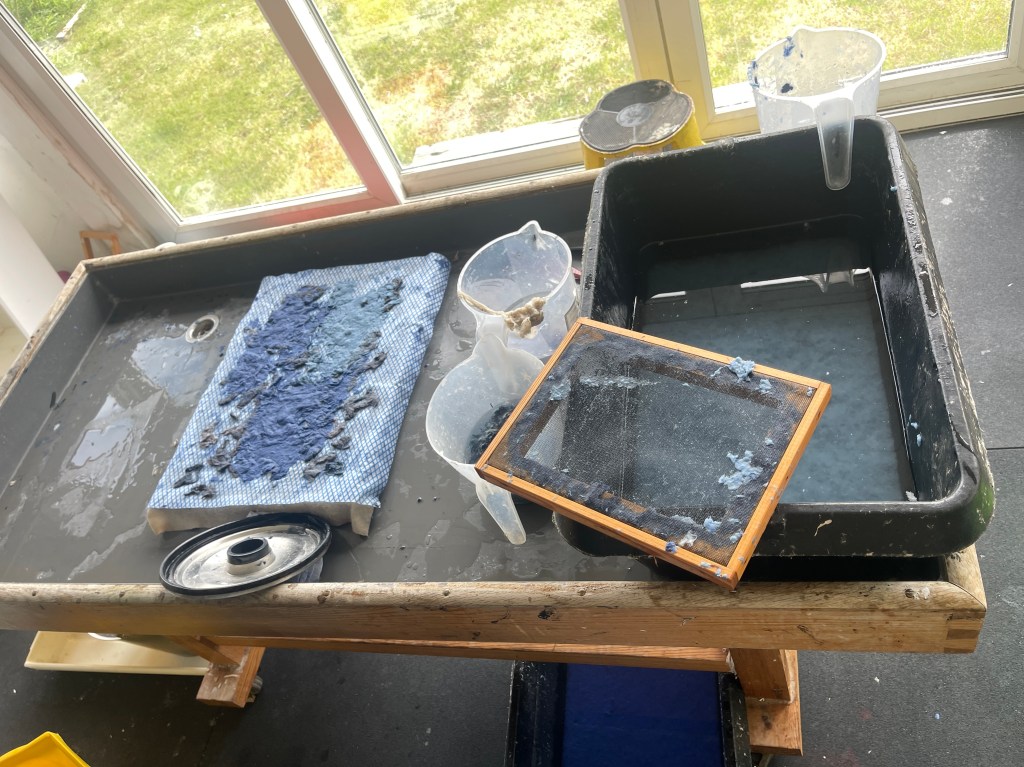
I layered up the cloths into a tray and brought them back to my studio to dry out. (below)
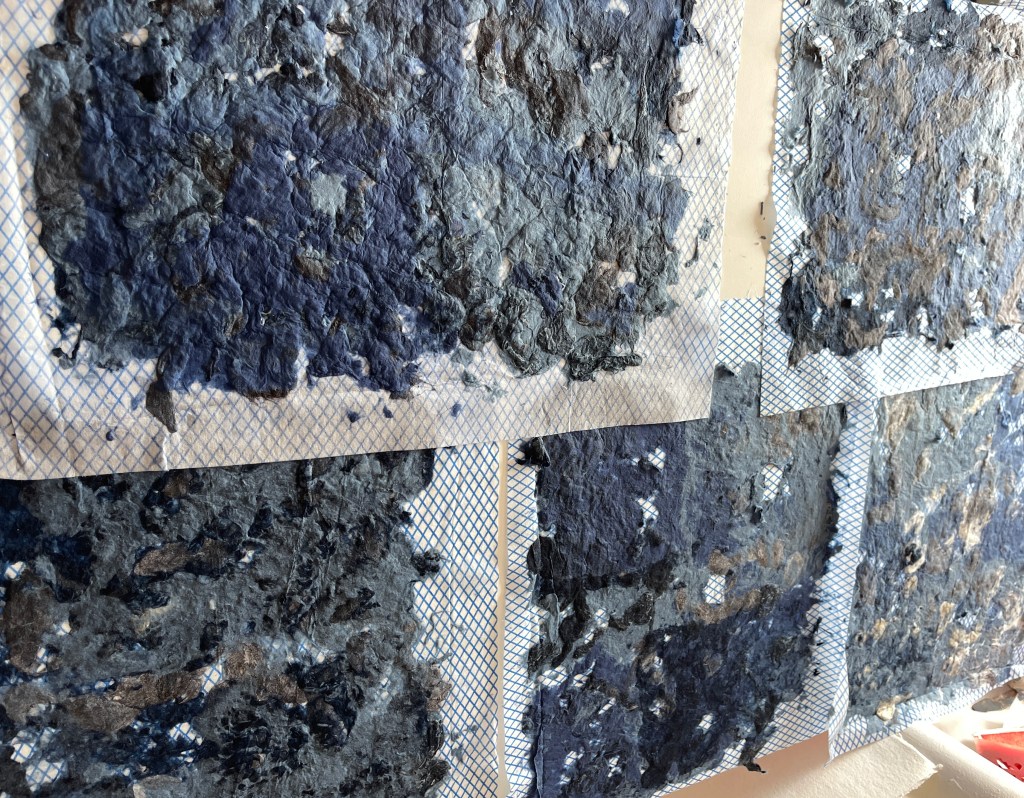
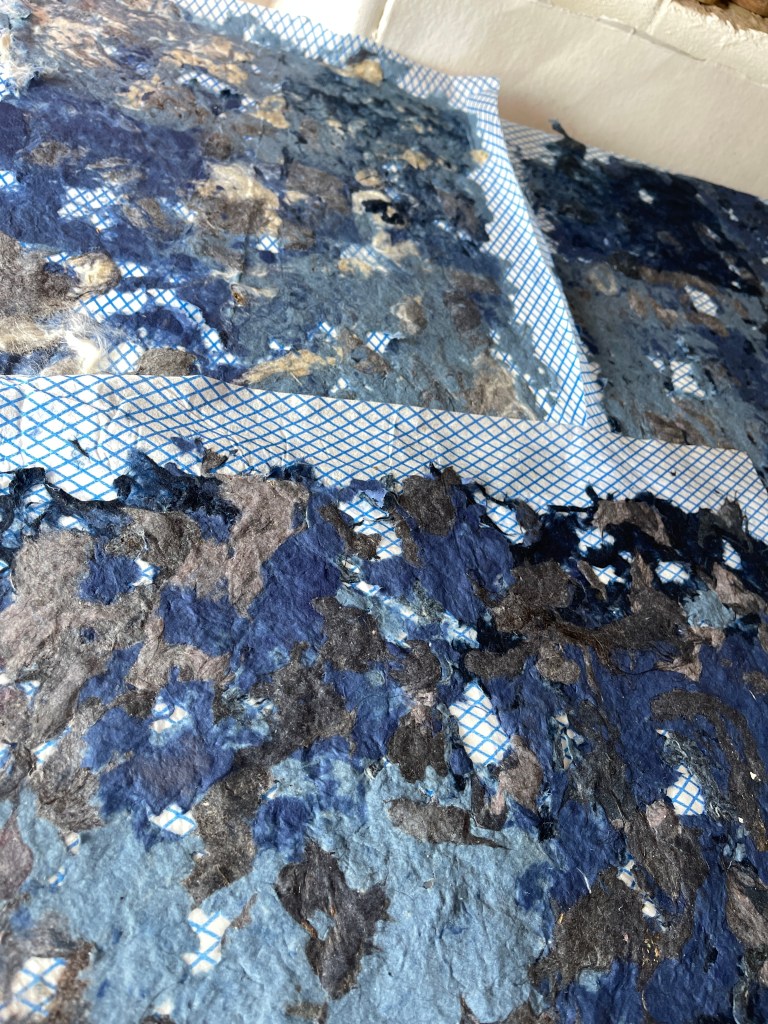
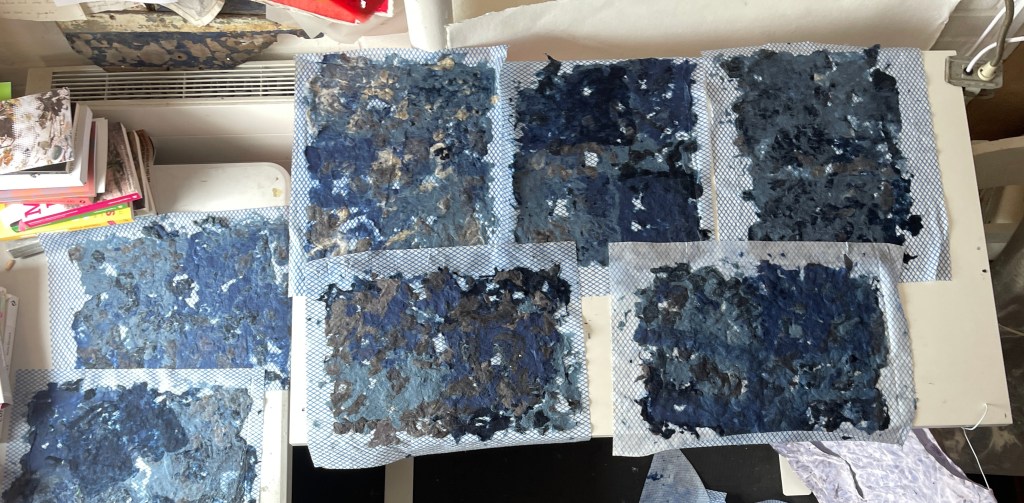
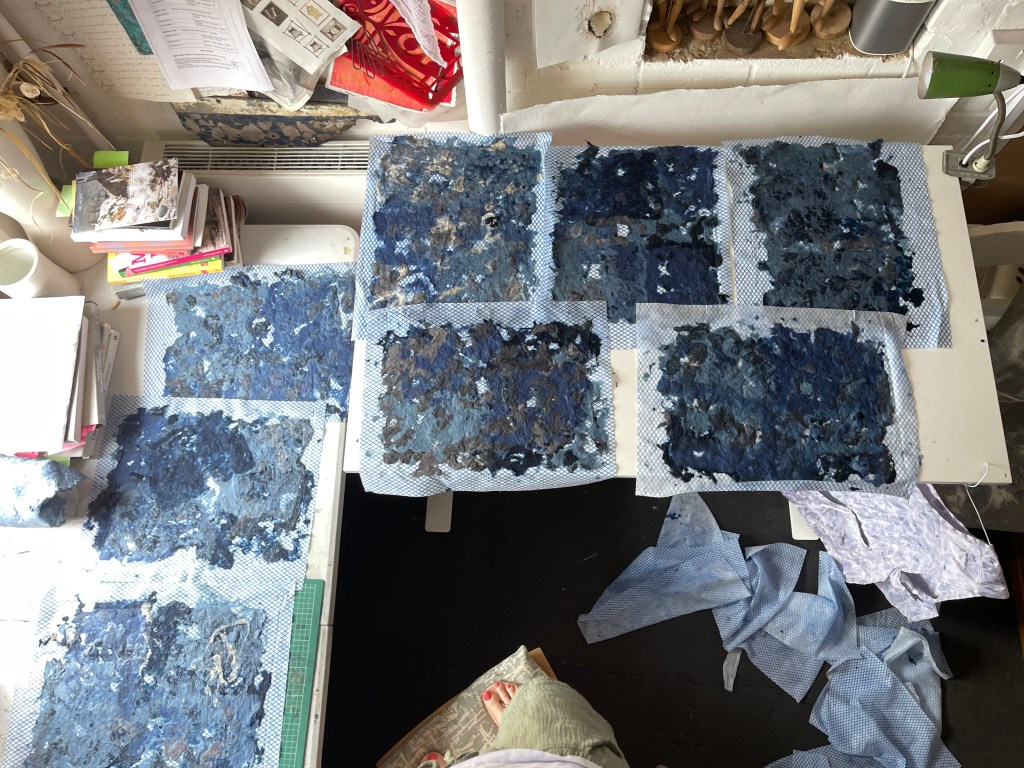
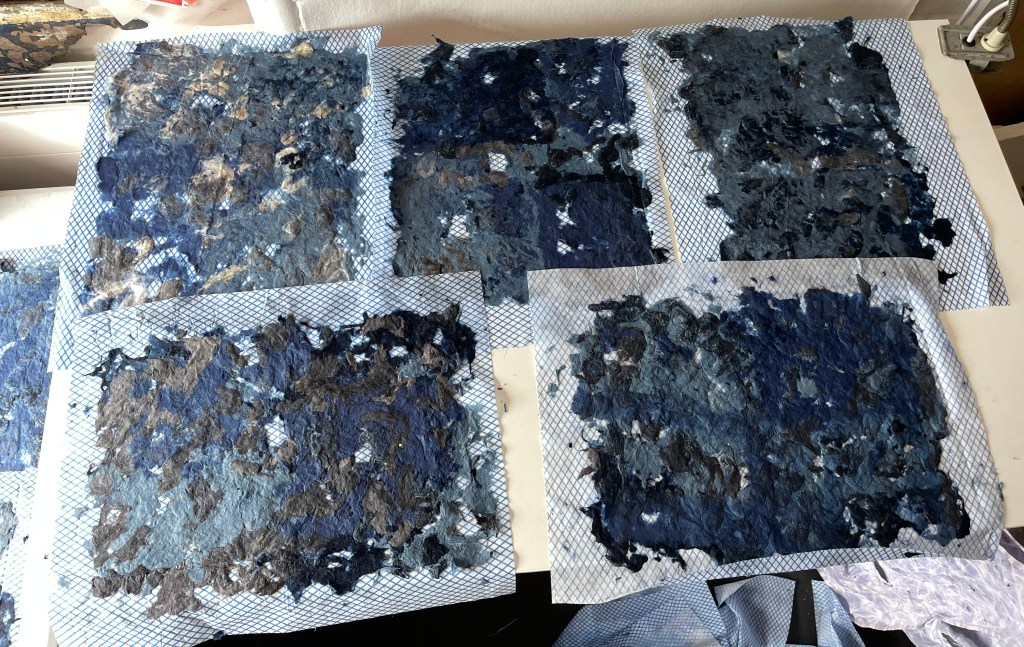
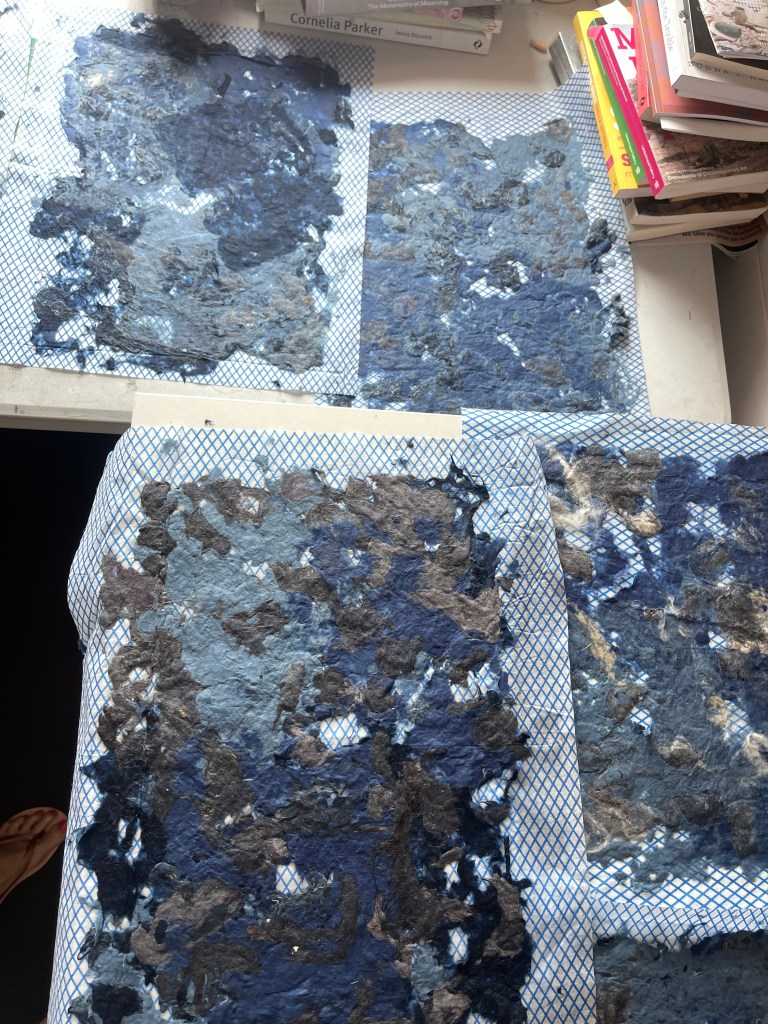
The pieces are lighter in colour and texture and am hoping they will mould more easily as they begin to dry.
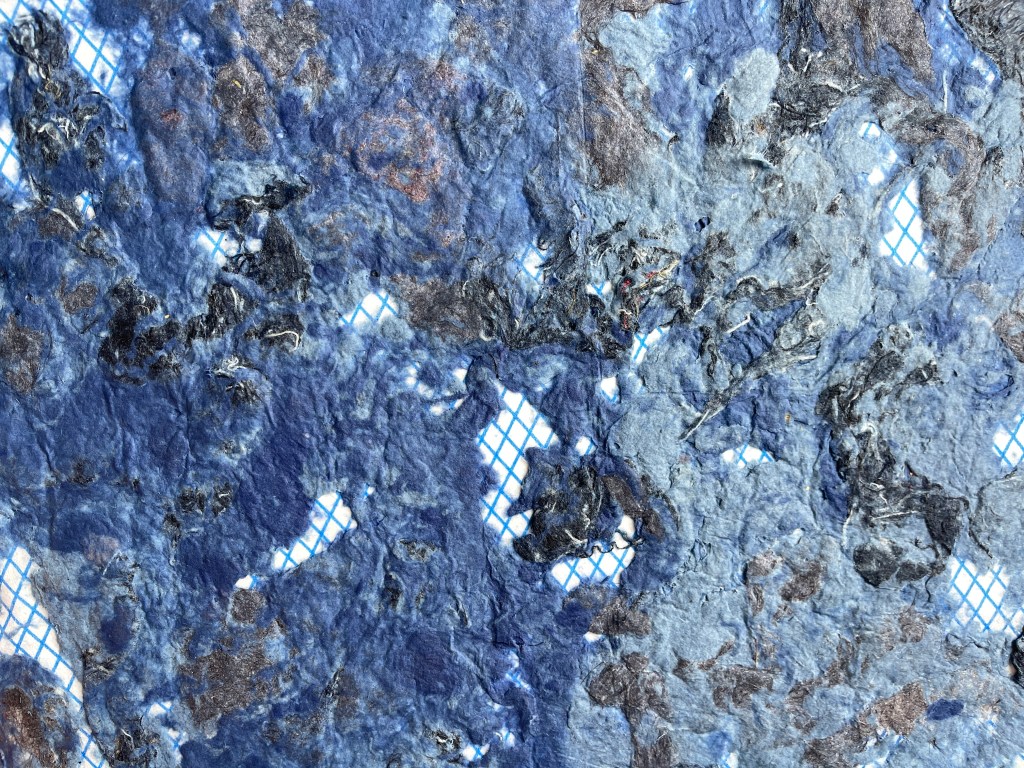
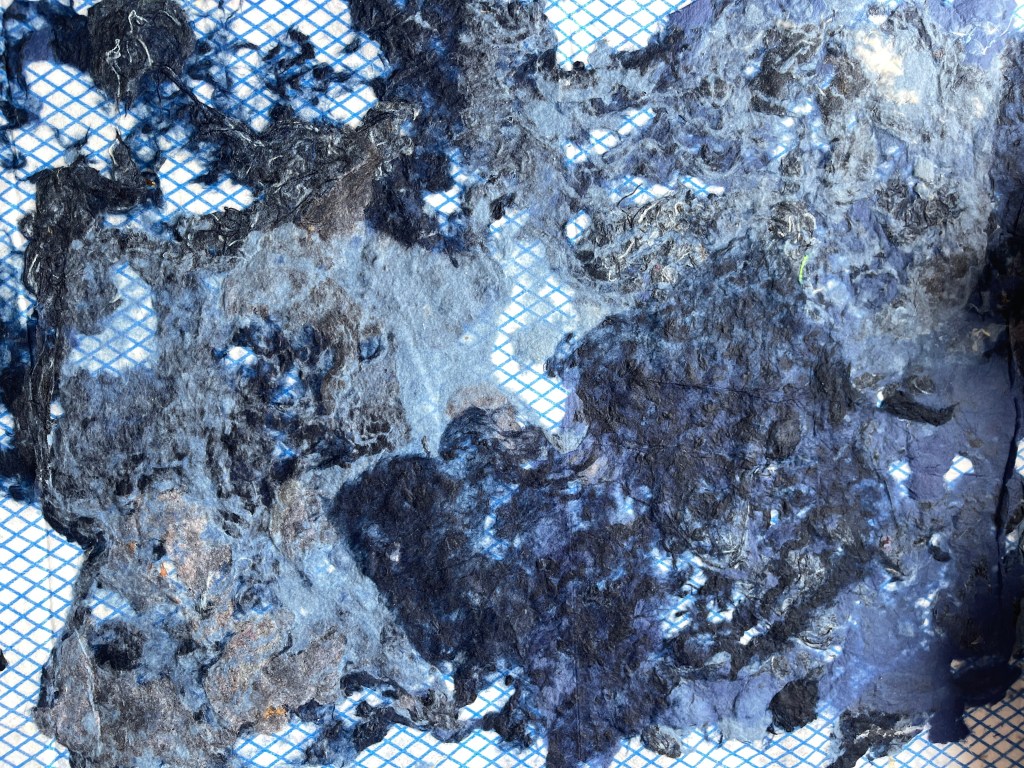
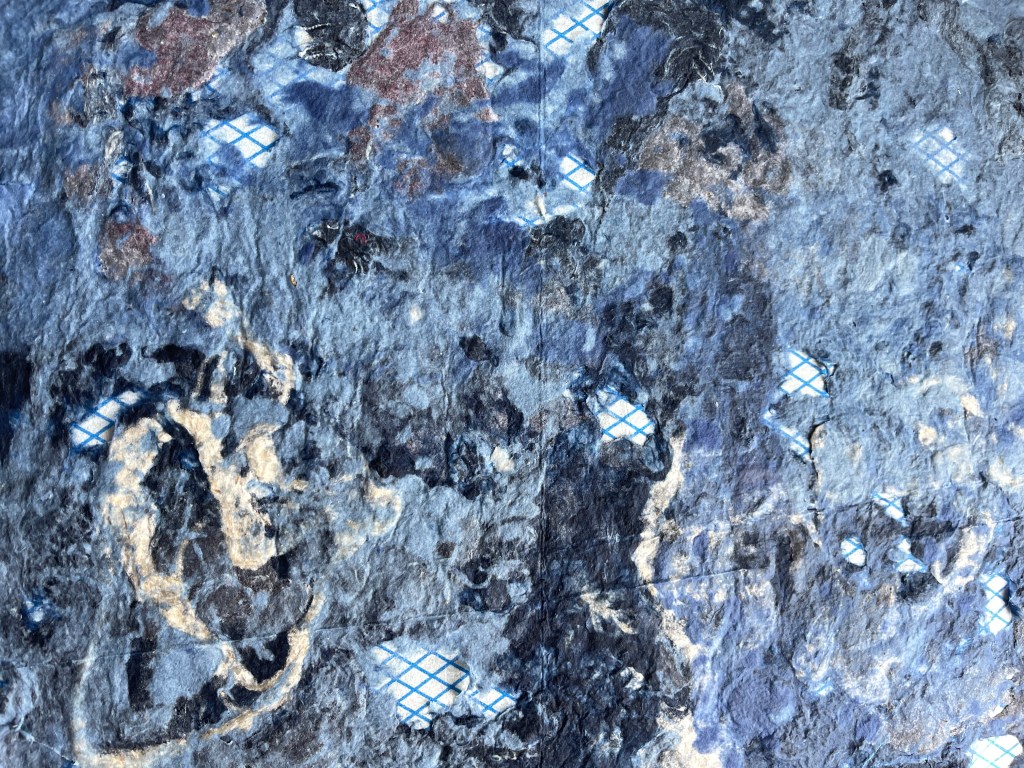
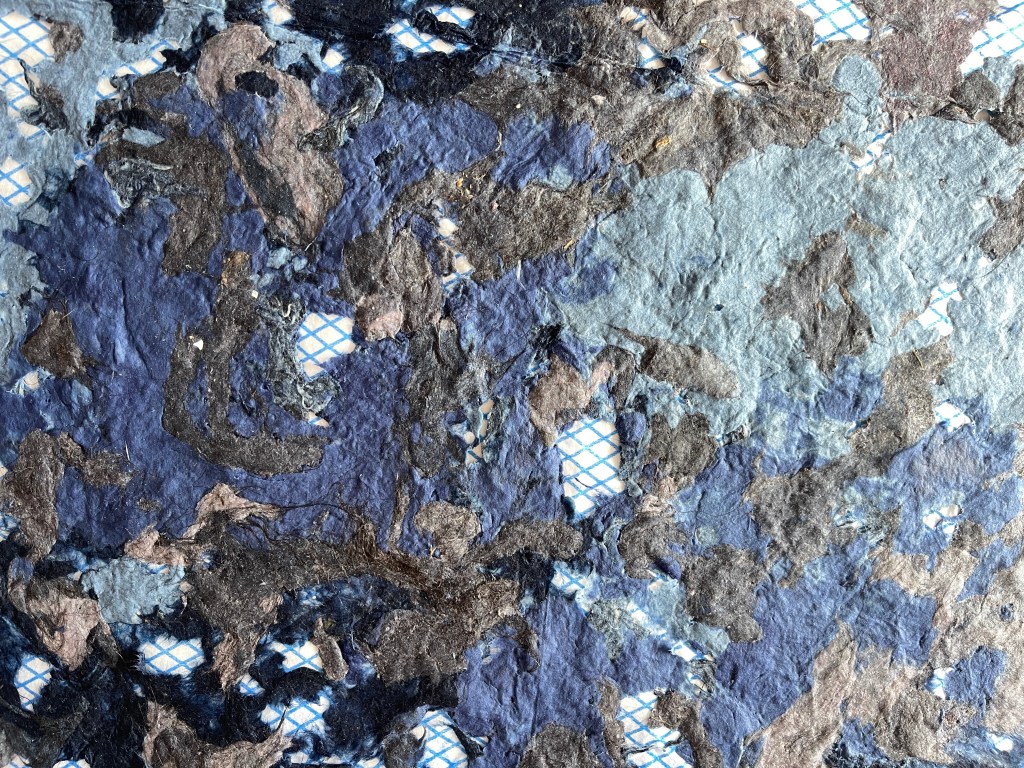
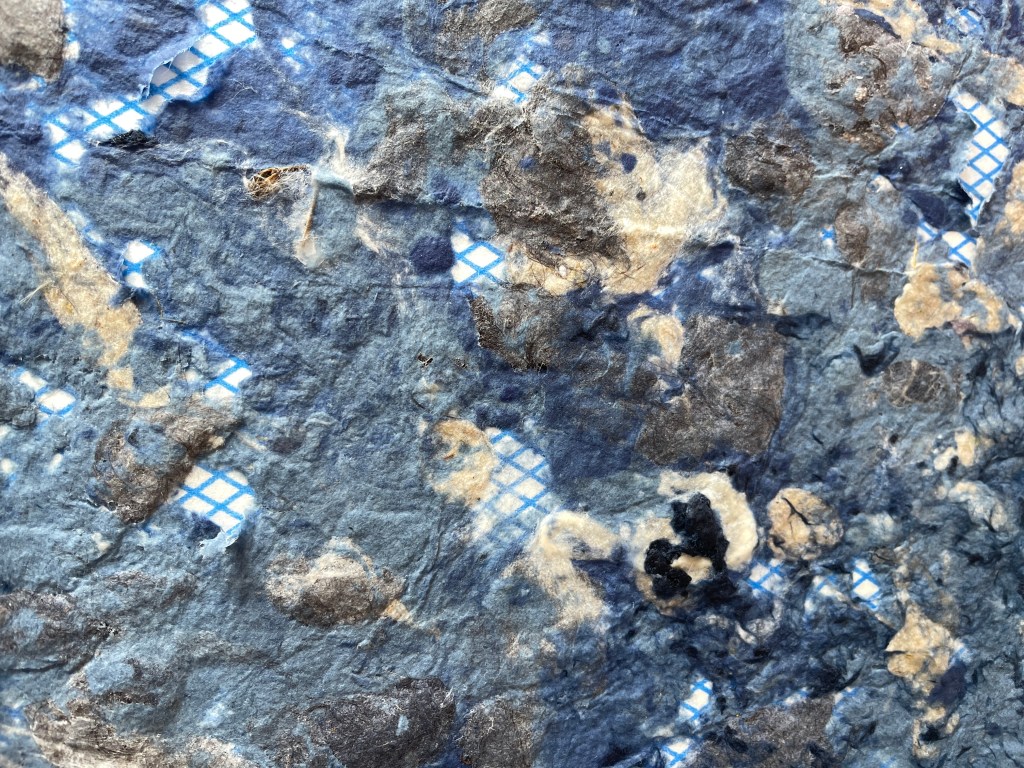
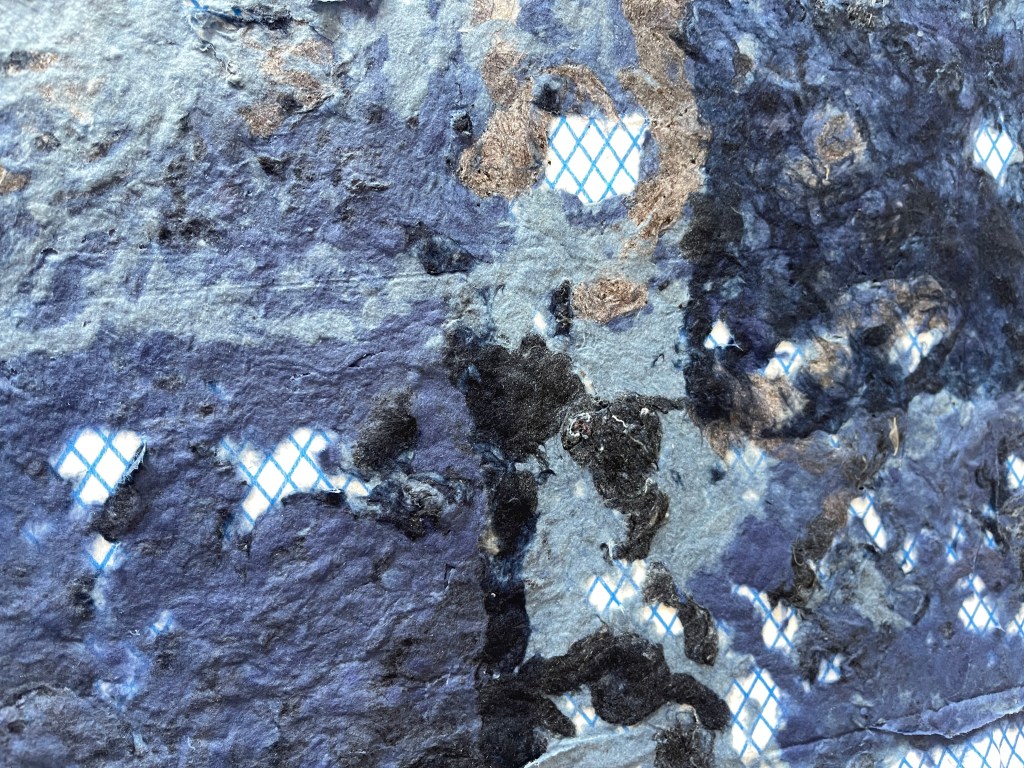
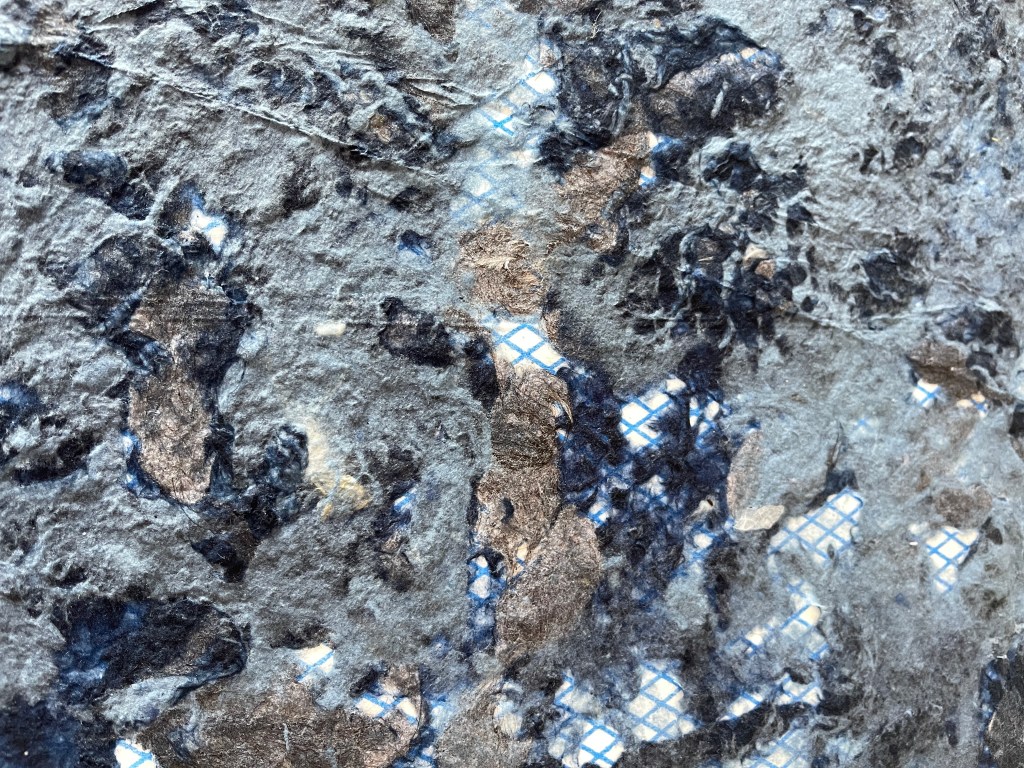
Colour image distortion edit. I like explore the potential of the editing of this material as it brings out detail and clarity and become a more enquiring image.
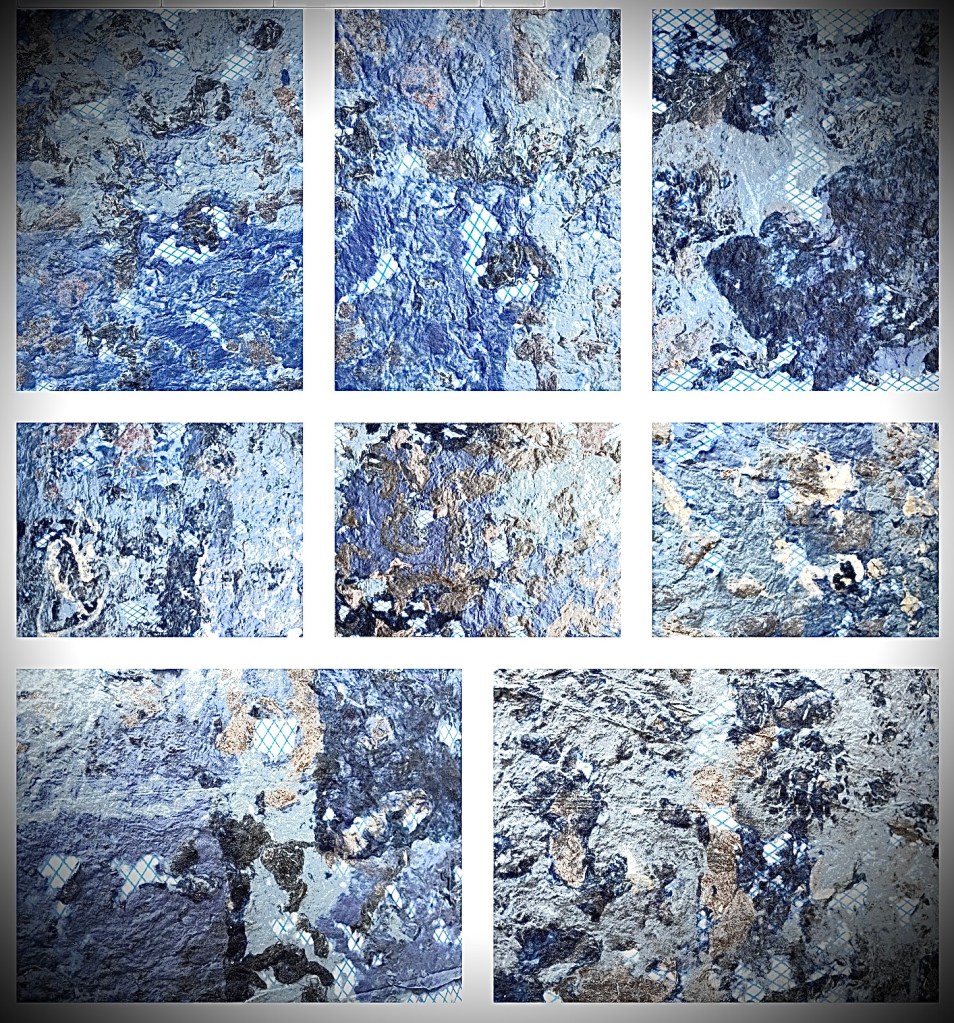
Manipulation of sheets in moulded objects.
The inner working of domestic machinery such as, washing machine, tumble dryer, vacuum cleaner, dishwasher, ovens, carpet cleaners, irons etc collect waste, detritus and are indicative of the process of the domestic work load. A relentless cycle of ‘housekeeping’ My collection of detritus and its manipulation has drawn attention to the hidden and discarded waste produced by this process.
Function – Machines adjectives – suck, clean, dry, wash, flatten, heat, cook, blend, cool.
The functionality of the machines contains a sea of hidden workings and applications that the domestic worker becomes the end user of.
The tube formations I created from the felted detritus offer up a slightly uncomfortable visual imagery to enquire into this, the machines inner working become the detritus, they are made from the detritus in an overwhelming, nightmarish installation below:
The tubes in formation after being taken off tube:
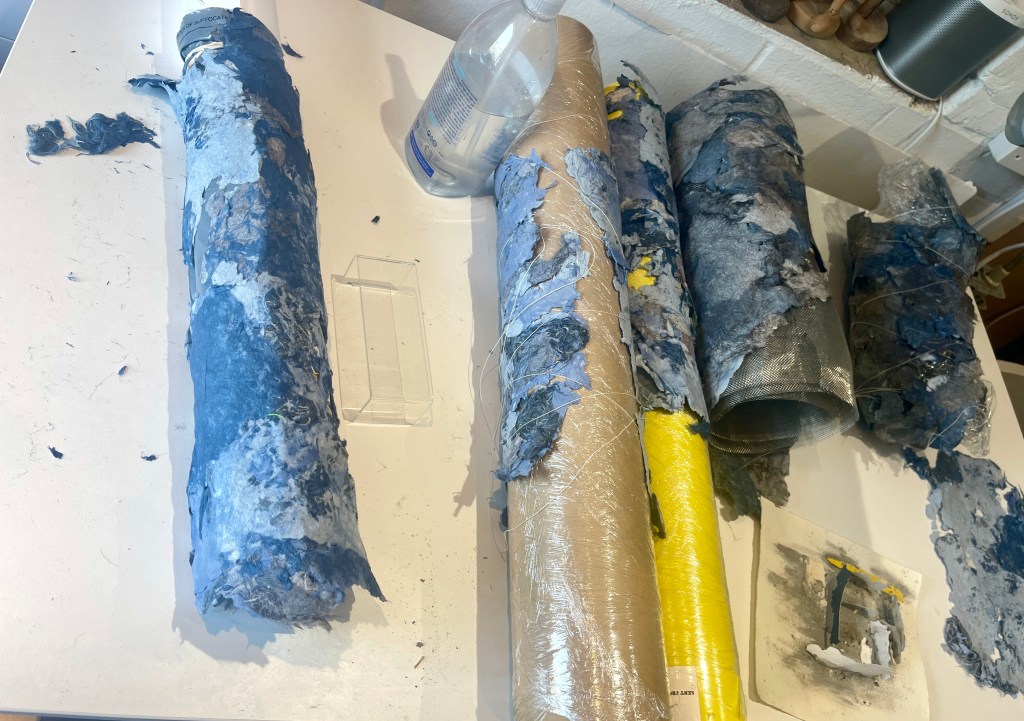
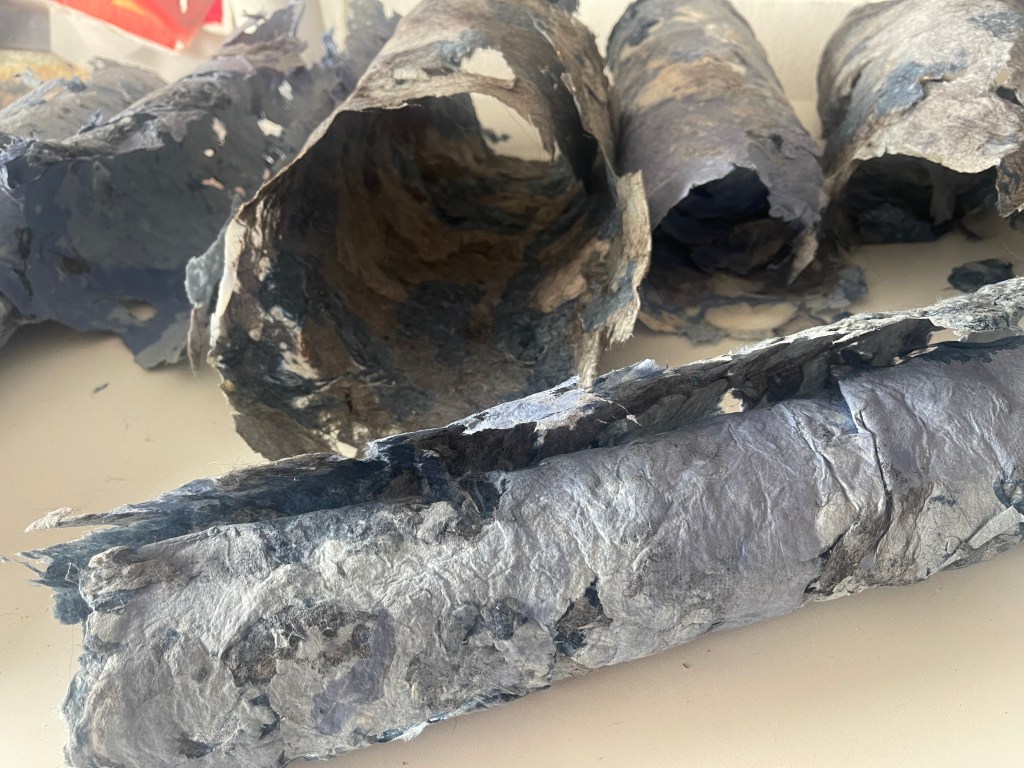
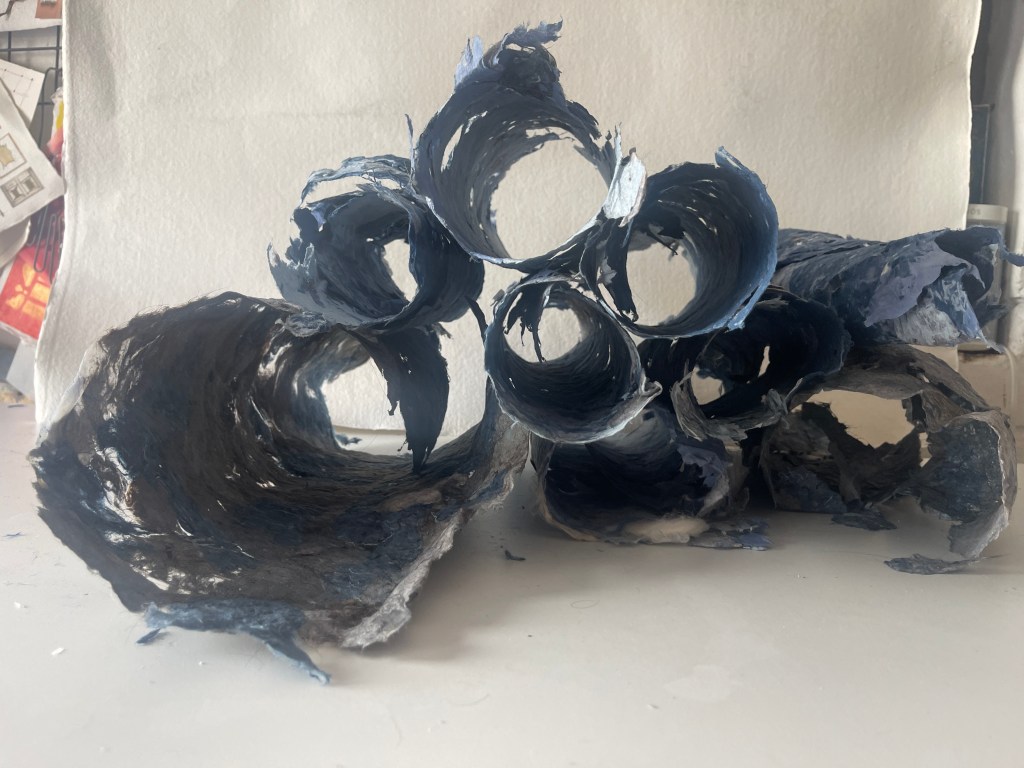
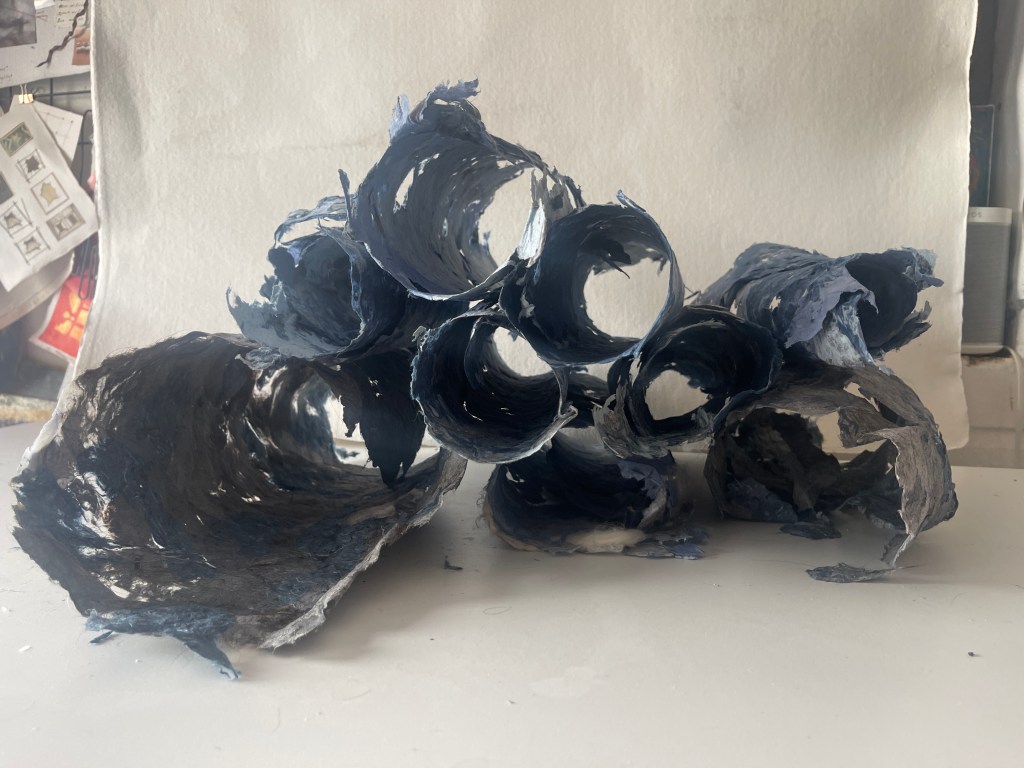
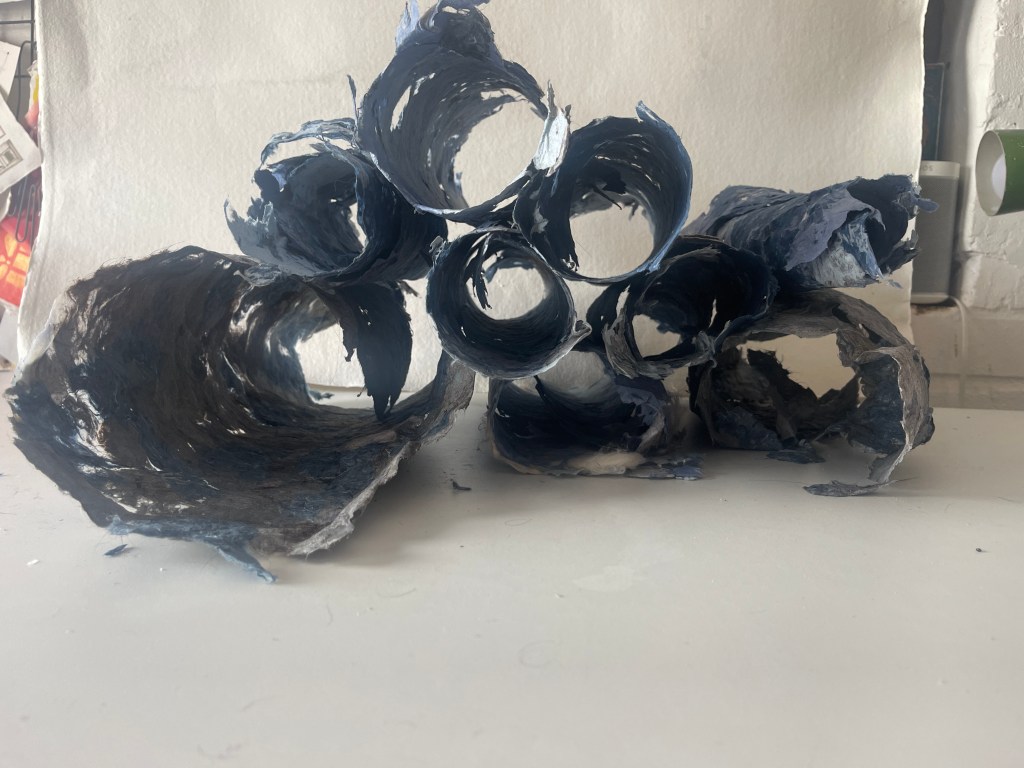
The material quality of these is much finer than the previous works created in my own studio. The use of the paper making implements, with the use of a large heavy press to squeeze the water out has culminated in a more delicate and fragile material.
Selection of Learning Log. 12
The Apron !
Inspired by the visual performance works of Martha Rosler ( 1943 – ) and her work ‘Semiotics of the Kitchen’ whose video piece ( 6.09 min) form the 1975 is at once a humorous, disconnected and unnerving exploration into the female domestic work load in the kitchen, Her A – Z of tools and instruments used every day in the kitchens of a typical house in America in the era evokes the notion of the perfect TV housewife and cook that is viscerally full of frustration and rage. The performative exploration of how the items are demonstrated and or used are not as expected and evoke dark undertones and bitterness. Her gestures sharply punctuating the rage and frustration of oppressive women’s roles. Rosler has said of this work, “I was concerned with something like the notion of ‘language speaking the subject,’ and with the transformation of the woman herself into a sign in a system of signs that represent a system of food production, a system of harnessed subjectivity’
I found the work poignant to my current practice as it still feelt relevant today. Rosler is seen donning an apron for the performance and this is the beginning of the alphabetic system of named items she demonstrates ‘A is for Apron’. The idea of the apron being the uniform for duty , the beginning of the work , the role the garment evokes is somewhat subservient and undermining, despite its practical application to protect the clothing underneath. It ensures the individual stands out as the worker and distinguishes and identifies her from another role.
It felt like a shroud to the domestic worker and as such I wanted to examine new narrative and presence for it . A stagnant permanence, a statuesque presence to highlight and praise its metaphorical and historical meaning.
I purchased the modern equivalent of the traditional apron, a tabard. A white utility item for women. A simple shape with a large pocket in the front. Button fastened at the sides.
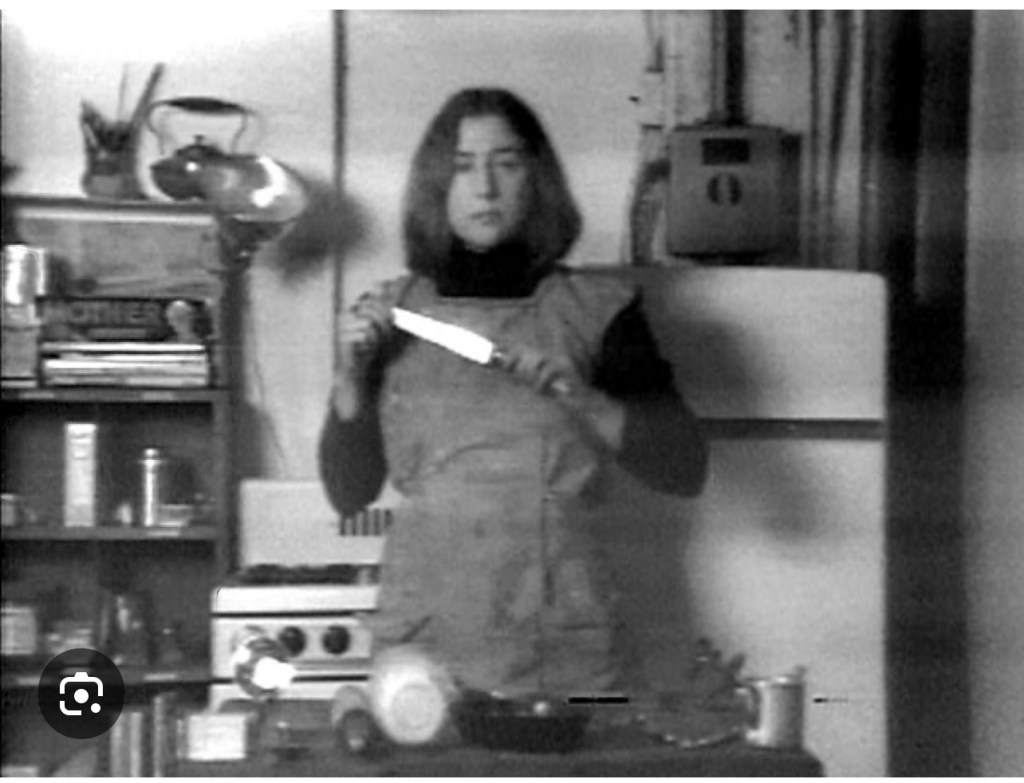
Apron !
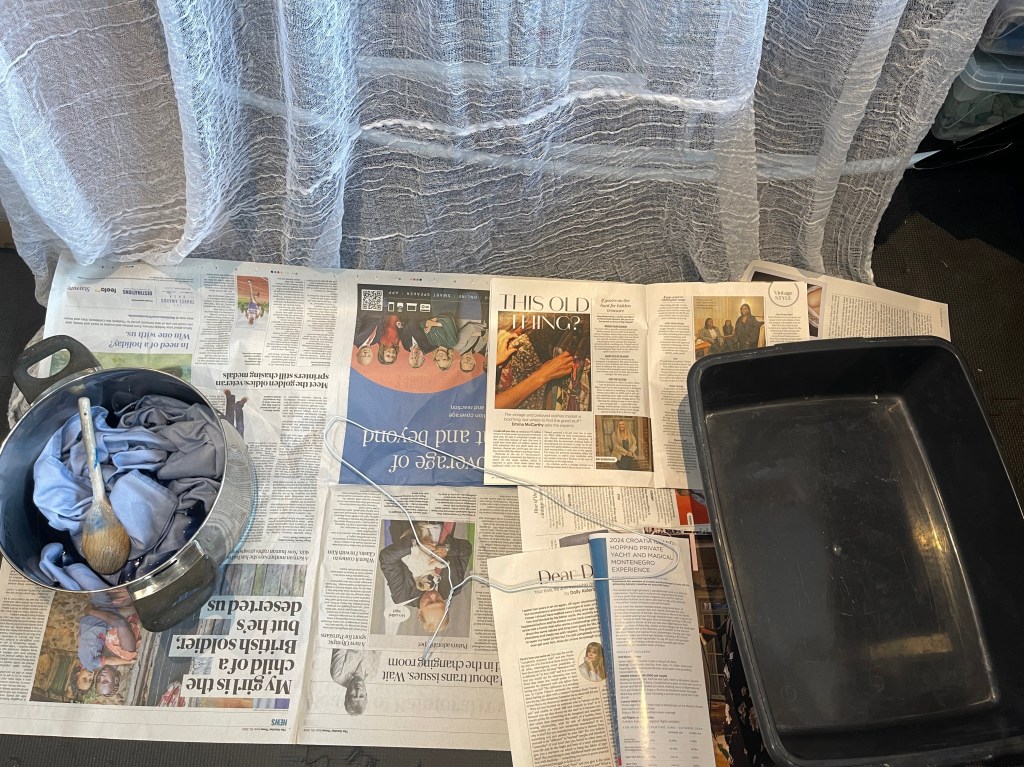
My process began by placing a large amount of bought wax pellets and dye in a large pan and melting it down. Then immersing the tabard into the hot wax and soaking it .
Wax work – on ‘Tabard’
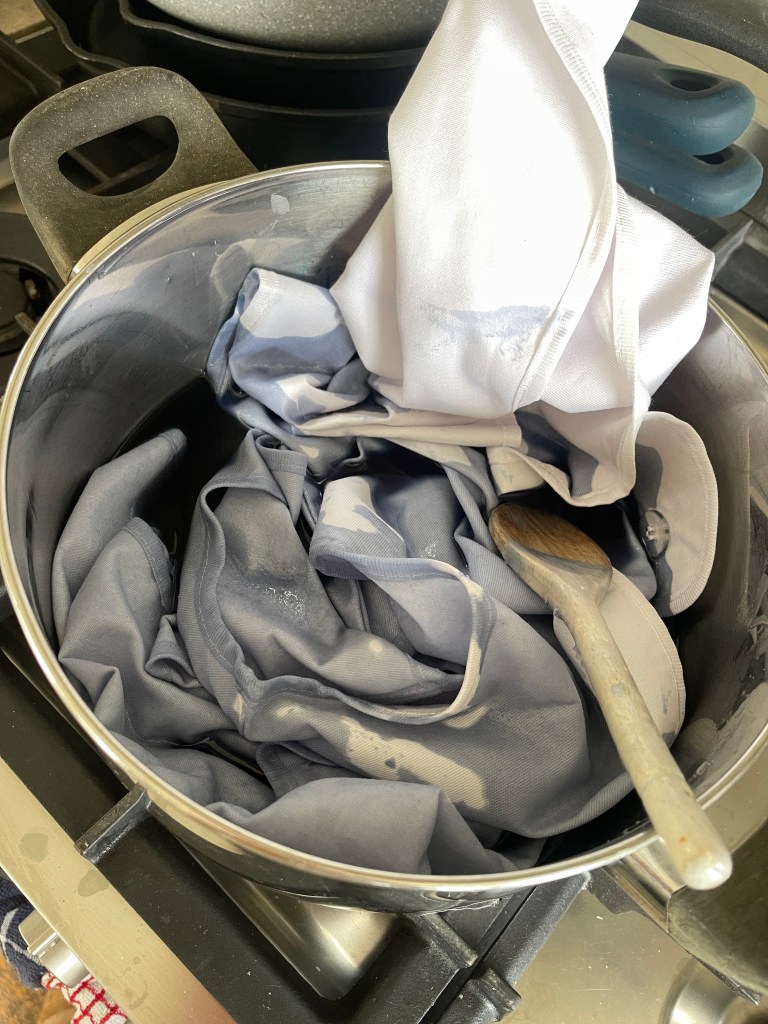
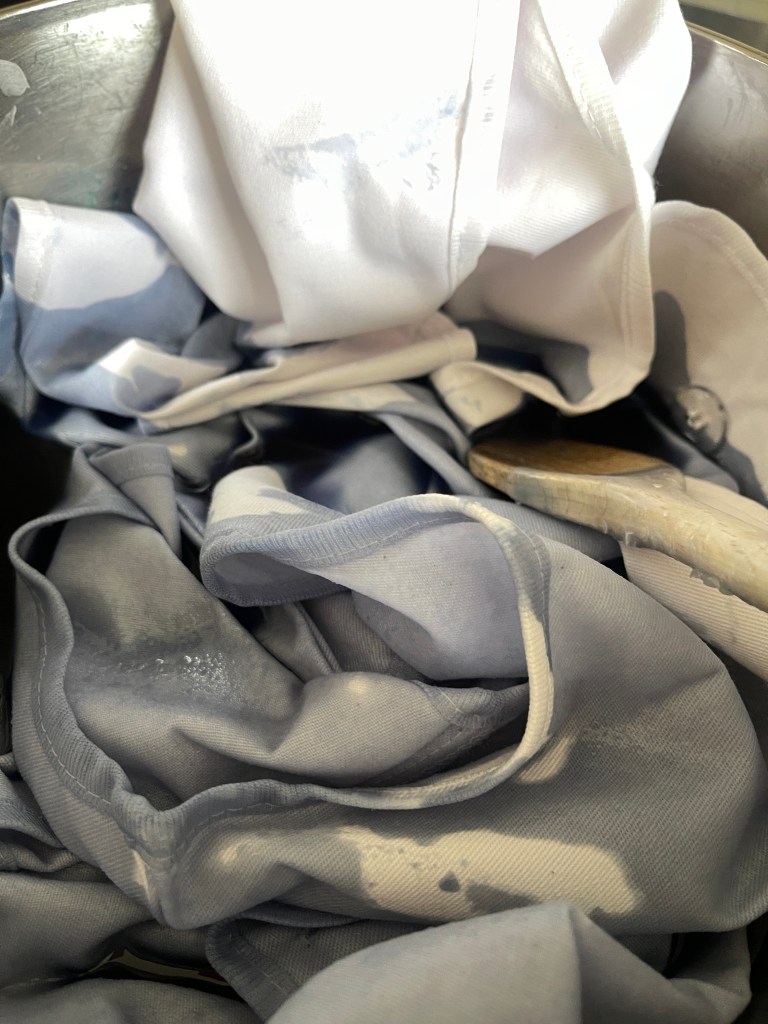
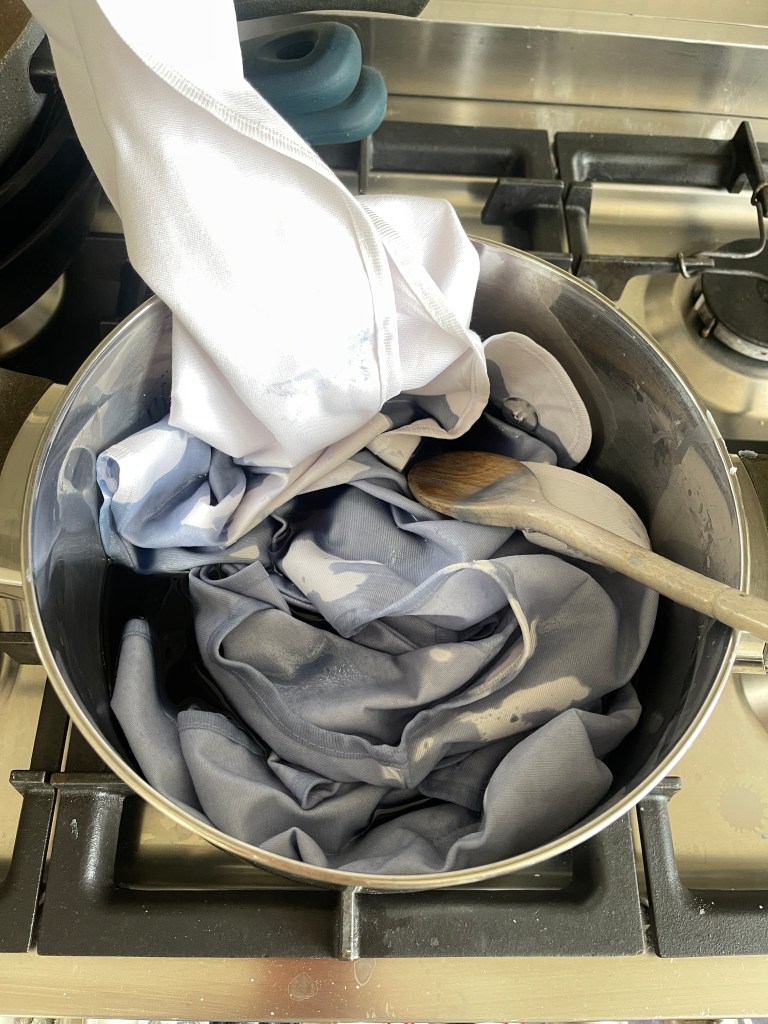
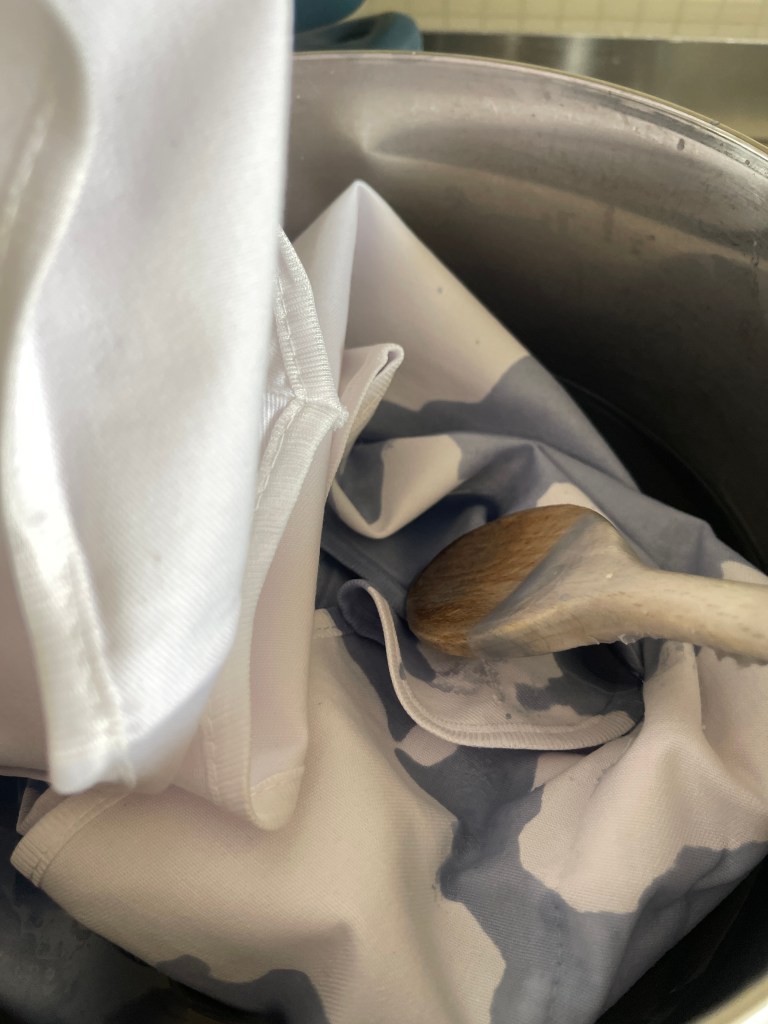
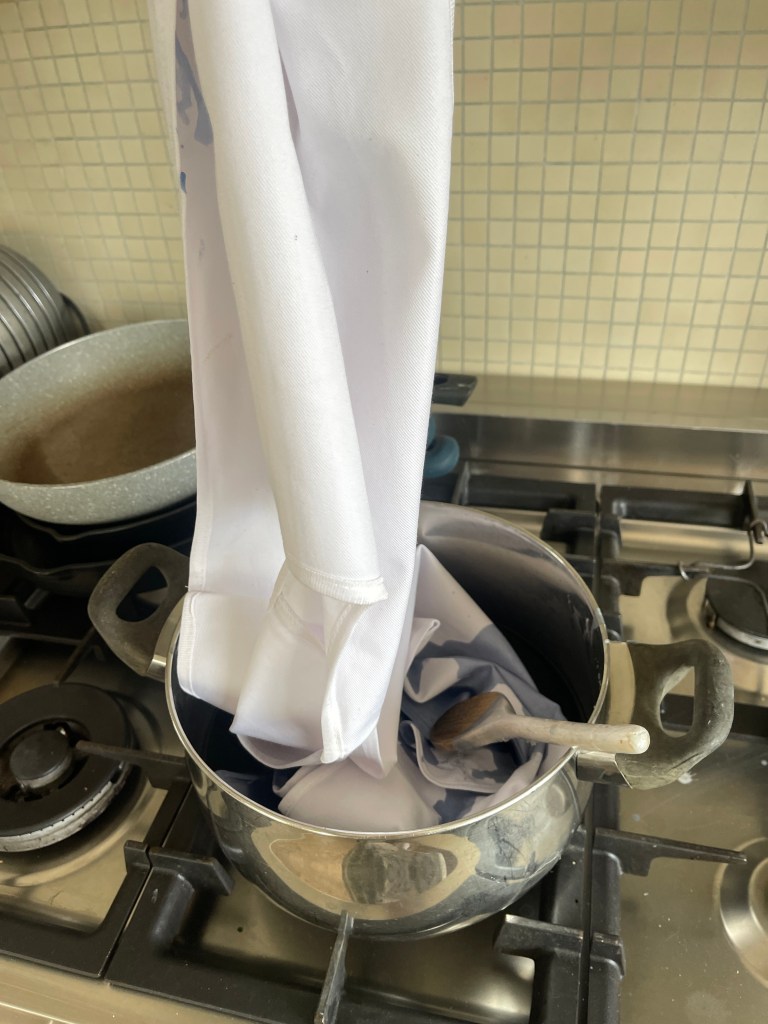
Tabard wax prep:
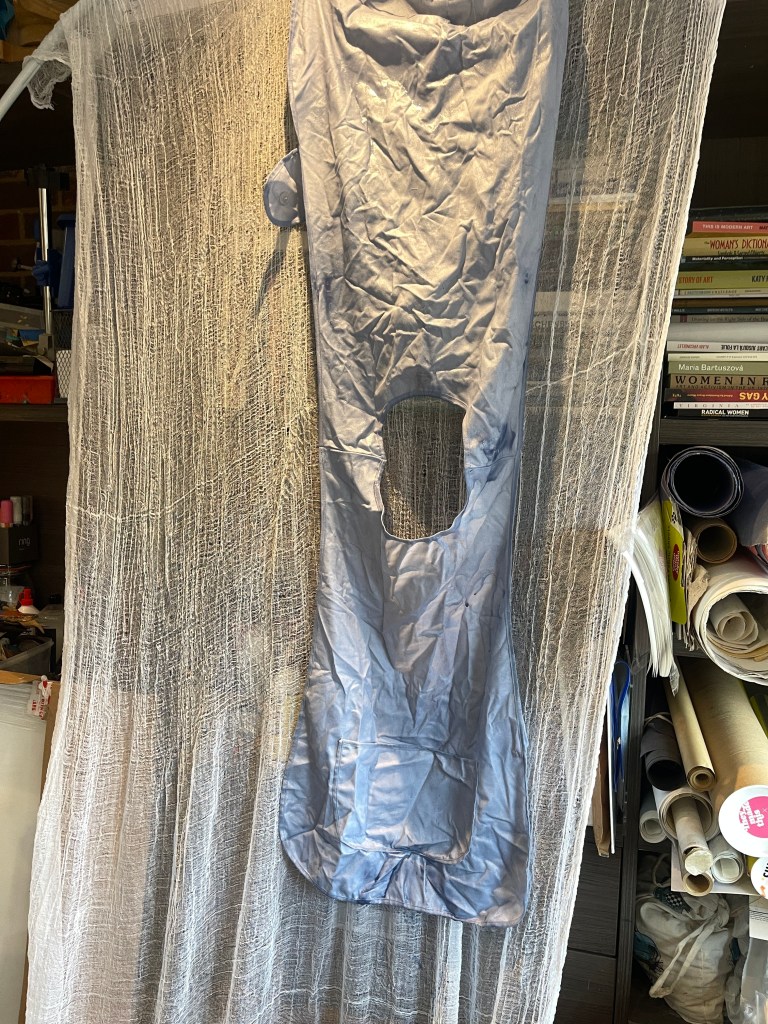
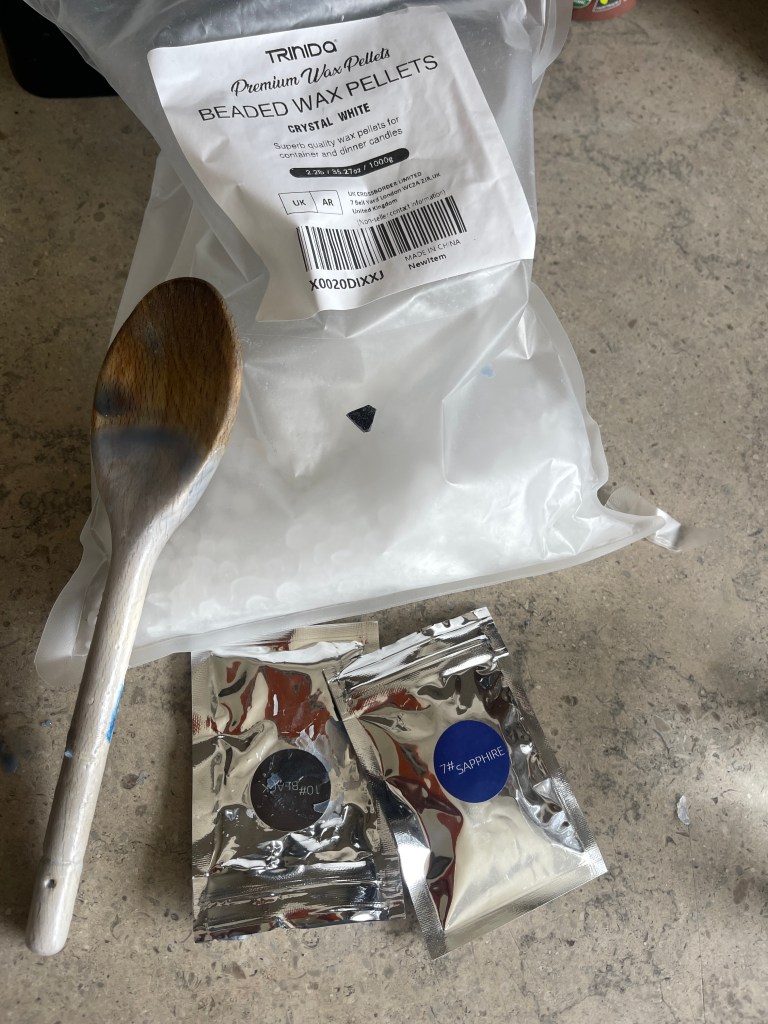
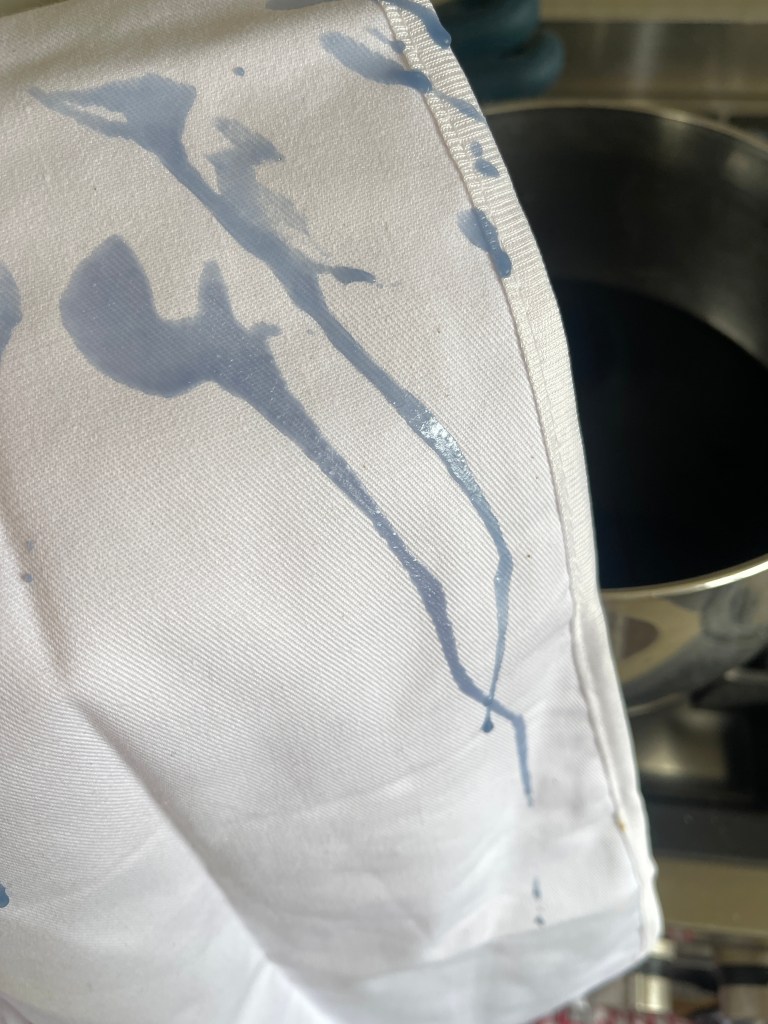
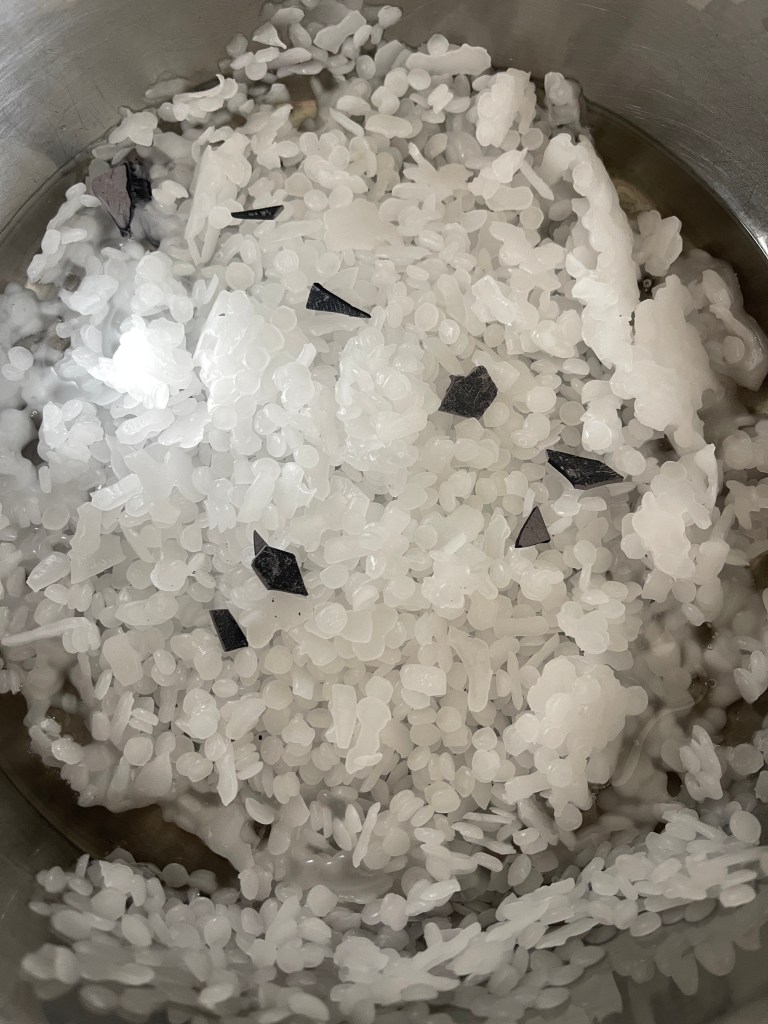
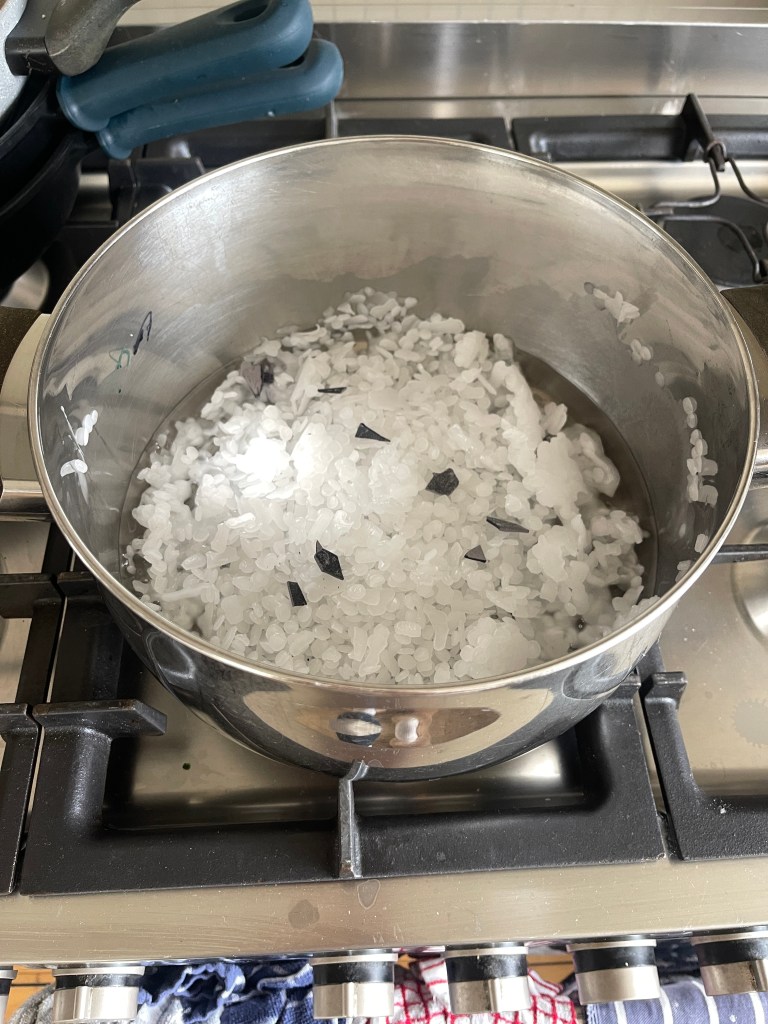
I hung the wax tabard up and poured further wax over and down it to create greater visibility of the wax solidifying the material and the intriguing twists and turns th ewas run too as it made its way down the full length of the garment – finally dripping of the end.
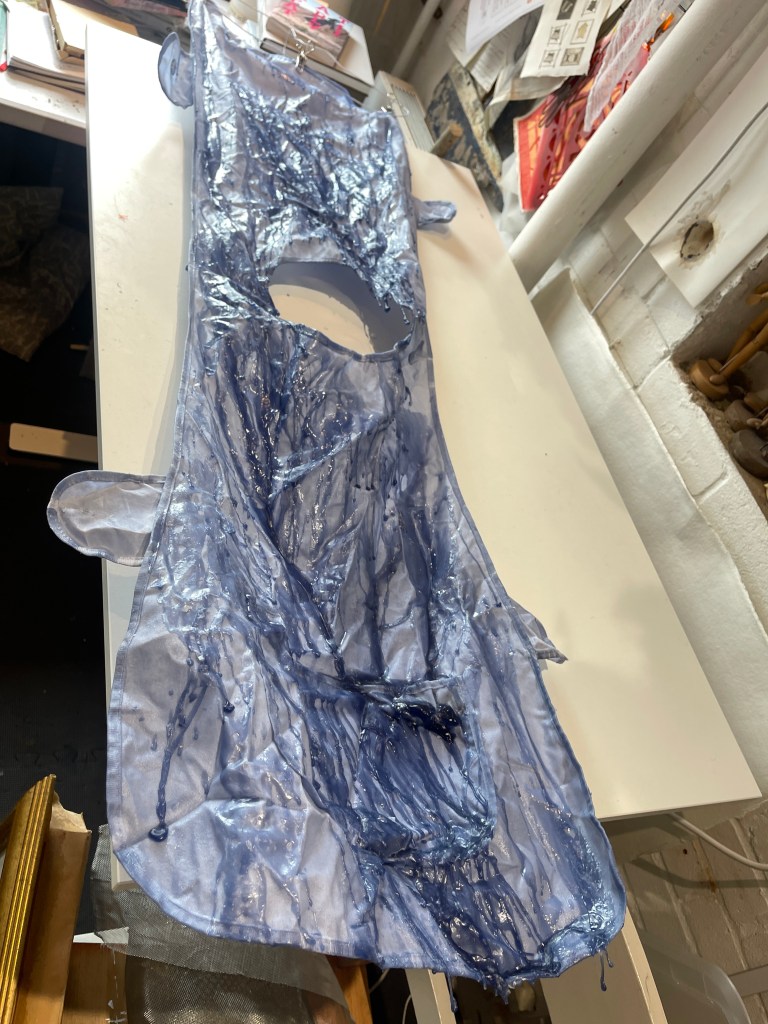
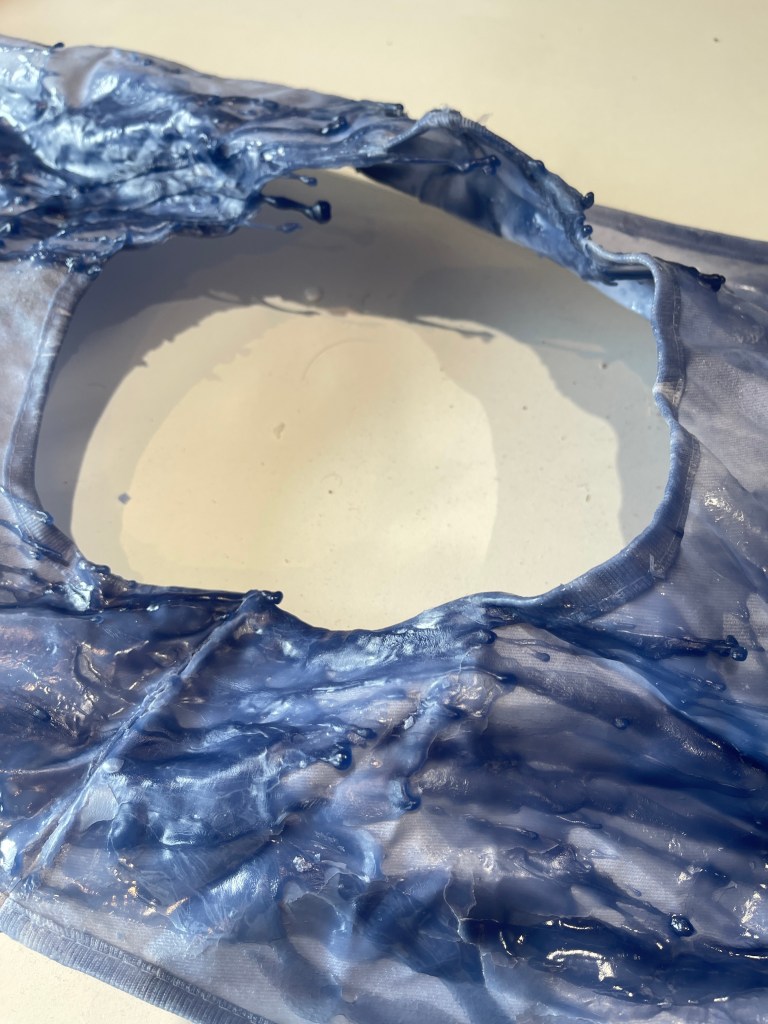
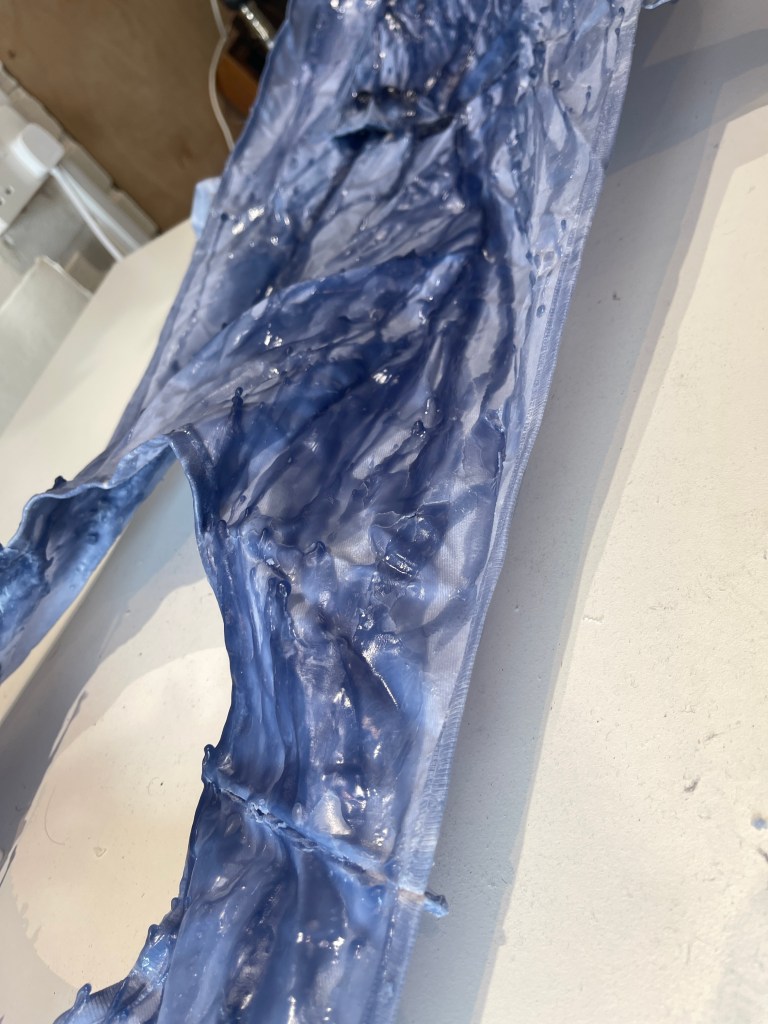
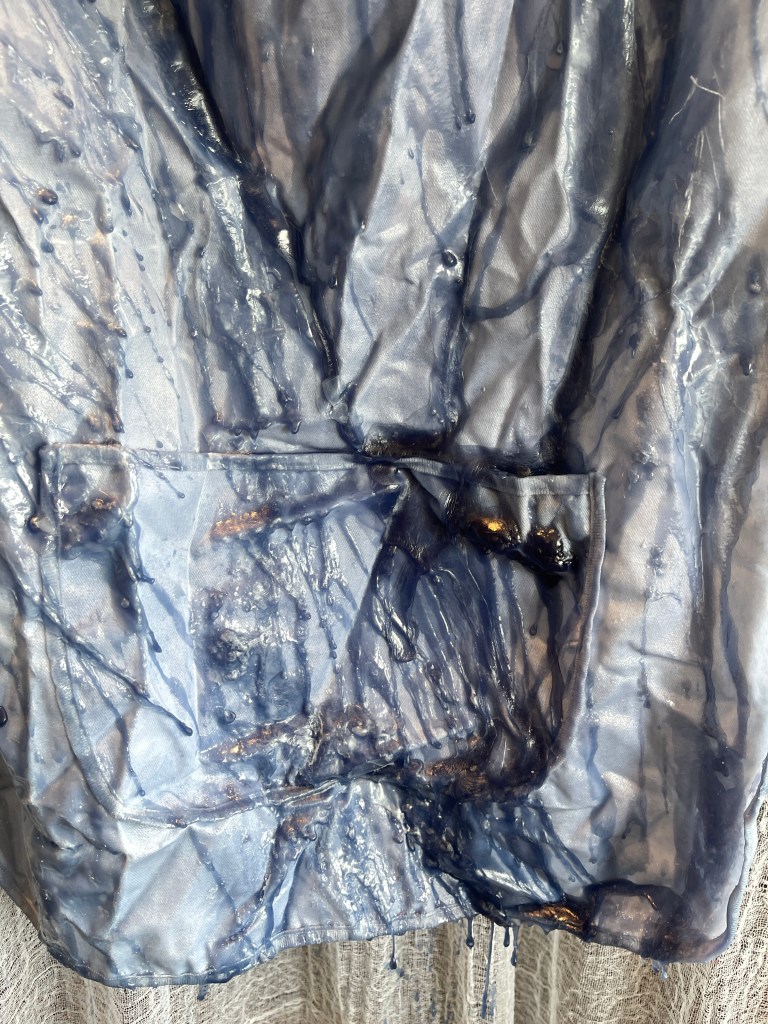
When it dried I was able to lie it down in a solid unmoving mass – fossilised in the wax. A relic from the past, rediscovered and re imagined yet somehow still in use, familiar and retaining all its negative and metaphorical undertones of the undervalued female domestic worker.
Once hung up it became something else, a statement of power, resilience, strength a statuesque hanging with prominence to be taken notice of, not hidden away or unobserved . It is a strange and almost unrecognisable form distorting the visual narrative and opening up a deeper level of enquiry . Is there something uncomfortable about an open mouth imagery – as if its about to speak or shout out ?
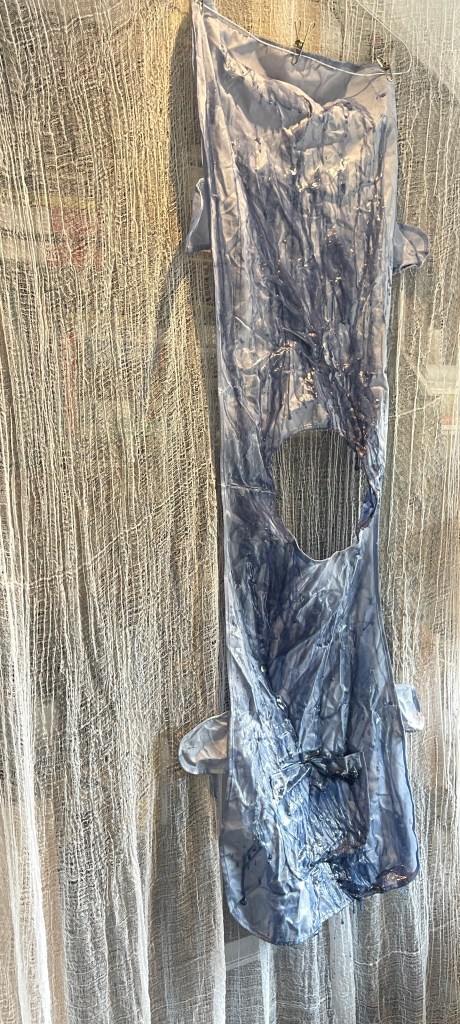
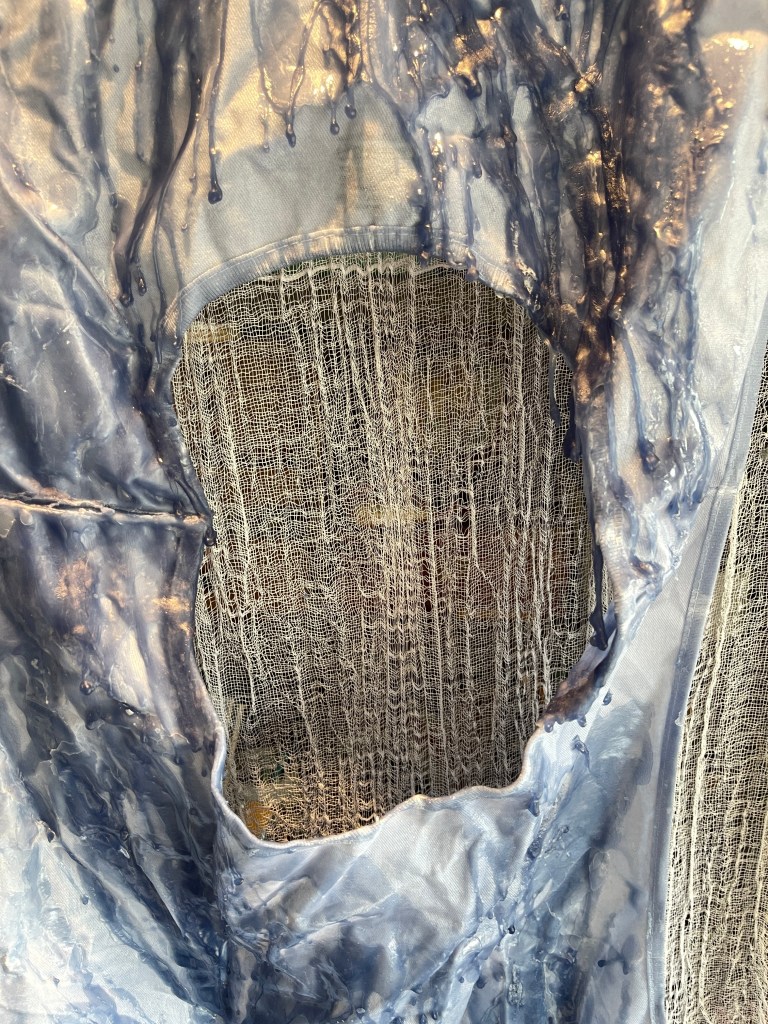
This will form further exploration into the domestic worker, domestic detritus and the hidden narratives behind the every day home maker scenario. Drawing on Judy Chicagos famous work ‘The Dinner Party’ from 1979 – celebrating lost ( written out ) and familiar women from historical narratives. My work will explore the lost and forgotten engendered domestic role that women traditionally
Selection of Learning Log. 13
Continuing to work on the motif of the apron as a symbol ( symbolic ) of the female domestic worker I looked to other mediums to capture/ embalm/give agency to this uniform steeped in historic cultural significance and recognition.
I worked with industrial strength starch to emulate the results of the wax, a medium relevant to the domestic workplace and a substance intended to create an superior state of appearance for linens, clothing and other everyday items.
The starch was a substance that added burden to the task of laundry, extra time and toil and increased the expectation of the immaculate finished dried product.
I started the process with an excess volume of starch for the aprons, this was to ensure a extreme stiffness and solidity when dried.
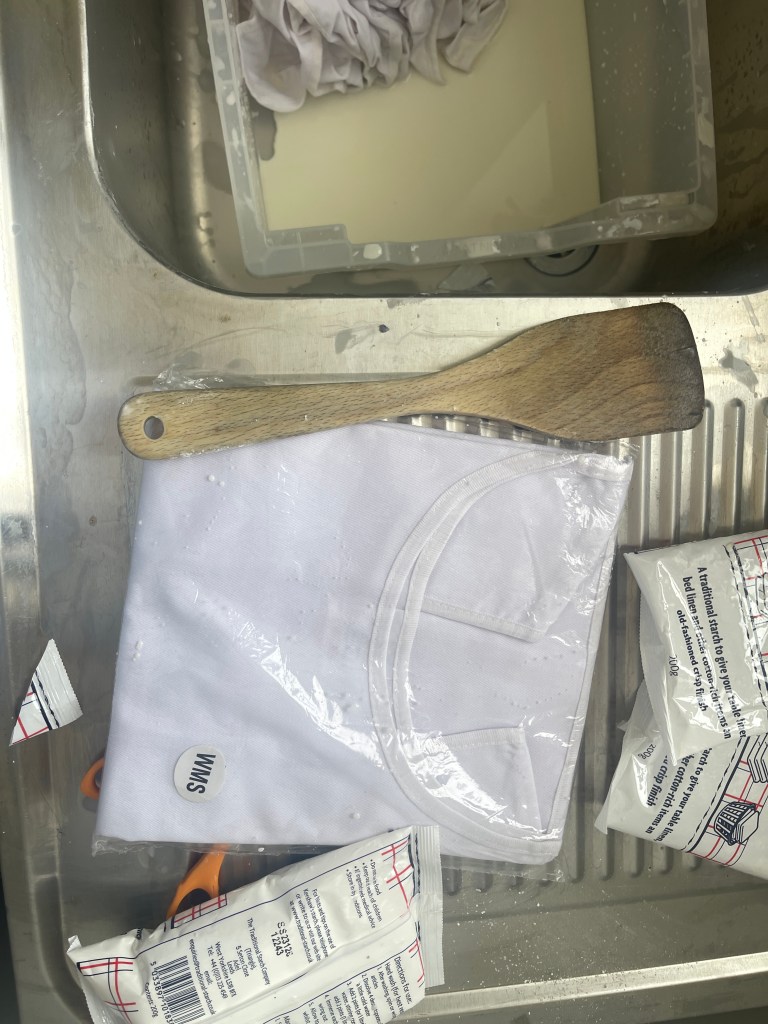
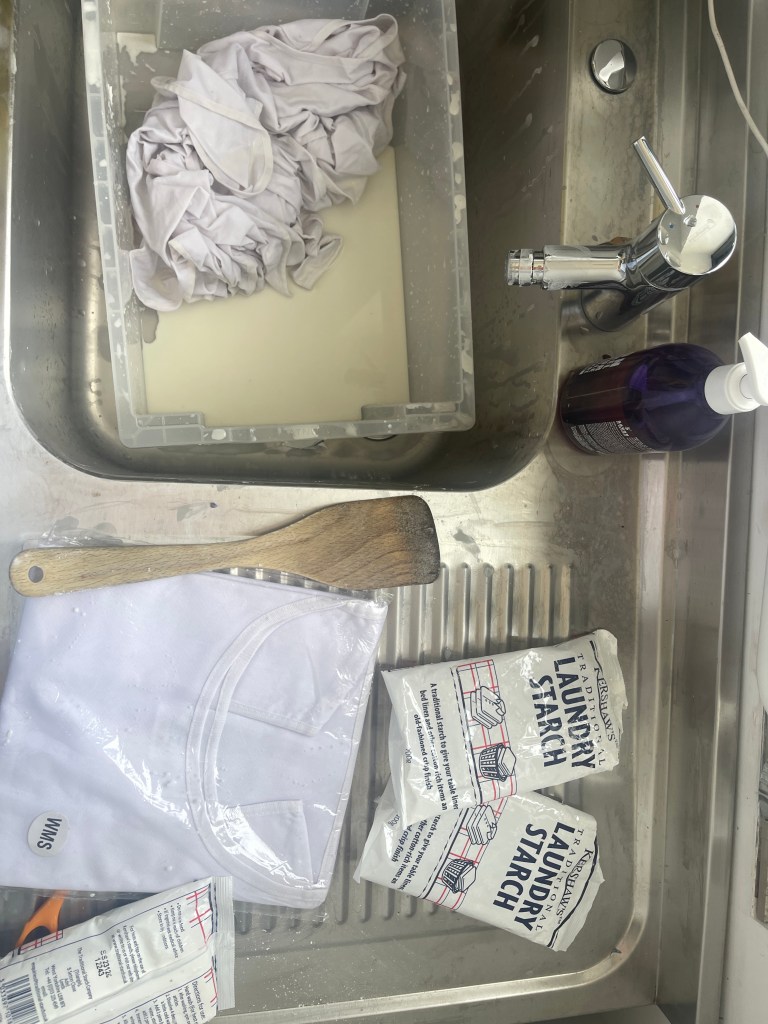
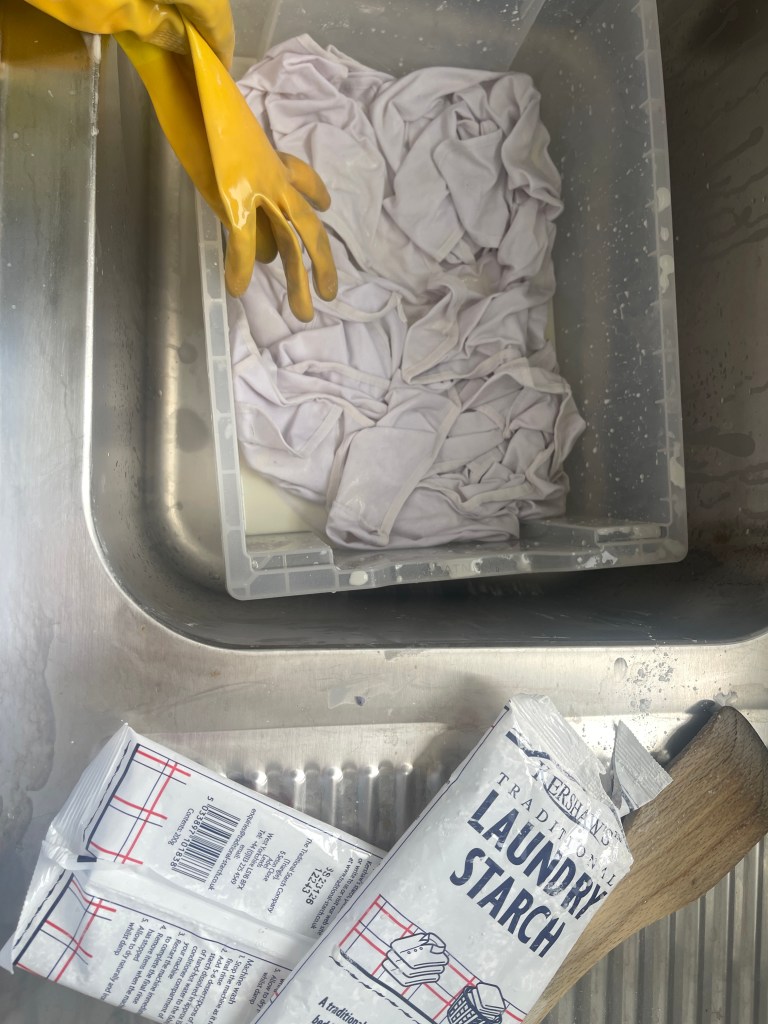
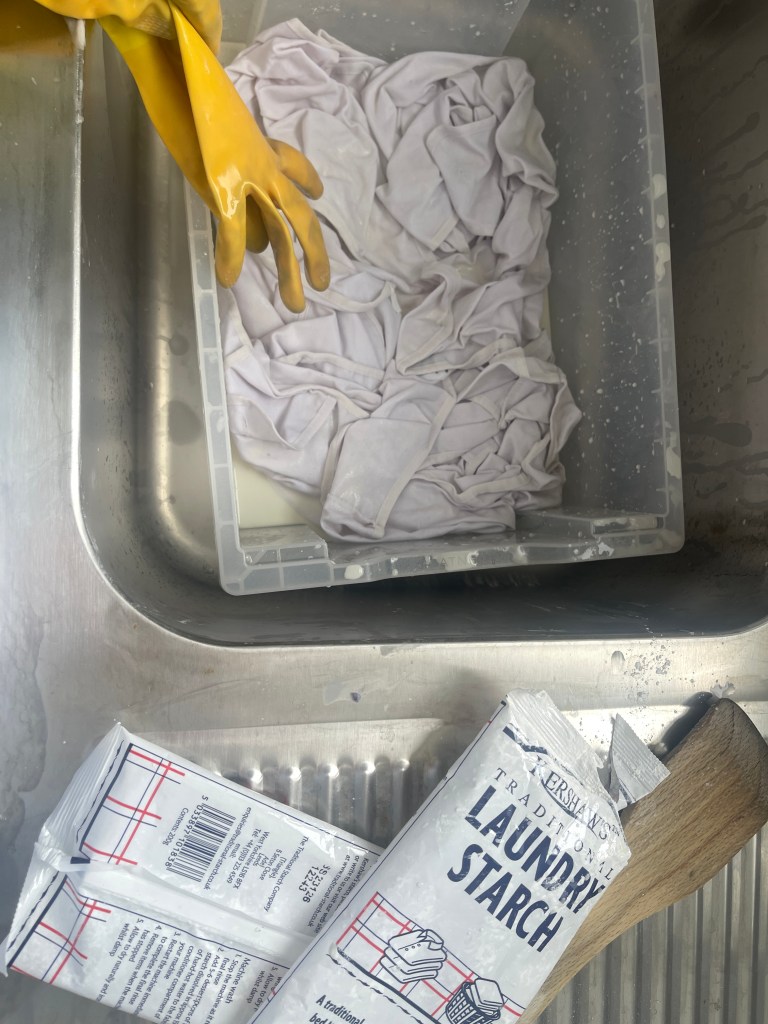
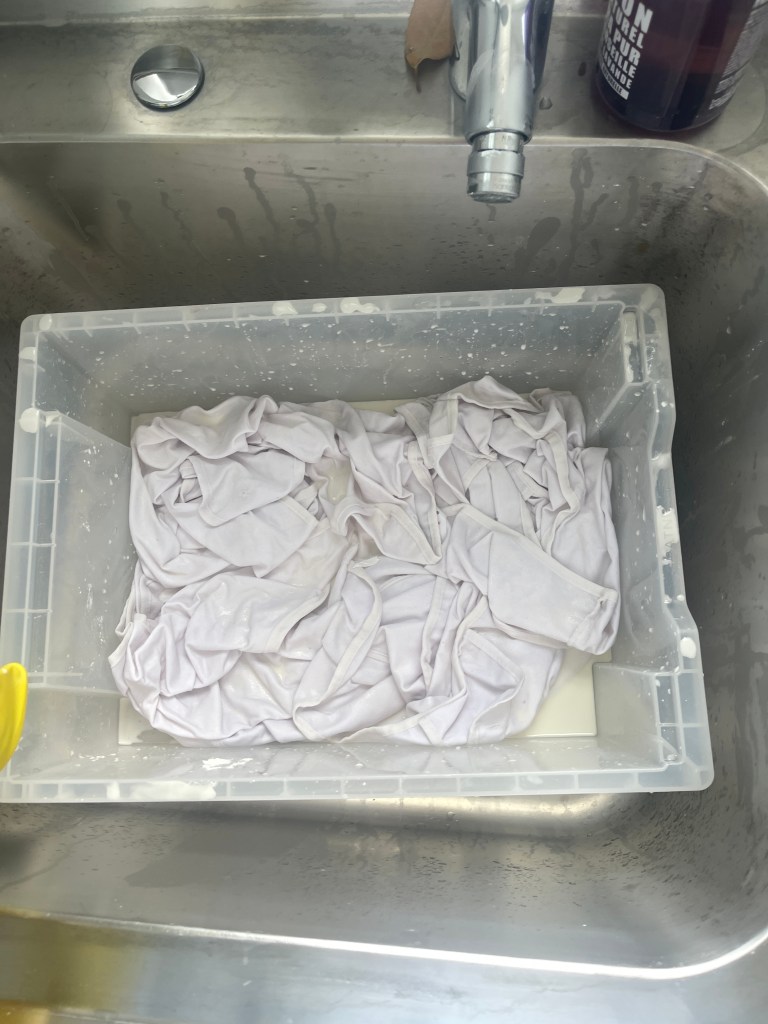

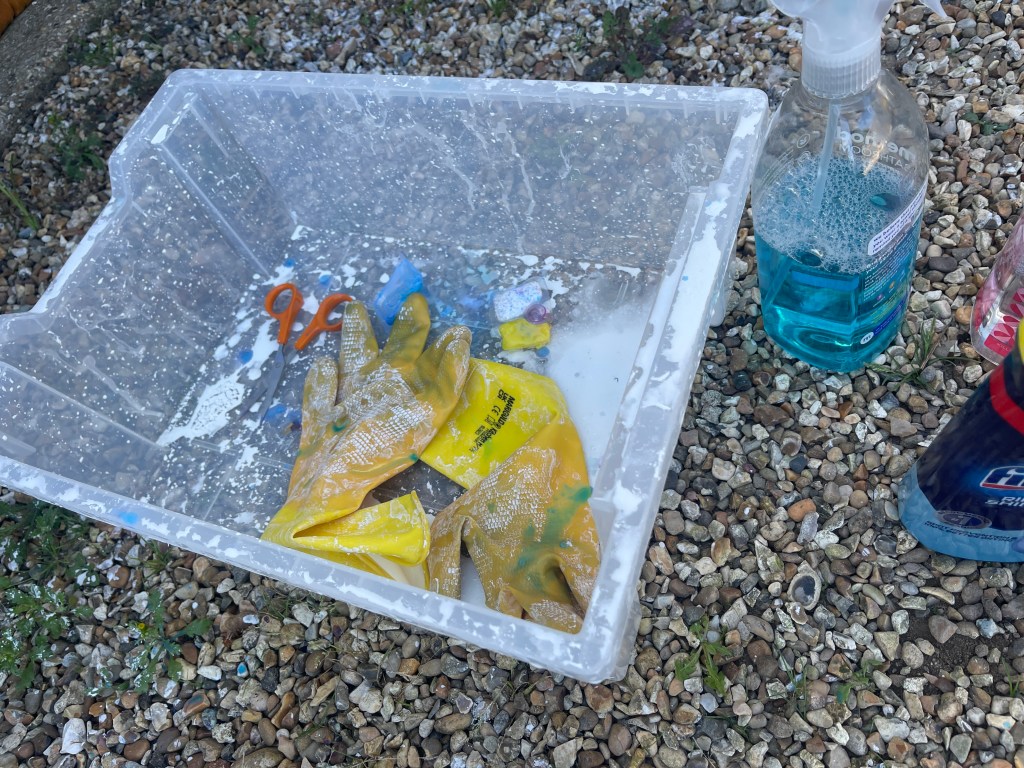
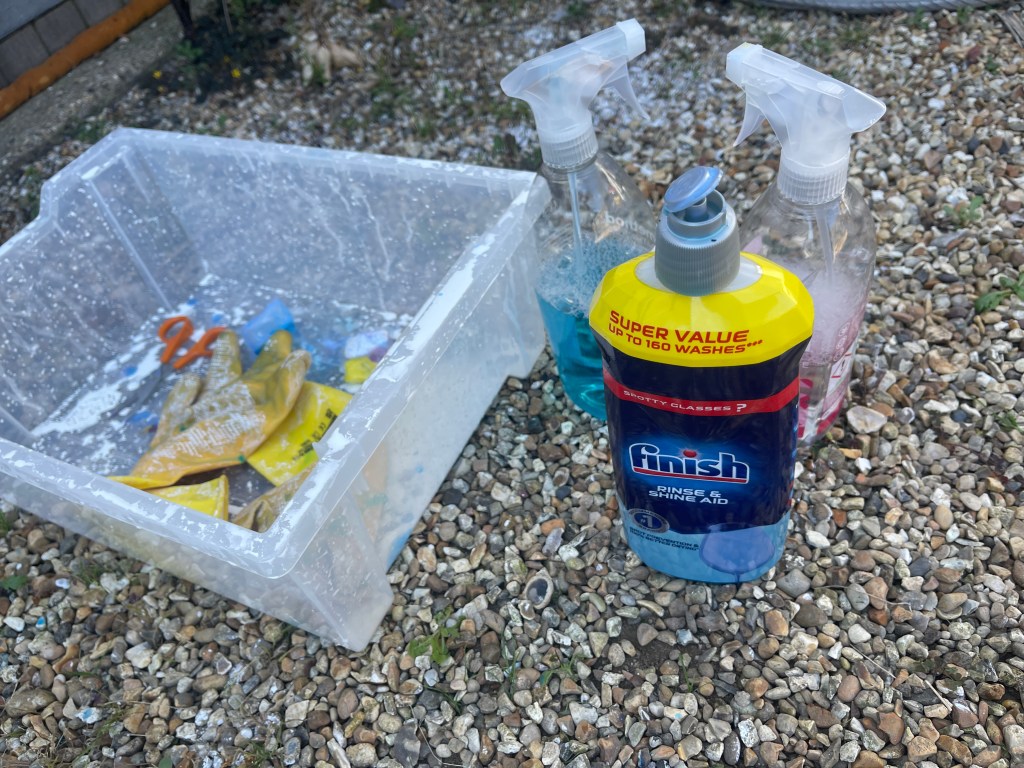
After soaking I hung them out to dry. At this point I added a smattering of cleaning substances to the starched stiff material.
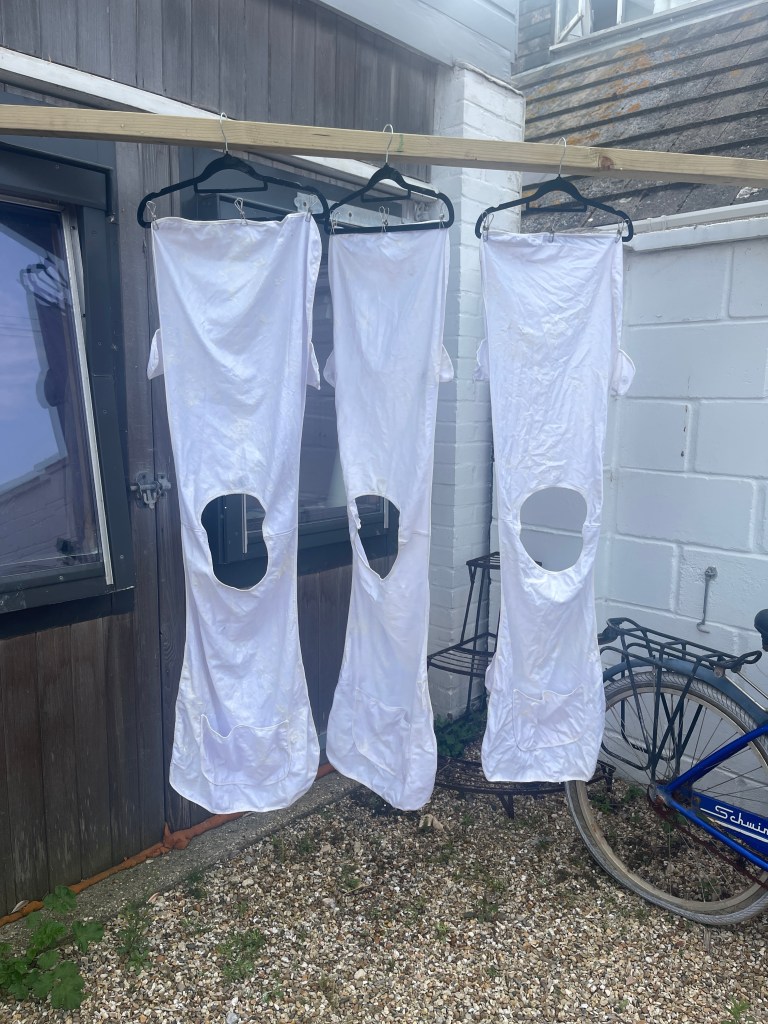
Cleaning Products added:
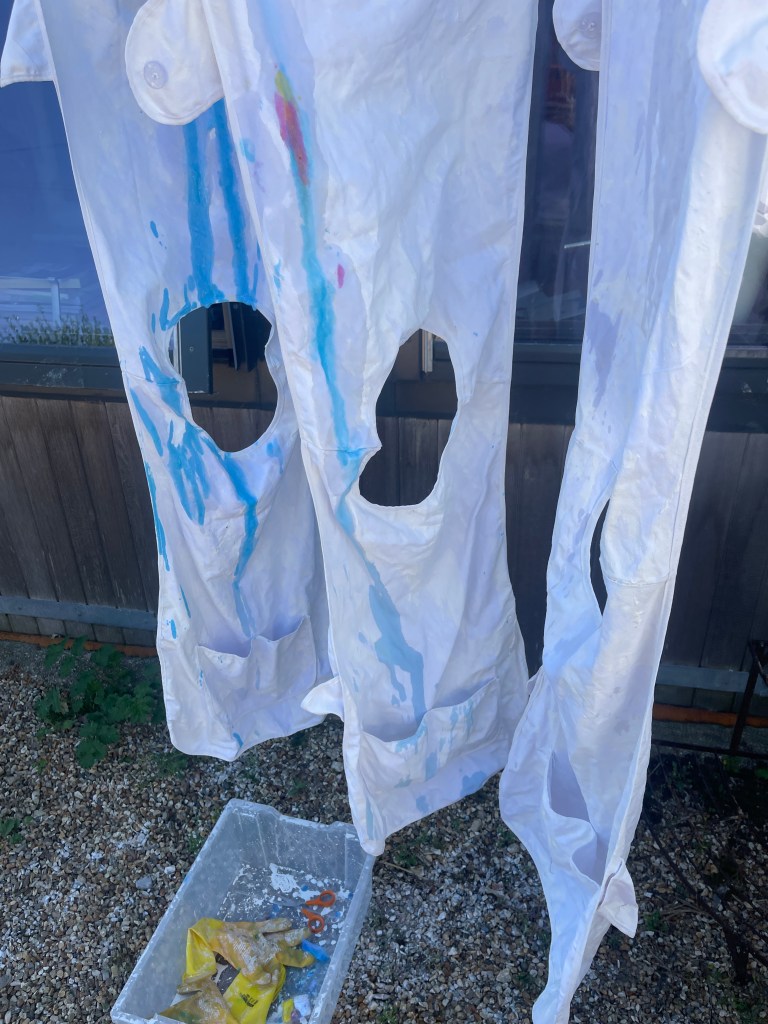
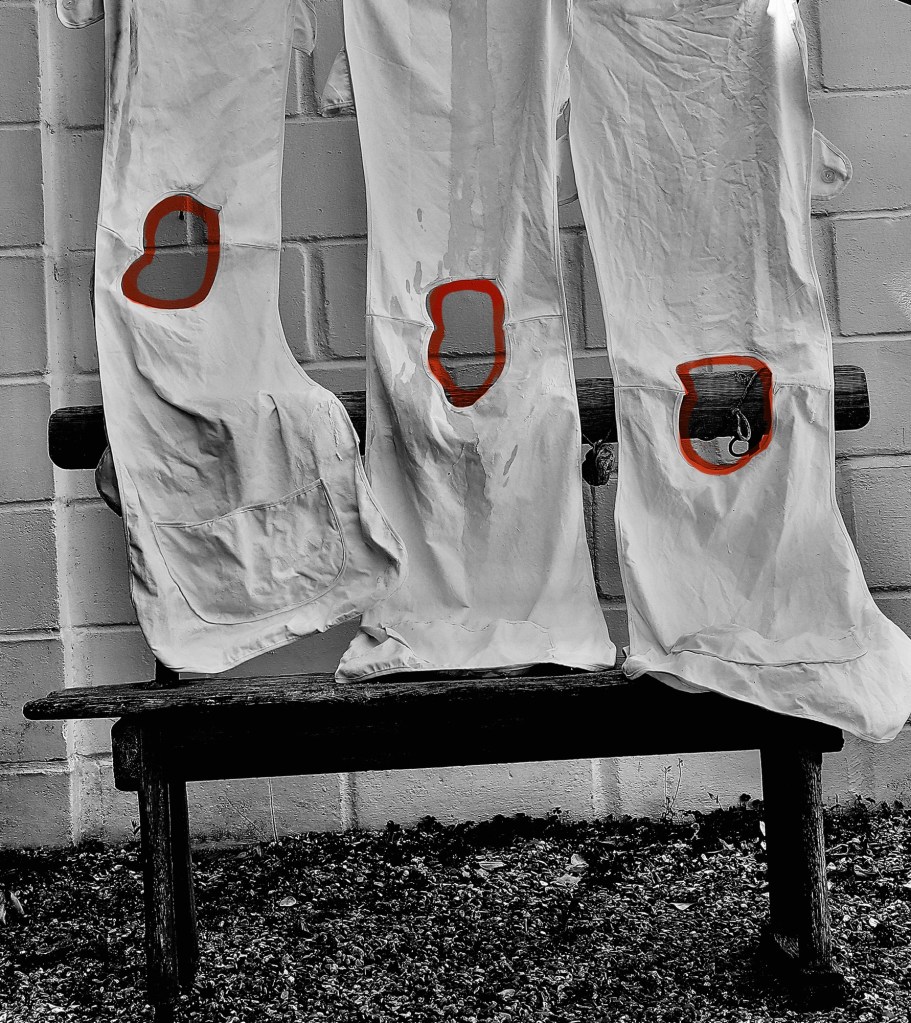
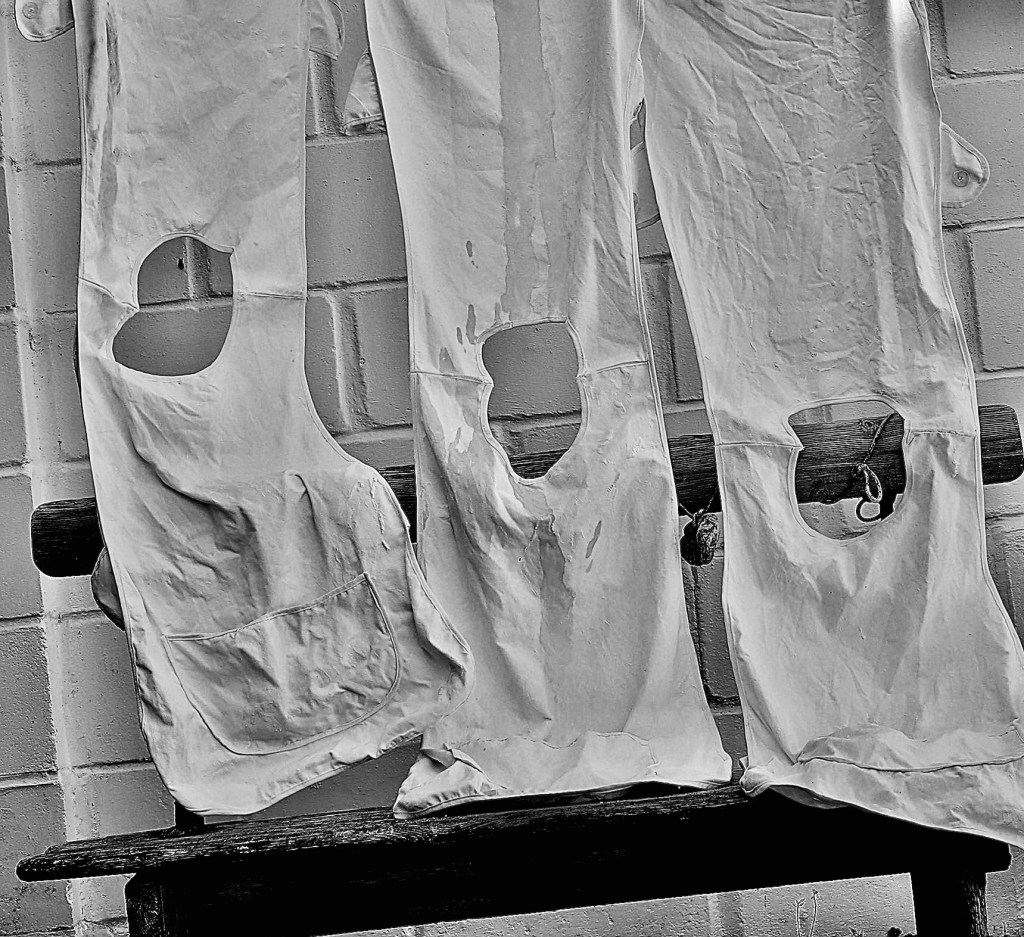
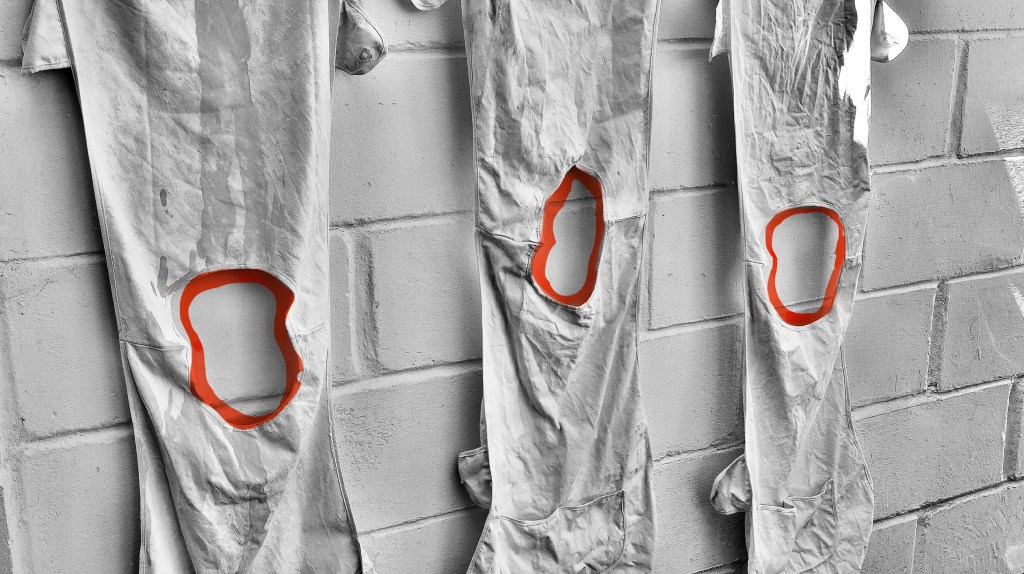
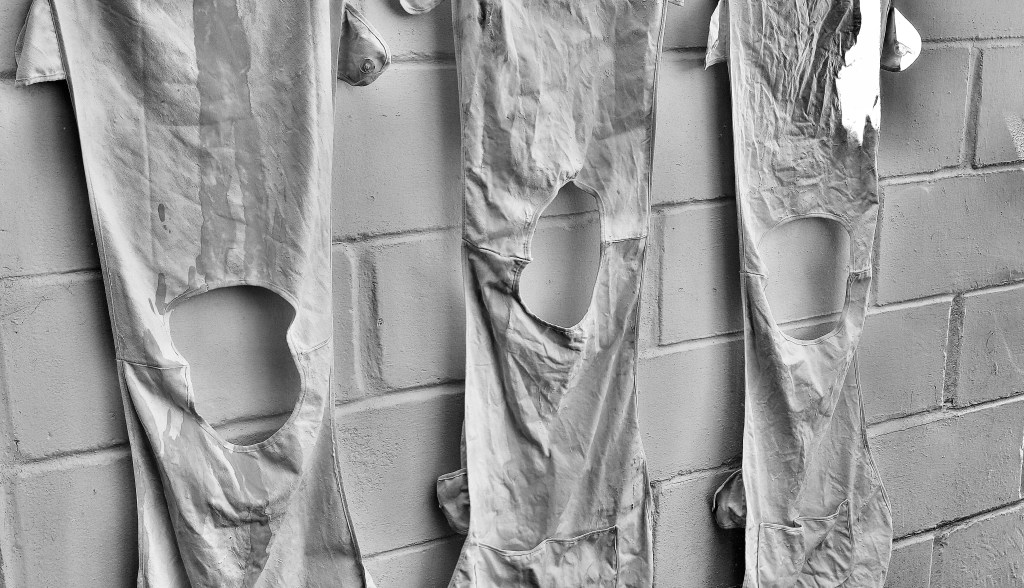
The 3 aprons with a ‘gaping mouth hole’ simulate a group of female domestic workers. Their voices wanting to shout and be heard through the mouth pieces.
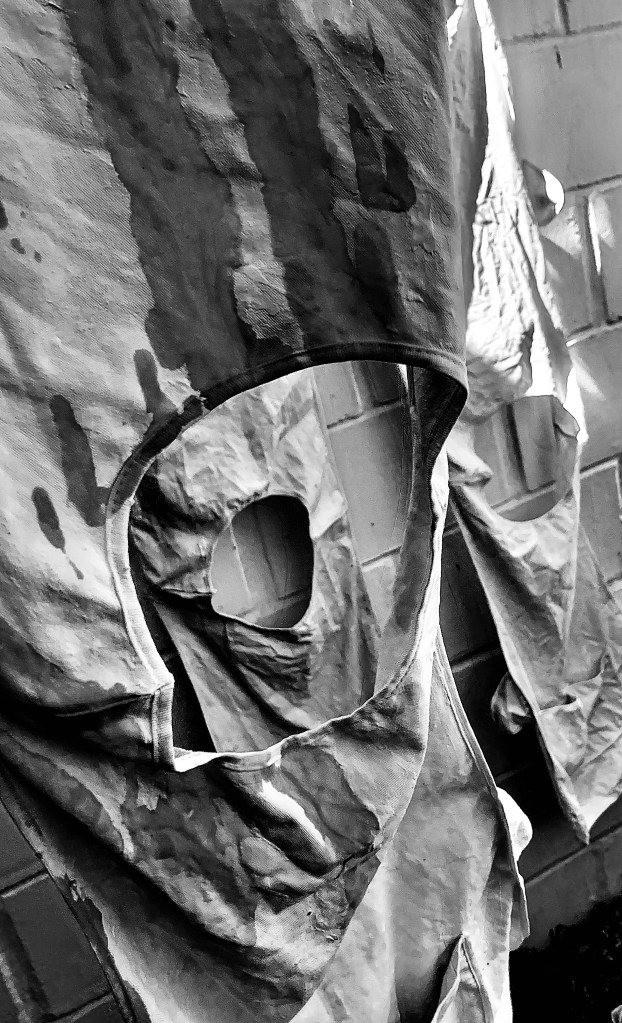
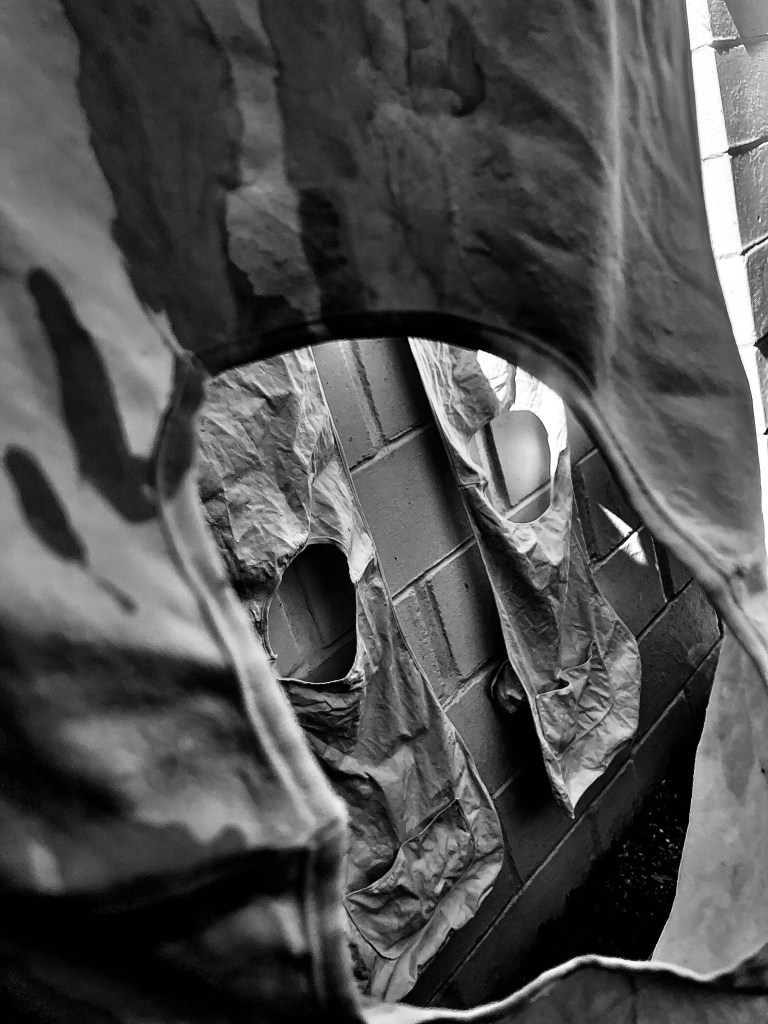
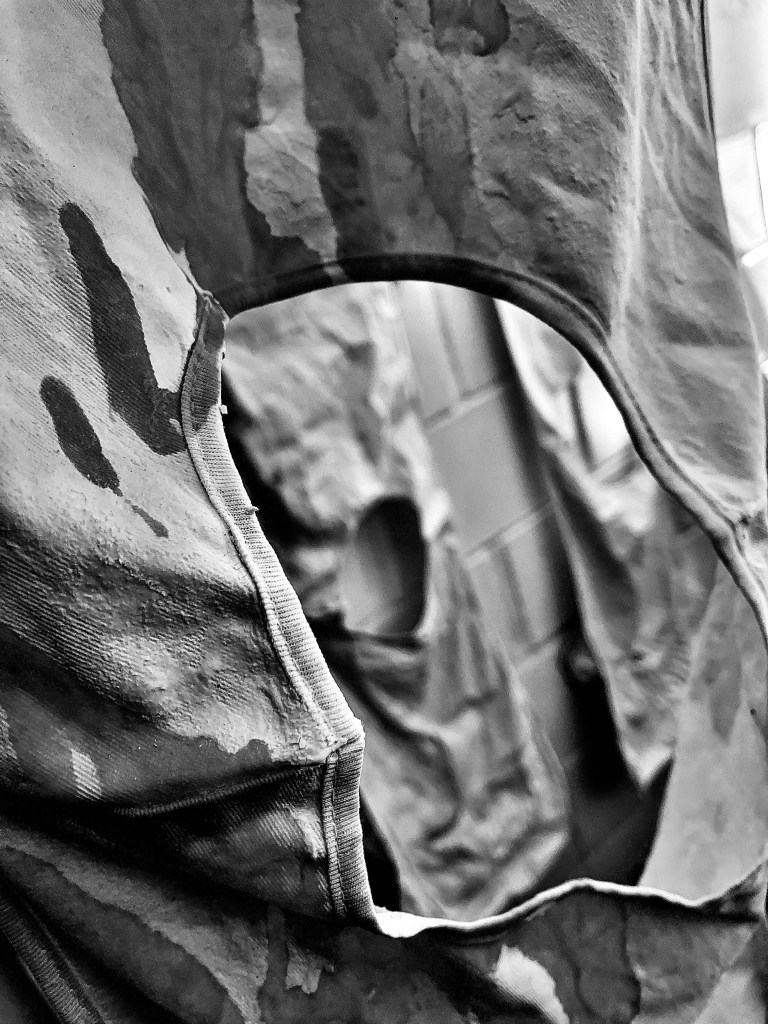
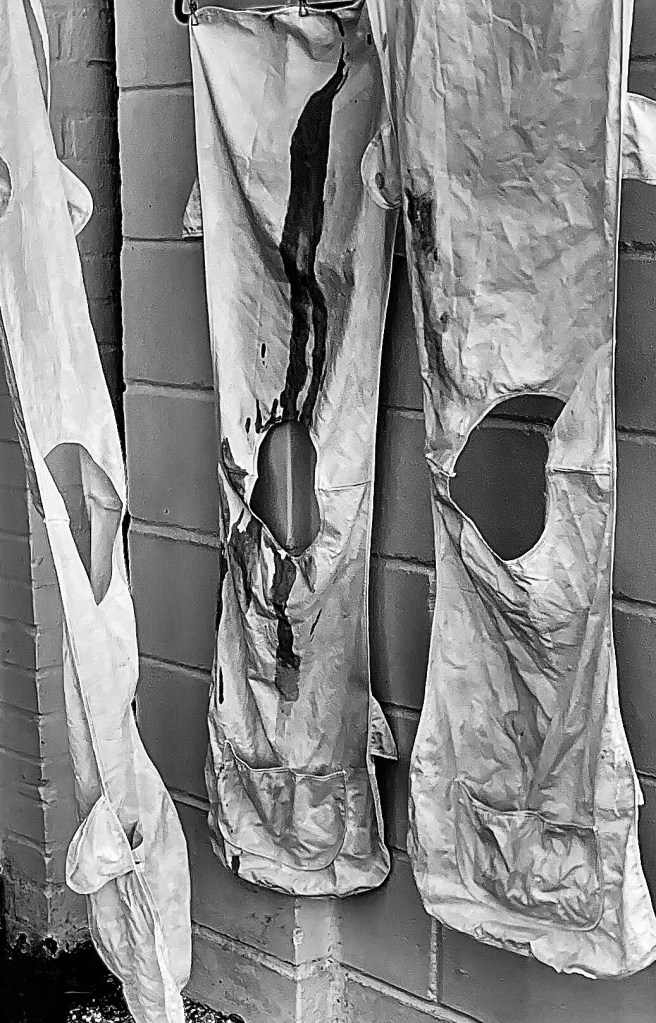
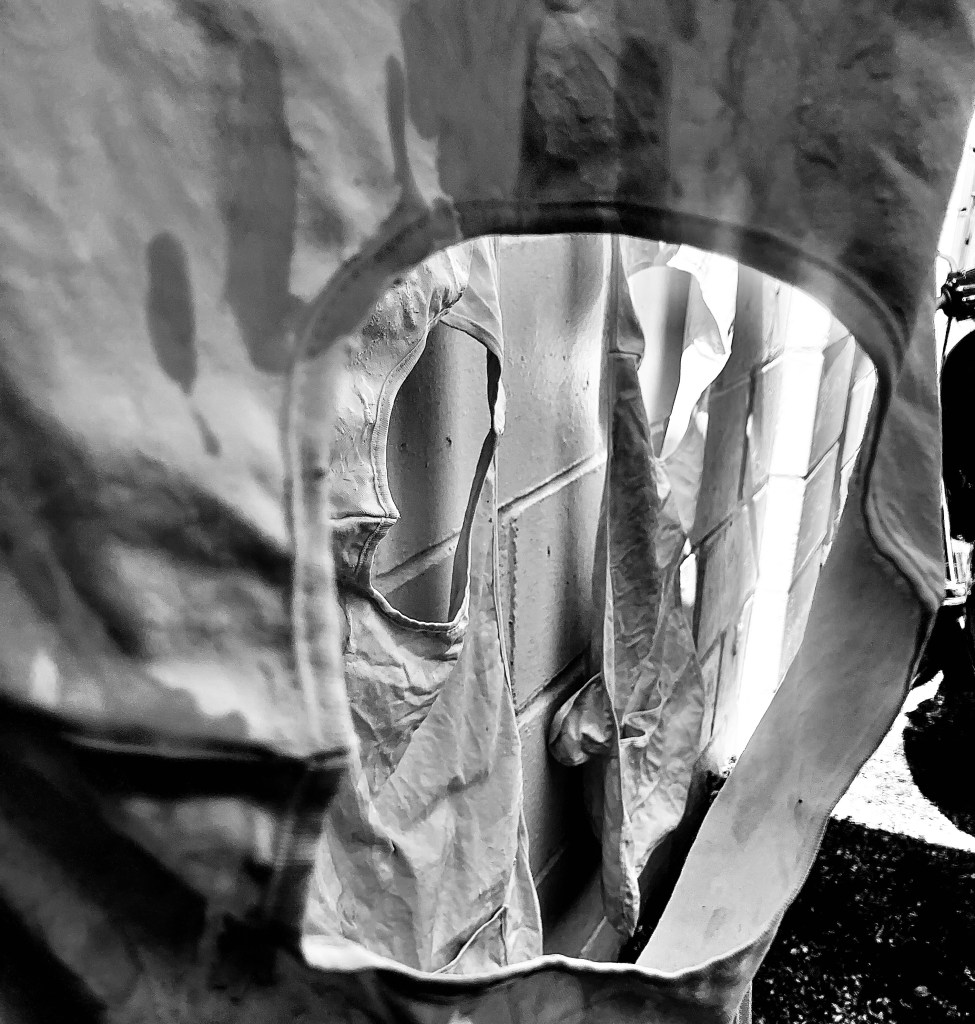
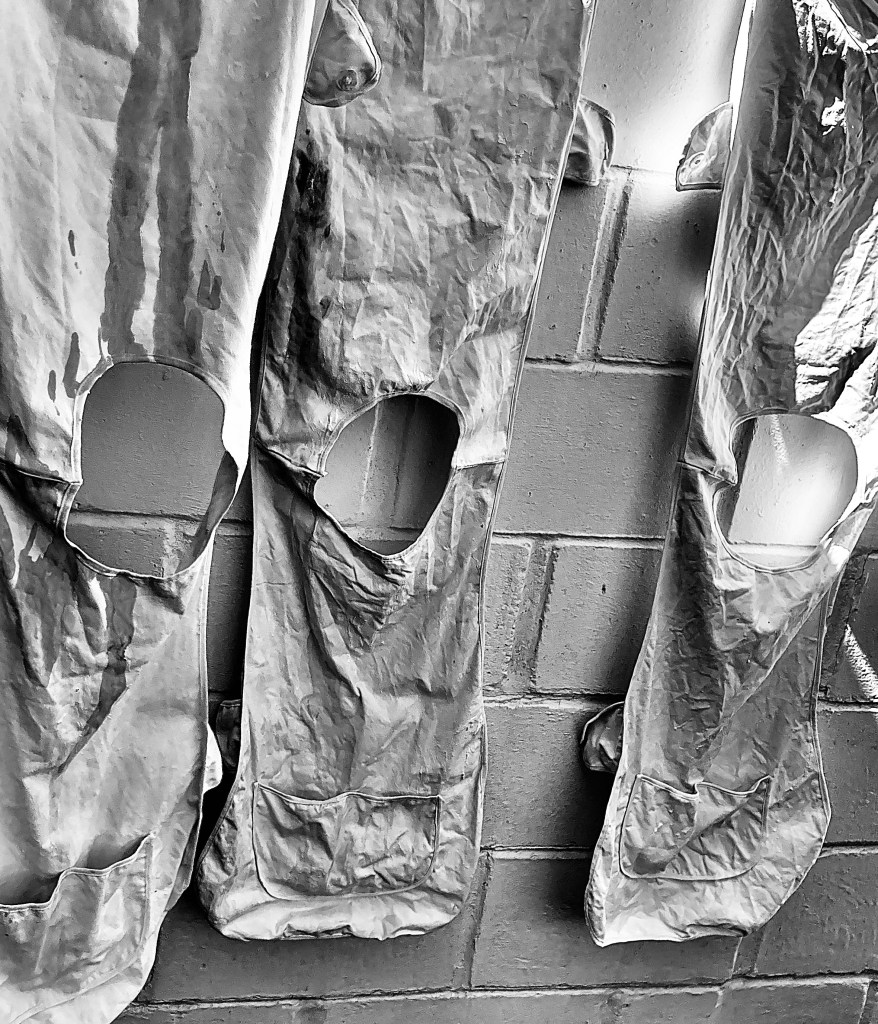
Manipulating photograph to accentuate the mouth-piece.
Discussions. ( Below )
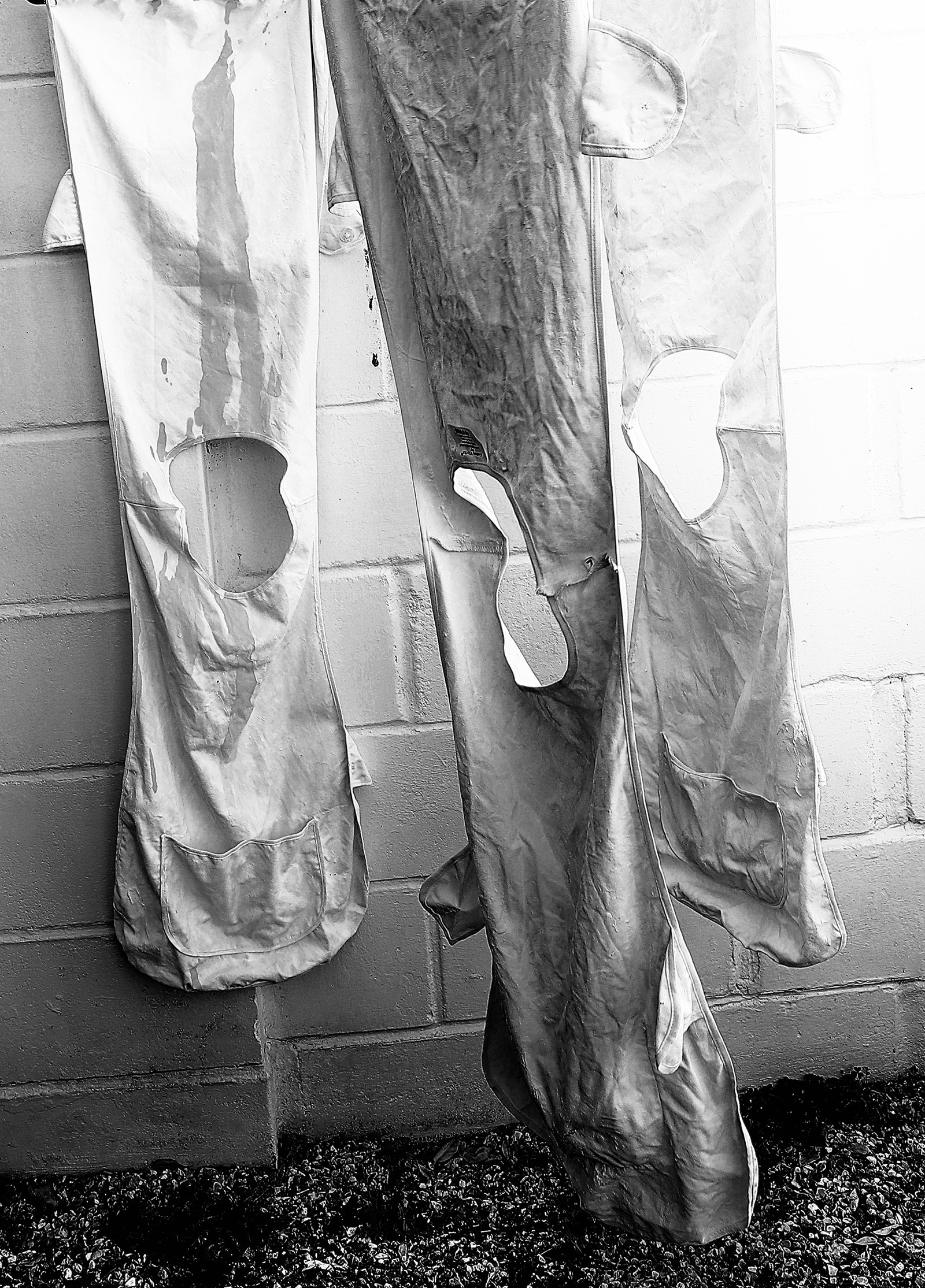
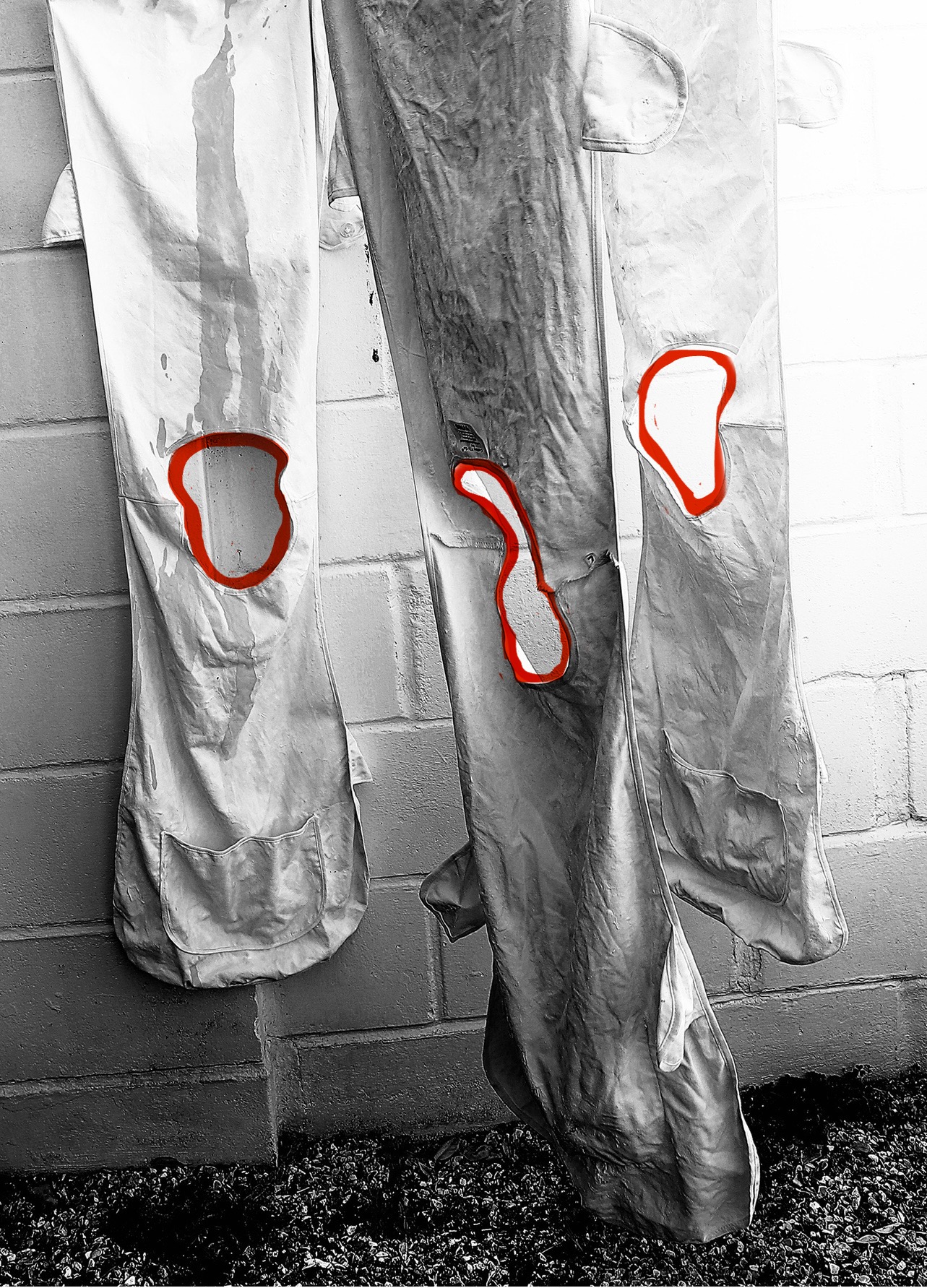
Contemplation – (below)
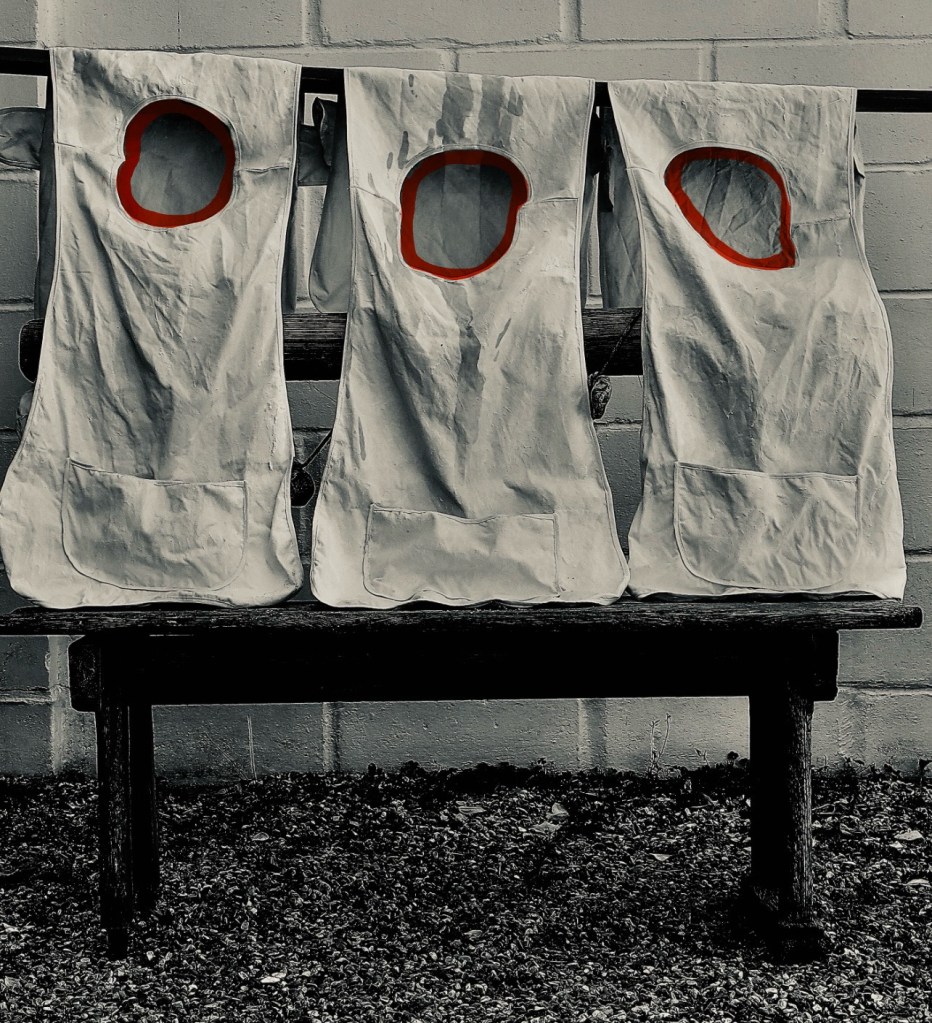
Back Against the Wall.. ( below)
Tea Break ( below)
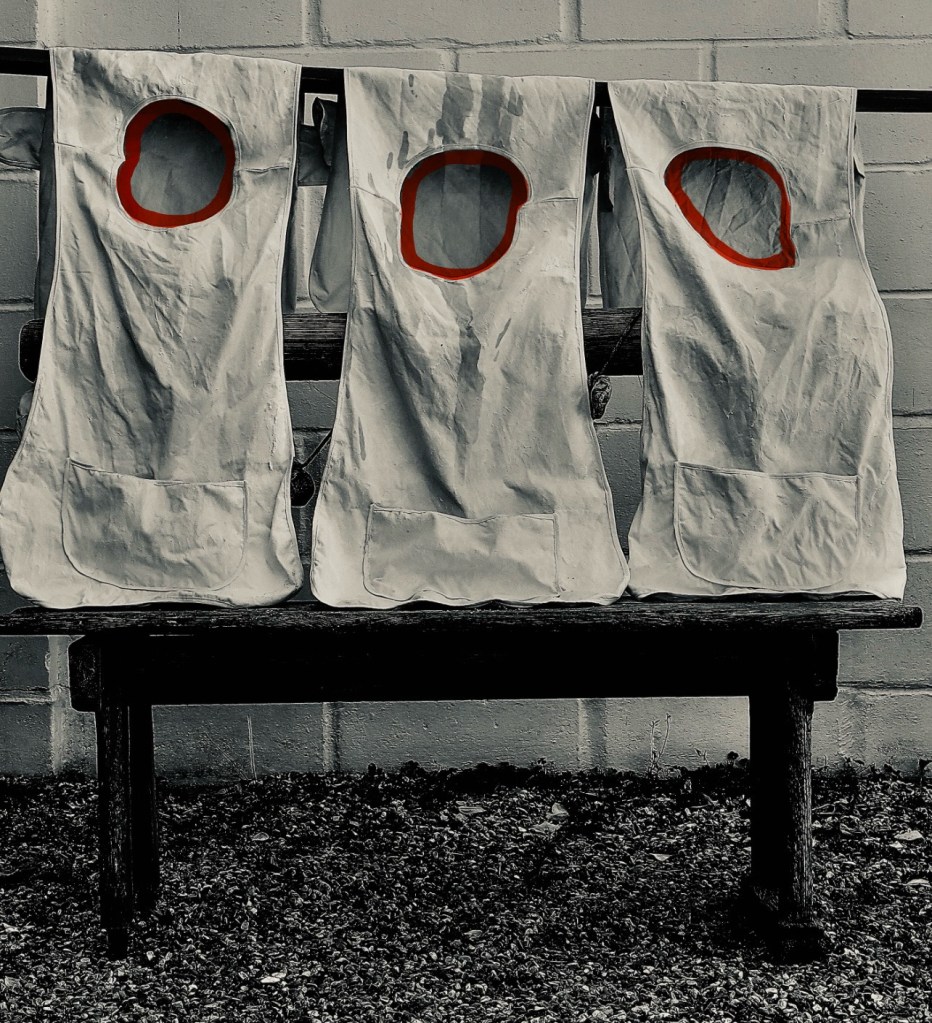
The manipulation of the work has offered a glimpse of dead pan humour to the otherwise serious narrative. Presenting a cultural and historic trope in this way lightens the darker connotations of the hidden worker and work -load pertaining to the female. The image of the apron symbolic as the work wear of the subservient, often silenced or silent in domestic and commercial environments.
This work has a great conceptual feel with intended deeper elements of enquiry. The gaping red mouth pieces reminiscent of lips or lipstick highlighting the female narrative with the pared back mundane tasks of continual domestic house keeping and management. This feels to be a more resolved work than the waxed, static apron, less illustrative and obvious in narrative with the intended humour and starkness of imagery allowing a wider audience to be reactive.
Selection of Learning Log. 14.
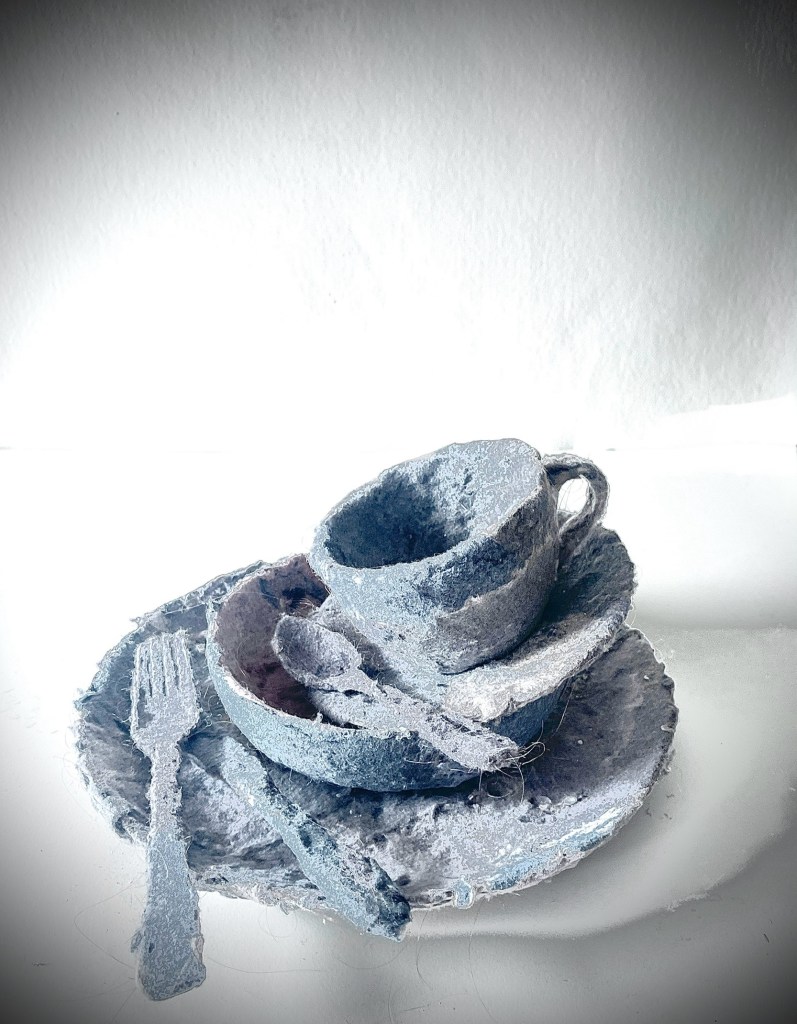
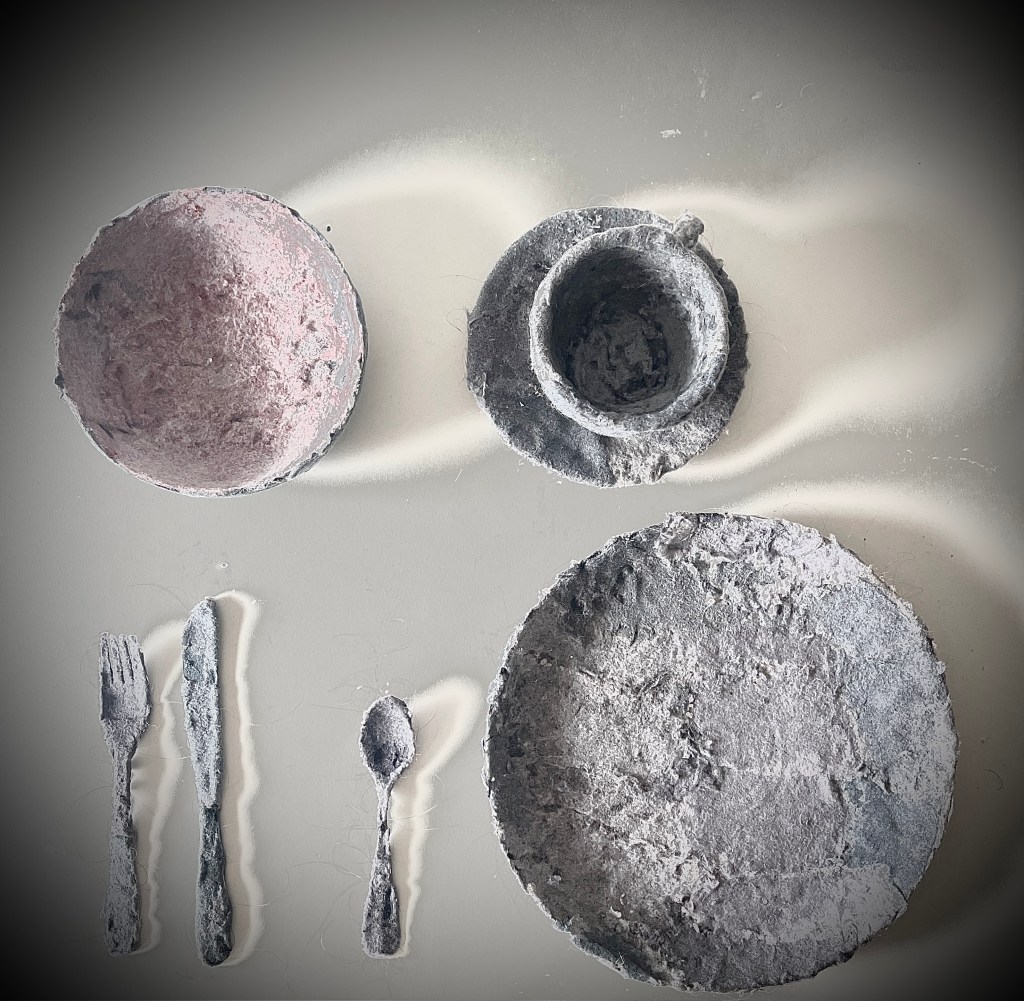
Continued work on ‘The cup of us’.
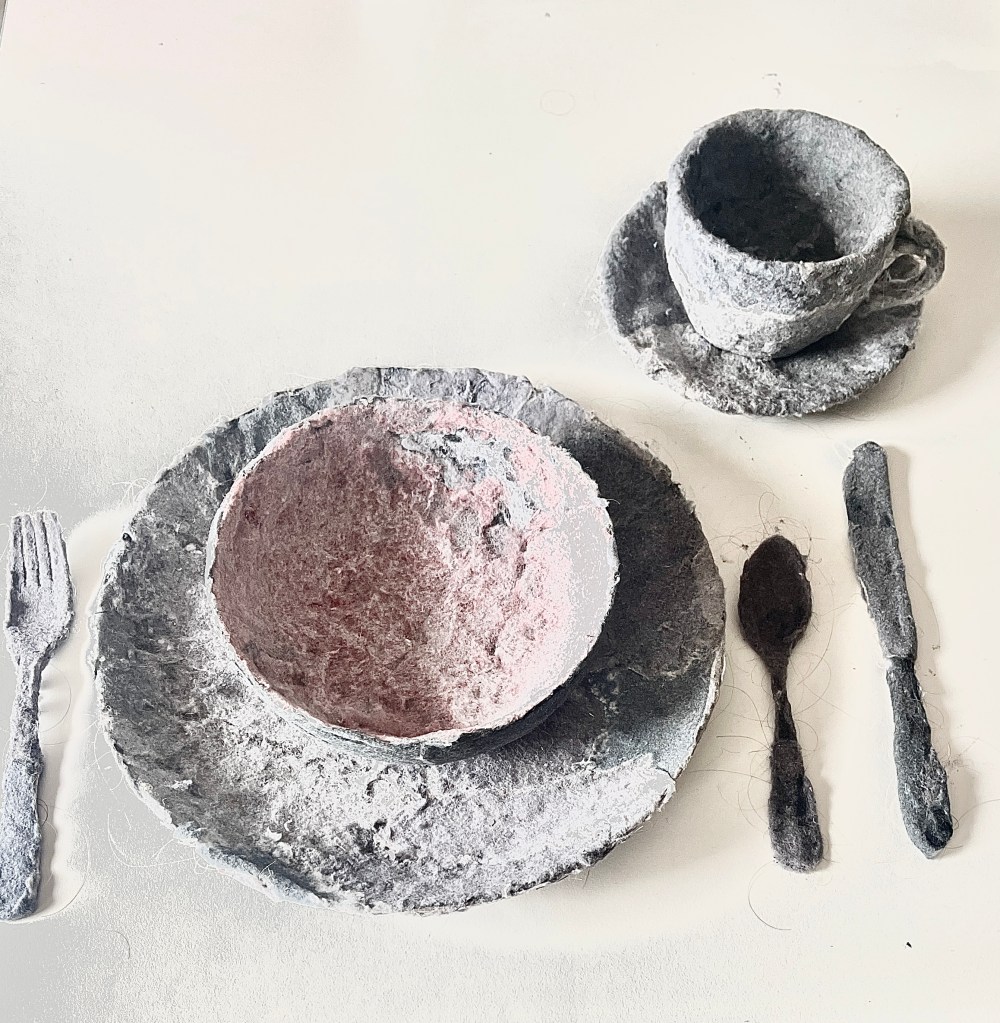
This exploration was initially explored with a single cup/saucer format and did evoke much interest at a recent exhibition space. The uncomfortable and yet the familiar and the seemingly soft, fluffy form of. the cup encouraged much viewer engagement and enquiry. The explanation I offered was in regards to it being a metaphor for our daily lives. The daily ‘cuppa’ so synonymous in society and in a family, domestic role as well as outside of it in an office or other commercial environment. It is symbolic with imbedded cultural and societal references of comfort, relationship, hospitality, greeting and sharing. It is such familiar an object of our every day as is its making ritual.
I wanted to continue to explore the re-creating and distortion of the everyday in relation to the domestic and all too familiar settings. encouraging some tactile engagement from the viewer, questing of the norm and essentially the continual chore and rotation of the domestic work load. Our individual domestic existance perhaps not so very different from each other, societal construct and practicality egendering our private homes and ways of being.
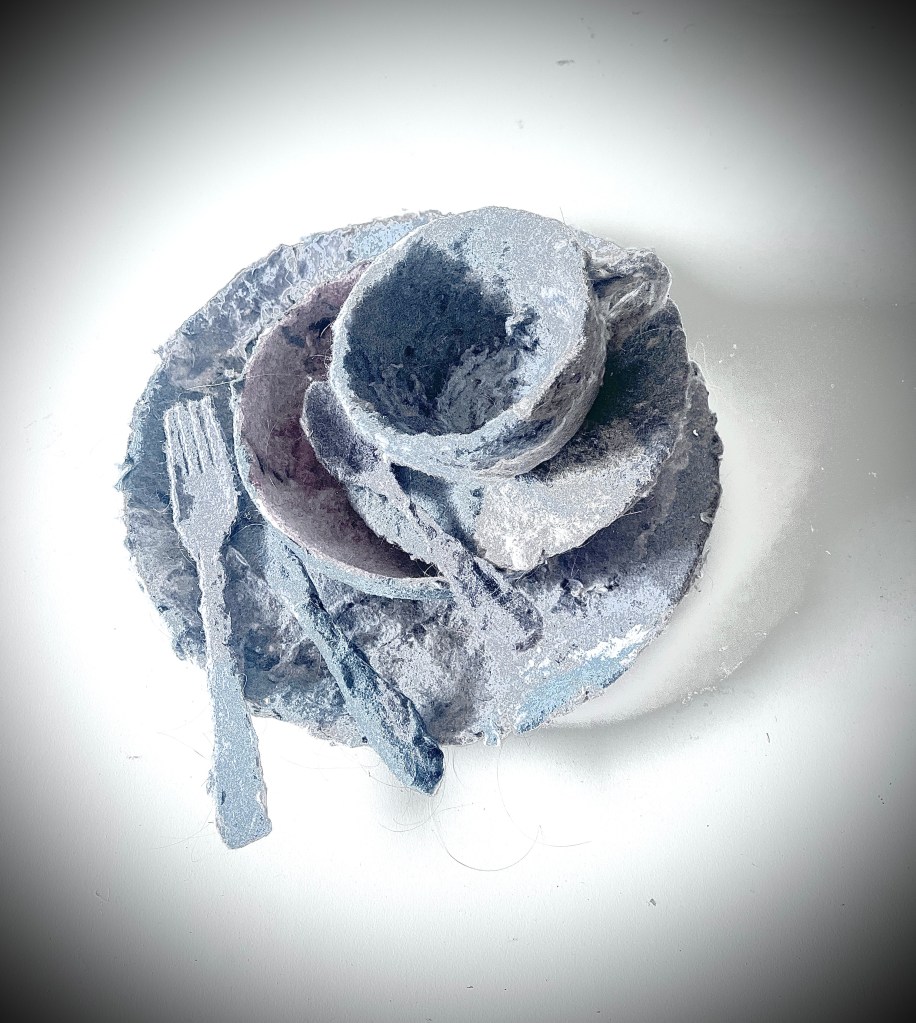
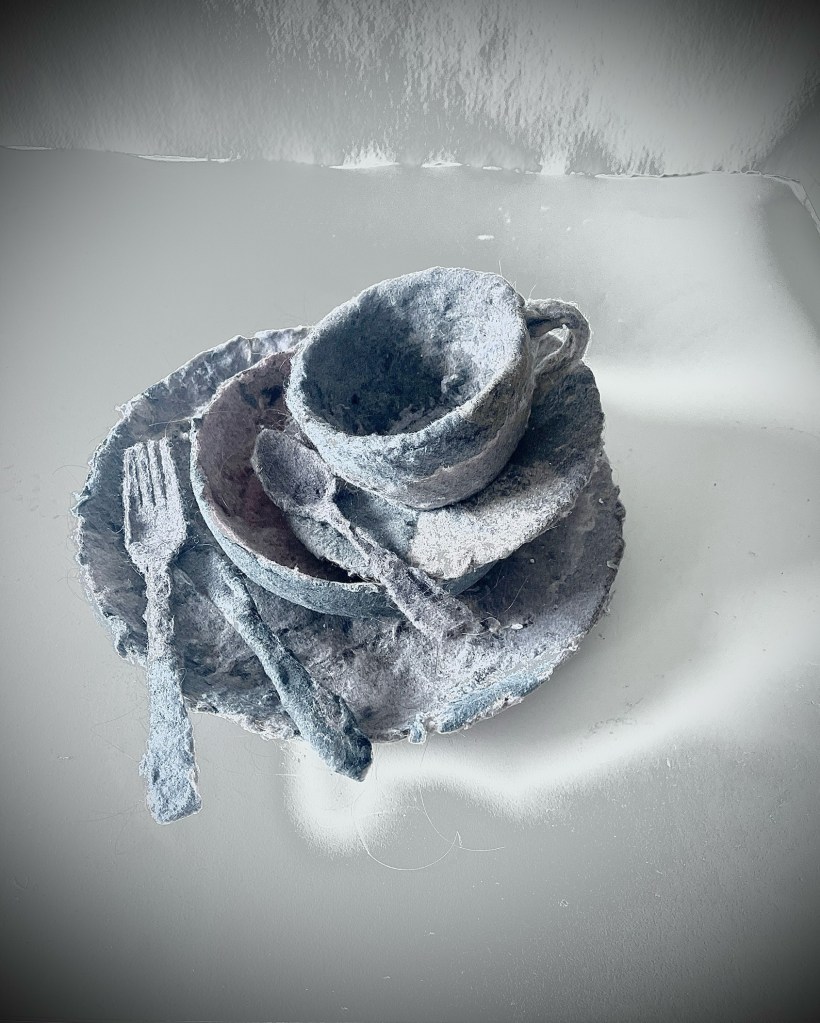
The machine detritus that covers these familiar objects individualises them, draws attention to them and also to our societal chores and functions. They are a ‘ leveller’ we can relate to in regards to functionality, they might be expensive, fine bone designer ware, a cheap- multi buy product, vintage or up-cycled but carry the same sense of necessity, chore and norms.
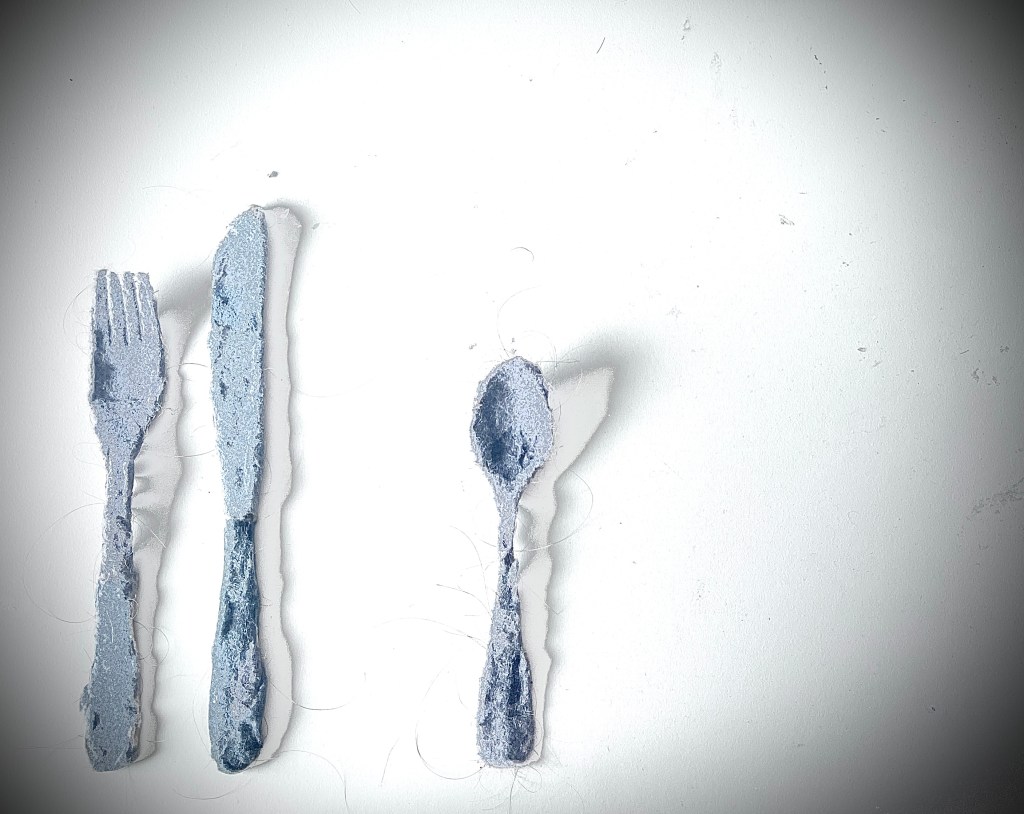
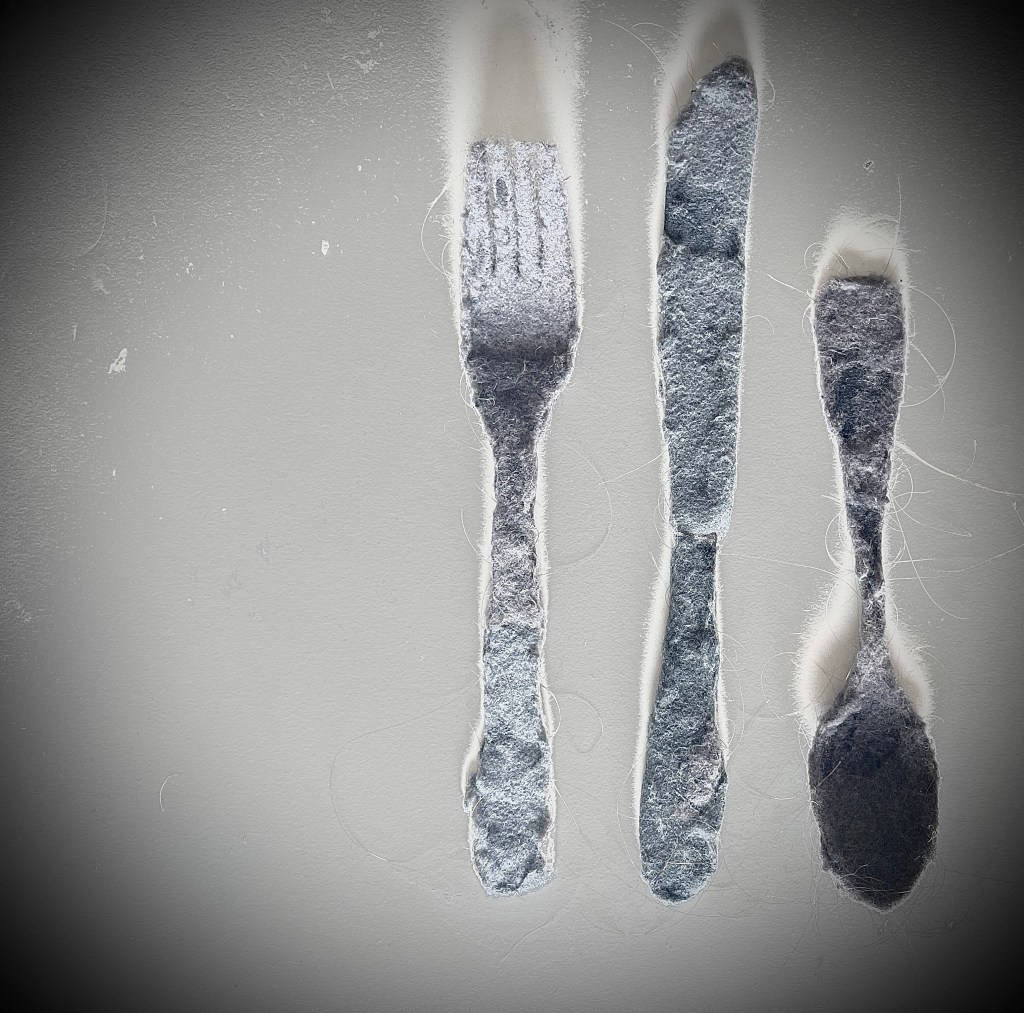
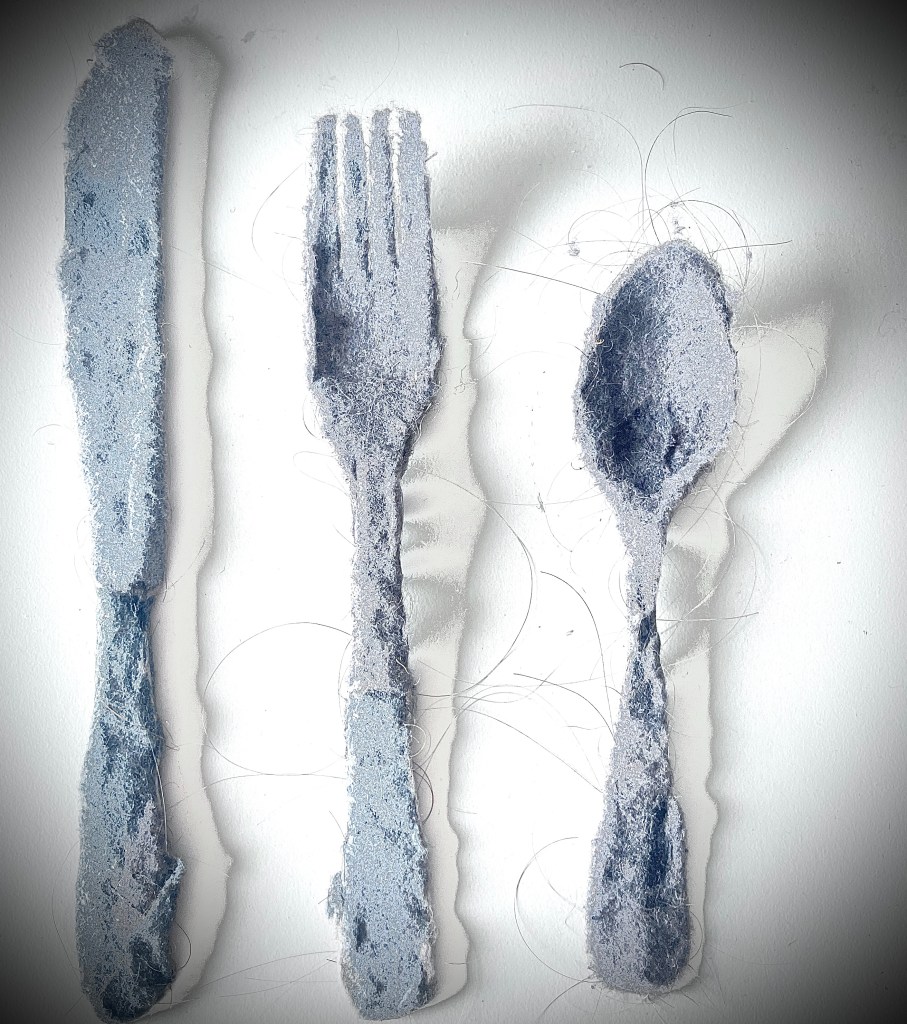
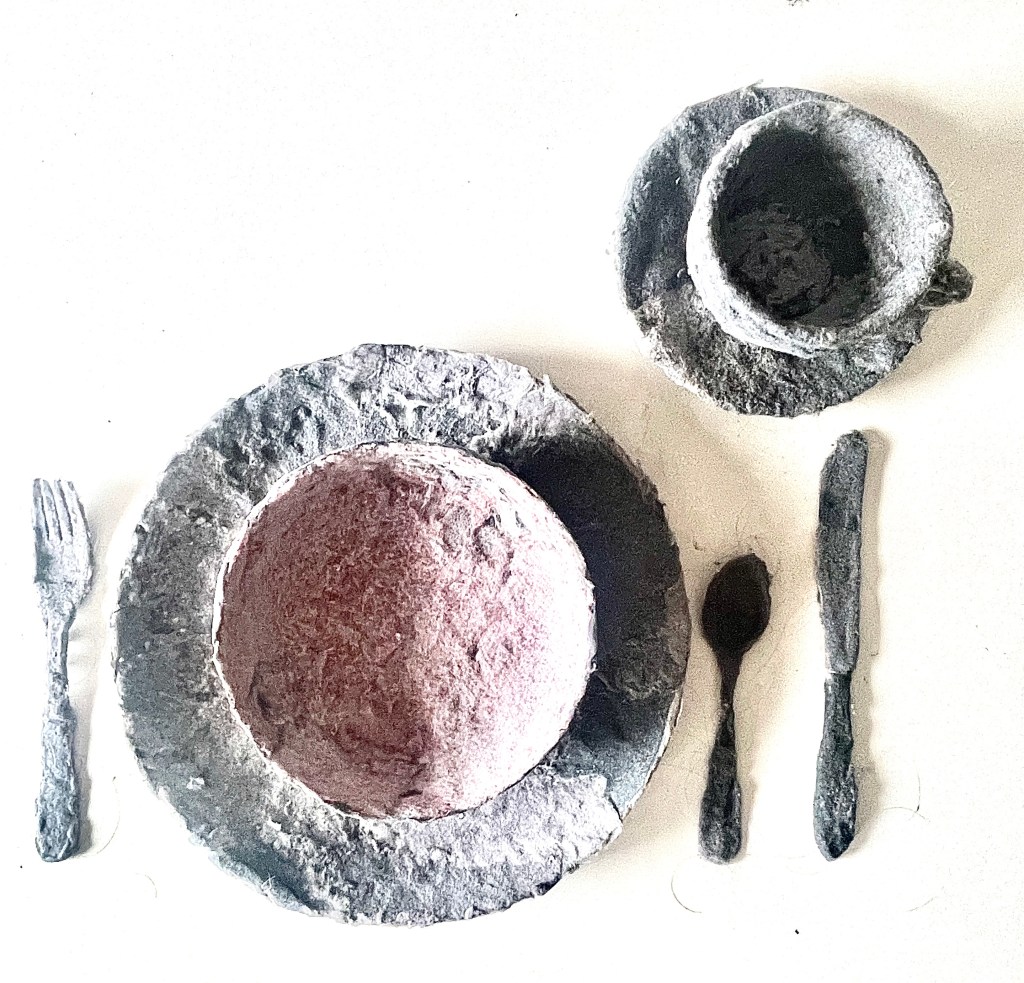
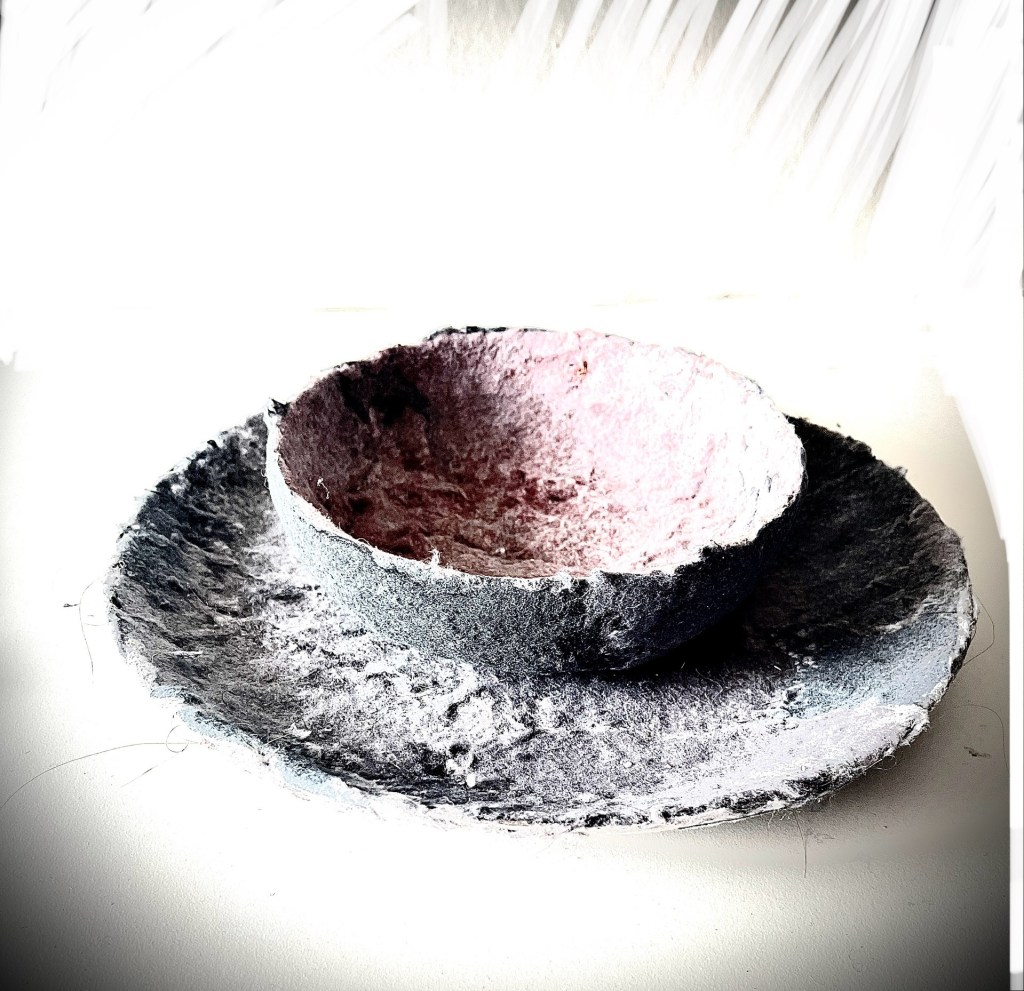
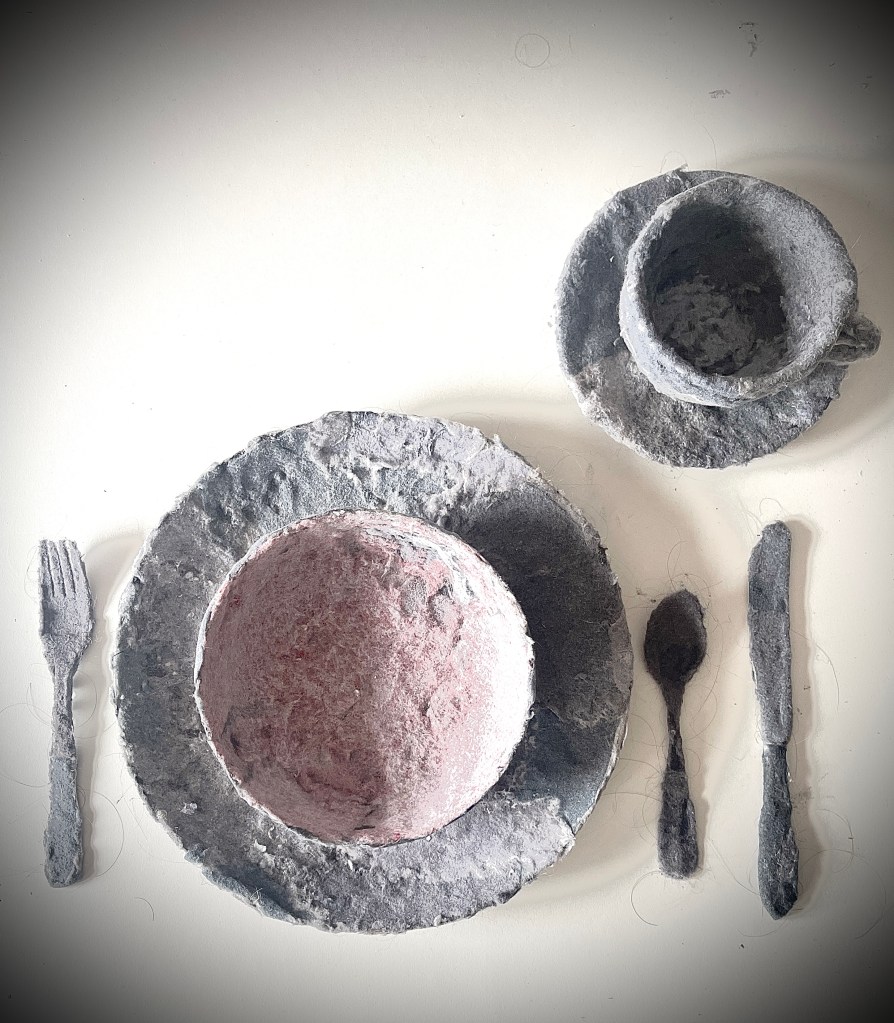
Below – ‘Chores of Us ‘ – Machine detritus – Plate, bowl, knife, fork, spoon, cup ad saucer. –
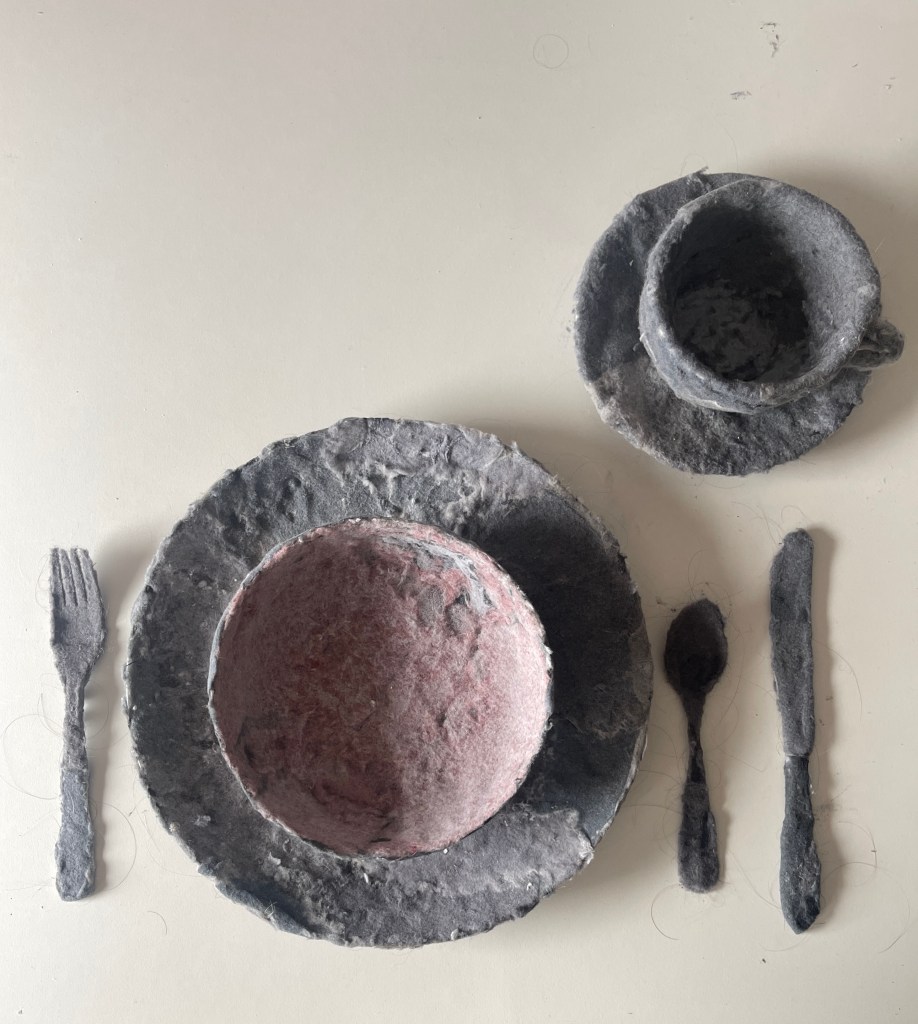
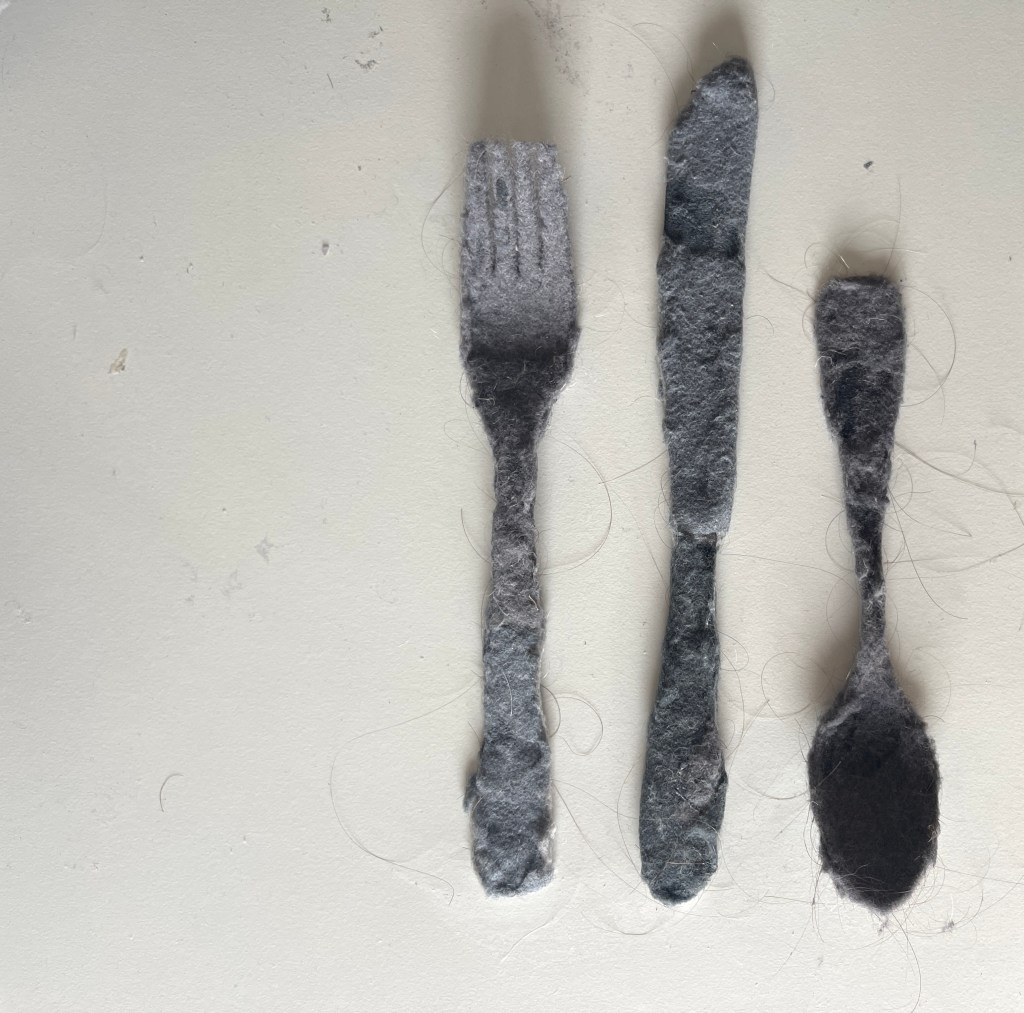
The photographic manipulation and curation further changes our traditional viewpoint as they look to be made of stone, smothered or mummified in some way. A strange sculptural elegance with uncomfortable colour and texture. A repulsion and disgust.
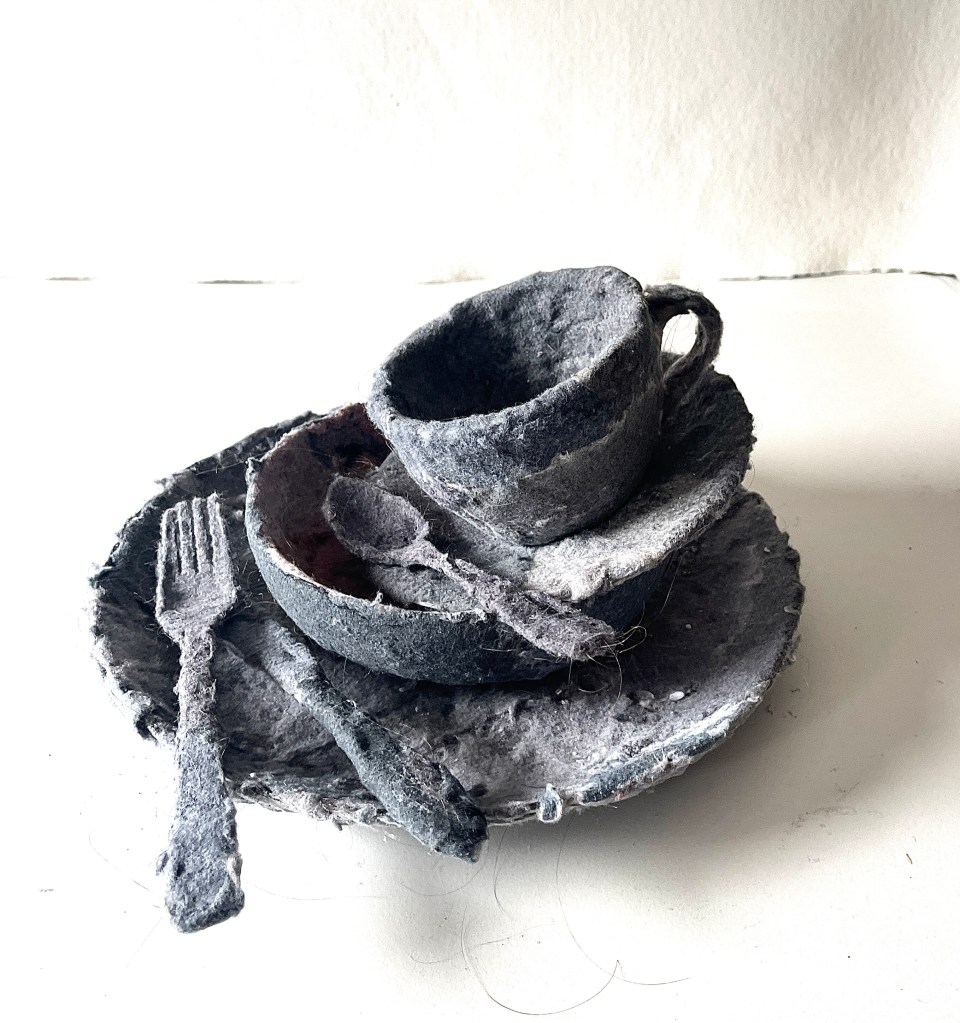
Abject dinner service.
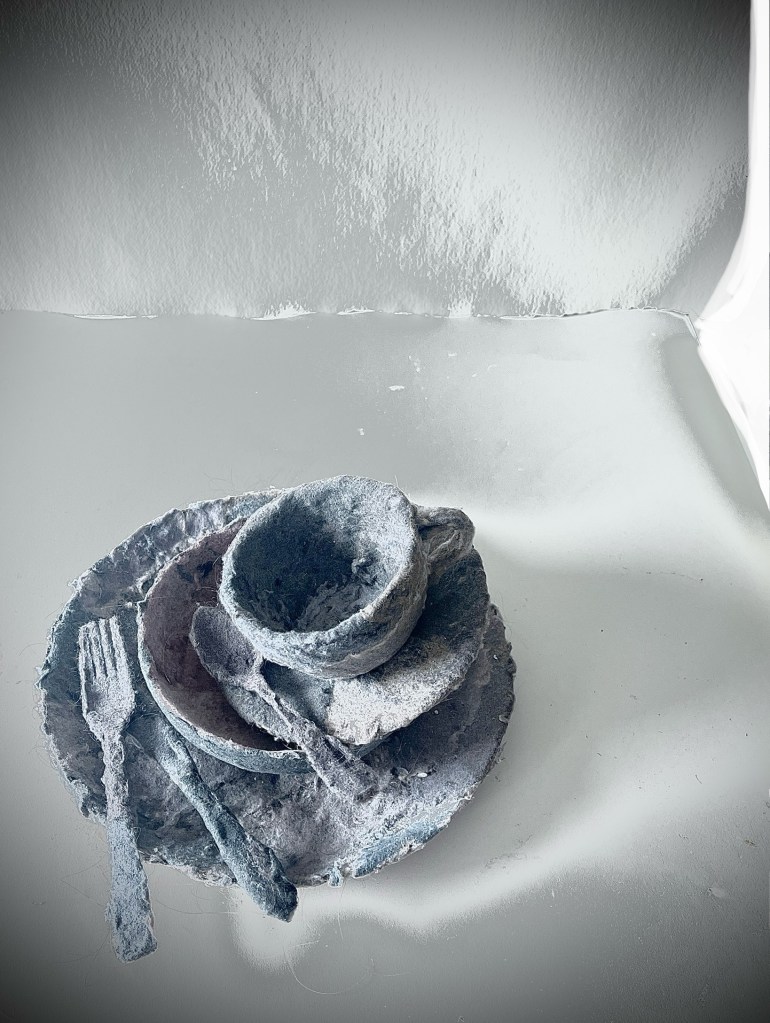
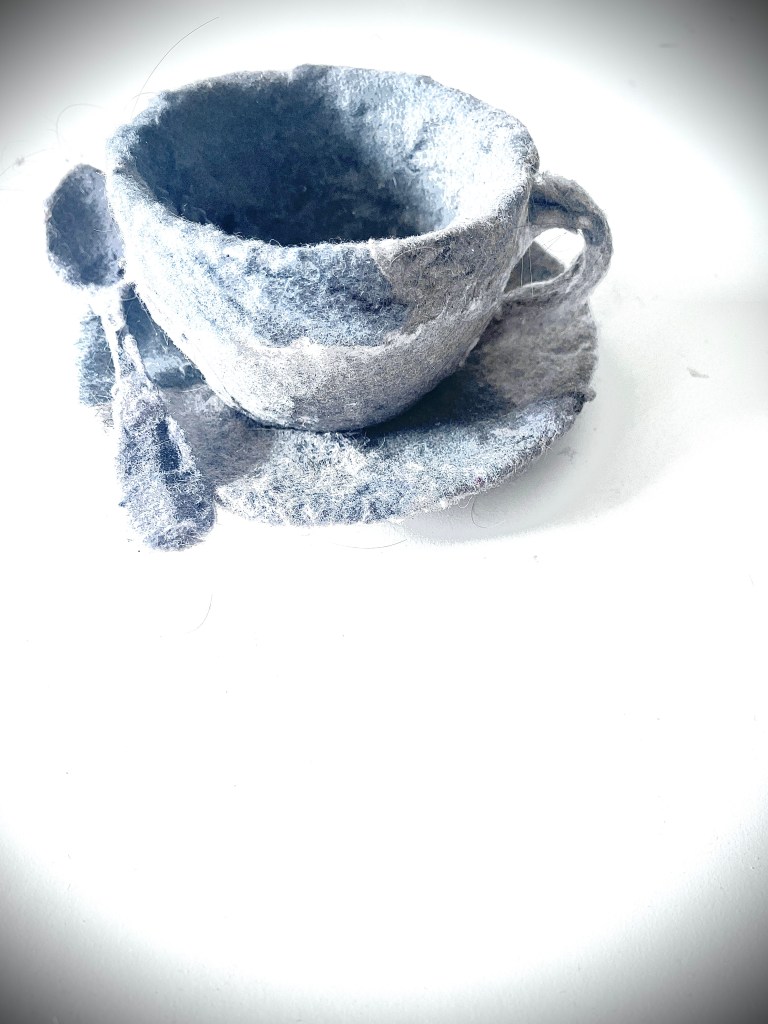
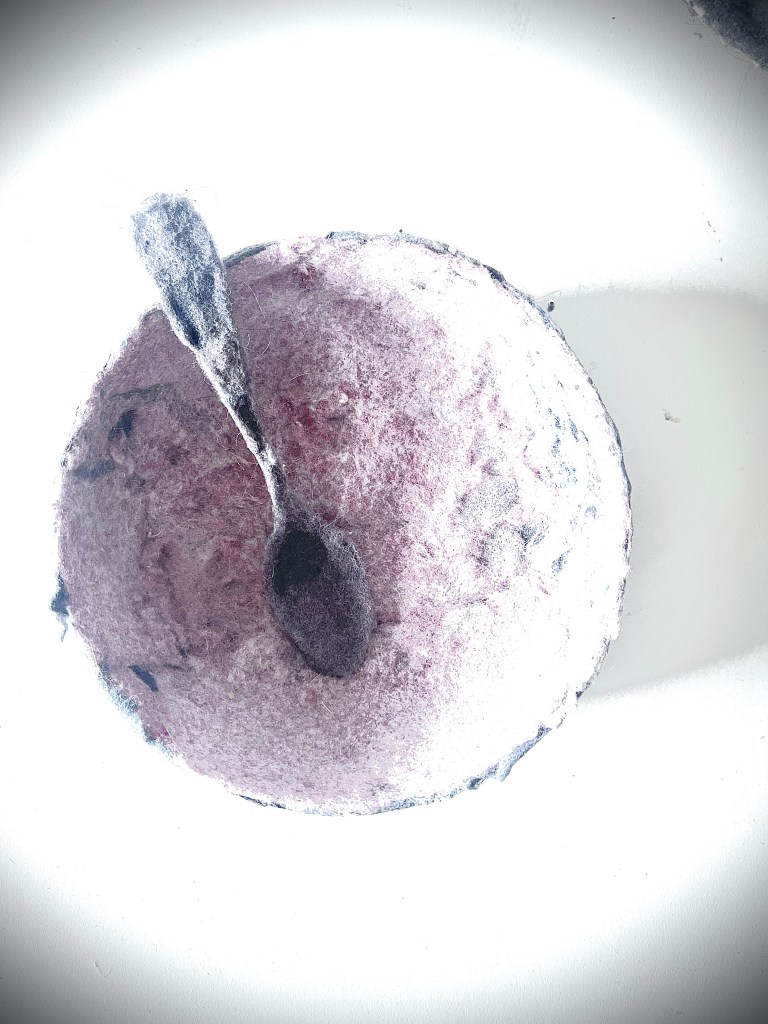
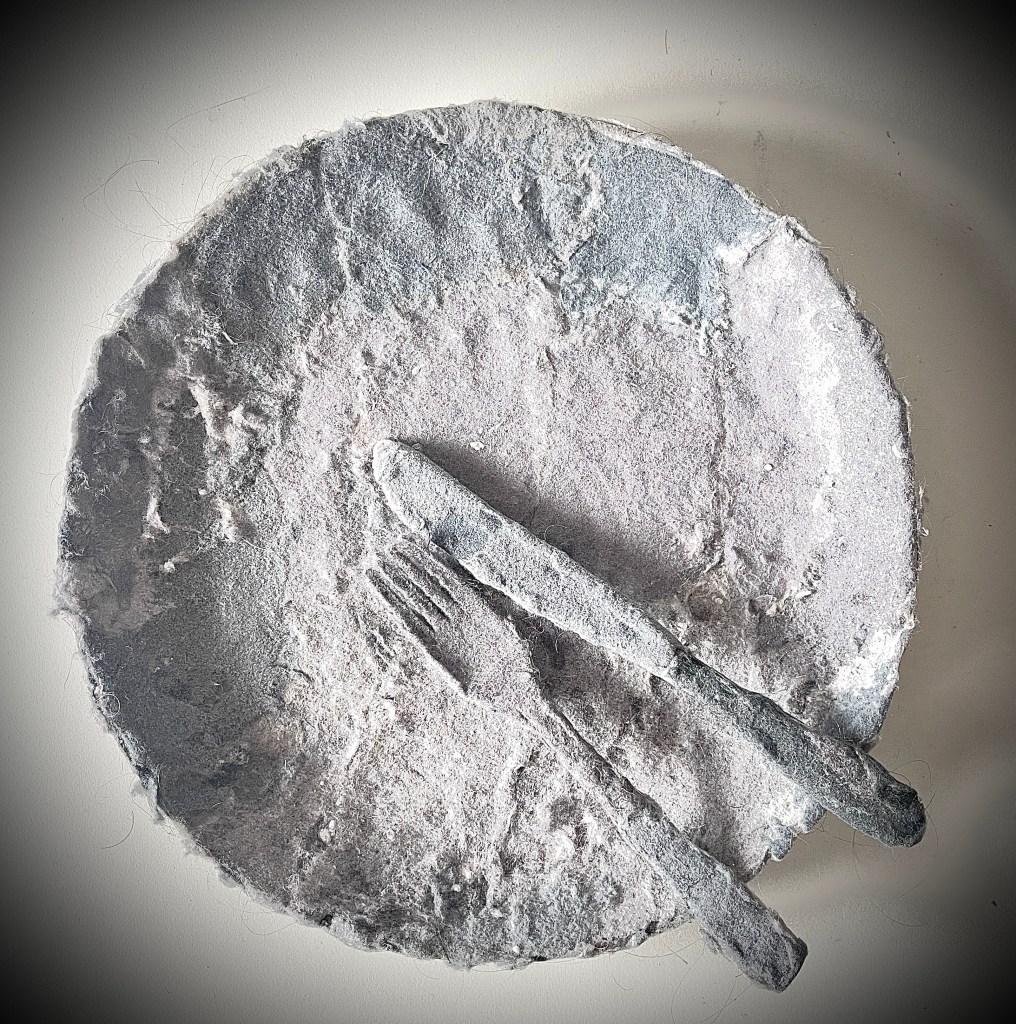
Adding in the washing p bottle for context and further indication of domestic chore:
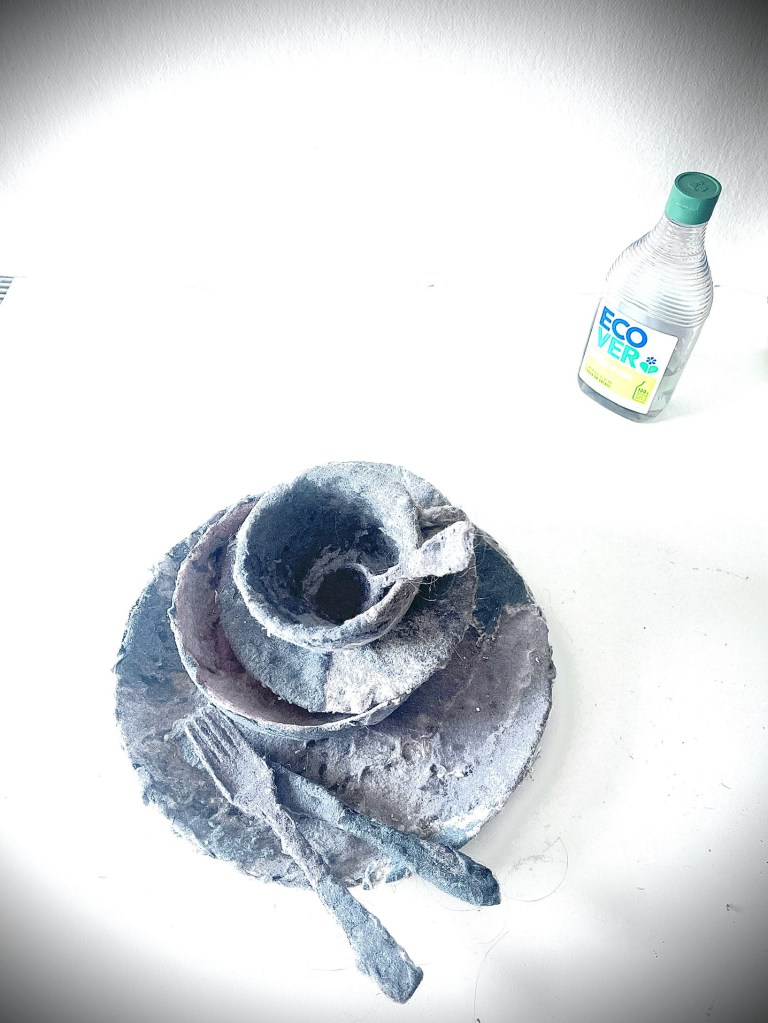
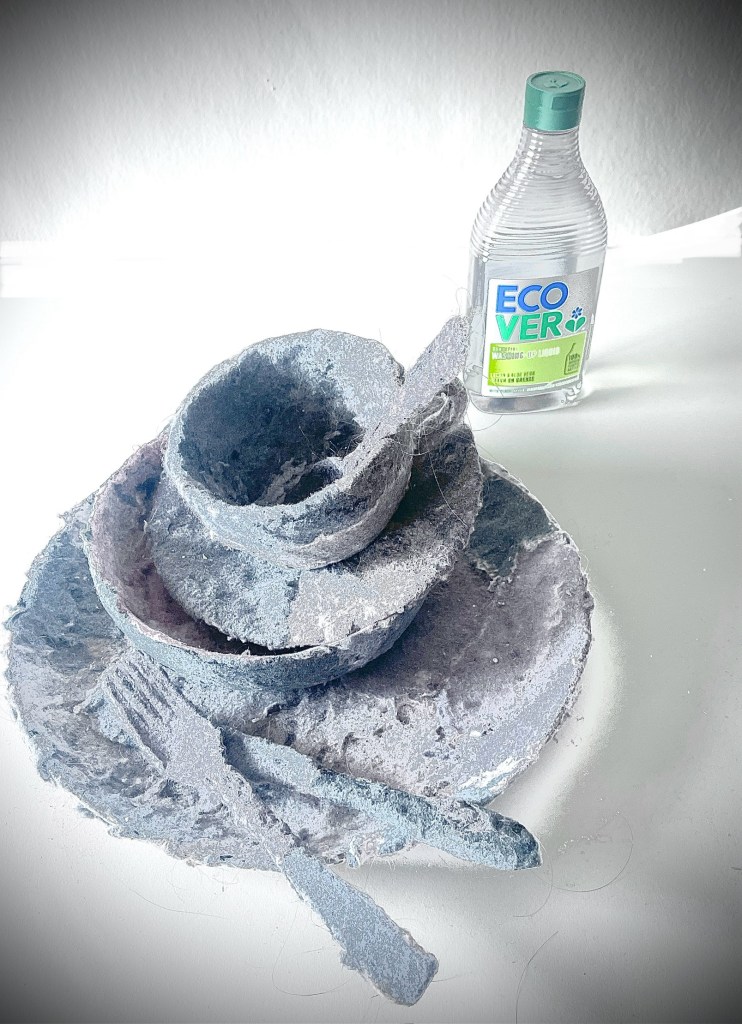
The relevance of own practice and narrative behind these objects can be explored with elements of a performative practice. They amplify with a sense of scale and relatability when seen in the domestic setting. With this in mind I arranged for some photographs to be taken with the items at my kitchen table simulating the process of eating and drinking from them.
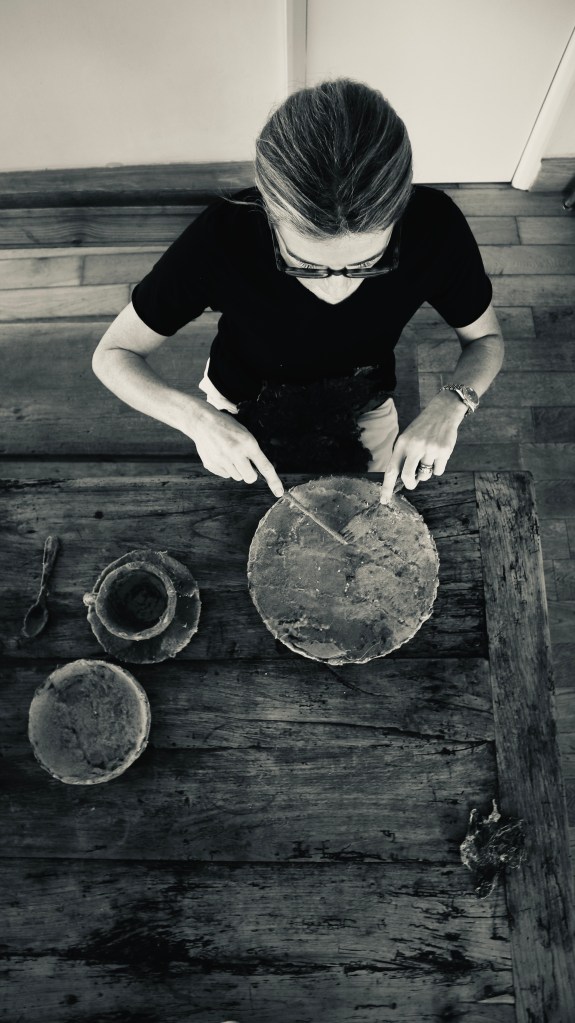
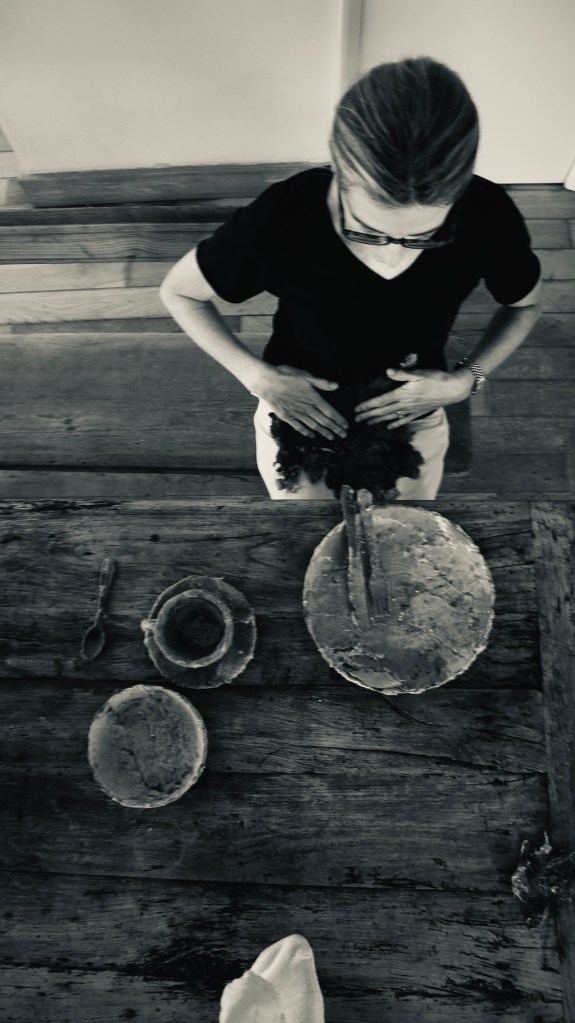
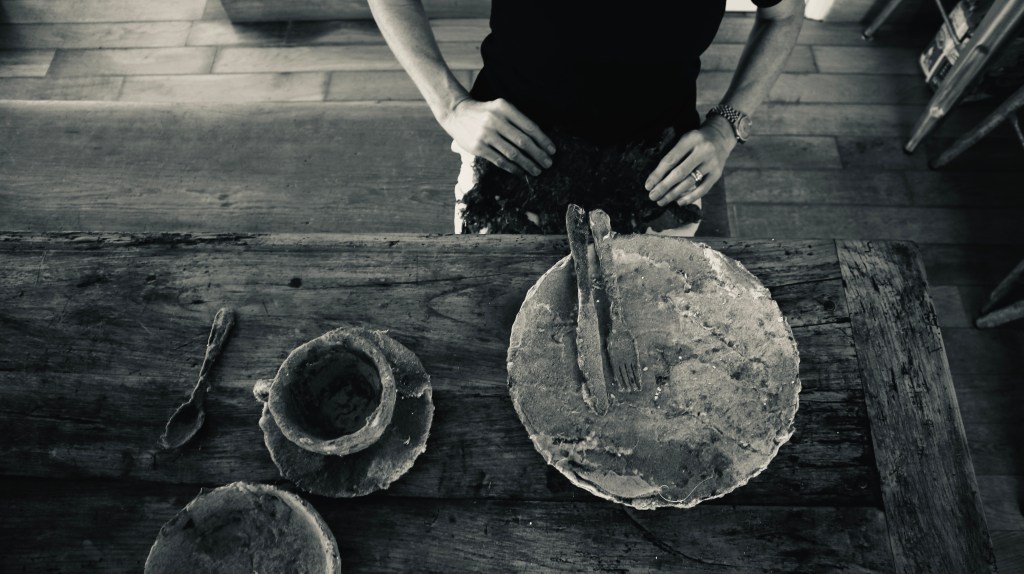
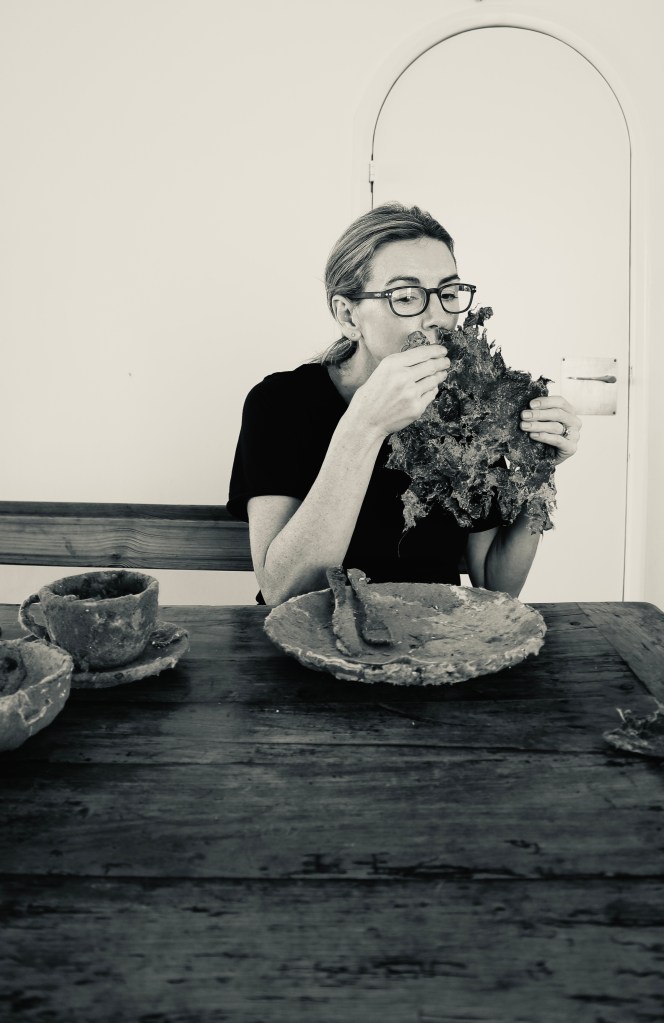
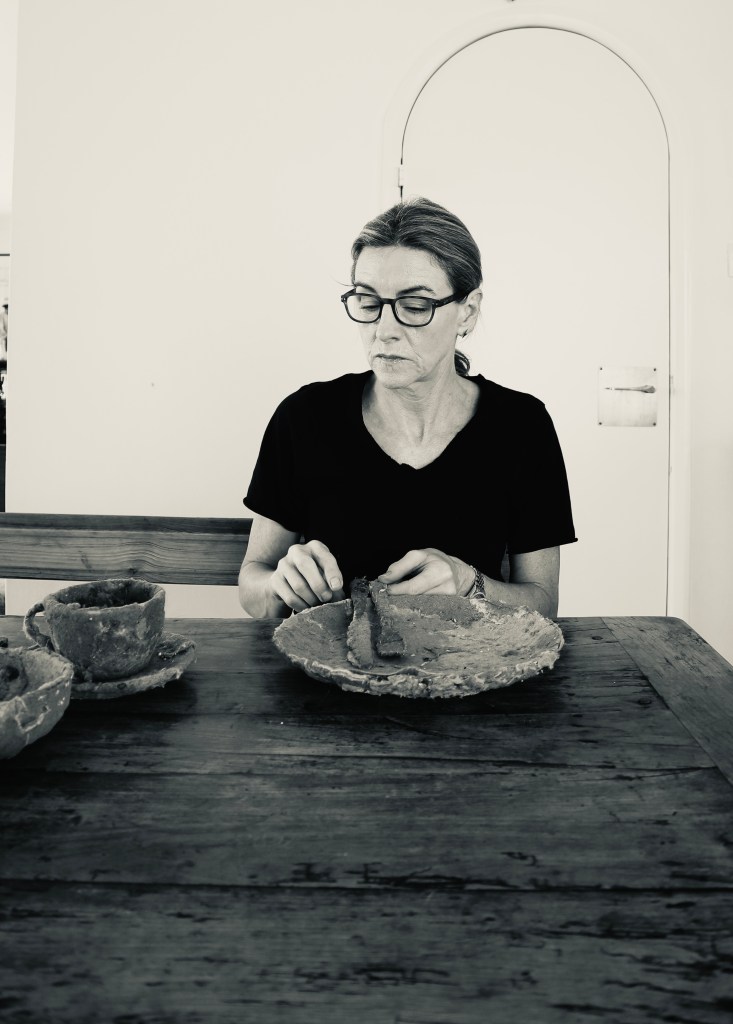
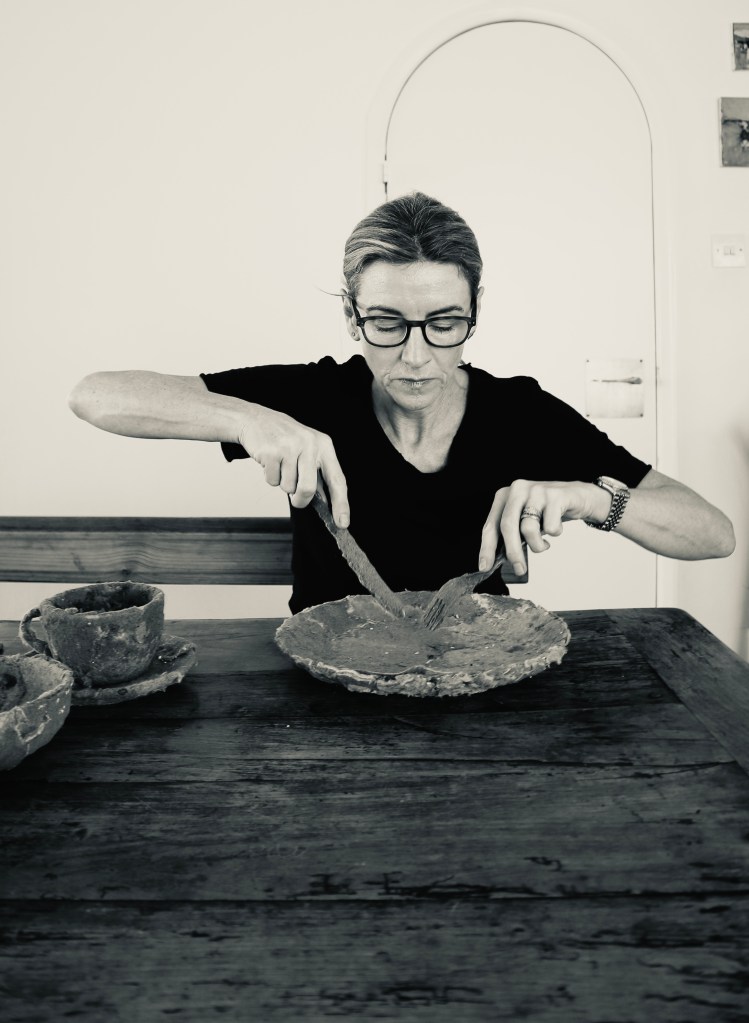
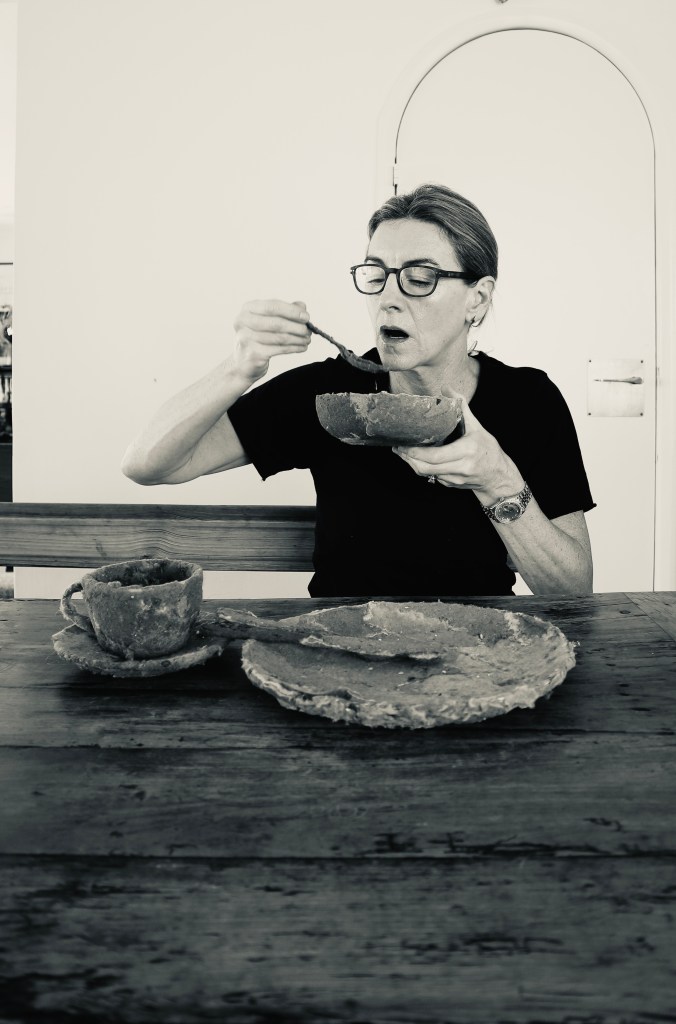
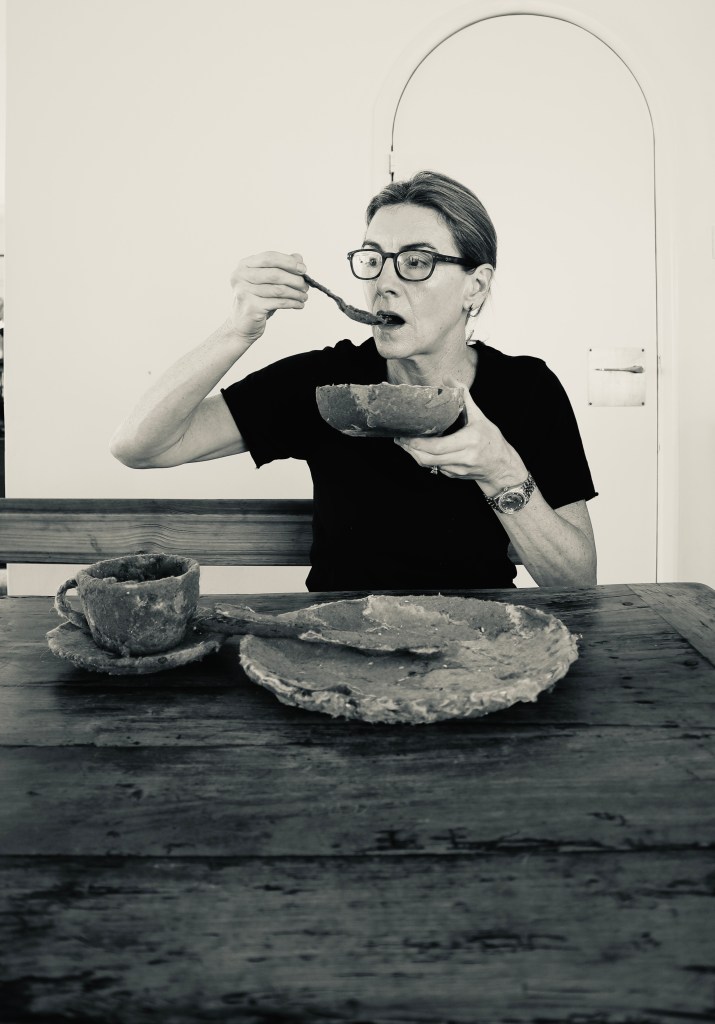
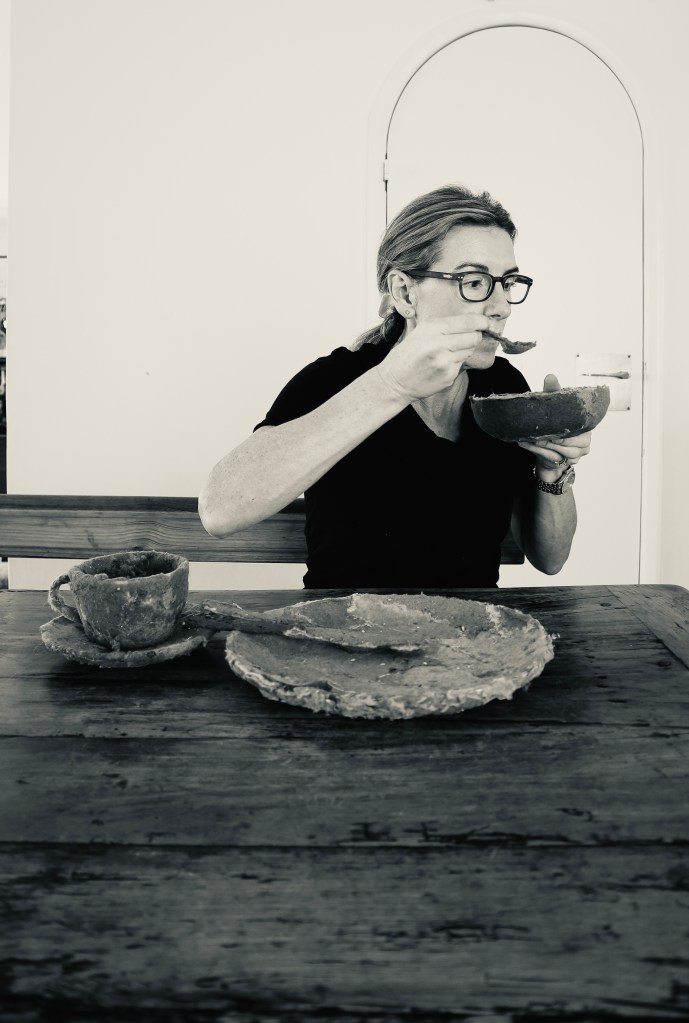
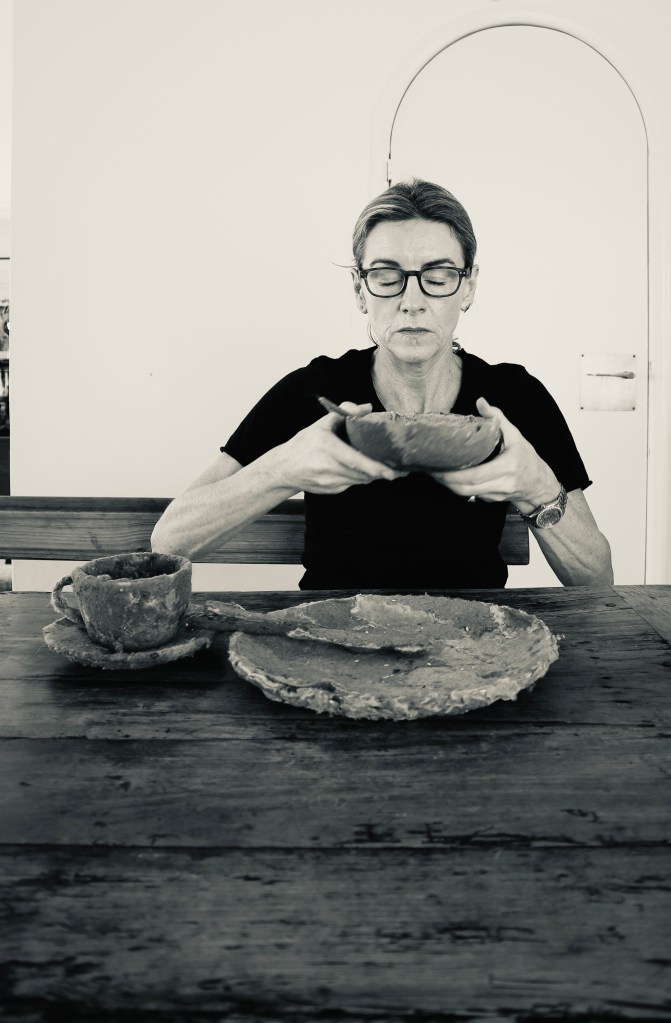
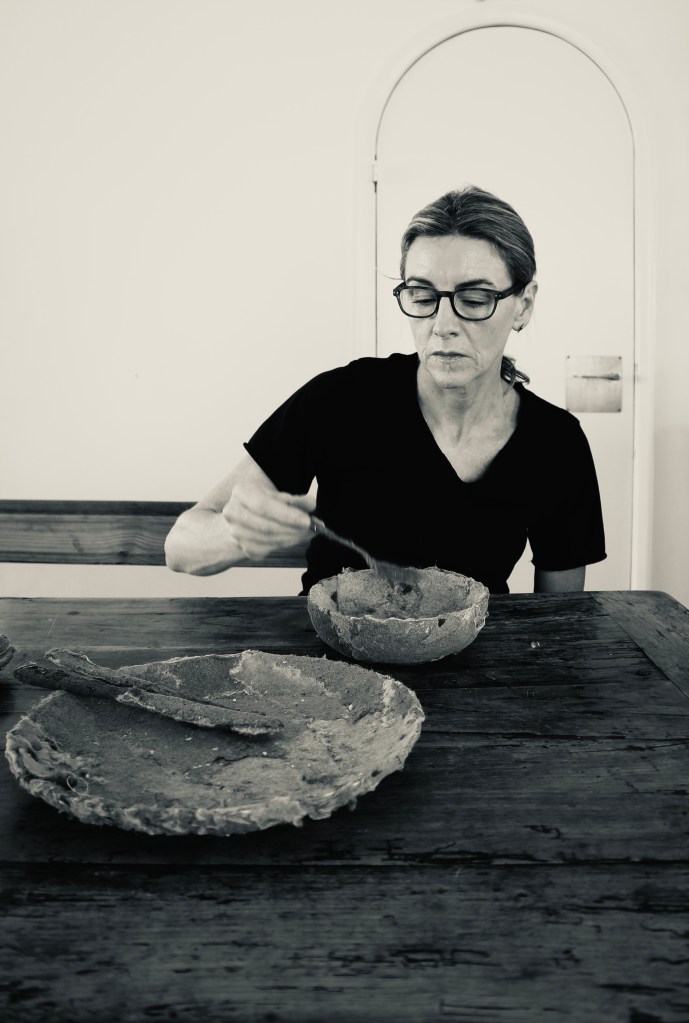
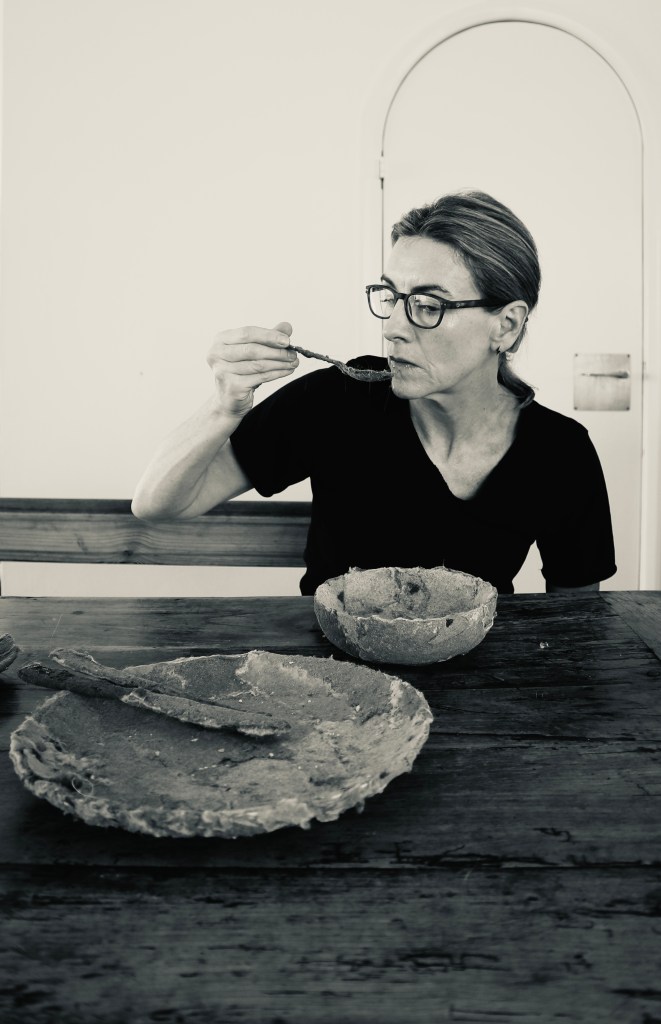
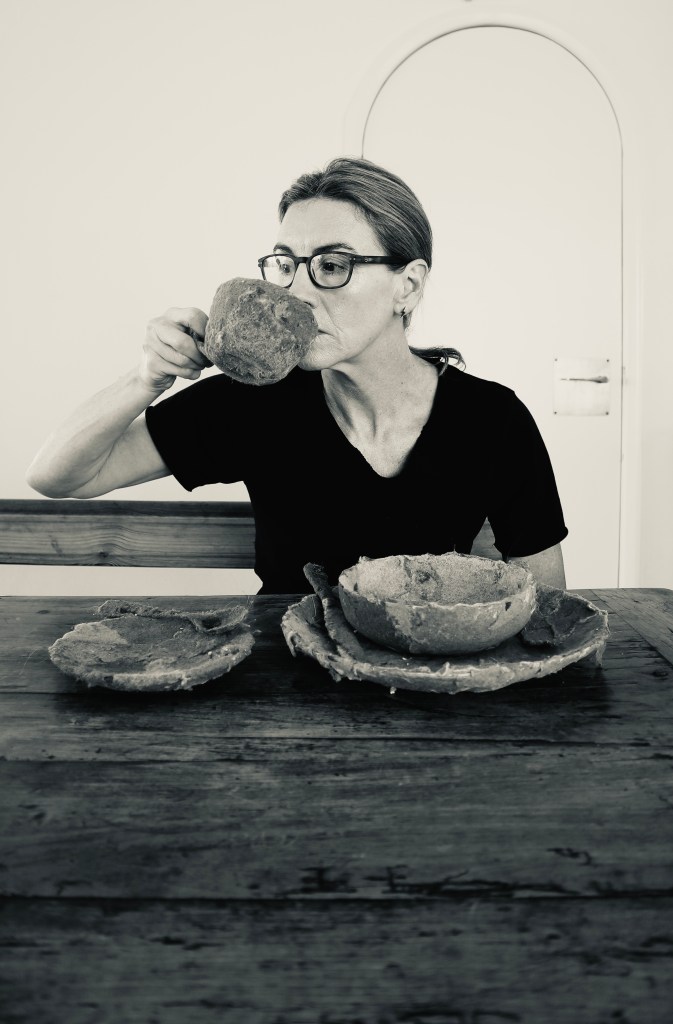
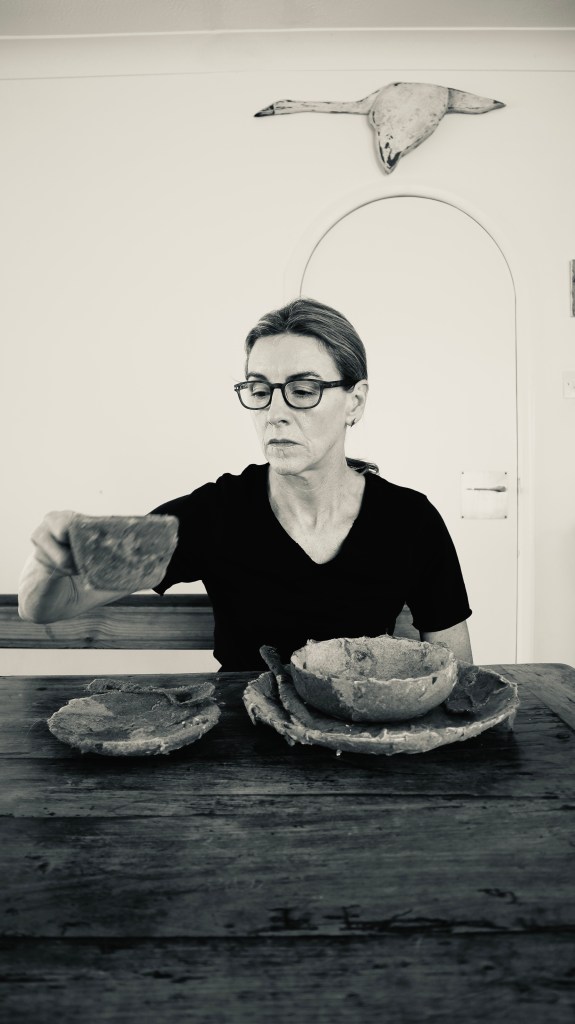
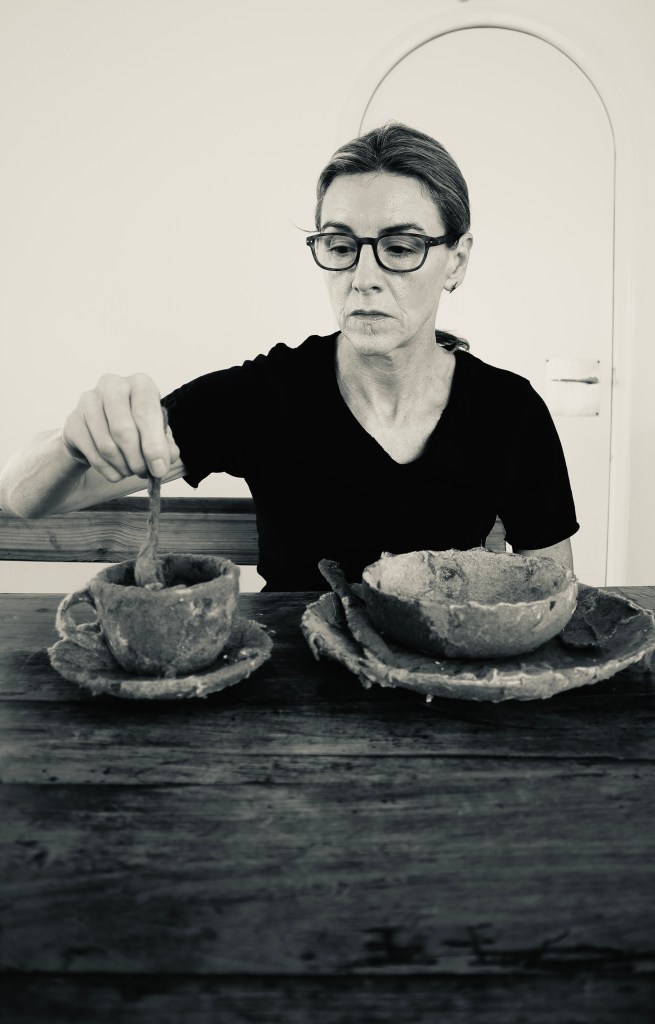
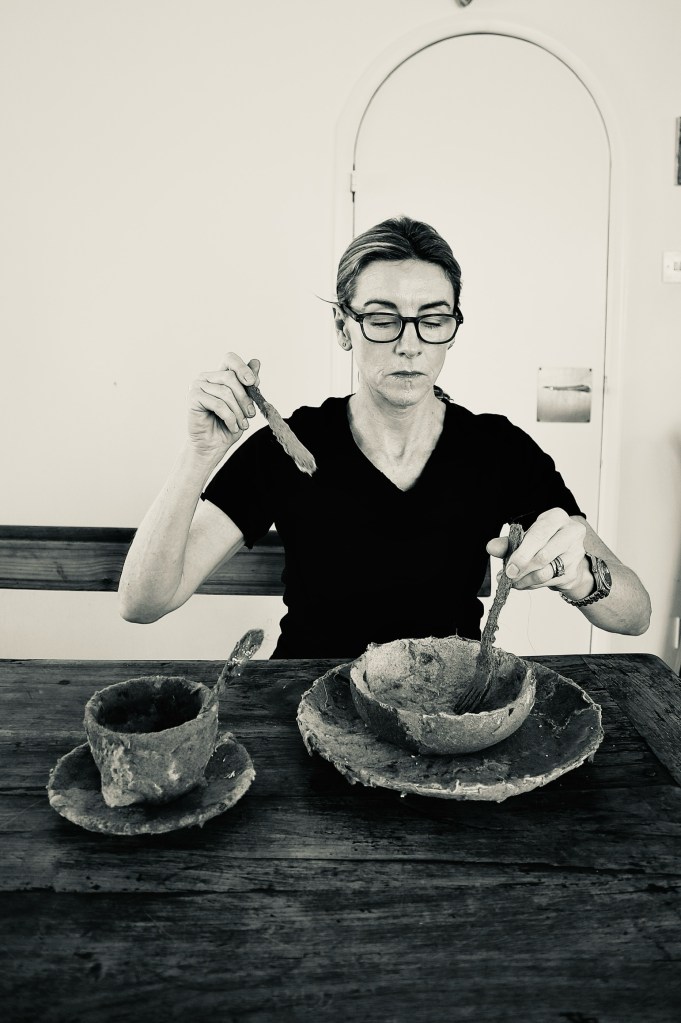
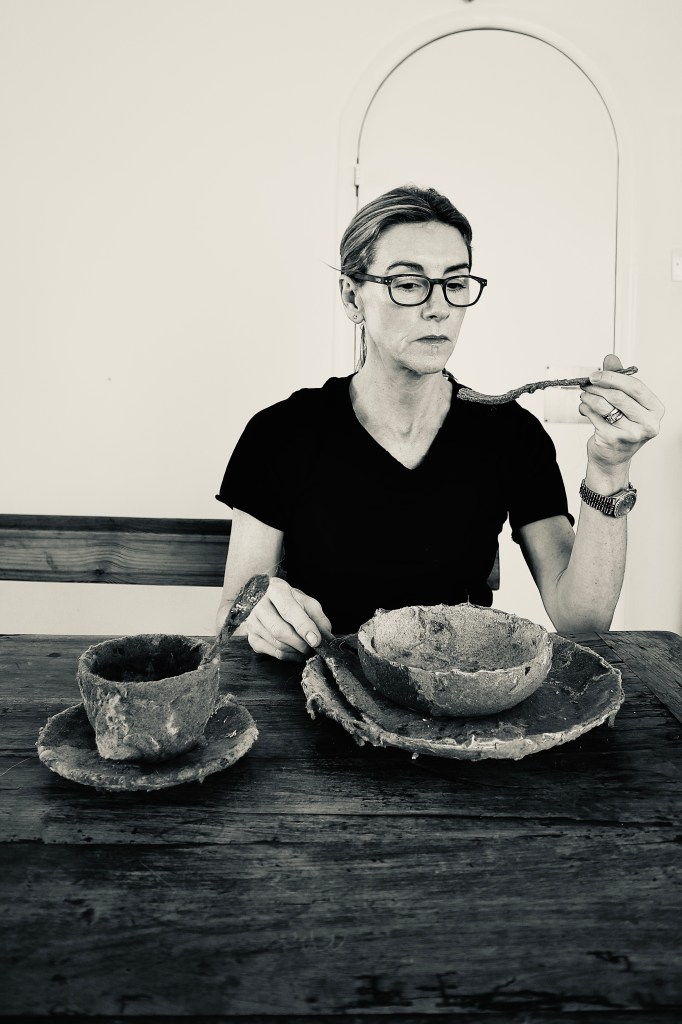
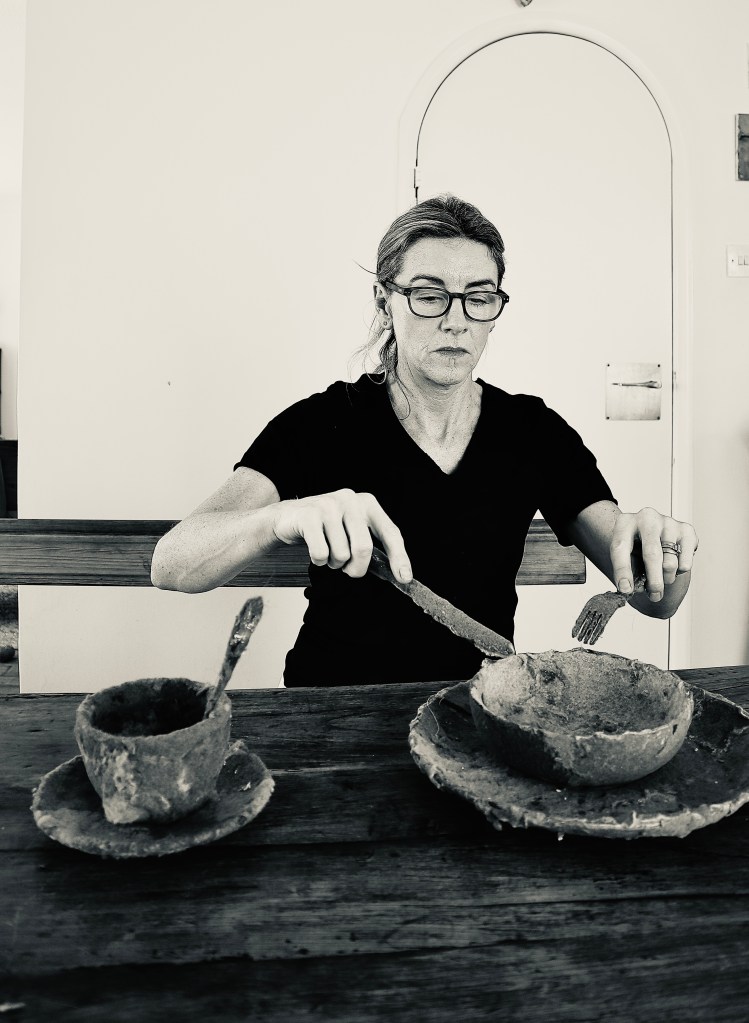
The napkin was also made of machine detris
Selection of Learning Log. 15.
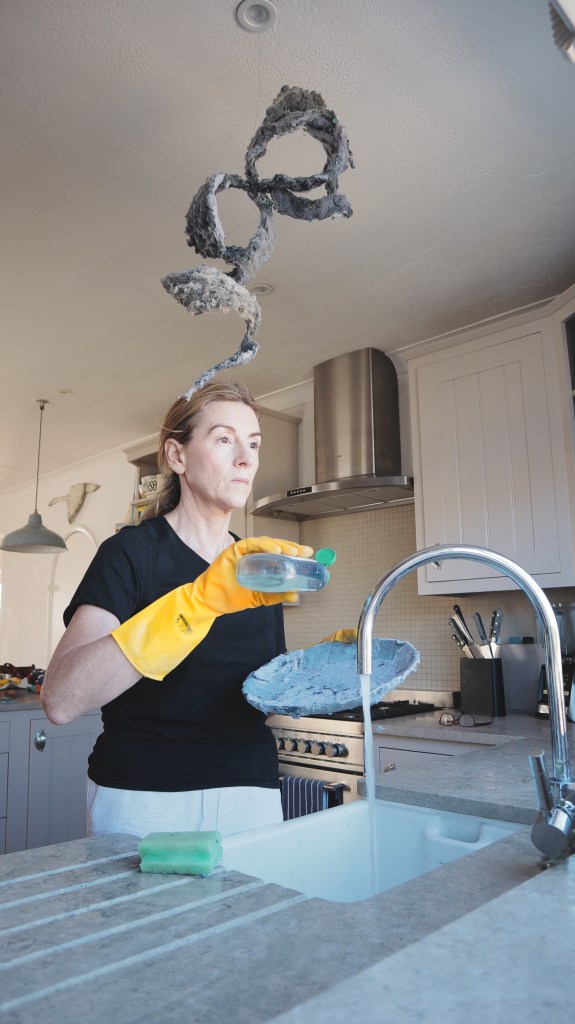
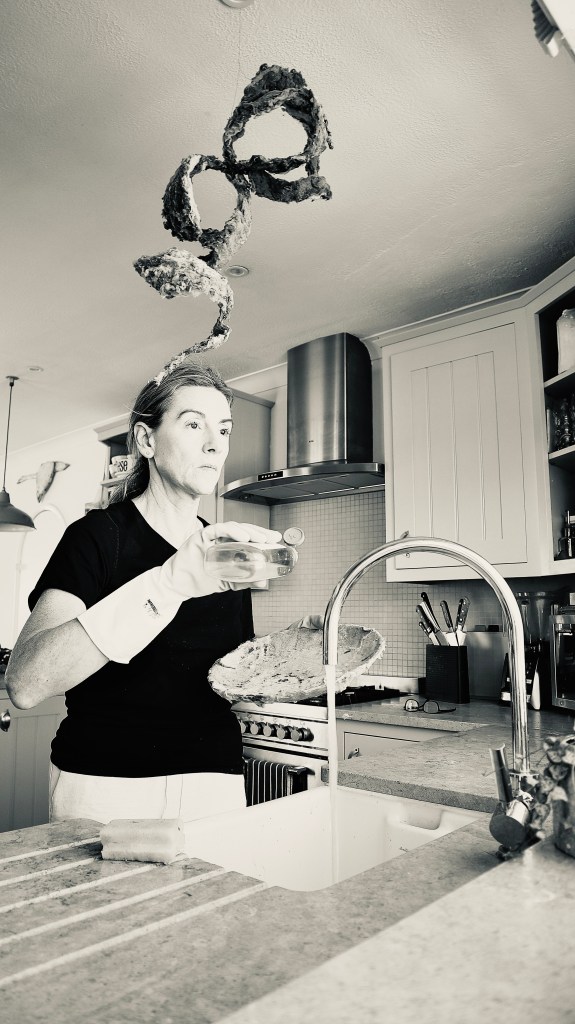
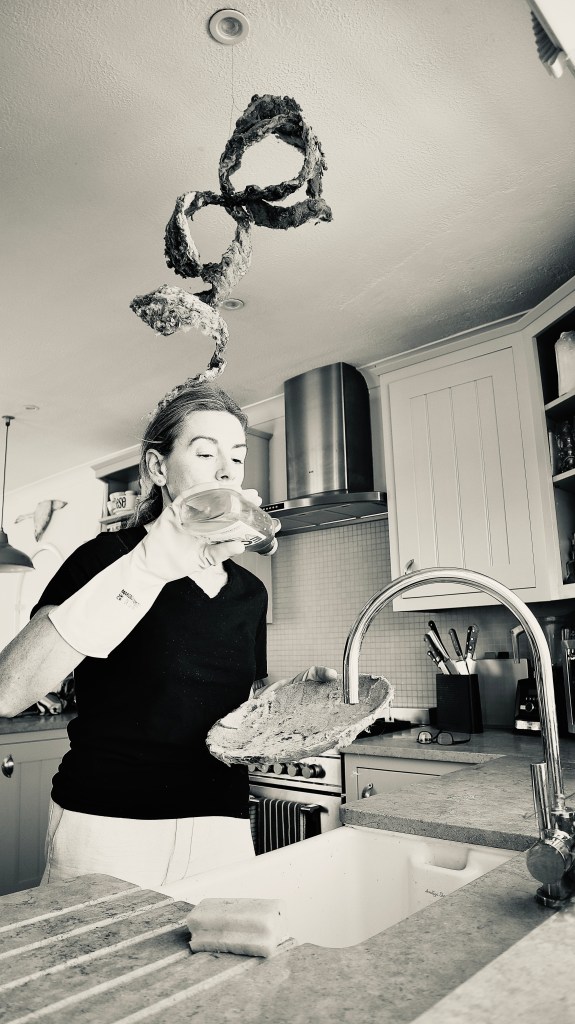
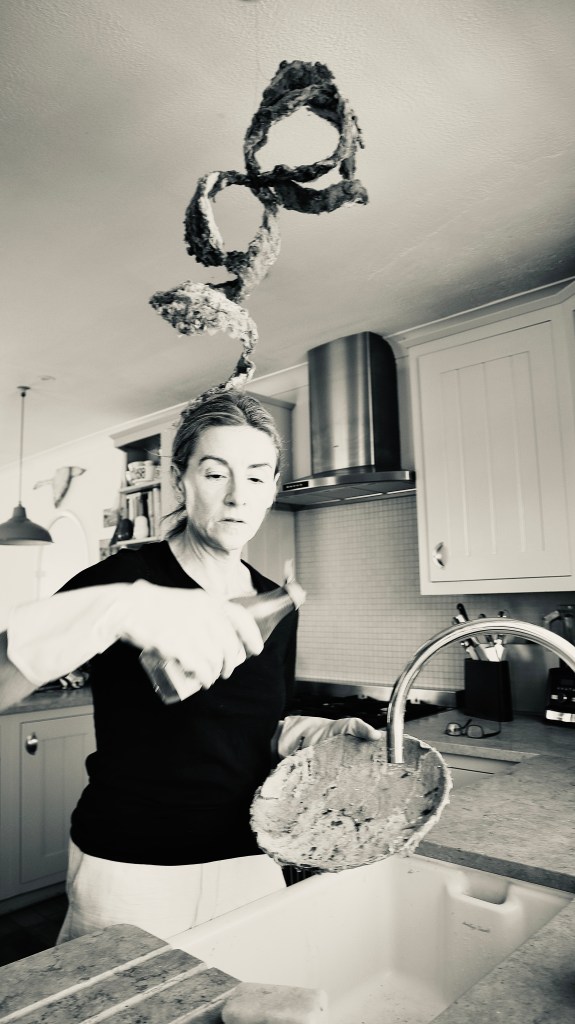
Continuing to explore the personal practice elements of my work with the Murmuration theme concerning female mental health. My large sculptural work was now floor to ceiling and made solely from felted machine detritus. Its disturbing and uncomfortable form, materiality and presence evoked a reaction to friends and family that viewed it. A need to touch and enquire into it, to stand around and beneath it. It proved to be very much at odds within a domestic setting.
Domestic Setting : Murmuration 2.
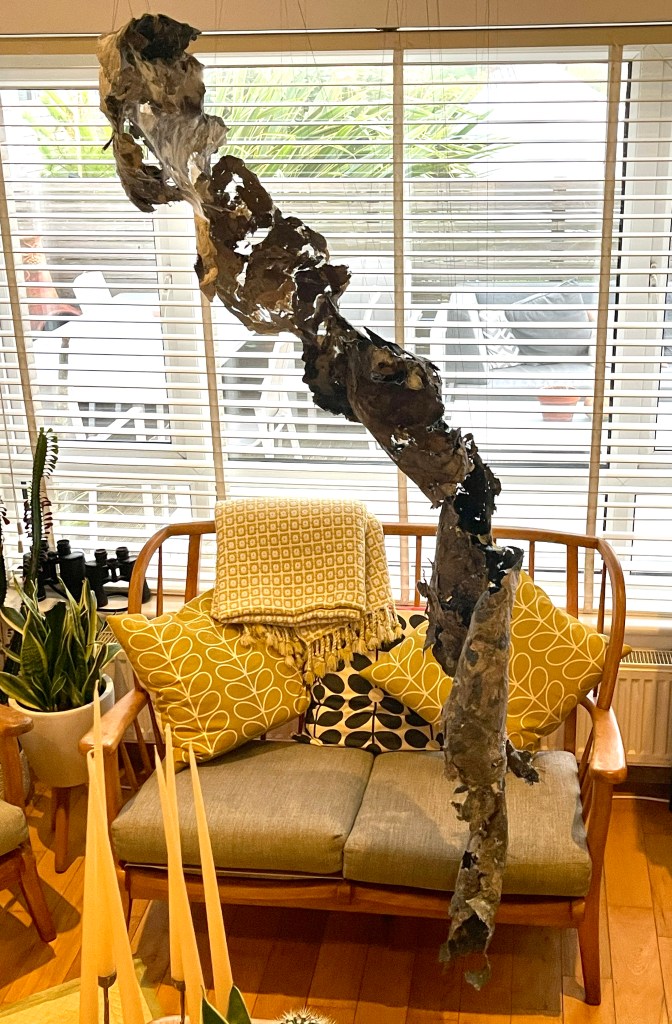
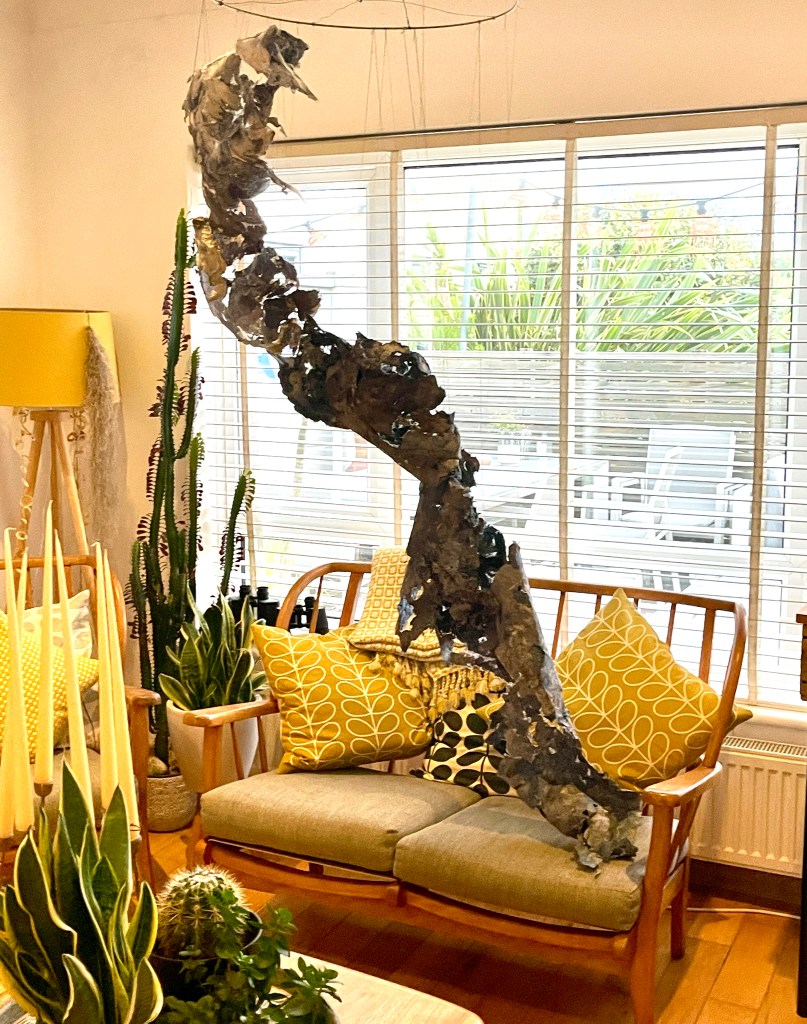
A large gallery /studio/ public space with the inclusion of furniture, and other items indicative of the home could be an alternative way to view the work as it juxtaposes the comfortable traditional setting of home.
My thoughts on presenting it in a white space environment allowed the work clarity and focus. The domestic setting whilst pertinent did not allow a full unhindered visual exposure. Further influenced by Marina Abramovic and her visceral performances (viewed at the Royal Academy 2023 ) I was aware of the power the artist had to to play a part in their work. I decided to explore this visual inclusion here adding to the narrative of the work but also further underscored my personal practice and concerns.
Below – there was little reference or narrative when the sculpture hung in the white space. It was clear that human interaction with the sculpture would offer up a stronger reference and deeper enquiry.
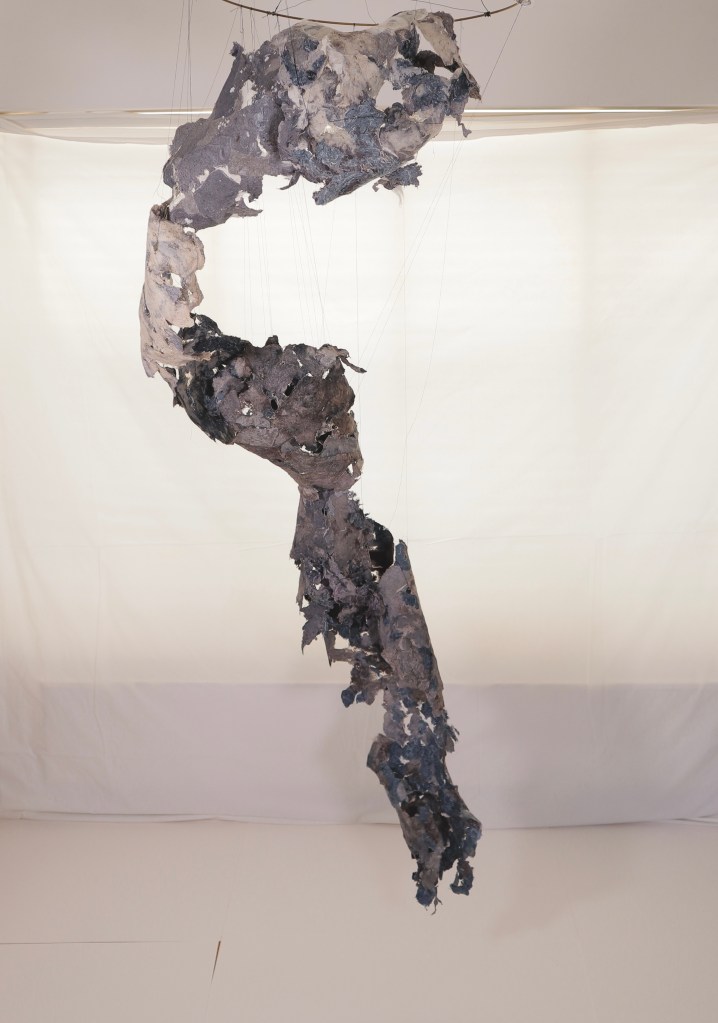
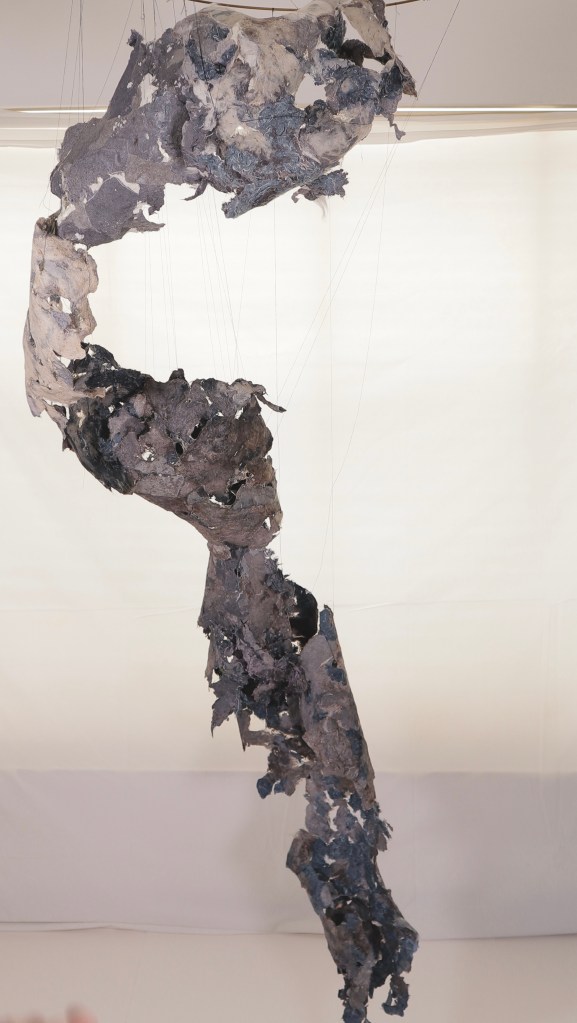
Murmuration. 2 – ‘Our Fears like Starlings’ – felted machine detritus.
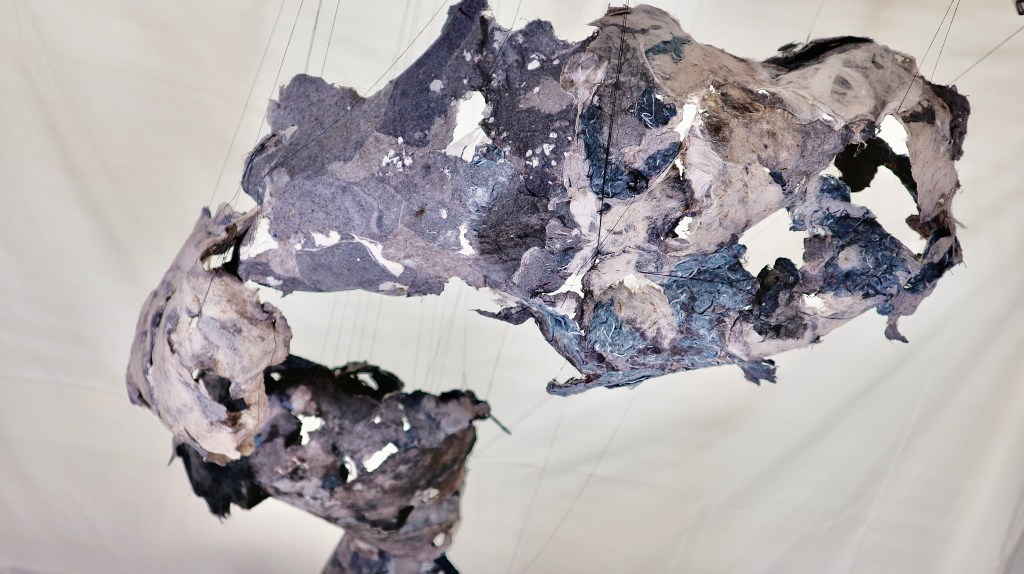
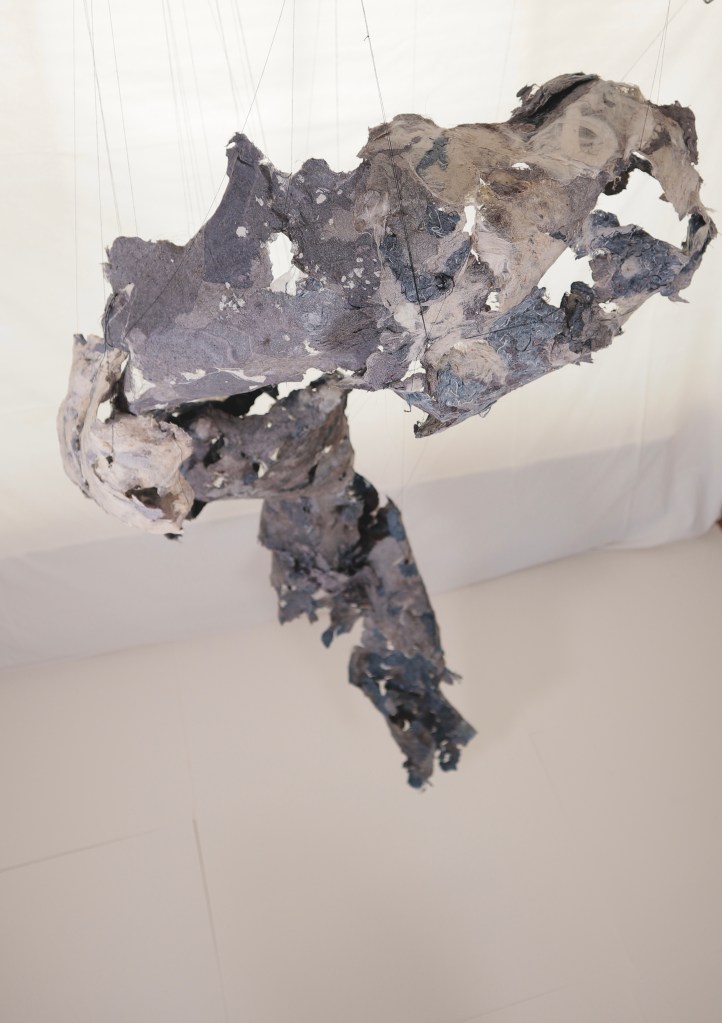
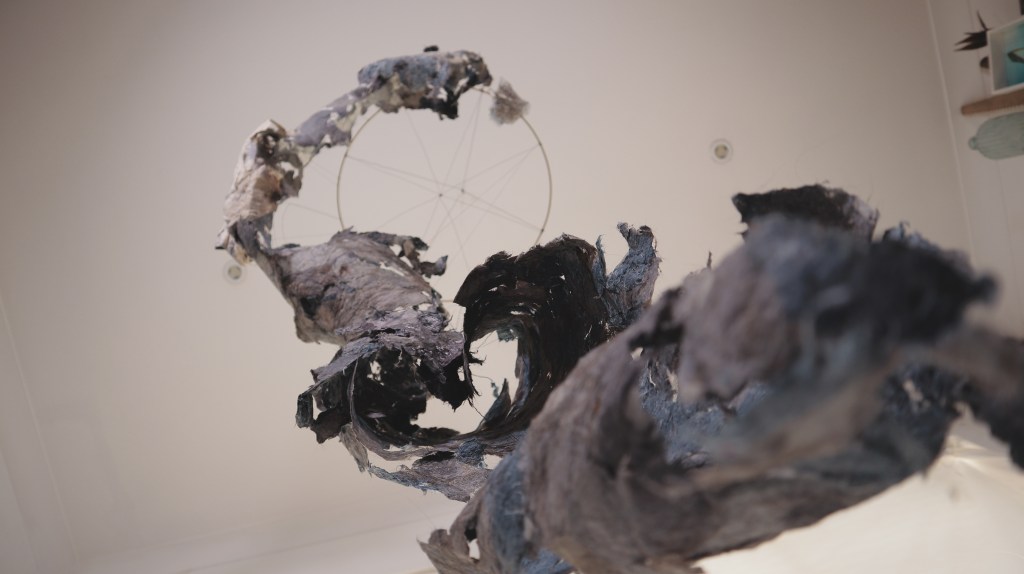
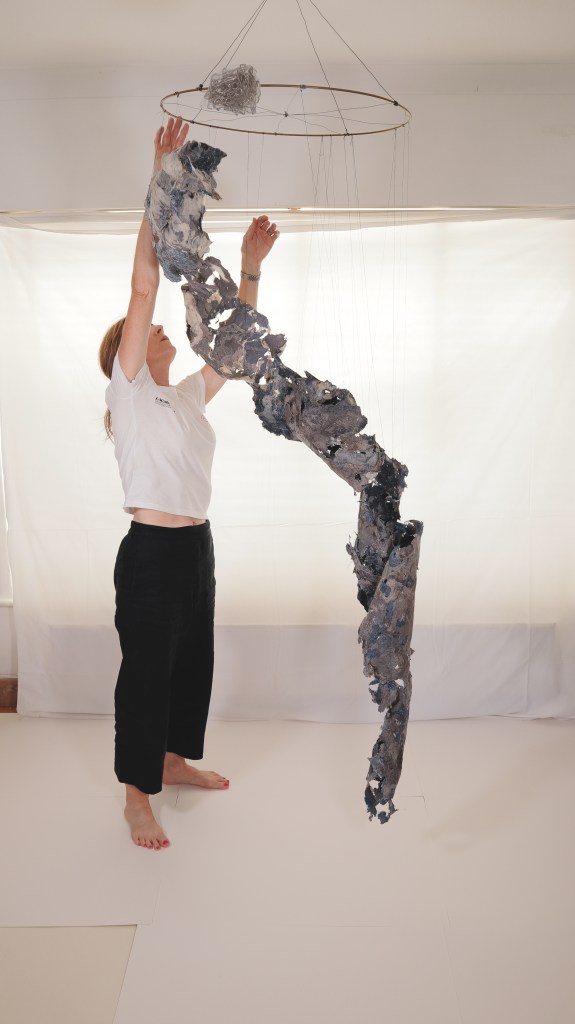
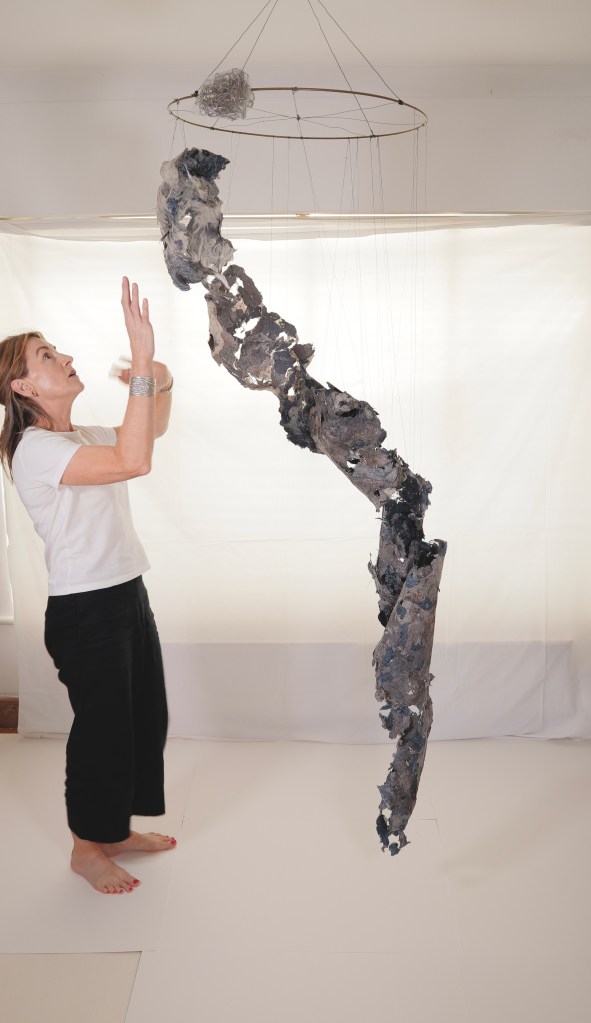
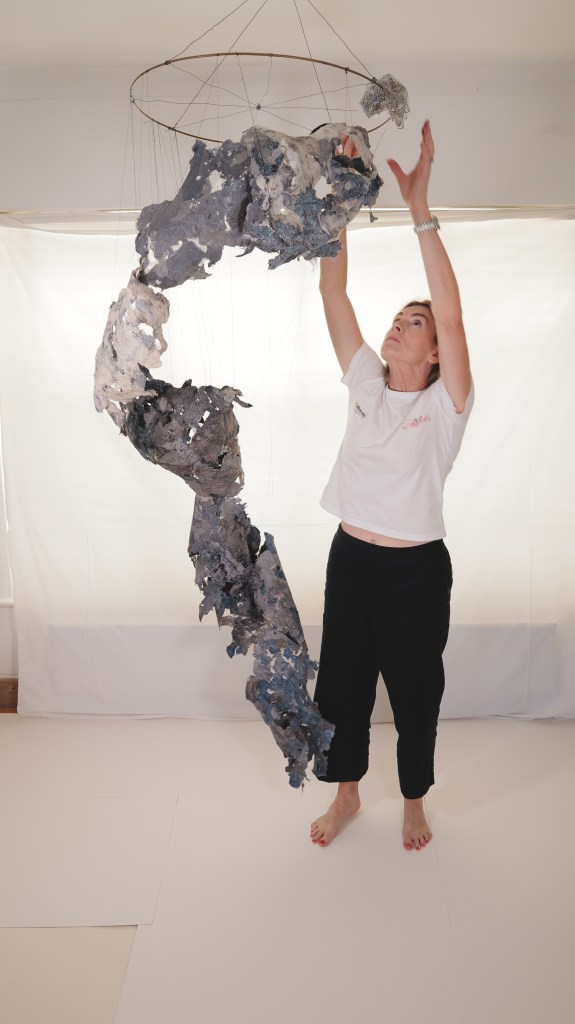
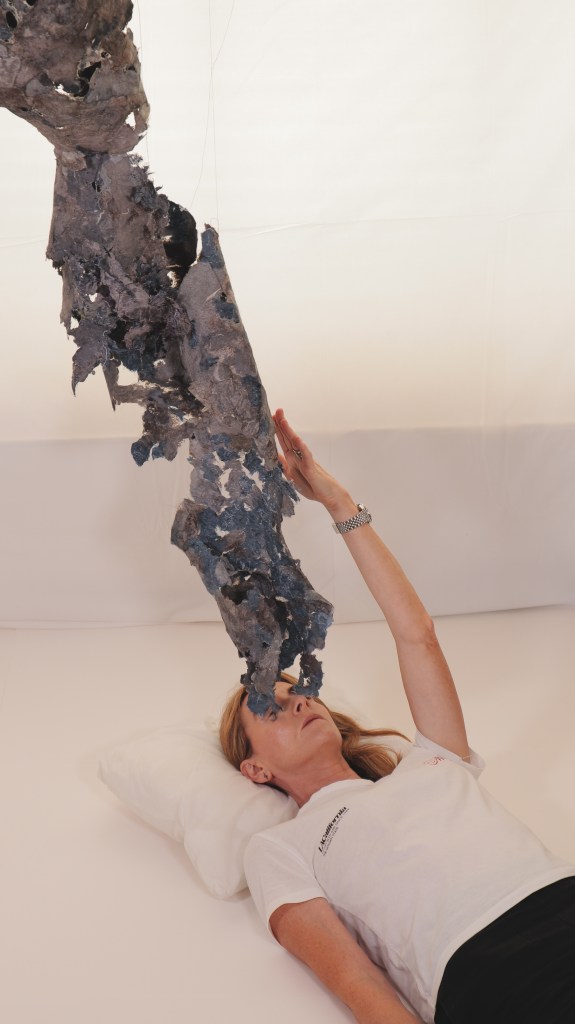
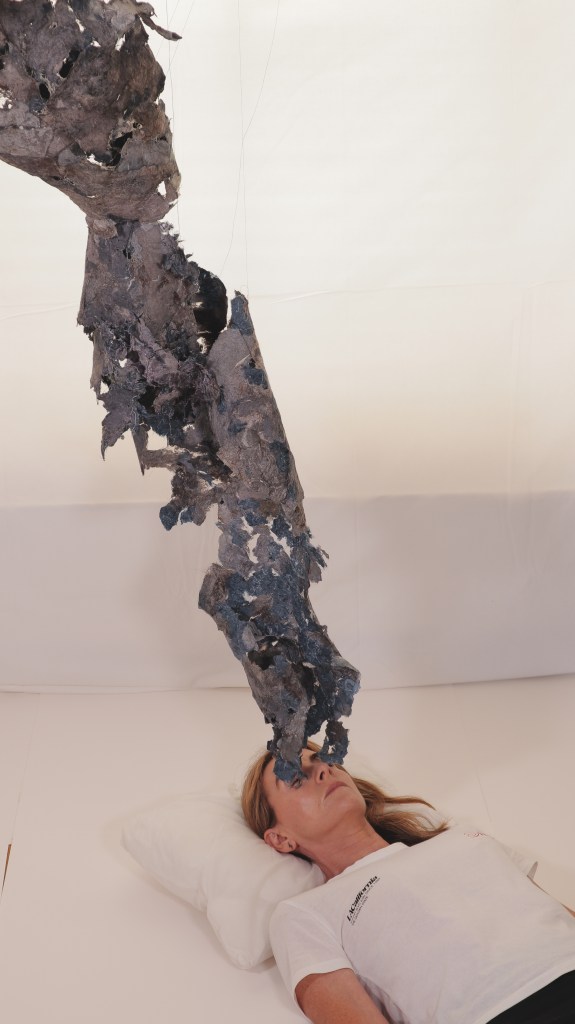
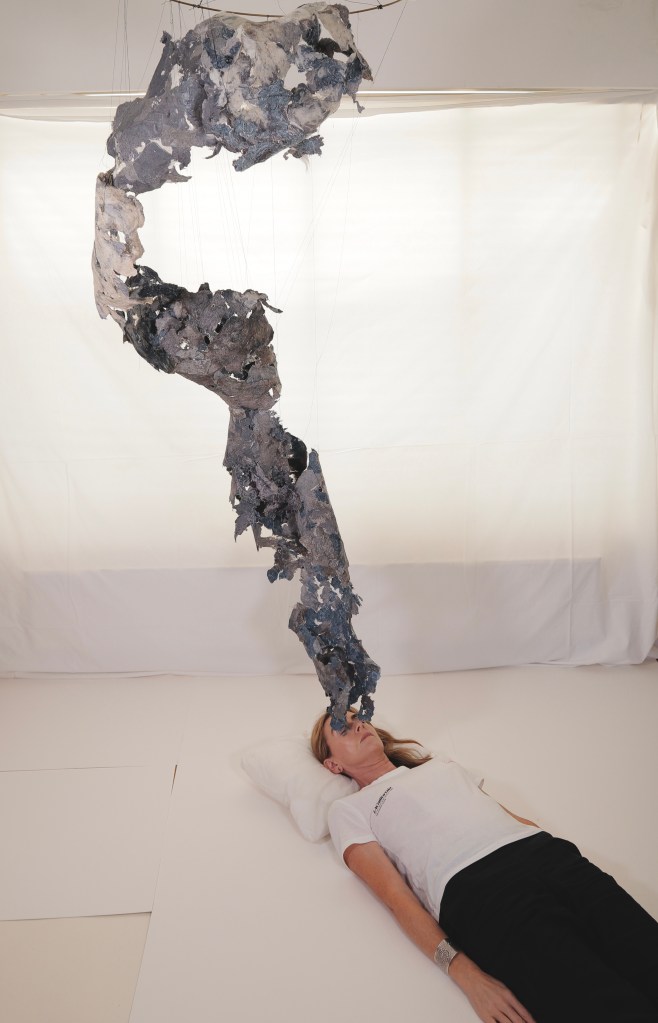
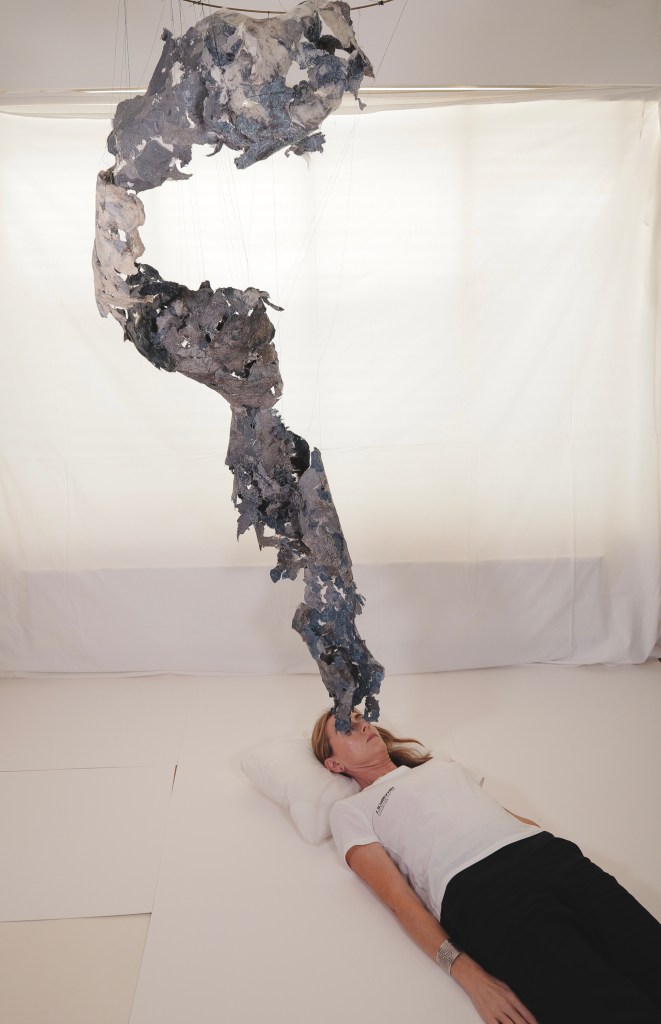
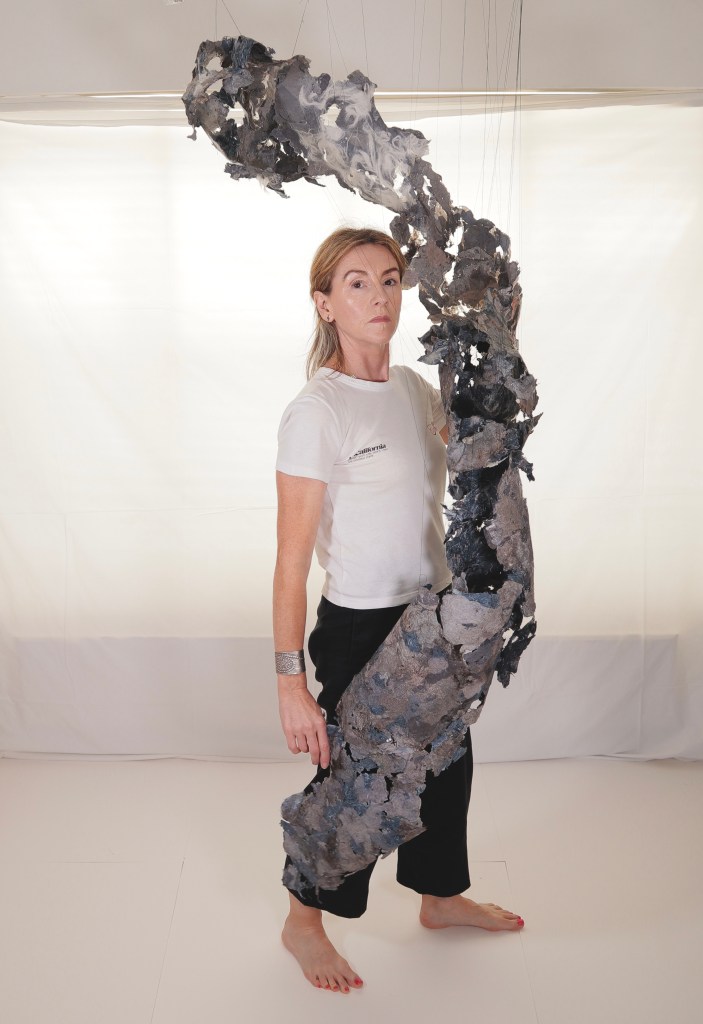
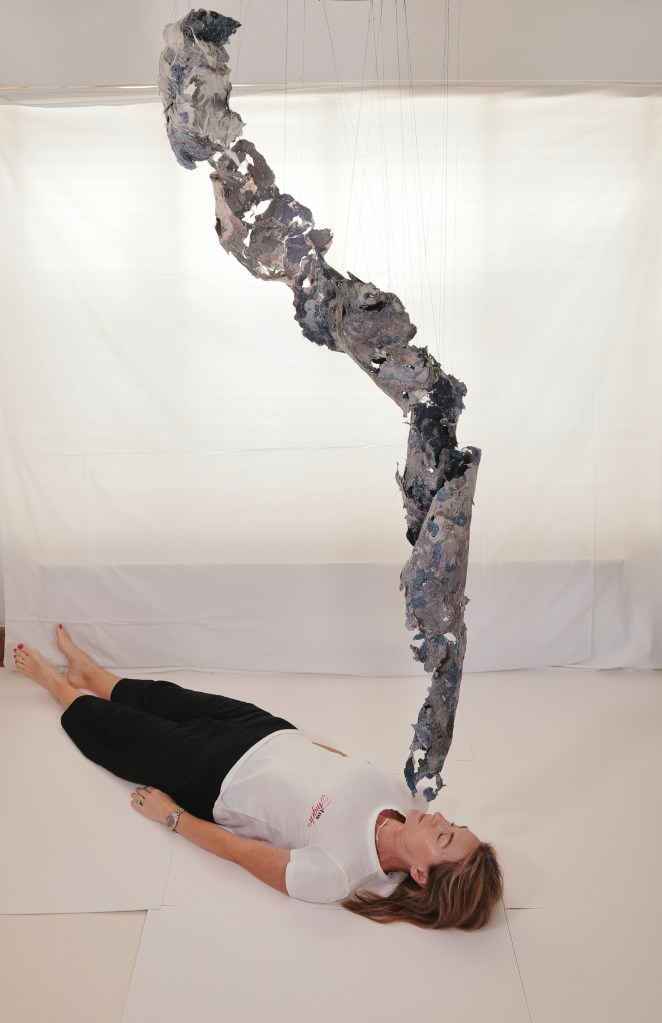
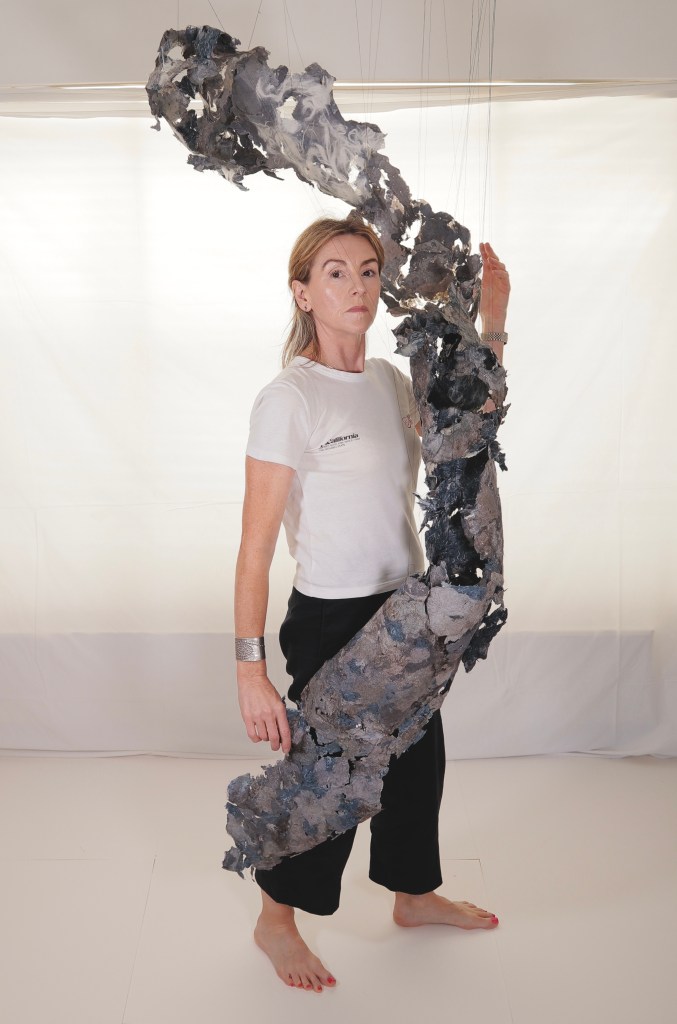
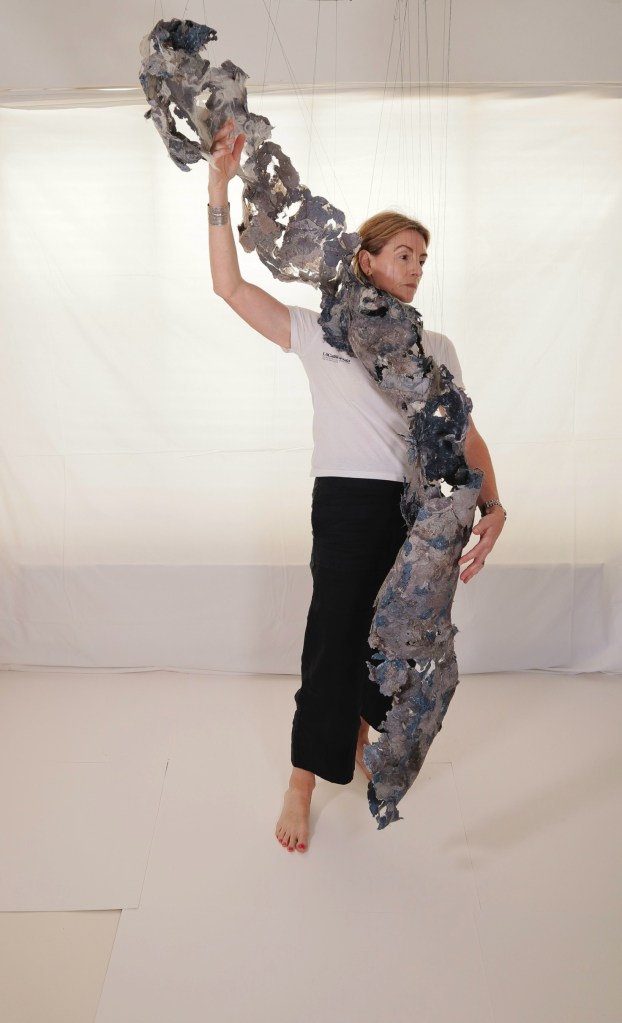
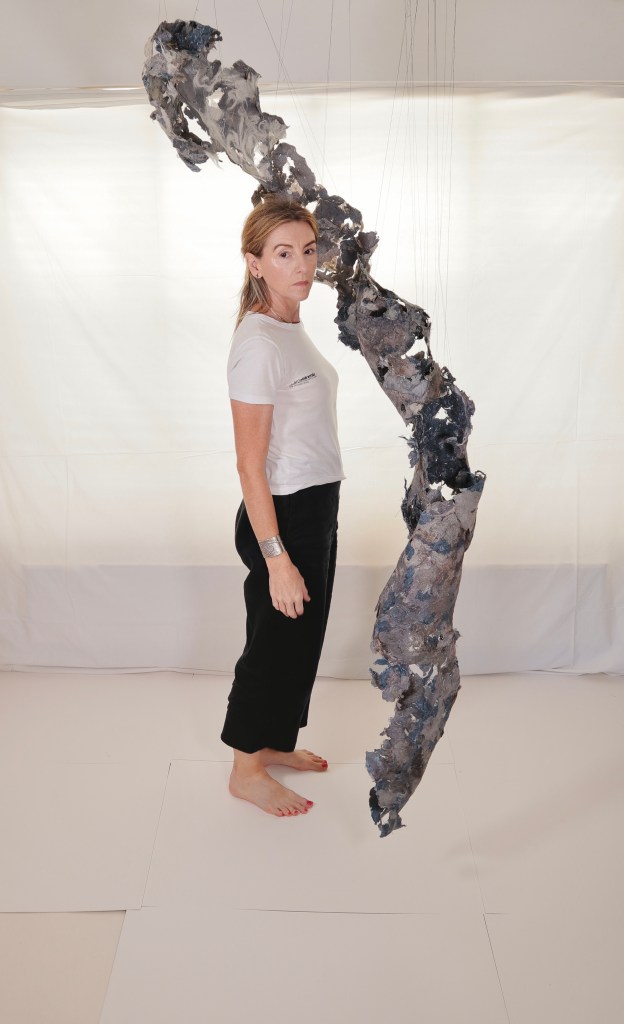
The scale of the work is clearly seen with human interaction. I was able to perform with the work , sleeping under it with of the swirling murmuration of negative emotions visually depicted.
I was able to fold and stand within the work again showing the dark machine detritus enveloping me.
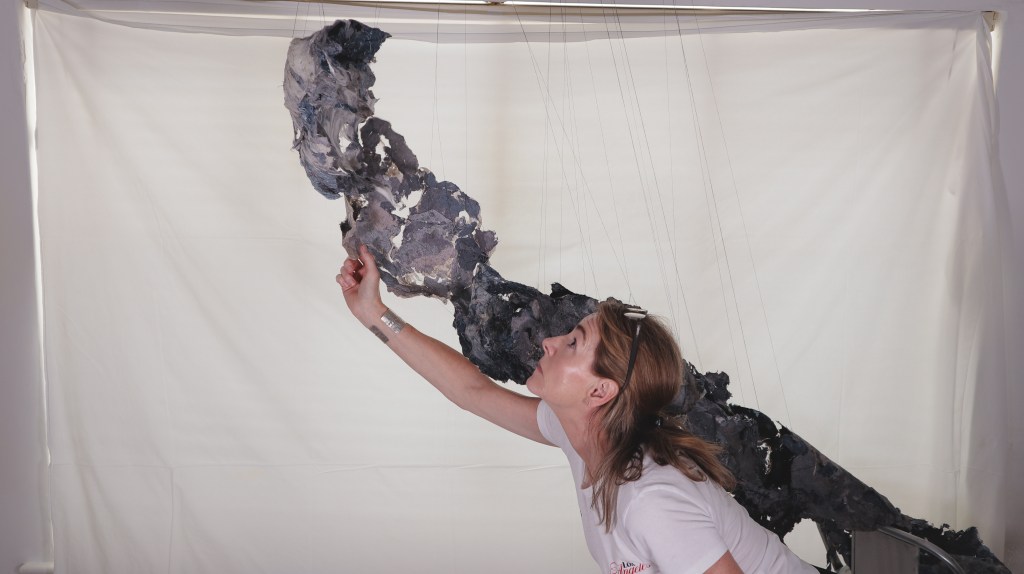
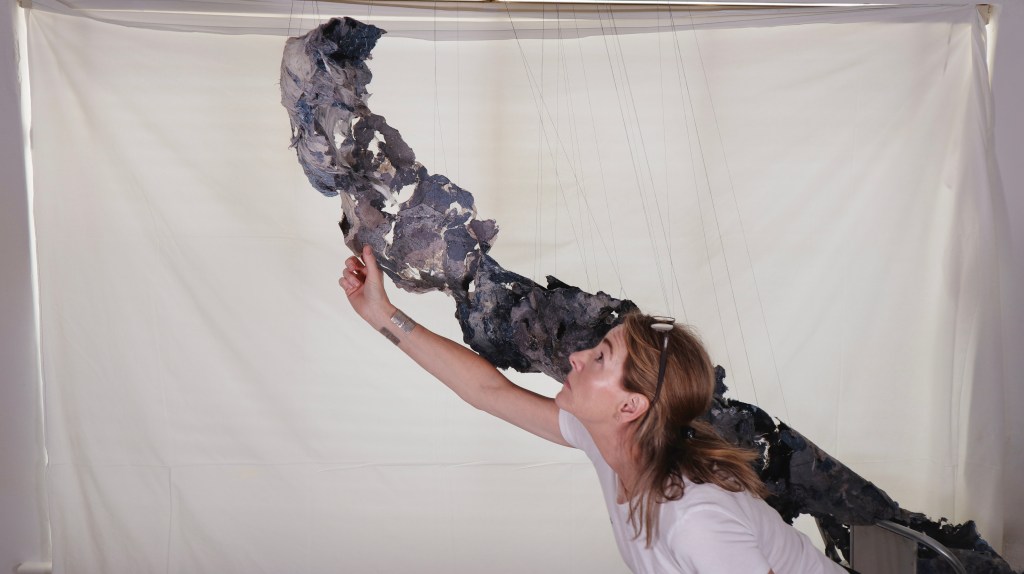
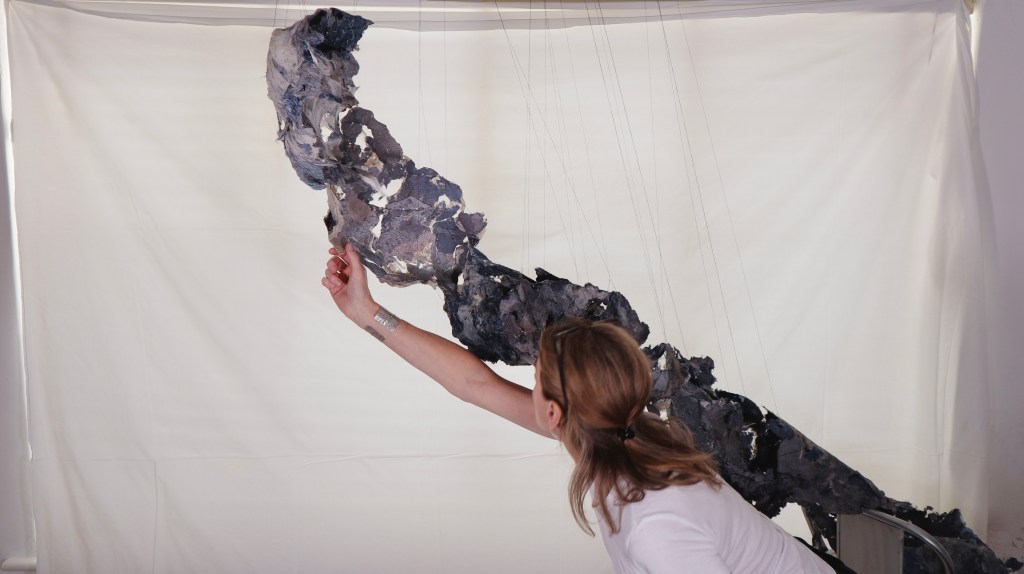
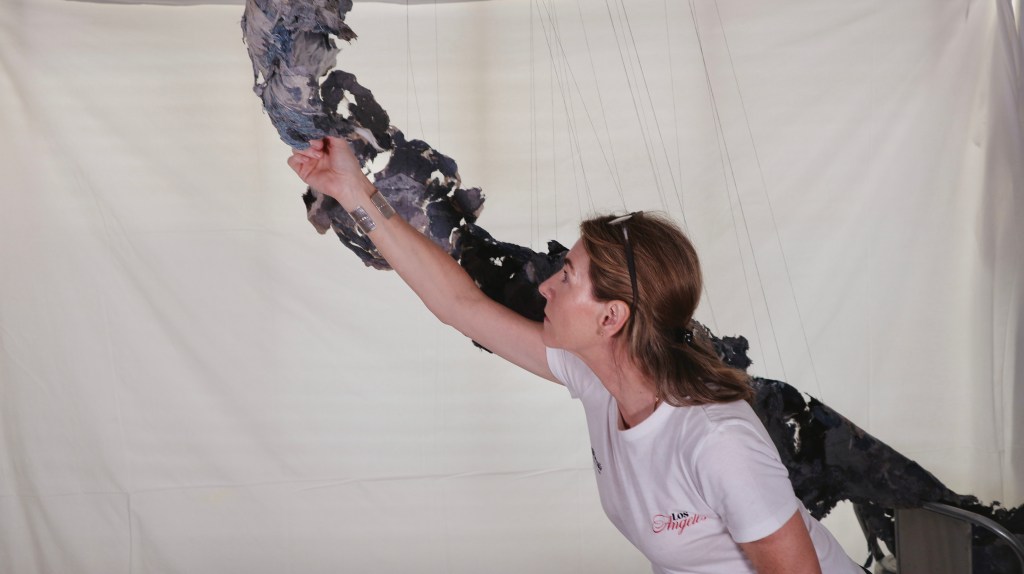
I was able to sit underneath the work…
As a homage to Sarah Lucas adding to add some superficial humour to the work but with the undercurrent of the specific female condition I had been exploring ; mental health , the female domestic worker and its exploration through domestic detritus I used some hollow vessels created from the same felted process and material to reinforce the strong female narrative as the enveloping murmuration surrounded me.
Derrida’s phrase – ” to make material laugh’ – to embrace the carnelvalesqe…..Lange-Berndt, P. (Ed.) (2015). Materiality. Whitechapel Gallery. MIT Press. P 18-20)
Nod to Sarah Lucas – below .
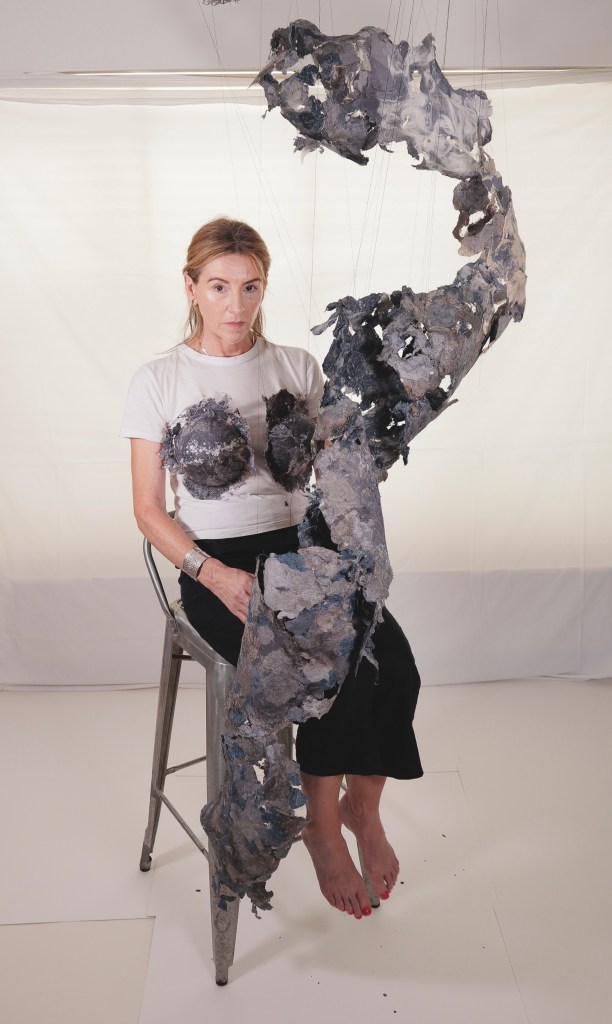
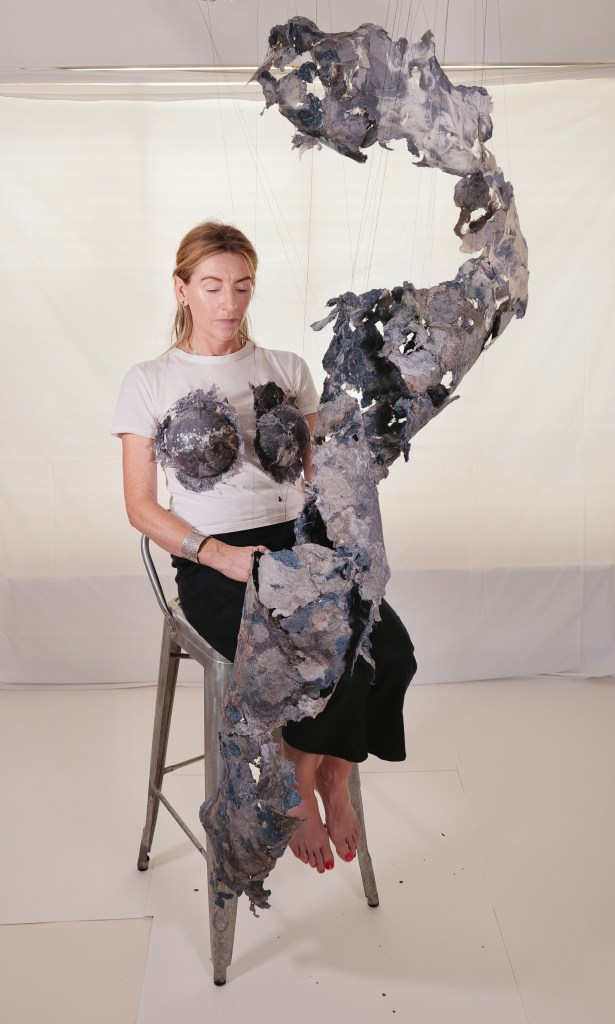
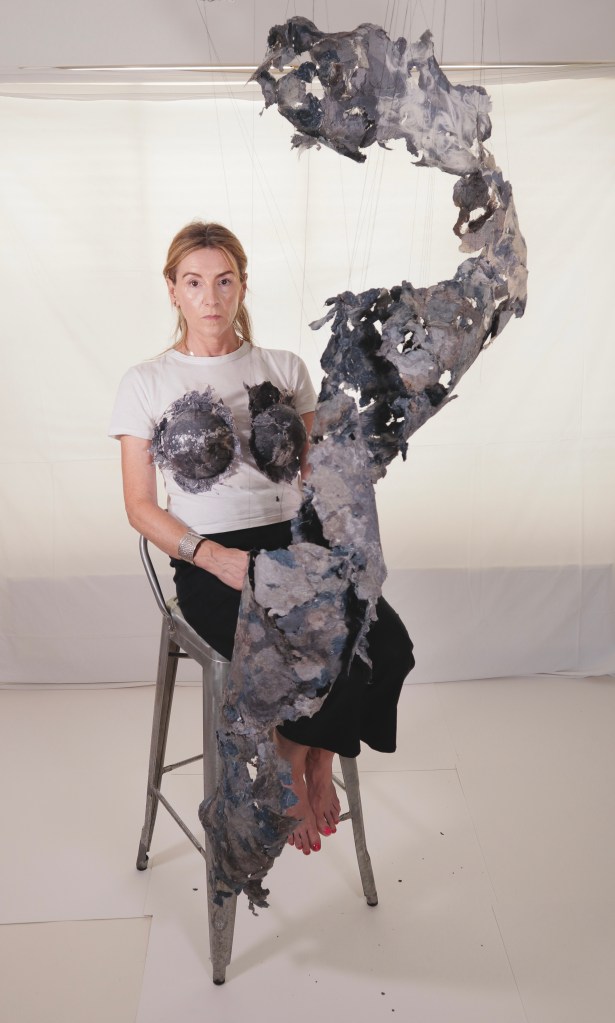
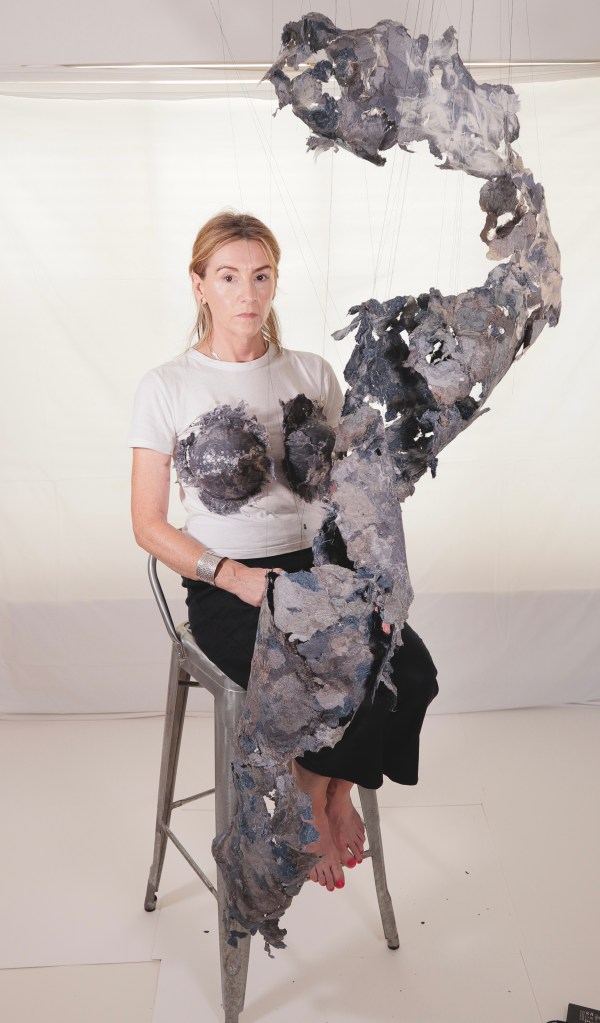
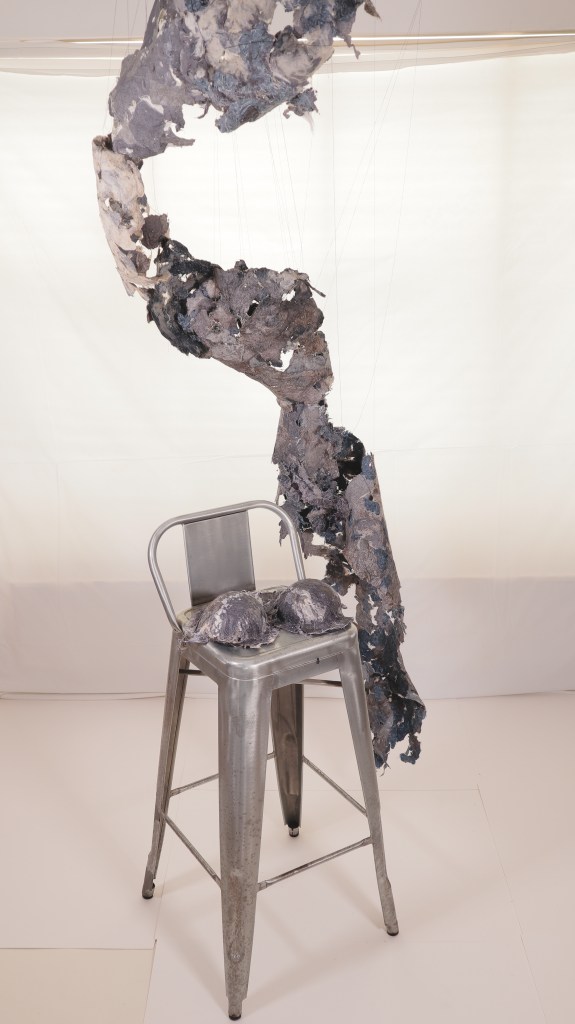
The potential of Murmuration 2, its setting and curation has been both serious and playful – working towards a final out come or final resting place has not been the main concern but how it can interact and be viewed with possibilities for future development.
Selection of Learning Log. 16.
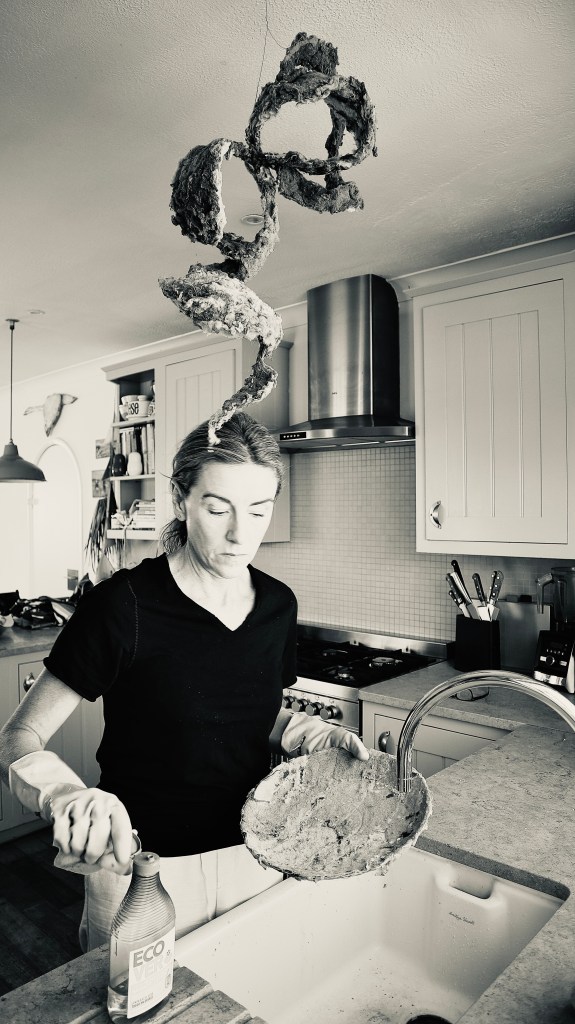
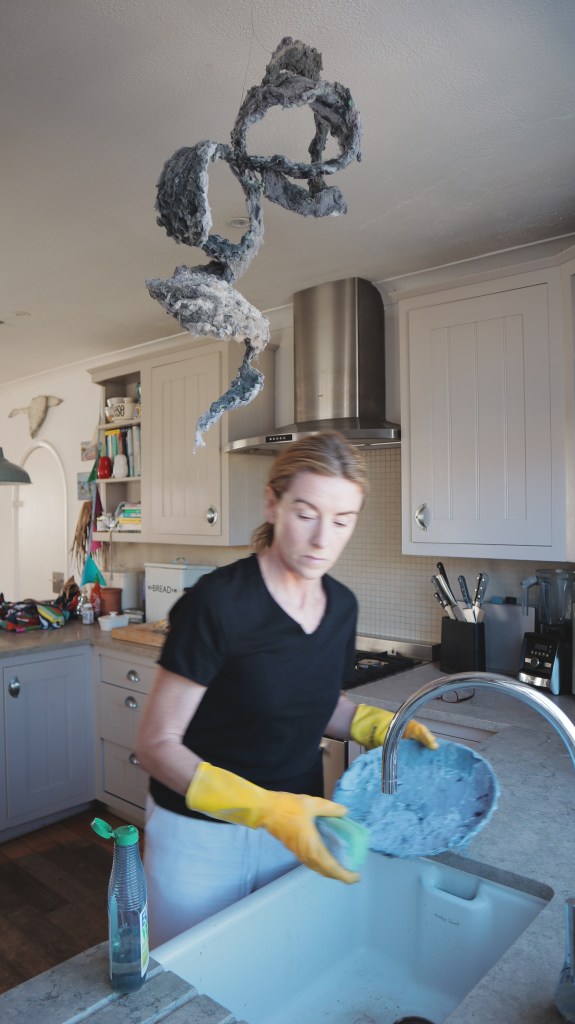
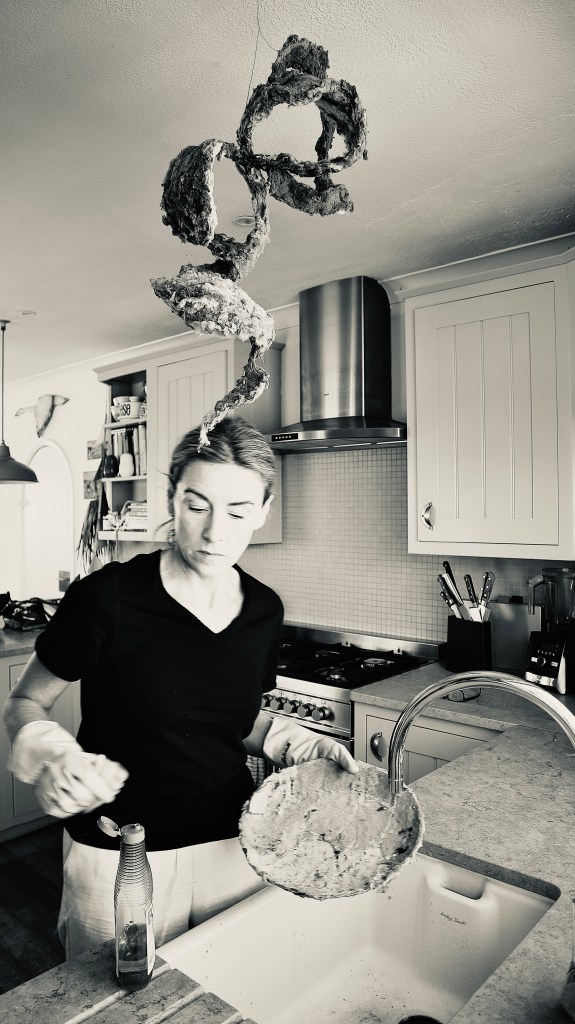
My smaller initial work with murmurations was rephotographed in a domestic situation to highlight my concerns regarding female mental heath and the often hidden symptoms and causes. The swirling negative shape is ever present, night and day. Lurking.
“our fears like starlings” ( below )
Selection of Learning Log. 17
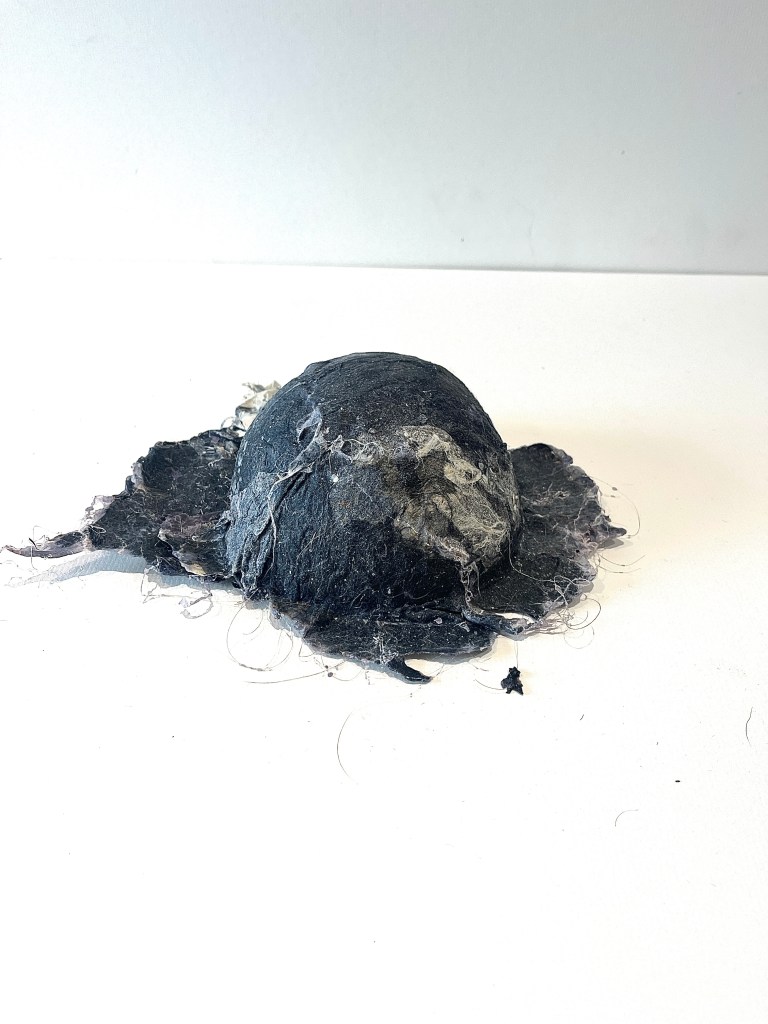
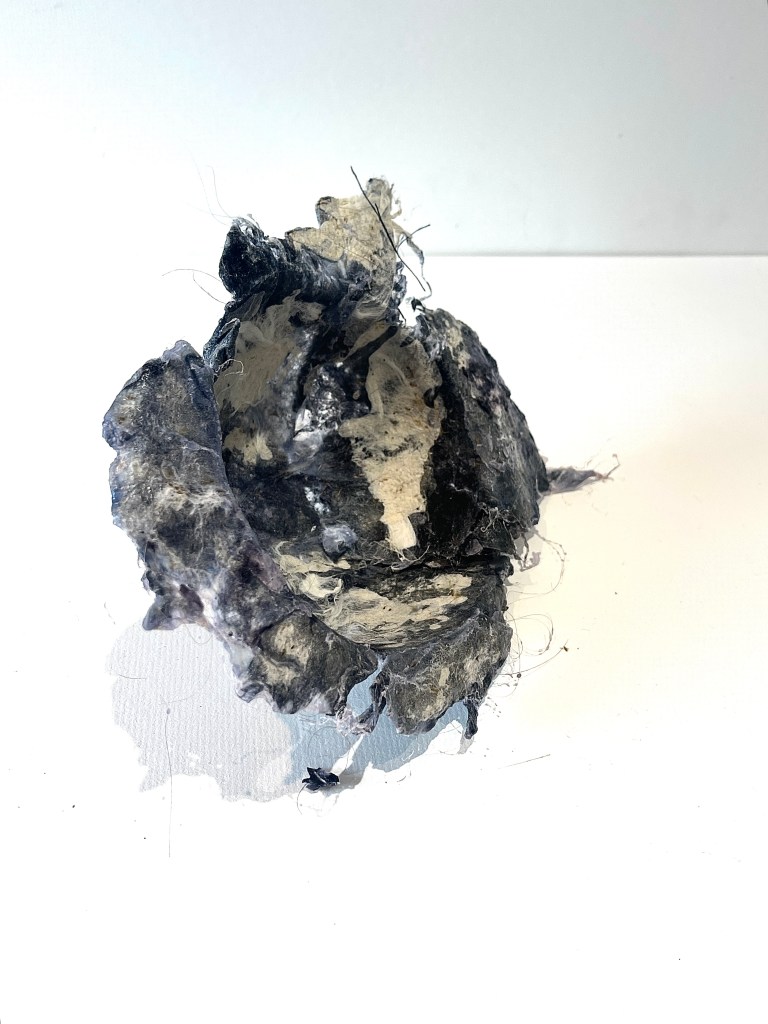
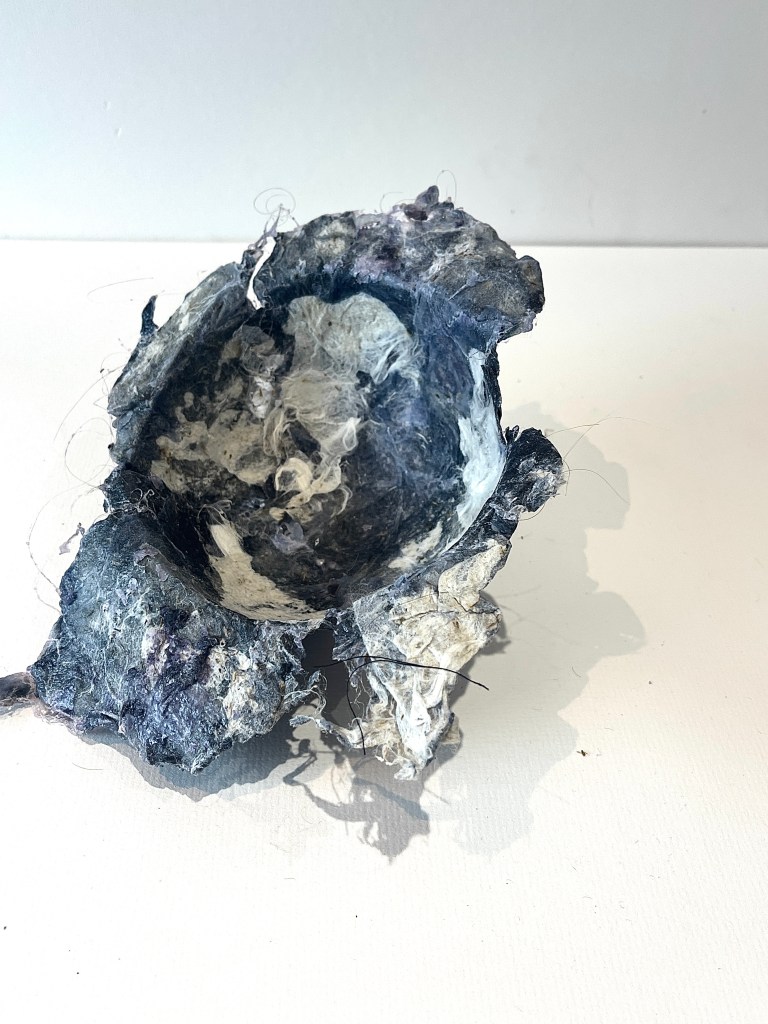
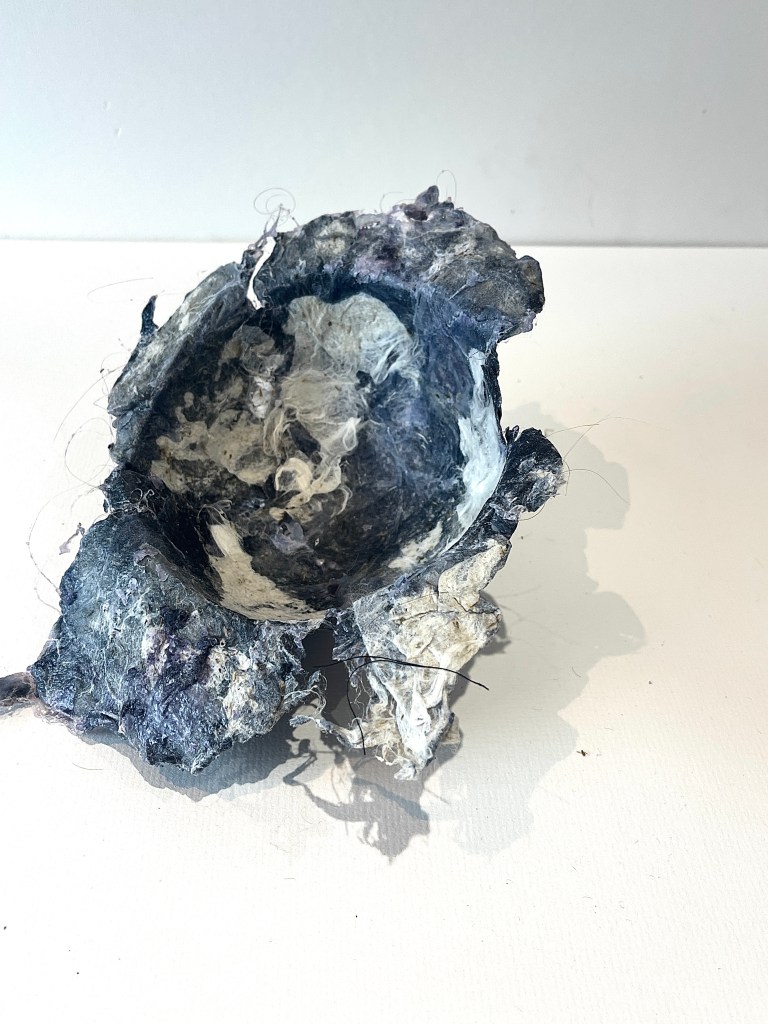
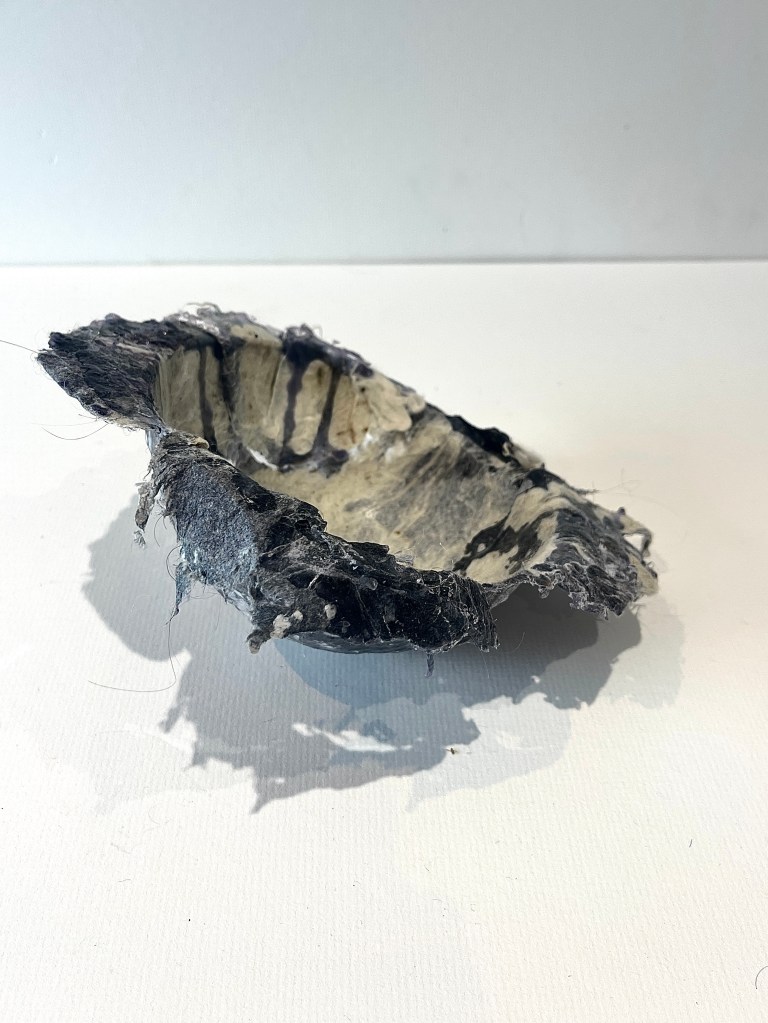
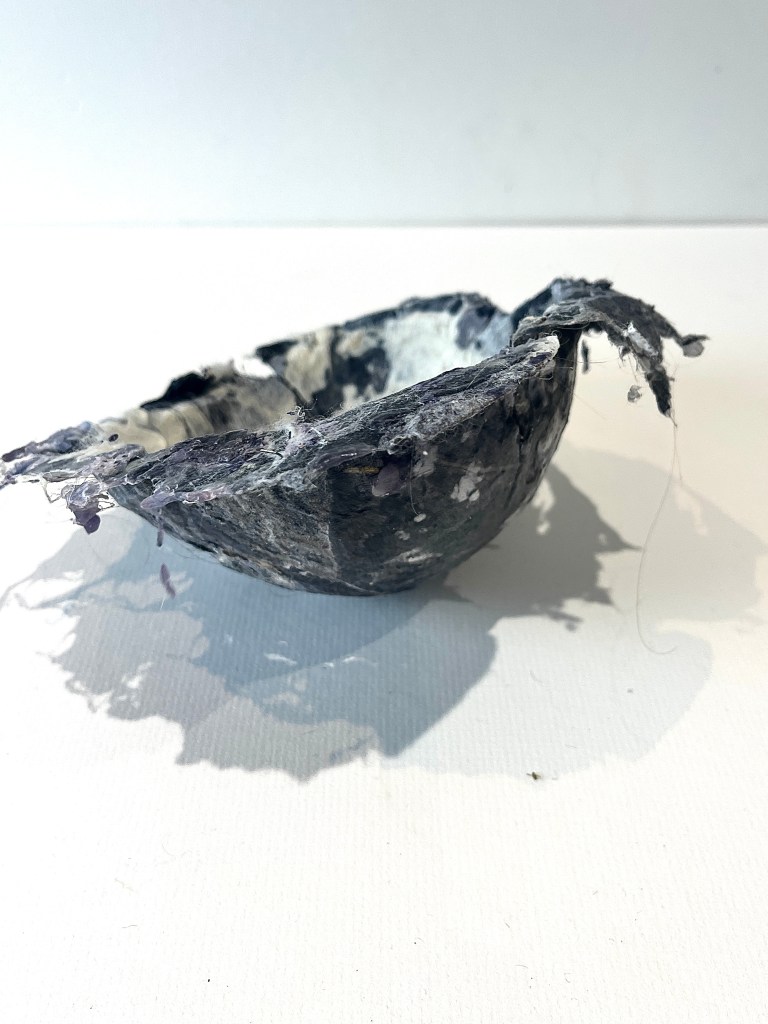
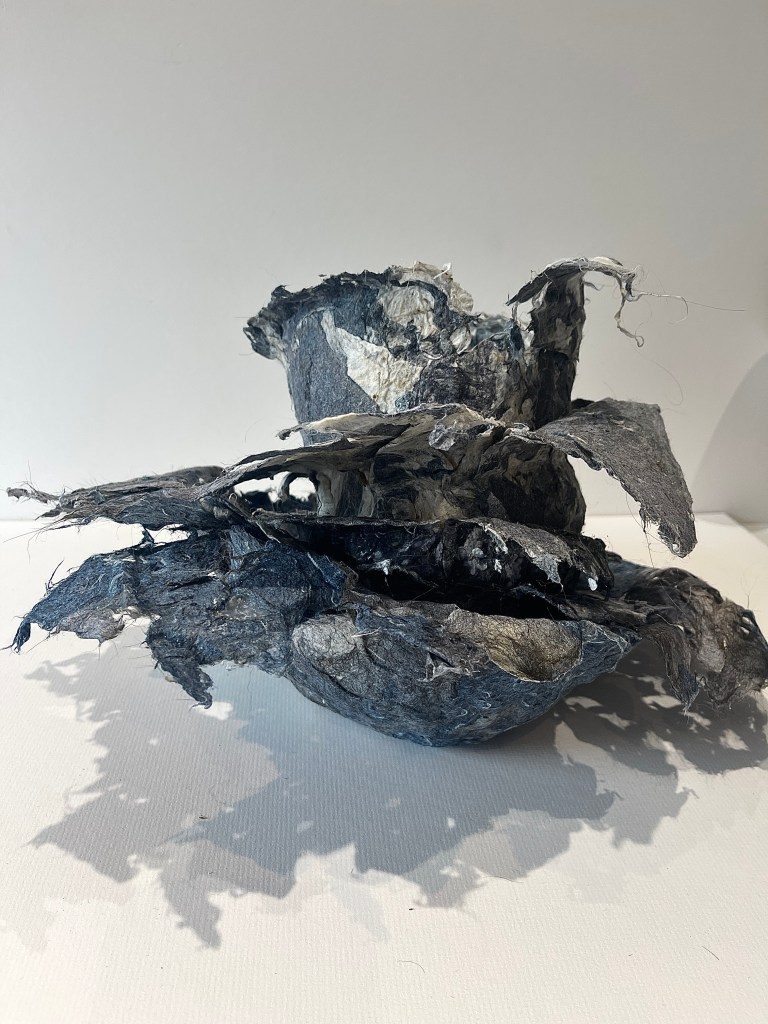
‘Empty Vessels’
Part of the detritus exploration was looking to create objects from the machine waste in the home. Moulding and felting the material to create other objects from the ephemeral and fragile waste. The container or bowl shape is traditional in its structure and cultural ad historic meaning. It is a place to store and keep other items and is more often a item to eat food from.
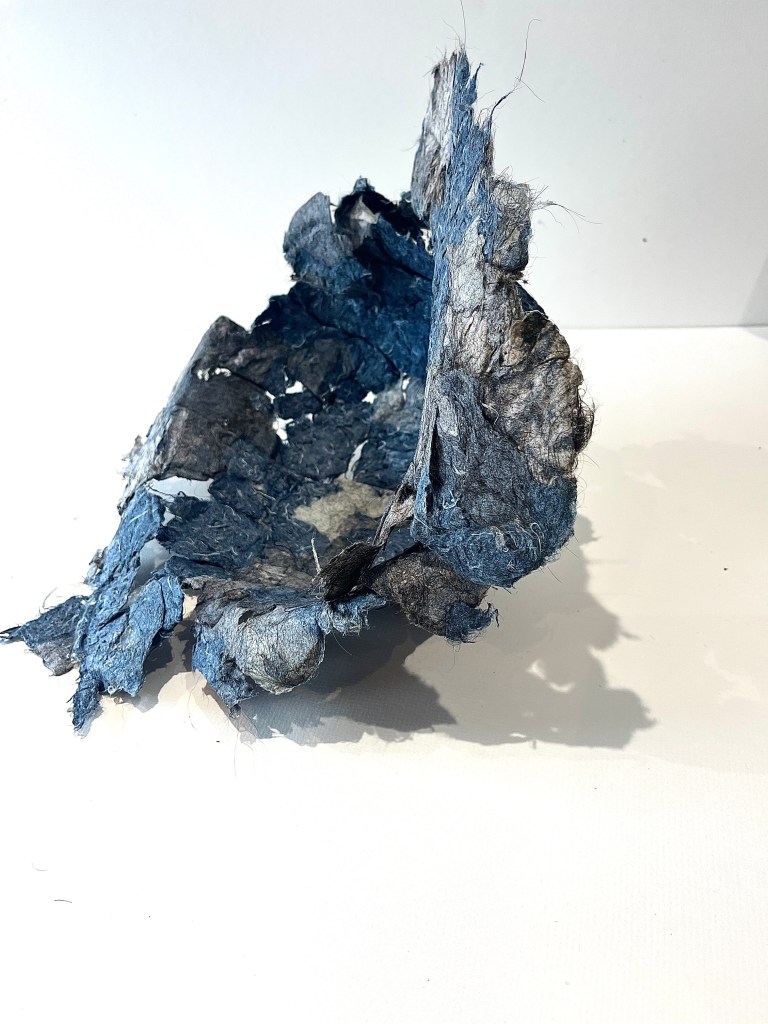
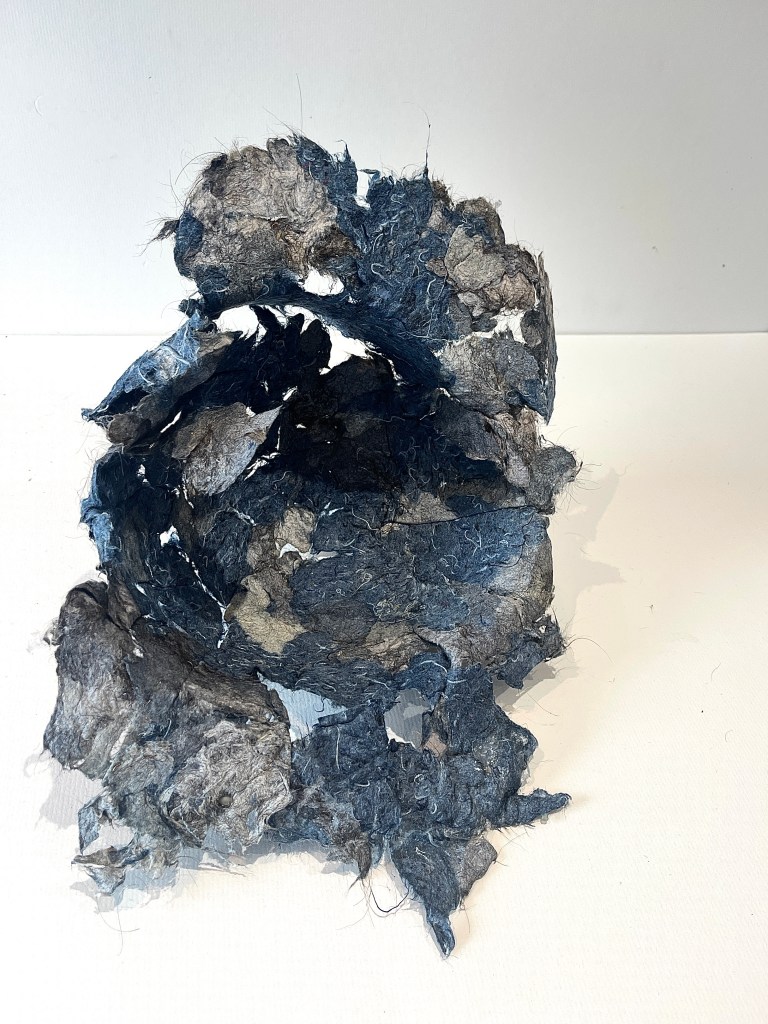
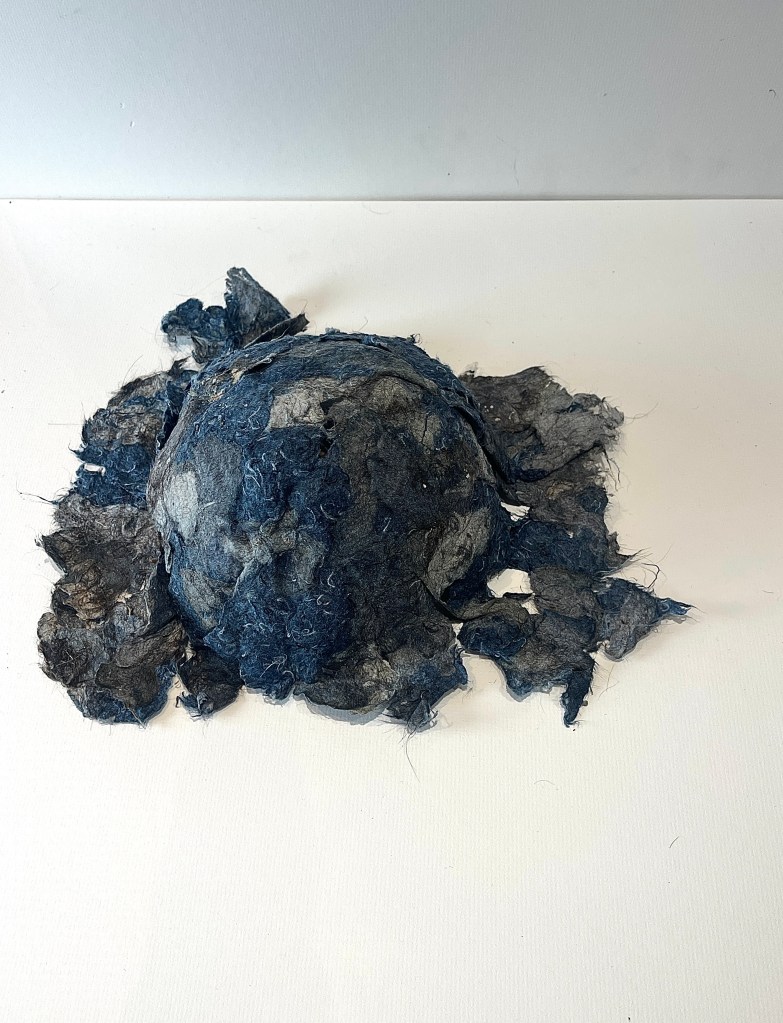
As part of my domestic enquiry I created a number of bowl shapes with the felting and moulding methods I had learnt. Some are more solid and firm others producted were fragile with weak structures.
As per the material, their appearance evokes an uncomfortable reaction when thinking of using them for any domestic purpose or ingestion of food. This reaction is purposeful and relates to the narrative of the female domestic provider and meal maker, as previously discussed this is the role woman traditionally continues to take on today. The hollow, bleak visual material qualities of the items are pertinent to my considered themes of the female domestic and inherent emotions.
‘Hollow ‘ – Felted moulded detritus . Individual shapes and constructions evoking an individualism and personification, personality.
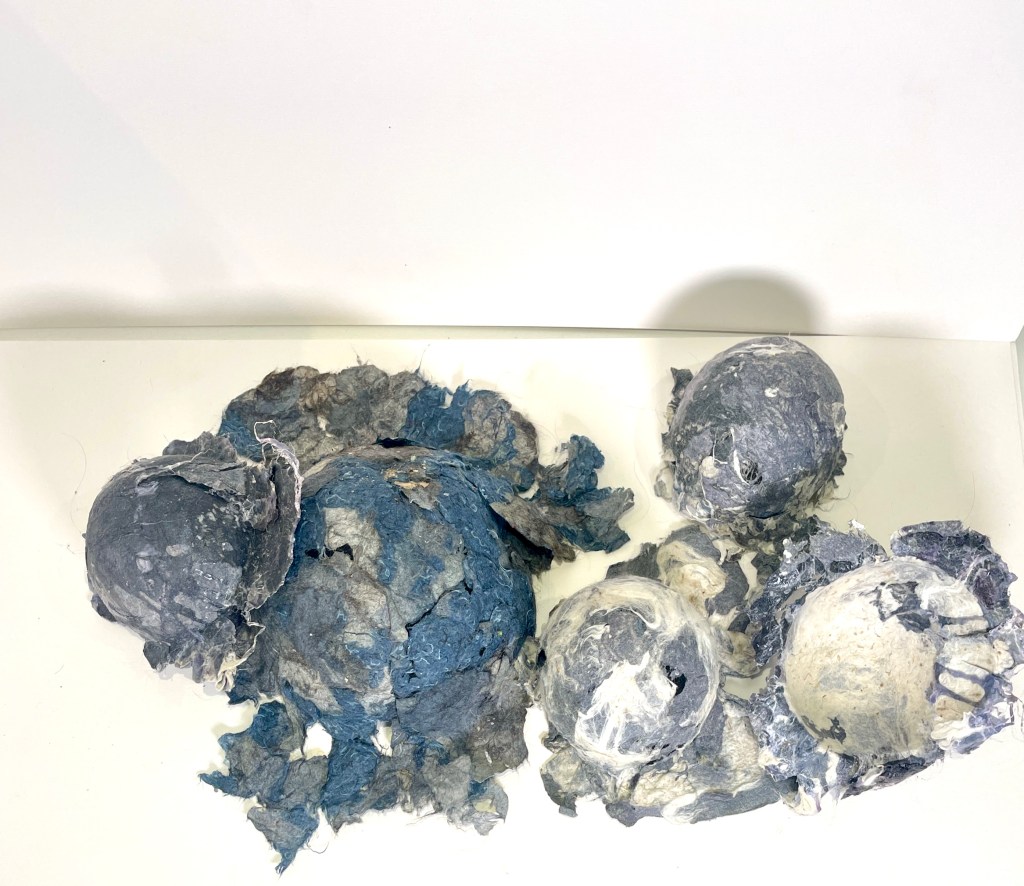
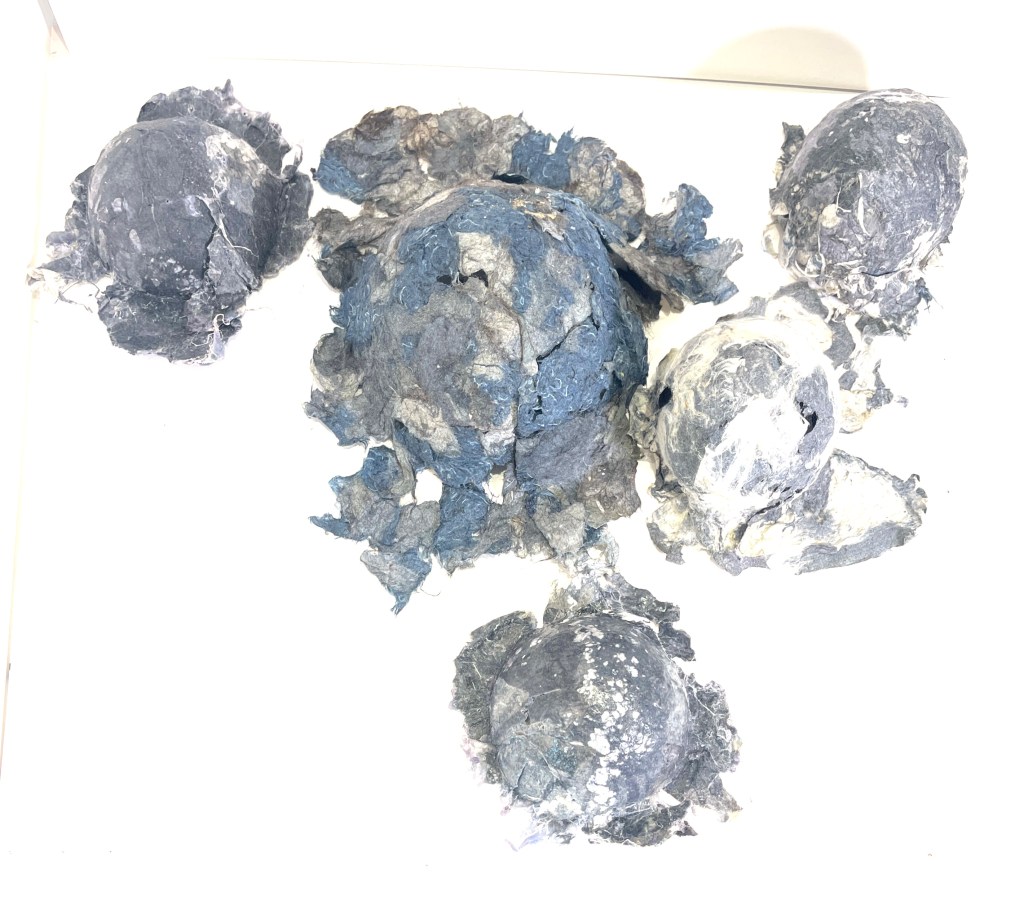
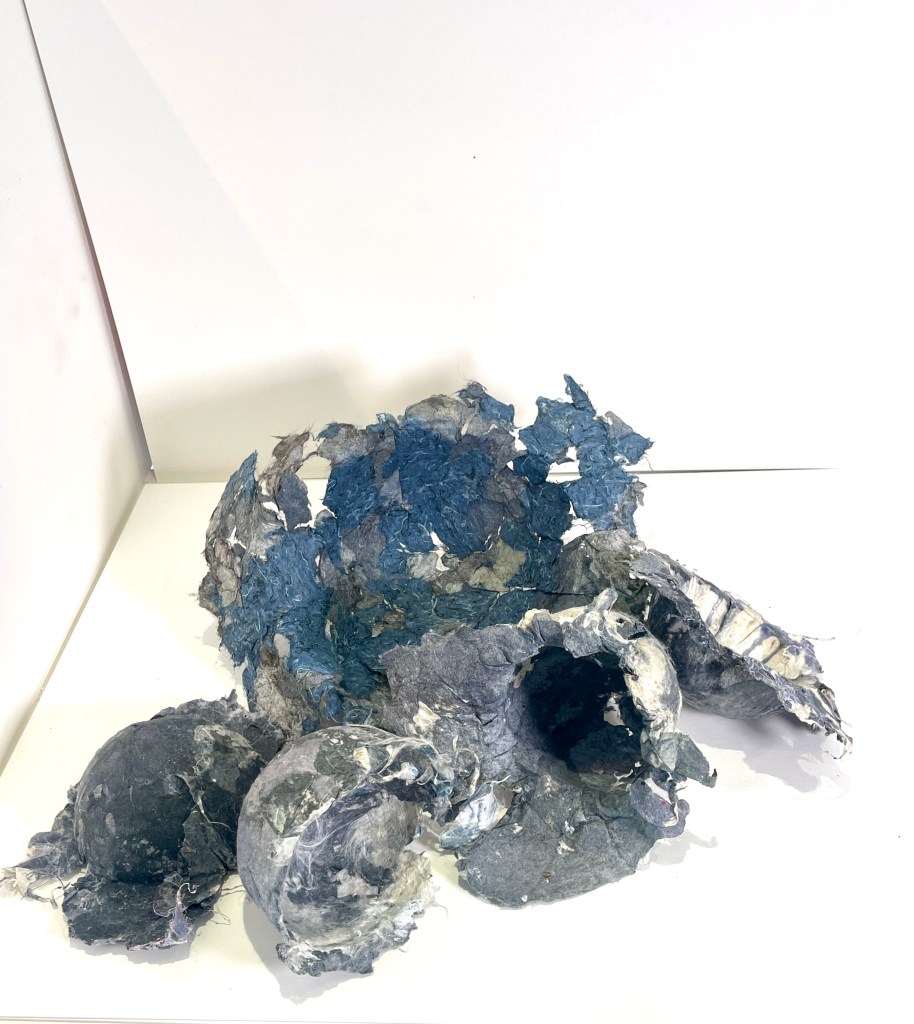
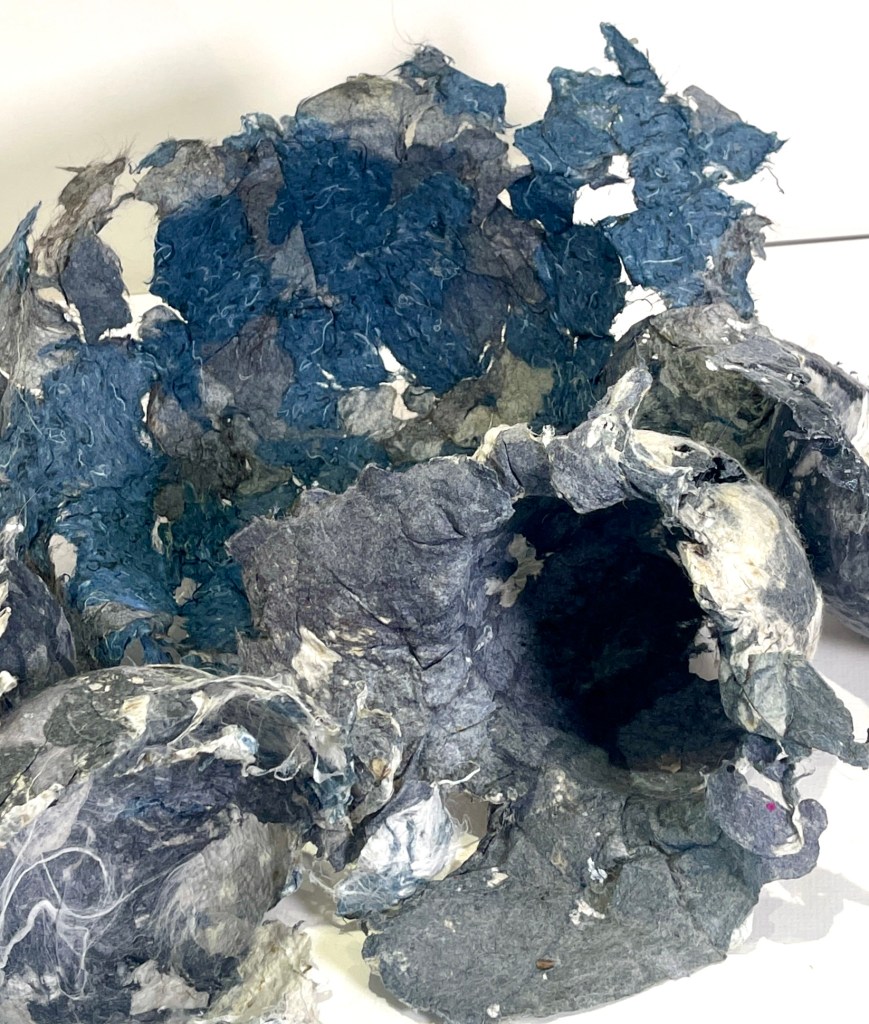
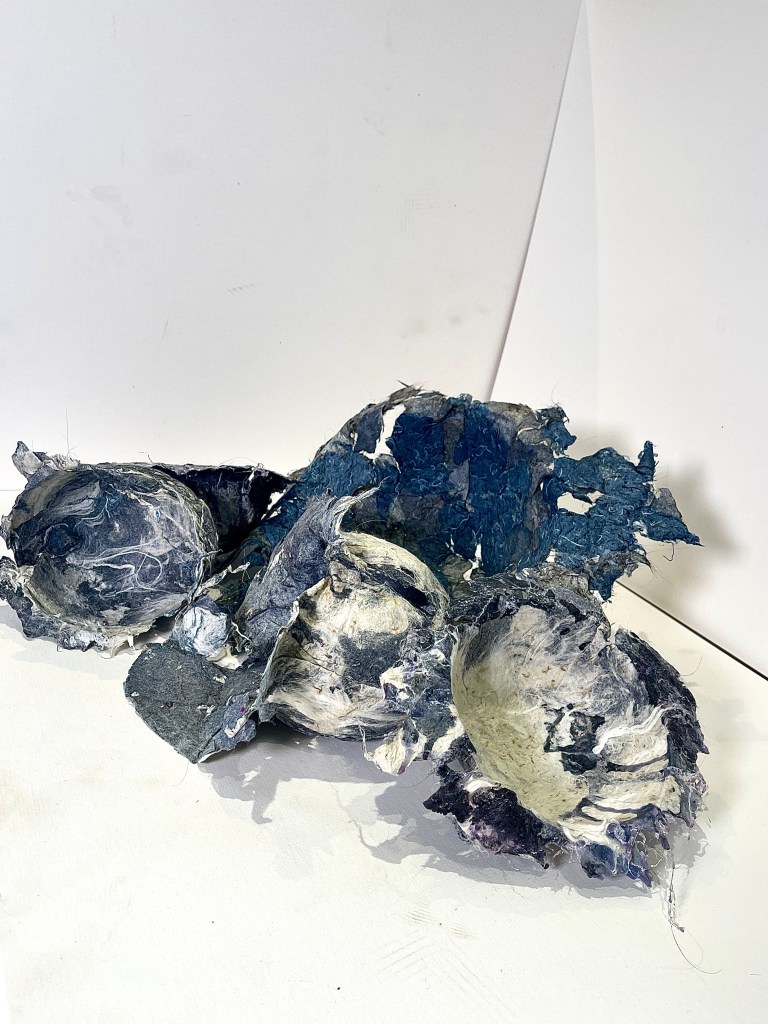
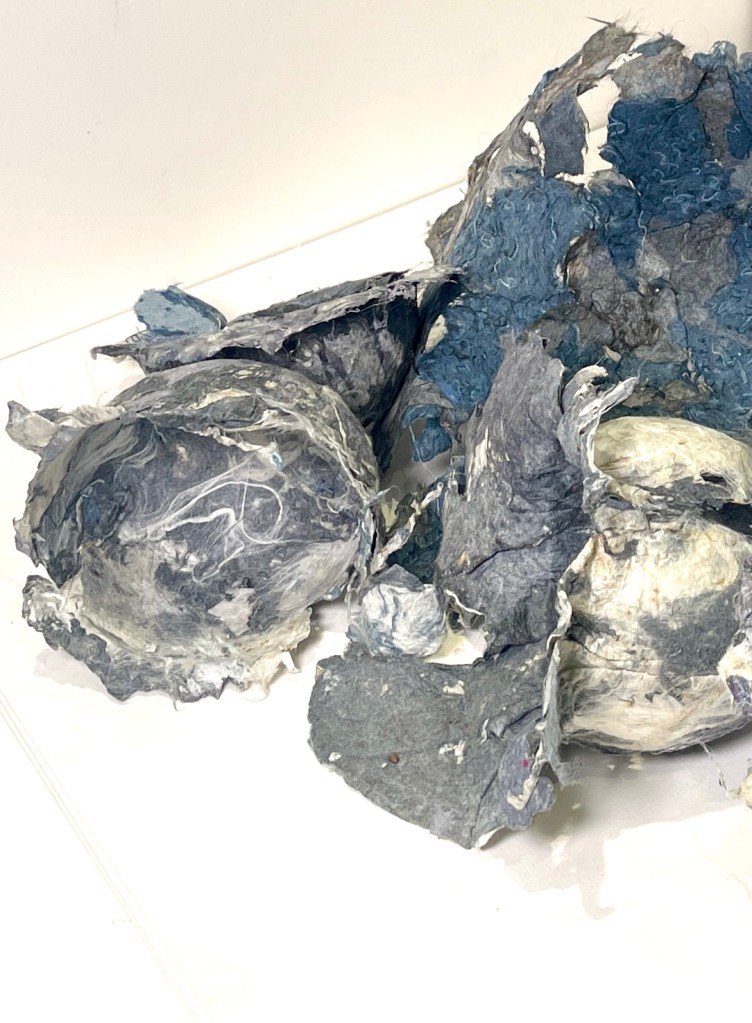
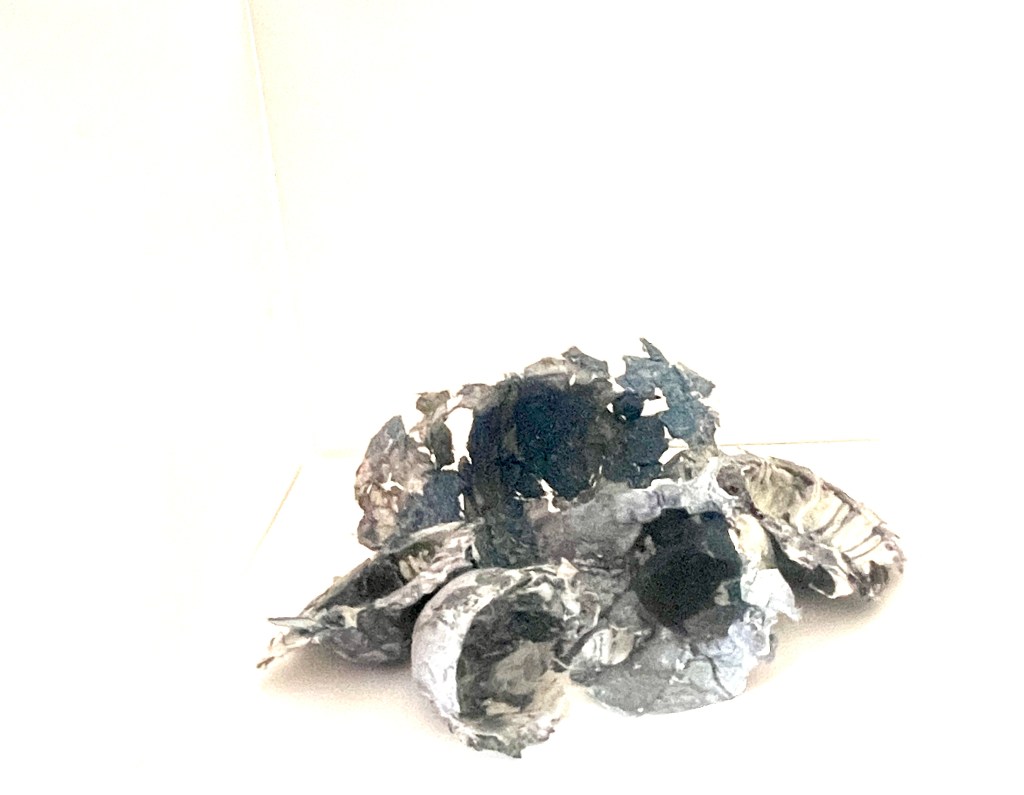
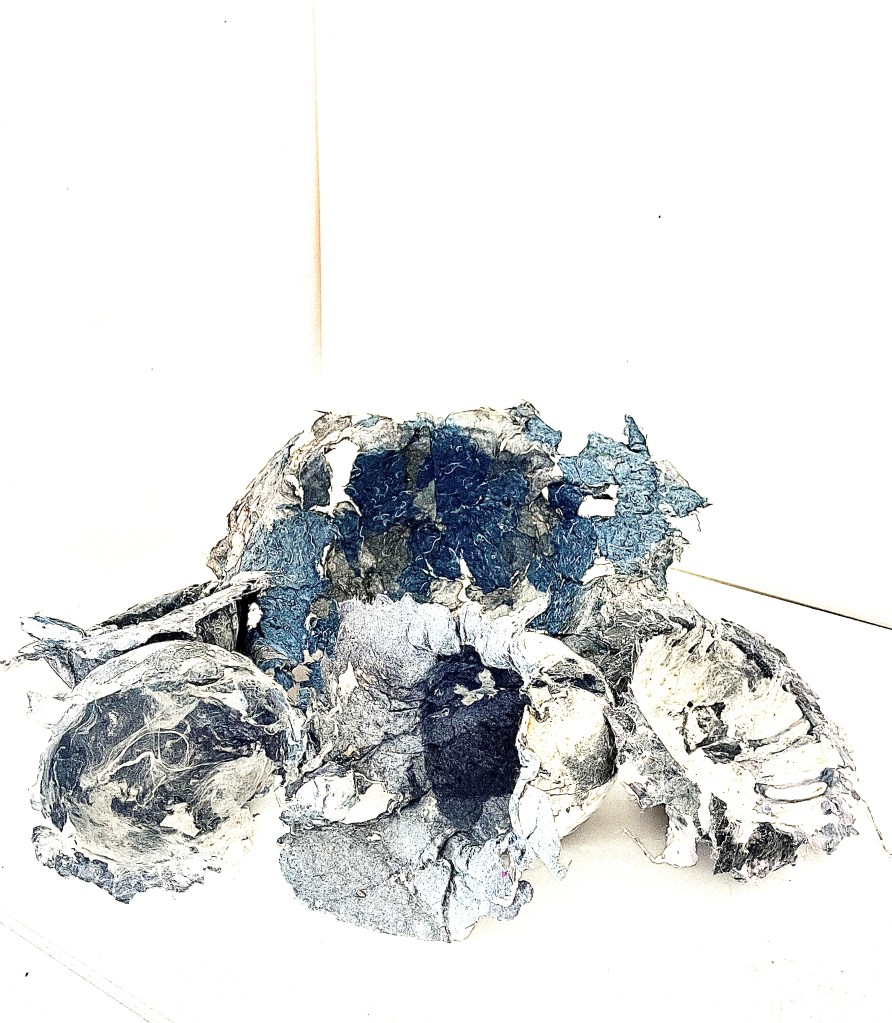
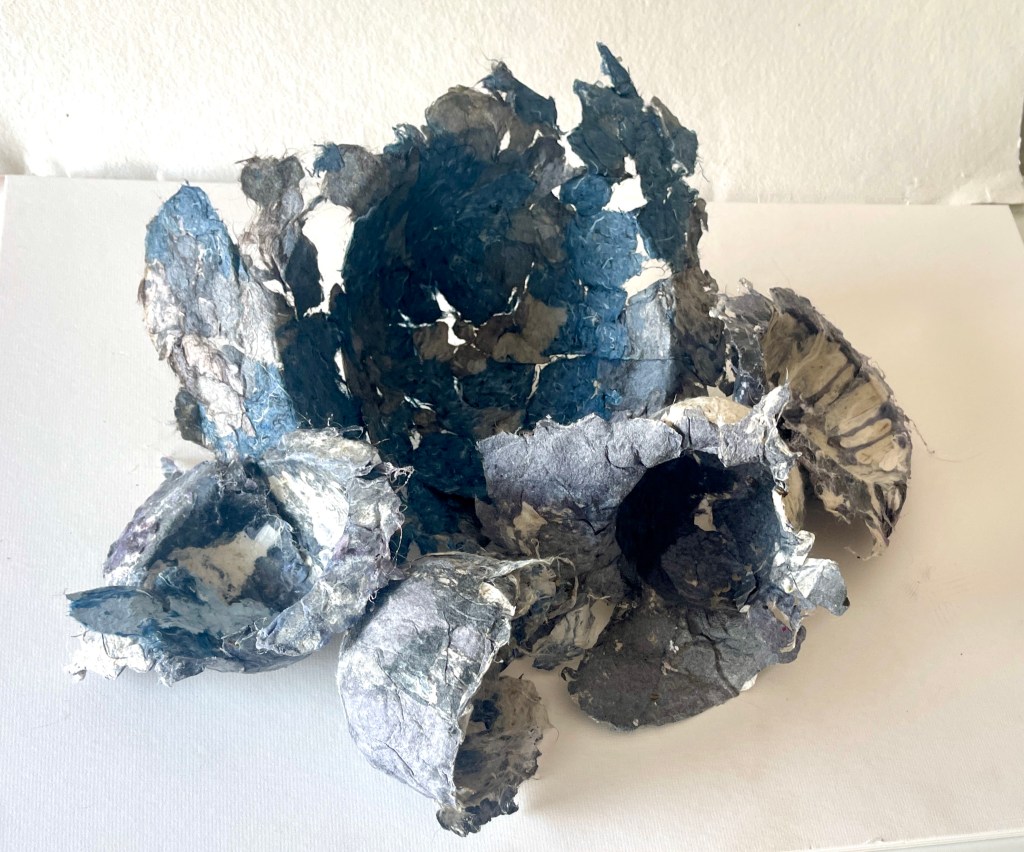
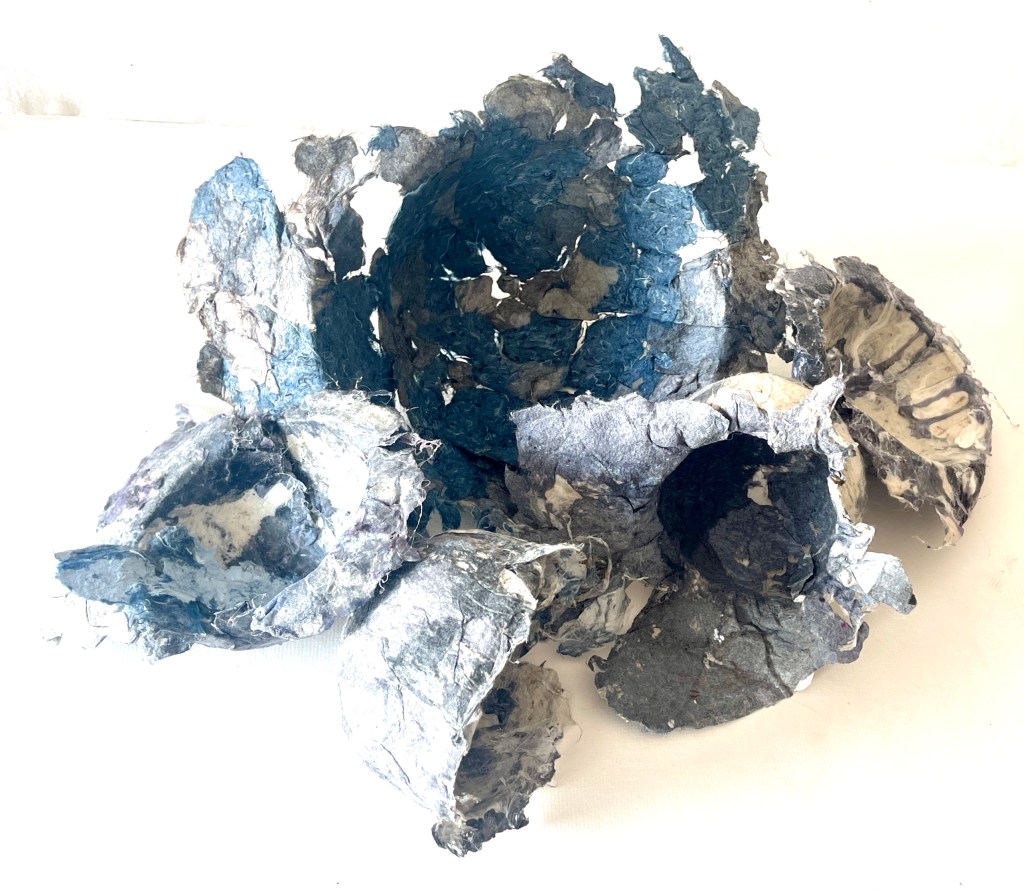
‘Hollow – ‘alone’
Selection of Learning Log. 18
Oozing Machine Detritus on Studio Floor:
(Illustrative use of tubing and flat felted detris)
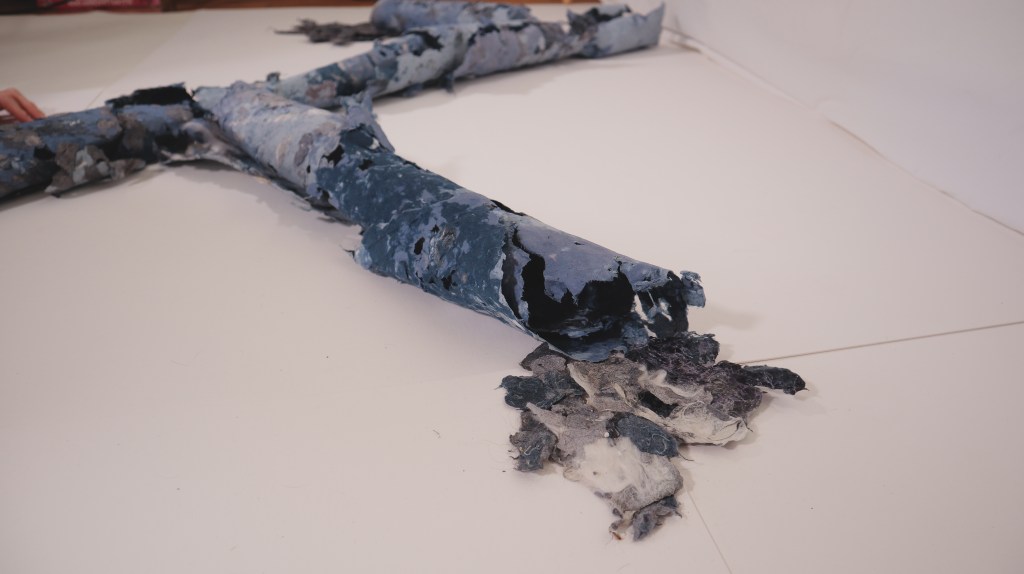
 The Sharpe Gallery