Peer Interactions:
Project 3 .Peer to Peer dialogue.
Chichester Art Trail May 2024
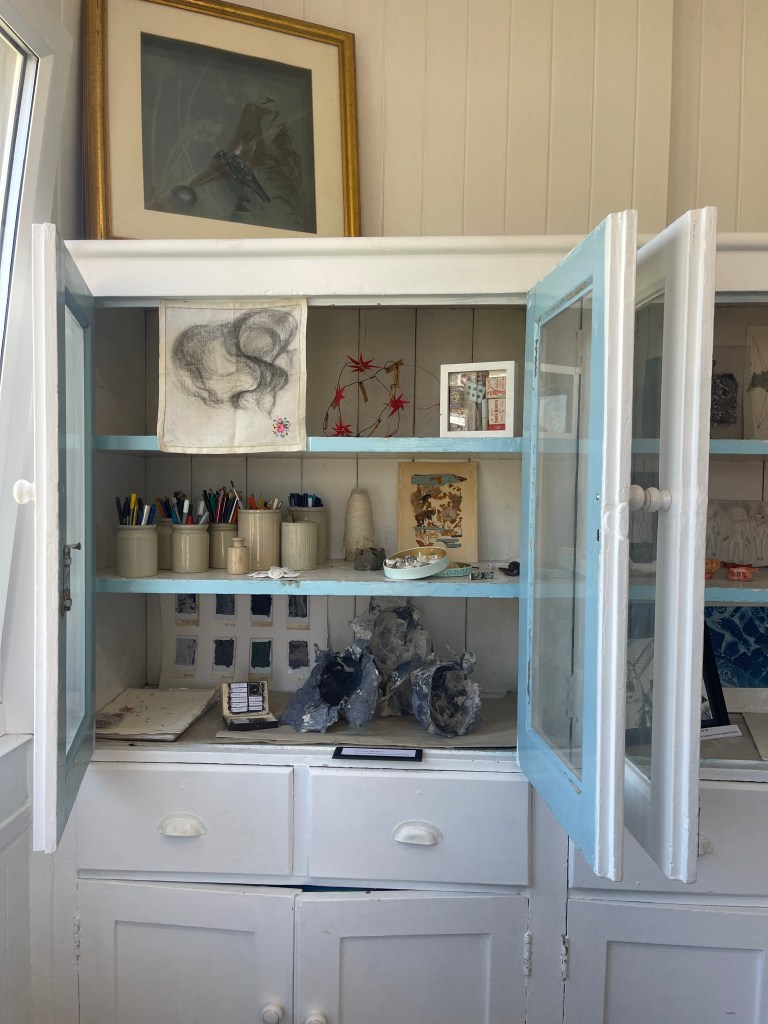
The Chichester Art Trail was an ideal platform for this experience as I spoke at length to a huge number of artists and the public about my work on display. It was fascinating to hear the responses and feedback to the work and this has certainly allowed clarity and focus in some area to develop. It was inspiring and informative in regards to future work projects and ideas plus begin working associations with other local artists. I presented a selection of new and older works for the first time in an open and exposed, commercial platform. I had over 300 visitors over the 5 days.
There was curiosity and interest in some of the more unusual materials and groupings that evoked a range of responses from humour to surprise. I enjoyed explaining deeper narratives so those who seemed more engaged while others took away their own agenda. The process of making was often enquired into which was encouraging as it seemed to evoke further lines of enquiry and exploration of practice and narrative. The age of the the visitors was wide ranging from children to senior citizens so the discussions and conversations were adapted accordingly. The children were often just interested in the material and the object while the adults the further story behind it. It was a space where I was able to encourage some haptic interaction with the work which was rewarding to experience. It confirmed that this type of engagement offers a more in depth and immersive art experience. Whilst some of the references and works concerned some of the bleaker sides of humanity discussions interlaced theory and context allowed an open and enquiring level of conversation. It was a hugely rewarding and exhausting experience, my initial terror giving way to enjoyment and exhilaration.
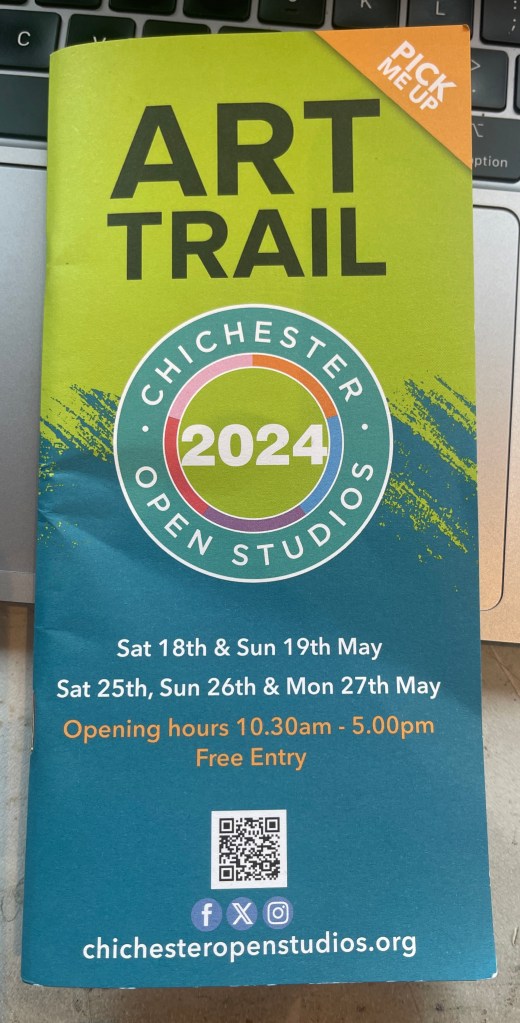
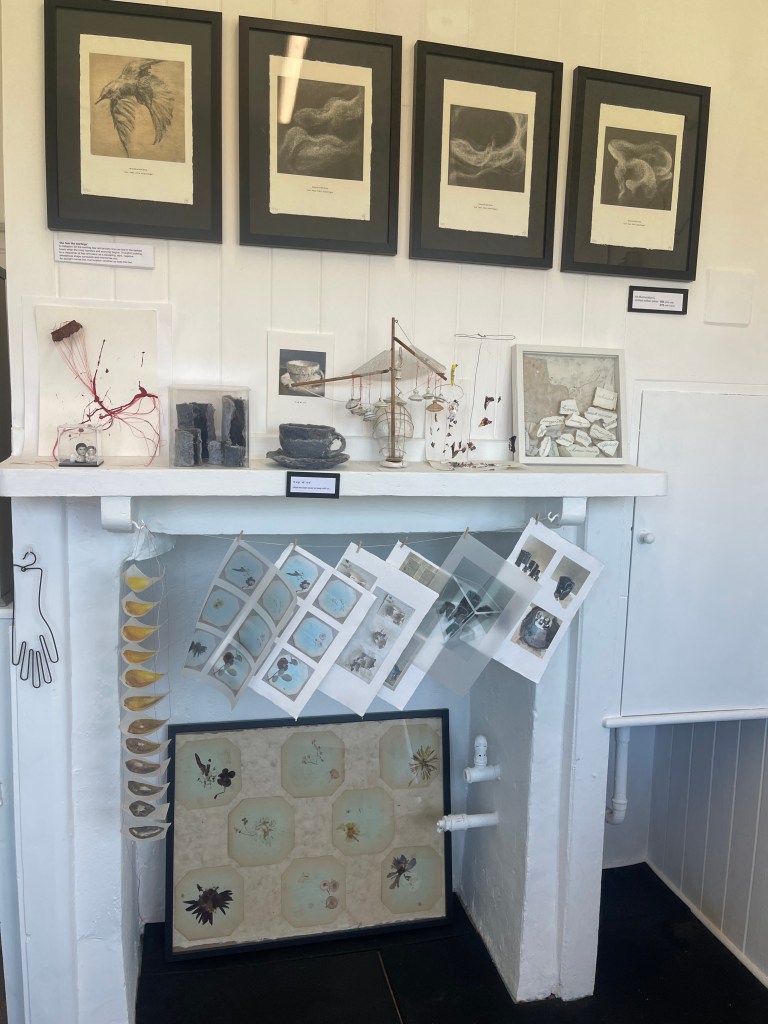
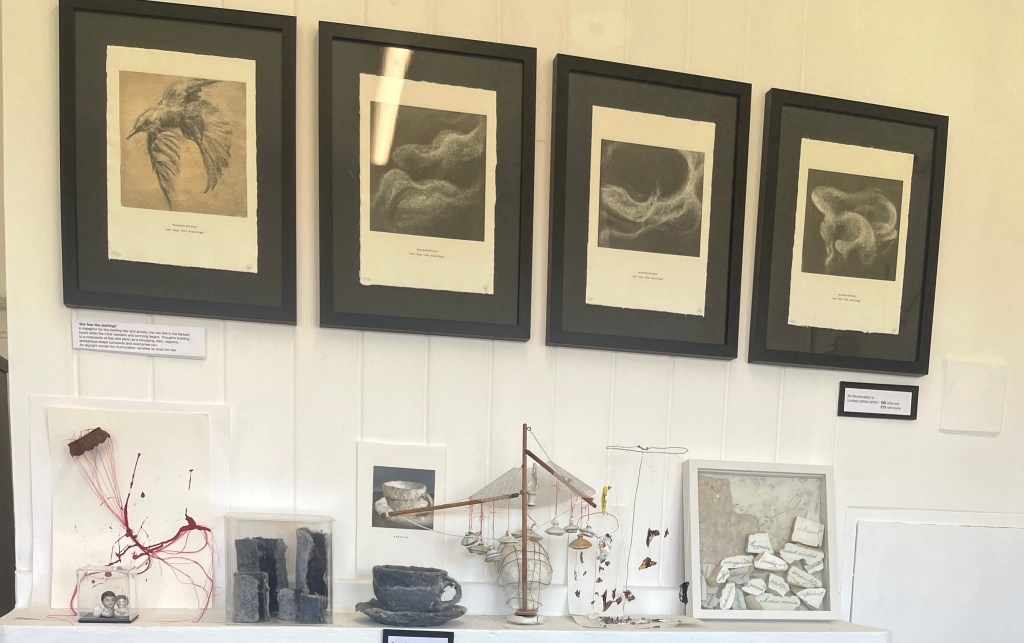
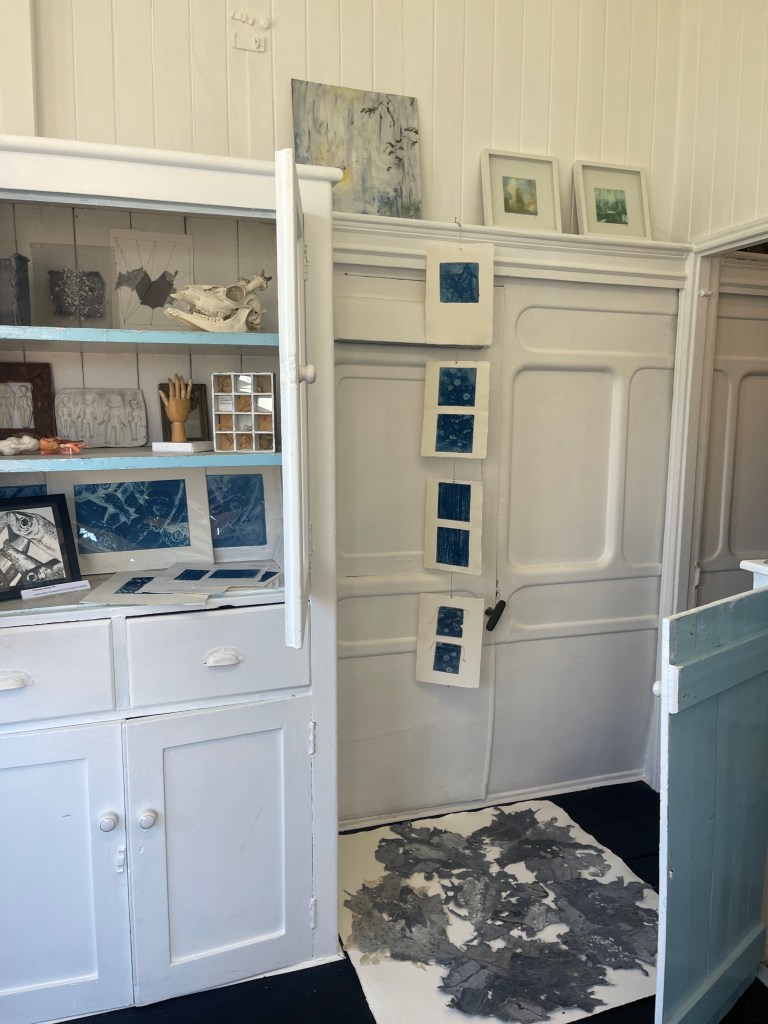
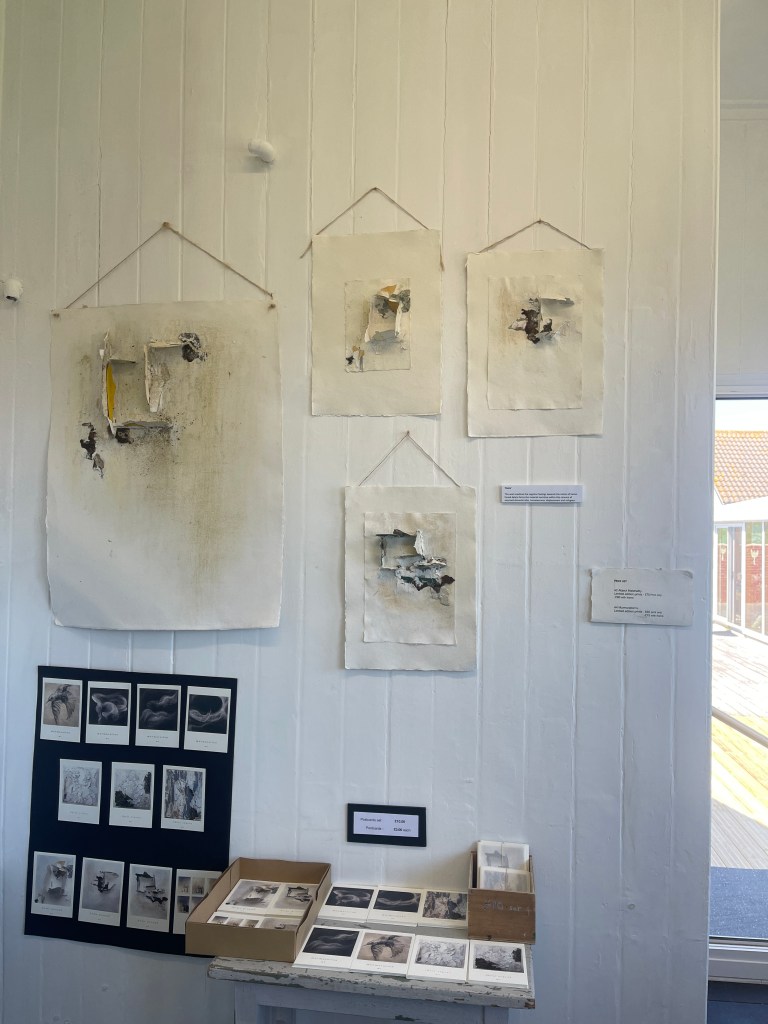
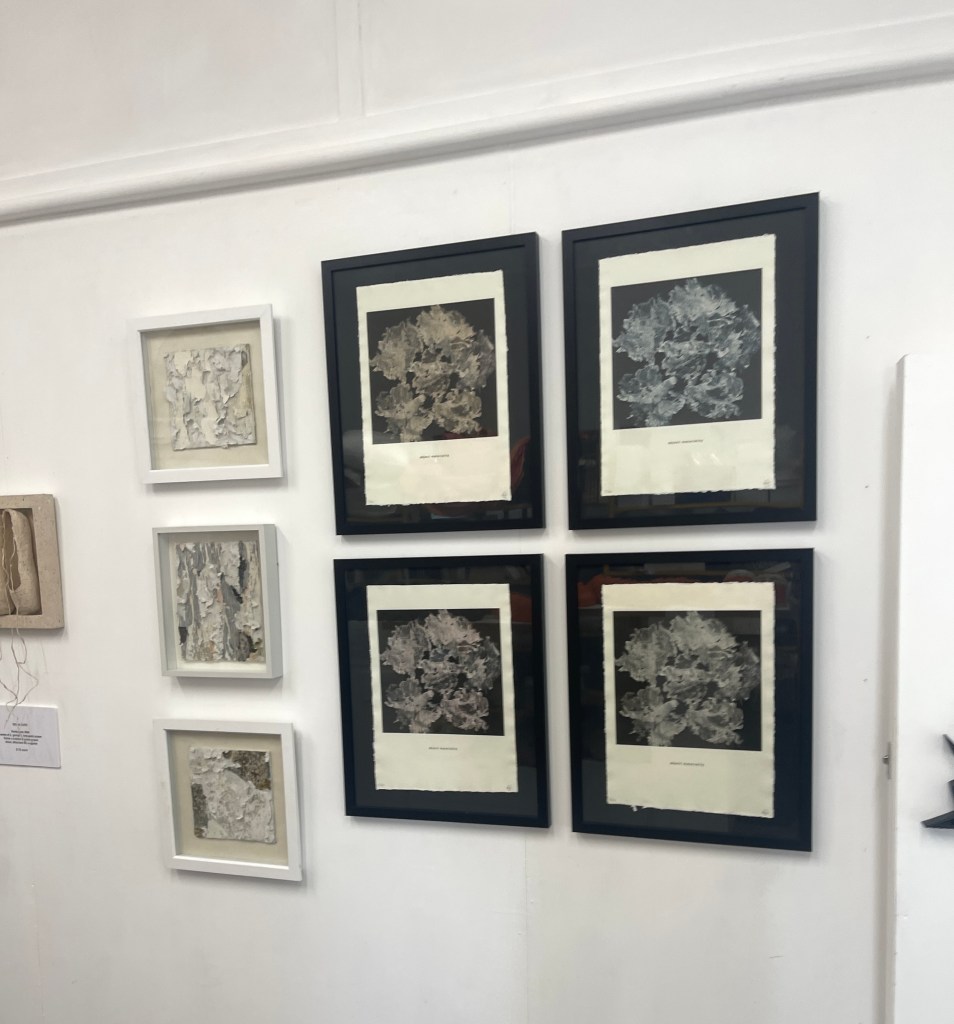
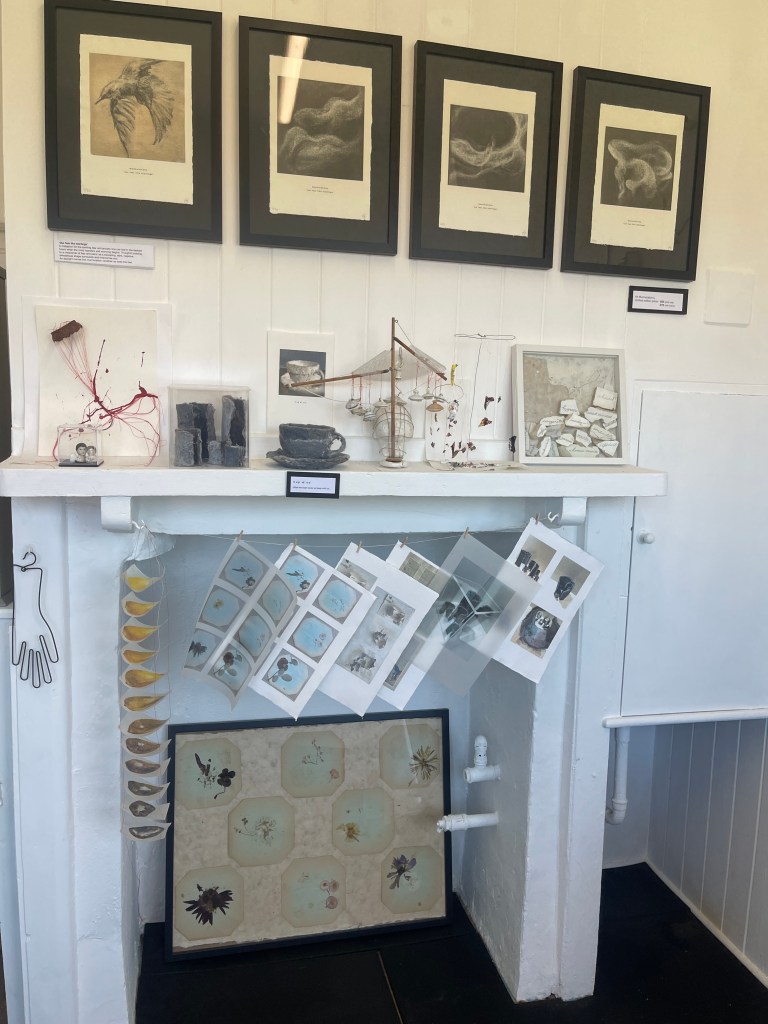
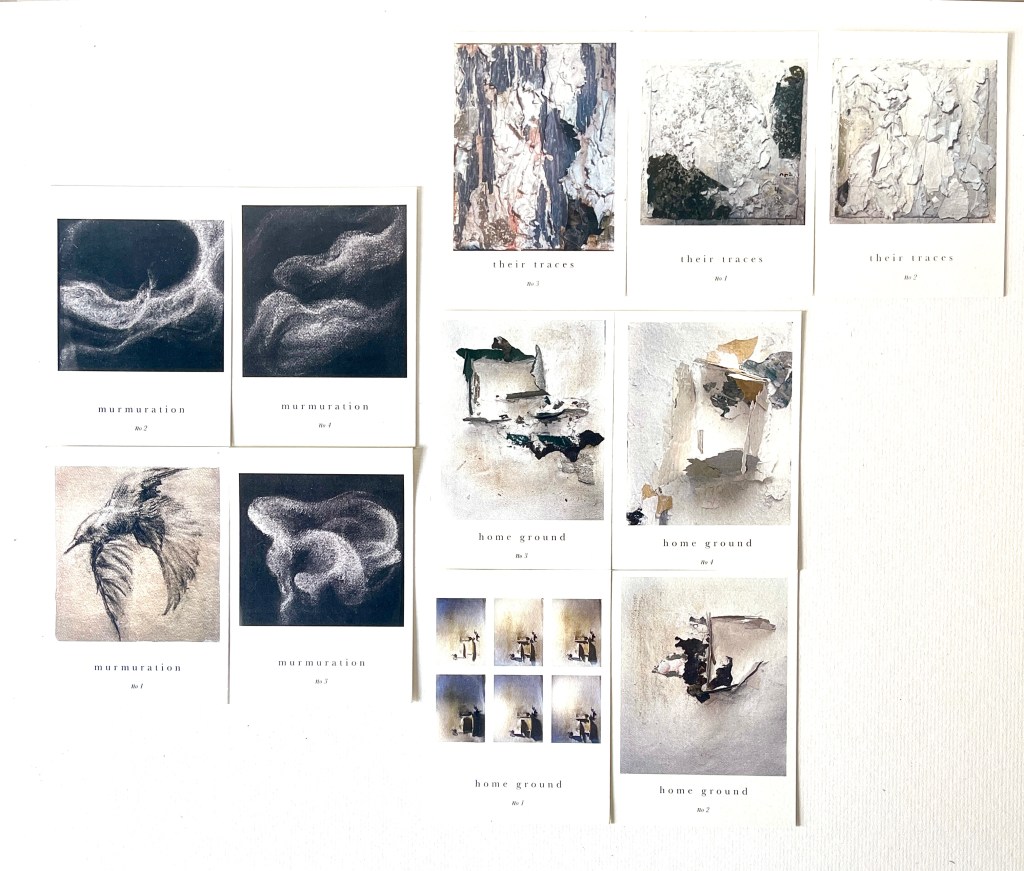
Postcards I produced for the exhibition Below 😦 print on heavy duty card)
Group Crit with the OCA . – These sessions have been informative and engaging, but the numbers were low in these sessions and not everyone would engage. However feedback was well informed and useful.
The OCA ‘silent crit’ was a platform to expose my creative work to my peer group, it was a new experience for me personally where the focus was very much on individual work and not a shared topic. It was however a positive and productive discussion with a plethora of comments and questioning regarding all the work and full group participation.
There was a variety of working practices on display, from painting with digital interaction to clothing made from found items, assemblage/ collage work and drawing. This in itself was an engaging start point as it encouraged such a diversity of discussion and topic.
Like myself, most of my group worked in a solitary or isolated way and so the opportunity for feedback was greeted very positively and we were all eager to participate.
There was diverse narrative and concerns in the artworks presented and all of the group were able to articulate and respond passionately when asked to comment on our own work. This was particularly insightful and showed a range of work that was material, trauma, technology and historically led. Whilst we did not have time to fully explore studio space and making/ working practices it was clear that there was a selection of material craftsmanship, delicate computing and surveillance application, a variety of mark making experiments with unusual media and collections of found material. Current world themes and issues were touched upon by many of the group and were reflected in their current works or used as part of questioning narratives.
The threads and connections running through the work I presented came under the heading of ‘Fragility’ and ‘Homemaker’ . This alluded to the female, traditional trope of homemaker and the fragility and complications surrounding the notion of home. The necessity of home is instinctive and inherent within humans. Obtaining and keeping one is challenging, fraught and may be out of reach for some.
This work looks to encompass the fragility of home and emphasise the enormity of what is represents with positive and negative undertones. This was specifically through eyes of the traditional female ‘homemaker’ with undercurrents regarding, domestic abuse, homelessness, and refugees.
The comments from the group were diverse although not so disparate that there wasn’t a cohesion of content or presumed narrative which was encouraging. The student whose own work concerned surveillance, drones and current worlds wars felt my work resembled bombed out, war torn ruins and commented on the destruction of homes and the increase in mass homelessness globally. This was a new angle of consideration that was echoed by another student who had experienced some of the horrors of war personally. She explained that she felt an immediate connection to the work, recognising the waste material used to create them and the fragile imprint of structures they become. This sense of shelter from the war-torn destruction of the home spoke to her as did the perceived ruined remains. The concept of “ruins’ from an archaeological standpoint were also commented upon by a fellow student, linking the work to perhaps a Pompeii type setting with entropic overtones of decline and disorder.
The only clue to the nature of my work was the one word title “homemaker’ but my tutor questioned whether this might be a better as simply ‘home’? Perhaps this would offer up a wider range of potential narrative and engagement?
Many of the comments received related to very specific physical concerns, less to do with the mental fragility and pressures of establishing and keeping a home and the chaotic, internal manifestations I had intended the work to evoke. There was little discussion as to the symbolic nature of the work and it seemed to resonate more literally with my group with interpretations of the work that were less conceptual and more literal and actual .
Going forward I will now look further into some of the suggested themes of ruins, destruction of homes in the Anthropocene of global wars, how my work relates to archaeology ( archaeology of the future) and the vast narrative of past lives, civilisations, investigations in physical matter , the joy of uncovering fragments of the past, the importance of understanding the past in order to cement and justify our place of now. The show at the Tate Britain entitled ‘ Ruin Lust’ (2014) was suggested by my tutor as an interesting place to start.
The comments raised were positive and insightful and have shown the varied responses one can experience when considering an artwork. Art should be able to evoke a varied voice and narrative as the context of the viewer will always be relevant and pertinent. The viewer engagement will be all the more so if there are multiple – levels of potential connectivity and interaction with a work. The silent crit’ was a an essential and ideal platform to experience viewer reaction.
Overall the ‘ silent crit’ was an insightful and explorative experience. I have seen my work through new eyes and future possibilities of exploration and context have been revealed.
Susan Cutts : ( Member of the Royal Society of Sculptors) http//:www.susancutts.com
I have struck up a friendship with an artist in her late 70’s who has exhibited all over the world and has a wealth of experience to impart. Commercially and academically her words and advice are on point.
Susan felt my work was a deep exploration into material practice and was excited to see its development. As a maker she wanted to examine my creative process to ensure I was creating from scratch and not using short cuts to achieve what she would describe as ‘disappointing results’. There is a pureness to Susans work and a pared back relationship to her chosen materials, deciding not to use anything other than what is absolutely necessary to create her paper sculptures. This did resonate with me and hence I abandoned all glue and other ‘short cuts’ in my experimental material process. I was pleasantly surprised by how the material responded to wet felting using only the purest soap for adhesion and modelling. Susan had a overcome many issues regarding artwork transportation and so had a practical, makers approach to her work, not loosing sight of the need to move and transport work as simply as possible. This became a lesson hard learnt for myself as my large final piece ‘Murmuration’ became almost impossible to move and retain its original shape and structure. I will, going forward consider this predicament.
I learnt a new sense of confidence and fun working in Susans studio for the day making a finer moulded paper like material from my machine detritus. She was hugely experimental and playful with the material and enjoyed the process and the unpredictability of outcome. I felt relaxed and less concerned by the outcome and immersed myself in the explorative creative process. Susans international works are situated in public spaces, not commercial galleries. This was a purposeful decision made by her many years ago and was an issue I had not yet considered in regards to placement or ambition of work for the future. There was a unselfish, open and welcoming approach to Susans working practice that was inspiring and thought provoking.
Veneration Project – Collaboration with Peers:
My ‘Veneration’ collaborative project allows me to reach out to other artists I come across about this project concerning ‘femaleness’. It has inspired debate and conversation about what the work could be and its wider narrative which will be a source of rich material and information.
This is a selection of the work received so far. Going forward with more collected works I would like and hope to present this for exhibition.
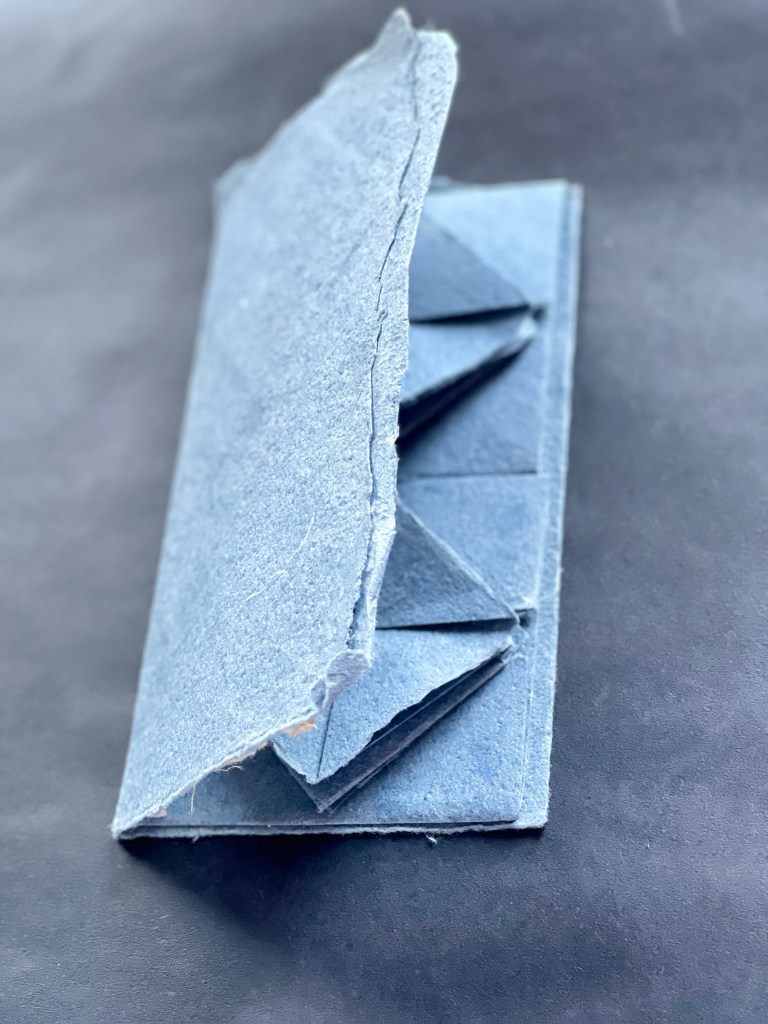
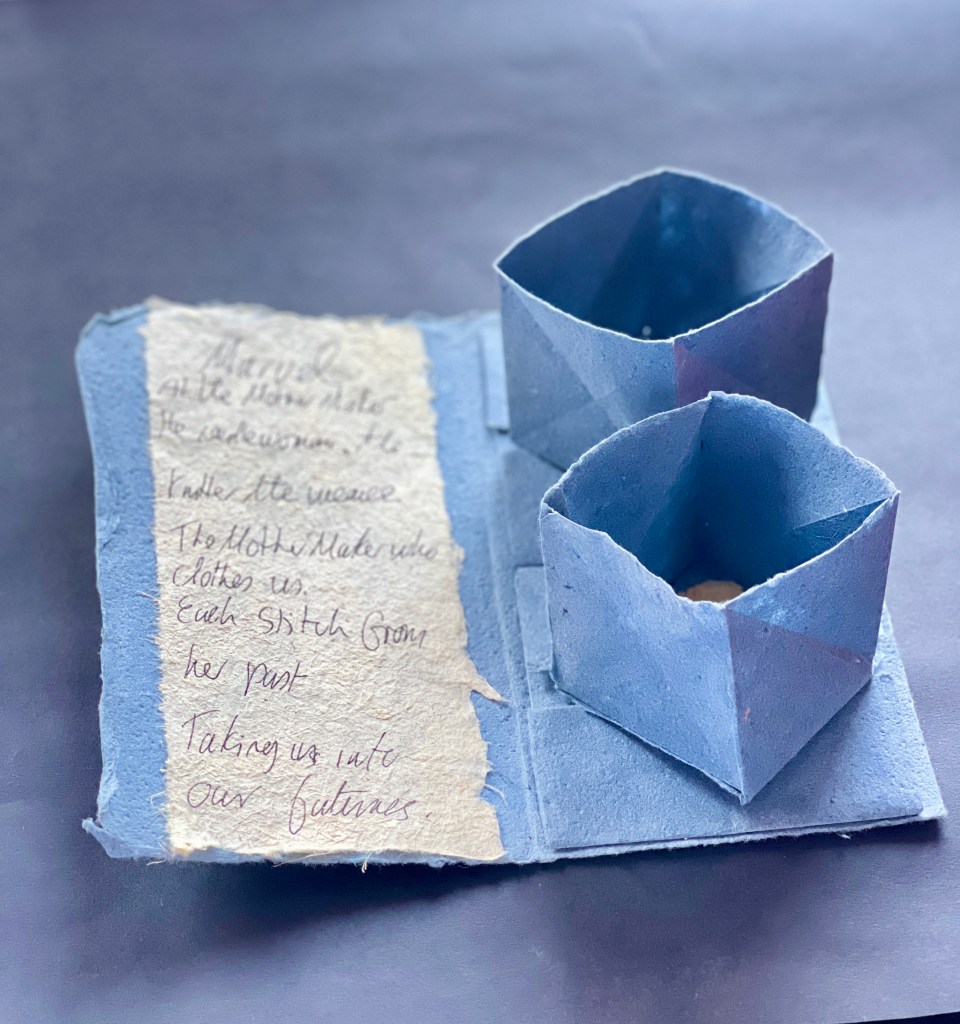
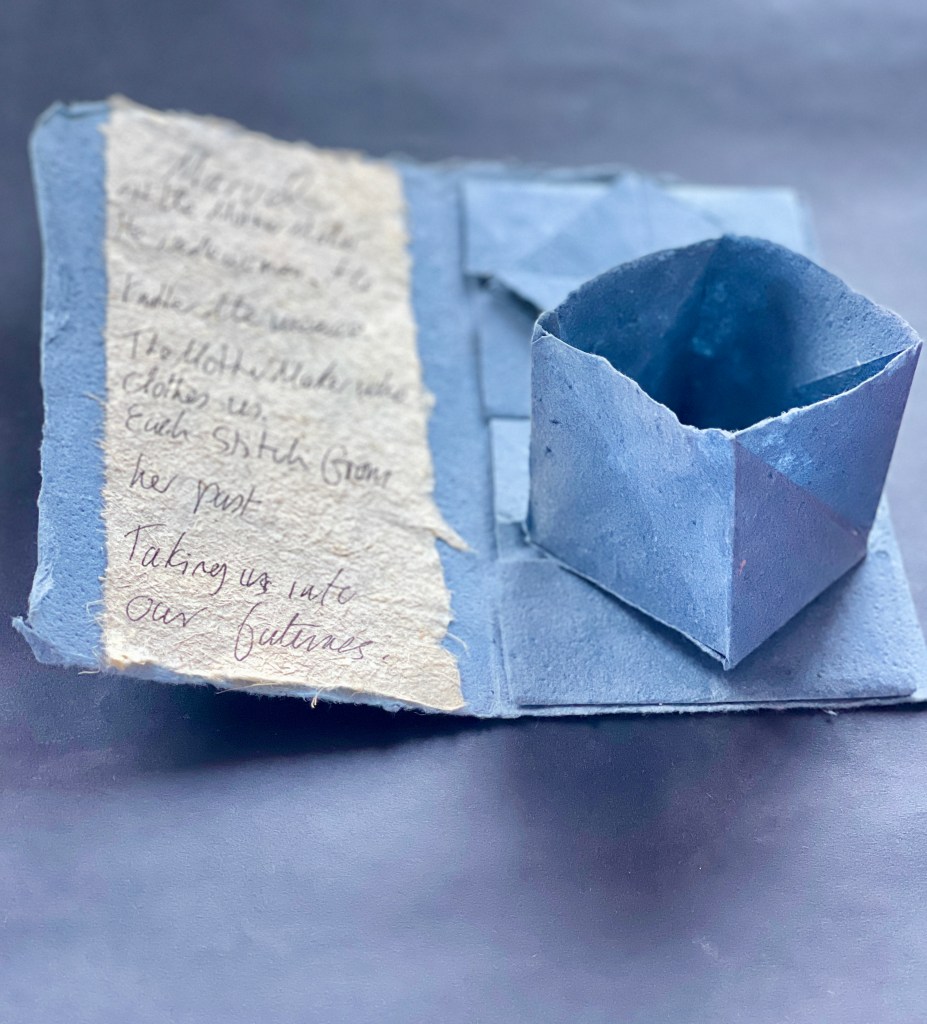
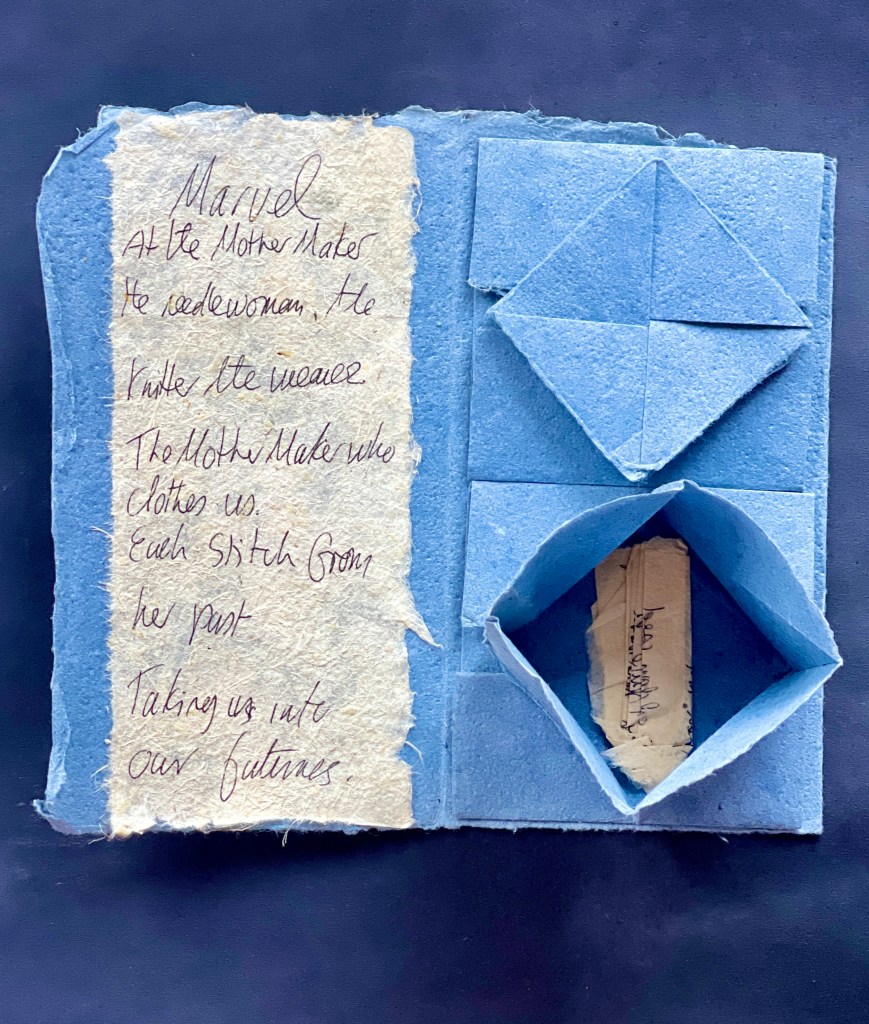
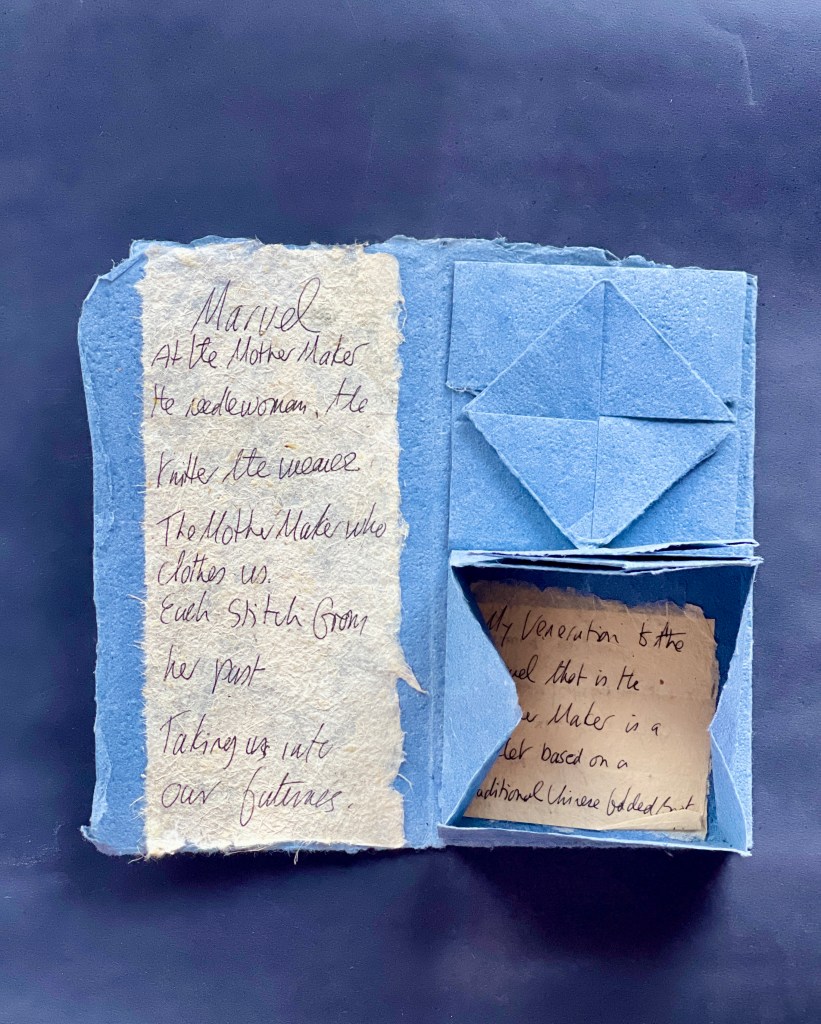
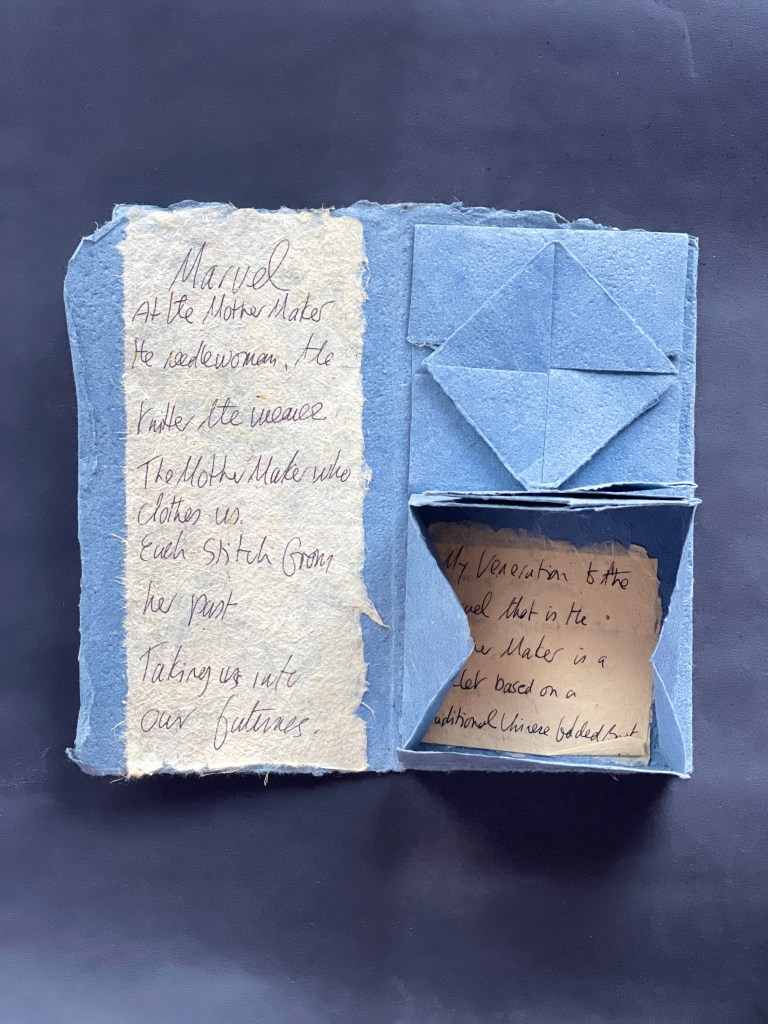
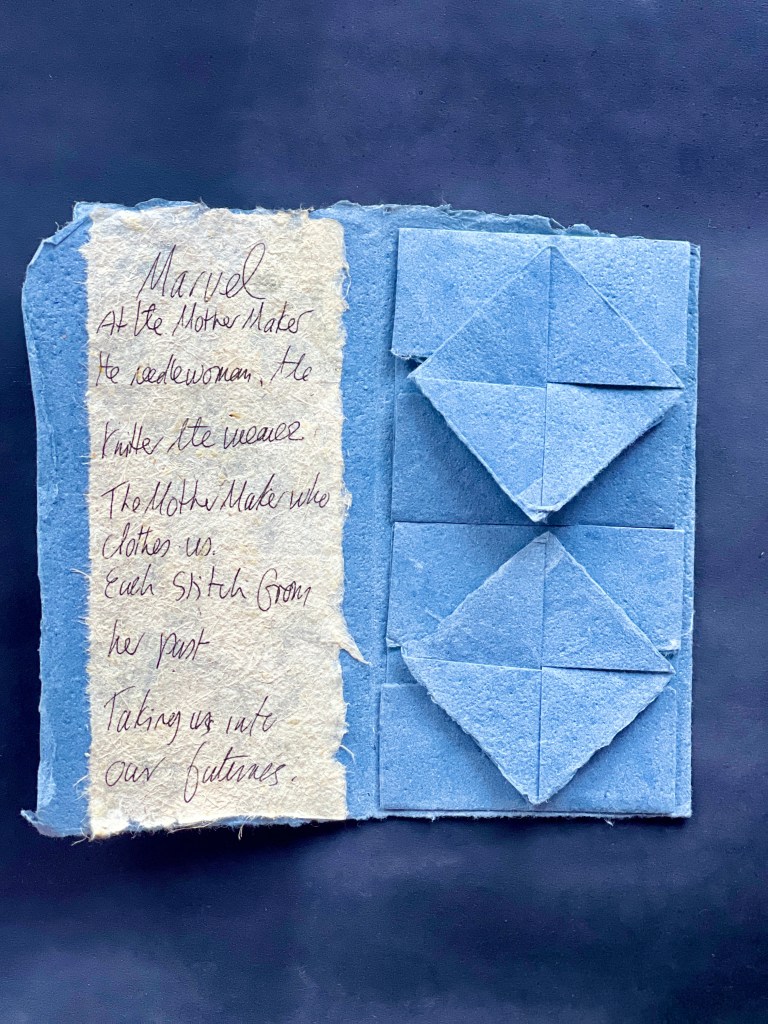
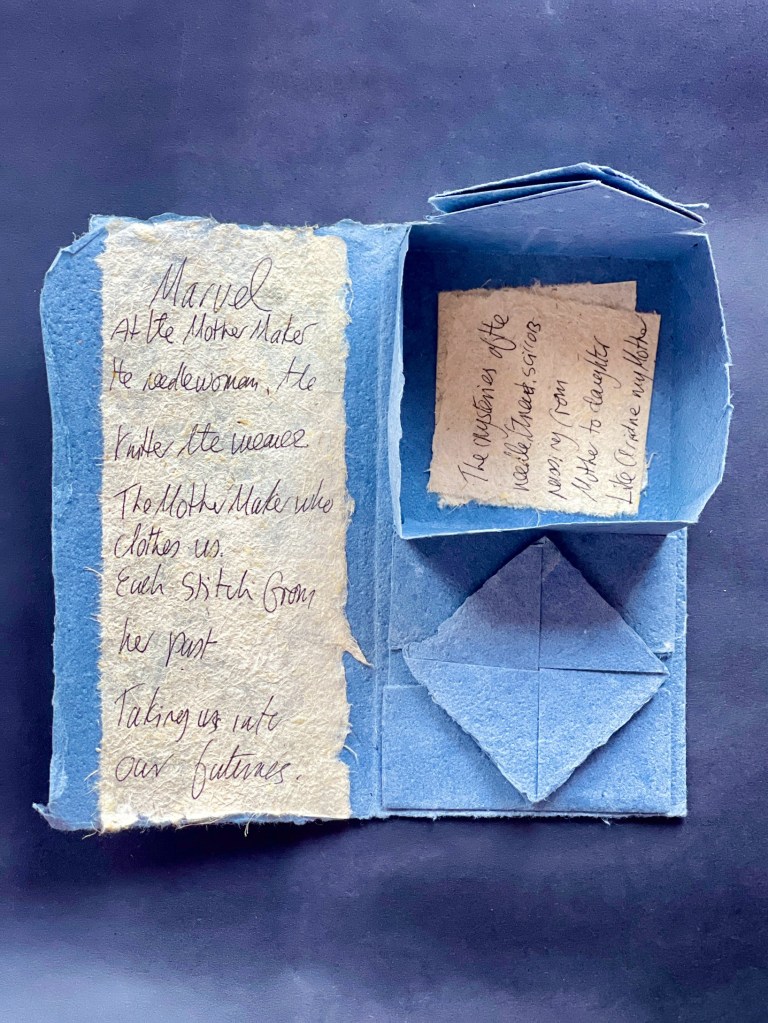
Susan Cutts – The Mother Maker 2024 – handmade paper .
‘Marvel at the mother maker the needlewoman. the knitter, the weaver. The MOther makes who clothes us, each stitch taking us into our futures’ ( Susan Cutts)
The work represents the Chinese art of paper folding to create little packets for the use of crafting materials that would be handed down to the daughters from their mothers/ grandmothers.
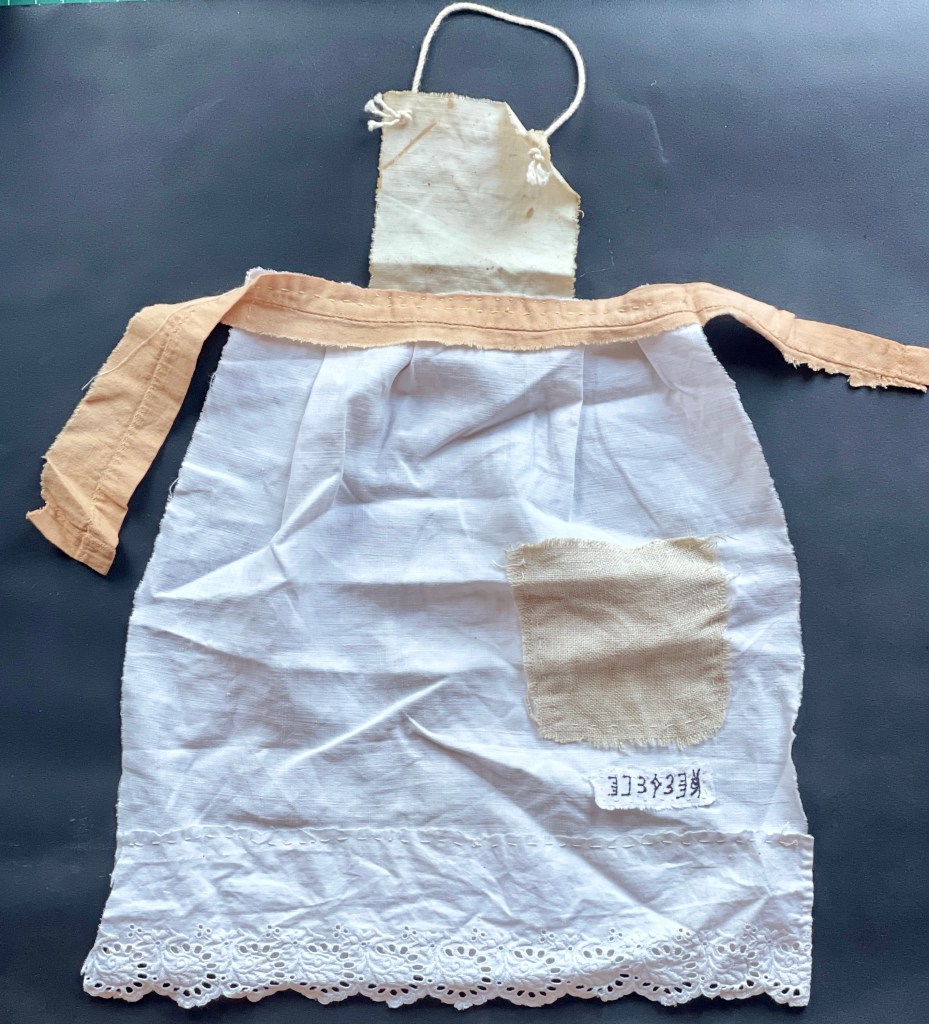
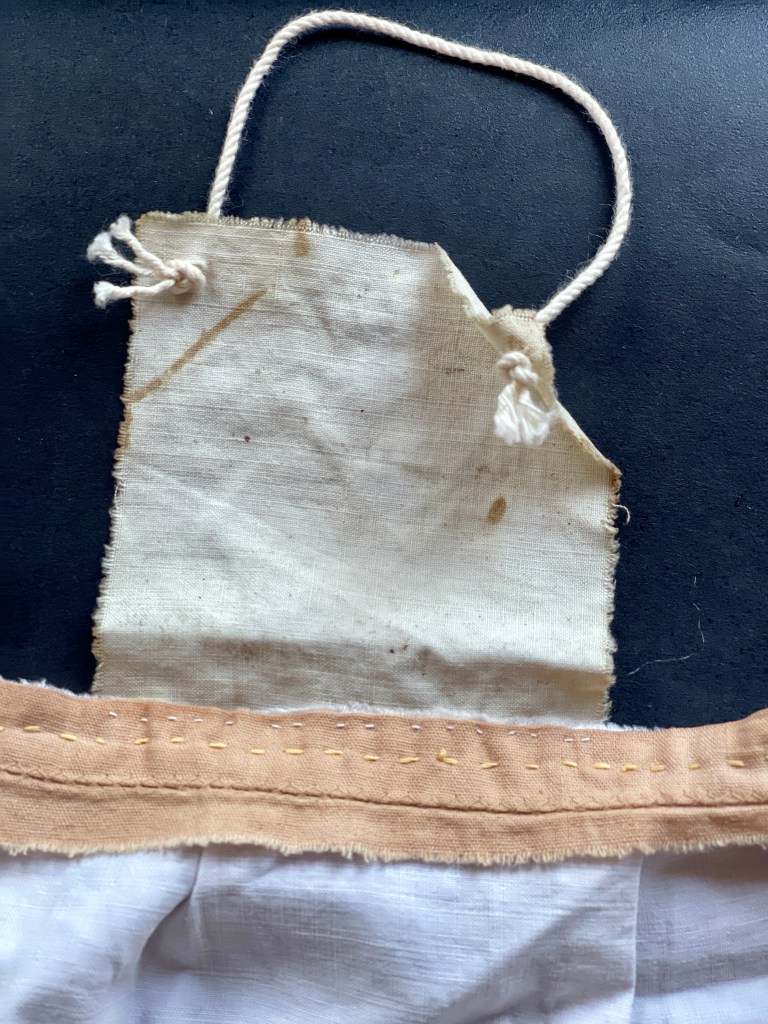
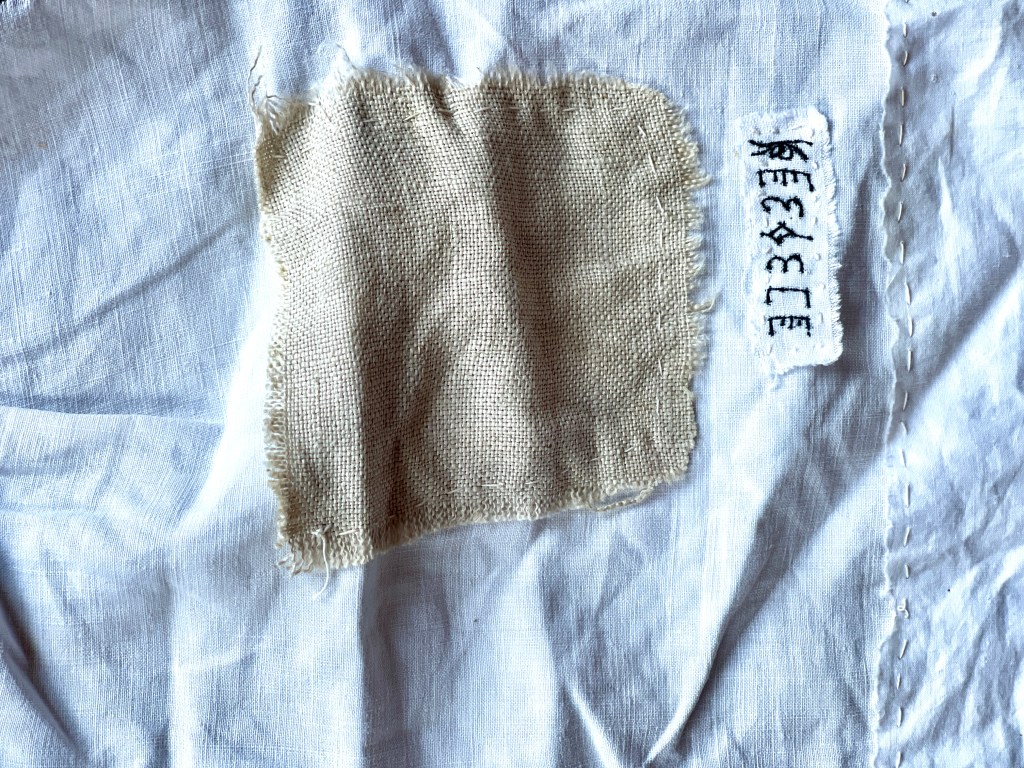
Judith Railton – (‘YouTube Judith Railton Uncovered’ for the exhibition with Re-View Textile at Norton Priory Museum.) Instagram jud_beb
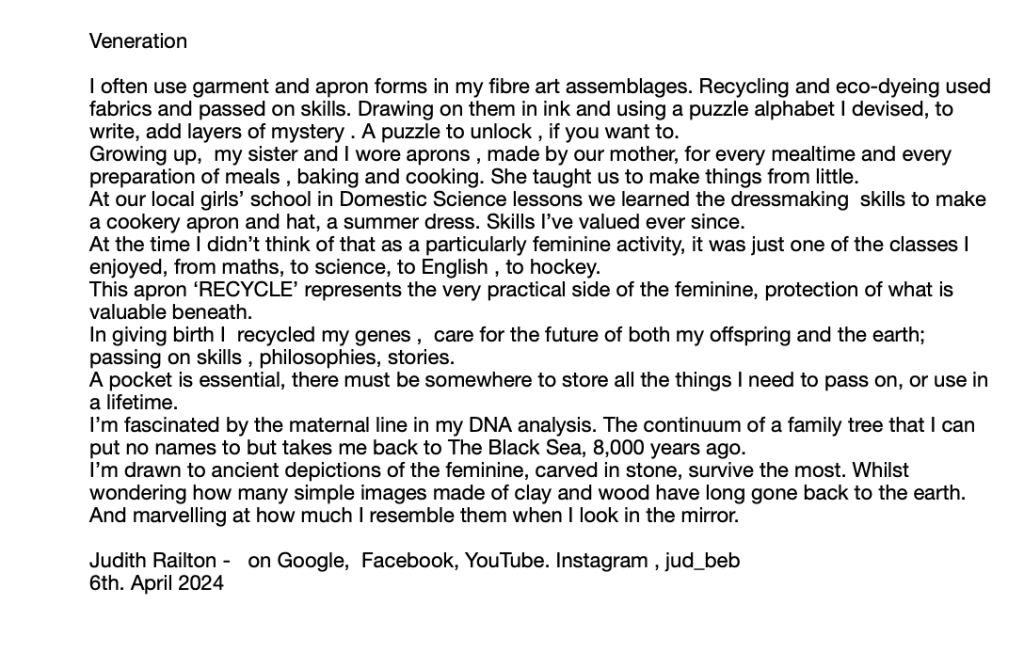
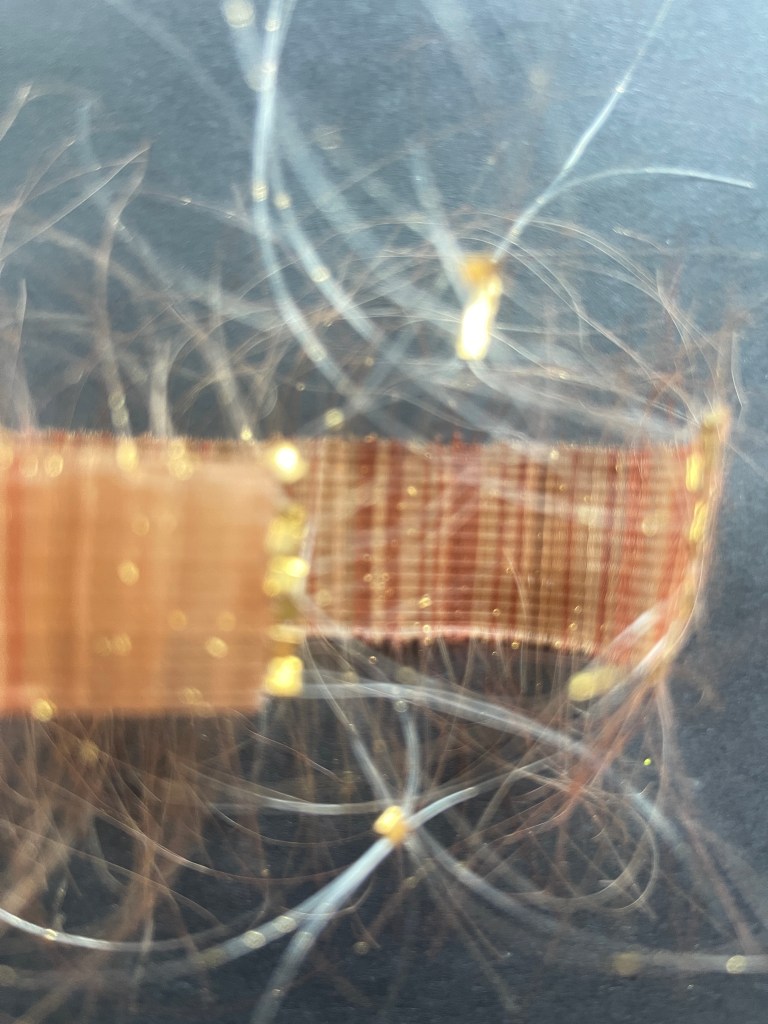
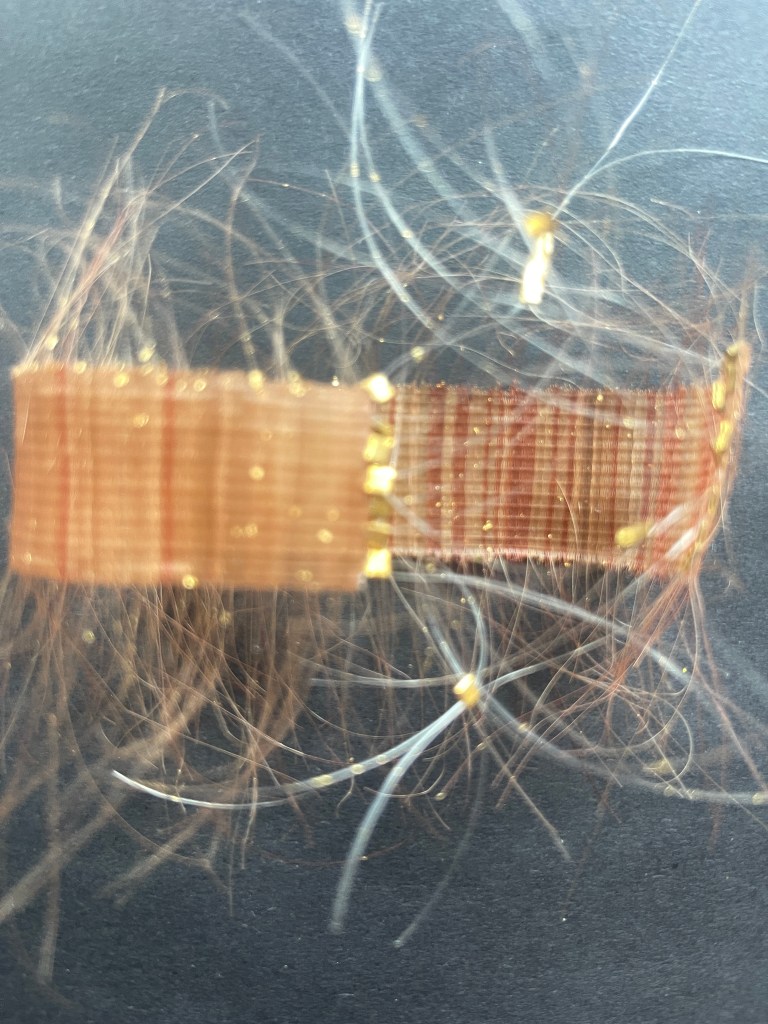
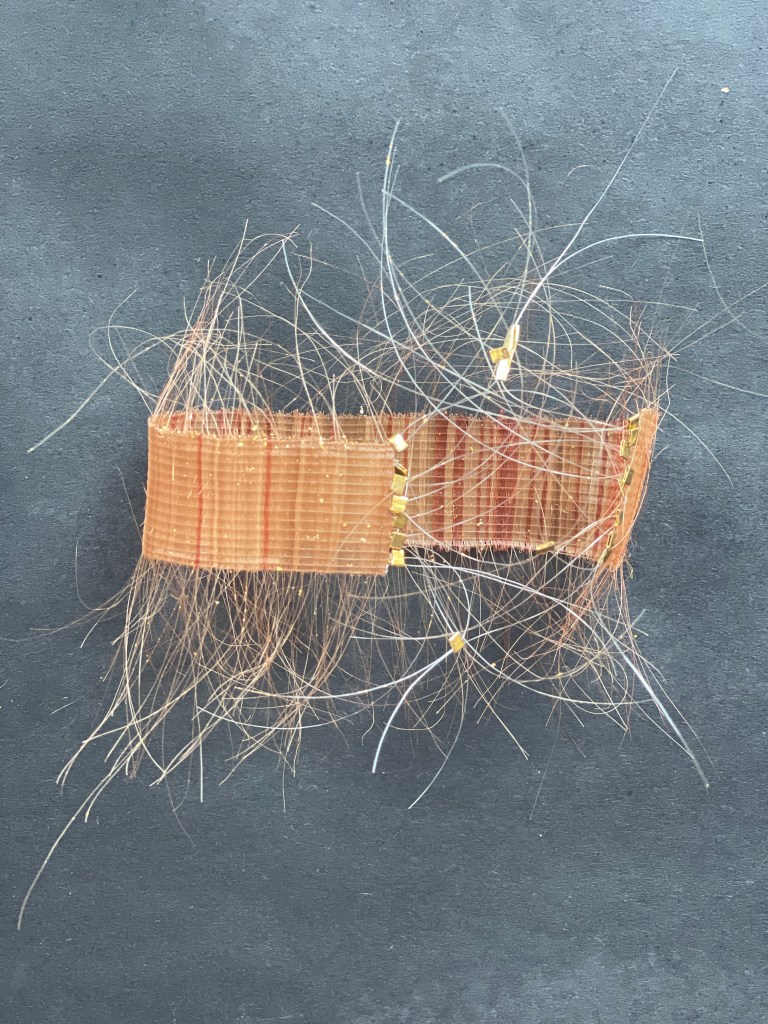
Karena Brown – Mixed Media Artist – Twisted Strands 2014 – Human Hair
A bracelet of woven human hair.
A woman who cuts her hair is about to change her life – Coco Chanel
My inspiration for ‘twisted strands’ was taken from the Victorian woman.
Victorian women were believed that hair was a sign of femininity.
Hair was on no account to be cut, with girls wearing theirs long untit allowed to pin it up to signify womanhood.
It became fashionable in the early 1800’s to weave strands of your hair to make into jewellery which was gifted by women to other women as a sign of friendship, a symbol of life, strength, a moment in time, a symbol of essence, connection, alliance – a sharing of womanhood.
To a degree hair still symbolises femininity but as coco Chanel said – A woman who cuts her is about to change her life . (Twisted Karena Brown )
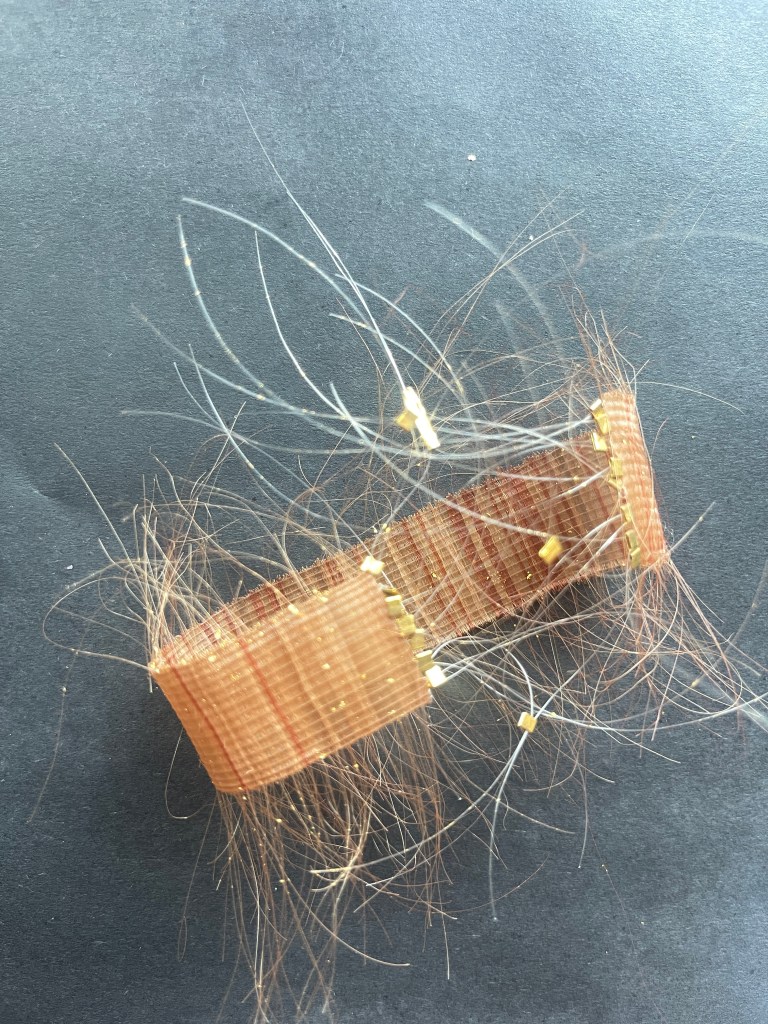
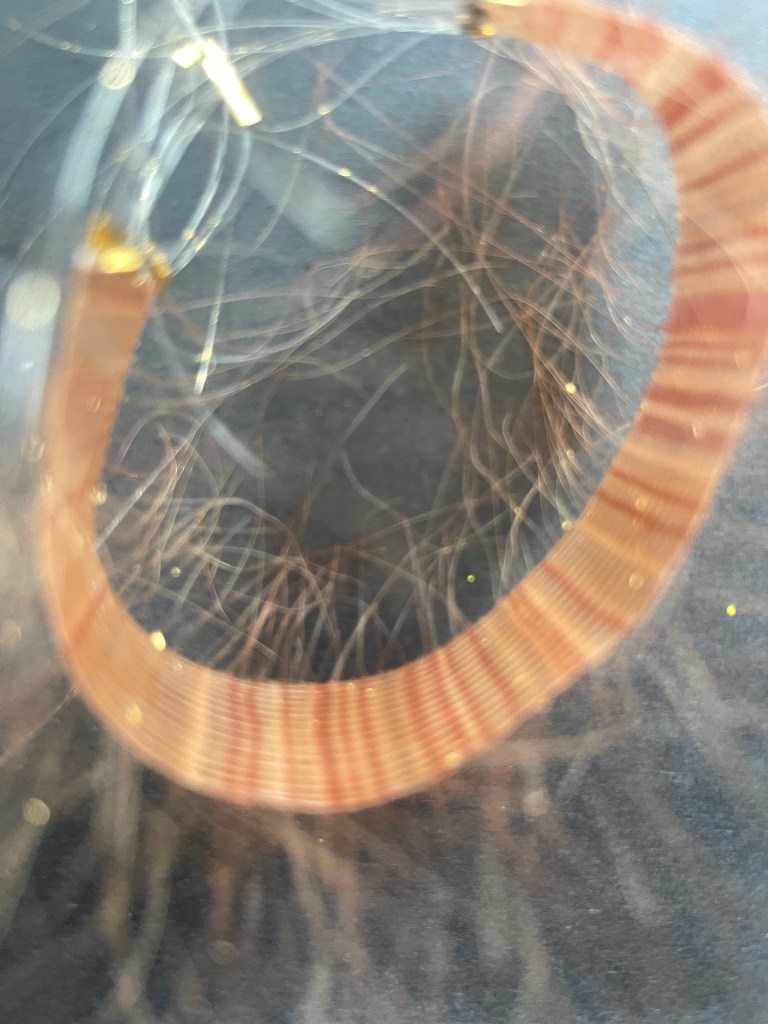
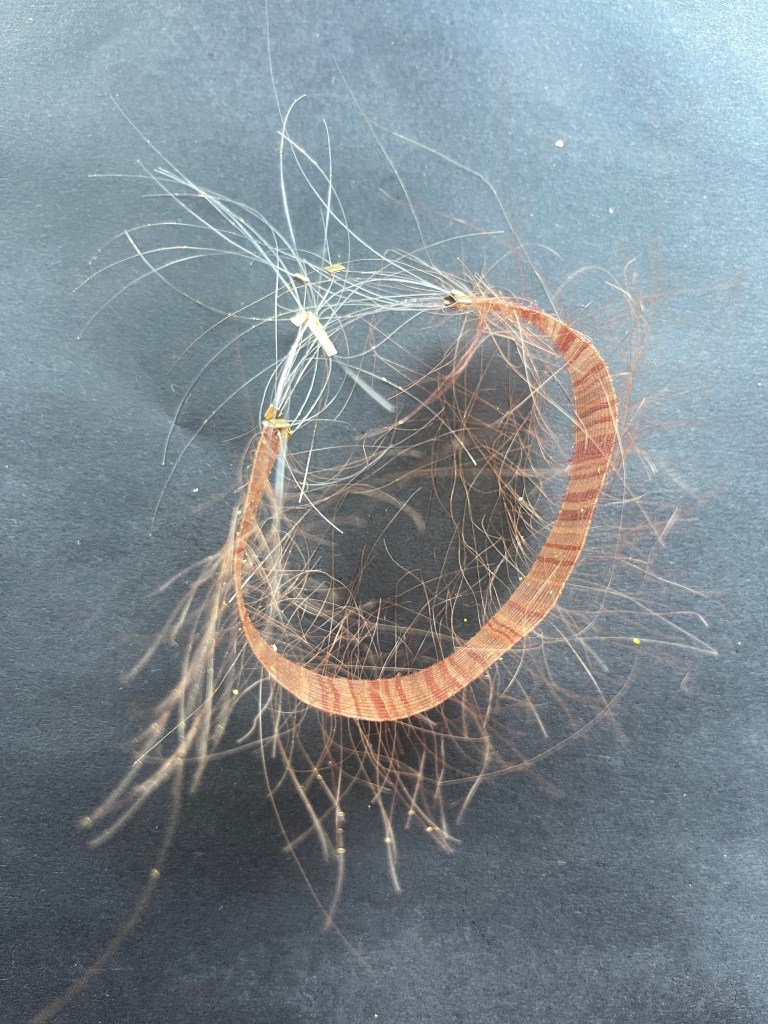
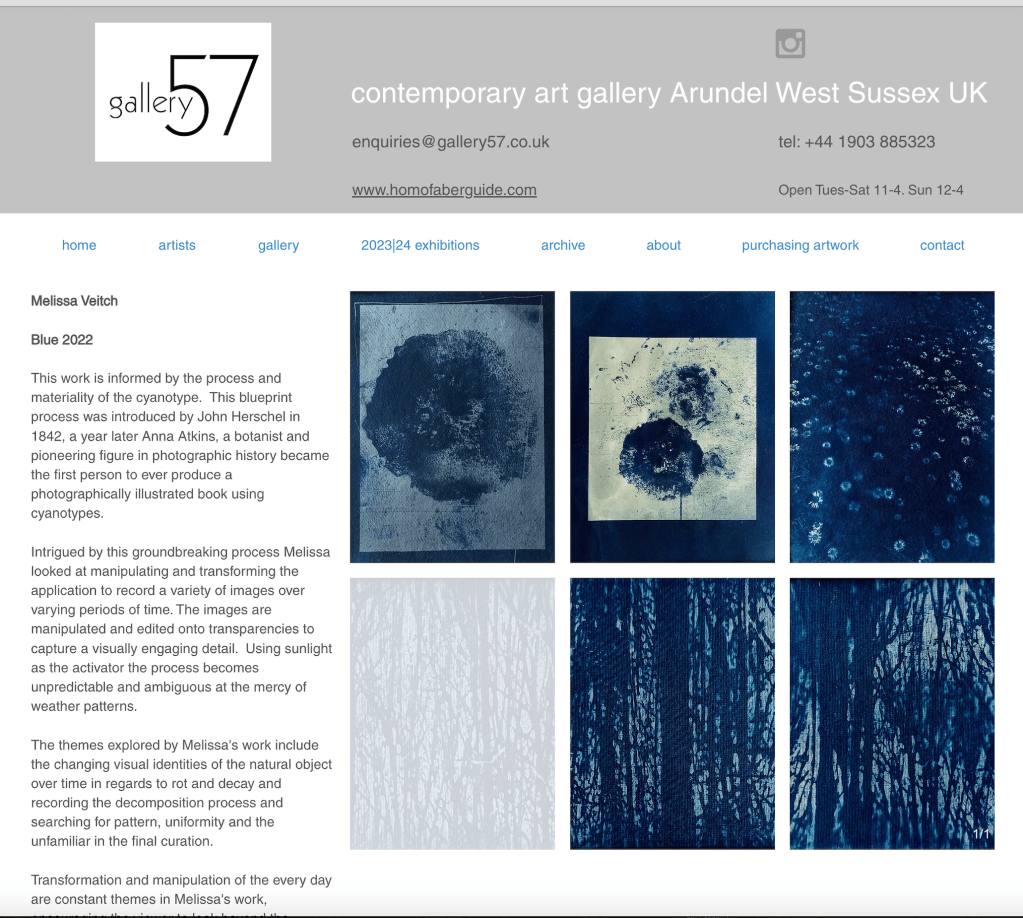
My work was shown at Gallery 57 Arundel. (www.gallery57.co.uk.)
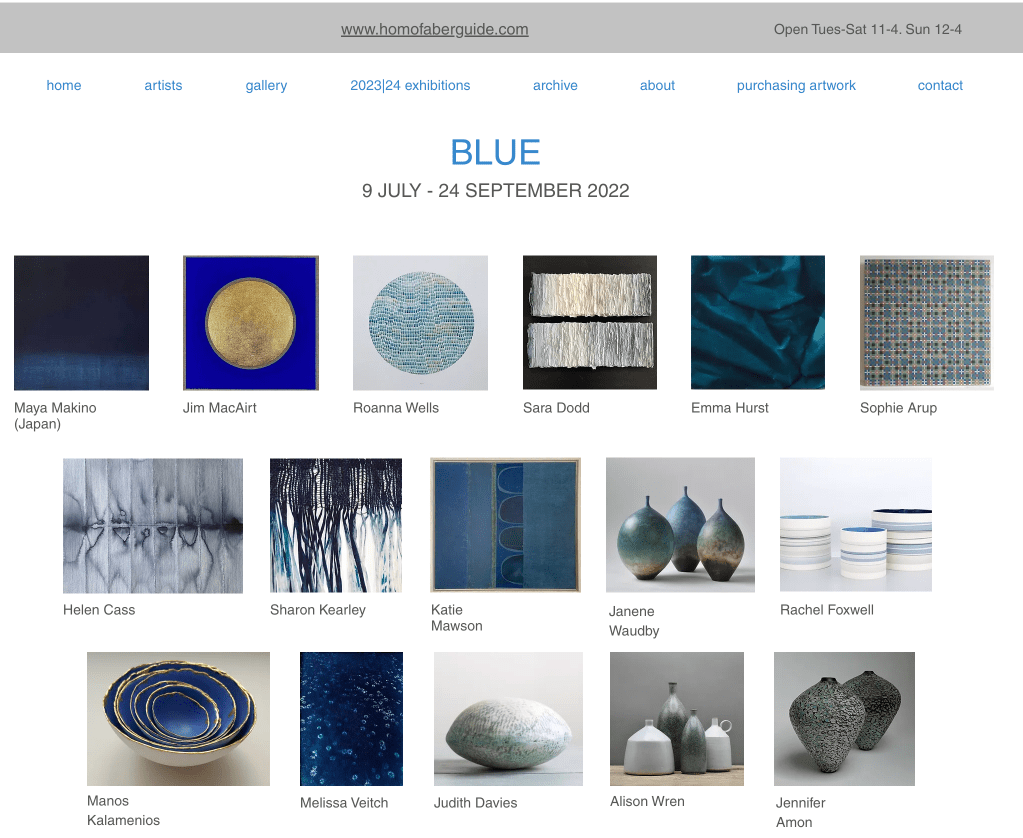
The exhibition concerned the colour blue. My work at he time concerned decay and capturing passage of time and the unseen or dismissed. I had produced work in a cyanotype form that was accepted into this show. July 2022.
 The Sharpe Gallery