My Research Practice
My research practice beings with a process of random collations of material – from articles, pictures, objects and other materials that I find engaging in some way. It is hard to put a finger on what this initial engagement or relationship with the item or idea might be but over time I see that I build up pockets of interest and ideas over various themes.
These are quite literally kept in deep plan chest drawers and are used for sources for inspiration continually through put my practice.
The items can come from junk shops, newspapers, magazines, art books, post cards, things I pick up in the street , TV, media etc. As I have continually worked like this the practice of research will not be a new one in regards to content to engage with. I am aware however that for my chosen topics I will have to delve a little deeper into key areas. This will include some specific library and gallery visits perhaps and a more thorough journey through achieved work on line also.
I imagine my ordering and organising of items will be by theme and subject matter with written material by date. I have already purchased 2 books ( Both in French that I am slowly translating ) In regards to women artists and their confinement in asylums and their artistic out put during this time.
My theme of ‘the complexities of the female’ will encompass many angles and threads and I will strive to look for the most interesting, relatable and visceral concerns surrounding that.
Research Point :
William Kentridge;
The film by Kentridge ” Pain and Sympathy’ –History of the Main Complaint
What other artists come to mind and why
How do you gather material and information? ( networked collection )
The draw animated film is a process of layering and erasure and a metaphor for memories, past as past traces of the work is seen at its successive stages. The underlying theme in the film is that of self reflection and white responsibility. This in recognition of the ‘Truth and Reconciliation Commission’ headed by Archbishop Desmond Tutu to conduct public hearings into the abuse of human rights carried out during the apartheid era.
Kentridge drawn film is immediately engaging we view a monochrome black /white scene it is bleak and sombre scene depicting an overweight, white, pin-stripe suited man ( an analogy for power, corruption, greed and capitalism ) is struggling for life and breath on a hospital bed. Kentridge has critically detailed the life support system by the bed next to him and little else apart from the bed and curtains surrounding him. The scene is unsettling, Kentridge conveying a sense of clinical claustrophobia. The man is examined by similar looking individuals. The film jumps like a flicker book, memories of the office machinery to denote commerce through to a night time scene , a car drives by the man in question – his eyes piercingly reflected onto the car mirror. The image jumps back to the man in the hospital bed being prodded and tested, and then dramatically back to to a brutal and violent attack on a black man, we see the victims skull in medical detail while red crosses depict areas of trauma and impact at the same time. It is one of the only frames to show colour, the red synonymous with the blood and violence. The skull is the victims but also the patients in a strange and complex mash-up of dream like consciousness. Kentridge is able to say so much with these key depictions of violence, the weight of a body as it hits the car, the cracking of glass the very realistic sound track adding to the scenes of horror. The eyes pay a critical role in engaging the viewer as this image is seen a number of times in varying formats. The images are minimal but impactful, not crowded by unnecessary detail. There is great speed and pace to the film, the tension mounting as it runs. As the body hits the wind screen the patient abruptly awakes from his coma like state.
There is an image change at this point and the viewer is back to confronting the ‘normality’ of office equipment. The nightmare has passed perhaps but we are not sure if any lessons have been learnt, has any guilt laid to rest or any changes been made. The final scene shows a bowl of water next to the curtained-off covered bed area, the water is blue, it forces the viewer to take note in this monotone environment. This is an analogy of ’emotional connection and healing’ and yet we are unsure if any such process had happened to the patient. Personally I felt its distance and presence in the film independent of any visual of the male patient is a sign that nothing has changed.
The strong torturous imagery of the film and other pieces by Kentridge convey a message of similar purpose and theme. I was able to view his work at a recent exhibition in London. It was powerful and disturbing in content made more visceral by scale. His film were projected onto enormous screens and Kentridge had applied his black drawing directly onto the gallery walls with a sense of immediacy and passion.
Images from Royal Academy October 2022
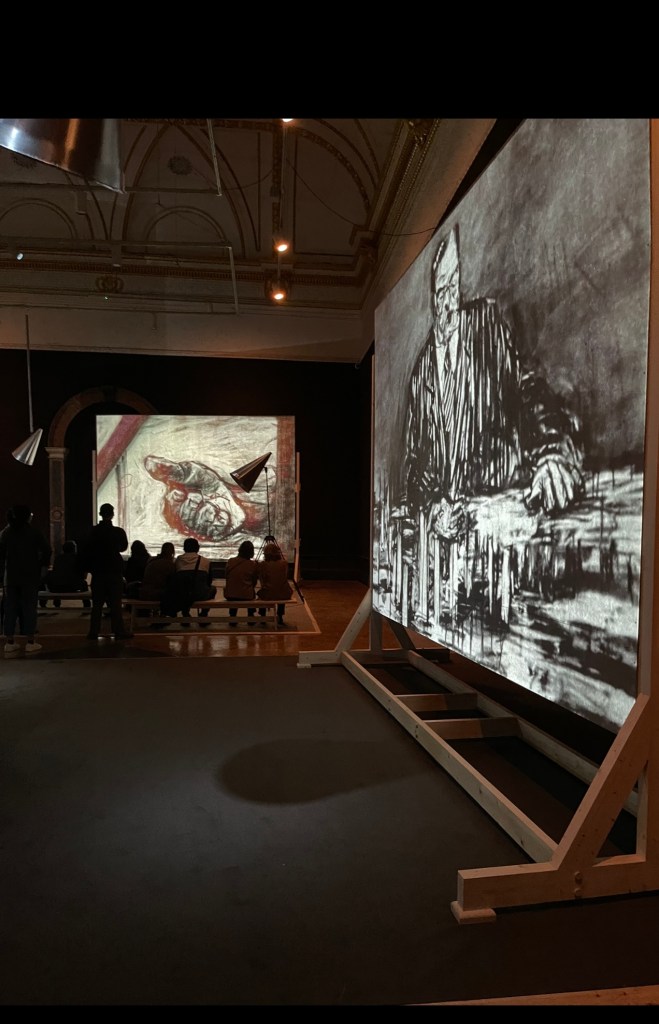
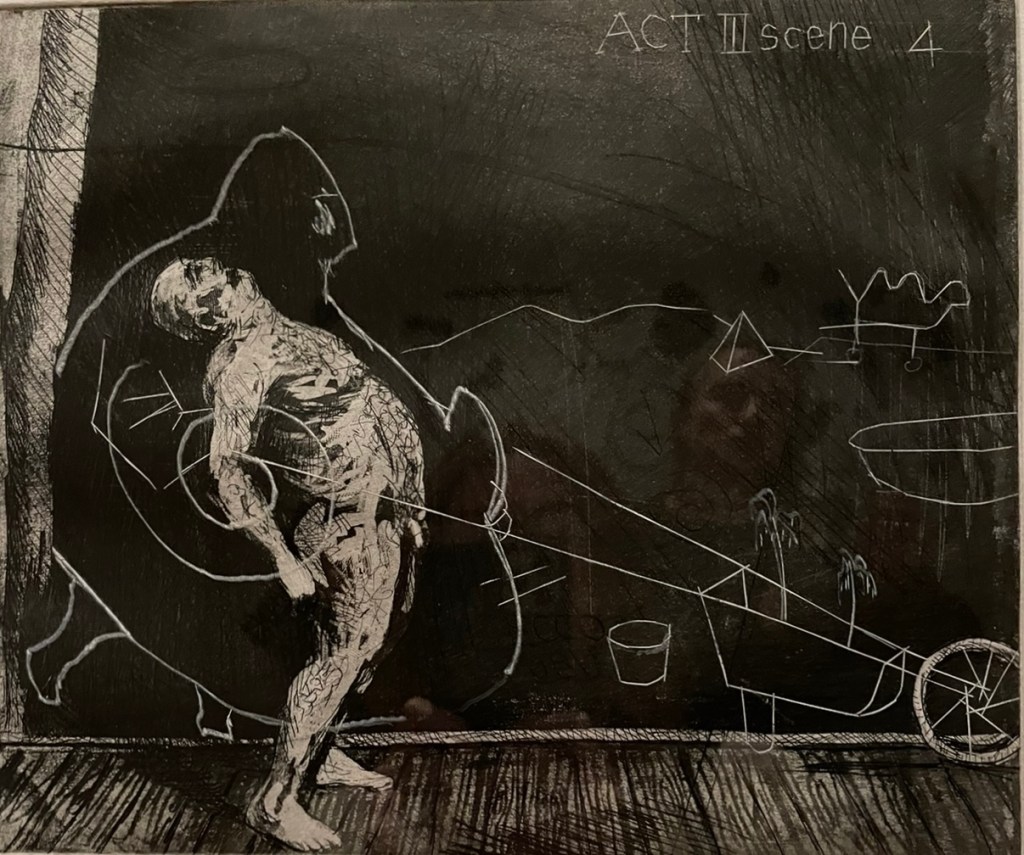
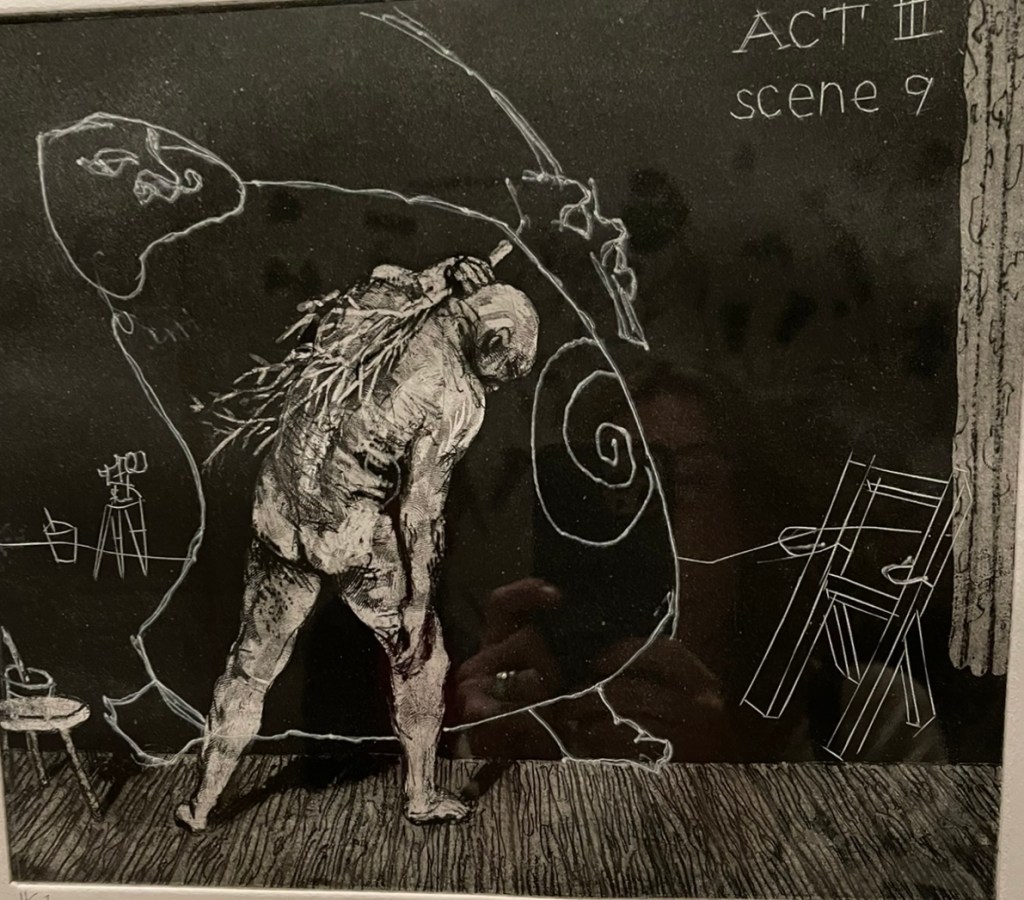
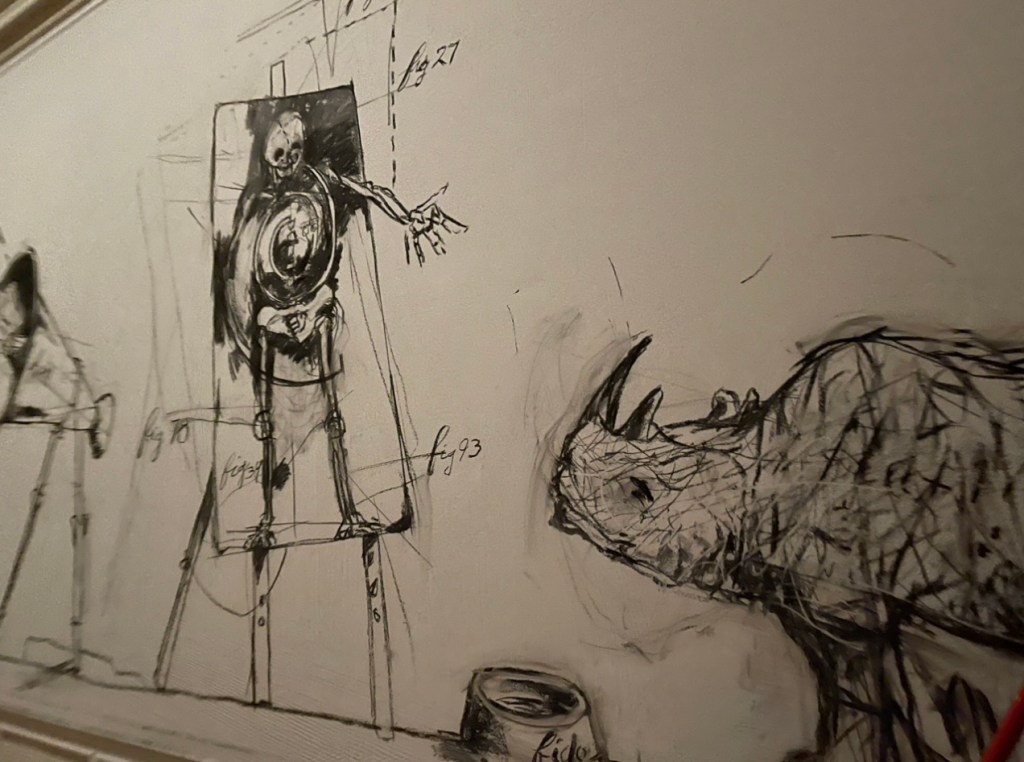
Perhaps his passion and anger can be seen to sit along side the same emotions and sense of unjust that the ‘Black Painting ( 1818 – 1823 ) by Francisco Goya ( 1746 – 1828). His later work that came post an undiagnosed illness that left him, amongst other thing, deaf was dark, bleak and graphic. His experience of the Peninsular War where Napoleon lead the French in Spain where he lived affected him greatly potentially suffering from PTSD as we know it today his paintings were full of political and religious corruption together with insanity, images of mental asylums and desperate individuals.
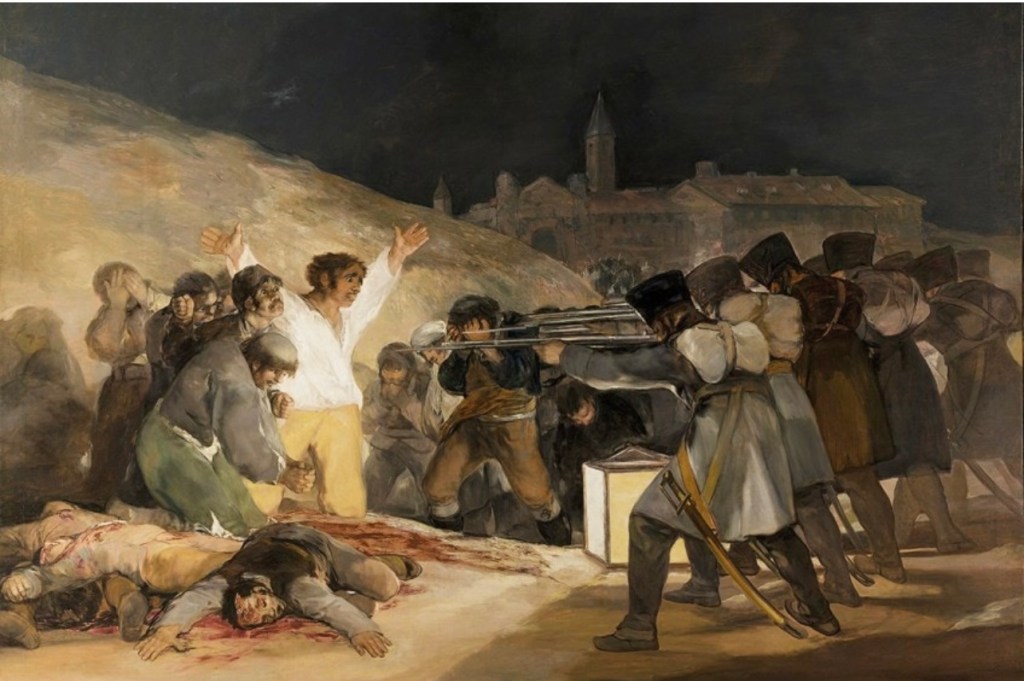
Francisco Goya’s “Third of May 1808”, depicting a firing squad of French soldiers killing Spanish civilians.
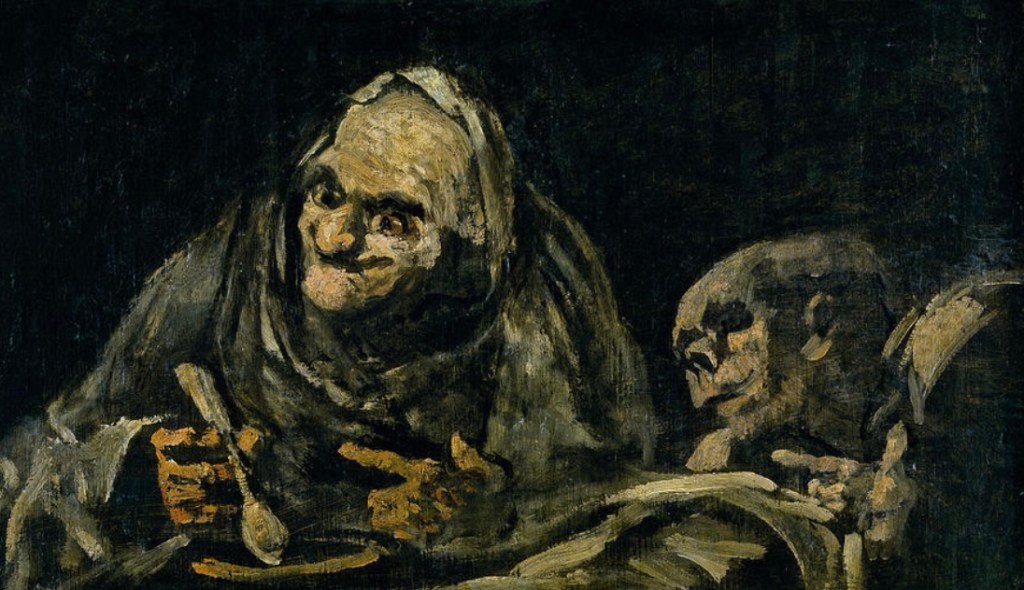
Two Old Men Eating Soup (The Witchy Brew) by Goya. Photograph: Heritage Images/Getty Images
Looking again to political art Pablo Picasso’s canvass ‘The Charnel House ‘ is a visual commentary on the Nazi genocide and the Holocaust. Inspired by films and photographs from the Spanish civil war Picasso used the imagery for this anti-war painting. Guernica ( 1937) was Picasso first visually alarming painting regarding the suffering of the Spanish in Guernica bombed by the Nazi and facist Italy.
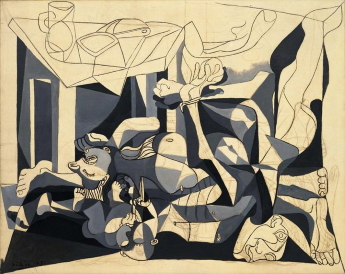
The Charnel House (French: Le Charnier) 1944–1945 Pablo Picasso.
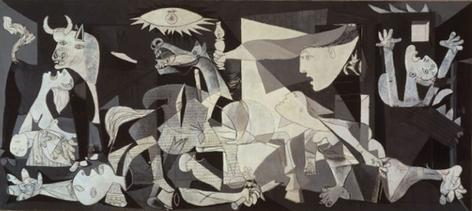
Guernica ( 1937 ) Pablo Picasso.
The stark and brutal images allows the imagination fill in the gaps, much like the work of Kentridge, key imagery is used to maximum effect, the writhing swirling mark making fills the pieces with movement as our eyes scan over the canvas, as if watching film. Goya’s dark colours and heavy accents of red, like Kentridge emphasise the brutality of the scene and its impact. Goya also engages us with with the dark, hollow and desperate eyes of the people he depicts pulling the viewer into a visceral level of comprehension and shock.
“You know, [Picasso’s] Guernica wasn’t so bad. It was both art and exposé. And Goya wasn’t so shabby, both in terms of the quality of the production and the pointedness and truth-telling. It can be done. It’s seldom done well, but when it is, damn.” ( Jenny Holzer The Guardian Newspaper Jan 2023)
Researching my chosen subject area will be a wide and varied. Information from key artists from the past and more present together with modern day physical material . Collation from obvious sources and older artefacts, books, and potentially dialogue from individuals who may have a story or experience to pass forward. This may come from a group or class possibly art related who may wish to share anonymously some thoughts. Perhaps written on paper and placed in a bag for me to read later. This could constitute key research base material and be directly or indirectly part of my work.
“what thoughts and or worries keeps you awake at night?” – This would fall into place with my work on ‘Murmuration’, and night fear ‘gathering like starlings’ over our heads in bed at night.
Construction experimentation will also be needed in order to progress ideas of sculpture and balance – using ‘found’ materials to create a 3D work.
Exercise 1.1 – Mind Mapping below as explored through Part 1 Territory
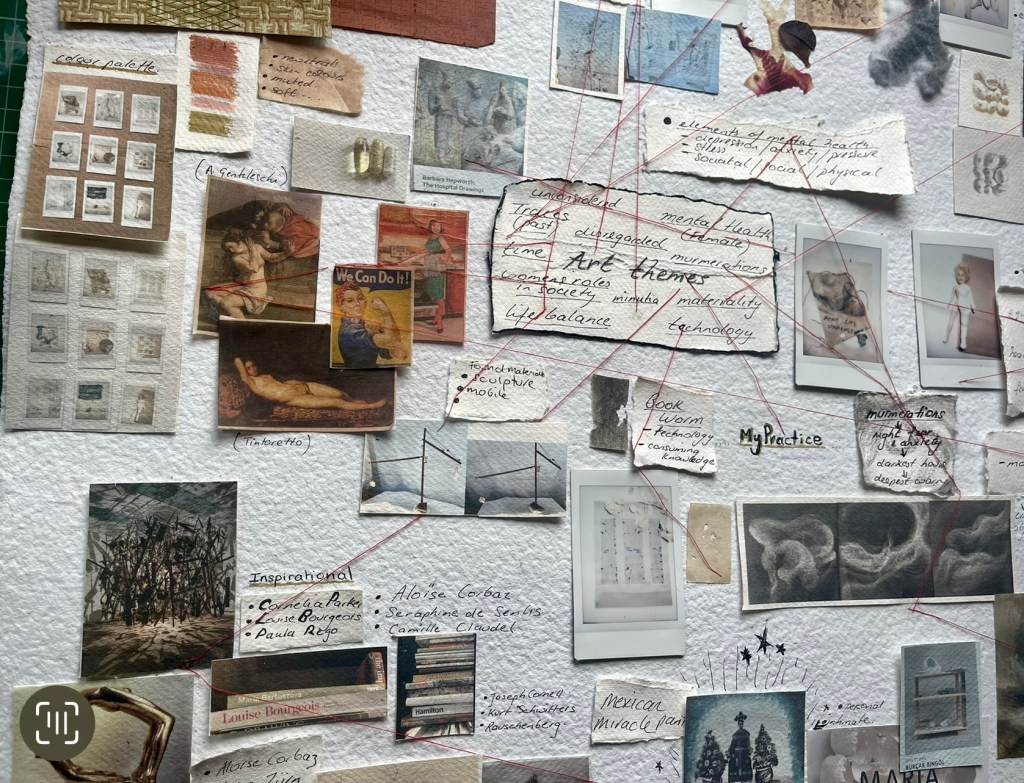
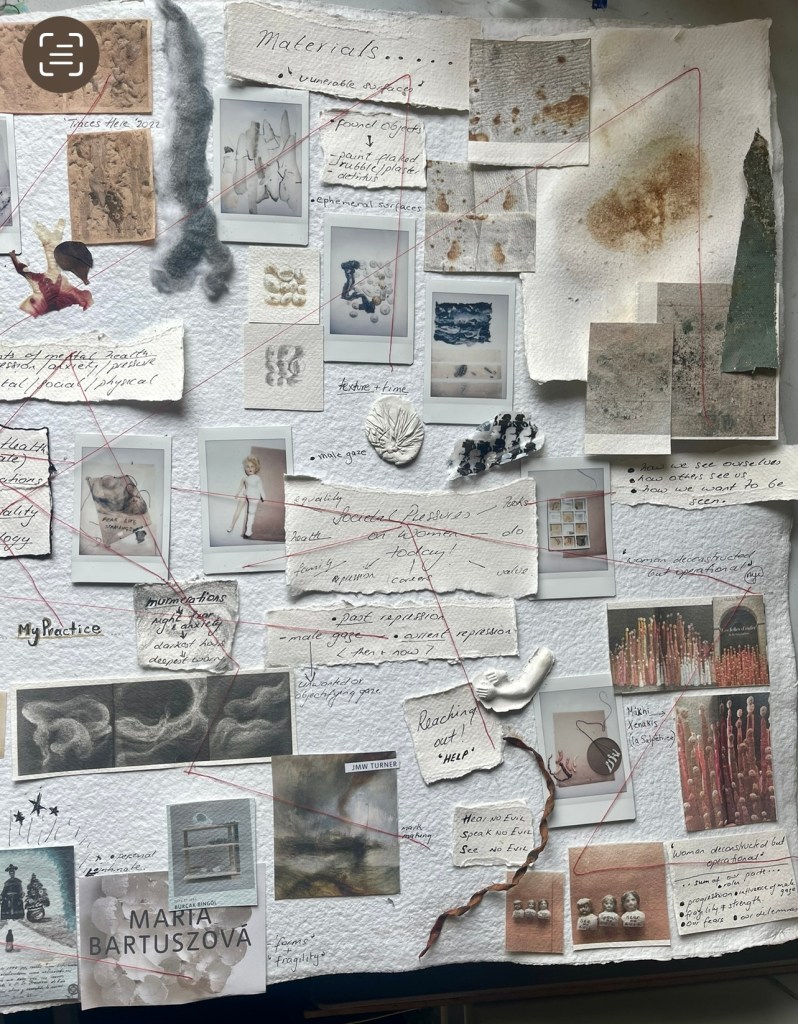
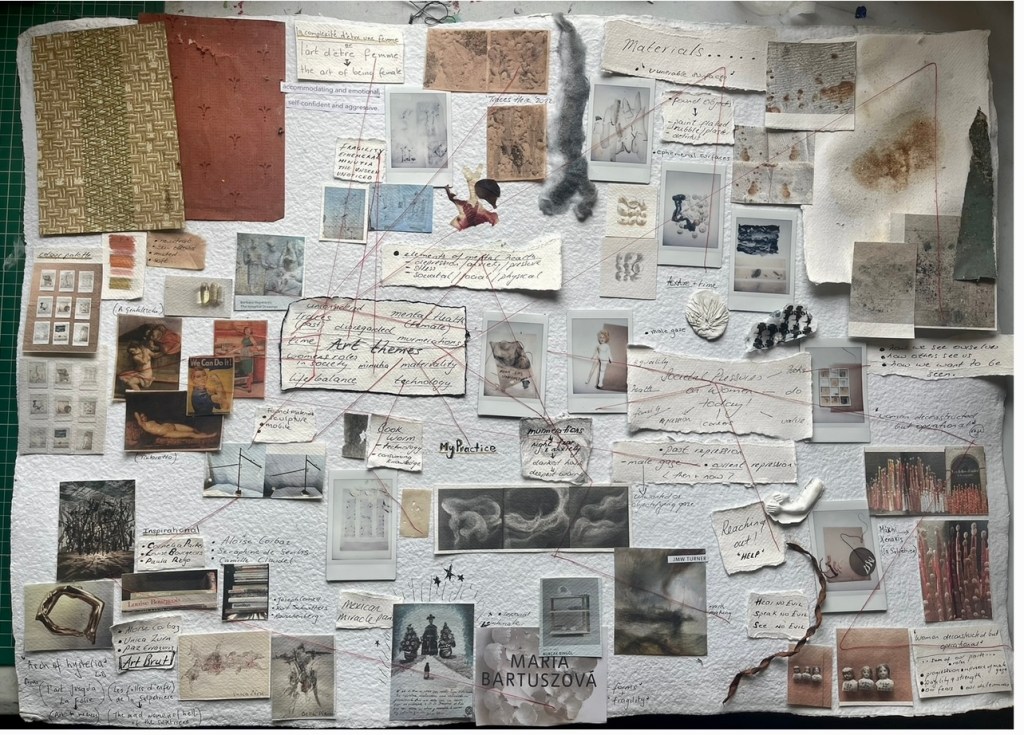
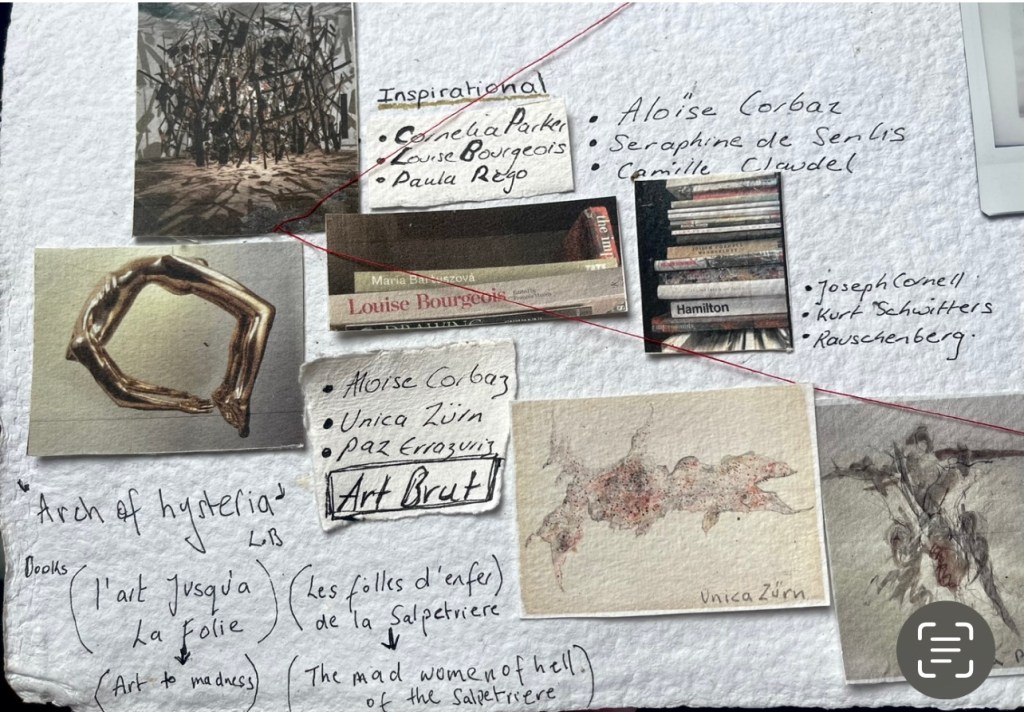
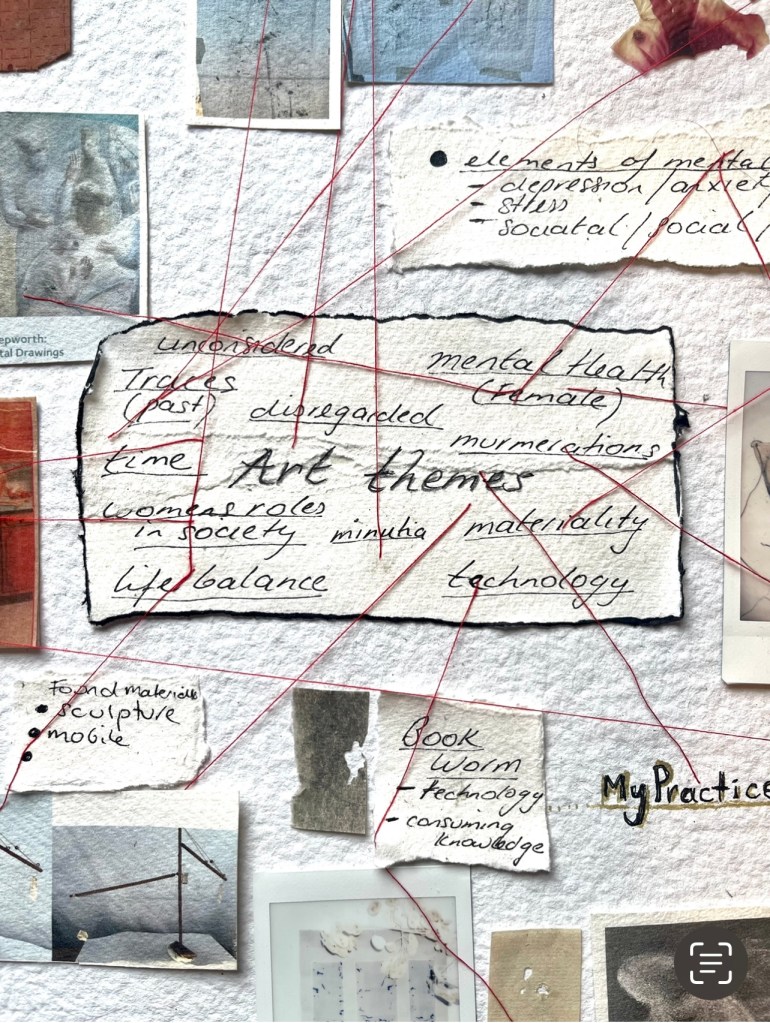
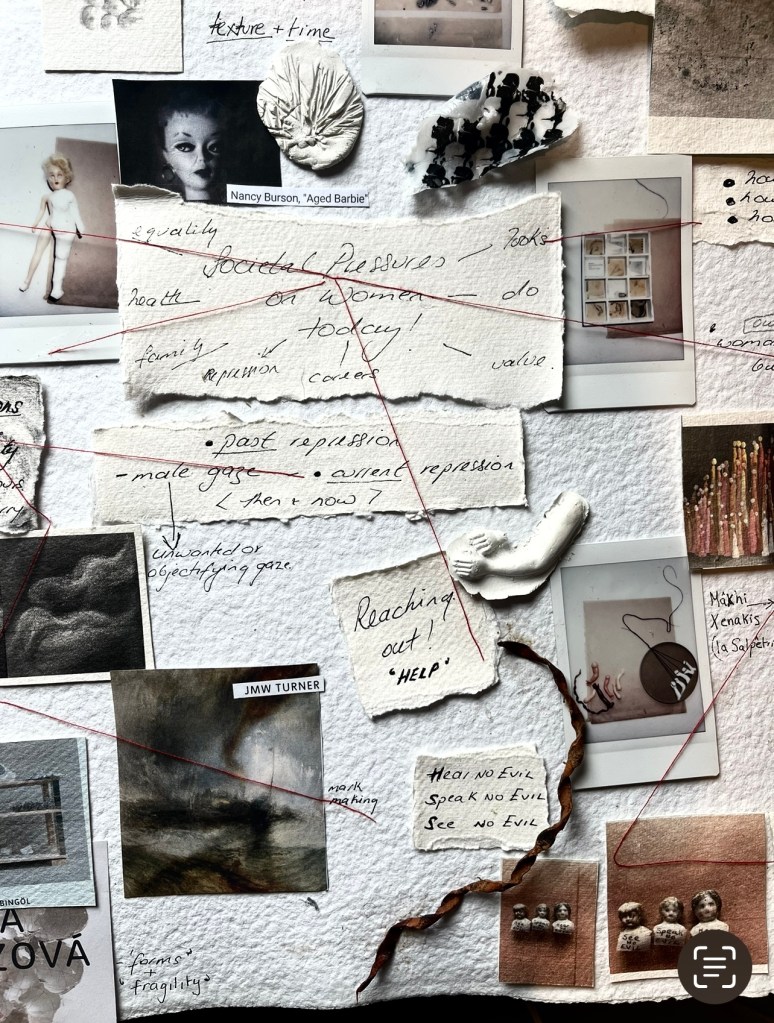
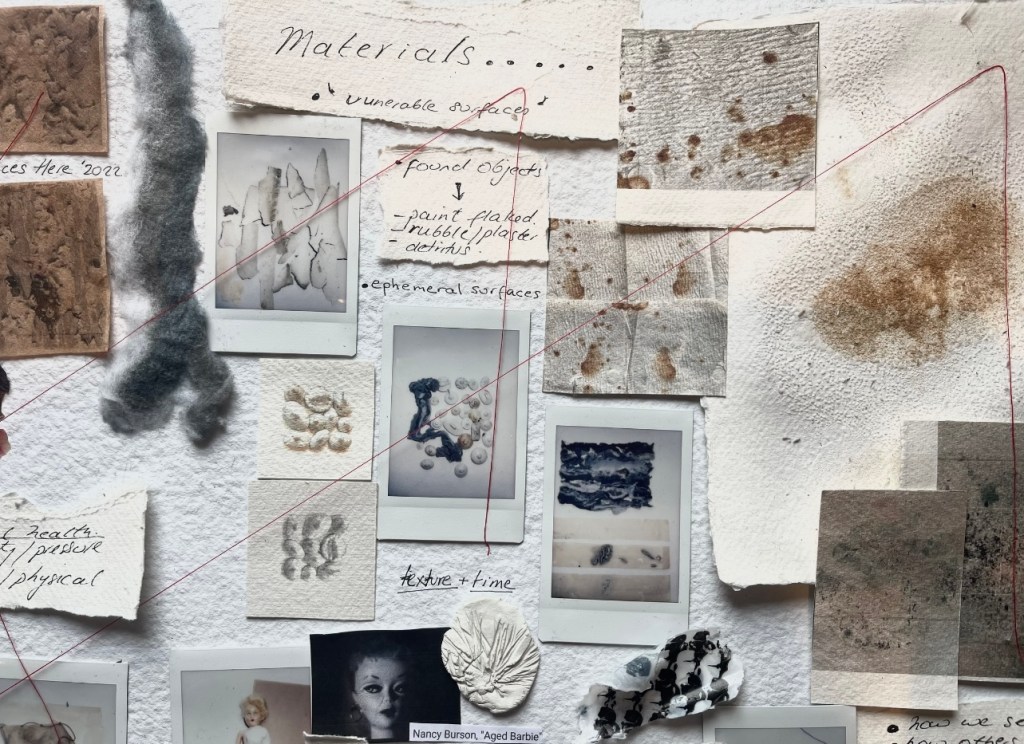
The artist I most identify with is Cornelia Parker. I was thrilled to discover this diverse artist as I felt an immediate connection to her process of working practice, methodology and concerns.
In surmising her practice concerns the distortion and manipulation of materials and objects. She considers herself an artist who works in a multiple of mediums…. ( Essay LOST on PC BLog – AUTOSAVE did not work – remote WordPress issue !)
Essay Notes below:
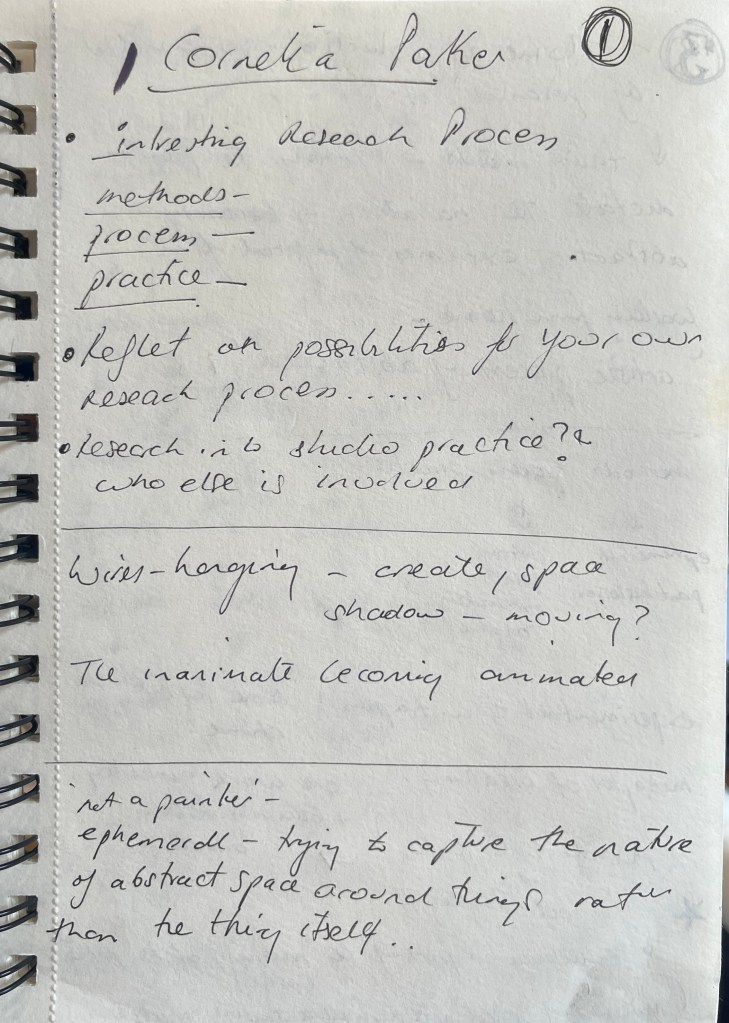
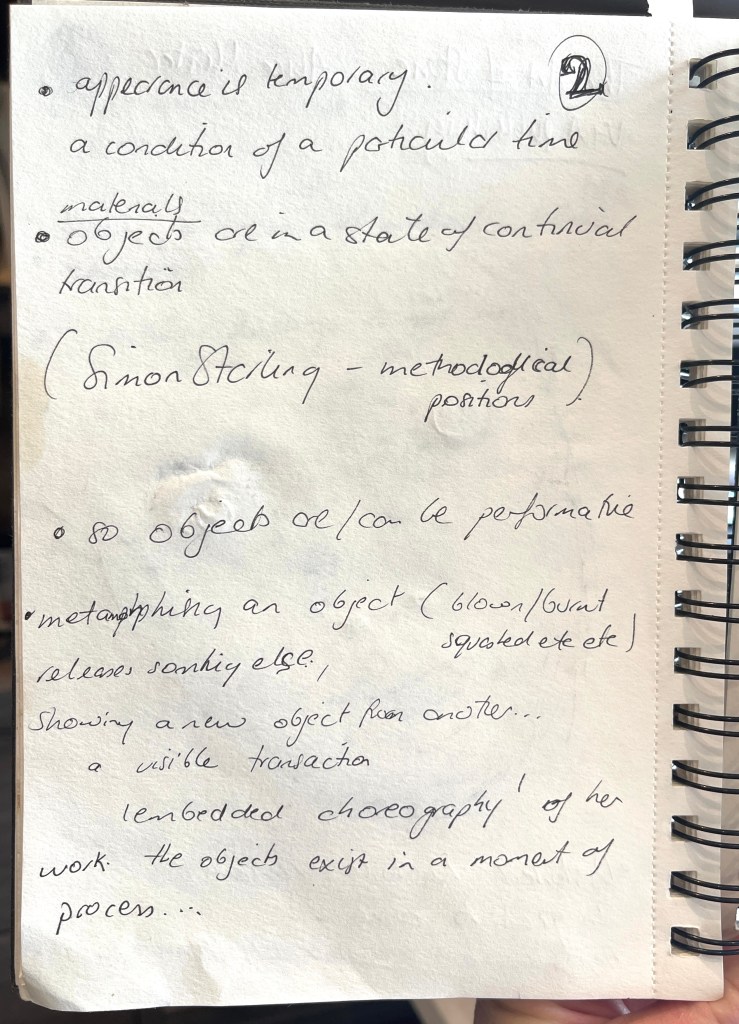
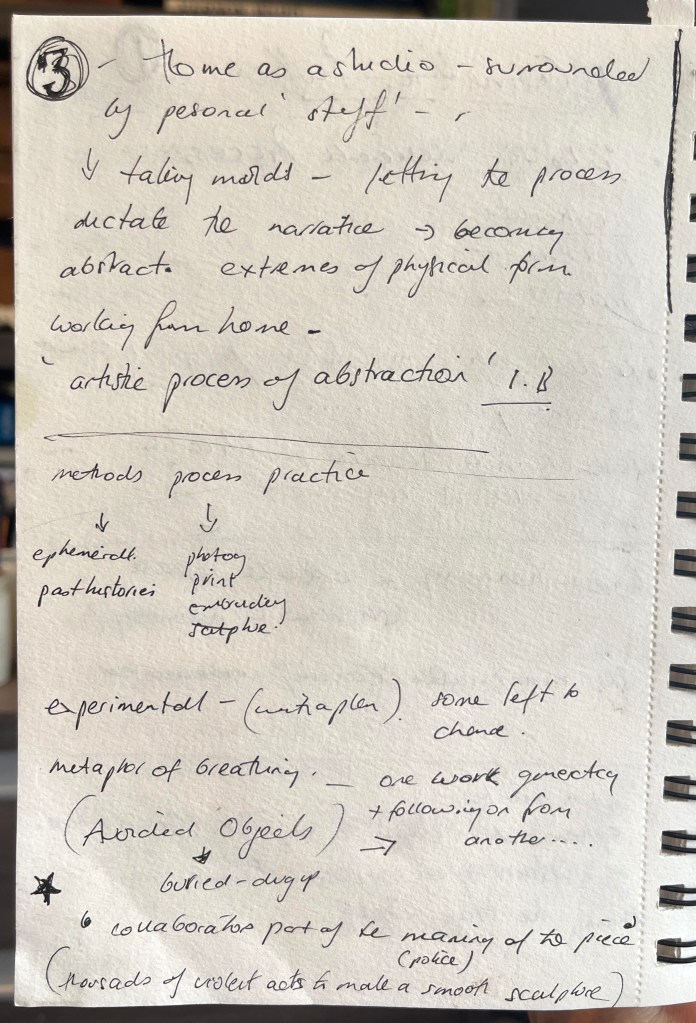
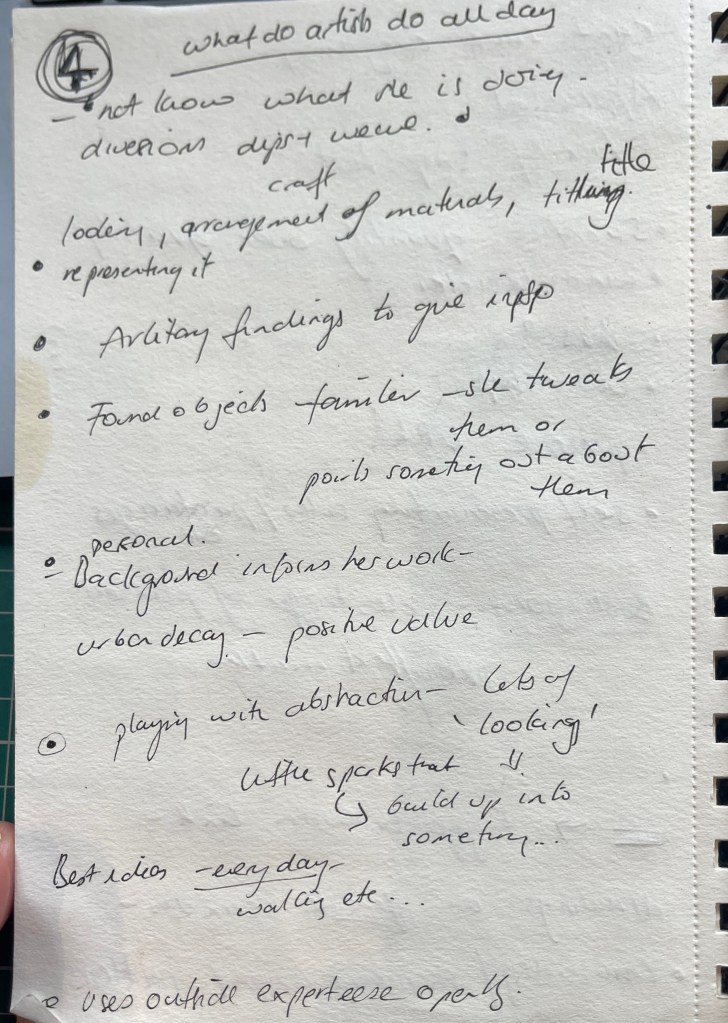
Cornelia Parker/Jenny Holzer / Louise Bourgoise
The work produced in my previous assignment pointed me in some key directions;
The topic areas are:
Female depiction under the male gaze. ( Patriarchy)
Female Mental Health
Historic and Current Female Struggles an Obstacles
Shrine to the Female. – The Celebration of the Female has been a topic that has furthered my interest as a narrative with the further research and investigation of the above issues.
Exercise 1.2:
New Work !
EXCITEMENT -ADRENALIN
LIMITATIONS – BOUNDARIES
ENTHUSIASM – NOT GOOD ENOUGH
CHALLENGING – NEW DIFFERENT
EXPERIMENTAL – LACK OF EXPERIENCE
TOO AMBITIOUS – LACK OF PLANNING
INTENSITY – DISTURBED FOCUS
ORIGINALITY – LACK OF ORIGINALITY
SCOR Analysis.
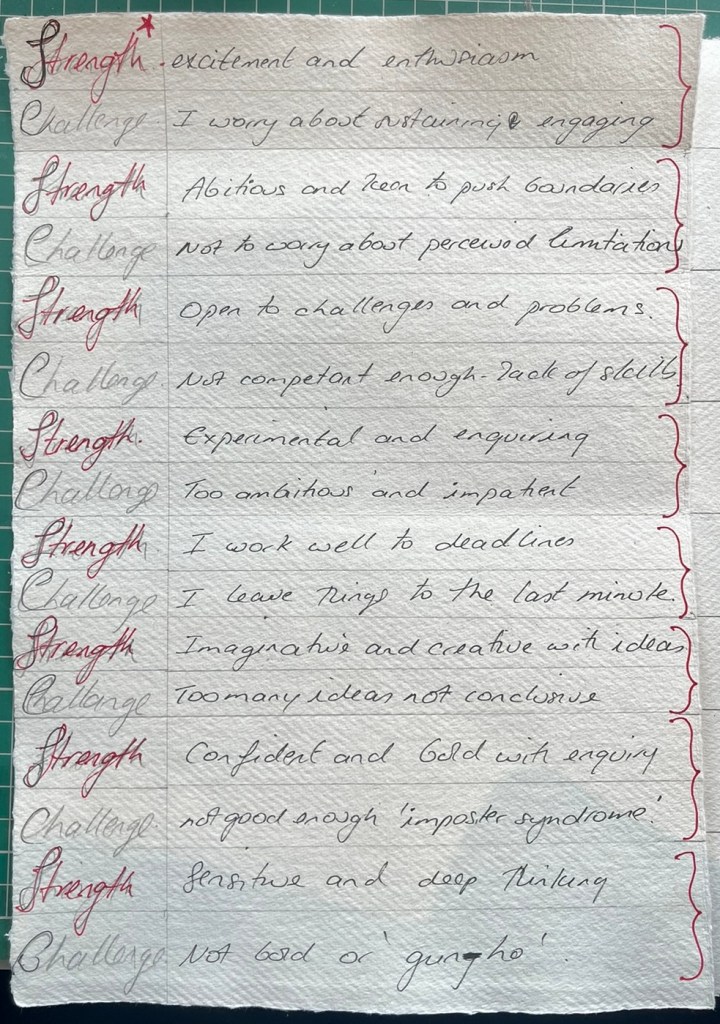
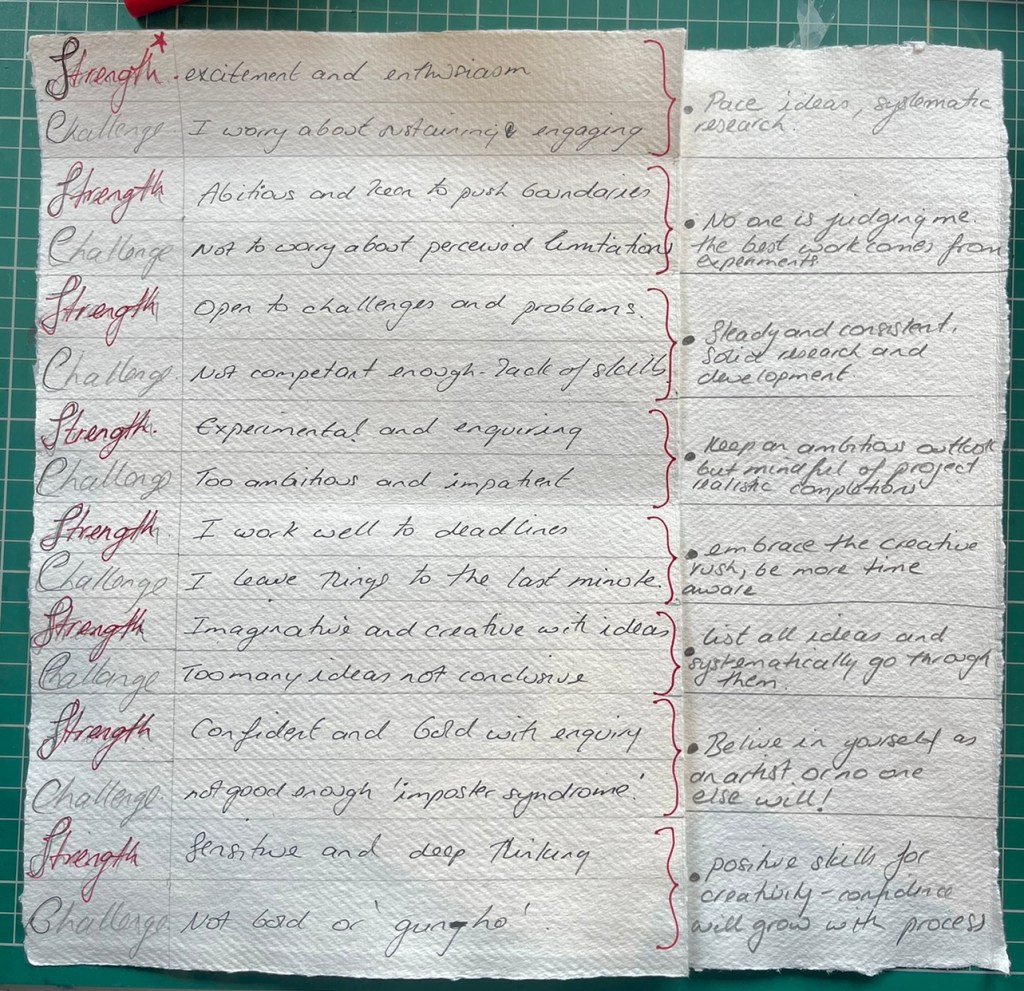
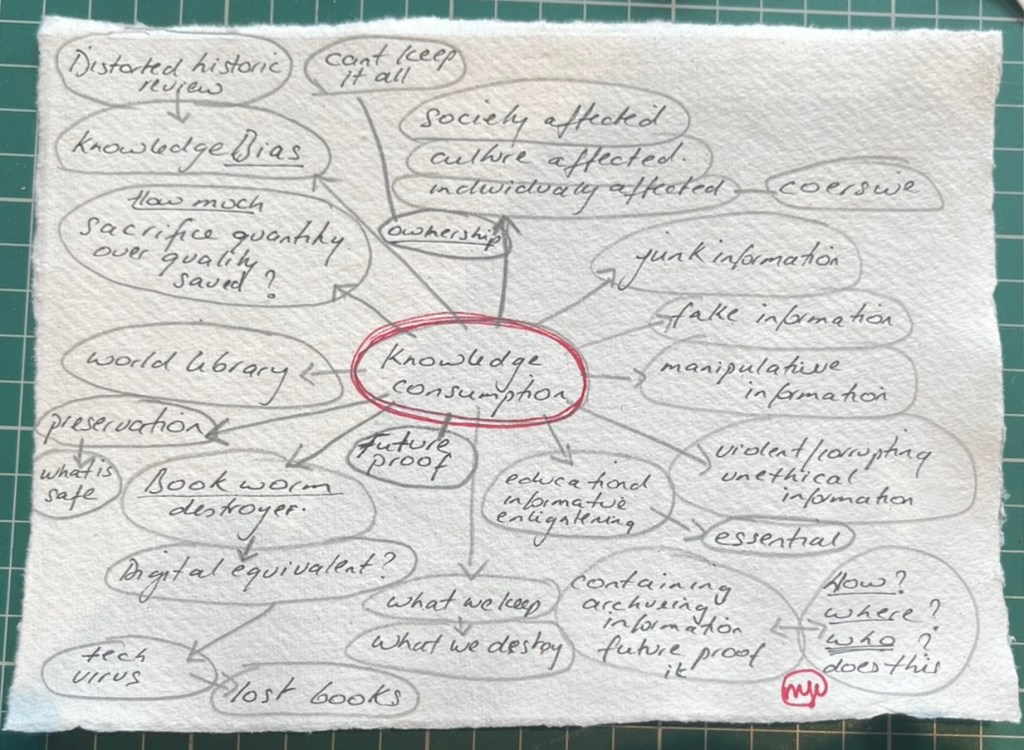
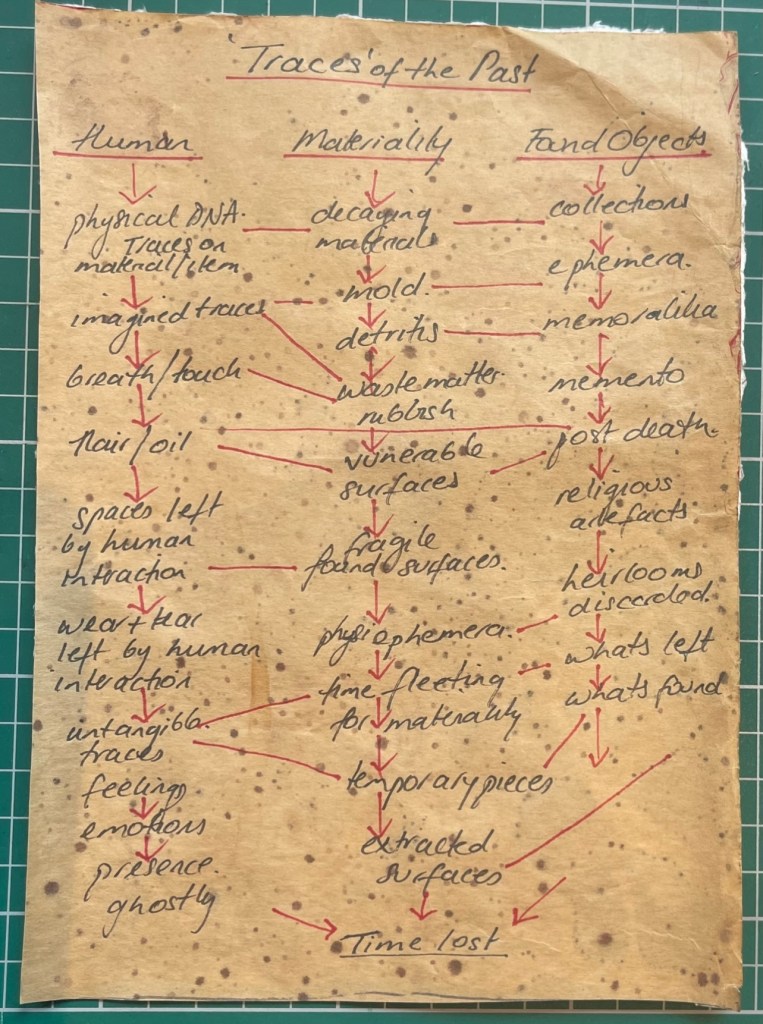
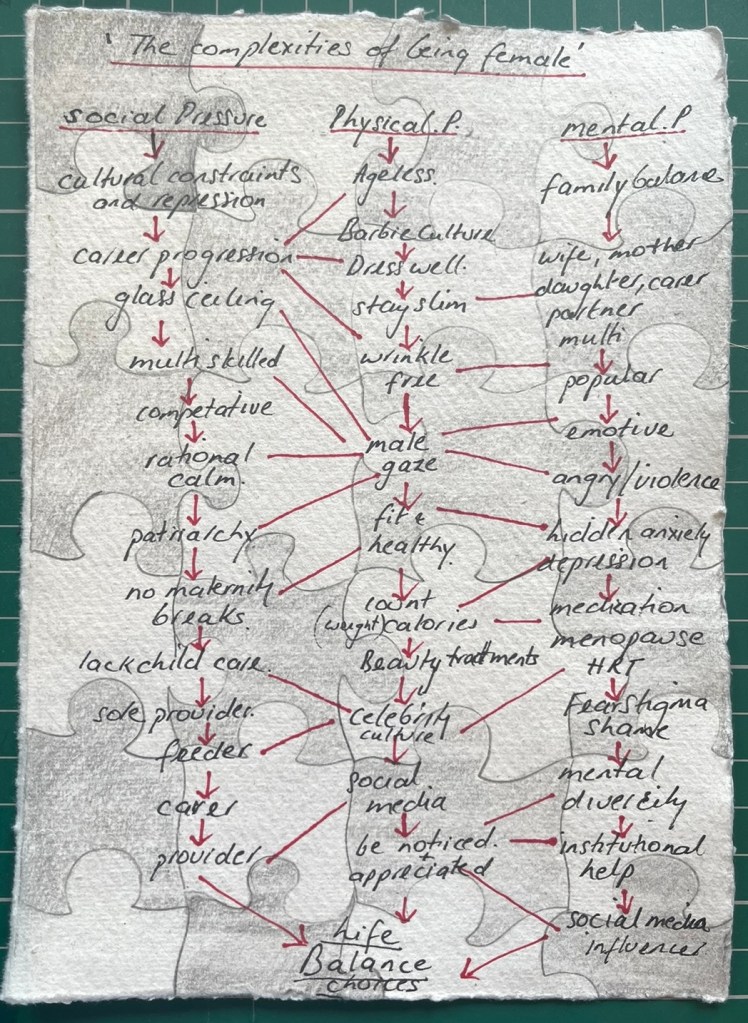
Exercise 1.3 MIND MAPPING
These are drawn with an immediate thought process – content being more important than a visual aesthetic.
Image 1 – ‘The Complexities of Being Female.’
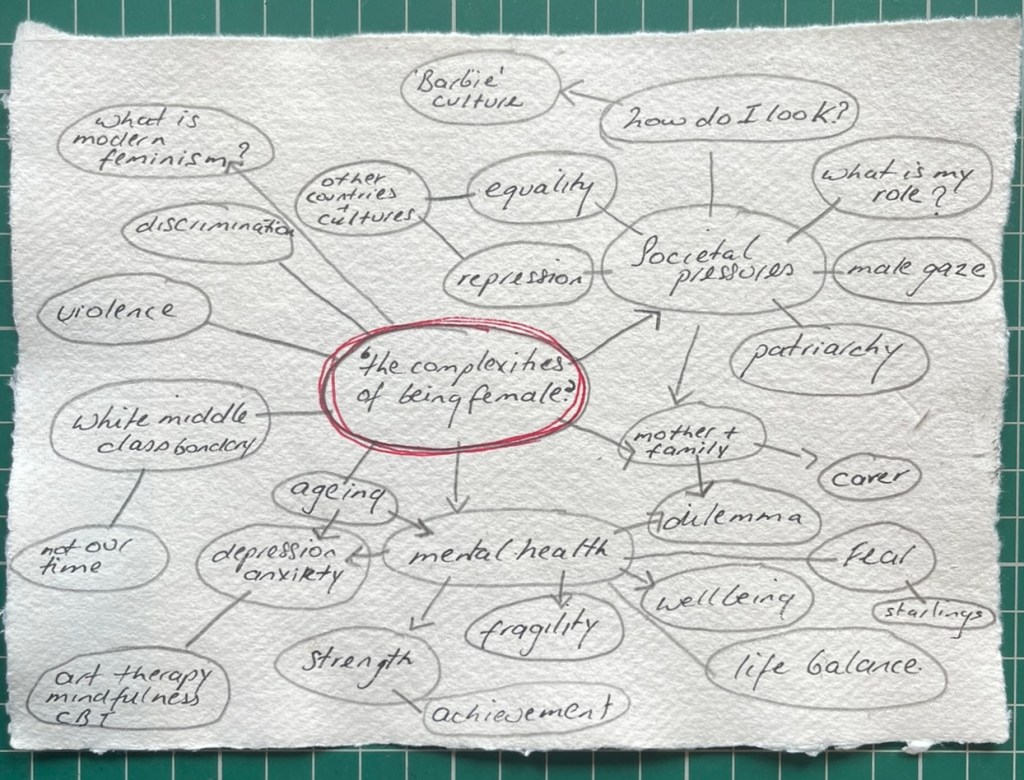
Image 2 . ‘Traces'( of the past)
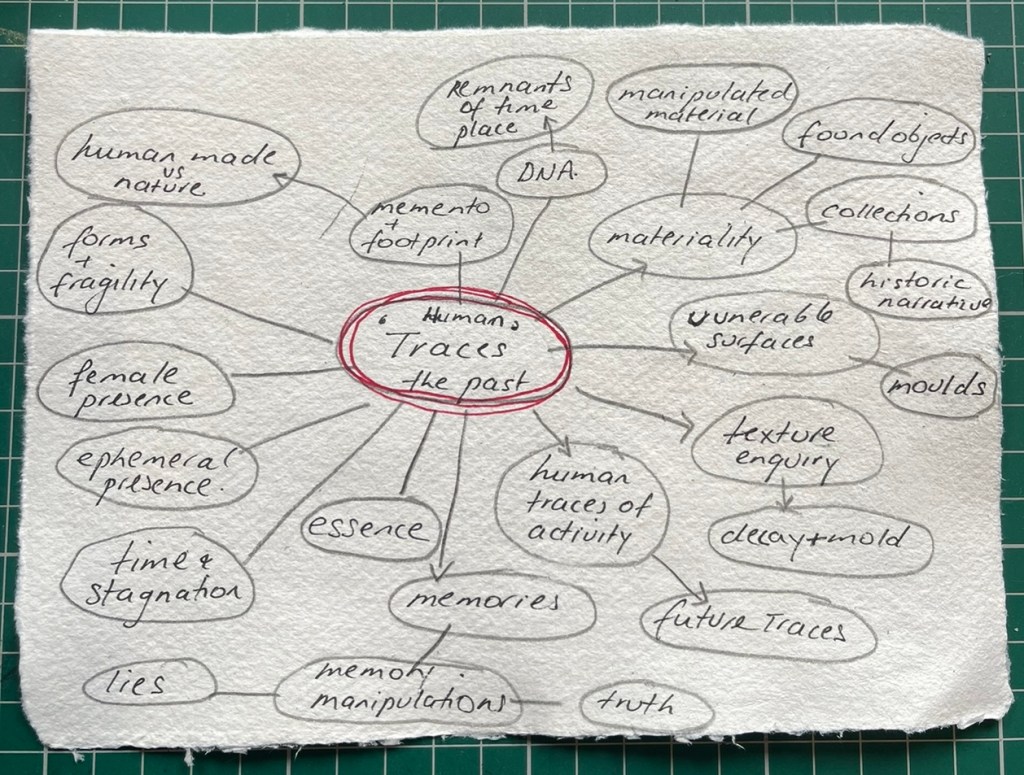
Image 3. ‘Consumption of Knowledge ‘
Exercise 1.5:
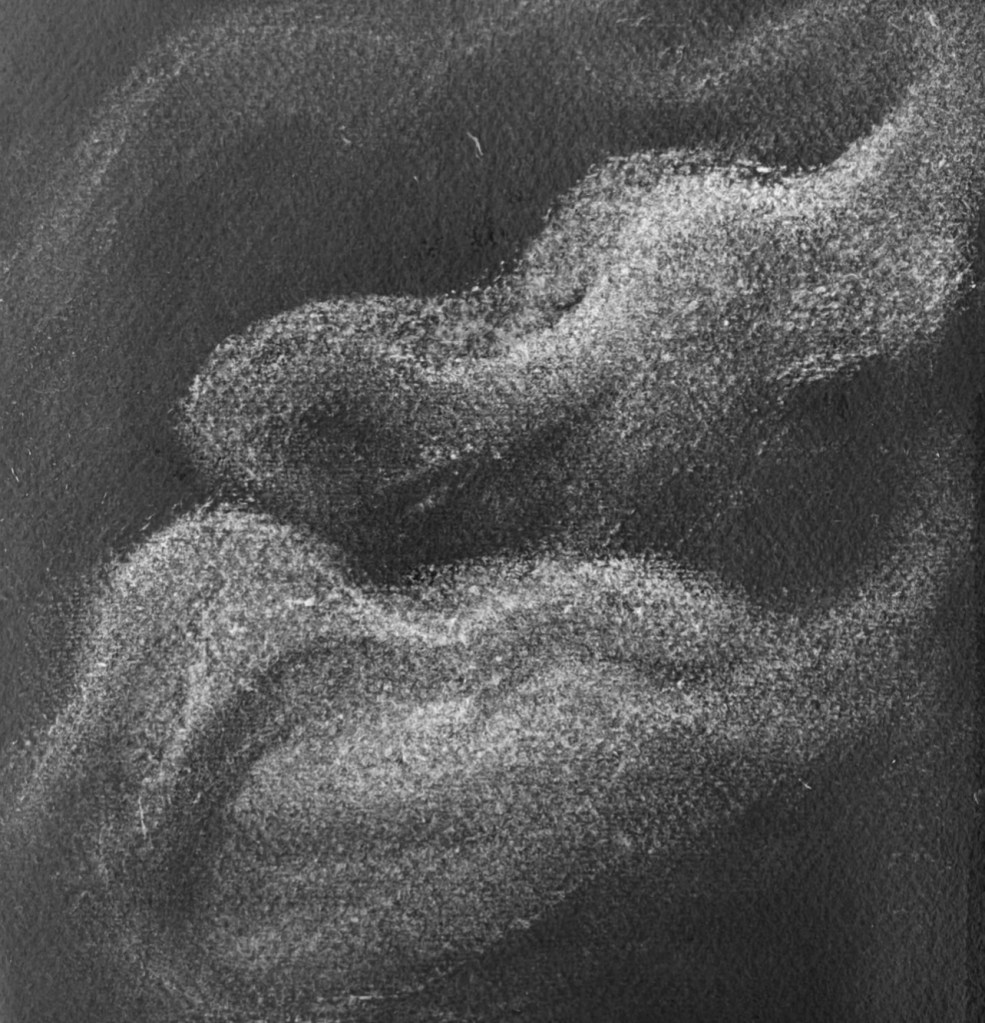
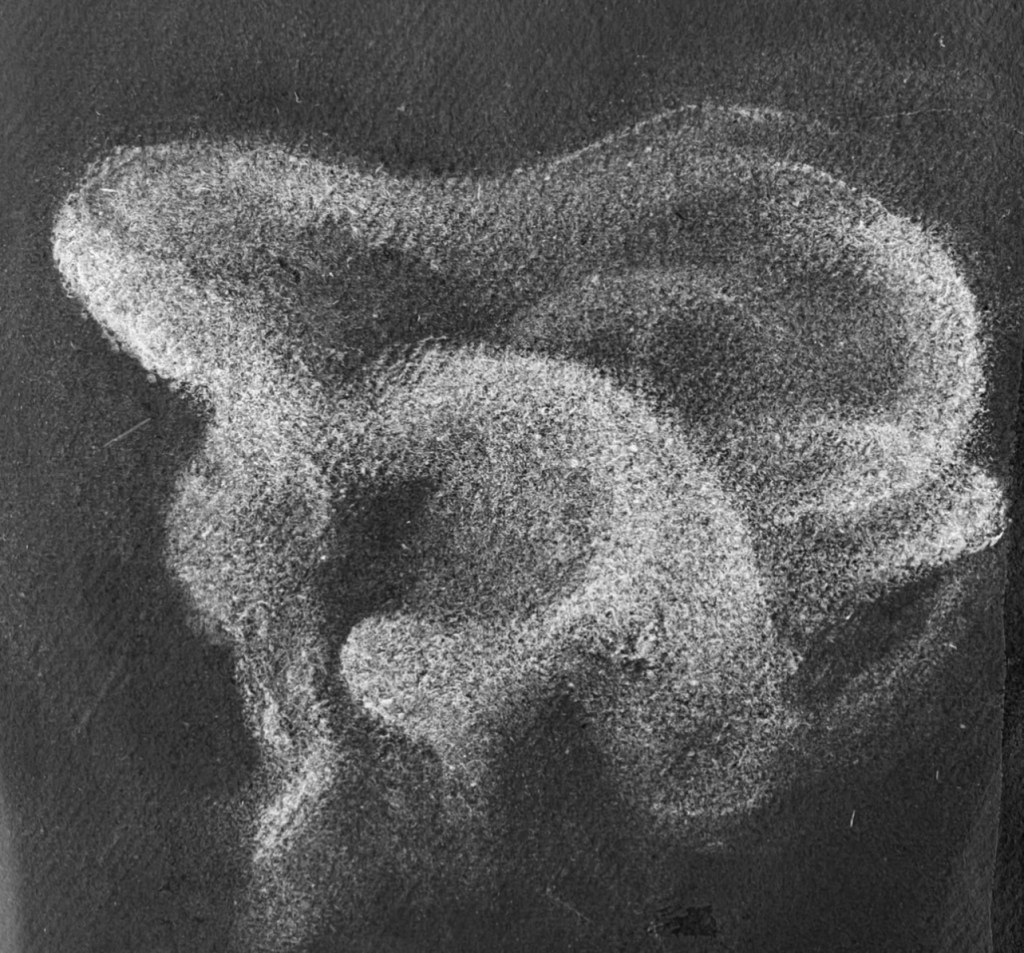
This work concerned murmurations of starlings being a metaphor for the swirling fear and anxiety one can feel when lying n bed at night nt able to sleep with the mind wandering and worrying and the thoughts building to a crescendo of fear and panic as if a swooping dark negative amorphous shape surrounds and overcomes you. The ‘Fear Like Starlings ” title I believe comes from a poem I had read an years ago – unfortunately I have not been able to trace it, despite a deep search. perhaps it was imagined or just a throw away line from a book?
I stained some Khardi pages with tea and began copying the murmuration shapes using charcoal. An ideal medium as it allows so much movement and malleability that are essential to these images in order to appear constantly moving.
I also drew the starling and used thick layers of mixed media to emulate the travel and movement of the flight – bottom right. The b/w versions are photographed negatives of my work experimenting with colour and mood.
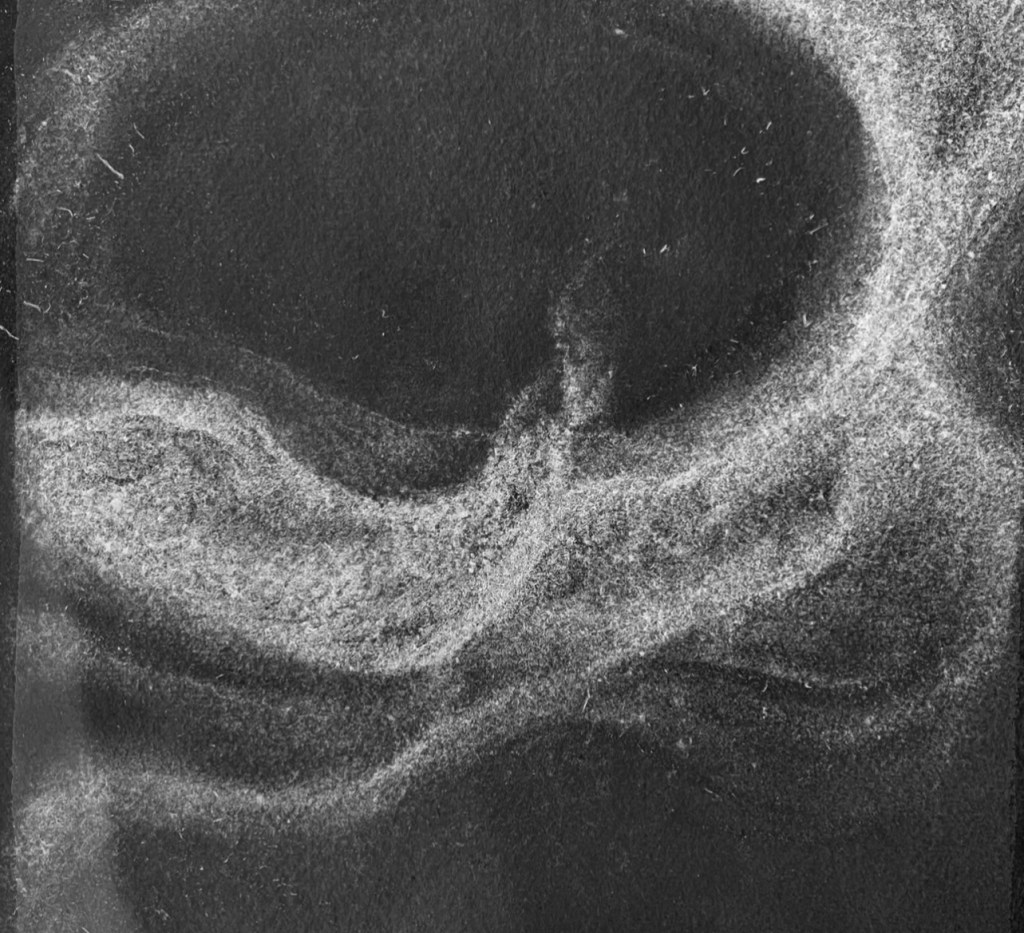
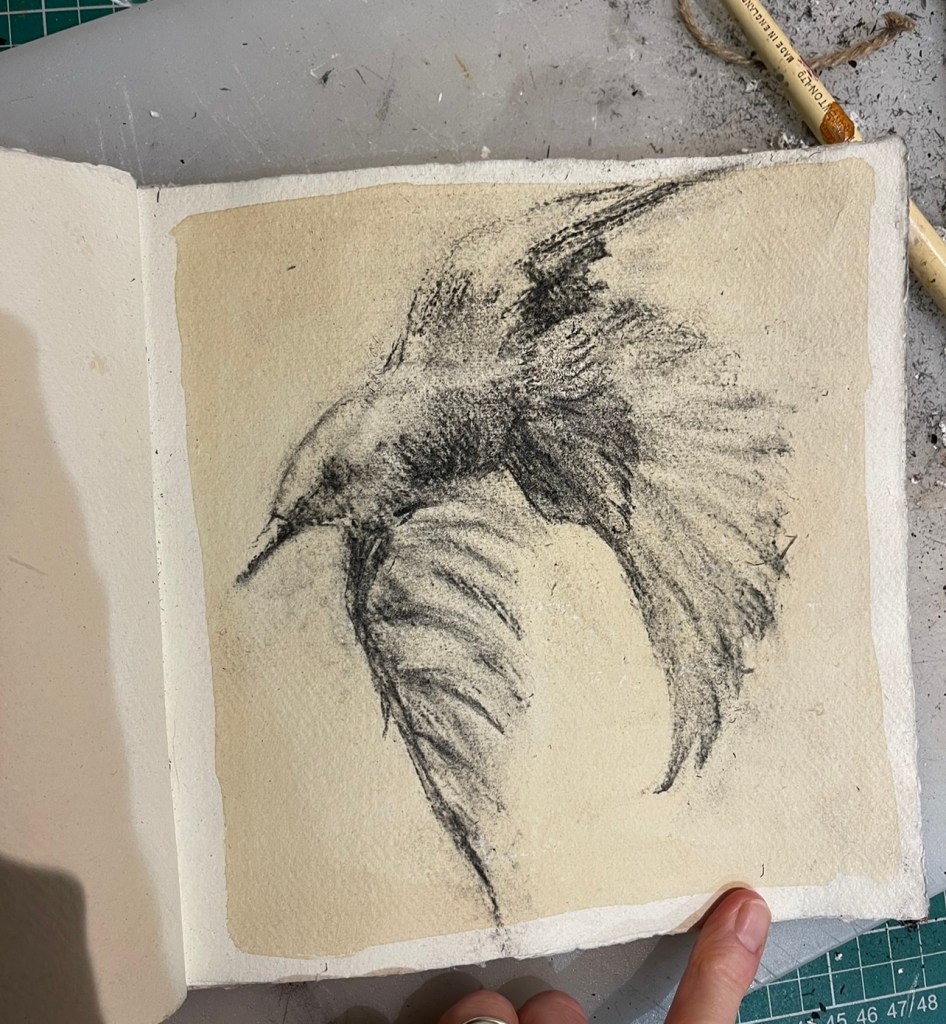
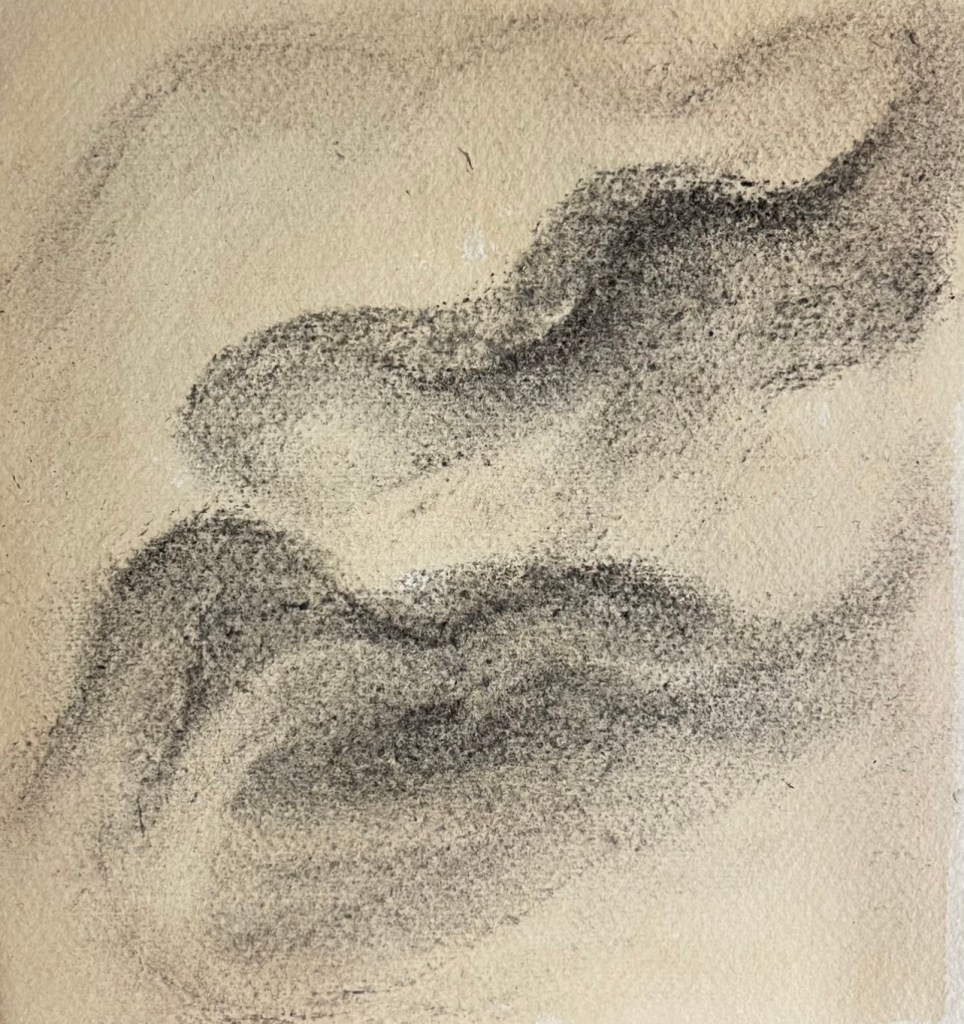
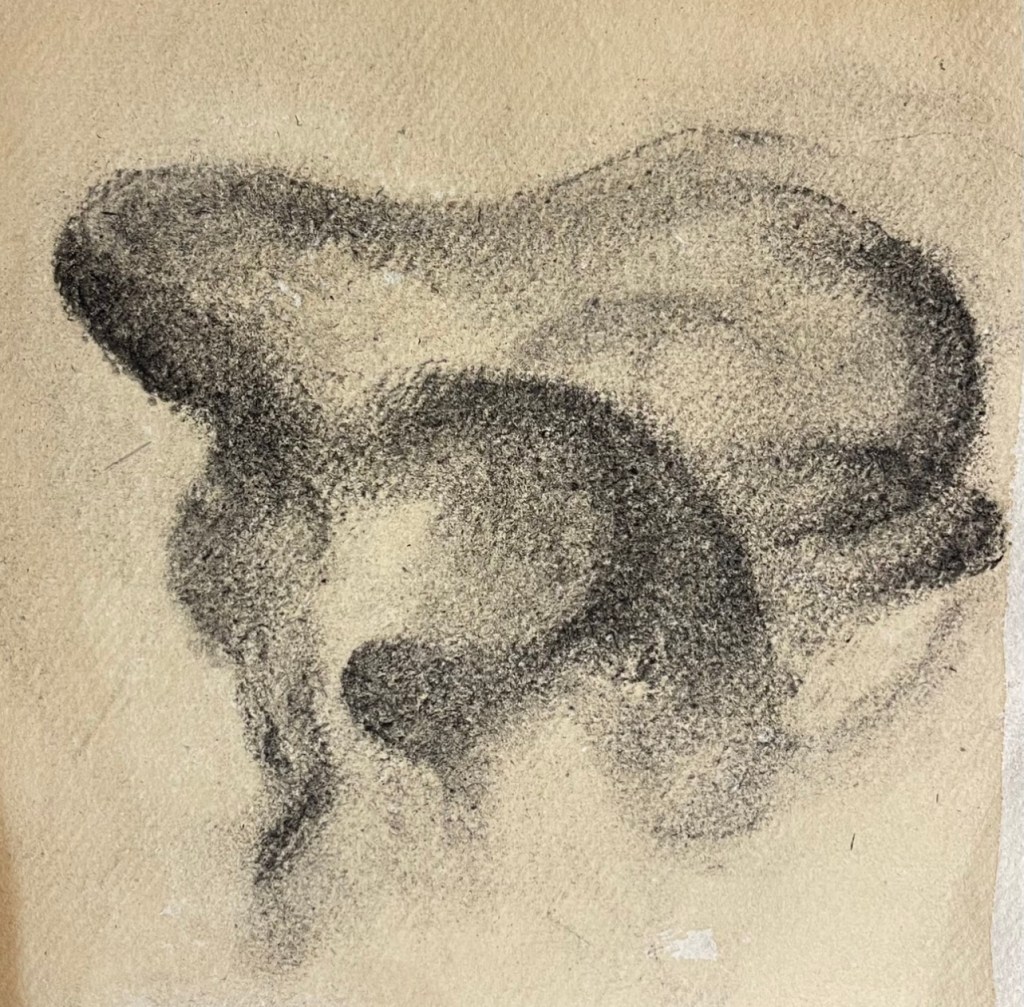
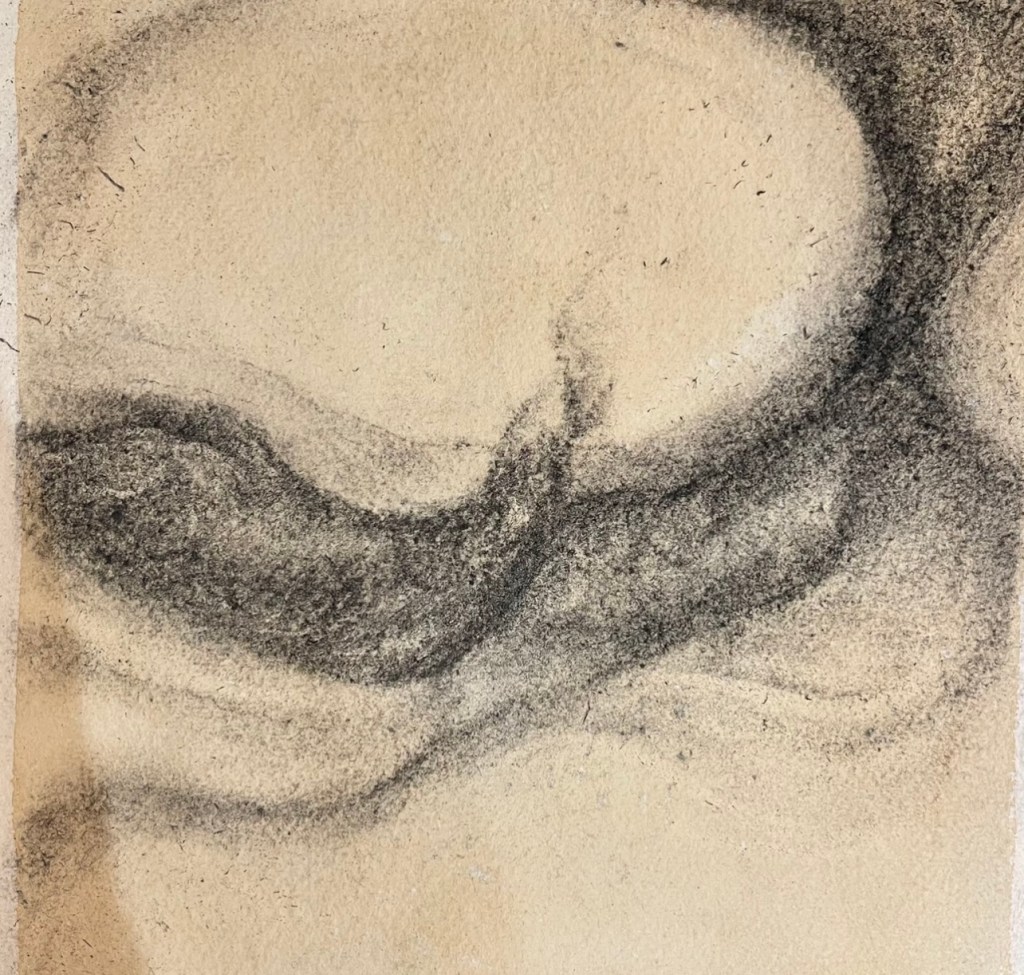
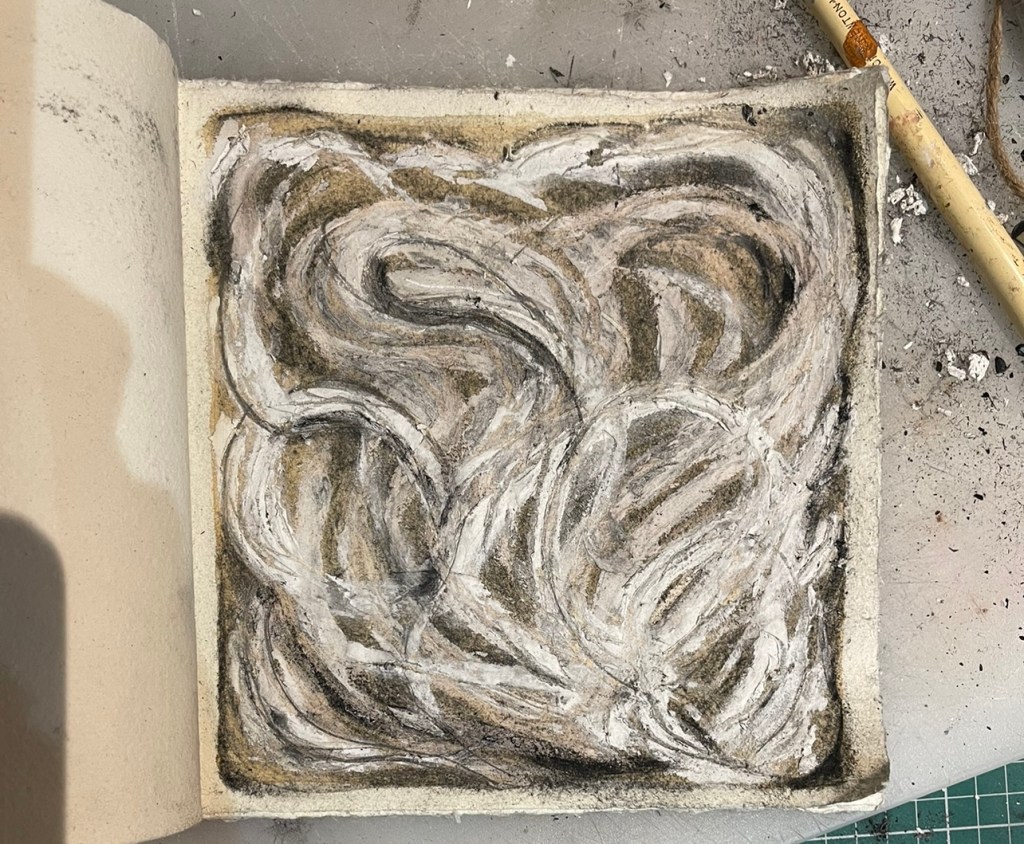
I think this project can tap into general mental health and well being and also to the ‘Complexities of being female”. Night fear is universal ( all sexes) but I would like to focus on the female and the other areas that this can connect to as laid out in previous mind maps.
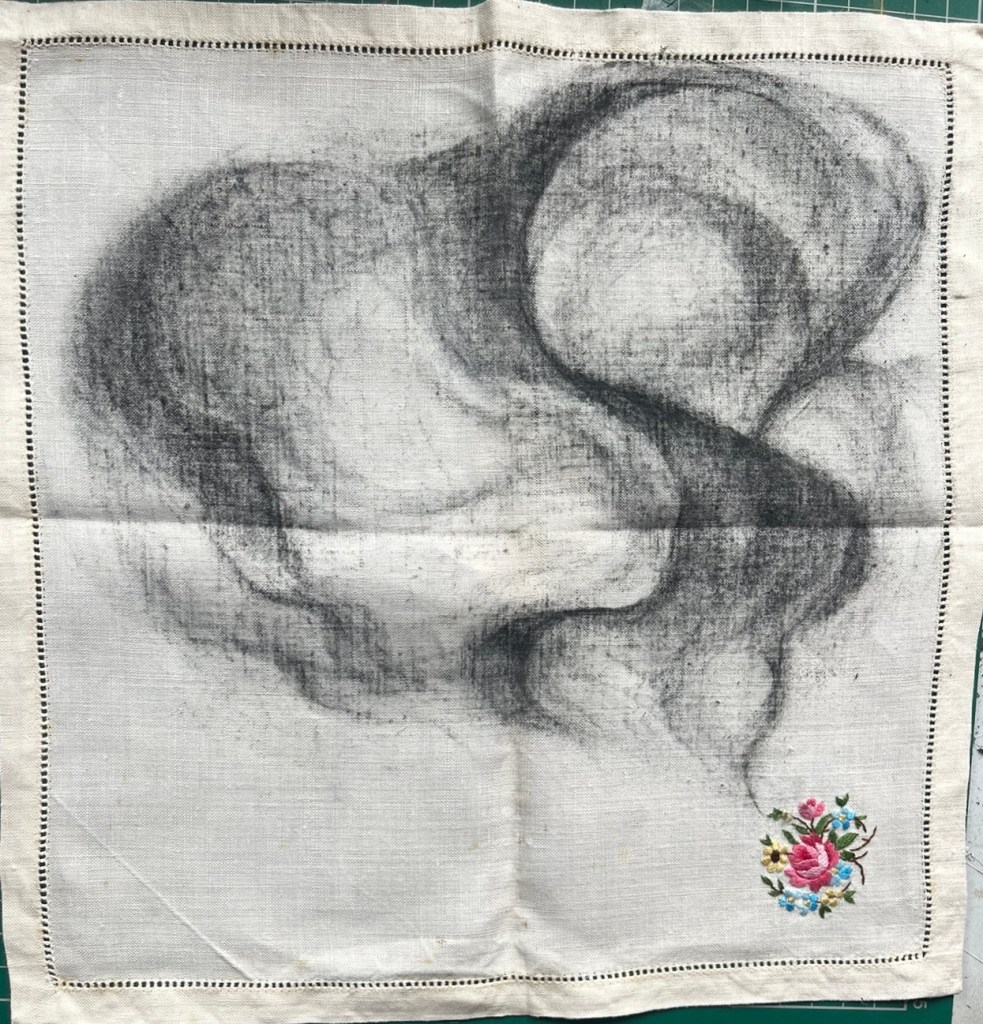
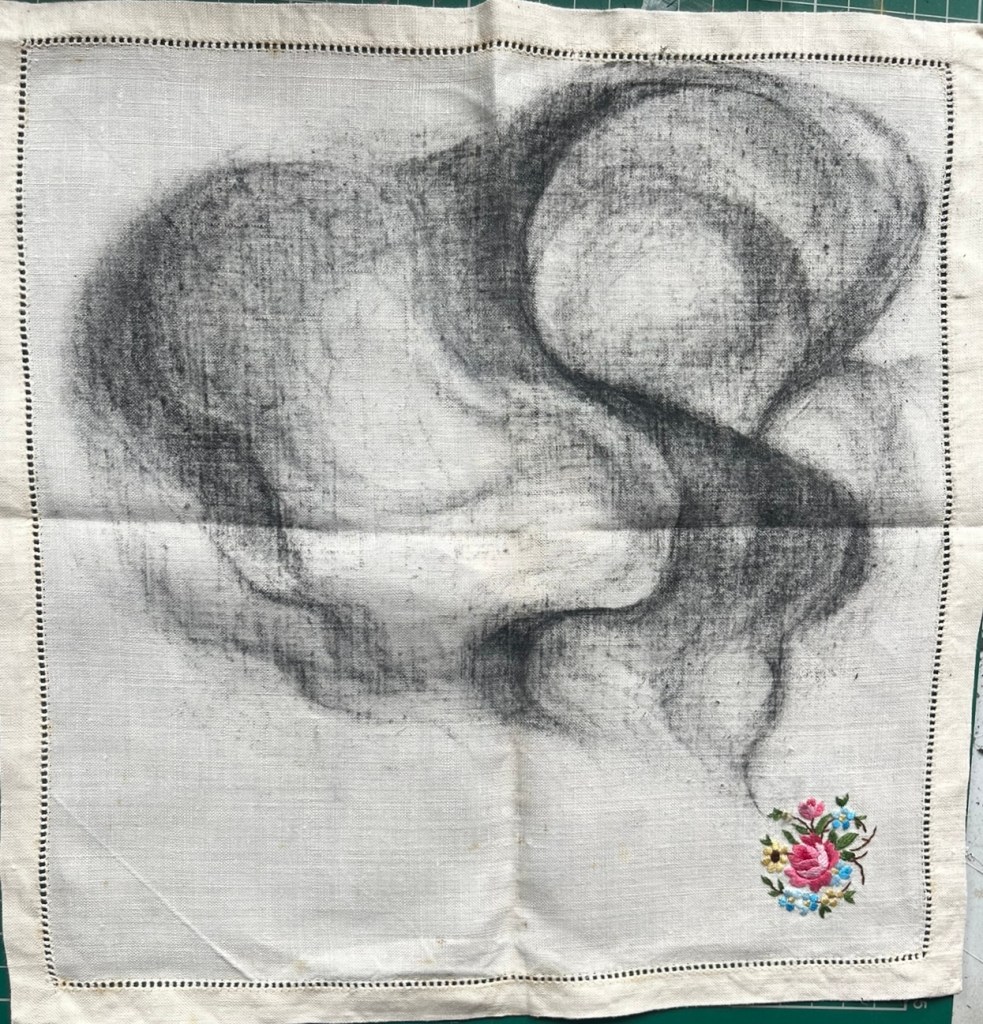
Playing with video – recreating the murmuration on a vintage embroidered napkin. The napkin is synonymous with the feminine ideal of the past …..a medium for further investigation…
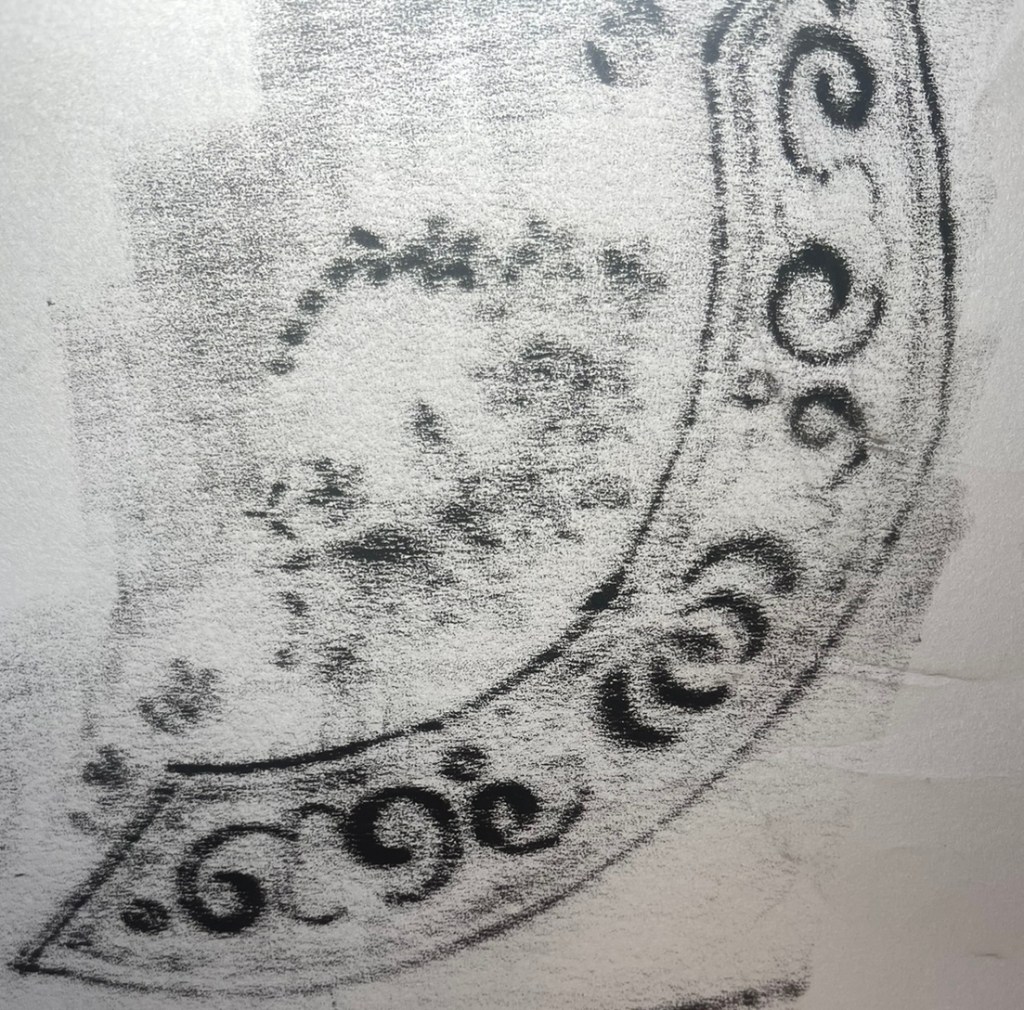
Embroidery and quilting frottage experimentation : –
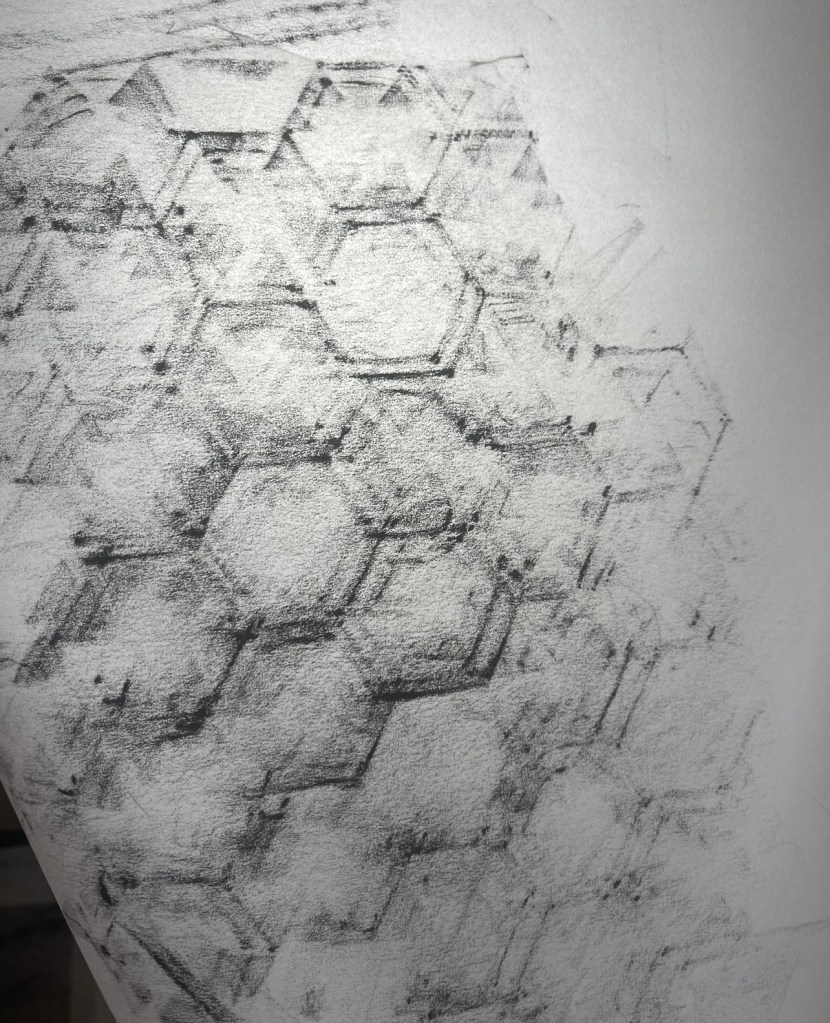
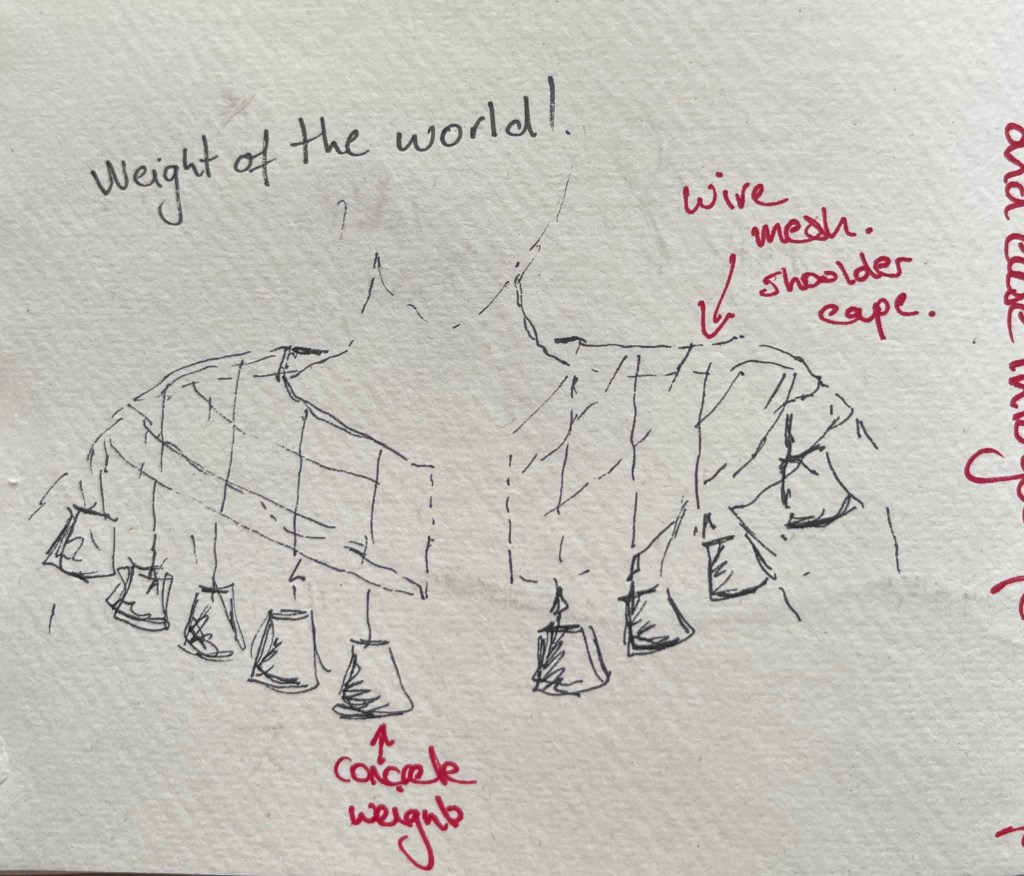
Another experimental concept with an actual weighted body ‘armour’ hanging from shoulders…depicting te downward dragging emotion of depression…
Life Balance
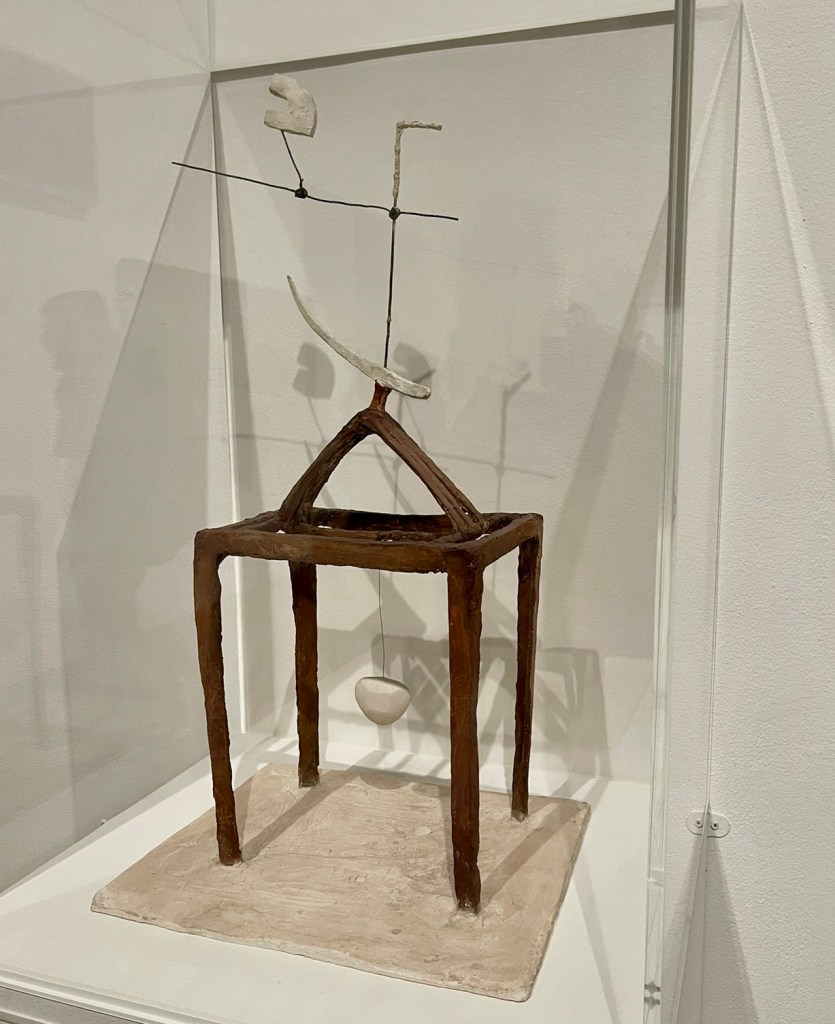
More ambitious was the potential for 3D sculptural project weighing up the multitude of pressures on women today, their multi layered role in society, its expectations, dilemmas and discrimination amongst others. This early stage model was in response to the juggling and balance a female faces with the muti-layered complexities of being. The wooded model is made from bits of an old model boat with a plaster cast of a dolls hand I had made, found objects denoting the role of provider and a weightless paper balloon I had constructed from paper using an origami method. It was inspired by a Giacometti I had seen at The Tate modern recently. I was drawn to its fragility, its balance its intrigue.
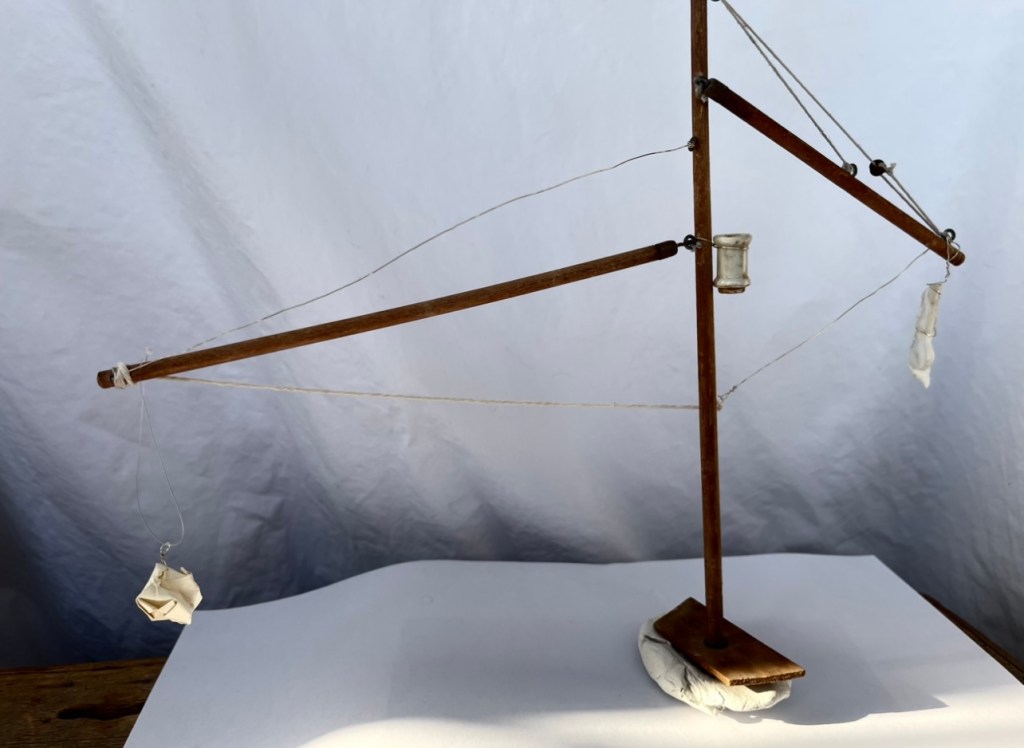
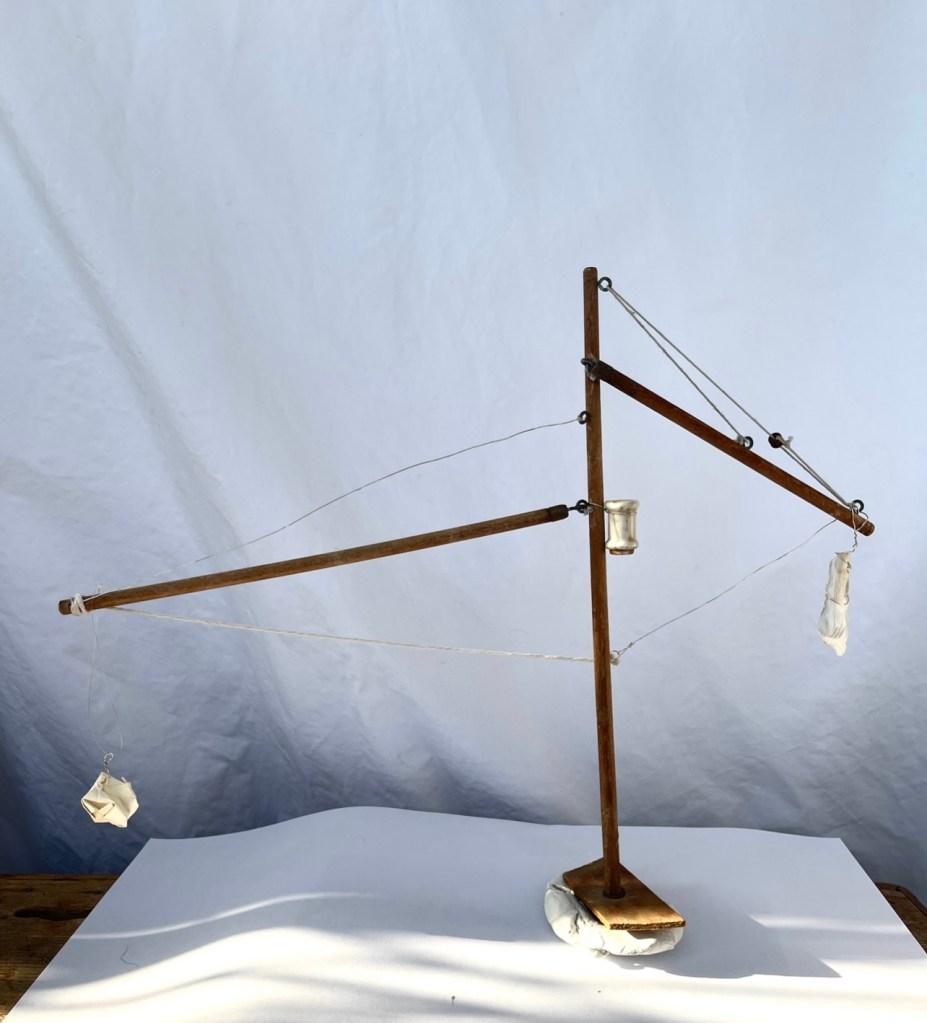
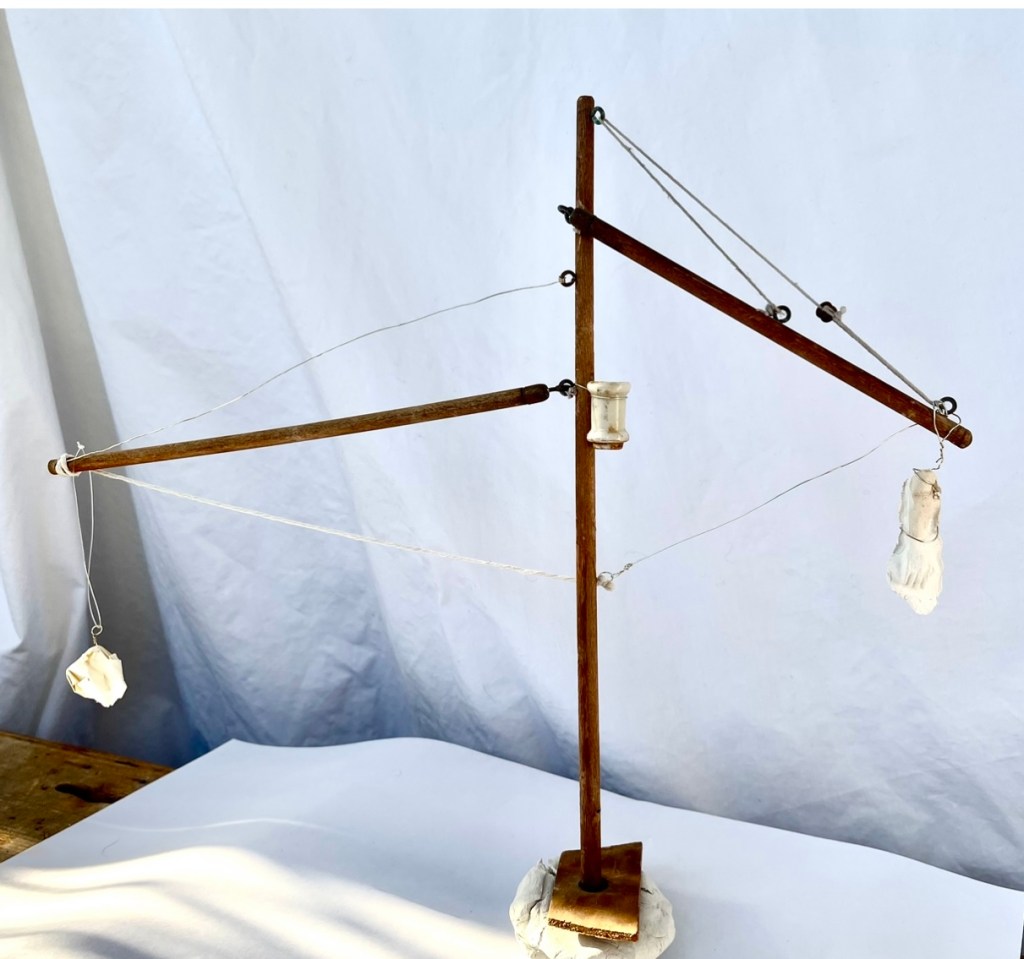
I am excited and challenged by the prospect of creating a 3D model that can allow a dialogue between the viewer and the the issues facing women today.
‘Book Worm’
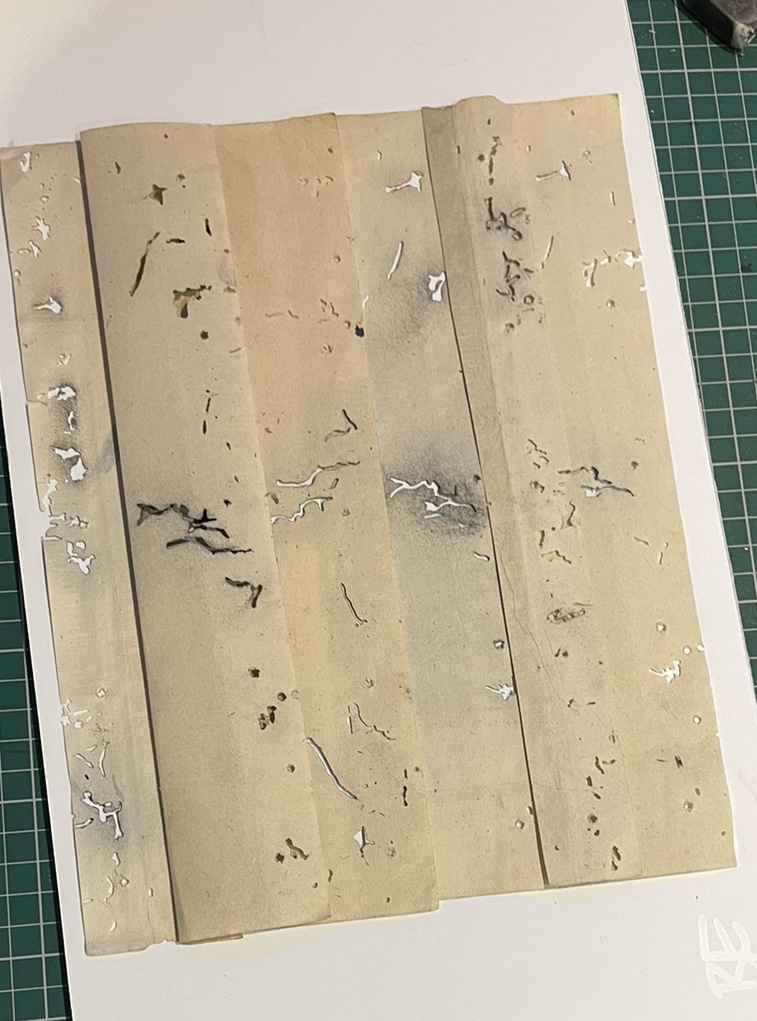
Found ancient pages riddles with book worm traces brought to mind our quest and consumption for knowledge. Recently reading articles regarding the future of our current and past knowledge and how the human race will save, record and retrieve knowledge information and visual imagery etc in the future as so much of our storage currently in digital format is becoming obsolete. We are privileged to have so much knowledge at our finger tips and can choose to consume and digest so much in our liberal culture. Other countries and the women with in them are less fortunate as we have seen in recent newsreels regarding the young girls and women in the Taliban governed Afghanistan. Who will control what is saved and lost in our future and how ? Will we accept quality over quantity on the basis we cant save everything?
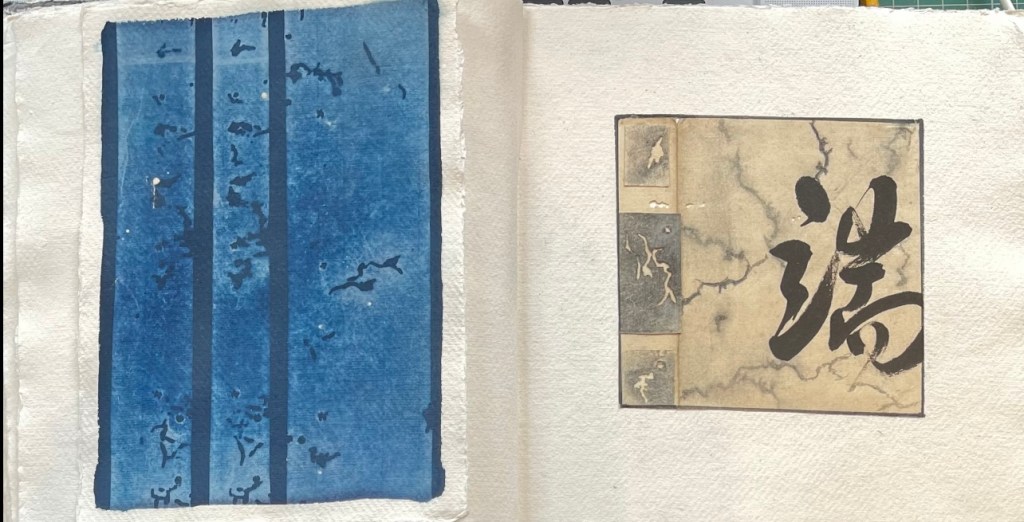
The work below uses cyanotype to explore the marks made in the paper. using them to imprint further images onto the found paper. The wobbly nature of the work is due to the undulating paper when photographed – they are in-fact straight blocks of printed cyanotype imagery surrounded by a white chalk boarder.
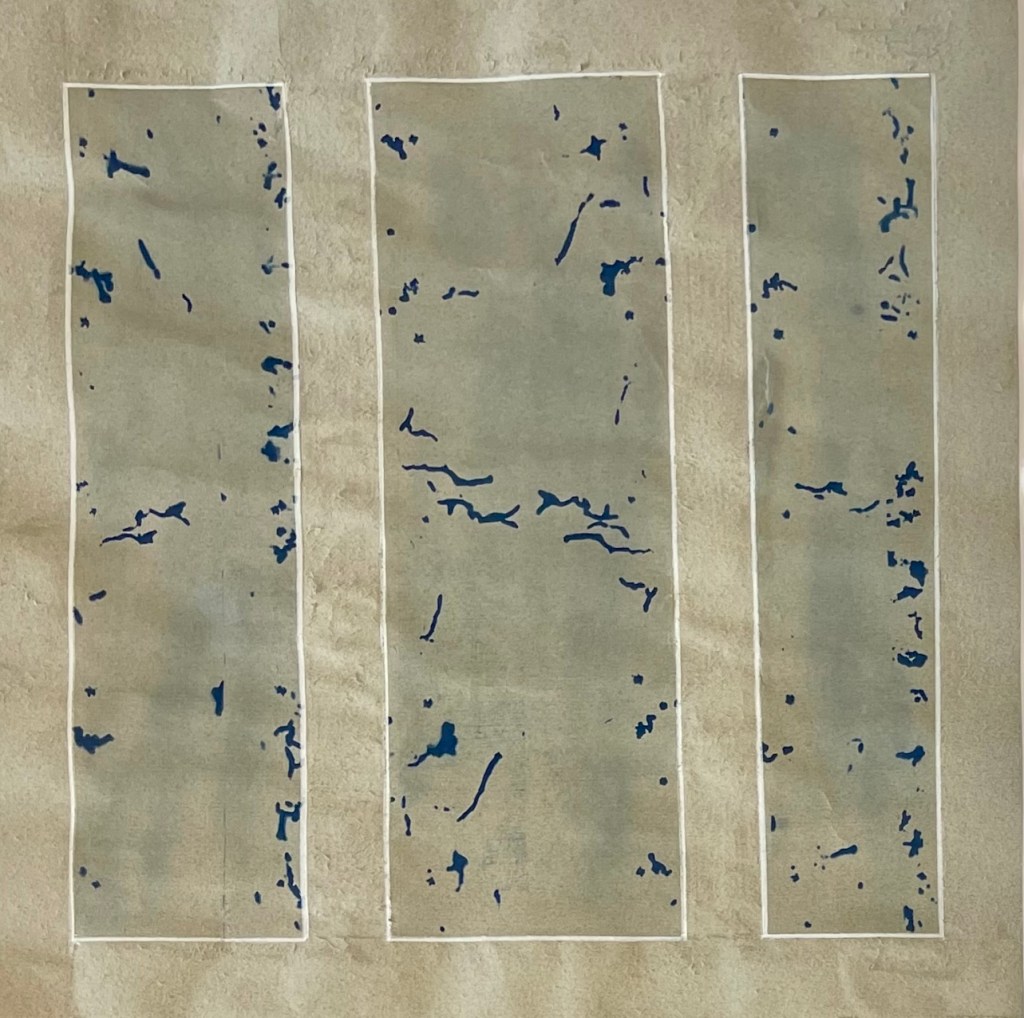
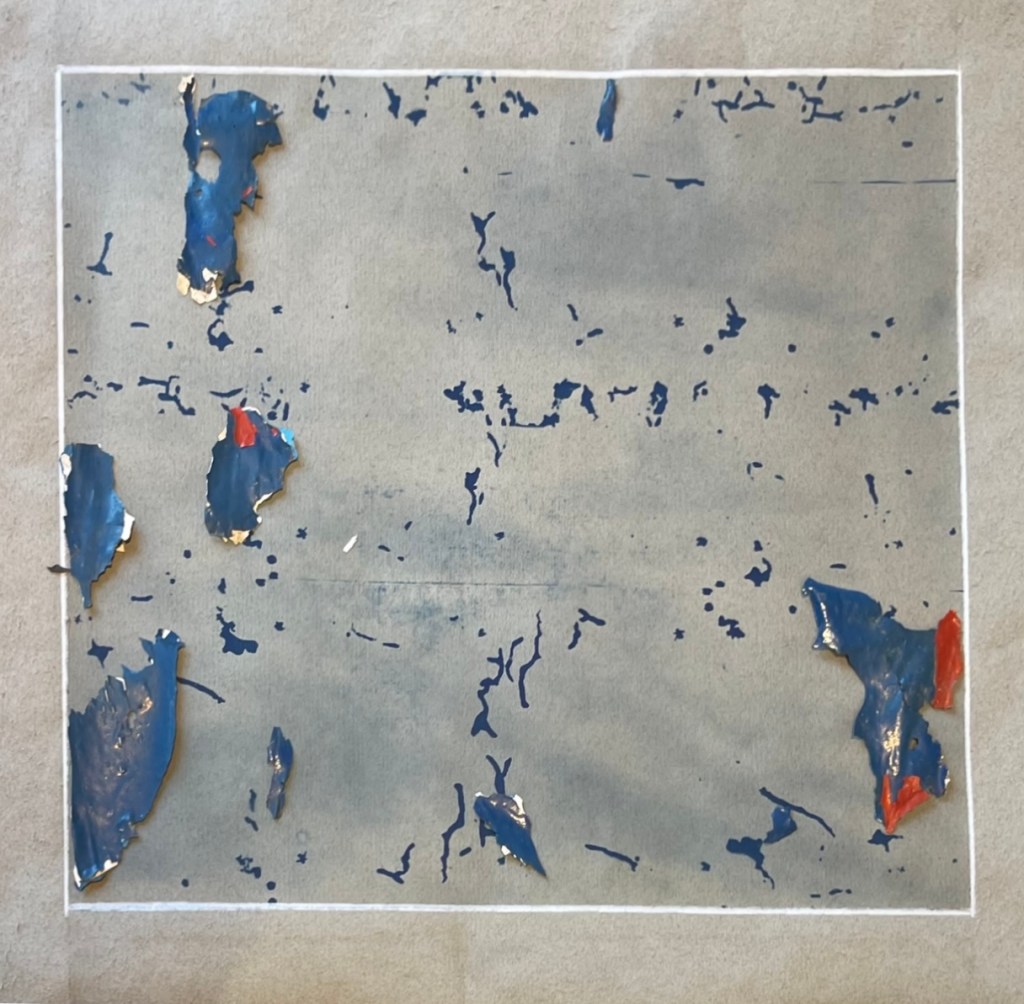
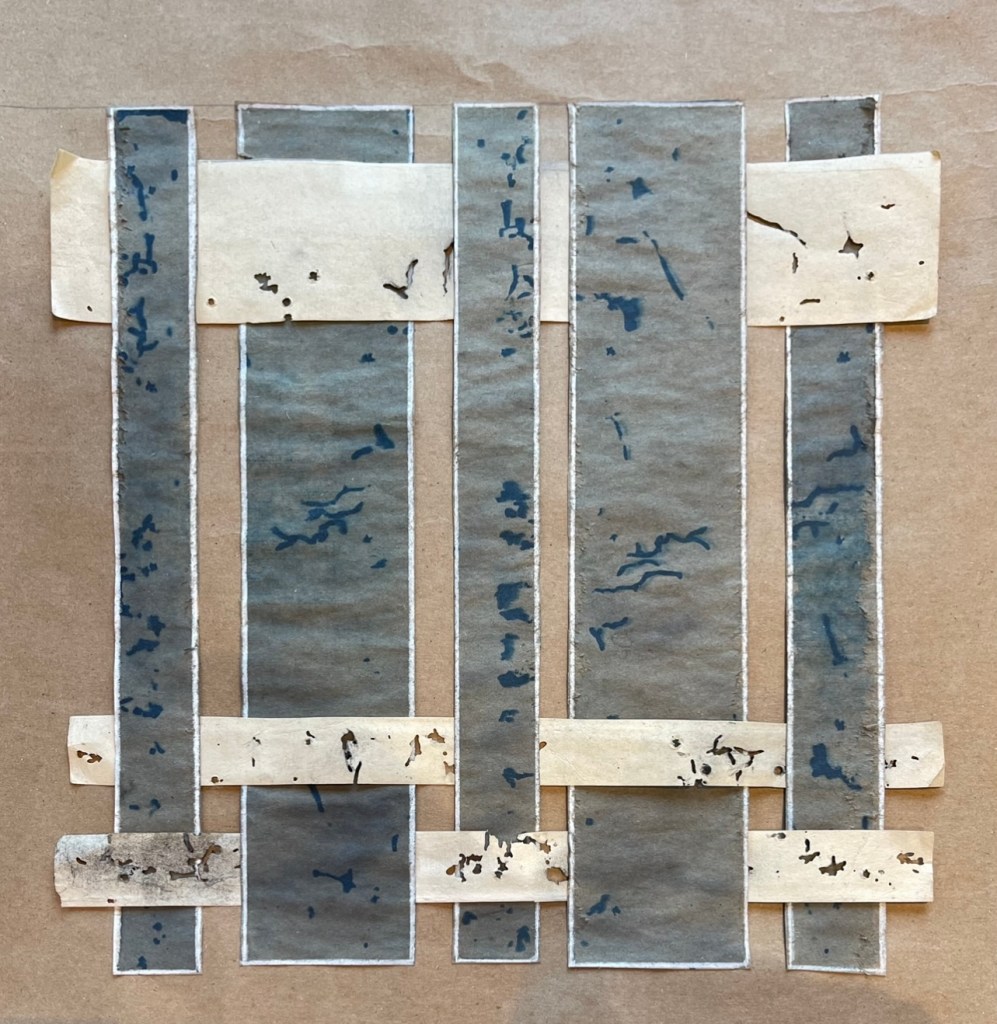
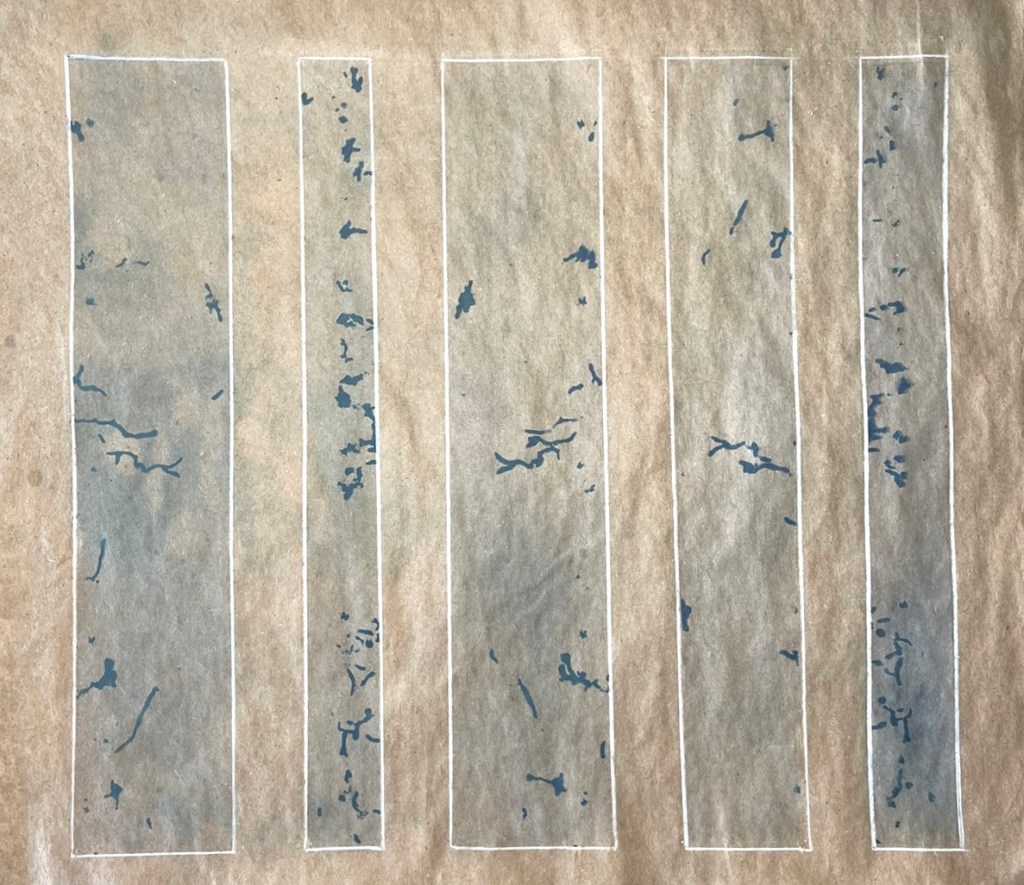
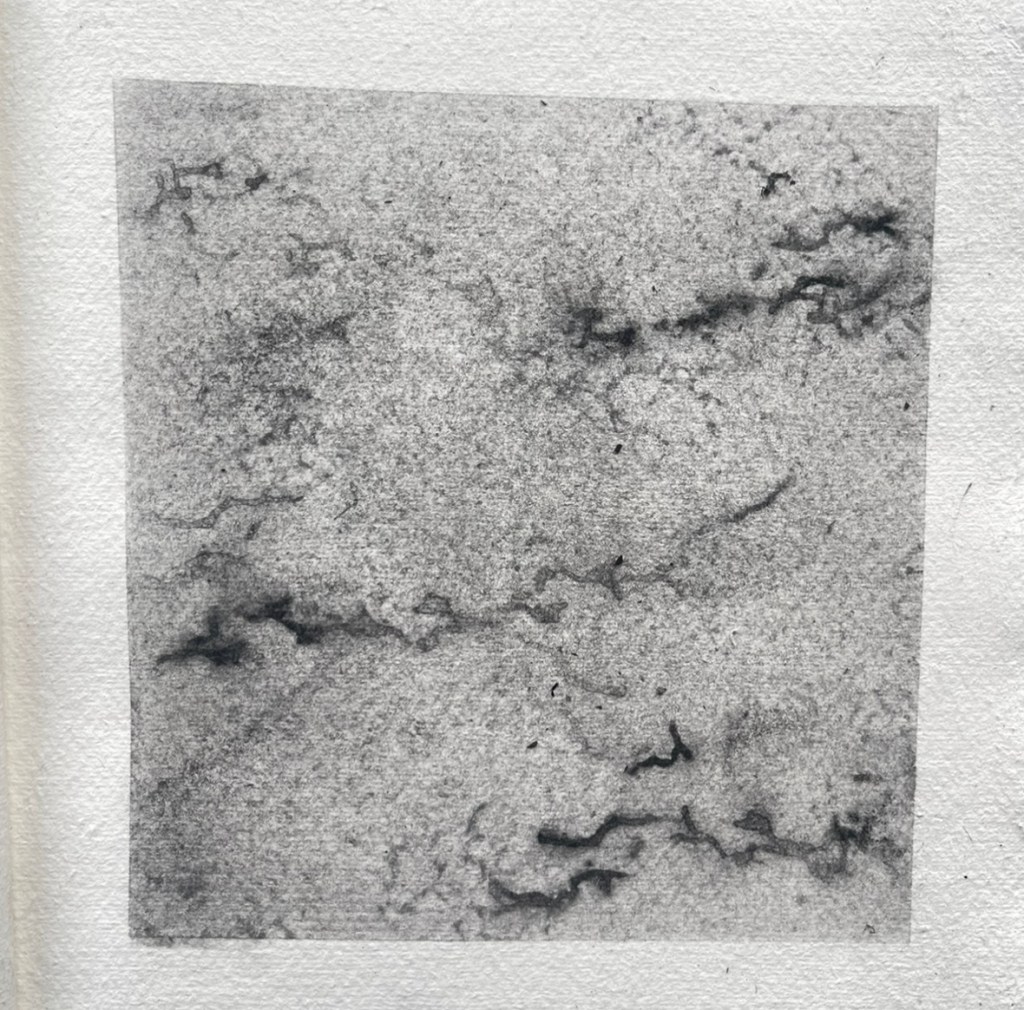
Pencil stencil print below:
Time, Traces the past – focus on Materiality
Following on from previous work at the end of HE5 concerning the ephemeral traces of the past on items, places objects etc …
The link below will show the work explored regarding this topic ( use second link below – with – gallery/13)
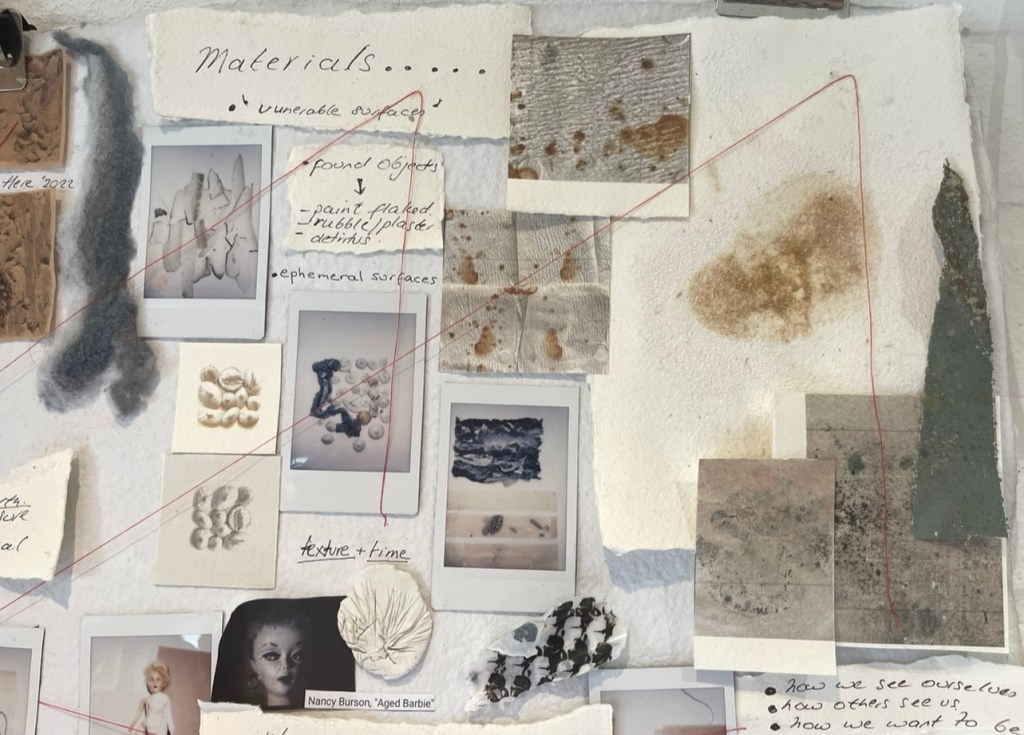
Using an array of found material ; ( see below – mind mapping project ) – I will explore found material, detritus, found objects, collections, vulnerable surfaces, remnants of the place to investigate the ephemeral traces of the past – looking at female issues concerning mental health institutions, working practices and past constraints and experiences using the found matter.
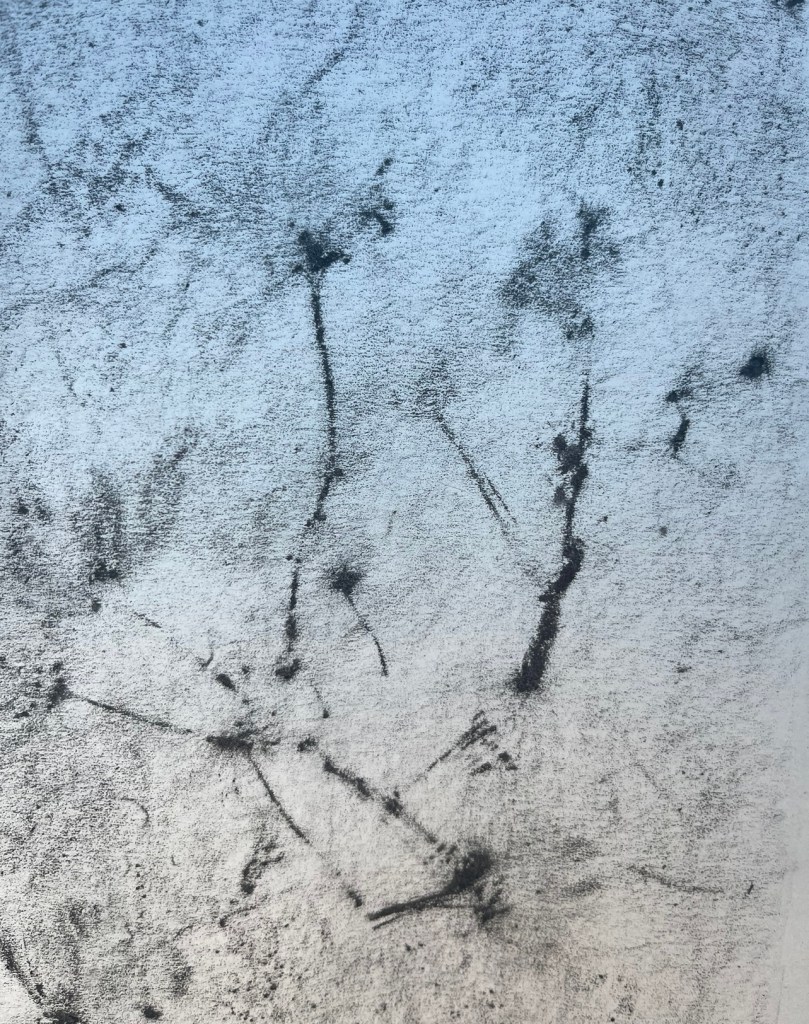
- ephemeral traces – dried flowers and frottage …looking at vulnerable surface, –
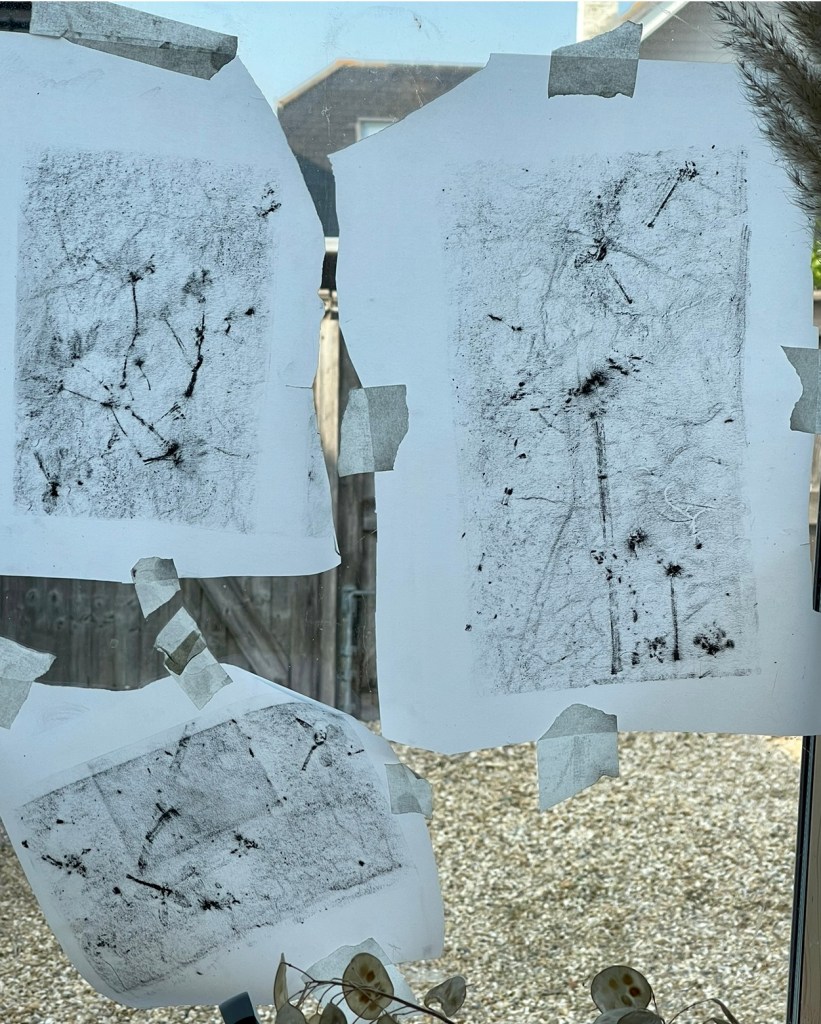
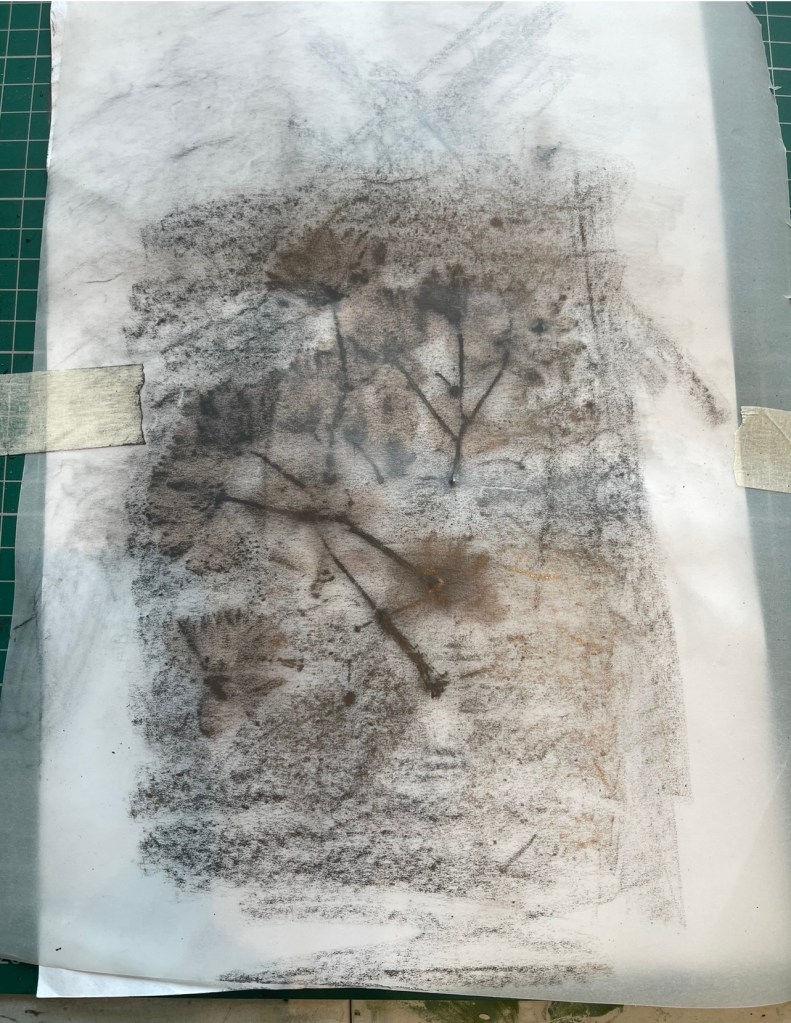
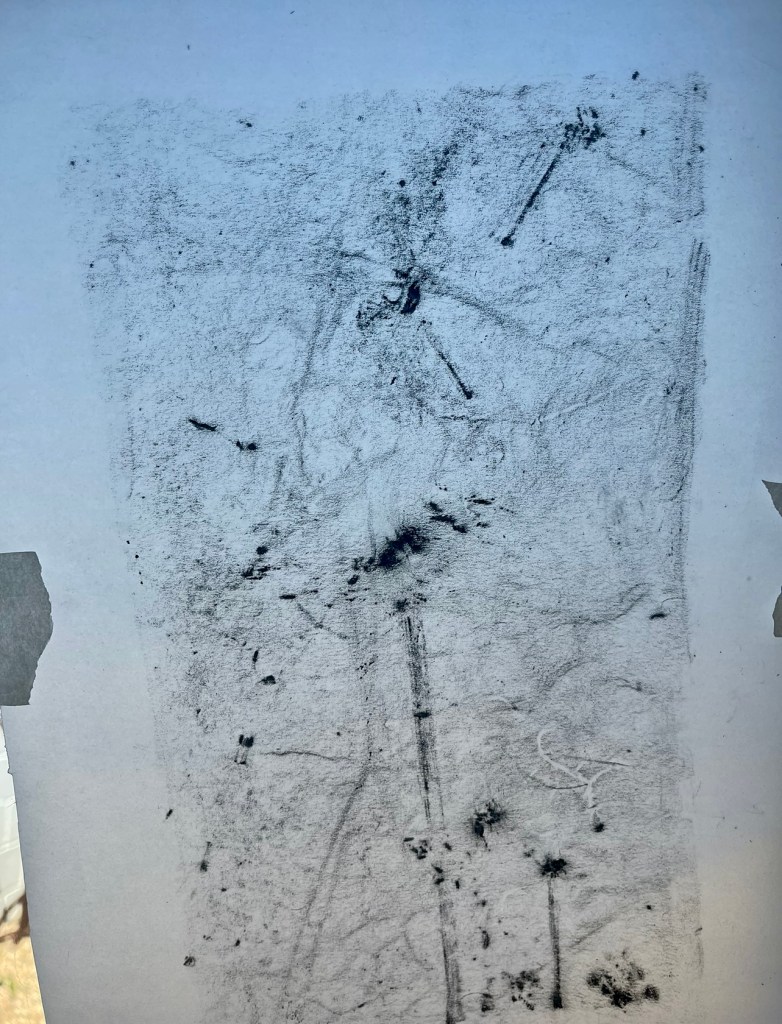
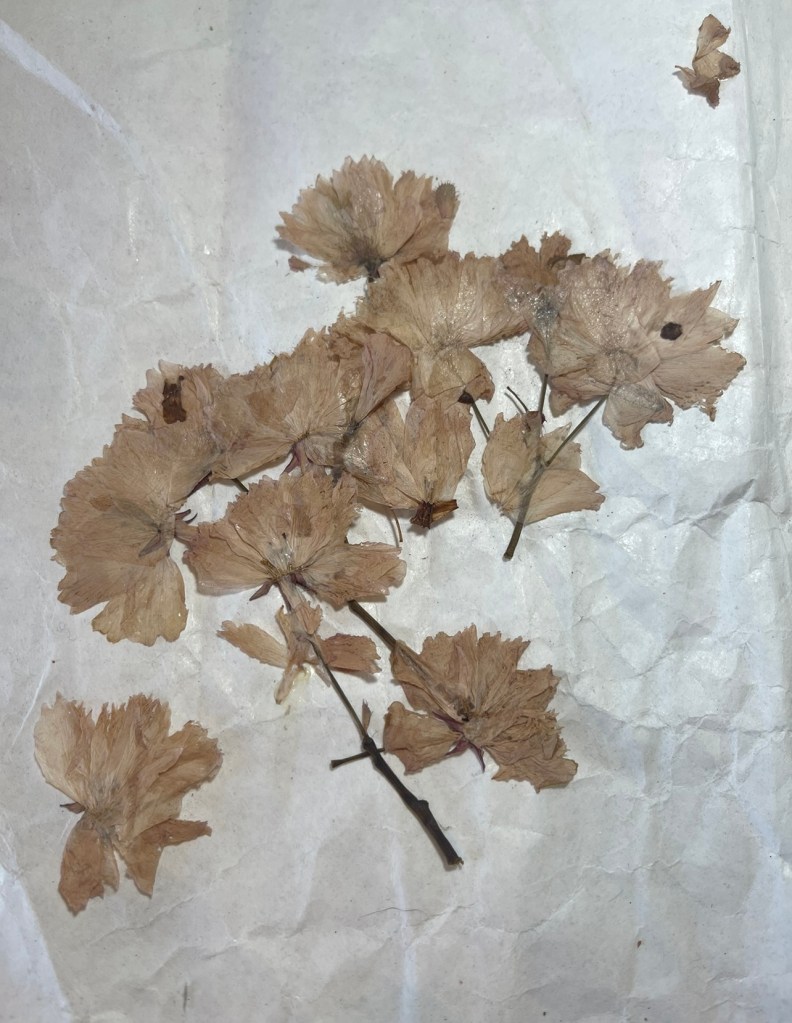
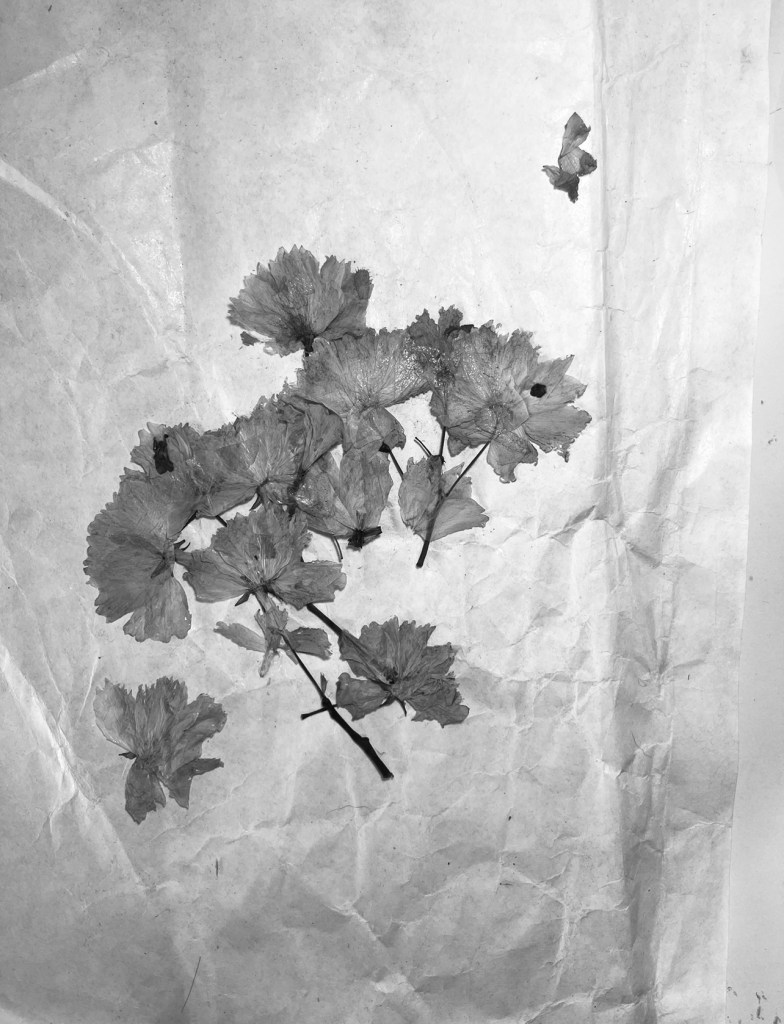
An array of ideas and concepts not fully explored or finalised at tis stage –
Mapping 1.6
Taking an overview of my research so far, specifically looking at the the ‘Female (Voice)’ and its past struggles and lack of acknowledgement I felt the need to find a place to celebrate and revere the female in all her forms and glory. An acknowledgement of all that being female has come to mean and the strength and power ‘we’ have today in many societies and cultures. Aware that this is not some thing shared by all this “SHRINE” to the feminine should bring about hope, admiration and aspiration to women/ females in less fortunate and liberal societies/cultures.
The idea of the SHRINE has come from a place of wonder and achievement from prominent female role modes and the everyday hard-working female balancing all the demands life plays out before her.
I this stage I will include the term female for ‘anyone who identifies as female’.
This is an initial step away from some previous thoughts and concerns but is currenty dominating my potential process and comes from a place of contemplation post previous research and development of ideas.
Initial research in this field has not led to a great volume of examples regarding a SHRINE type of installation that are non-secular, they are mostly religious and concern various deities and goddesses.
The ‘ shrine ‘ I would like to construct would be 3D in nature and contain a number of elements linked to past exploration and research. Such as: Found materials, vunerable surfaces, vintage relics, imagery, a structure of balance, traces of the past to show narrative, the passage of time,( historic ), photographs, charms and other …. relics etc
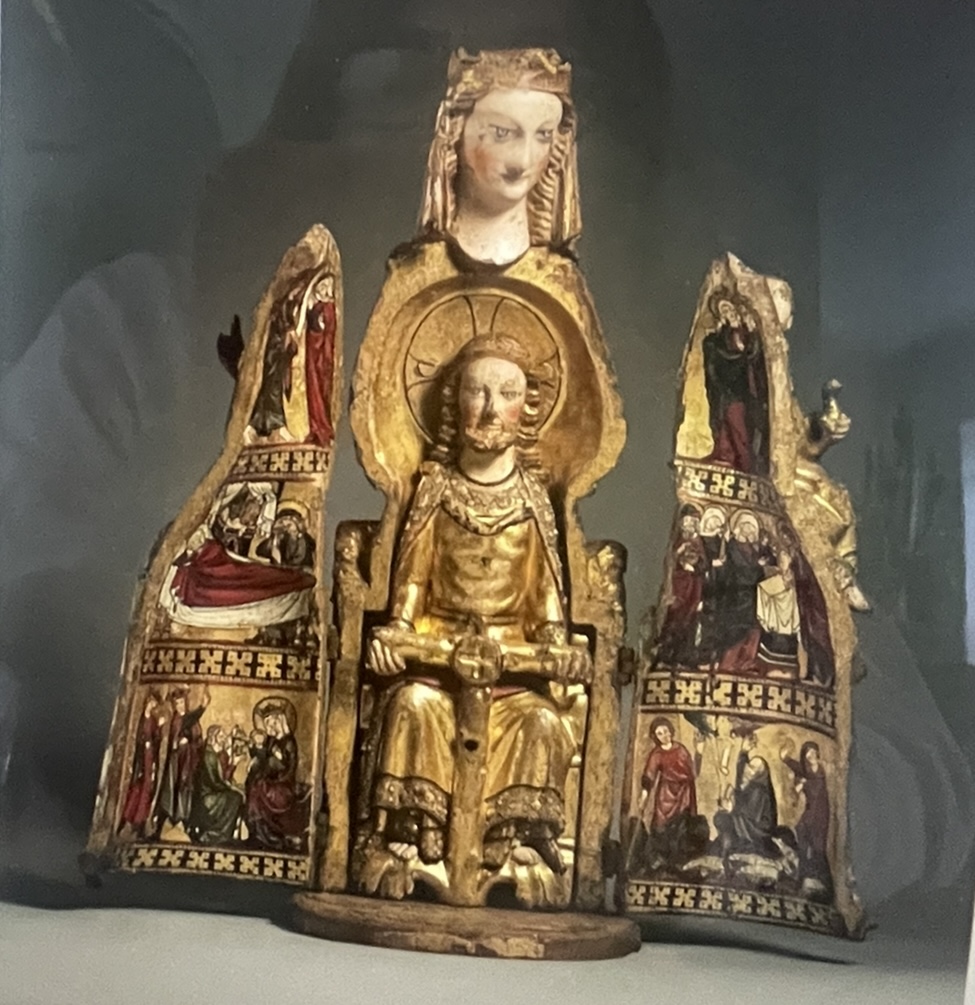
At this very early stage, I am thinking of an ‘alter piece’ type construction that would appear to have a structural integrity that was balance based to perhaps mimic a life balance concept.
Possibly there are too many ideas here for one piece but perhaps a combination of smaller pieces conveying a slightly varied message or theme .
The work would concern the admiration and veneration of the female and be a some what portable piece.
Early sketchy mind-map below of new concept/idea.
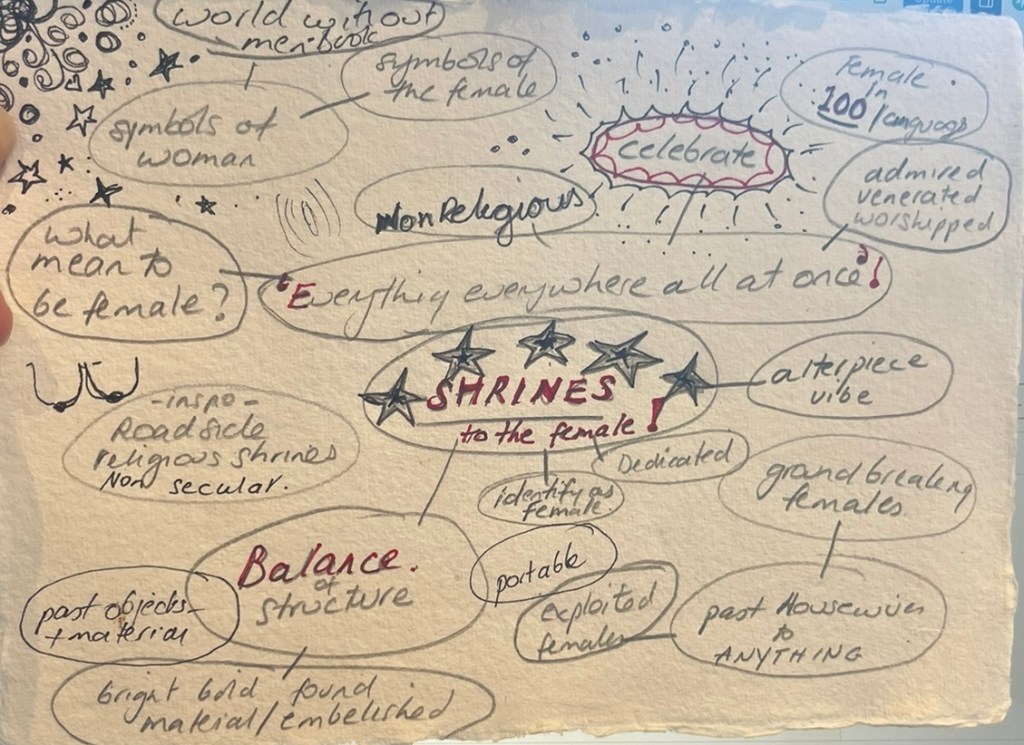
I would hope to cover the following in the visceral narrative of the art object :
Vulnerability, Exploitation, second rate citizens, feminism, mother, careers, glass ceiling, pay gas, patriarchy, respect, pressure on looks, beauty and size, domestic abuse/violence, education etc.
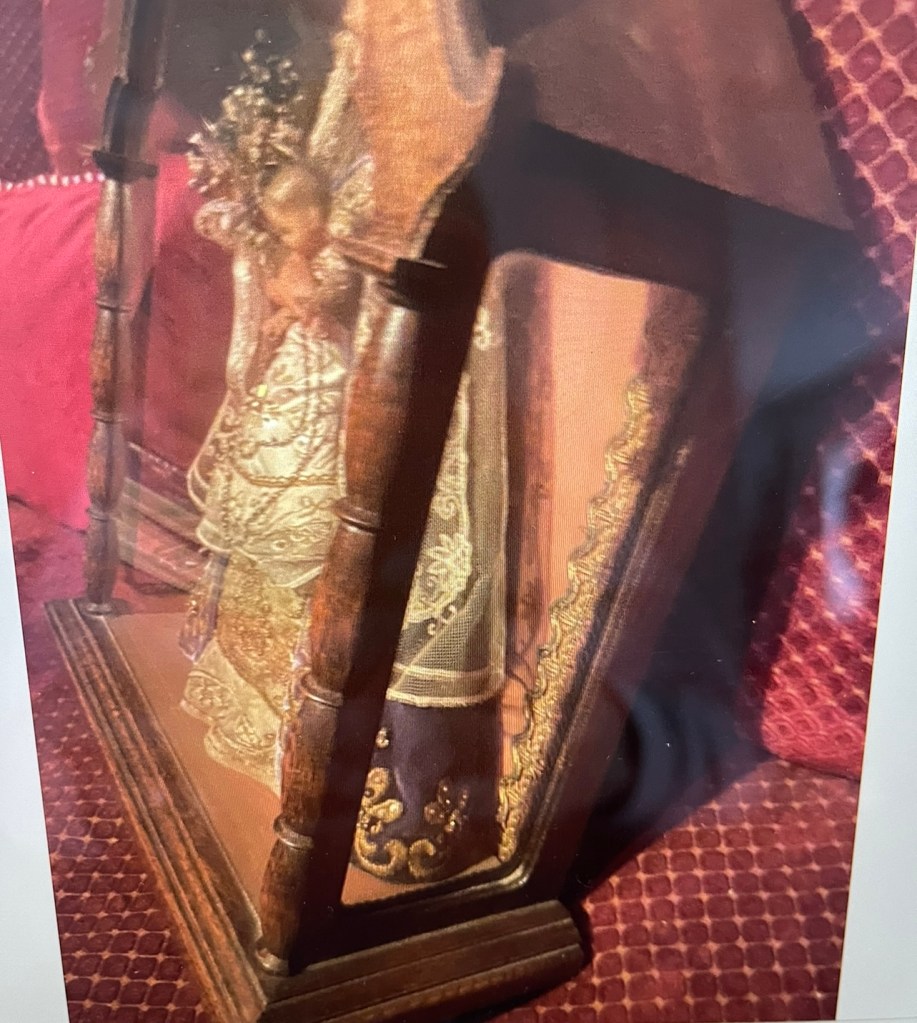
Initial research imagery: traditional, embellished, 3D box structure, solid, portable, icon base icon-based, religious,
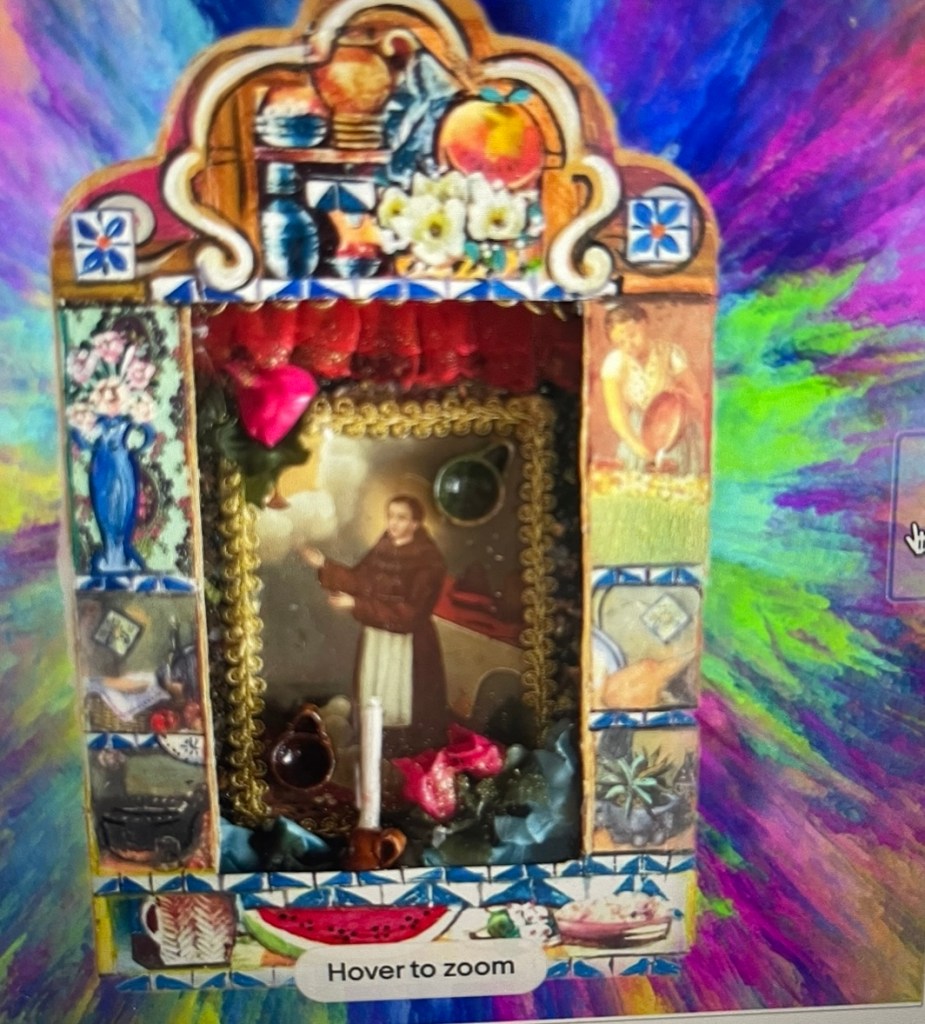
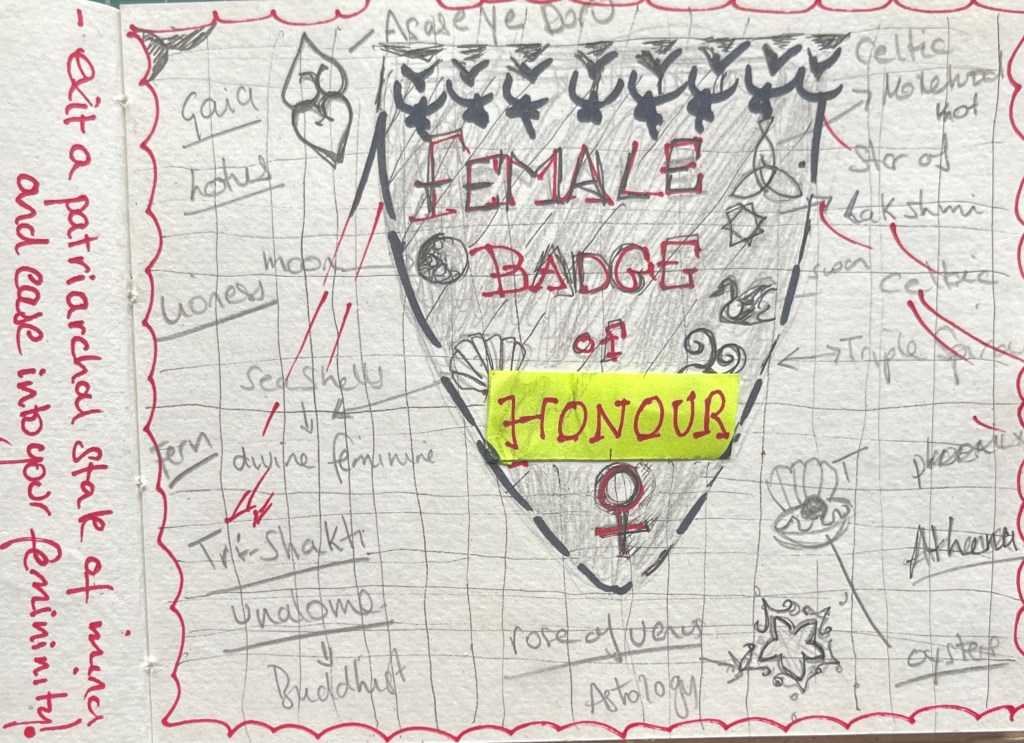
Rough sketch of “A Badge of Honour’ – everyone who visits the ‘Shrine’ takes one away – a memento, memorabilia memory of the visit and a charm, a token to inspire and remind etc…..
Constructed to show various symbols and markings from a multitude of cultures that mean ‘female ‘ in all its positive definitions and beliefs. These are also potentially on the shine construction also …
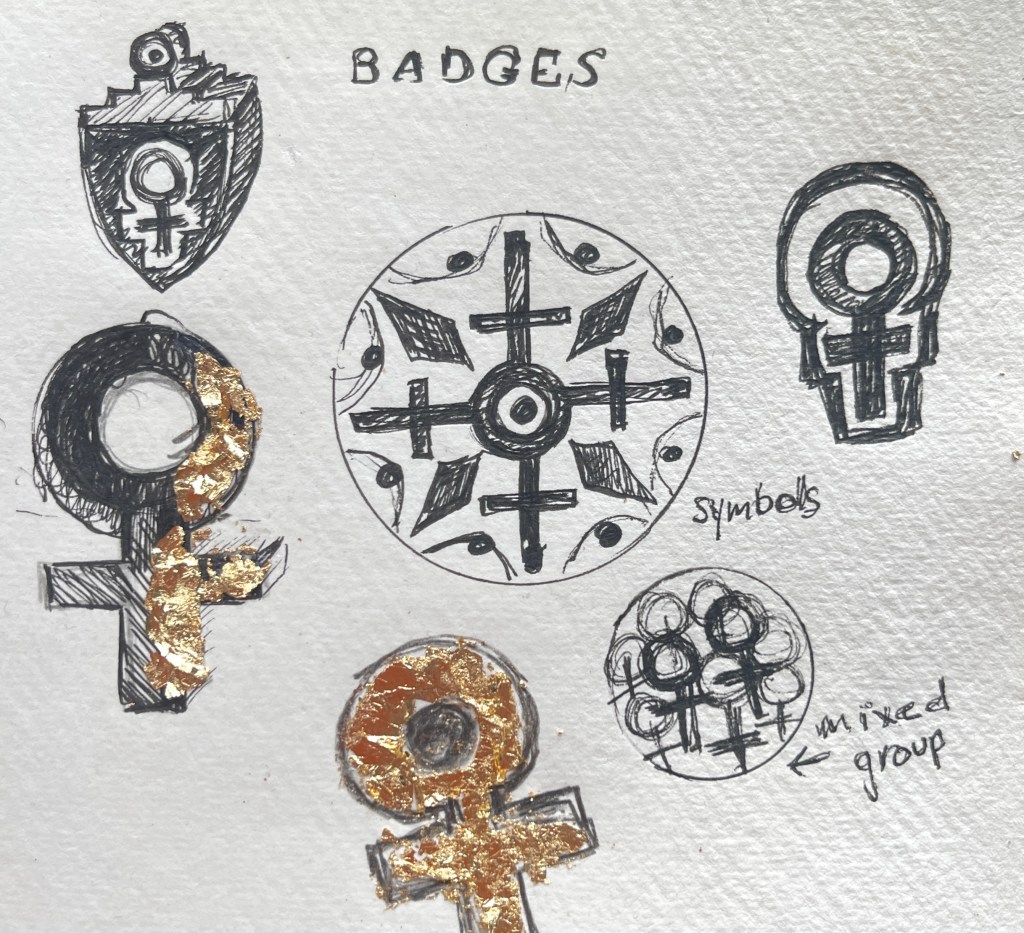
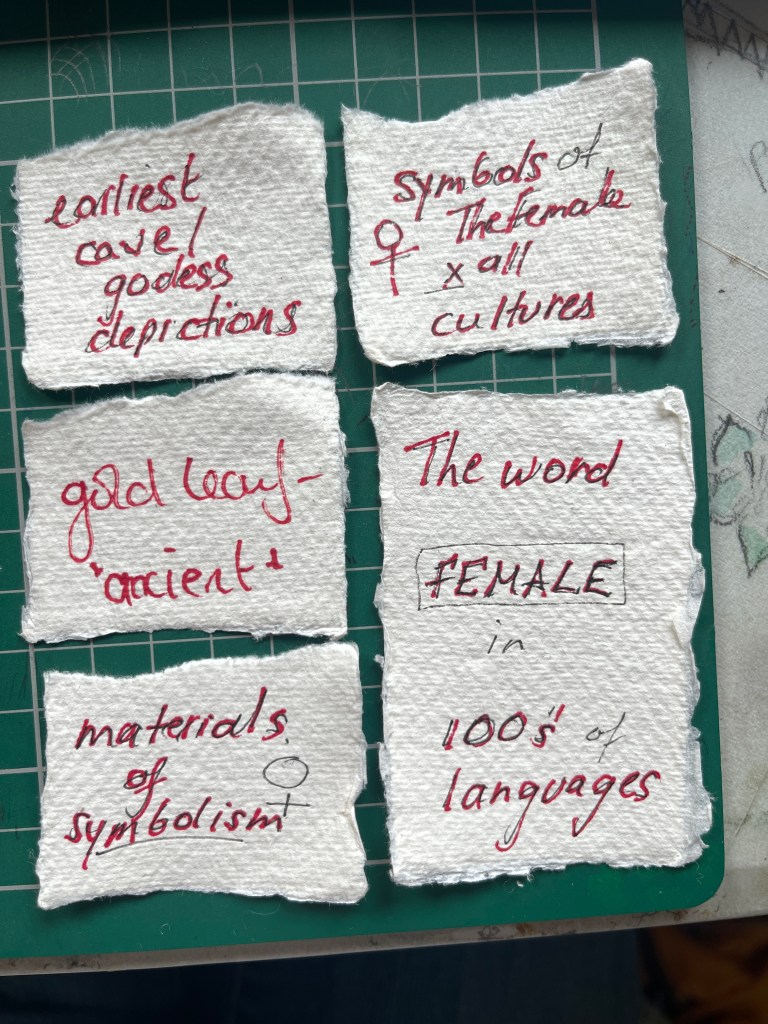
Other inclusions in ‘shrine’ above
Ideas to follow on -, Community project asking the females that surround me what they would want included in this piece. in order to relate to it ?
Build structure, form and material to be researched further – initial thoughts are copper sheeting, possible gold plating and found embellishments.
Artists inspired by this will include – Judy Chicago, Eve Arnold, Penny Slinger, Greta Gerwig essentially The Barbie Movie 2023 film and the feminist issues prevalent to the film plus many more.
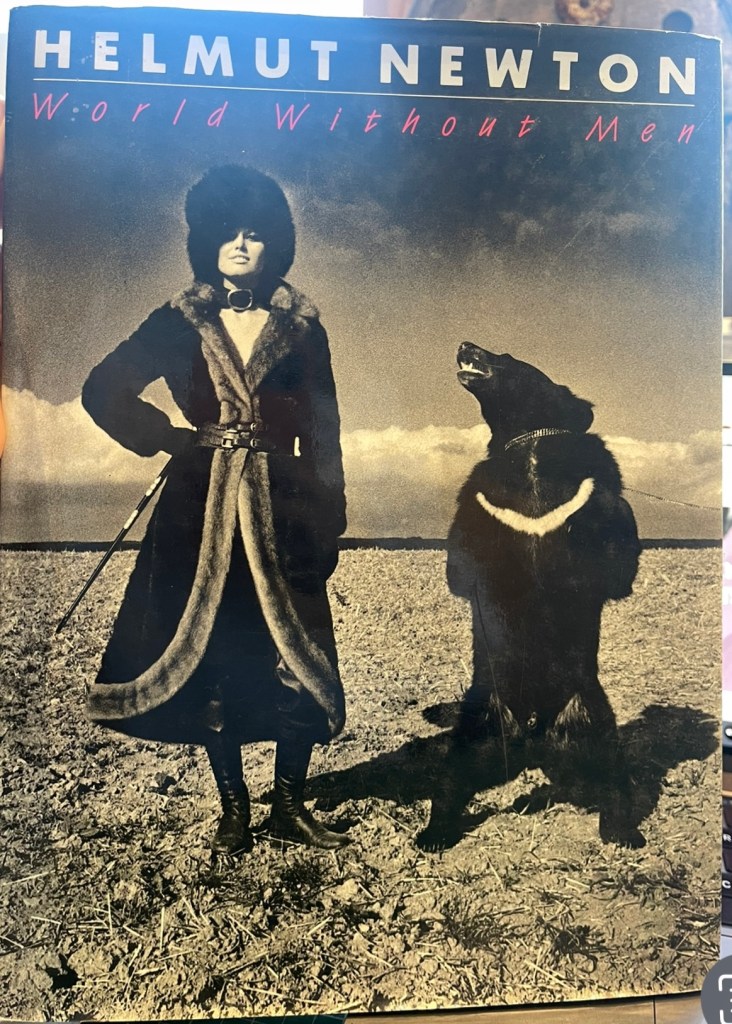
Selection of Research Material: Covering art history, female artists in asylums, overlooked or dismissed female artists and edgy 1970 /80’s photography …and Mexican Miracle Paintings…
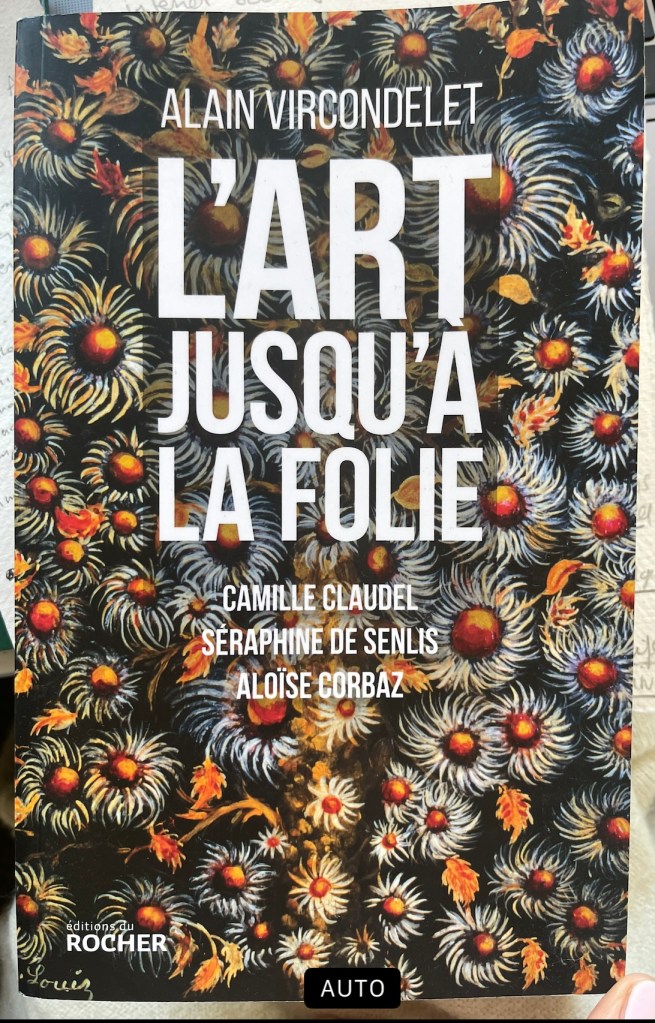
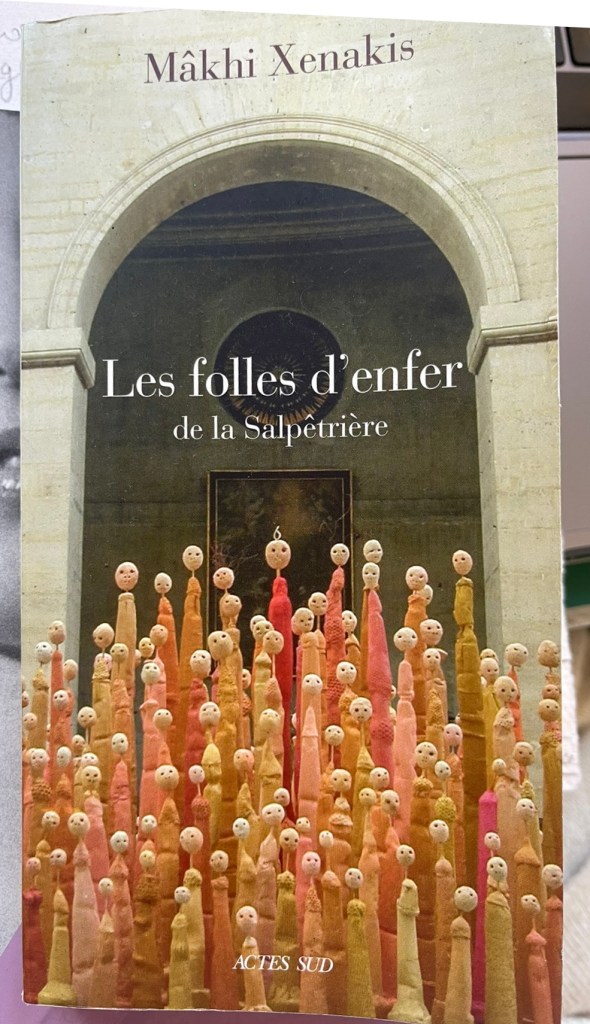
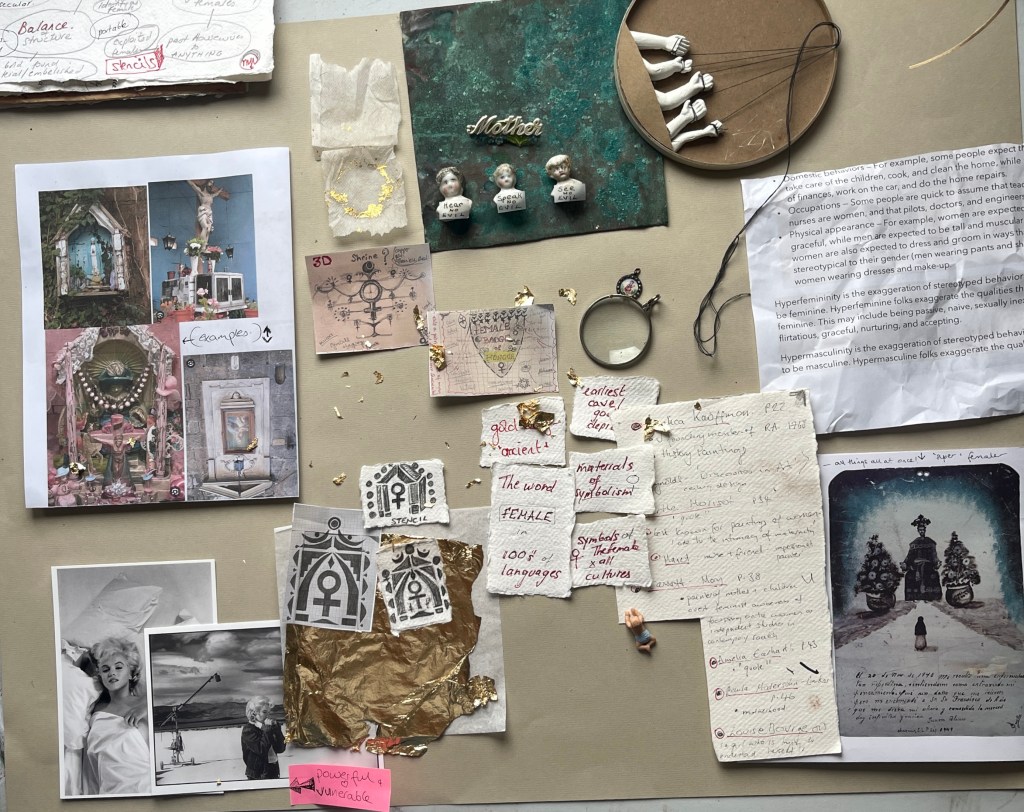
Collecting Images of motherhood, secular shrines, moulded dolls hands, gold leaf, icons, Mexican miracle paintings, found objects, patinated copper… ancient qualities…
Project 1 – Why Write .
Why Write ?
Words are included in art and the art process for a number of reasons.
- To clearly state a message and a meaning, highlighting perhaps other visual imagery.
- To create a bold and directional feeling.
- Simplifying complex imagery.
- To hear the artist’s voice.
- To end ambiguity and / or create ambiguity.
- To add instruction and direction.
- To compliment the artwork and the text and written word as another layer artistic medium to unpack.
Artists who use the written word as a key part of process;
- Artist Mel Bochner uses text to highlight the banalities of modern communication .. ( Blah Blah Blah 2016 )
- – creative mandates ( Jenny Holzer)
- Ed Ruscha uses key advertising phrases and iconic brands as in the case of his “Twentysix Gasoline Stations’ ( 1963) as they were inextricably linked to the American landscape he et out to capture. The typography and colour of the text integral to the works
- Adam Pendleton media is language. Overlaying many black letters against a white canvas so it is virtually impossible to read anything but is a purposeful attempt to convey chaos and dissonance. ( ‘If the function of the data ‘ 2017)
- Janice Lowry’s Diaries – Lowrys assemblage and collage work is inextricably linked to her diary works as is the text therein. Daily thoughts and musings, to do lists, and experiences – she referred to her notebooks as ‘reportage’ but are important a documentation of a woman artist and how the world she lived in shaped and impacted her art
- Keith Haring – kept extensive journals over many years. Containing reading lists, quotes and sketches, he bares his soul onto the pages. No doubt for clarity of conscience, a form of therapy and a creative outpouring of ideas to later inform and dictate his narratives and future artistic concepts.
All of these above valid reasons to include a form of visual text in or close to an artwork. The viewer can be left with a clearer message of what the artist is trying to convey, with the lack of ambiguity viewer input is altered, No longer does the viewer add as much of their own contextual experience to the work if it includes a clear textural message. Alternatively, the artist’s input of text may alter an image or scene that seems clear and simple on the surface but the textual addition skew or change initial perceptions and feedback.
Words/texts are a powerful tool to amplify a message or theme.
Writing as a process is an important part of my creative process. I find I can be awash with ideas, notions and concepts inside my head, it is only as those ideas come to be written down ( journaling ) do I find cohesion and direction.
The written can often make more sense and help show the way forward with process and focus. Other times these words remain only on the page perhaps for later contemplation when the thoughts alone would have been long forgotten. So yes the written word is important in my process but will not replace the physical experimental process of making that also informs my practice. The material properties of a medium need to be a held, manipulated and and adapted before final outcomes and narratives can be achieved.
Exercise 1.7.
The process of an at is multi-faceted, In its purest and simplest form the artist who traditionally works with a brush or pencil in a studio or plein-air and creates an image directly on onto the page or canvas. Little or no other person is involved in this process. Or might we consider the person who made the paper, canvas, paint /charcoal or pencil were part of the process to create the final work albeit outside the direct instruction of the artist at hand?
Famously artists such as Damien Hurst and Jeff Koons employ an enormous team of staff and technicians to carry out their creative work briefs. Under scrutiny, often secrecy and direction these unknown artists will work under the ‘banner’ of their more famous employer. Is this so different from the artist writing up a set of instruction for a gallery curator to carry out? Perhaps this depends on the level of artistic skill and competency to create the work, how involved and how much is left to chance or instinct for the curator.
At gallery level of installation artists will have taken the more arbitrary aspects of construction and formation into consideration, perhaps considering them a positive and key narrative to the work. Others will have written extreme and detailed instruction to ensure the work does not in any way differ from their imaged installation.
Instruction to make a cyanotype print:.
- In a dimly lit room with no natural light place the A2 Khardi paper on a flat table top. Ensure the artist signature is at the bottom right hand side.
- Cover the the A2 Khardi paper in an even layer of the lime yellow cyanotype solution making sure to leave a 1 inch gap all round the edge of the paper clear of the solution. Do not cover the artist signature in solution.
- Once the paper is appropriately covered place it in a dark, light free space to dry flat for 1 hour.
- After an hour carefully check the paper is dry with absolute minimal exposure to any light.
- If dry, place the paper on the flat table surface next the the ulta-violet light stand, and immediately place upon it the prepared A2 transparency to directly cover it. ( If the paper is wet wait another 30 -40 minutes before removing it )
- Carefully add the A2 sheet of glass directly over the transparency and paper. You will now have 3 layers – the top being the glass, then the transparency then prepared paper.
- Switch on the ultra-violet light and let the layered image soak up the light for 30 minutes.
- After 30minutes, turn off the light. Remove the glass and the transparency from the paper.
- Take the paper to a sink and let cold water wash over it until the water runs clear of the yellow liquid.
- Place the paper on top of the flat table top and pat it dry with the cotton cloths.
- Leave to dry for up to an hour. You will see the image become more pronounced over time with the exposure to the air and light.
- Once dry the paper is ready to be placed into the prepared frame, behind glass.
The process above was one of the few that would work in a second handed way – As the key transparency ( or image) would be prepared by the artist ( myself ) and would be central to the work. The other aspects of the process would carry an element of chance and unpredictability but as this is the nature of this type of process it would create and interesting new narrative with the second party. Perhaps becoming part of a process of art installation, where recreations of the the work constitute the ongoing discussion of instruction and direction.
Research point:
Jaimini Patel: Ex 1.9
First impressions her work seems to conform to a materiality based narrative on a process of events that unfold after a match is lit. The information offered is very detailed and meticulous concerning process, its potential for error and the artists interests and concerns regarding work. The process is as important as the final piece, the momentum and the rhythm becoming a compulsion and a driving force in the creation. of the work. The artists references John Berger’s work ‘Hold Everything Dear’ in the narrative as a comparison to the fleeting and unpredictable nature of the burning flame and the importance of balance and capture of a moment or process.
The cross-over points I identified between studio and writing were:
Drawing
I copy the outline of the tile using red carbon paper. After each drawing the
carbon paper that contains the negative drawing is stacked upon the previous
sheet. I draw the shape in the same position approximately six hundred times.
The traces of the carbon paper document the process of handling it. I stop the
activity when I tear through the paper of the template.
‘The drawing starts very carefully as I attempt to stay faithful to the original.‘– here we see an insight into the composure and focus of the artist as she begins her meticulous process.
‘Sometimes the line makes an error and I return to the more established
groove. In some places there is an increased tendency to make an error if one
has been made before. As the work progresses, the line in the template
thickens and deepens so that errors occur less frequently and the drawing
progresses at a faster pace. When the line goes off course, the repetitive flow
is interrupted and a different kind of attention is present. I am interested in the power of a recurring thought, gesture, or movement. Momentum builds and
a force is exerted. It is possible to deviate from the rhythm, but there is a
compulsion to return because of an arbitrary rule that has been imposed‘ – Again we see the artists thoughts behind the repetitive process, underlying the narrative and the considered materiality of the work that is produced from the strict process.
Watching
I light a match and watch it burn. If I hold it horizontally, the flame will burn
until I blow it out, just before it reaches my fingers. If I hold the match
vertically, with the flame facing up, it does not travel down the length of the
wood very far, but extinguishes itself after a short time. Even this relatively
short amount of time seems extended.
The carbon that documents the journey of the flame is not accurate in terms of describing the duration of the flame. Sometimes the flame stands still for a
while without moving down. Its shape and size are equally unpredictable. For a brief moment the blood red colour of the carbon paper can be seen within the tip of the match, before it returns to black and grey. –
Here the artist shares the potential for unpredictability in her process, and allows us to hear the unstable and chance nature of her work,, despite her meticulous and repeated process.
Unrolling
Some months ago I read John Berger’s Hold Everything Dear (2007) in which he mentions a roll of tape that he had stuck to the edge of the table, falling to
the floor. Struck by this image I create the scenario in the studio.
We are made aware that the artist was influenced by a process discussed by John Berger and how this struck such a chord with her, such wished to investigate this concern further ,
The roll comes to rest as it makes soft contact with the floor; the tape remains taut.
Unrolled too little and it will hang, too much and the tape will sag. The single
action of unrolling it just so in a loud and swift movement results in a
precarious stillness. It is an attempt to freeze a moment that may register
momentarily before it disintegrates.
These intimate thoughts and musings have helped to crate.a greater understanding of narrative and process. The concerns and negative thoughts relating to to the work and the concentrated and focussed processes that the work is concerned with. This is an insightful and concise piece of narrative that encompasses the physical act of producing the work and the visceral processes behind it. The narrative certainly works well along side the physical artwork and clarifies the artistic competence and meanings as well as pit falls and unpredictability.
I agree that to some extent an accompanying narrative is a positive addition to an artwork. However I do not feel the art work should be wholly defined or reliant t upon it. I would ideally hope my work and its narrative would be seen wholly visually which I feel allows for greater individual interpretation and connection. Too much narrative allows less personal engagement from the viewer whose own thoughts and feeling are marginalised by the artists own narrative.
Using a title to pose questions, create an initial dialogue, or be very provoking and might be enough to allow the line of view enquiry or engagement to unfold. I would also consider a small amount of text within the artwork to be a helpful tool to pull out a specific narrative or feeling if it demanded it.
(Patel, J. (2016) Measure. [Exhibition rationale] Berlin: Centrum. 21/01/2016 – 14/02/20)
Exercise 1.9 cont : Impressions
Writing about my work :
- clarity of concept and narrative.
- Sending a clear message through the work
- context for deeper meaning of the work
- analysing artistic influence and era
- potential for greater expanse of idea or meaning through textual debate.
- textural documentary of the piece for archive.
- shows process of working practice
- allows for debate and discussion and feedback from 3rd party.
Project 2.
Primary / Secondary Sources of research
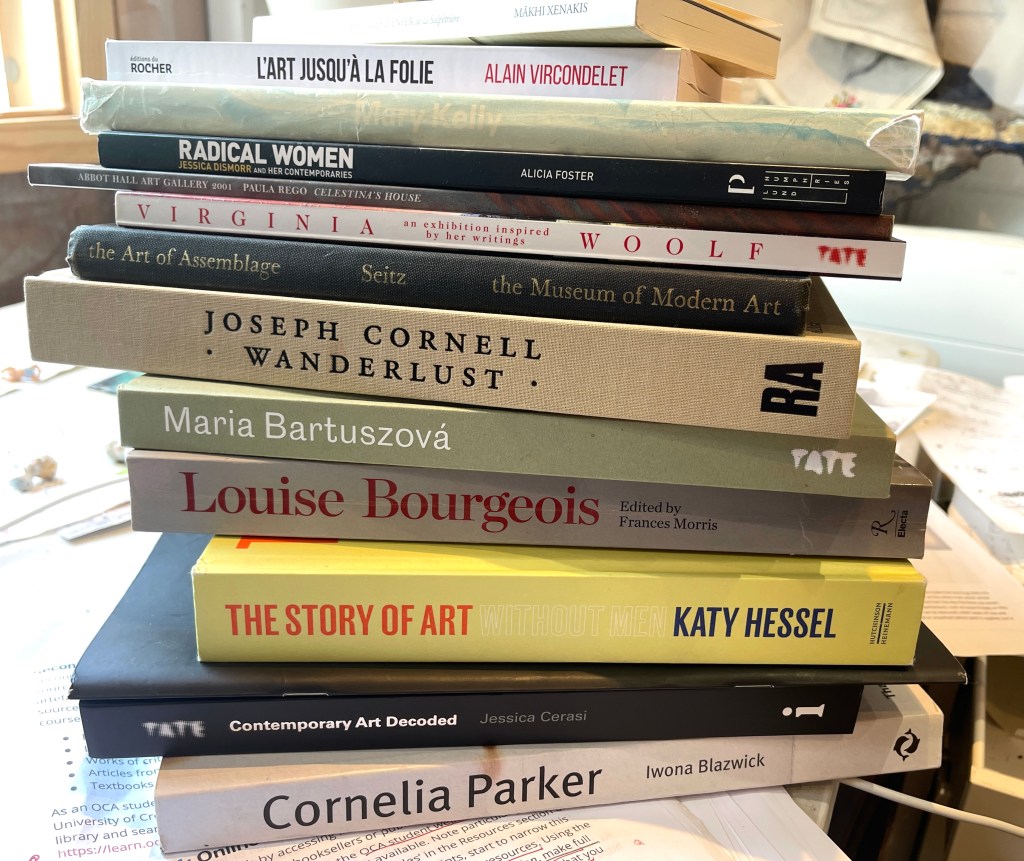
Books- `in `possession ‘
Cornelia Parker – Iwona Blazwick – Thames and Hudson
Louise Bourgeois – – Edited by Francis Morris
The Story of Art – Katy Hessel
Maria Bartuszova – Tate Publishing
Joseph Cornel – Wanderlust – RA.
The Art of Found Objects – Bunch
The Art of Assemblage – Seitz – MOMA
Vigrinia Wolf – Exhibition Inspireed by her `writings Tate
Paula Rego -Celestina’s House – Abbot Hall Art Gallery Publication
Radical Womem – Jessica Dismorr and her Contemporaries
Mary Kelly – Phaidon
L’ART Jusqu’a La Folie – Rocher ( Art to Madness – Camille Claudel, Seraphine De Senlis, Aloise Corbaz)
Les Folles d ‘enfer de la Salpetriere – ( The Crazy Women of Salpetriere)
Beneath the Water Tower – The Graylingwell Heritage Project
Contemporary Art Decoded – P161 – 163 ) SONIA BOYCE – One Act from Six Acts 2018 Hylas and the Nymphs !1896)
Women Artists – Flavia Frigeri – Thames and Hudson
(Selection of my books below)
Articles and Online platforms/Discussions: ( to name a few..)
https://www.artsy.net/article/artsy-editorial-10-women-artists-shattering-expectations-feminist-art
How Female Artists Are Subverting Mainstream Portrayals of Women
https://www.artsy.net/article/artsy-editorial-hyperfeminine-aesthetics-barbie-draw-contemporary-art
Museums / libraries ( most informative on line)
MOMA
Tate Gallery / Library http://www.tate .org.uk
Gaggosian
Guardian newspapers -/Art
Pallant Gallery Chichester and Bookshop
V and A Web site and visit – National Art Library ( offer hep with enquiries)
Royal Academy
Hayward Gallery Art Library www.southbank centre.co.uk/venues/hayward-gallery-art-library
National Art Library – sia.libguides.com ( offer help with research enquiries )
Contemporary Art Library – www.contemporaryartlibrary.org/search
The Barber Institute of Fine Arts – ( books and Online Resources)
Copac and Worldcat – Search library stock.
Access Brotish Library:
http://explore.bl.uk/primo_library/libweb/action/search/.do?vid=BLVU1
OCA Library – http://ucreative.summon.serialsolutions.com/( hash symbol)! /
www.guerrillagirls.com – web site I /Instagram
Exhibitions : Physical
Visit relevant upcoming female artists. shows and Galleries – LONDON /SUSSEX /EUROPE
Art Fairs
www.guerrillagirls.com – web site I /Instagram
A plethora of information sources and potential for research that I delve into n a regular basis. Both physical text and on line and in person all culminate to create vast pool of research,
I am a member of the V and A , the RA, The Pallant Gallery and The Tate and attend exhibitions regularly. Using their own information m own photographs and notes I am able to build on this information mountain.
Resource Gaps – gaps in resources might come to light as the projects continue I will need look more in depth at certain areas. These may include;
- Working with Materials for 3D production ( plastic recycled, wood, metals) – skill set needed, welding, carpentry, mould making – you tube /google clips for missing knowledge. Short local courses where necessary.
- ‘guerilla ‘ graffiti art and its ‘allowed positioning ‘. – Liaise with local council
My resource material is varied and wide at this stage as I am loathed to remove any resource prior to a final plan and project development. Much of my research covers my 3 main concerns going forward with a large degree of cross-over: those being, Female mental health, traces of the past and memorabilia and shrines to the female. The majority of artists I have researched are female and have yet to come across a male artist that aligns with any of this subject manner in a positive way.
Assignment 1.
300 WORD SUMMARY OF TWO IDEAS.
The two key areas of interest for me currently out of a possible 3 are, “Shrine to the Female” a veneration of the female and ‘Female Mental Health’ with the theme concerning murmuration. Both have the potential to be expanded and developed and perhaps my theme of human traces of the past will appear in both of these narratives to some extent.
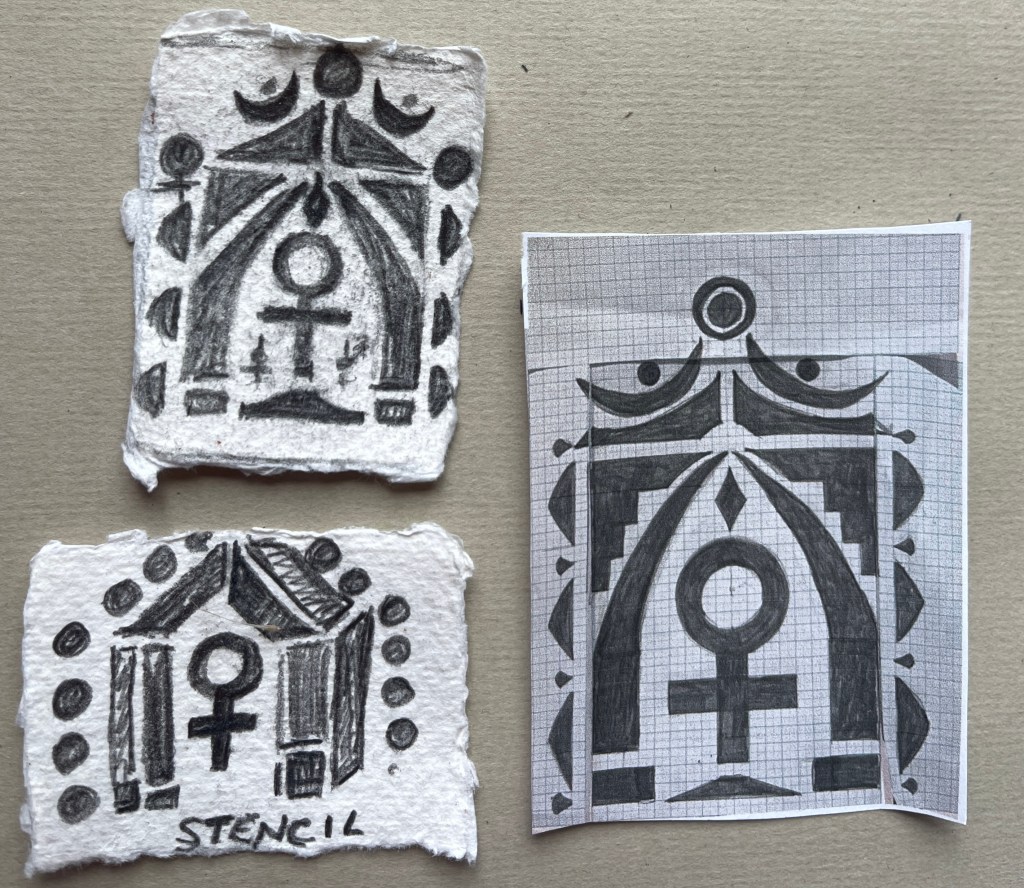
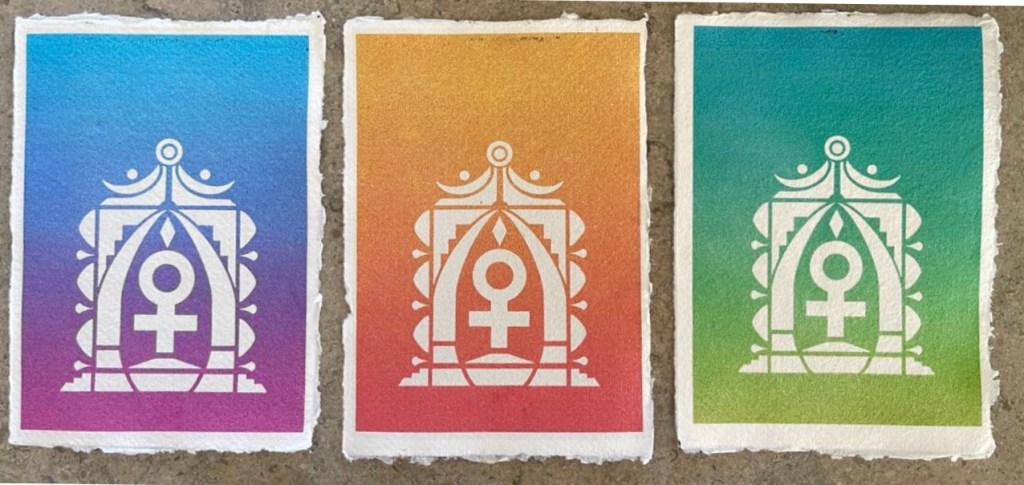
Shrines has been a newer concept that came from an idea through the work and research I compiled looking at Female Mental Health through the centuries. I found myself down the proverbial rabbit hole online reading fascinating, and often hardly-known stories of women from the past. Despite gaping cultural differences, there was always a story of bravery, survival, a move ‘against’ the patriarchy and generally overcoming mountains. These stories of common themes were global and shone a light on the power of the female and the multi-faceted and complex role we play in the world essentially dominated by a male powerhouse. Further research led me to the various Archaeology sites, the British Museum and other worldwide Institutions that catalogued and documented the role of the female from ancient times. Once considered the stronger of the species, able to reproduce, feed her young and bleed without dying or injury, the Female was worshipped and venerated. Some of our most ancient artefacts are in fact small female goddesses or deities. The Romans/Greek civilisations were some of the first to break with this tradition and project the powerful hunter, fighting male into the forefront depicted initially as the God of Gods, Zeus, where the male has pretty much stayed. Shrines is a full and unabashed celebration of the female, and all that identify with her. I was surprised to see there was not a direct non-secular, non culturally specific Shrine to the Female in my research. I note Judy Chicago, The Gorilla Girls and other female artistic activists over the years have played a prominent role in bringing the strong image of the female to the forefront. I would like my work to complement this in a’ stamp’ of praise, a simplistic image, a selection of images or 3D traditional shine structure that is instantly embracingly connective with all females. I expect a 2 D and 3 D series of works will come from this thought process. My initial work on a strong image or ‘logo’ for this is below… using the universal sign for female, with a plethora of ideas to expand upon. Considering some anonymous washable graffitti for this this – photgraphing each site – relevant to perhaps the patriarchy / male dominated areas, establishments… etc
Initial stencil type logo /image formed using the universal logo of the Female
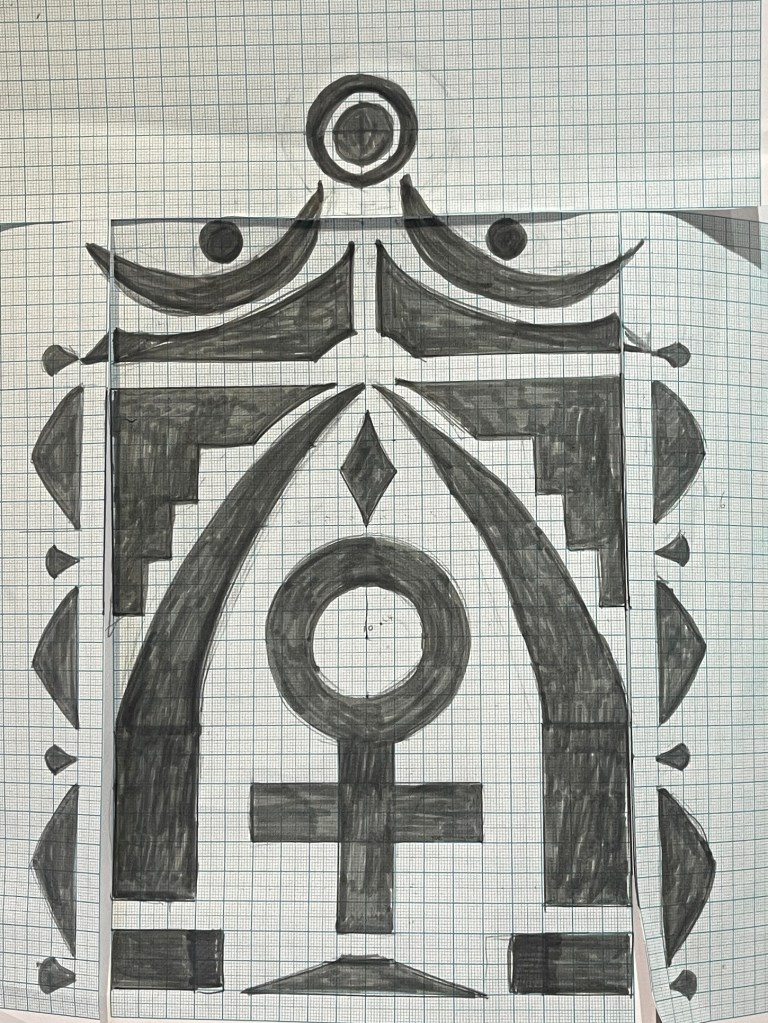

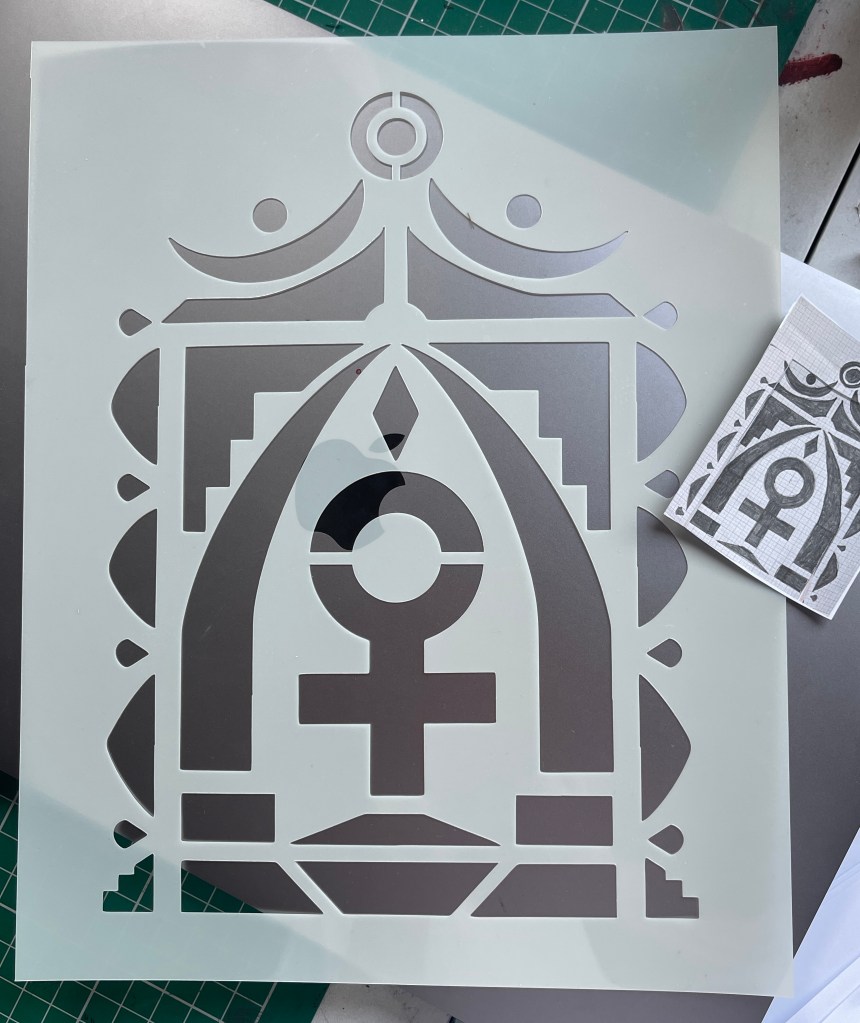
My Second theme is specifically female mental health, concerning our darkest hours, our camouflage of a condition, and the stigma attached to it, both now and in years gone by. For example conditions of anxiety and depression were considered a weakness of character and years ago and women were locked away for sometimes little else. The burden of motherhood, physical health changing with age and general dismissiveness and sensitivity by the patriarchy has been a long and exhausting battle for many women. Looking back at Louise Bourgeois and he Arch of Hysteria, the patients at the La Salpetriere asylum and their desperate, neglected and dismissed needs and understanding.
Here I would like to work with found materials of the past to convey the deeper angst and hidden emotions. Using the powerful image of starling murmurations – This image conjured up a powerful emotion when I read in a poem ( now lost to me ) that the starlings represented our deepest fears and emotions as they sweep around us in bed at night in a dark swirling mass or fear and anxiety. A place of calm and sanctuary ravaged by the dark and worrying thoughts that come to us in the small hours. I would like to see the imagery of the starlings creeping into everyday objects perhaps as well as bedding and pillows etc. – Maybe a make up mirror – dinner plates – washing etc etc
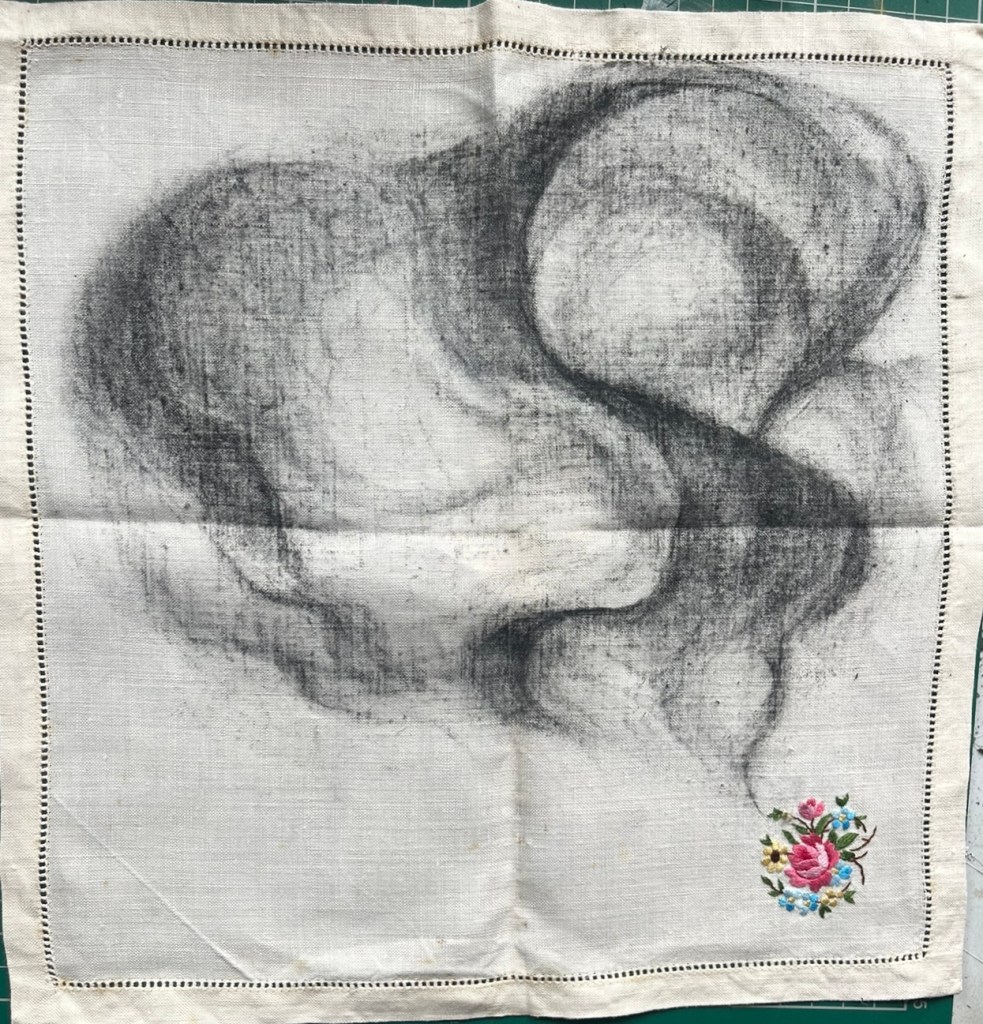
I am excited to explore and develop these works further now I have a clearer idea of what to take forward. This section of the course has helped me gain some clarity, although I have enjoyed experimenting with other ideas and will take their influences with me going forward.
Assignment 1 – Take two
Veneration or ‘Shrines’
This project has come to fruition through a number of research and resources channels that highlighted a possible gap in issues regarding feminine depictions in art and notions of ‘femaleness’. Specifically focussing on what are the most generic, non cultural and ethnic origins of female representation and what are the key notions and attributes relating to this. Ancient art revealed a range of deity’s and goodness like statures, and objects that revered the female With breasts and vulvas often exaggerated and faces and limbs underdeveloped or incomplete was it ultimately just her for her ability to reproduce and feed her young that was venerated ? . They are also considered to be religious figures, expressions of health, grandmother goddesses, or even as self-depictions by female artists.
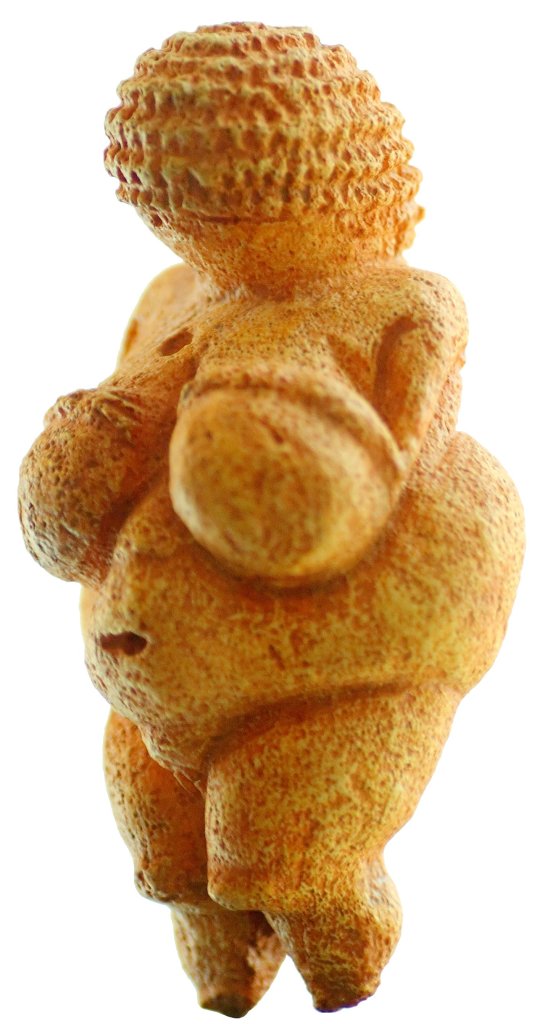
Venus of Willendorf
The oldest being the ‘Venus of Willendorf’ found in Austria made around 25,000 to 30,000 years ago. Whilst we judge these artefacts by todays social constructs it is widely agreed they are considered revered objects.
The focus’s of this body of work is informed by the curiosity of these ancient artefacts and is in response to the patriarchal and segregated world we occupy today. The concept of the work is to create a coming together and a celebration of the female and those that identify with her. Looking at artists that boldly and proudly celebrated their femaleness like Hepworth:
‘it would be naive to try to rub out Hepworth’s femaleness. She worked from a strong sense of her own body, ( Jeanette Winterson 2003)
Creating a non-secular, cross boundaries work to ‘venerate femaleness’ within a possible shrine like setting encompassing the language of 100’s of countries, semiotics and symbols to allow a global admiration, honour and respect of ‘femaleness’. Will I able to pare down the theme of ‘femaleness’ and arrive at a place full acceptance, understanding and acceptance by all humans?
The quote by acclaimed author Chimamanda Ngozi Adichie encompasses much of my desired direction:
“I have chosen to no longer be apologetic for my femaleness and my femininity. And I want to be respected in all of my femaleness because I deserve to be,” (Chimamanda Ngozi Adichie )
This author is claiming back her femaleness and empowering it, is a classless, unthreatening and ethnically and culturally neutral.
Semiotic work in progress creating a neutral image of ‘femaleness’ in 2D format
Bibliography
Dr.B Harris / Dr S Zucker. ‘Venus” (or Woman) of Willendofr Naturel History Museum. Vienna https://smarthistory.org/venus-of-willendorf/ (Acessed Sept 29th 2023)
Adichie Ngozi Chimamanda . We Should all be Feminists’ Harper Collins ( London ) 2014.
Jeanette Winterson, ‘The hole of life’, Tate Research Publication, 2003, https://www.tate.org.uk/art/artists/dame-barbara-hepworth-1274/hole-life, accessed 29 September 2023.
Quotes :
“My illustrious lordship, I’ll show you what a woman can do” – Artemisia Gentileschi
”Excellence has no sex.” – Eva Hesse
“I am my own muse. The subject I know best. The subject I want to better.” Frida Khalo
Project 2 – Murmuration
The visual impact of a starling murmuration is a awe inspiring natural phenomena that occurs at early evening/dusk just before the flock come into roost. Thousands of these small birds create vast sweeping, undulating and flowing shapes across the sky. There is an eerie sound of the thousands of wings in flight all strangely and curiously synchronised and almost moving as one. This image combined with a line from a poem “our fears like starlings..” (sadly now lost to me) brought about strong feelings of connectivity and understanding.
The small lonely night hours that should be filed with calm slumber can be filled with a wash of thoughts steeped in anxiety, worry and panic as they whirl around inside our heads in those unwanted waking moments.
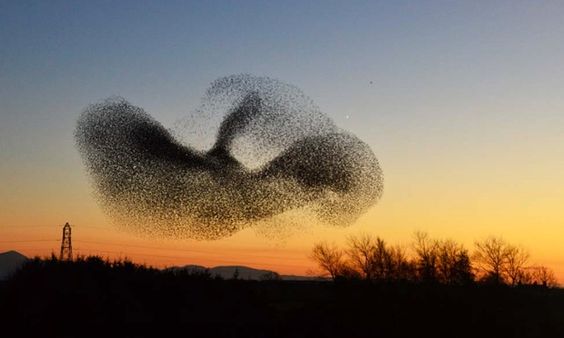
Thousands of Starlings getting ready to roost. There’s a bird of prey above the star and the starlings group together for safety on November 22, 2013 Joan Thirlaway/Guardian Green Shoots
Mental Health and particularly female mental health was a theme I was concerned within a past project looking at the history of its appalling diagnosis and treatment over the centuries, usually at the hands of the male patriarchy and researching the inmates of the famous asylum at the La Salpetriere in Paris . Noting later work informed by these women and produced by Louise Bourgeois’ ‘Arc of Hysteria’ plus work crated within the asylums at the time by artist such as Camille Claudel (1864 -1943) and Aloise Corbaz. There is a running theme of women being bed ridden, chained to beds and confined. The safety, comfort and reassurance one associates with the bed is distorted and altered as it becomes a place for confinement and horror.
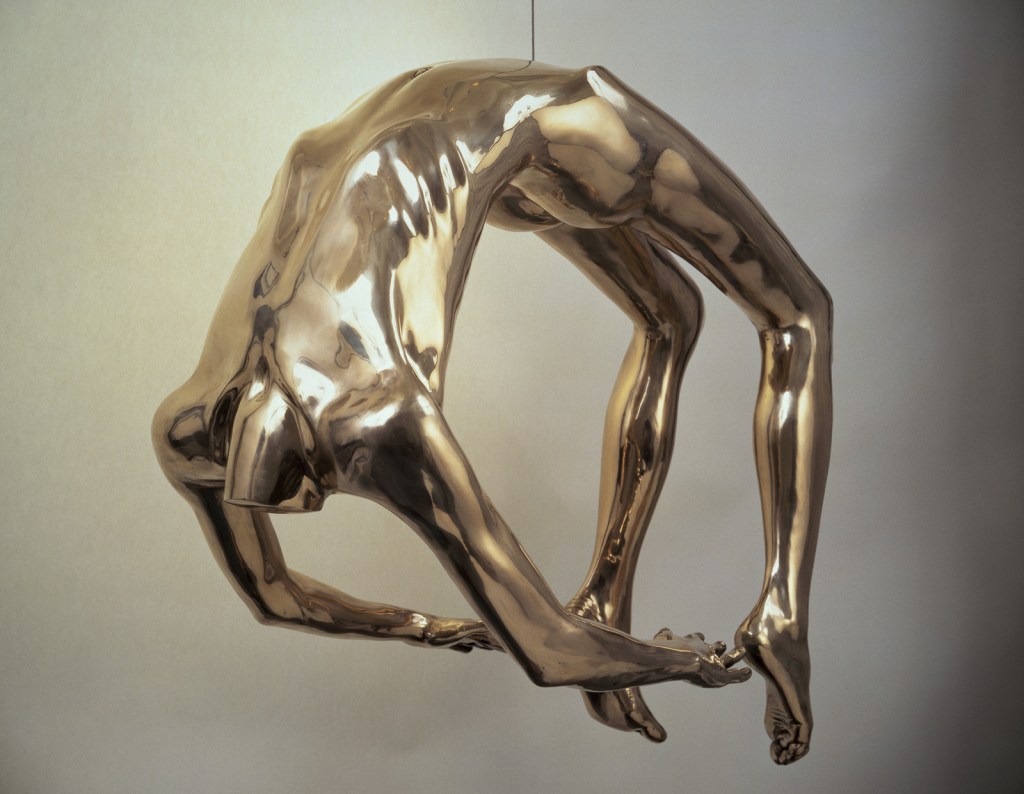
Louise Bourgeois. Arch of Hysteria. 1993
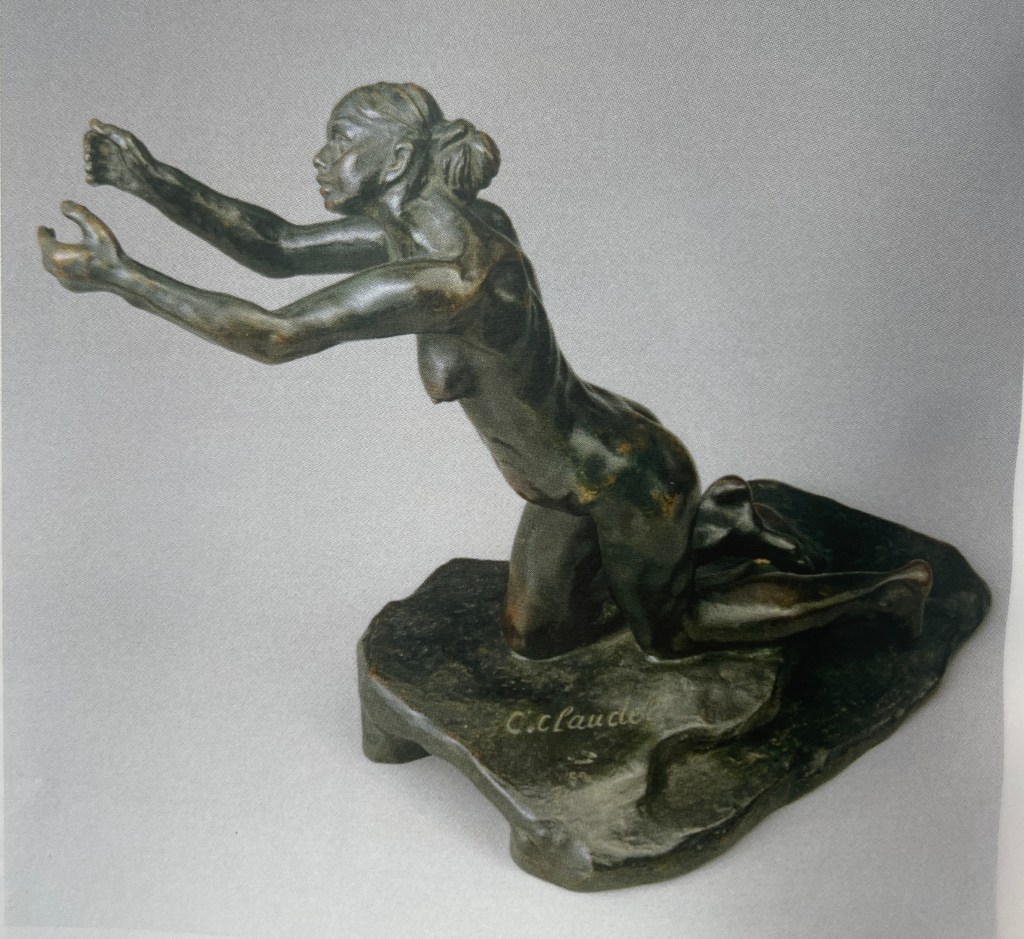
Camille Claudel 1889 ‘ La Implorante ‘ – ( MOMA)
Less physically traumatic and horrific than anything the women in the asylums experienced in past centuries night fear and anxiety is an increasing wide spread phenomenon, women suffering the greatest and are twice as likely as men to be diagnosed with an anxiety disorder and its prevalence is also significantly higher for women 23.4 % in women and 14.3% in men according to the Journal of Psychiatry.
Perhaps as our beds have becomes one of the few places of solace, rest and reflection in a fast pace demanding society it is here we are finally able to process and compute. We awake, suddenly wide eyed gripped with worry as the waves of thoughts, fears and worry swirl around us.
Bedding and shrouds are prominent in art most famously Tracy Emin’s ‘My Bed’ (1998) perhaps using bedding as a canvas for the work could be pertinent. My exploration in to vintage objects such as embroidered napkins also bring with them a narrative of past lives and constraints. I am also keen to look at common every day objects to replicate this imagery in an attempt to inform the viewer of the underlying anxiety and worry carried through out the day.
“Work is good. If I don’t make things, I become ill and depressed. Painting makes me feel like a better human being. It’s what I’m supposed to be doing.” Tracey Emin.
‘Not a Stitch out of Place’ Murmuration on Embroidered napkin . 2023
Bibliography
VIRCONDELET.A, ‘ Art Until Madness; (2016) Artege Group. Monaco.
Bourgeois.L ( 1986) Louise Bourgeois. New York Bell Point Press.
McLean CP, Asnaani A, Litz BT, Hofmann SG. Gender differences in anxiety disorders: prevalence, course of illness, comorbidity and burden of illness. J Psychiatr Res. 2011 Aug;45(8):1027-35. doi: 10.1016/j.jpsychires.2011.03.006. Epub 2011 Mar 25. PMID: 21439576; PMCID: PMC3135672.
AT: https://www.ncbi.nlm.nih.gov/pmc/articles/PMC3135672/ ( Accessed Sept 30th 2023)
Manchester.E. Pain and Sympathy’ – History of the Main Complaint. The Tate ( Feb 2000): https://www.tate.org.uk/art/artworks/kentridge-history-of-the-main-complaint-t07480 ( accessed July 2023 )
Hoffman. N. Jenny Holzer. The Guardian Newspaper. ( Jan 2023) AT:https://www.theguardian.com/artanddesign/2023/jan/04/artist-jenny-holzer-women-are-not-horrible-were-largely-not-the-problem ( accessed July 2023)
 The Sharpe Gallery