Alice Adams: ( 1930 – )
‘Mesh and detritus ‘ – trapped/hemmed in – Machine internals.
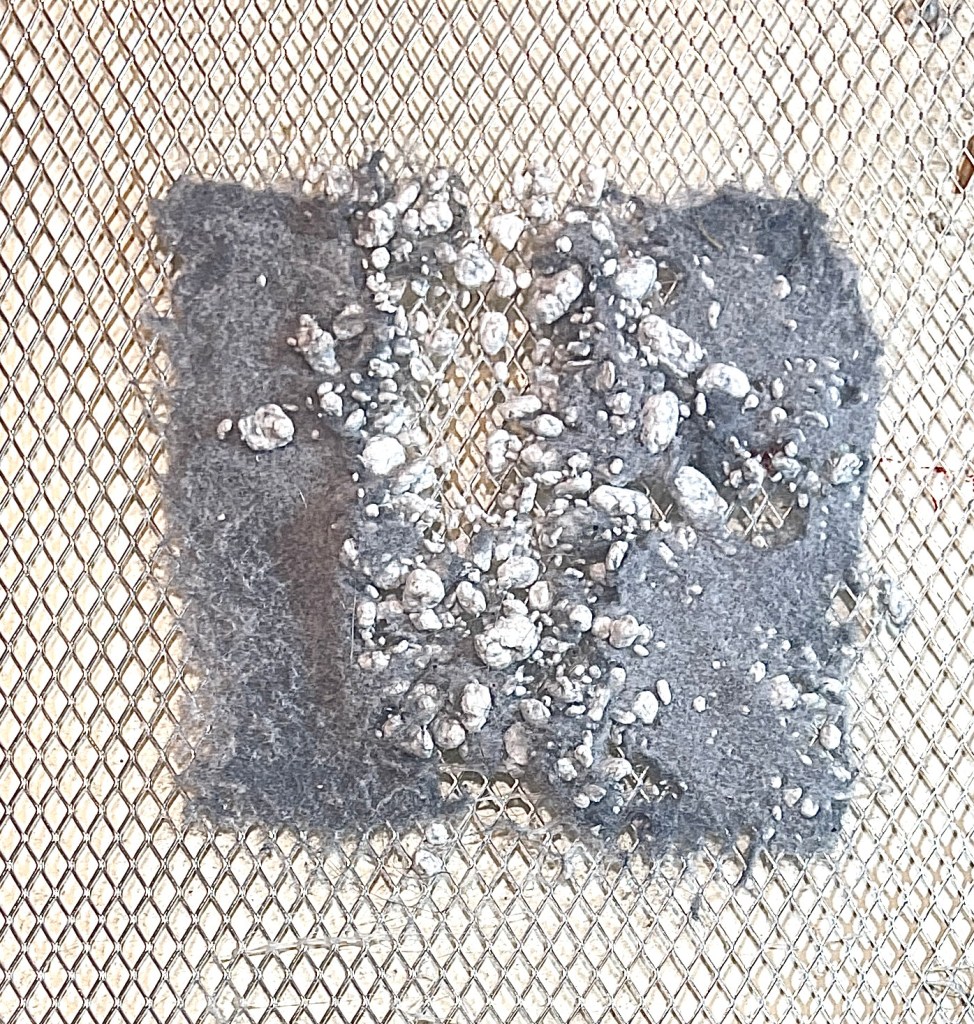
Machine composition of detritus…
Alison Adams ( below )
Discovering this artist post my work with the sculptural mesh I was taken by the similarities of potential themes and textures that are prominent n my work.
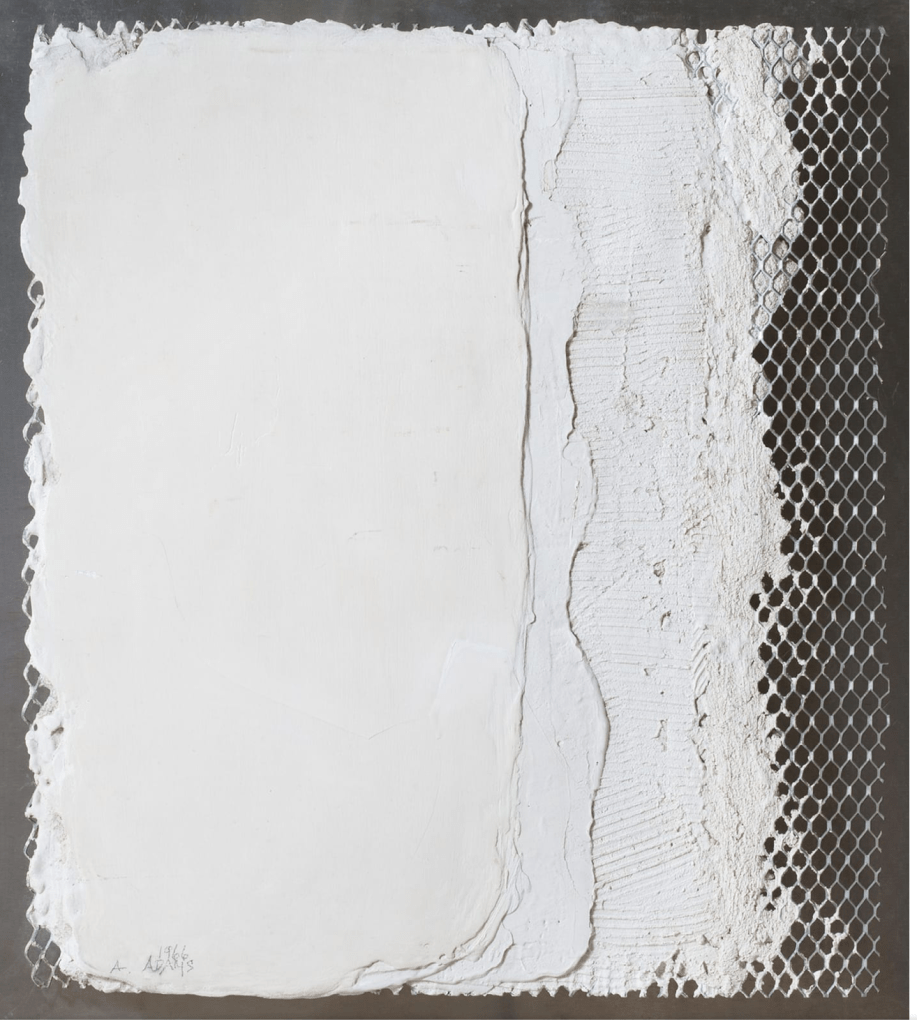
Adams sourced materials from local hardware stores and lumberyards (if she couldn’t salvage them from the streets), and often used them as they were intended. For instance, she employed wooden laths, plaster, and vinyl tiles to build Wall and Floor, 1967. The sculpture, a cross-section that resembles Gordon Matta-Clark’s building extractions, was her ramshackle tongue-in-cheek rejoinder to the slick, hard-edge Minimalism of the time—a matter-of-fact “primary structure.” Unfortunately, the object appears to be a one-off, though her practice continued to shift toward the architectural when she relocated her studio to the Bowery. The artist’s output from this period embodied the raw physical character of her new work environs. She jettisoned the plaster but continued to use laths to create hollow slatted towers, such as Wooden Column, 1973, and Volume, 1974. These sculptures, like her early tapestries, make visible what is usually hidden and evoke the “unfinished” ancillary spaces of basements and attics. Vessels for our imagination to inhabit, they stand in their respective corners, mysterious and proud but also aloof—a little unused to the spotlight.
(https://www.artforum.com/events/alice-adams-4-251553/Previous)
Although Adams did indeed move towards other concerns her use of raw materials and everyday material essentially was to bring the unseen to the visible. A concept that I am also perusing in regards to exploring emotions that are kept hidden because of fear, prejudice, cultural pressure and stigma. While Adams work above is more literal she is focussing on the every day to bring into the spotlight bigger issues, to stimulate imagination and and enquiry upon viewing the works. ‘Unused to the spotlight’ is a phrase that quirkily describes her concerns and my own path of enquiry exploring the found and every day material and what it may evoke and uncover within the viewer, drawing them further into the exploration and re-evaluation of materials.
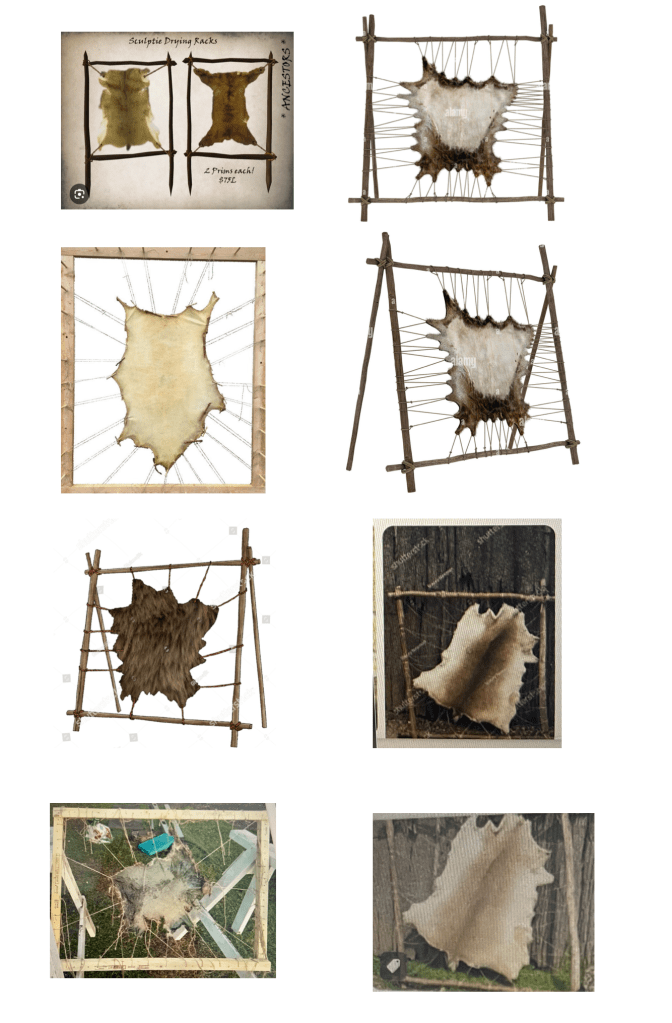
Replace the written narrative around the found qualities of the material.
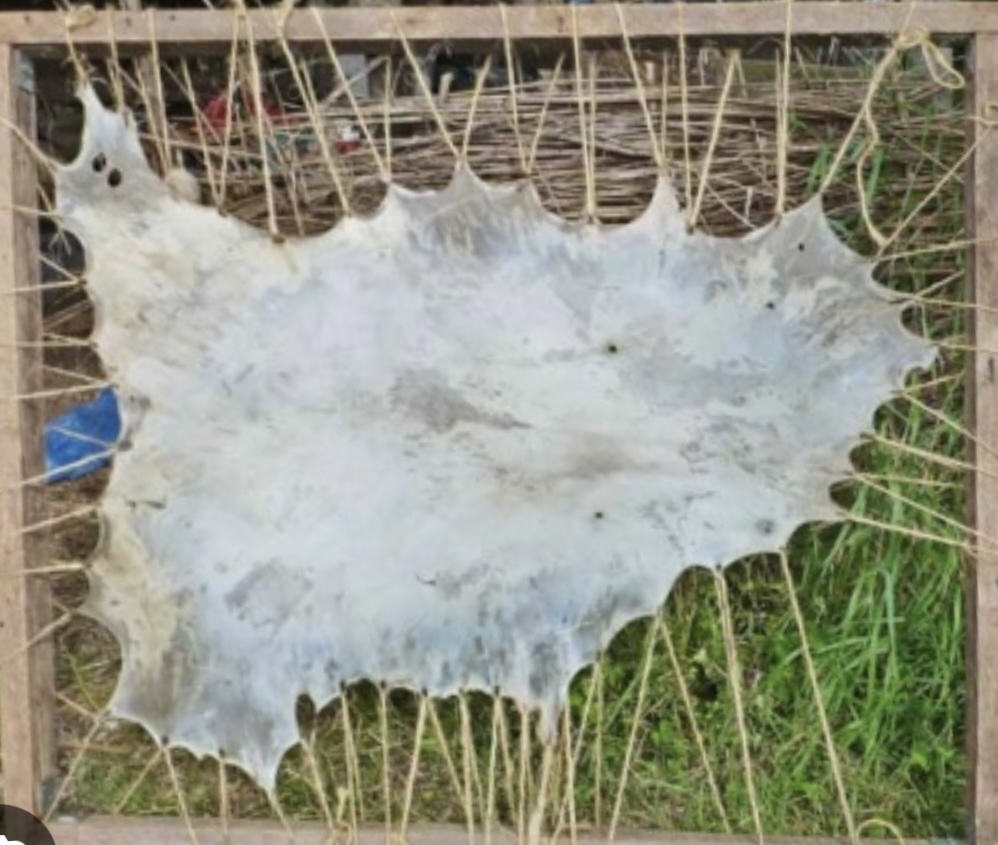
( pelts – hung up dried out usage changed , replaced from animal skin to all manner of items/objects – mutable – )
FEEDBACK – FOLLOW UP AND RESEARCH
Following up on the work with ‘murmuration’ with myself in b/w photos perhaps up take the sculptural object and respond to it more fully – looking at other body interactions with it: hugging it, carrying it … perform with it ? TEA CUP
Consider the Vagus Nerve /Neuroscience and the deeper research into depression and anxiety looking to use the work as therapeutic.
Play with the notion of this, document it as part of the process of exploration. Look at adding sound ? Onomatopoeia with movement , ( incorporating previous written word) Bringing out the internal voice. “ Incoming Voices’ from within. Look to understand what the outside voice is saying .. can the work be transformative, therapeutic containing an element of the artist with in them?. They can be positive and humorous aspects to the work – and make light of the dark objects ?
Explore language more fully regarding the works and bring light to uncomfortable notions of depression and anxiety. Consider the light , flaky quality of the detritus material and its ephemeral quality, consider the ‘apparition’ notion of the work. ( spectre, uncanny ) ( Work of Paul Chambers) –
Discussion regarding literal feedback – title of art work vs no title – how will audience react? Does the title fix the work – less ambiguity ? –
You might find Kentridge’s lecture of particular interest, or relevance here. As it might offer some interesting perspective, and avenues for thinking around, and documenting process: William Kentridge: Peripheral Thinking, (Nov. 13 2015), Yale University Art Gallery, Youtube, {1.00.24} https://www.youtube.com/watch?v=79FuROwzRvs:
Peripheral Thinking
( where he discusses what is peripheral to, at the centre and around the making, and thinking process.)
Key points : Look at all fragments of ideas: Respond to and add descriptions of all you encounter and think:
Tree ( eg) focus on it for 5 min and consider/write down all that it evokes. Memories from the past, etc. Look at these associations, they are a mix of the real ‘ the treee’ and what we project onto it. The tree is at the centre and our ideas are released by the tree.
The centre of thought is integral to the periphery.
Be open to that which seems extraneous .!!
What do we actually see – what do we project ?
The works around dust, detritus and the home are fascinating, provisional and temporal ideas. I recommend exploring these much further. Also consider the discussion we had on going outside of, and beyond the frame.
Be more expansive in terms of scale, and format.
Paula Chambers discusses her exhibition Not at Home (2022) her ideas, and ways of making / working / employing found / charity shop finds. In relation to the notion of breaking away from the frame, and thinking around the potential for other formats, options and possibilities than – ‘a finished piece’. Chambers made a series of works around apparitions, or poltergeists, which were informed by historical research into the phenomenon of pubescent Victorian girls, being ‘visited’ by ghosts, and apparitions. The nature of the Uncanny, and perhaps abject might be an interesting and useful theory. Mike Kelly curated an exhibition (2004) : Mike Kelley: The Uncanny | Tate Liverpool + RIBA North and the related article / interview: I’ve got this strange feeling… – Tate Etc | Tate Feedback
PAULA CHAMBERS My academic interests are grounded in feminism, exploring ideas around disrupted domesticity, home as an internal exile, and the potential for domestic objects; furniture with memories, to subvert, upset, and deconstruct traditional understandings of women’s relationship to home. Feminism too is haunted by its uncanny relationship to house and home; the unresolved past returning as artwork that appropriates the language of domestic dissent.
‘The body of work Domestic Pirate presents carefully crafted artworks that subvert the notion of home and nostalgia (the longing for home) through the transformation of domestic objects that speak of a disenfranchised past. Reminiscent of the relics, curiosities and fetishised mementoes of the sacralised space of the working class front room; of the home shrines of popular folk culture; the sculptural objects that make up this body of work lull the viewer into a false sense of security, presented here as ambivalent ornamentation. There is a haunted quality to these works, they appear to reference a time and a place now past, the objects both familiar yet strangely uncanny‘
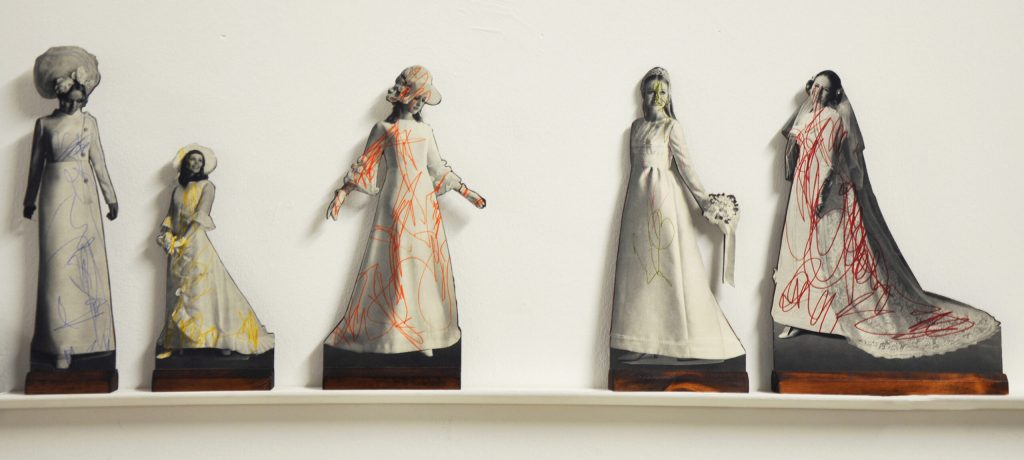
Bridie (view 1) (2013), paper, plywood, felt tip pen, 20 x 15 x 5 cm (x21)
‘These disrupted objects seem to tell of soiled dreams and expectations.’
‘The viewer catches glimpses of themselves in fragments of clear mirror prompting them to question their complicity in these narrative scenes. Working from a contemporary feminist agenda; this is a body of work that questions assumptions about women, class, history, narrative and popular folk culture. As an exhibition of sculptural objects, Domestic Pirate cleverly contextualises both gallery and domestic space by confronting our expectations whilst entertaining us with wit, skill and intelligence.‘
Engaging to exploration of the work of Paula Chambers and her trope of domesticity and the female – this fully resonated with me. Her found or manipulated objects forms from the home taking on a undercurrent of misogyny and patriarchy – the ‘little woman’ works away creating the perfect space and home environment. for the male and other needy family members. The Female is restricted and constricted by this trope.
My work is also fully engaged in this narrative with my pieces ‘Ruins’ exploring the negative feelings towards the notion of home. Unpicking why debris, ruins or a barricade ( like Chambers) are a narrative within this scene of assumed domestic bliss. While our material practice is different – Chambers using bold images and items that are easily recognisable and familiar in the home and my own practice using the hidden detritus and actual ruined fabric ( material ) of the home – their is however a cross over of concerns. Chambers scale of work is bold and confident and sculptural, my own is smaller, quieter and perhaps more ephemeral. Taking a leaf from Chambers work would be positive in regards my upscaling my own practice.
Continued Exploration and/of Practice : \
Machine detritus: The ‘guts’ of domesticity – the hidden end result an ephemeral product from waste.
Hidden away – brushed under the carpet. Like the female emotion – unspoken – FORMLESS
Pelts – the end result of the hidden – a item of clothing – a cover to hide from to blend in with or to wear proudly ? – Strength in bonding and bringing it together – ‘Felting’ and or binding to create strength of material .
The language of the material – is the unspoken the hidden – metaphor.
‘Felting’ and or binding to create strength of material .
PELTS – Exploring joining together the small pieces of felted material to create a larger piece :
1 – using red thread – I choose red to emphasise the join and connection, a bonding process. But also quite brutal and harsh like a wound being hastily healed – it had a childlike quality to it.
The material did not respond well – the density was too fragile and the thread did not successfully hold in place, immediately falling alway from the pelts.
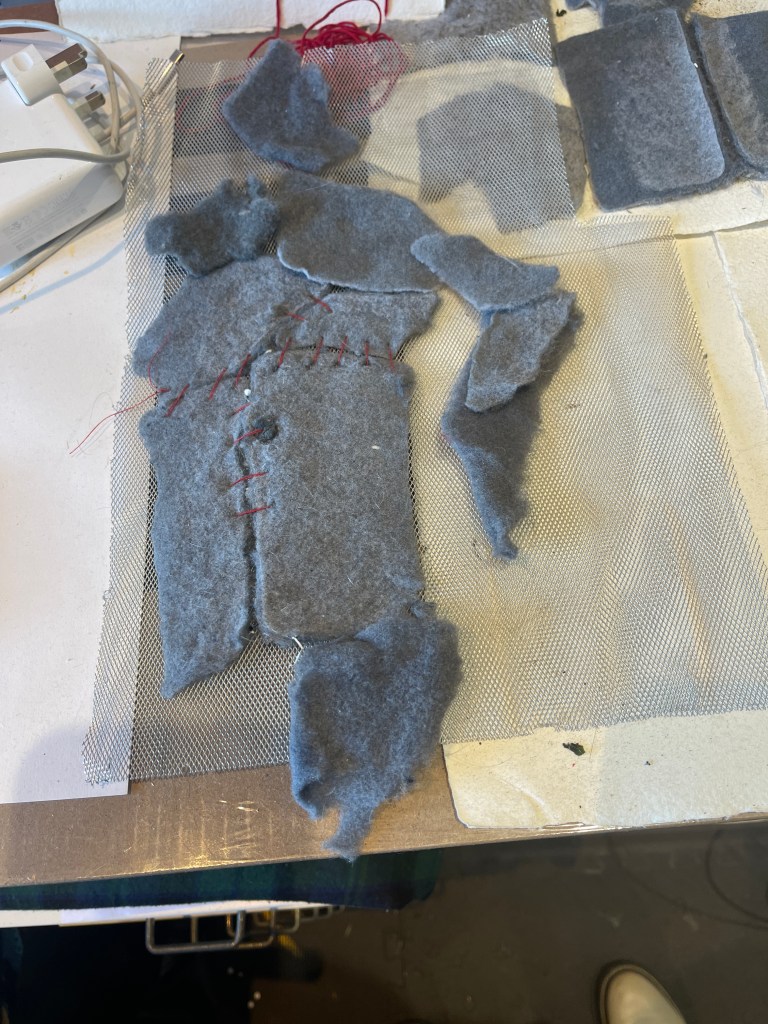
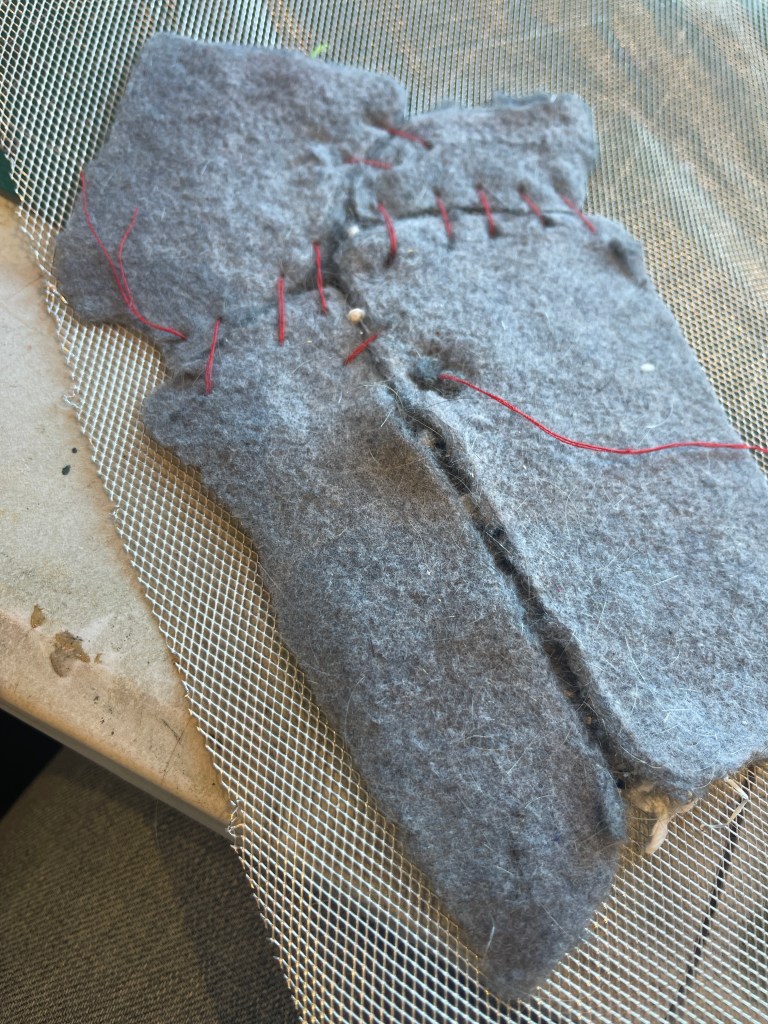
2. Pin – felting the fabric .
Sketching up the pelt formation on paper with raw felted detritus. Really like this image and hooping to emulate this further …
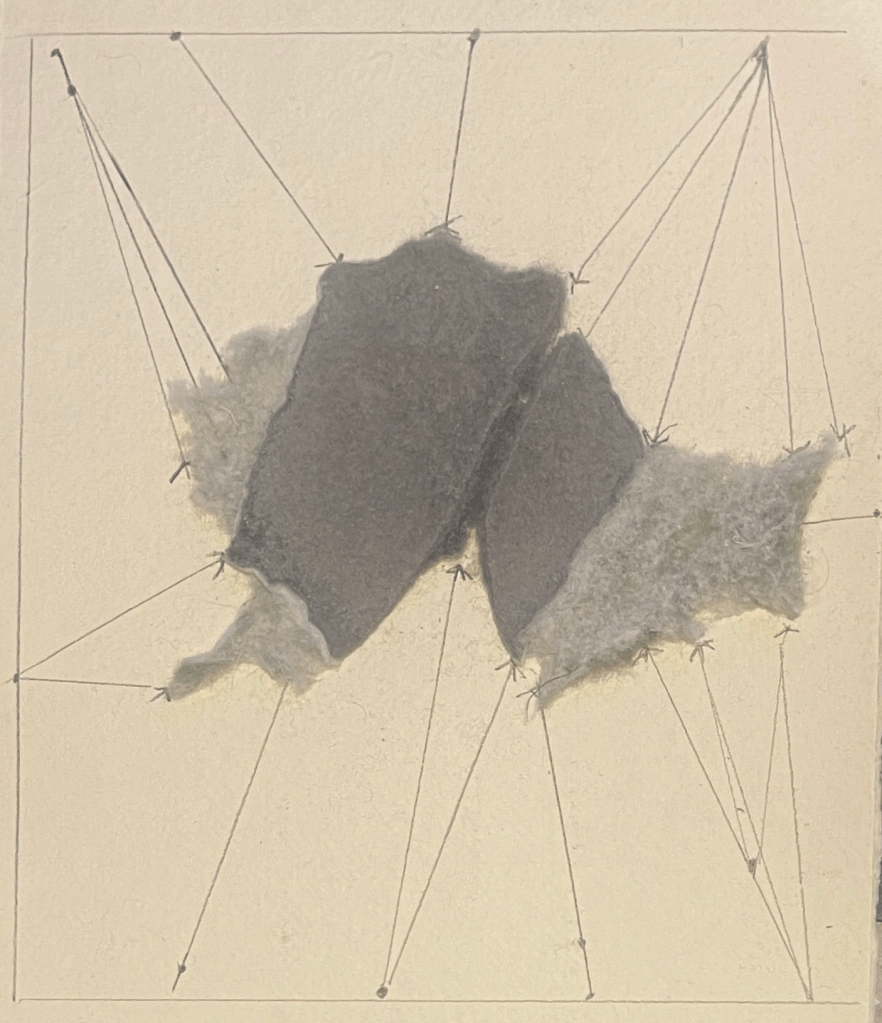
Using a single pin to begin a process of pin-felting. Copying out a shape similar to an animal hide onto tracing paper and copying this shape onto some fine sculptural mesh.
Layering the felt nto both sides of the mesh as I began to push the felting pin between the mesh picking up the felt from each side and connecting the fibres together.
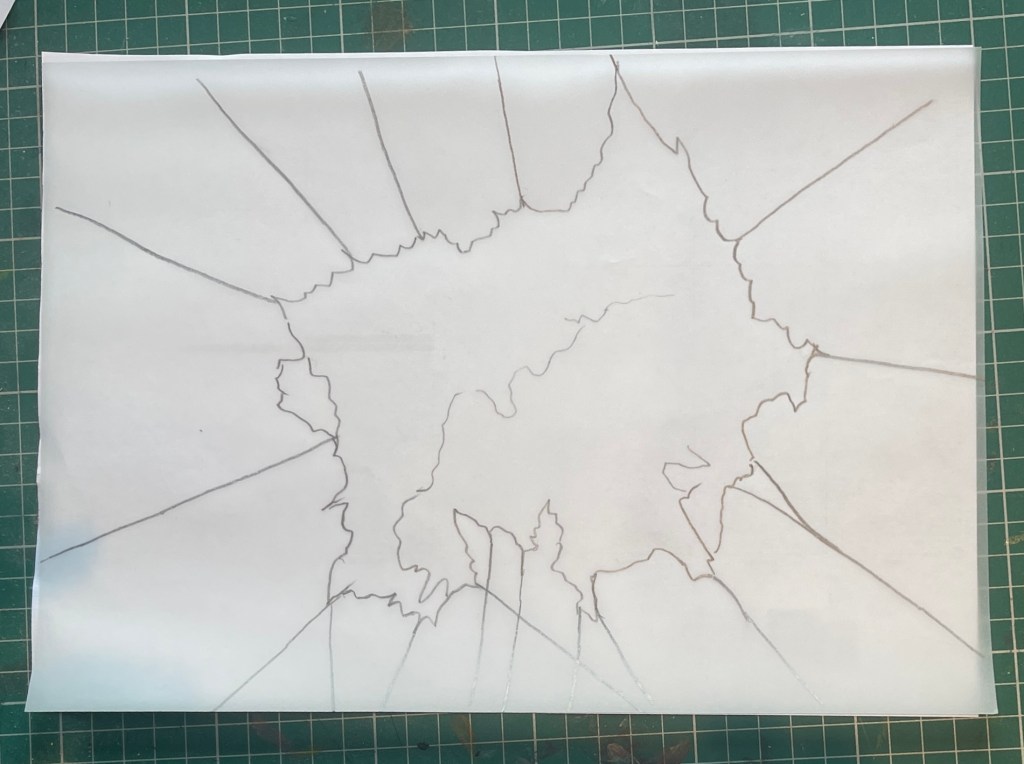
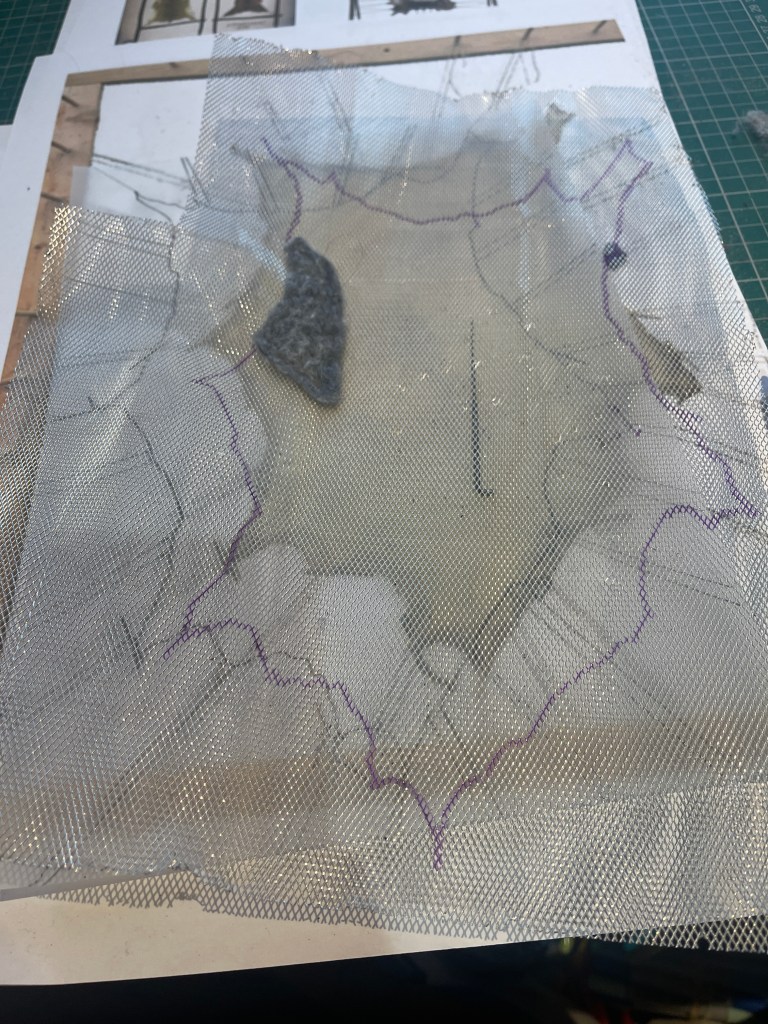
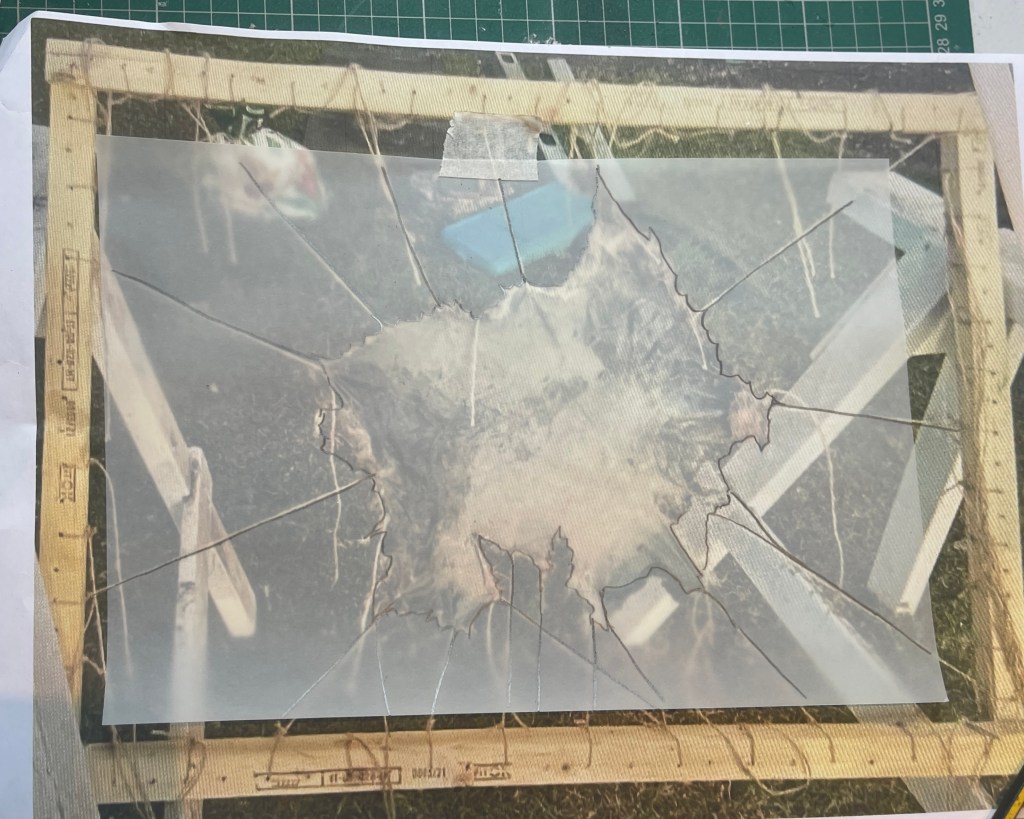
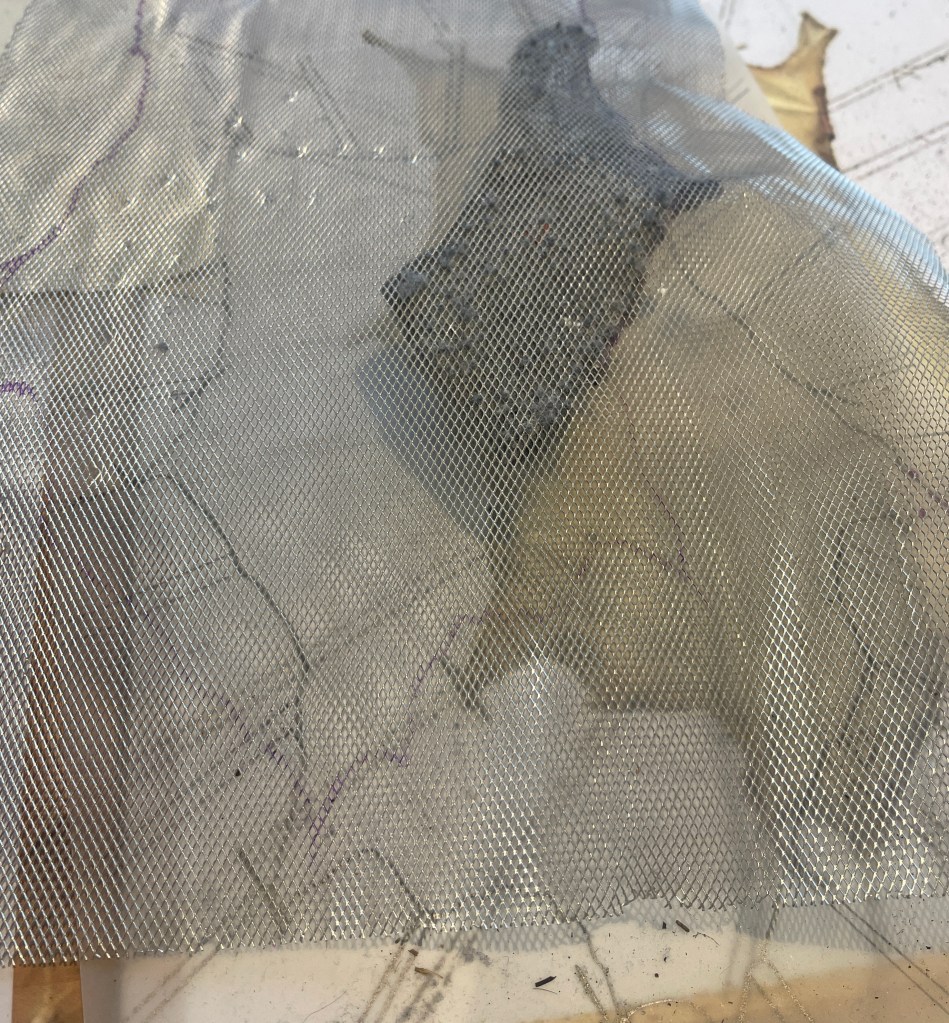
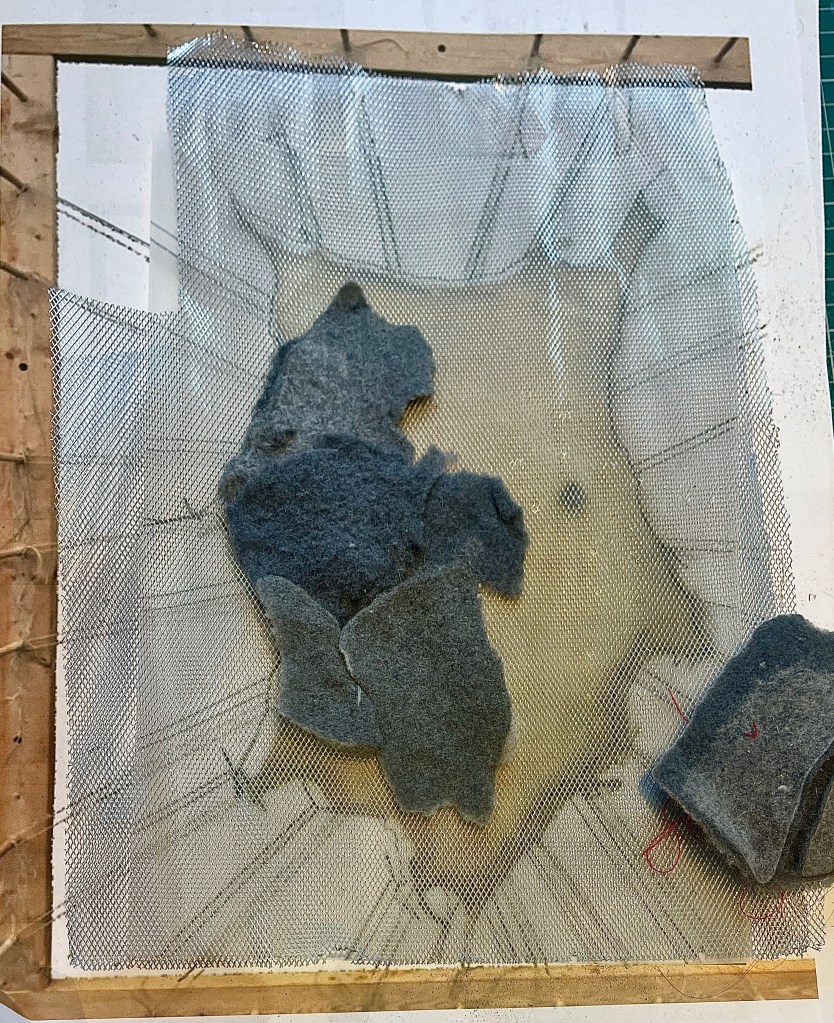
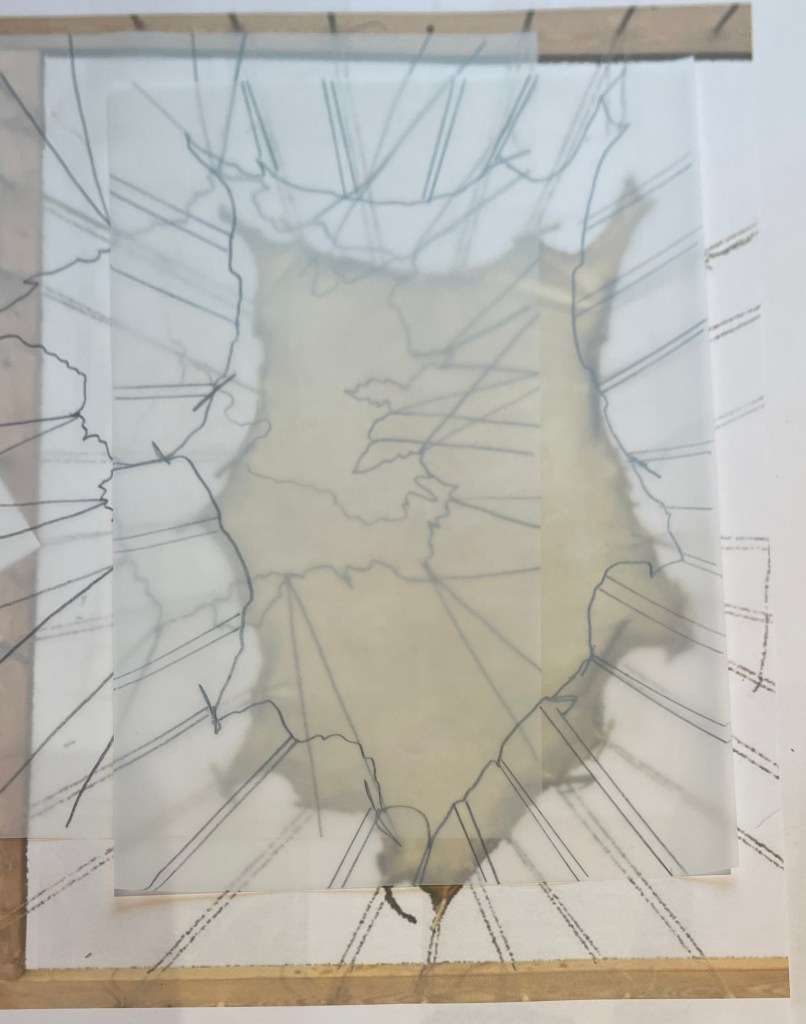
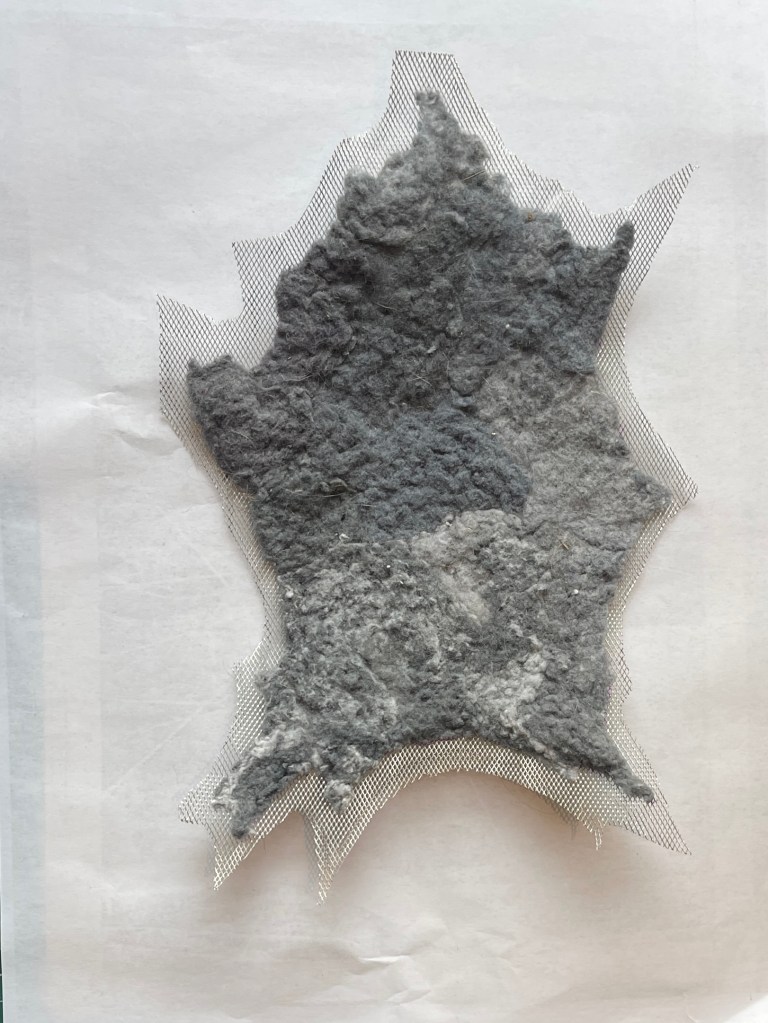
This was not entirely successful .- The felt was not picking p from t he underside of the mesh but the top felt was pushing through the mesh enough to adhere it to it. The felt took on a more bobbled’ appearance due to the pin poking it through the wire mesh. The colour variations was good and similar to the colour fluctuations of a hide. Multiple pieces of felt were used to create this pice approx 20 x 15 cm.
I cut the mesh away from the sides as far as I could but removal of the felt from the mesh fully was unlikely as the material was not firm or self supporting even at this stage of manipulation.
Going back to process and the essential nature of where the material came from, I wrote down a list of words that gave identity and background to the material its self.
Action 17 –
Documenting this list of 17 actions all based around the work, collection and distribution of household washing I found a shallow box I had been keeping and set about using it as an object that could contain the adjectives and verbs of the detritus.
Covering the box in some old graph paper internally and overlaying some black paint that I distressed.
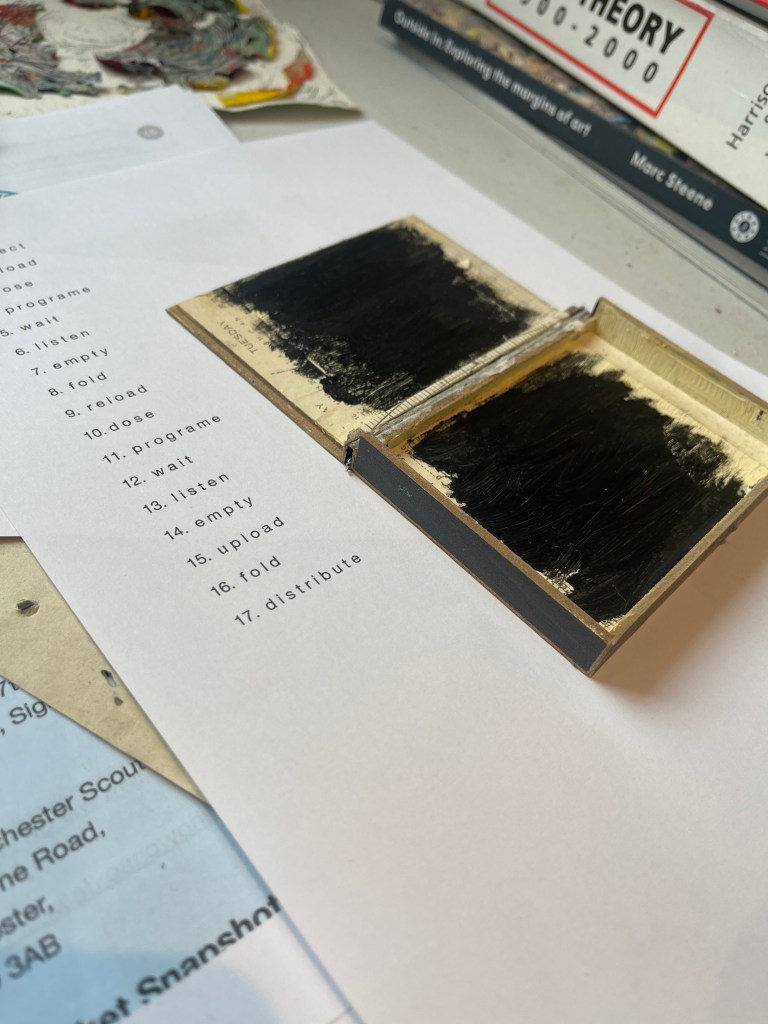
The Final object with list of words numbered and a hint a diagrammatical machine forms:
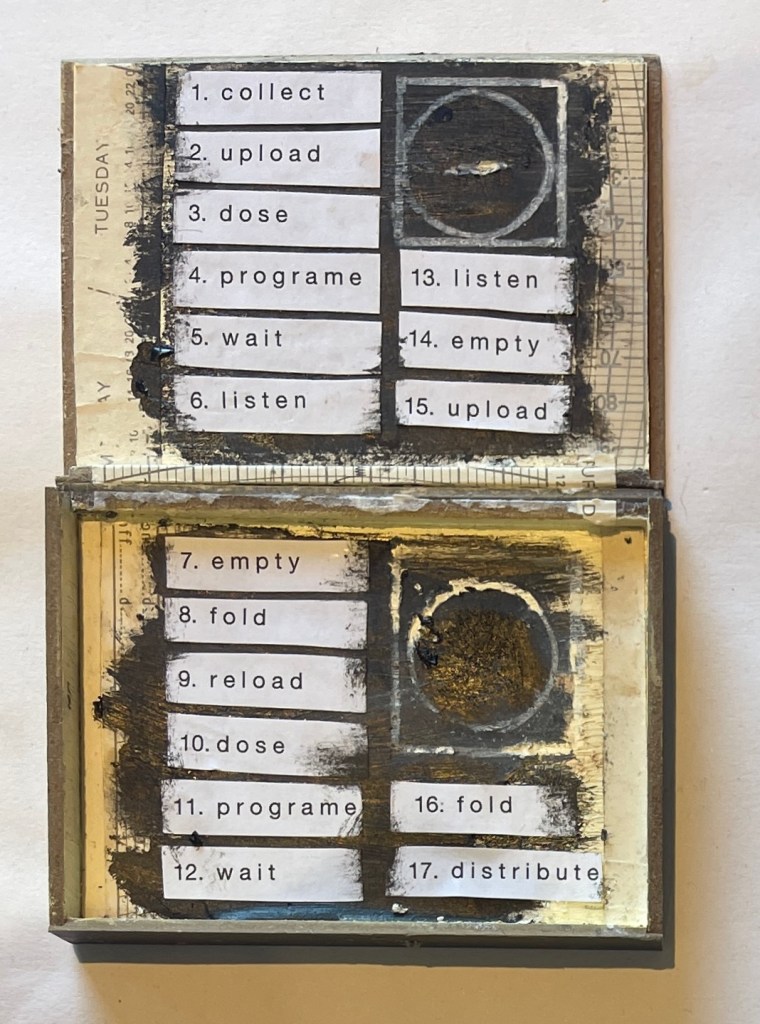
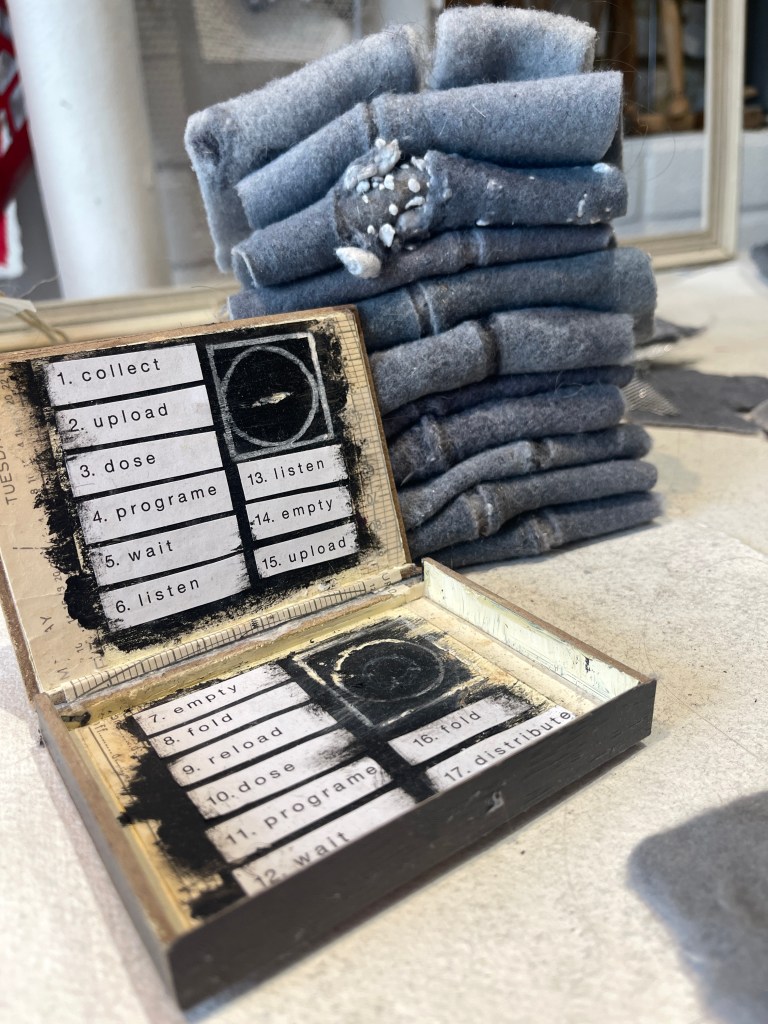
The image below shows the shallow boxed text alongside a stack the folded felt material. The nature of the found felted detritus – neatly folded and stacked has a resonance with the trope of the washing itself . The range of actions and processes documented in text like an instruction manual with a robotic feel and tone. Devoid of emotion and sensitivity endlessly on repeat….
Felting process:
In order to physically expand the material I began to process of felting to bind and connect the separate pieces to create a larger scale work. I saw this as being a way to explore a large body of material and it potential to create a ‘ shroud’ or cover.. ‘an invisibility’ cloak the grey detritus the unseen and forgotten domestic labour, housewife, care giver, homemaker wears every day.
Using a single traditional felting needle to combine the fabric with the felted sheet below –
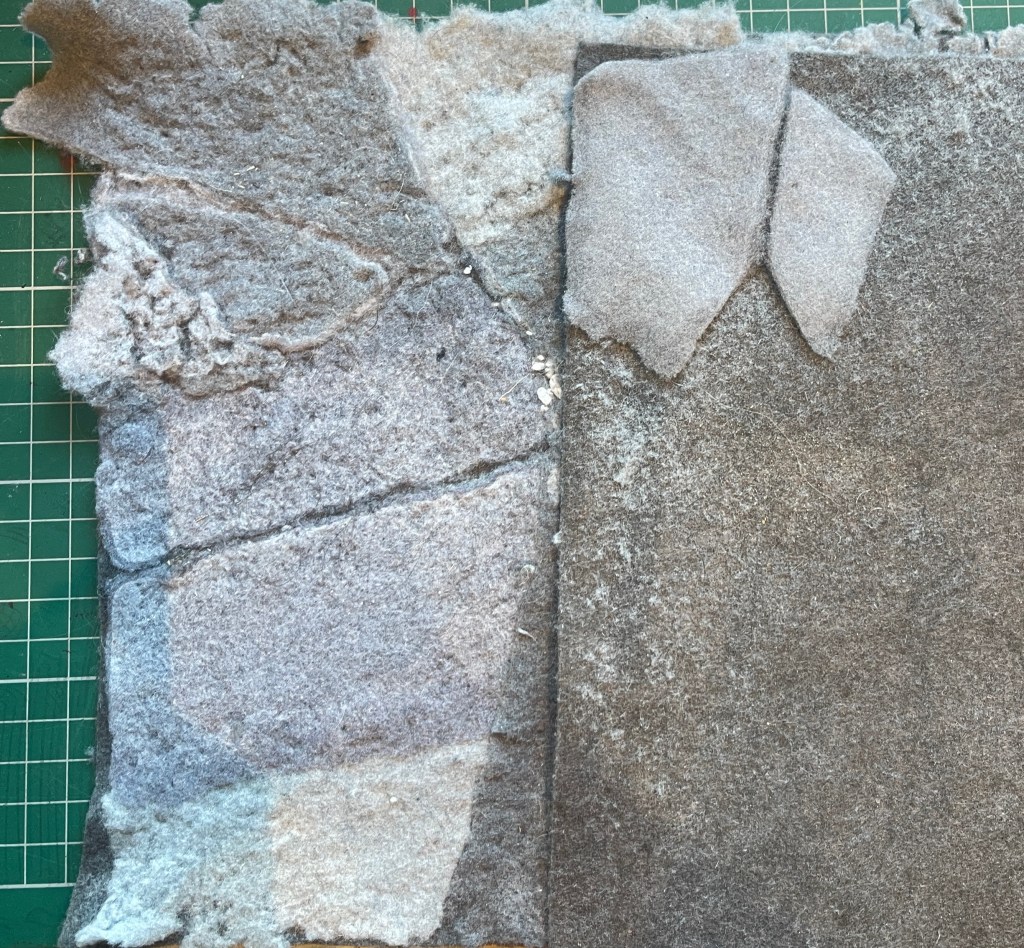
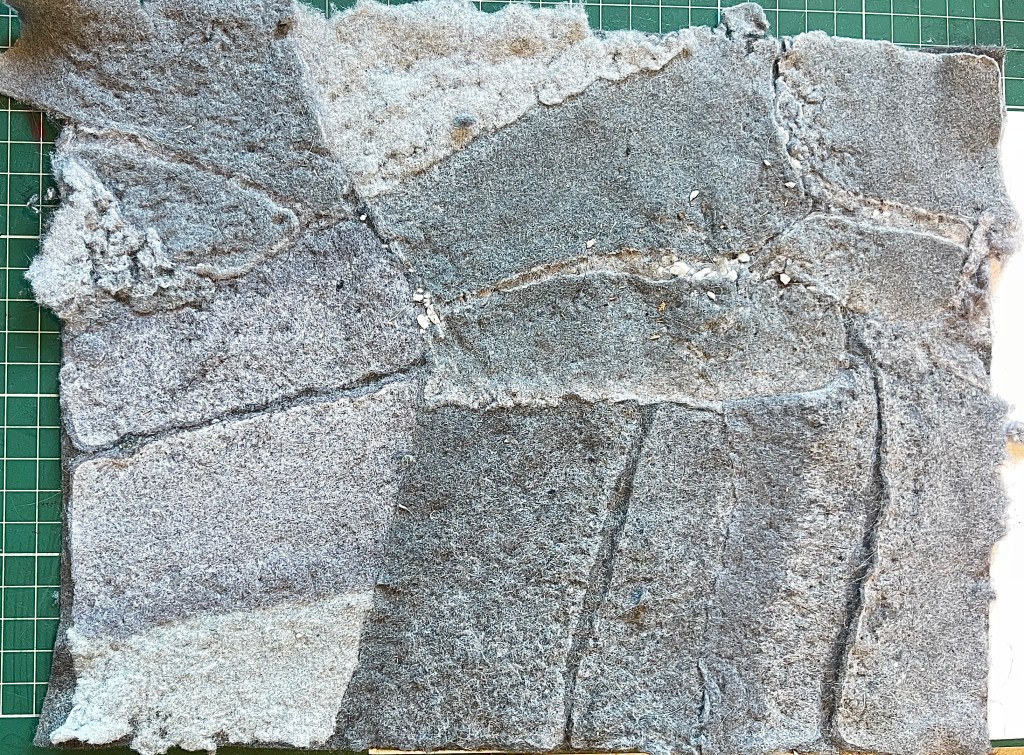
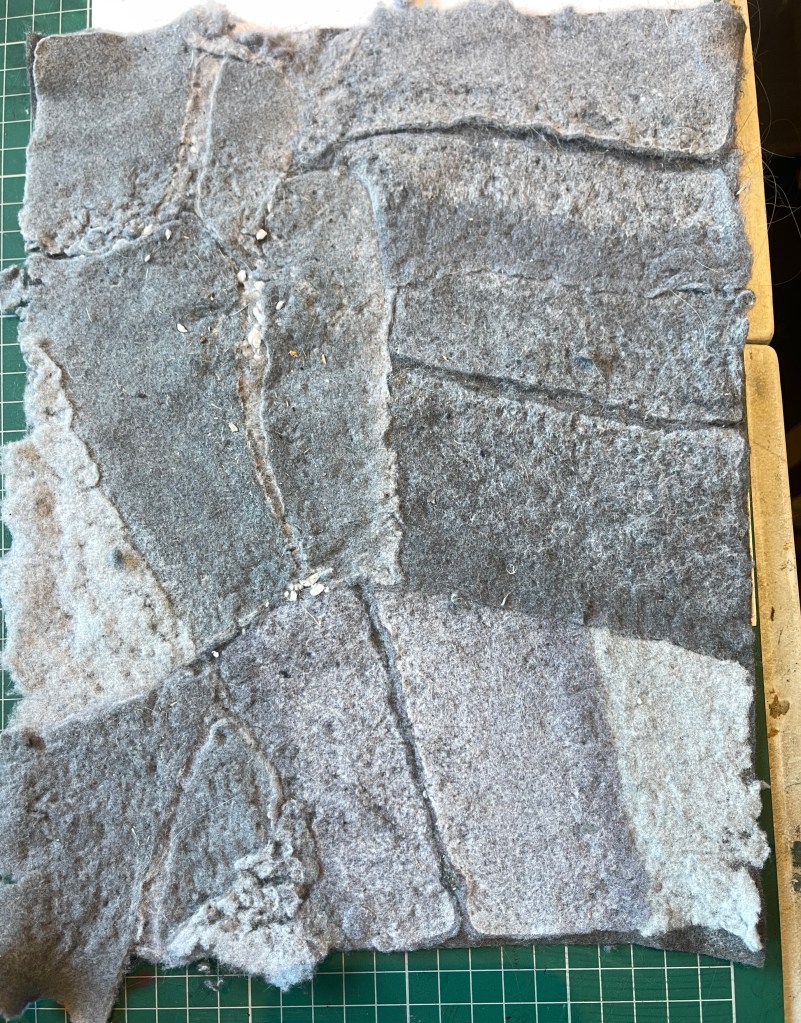
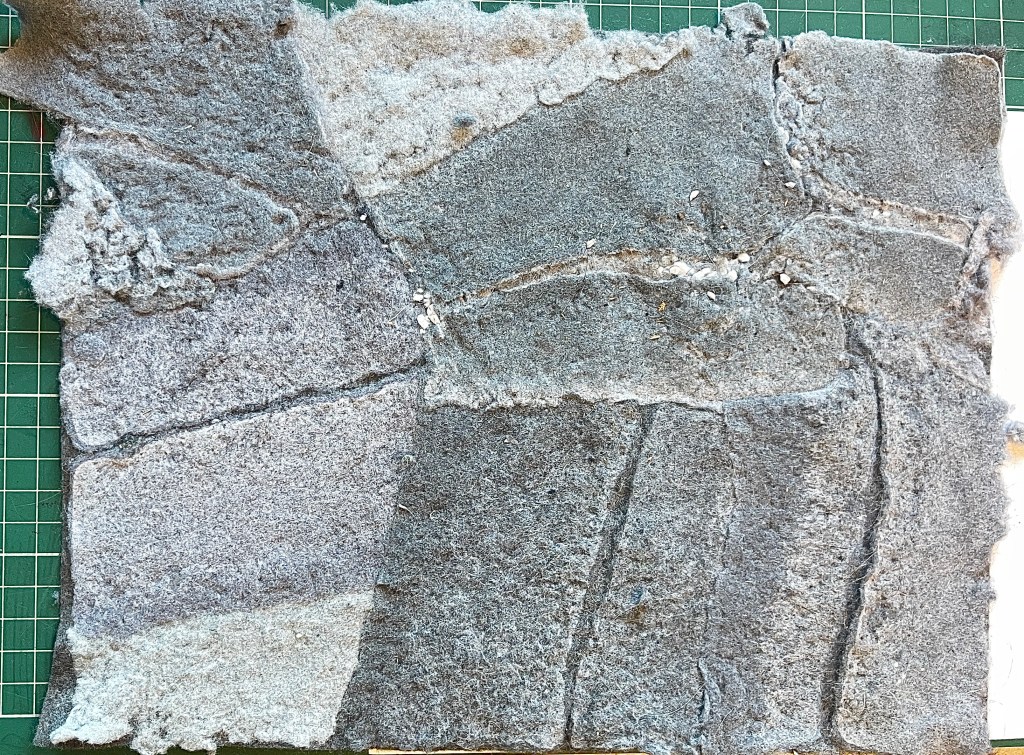
Creating a patchwork like appearance with the muted colour palette. The fabric adhered well to the felted underside and was able to sustain its connectivity, becoming more practical and malleable with the support backing ..able t bend and roll…
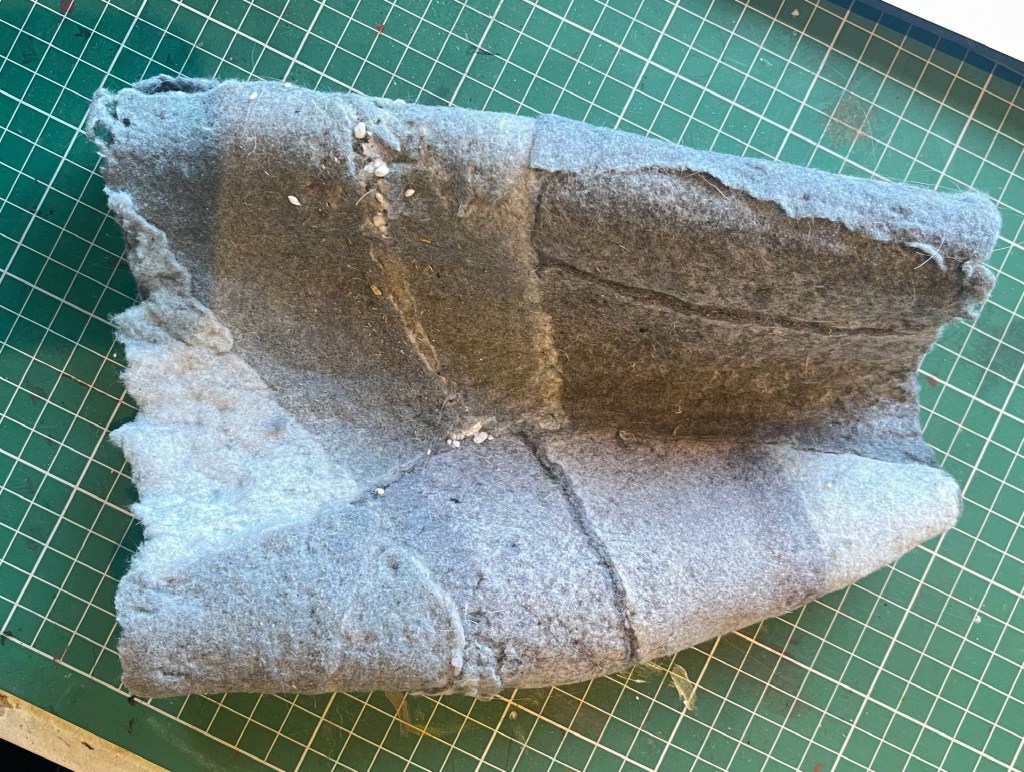
Hanging up with clothes peg
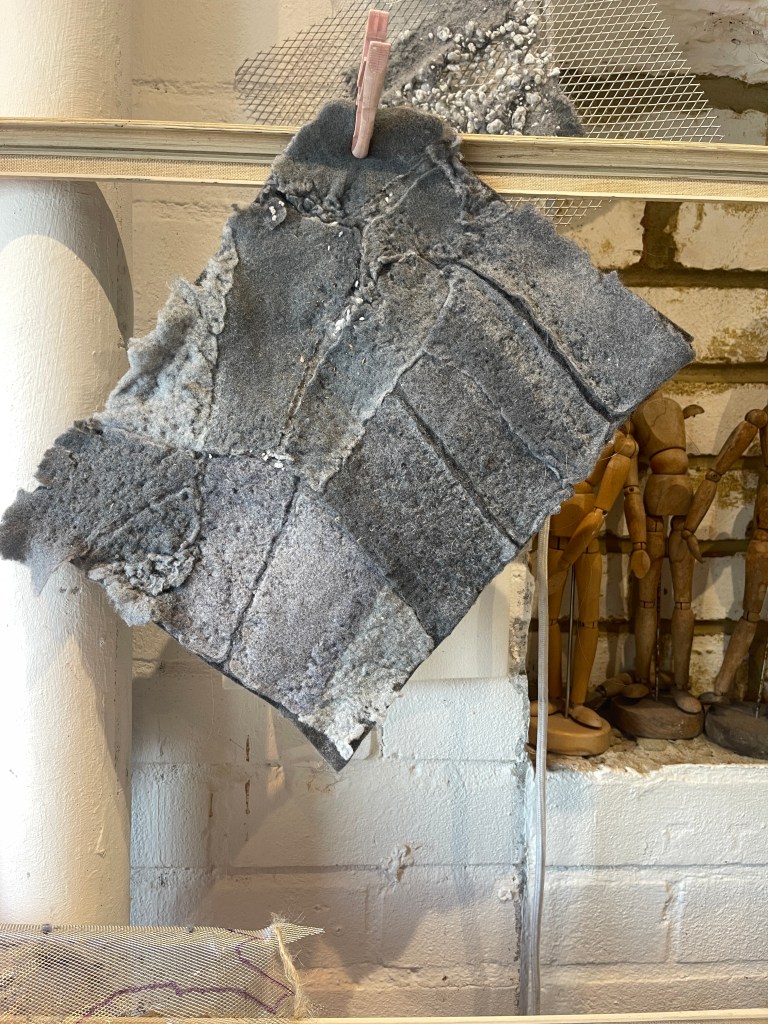
As the scale was sill relatively small I began a more craft based felting process:
There was a solidity and heaviness to this outcome that I was not comfortable with. While malleable and flexible and with the potential to become much bigger it lacked the material delicacy inherent in the material which was important aspect in exploring the narrative of the work. Although I wanted to reinforce the material in order to be more adaptable this did not feel like the right line of enquiry. I was looking for the material to support its own integrity and not be reliant on a pre – made backing.
Wet Felting.
Learning the process from an established paper artist and sculpture ‘Susan Cutts’ during a mini work shop with her was an ideal way of playing with the material and learning its further qualities and potential.
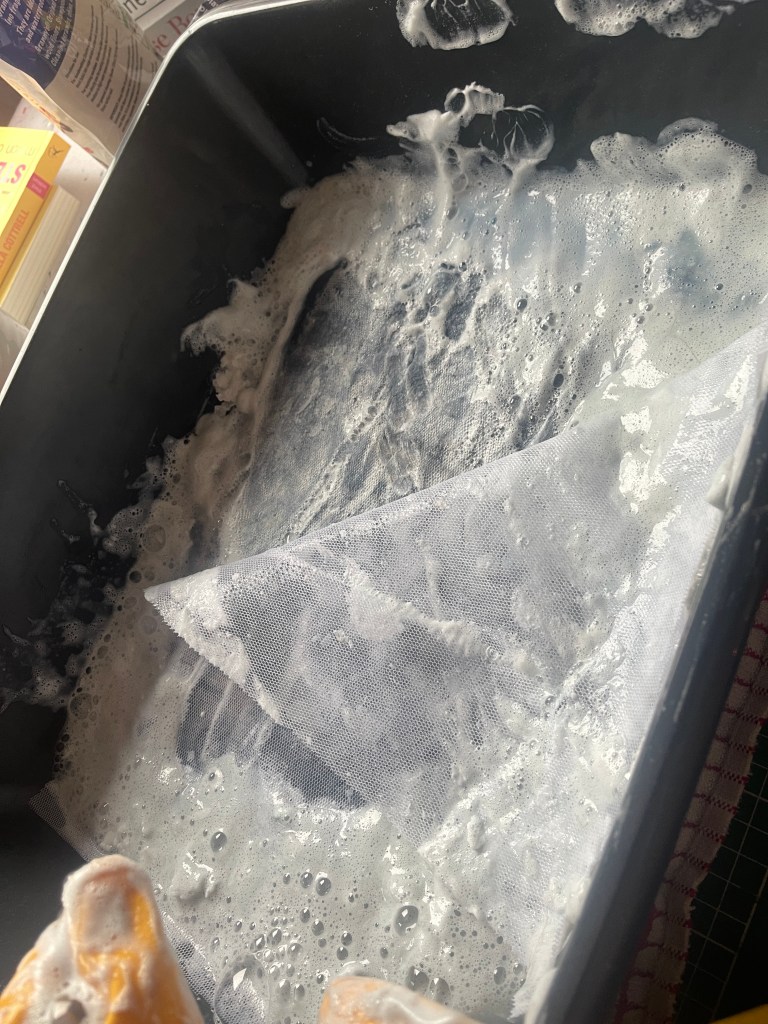
Laying out the felt pieces in the tray. In a cross hatch fashion. Adding a net/mesh over the top.
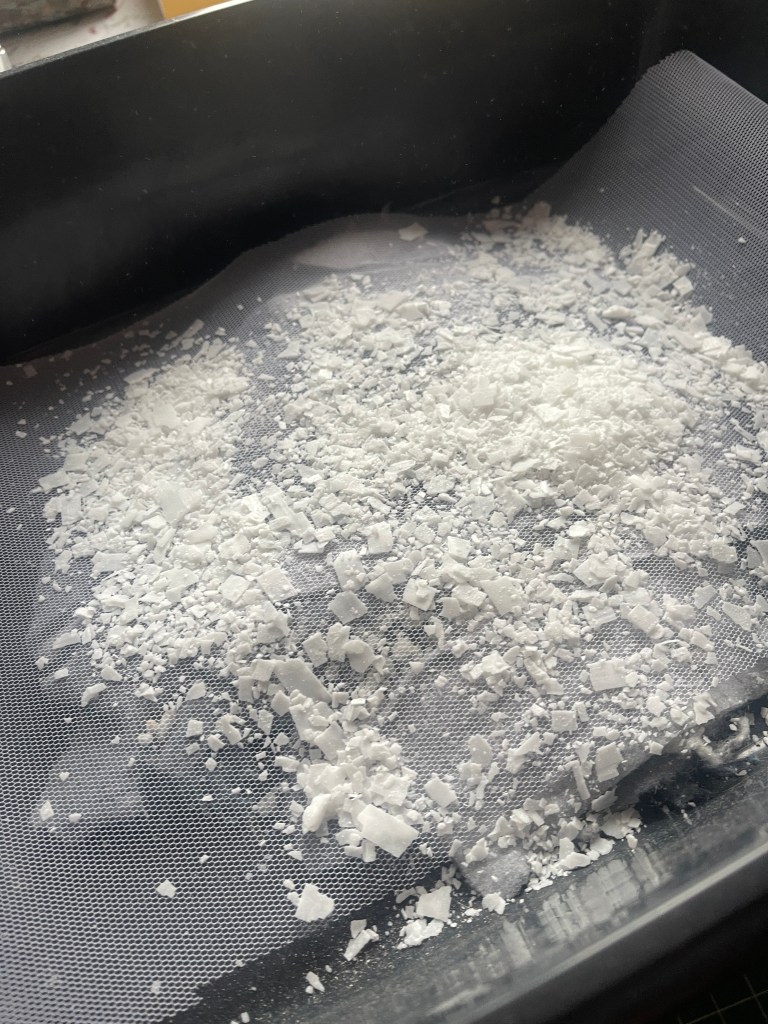
Sprinkling soap flakes on top of the mesh and pouring hot water over it. Working and rubbing the melting soap flakes into the mesh and into the layers of felt using my hands in a rubbing and spreading action.
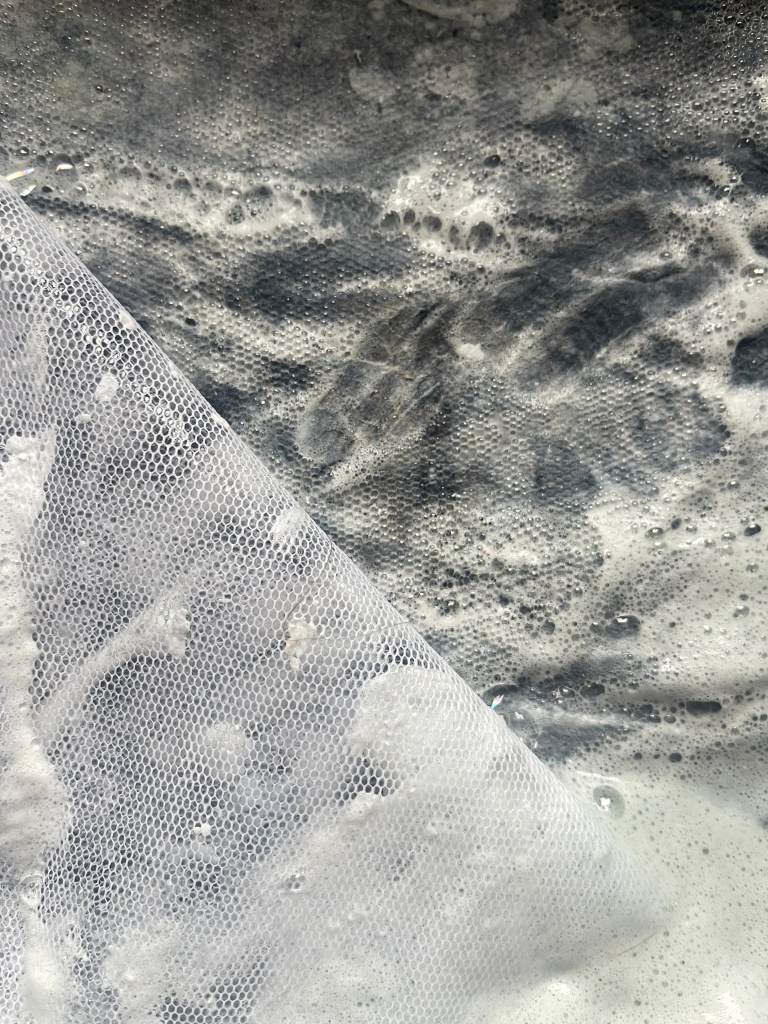
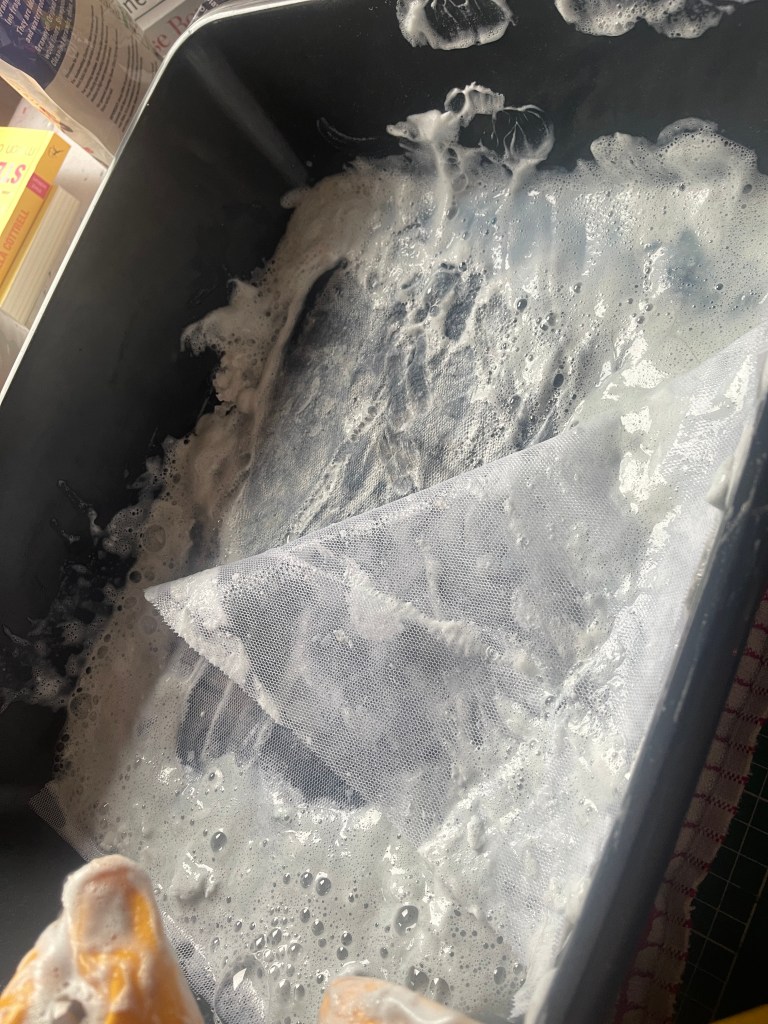
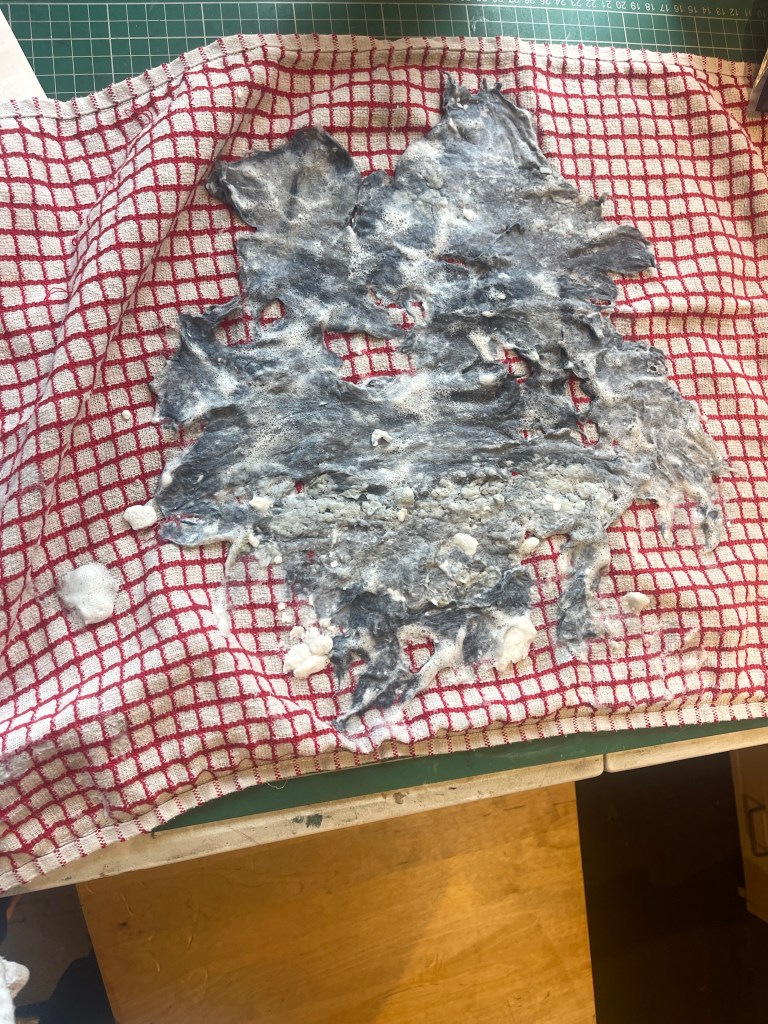
Removing the sodden, felted and soaped material onto a t-towel.
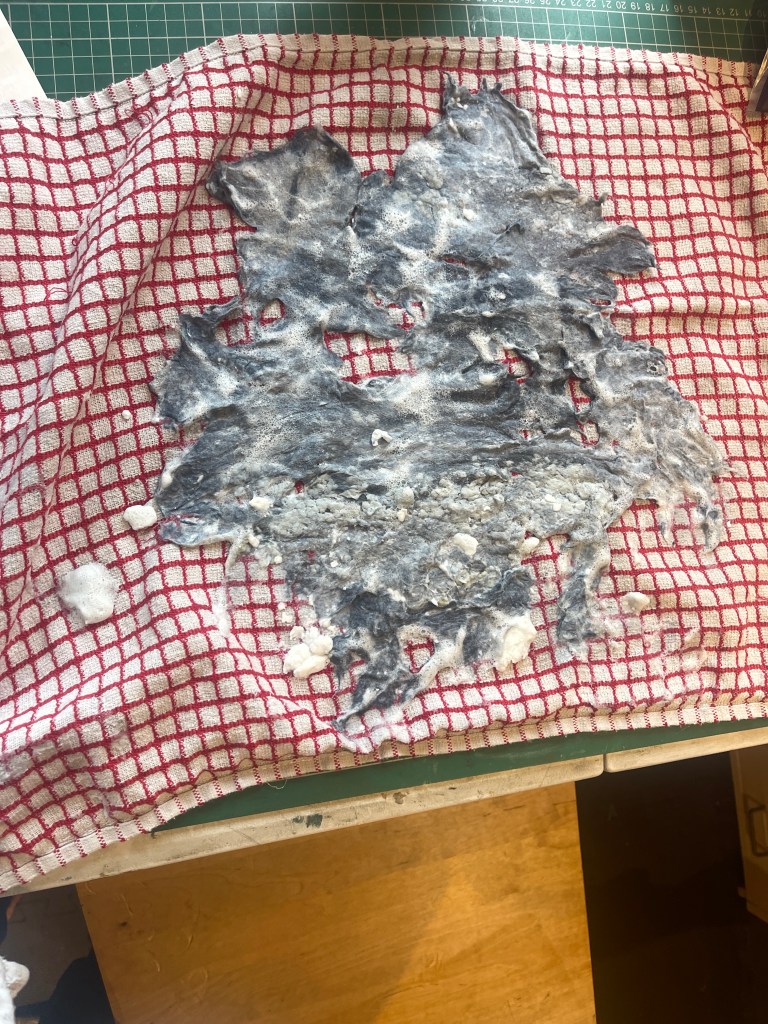
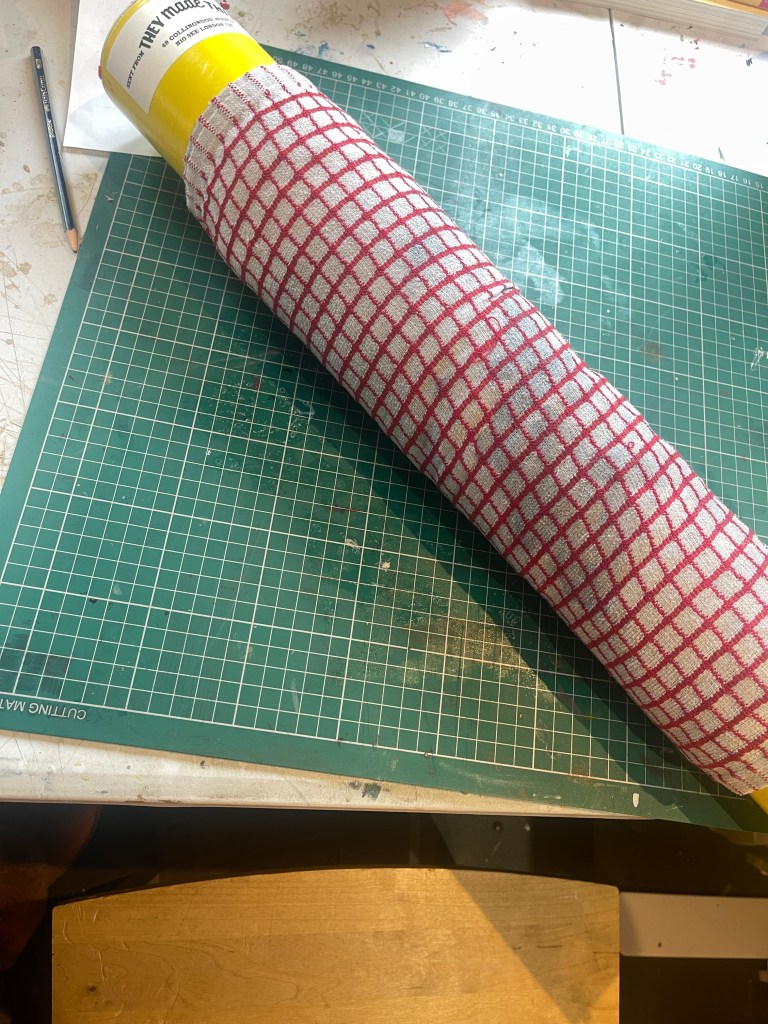
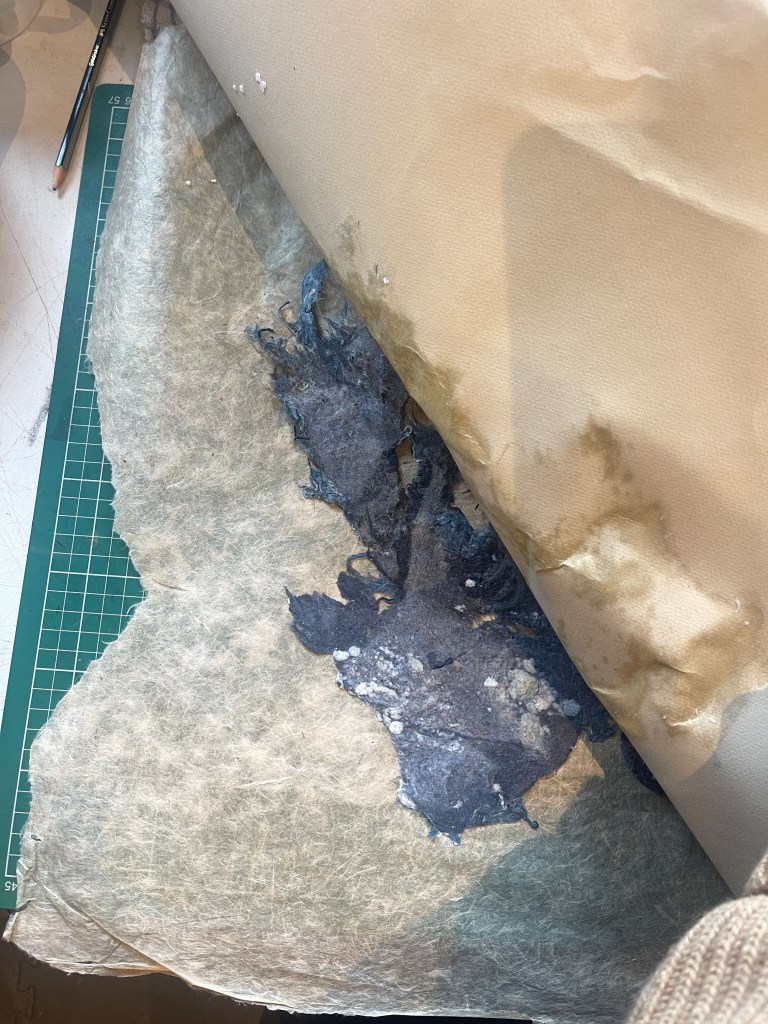
Then placing a further dry towel over the wet material and rolling across the surface of the sandwiched felt up to 50 times in many directions, squeezing all the water and soap from from it as the moved.
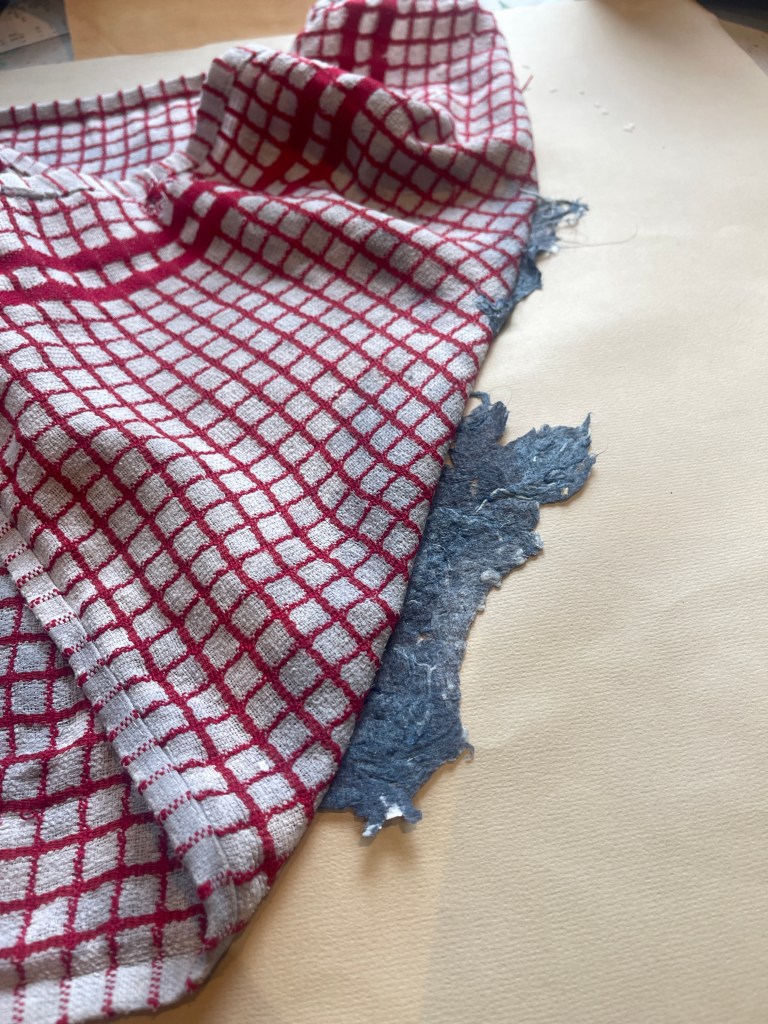
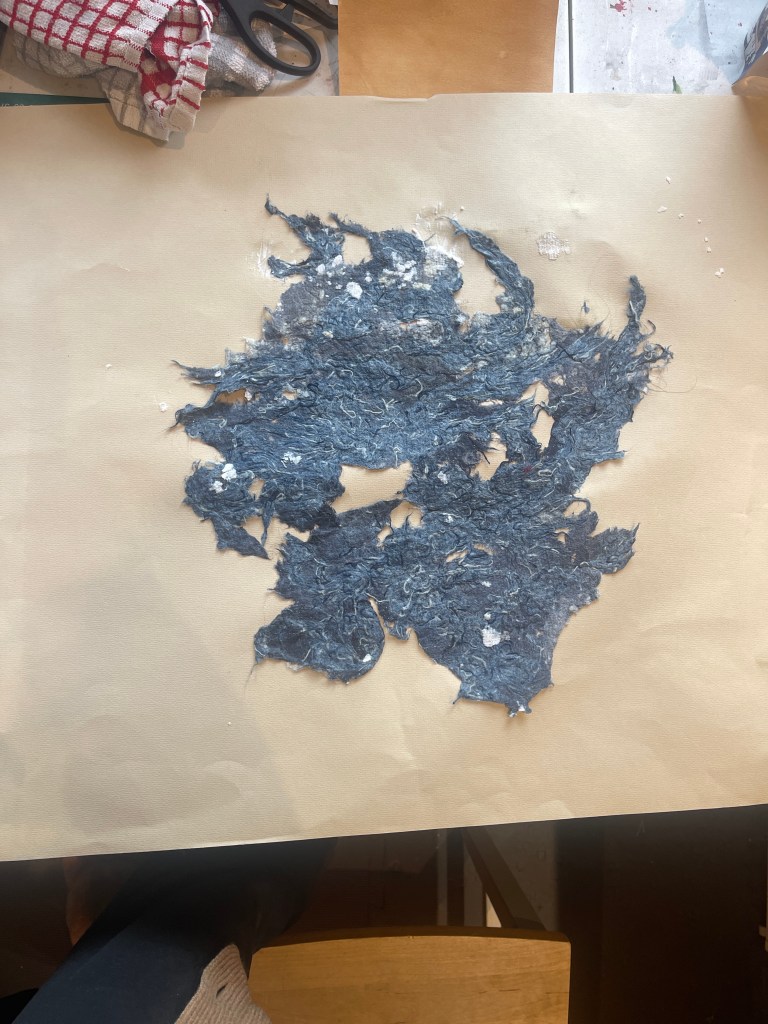
Laying the wet material down onto dry paper as it come off the roller and towel. Placing another pice of dry paper on top and resuming more lighter rolling movements.
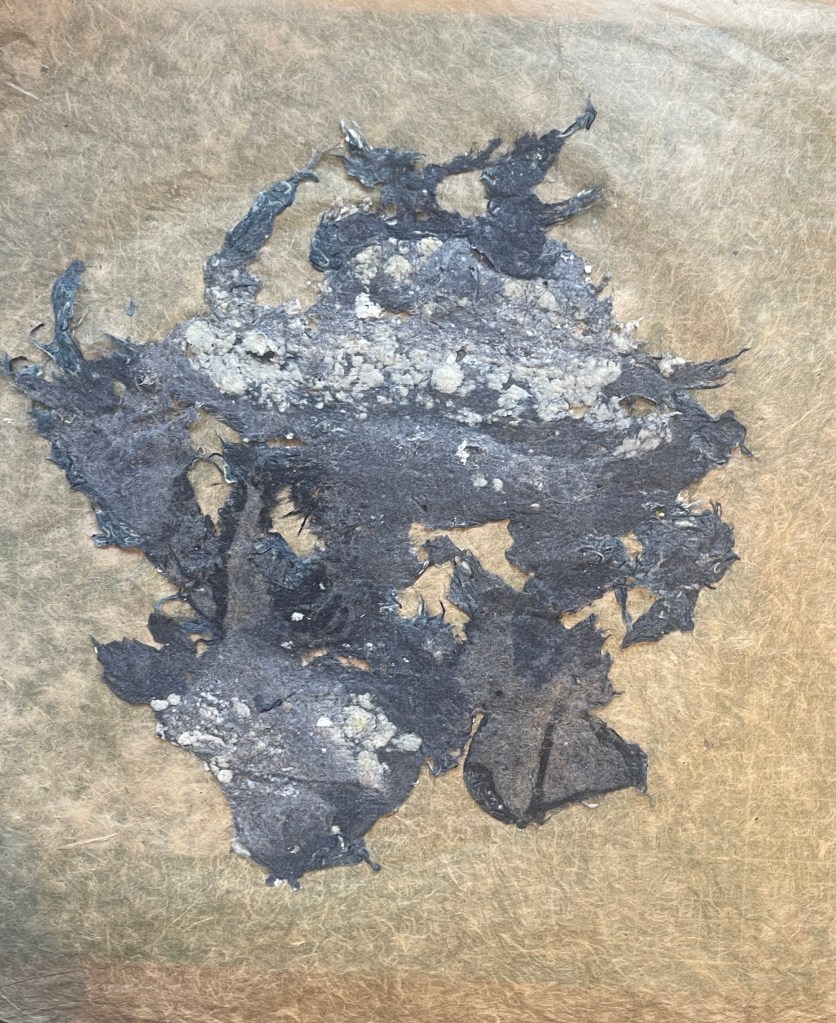
Finally laying the pice out to dry.
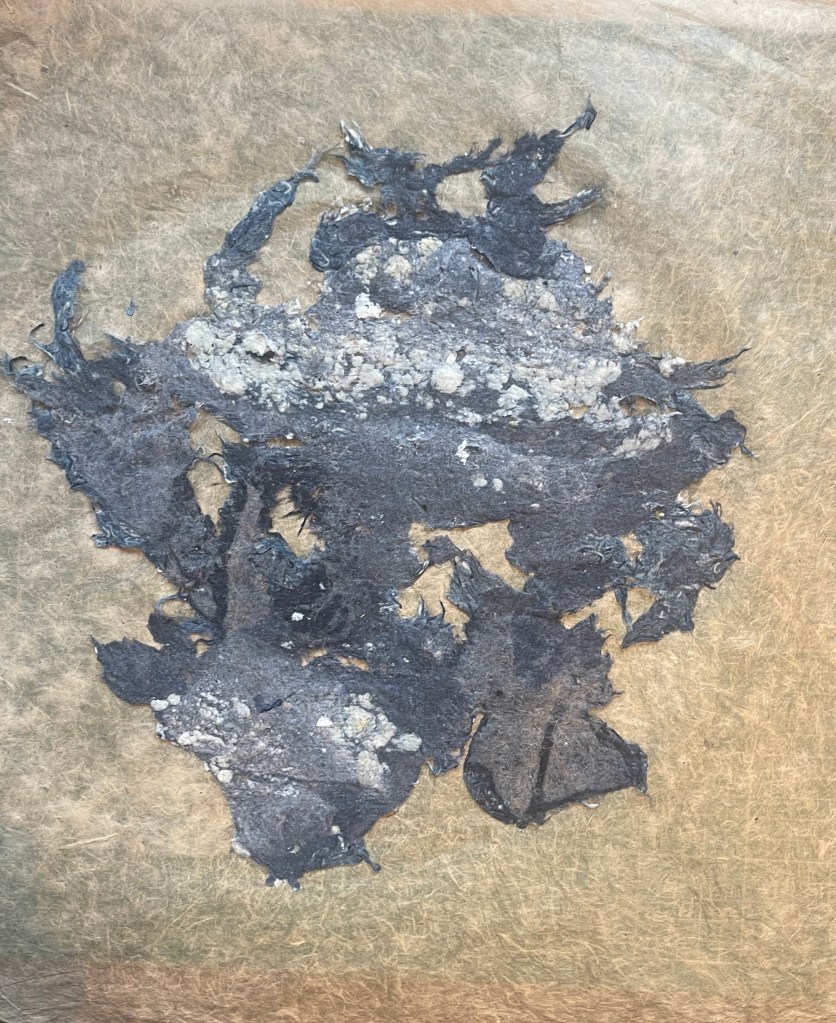
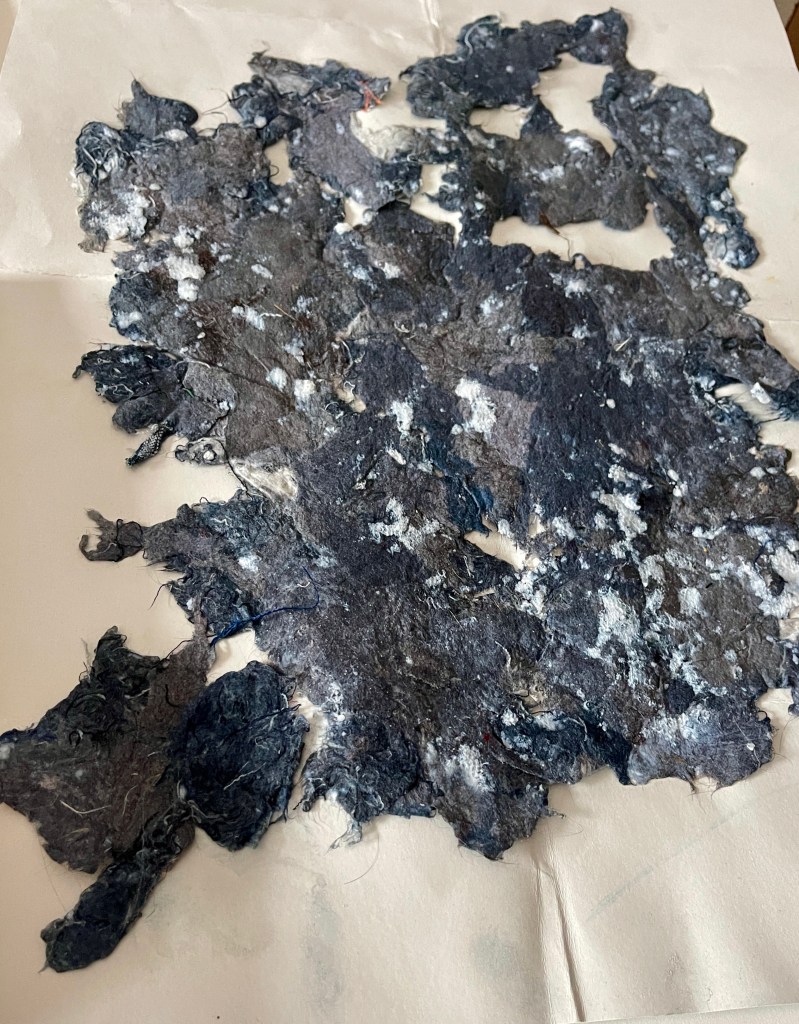
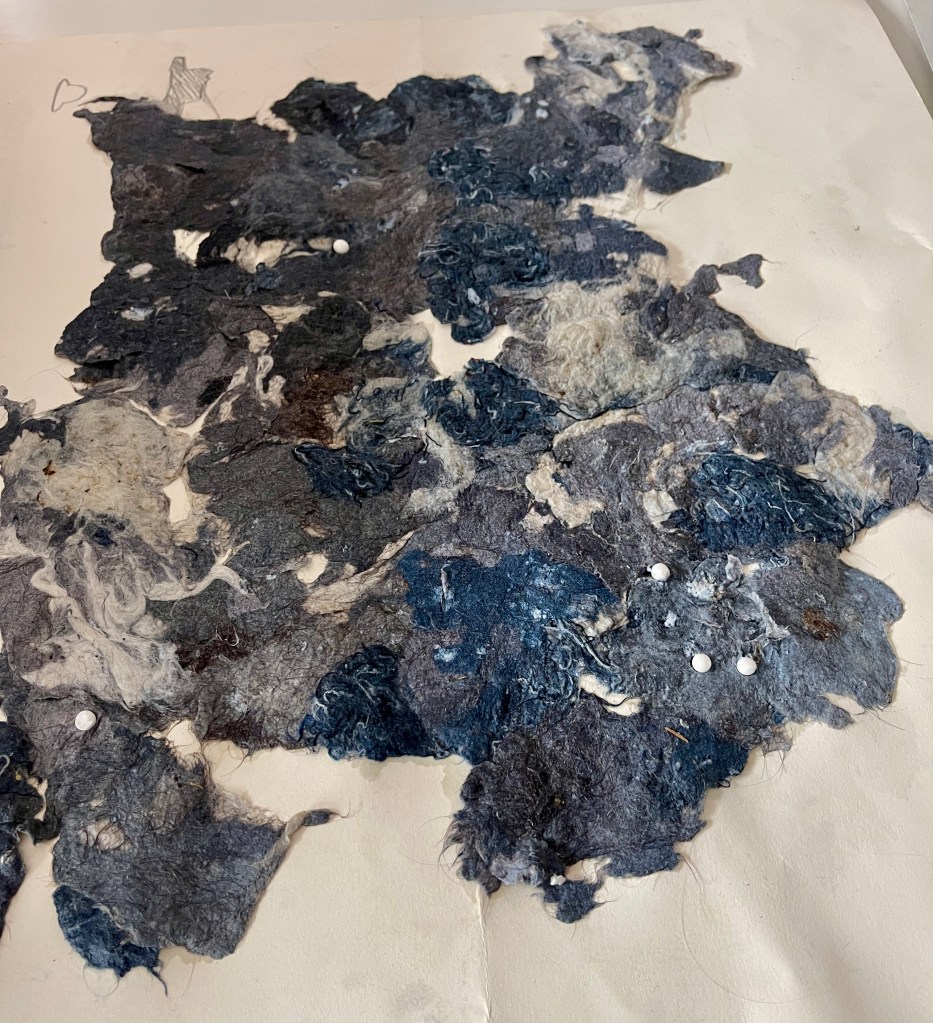
For me this was much more the metamorphose I was hoping for in regards to playing with this material. Bringing out its fragility but also its surprising toughness now. The shapes of the felted pieces still visible, as is the colour variations . Excited that the large ‘washed’ balls of tissue have remained, squashed but present in the ‘pelt like’ form created. There is good narrative in the varied patten shape and texture, a range of colours and mini- histories created from each section.
I went onto do more of the process varying, water and soap volume, amount of material, the rubbing and rolling process etc.
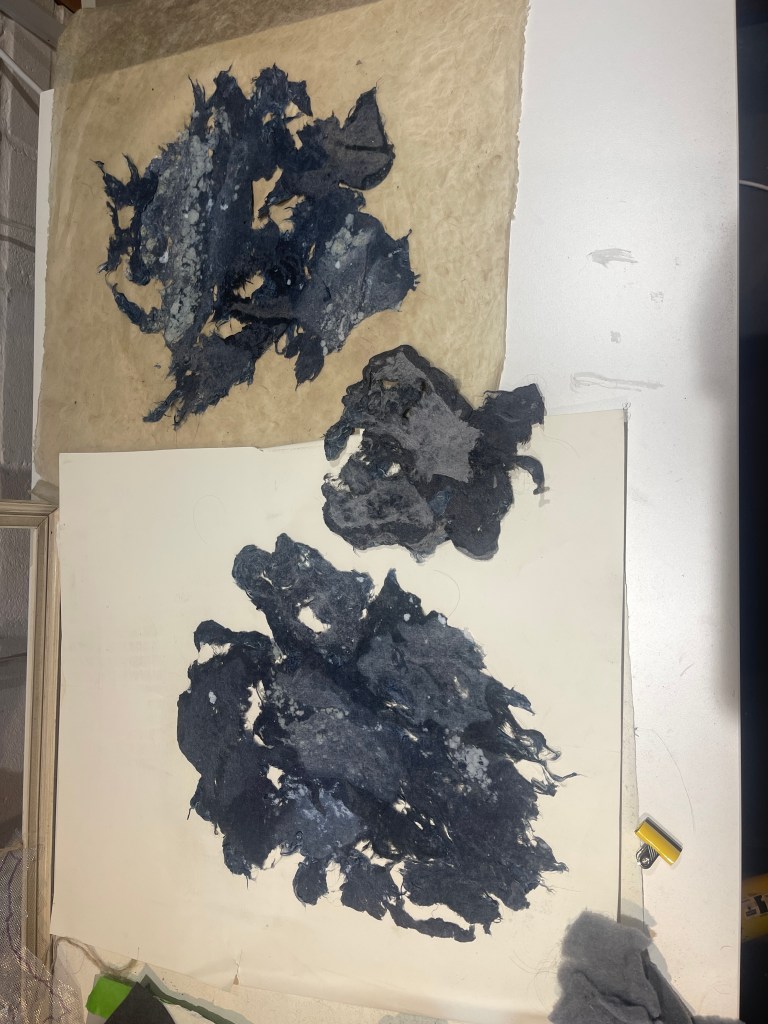
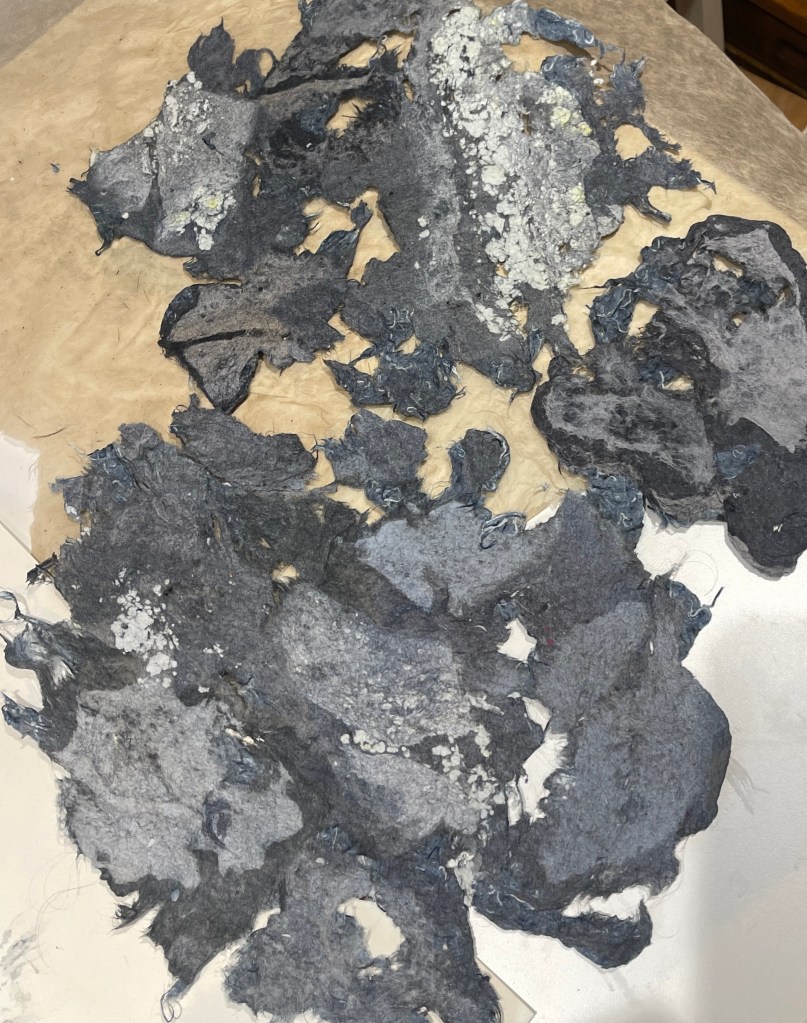
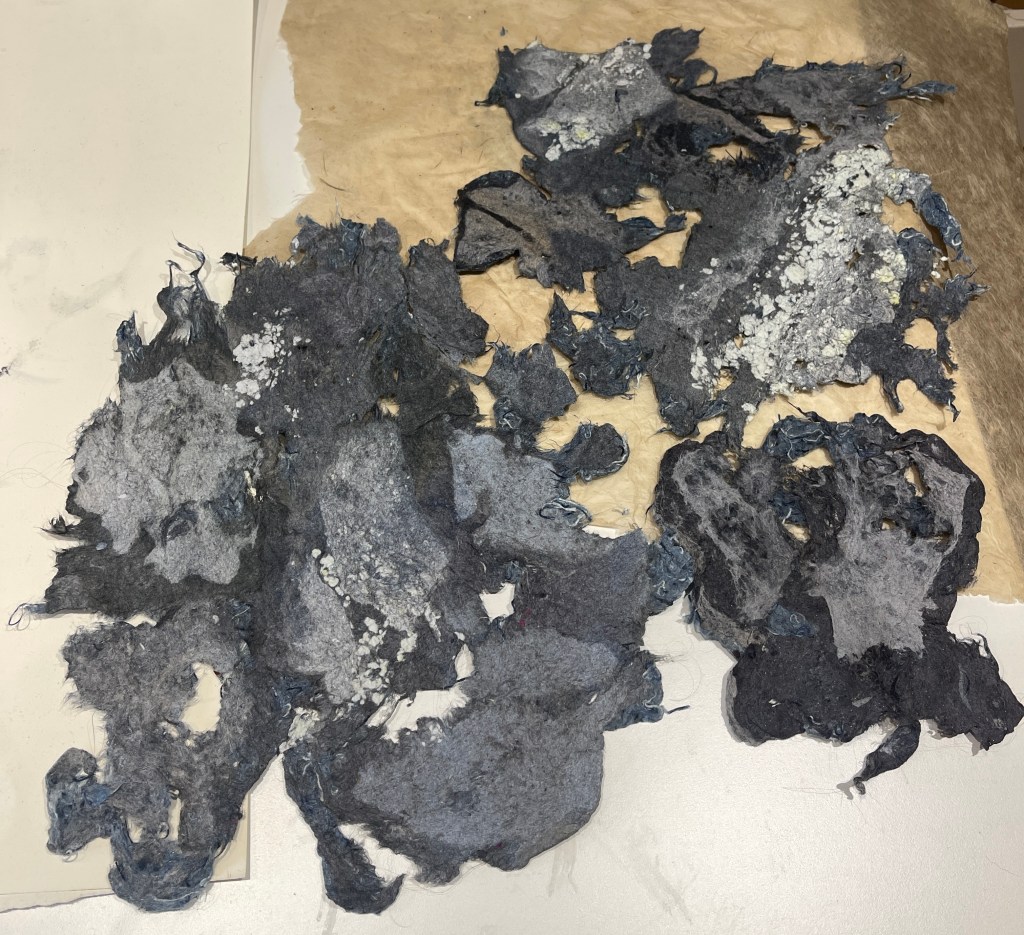
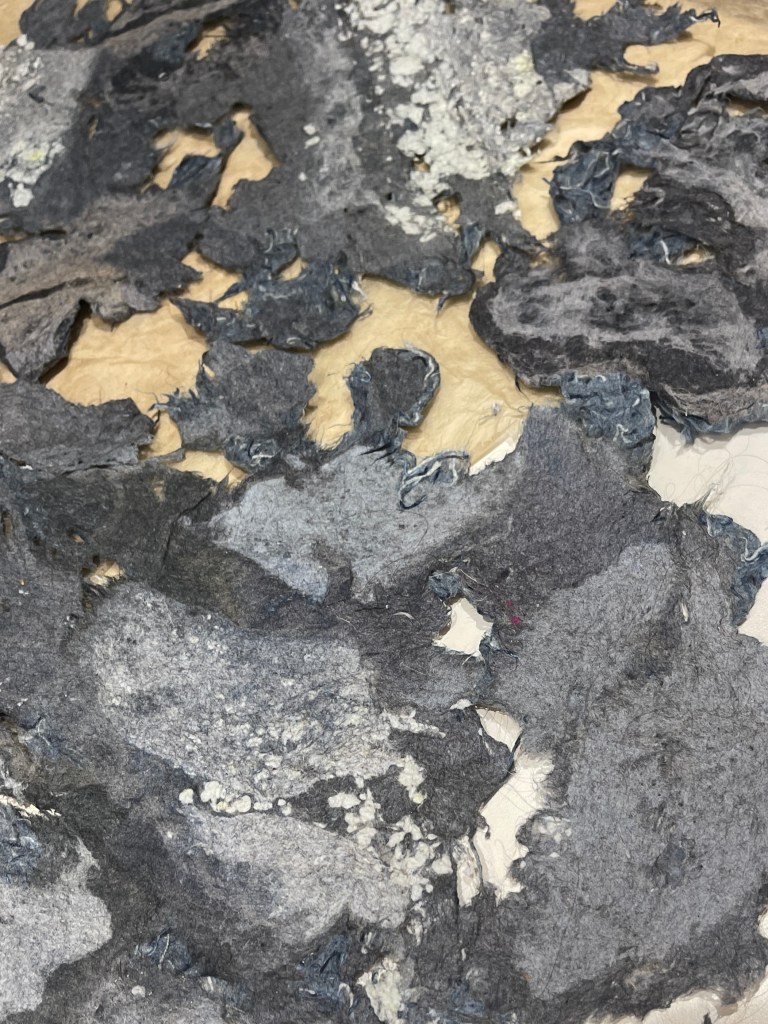
I was thrilled to see potential of upscaling my work during this process and merging or connecting the material together.
Unexpected outcome to see the wet felting process had in – printed dye marks into the paper it sat to dry on :
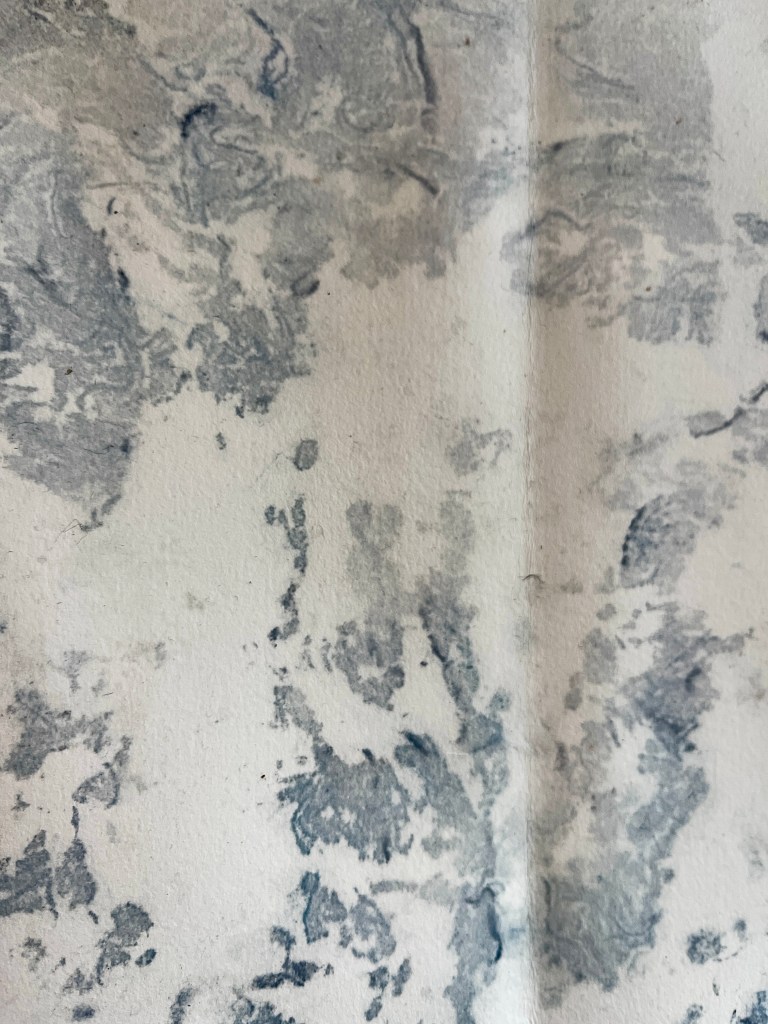
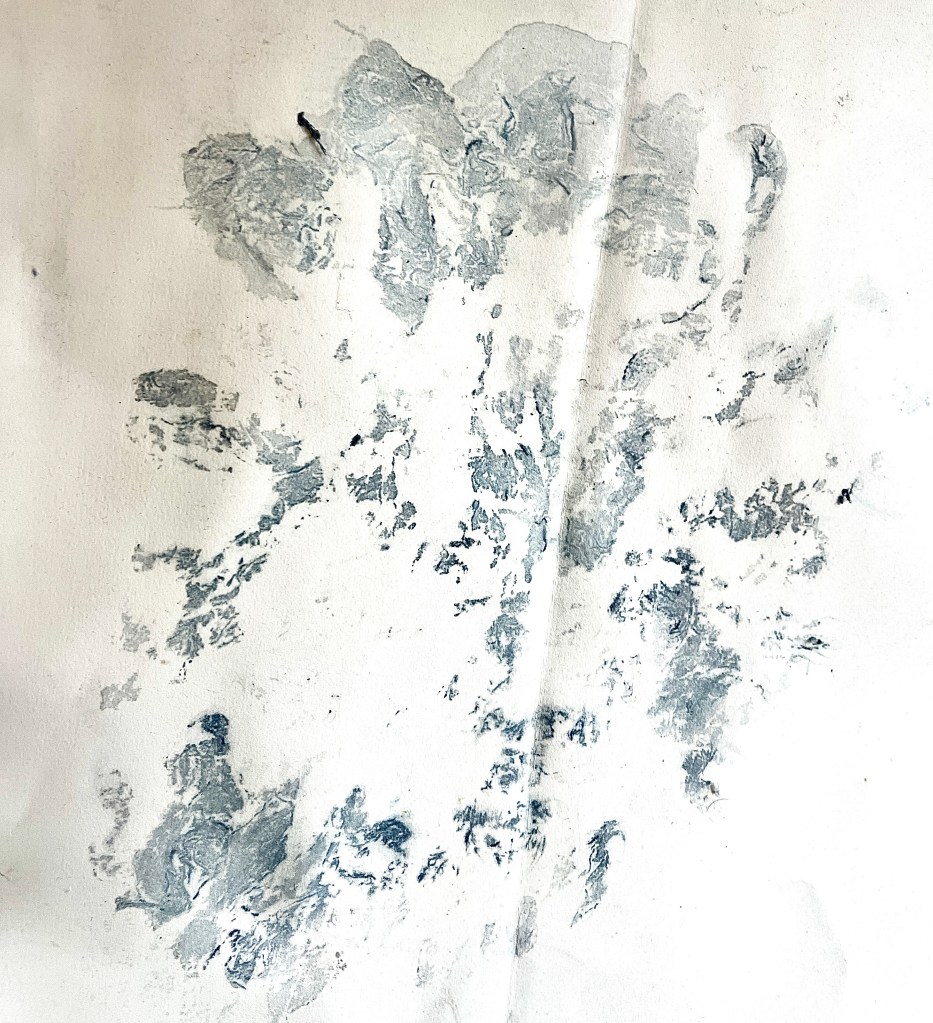
Collecting the felted pieces together I woul dbe able to increase the scale of the work quite dramatically…. creating a wall of work, or a large ‘shroud’ to drape or wear even ?
I photographed them together outside on a 1m x 1m sheet of paper….
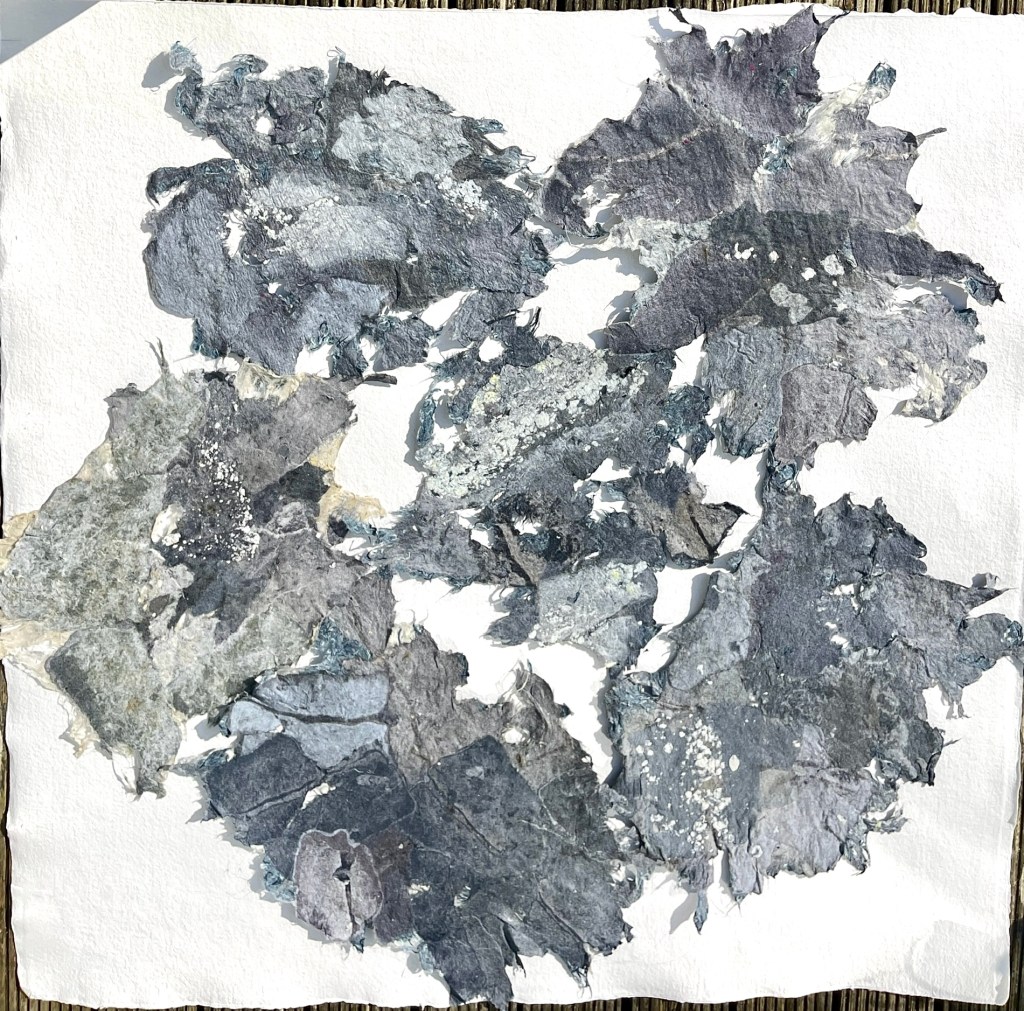
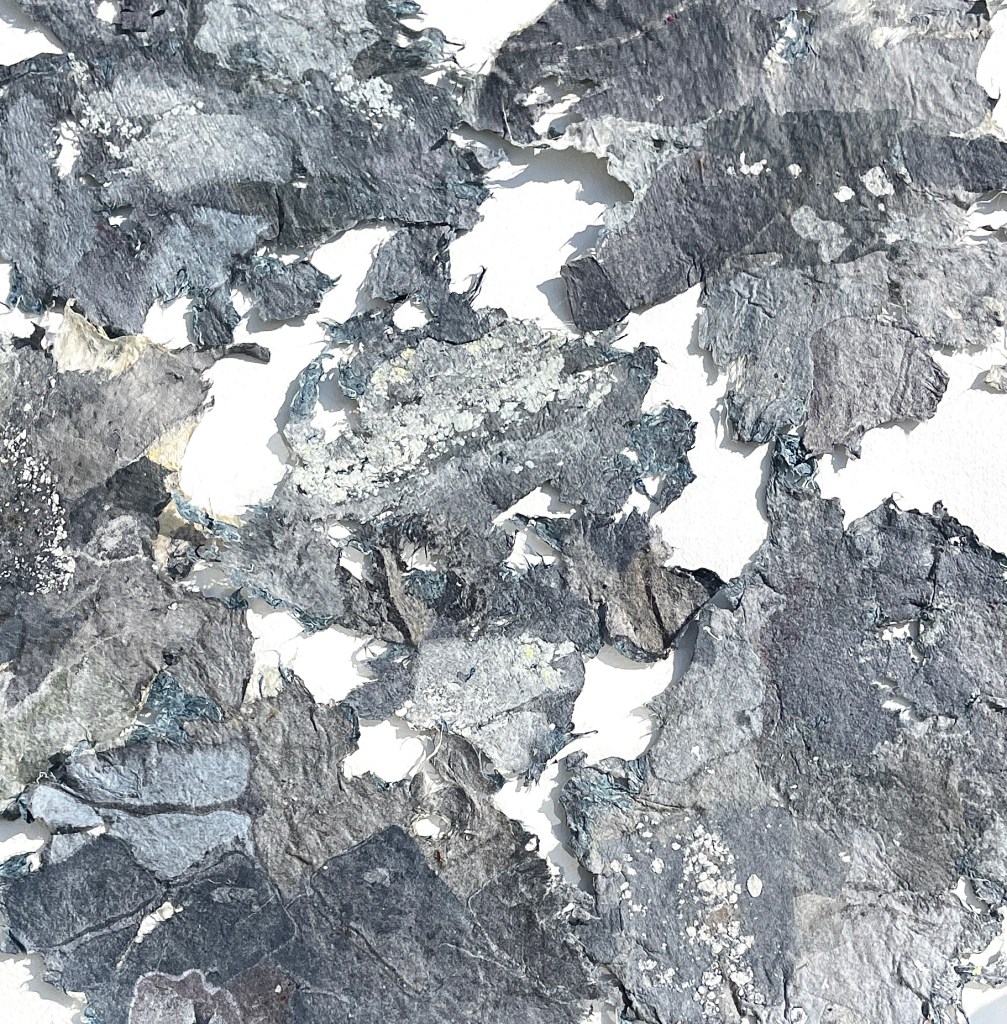
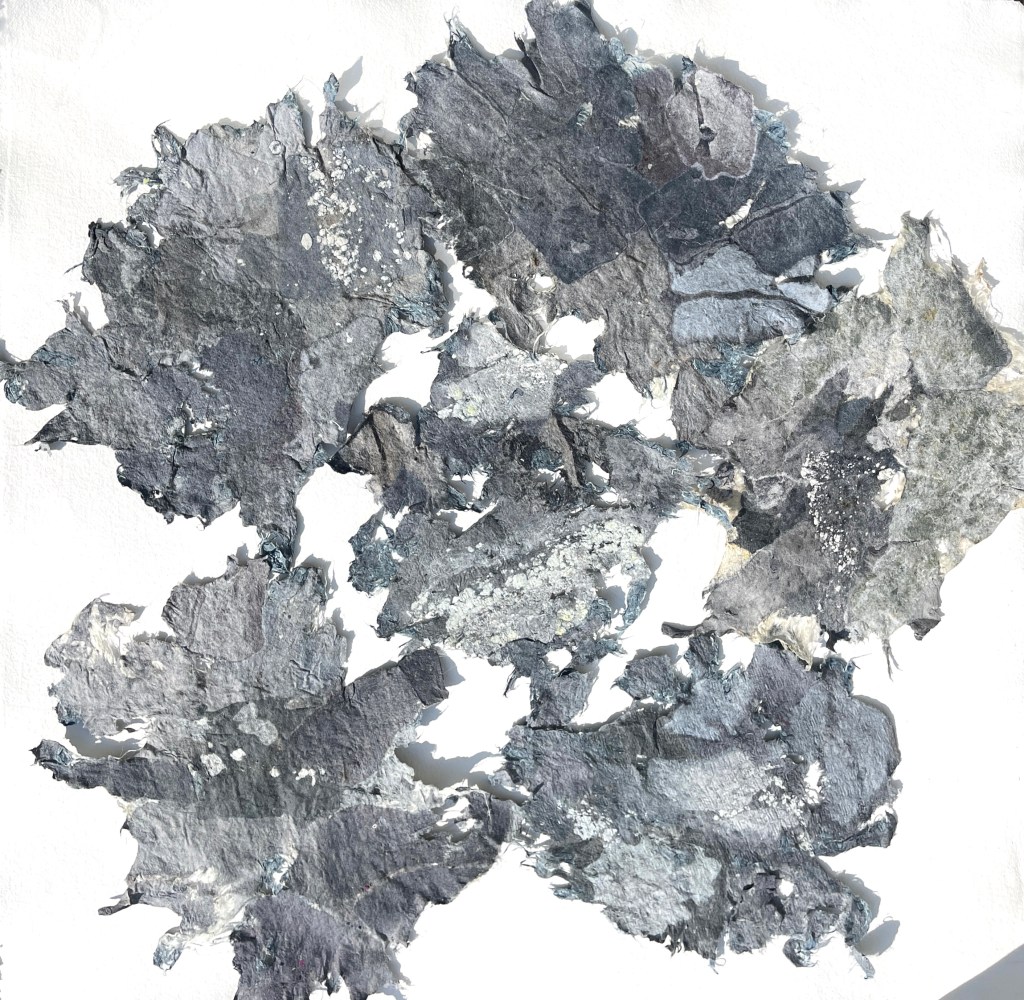
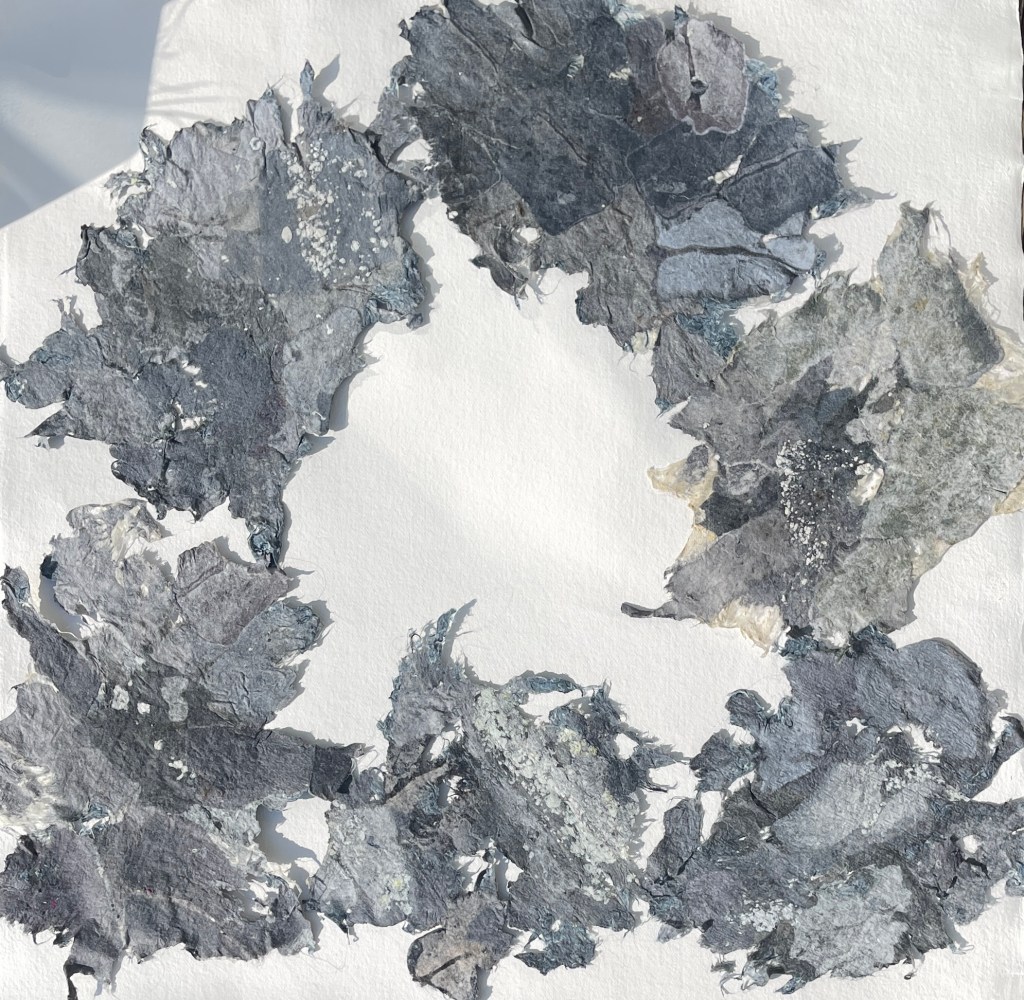
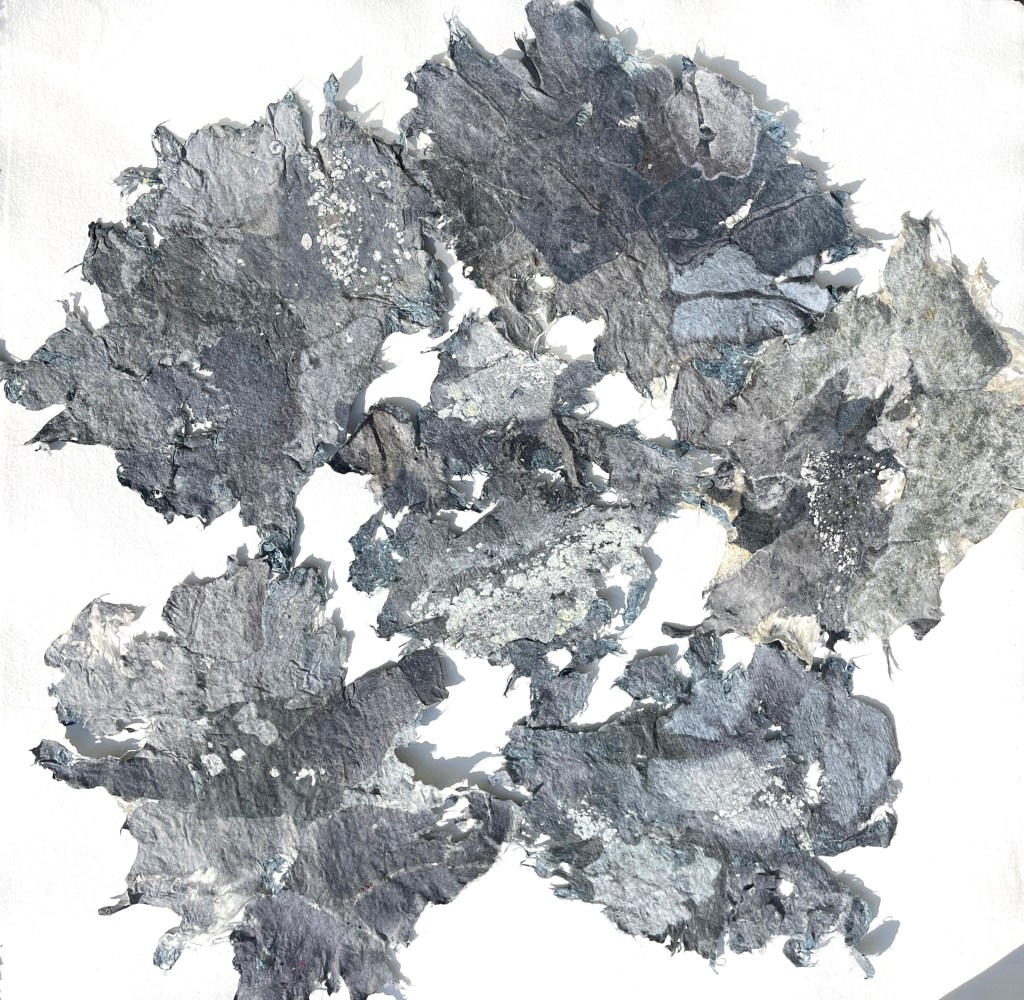
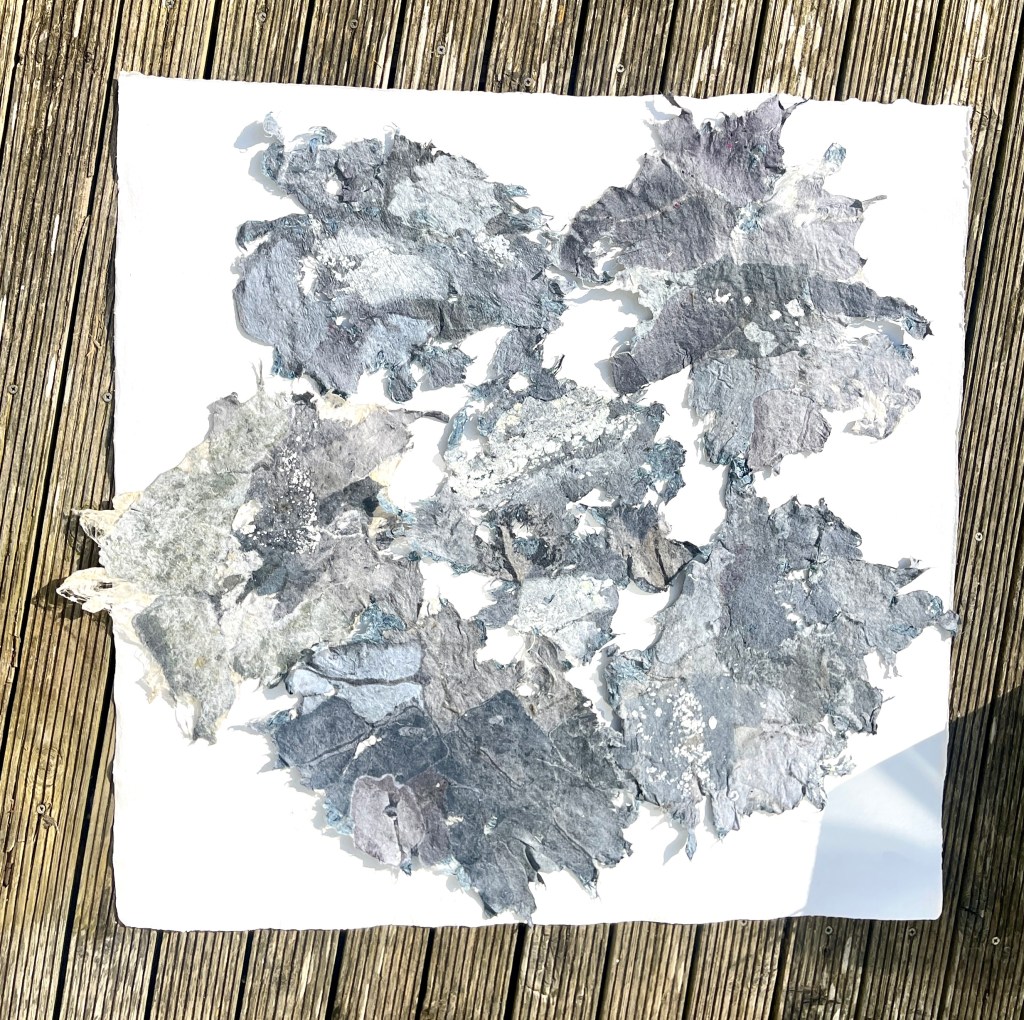
Going forward I need to find a way to securely attach them to each other.. possibly by using thread to connect them. The felting has stiffened the fabric but this has also increased its malleability and durability. I will also explore using a bigger tray and see if I can expand on the individual size of the ‘pelt’.
Photographing the work:
Photography has become a more pressing part of my creative journey as a way of presenting and exposing the artwork – especially in light of the student blog and the need for work to be assessed photographically rather than in real life. This has been advantageous as it has allowed me to explore and push work into new dimentions.
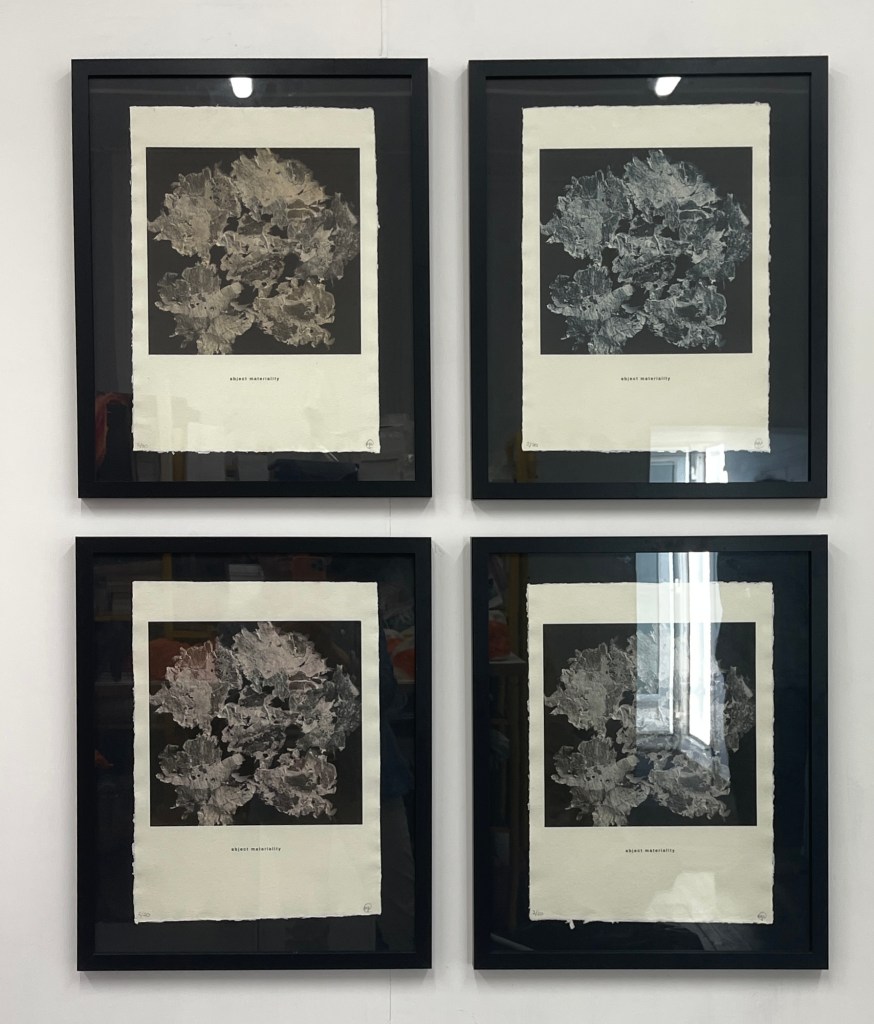
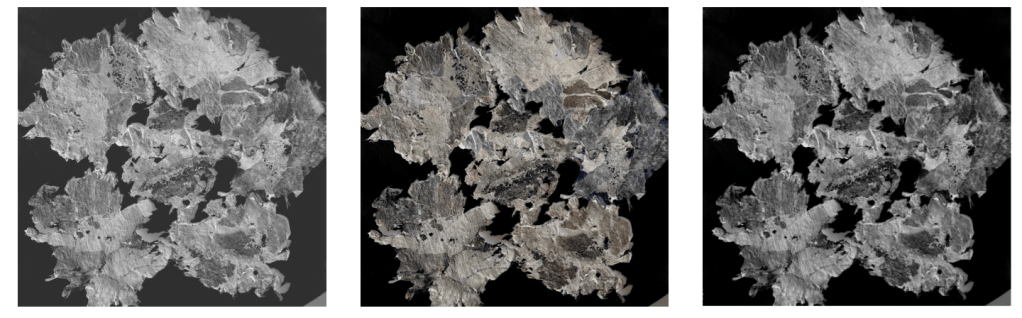
Using some basic media techniques I turned the lage felted ‘pelts ‘ into a negative format with subtle tints. The work too on an unexpected narrative of a flower like /organic shape. the textures and tones visible and enquiring.
adjusting colour/negative
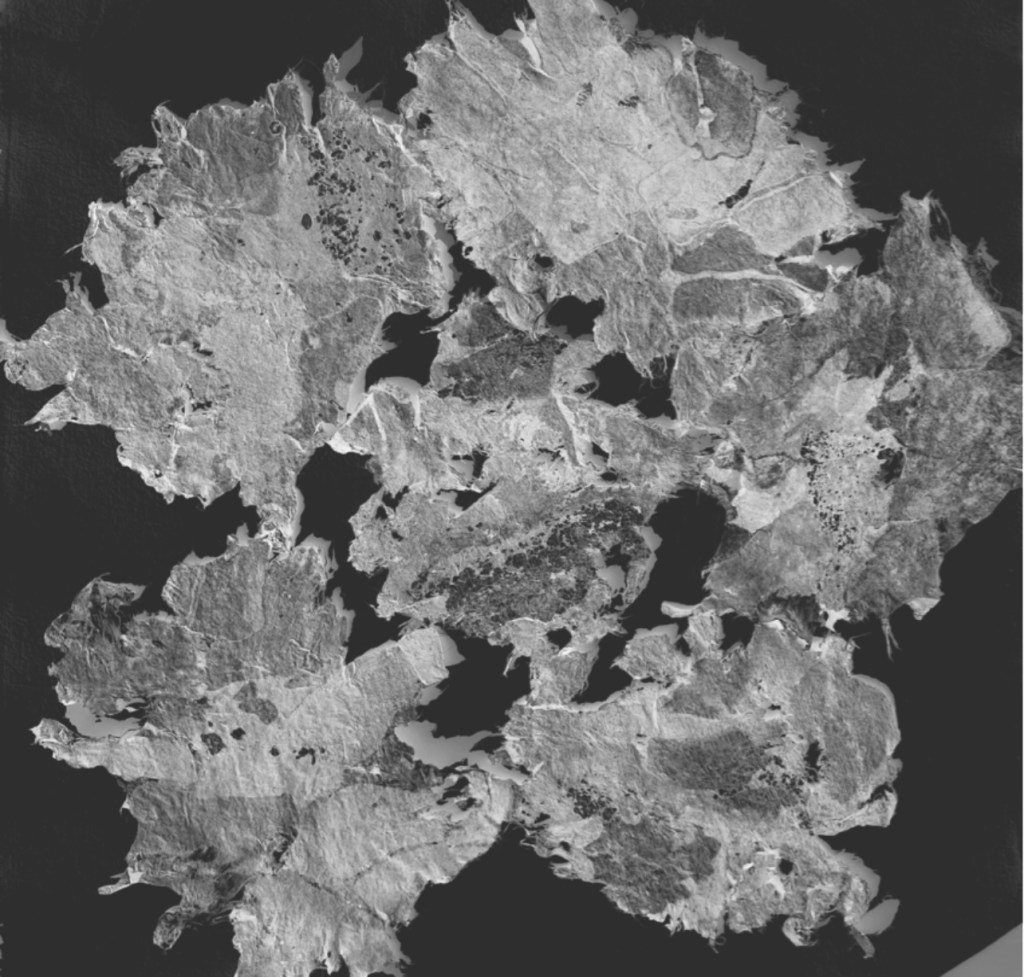
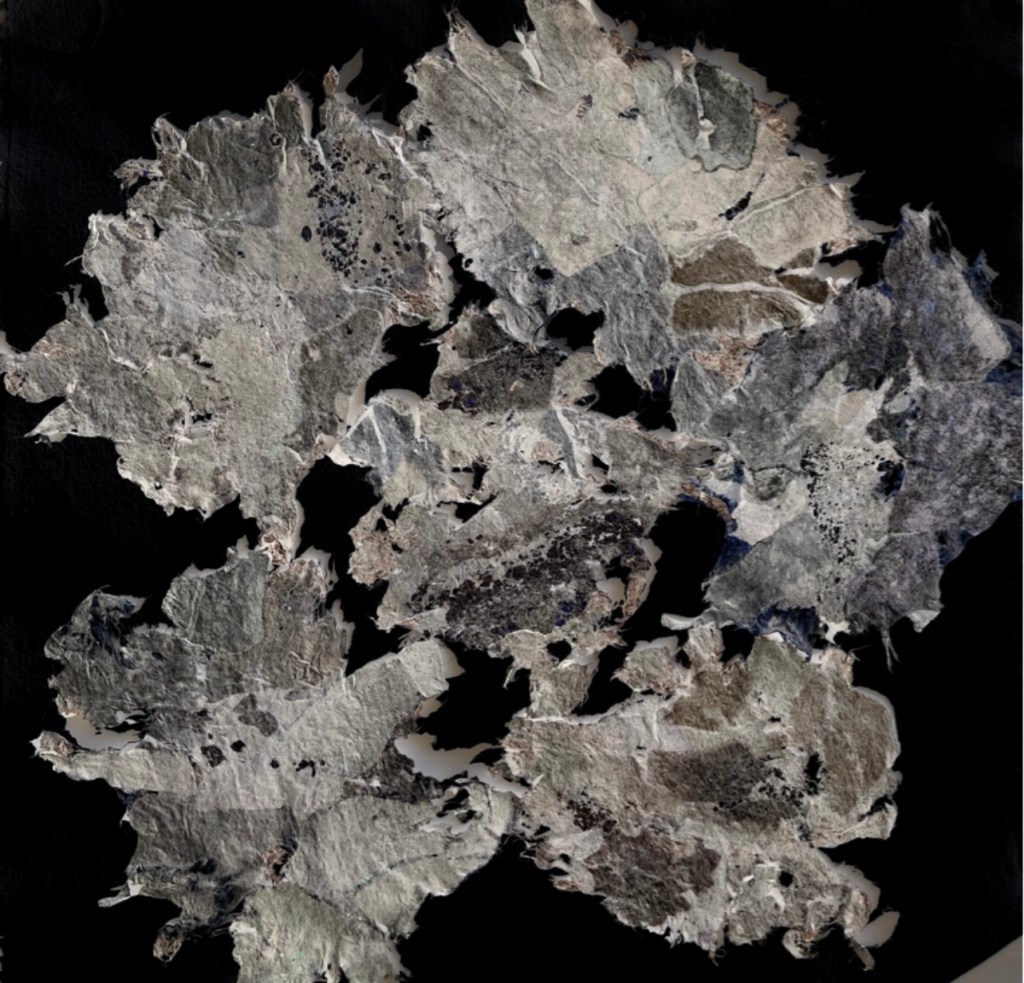
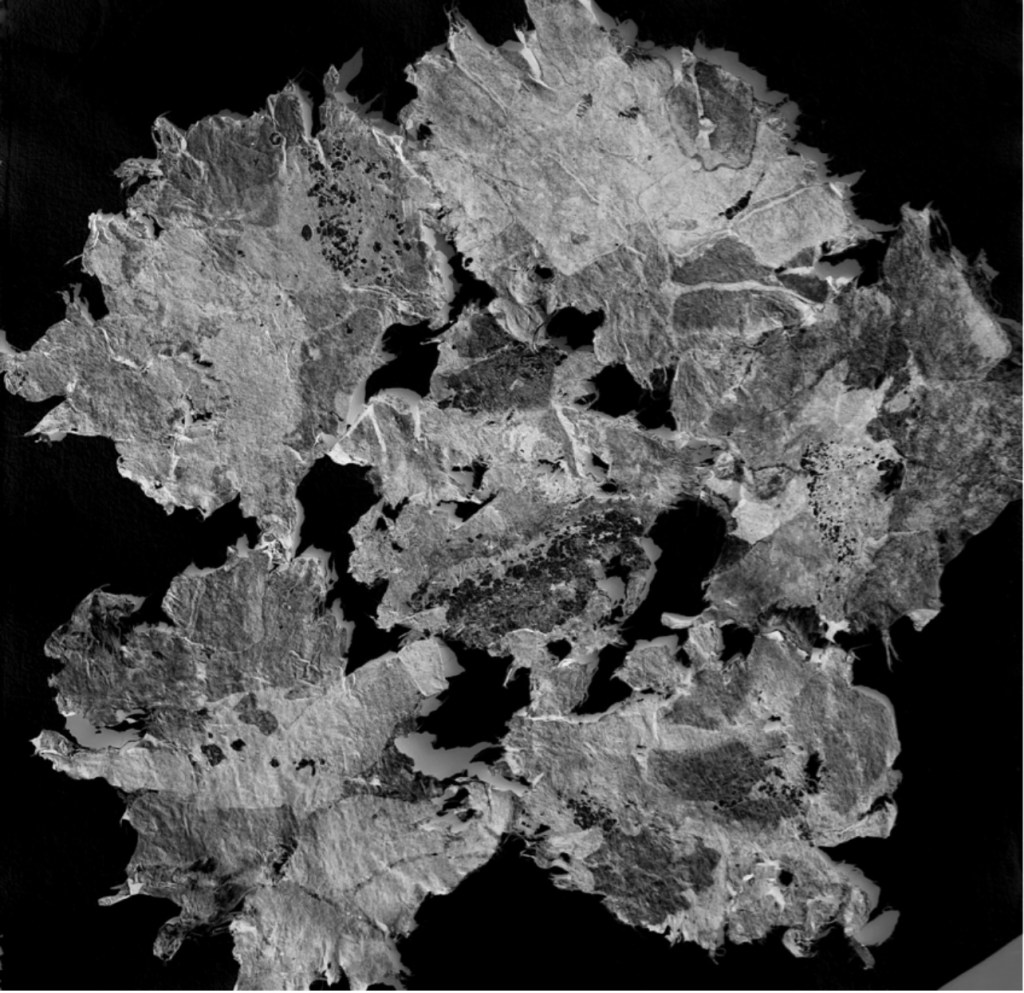
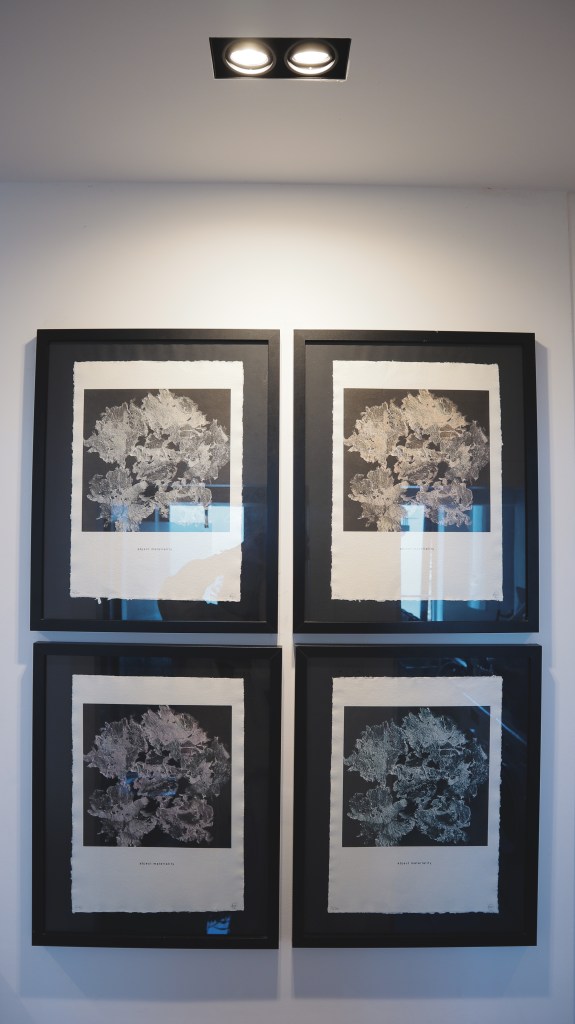
I went onto to curate the image further : Printing them with onto A3 Khadi paper. I gave the work the title ;
‘Abject Materiality’
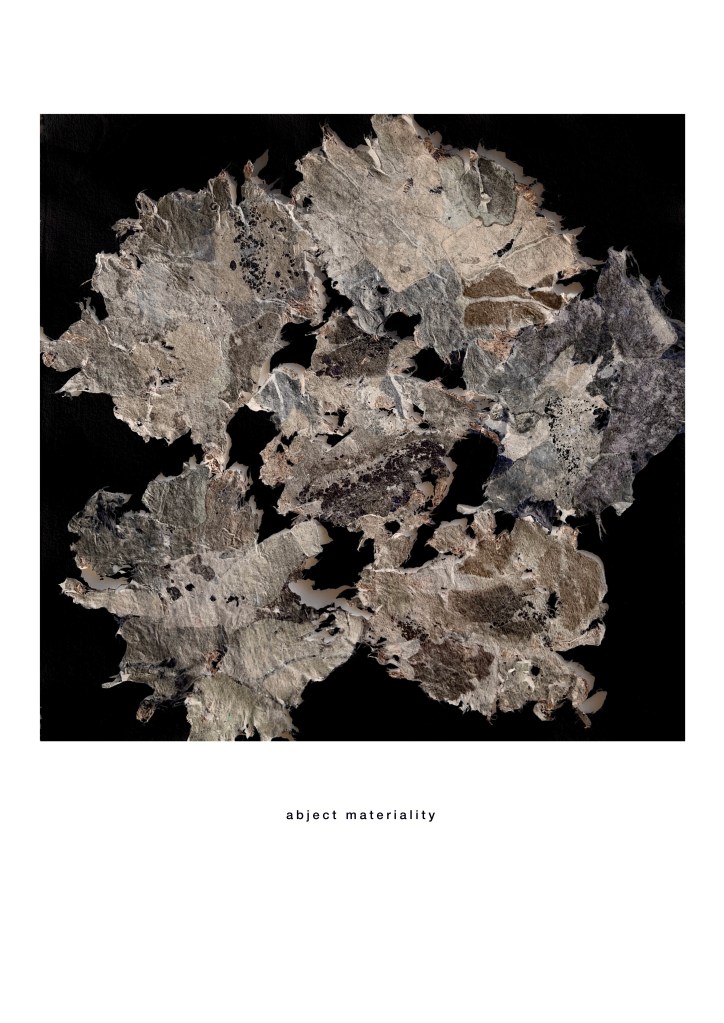
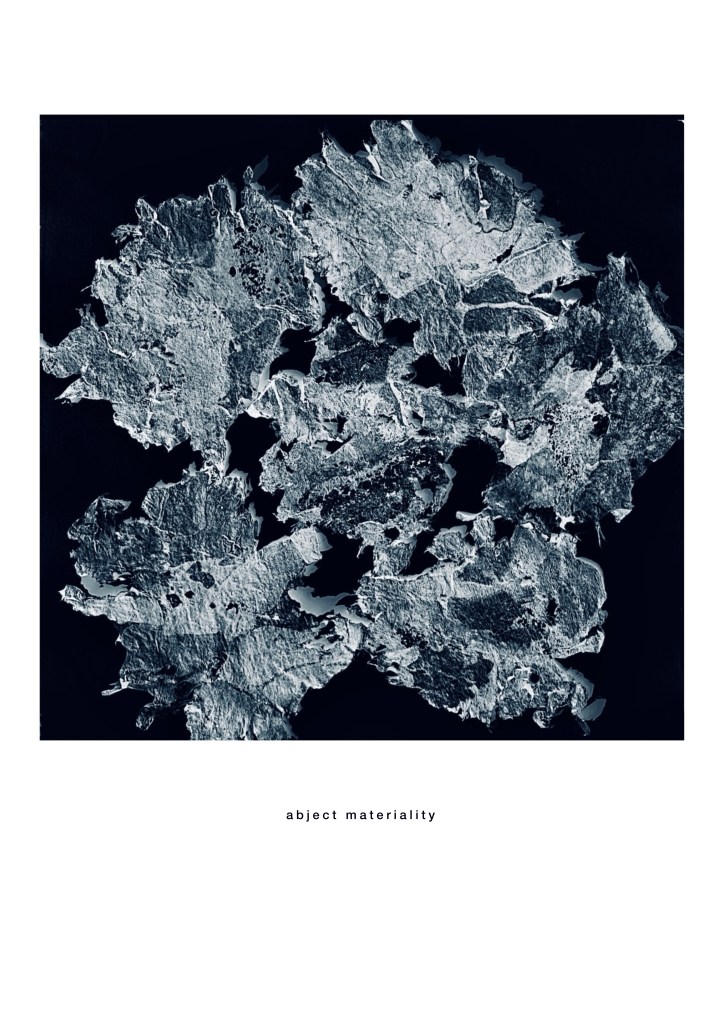
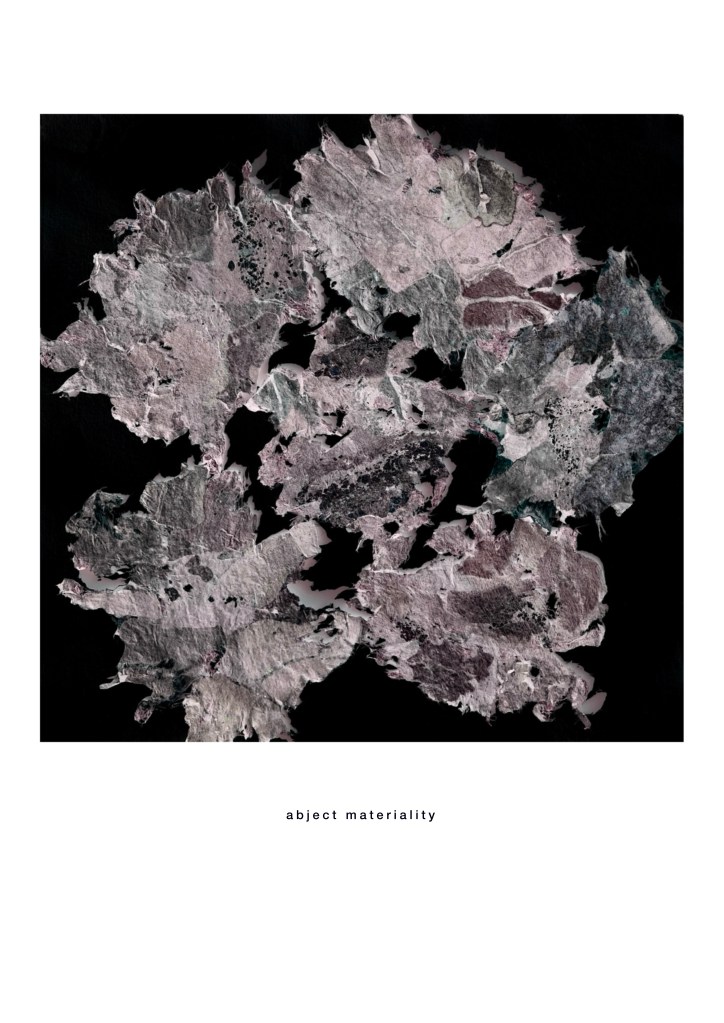
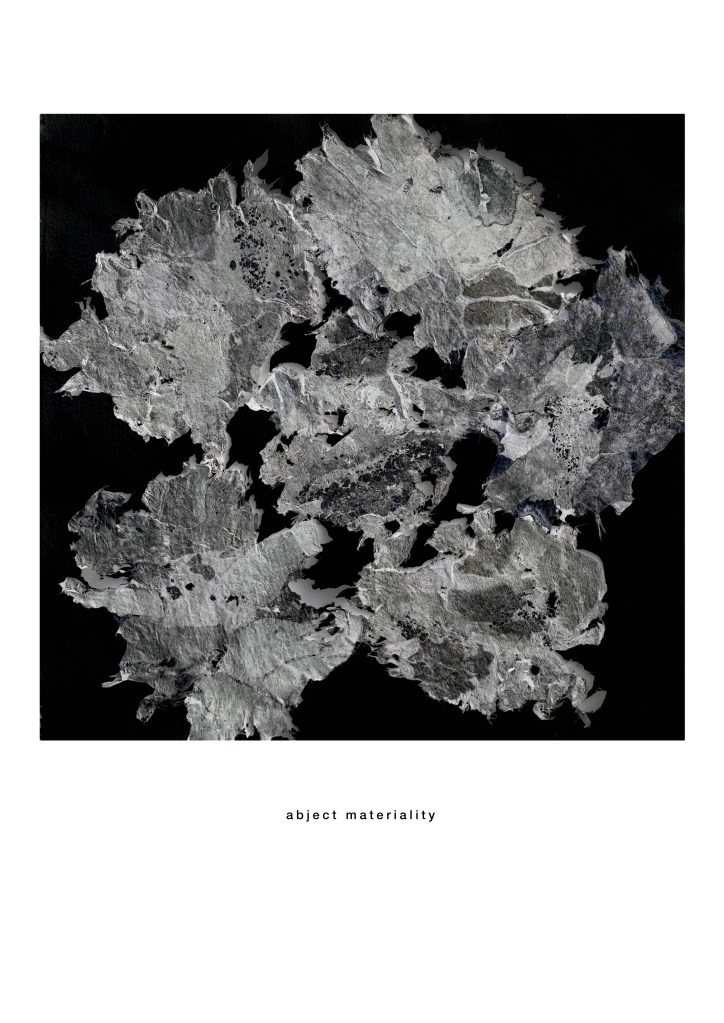
I mounted them in black and framed them in advance of the Chichester Art Trail that I was taking part in and opening my studio space to the public. This was a nerve-racking but timely event as it allowed me to have a platform for feedback from peers and the public in line with the requirements of Project 3.
Work mounted in studio space.
Chichester Art Trail: Programme insertion and programme ;
Narrative :
I was satisfied with the narrative “Abject Materiality’ offered, I spoke at length about :
The concept of washing away the dirt and experiences our clothes have encountered, they serve as our shell/protection from the outside, elements and notions of privacy and expression. However, we are not able to wash away ourselves we remain and absorb and contain all those experiences of the the week and the day in side us , we can not wash those away.
It is traditionally a female orientated role – a relentless ritual of the house keeper and manager. A chore and responsibility of family management. Interestingly all the women I spoke to (over 200 of them over the 5 day event ) stated they were still almost solely in charge of managing the household washing and the various stages of work that involved. This was despite holding down jobs out side the home there was a lack of equality around this and many other tasks in the home.
The ‘felt is a narrative and history of the weeks washing, where you went what was encountered, what was the weather etc… it also holds large volumes of our DNA.
It is full of micro plastic. What we discard from our dryer filters is the beginning of the plastic micro fibres that enter into the water and food chain. When we wash man made fibres it breaks down and the particles of fabric made from polyester, nylon etc are released from the fabric, some are washed away into the water table, too tiny to e filted out by a sewage system they end up in our seas and rivers eventually entering our food chain.
The felt has a metaphorical notion of self and our history and may also be a material to consider more fully in regards to its disposal and future up-cycled usages.
Further exploration regarding open studios:
Revisiting the cup covered in felted detritus : ‘ Cup of us’
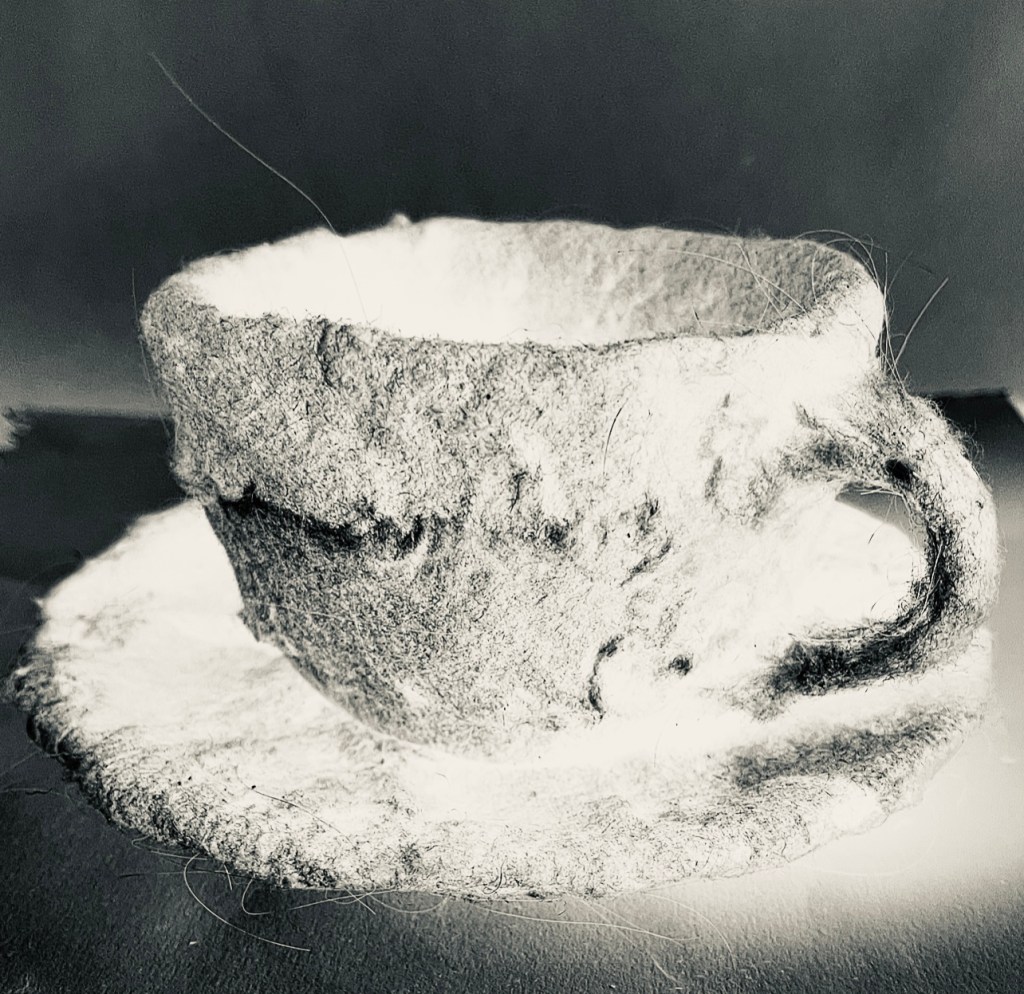
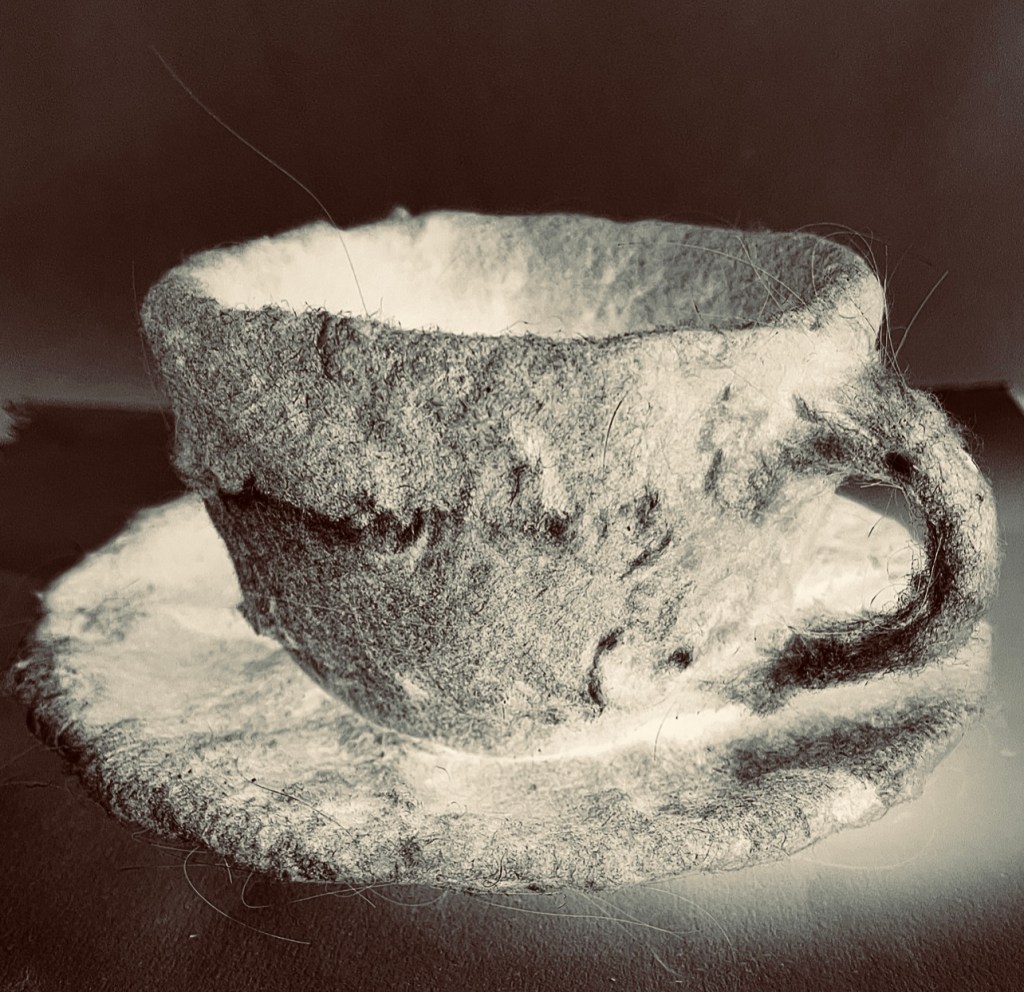
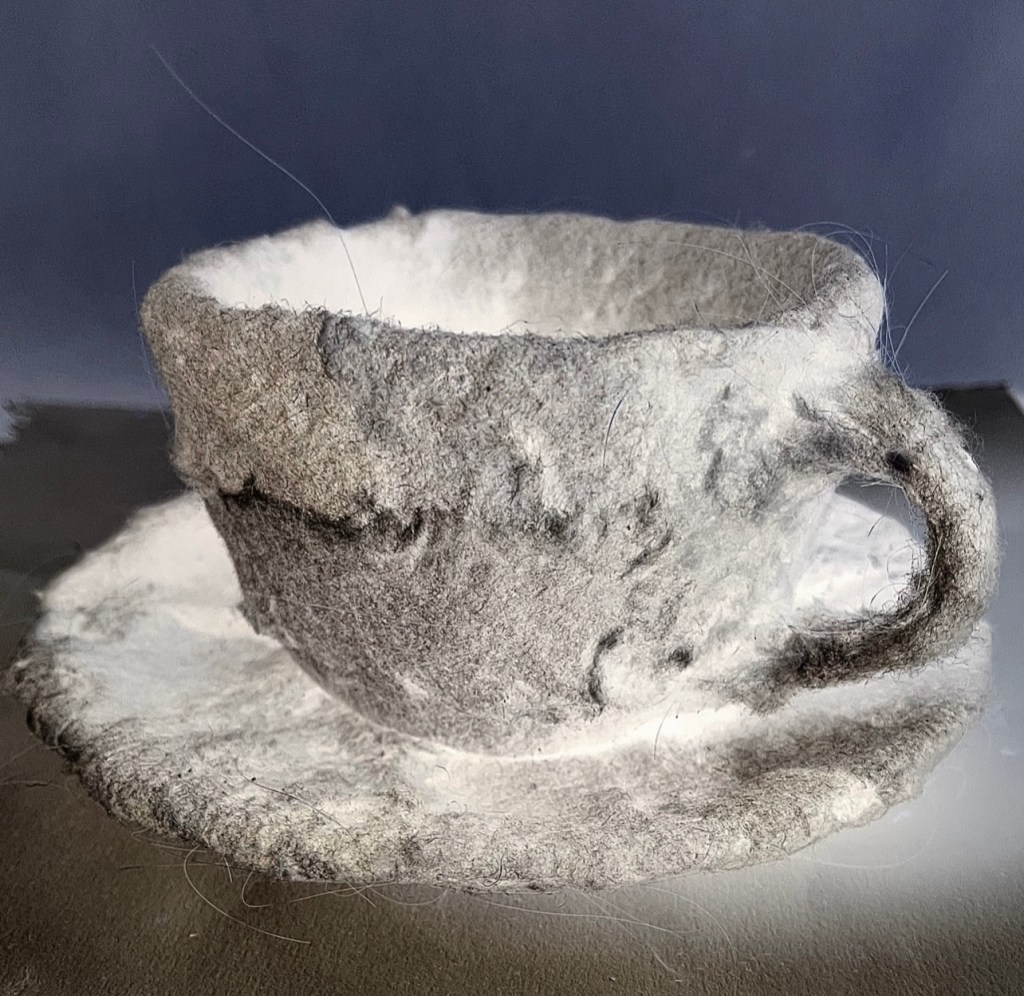
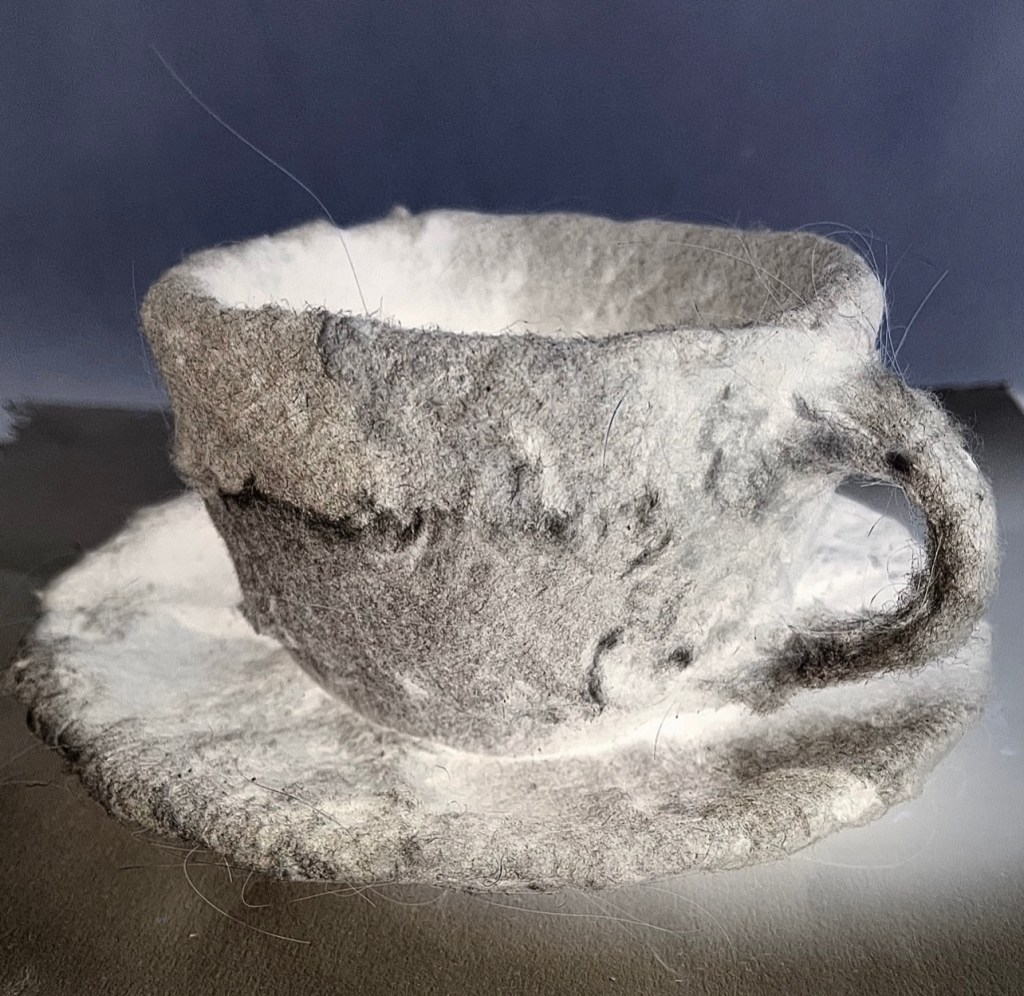
This work encouraged a great deal of interest : The notion of the familiar tea cup image was a draw and its rather surprising covering. The spoken narrative was to explain about the felted material and its meaning and explain that the reason for covering th ecup in was to bring immediate attention to the subject matter and also to use it as a metaphor of belonging and family. The history of us on a cup – our week our DNA our being.
I had photographed it onto Khadi paper exposing and exaggerating the colour and texture offering some really detailed and in depth results. It proved very popular.
Exploring the felted material further:
The wet felting had shown the malleable qualities of the material so I look ed to create shape and volume with the pieces experimenting as I worked with no set outcome or agenda ;
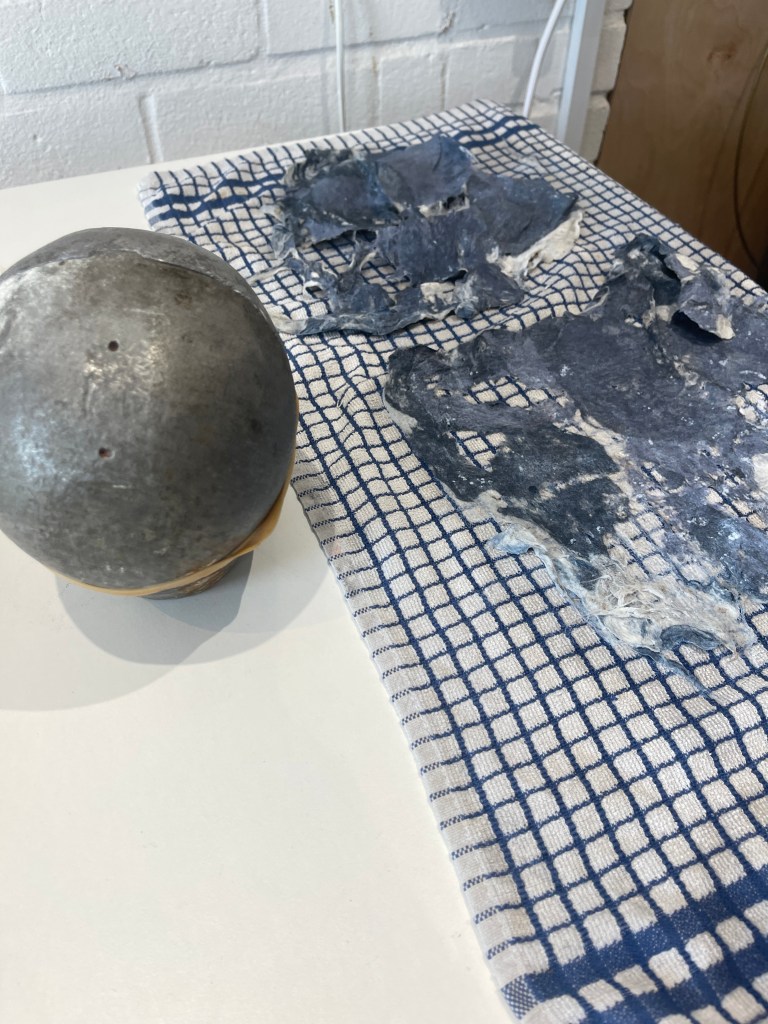
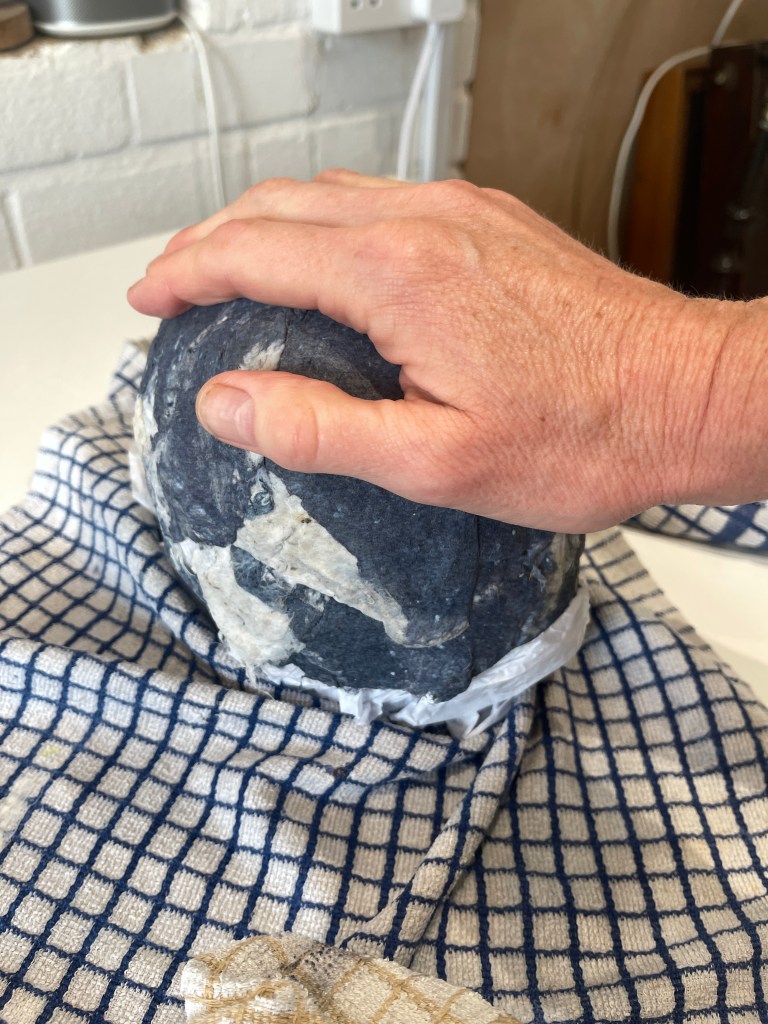
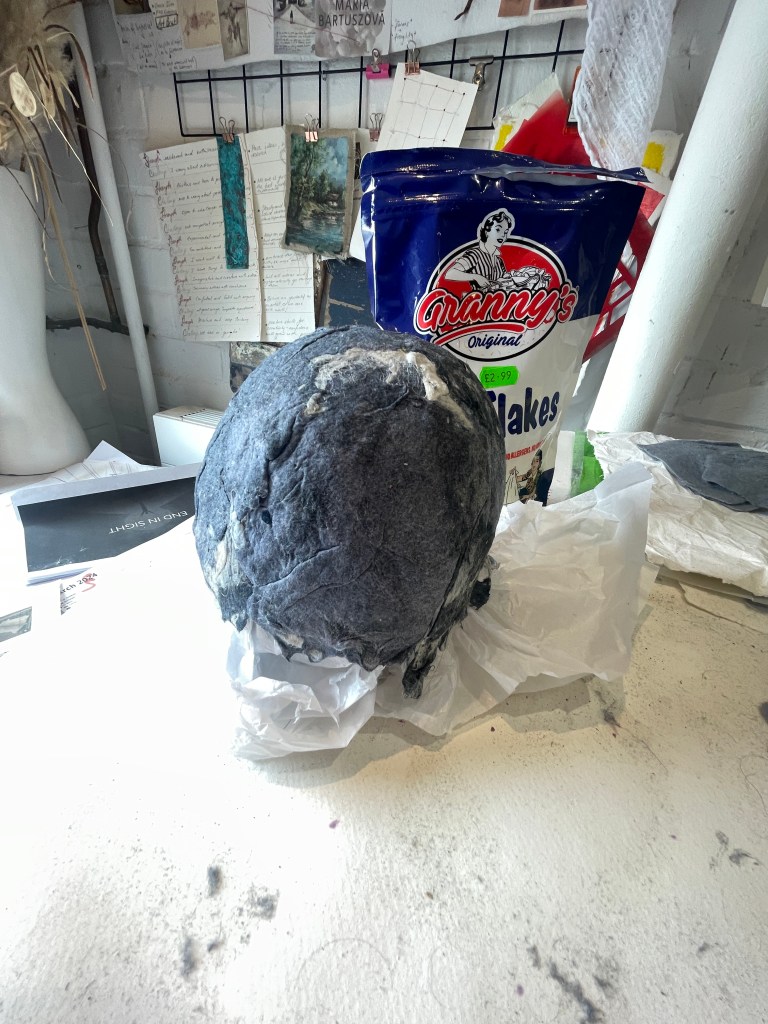
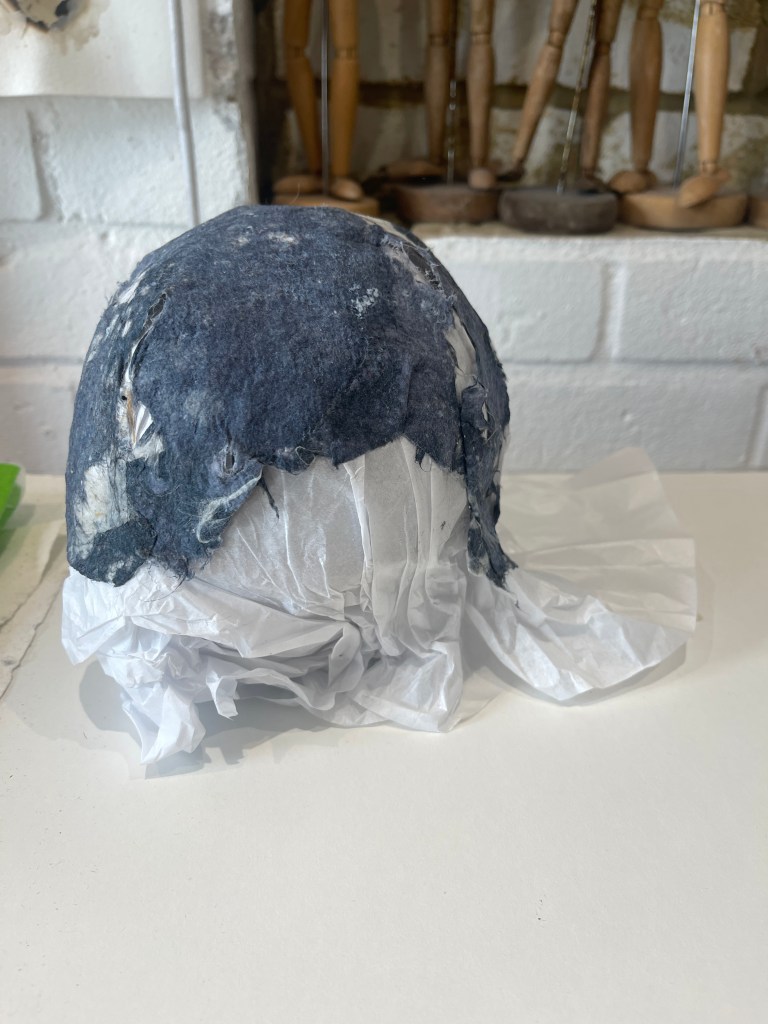
I placed the wet felt over a vintage dolls head mould prepping it with tissue over the head firt to allow for easy extraction.
This was a process I repeated a number of times with various other items: Leaving them to dry for a few days before removing them. In my haste to prepare for the open studio I did not photograph all the objects.
It was a great success with the felt maintaining its moulded shape. There was a wonderful hollowness about the objects a void that spoke volumes about the materials origins, a shell, a covering of us and the hollow rituals of the washing process.
I collected the individual pieces together in a cluster arrangement and called them,
‘Hollow Objects
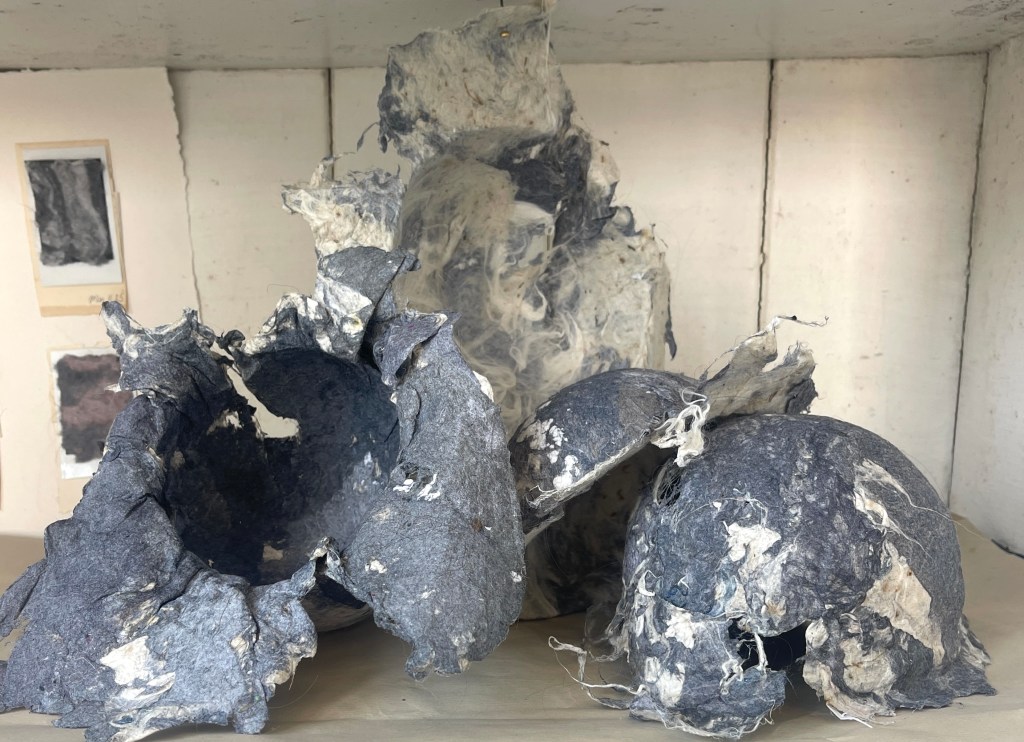
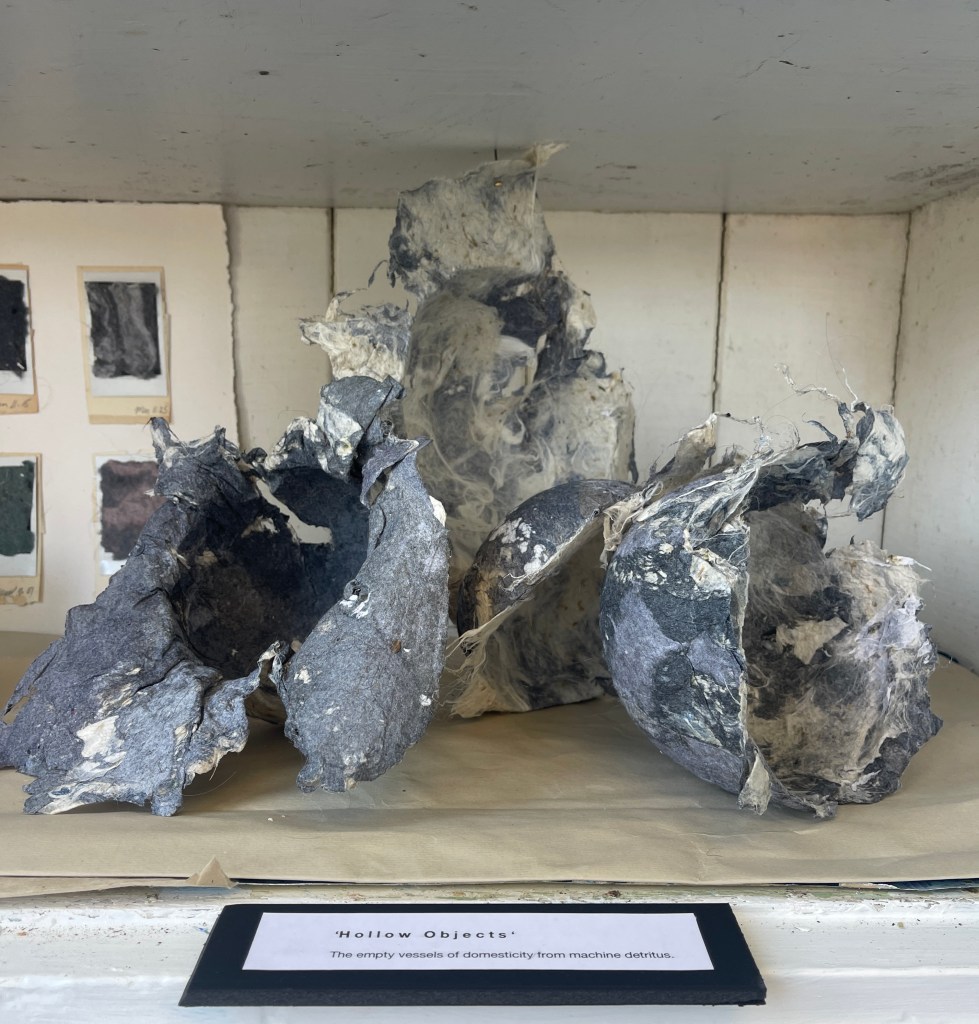
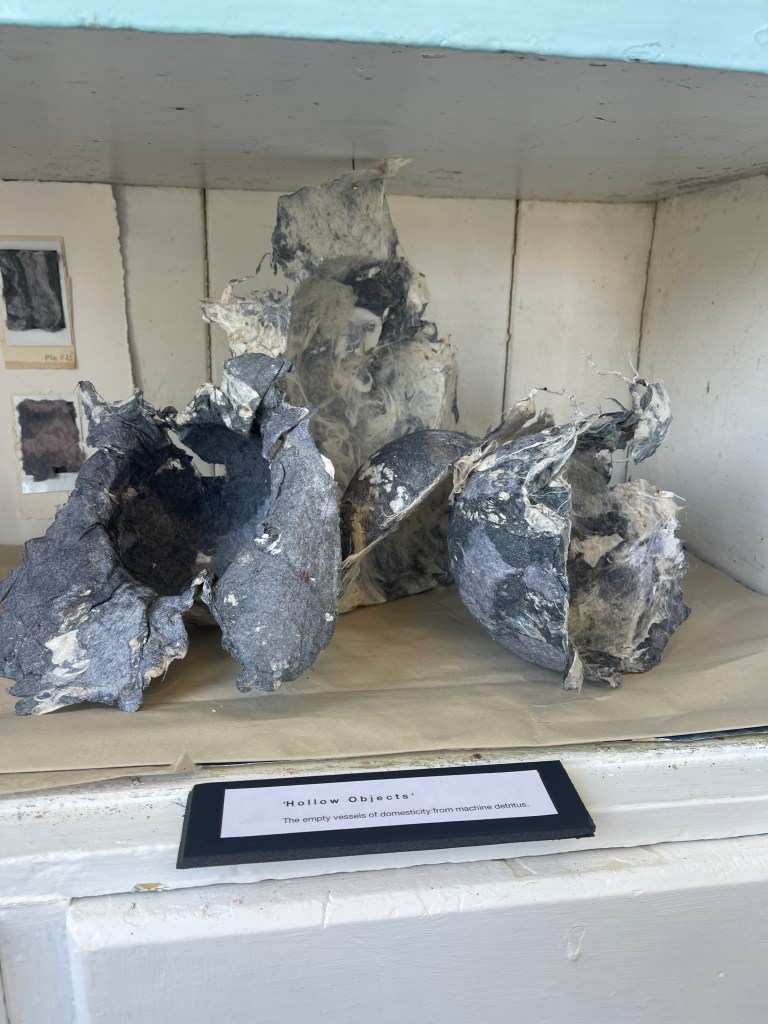
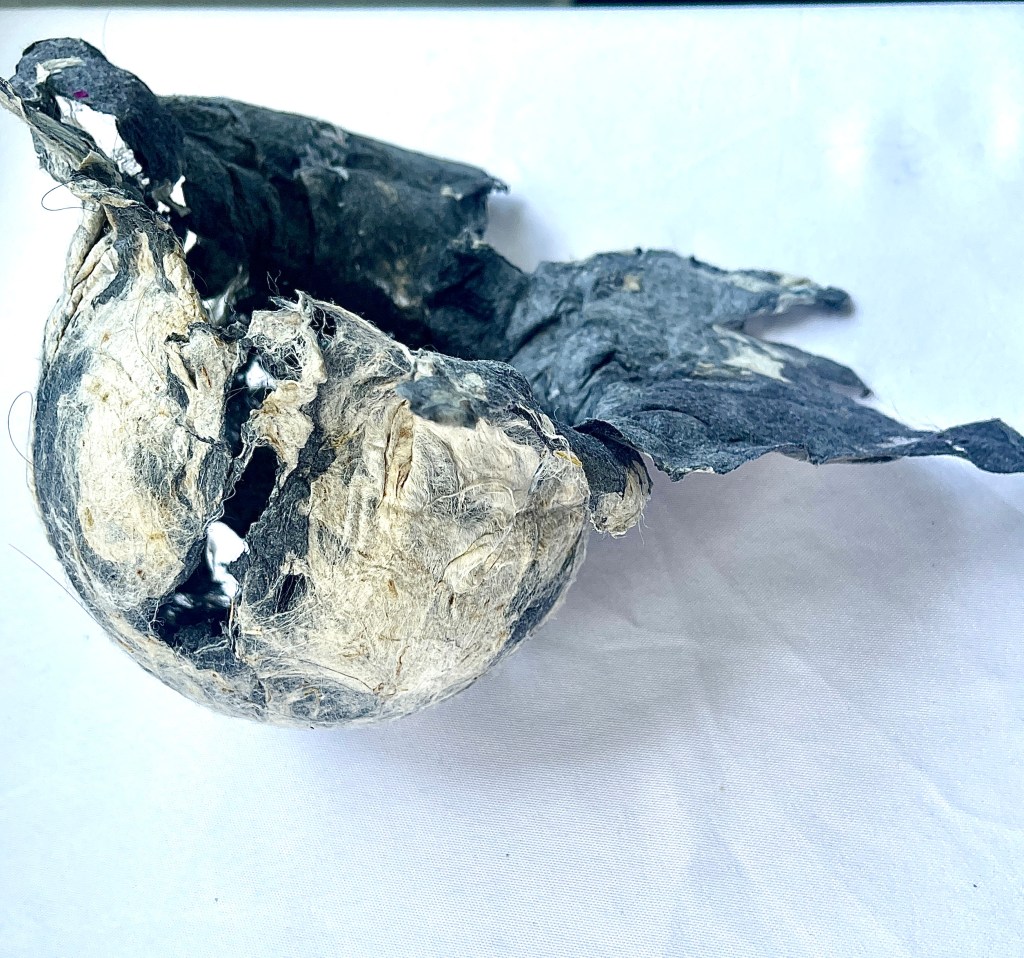
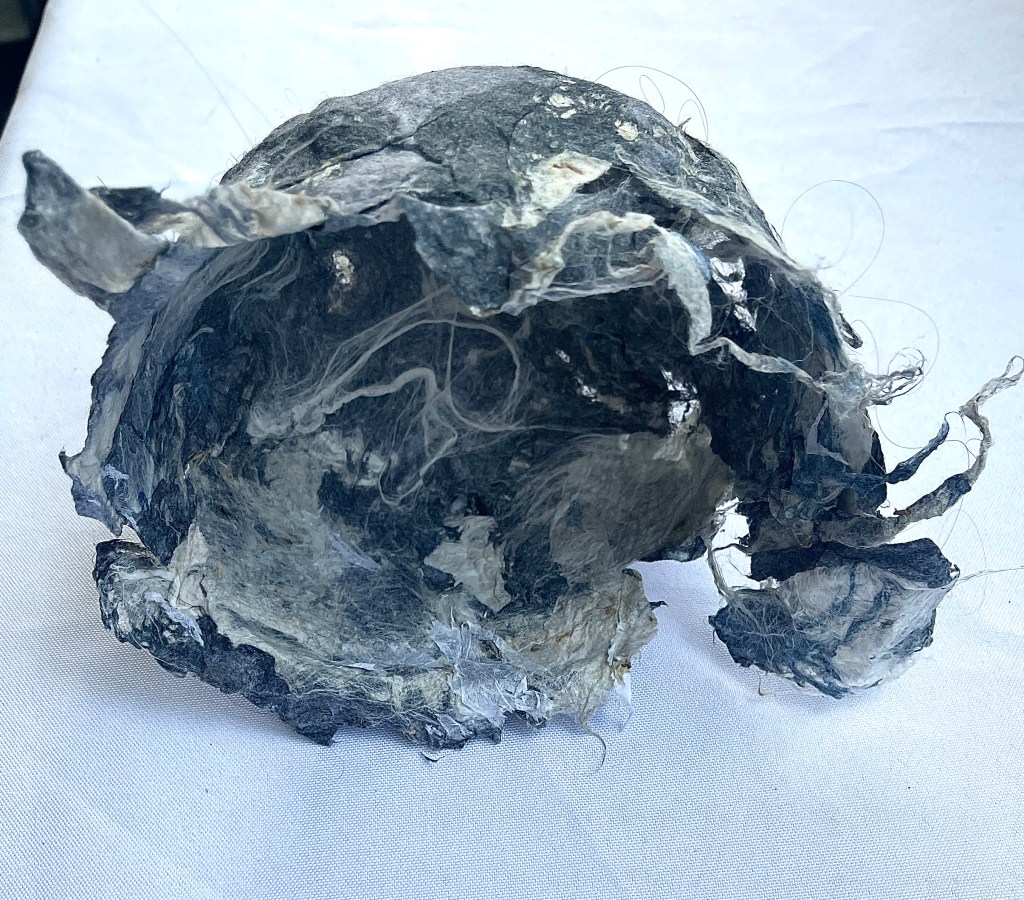
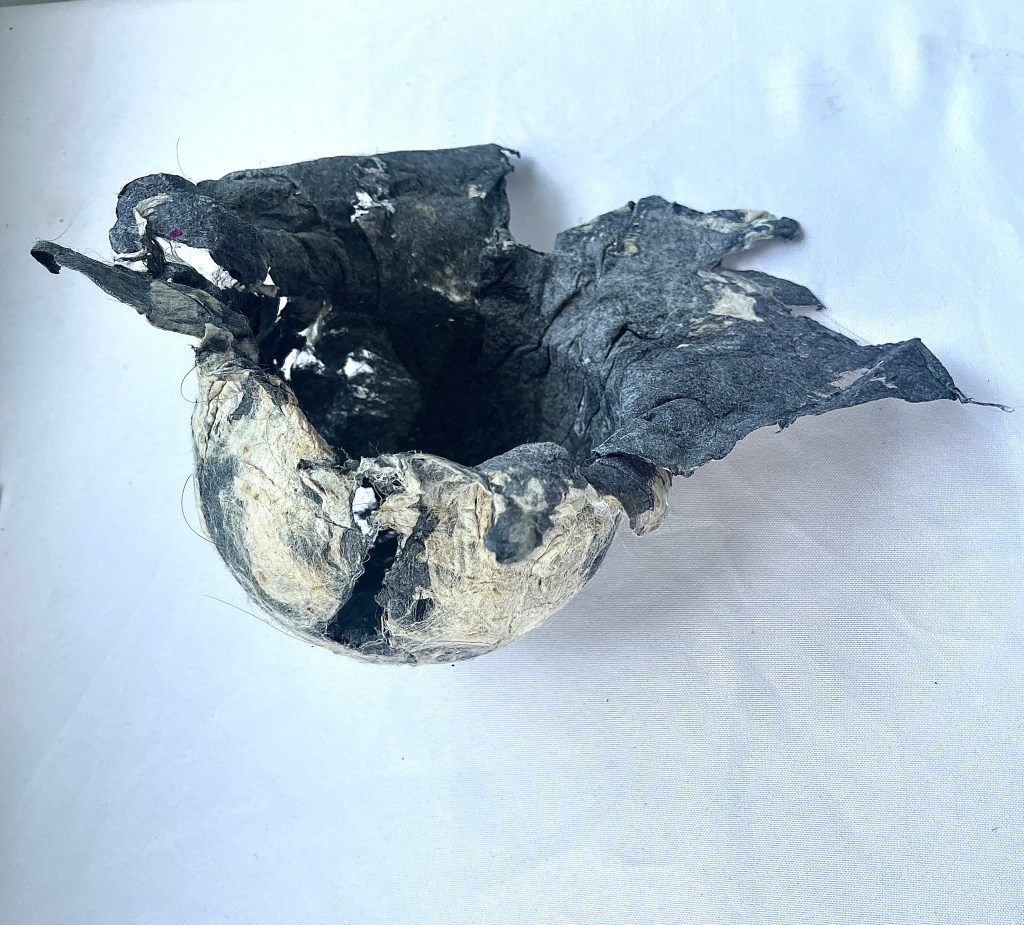
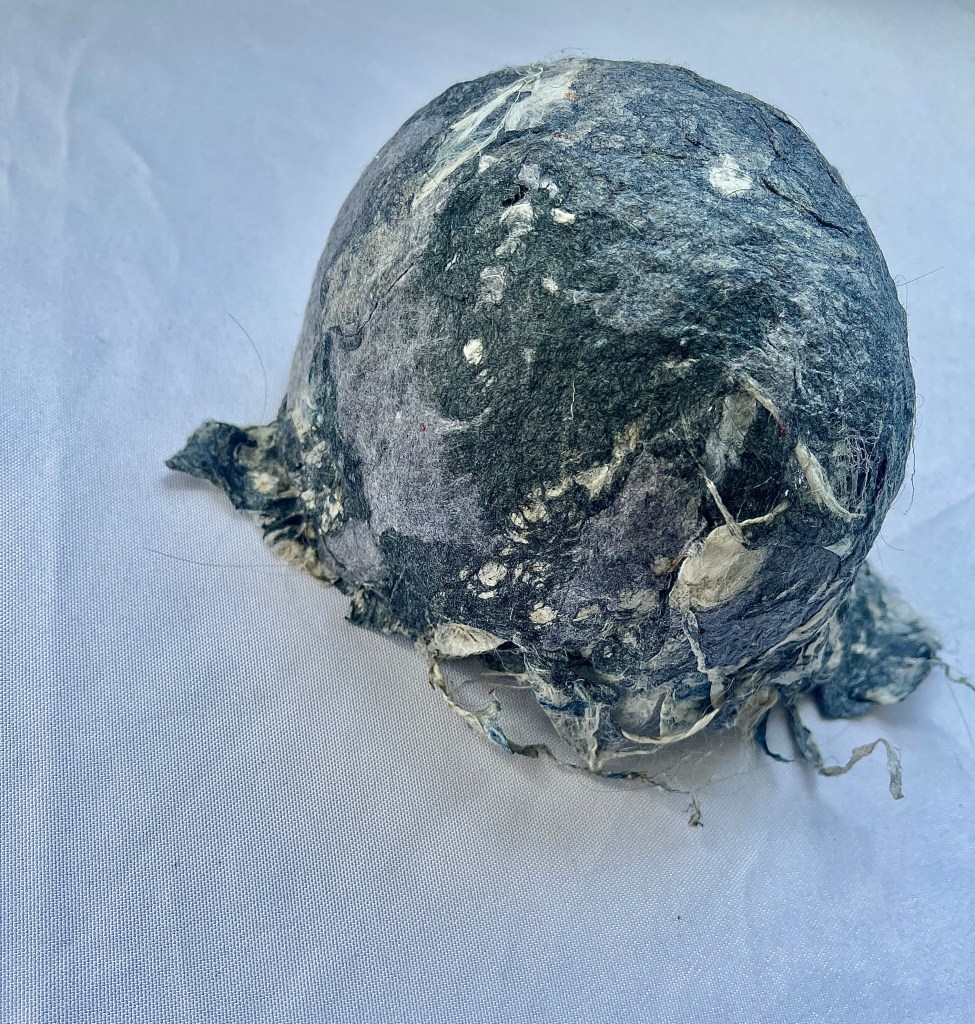
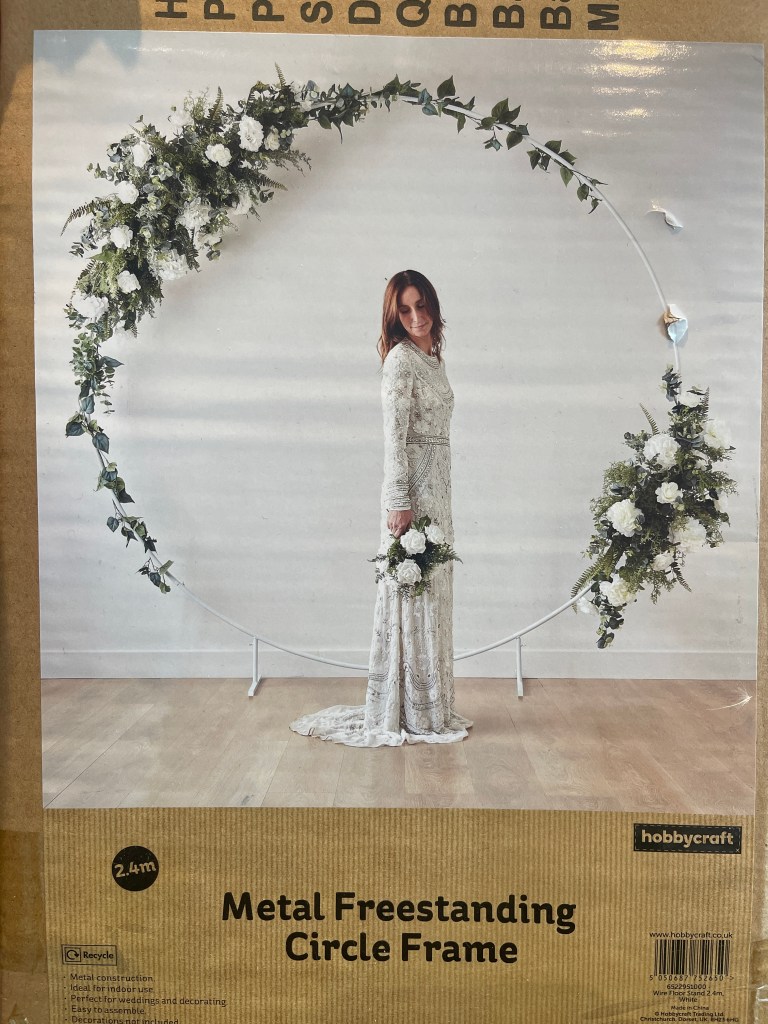
Going forward a recent purchase of an enormous metal hoop that is big enough to stand in (as below) was to explore the concept of hanging the large flat felted work, joining, combining them to form an amorphous shape contained within the circle…This will need to be worked on outside due to the size , I will continue to make more pelts to begin this experimental process..Perhaps combining the 3D moulded shapes into this work….
Felting on a larger scale:
Using a flat based plastic container I was able to felt larger pieces of material. I had continued to collect the ‘abject material’ and was now looking to upscale the work and create a work of ‘ murmuration’ . My idea was to incorporate a large hoop to hang the work from allowing a spiralling and cascading sculpture to be created from the moulded and manipulated felted work.
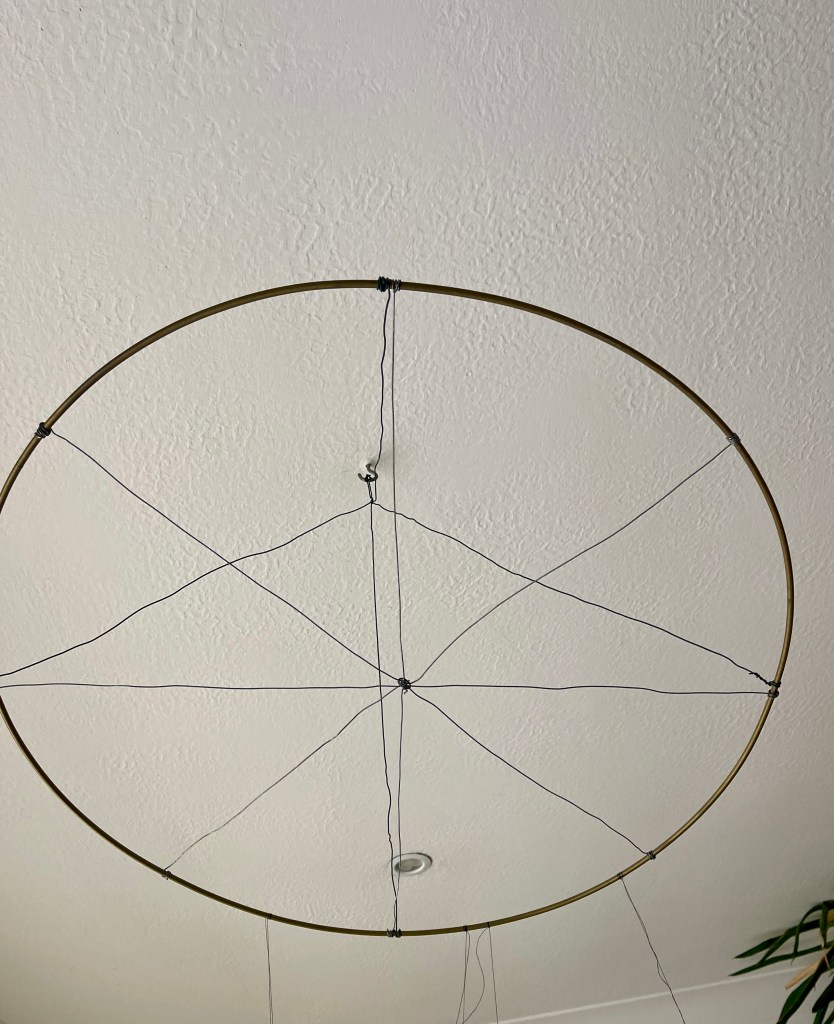
My initial very large scale hoop at this stage felt overly big. I had a smaller metal hoop that I began to work on and use garden wire to create a criss-cross of lines to allow for hanging above and below:
his was hung from a hook in my studio taking up considerable space – the diameter was 1 m .
The larger scale pieces were now paid flat out to dry initially from the felting process they are double the size of previous work:
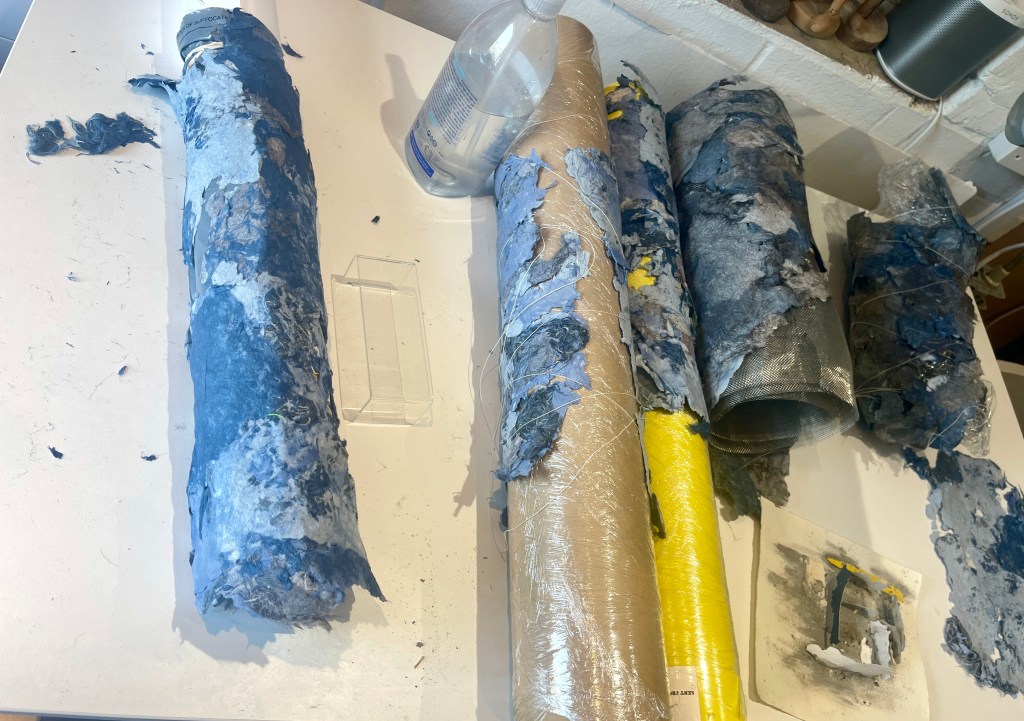
I wrapped the wet felt around a roll of sculpting wire to dry …
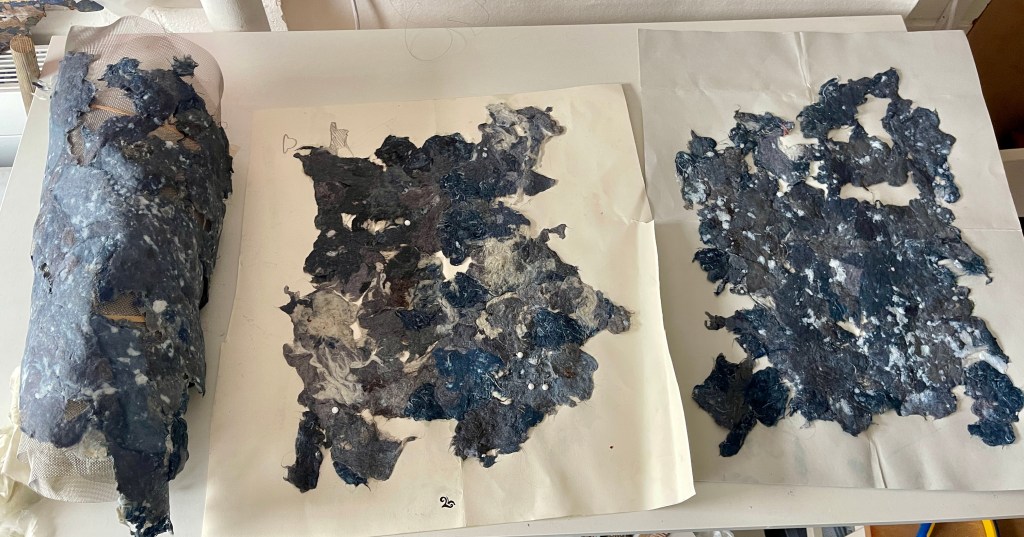
Continuing to do this with the other pieces, folding the wet felt around cardboard rolls and wire, using rubber bands to secure them in places.
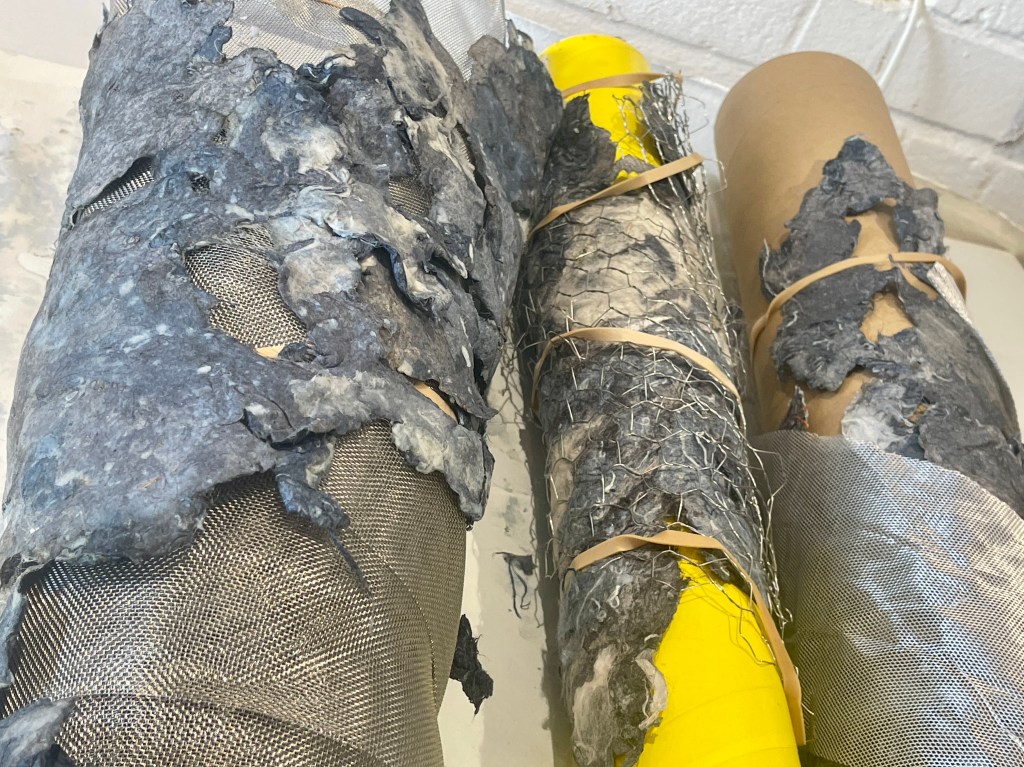
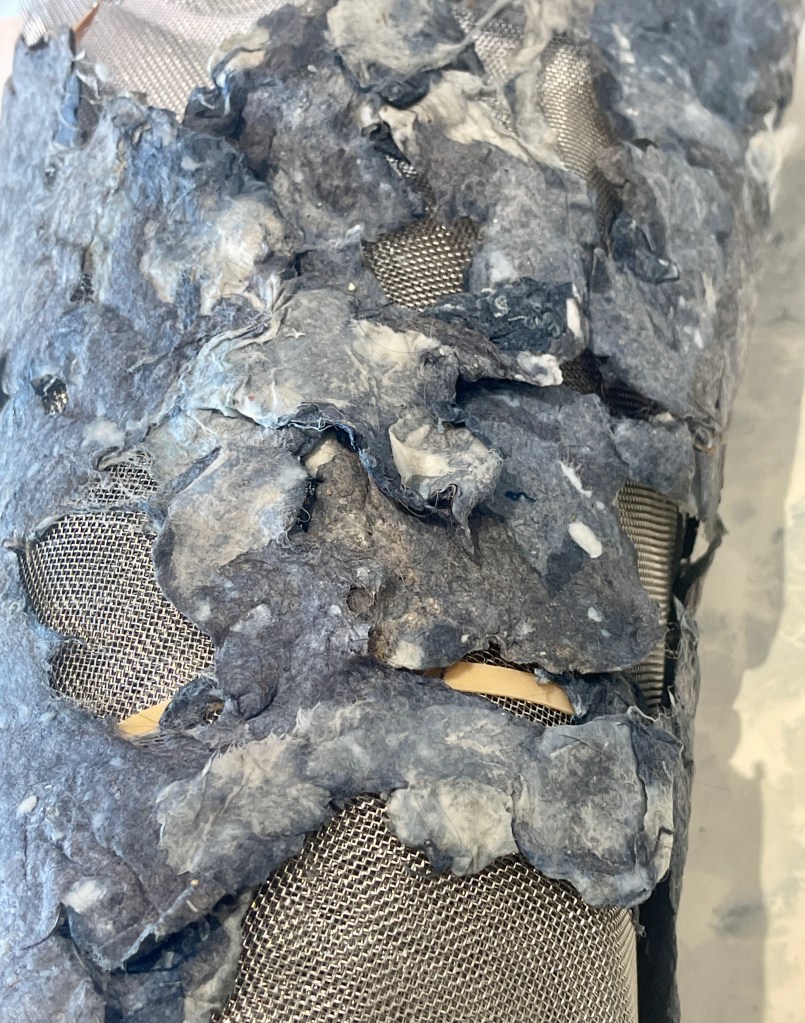
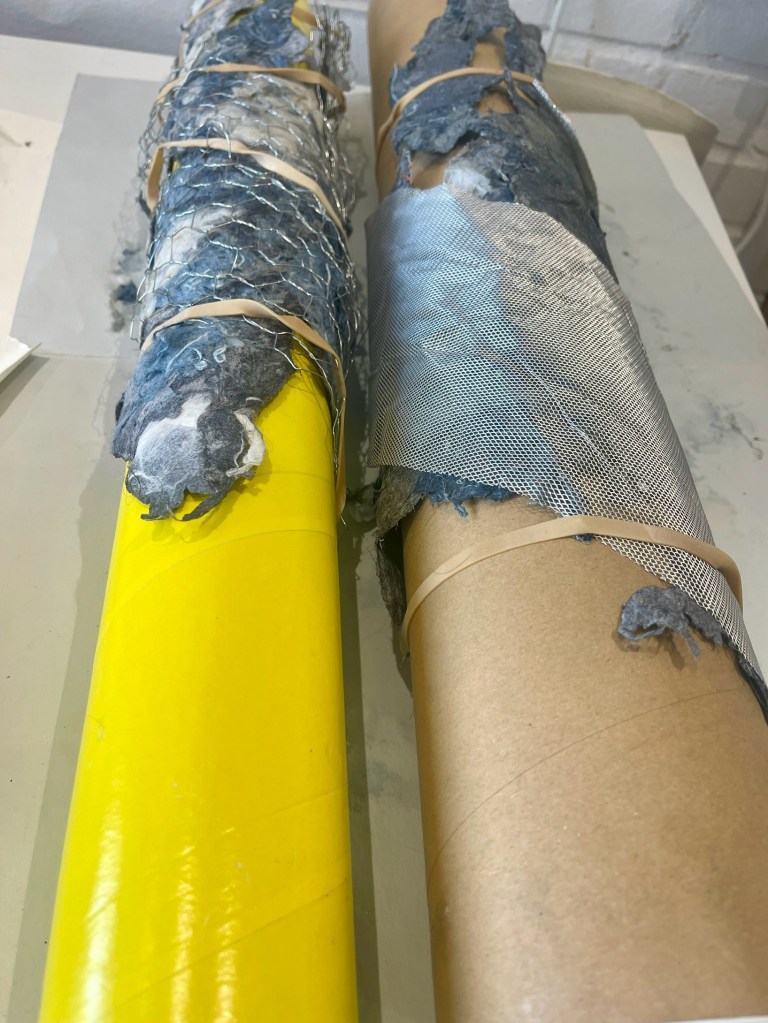
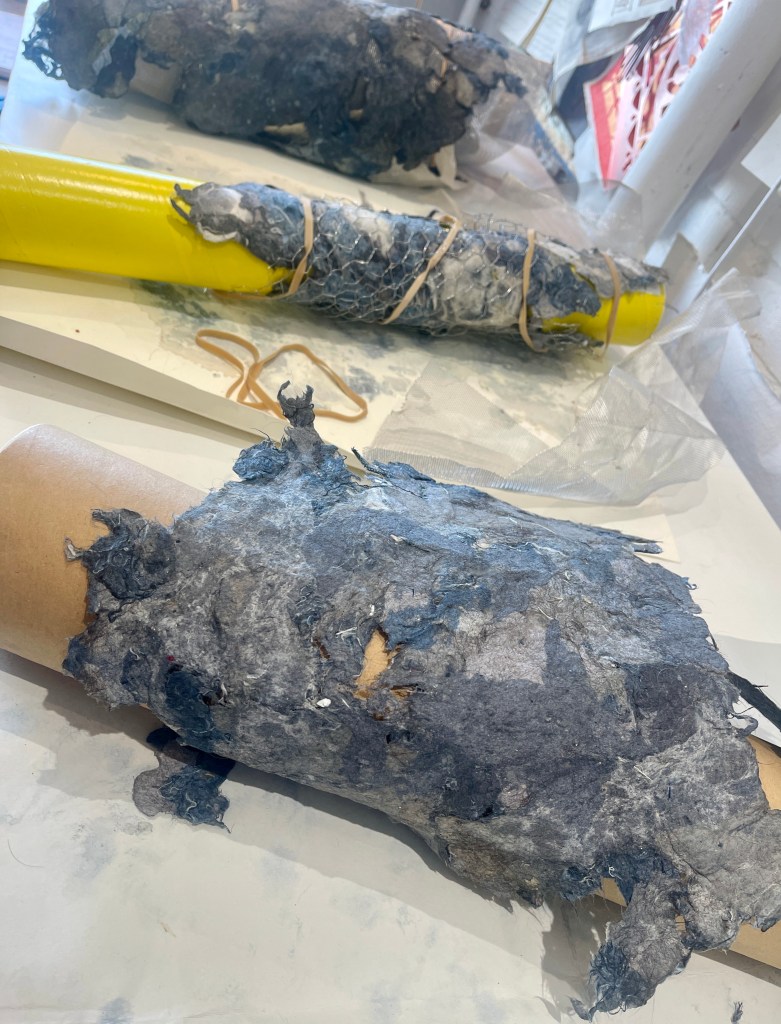
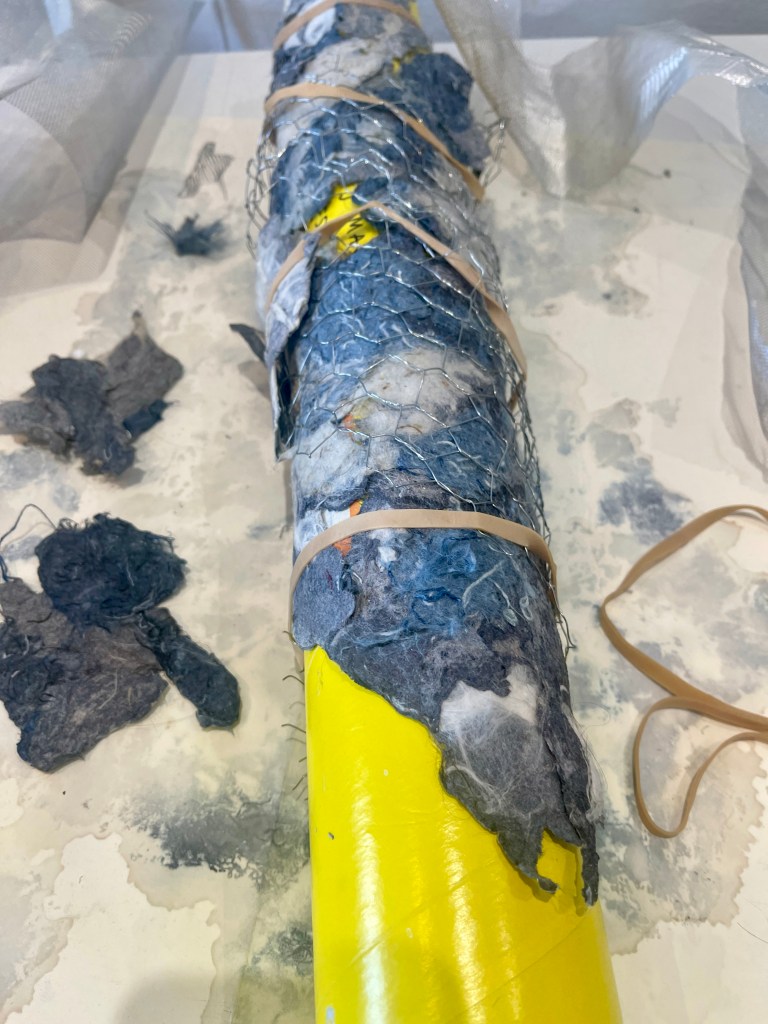
Taking the pieces off their moulds;
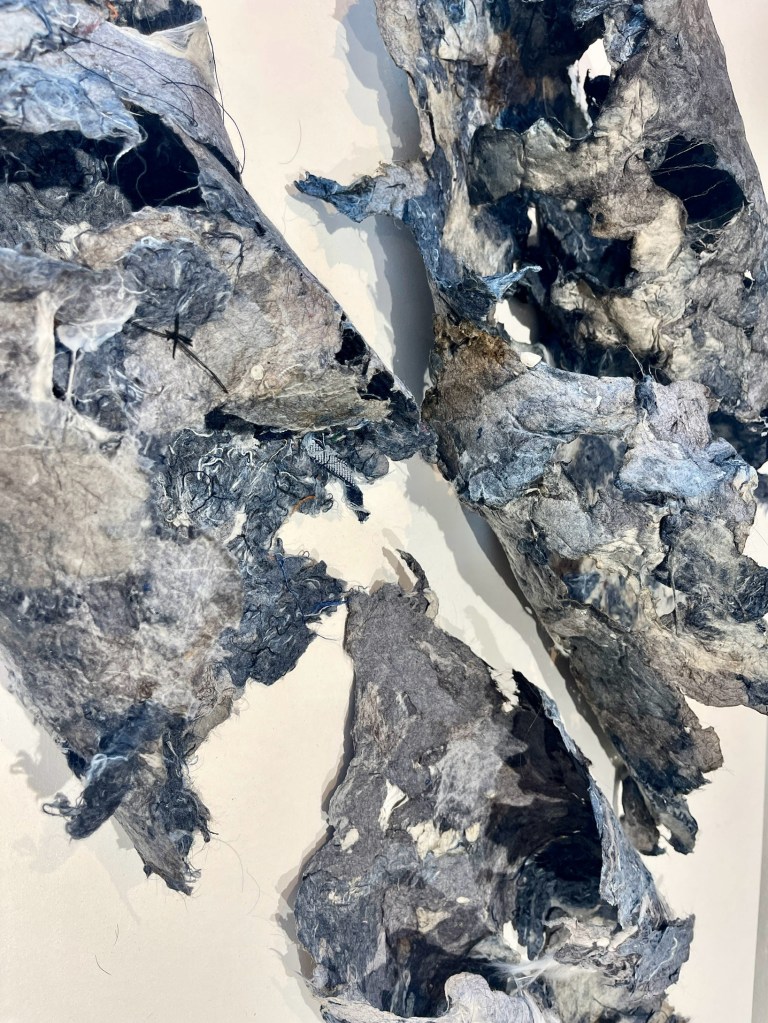
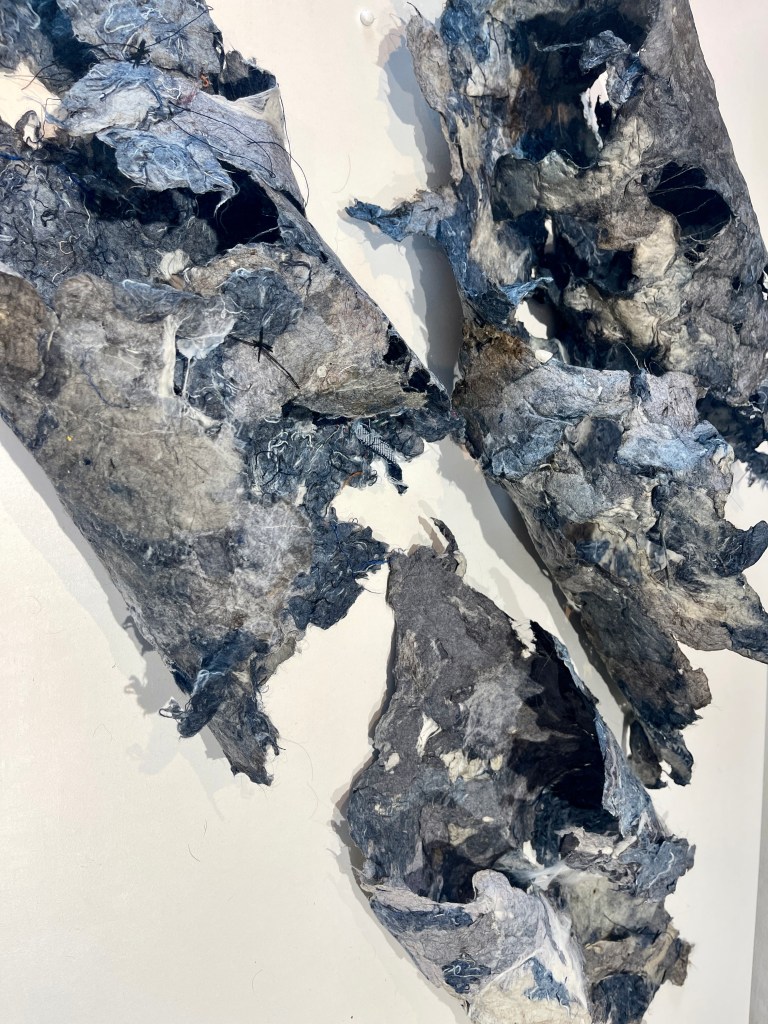
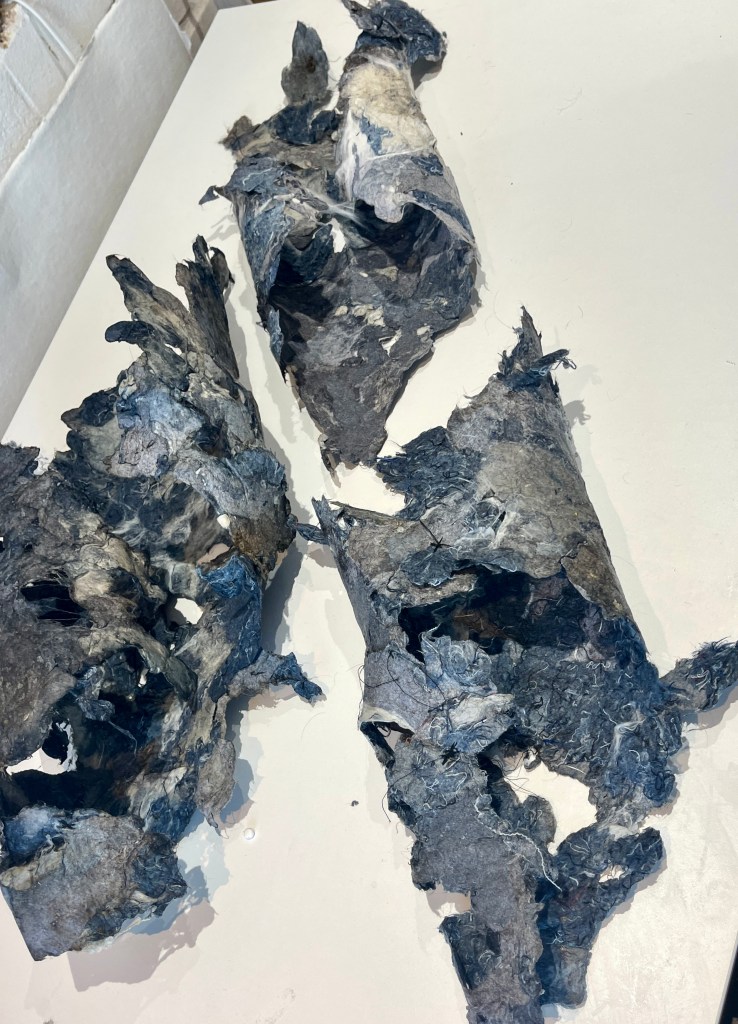
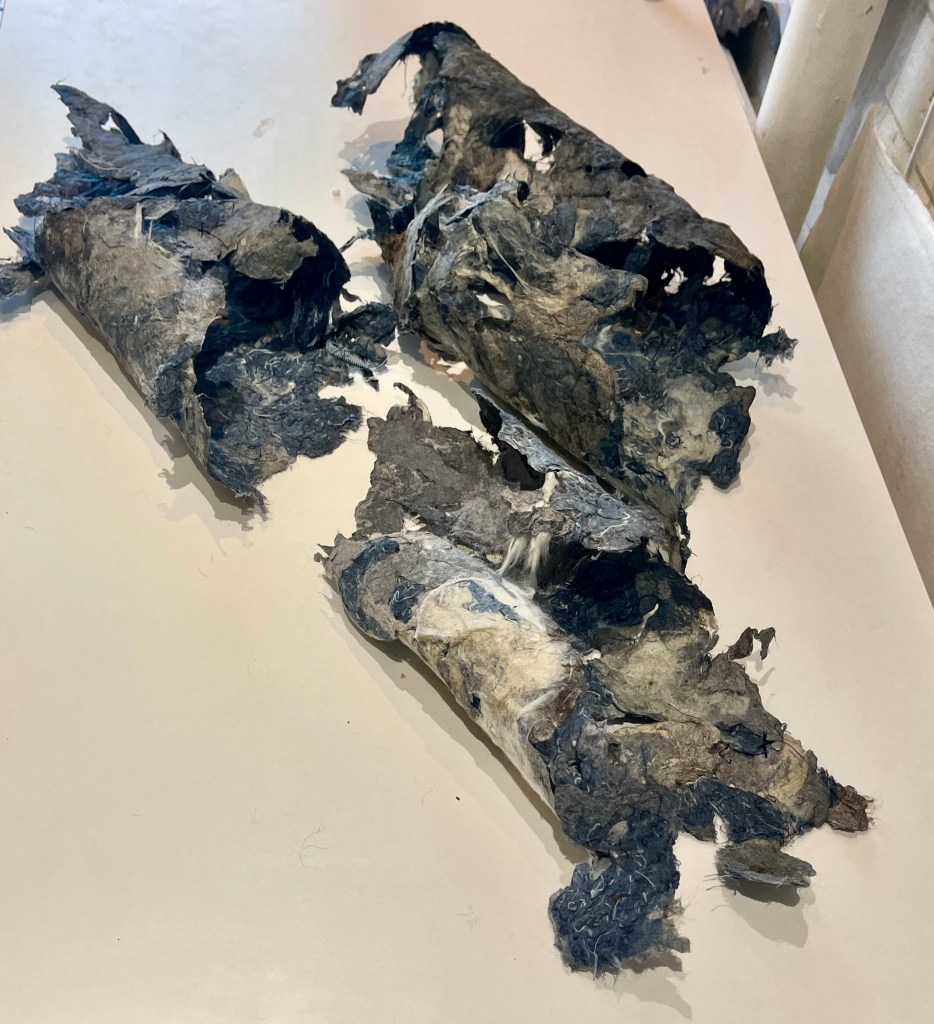
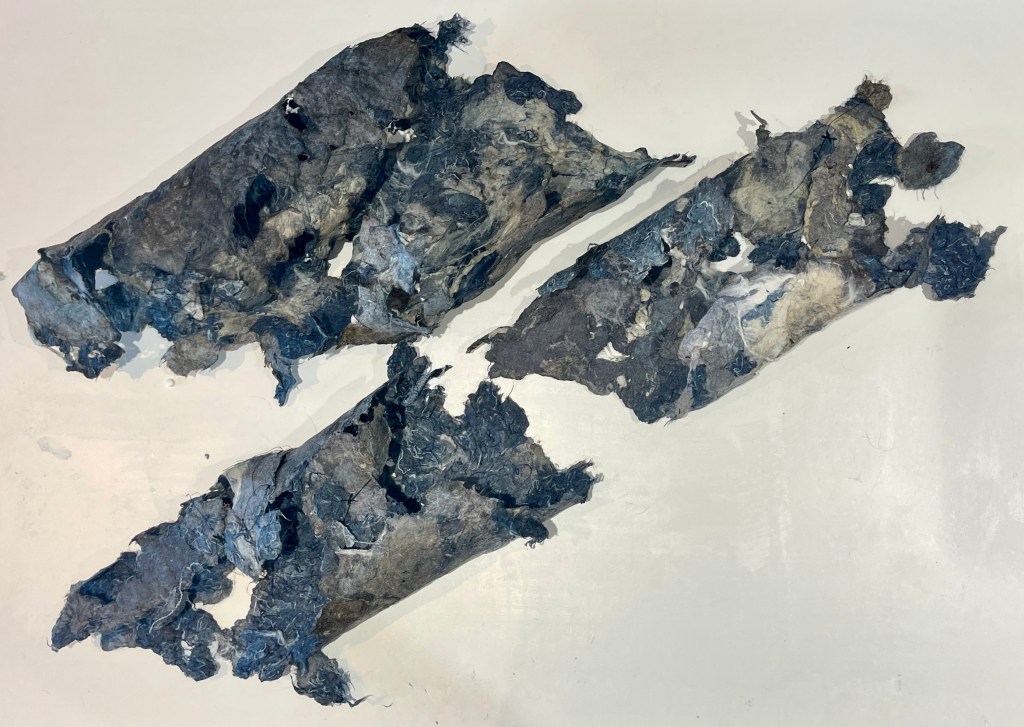
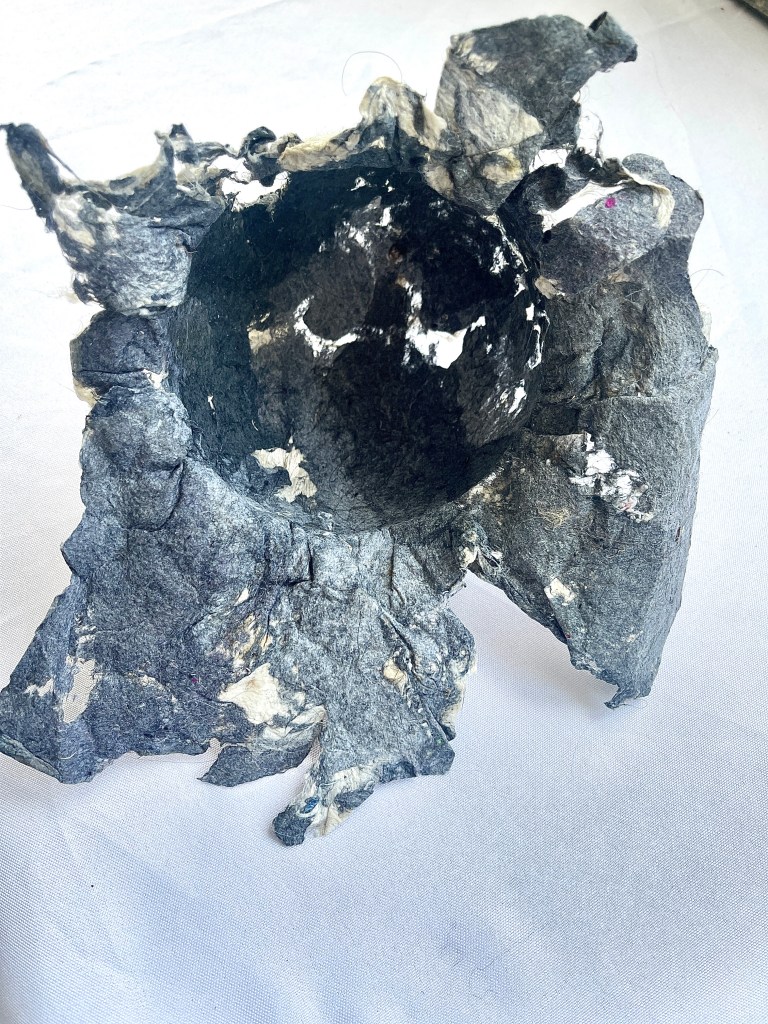
The forms began to visually look so different, as if decaying or rotting structures or pieces of structures, they had a bleakness and frailty to them. They were secure enough to hold the more rounded forms but not solid or firm enough not to move and and collapse when handling them.
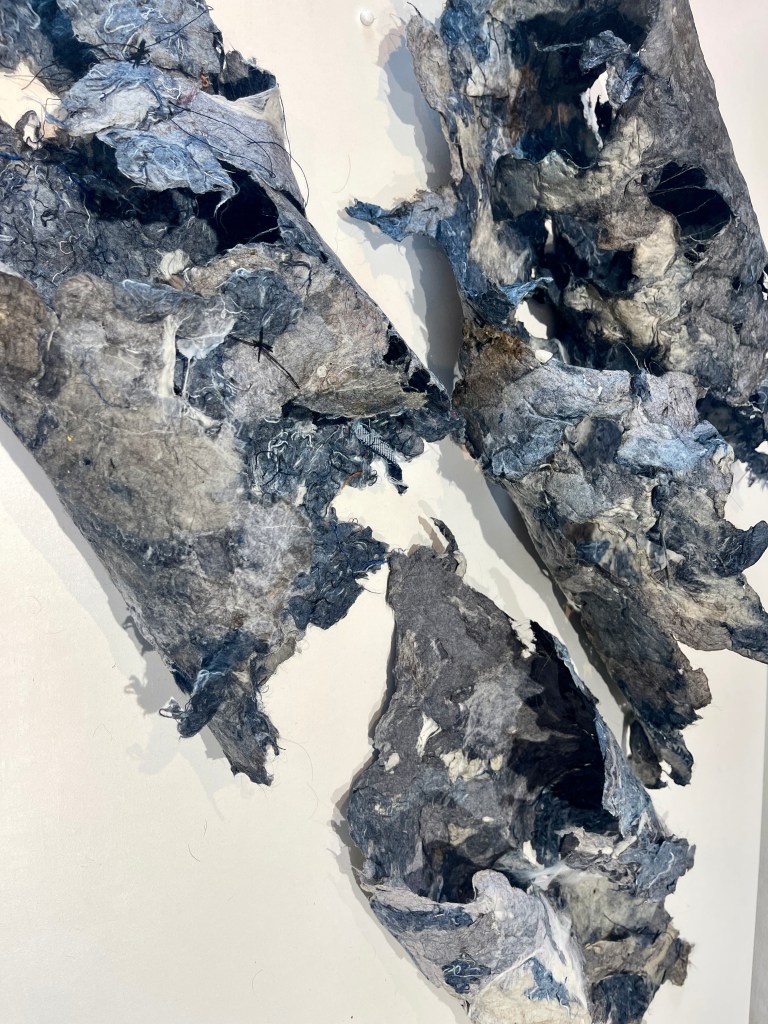
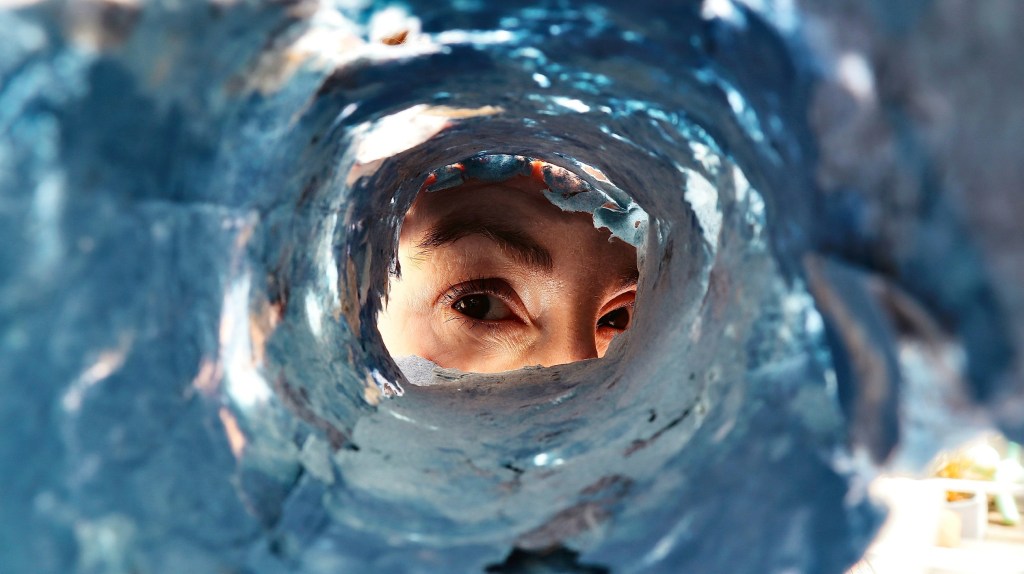
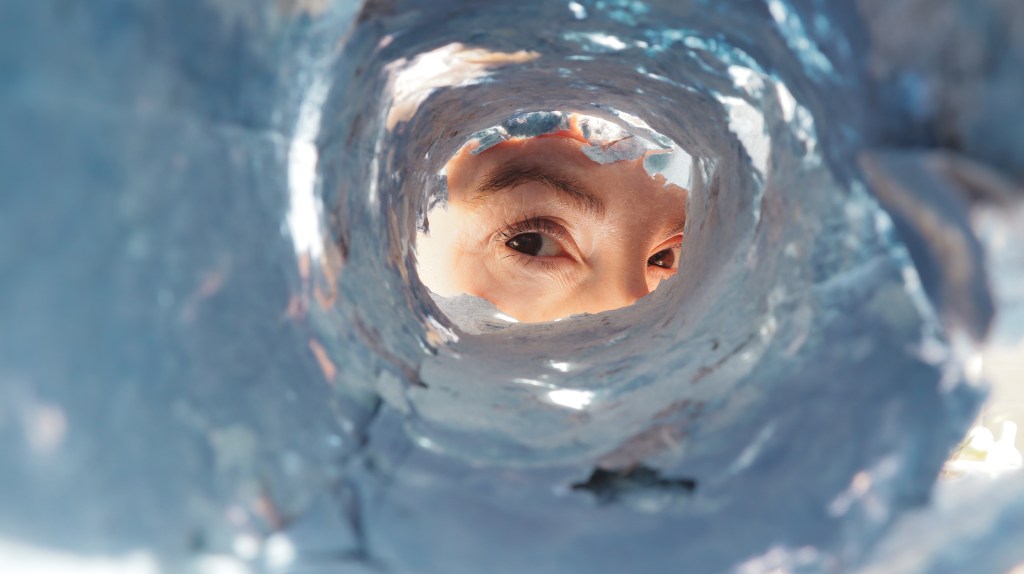
This line of enquiry led to me begin photographing them at various angles and positions looking inside the forms at the space and volume they created and the distortion of colour and light within.
They have taken on ‘murmuration ‘ like forms…
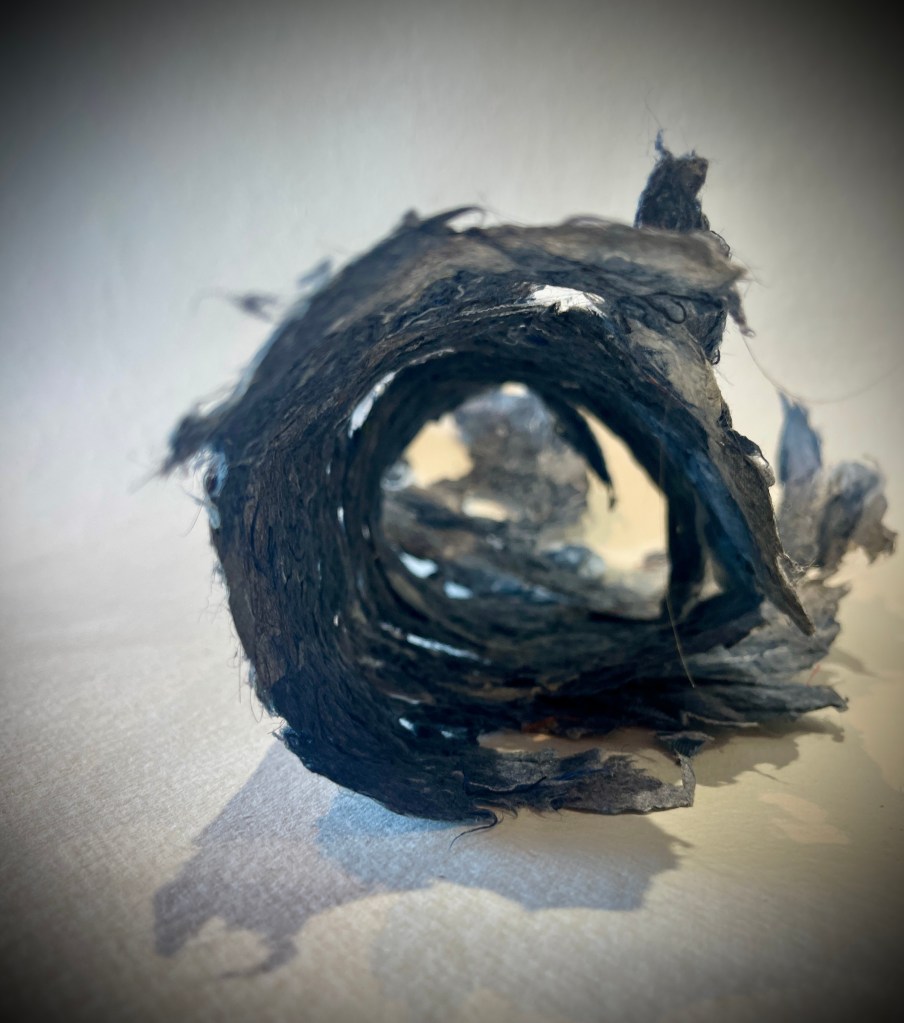
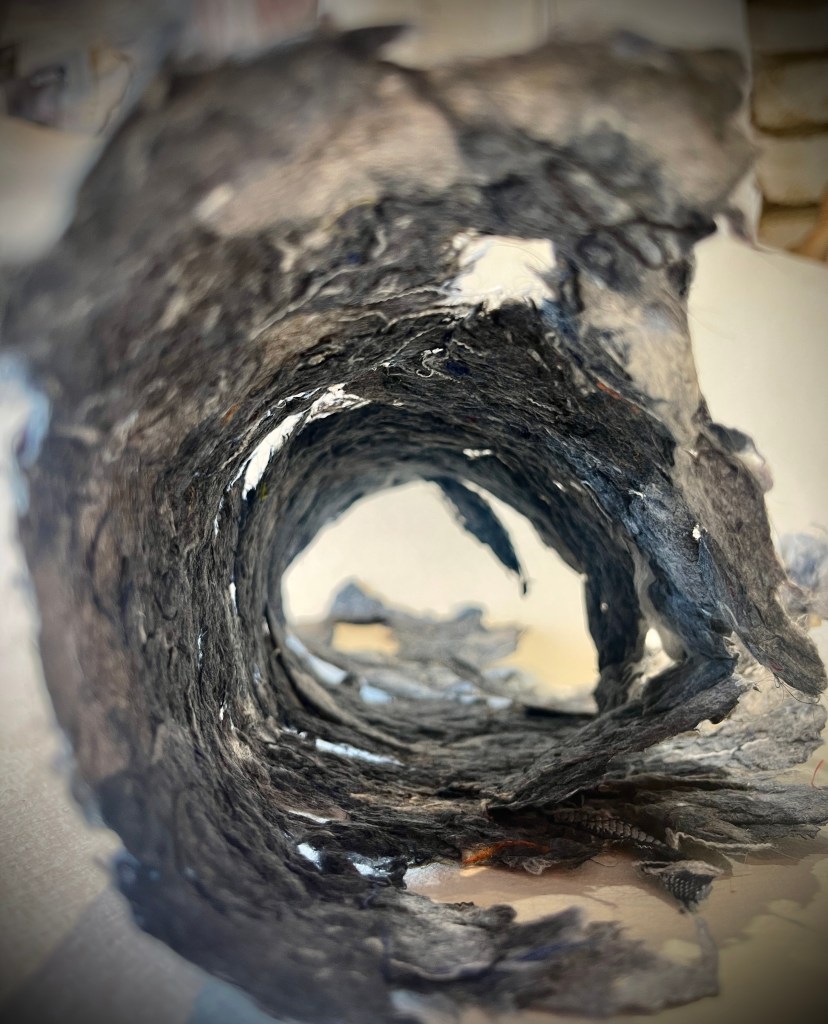
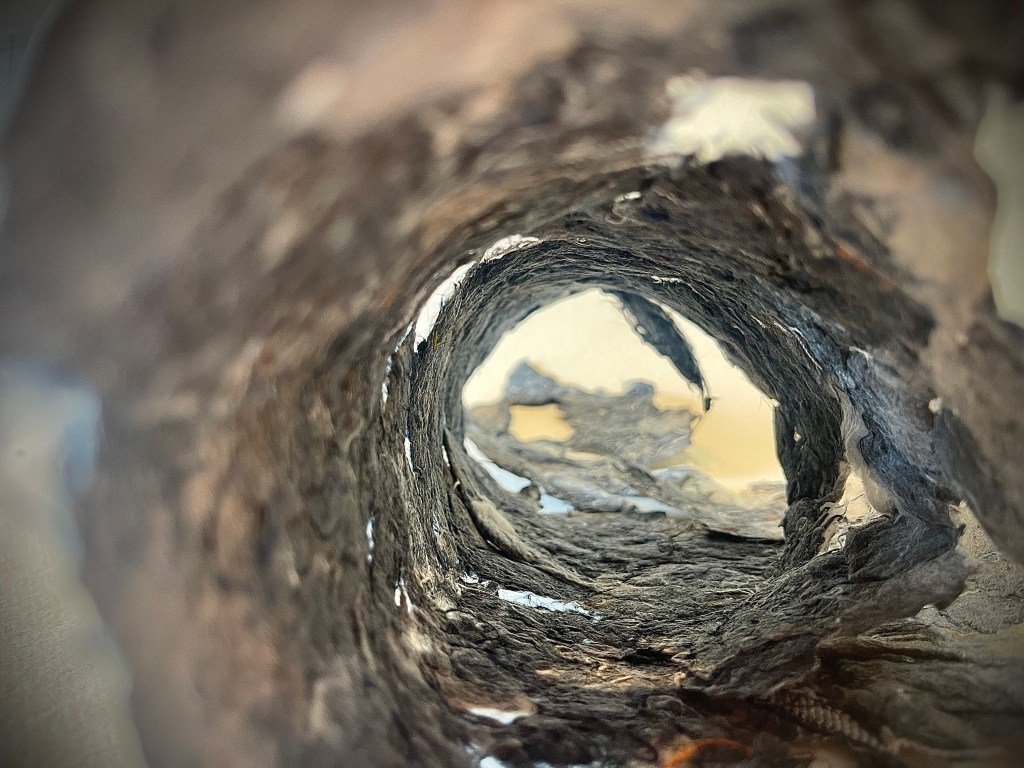
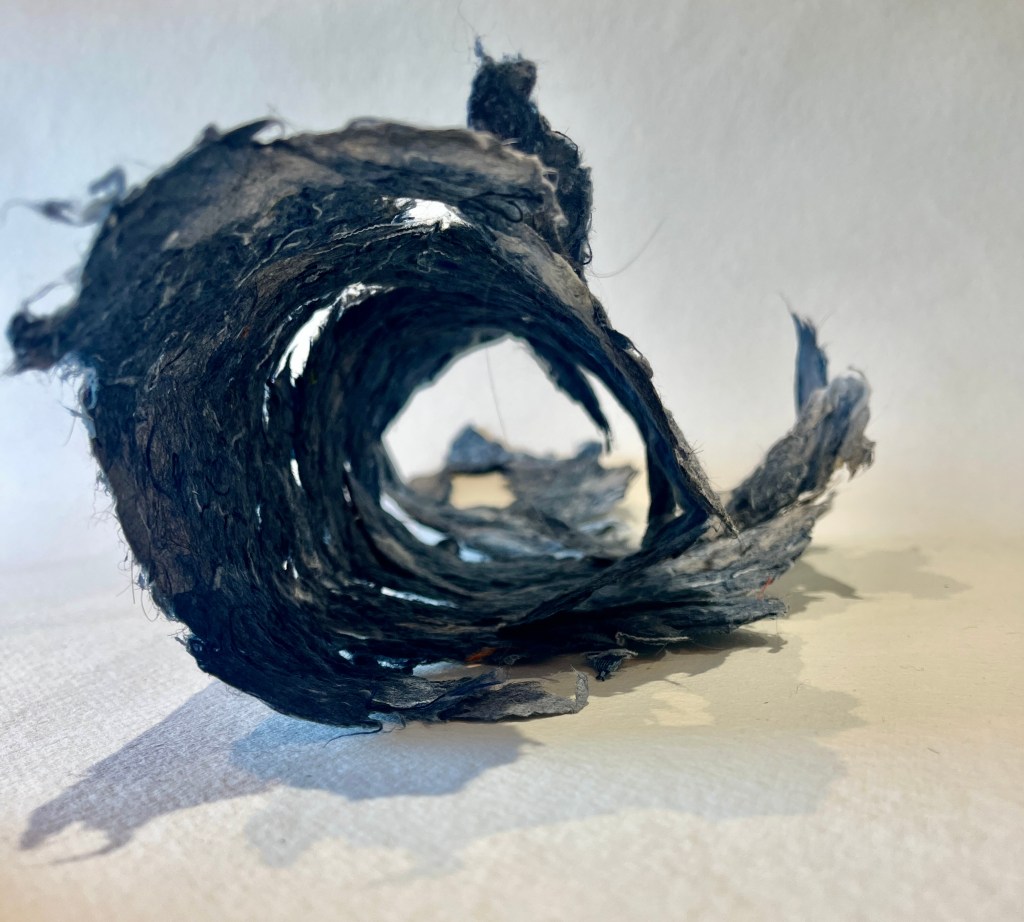
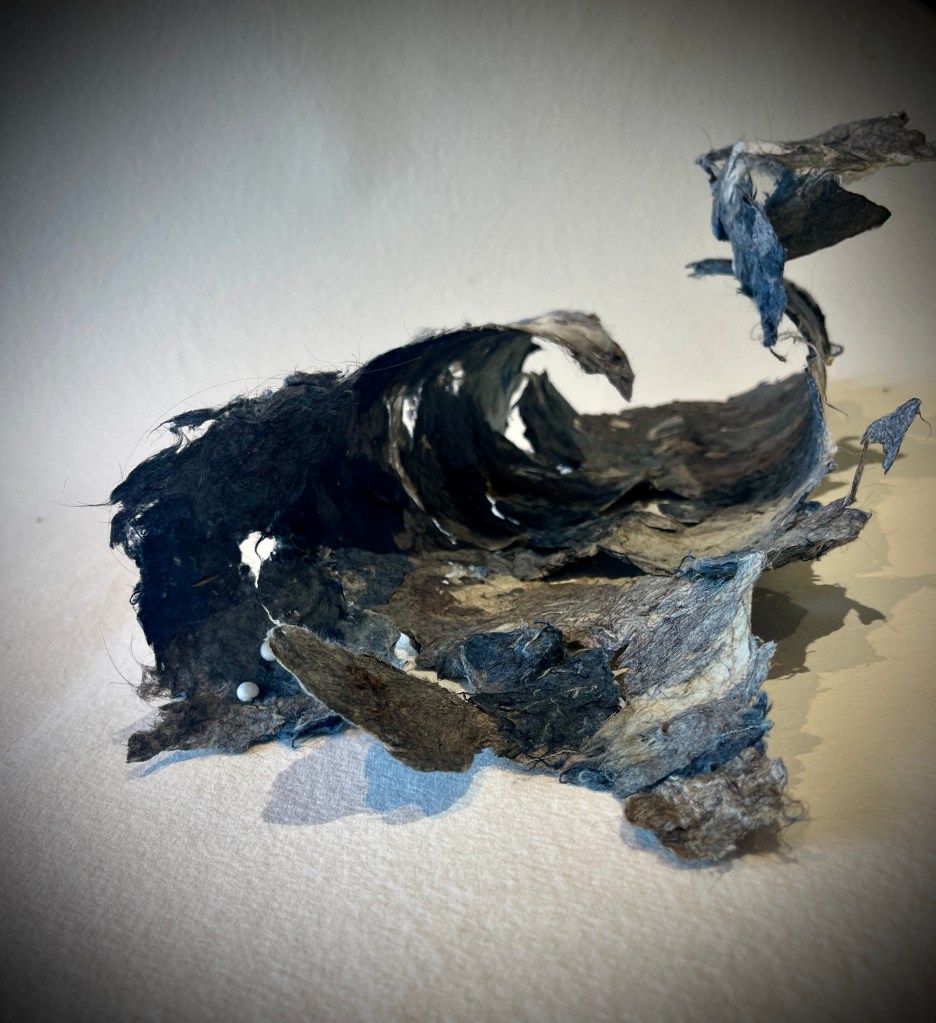
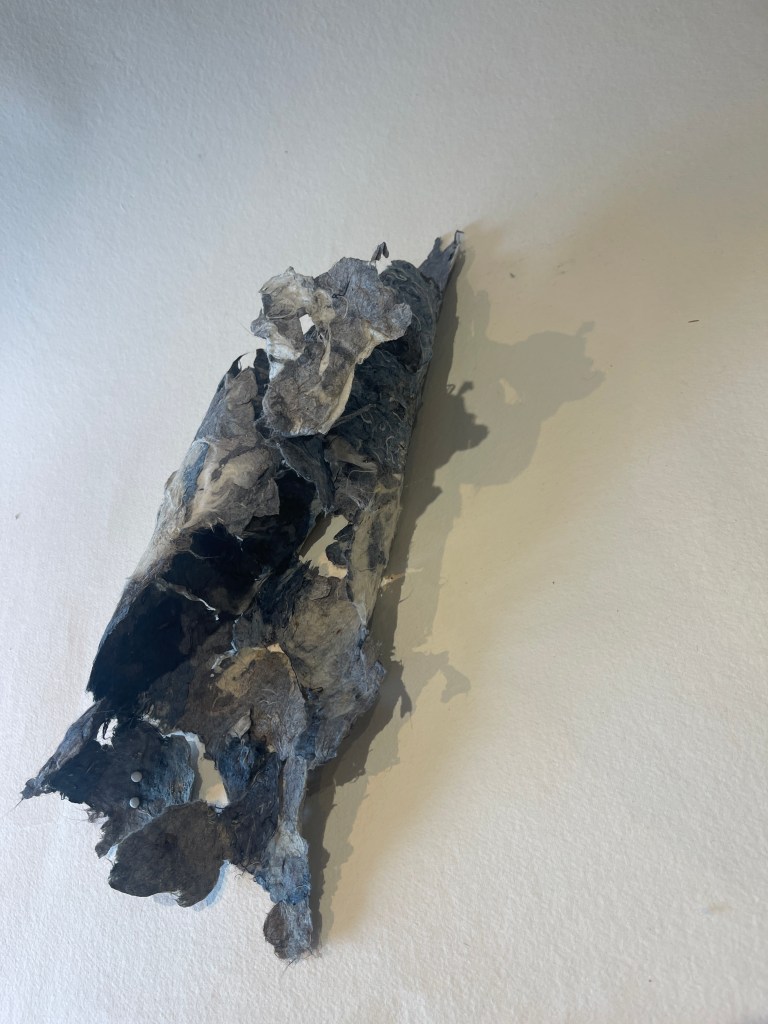
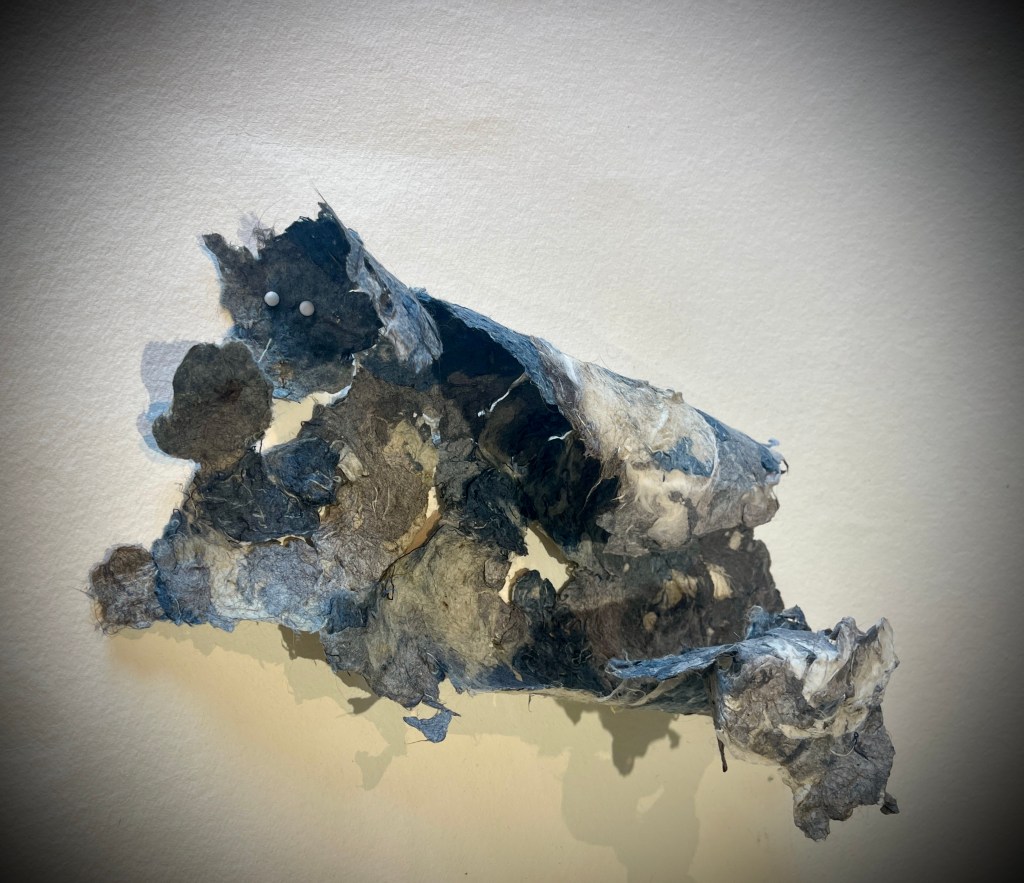
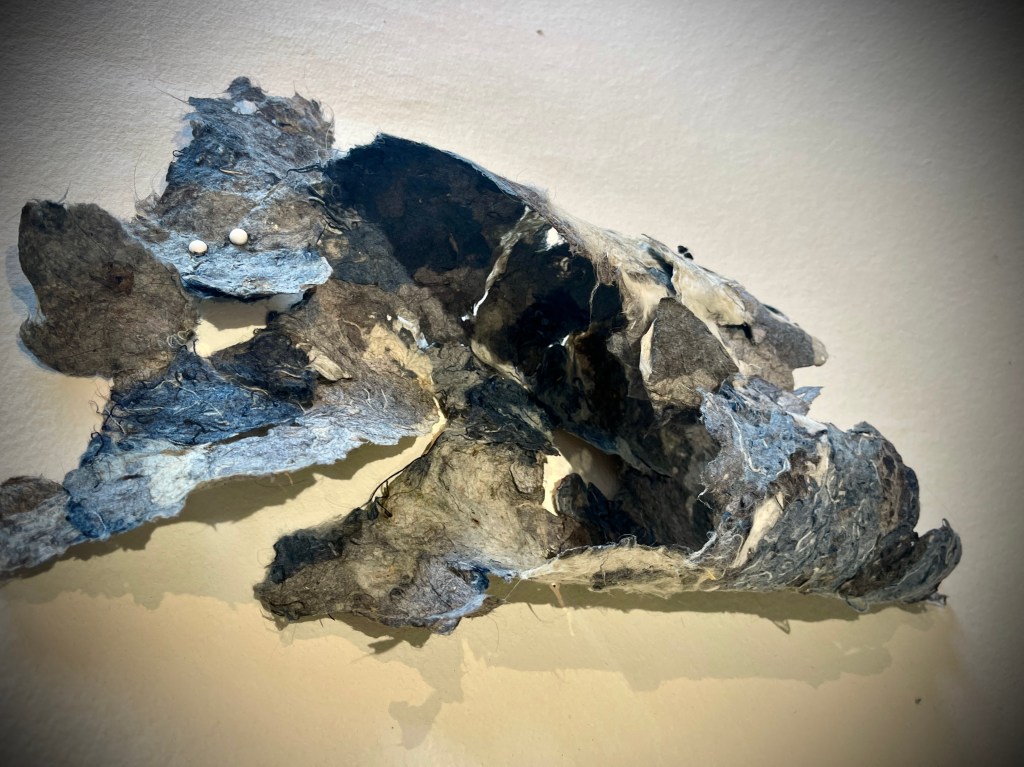
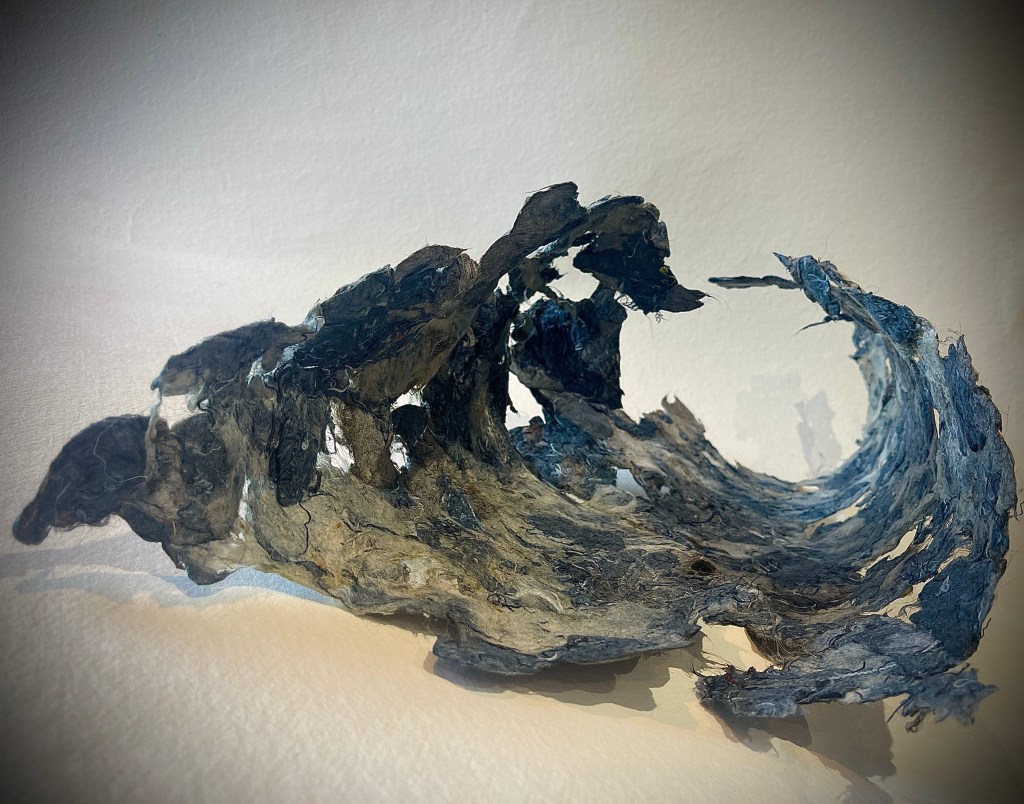
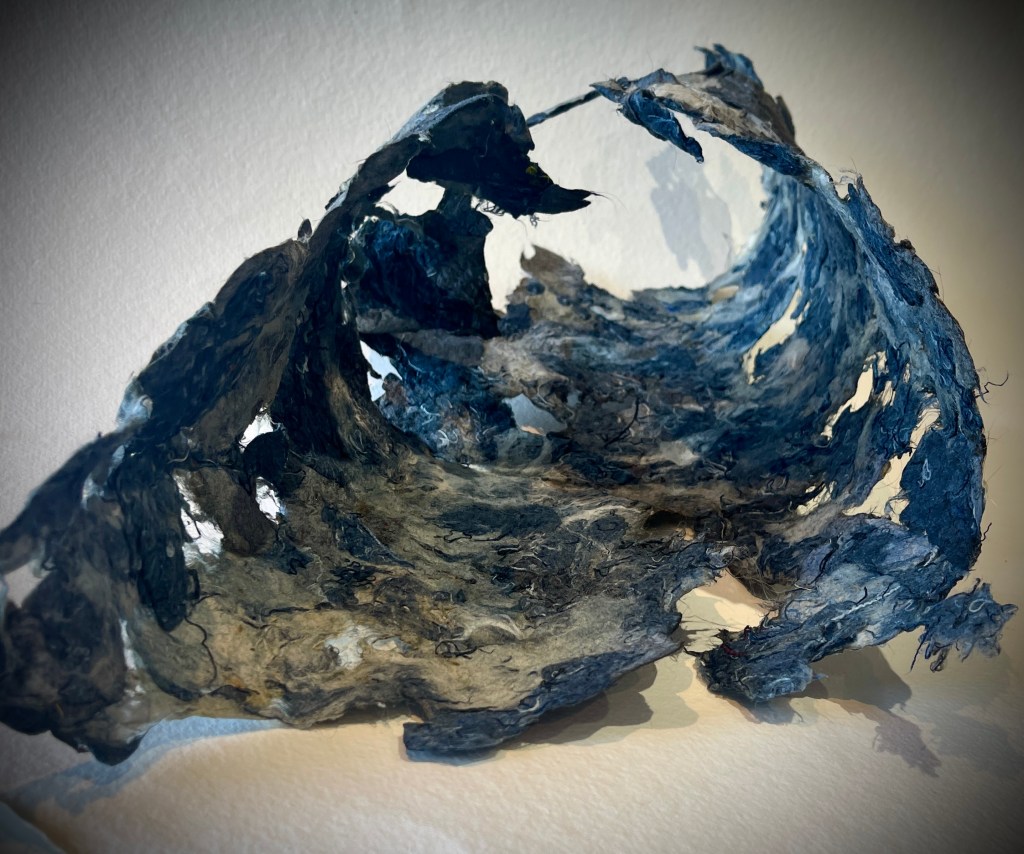
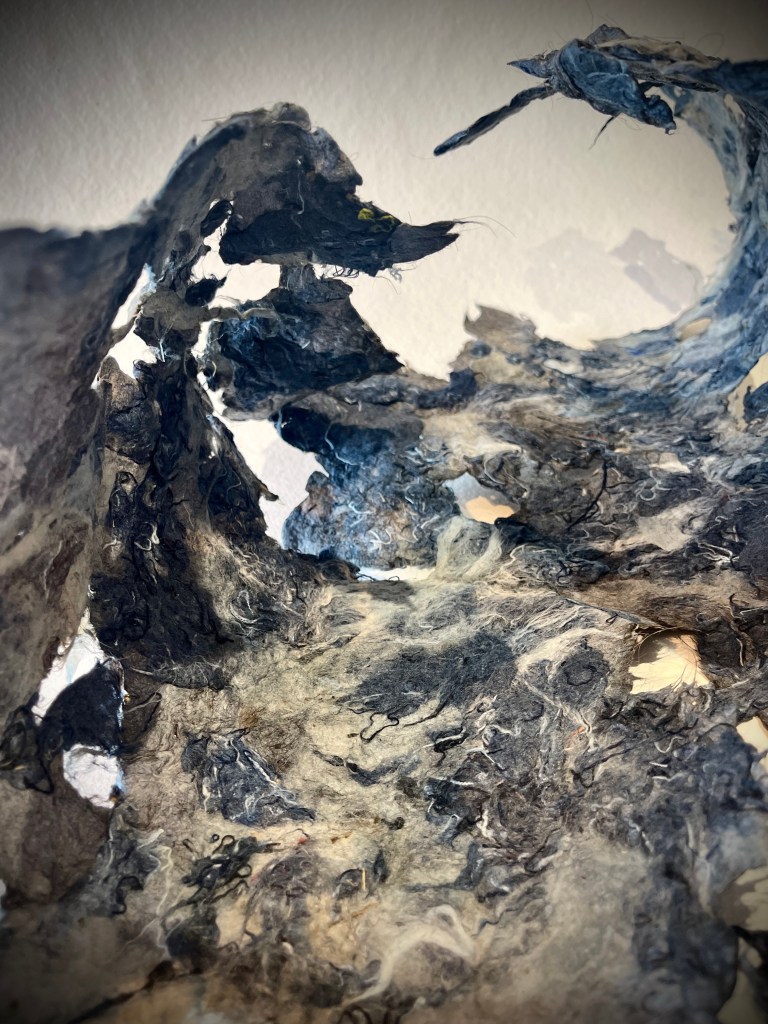
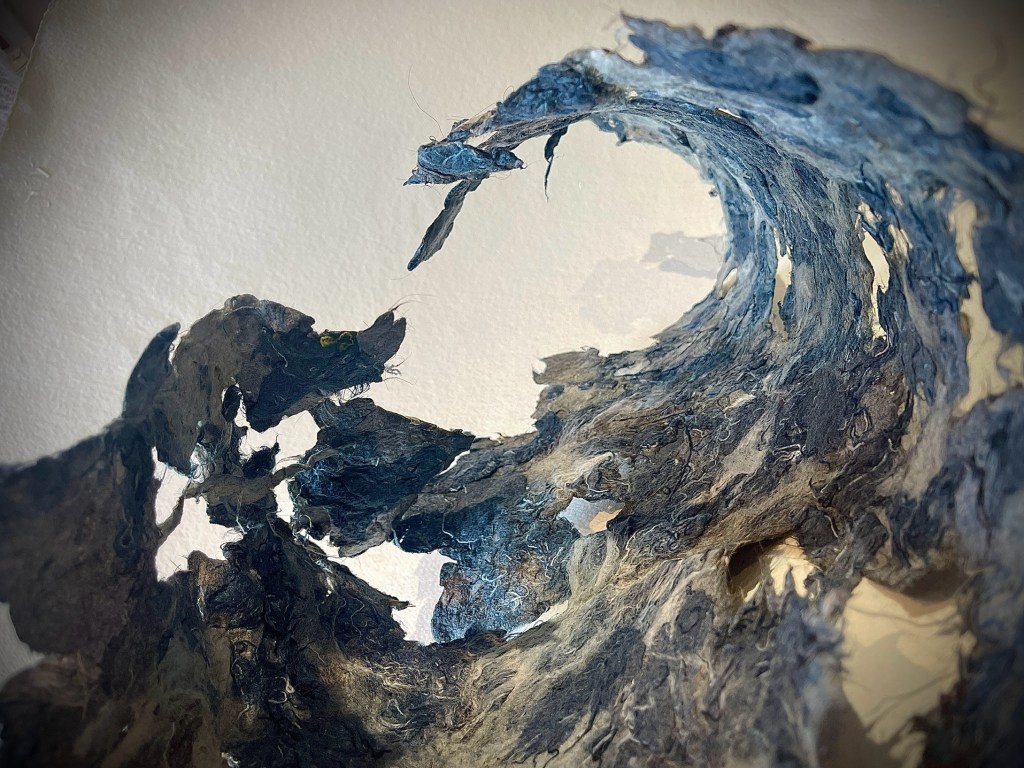
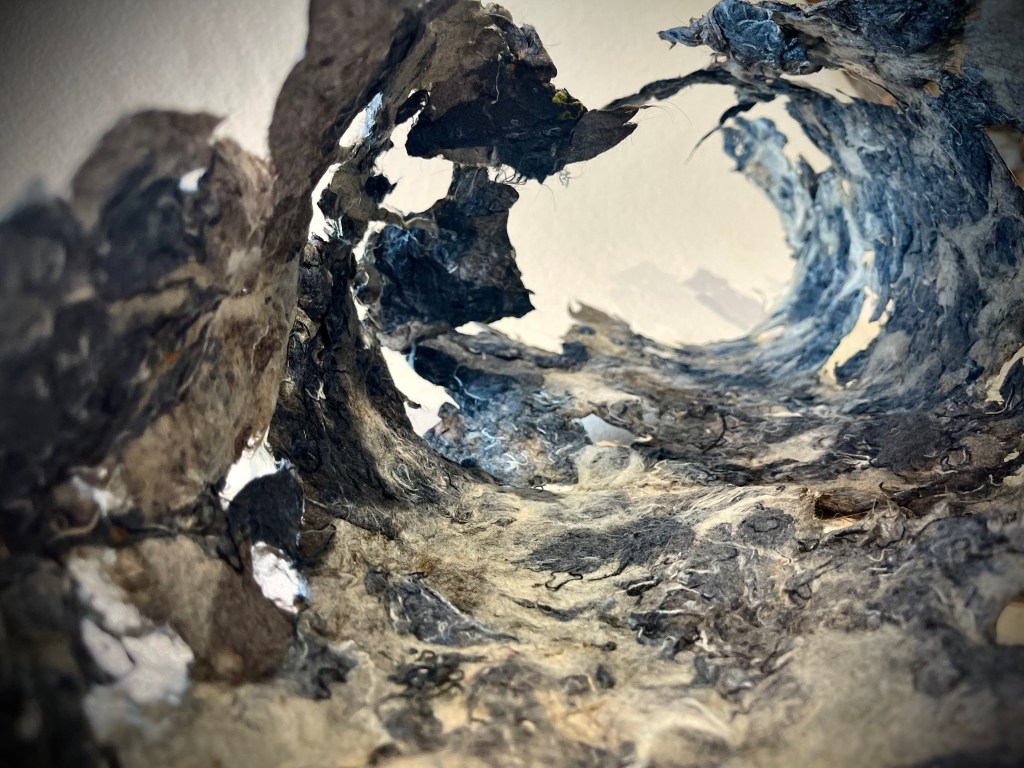
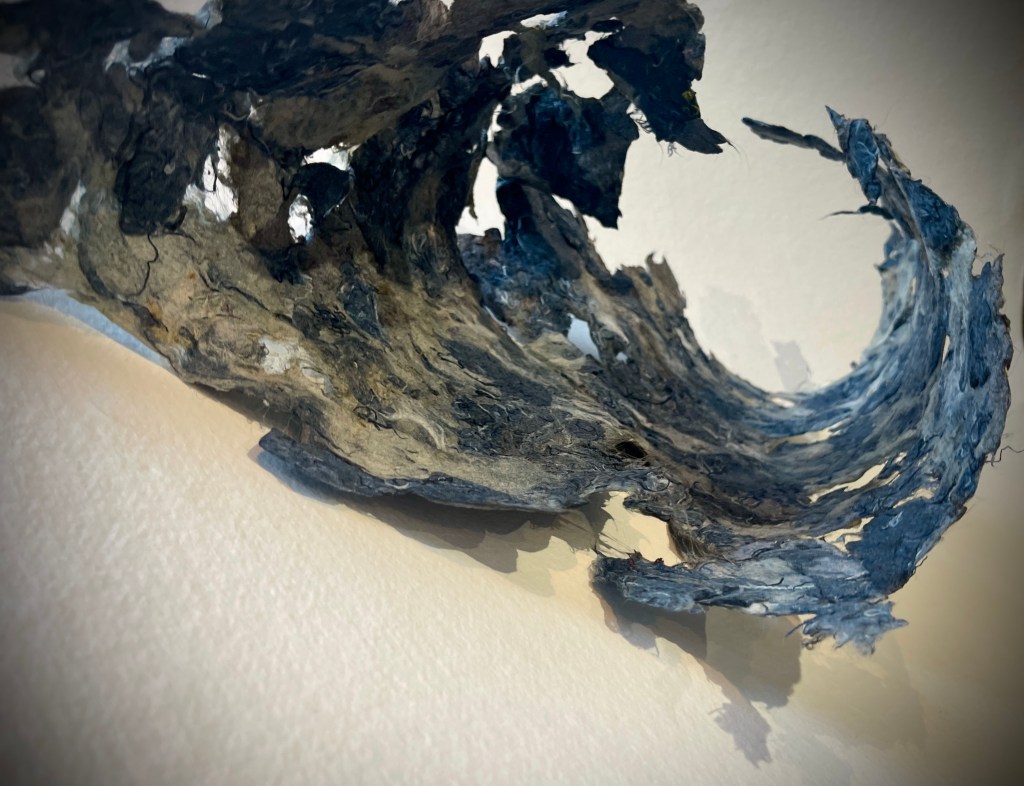
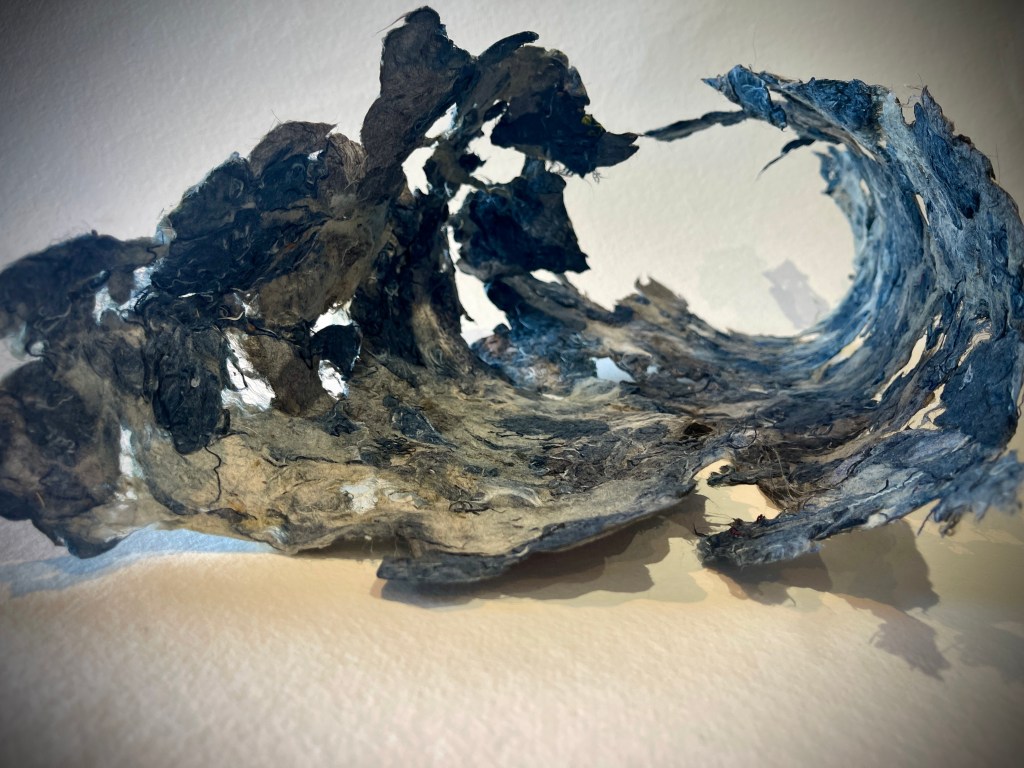
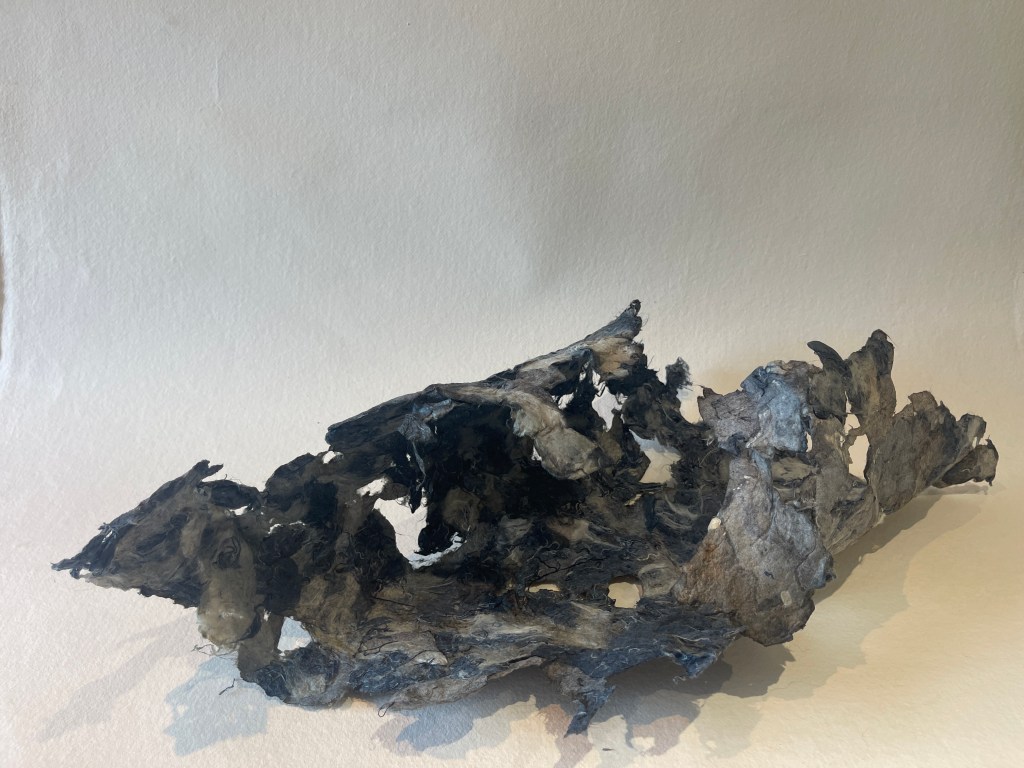
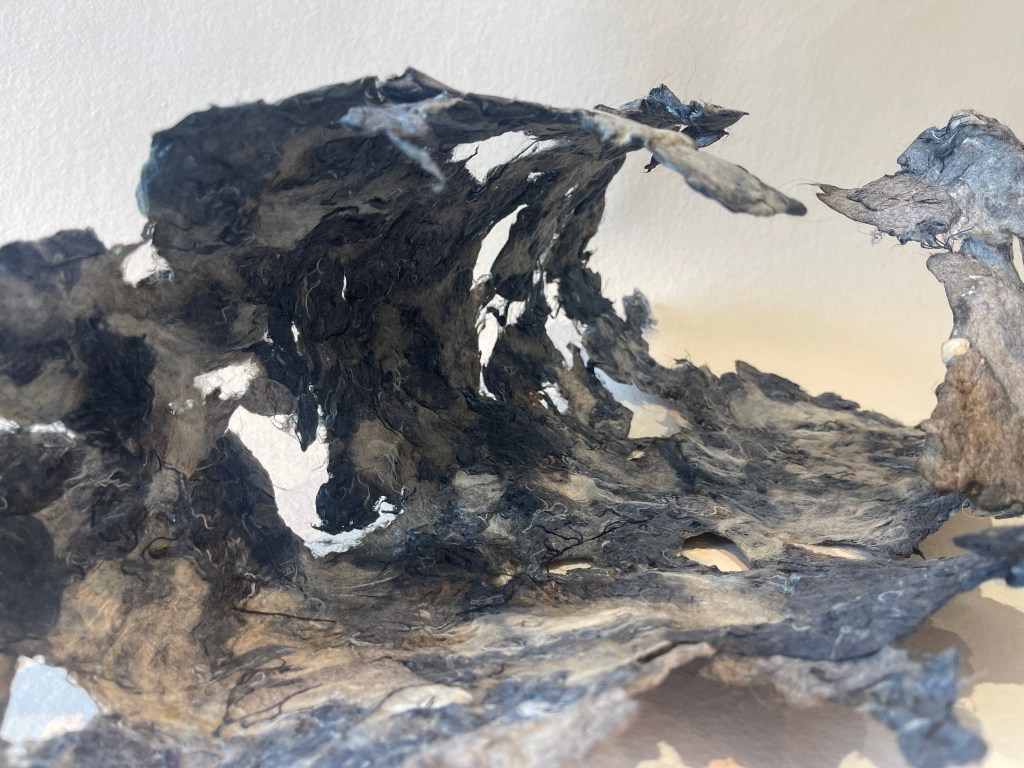
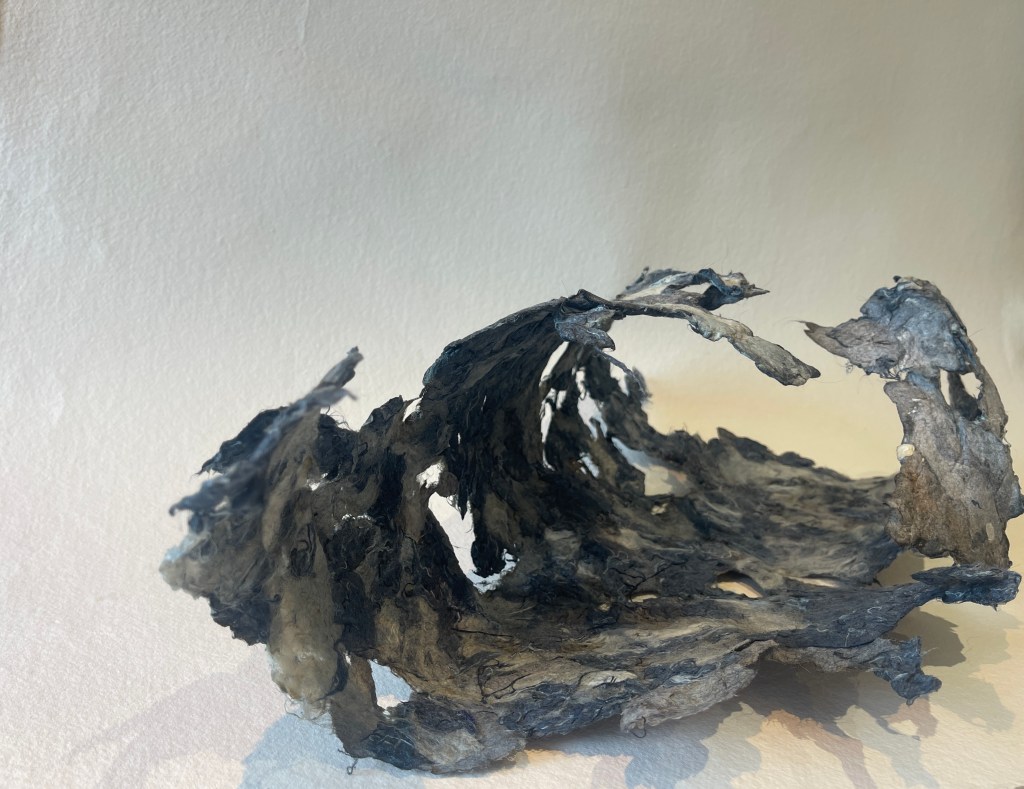
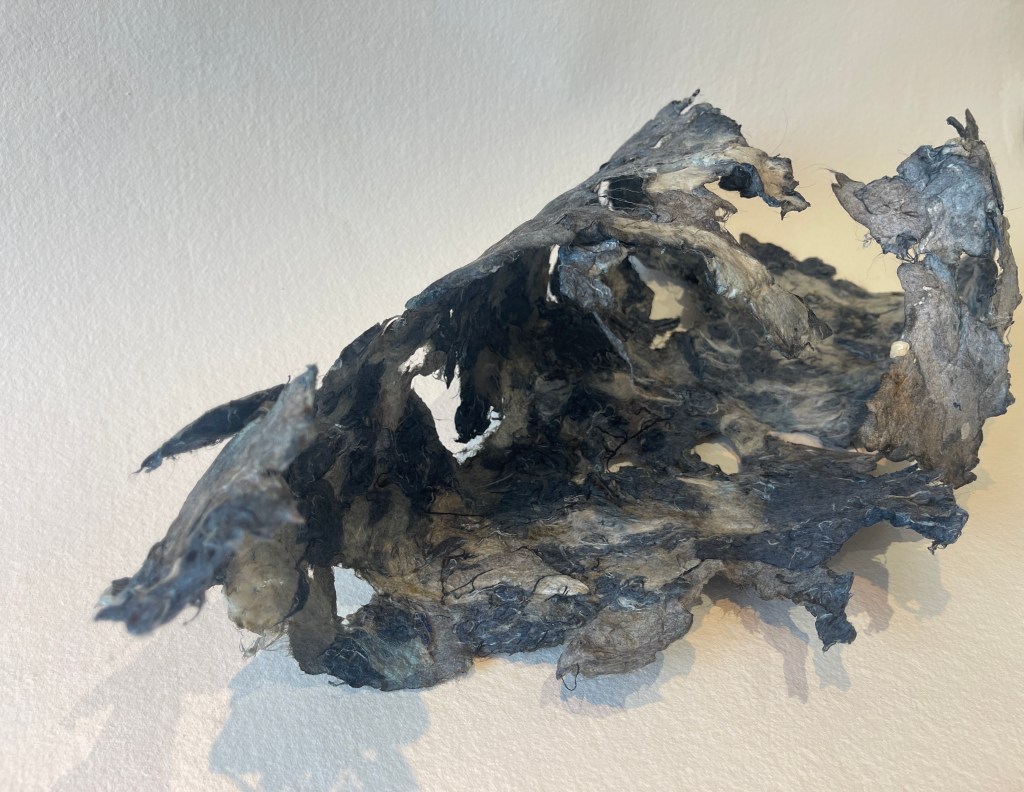
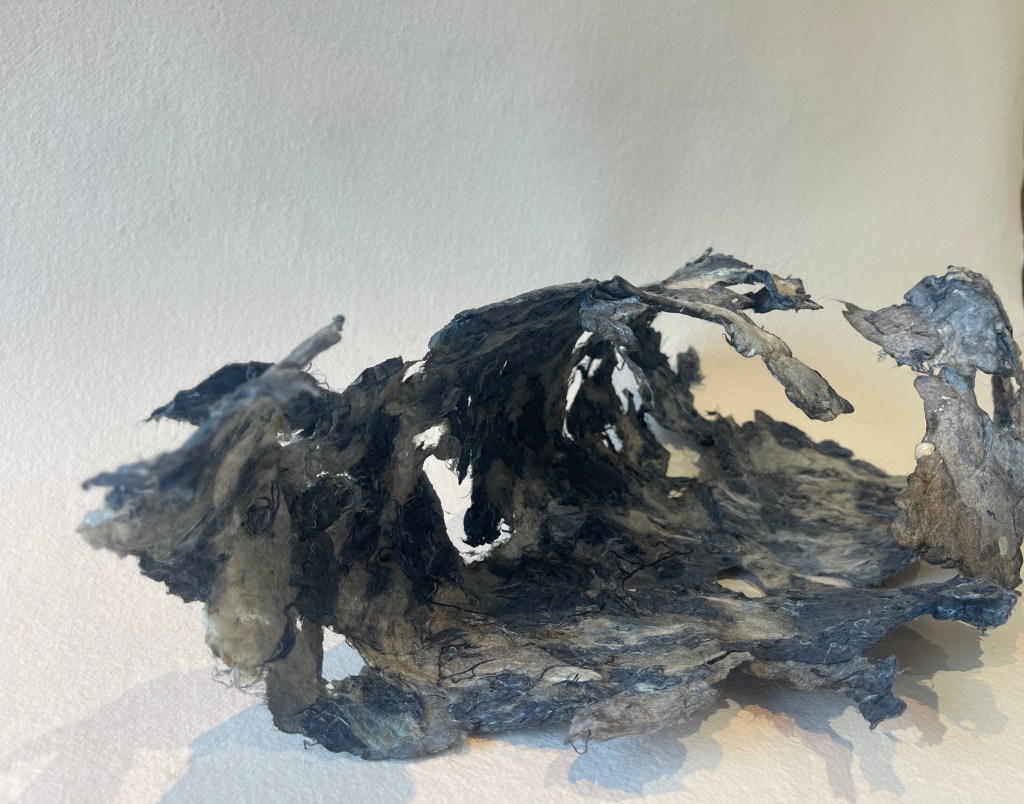
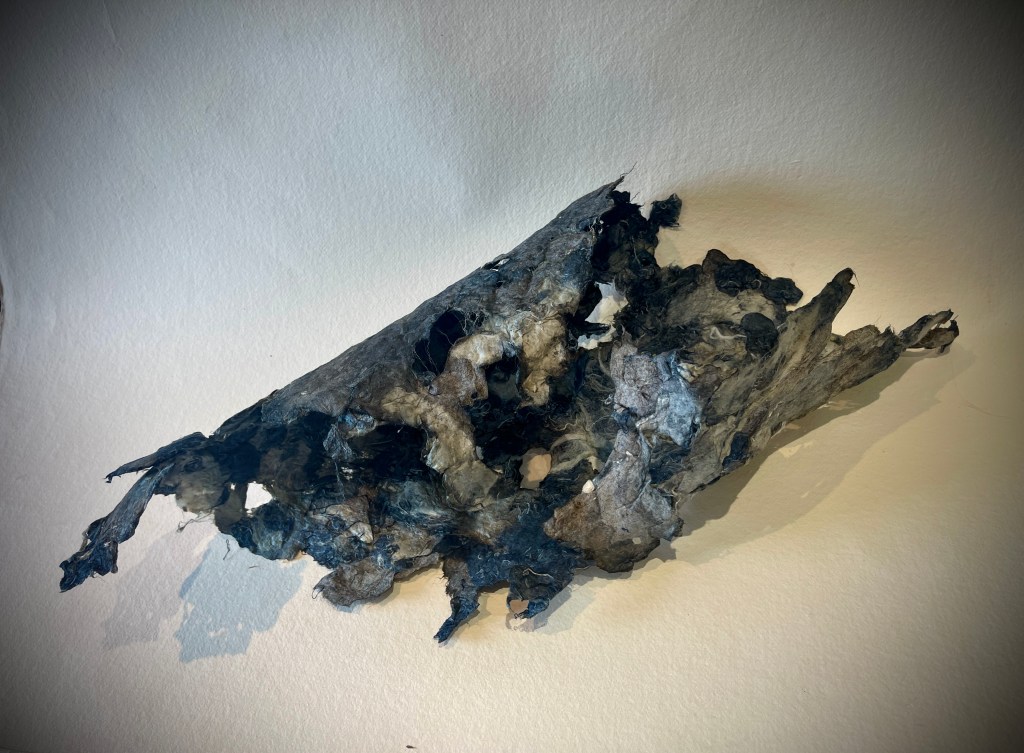
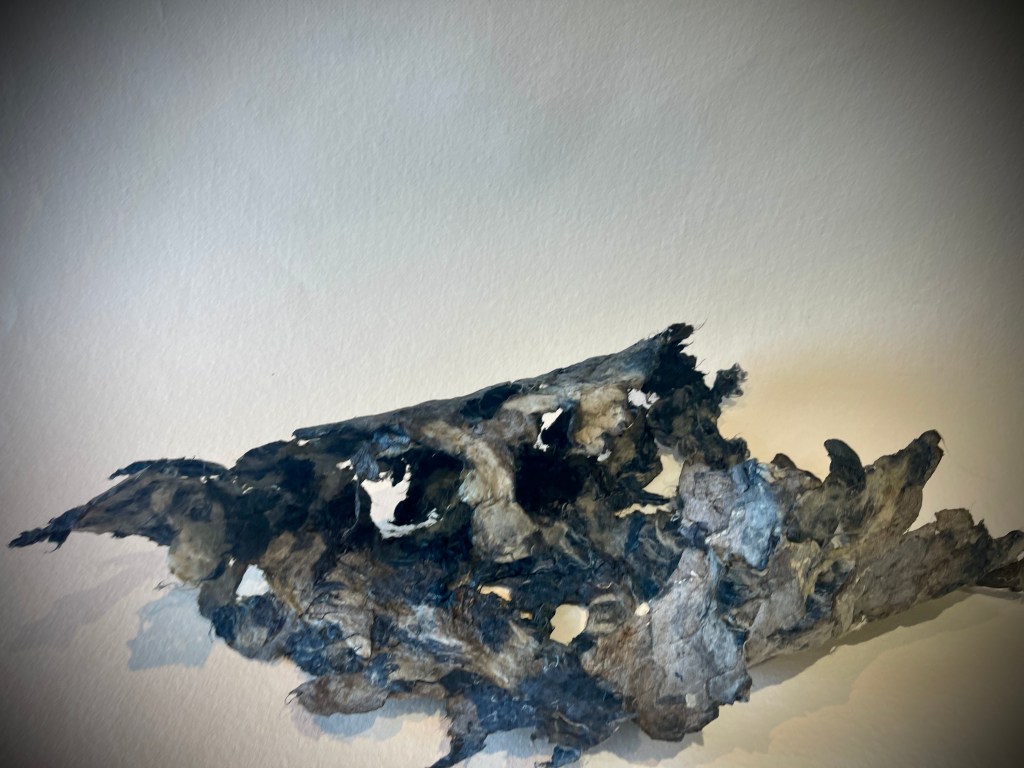
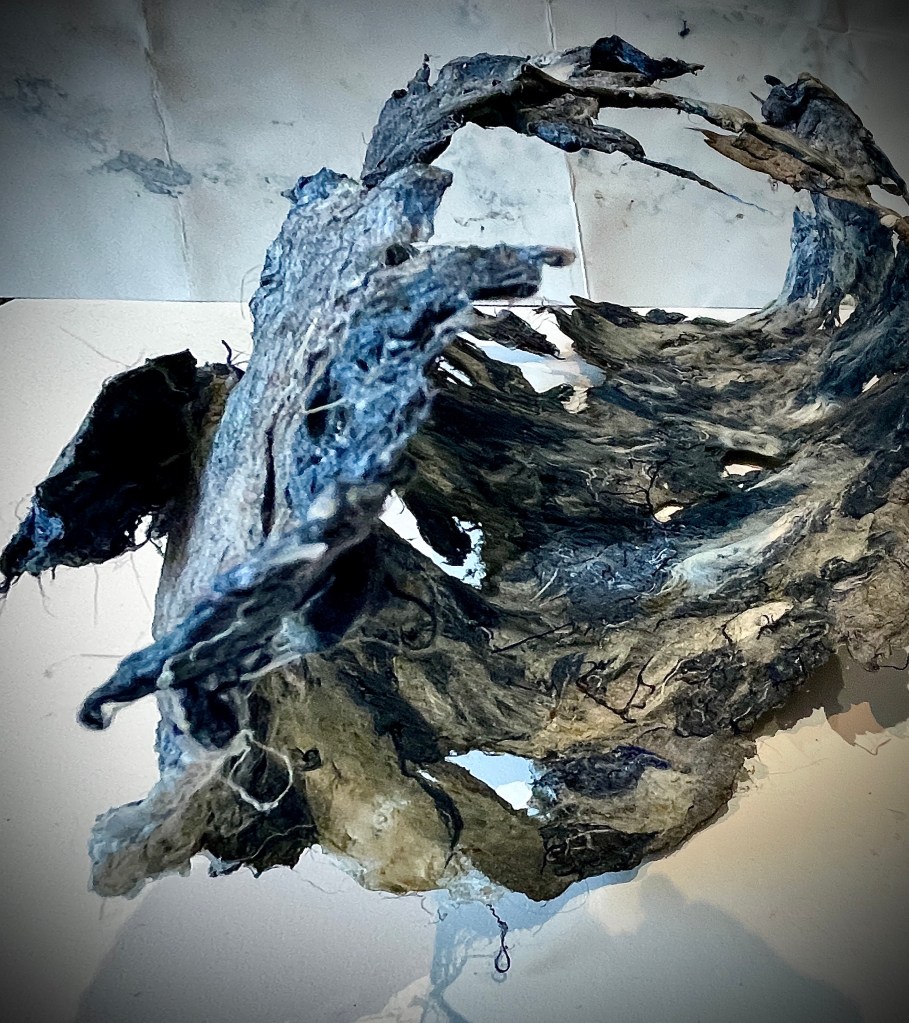
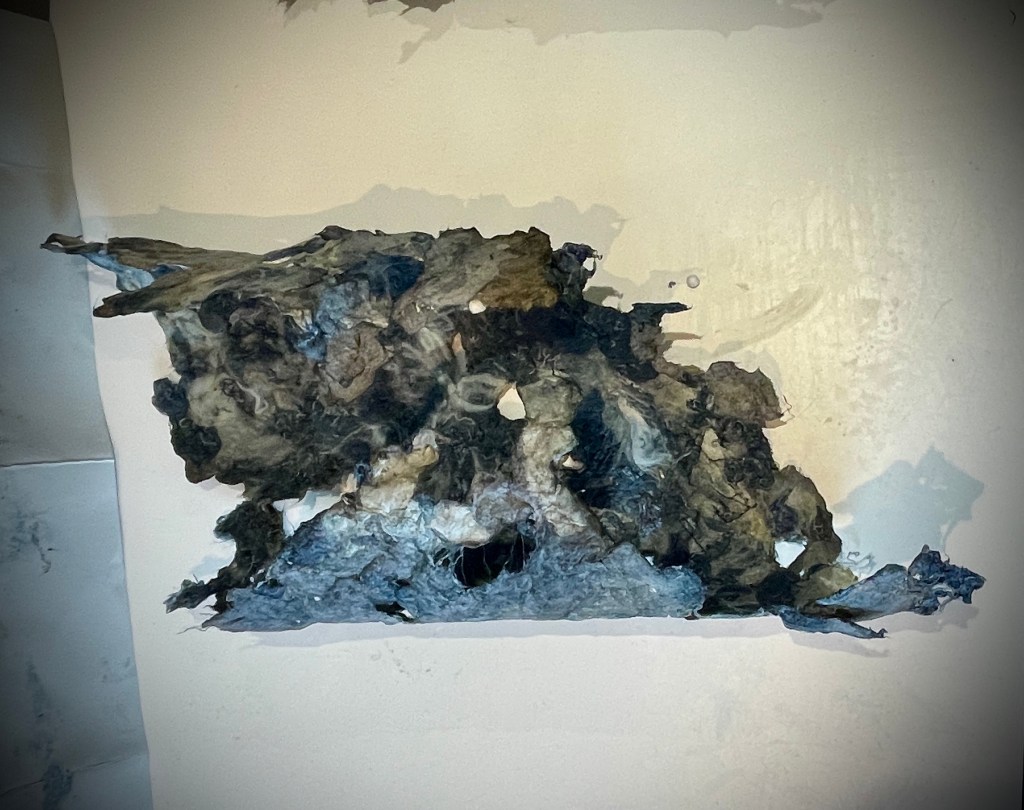
The photographed work above has its own dark narrative with the unsettling and disturbing forms the abject material is taking , metaphorically similar to the complex visual expressions of worry, anxiety and depressions. The tunnelling effects evoke a sense of void or way through . They are uncanny and explorative but retain a looseness and an ambiguity that was important aspect to the narrative, as i sought to incorporate them into the ‘ murmuration’ metaphor I had explored concerning anxiety and mental health visualisation.
I began to consider ways to mount these from the hoop created … using simple black thread and looping it around the pre-made holes in the work.
As they material was fragile and unstable in places I used simple cross stitch in the same black cotton to secure a few vulnerable sites : I kept this adjustment visible – repairing / patching showing creation and manipulation of form, support of structure and concept.
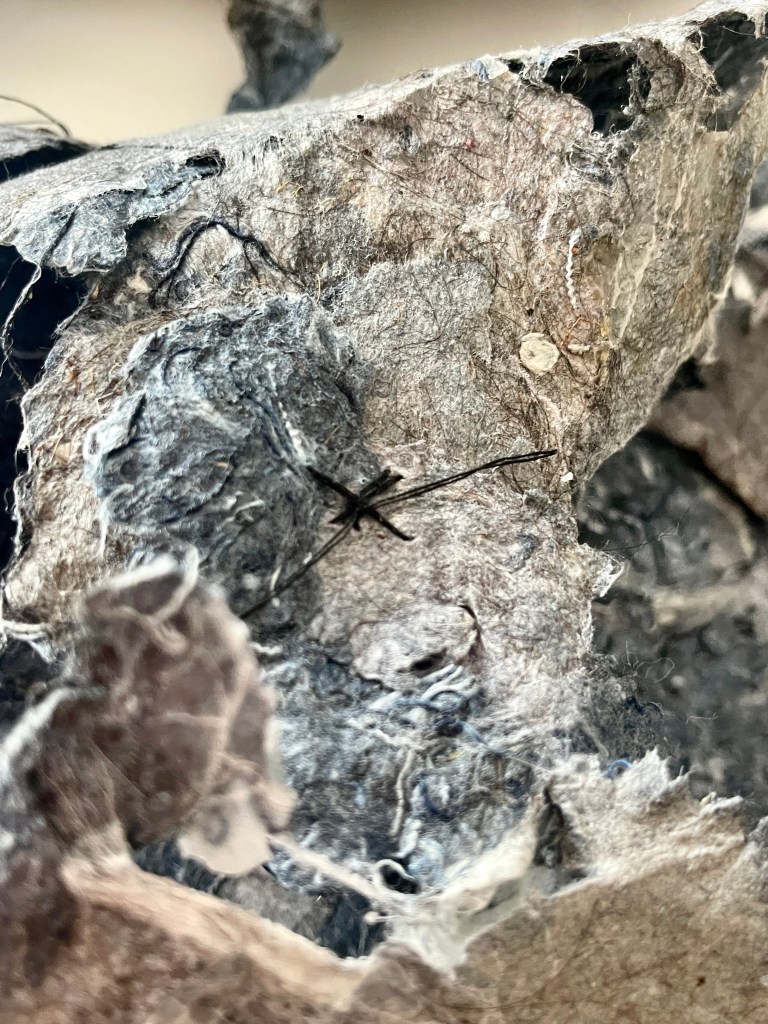
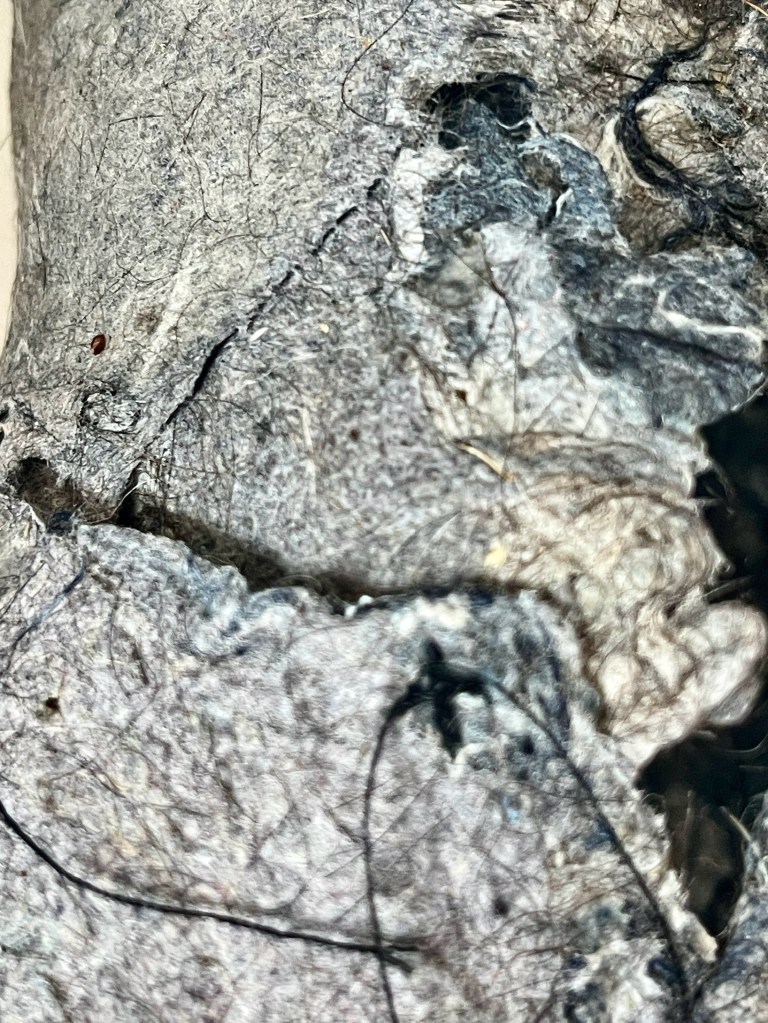
Beginning to hang:
The first two pieces hung loosely from the metal hoop as I begin to create the spiralling sculpture with the black threads visible at this sage to allow for adjustment of height and position .
The shapes have continued to keep a looseness and vagueness about them , as they continue hold their own presence and retain a fluidity movement, enquiry and fragility. I had been concerned that I might loose this during this process and hoped as the other pieces are added that this ‘presence’ will remain.
Their presence in the living area was reminiscent of Phlyllida Barlows early sculptures at home placements where the objects take on a strange at home reality and become part of the everyday. Living with the art object is pertinent to my practice and connects to my ongoing concerns regarding domesticity:
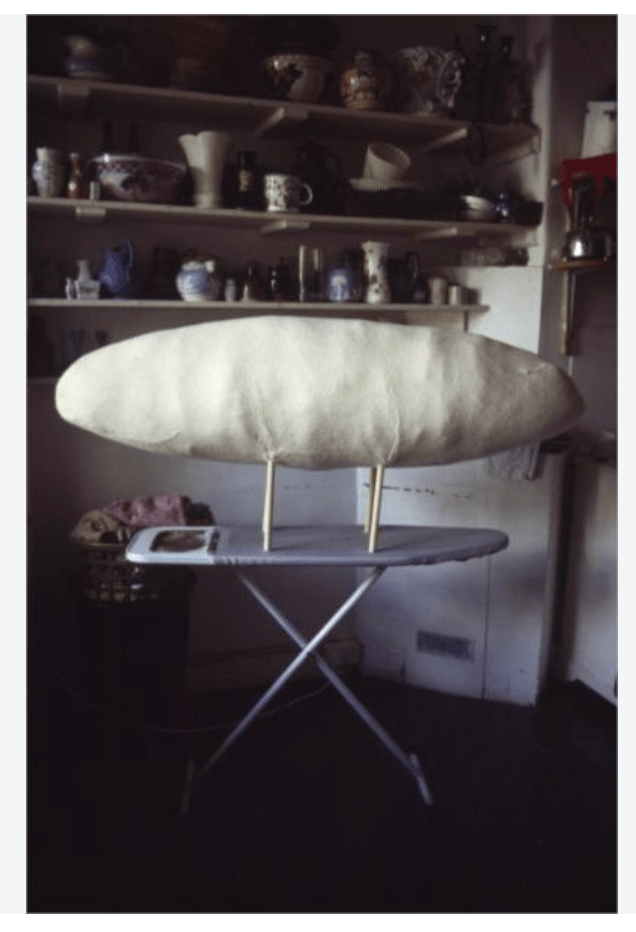
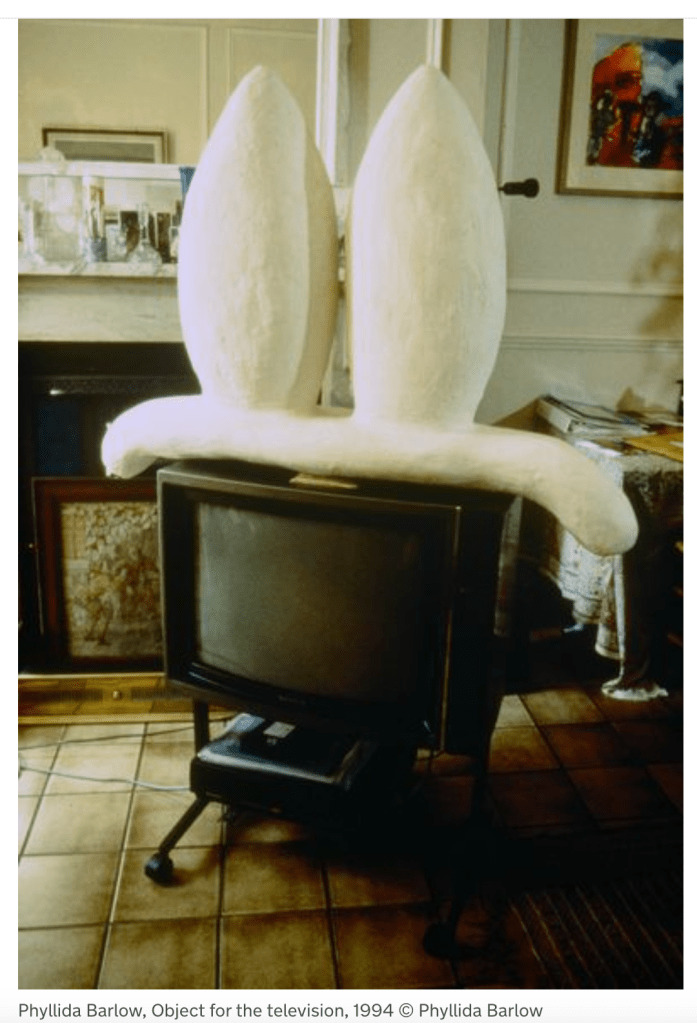
Murmuration in progress and eerily uncomfortable in the living space as it grows and begins to take a presence… perhaps something that would not be encountered in a studio setting that has offered up new ideas for works going forward.
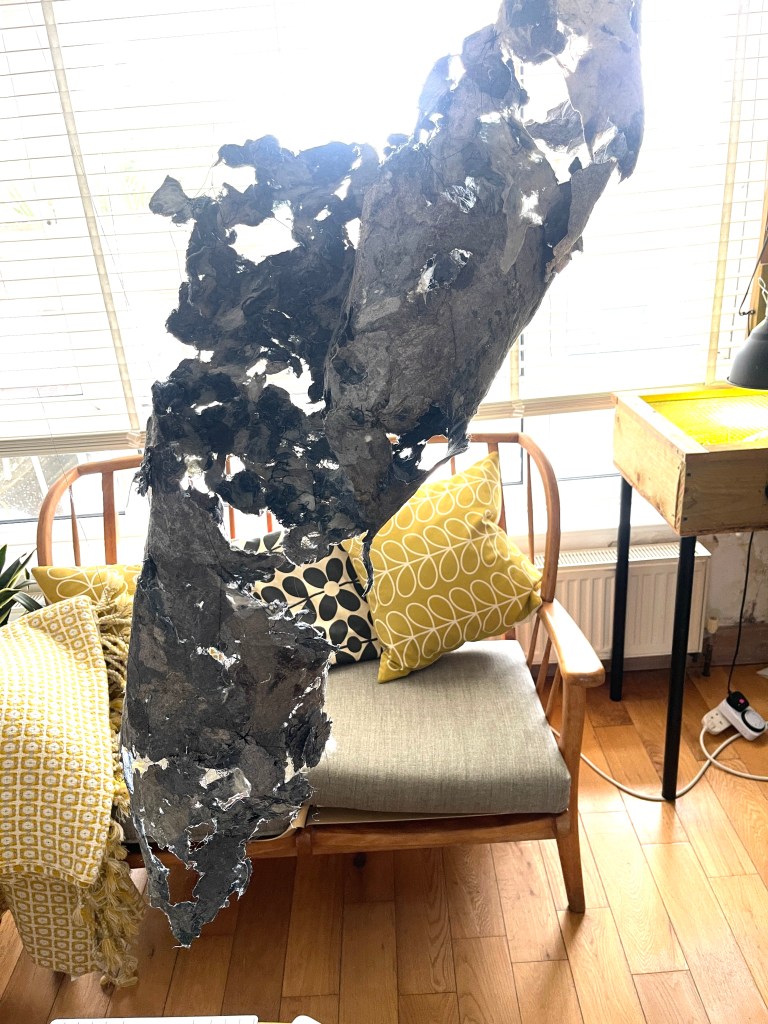
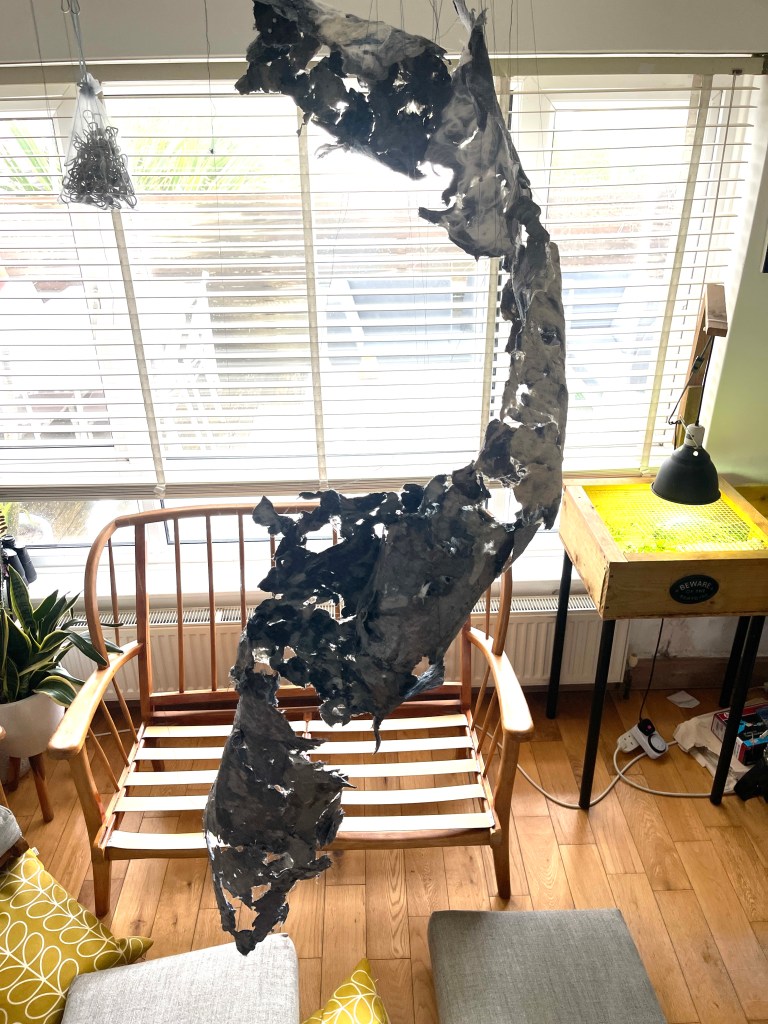
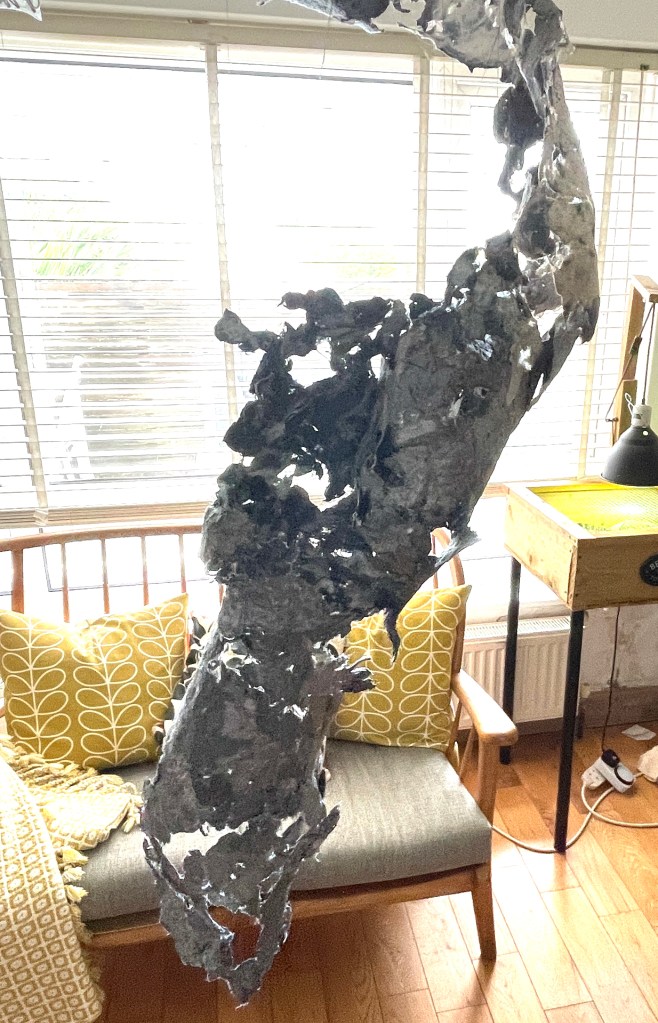
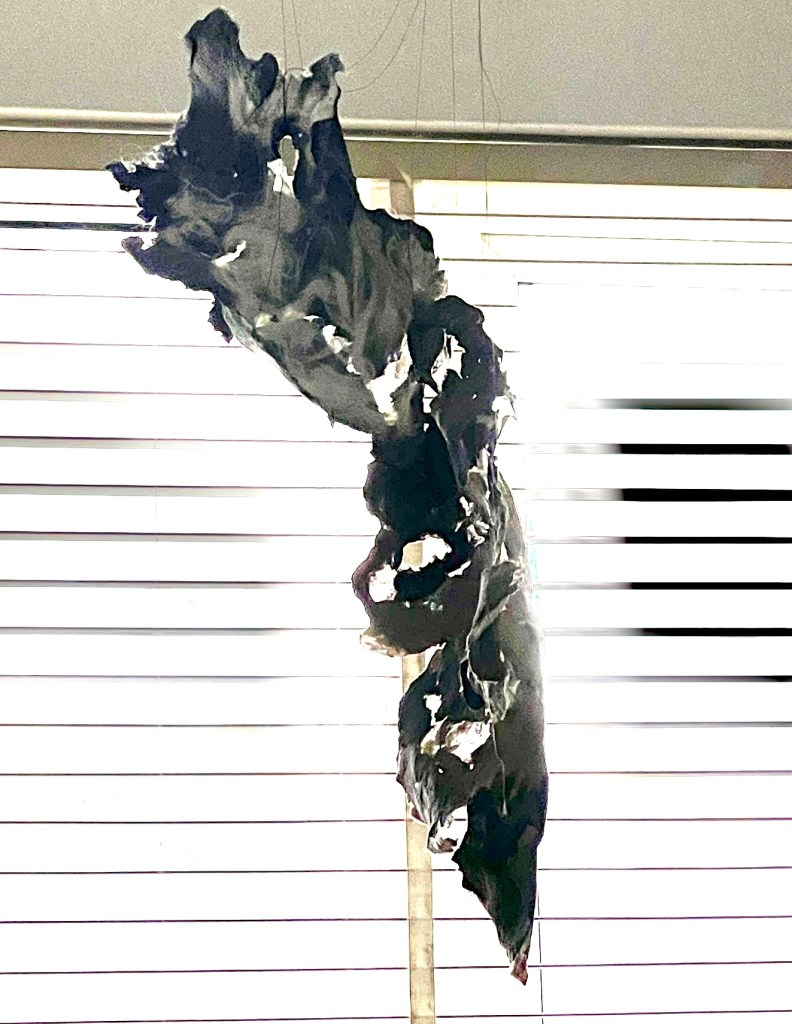
Further felting of the collected material, wet wrapped around the tubes and mesh roll allowed the continuation of this sculptural vortex – It began to take the shape of the of the murmurations. This was achieved by placing the tubular sculpted pieces in specific positions of height and angle that exaggerated the twists and turns and flow of the amorphous shapes crated by the flocking birds.
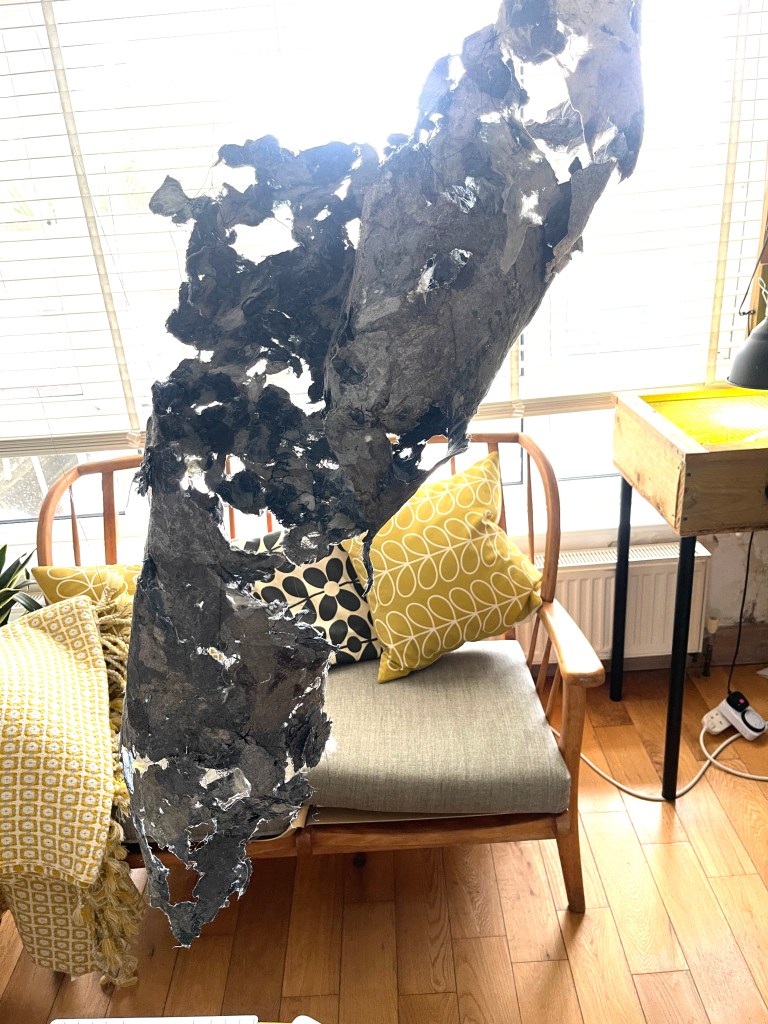
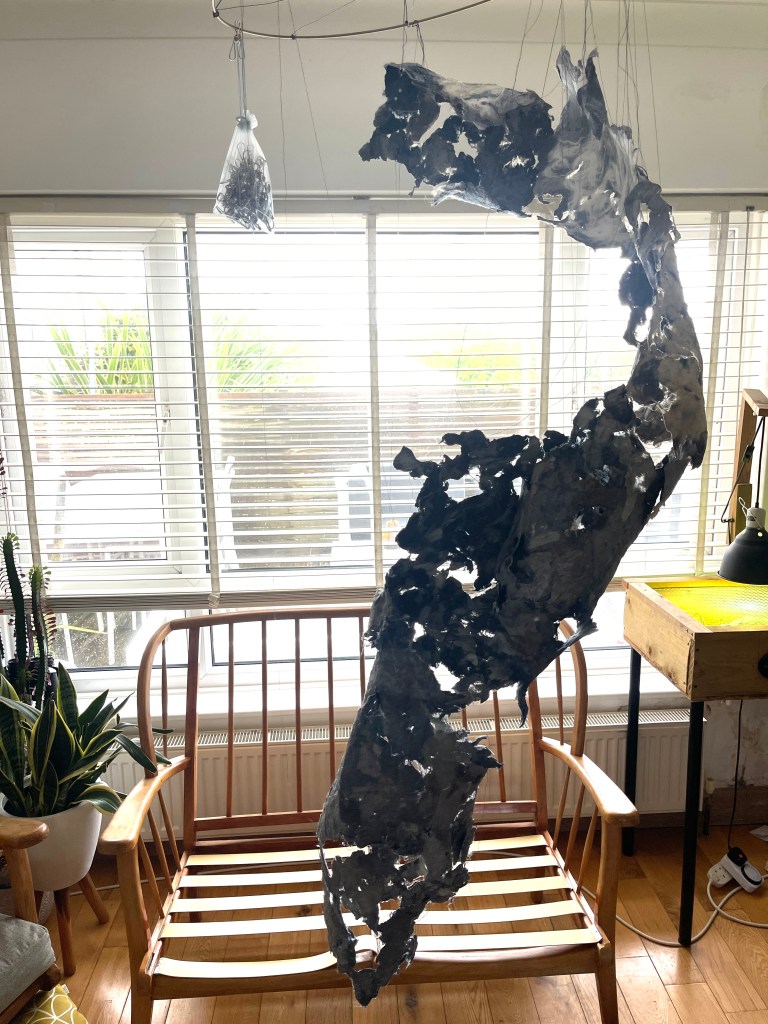
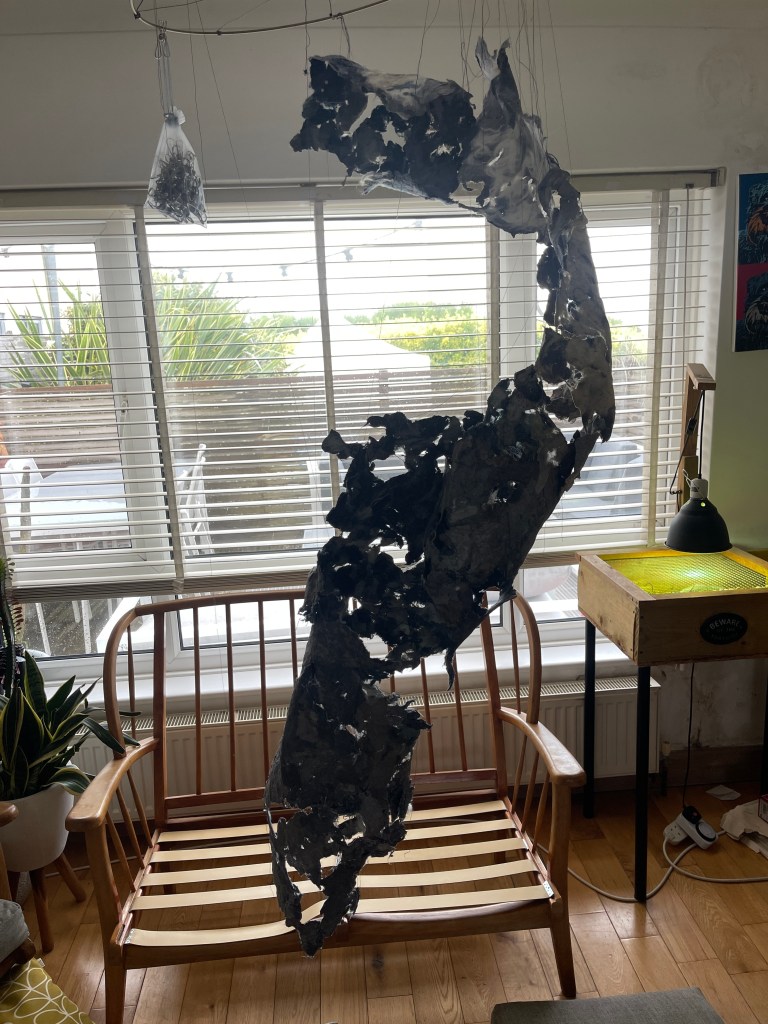
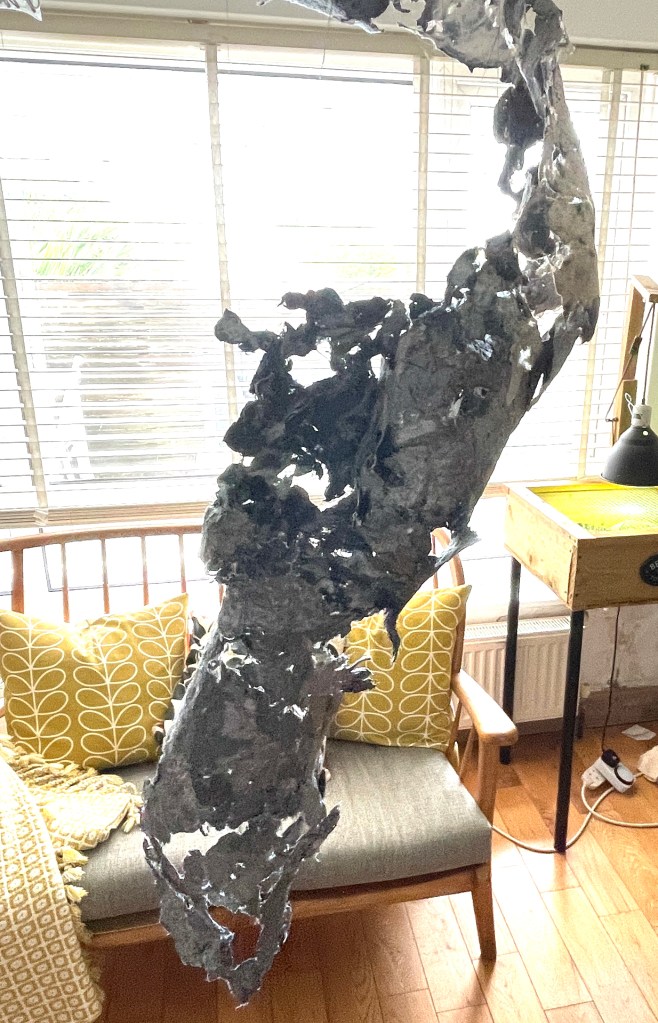
The wet felting process was ling and laborious with varying results. The pieces were heavy and I wanted to explore further a notion of lightness with the work that more closely mimicked the starlings etherial murmuration that also aligned it more closely as a metaphor for the swirling fleeting intangible nature of thoughts and emotions. I hope d the lighter material would adhere more to the shapes I had tried to emulate.
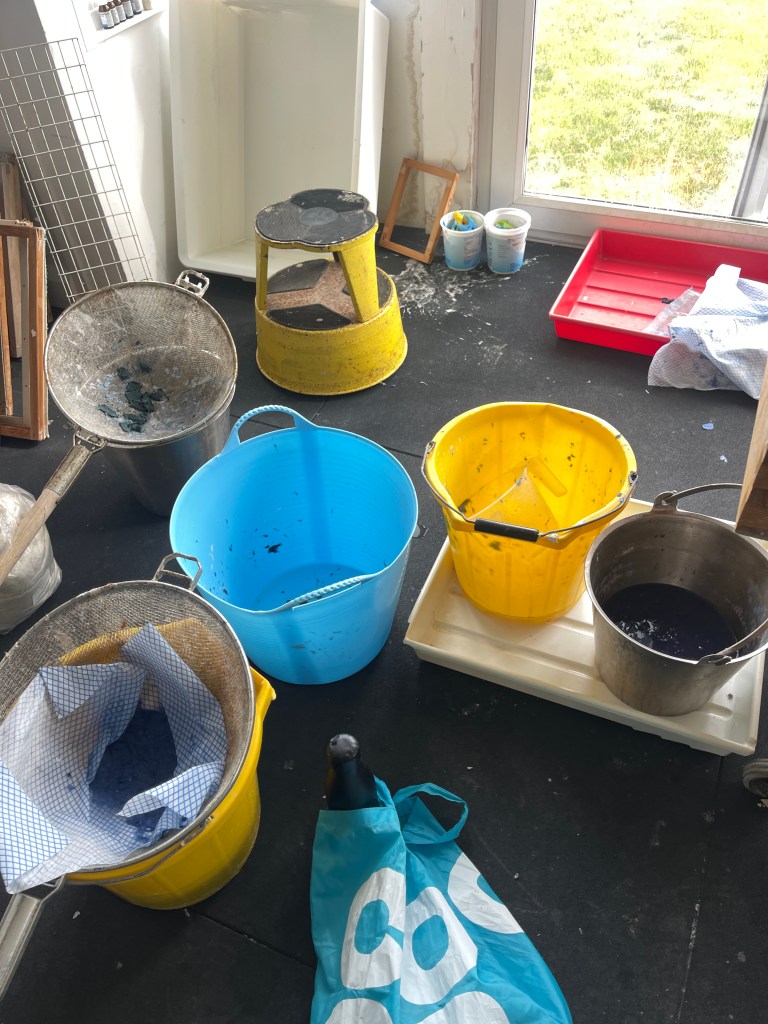
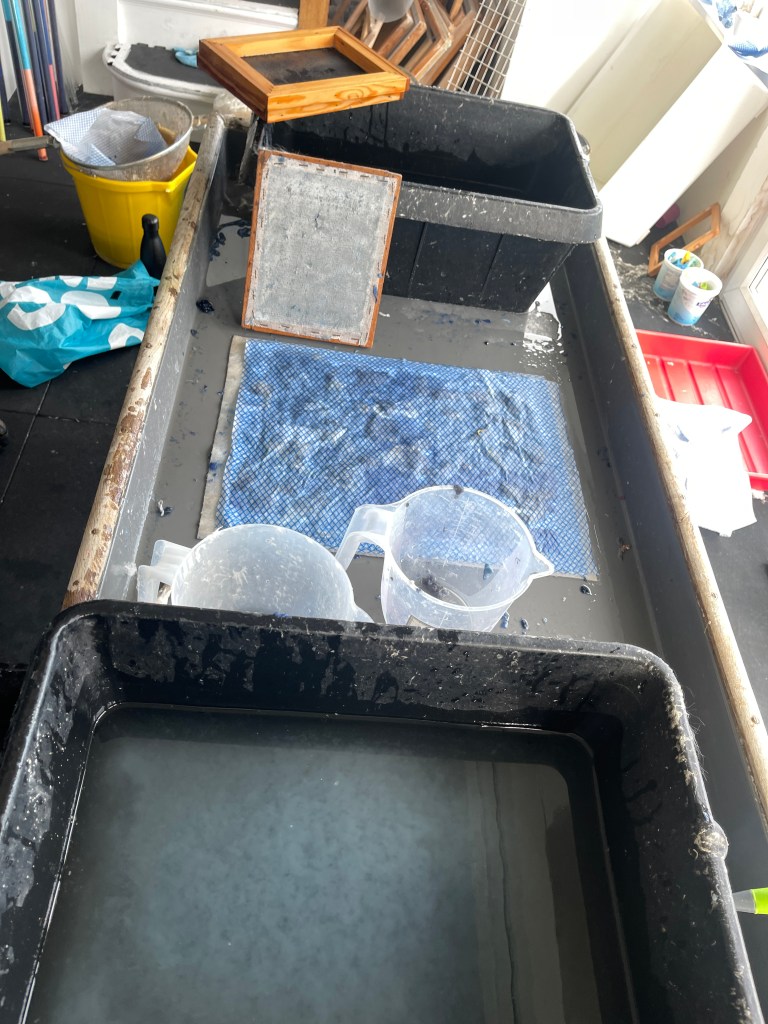
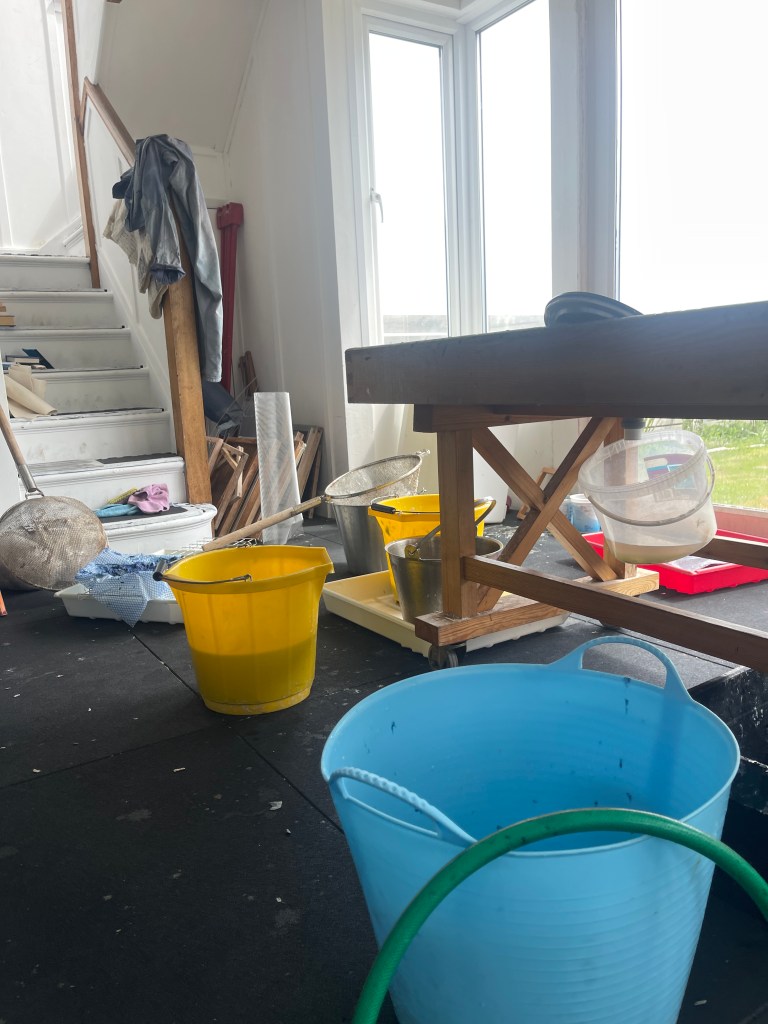
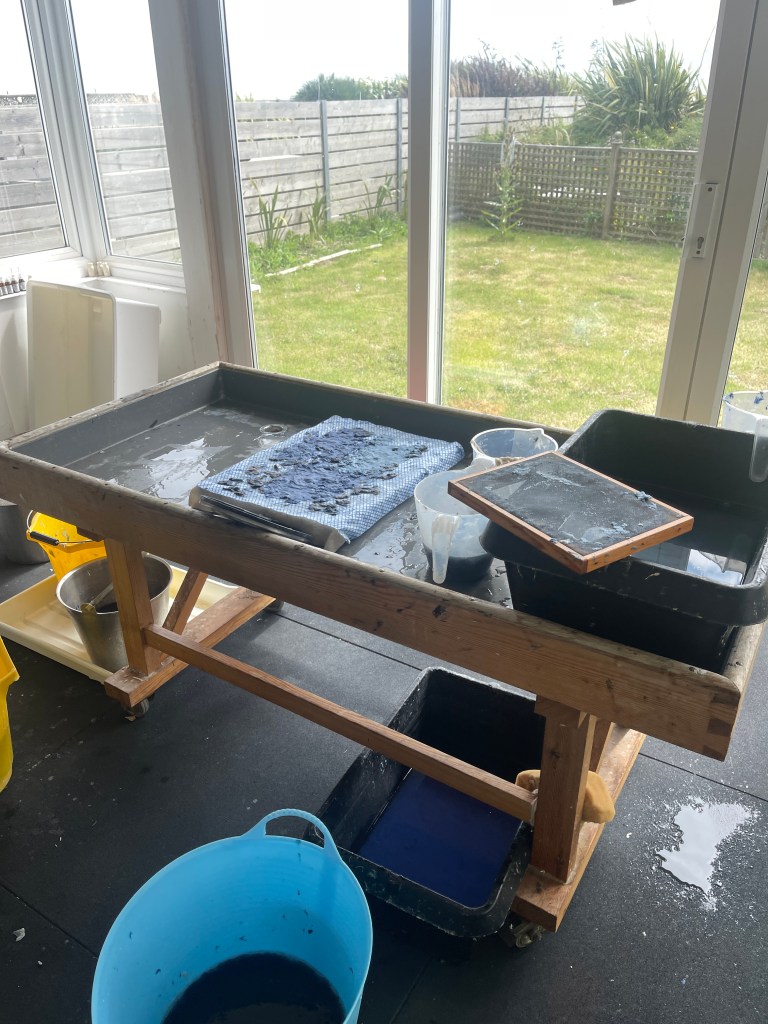
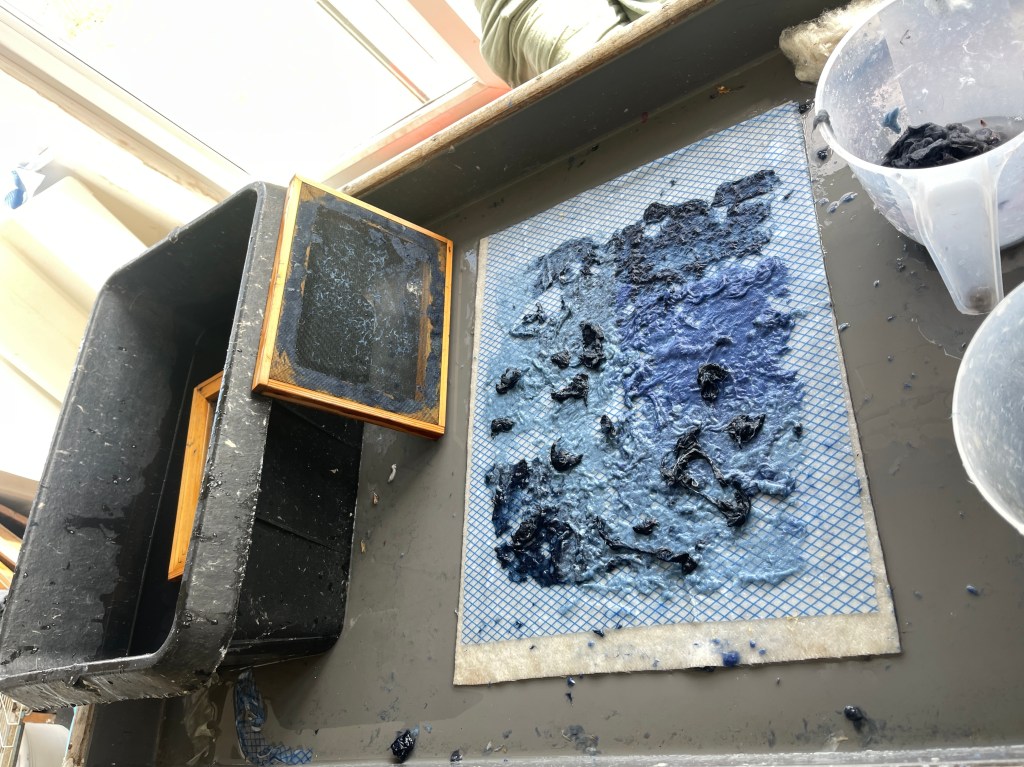
With this in mind I took my work to an artists studio who made paper. I was allowed by the artist ‘Susan Cutts’ to use her facilities to blend down and distort the material detritus from the machine into a finer constitution. Mixing in a small amount of soap powder and layering the wet substance over sheets of J.Cloths and pressing it between an old printing press in order to squeeze excess water out.
I used buckets of various blended fibres depending on how ling they had been pulverised – added the water and soap and combined the pulp with the unblended whole pieces of material detritus. This way I created layers bu talso a more secure and solid substance that would dry lighter and firmer. I used a frame to press the material pulp onto the wet cloth.
Process pictures below:
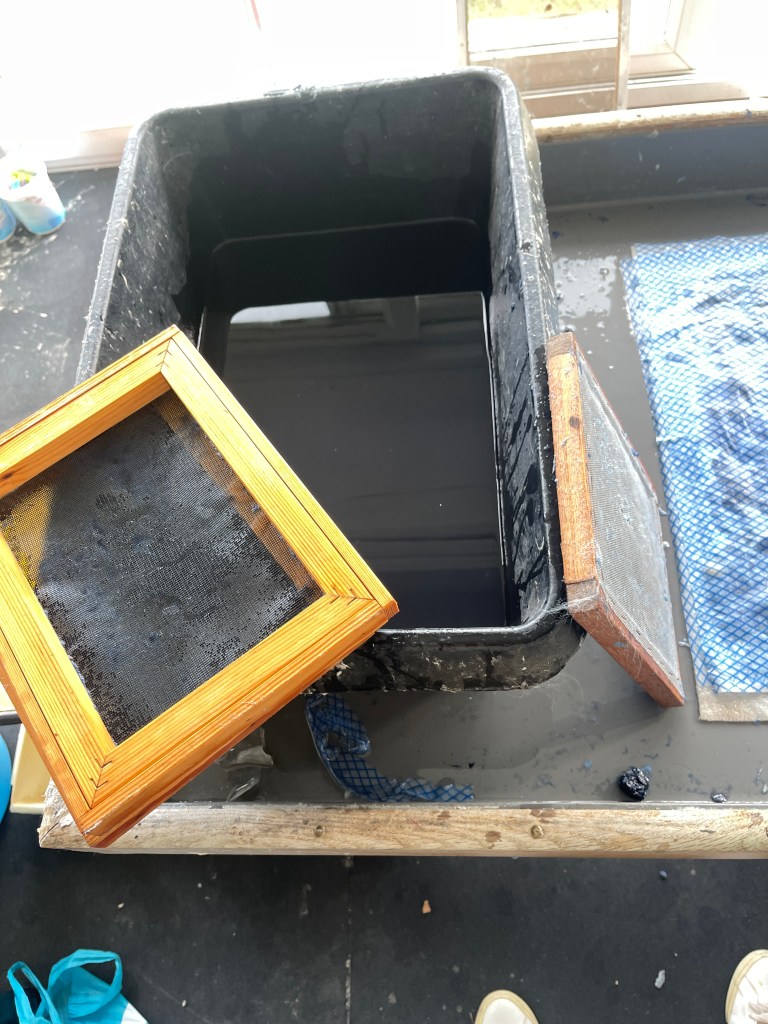
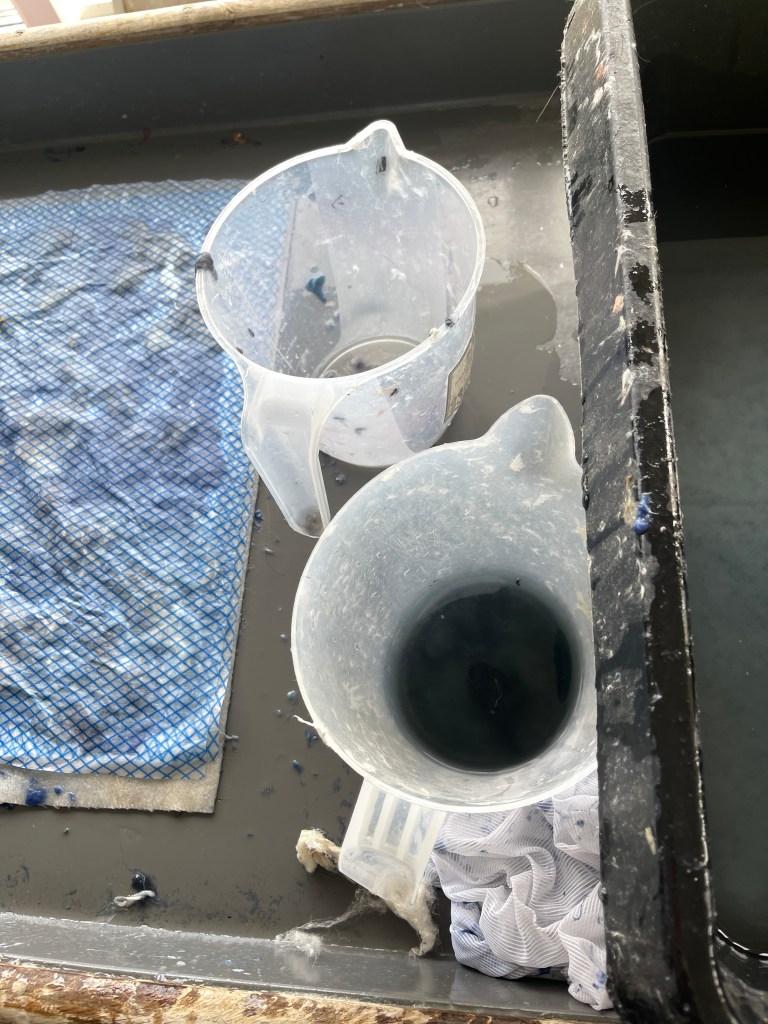
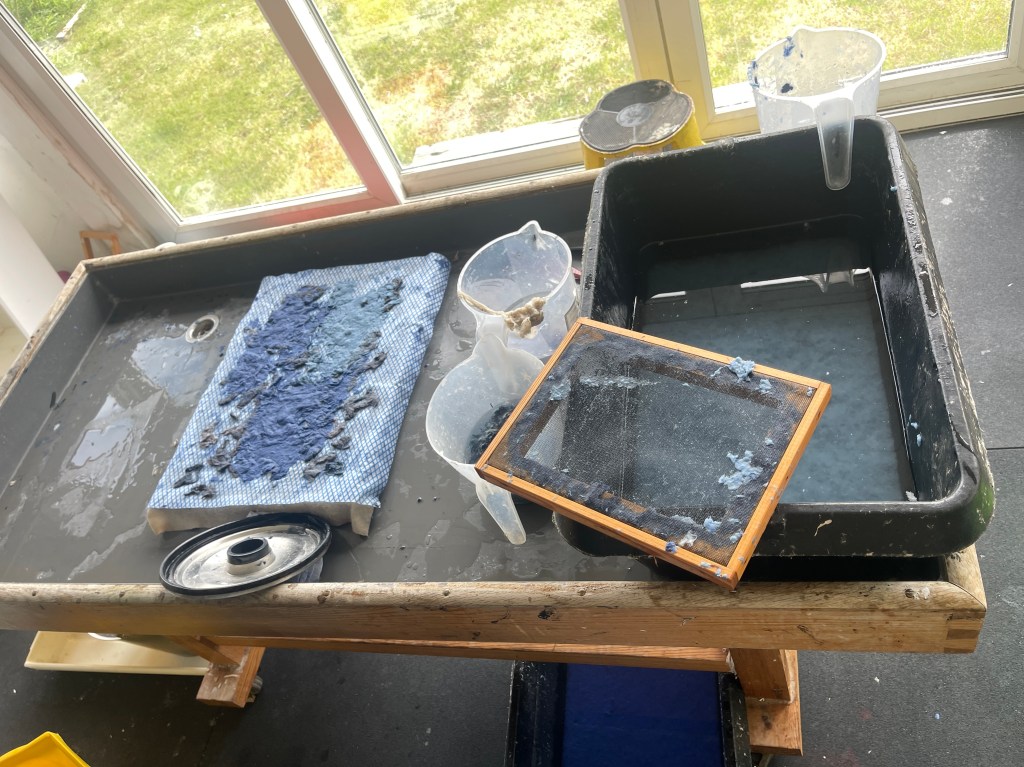
I layered up the cloths into a tray and brought them back to my studio to dry out. (below)
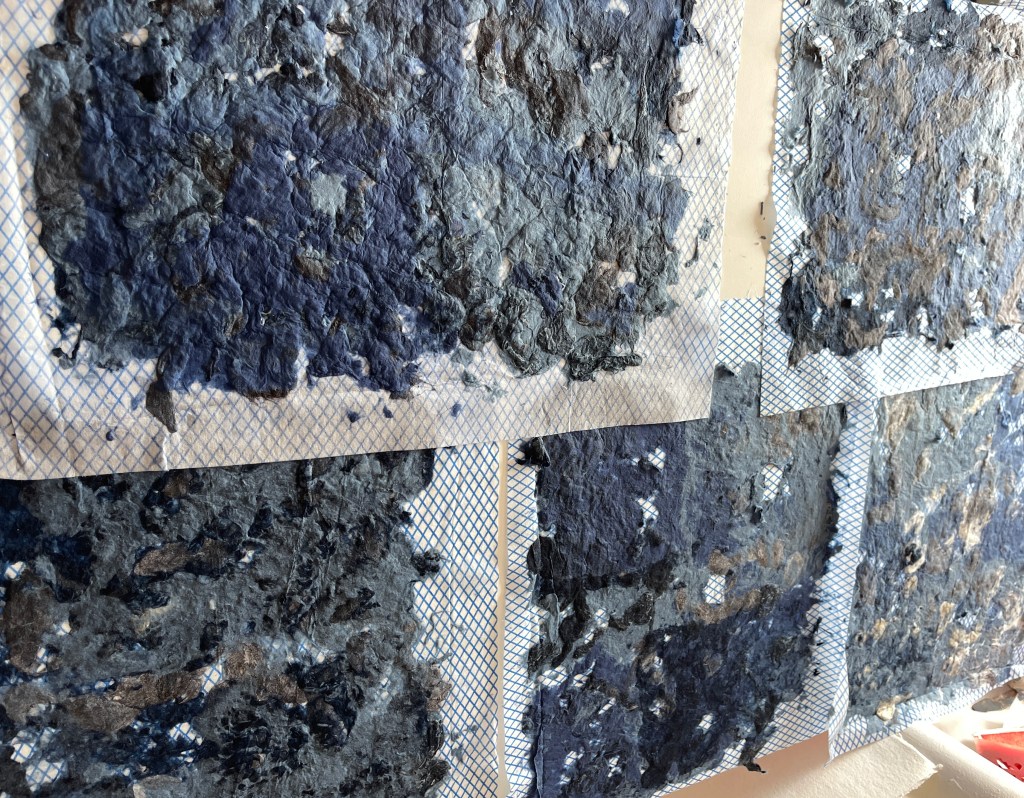
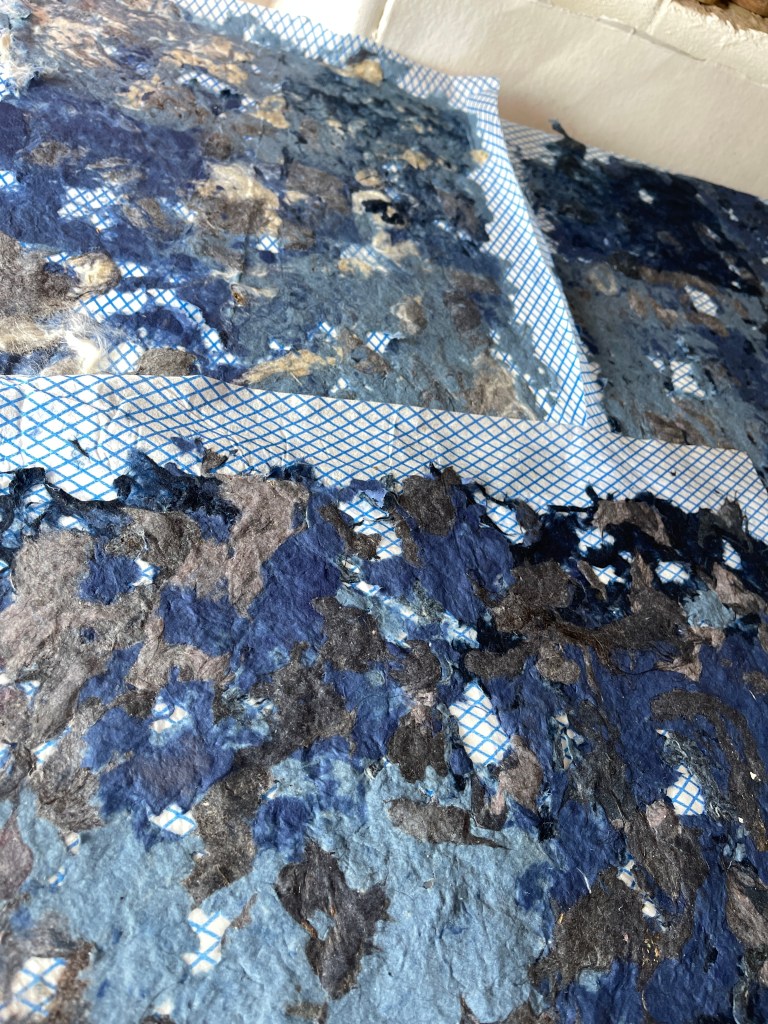
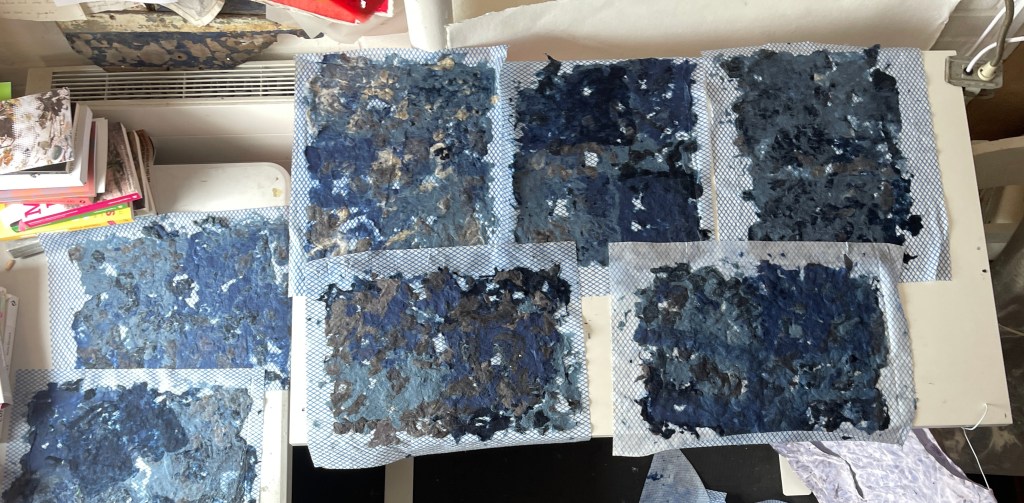
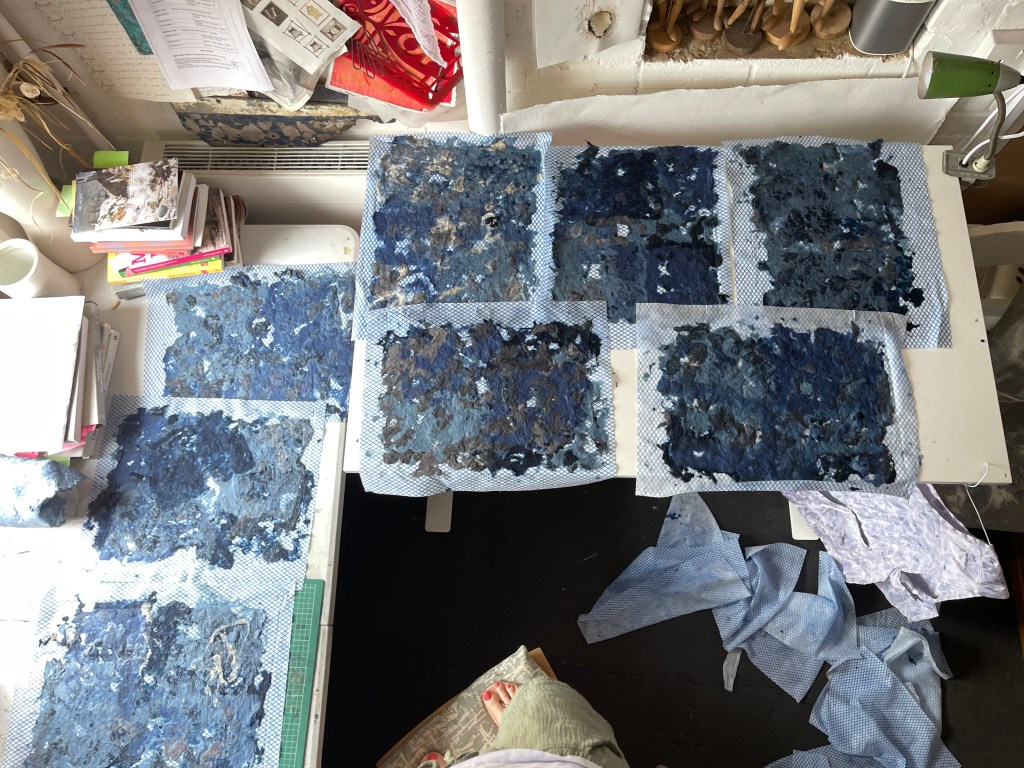
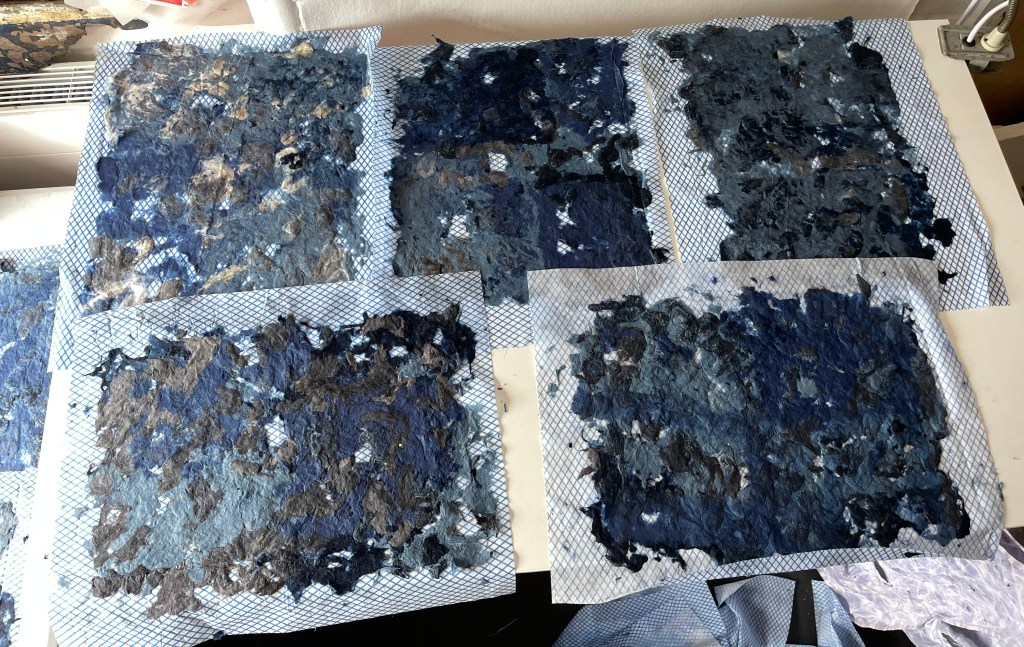
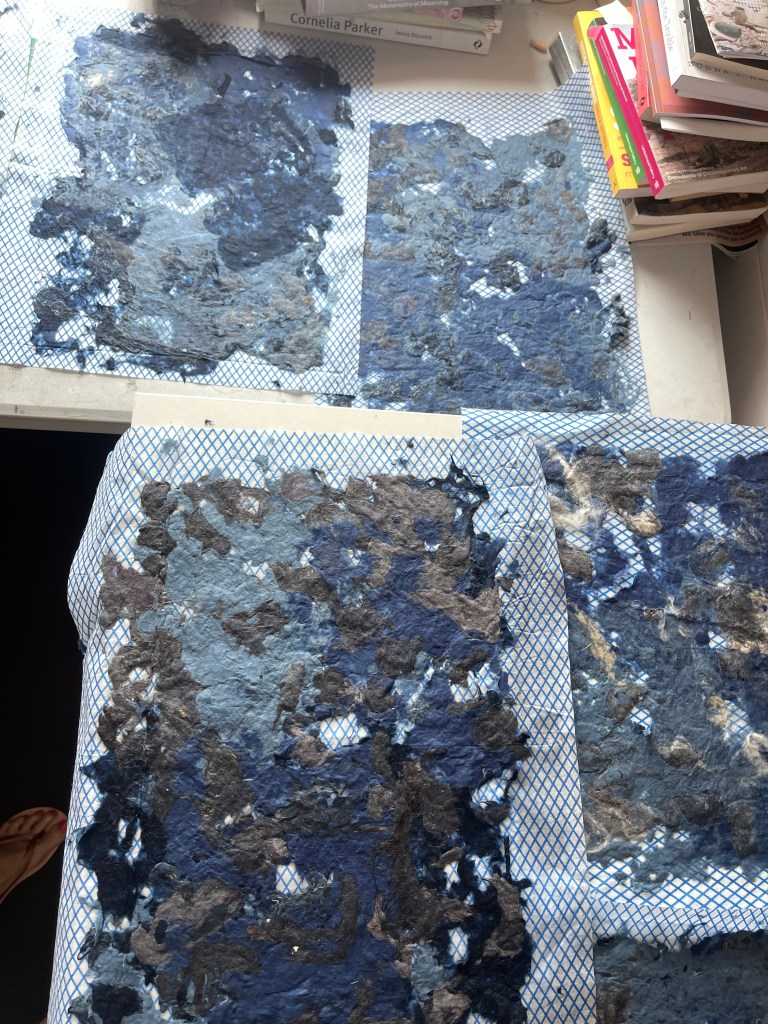
The pieces are lighter in colour and texture and am hoping they will mould more easily as they begin to dry.
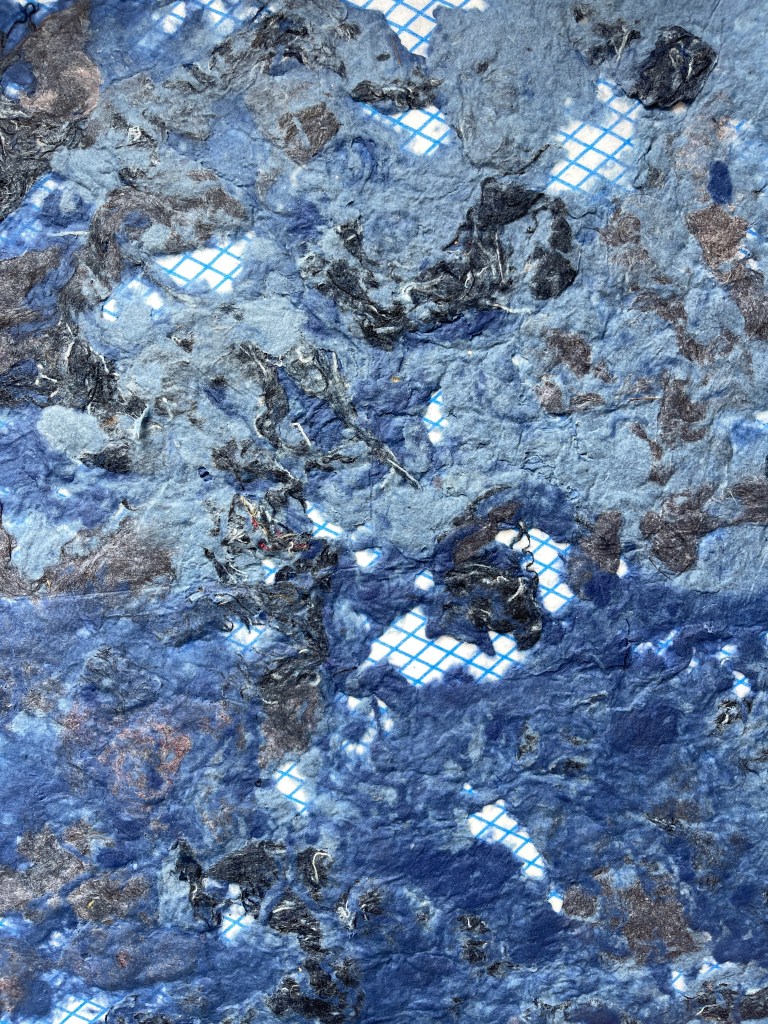
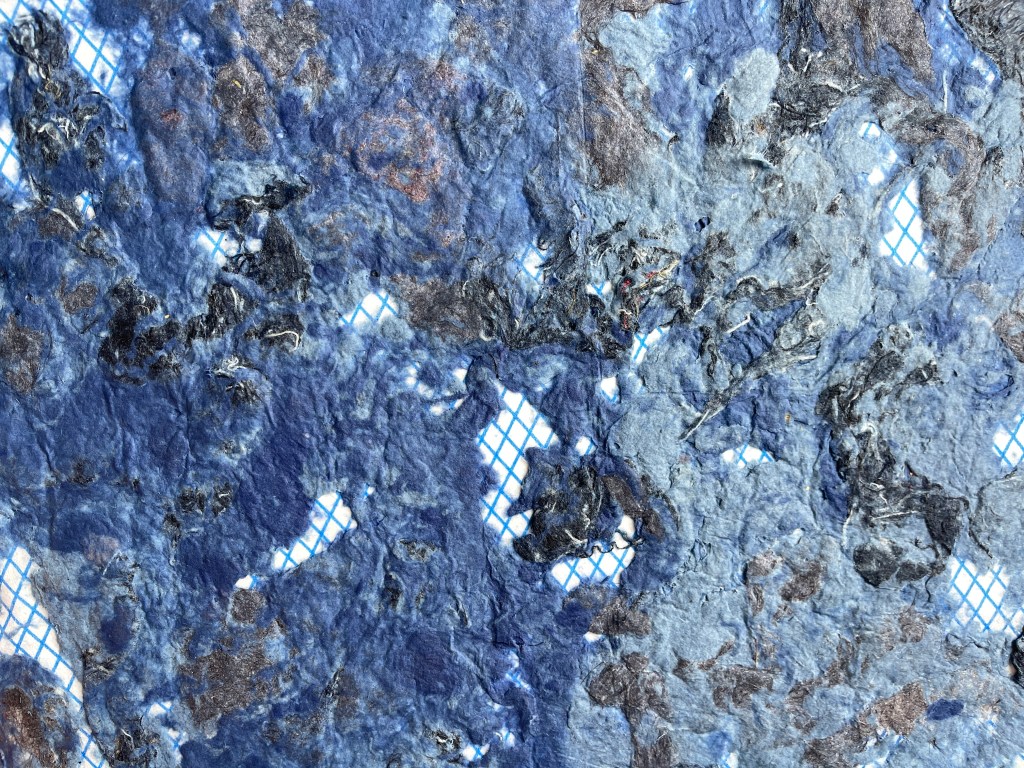
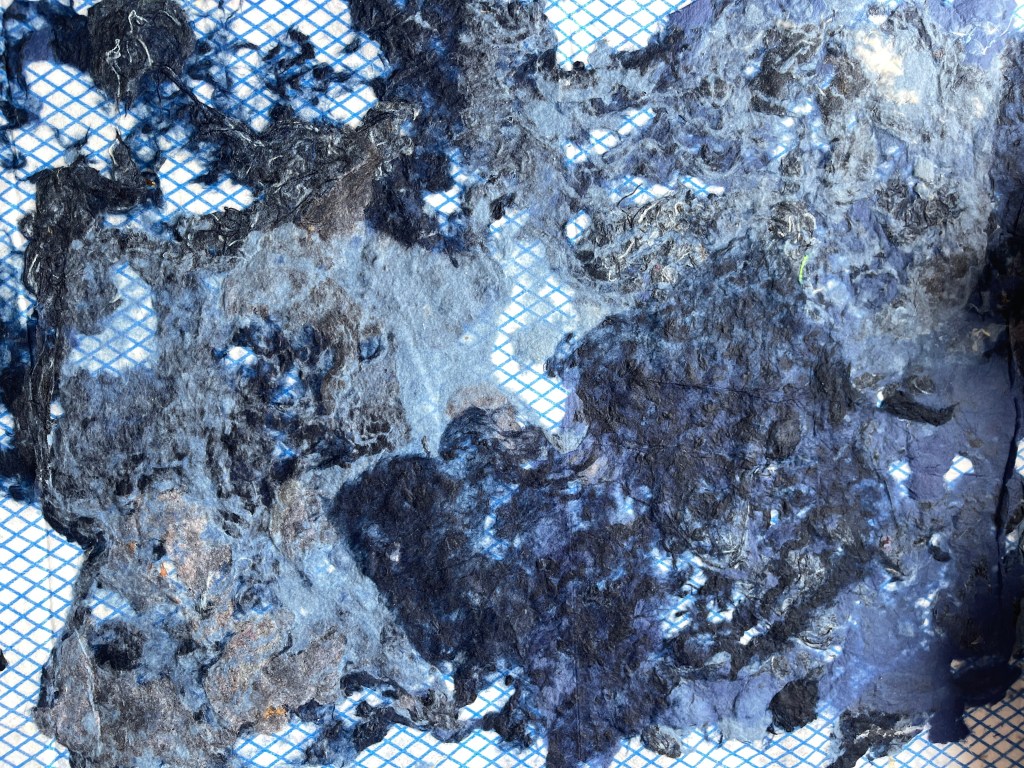
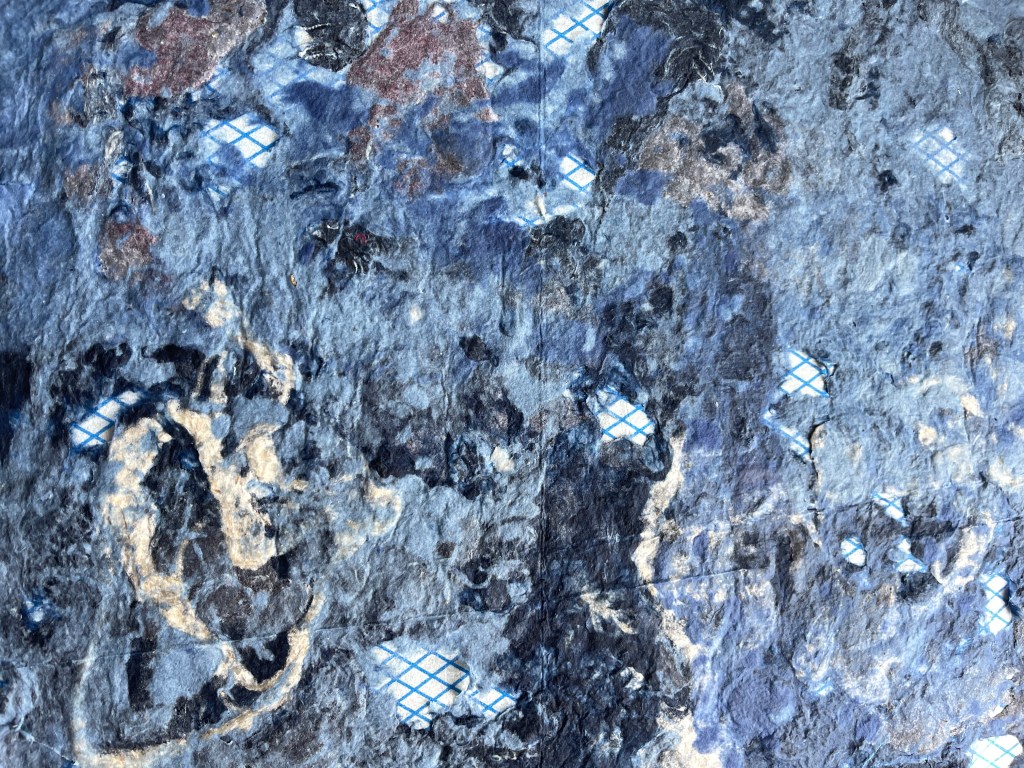
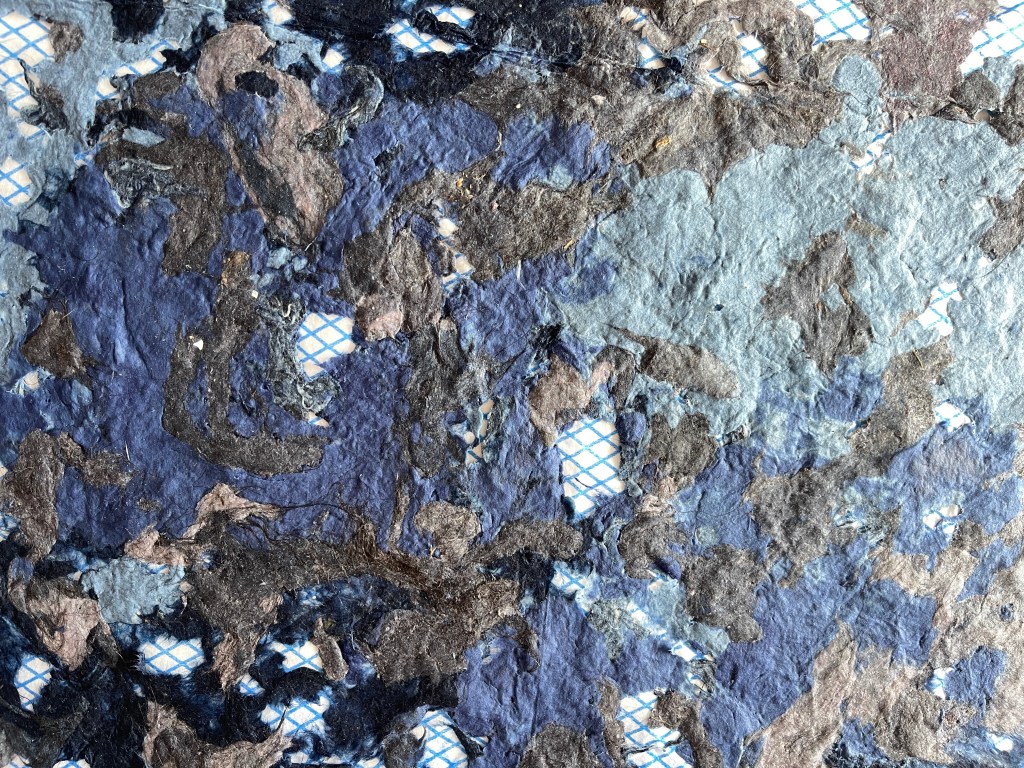
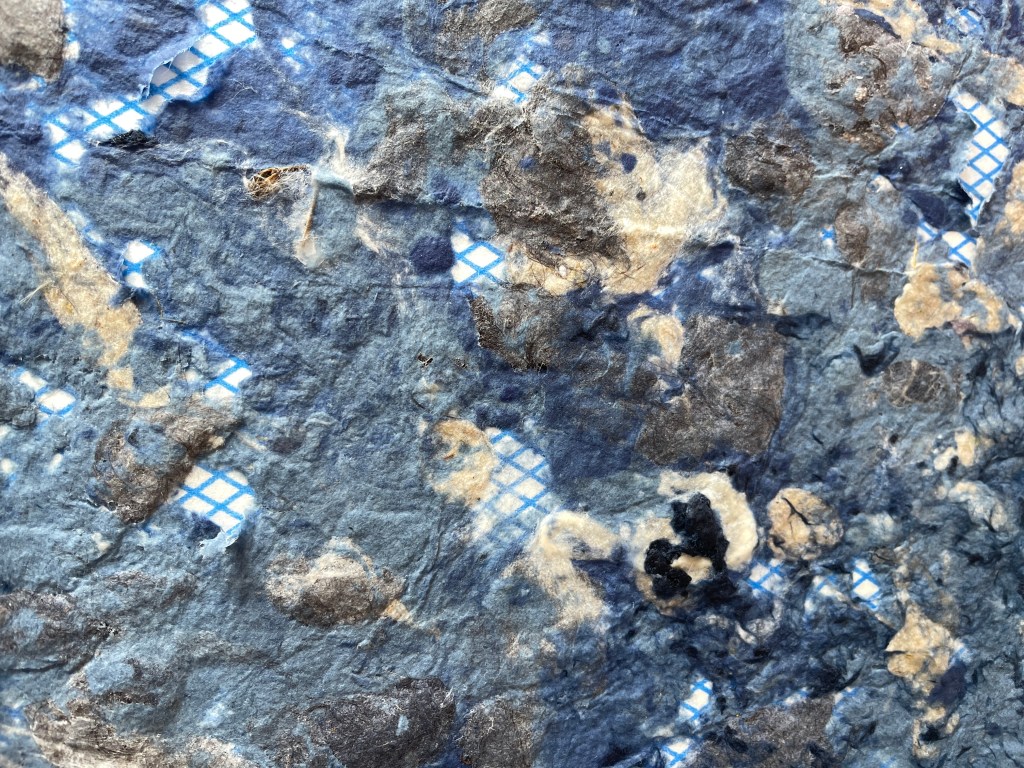
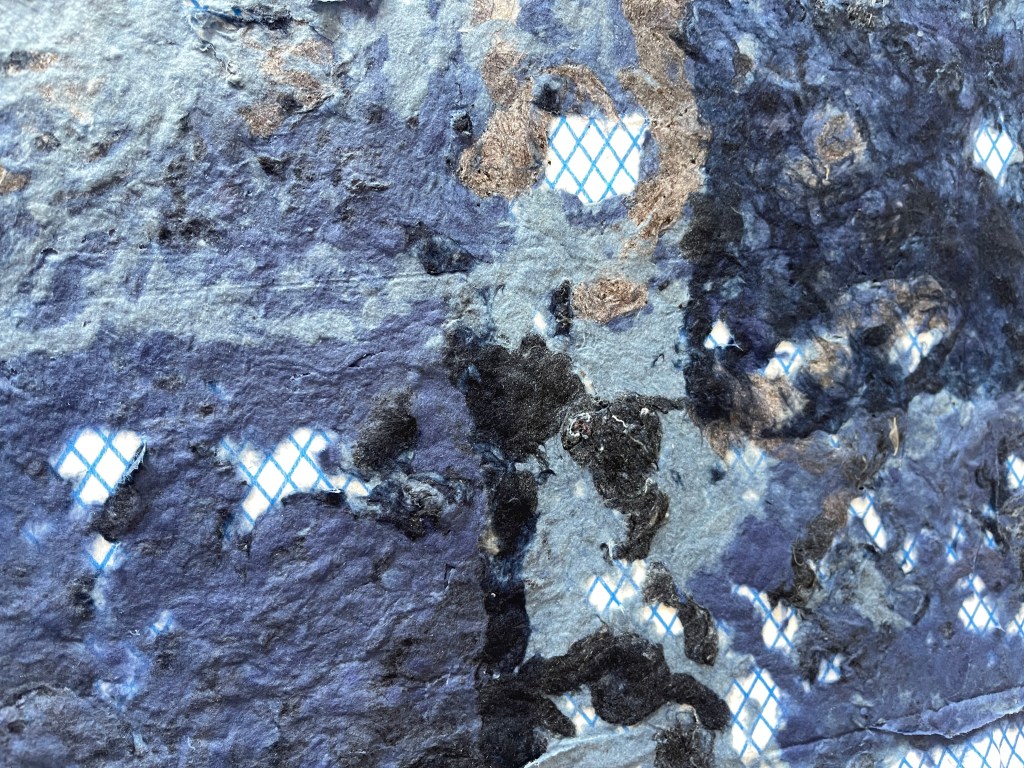
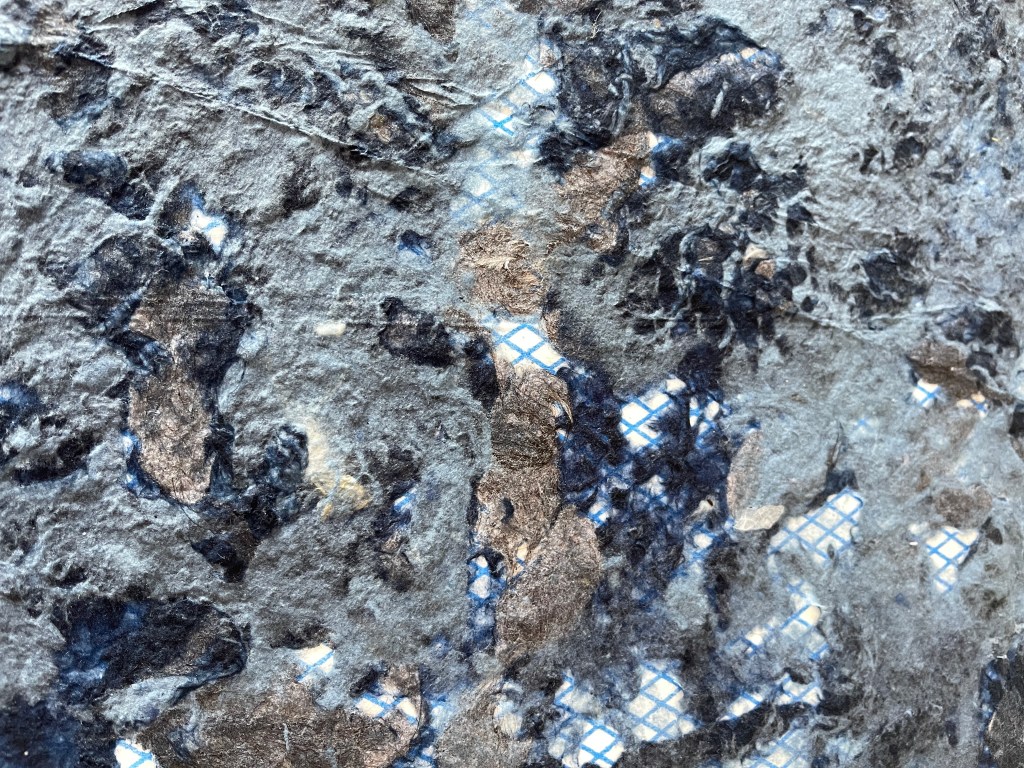
Colour image distortion edit. I like explore the potential of the editing of this material as it brings out detail and clarity and become a more enquiring image.
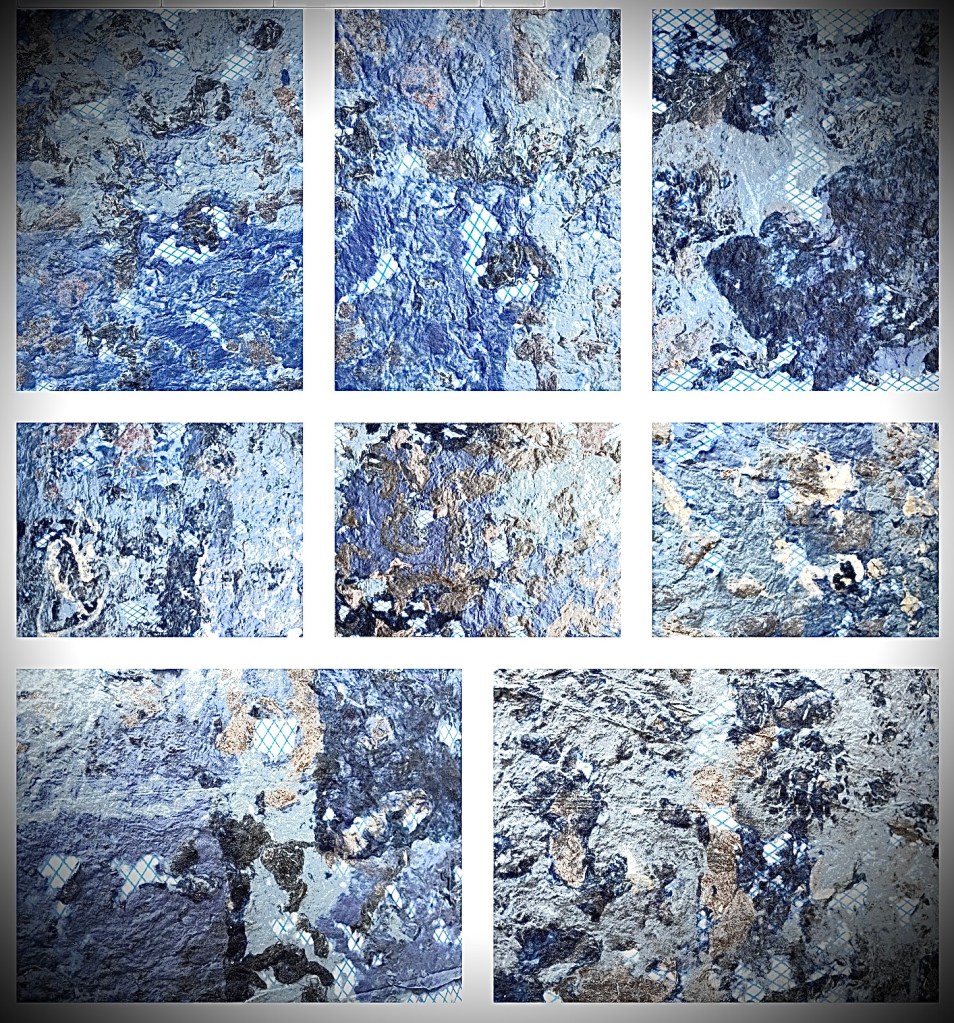
Manipulation of sheets in moulded objects.
The inner working of domestic machinery such as, washing machine, tumble dryer, vacuum cleaner, dishwasher, ovens, carpet cleaners, irons etc collect waste, detritus and are indicative of the process of the domestic work load. A relentless cycle of ‘housekeeping’ My collection of detritus and its manipulation has drawn attention to the hidden and discarded waste produced by this process.
Function – Machines adjectives – suck, clean, dry, wash, flatten, heat, cook, blend, cool.
The functionality of the machines contains a sea of hidden workings and applications that the domestic worker becomes the end user of.
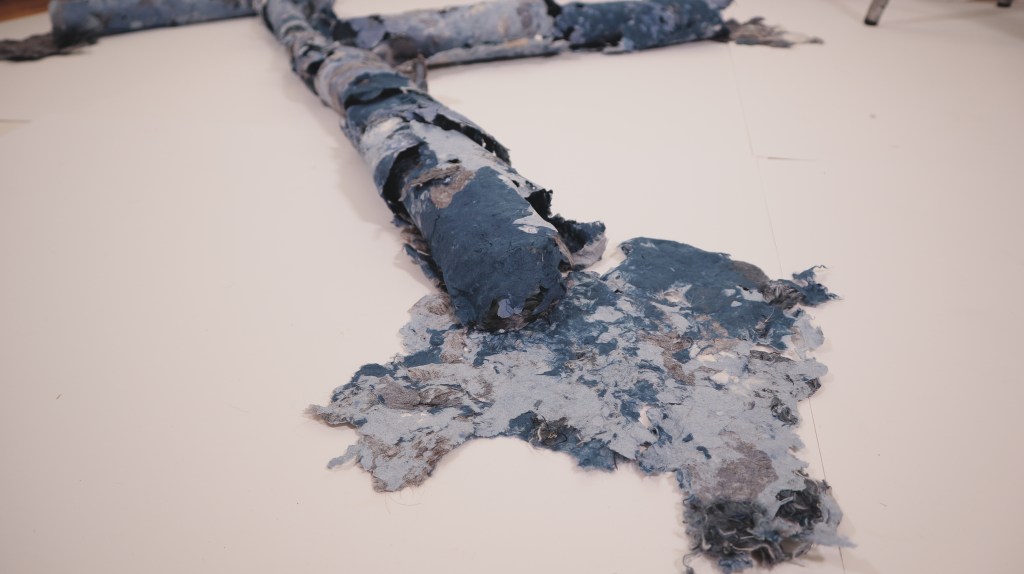
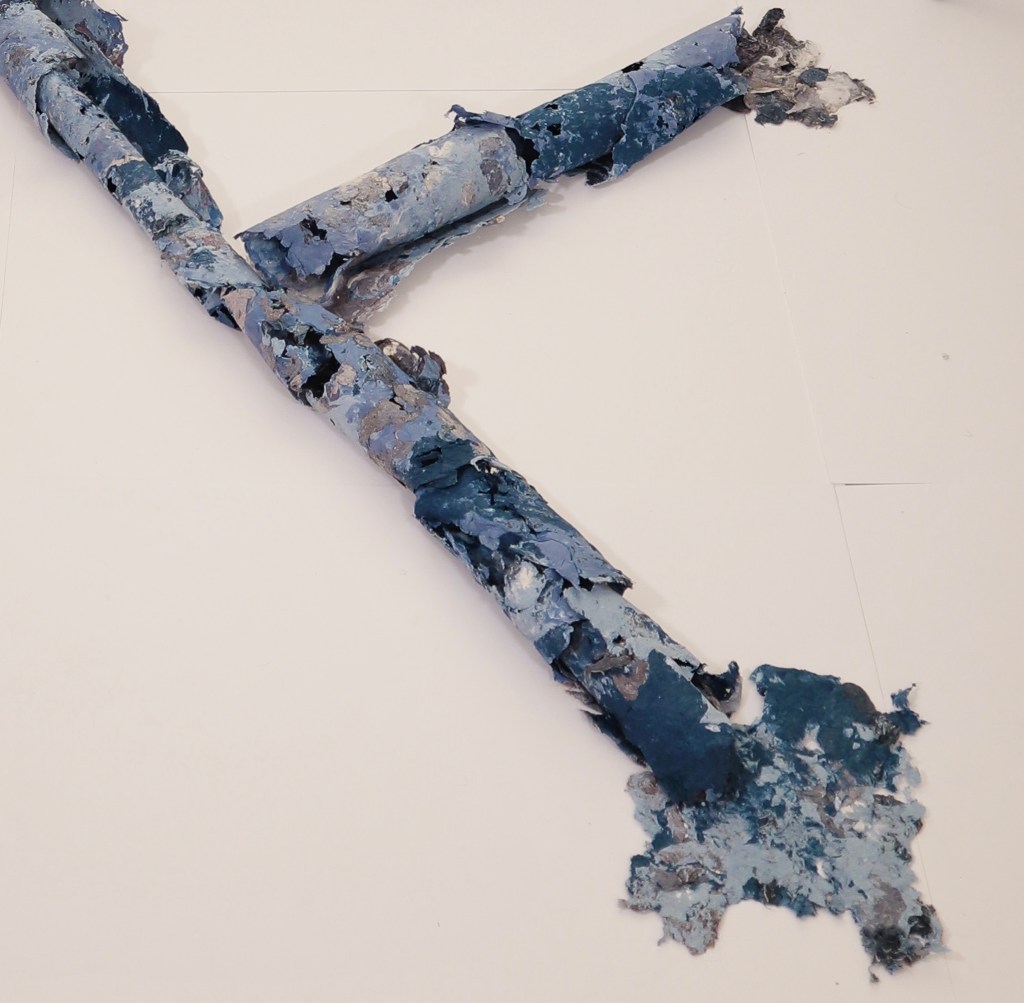
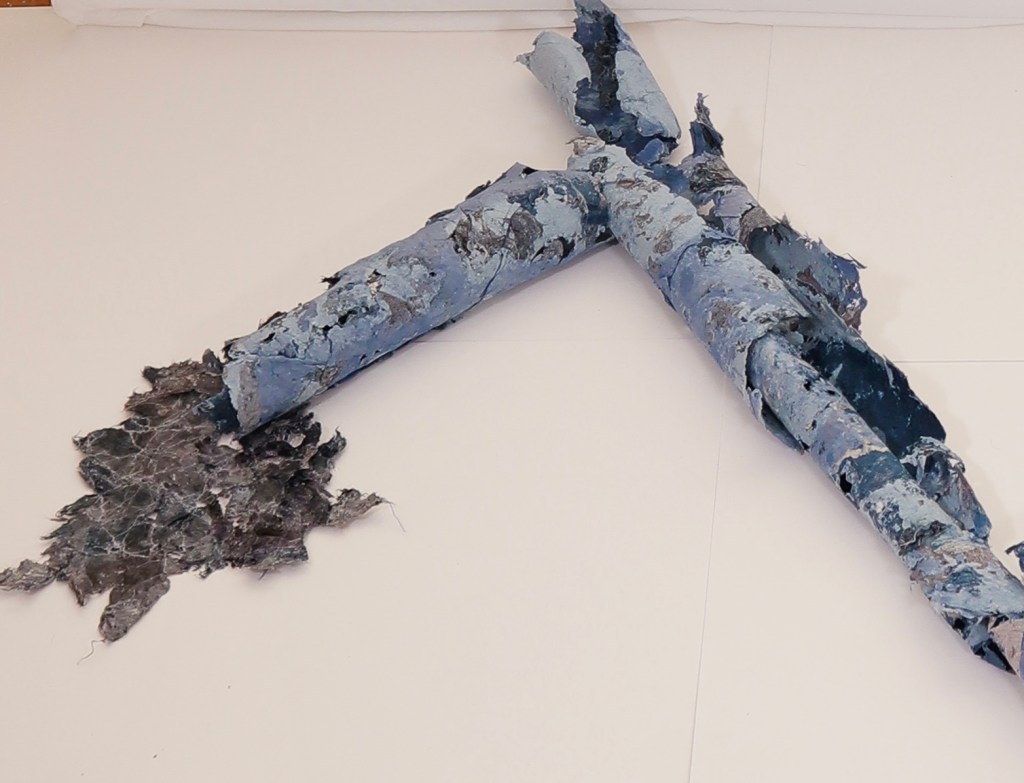
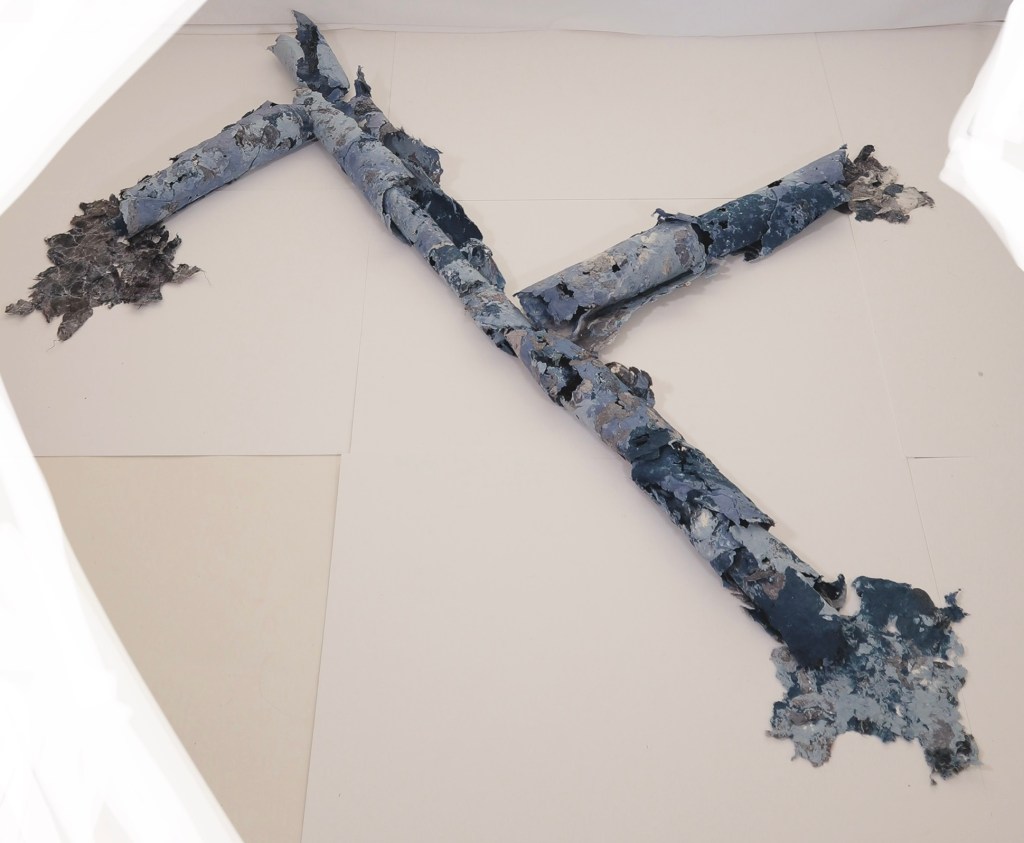
The tube formations I created from the felted detritus offer up a slightly uncomfortable visual imagery to enquire into this, the machines inner working become the detritus, they are made from the detritus in an overwhelming, nightmarish installation below:
The tubes in formation after being taken off tube:
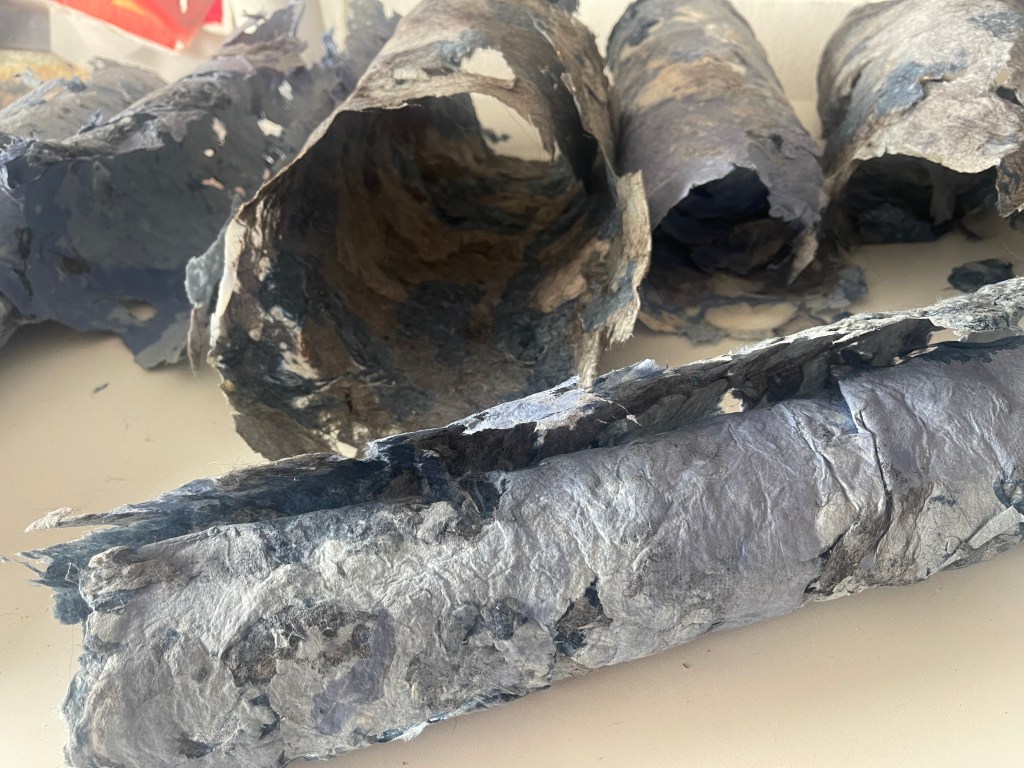
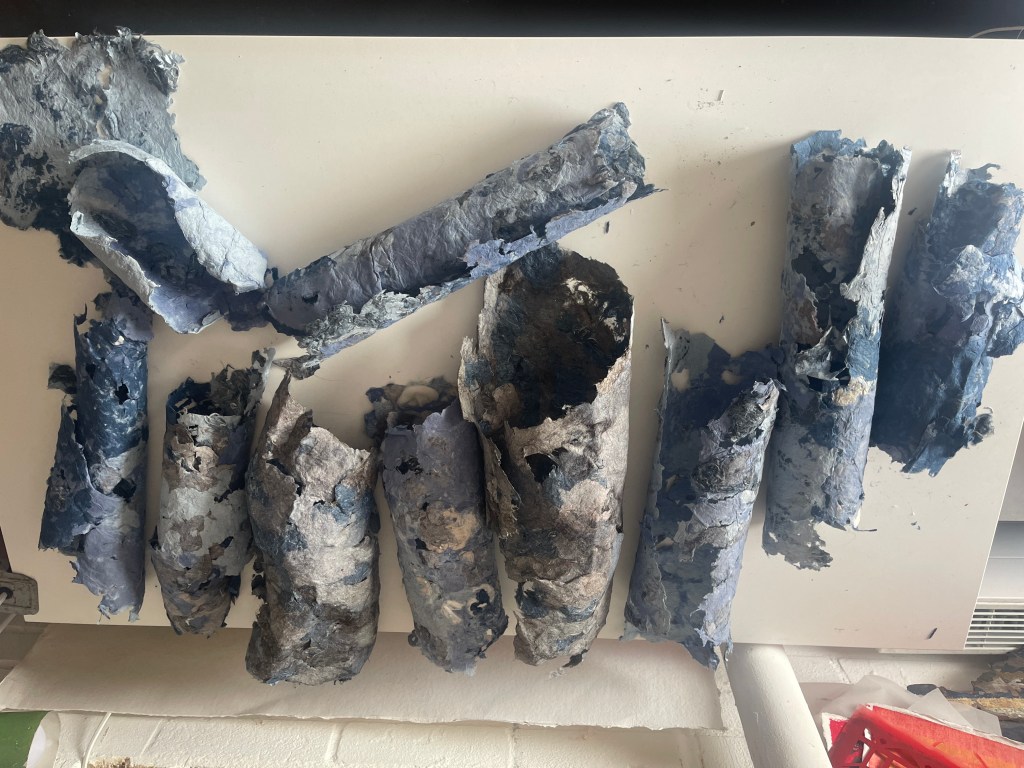
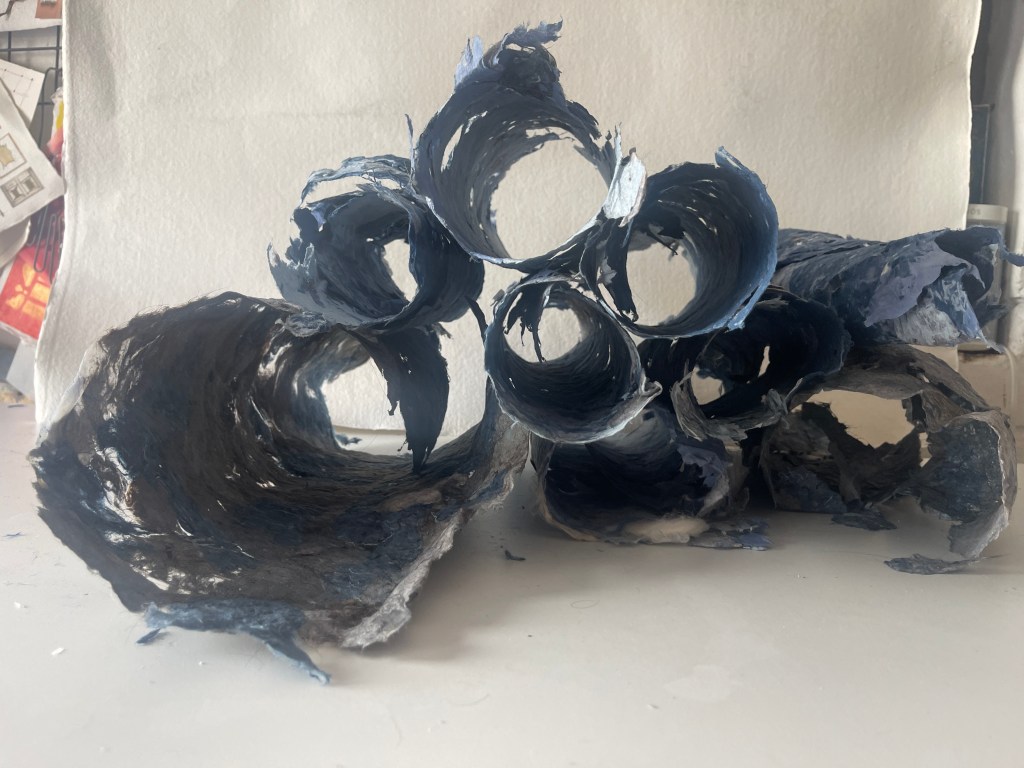
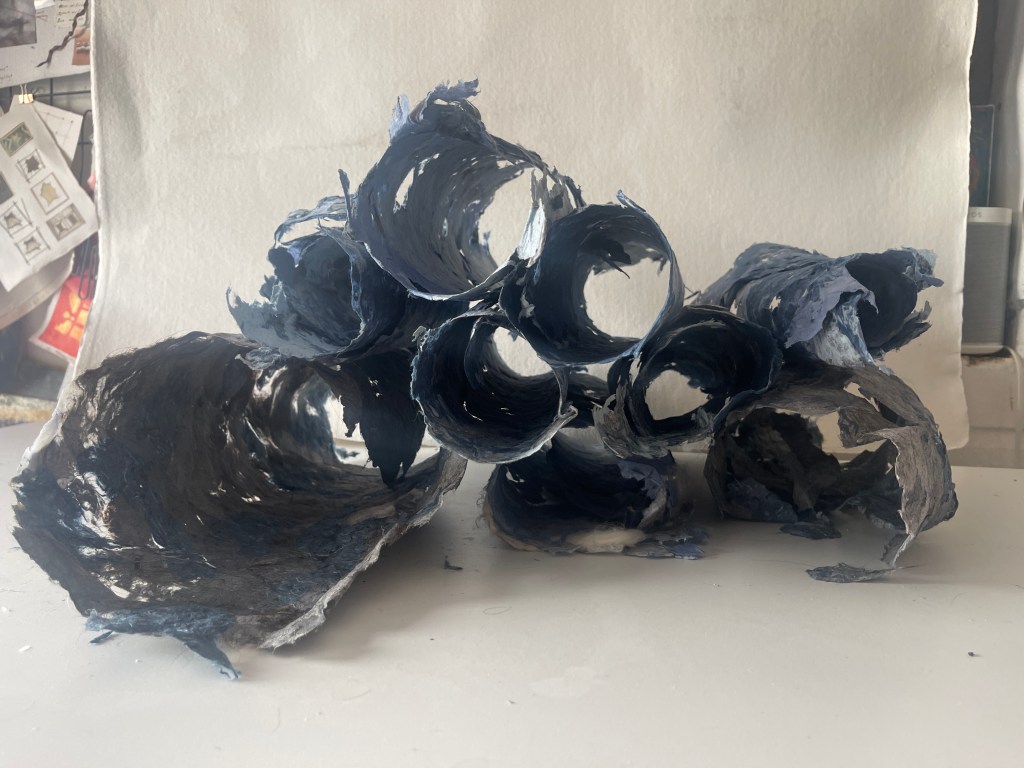
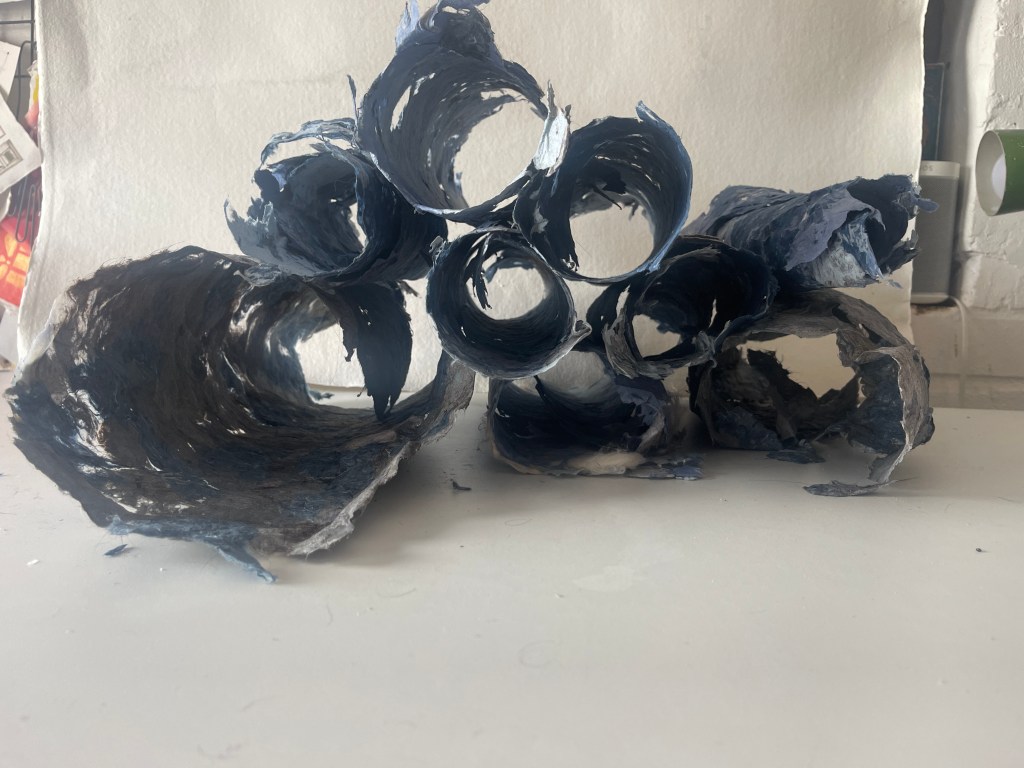
The material quality of these is much finer than the previous works created in my own studio. The use of the paper making implements, with the use of a large heavy press to squeeze the water out has culminated in a more delicate and fragile material.
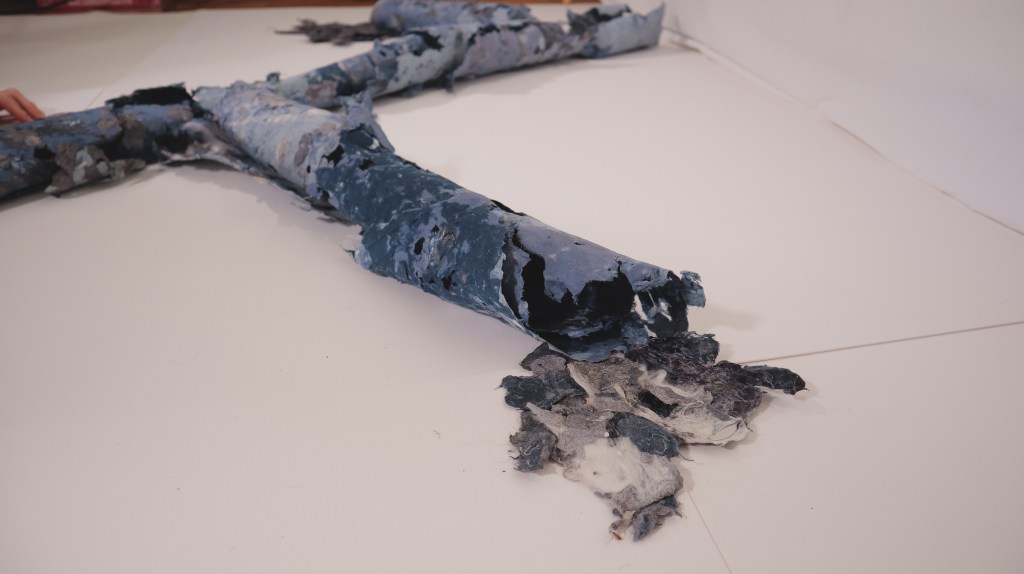
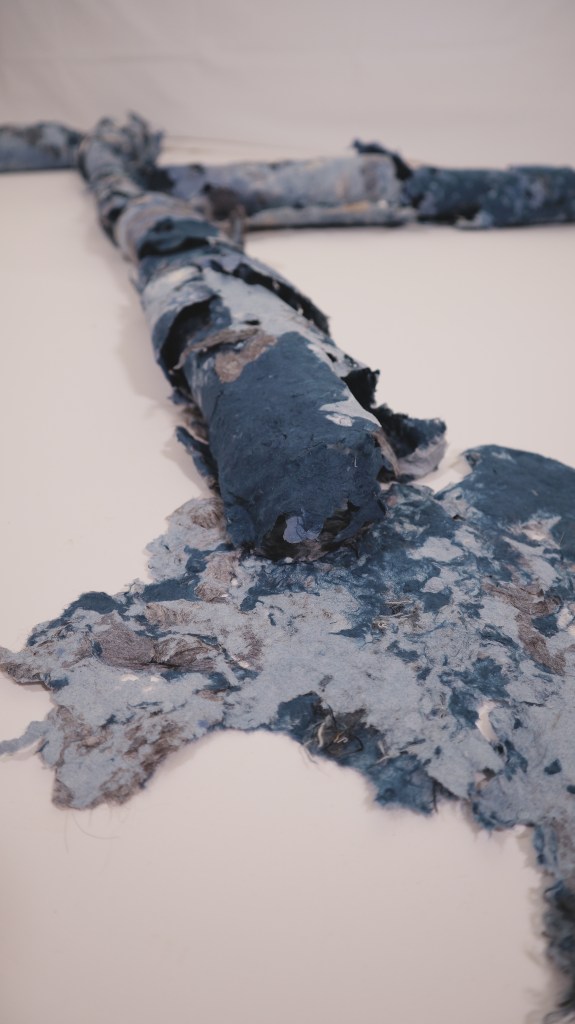
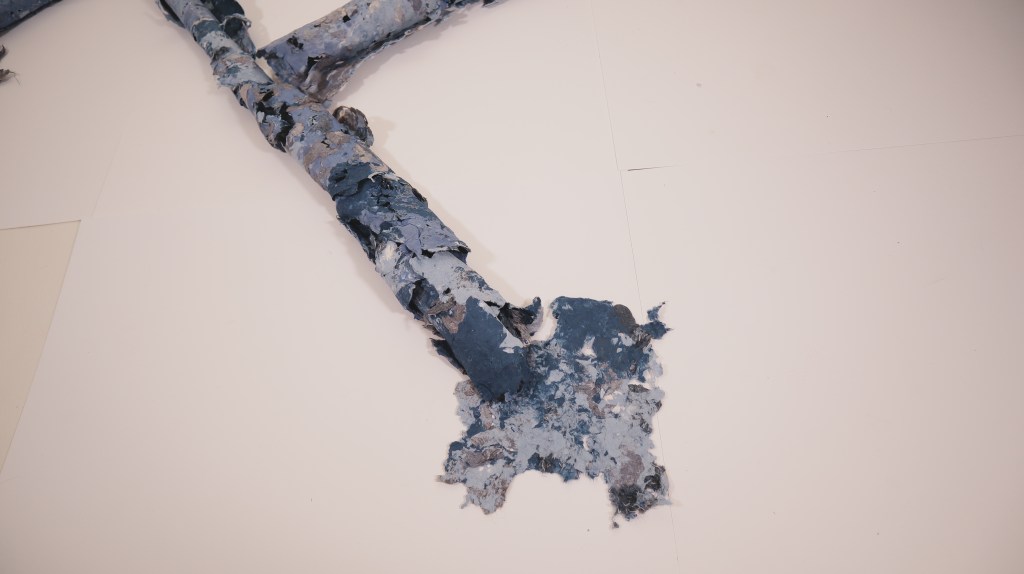
Exploring the inner workings of the domestic machine – Creating Machine parts. Tubes and pipes spilling out detritus – floor work – workings and inside – the guts of the domestic machine.
I worked with the thinner, heavy pressed material produced by machine detritus after a work-shop with paper artist Susan Cutts. This finer wet felted material offered a more delicate and unstable material quality, It was reconstituted with- out soap which helped to adhere the thicker felting work used in the large scale.
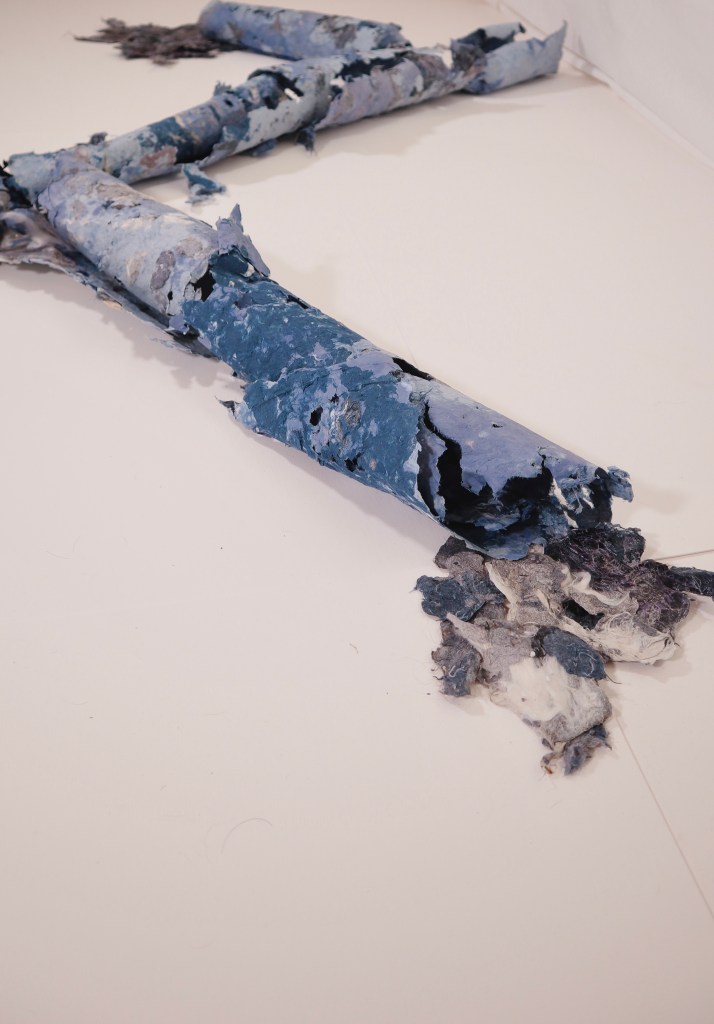
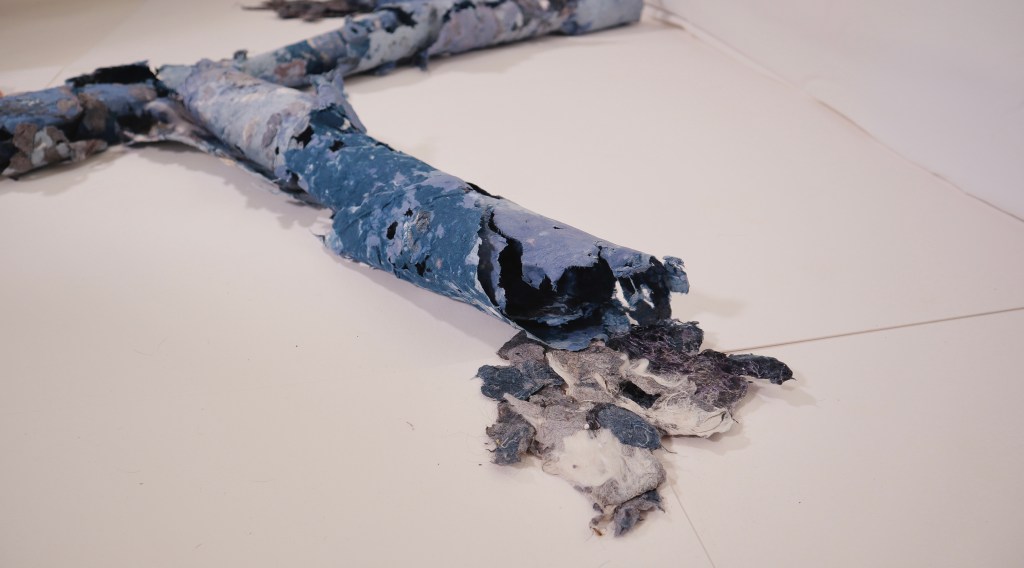
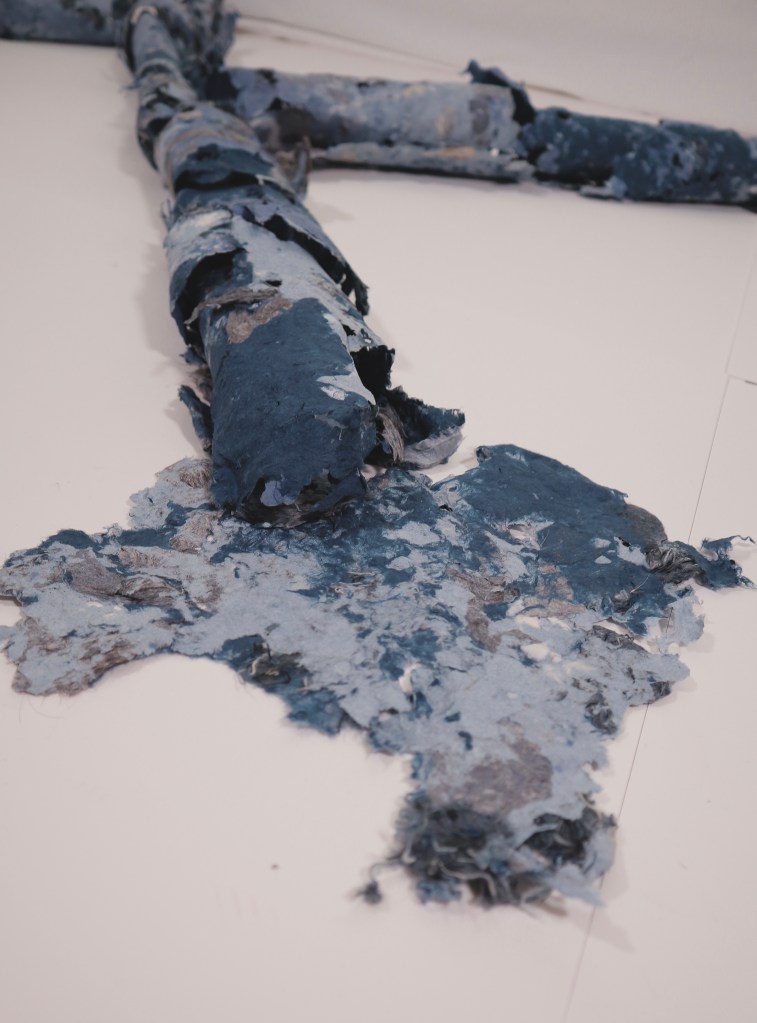
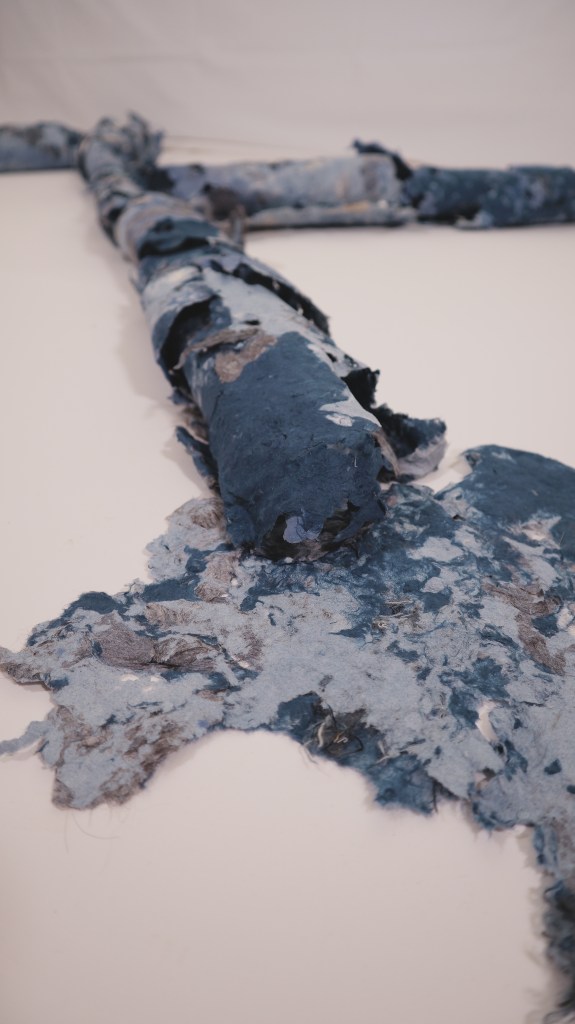
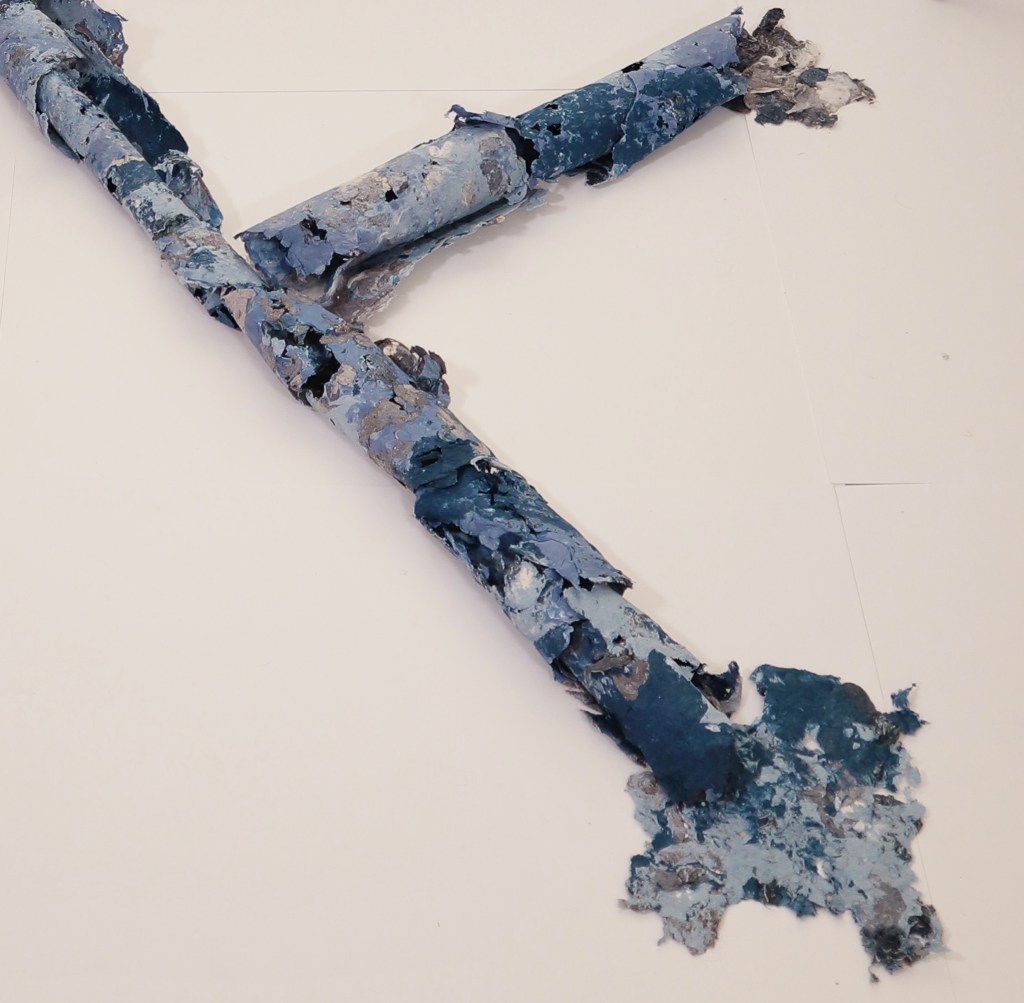
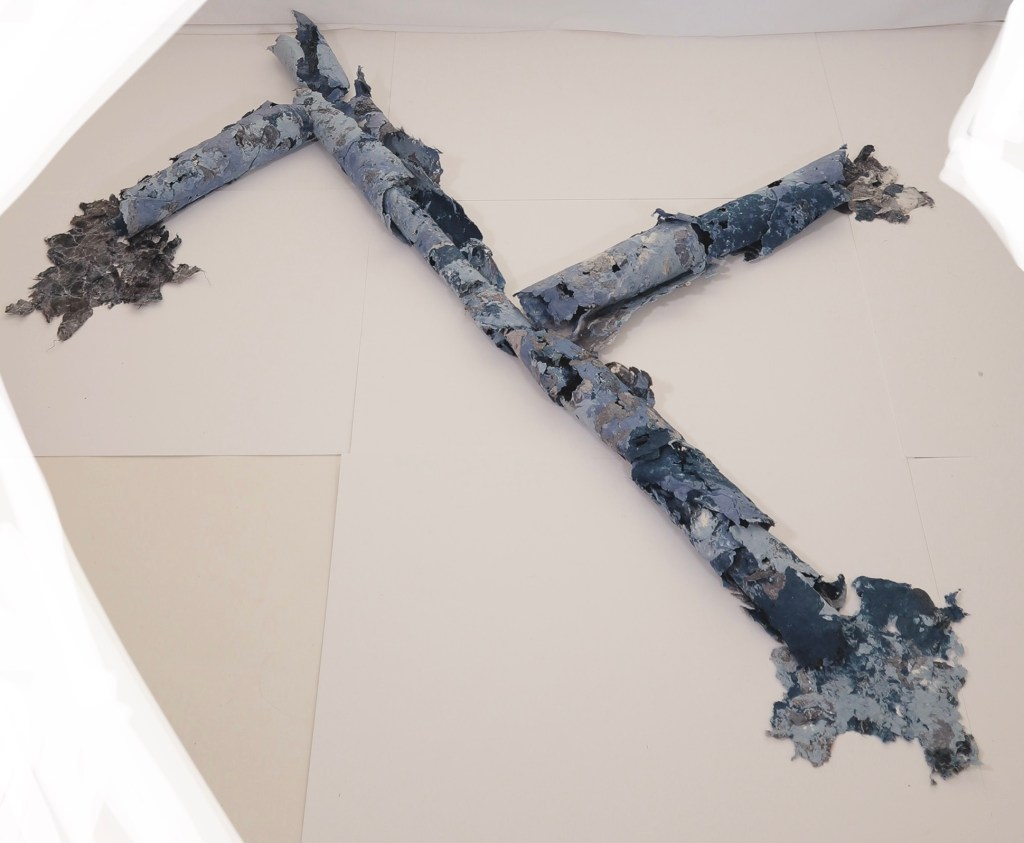
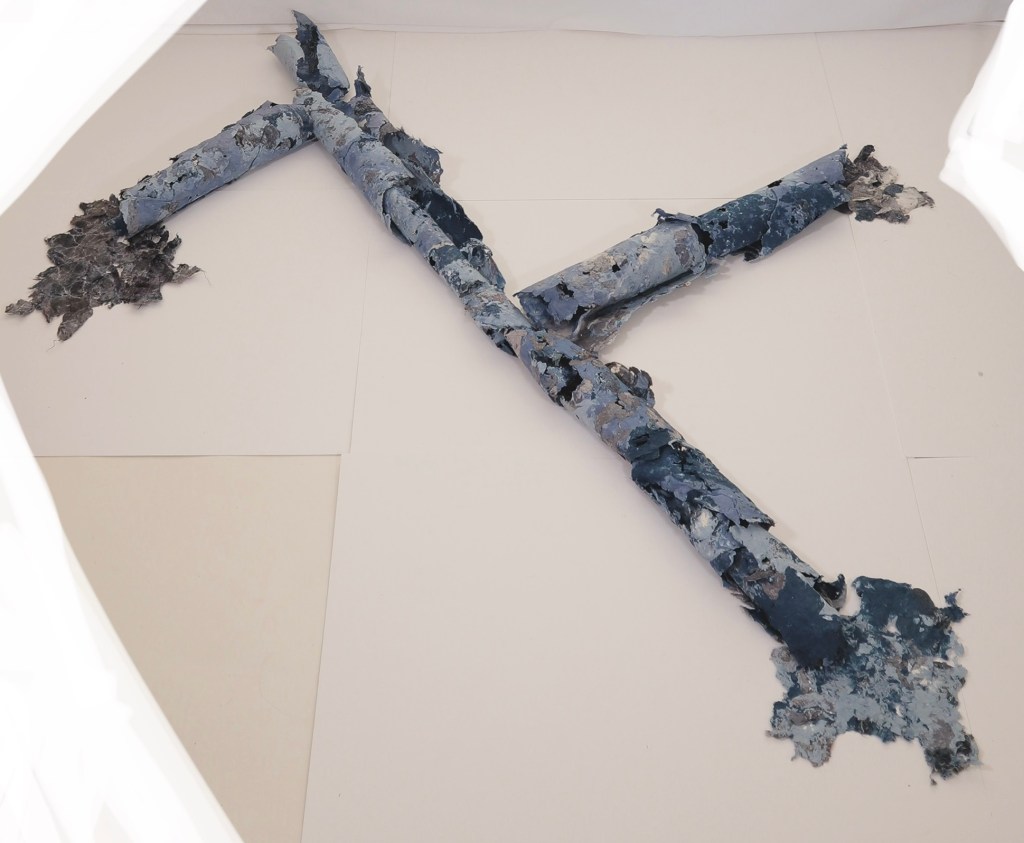
The floor sculpture shows the debris and waste spilling out from the tubes/ pipes. The tubes and pipes are reminiscent of decay and rust.
The work was difficult to photograph as the area it covered was wide and deep.
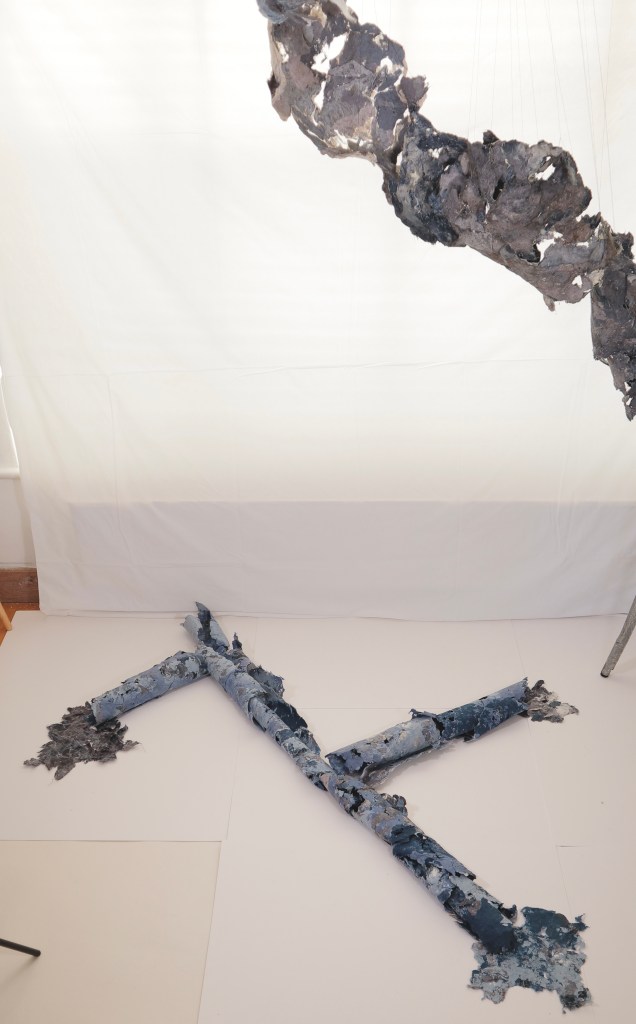
Over all this is less successful as the work become illustrative and forced into shape – the material has less narrative in this ‘tried’ format.
Further intense exploration into this theme was investigated by looking down into the tube work: This new perspective has an investigative quality to it, as if the pipe has been picked up from the floor and examined.
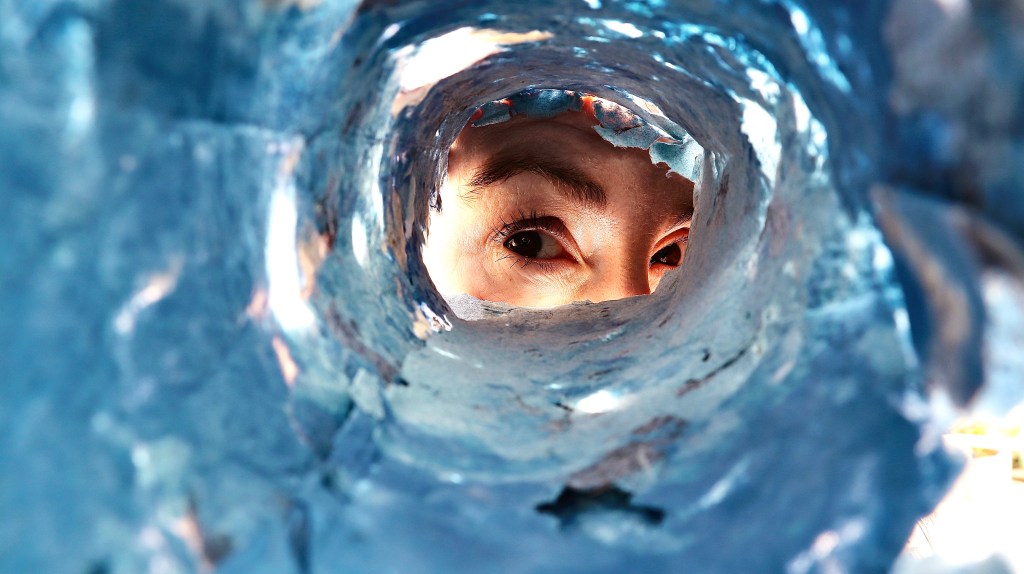
Artists Statement
Melissa Veitch is a maker at heart, seeking to unearthing hidden materials and their lost narratives. Generally passing traditional sketchbook planning and drawn-out ideas, choosing instead to begin a hands-on dialogue with found objects and materials. Veitch works in the moment and responds to a material qualities and stories directly with an urgent interconnectedness that fuels her intentions and process.
Veitch’s subject matter is deeply intertwined with her environment and her experiences as a female artist, props and set stylist, worker, wife, and mother. She delves into themes surrounding domesticity, the concept of home, mental health, and the essence of ‘femaleness.’ Her chosen materials reflect these rich narratives and much of her practice involves scavenging materials from abandoned buildings and homes, machine detritus, local charity shops, and antique markets. It is here amongst the every day she finds the essential and imbedded histories of the female.
Veitch’s practice is concerned with drawing meaning and inspiration from
these items, fostering an intuitive creative process seeking to establish common ground, viewer kinship and therapeutic undertones through relatable mediums and subject matter.
The bold and visceral works of Louise Bourgeois have significantly
influenced Veitch, both in subject matter and material practice, as has the
diverse work of Cornelia Parker and Doris Salcedo. These seminal female artists imbue their work with intriguing metaphors that evokes curiosity and inquiry within everyday objects. Veitch is drawn to the strong three-dimensional narratives in her works and shares their fascination with investigating the overlooked, mundane and the hidden voices that lie beneath the material.
Veitch’s art pokes an inquisitive finger into the viewer urging them to
reconsider and reflect on the unlikely but familiar materials present in her
work and their own connections and interaction with them. Her creations reveal potential significance in the forgotten and discarded, encouraging conversations and debates surrounding the diverse and sometimes uncomfortable stories they tell.
The Apron !
Inspired by the visual performance works of Martha Rosler ( 1943 – ) and her work ‘Semiotics of the Kitchen’ whose video piece ( 6.09 min) form the 1975 is at once a humorous, disconnected and unnerving exploration into the female domestic work load in the kitchen, Her A – Z of tools and instruments used every day in the kitchens of a typical house in America in the era evokes the notion of the perfect TV housewife and cook that is viscerally full of frustration and rage. The performative exploration of how the items are demonstrated and or used are not as expected and evoke dark undertones and bitterness. Her gestures sharply punctuating the rage and frustration of oppressive women’s roles. Rosler has said of this work, “I was concerned with something like the notion of ‘language speaking the subject,’ and with the transformation of the woman herself into a sign in a system of signs that represent a system of food production, a system of harnessed subjectivity’
I found the work poignant to my current practice as it still feelt relevant today. Rosler is seen donning an apron for the performance and this is the beginning of the alphabetic system of named items she demonstrates ‘A is for Apron’. The idea of the apron being the uniform for duty , the beginning of the work , the role the garment evokes is somewhat subservient and undermining, despite its practical application to protect the clothing underneath. It ensures the individual stands out as the worker and distinguishes and identifies her from another role.
It felt like a shroud to the domestic worker and as such I wanted to examine new narrative and presence for it . A stagnant permanence, a statuesque presence to highlight and praise its metaphorical and historical meaning.
I purchased the modern equivalent of the traditional apron, a tabard. A white utility item for women. A simple shape with a large pocket in the front. Button fastened at the sides.
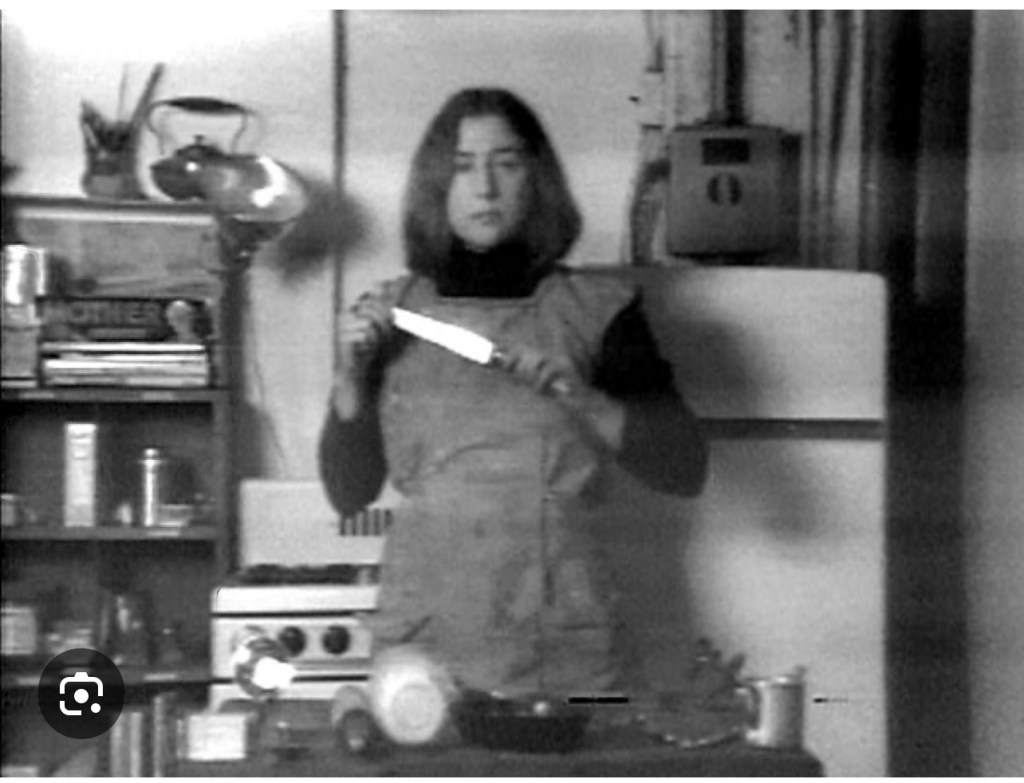
Apron !
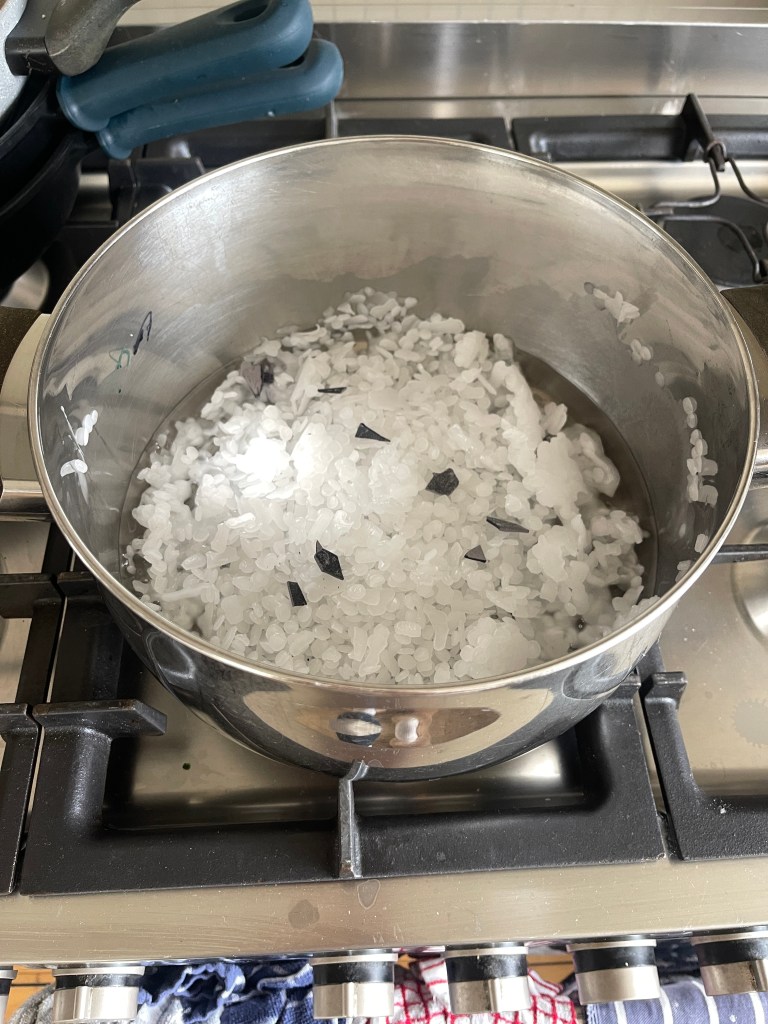
My process began by placing a large amount of bought wax pellets and dye in a large pan and melting it down. Then immersing the tabard into the hot wax and soaking it .
Wax work – on ‘Tabard’
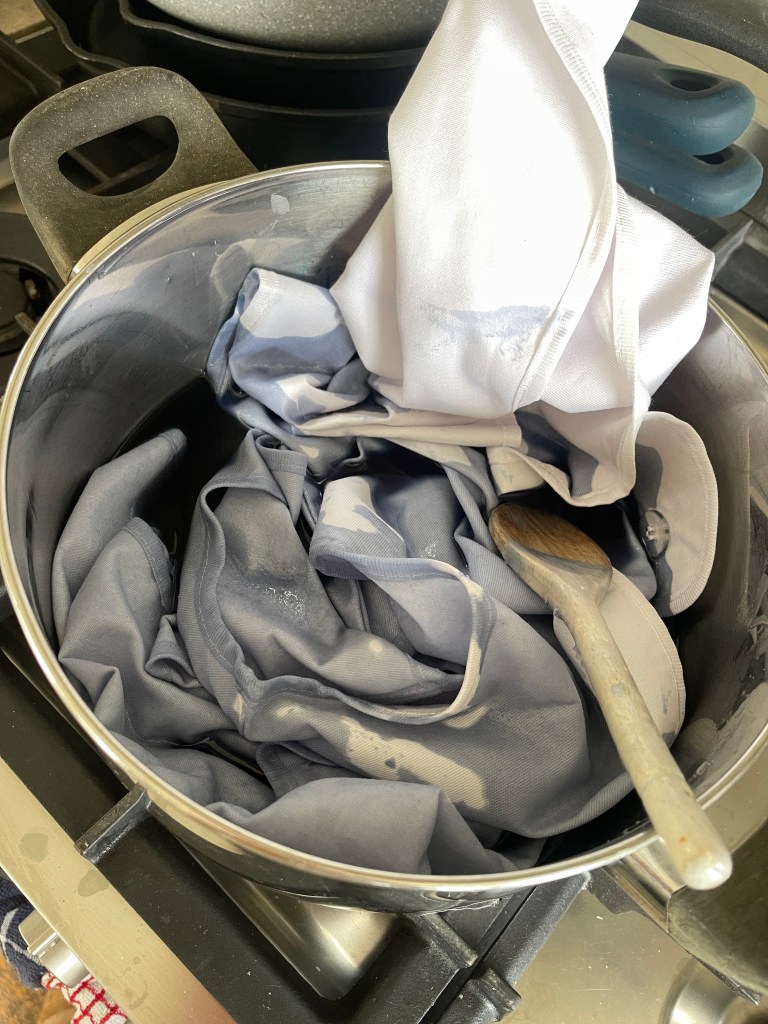
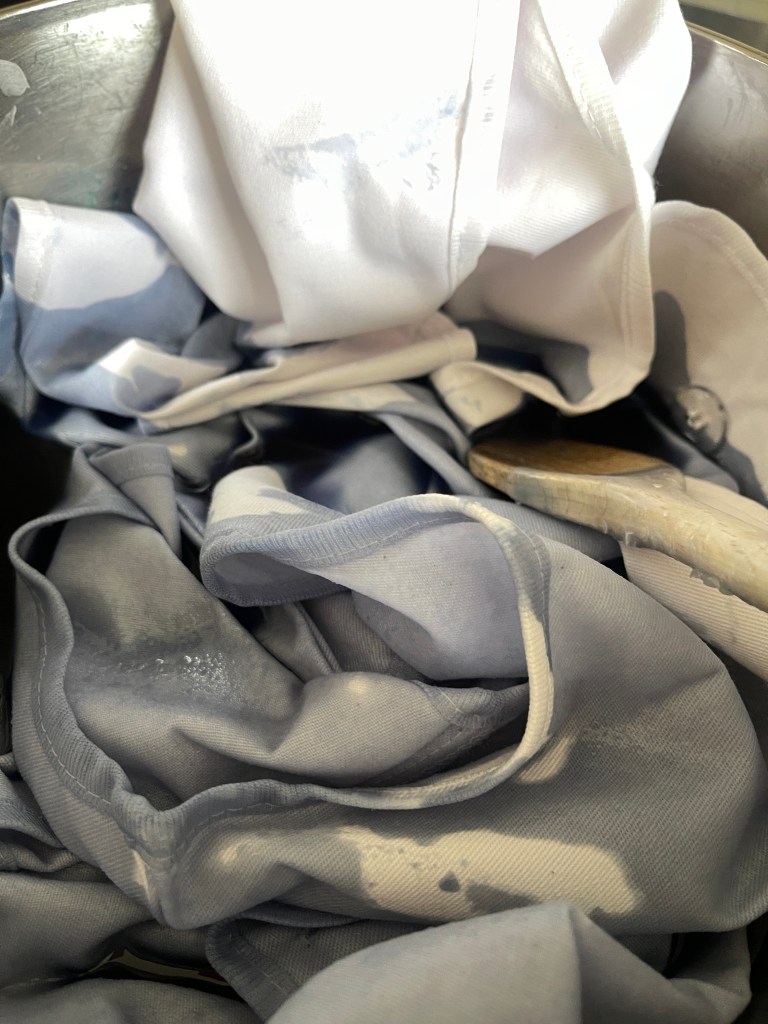
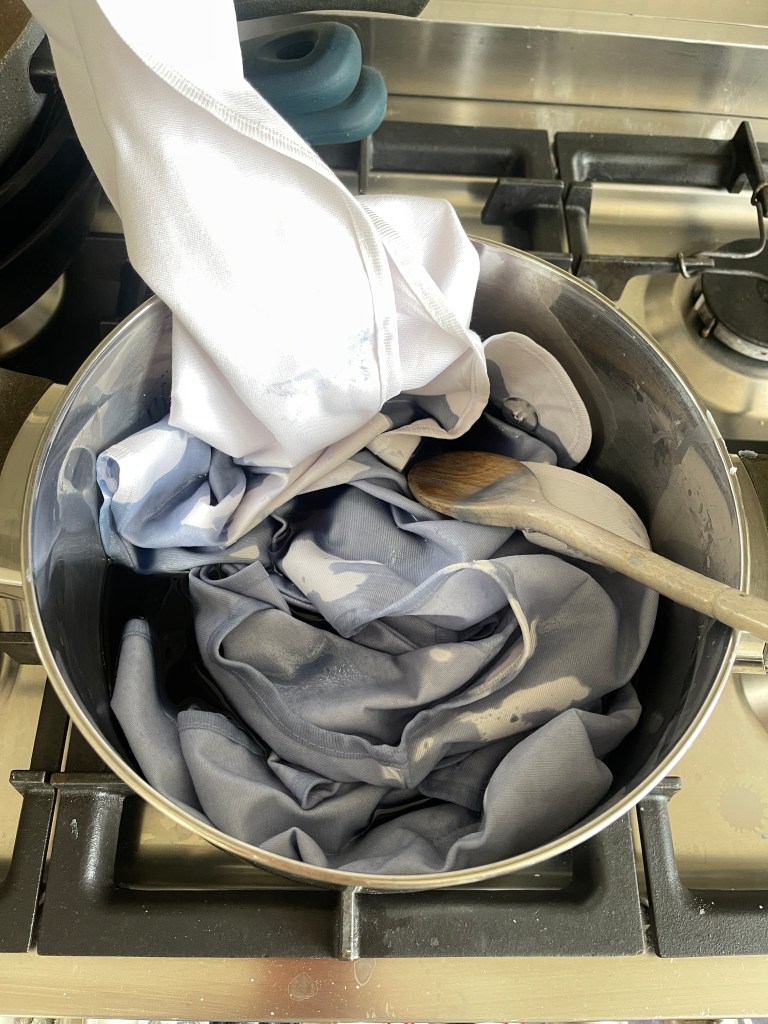
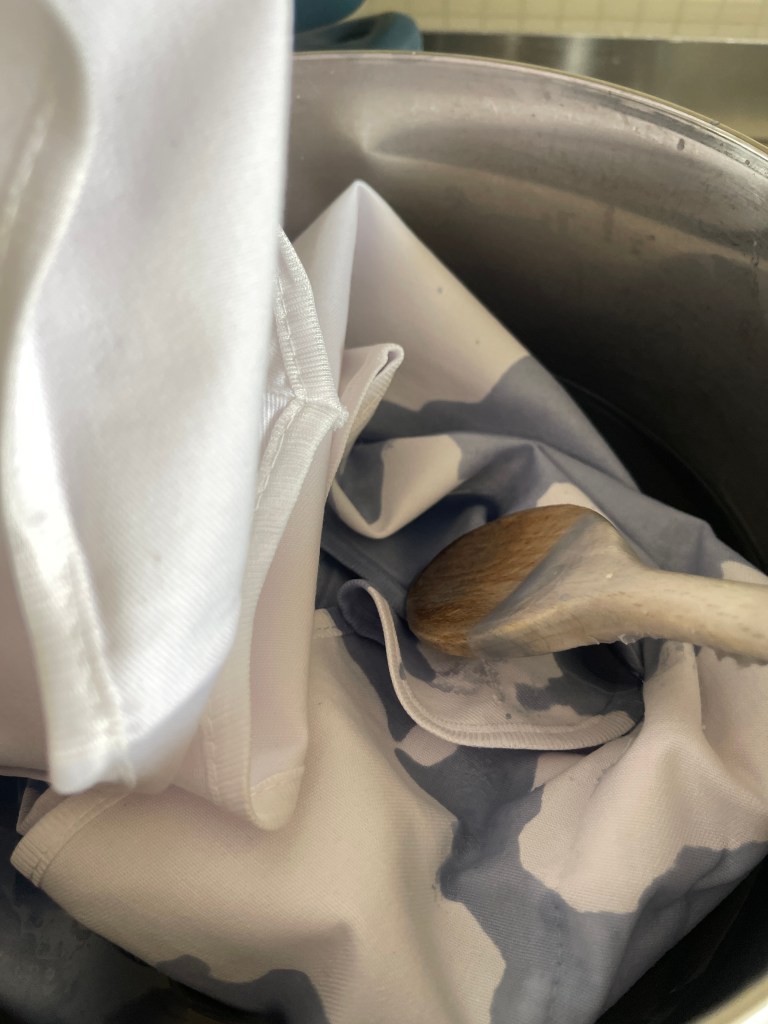
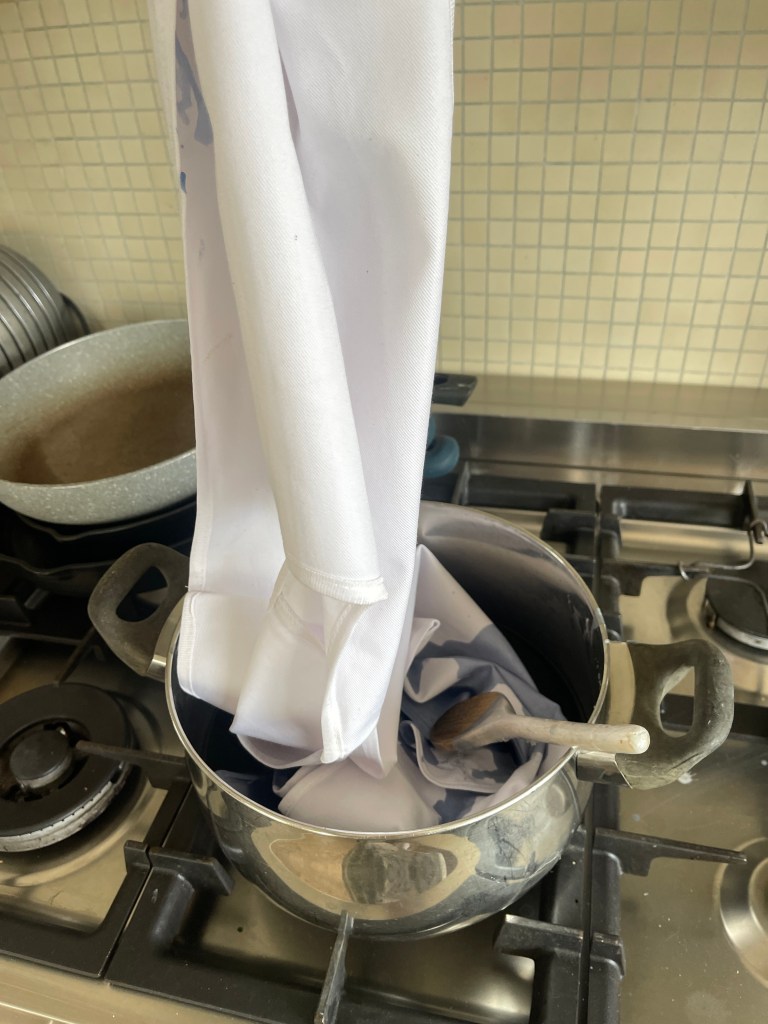
Tabard wax prep:
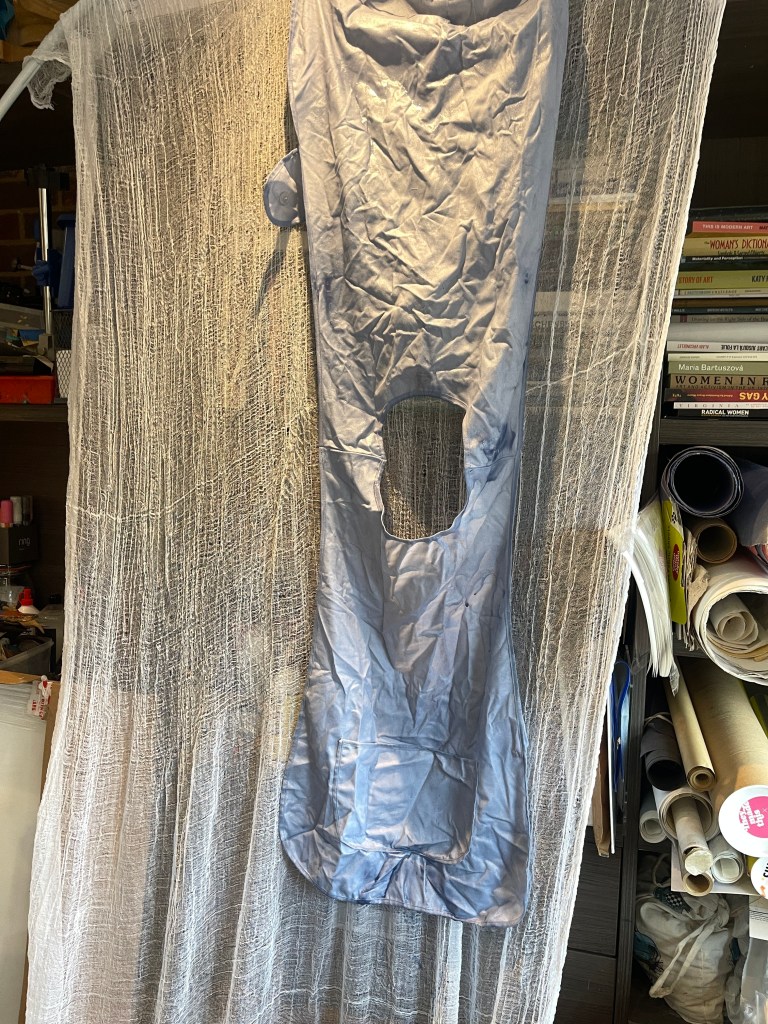
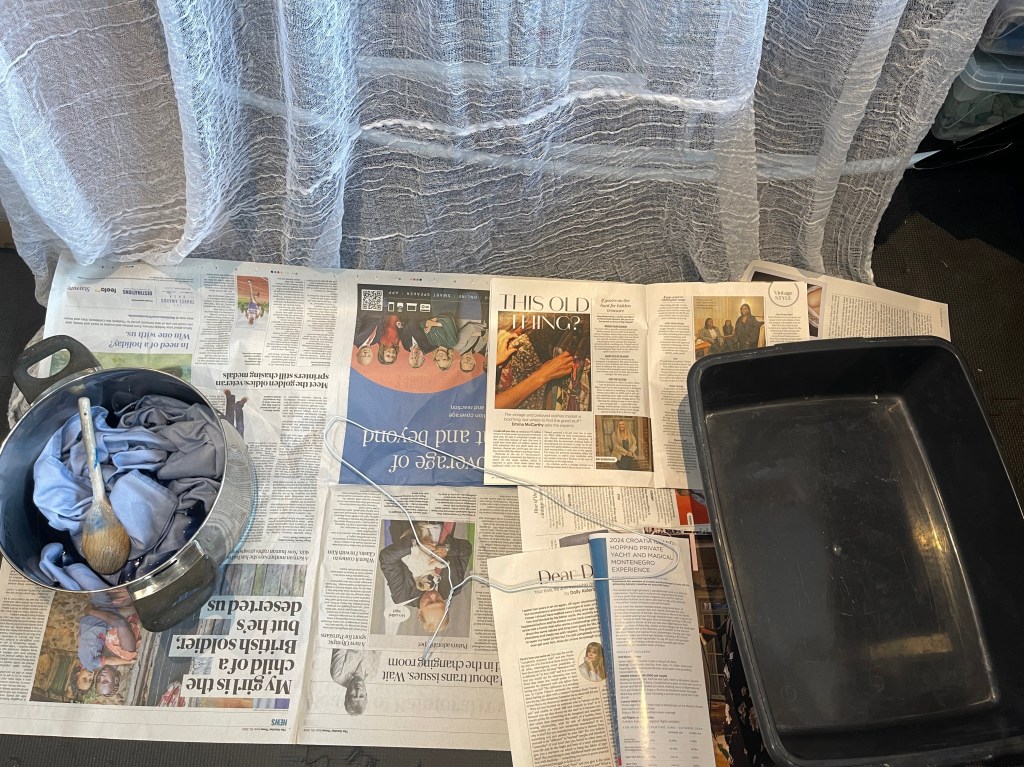
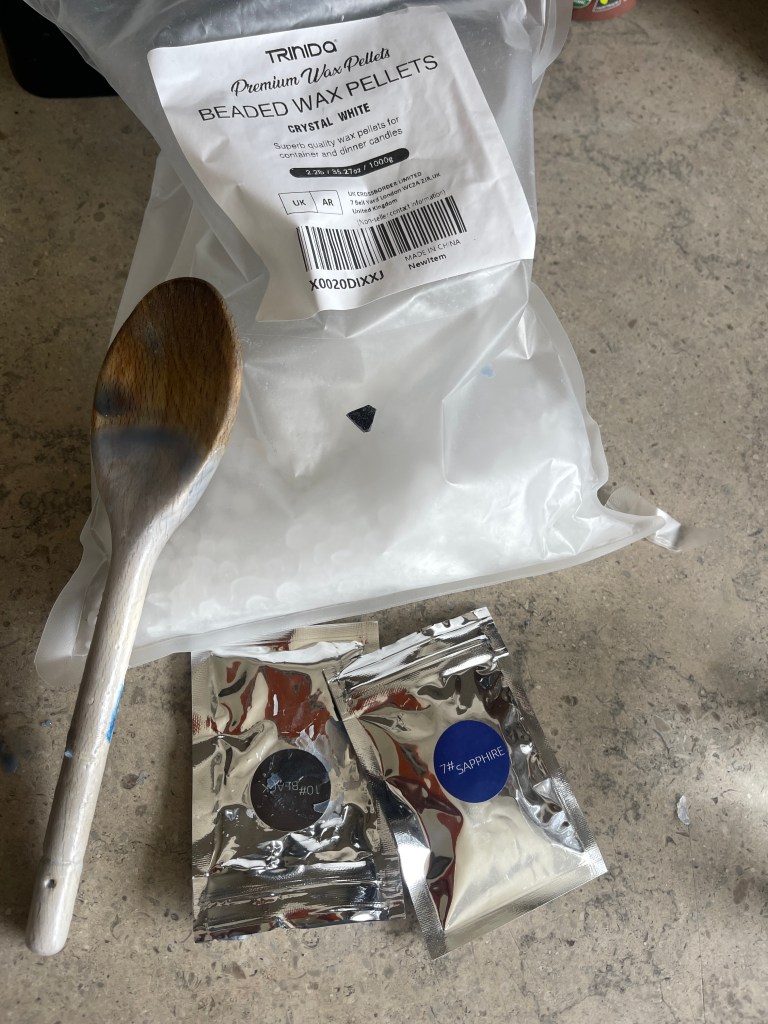
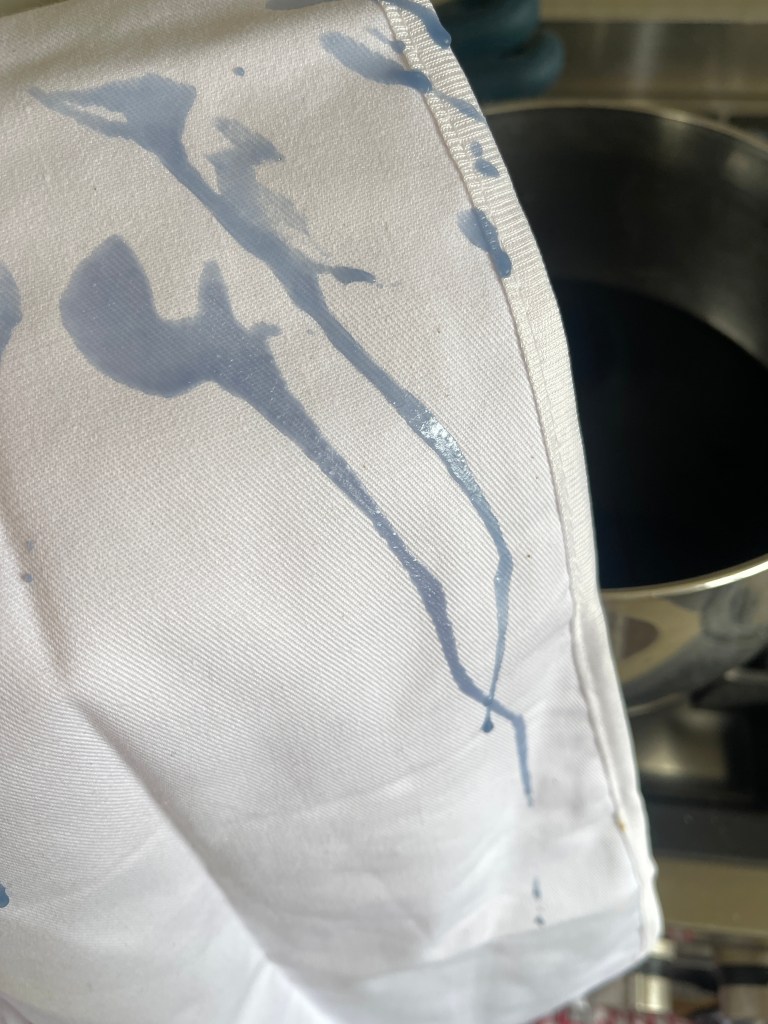
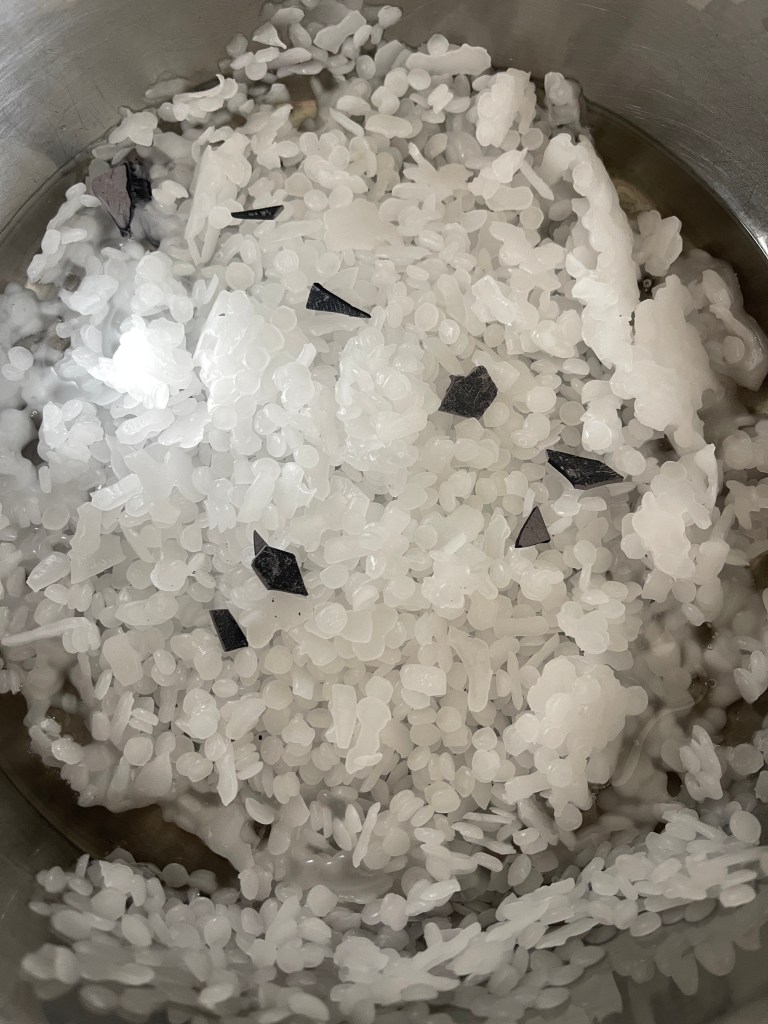
I hung the wax tabard up and poured further wax over and down it to create greater visibility of the wax solidifying the material and the intriguing twists and turns th ewas run too as it made its way down the full length of the garment – finally dripping of the end.
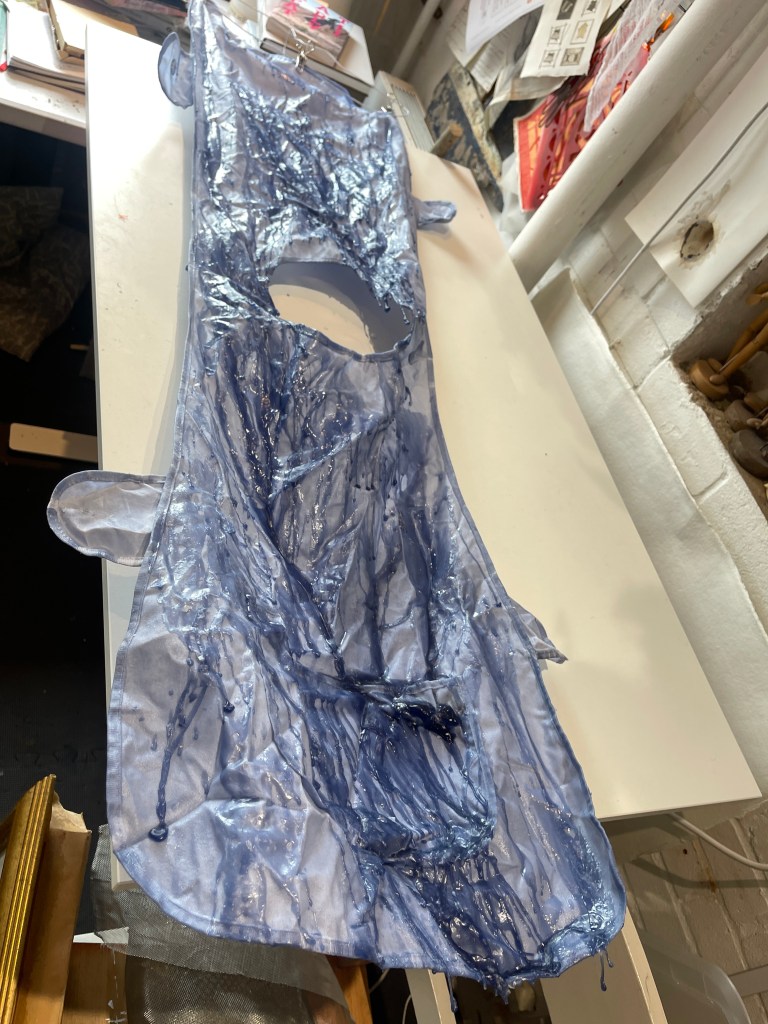
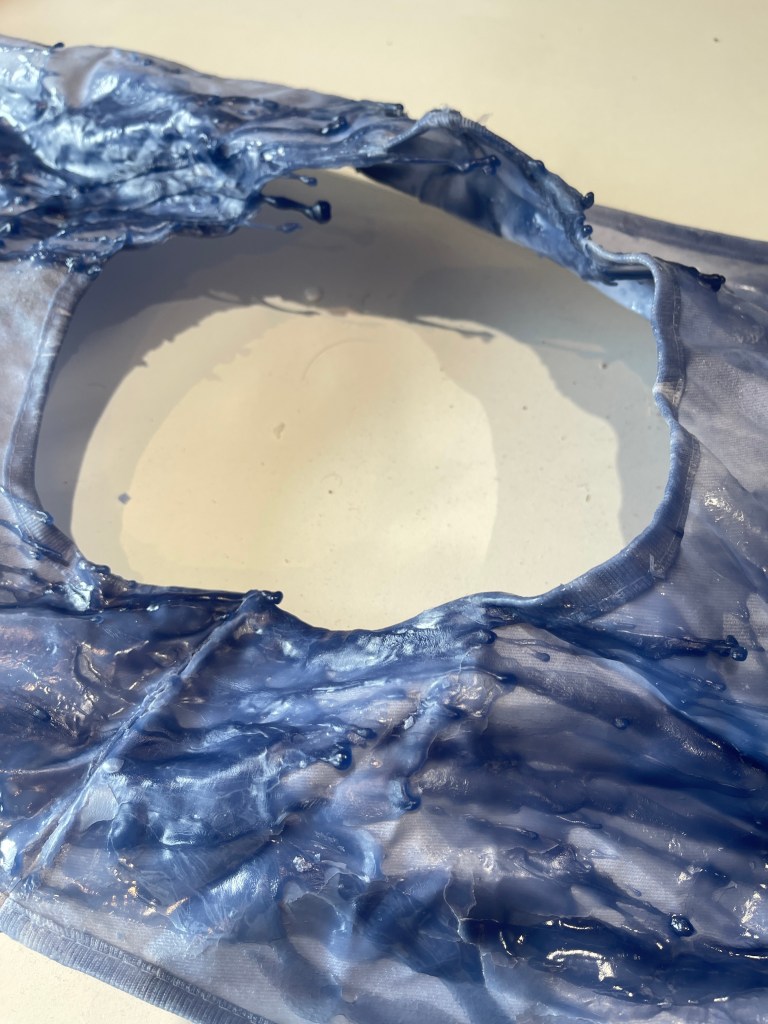
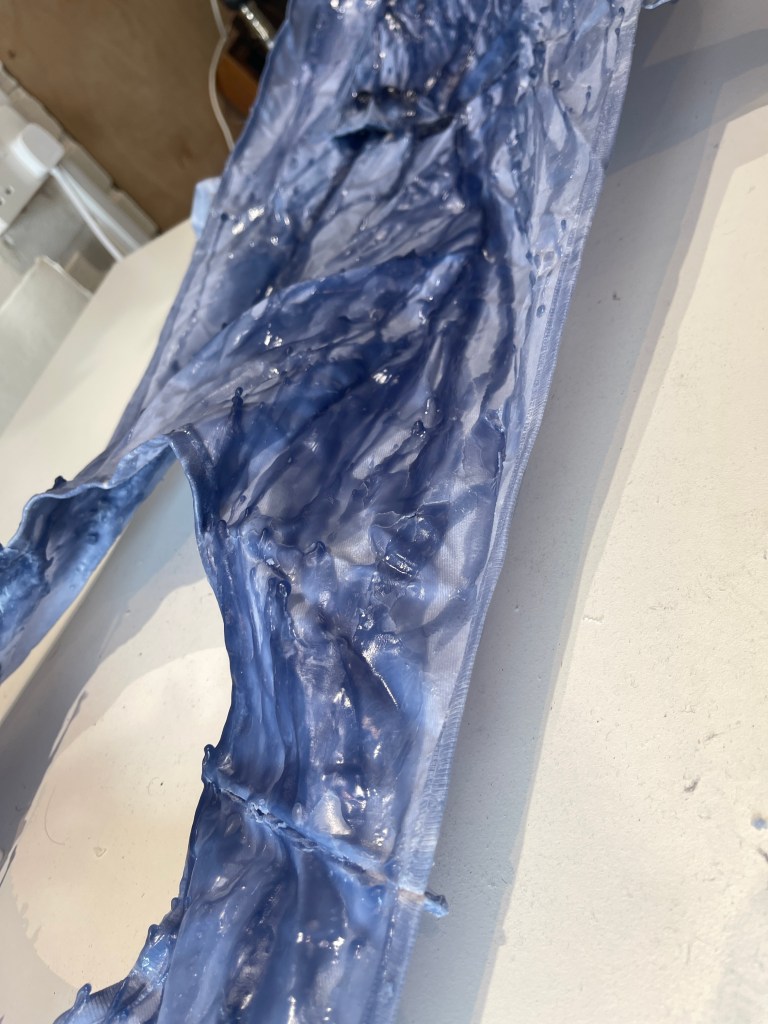
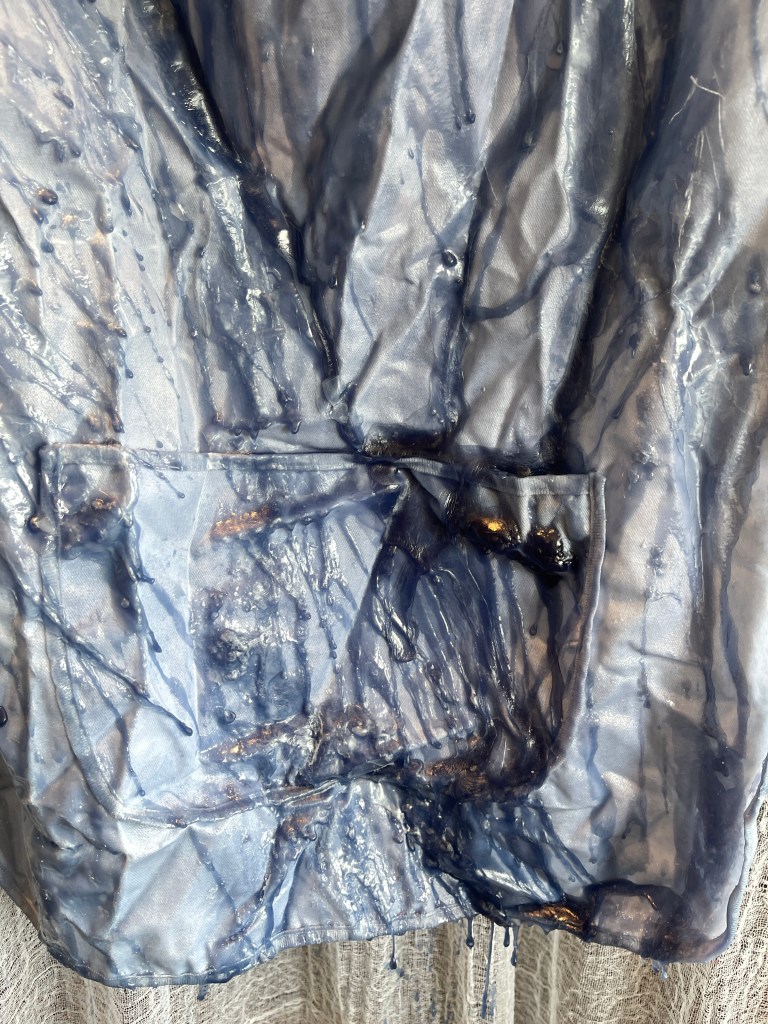
When it dried I was able to lie it down in a solid unmoving mass – fossilised in the wax. A relic from the past, rediscovered and re imagined yet somehow still in use, familiar and retaining all its negative and metaphorical undertones of the undervalued female domestic worker.
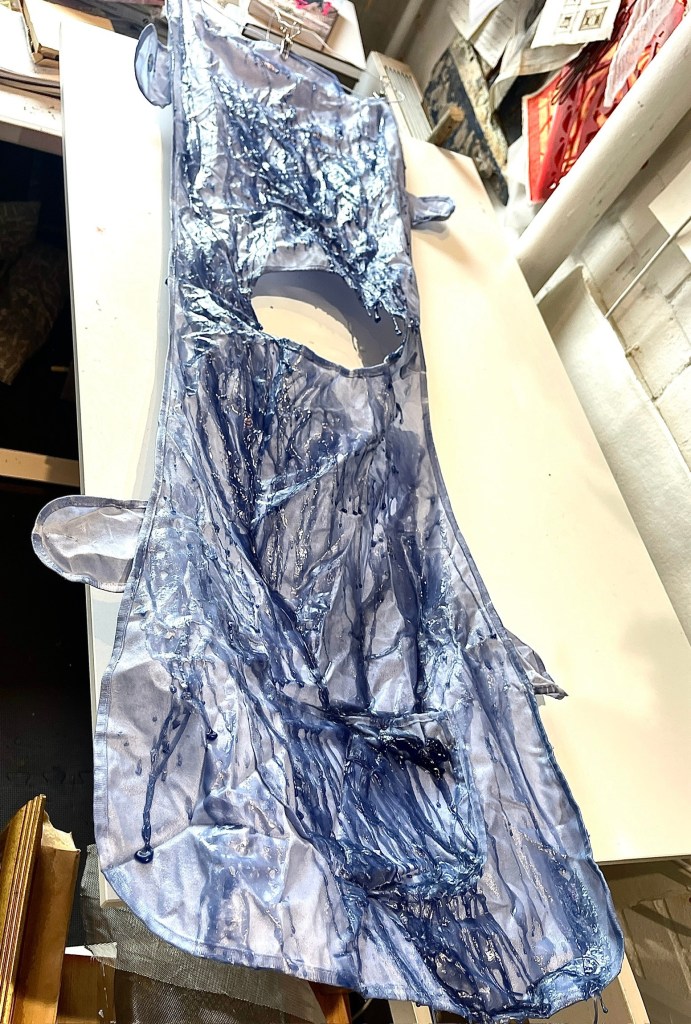
Experimenting adding detritus : – this was not a successful partnership but did inform later work…
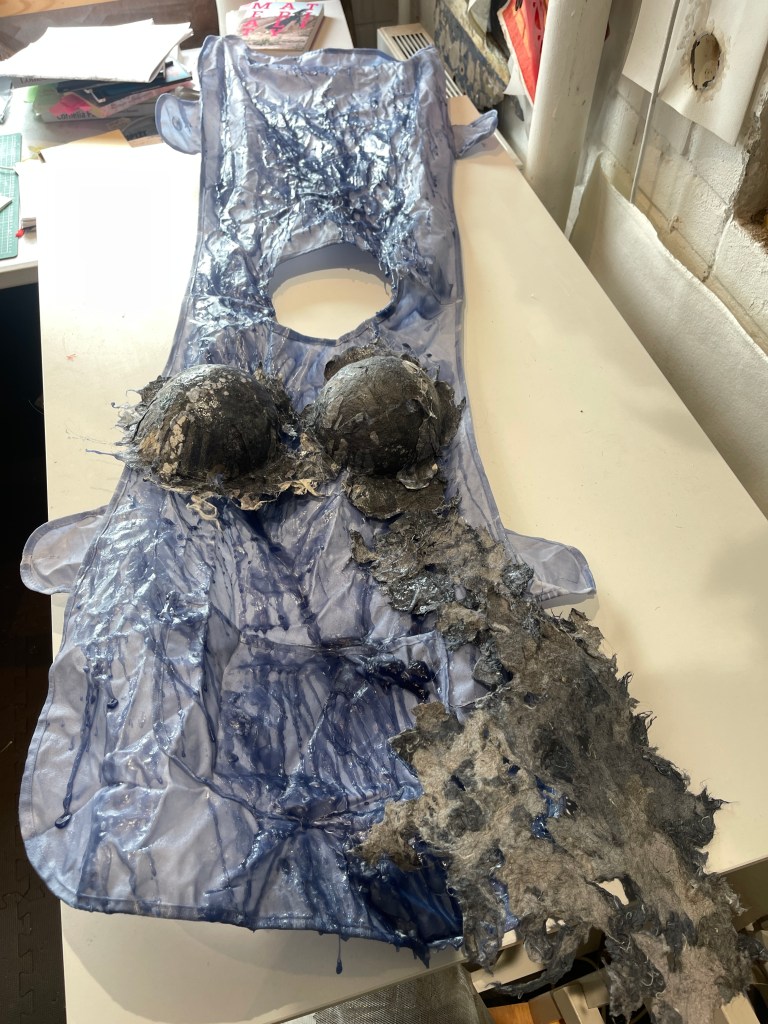
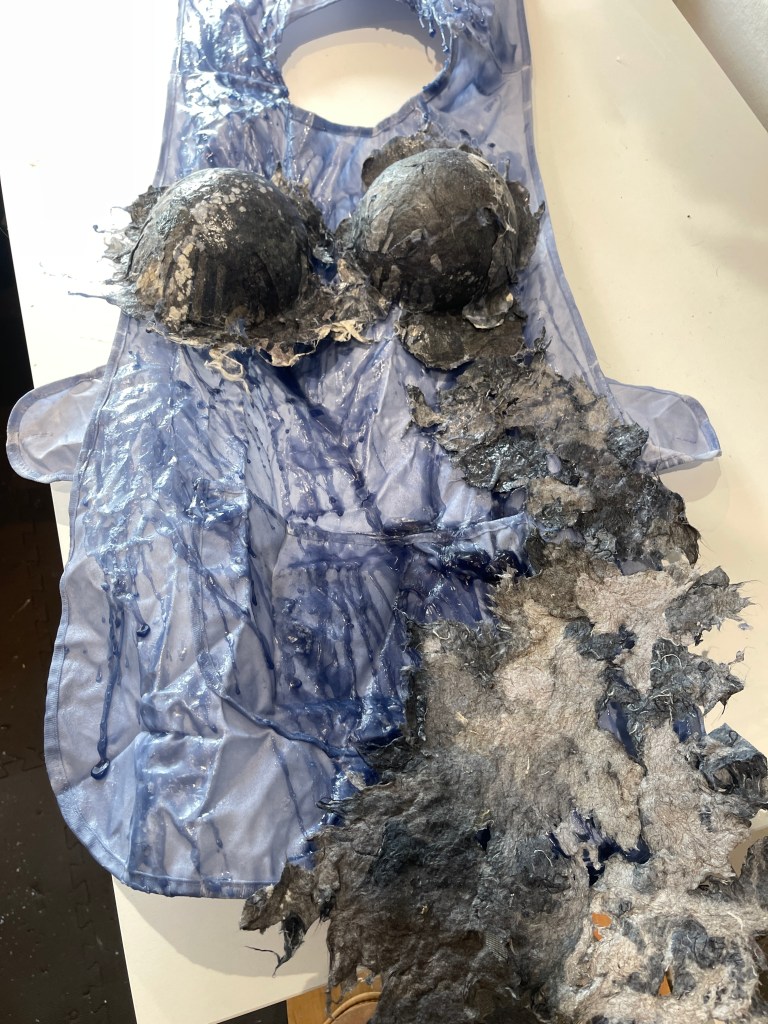
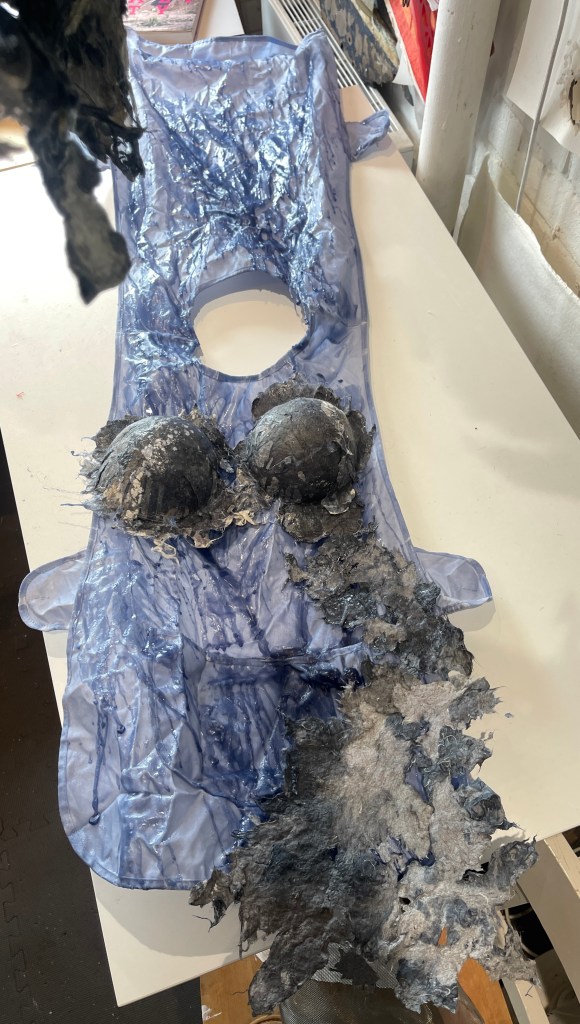
Once hung up it became something else, a statement of power, resilience, strength a statuesque hanging with prominence to be taken notice of, not hidden away or unobserved . It is a strange and almost unrecognisable form distorting the visual narrative and opening up a deeper level of enquiry . Is there something uncomfortable about an open mouth imagery – as if its about to speak or shout out ?
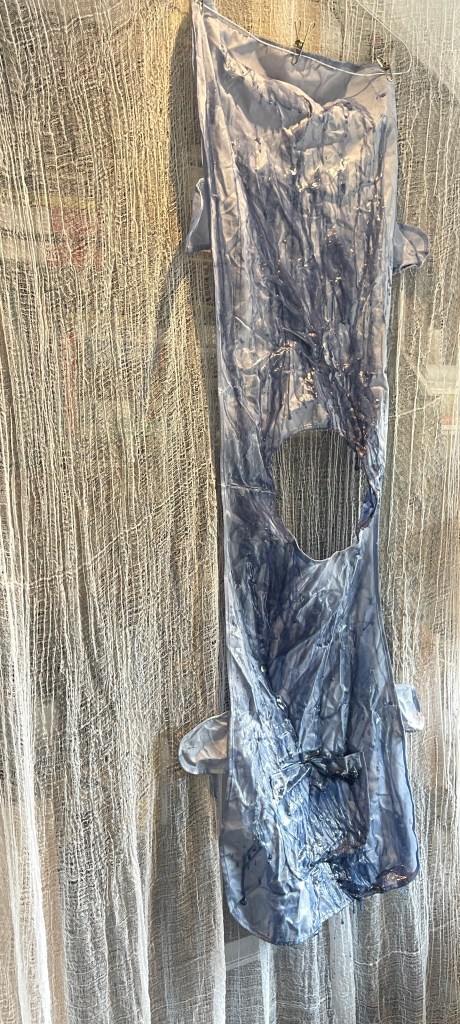
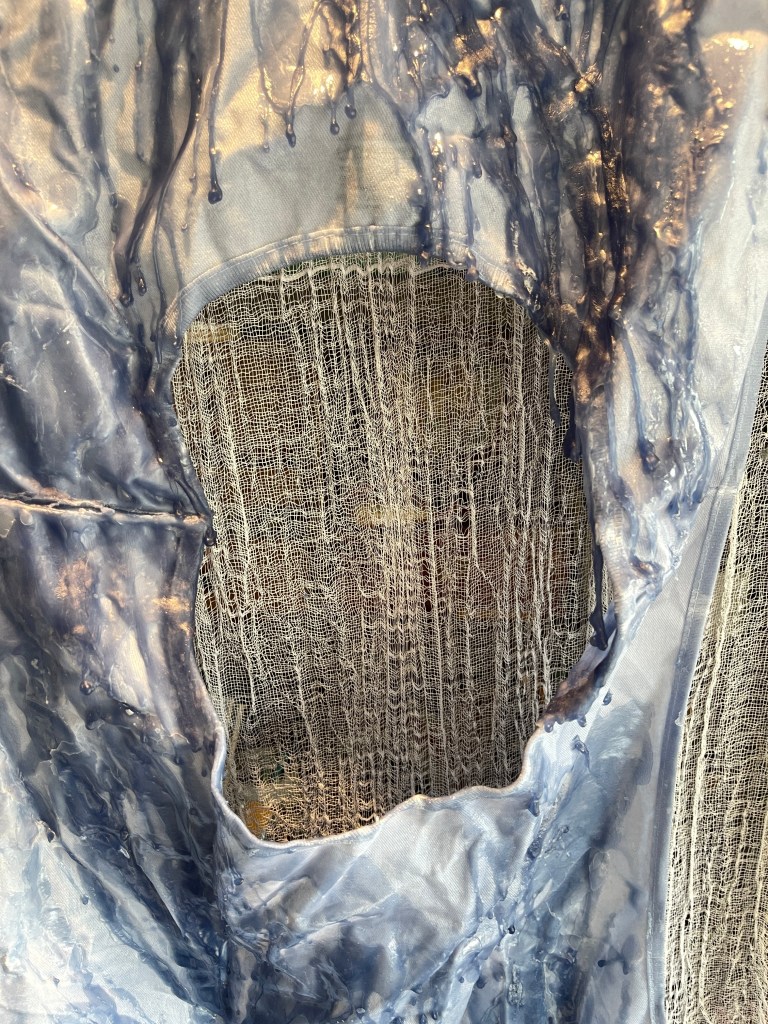
This will form further exploration into the domestic worker, domestic detritus and the hidden narratives behind the every day home maker scenario. Drawing on Judy Chicagos famous work ‘The Dinner Party’ from 1979 – celebrating lost ( written out ) and familiar women from historical narratives. My work will explore the lost and forgotten engendered domestic role that women traditionally continue to carry out whilst striving to embrace all manner of alternative needs and ambitions and wants.
Moulding the tabard into female form using waste wax from old house candles:
‘ A shrine to the domestic’
Covering a mannequin in clingfilm to protect it before applying the apron and wax solution.
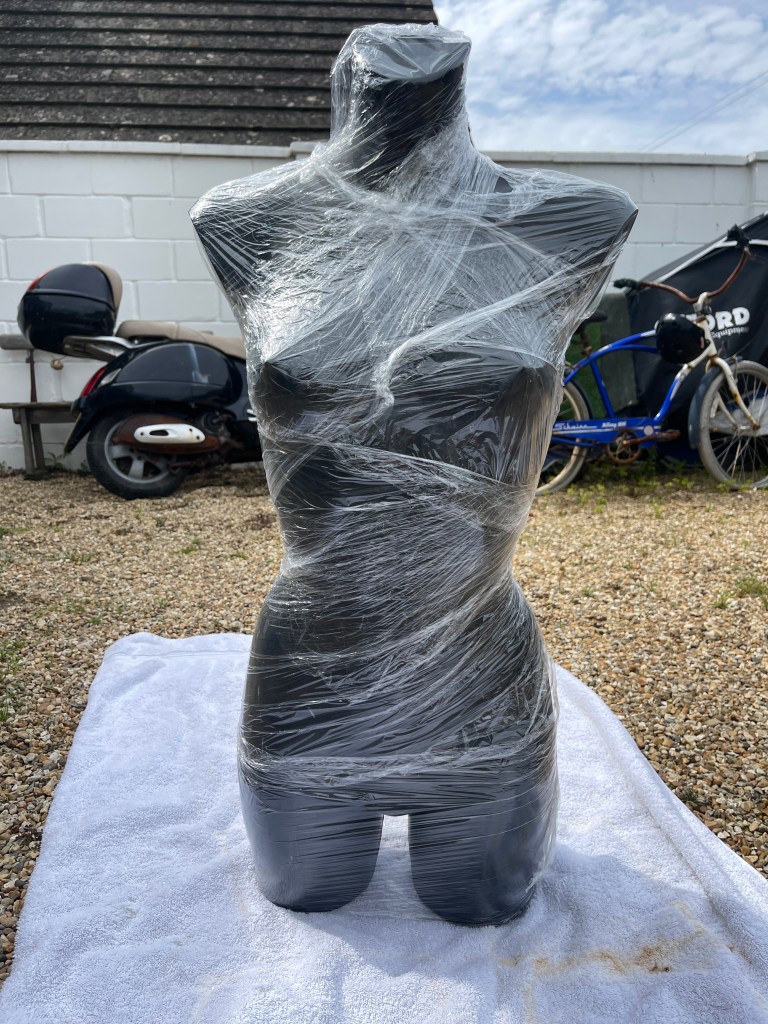
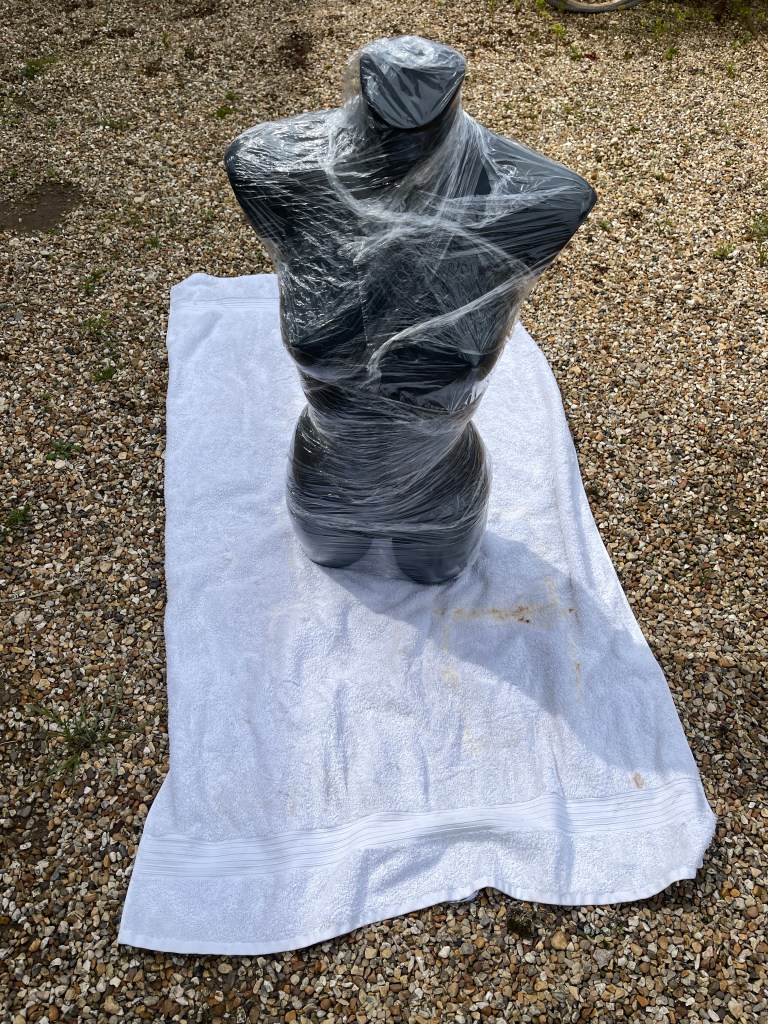
Adding the pre-soaked apron to the mannequin and pouring the hot wax over it. Using rubber gloves I then pressed and moulded the apron into the body shape to create a sculptural effect.
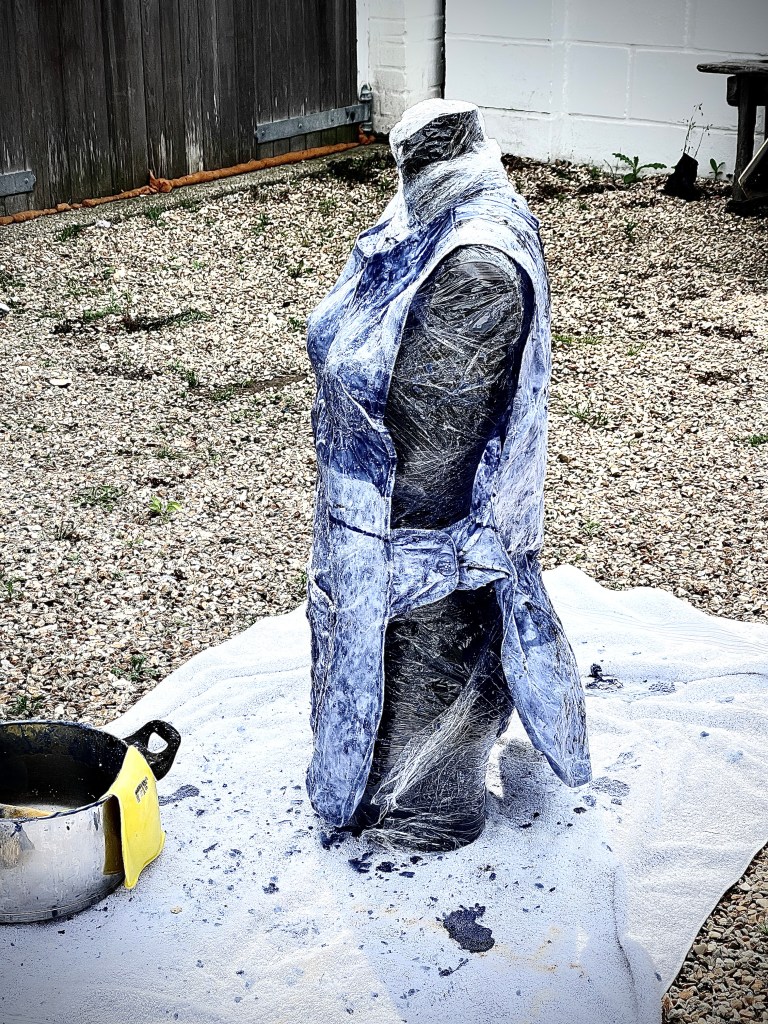
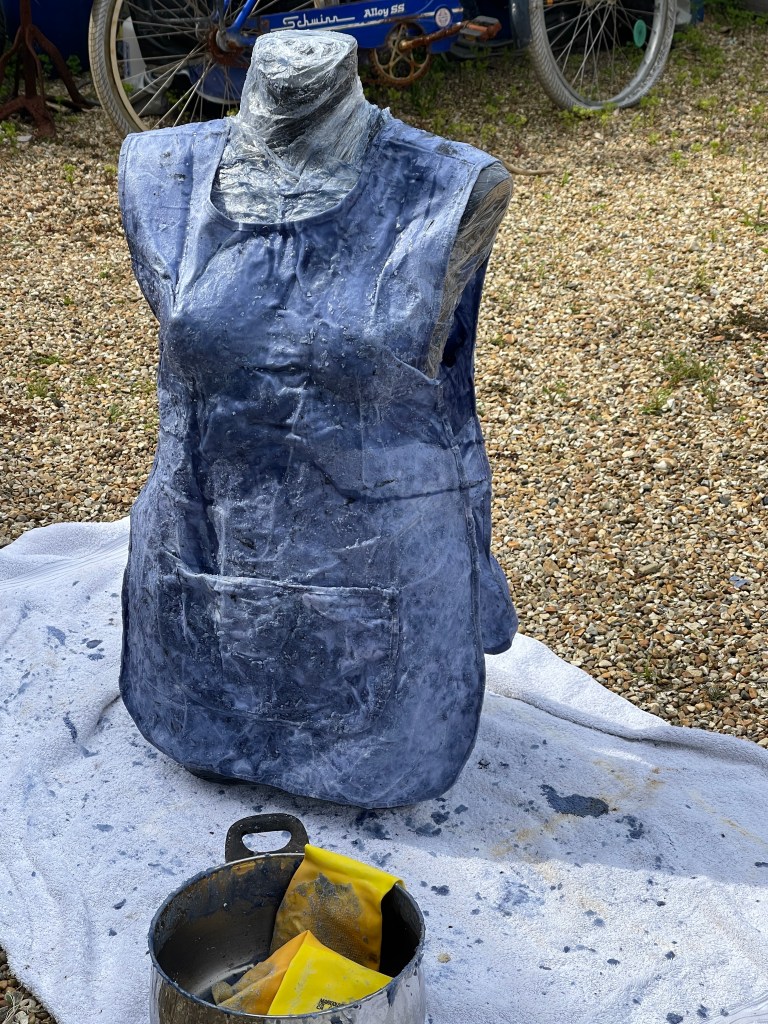
I wanted to emphasise the female form by ensuring the breast and bottom area gave enough information for this to be conceived. I moulded this area specifically waiting for the hot wax to set as I applied the pressure with my hands.
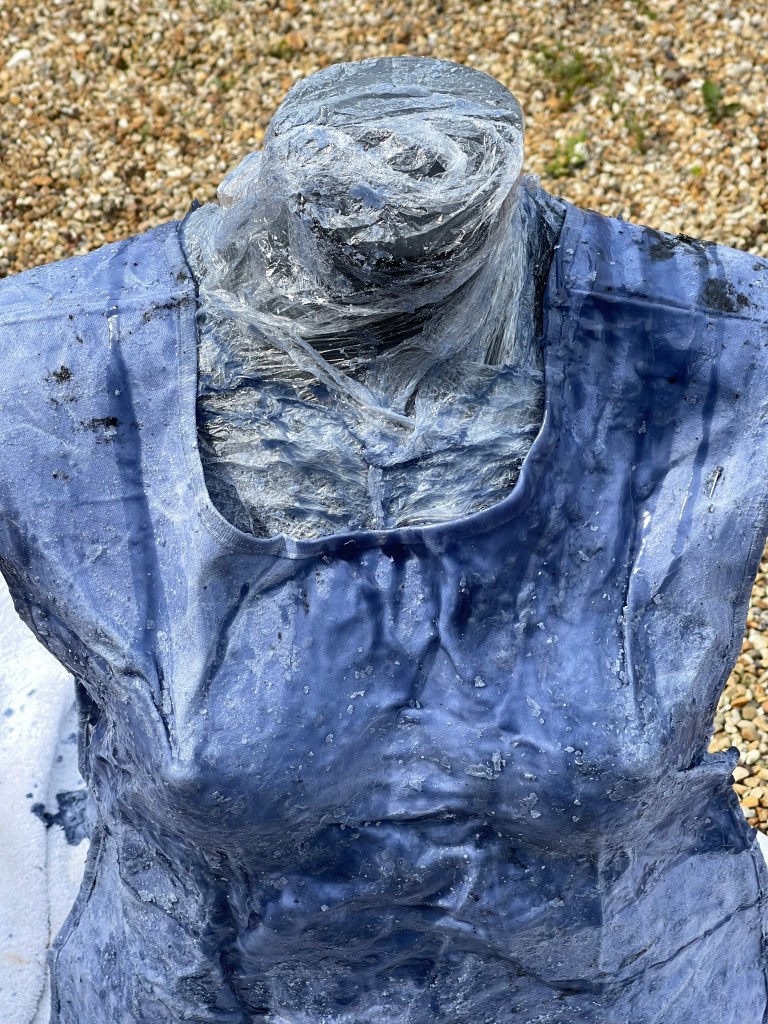
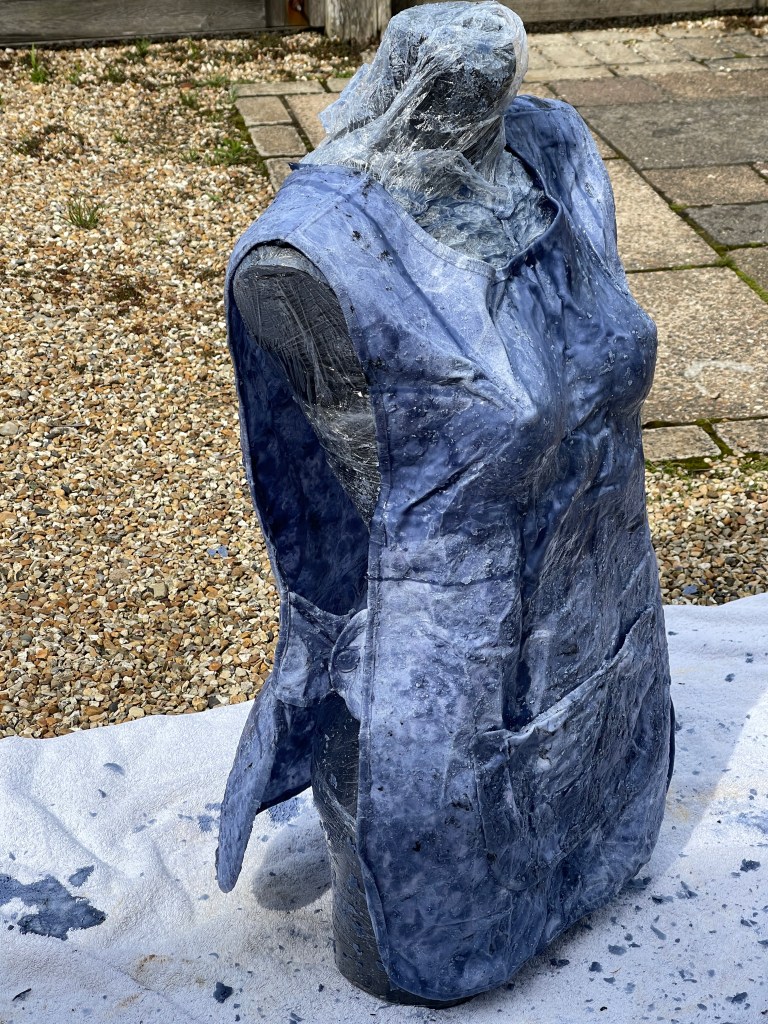
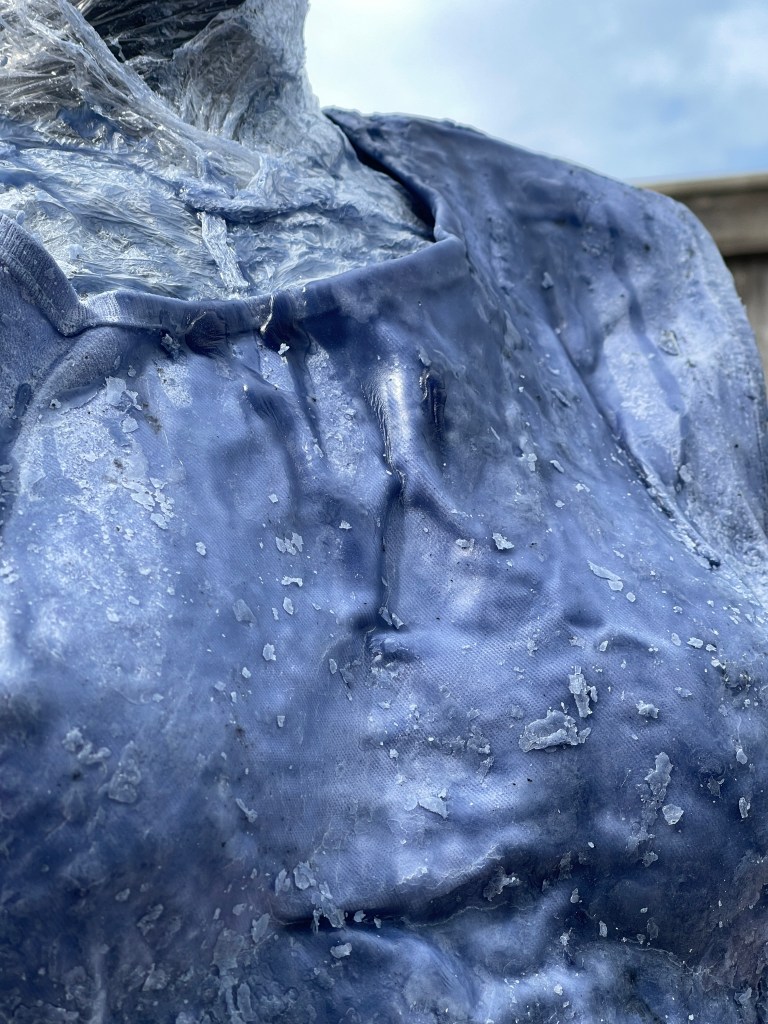
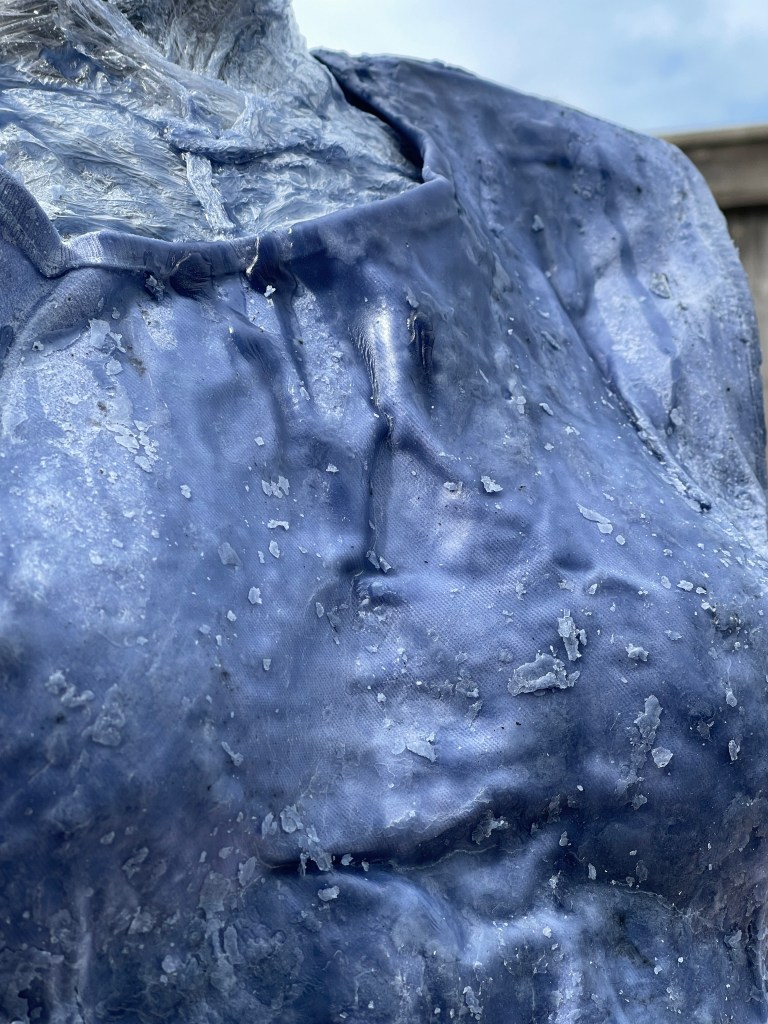
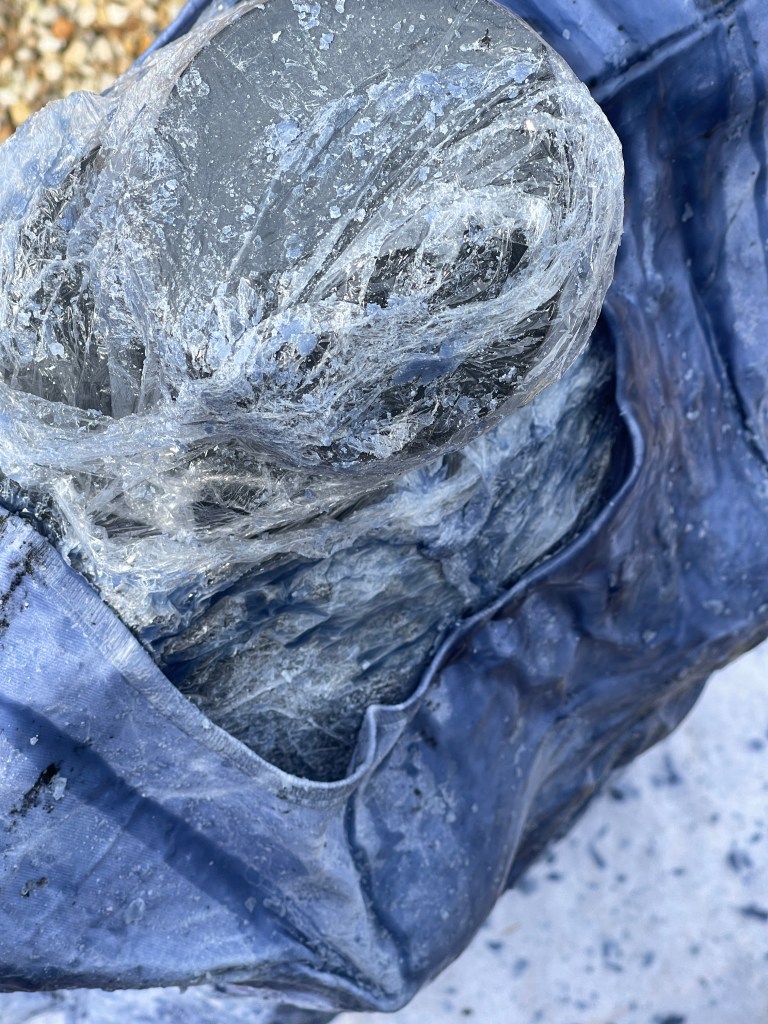
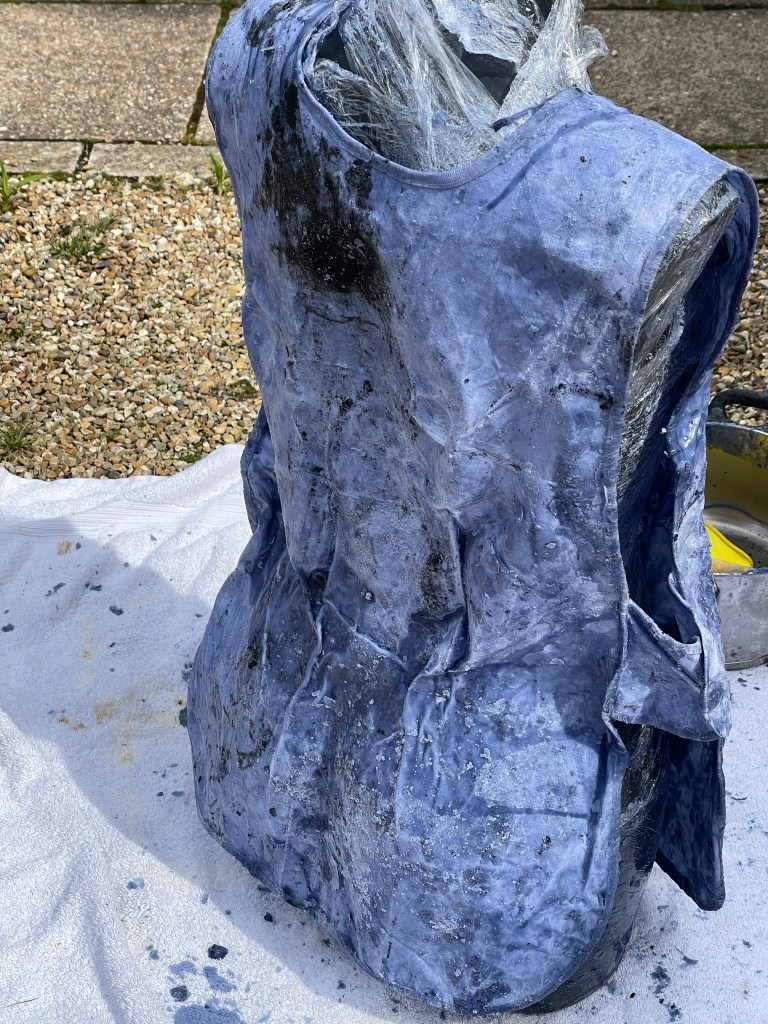
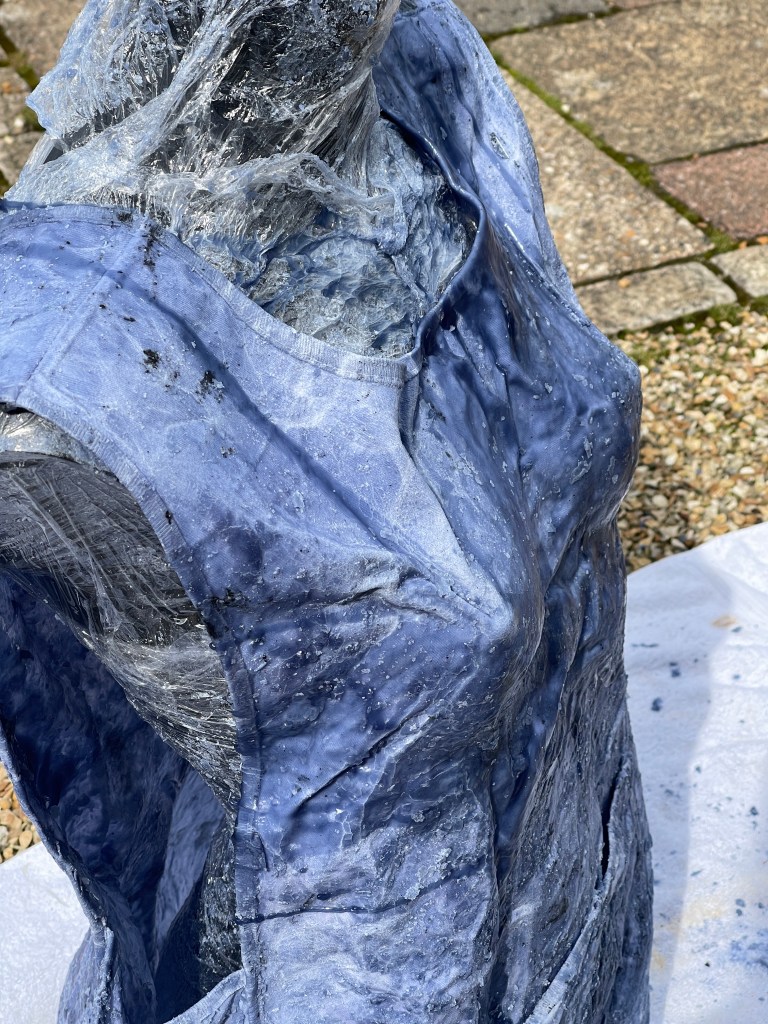
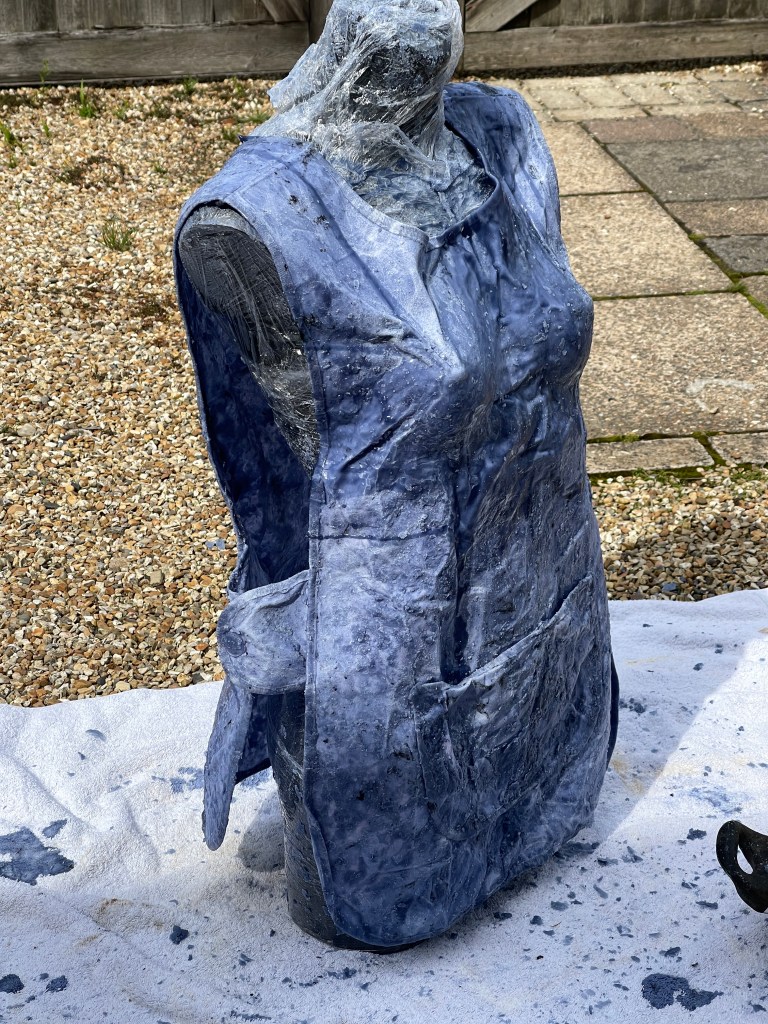
Carefully removing the tabard apron from the mannequin by undoing the side button and lifting.
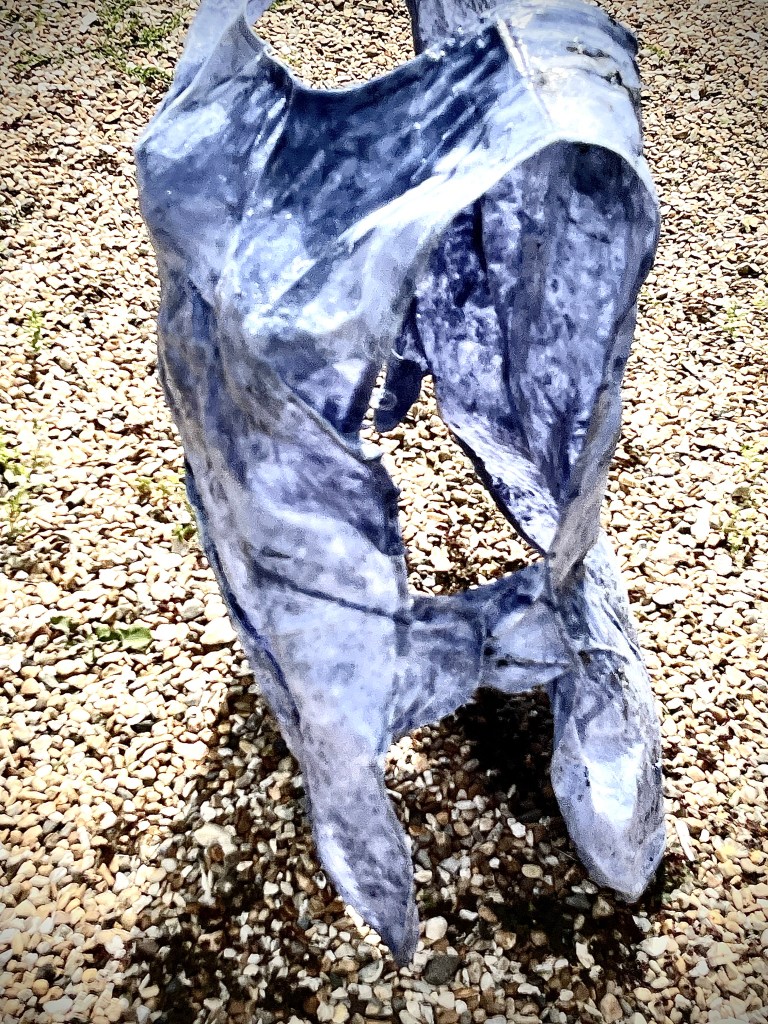
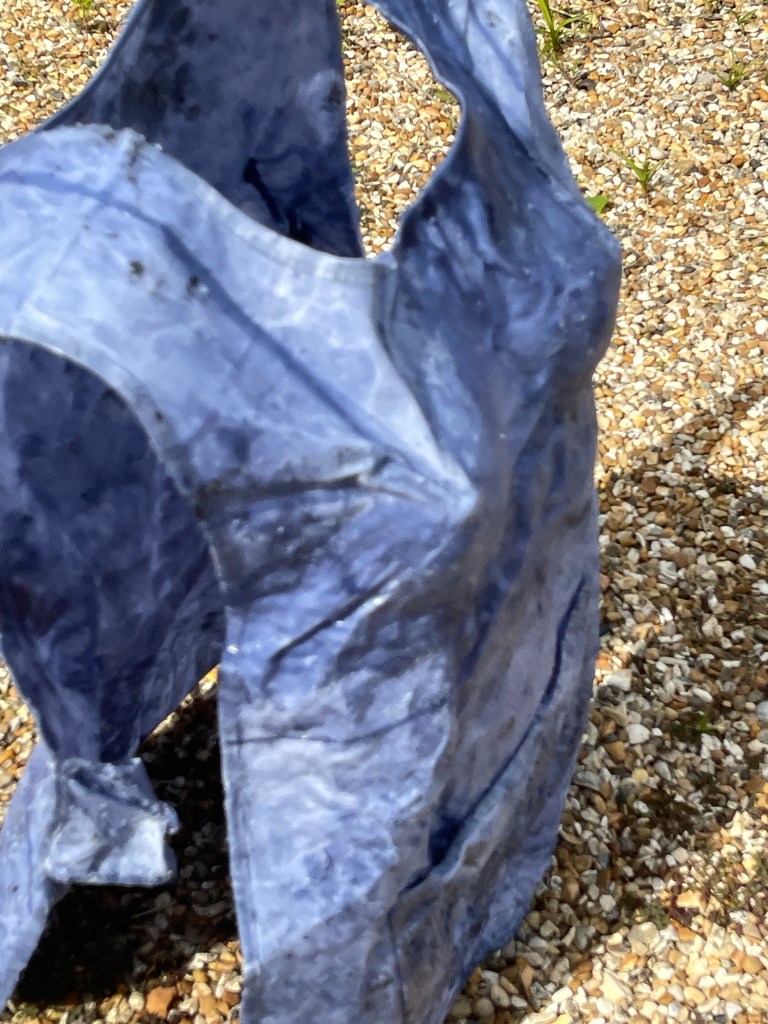
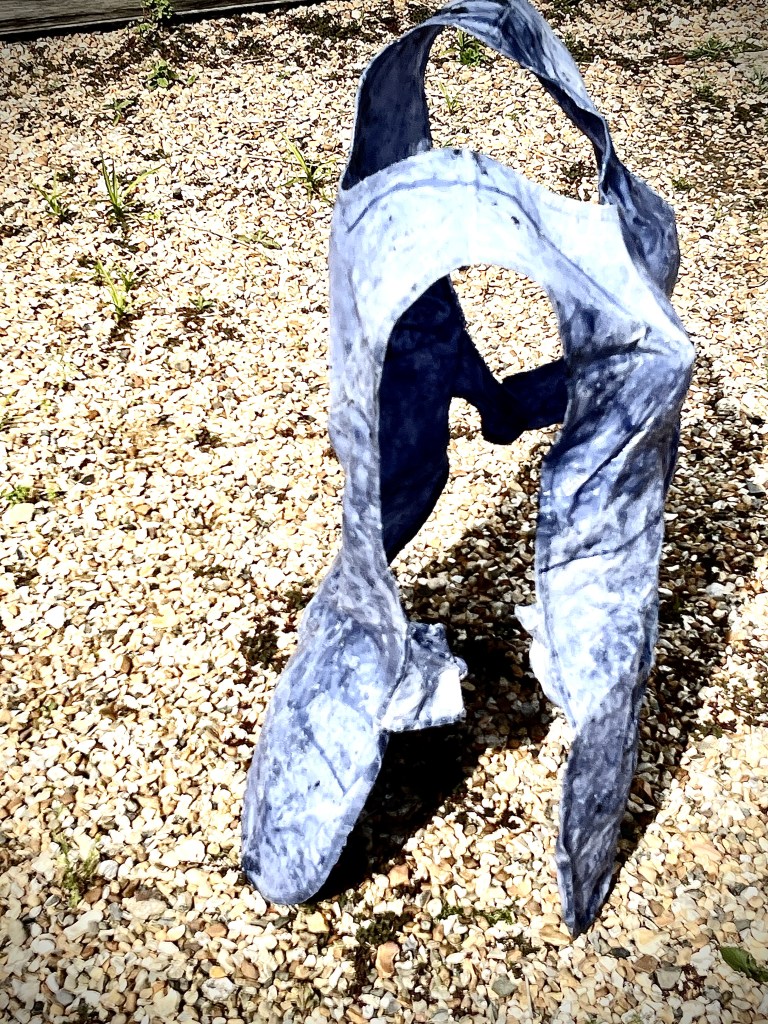
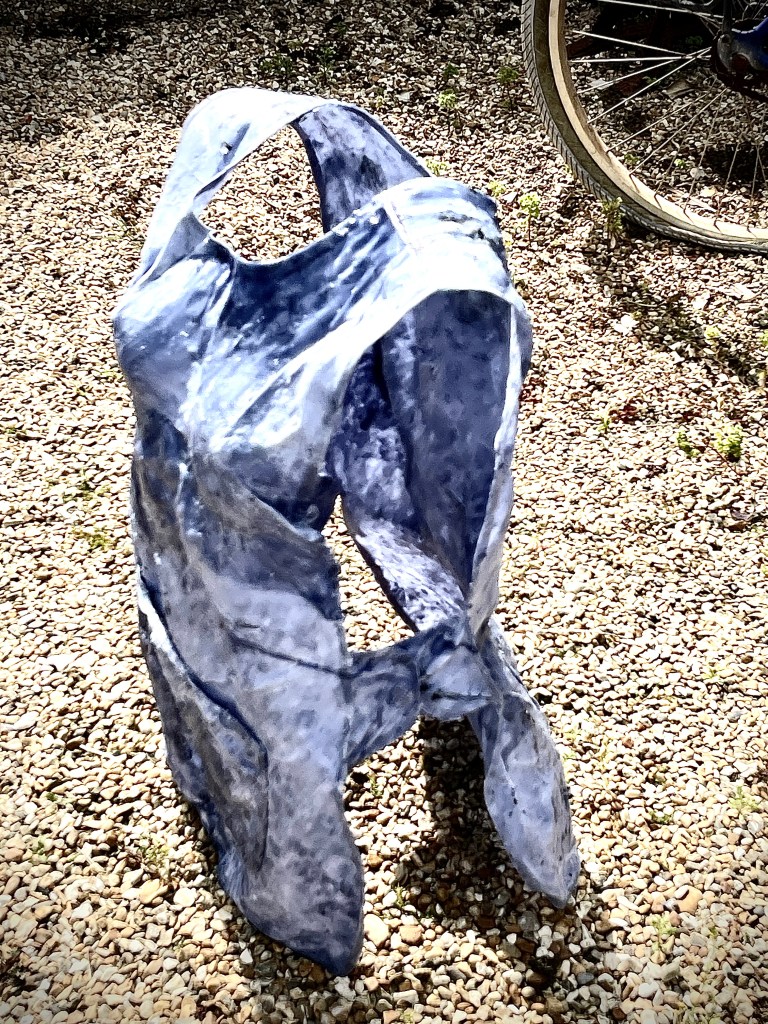
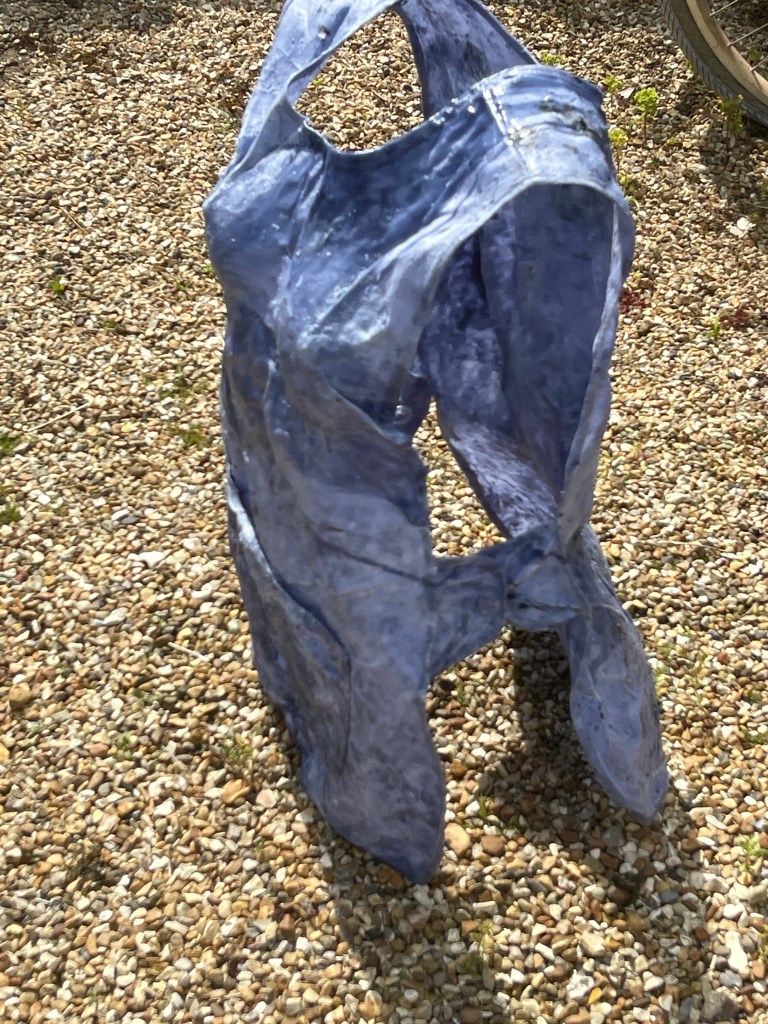
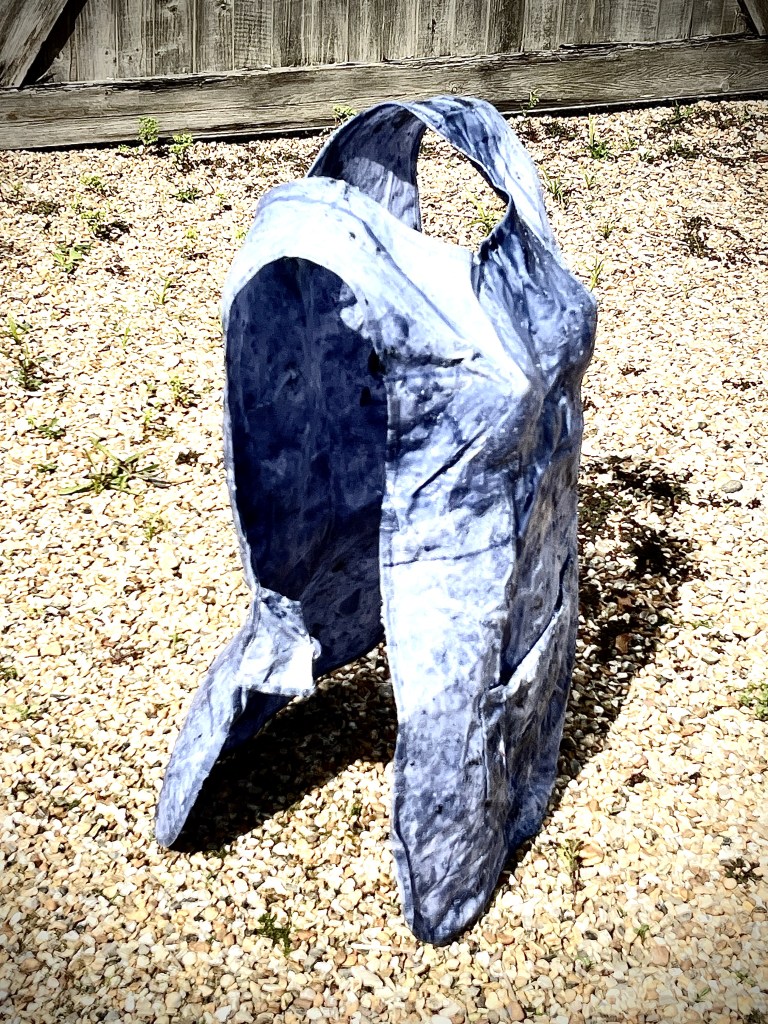
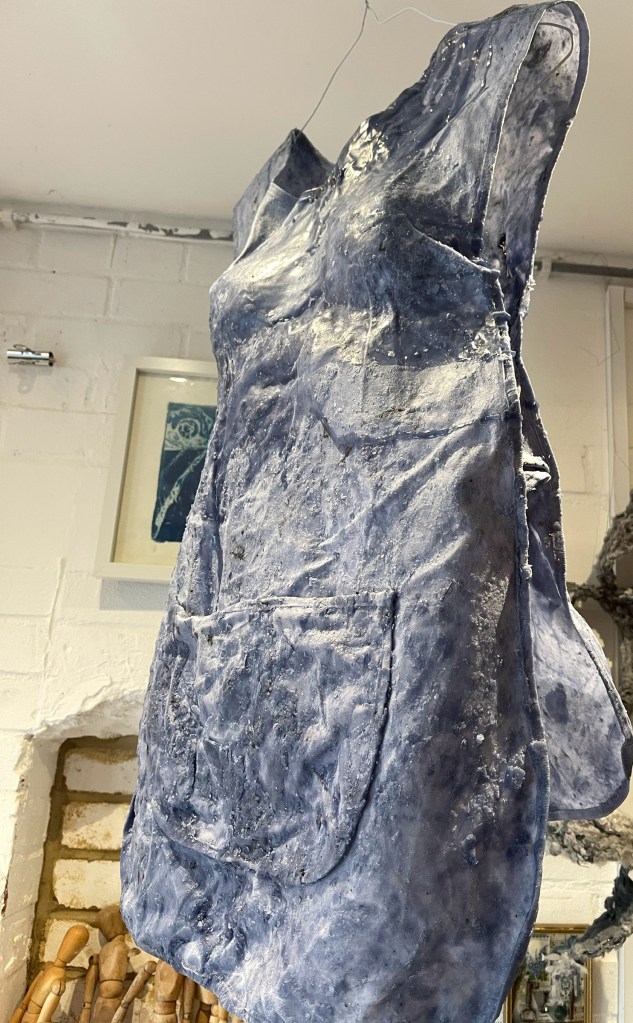
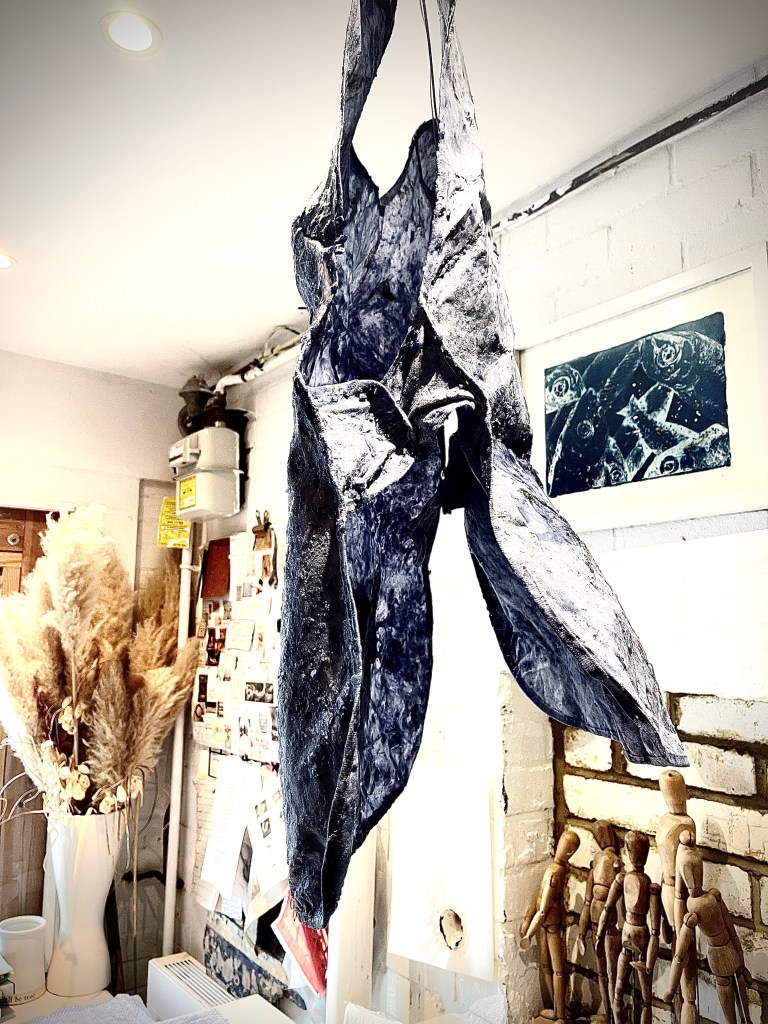
As I had hoped the waxed form was able to stand alone! – the title of this work will be “She Stands Alone”
Wearing the item – restricted movement, uncomfortable, cramped, claustrophobic, awkward, reminiscent of corsets….a shaped desired and required for the male gaze.
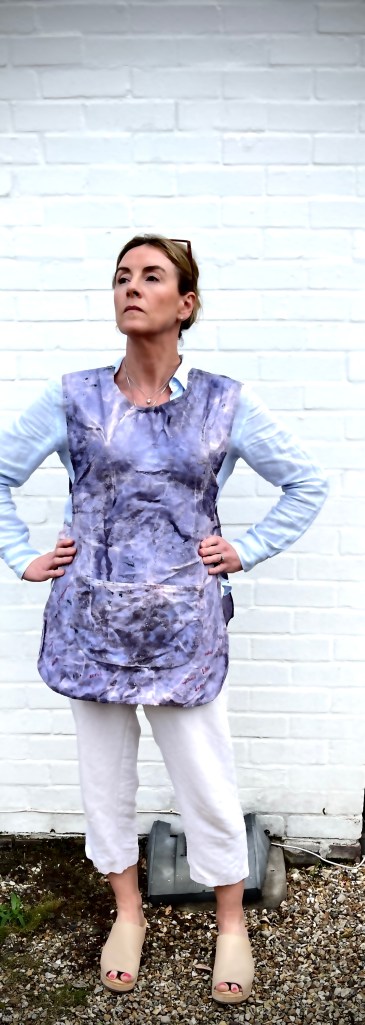
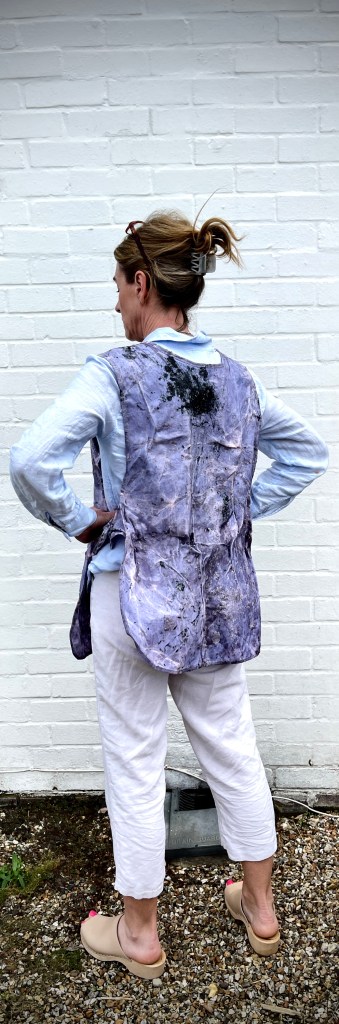
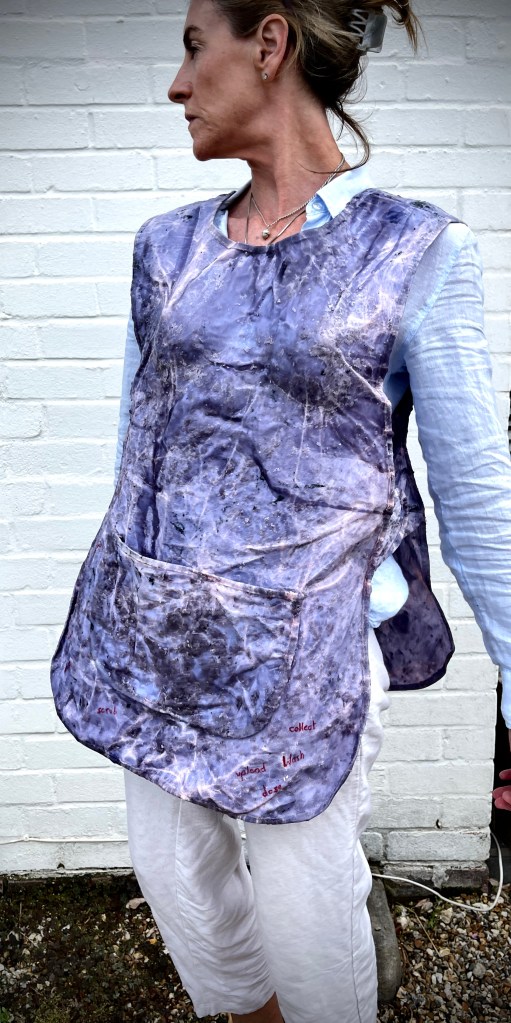
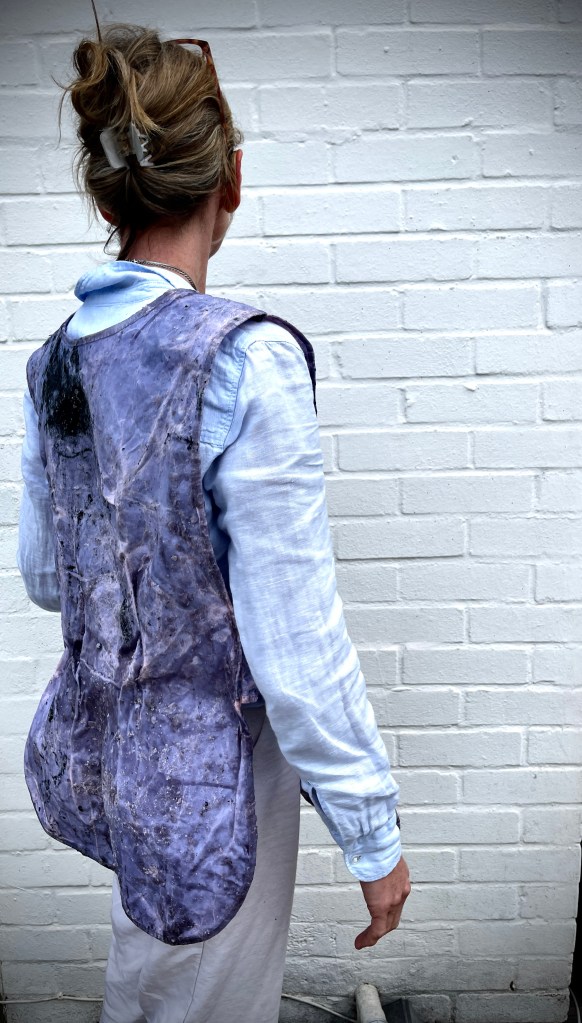
Hanging in studio : Stand alone presence of stagnation and restriction.
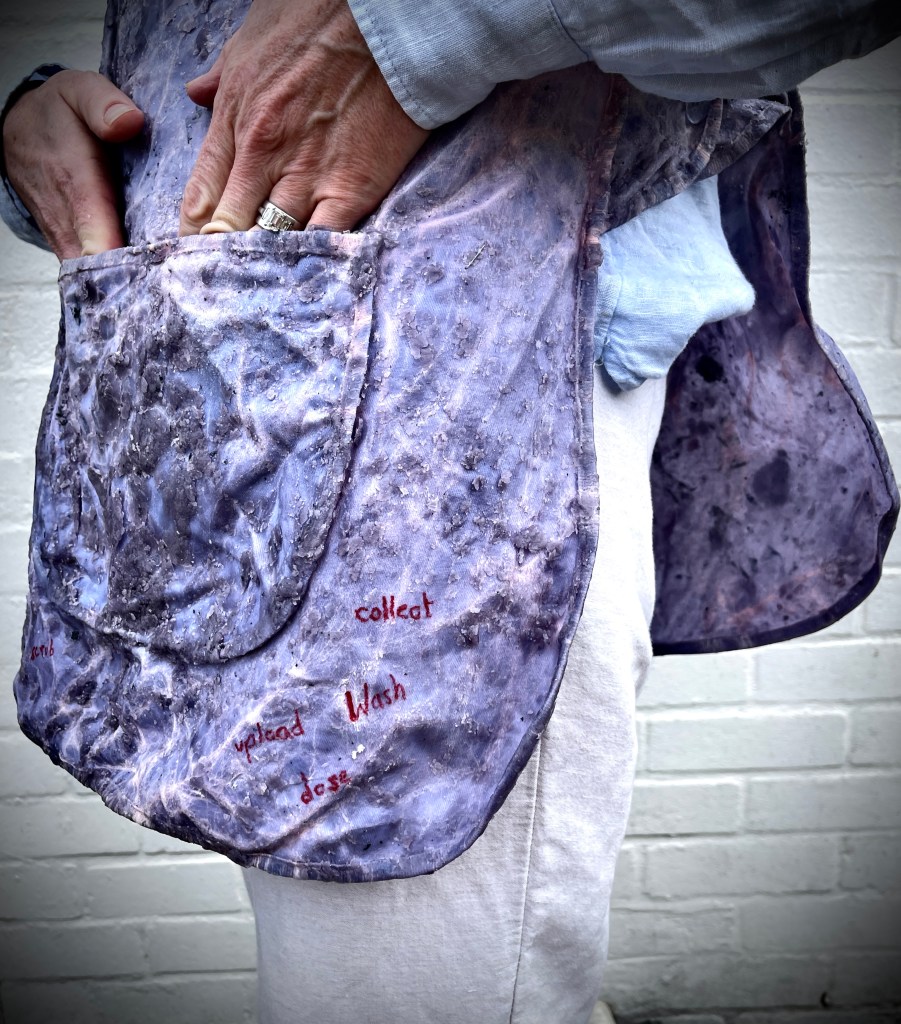
I manipulated the image to add in the verbs and chores of domesticity.. including those deemed key by artist Mierle Laderman Ukeles:
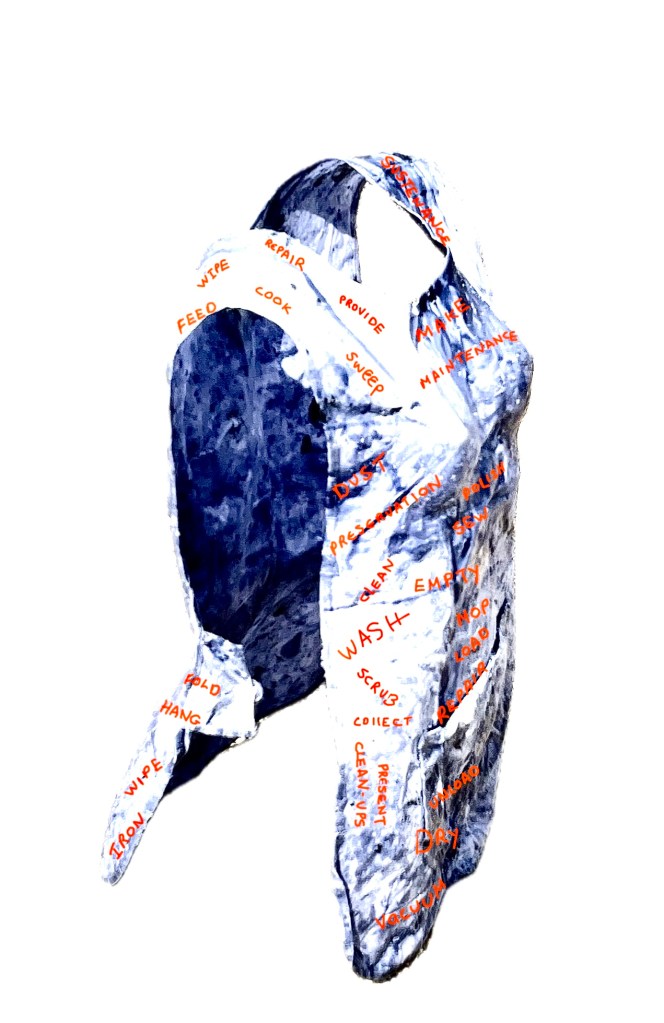
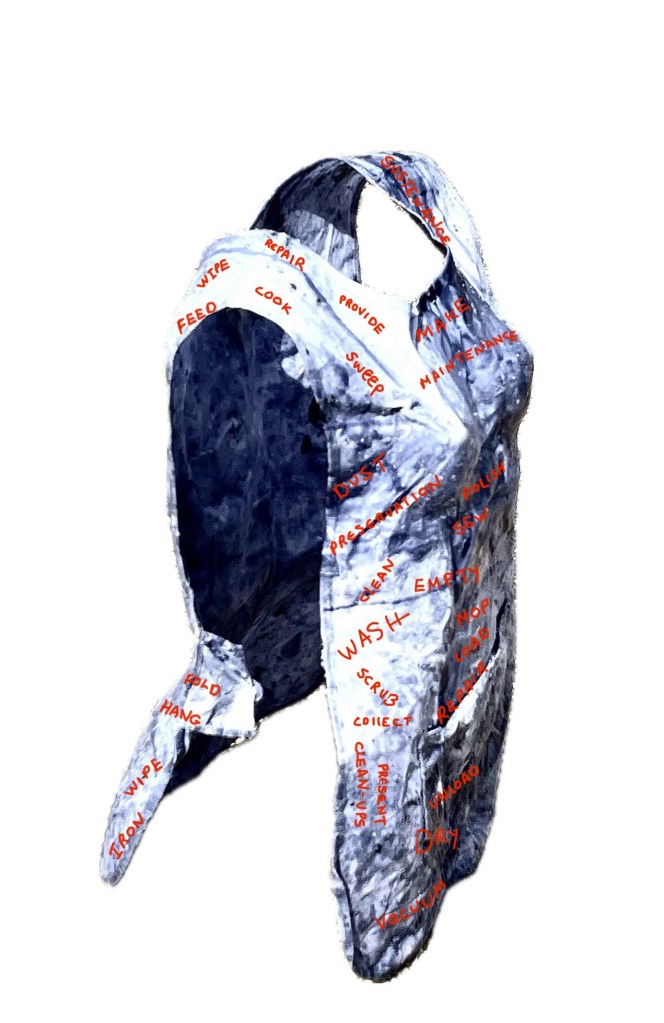
Inscribed words: Feed, wipe. cook , repair, sweep, provide, make, dust, maintain, present, clean, empty mop, load, scrub, collect , sew, polish, wash, clean -ups, unload, load, present, dry , vacuum, fold, hang, wipe, iron.
This process was experimental and process based my concerns centring around the Apron as an overall uniform that wiped away the person ( female behind it). A restricted uniform with the far reaching connotations of restriction to cover restriction of place, movement and cultural limitations on the female.
Continuing to work on the motif of the apron as a symbol ( symbolic ) of the female domestic worker I looked to other mediums to capture/ embalm/give agency to this uniform steeped in historic cultural significance and recognition.
I worked with industrial strength starch to emulate the results of the wax, a medium relevant to the domestic workplace and a substance intended to create an superior state of appearance for linens, clothing and other everyday items.
The starch was a substance that added burden to the task of laundry, extra time and toil and increased the expectation of the immaculate finished dried product.
I started the process with an excess volume of starch for the aprons, this was to ensure a extreme stiffness and solidity when dried.
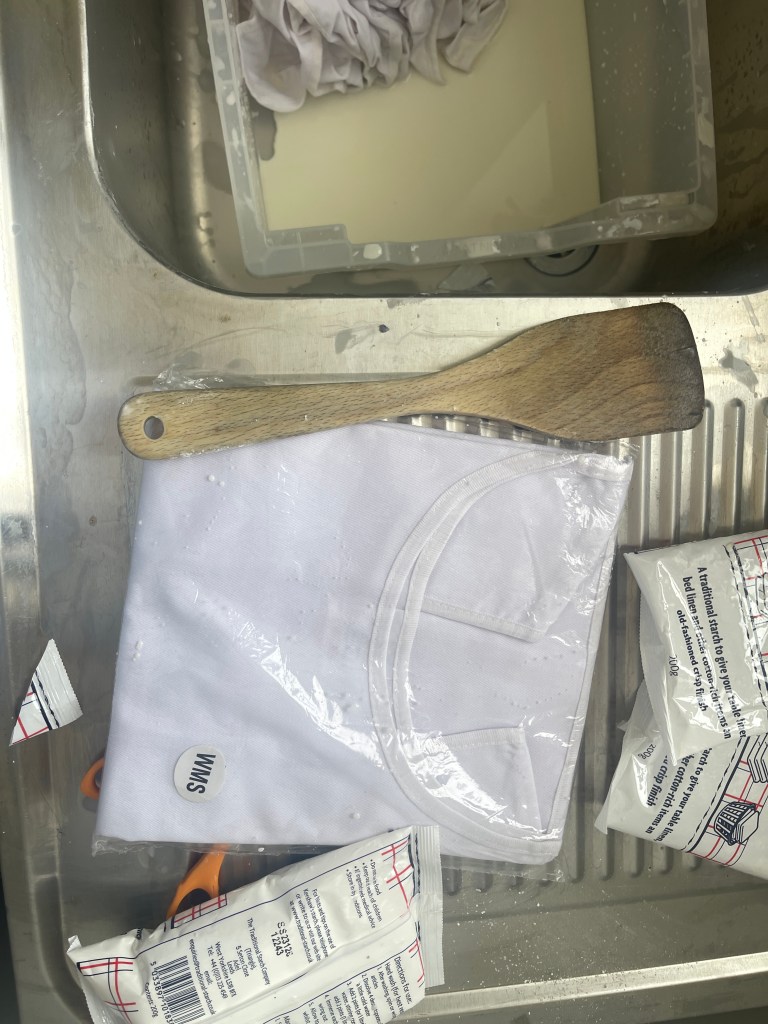
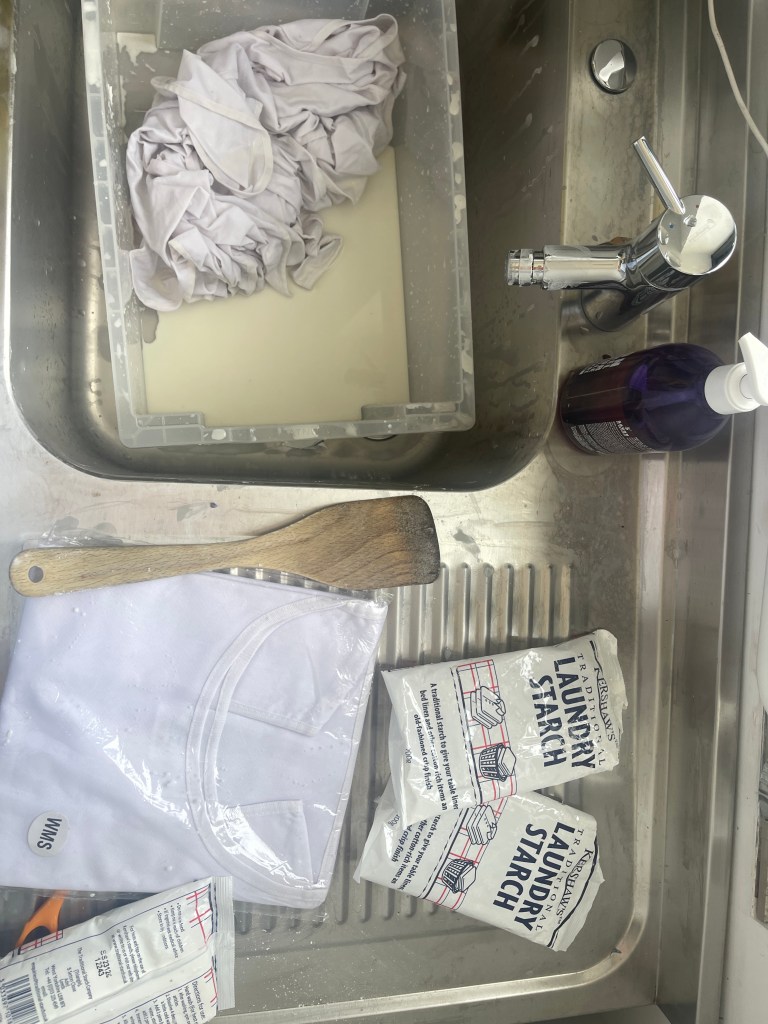
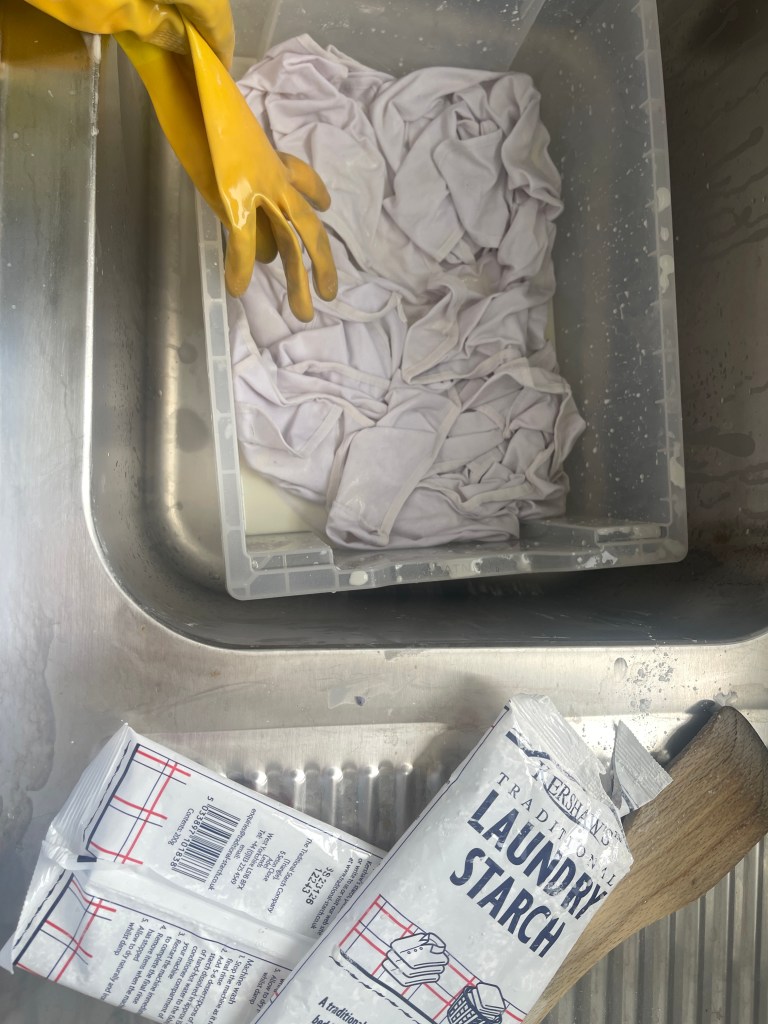
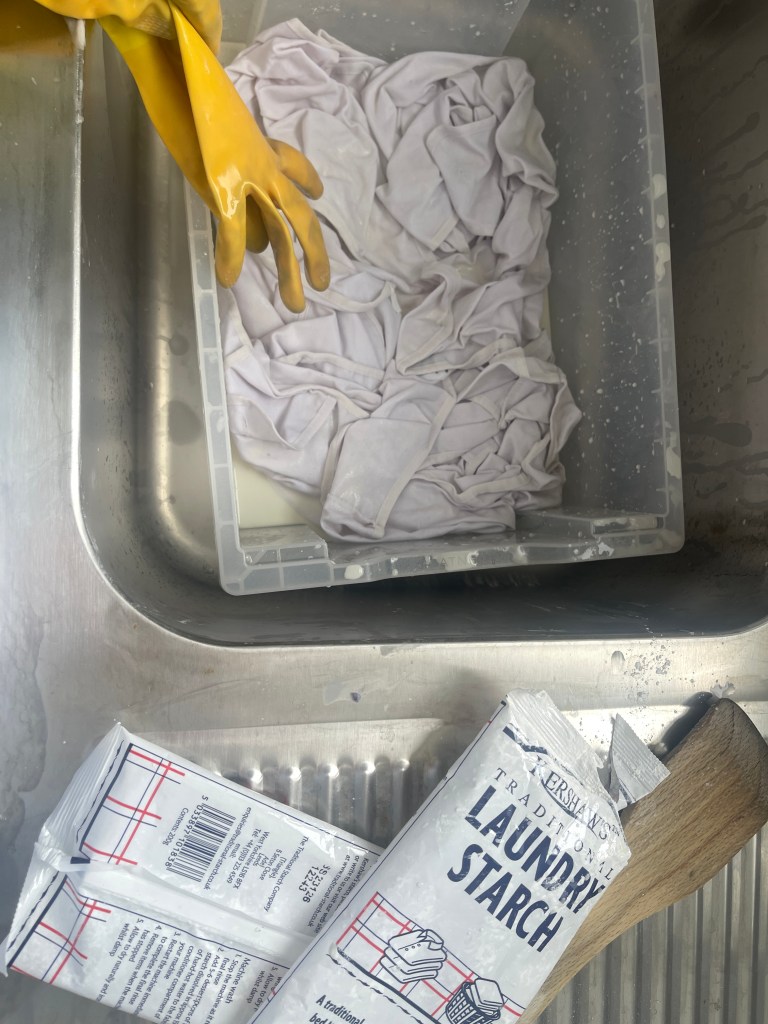
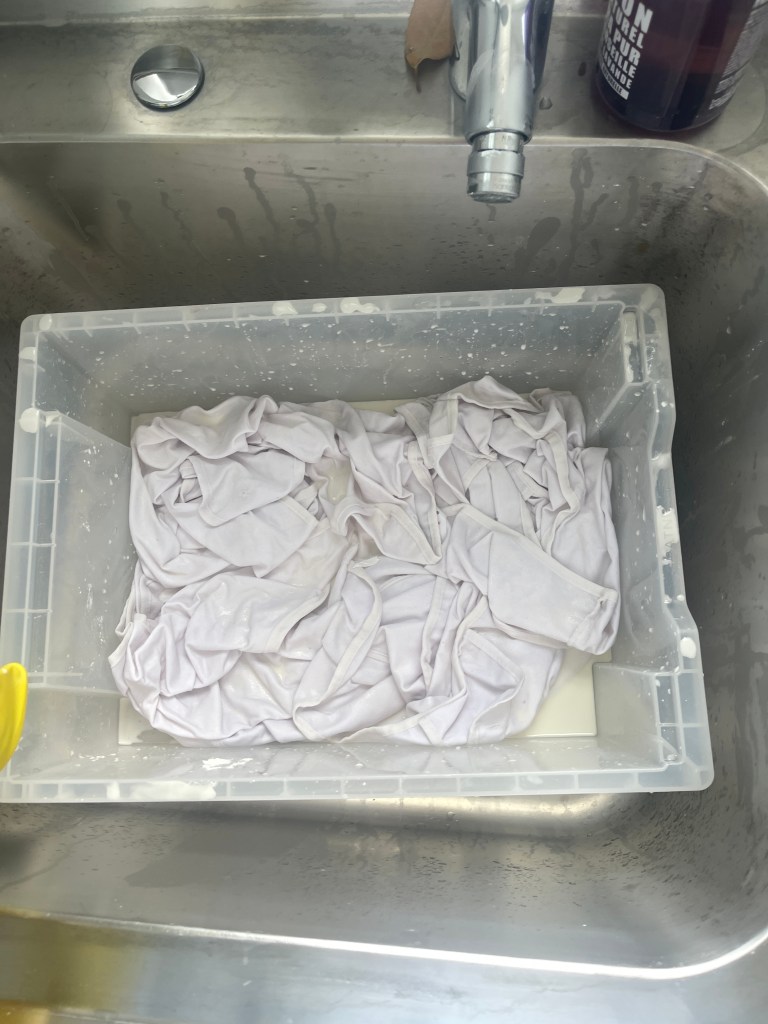
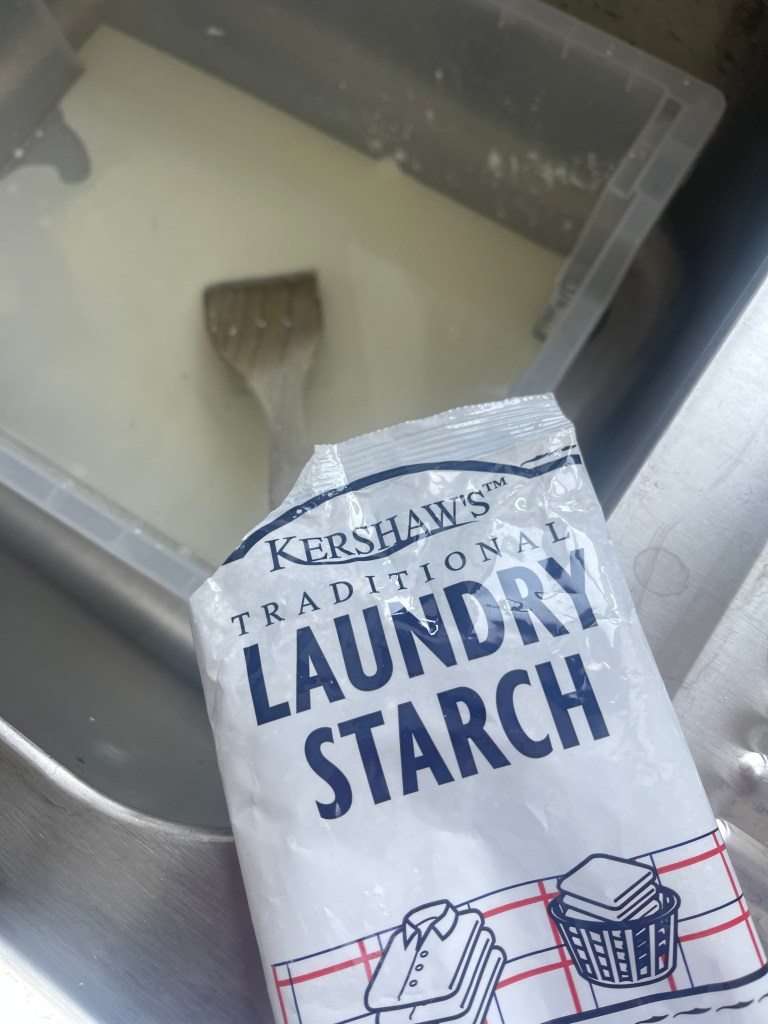
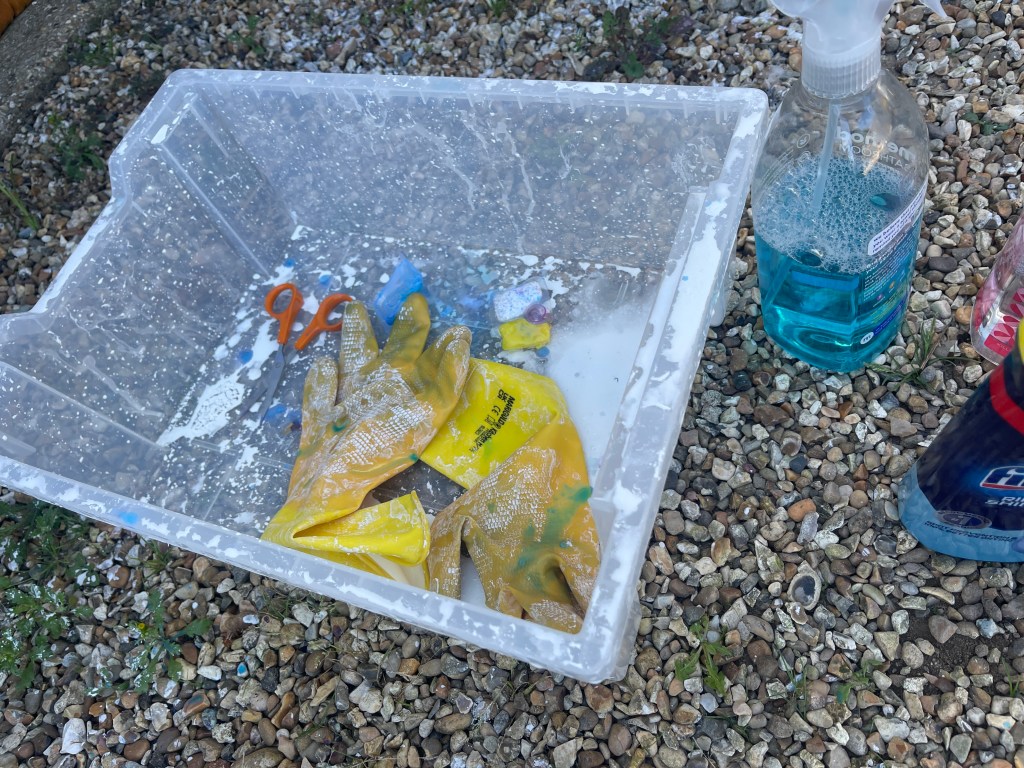
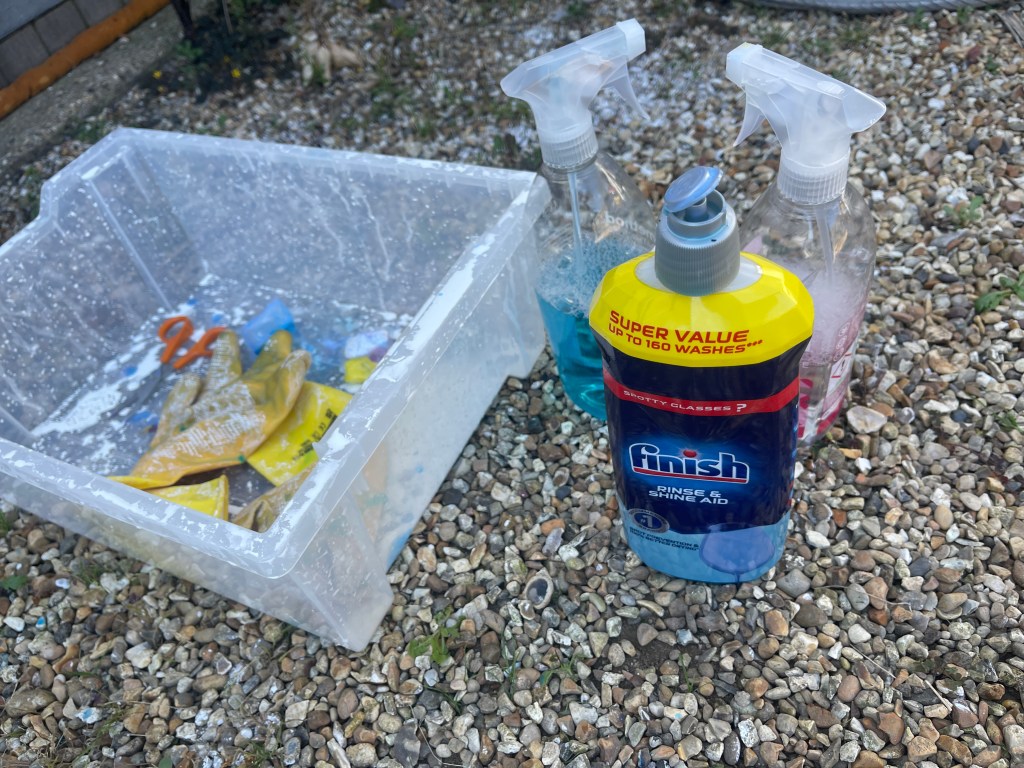
After soaking I hung them out to dry. At this point I added a smattering of cleaning substances to the starched stiff material.
Cleaning Products added:
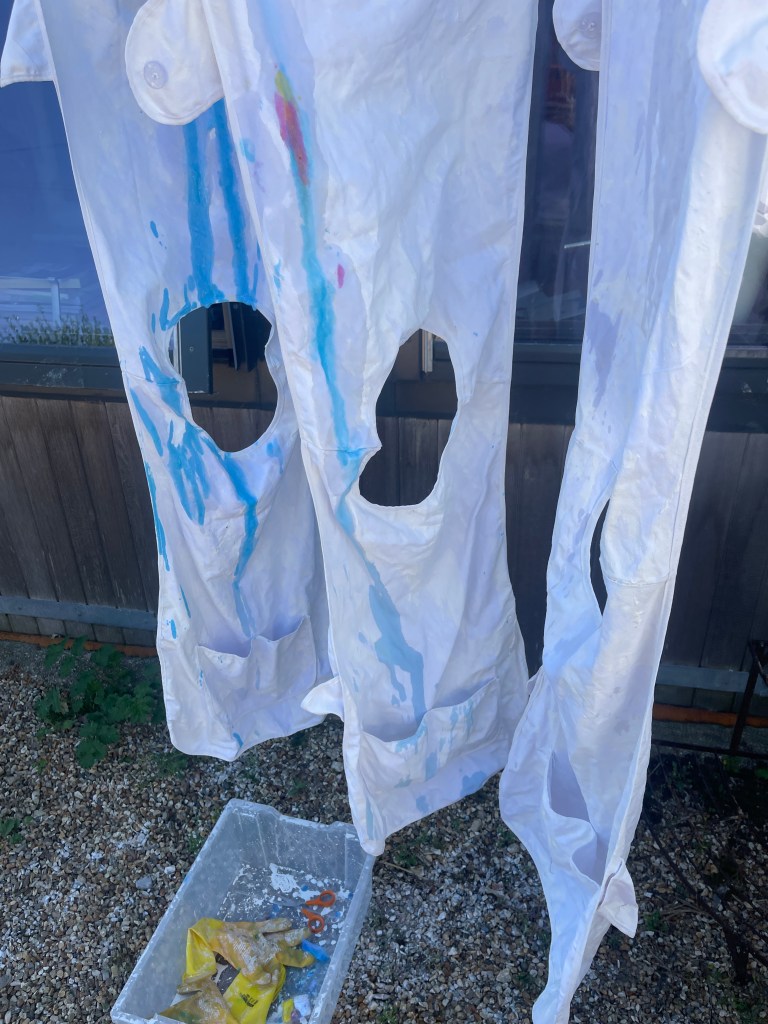
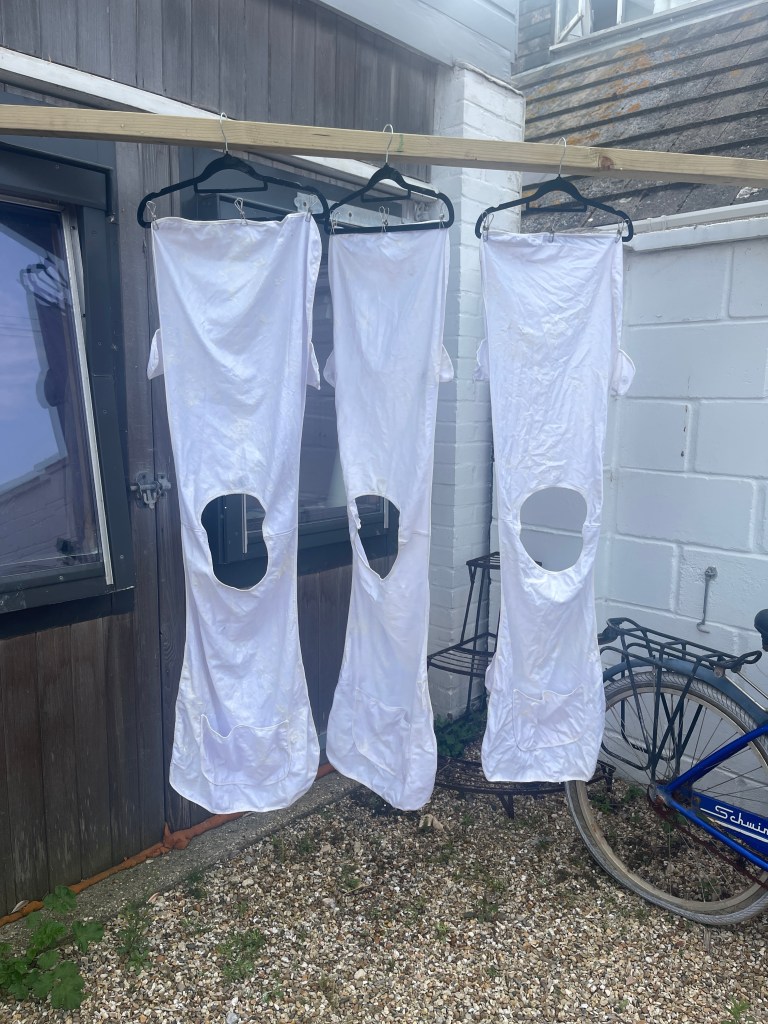
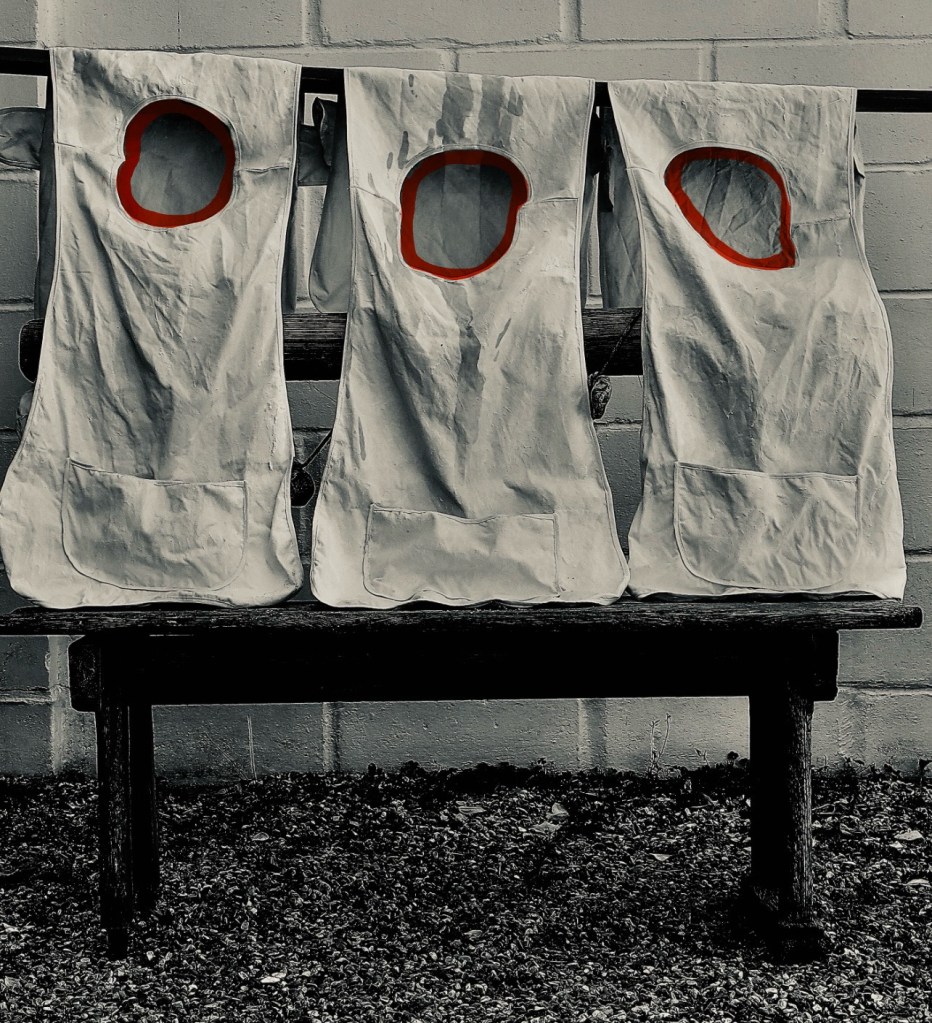
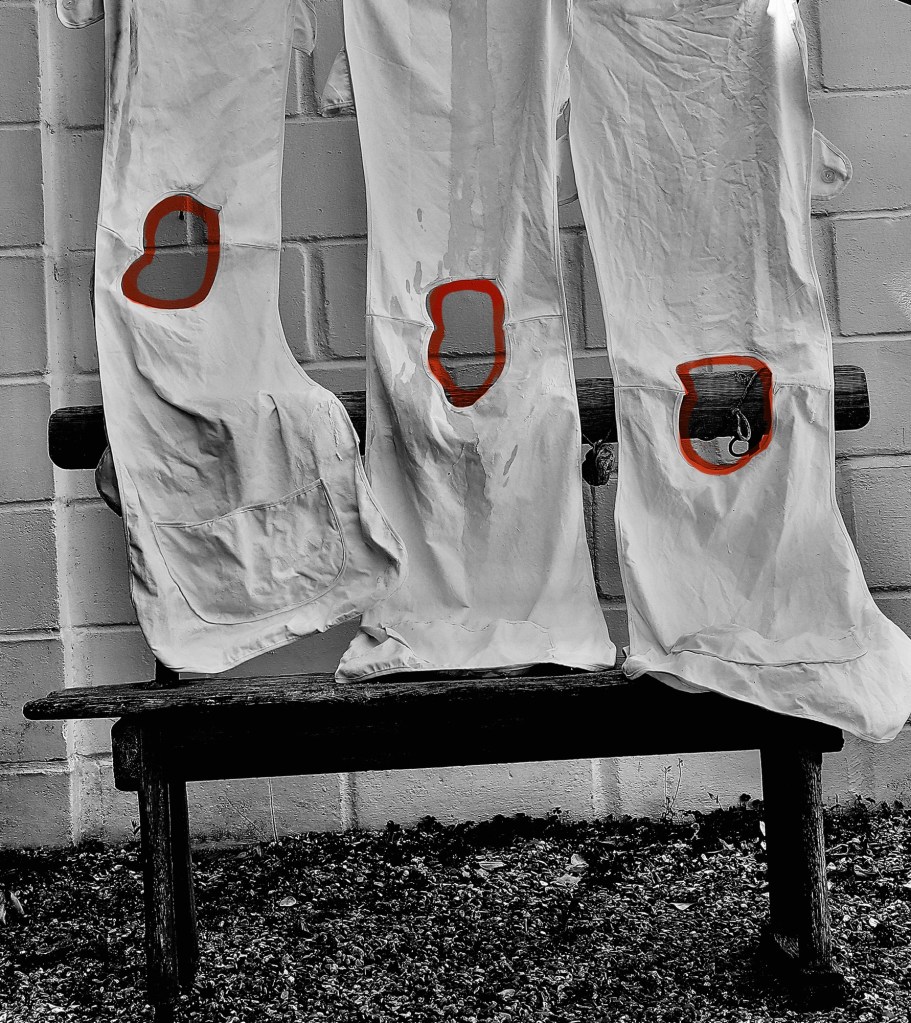
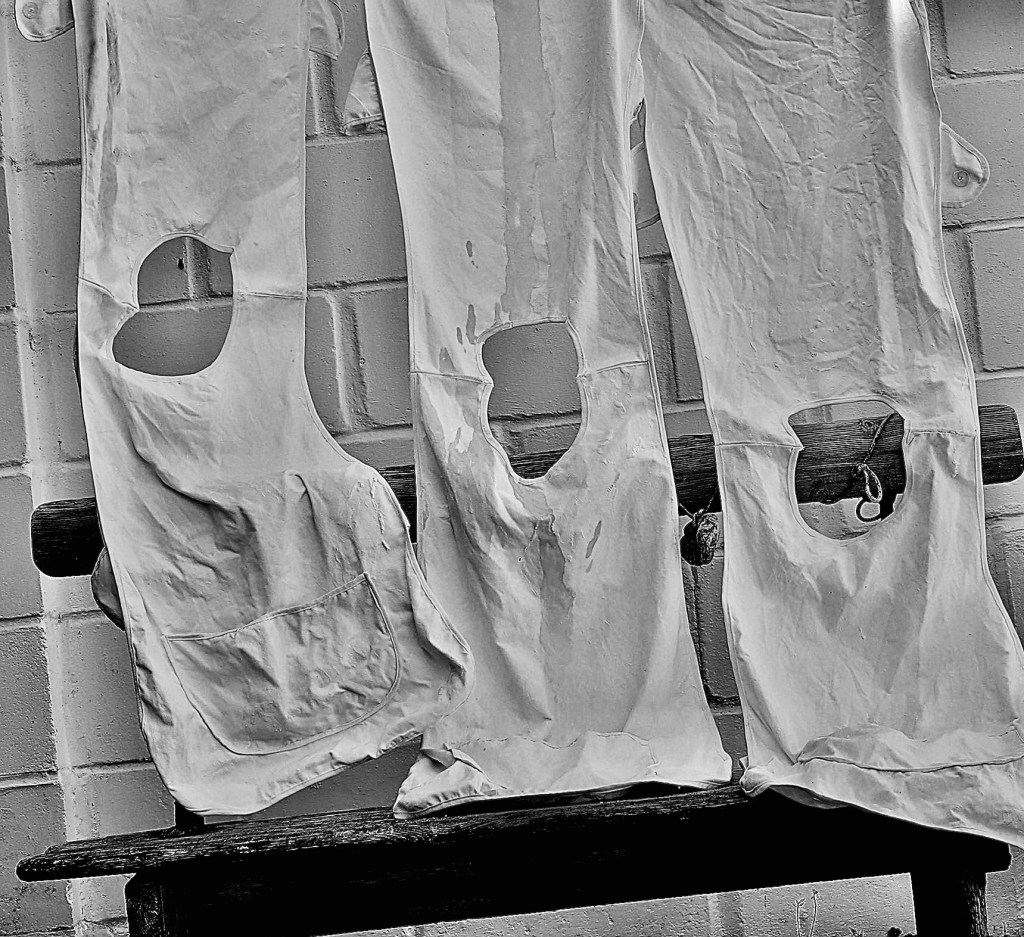
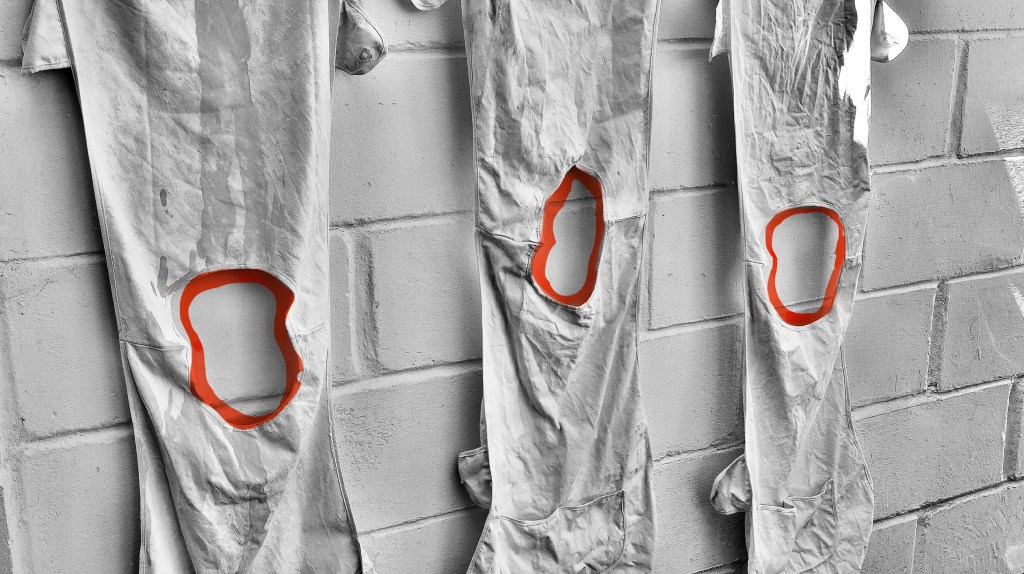
The 3 aprons with a ‘gaping mouth hole’ simulate a group of female domestic workers. Their voices wanting to shout and be heard through the mouth pieces.
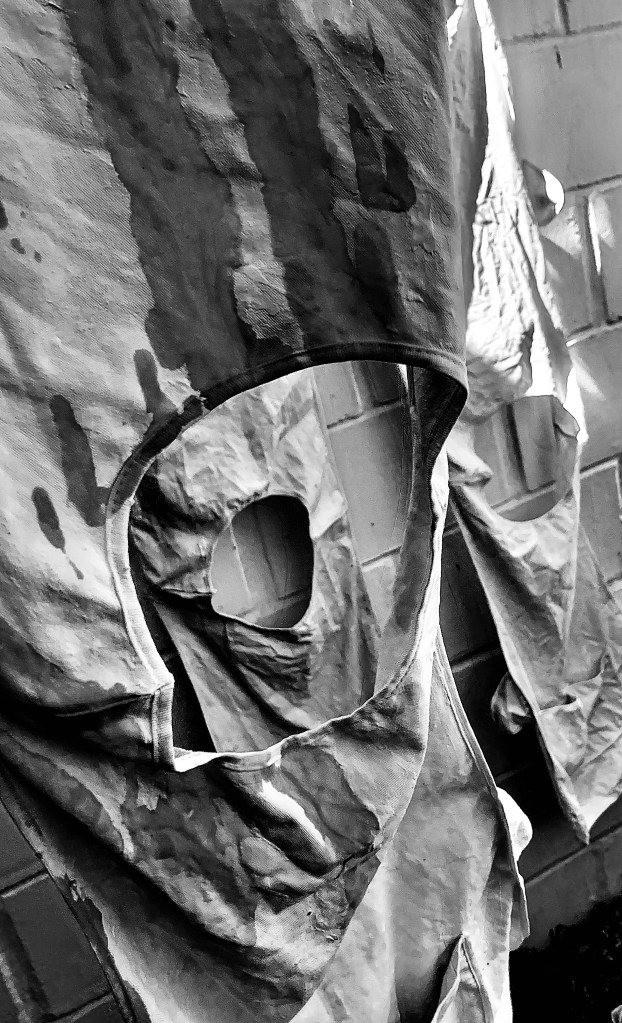
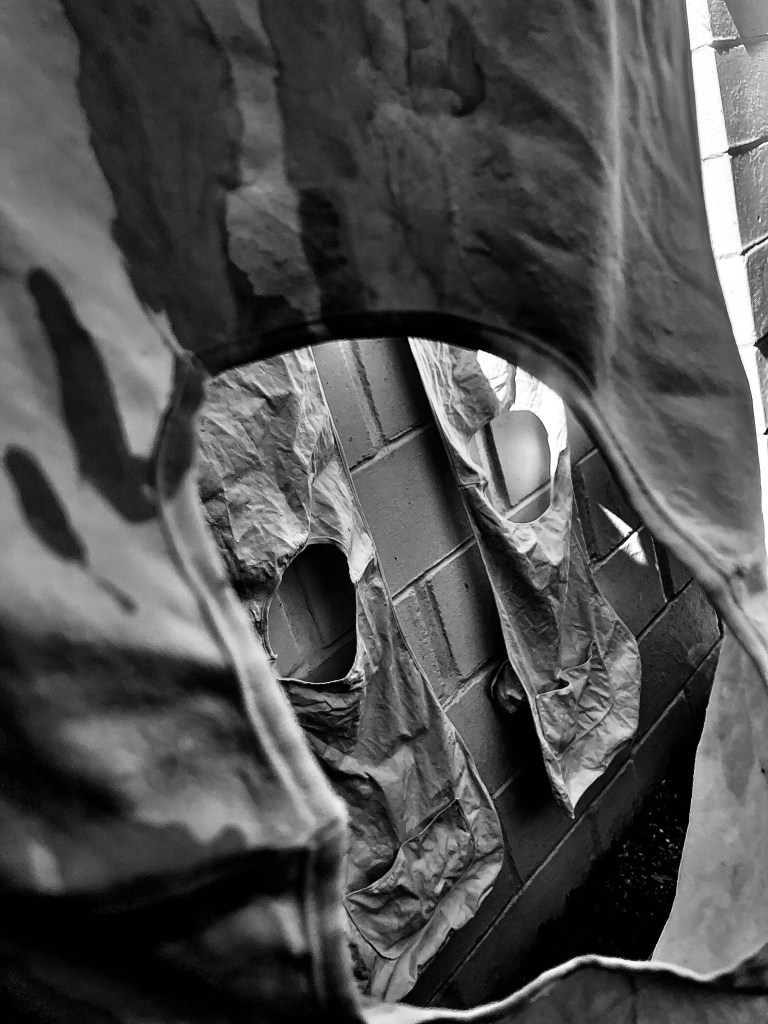
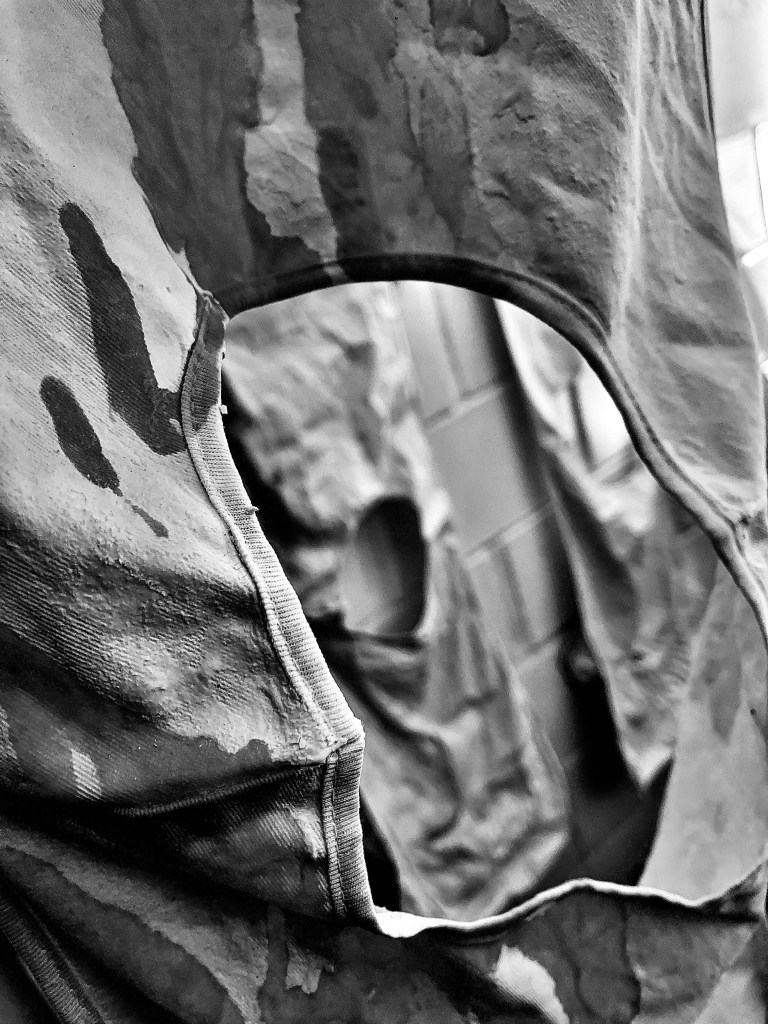
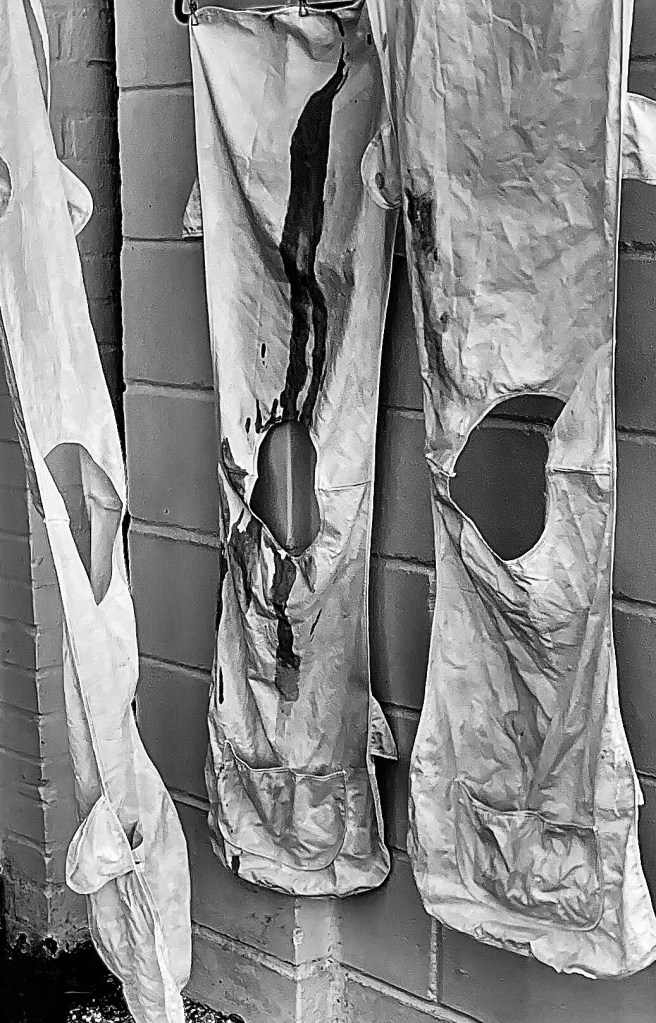
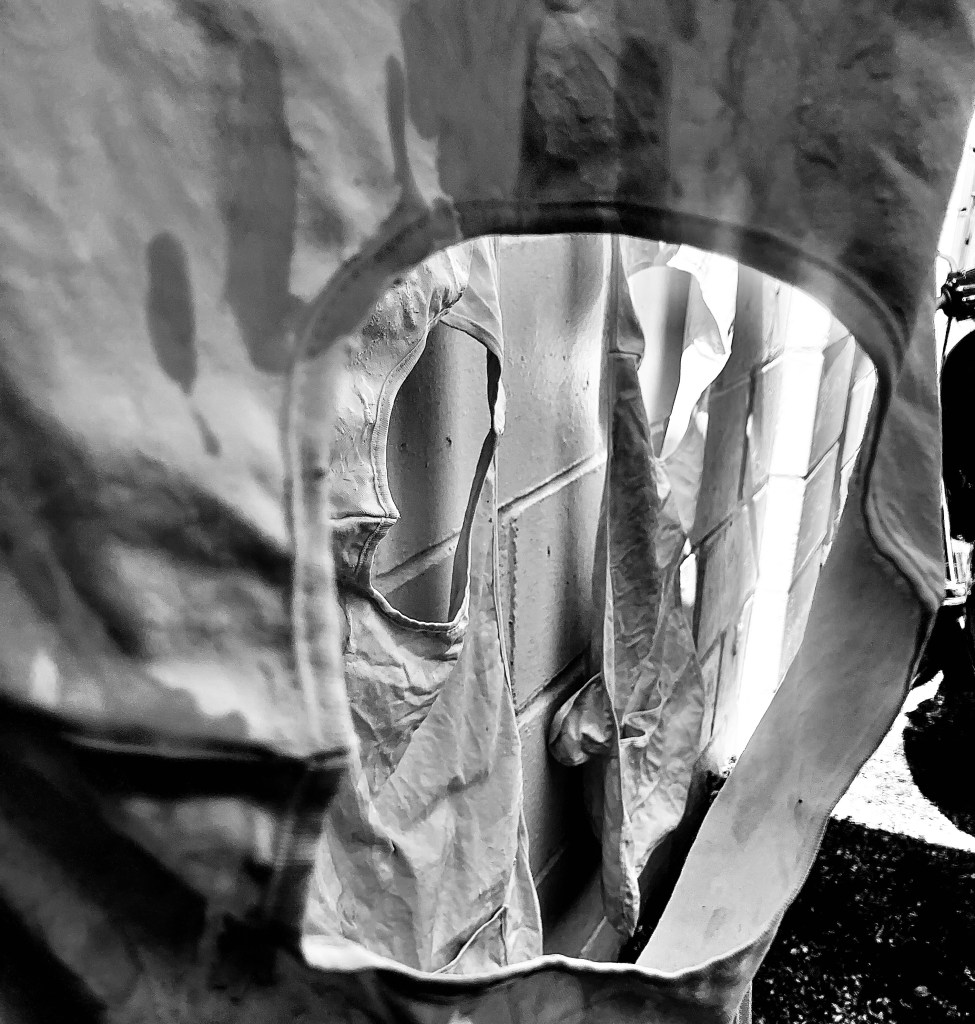
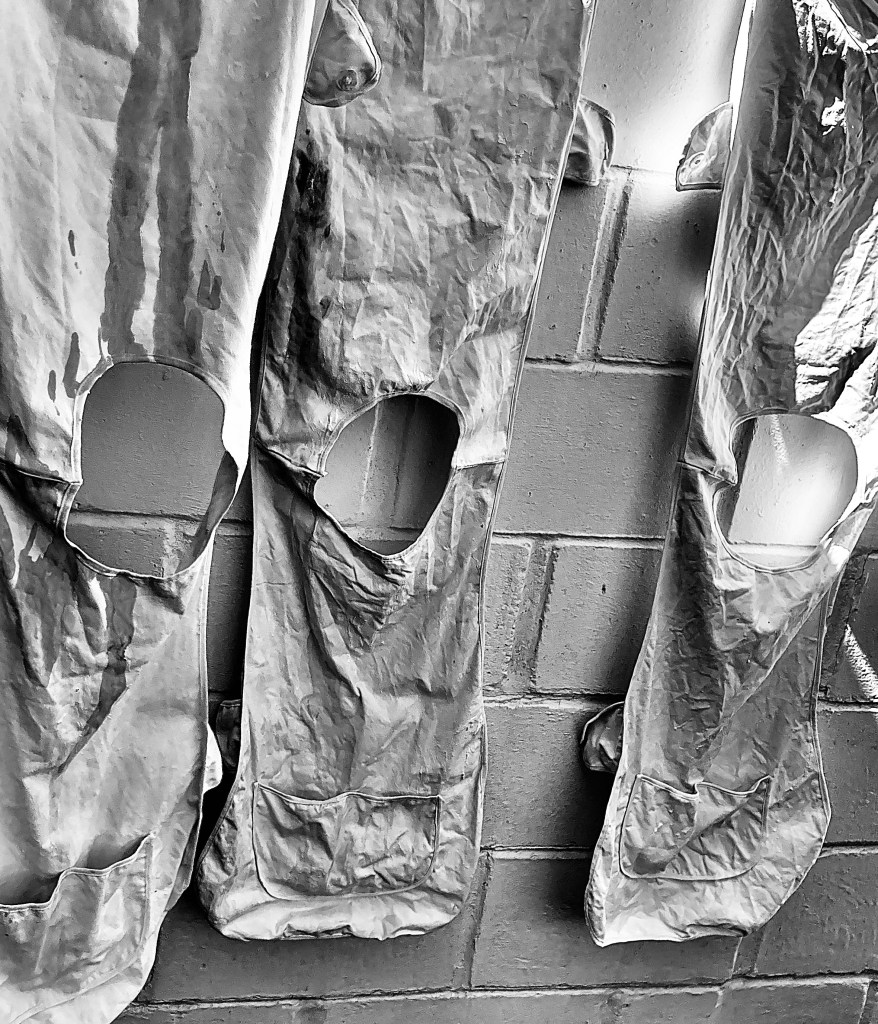
Manipulating photograph to accentuate the mouth-piece.
Discussions. ( Below )
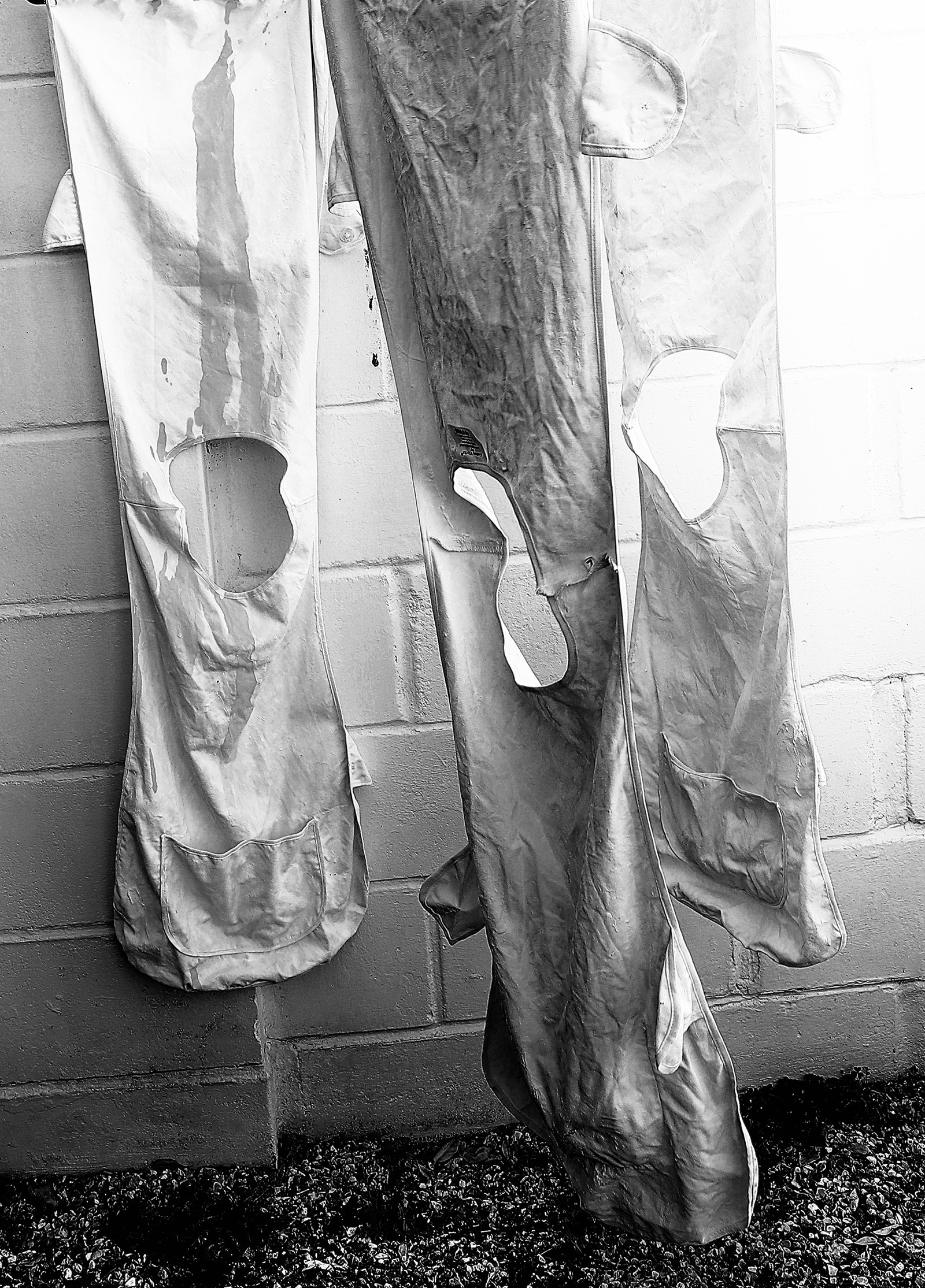
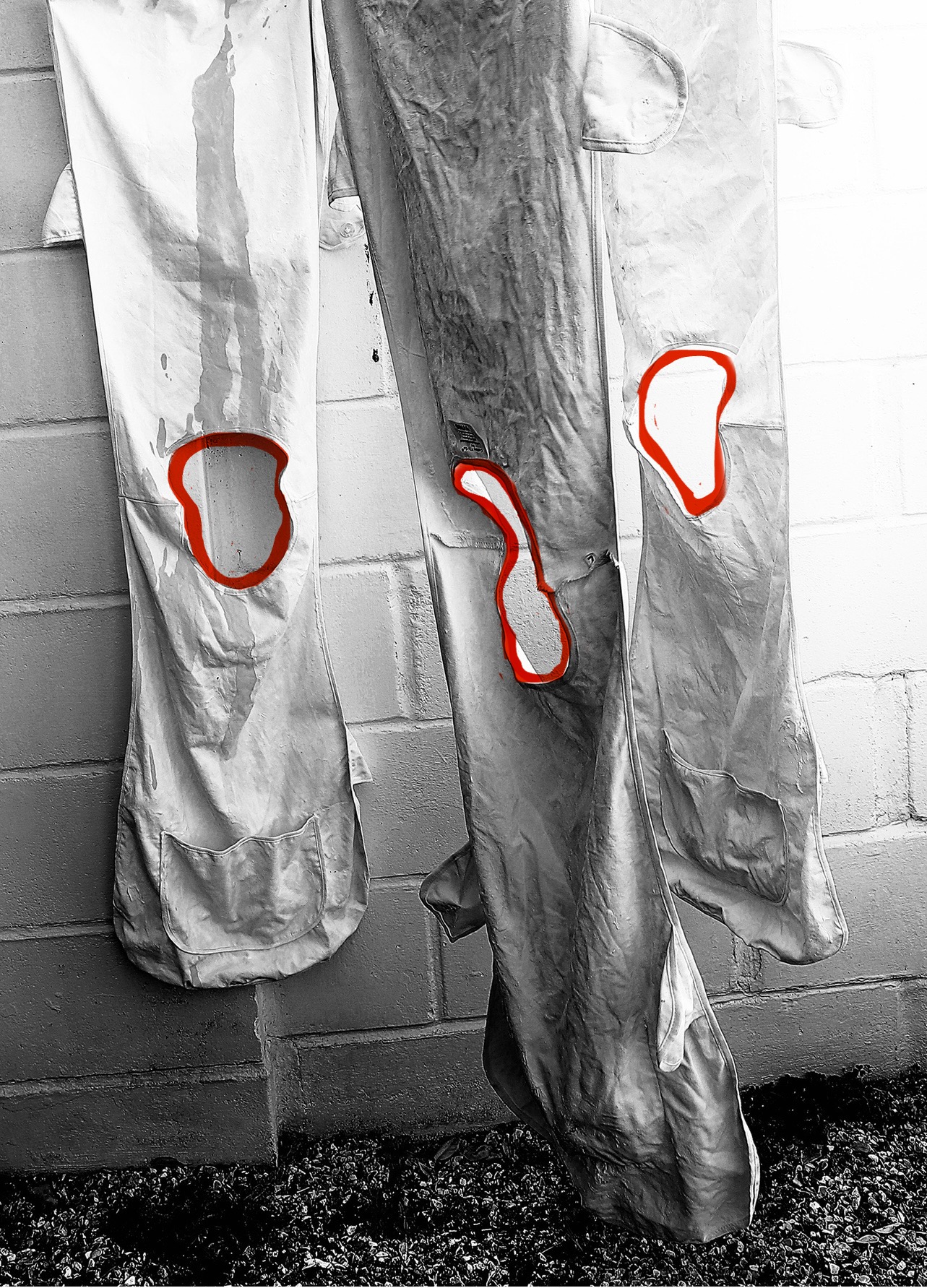
Contemplation – (below)
Back Against the Wall.. ( below)
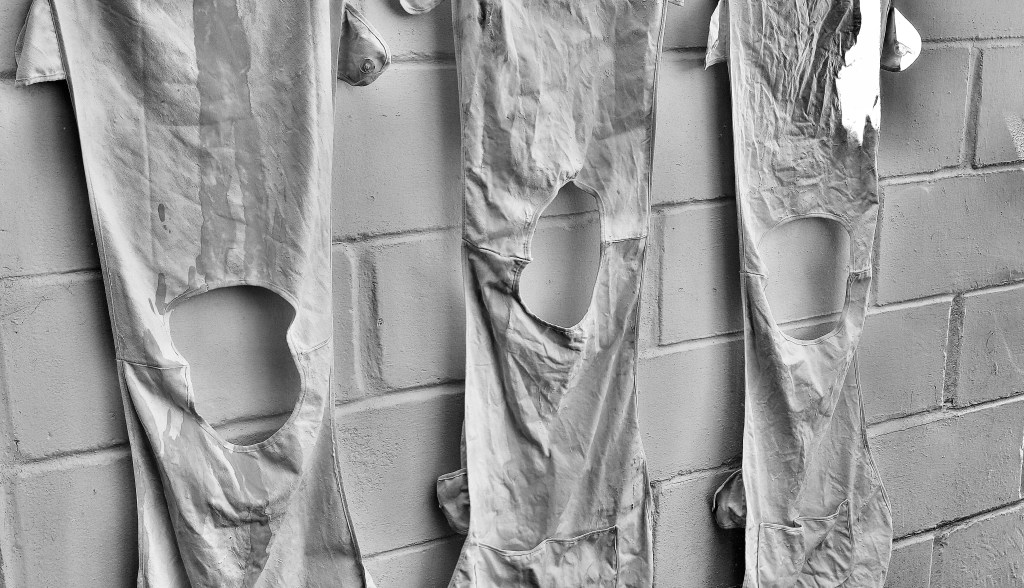
Tea Break ( below)
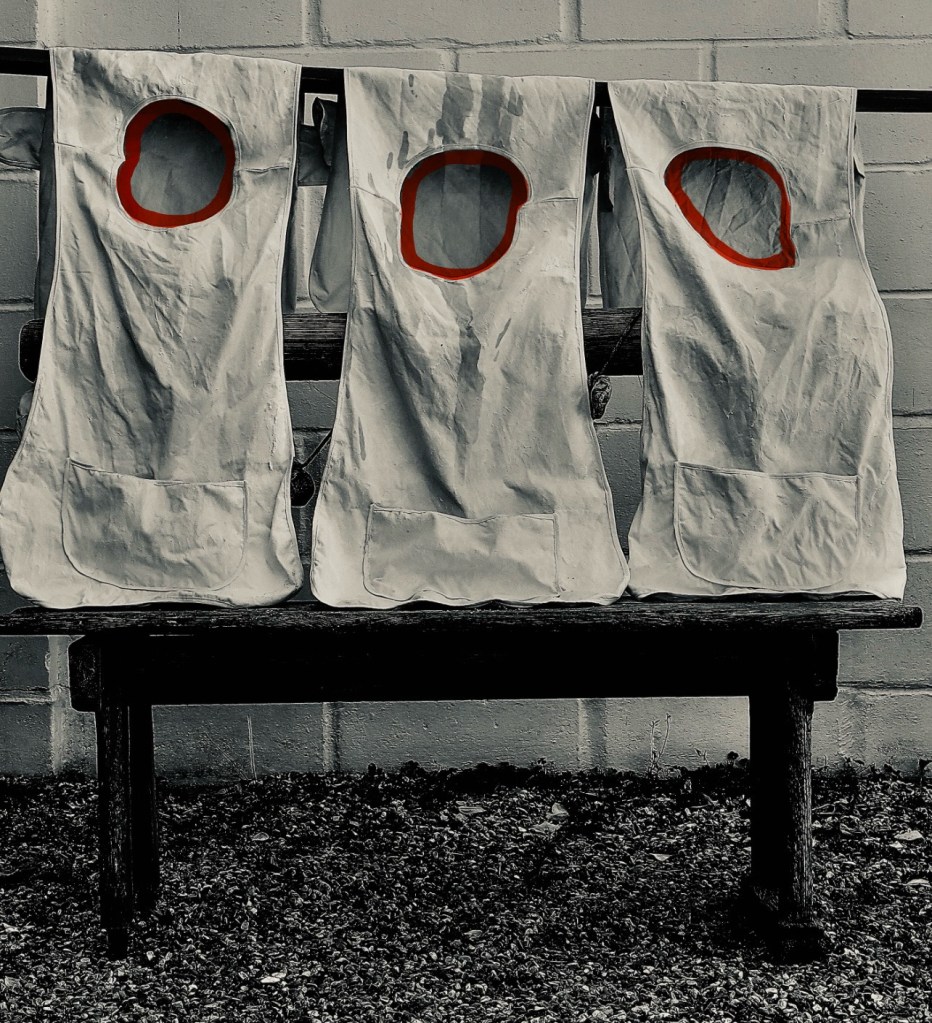
The manipulation of the work has offered a glimpse of dead pan humour to the otherwise serious narrative. Presenting a cultural and historic trope in this way lightens the darker connotations of the hidden worker and work -load pertaining to the female. The image of the apron symbolic as the work wear of the subservient, often silenced or silent in domestic and commercial environments.
This work has a great conceptual feel with intended deeper elements of enquiry. The gaping red mouth pieces reminiscent of lips or lipstick highlighting the female narrative with the pared back mundane tasks of continual domestic house keeping and management. This feels to be a more resolved work than the waxed, static apron, less illustrative and obvious in narrative with the intended humour and starkness of imagery allowing a wider audience to be reactive.
Continued work on ‘The cup of us’.
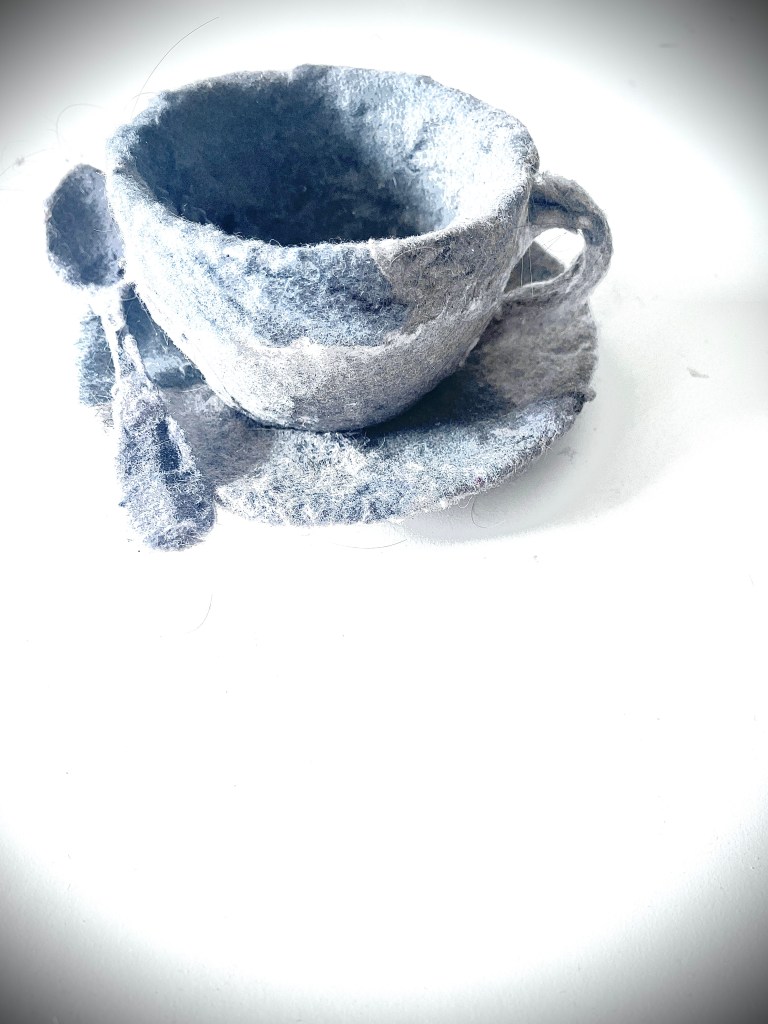
This exploration was initially explored with a single cup/saucer format and did evoke much interest at a recent exhibition space. The uncomfortable and yet the familiar and the seemingly soft, fluffy form of. the cup encouraged much viewer engagement and enquiry. The explanation I offered was in regards to it being a metaphor for our daily lives. The daily ‘cuppa’ so synonymous in society and in a family, domestic role as well as outside of it in an office or other commercial environment. It is symbolic with imbedded cultural and societal references of comfort, relationship, hospitality, greeting and sharing. It is such familiar an object of our every day as is its making ritual.
I wanted to continue to explore the re-creating and distortion of the everyday in relation to the domestic and all too familiar settings. encouraging some tactile engagement from the viewer, questing of the norm and essentially the continual chore and rotation of the domestic work load. Our individual domestic existance perhaps not so very different from each other, societal construct and practicality egendering our private homes and ways of being.
The machine detritus that covers these familiar objects individualises them, draws attention to them and also to our societal chores and functions. They are a ‘ leveller’ we can relate to in regards to functionality, they might be expensive, fine bone designer ware, a cheap- multi buy product, vintage or up-cycled but carry the same sense of necessity, chore and norms.
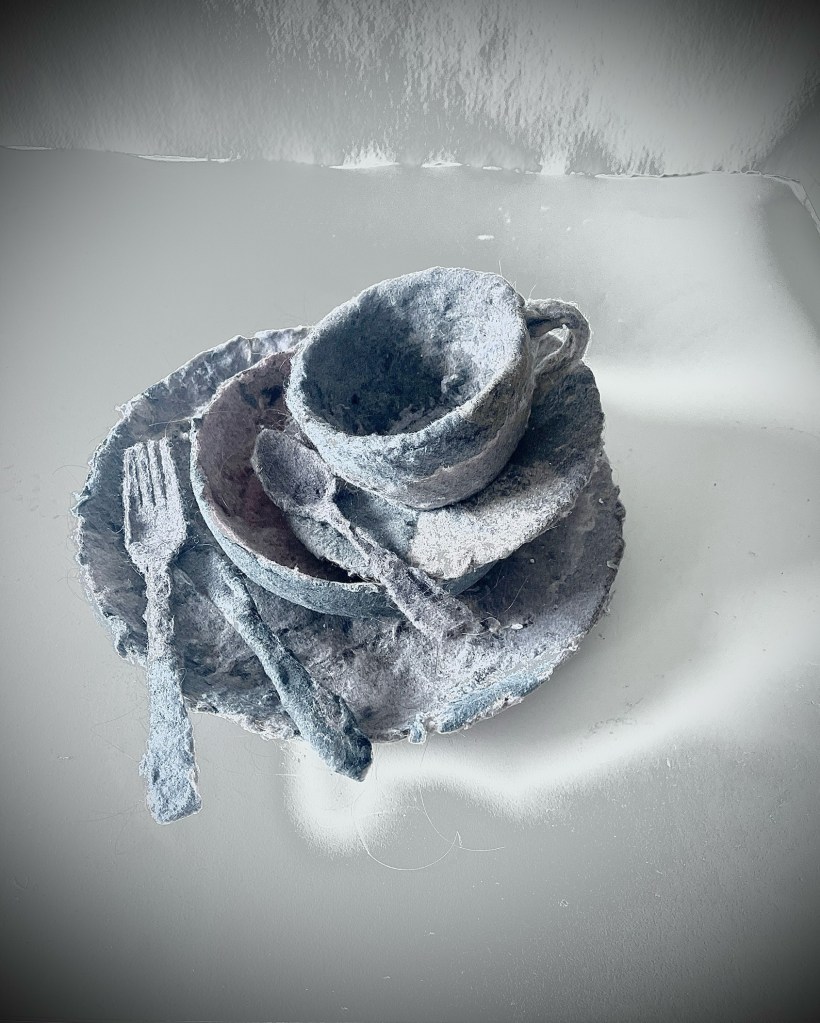
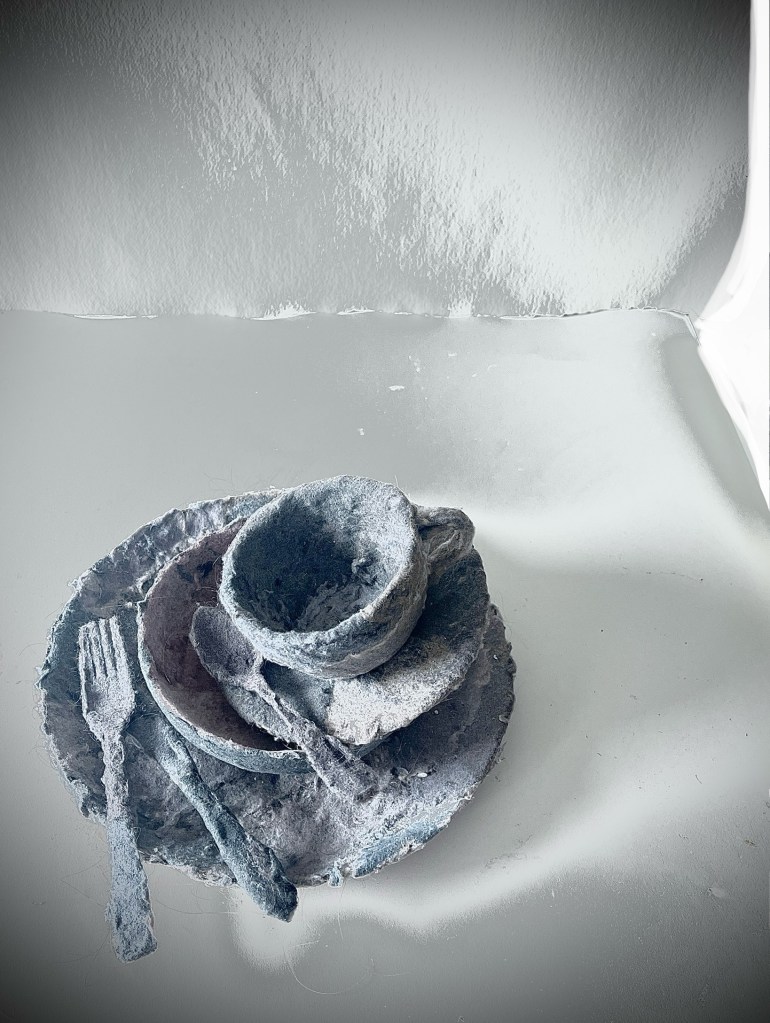
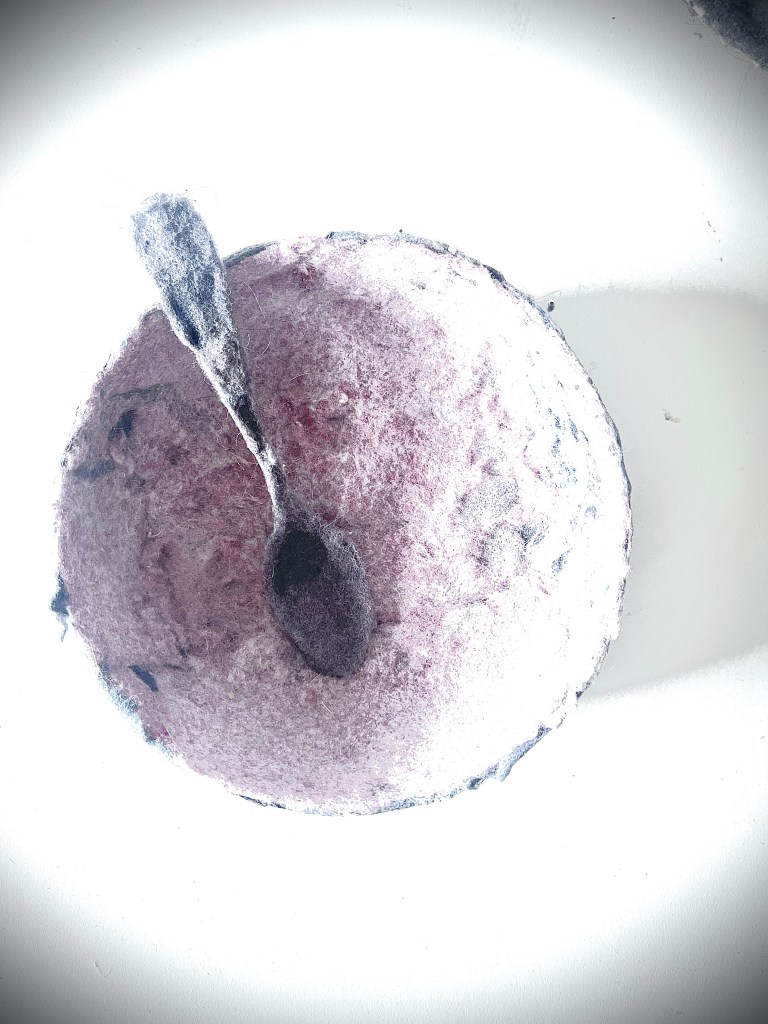
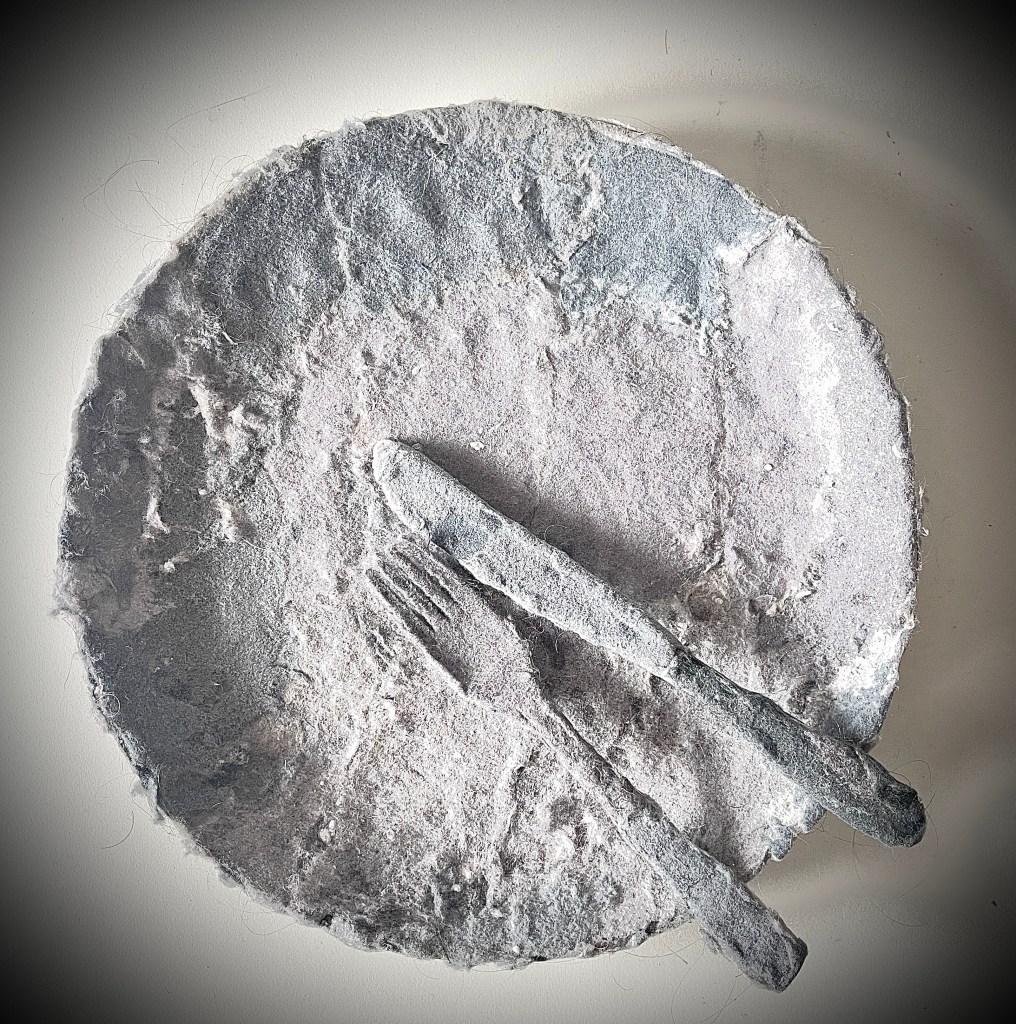
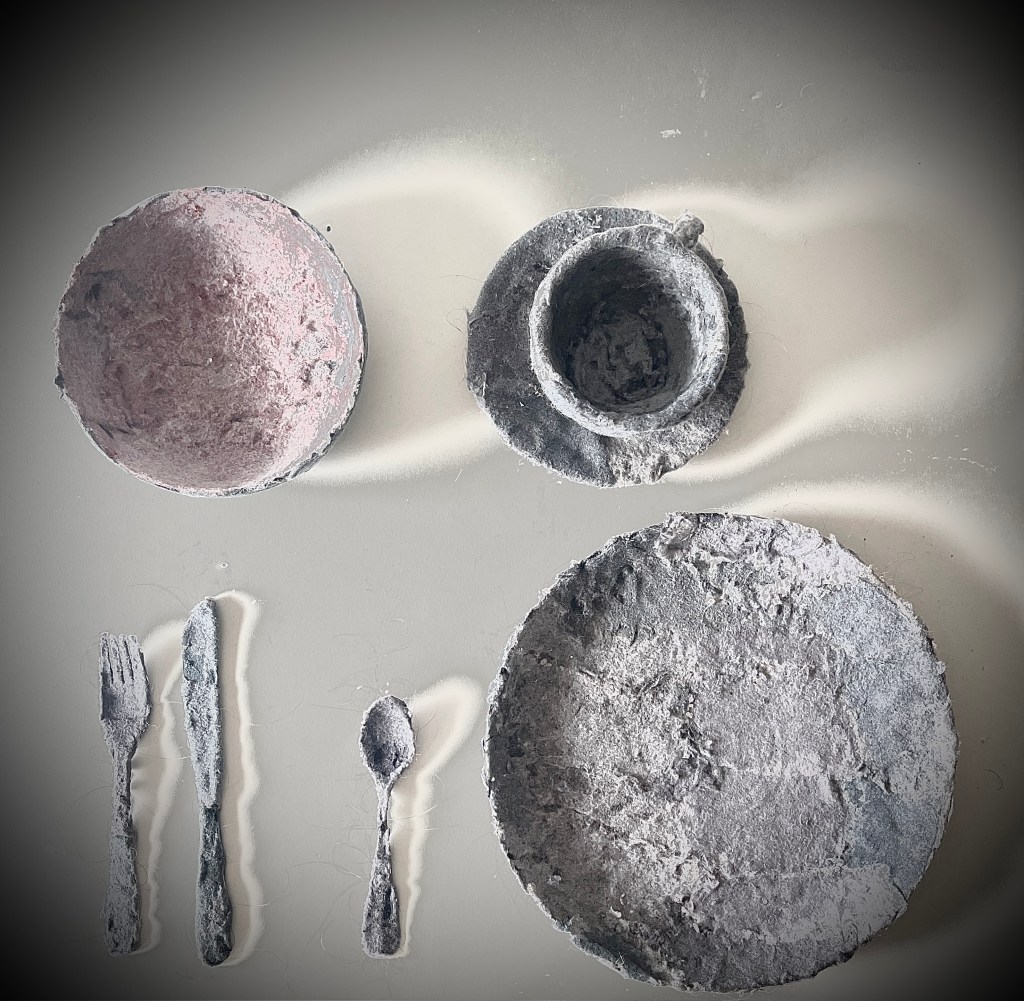
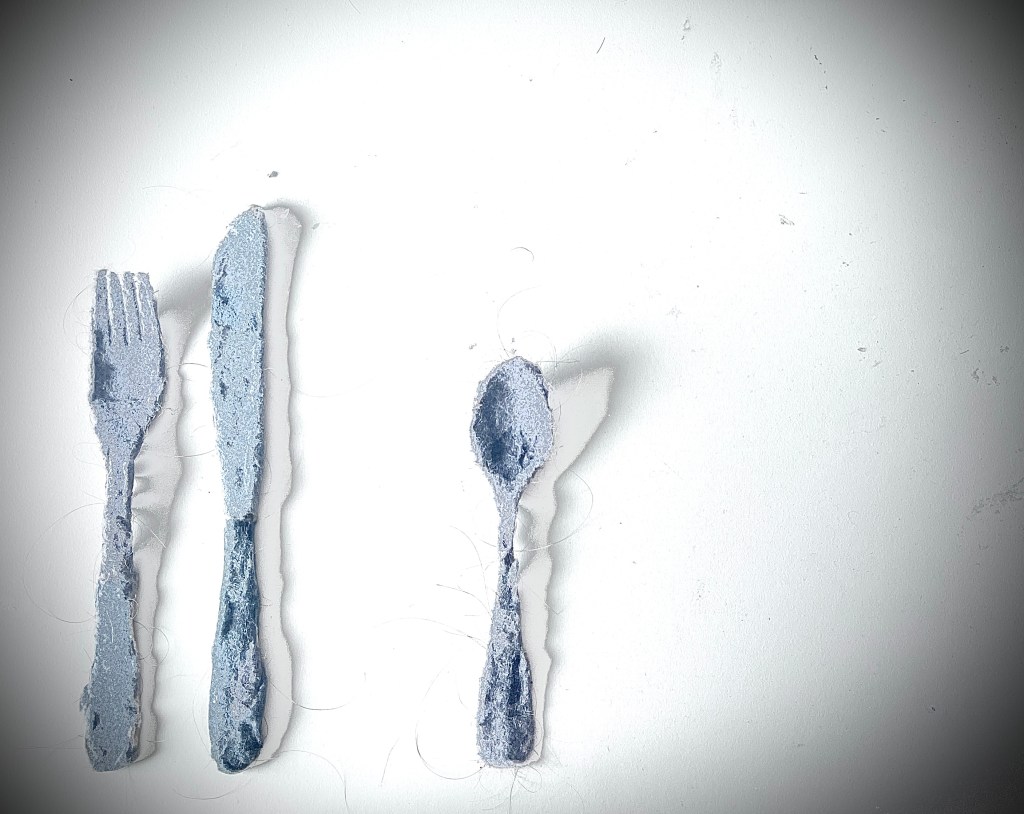
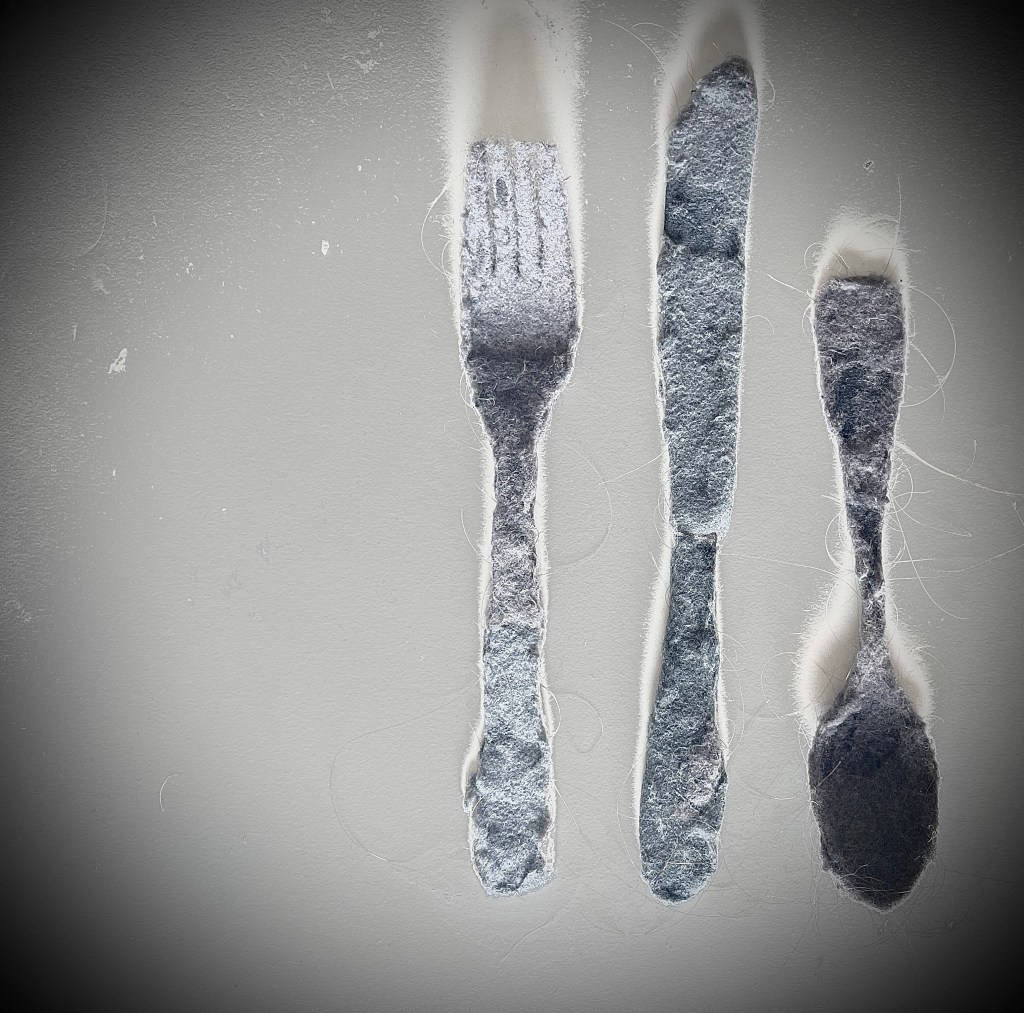
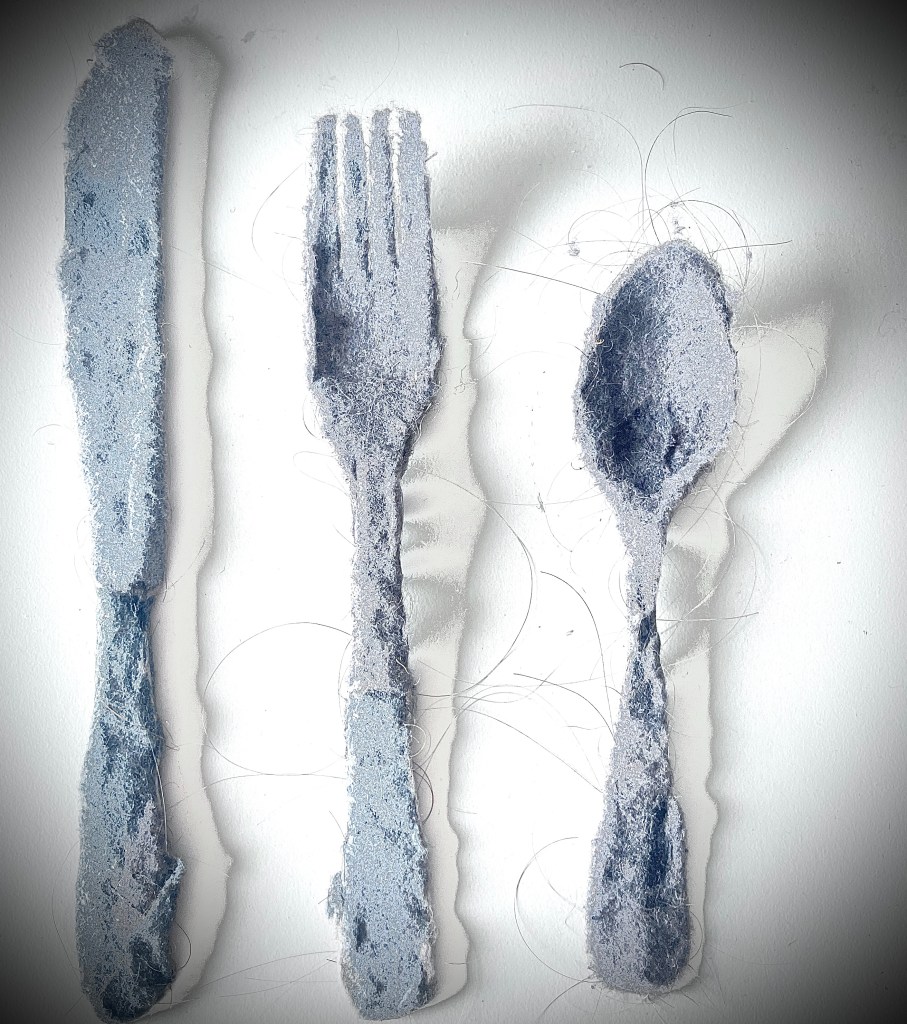
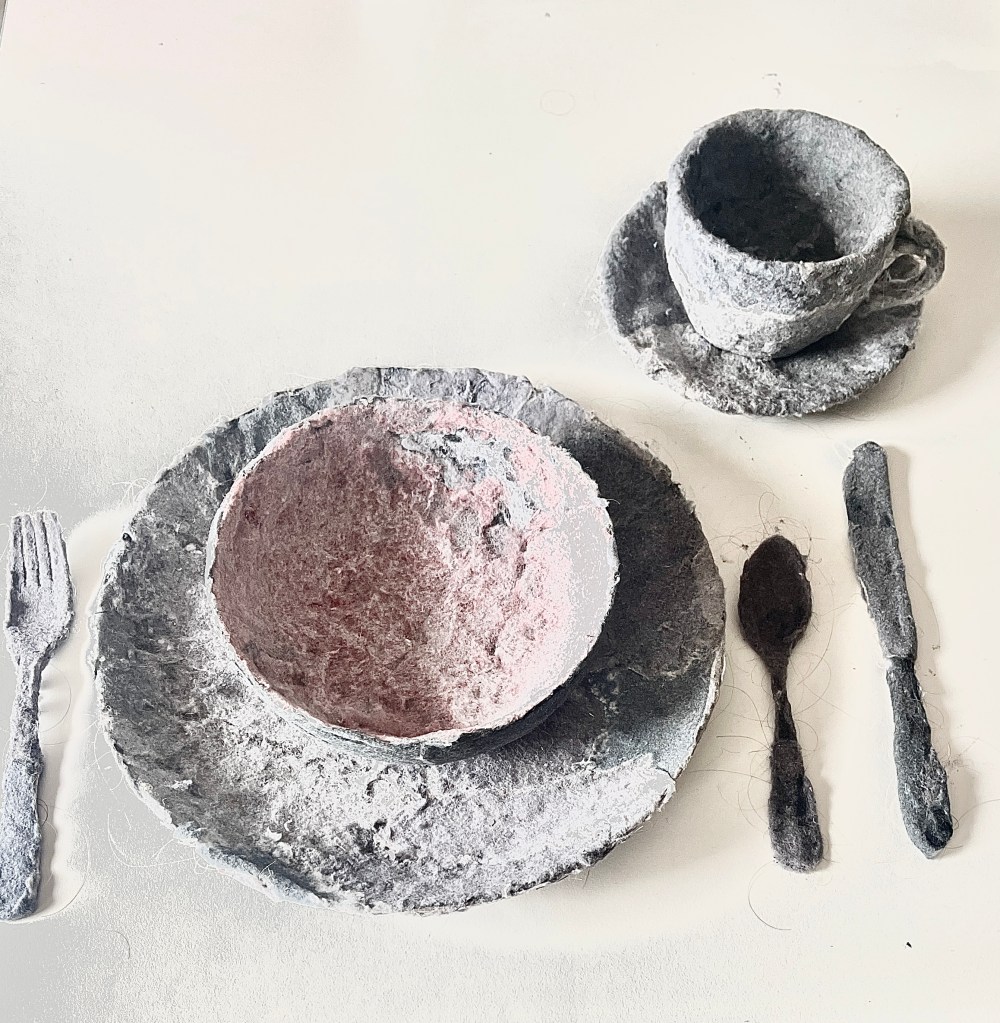
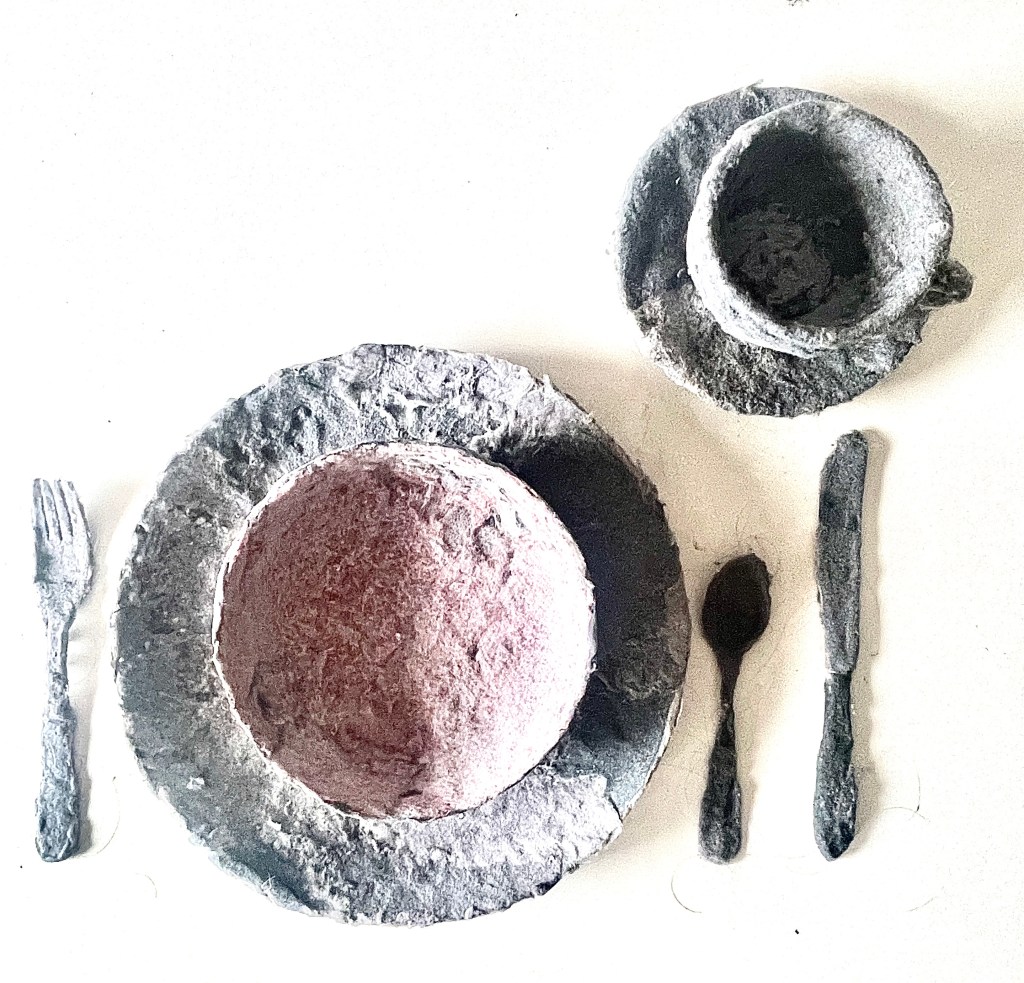
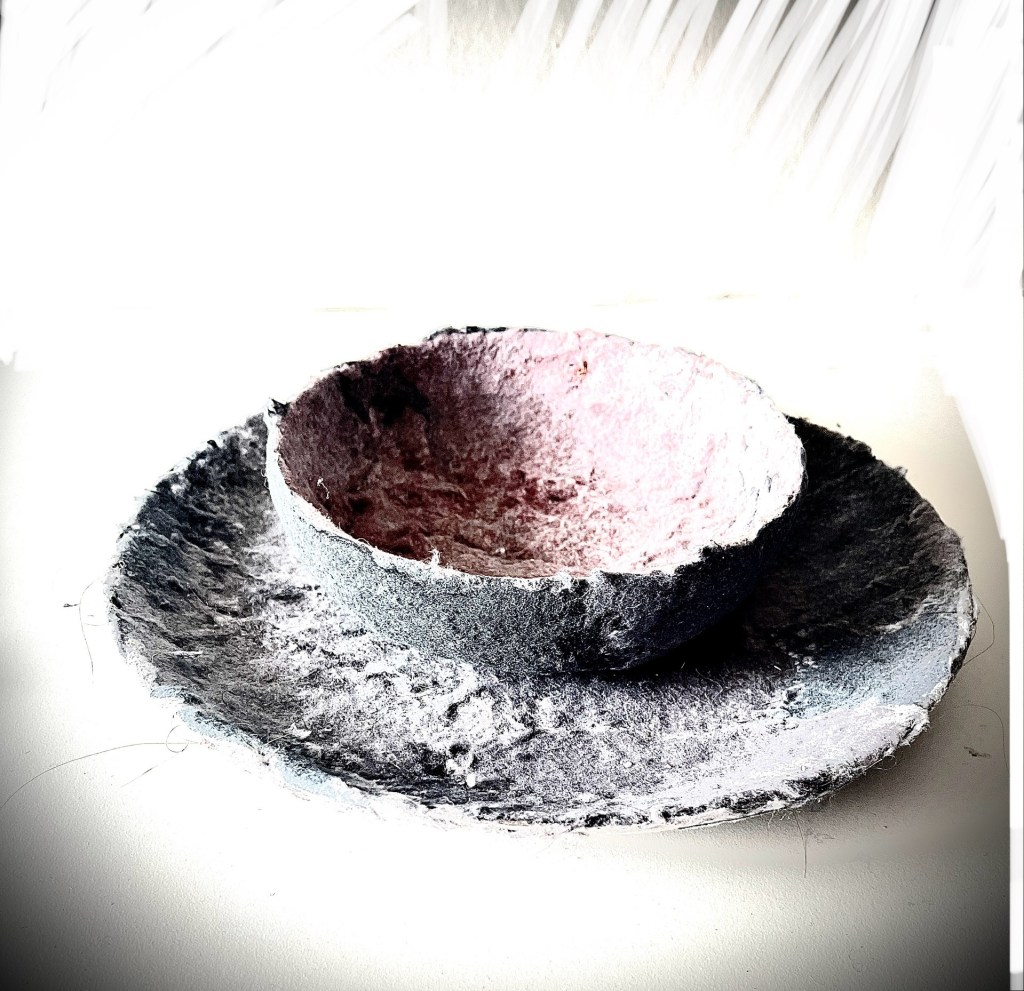
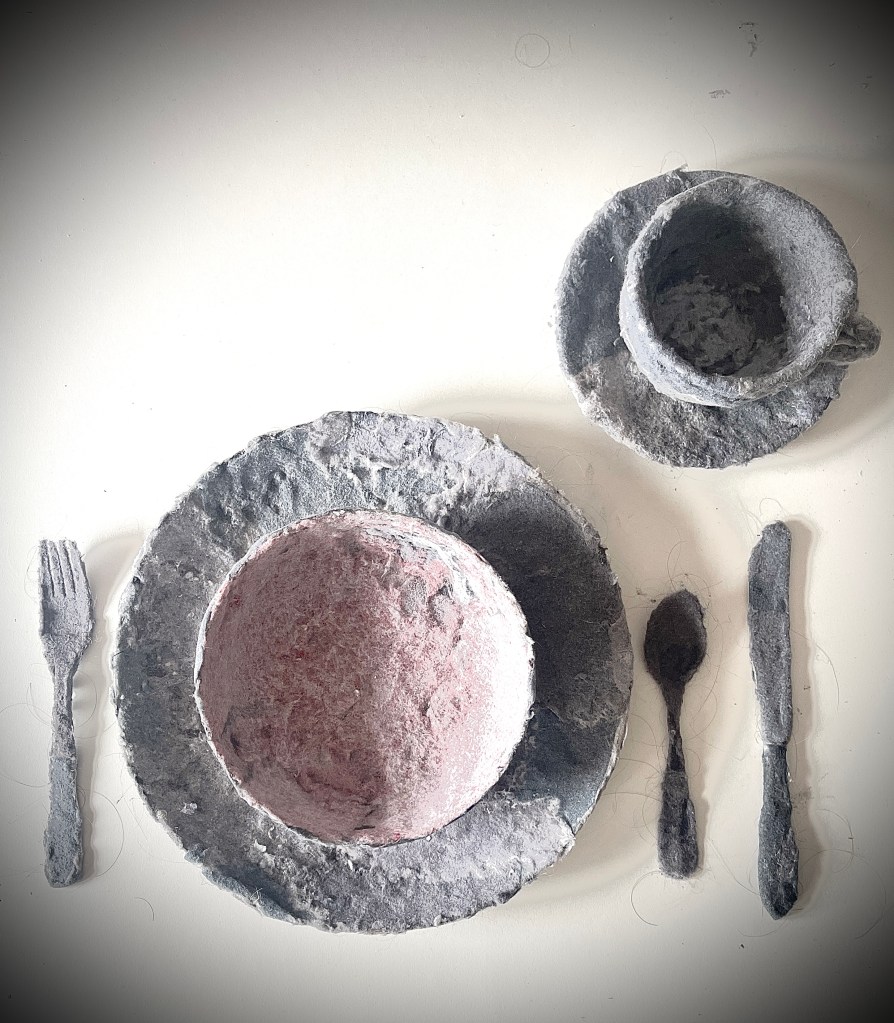
Below – ‘Chores of Us ‘ – Machine detritus – Plate, bowl, knife, fork, spoon, cup ad saucer. –
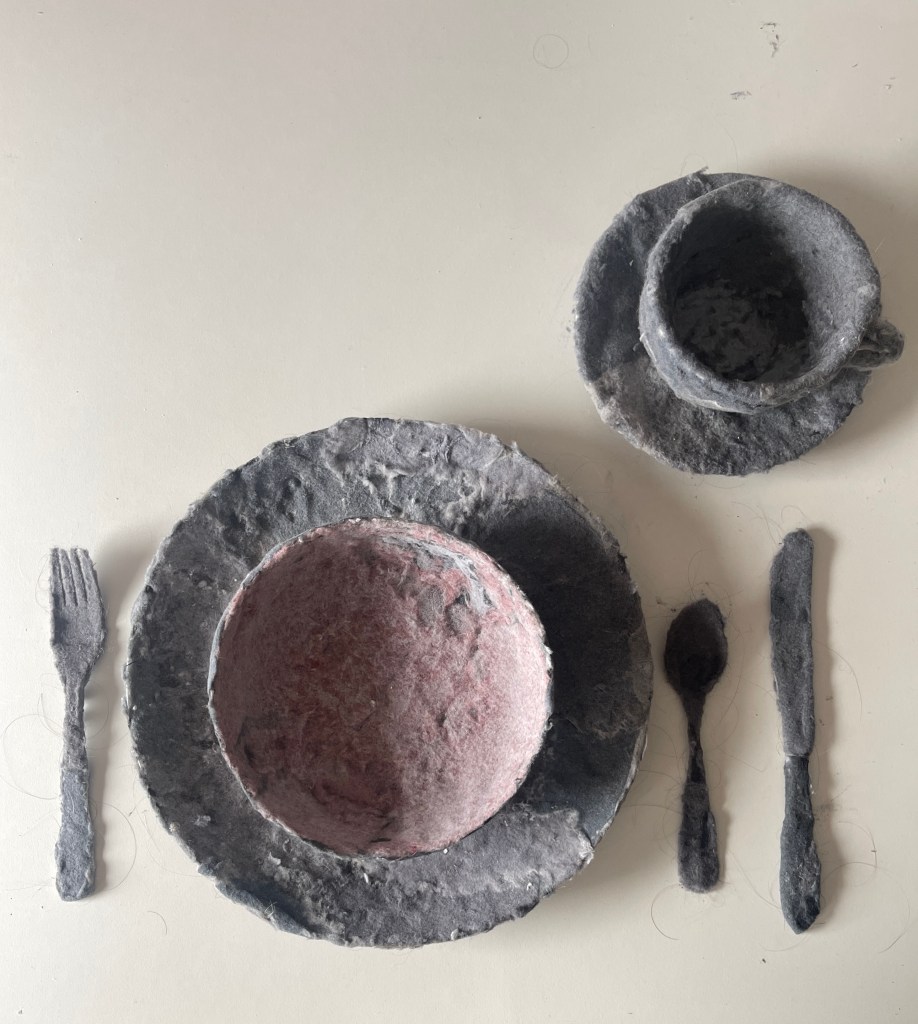
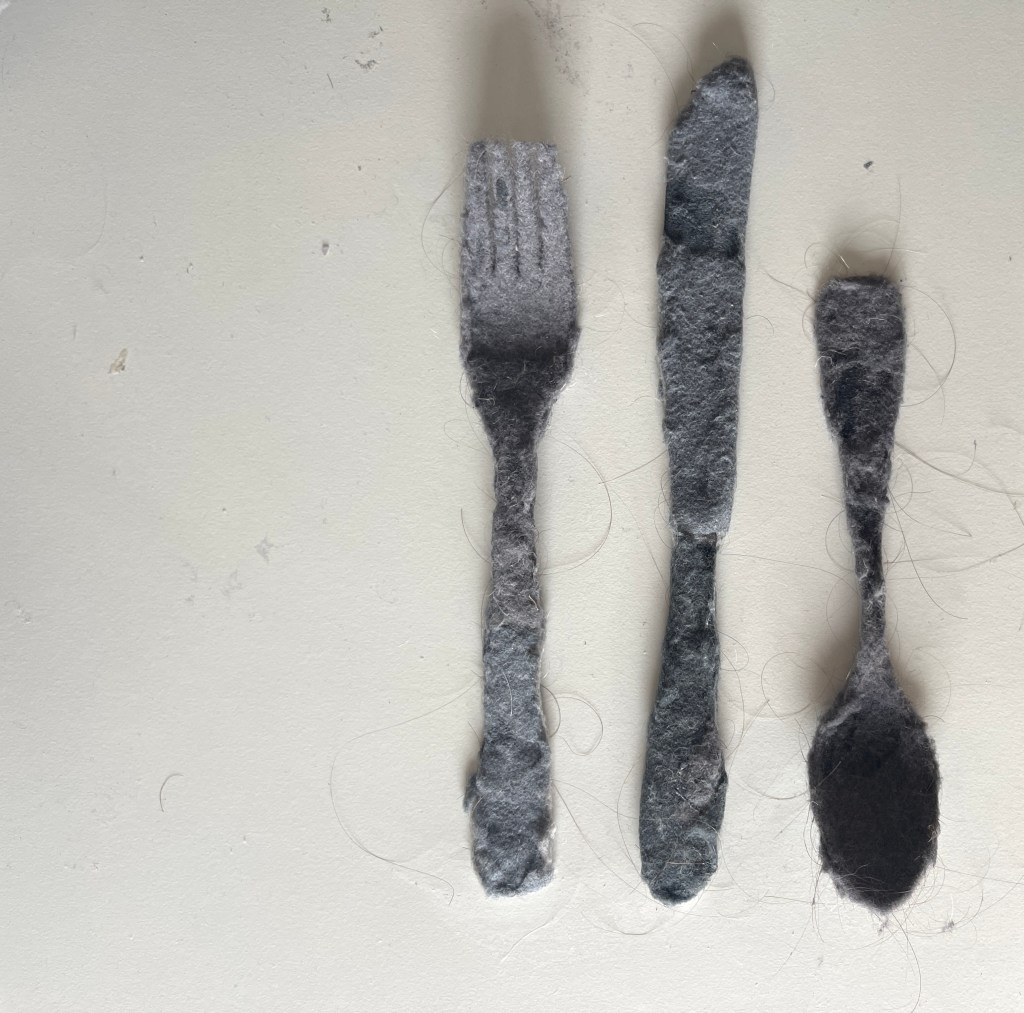
The photographic manipulation and curation further changes our traditional viewpoint as they look to be made of stone, smothered or mummified in some way. A strange sculptural elegance with uncomfortable colour and texture. A repulsion and disgust.
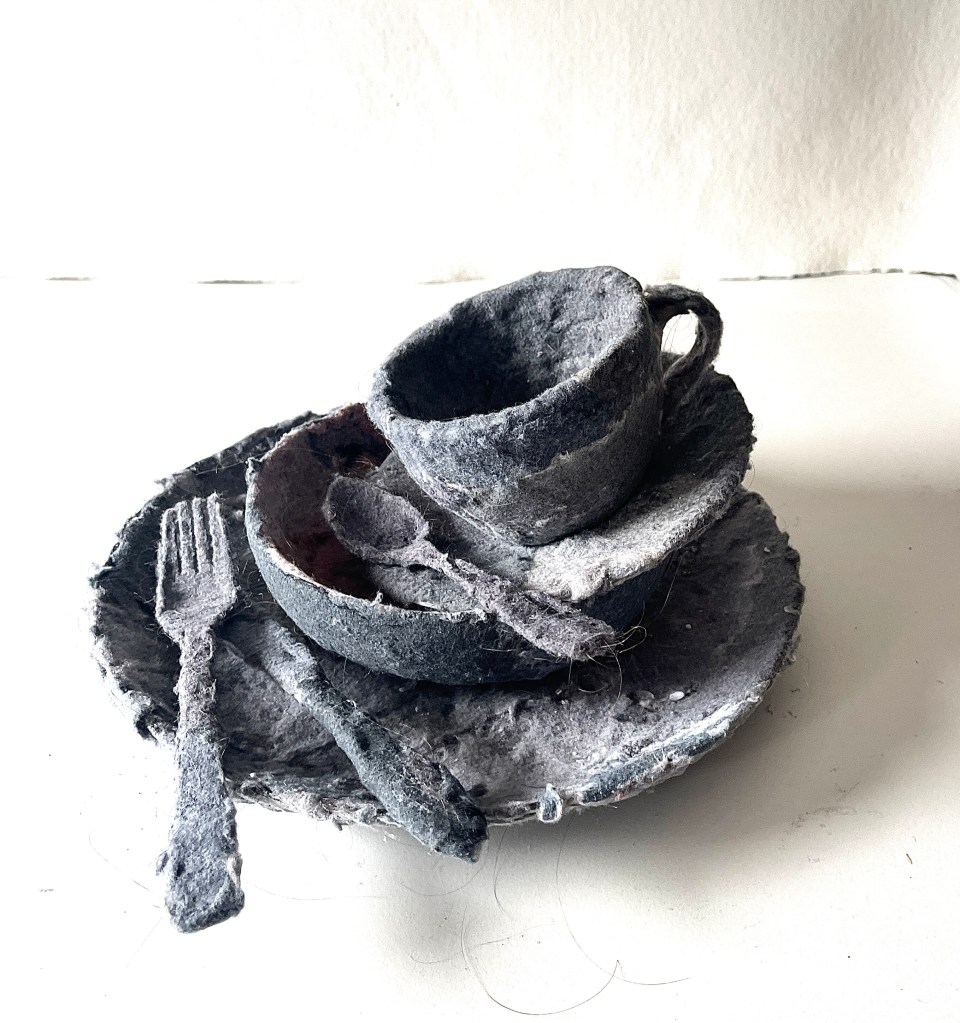
Abject dinner service.
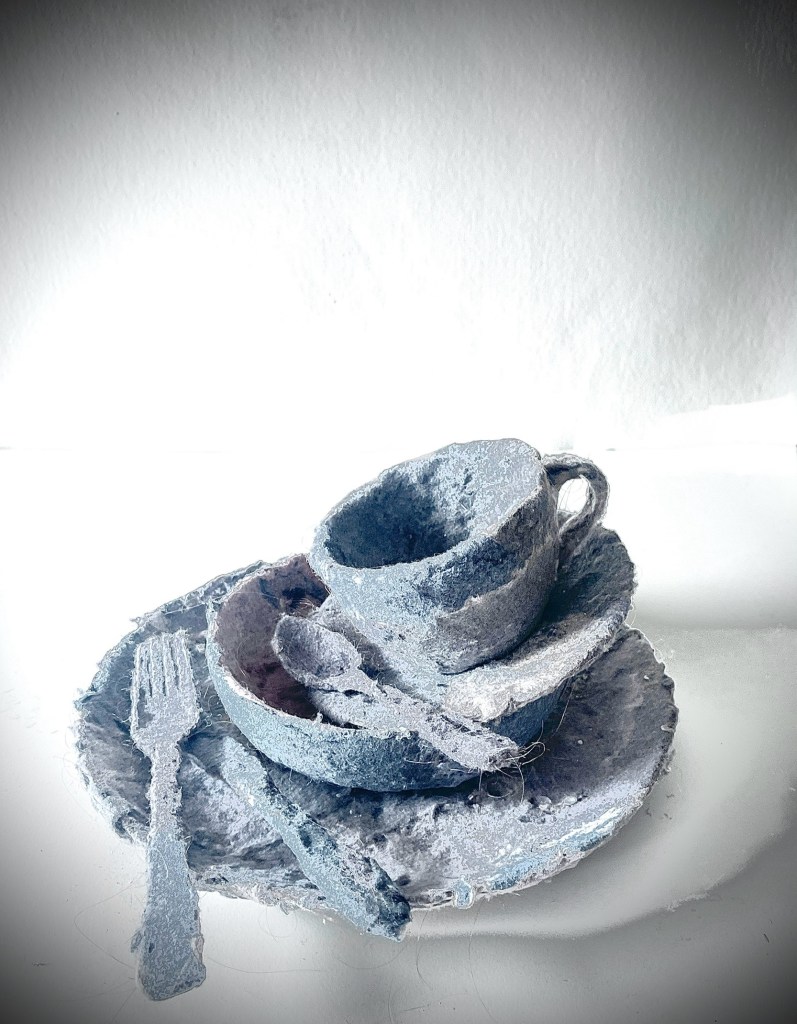
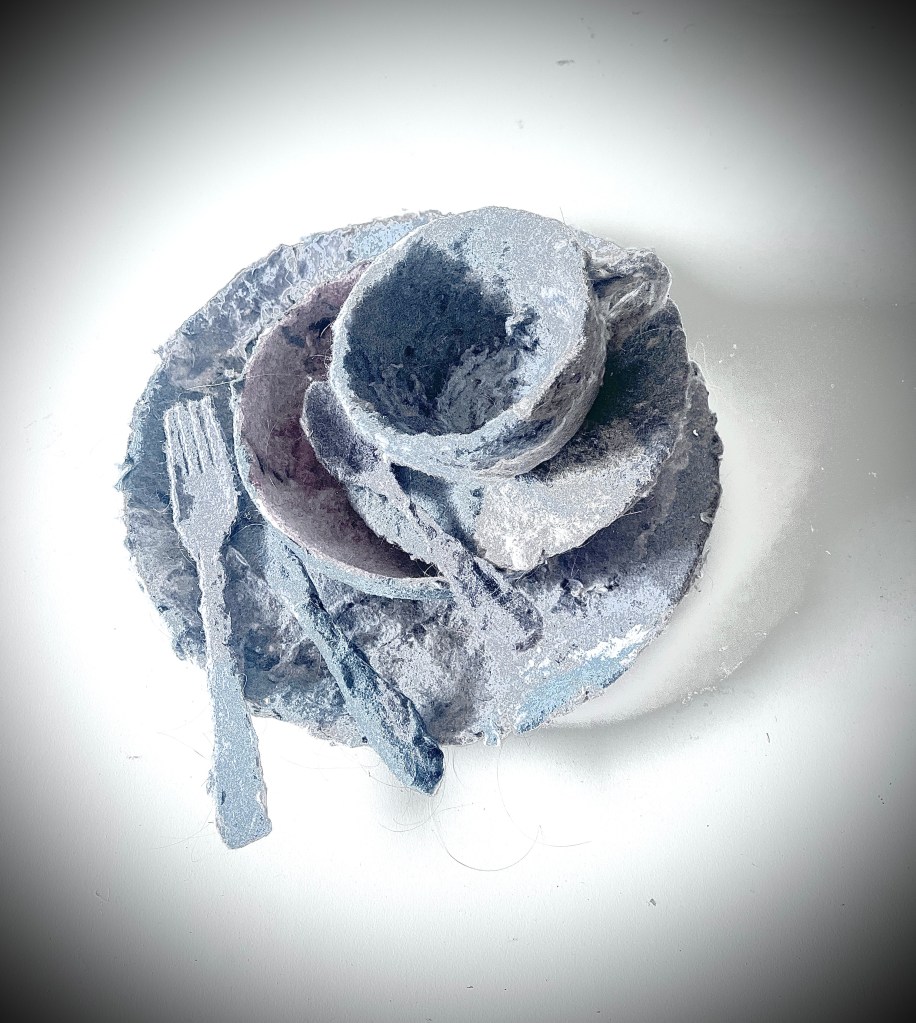
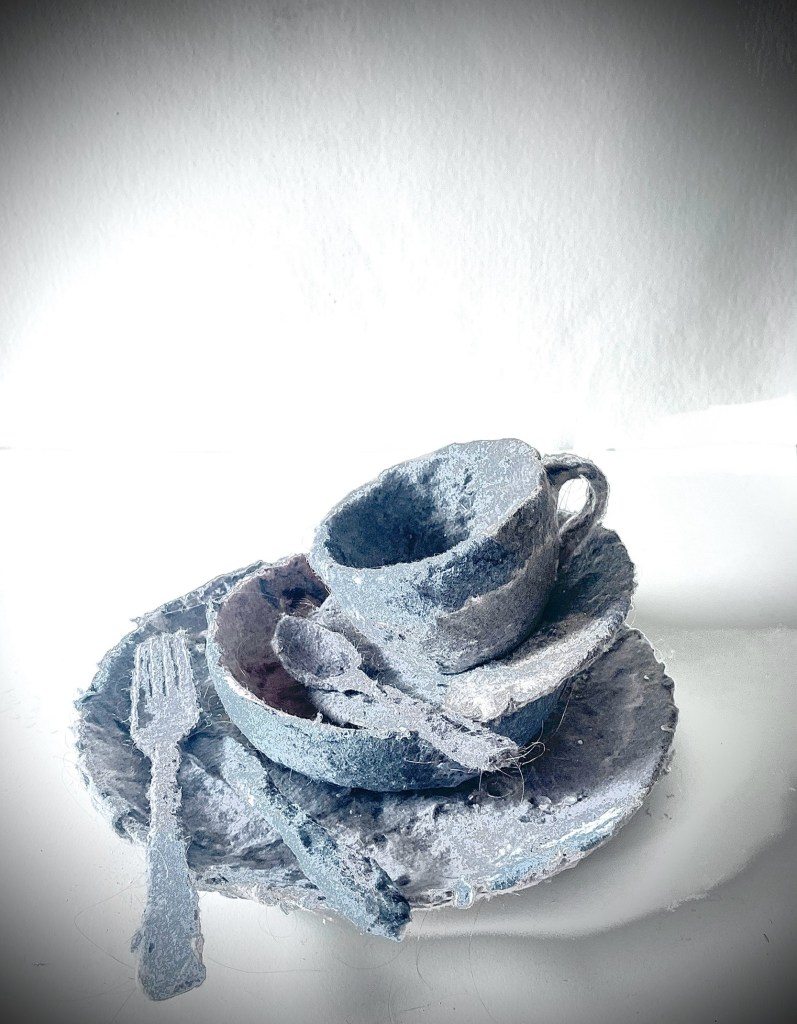
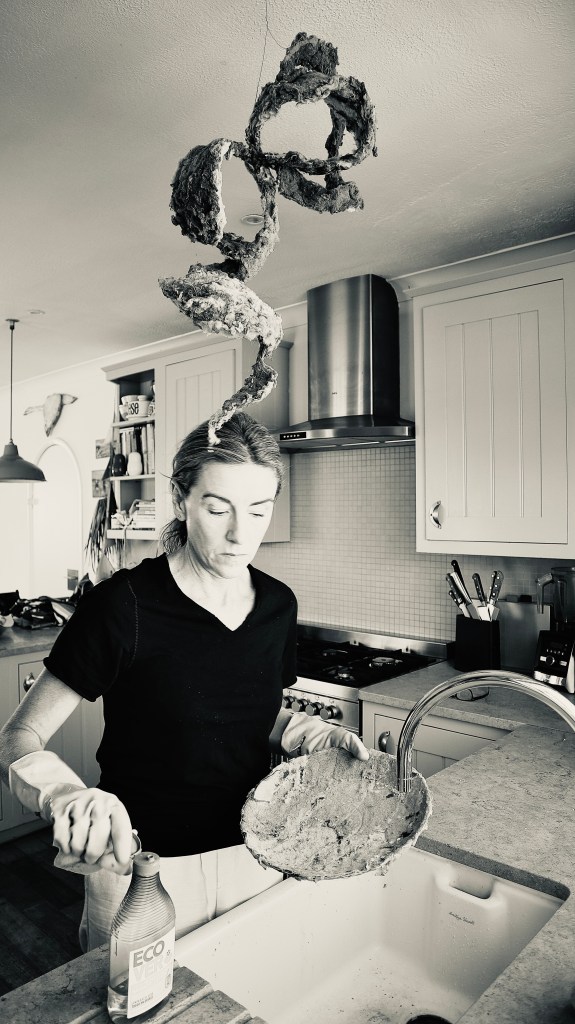
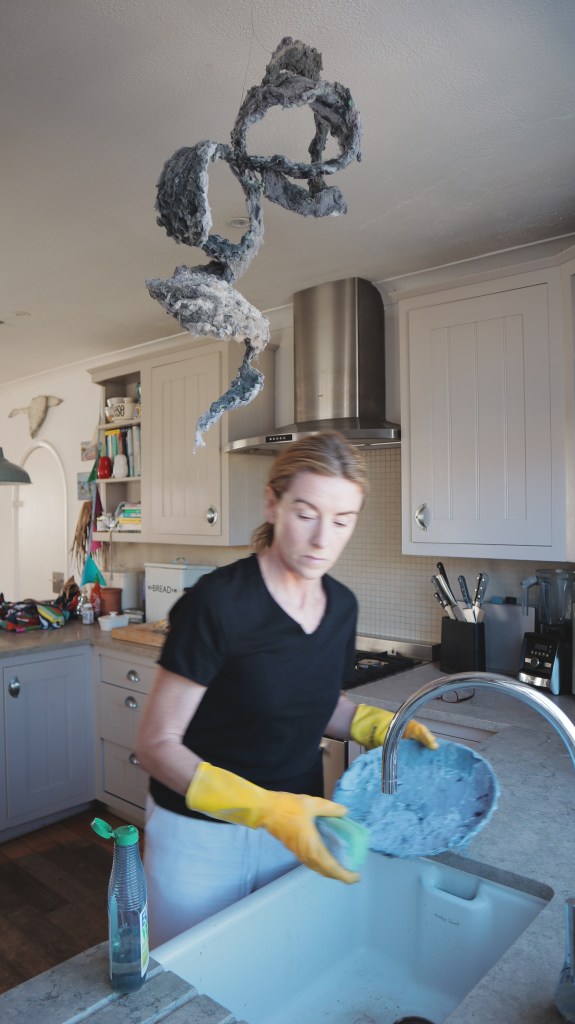
Adding in the washing p bottle for context and further indication of domestic chore:
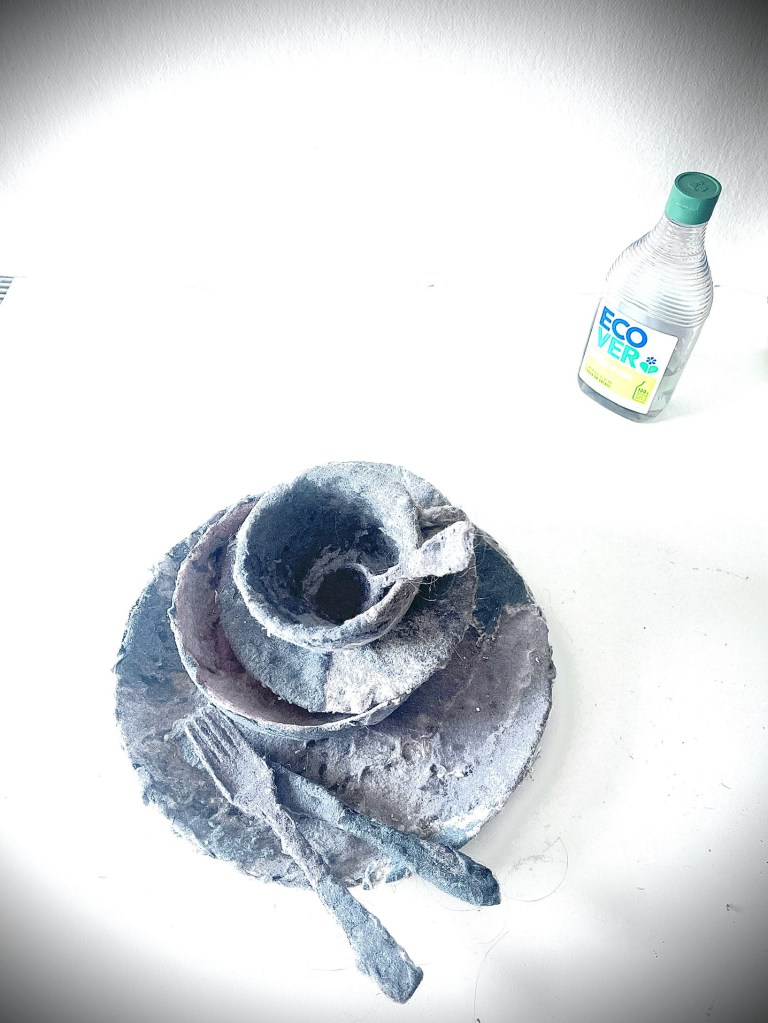
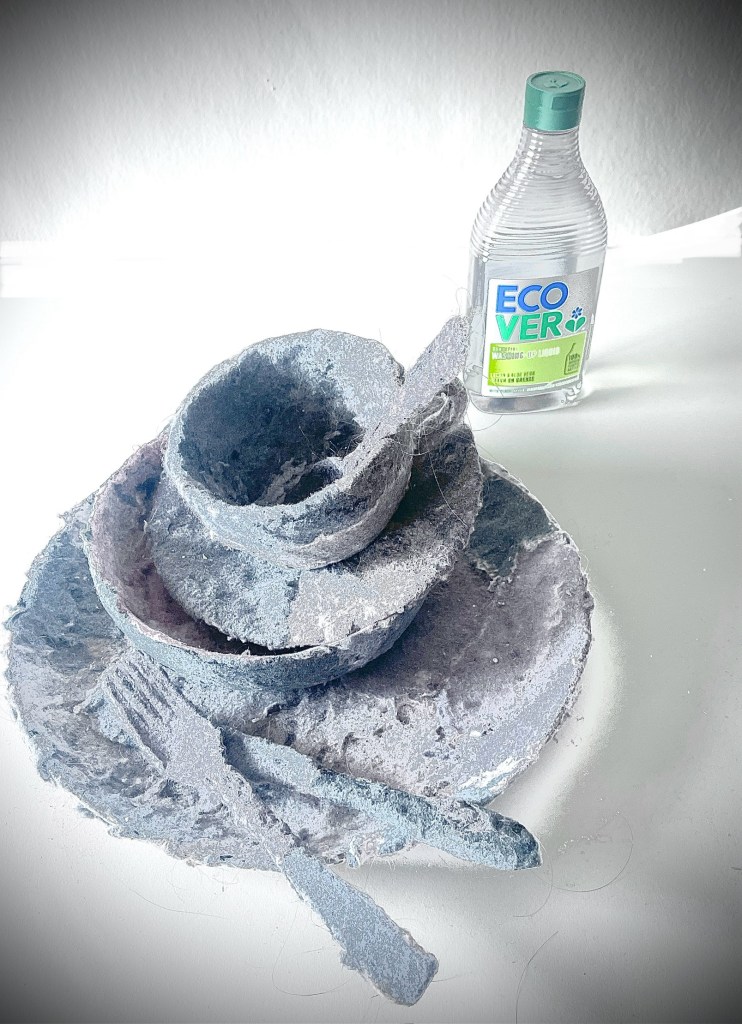
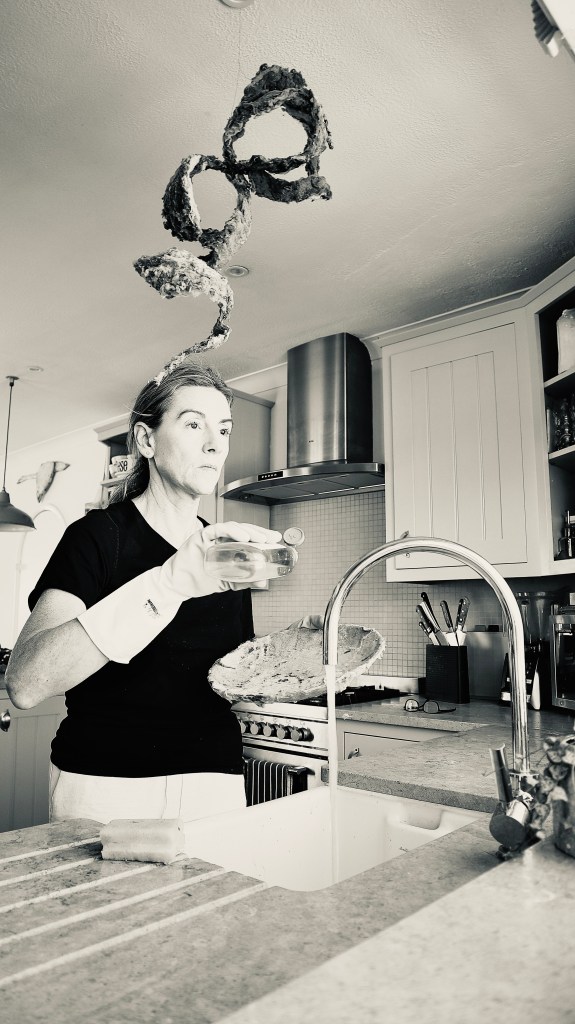
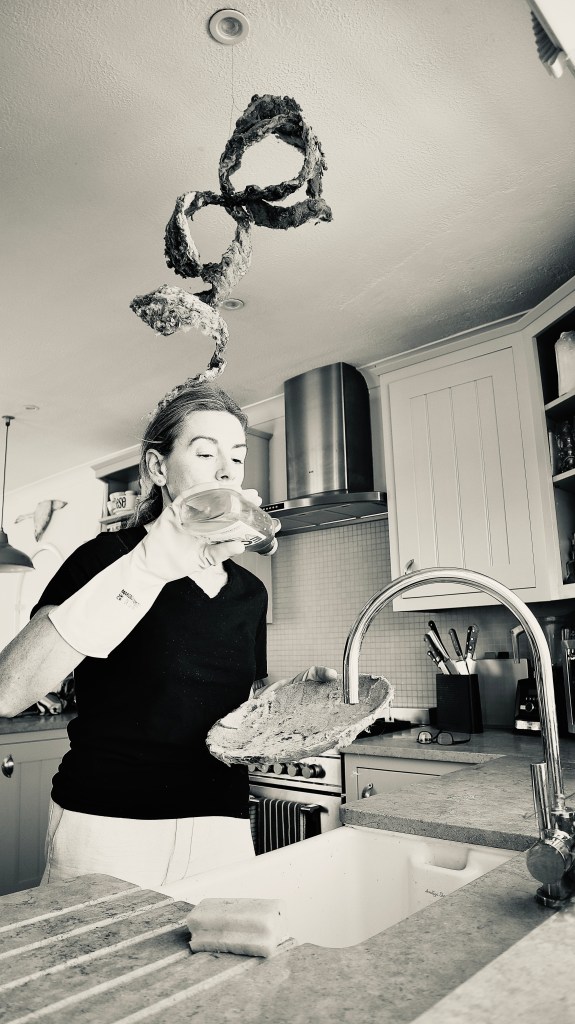
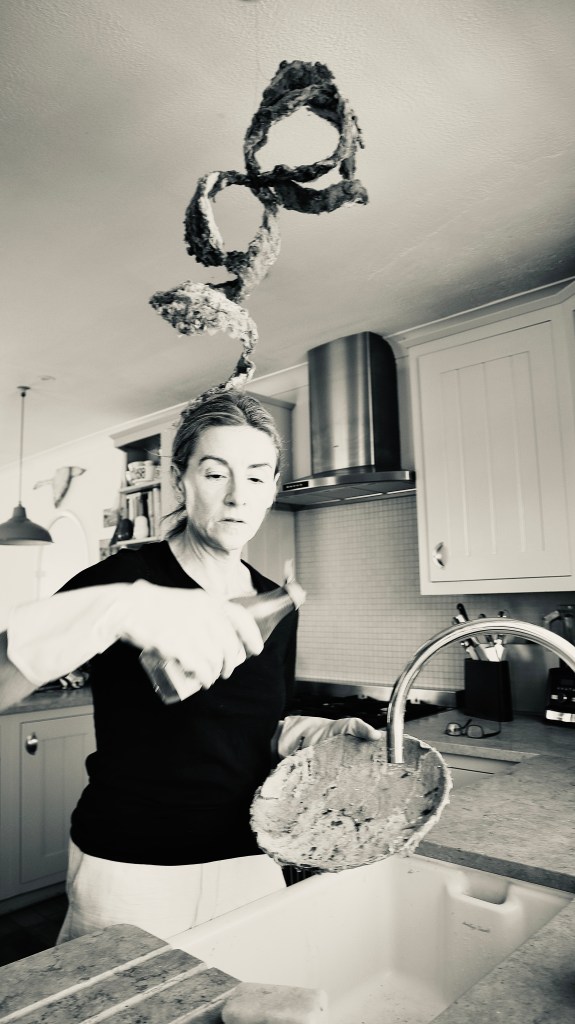
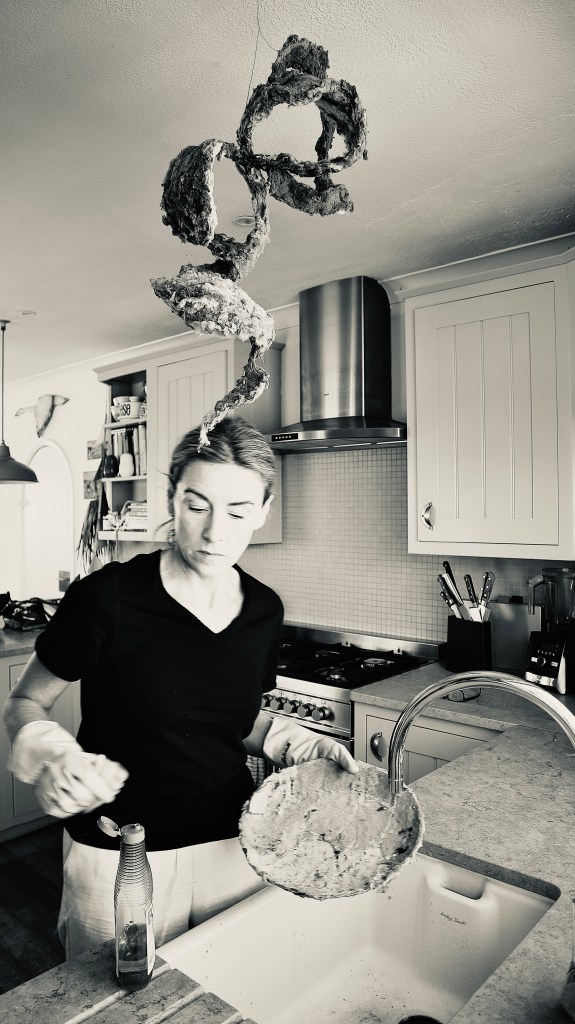
The relevance of own practice and narrative behind these objects can be explored with elements of a performative practice. They amplify with a sense of scale and relatability when seen in the domestic setting. With this in mind I arranged for some photographs to be taken with the items at my kitchen table simulating the process of eating and drinking from them.
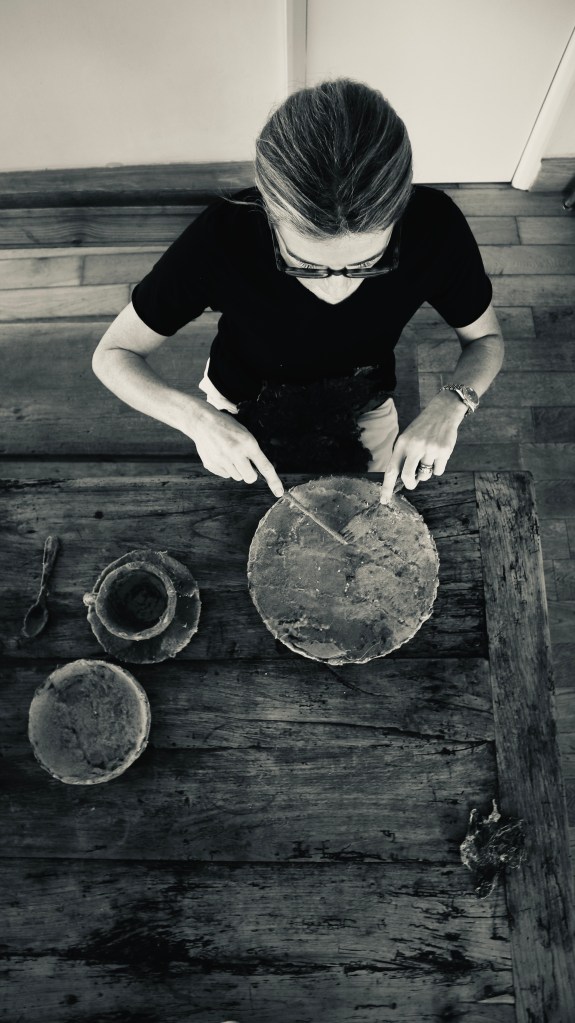
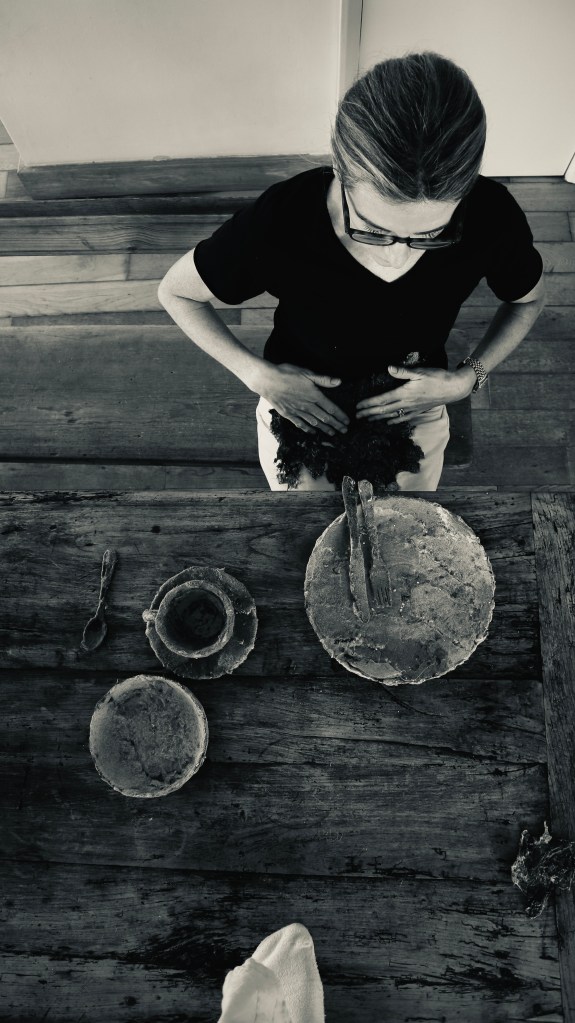
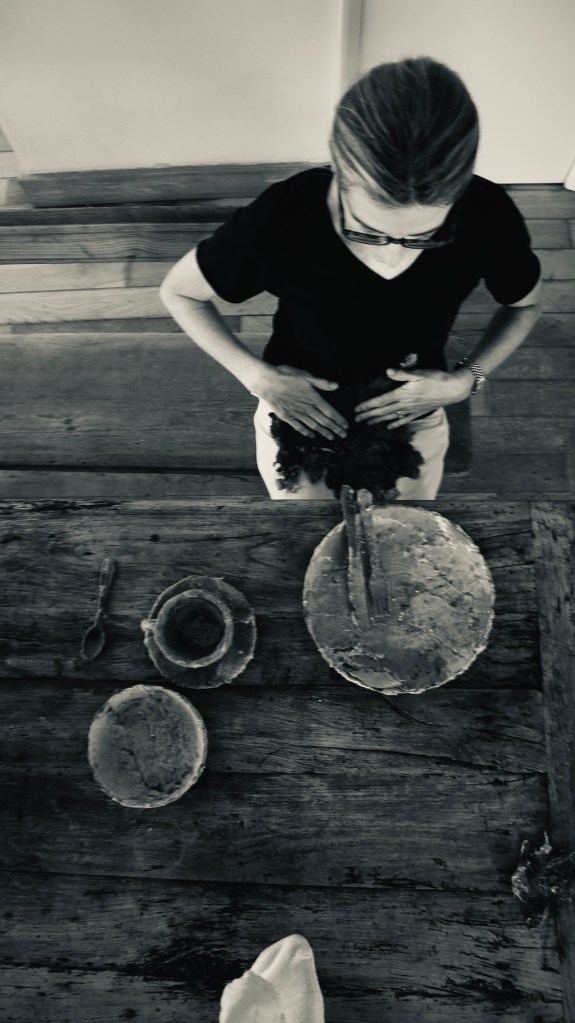
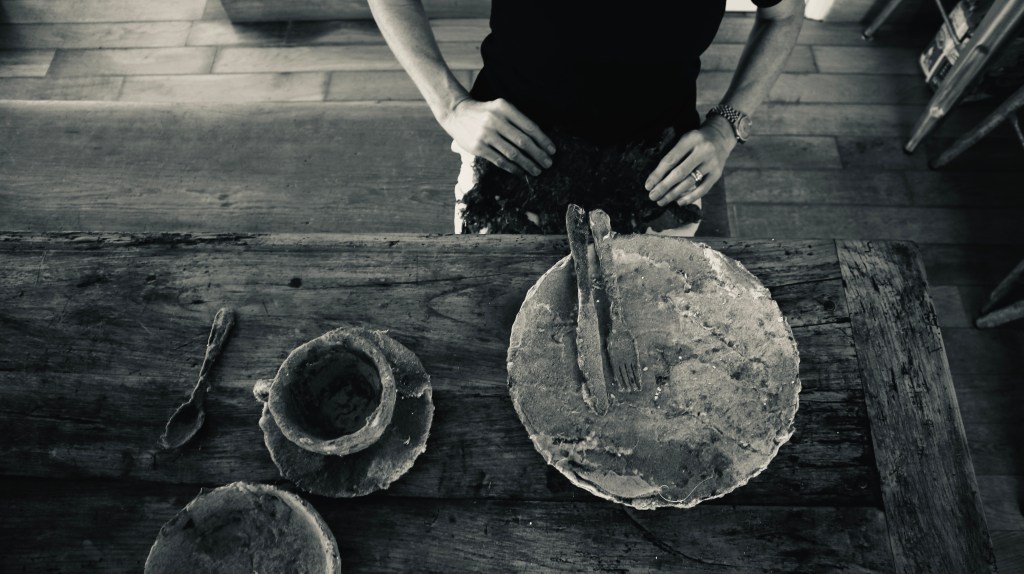
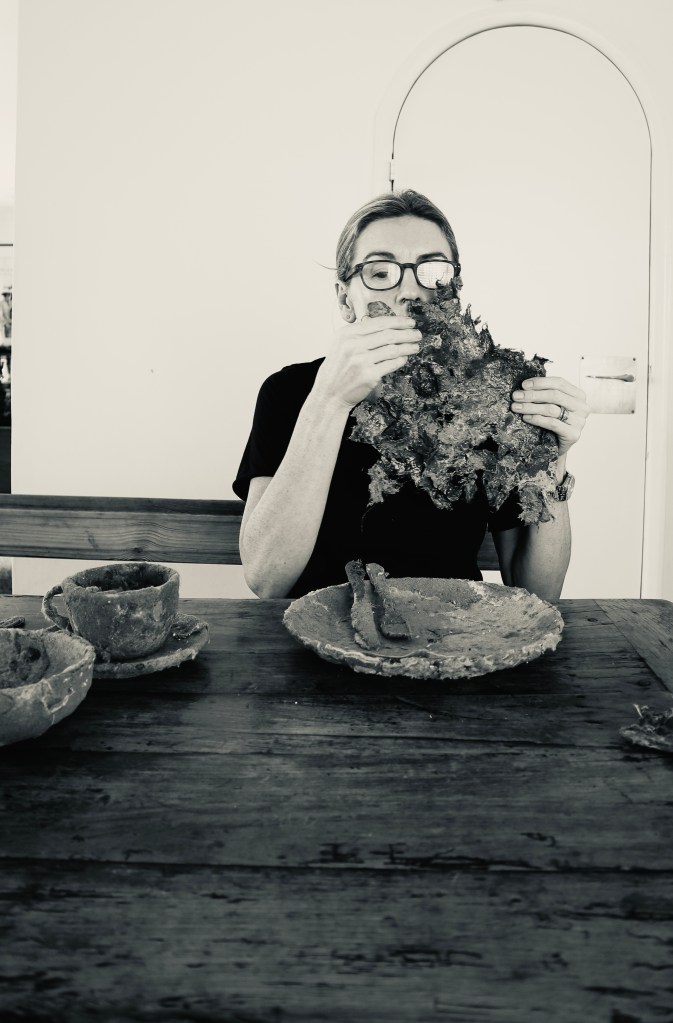
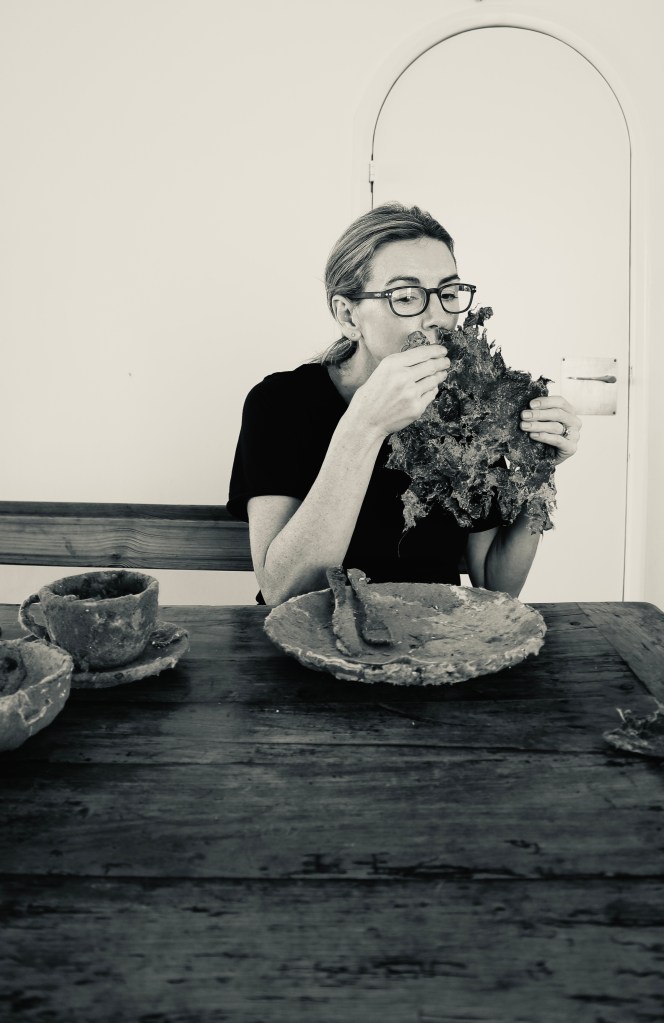
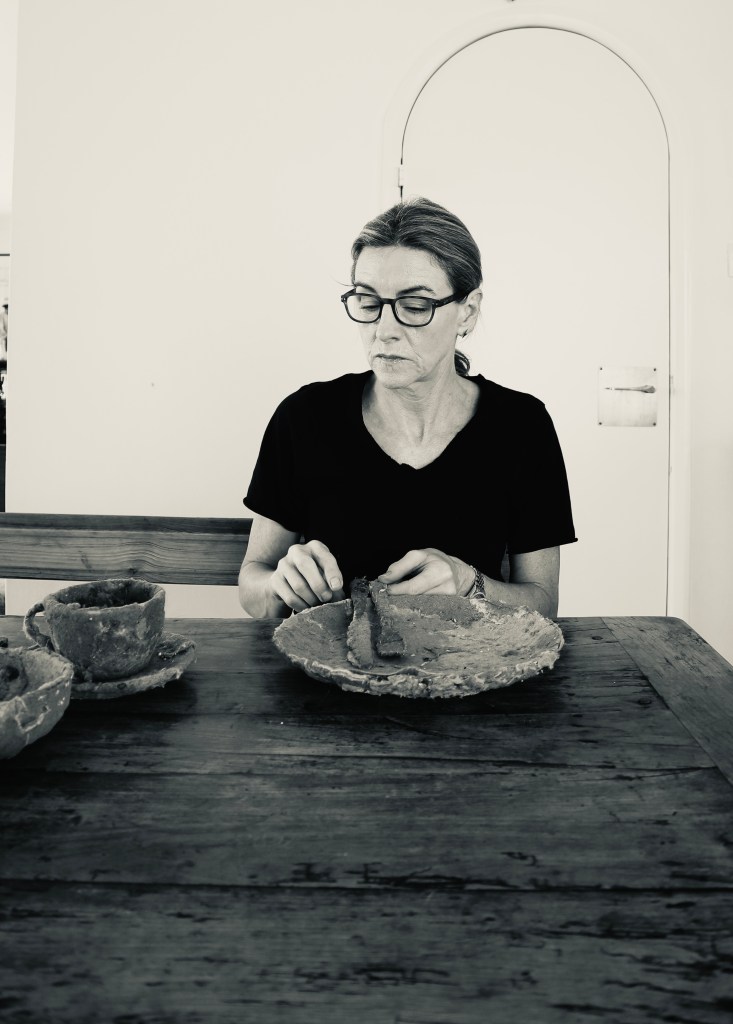
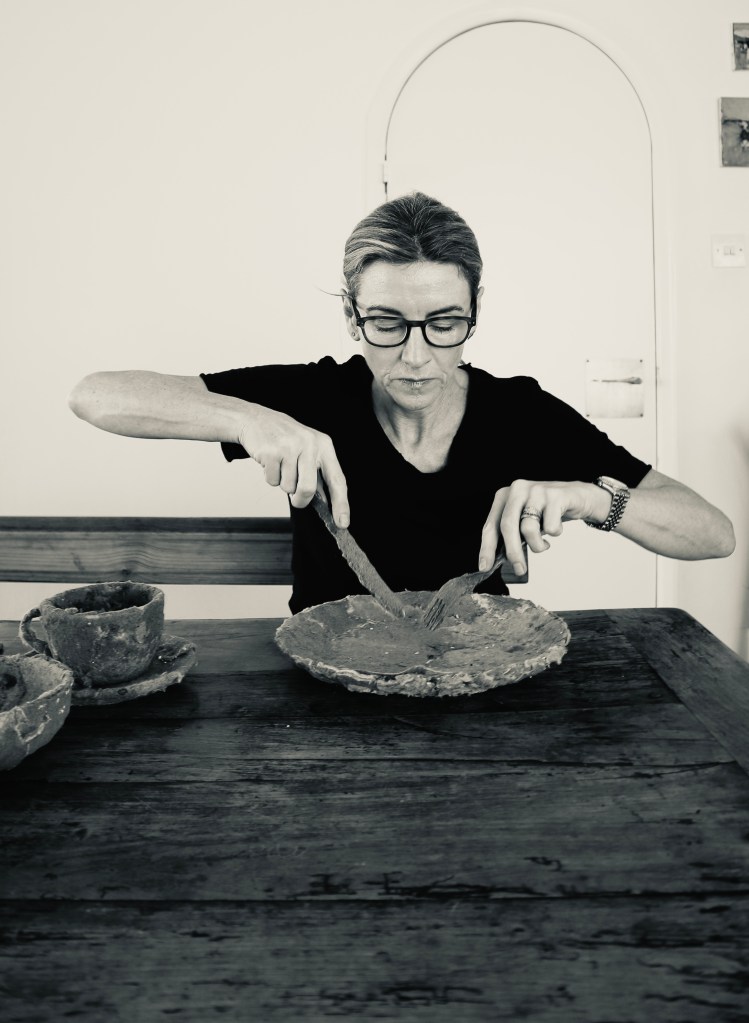
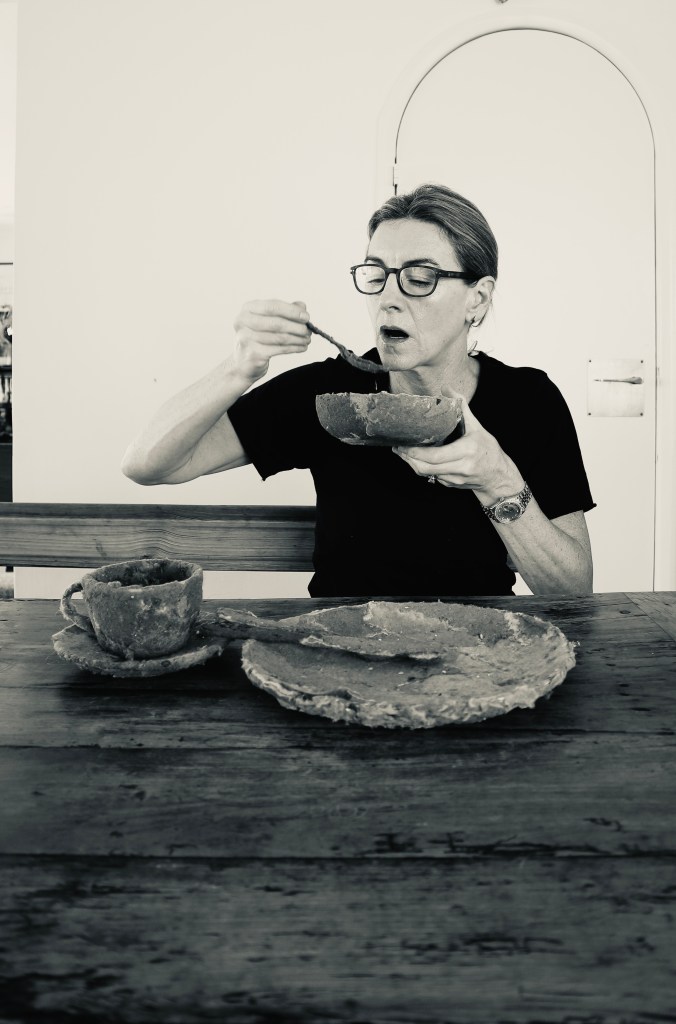
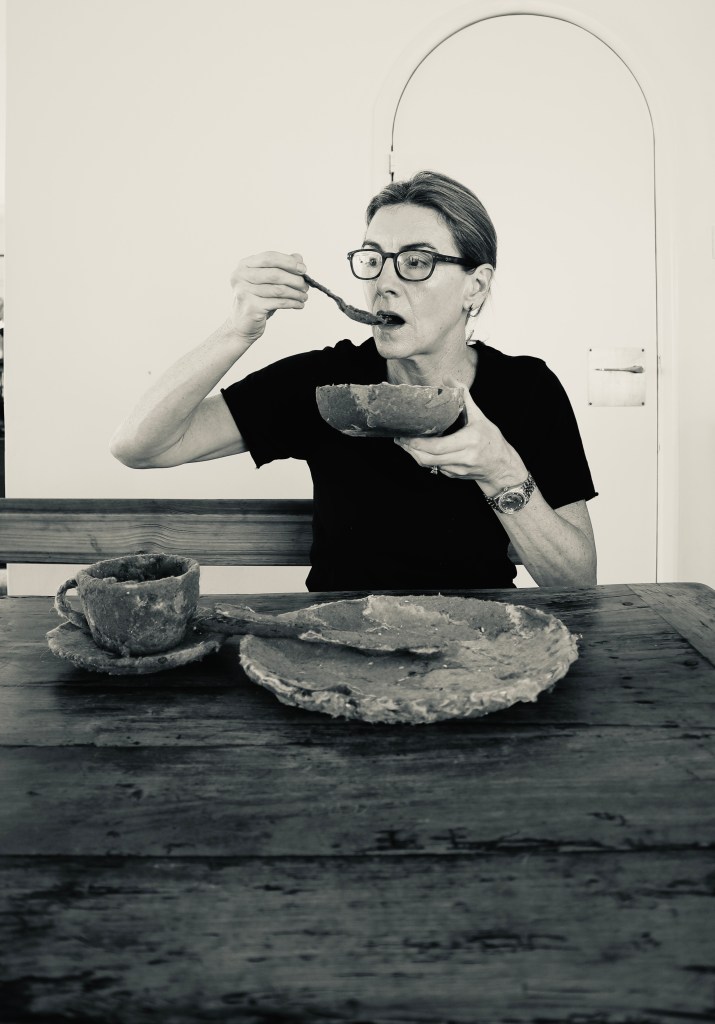
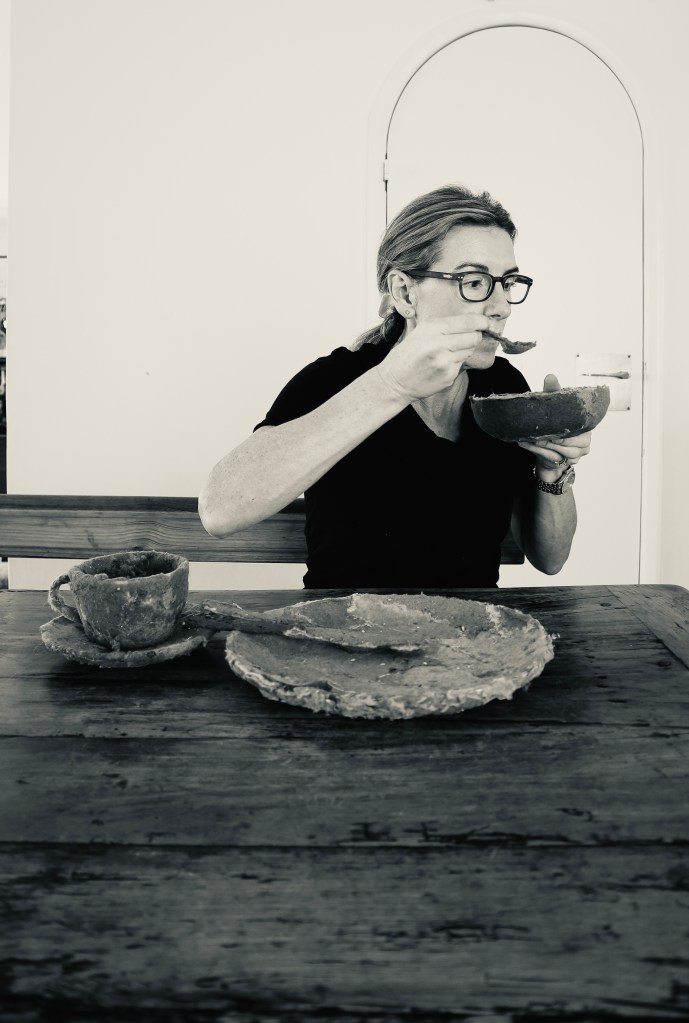
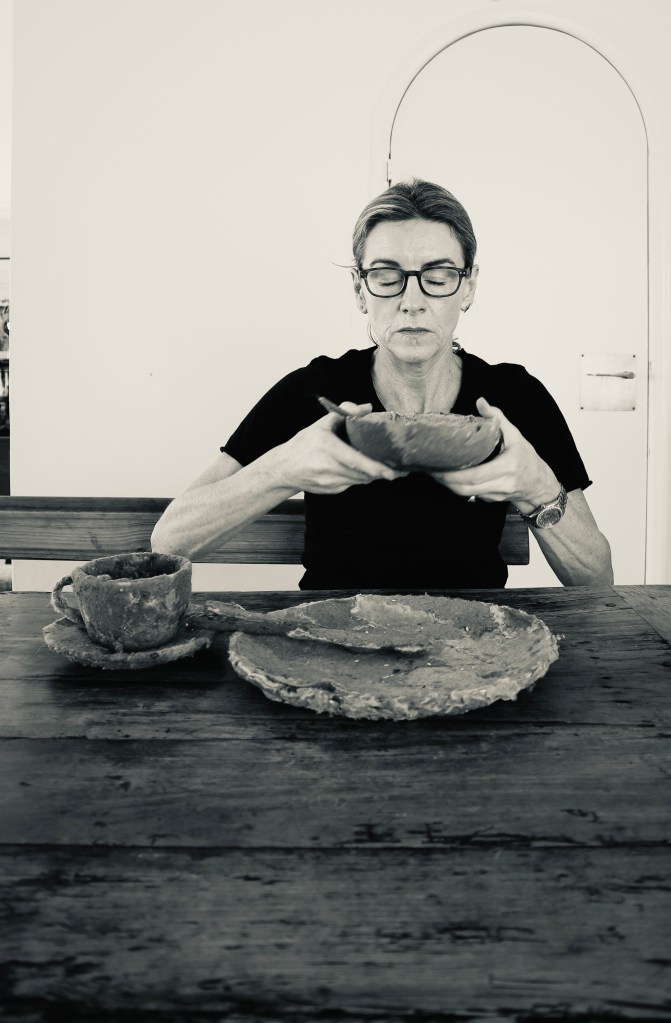
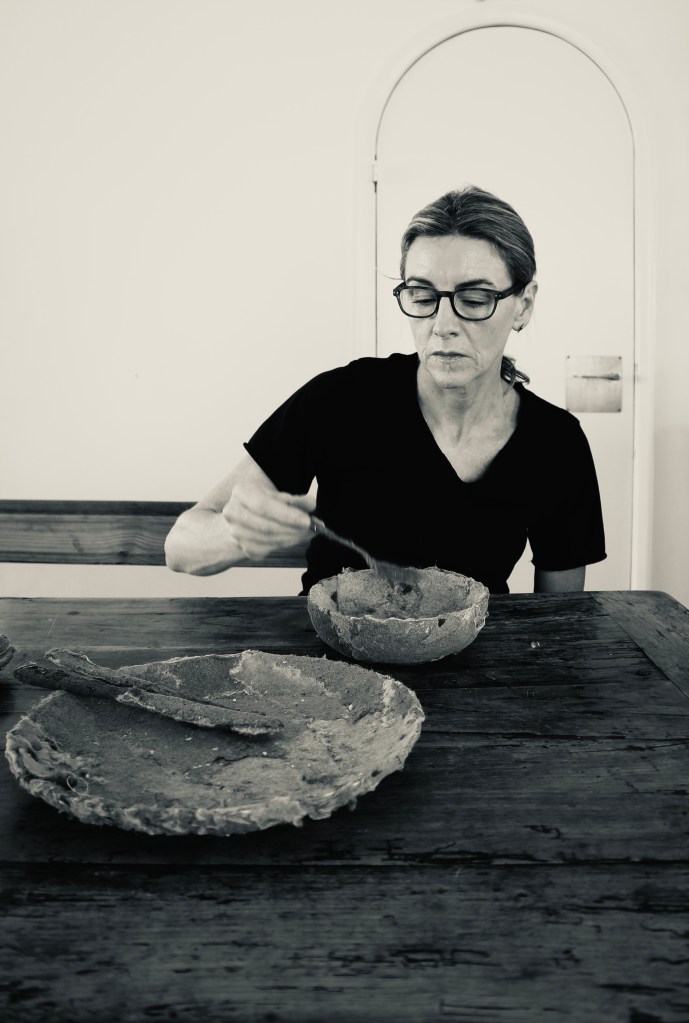
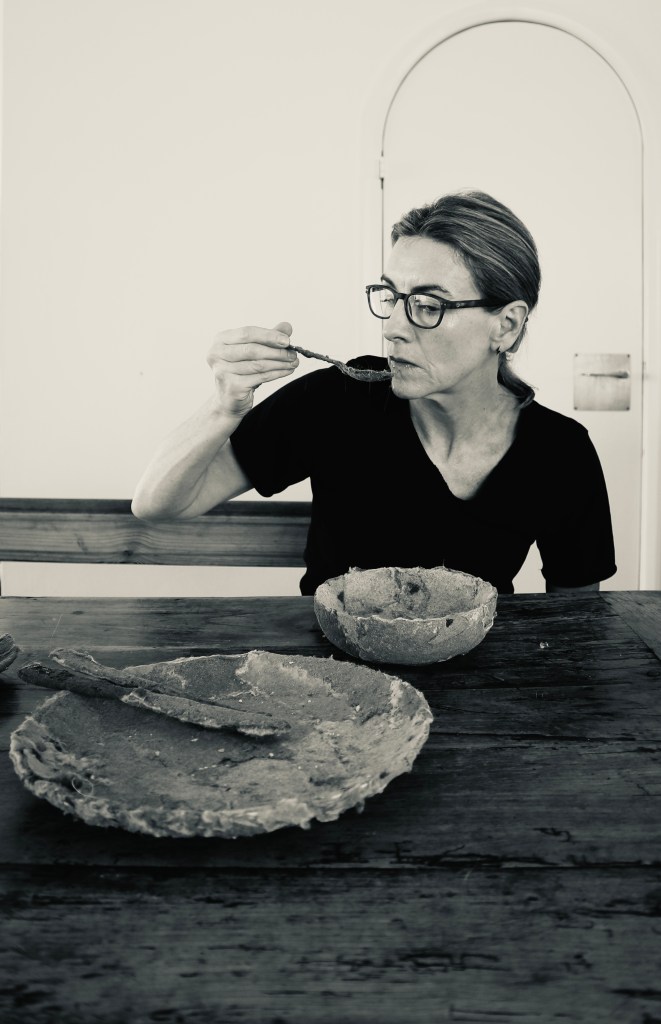
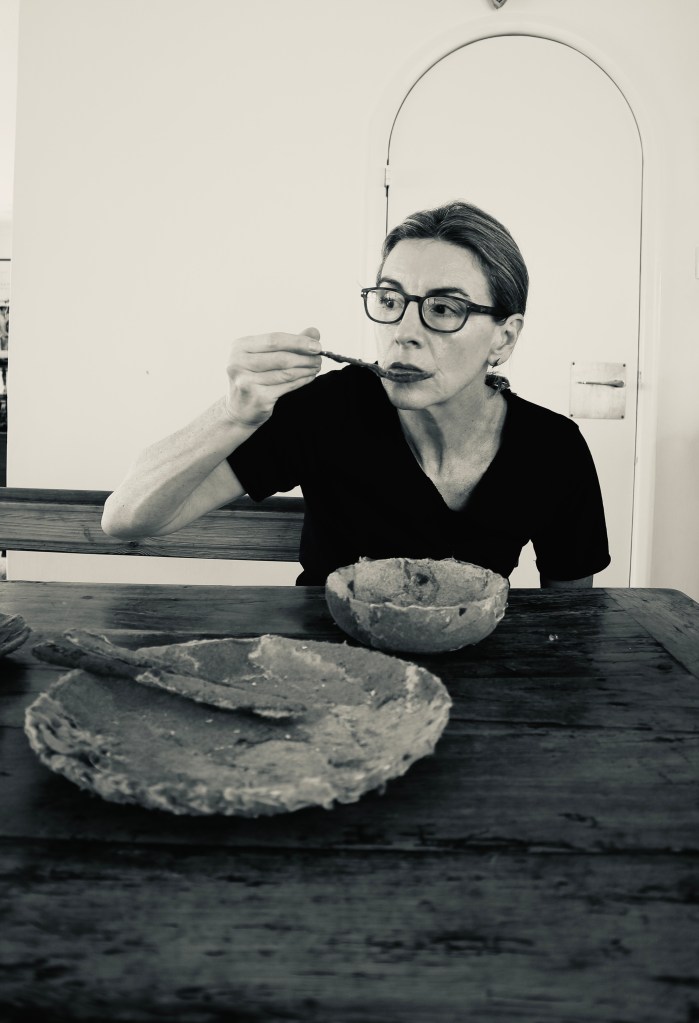
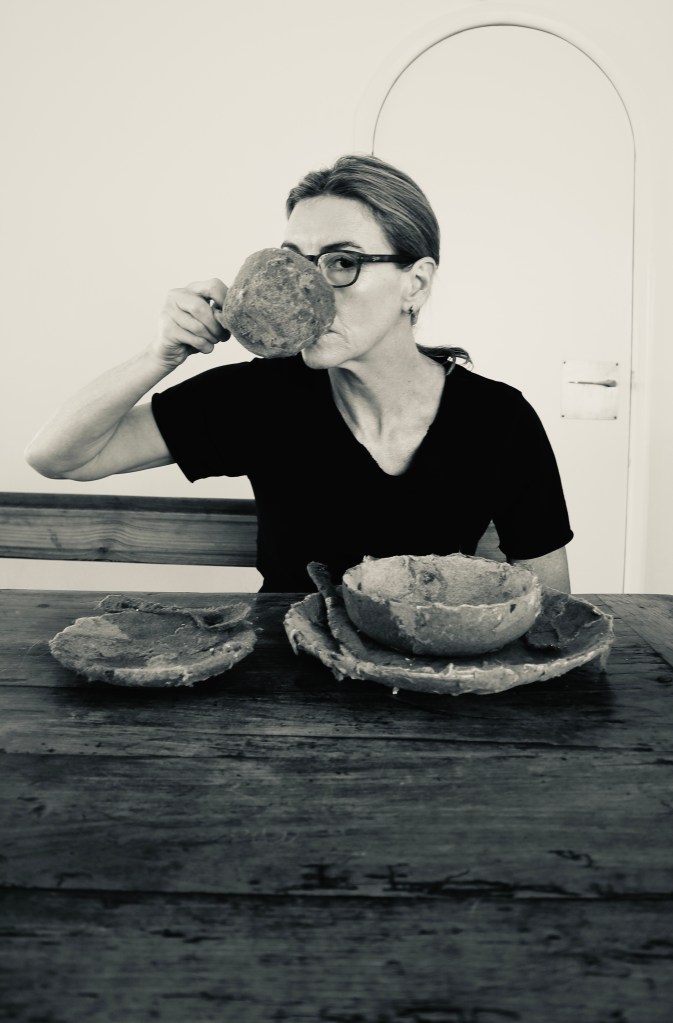
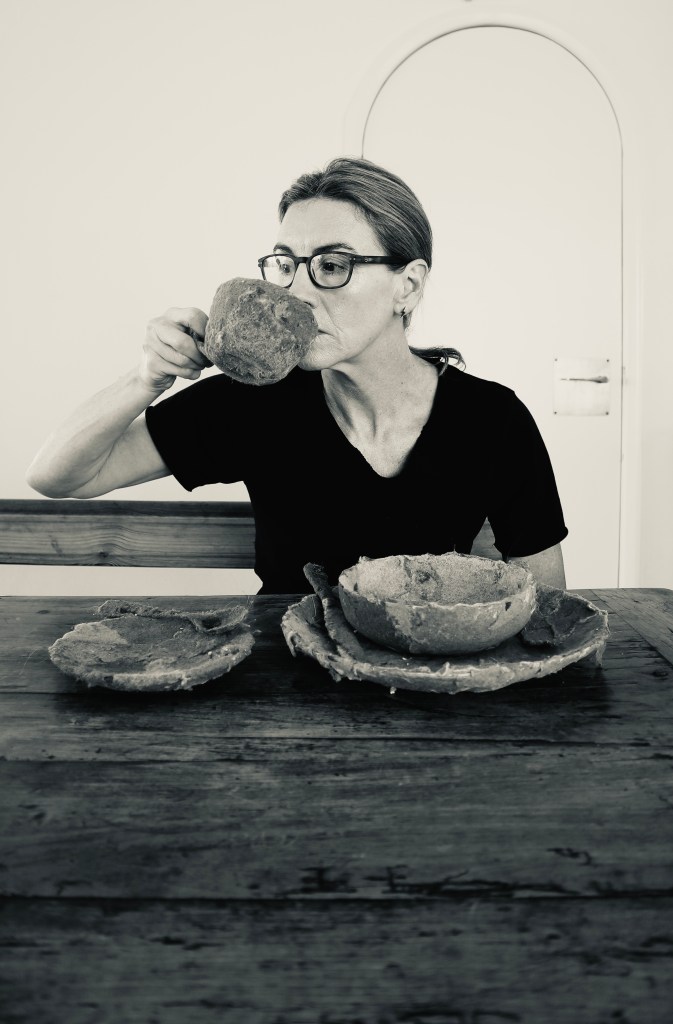
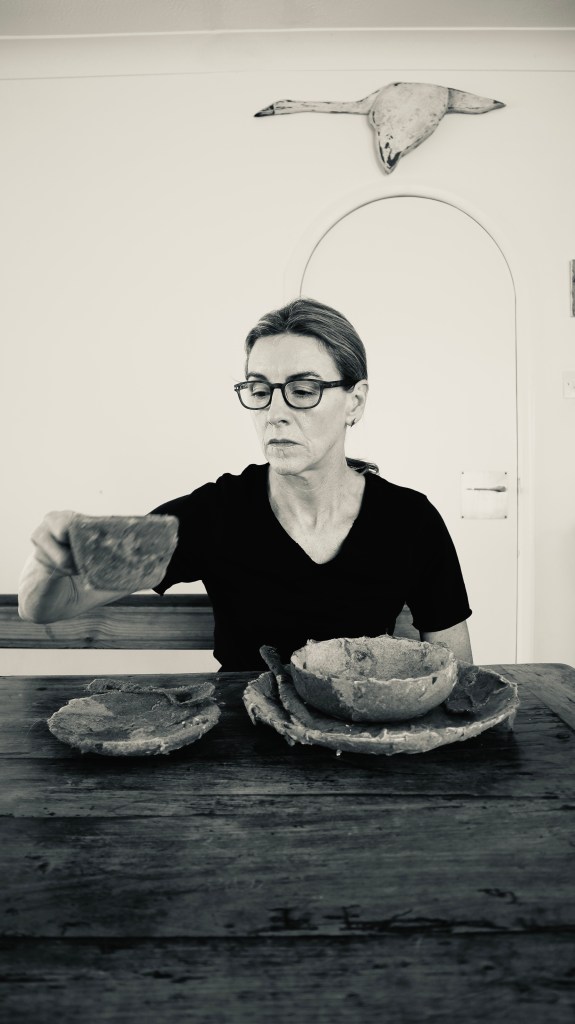
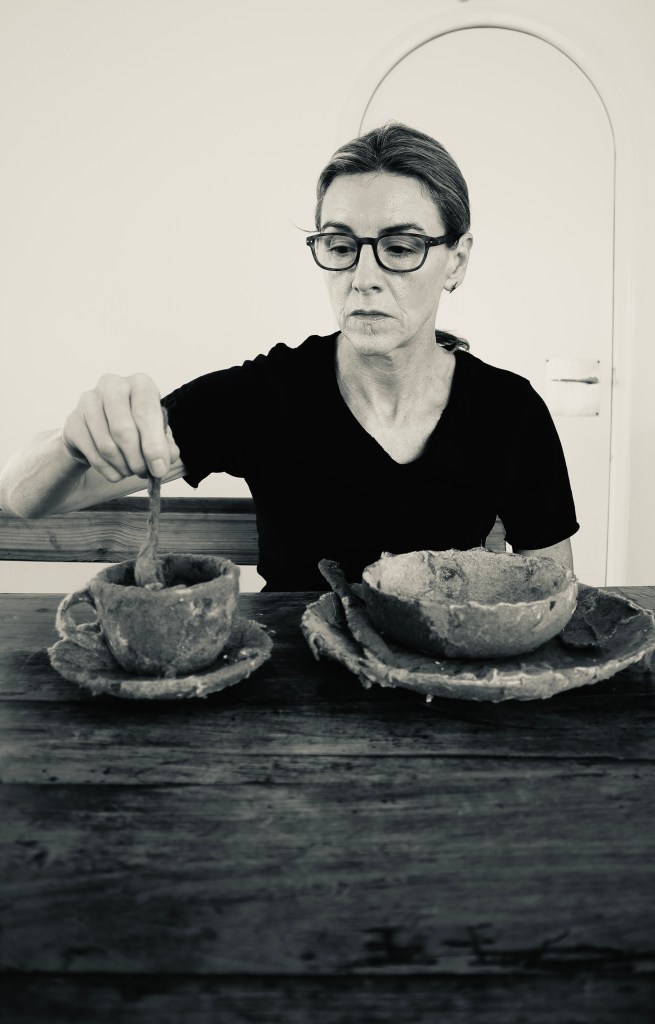
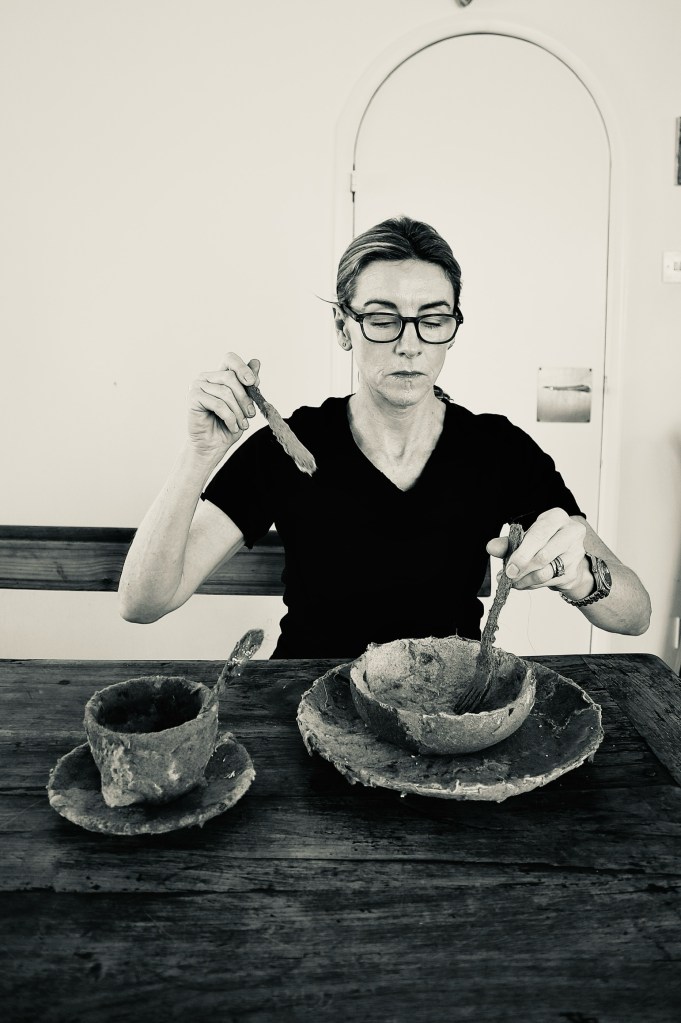
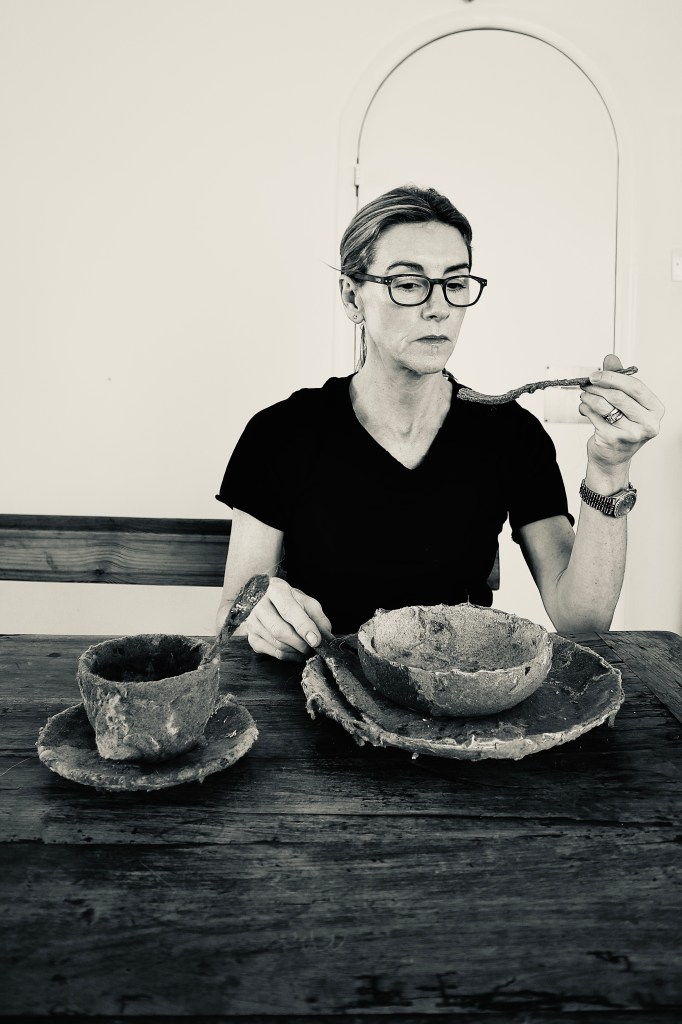
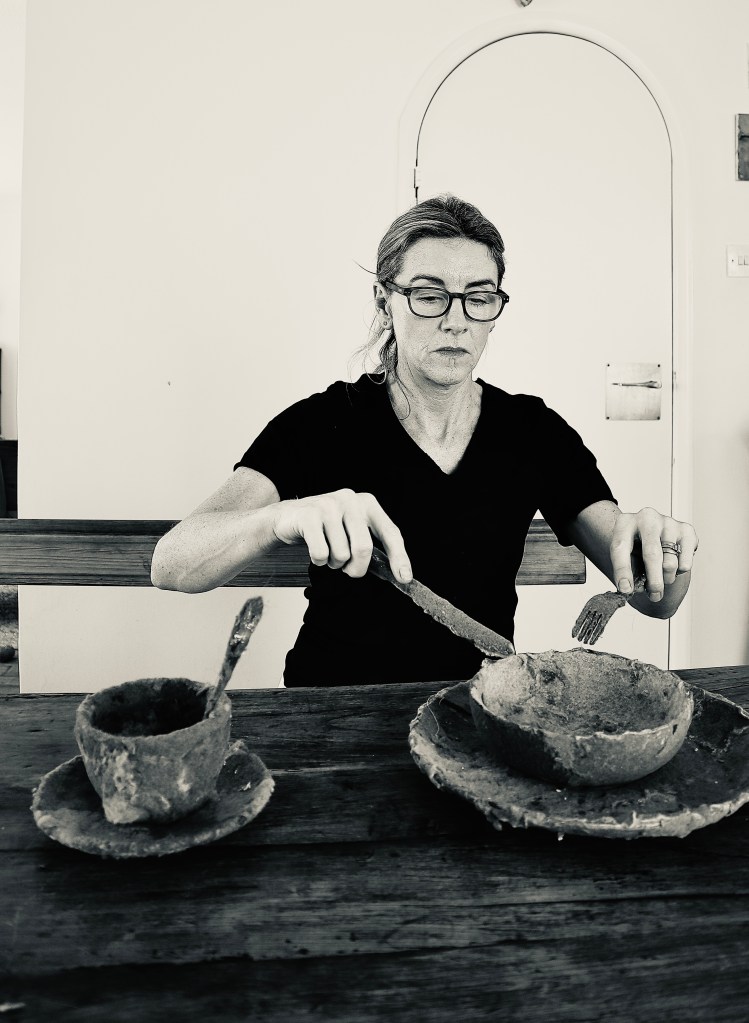
The napkin was also made of machine detritus ,
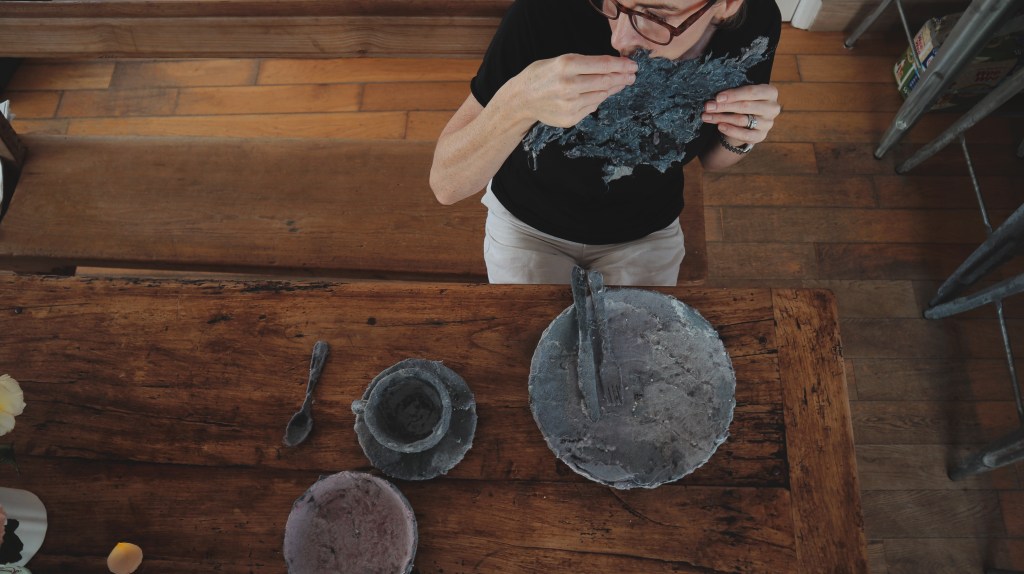
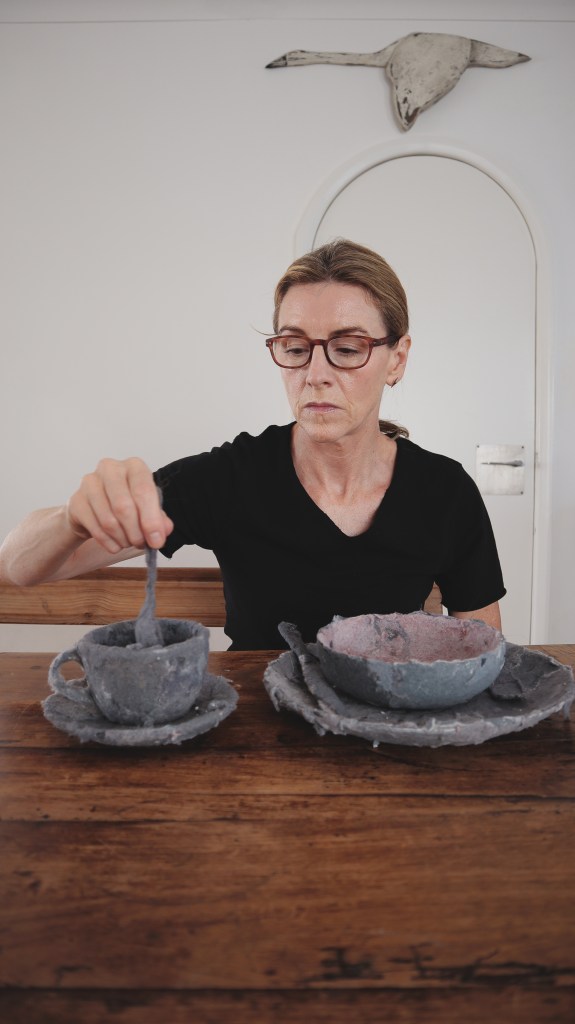
There is an intended humour to the work and the photographic ‘performance’ encourages a relatability to the works. The b/w images are certainly influenced by Martha Rosler’s video performance, ‘Semiotics of the Kitchen’.
Continued to explore the personal practice elements of my work with the Murmuration theme concerning female mental health. My large sculptural work was now floor to ceiling and made solely from felted machine detritus. Its disturbing and uncomfortable form, materiality and presence evoked a reaction to friends and family that viewed it. A need to touch and enquire into it, to stand around and beneath it. It proved to be very much at odds within a domestic setting.
Domestic Setting : Murmuration 2.
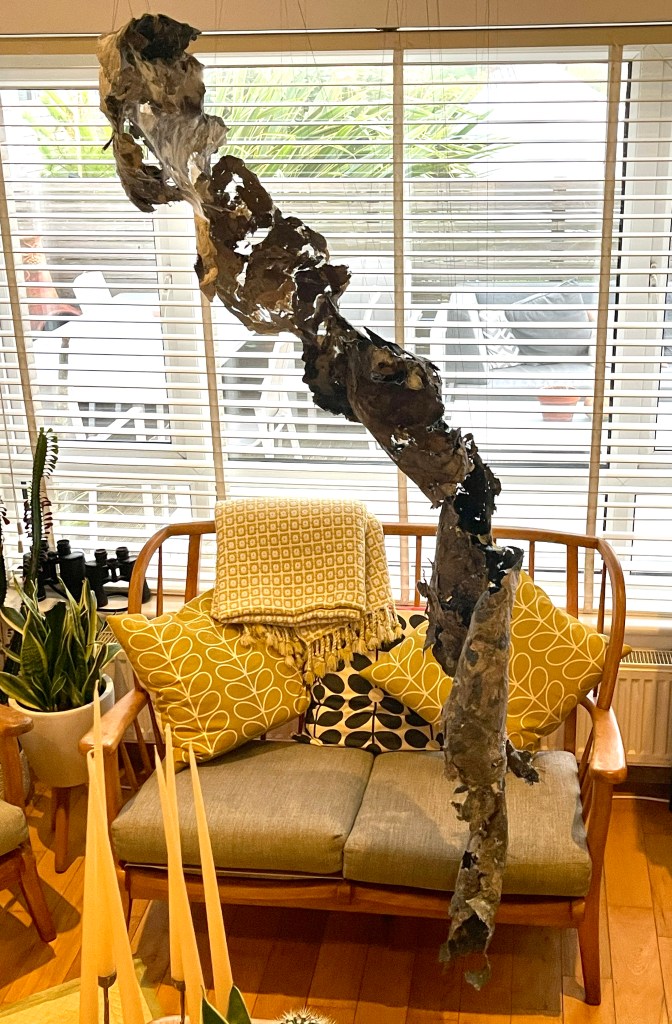
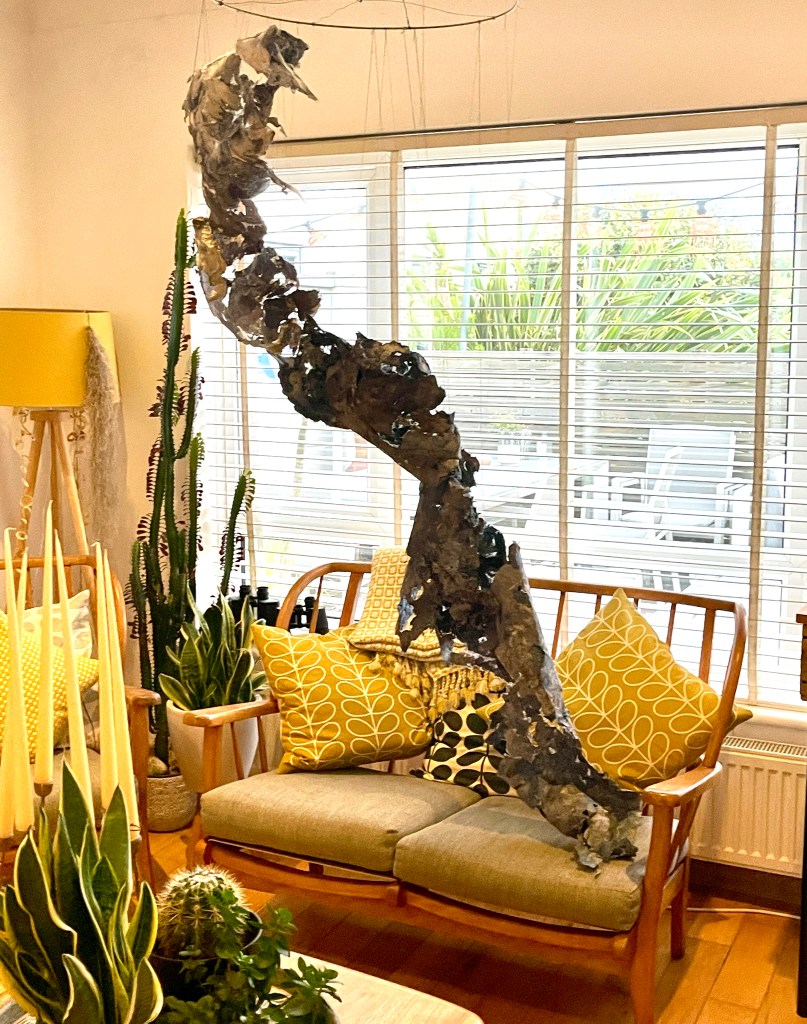
A large gallery /studio/ public space with the inclusion of furniture, and other items indicative of the home could be an alternative way to view the work as it juxtaposes the comfortable traditional setting of home.
My thoughts on presenting it in a white space environment allowed the work clarity and focus. The domestic setting whilst pertinent did not allow a full unhindered visual exposure. Further influenced by Marina Abramovic and her visceral performances (viewed at the Royal Academy 2023 ) I was aware of the power the artist had to to play a part in their work. I decided to explore this visual inclusion here adding to the narrative of the work but also further underscored my personal practice and concerns.
Below – there was little reference or narrative when the sculpture hung in the white space. It was clear that human interaction with the sculpture would offer up a stronger reference and deeper enquiry.
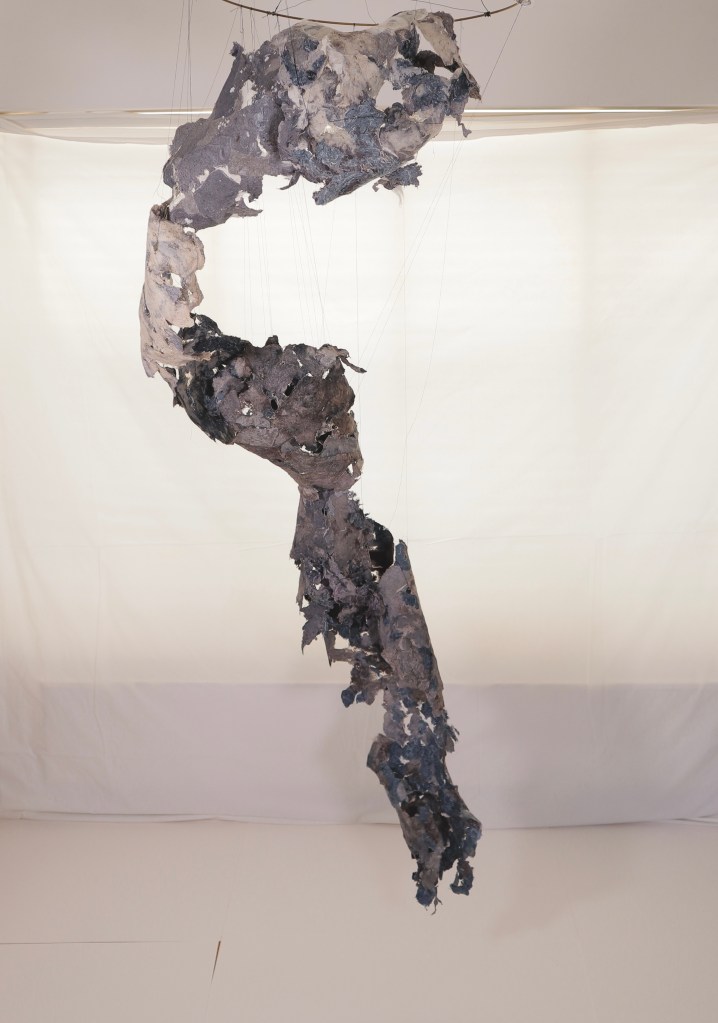
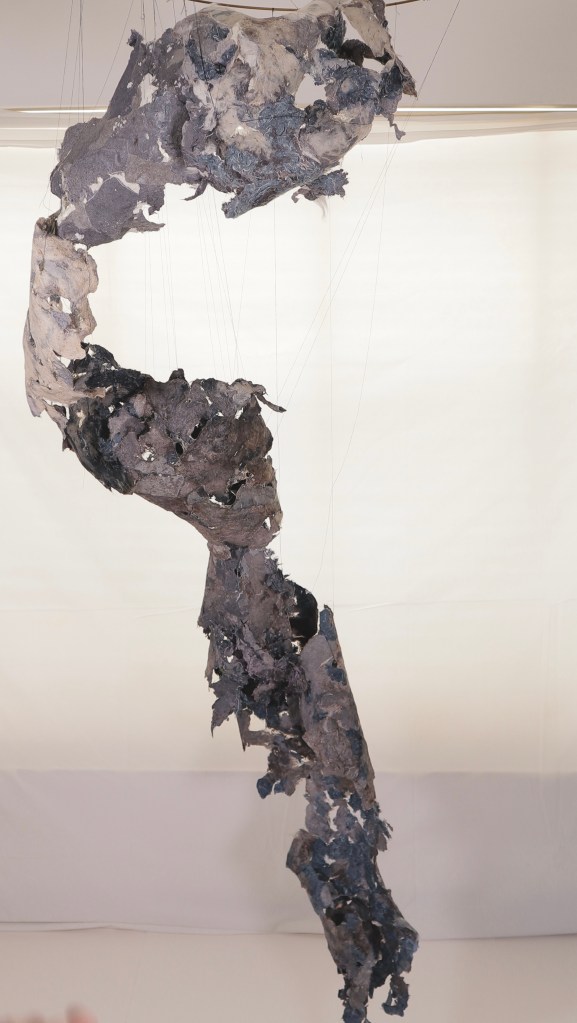
Murmuration. 2 – ‘Our Fears like Starlings’ – felted machine detritus.
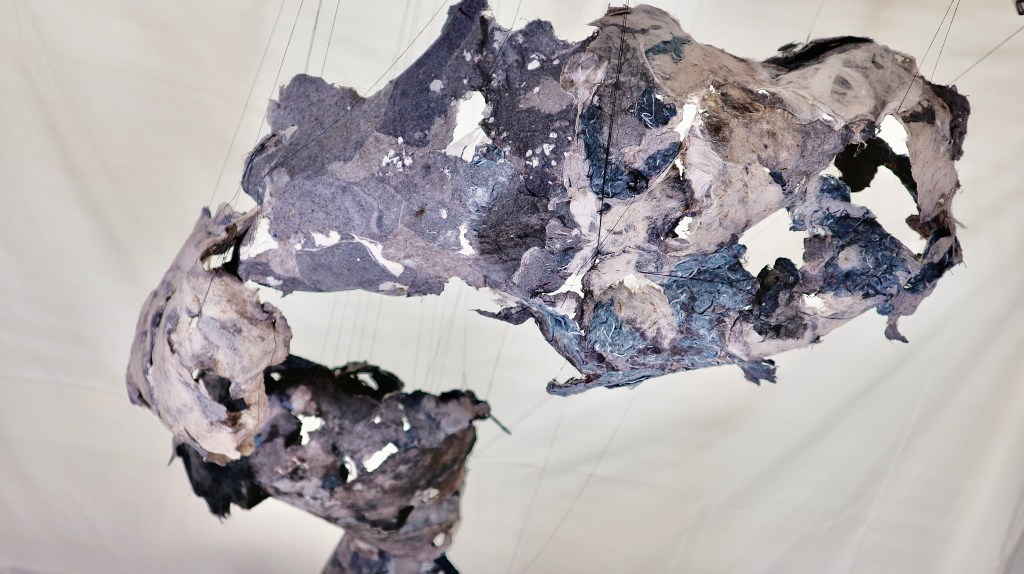
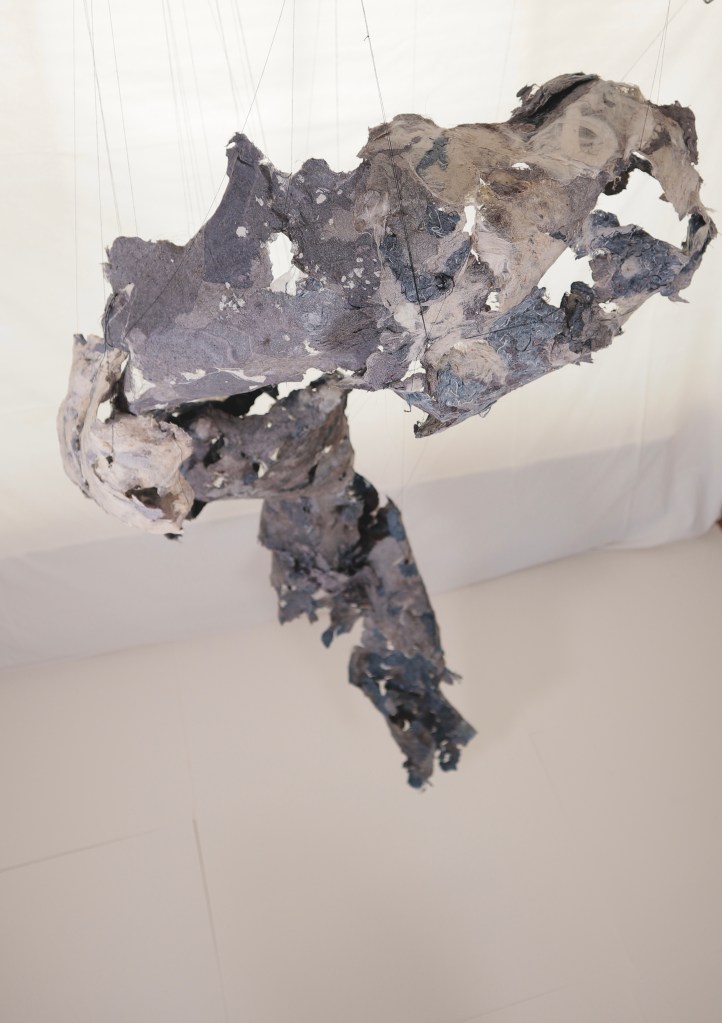
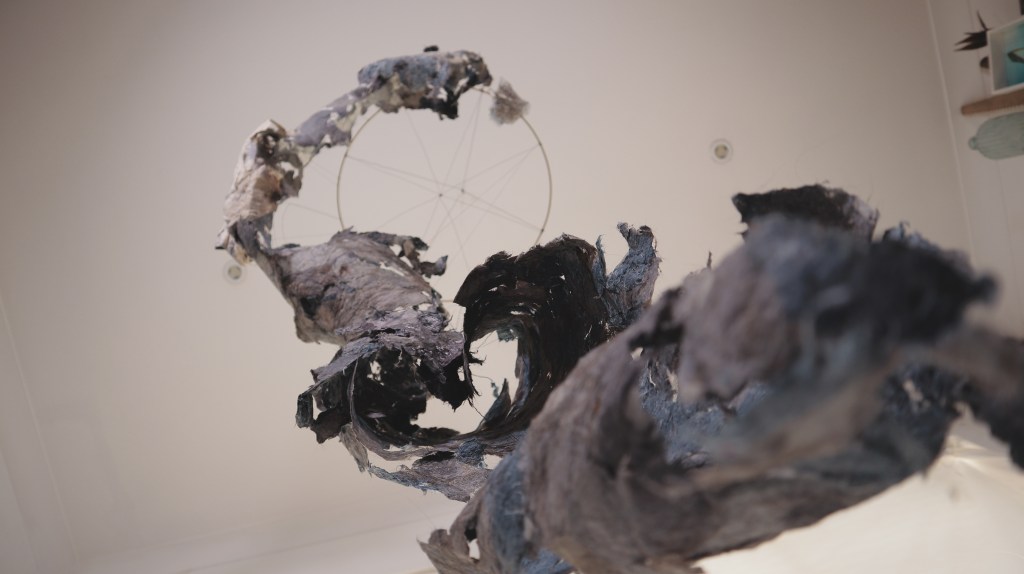
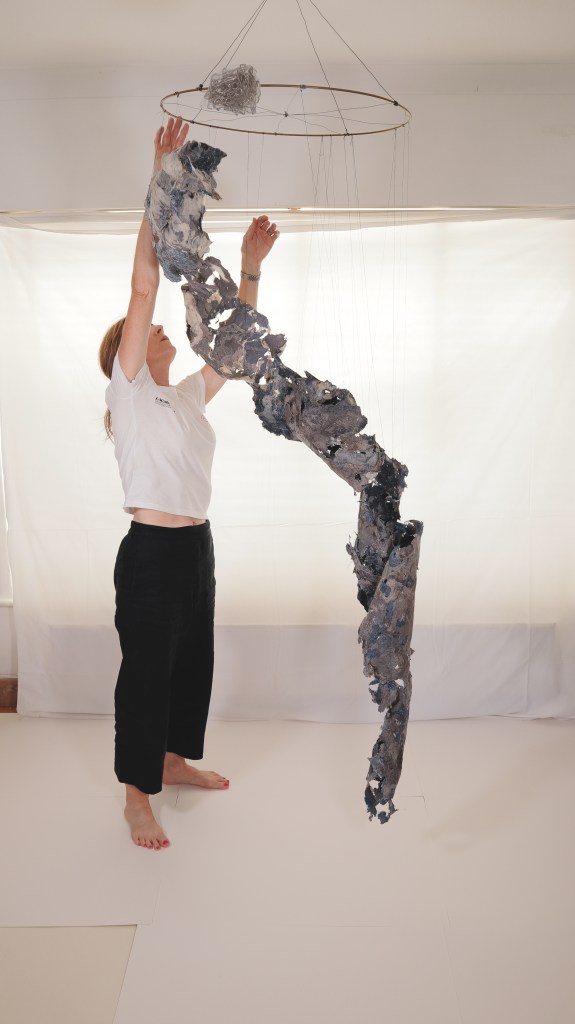
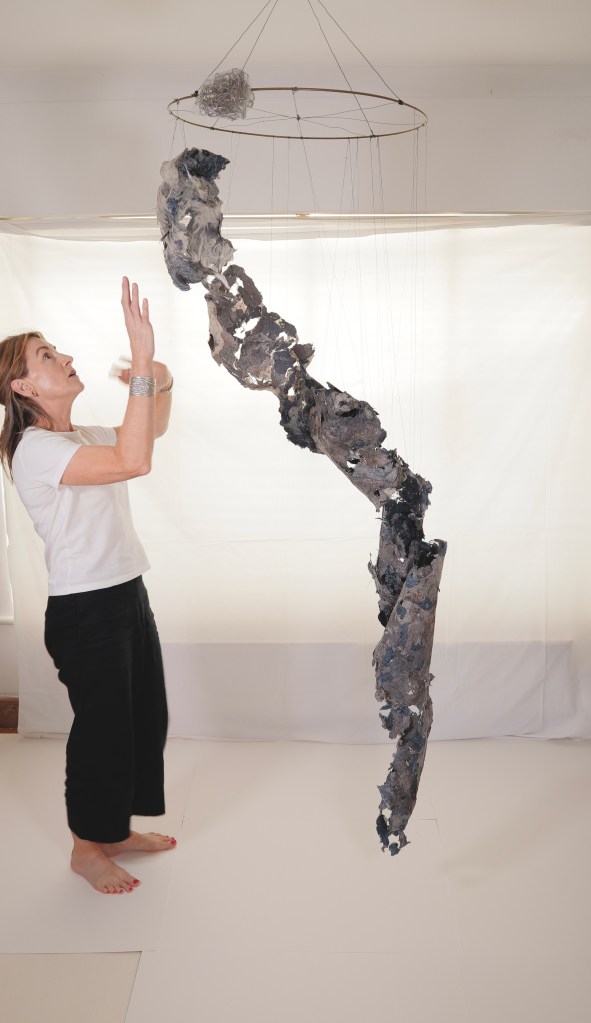
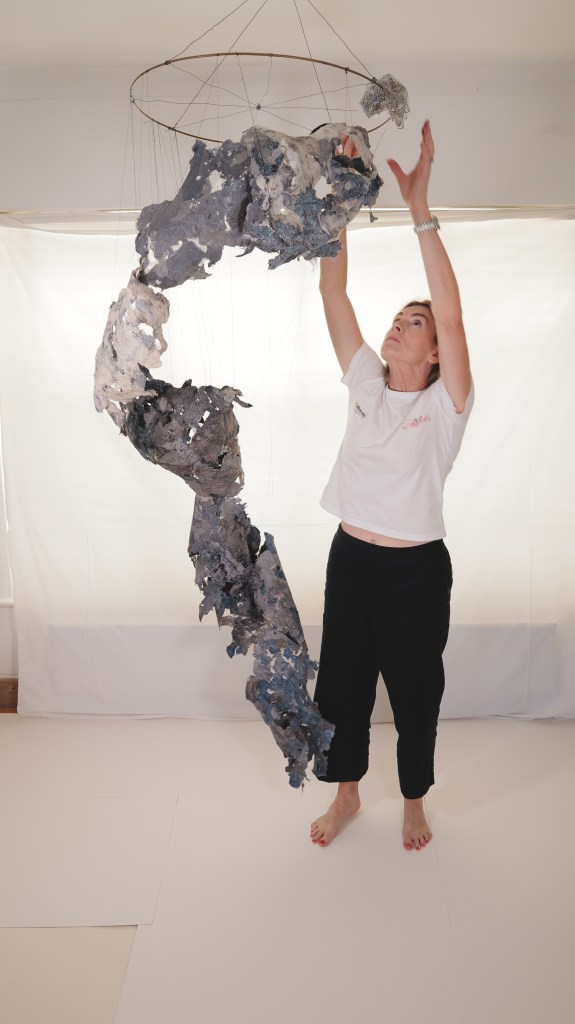
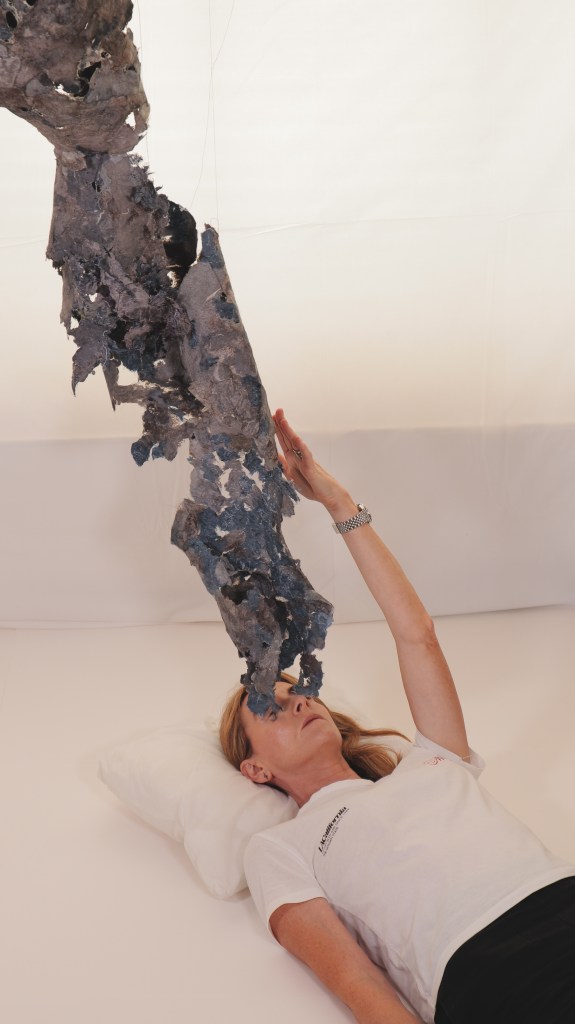
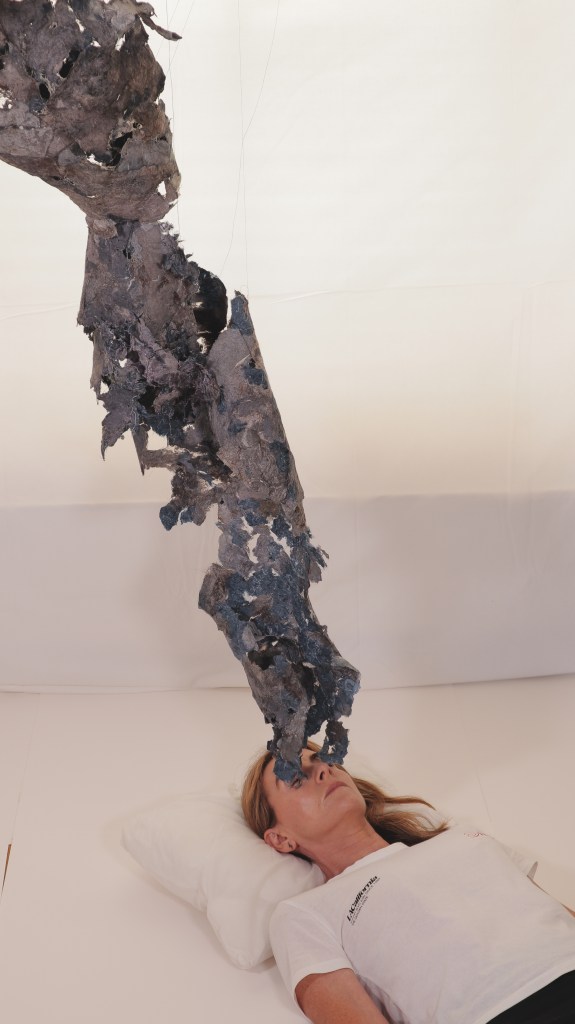
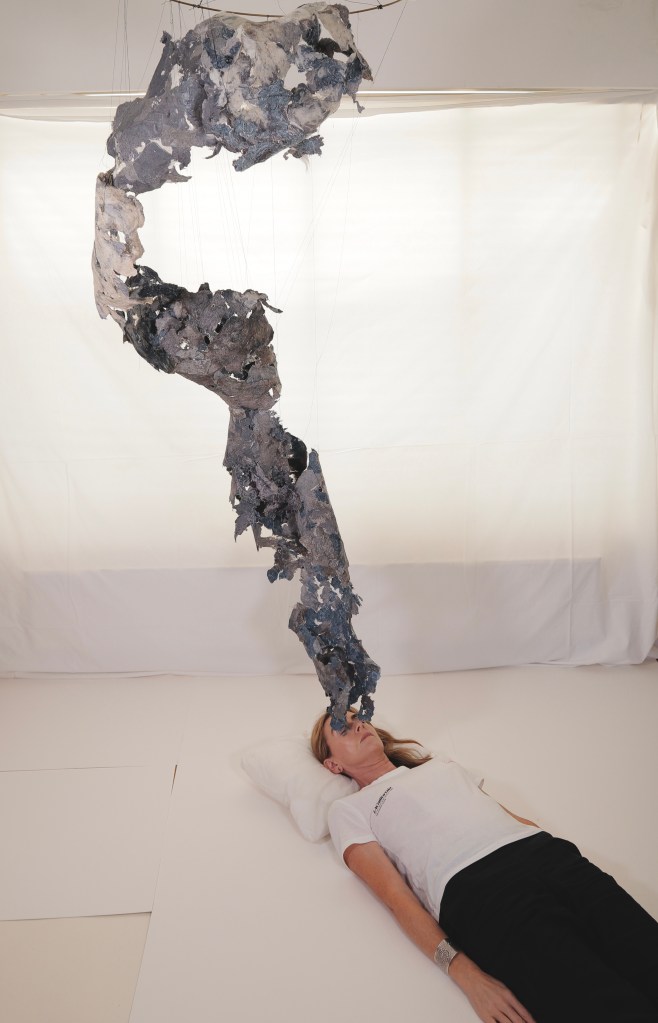
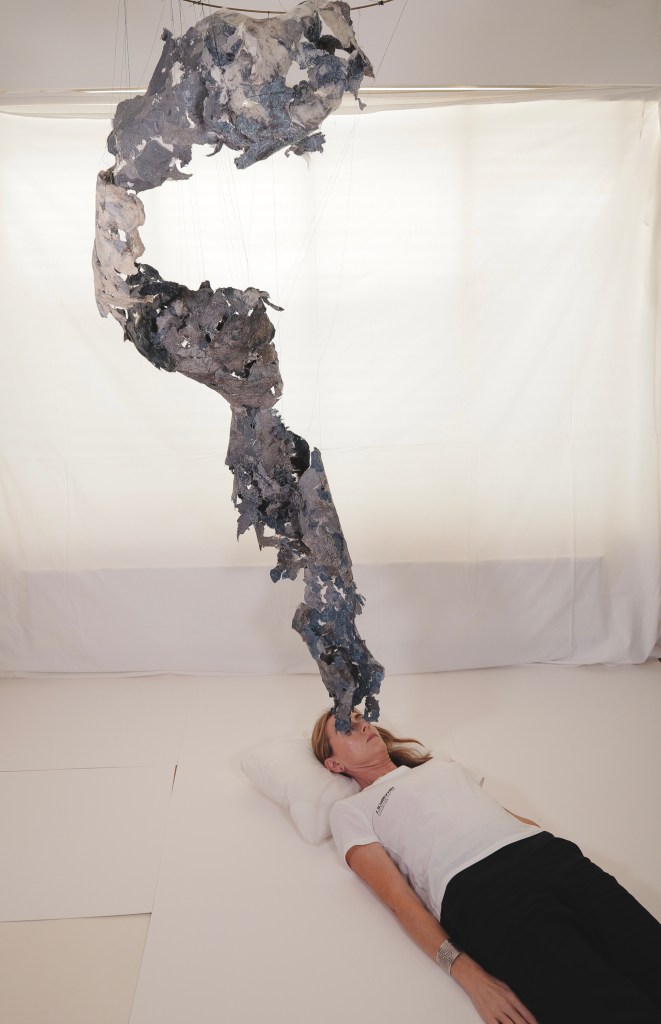
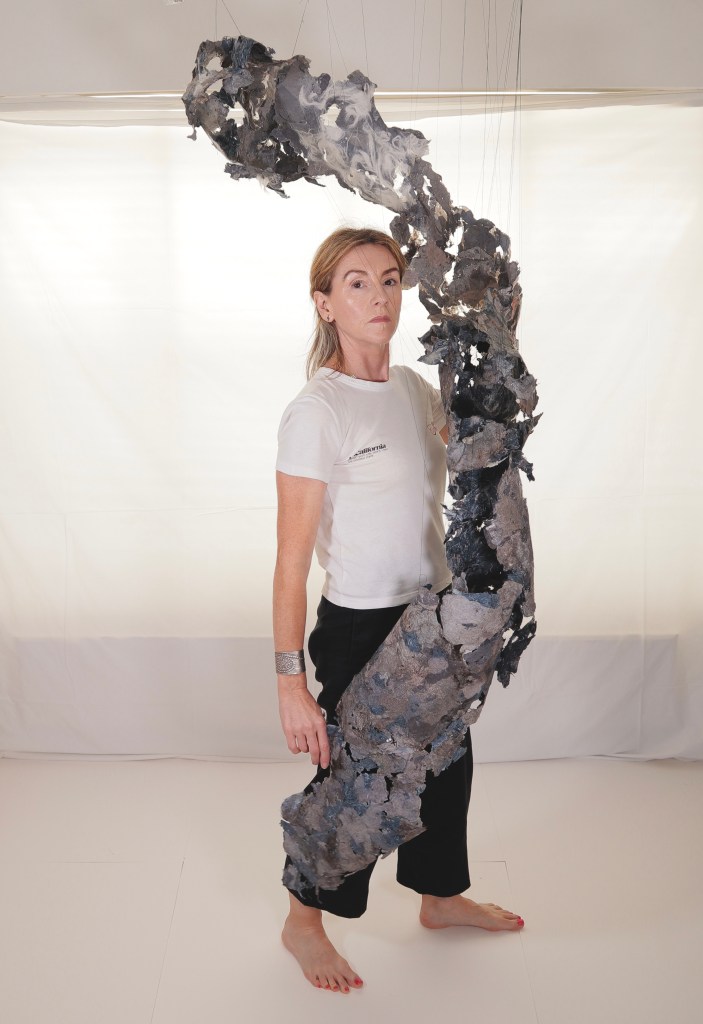
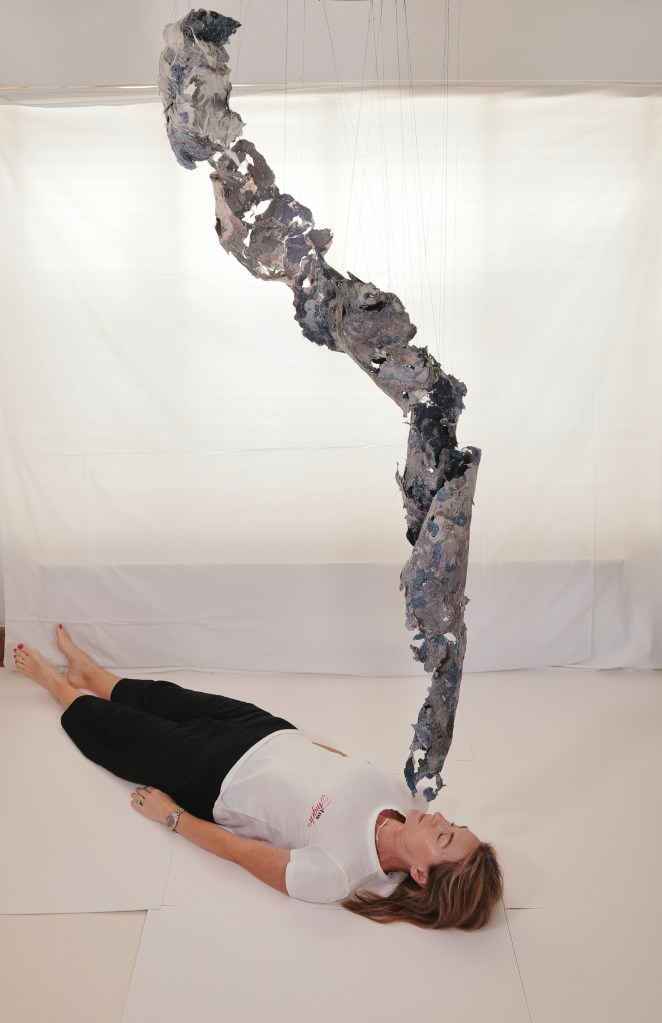
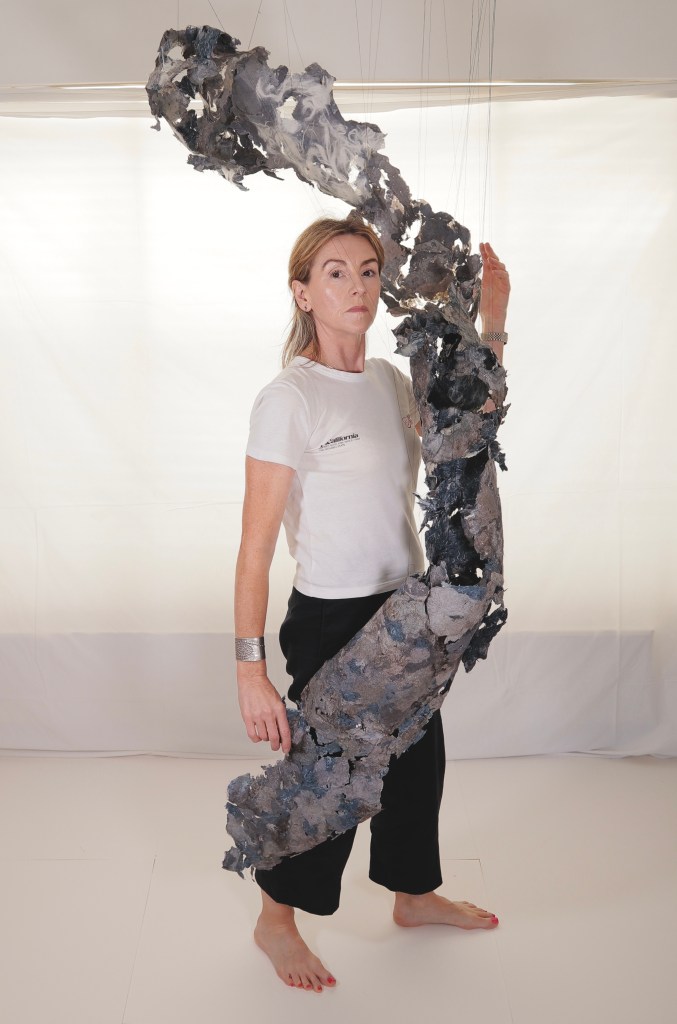
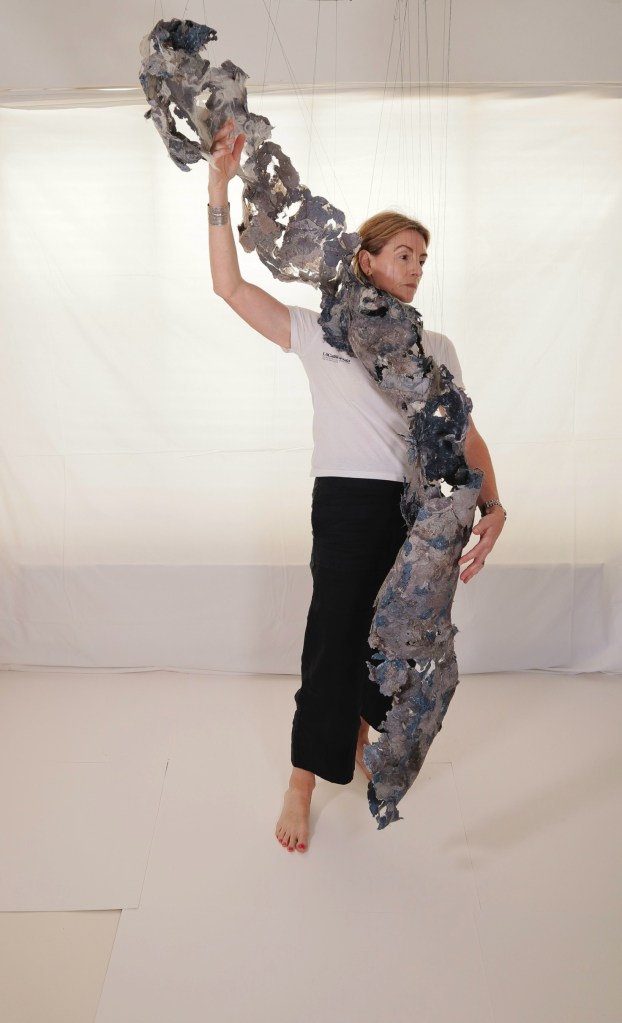
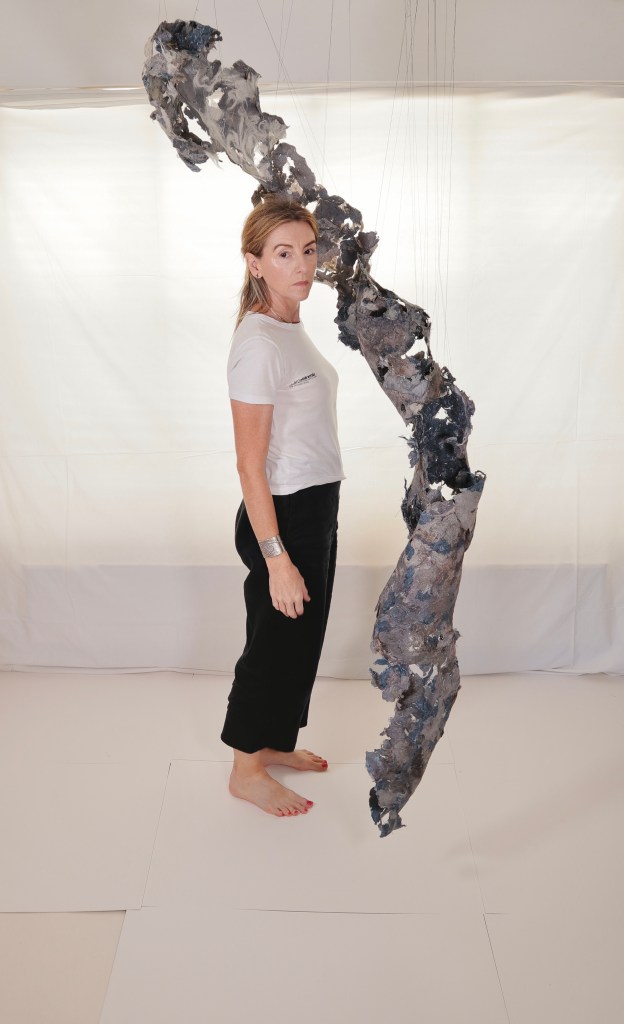
The scale of the work is clearly seen with human interaction. I was able to perform with the work , sleeping under it with of the swirling murmuration of negative emotions visually depicted.
I was able to fold and stand within the work again showing the dark machine detritus enveloping me.
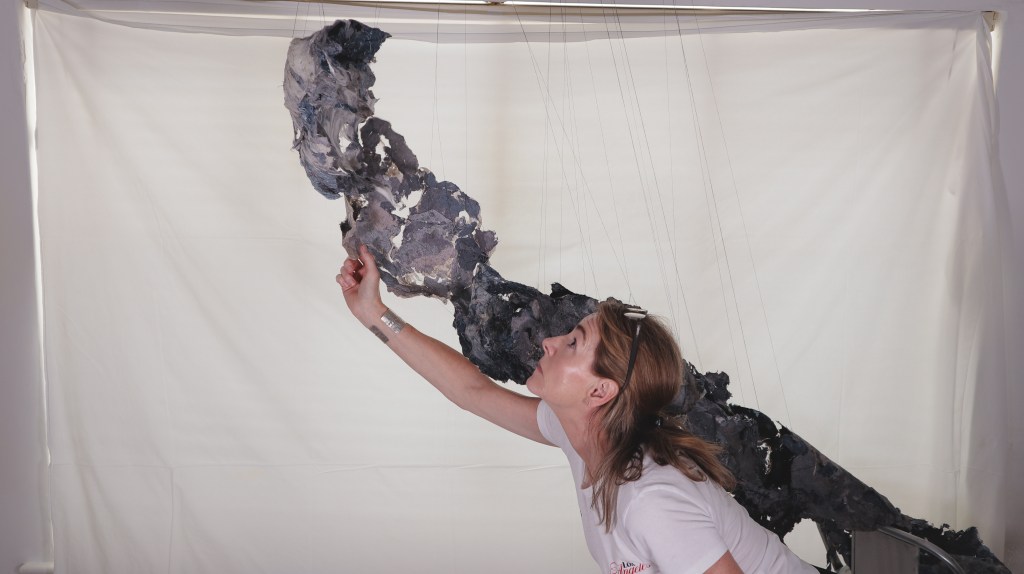
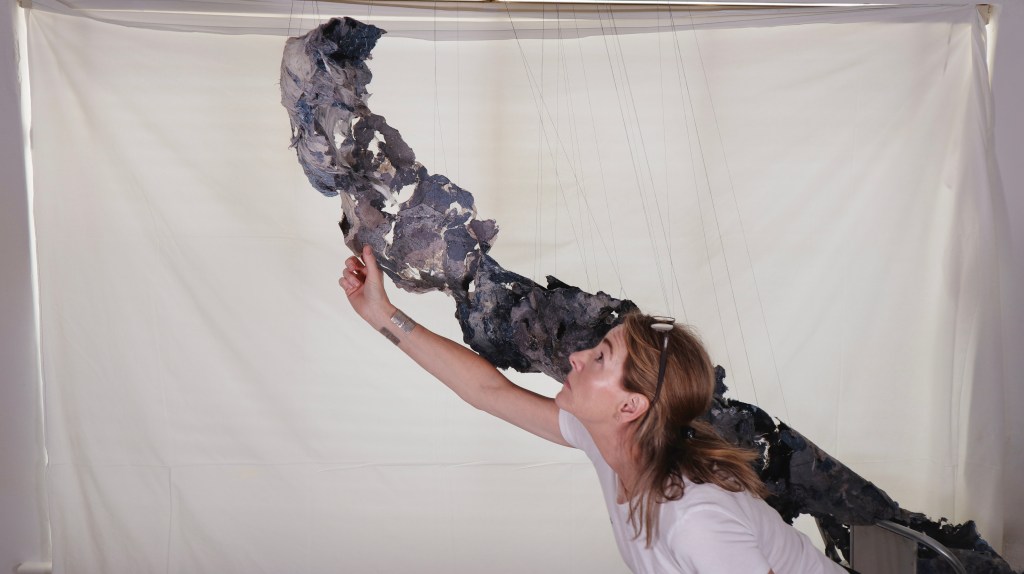
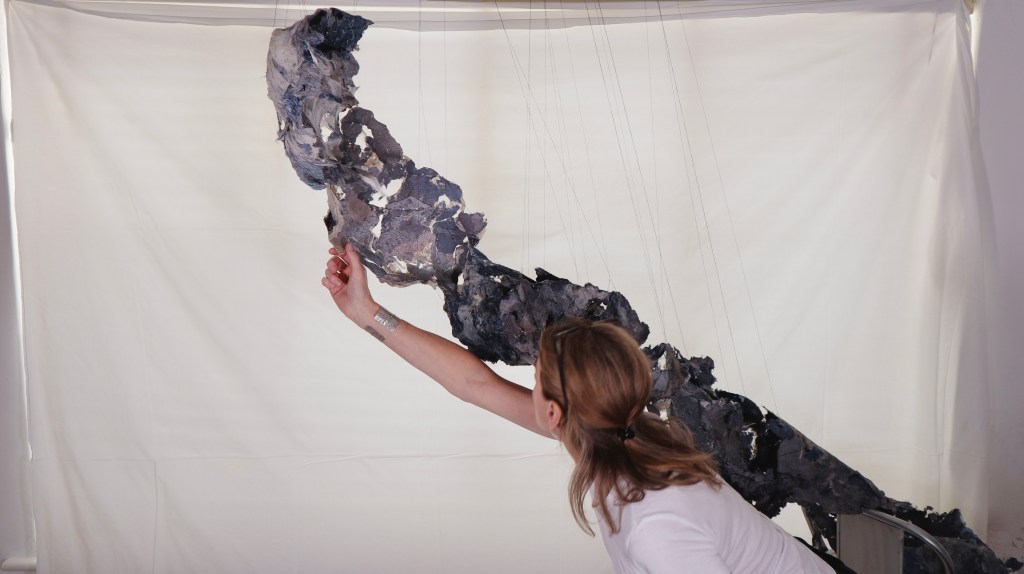
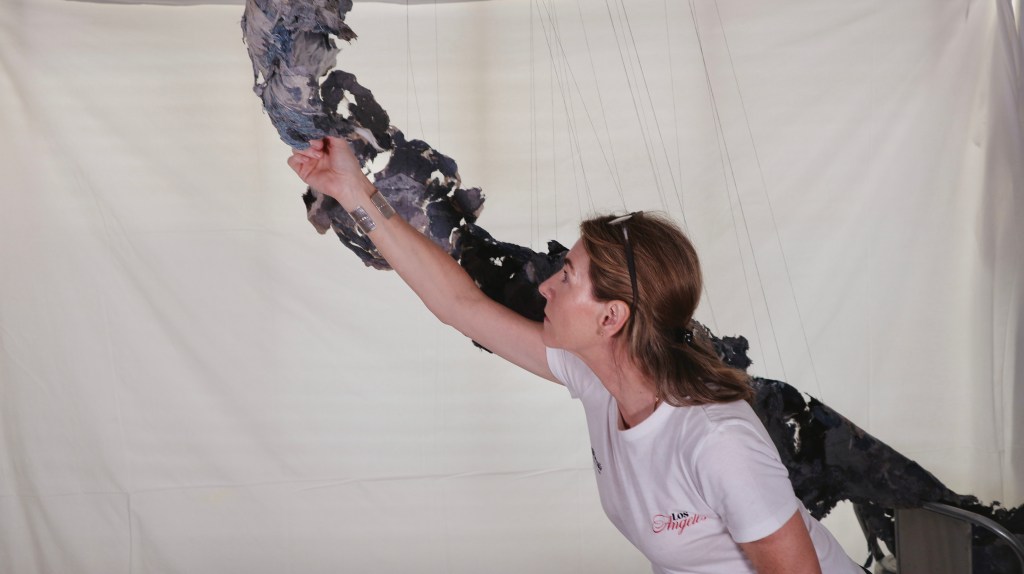
I was able to sit underneath the work…
As a homage to Sarah Lucas adding to add some superficial humour to the work but with the undercurrent of the specific female condition I had been exploring ; mental health , the female domestic worker and its exploration through domestic detritus I used some hollow vessels created from the same felted process and material to reinforce the strong female narrative as the enveloping murmuration surrounded me.
Derrida’s phrase – ” to make material laugh’ – to embrace the carnelvalesqe…..Lange-Berndt, P. (Ed.) (2015). Materiality. Whitechapel Gallery. MIT Press. P 18-20)
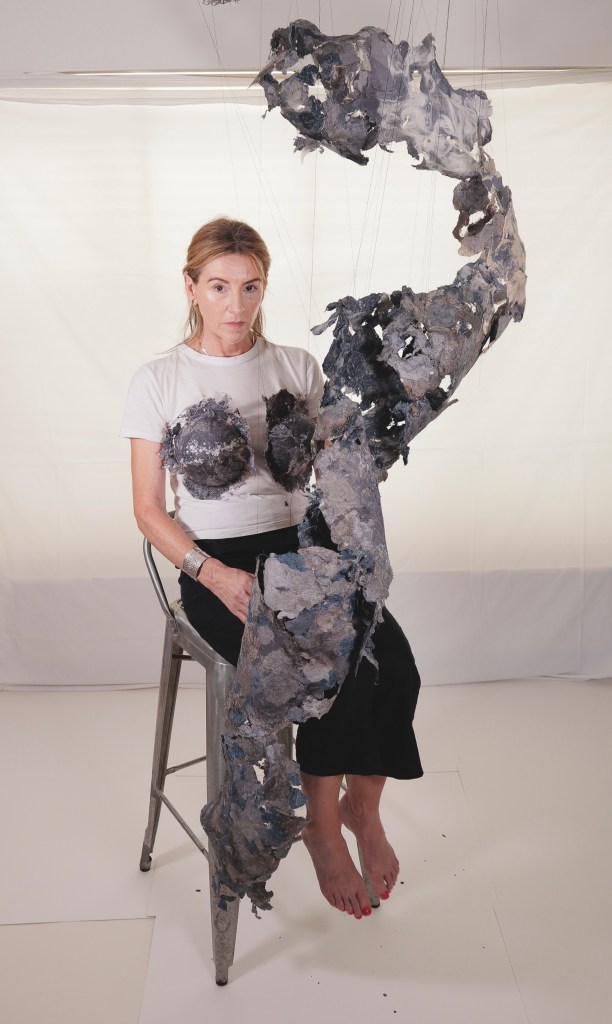
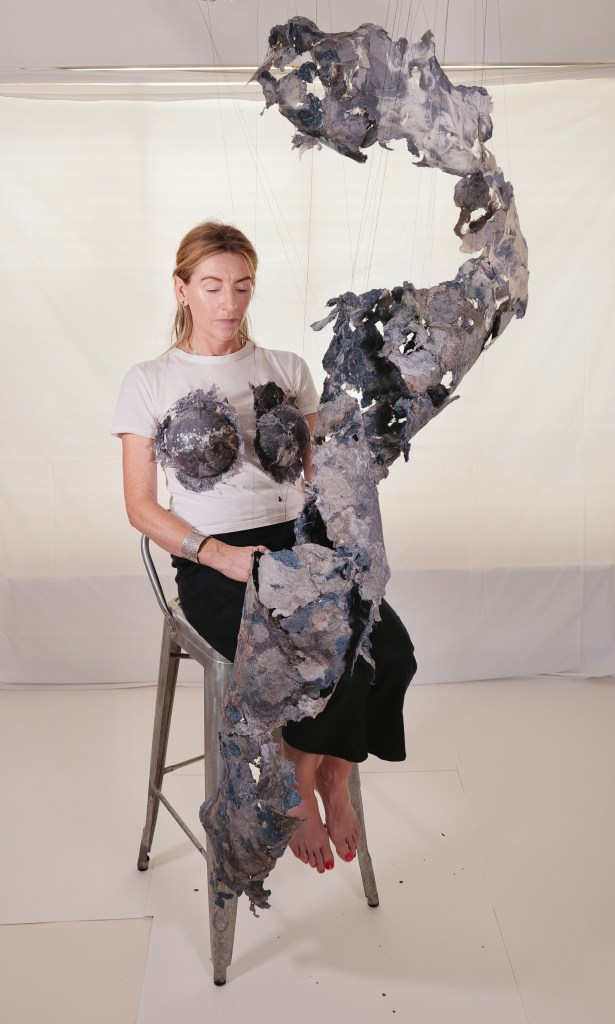
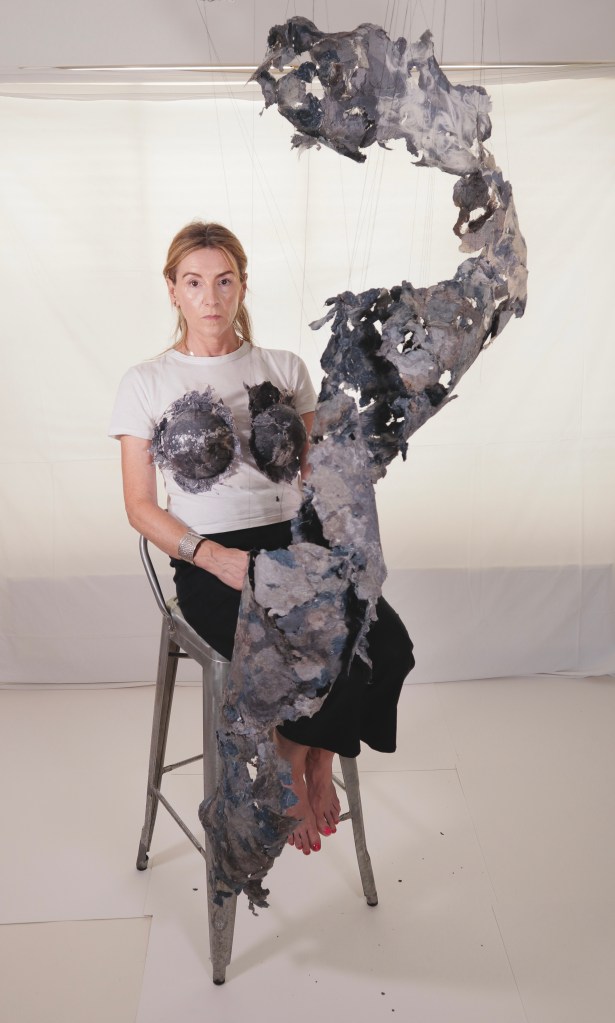
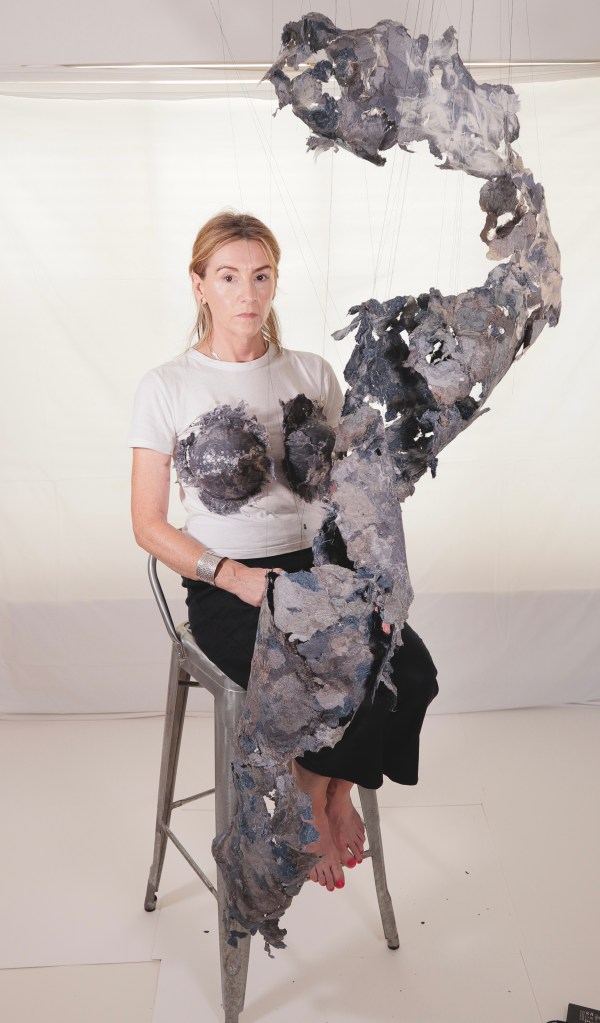
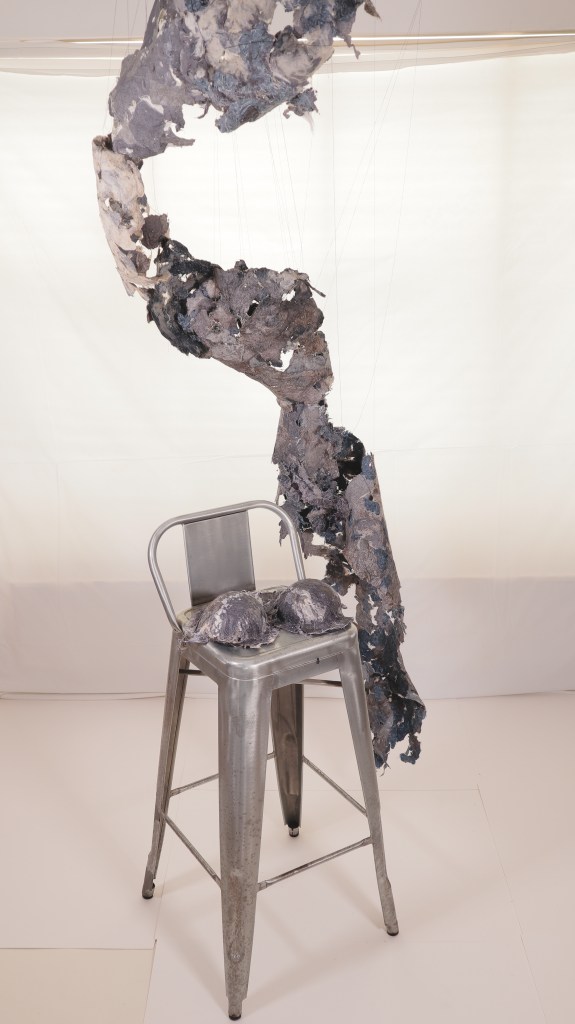
The potential of Murmuration 2, its setting and curation has been both serious and playful – working towards a final out come or final resting place has not been the main concern but how it can interact and be viewed with possibilities for future development.
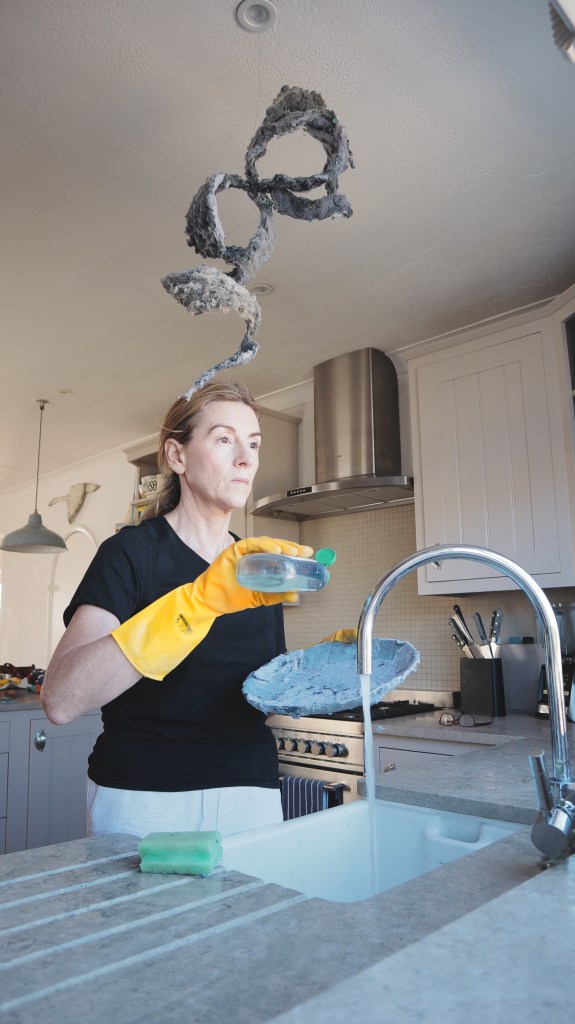
My smaller initial work with murmurations was rephotographed in a domestic situation to highlight my concerns regarding female mental heath and the often hidden symptoms and causes. The swirling negative shape is ever present, night and day. Lurking.
“our fears like starlings” ( below )
‘Empty Vessels’
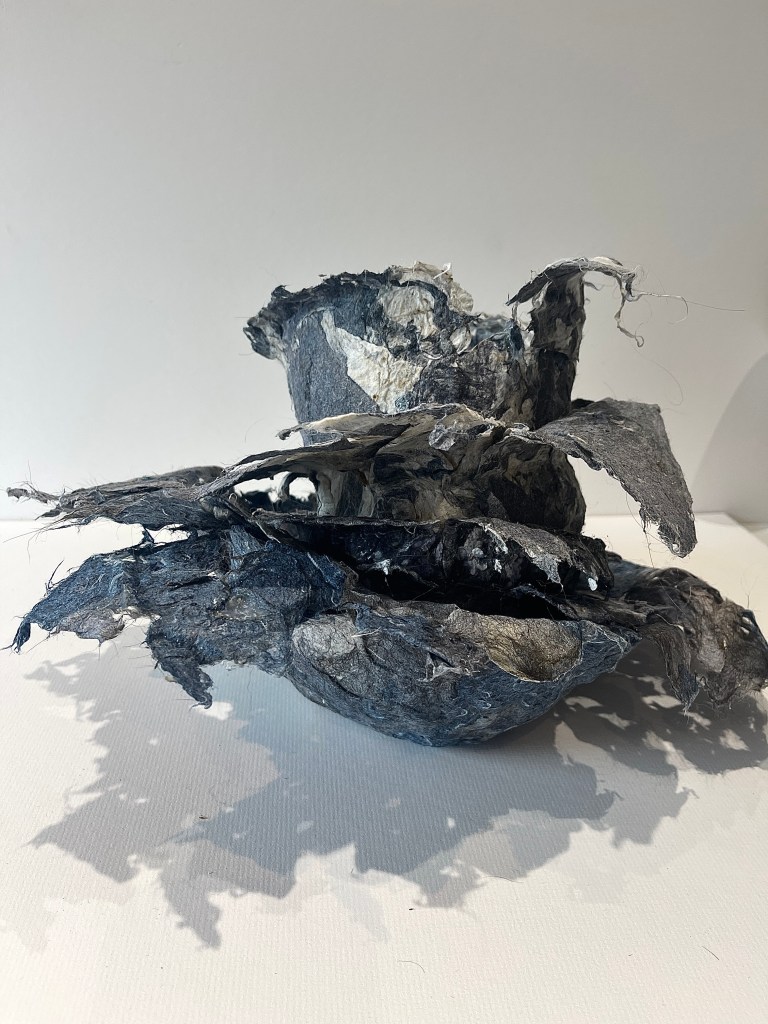
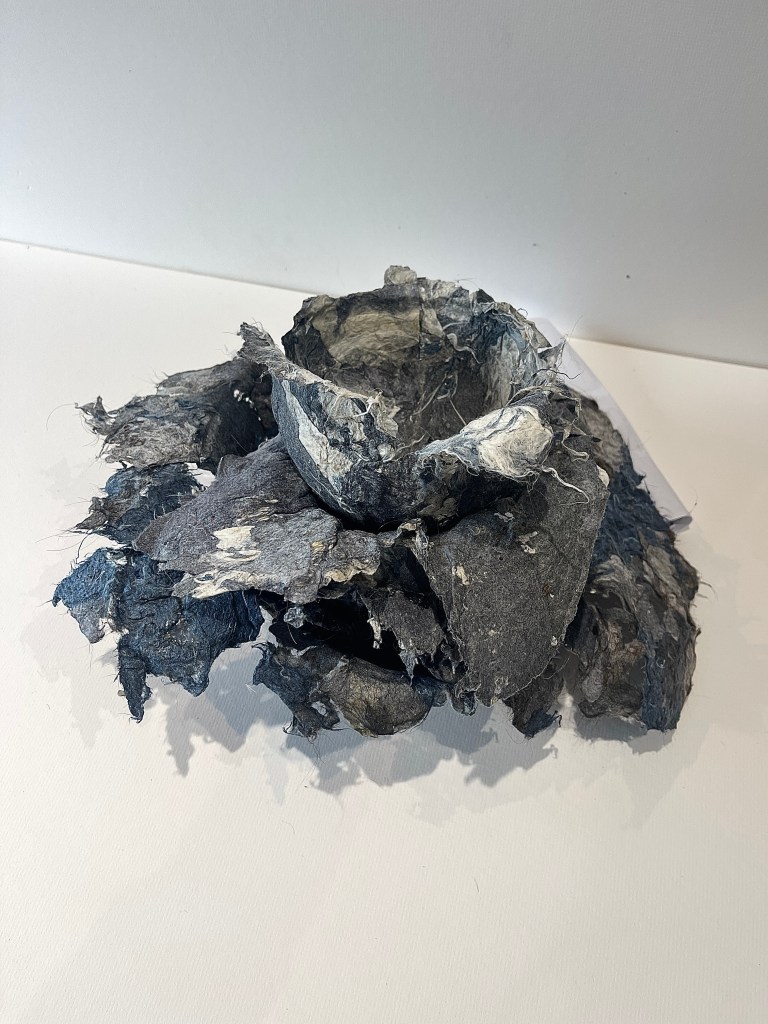
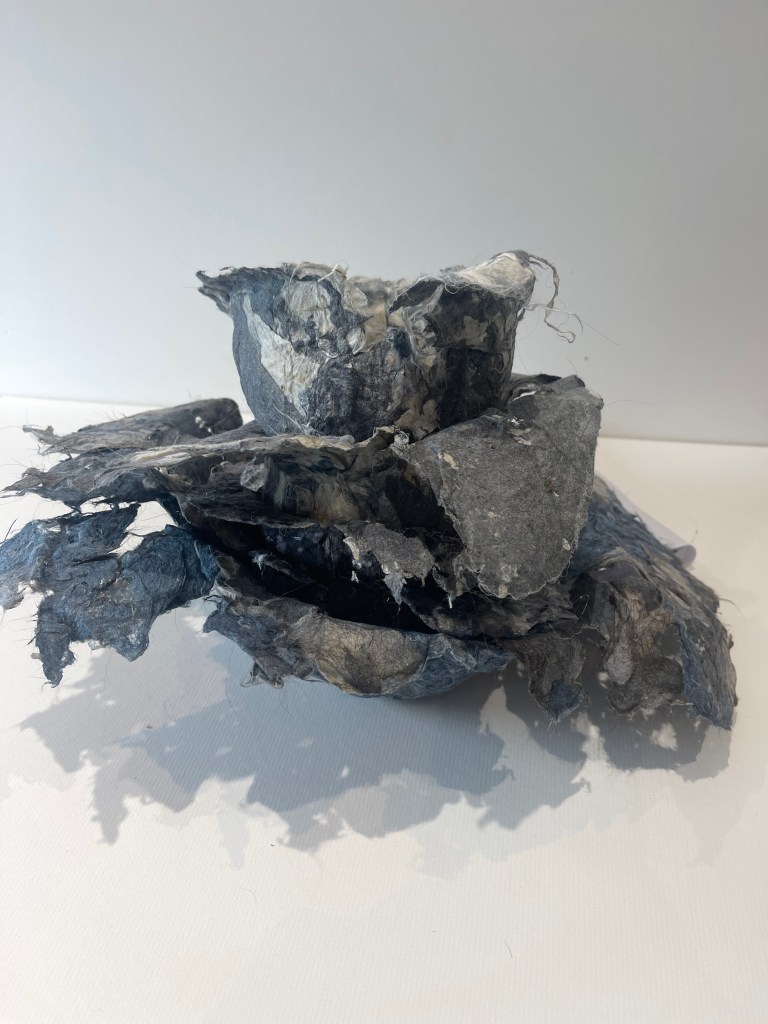
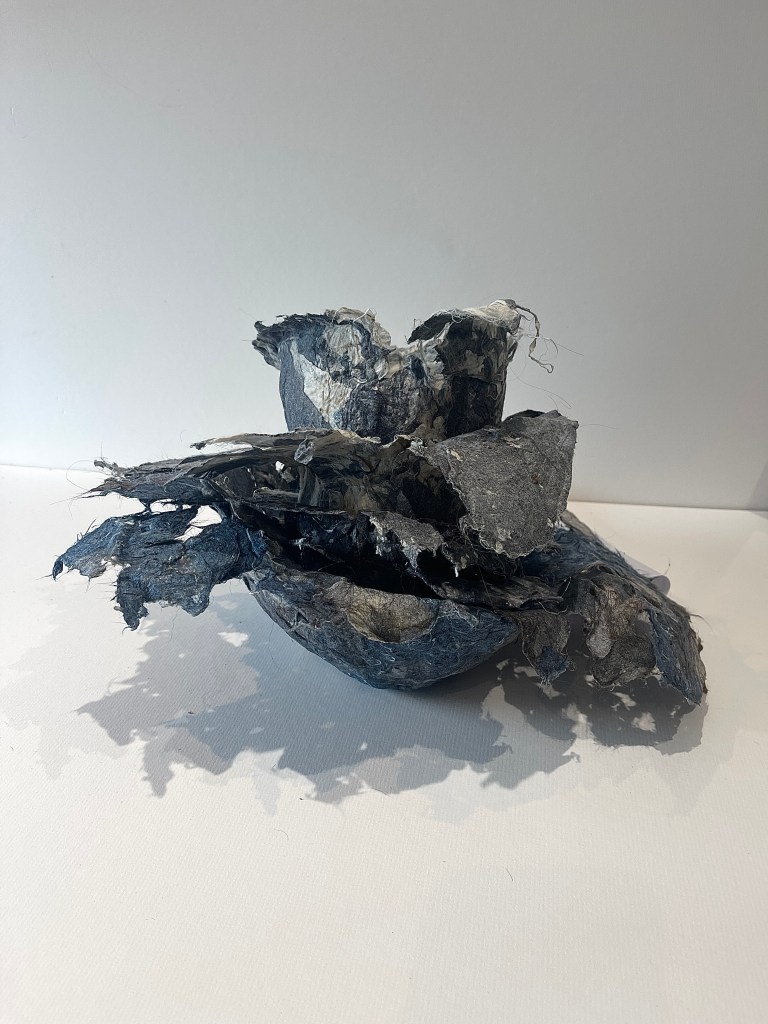
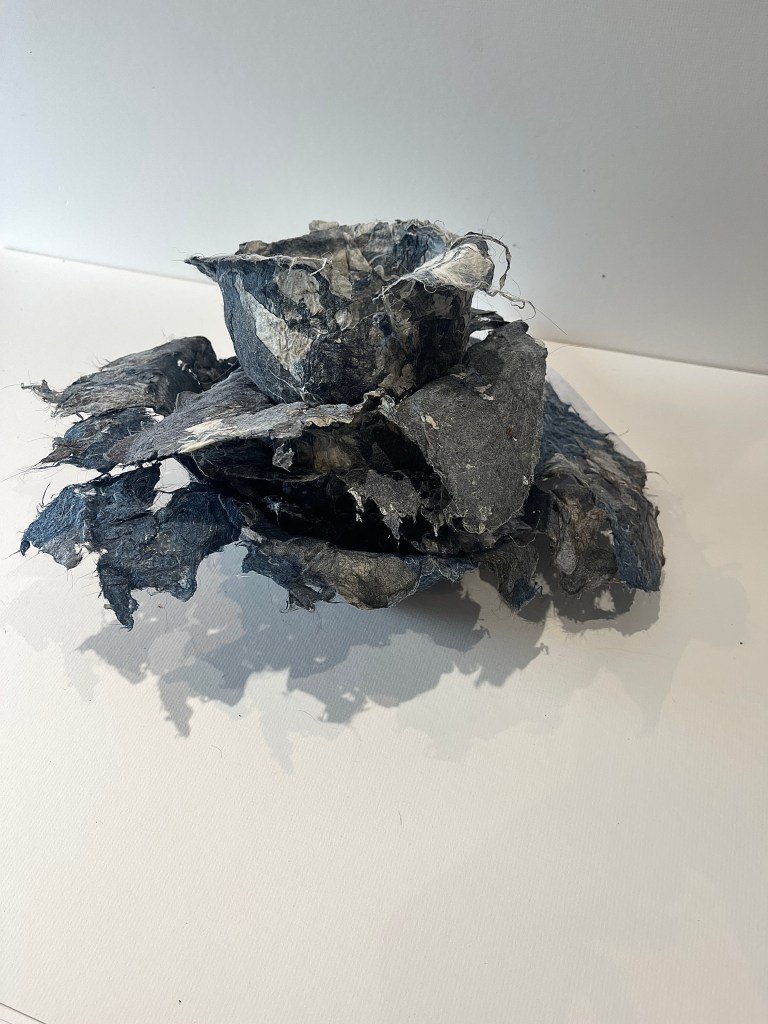
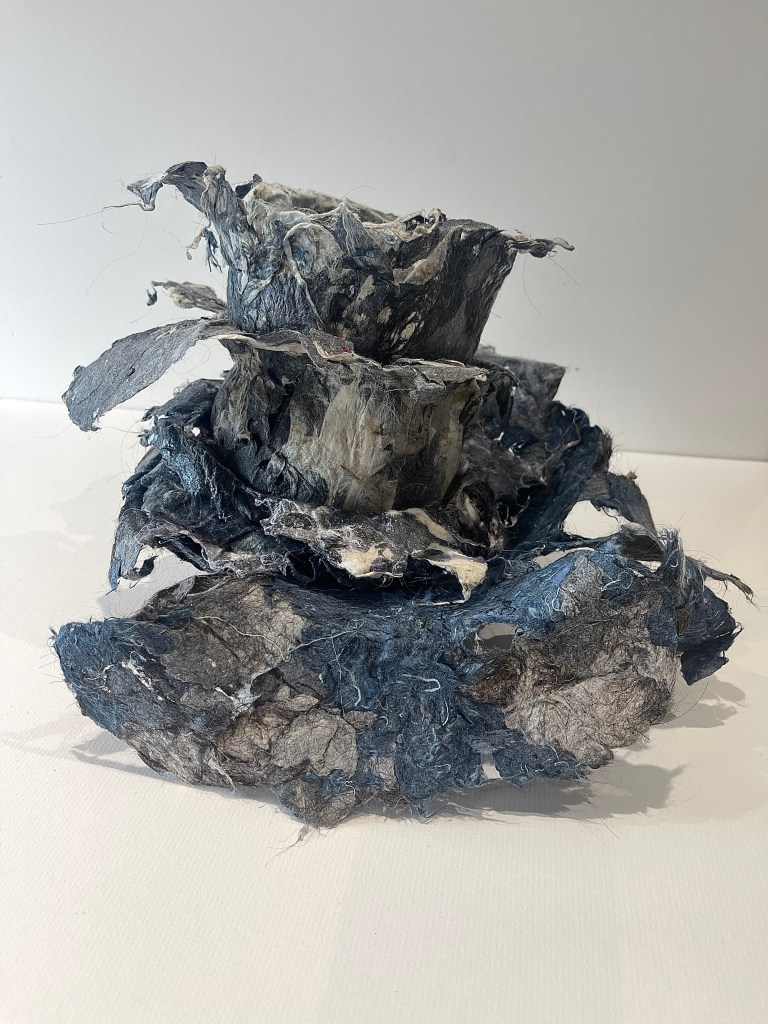
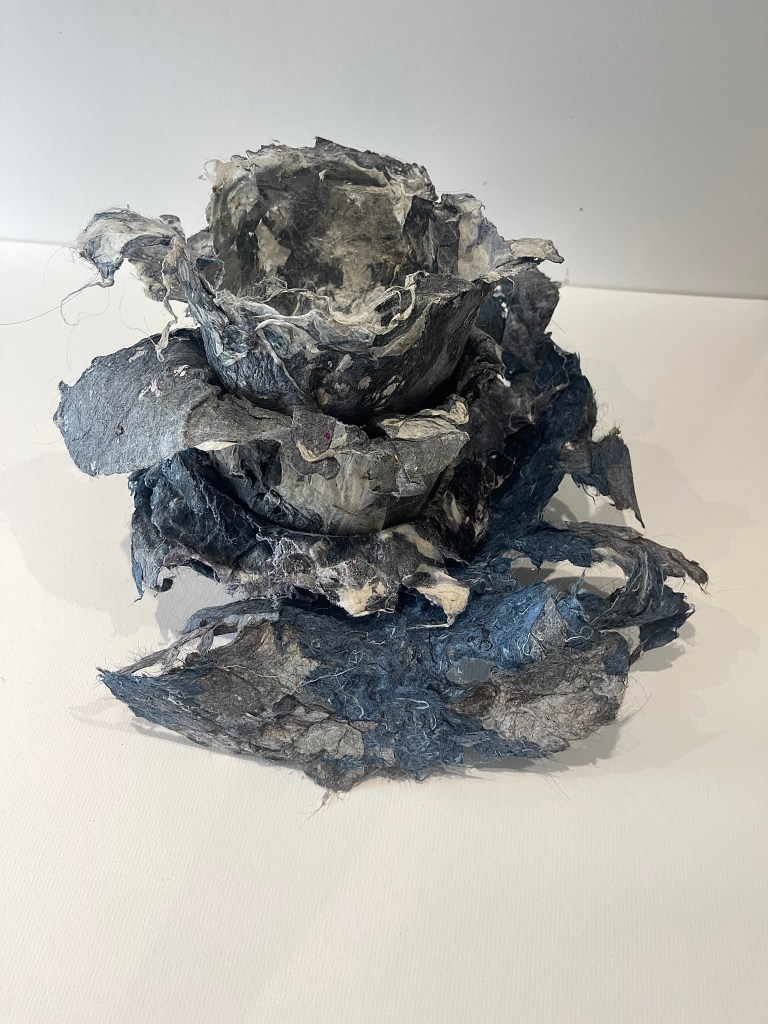
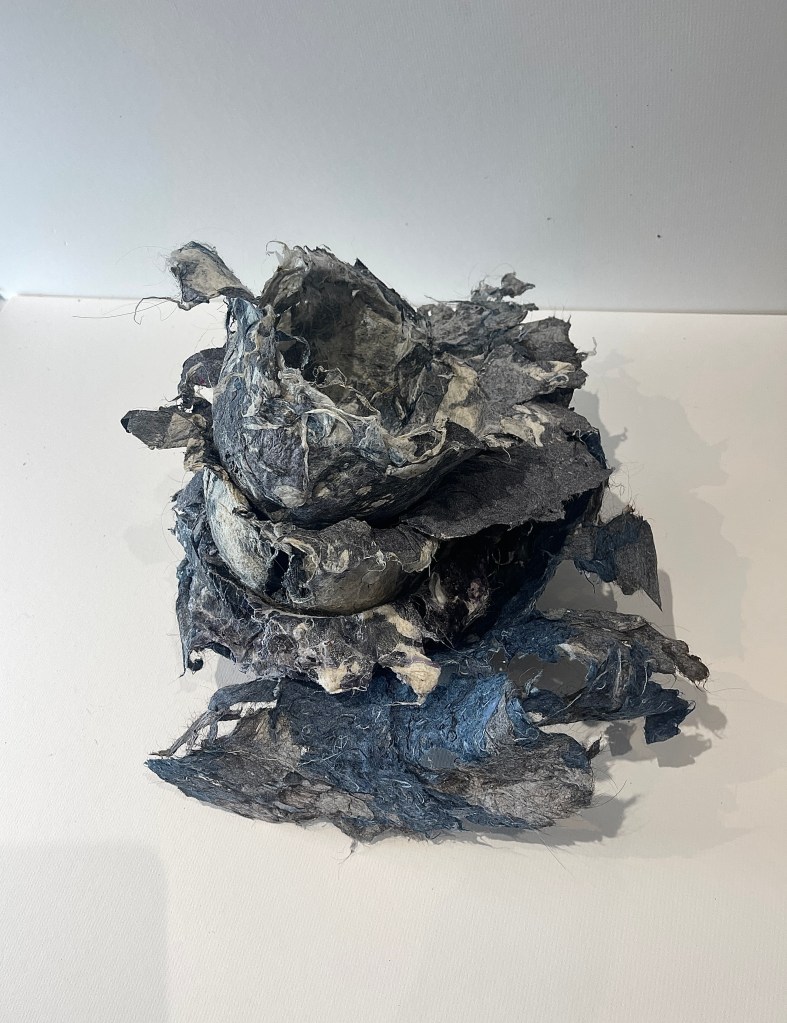
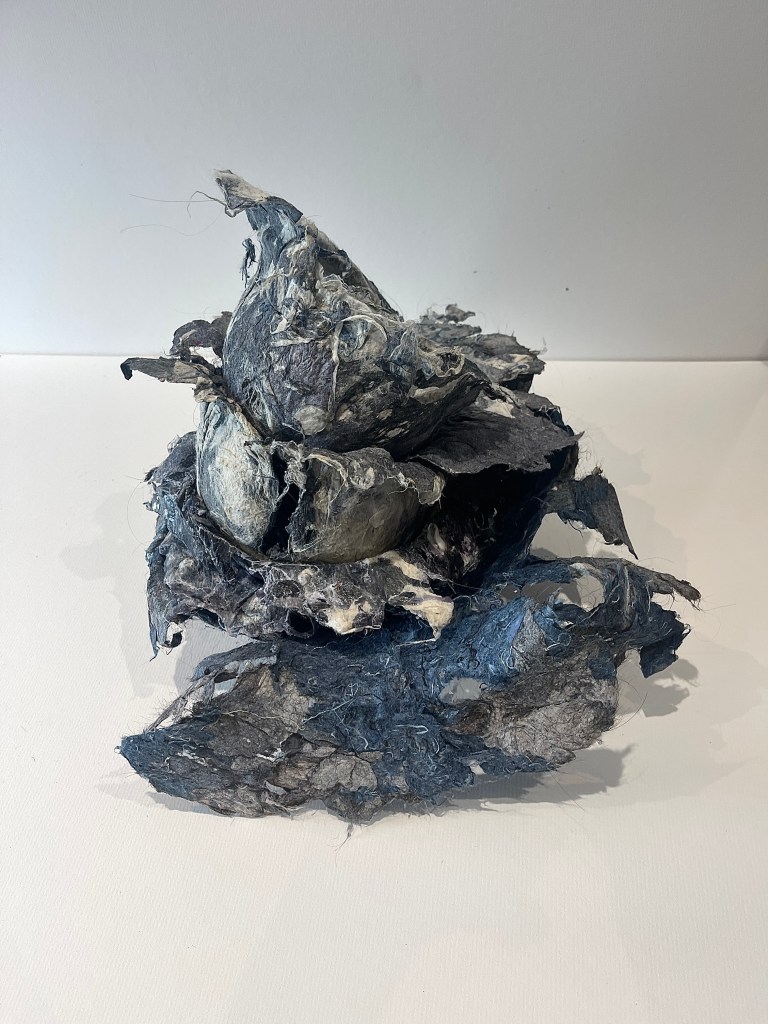
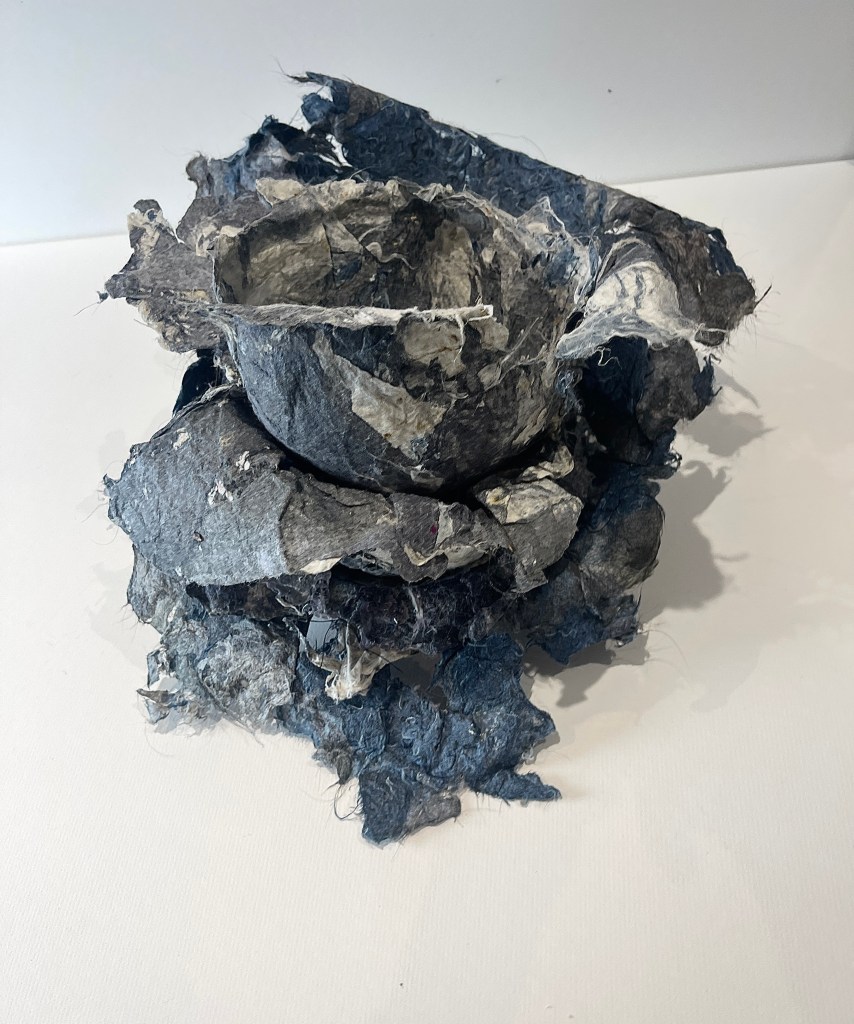
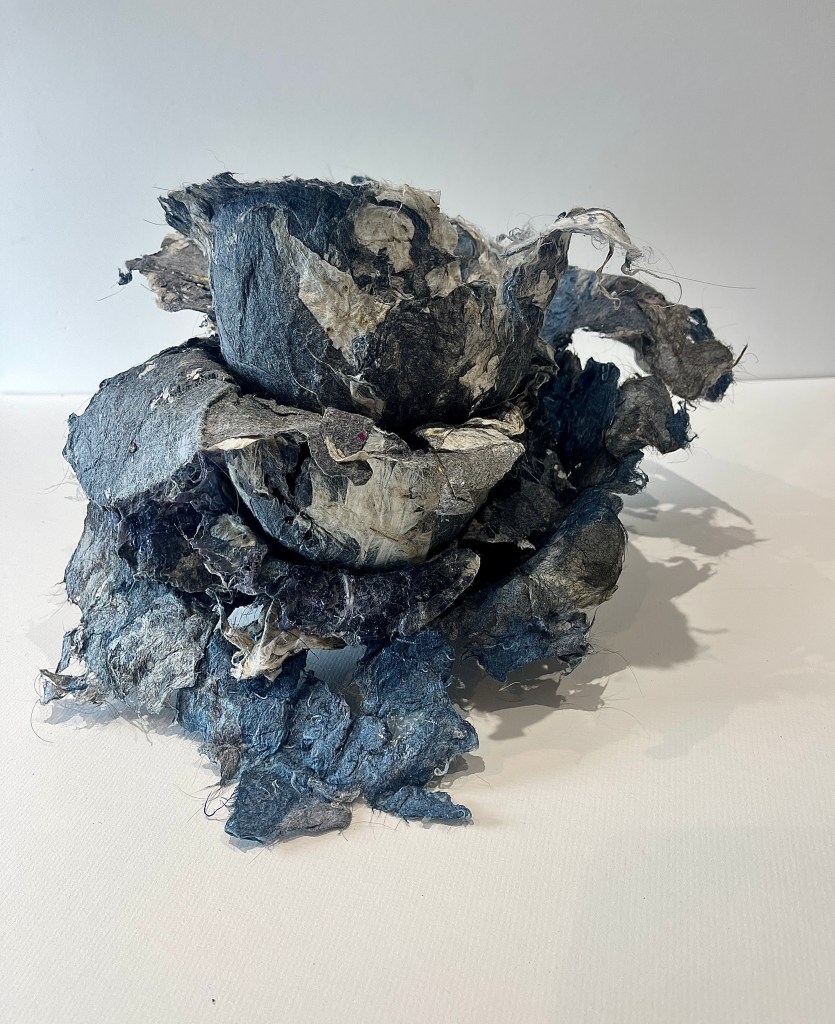
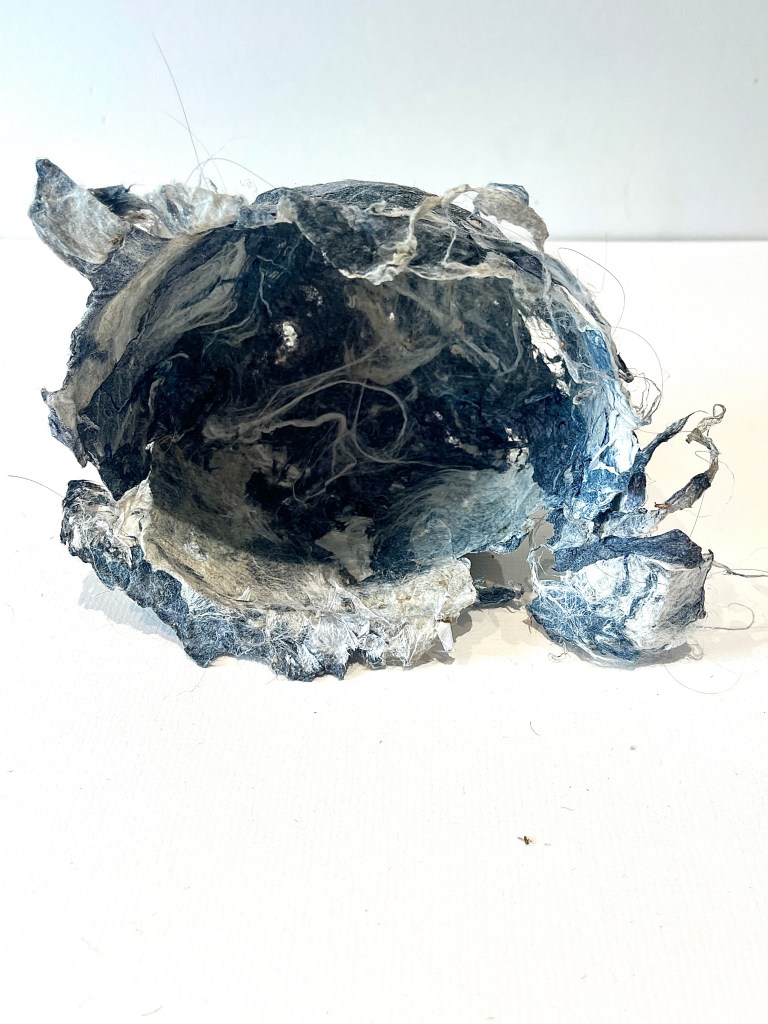
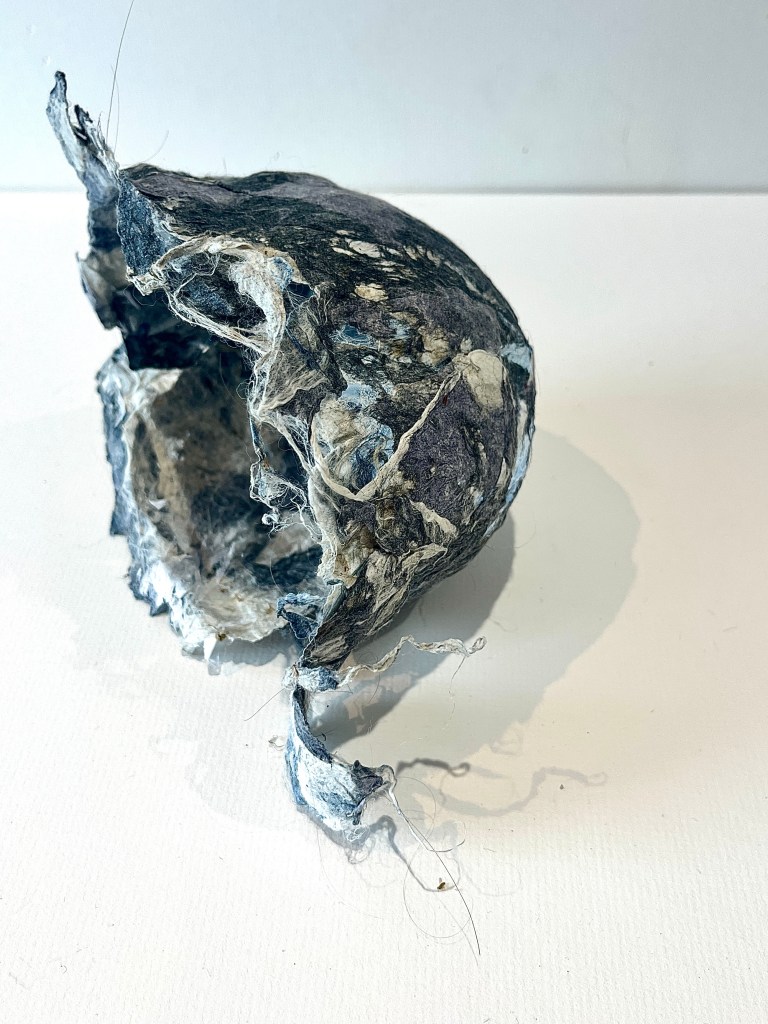
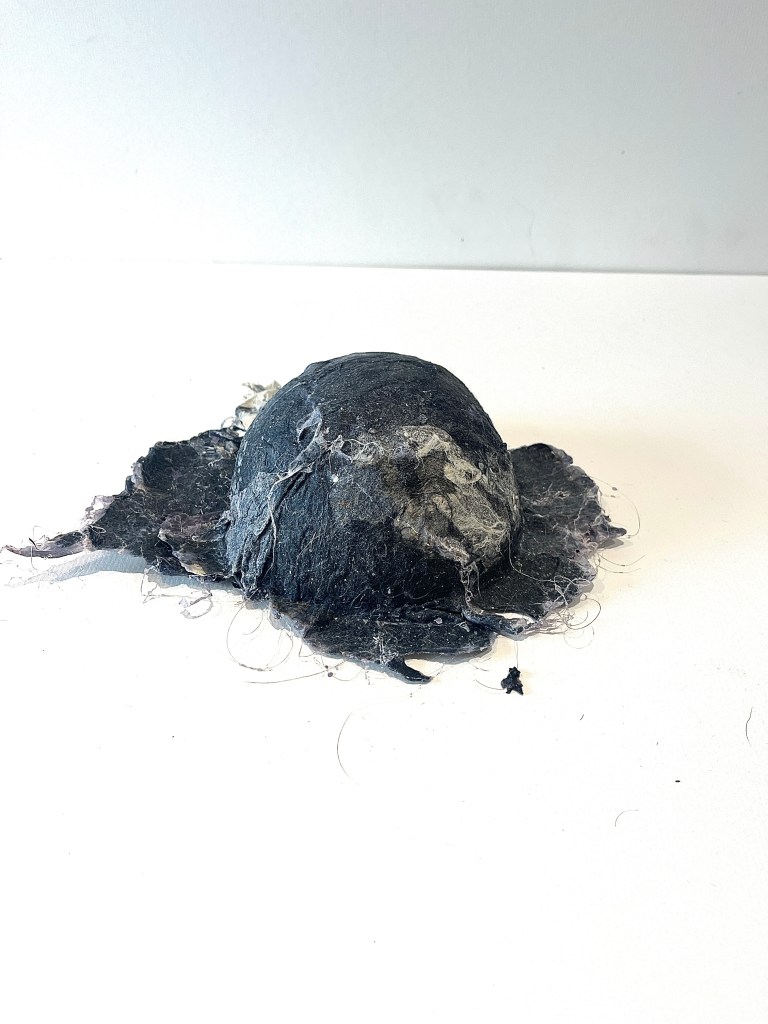
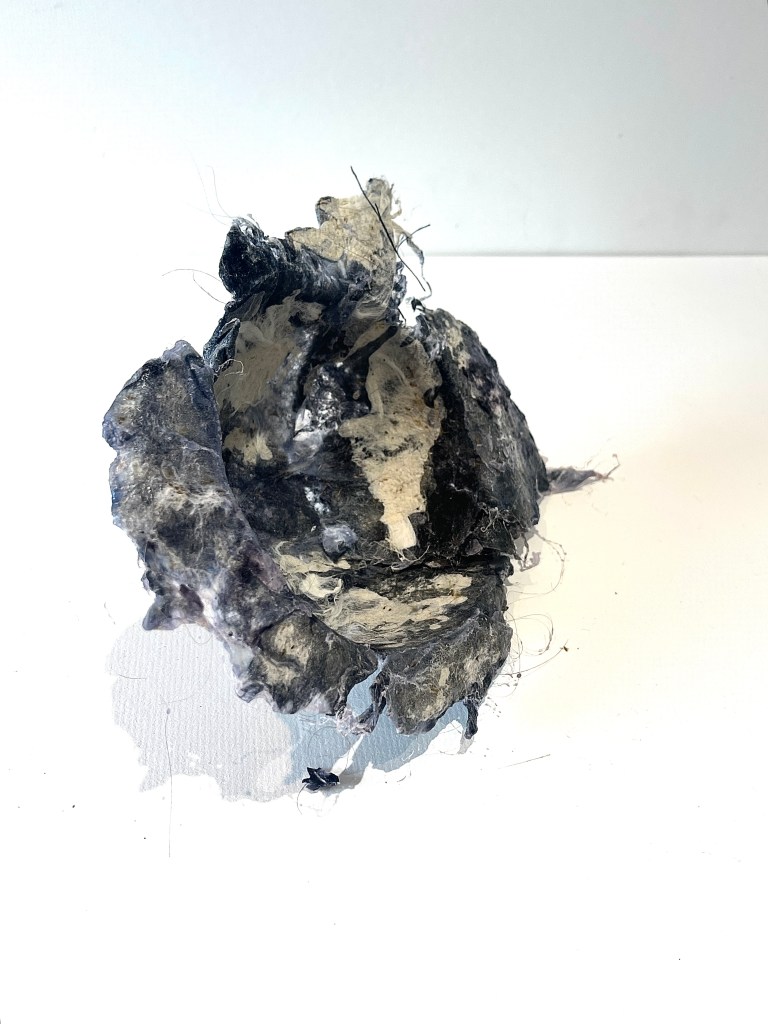
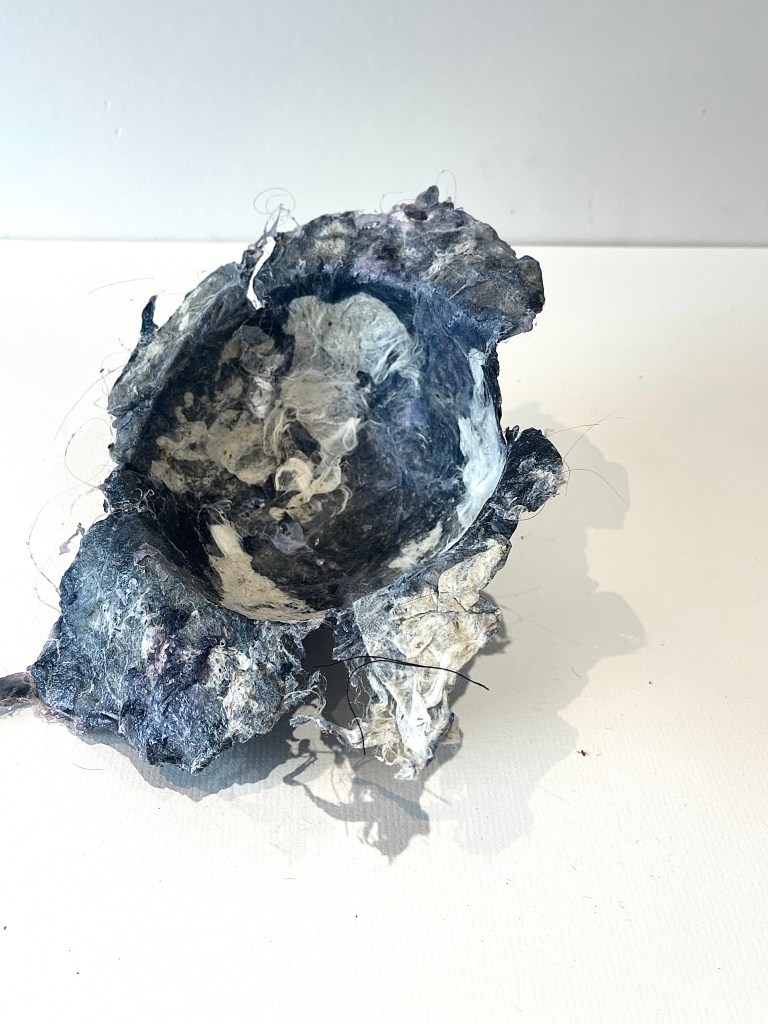
Part of the detritus exploration was looking to create objects from the machine waste in the home. Moulding and felting the material to create other objects from the ephemeral and fragile waste. The container or bowl shape is traditional in its structure and cultural ad historic meaning. It is a place to store and keep other items and is more often a item to eat food from.
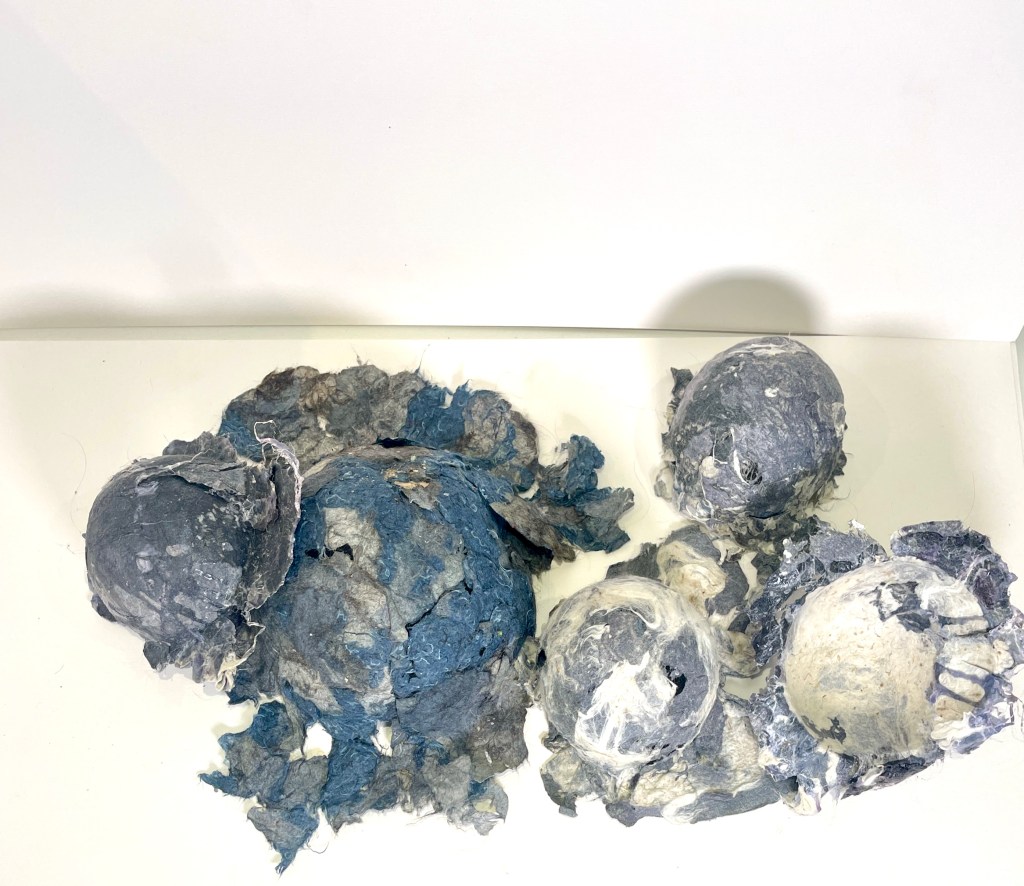
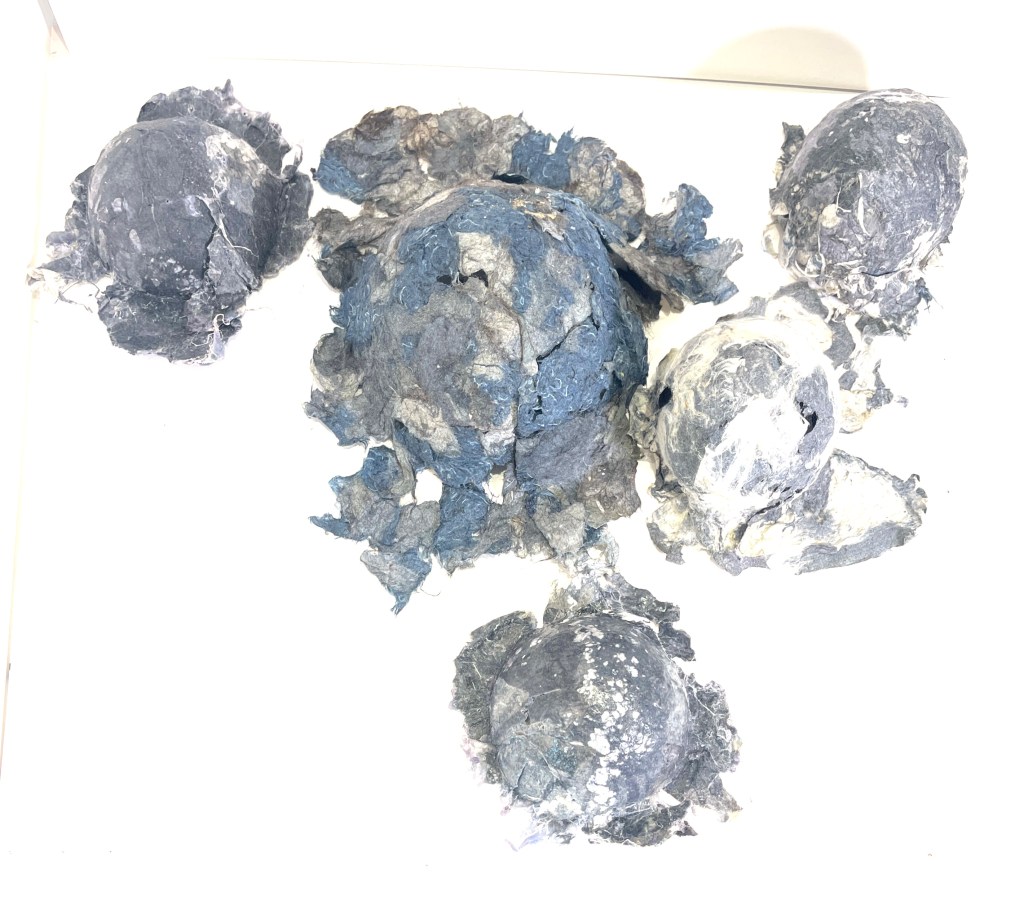
As part of my domestic enquiry I created a number of bowl shapes with the felting and moulding methods I had learnt. Some are more solid and firm others producted were fragile with weak structures.
As per the material, their appearance evokes an uncomfortable reaction when thinking of using them for any domestic purpose or ingestion of food. This reaction is purposeful and relates to the narrative of the female domestic provider and meal maker, as previously discussed this is the role woman traditionally continues to take on today. The hollow, bleak visual material qualities of the items are pertinent to my considered themes of the female domestic and inherent emotions.
‘Hollow ‘ – Felted moulded detritus . Individual shapes and constructions evoking an individualism and personification, personality.
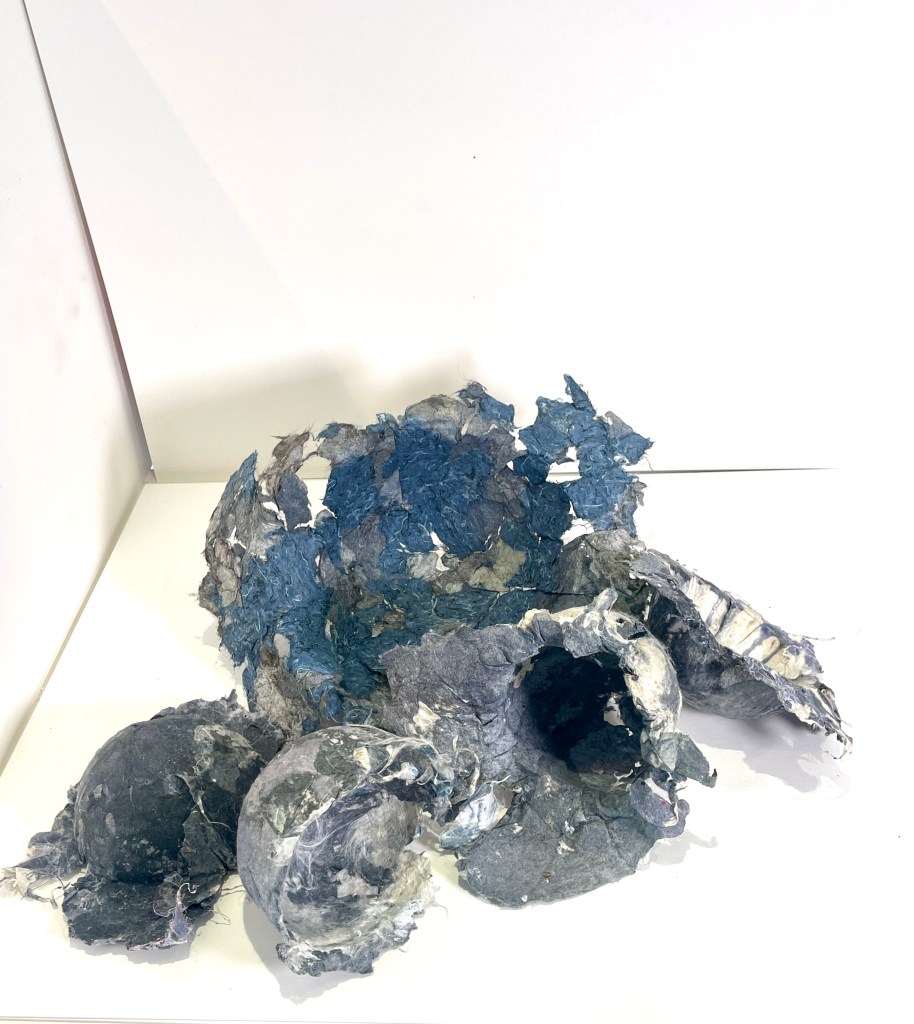
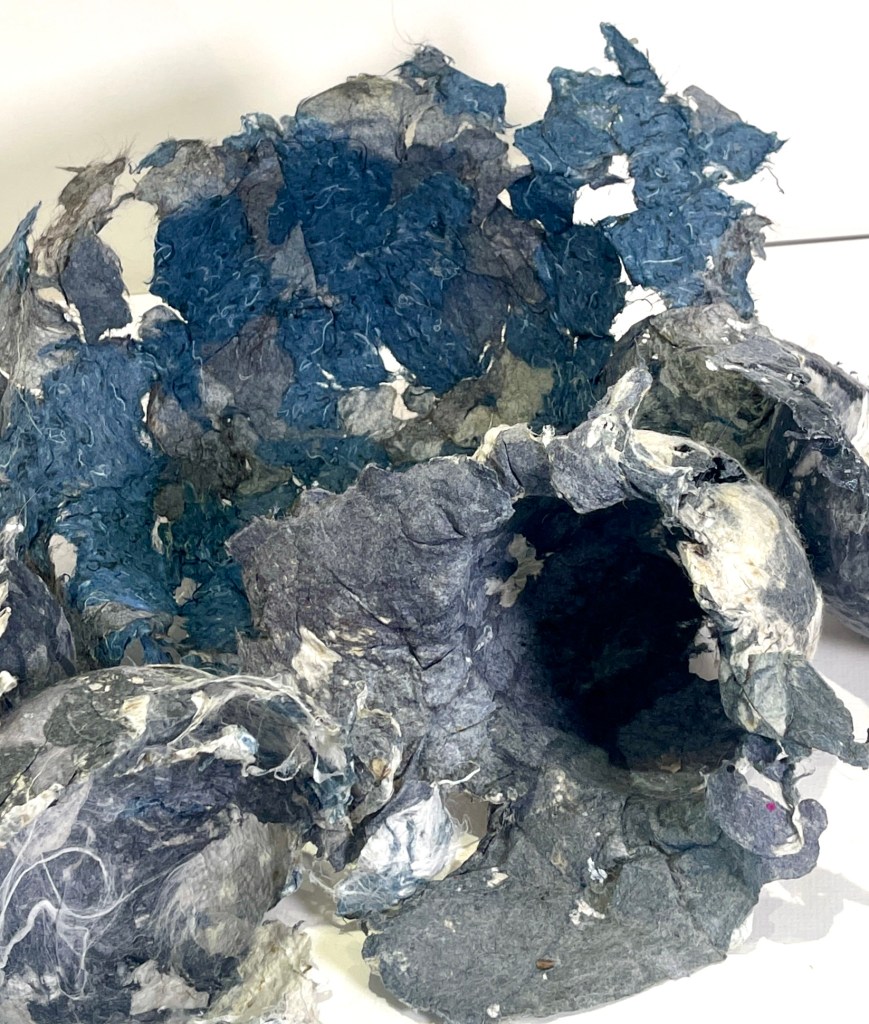
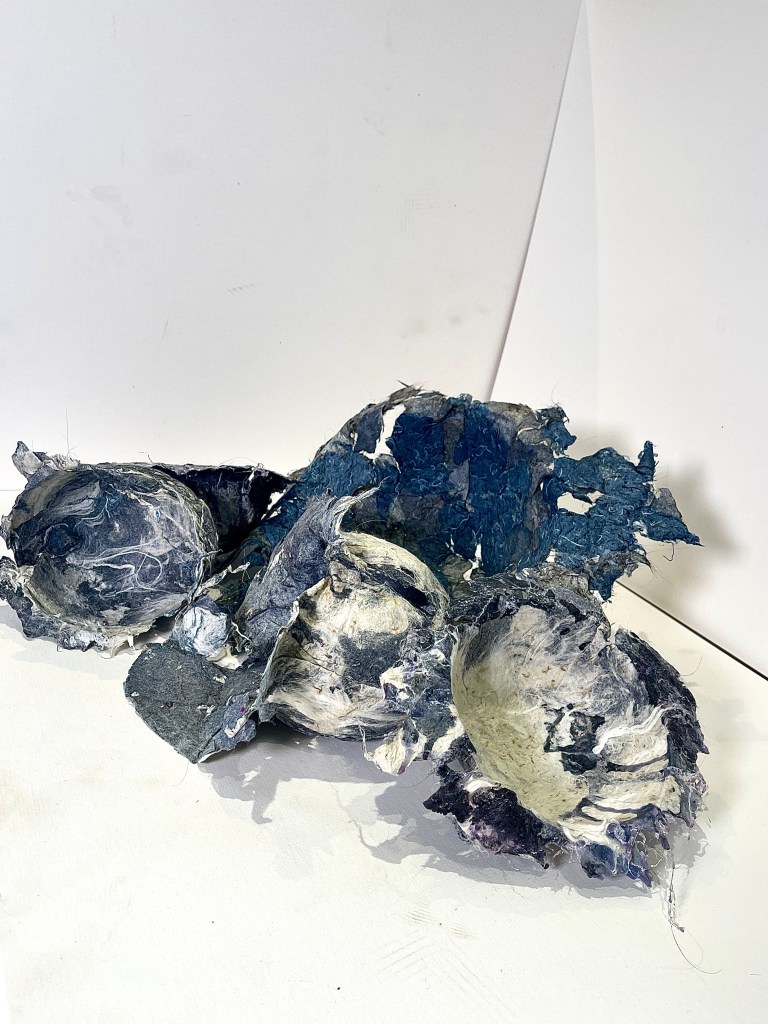
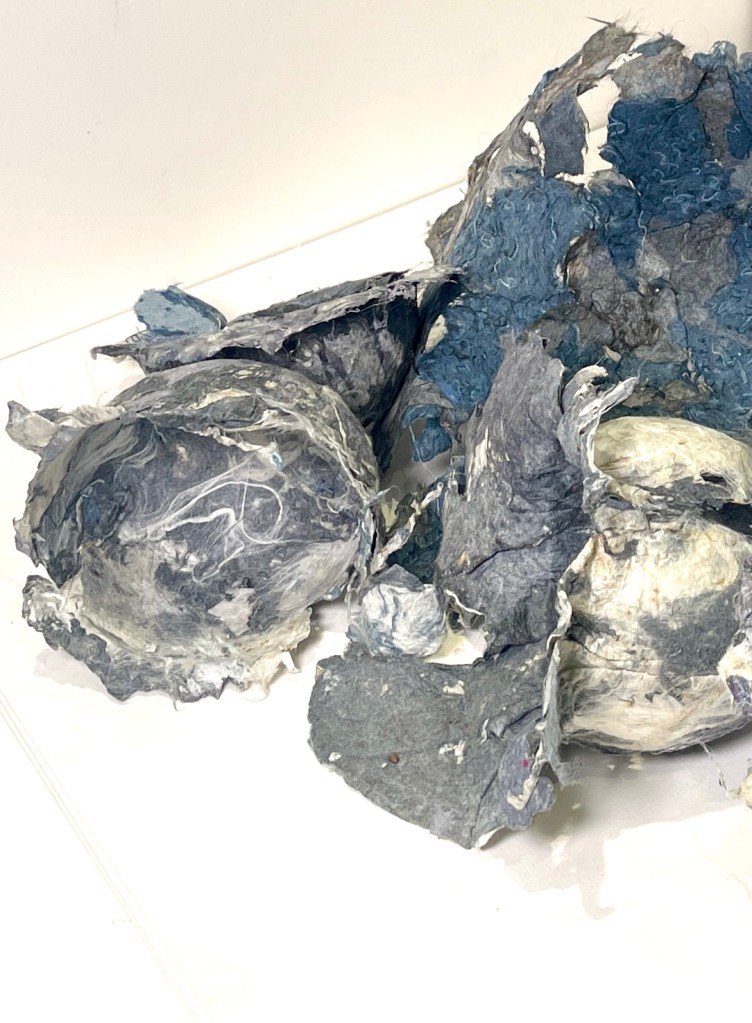
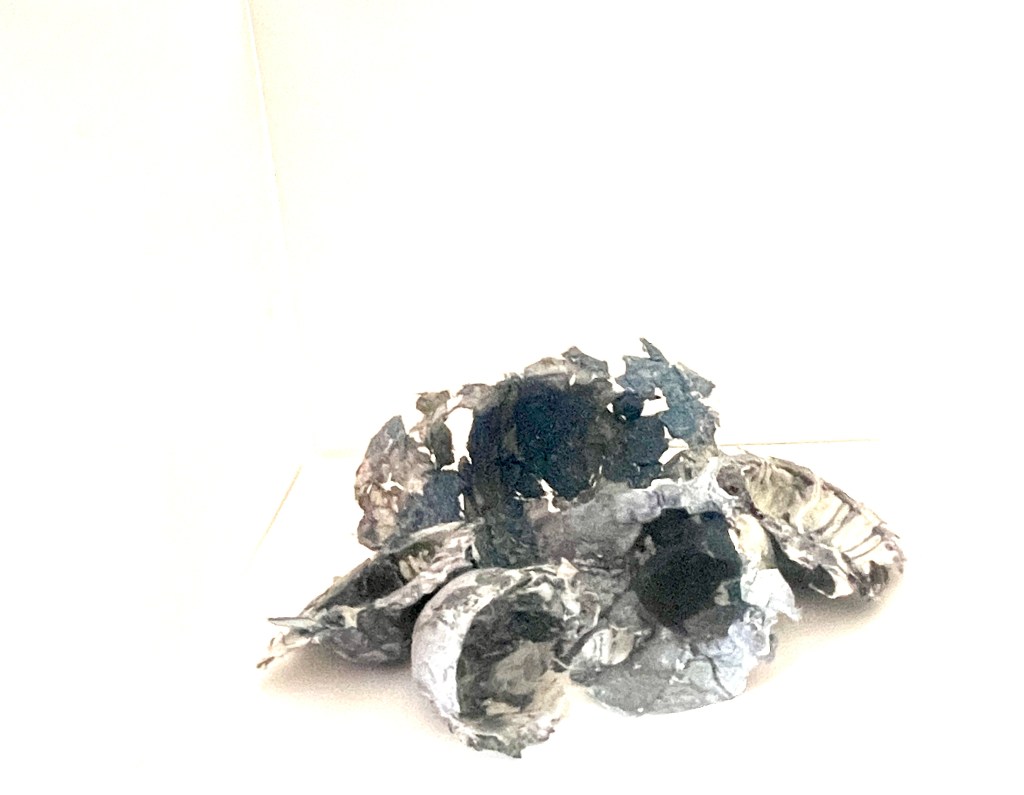
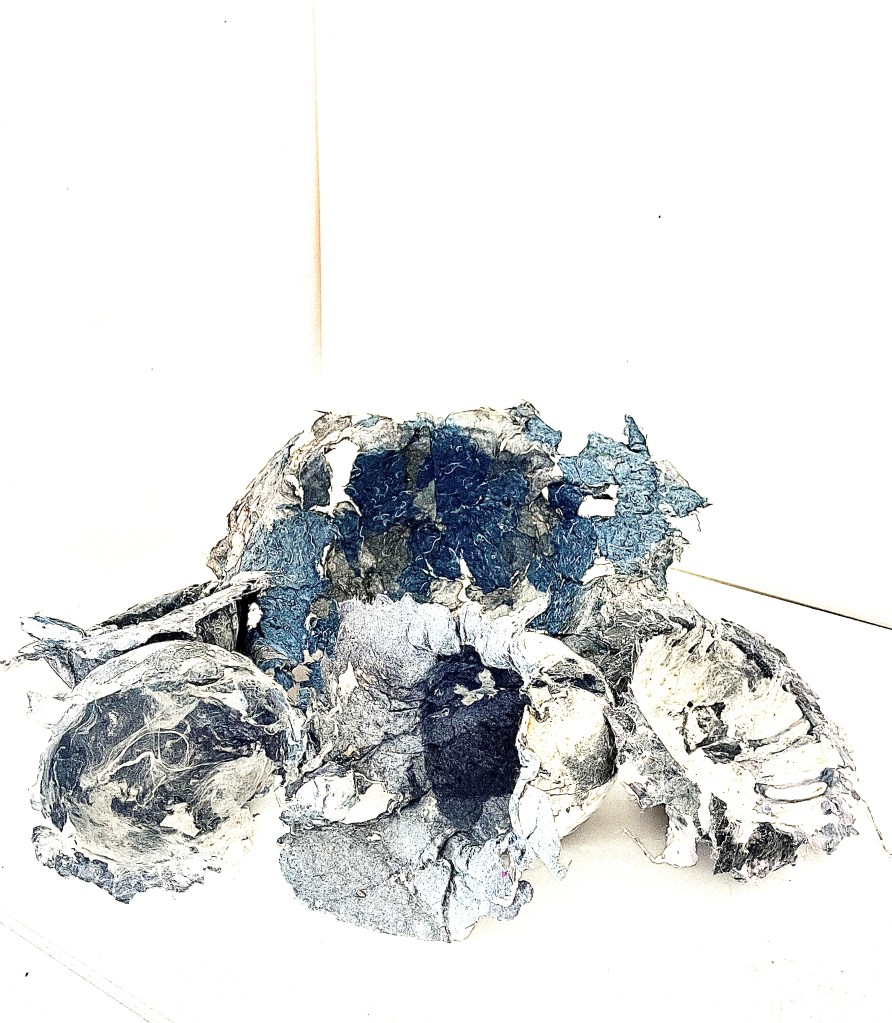
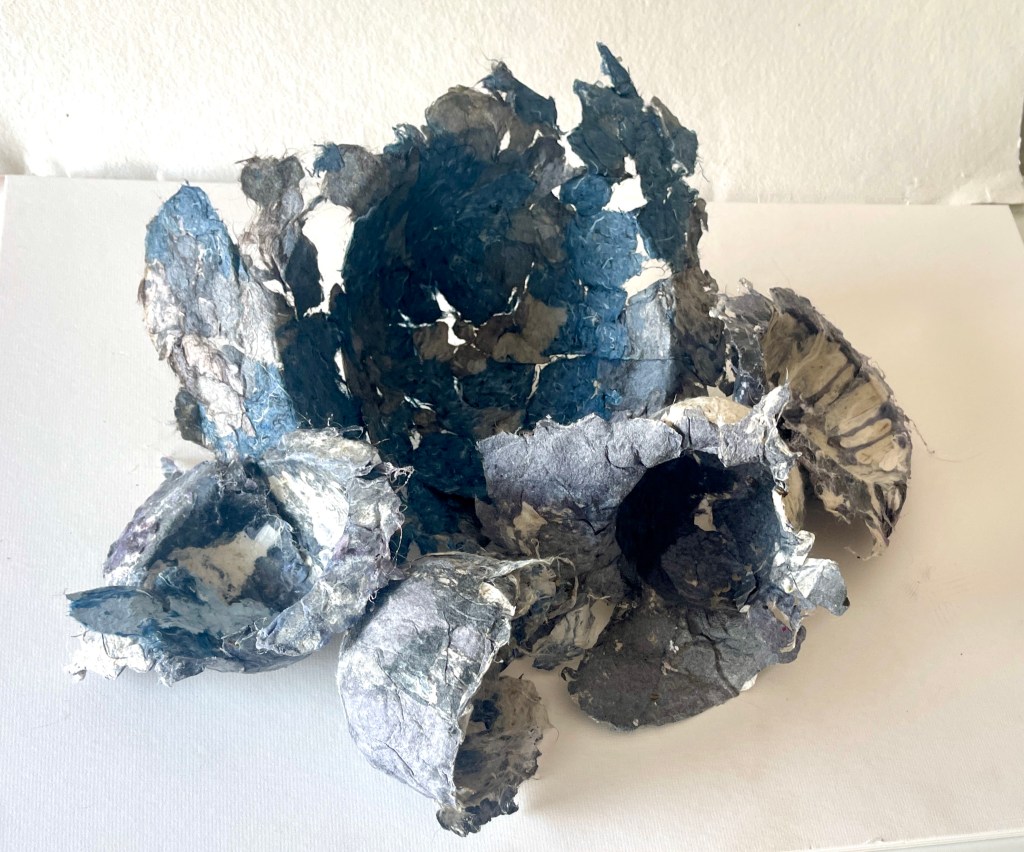
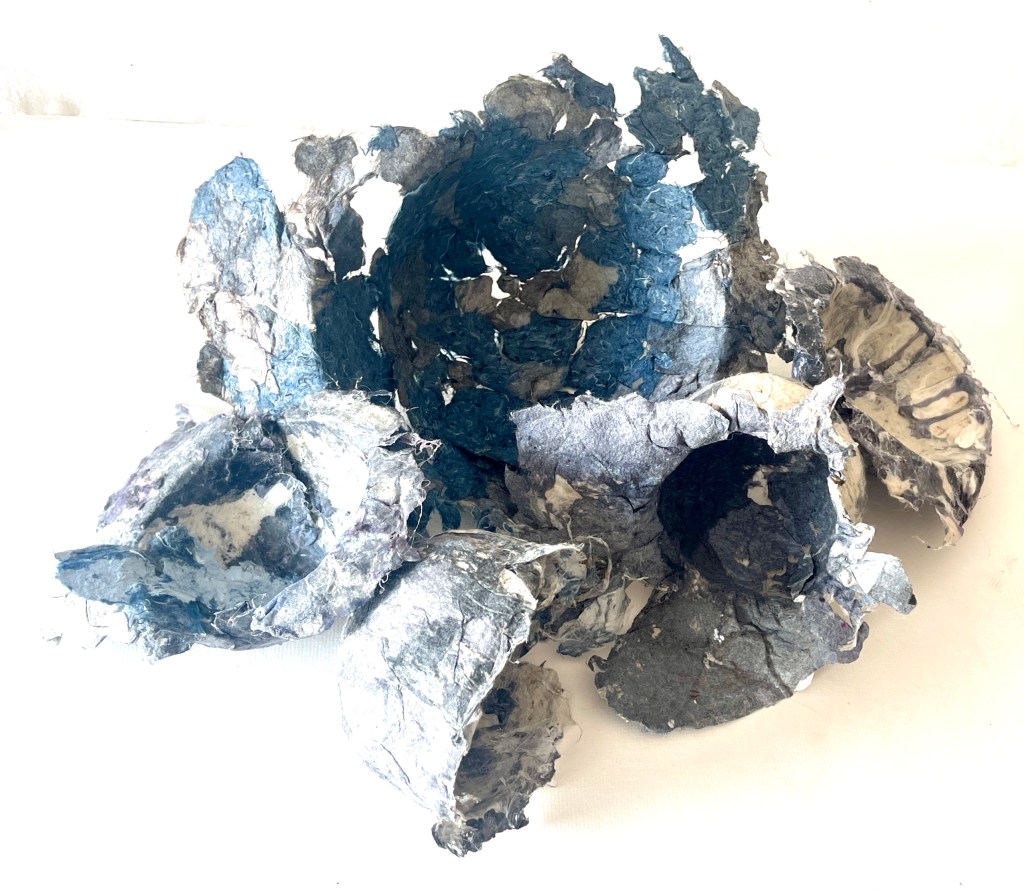
‘Hollow together’
hollow 1 –
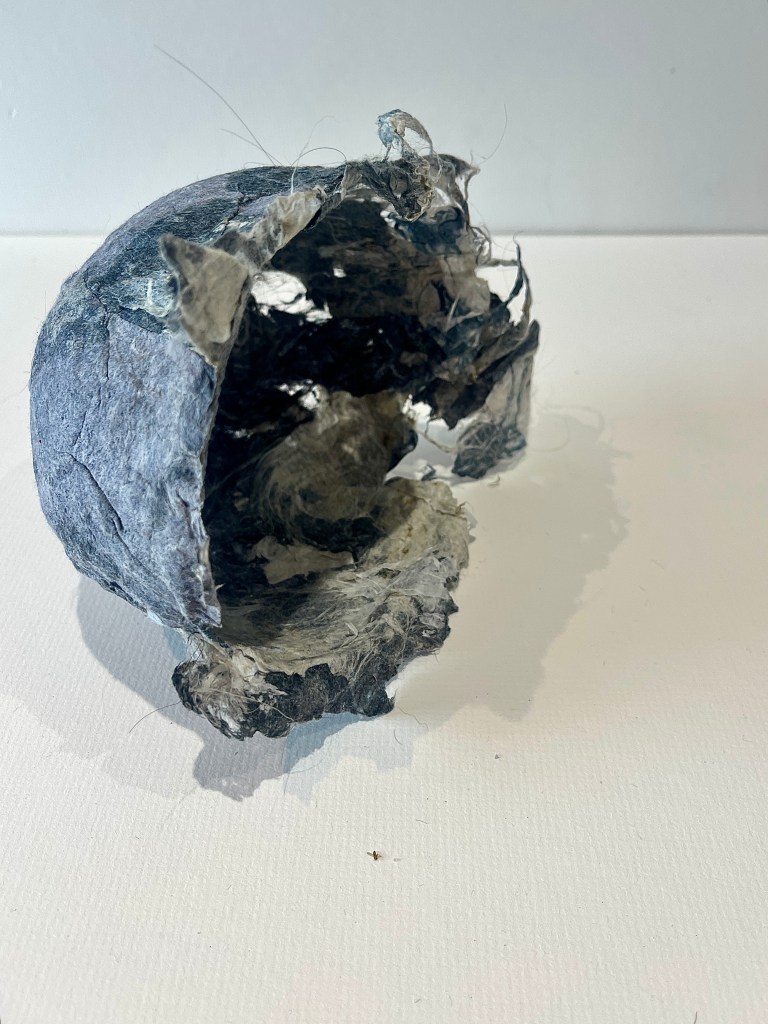
‘hollow’ 2
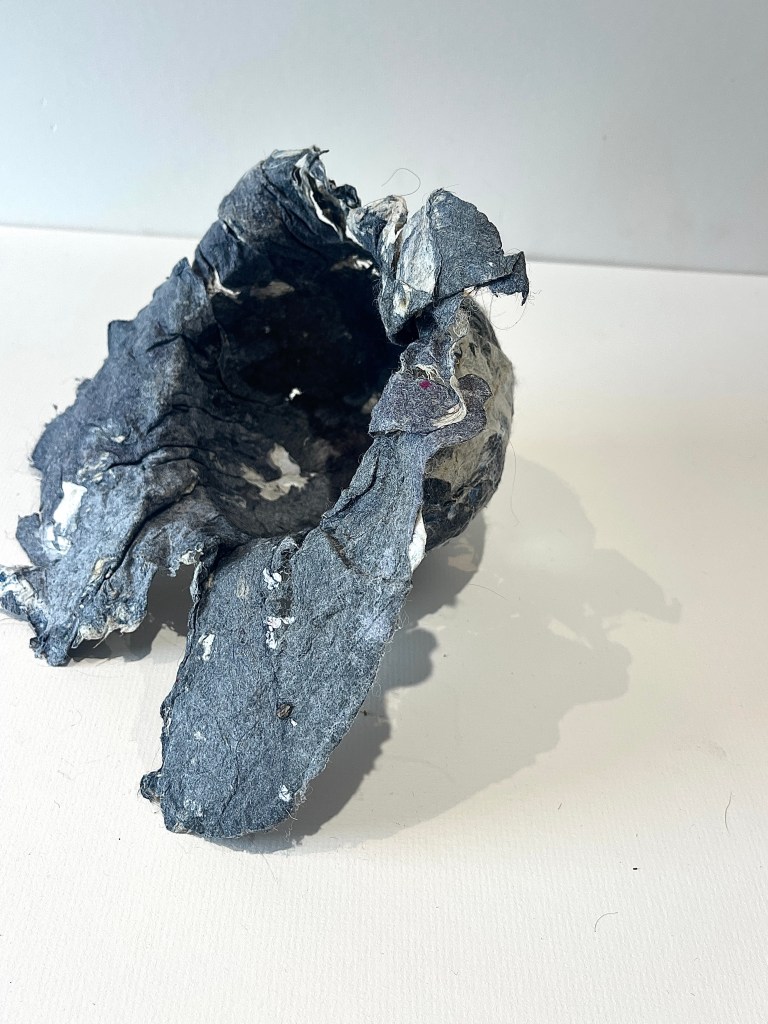
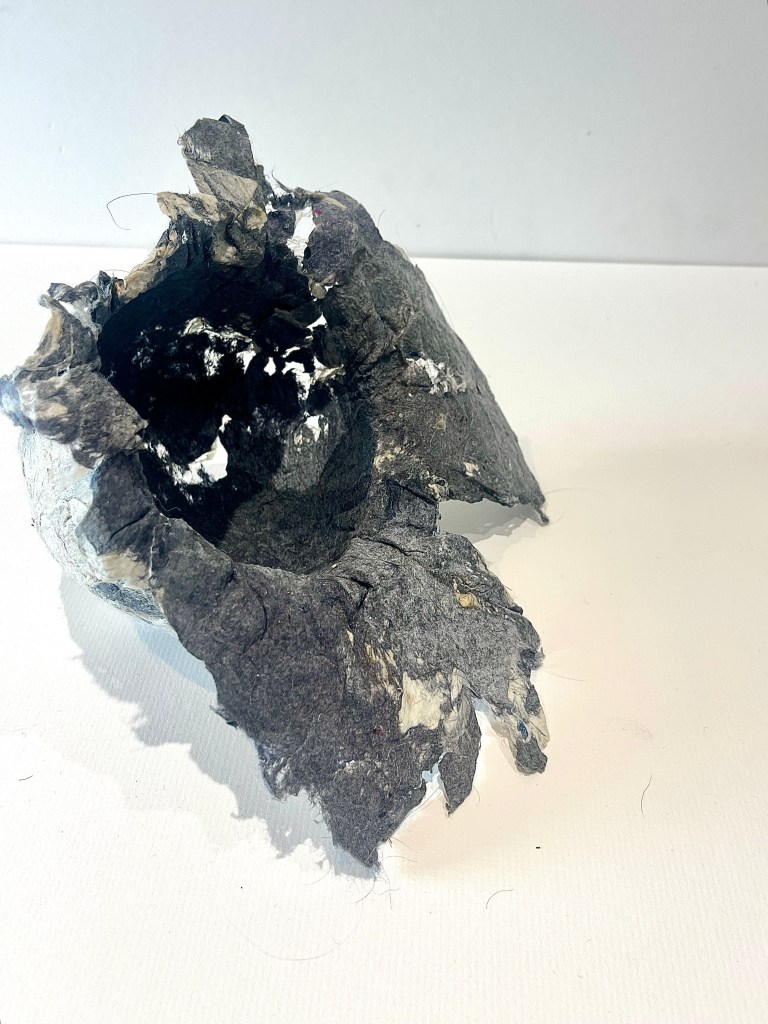
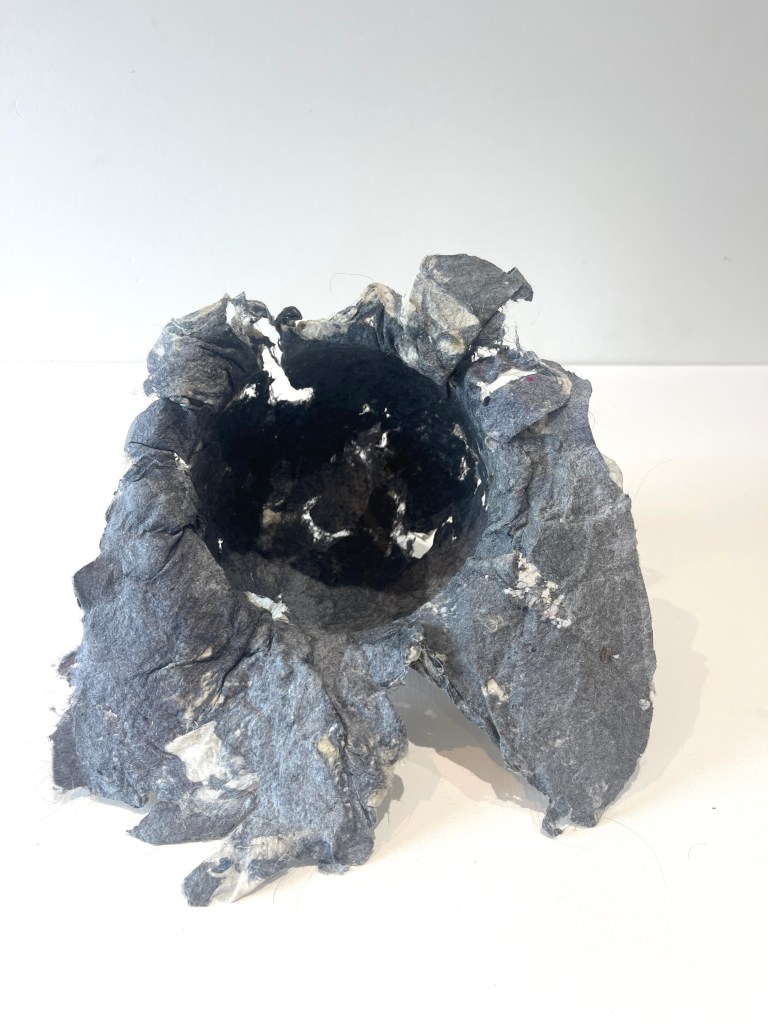
‘hollow’ 3
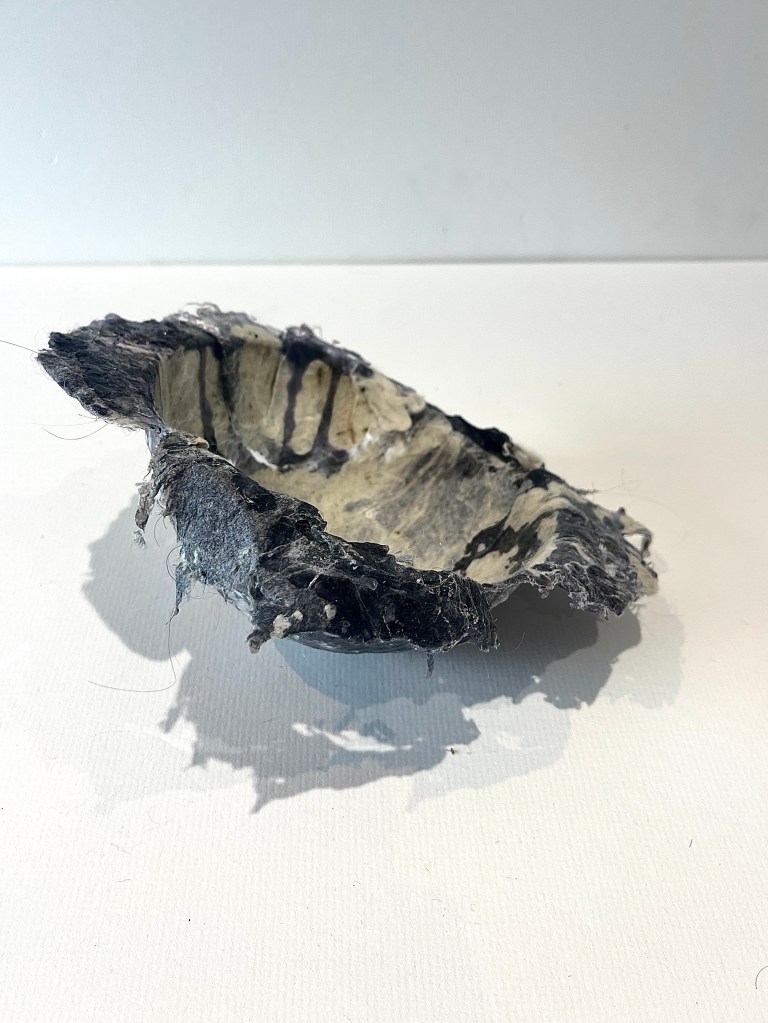
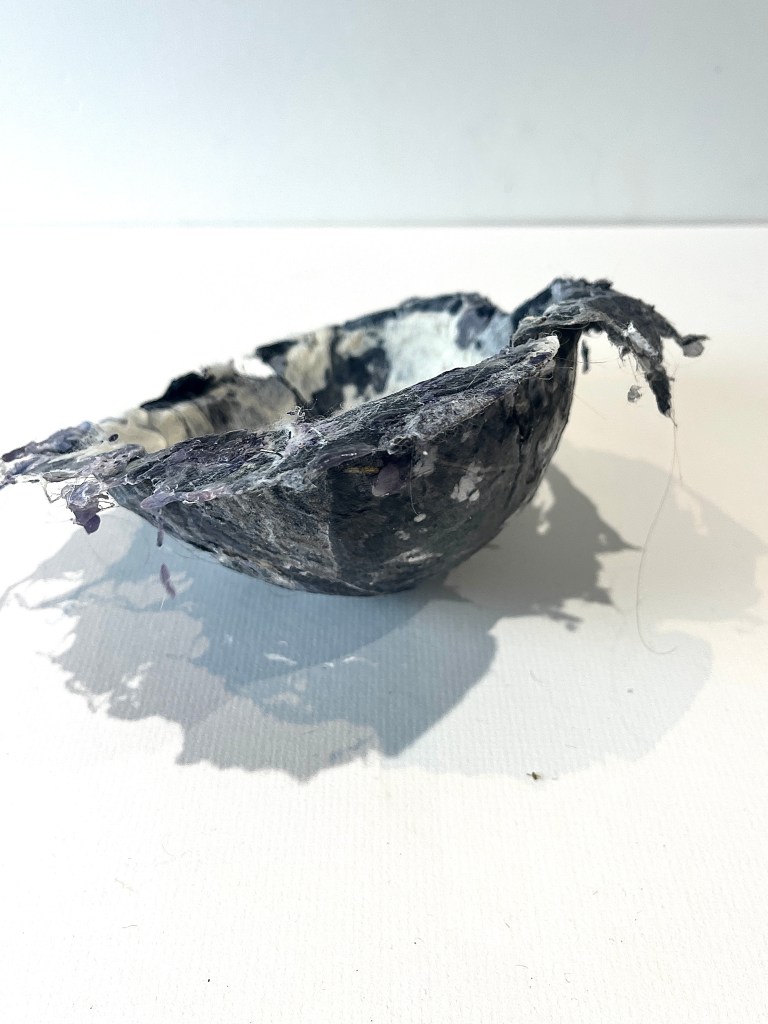
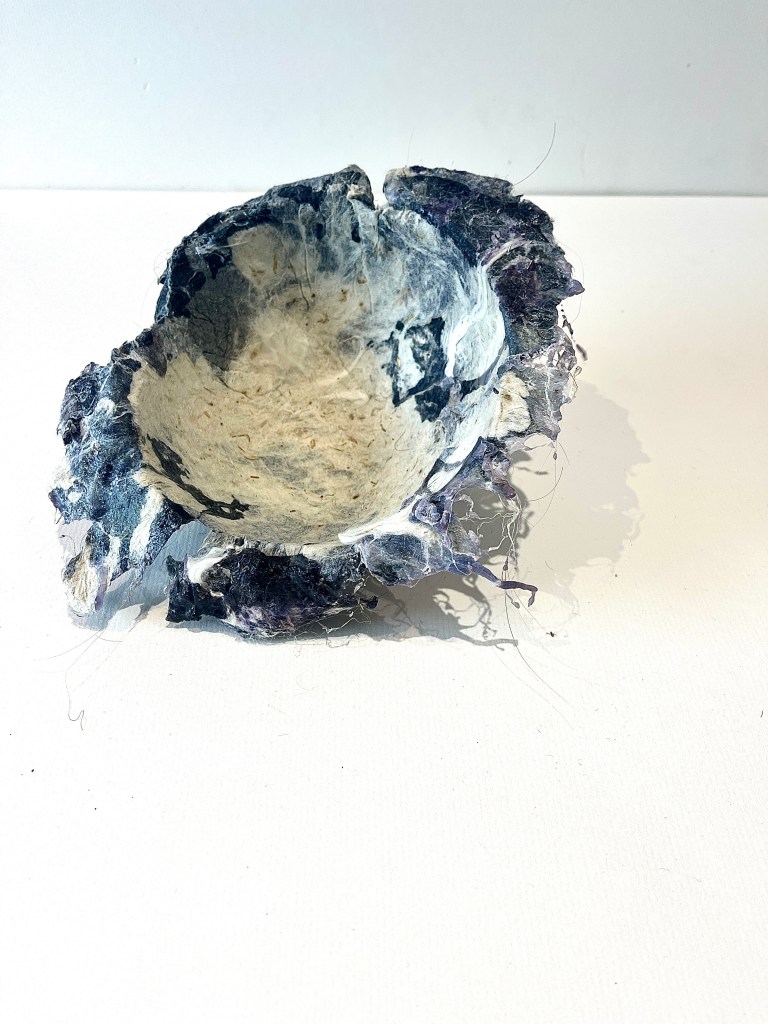
‘hollow’ 4
‘hollow ‘ 5
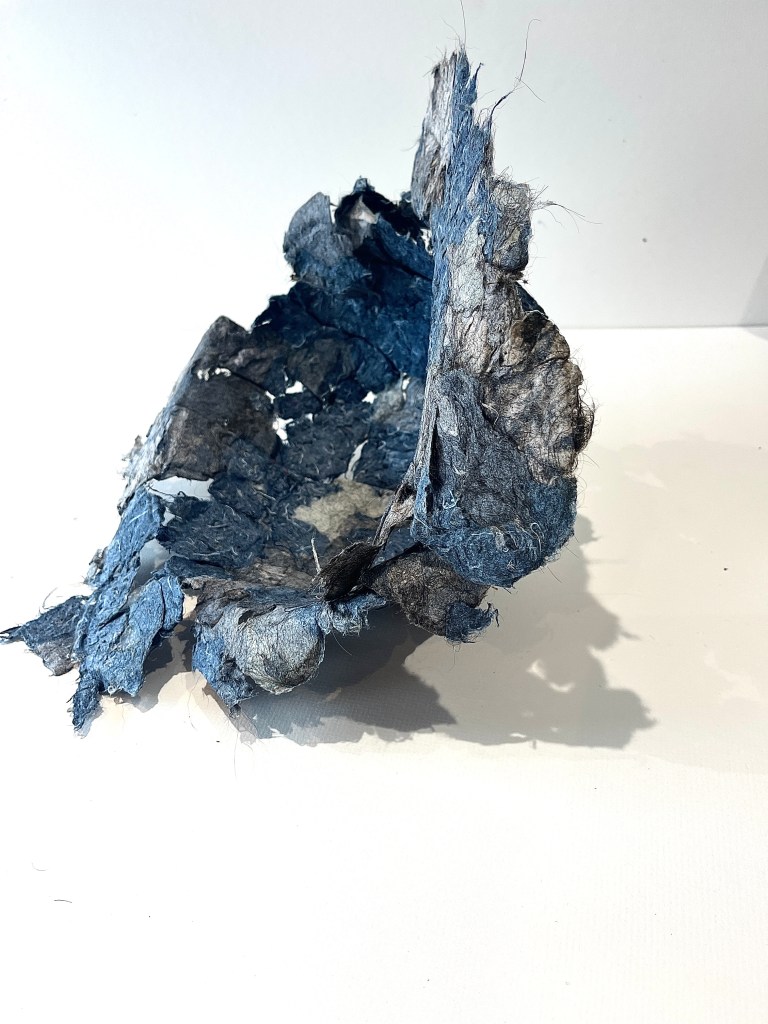
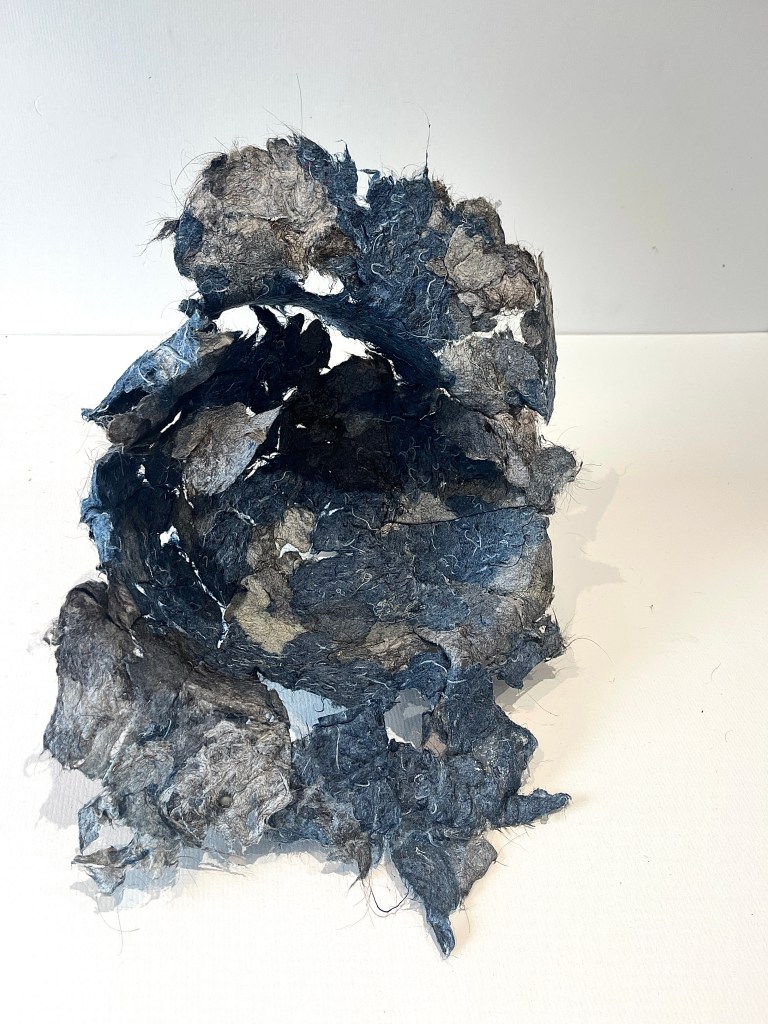
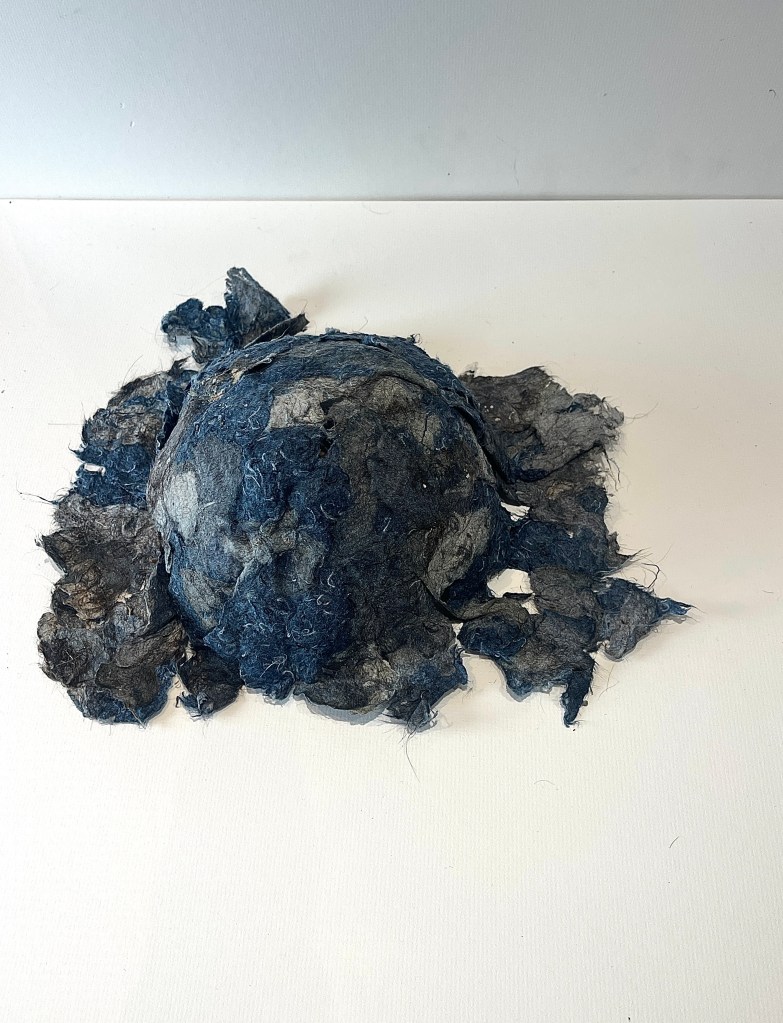
Machine Inner workings – hidden worlds – hidden labour.
Researching – Mierle Laderman Ukeles
The work of Mierle Laderman Ukeles (1939 Denver, USA) concerns the everyday routines of life. In 1969, following the birth of her first child, Ukeles wrote her “Manifesto for Maintenance Art” as a challenge to the oppositions between art and life, nature and culture, and public and private. ( http://www.arnolfini.org.uk)
“Manifesto for Maintenance Art” – Ukeles – 1969 – Published in Artforum 1971.
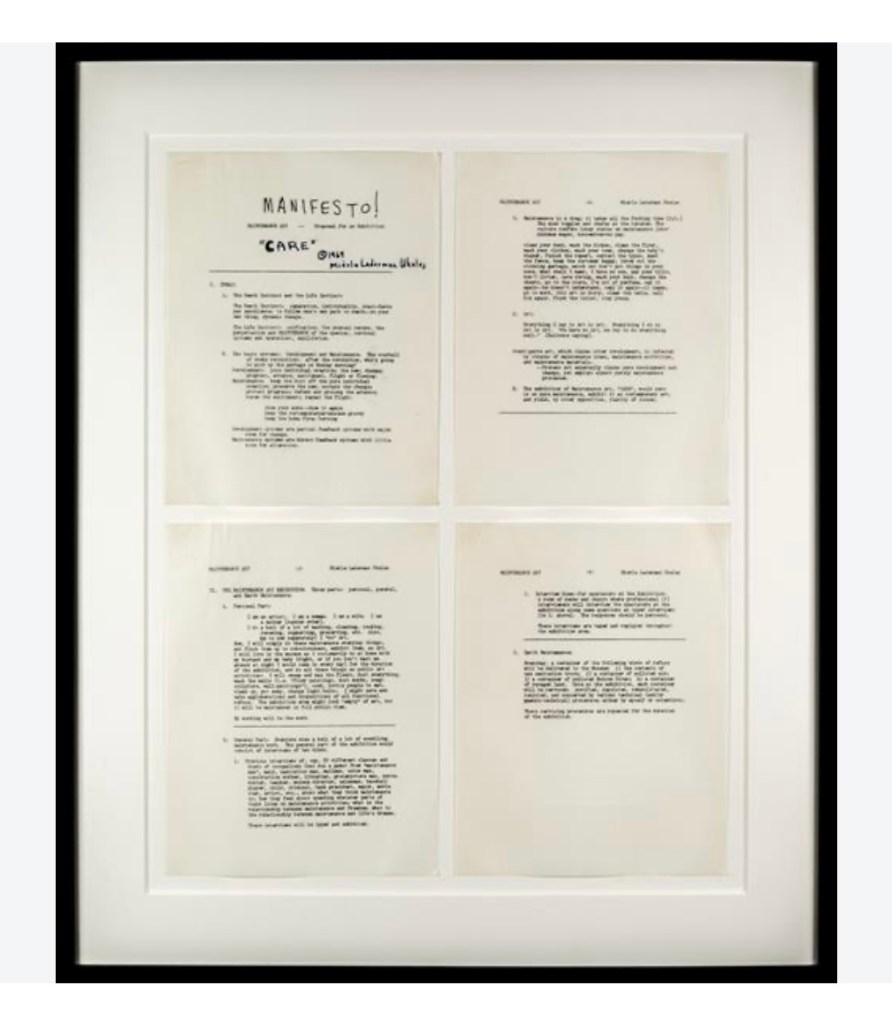
Ukeles highlighted overlooked aspects of social production and questions the hierarchies of varied forms of work, especially of housework and low-wage labour. Ukeles was interested in how artists could use the concept of transference to empower people to act as agents of change and stimulate positive community involvement toward ecological sustainability.
Since 1977, Ukeles has acted as artist in residence at the New York City Department of Sanitation .
“I am an artist. I am a woman. I am a wife. I am a mother. (Random order). I do a hell of a lot of washing, cleaning, cooking, renewing, supporting, preserving, etc. Also, (up to now separately) I ‘do’ Art. Now I will simply do these everyday things, and flush them up to consciousness, exhibit them, as Art.”
(Ukeles, Manifesto for Maintenance Art, 1969).
The tension Ukeles felt tension and opposing forces at work between her role as and artist and as a mother. It spurred her on to write the manifesto above. She emphasises the maintenance , domestic as well as public and earth should be seen as a creative strategy, proclaiming herself as a ‘maintenance artist’
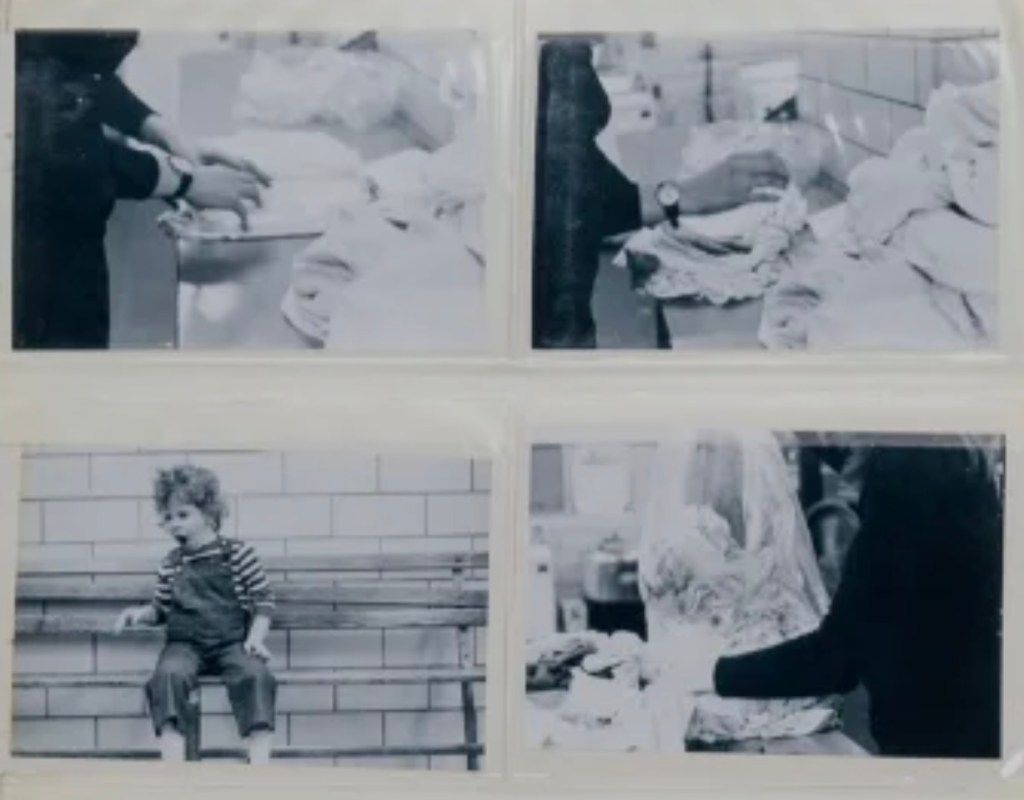
Ukeles has had to combine both roles she has taken on into one in order to thrive as an artist and mother. The most interesting part of the manifesto and its relevance to my own practice was the proposal for for an exhibition titled ‘Care’. The show would be in three sections and show Ukeles performing household chores and so elevate domestic maintenance to the status of art ! It would include interactive interviews with the public regarding their relationship to maintenance . She required various sorts of refuse to be delivered to the museum to be ‘rehabilitated’ and ‘ recycled’.
Excited to come upon this trailblazing artist, mother woman I was disappointed the exhibition never did happen. However she was seminal as an artist who framed the pivotal movements of the era laying the groundwork to define the feminist and conceptual art histories. Where the idea of the work is more important than what it looks like ! Insisting upon unrecognised yet crucial labour of the home and childcare could be considered an art form. Maintenance was defined by Ukeles as the term for repetitive tasks of sustenance, preservation, renewal and repair, clean-ups.
It opened up questions not only of what art can be but more crucially who is excluded from making it.
This artist has certainly been informative and inspiring in my creating process allowing me to indulge creatively in matters of the domestic and homemaking in a positive life affirming way.
Mierle Laderman Ukeles, Maintenance Art Tasks 1973 (detail), album with gelatin silver prints, chain, and rags, 13 × 12 1/2 × 1 3/4″. Photographs by Joshua Siderowitz, 1973.
The Beauty of Detritus – Abject Materiality.
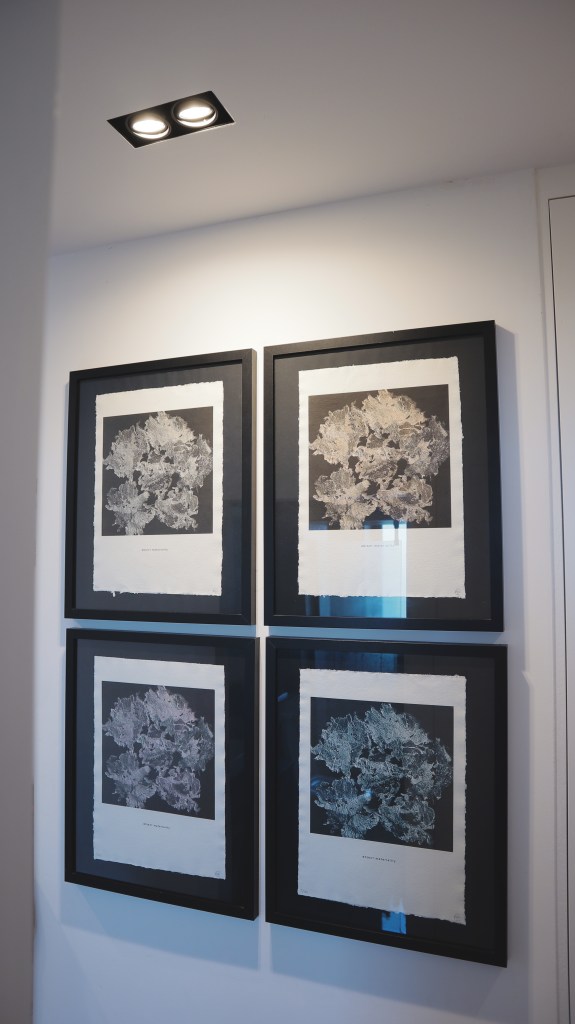
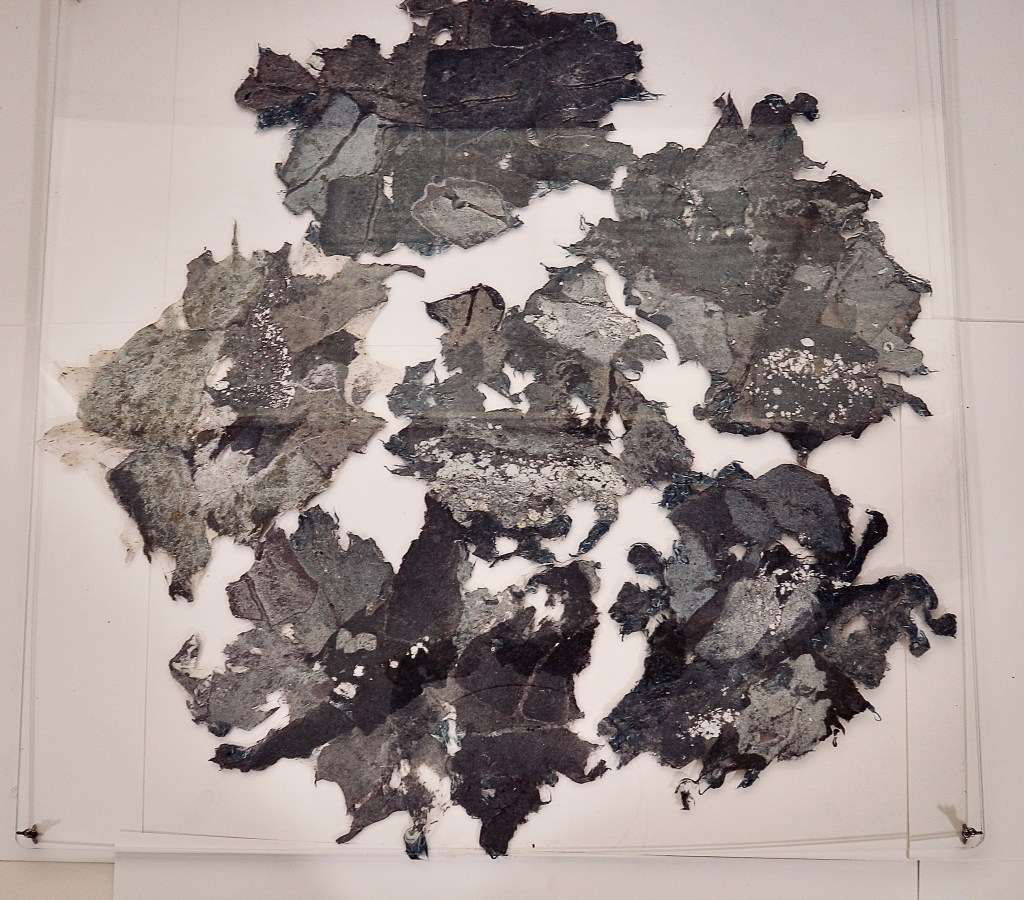
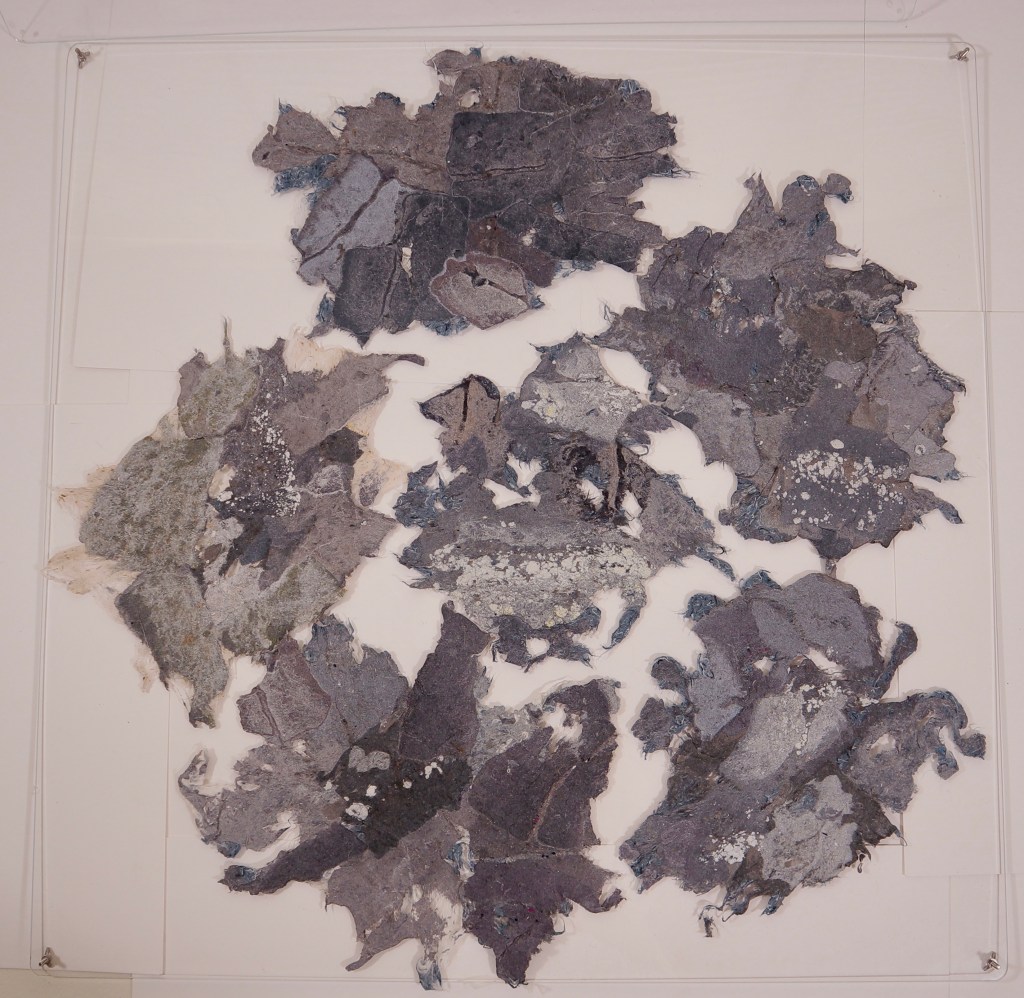
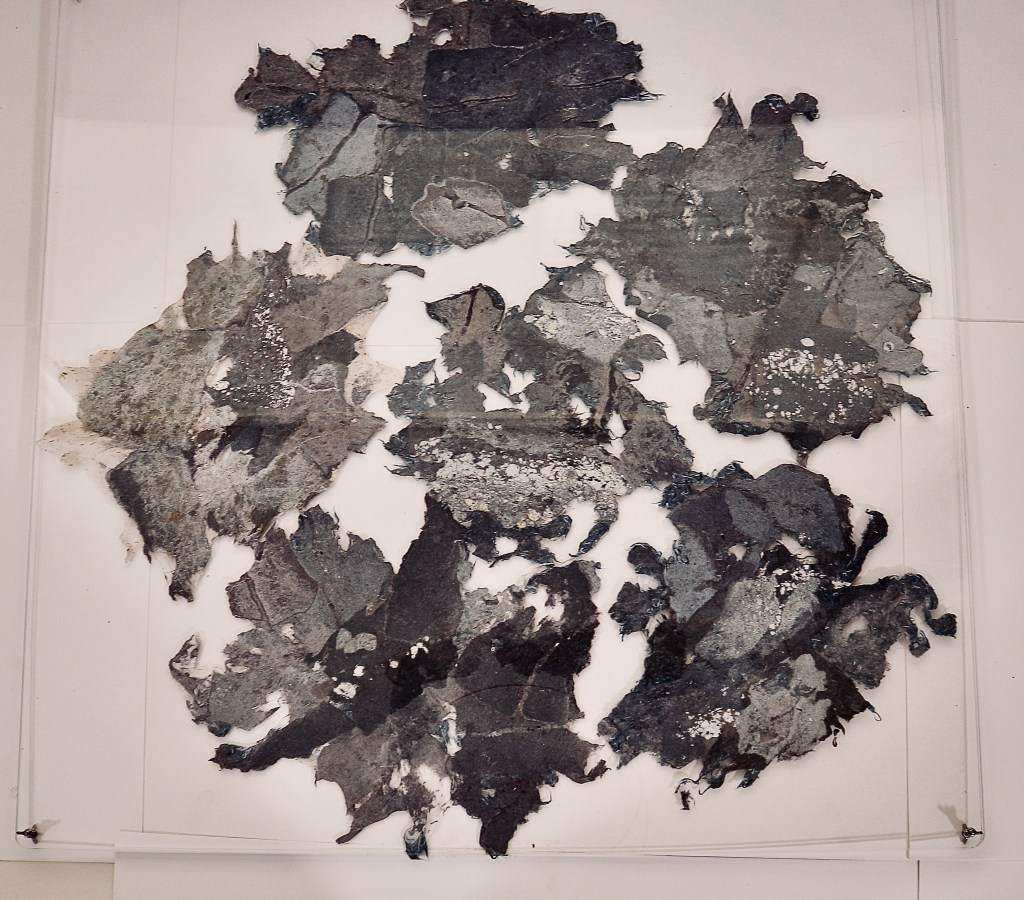
A final curation for the initial felted work from machine detritus was placed into a Perspex double sided frame attached with wing nuts, reminiscent of machinery This flower like arrangement was intriguing as it bellied the materials place of origin. On closer inspection one can see the flower like arrangement is far from ‘pretty’ and is in fact machine detritus.
Below printed and framed in a set with slight colour dye on each print for variety.
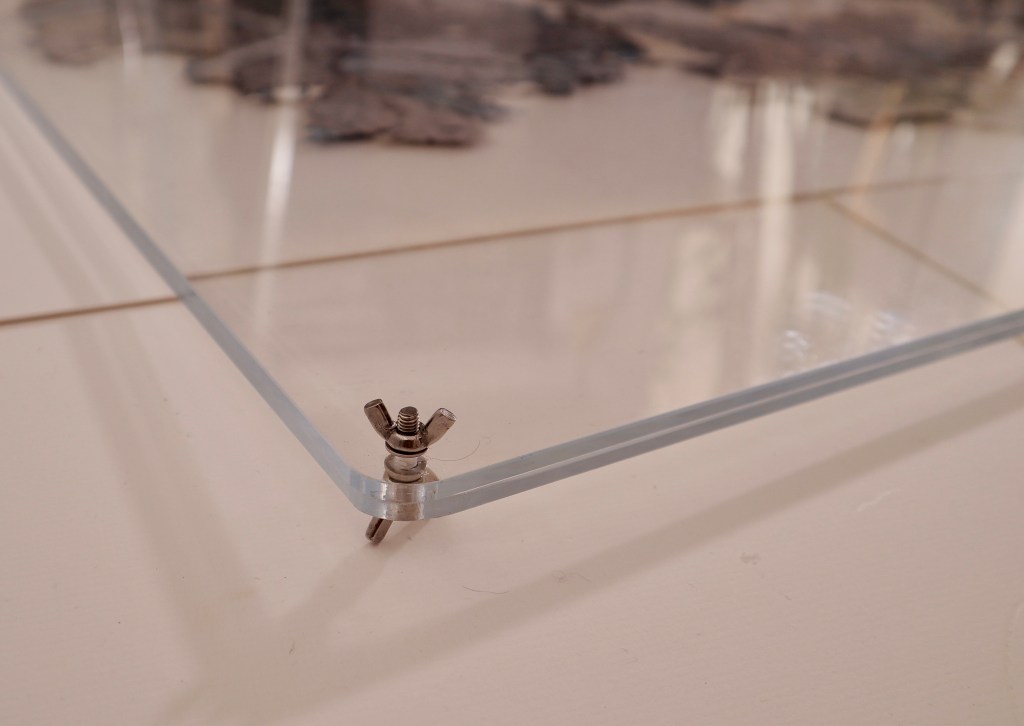
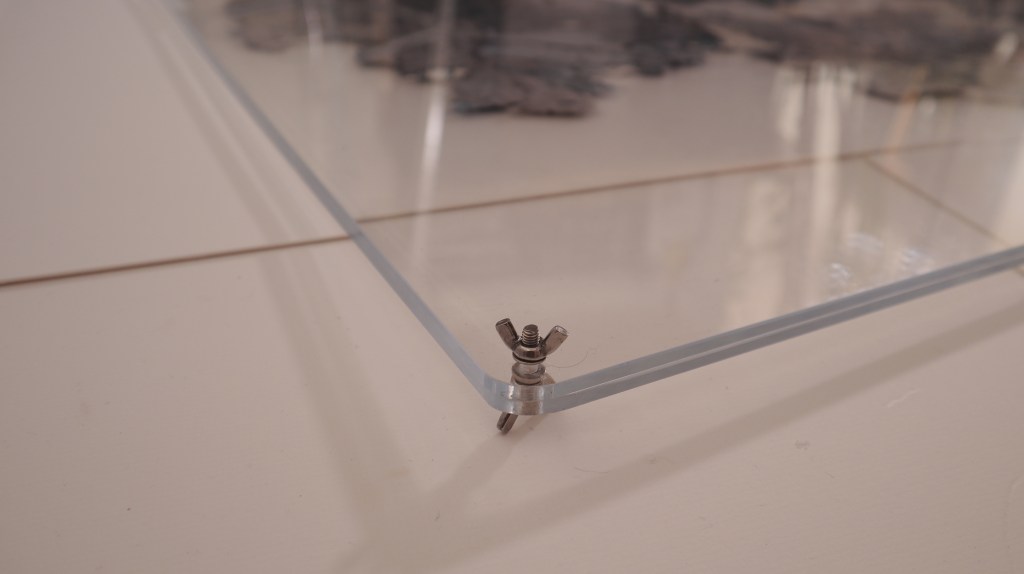
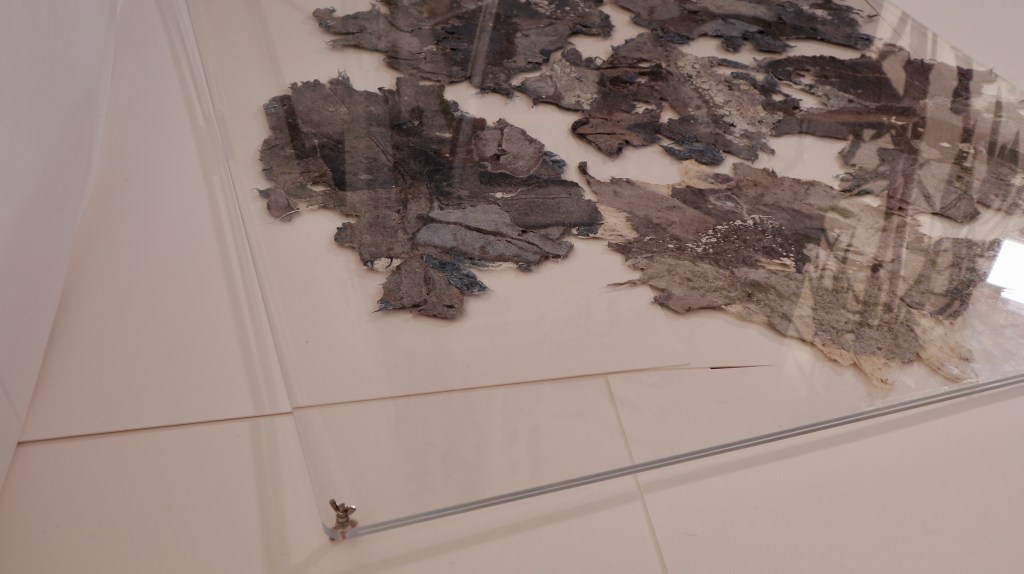
Secured in double sided clear Perspex ( Below)
The wing nuts used to secure this were chosen to depict the machine origins of the material in the work. The unencumbered pieces float unexpectedly in the frame that offers intrigue and curiosity to the work.
Exploring the inner workings of the domestic machine – Creating Machine parts. Tubes and pipes spilling out detritus – floor work – workings and inside – the guts of the domestic machine.
I worked with the thinner, heavy pressed material produced by machine detritus after a work-shop with paper artist Susan Cutts. This finer wet felted material offered a more delicate and unstable material quality, it was with out and form of soap which helps to adhere the thicker felting work used in the large scale ‘Murmuration 2’.
 The Sharpe Gallery