Jan 2024.
Refocussing on the previous works, revisiting and reconconsidering direction and themes.
Fragility – times relentless passing
- Loss and the fleetness of moments it brings
- Preserving what or will be lost
- Ephermeral qualities within that preservation of material
- The beauty of decay, decomposition
- Bringing the narrative back to life, reimagined, re purposed reconsidered.
Materials – Found Objects – a consistent early passion from childhood.
- The materiality of the objects
- Their resurrection/restoration
- Their New purpose
- Their appreciation
- ‘ where matter and emotions meet ‘ Tom Mc Carthy .
- Historic and environmental attributes and story
- Human essence with in them.
These objects/materials consist of :
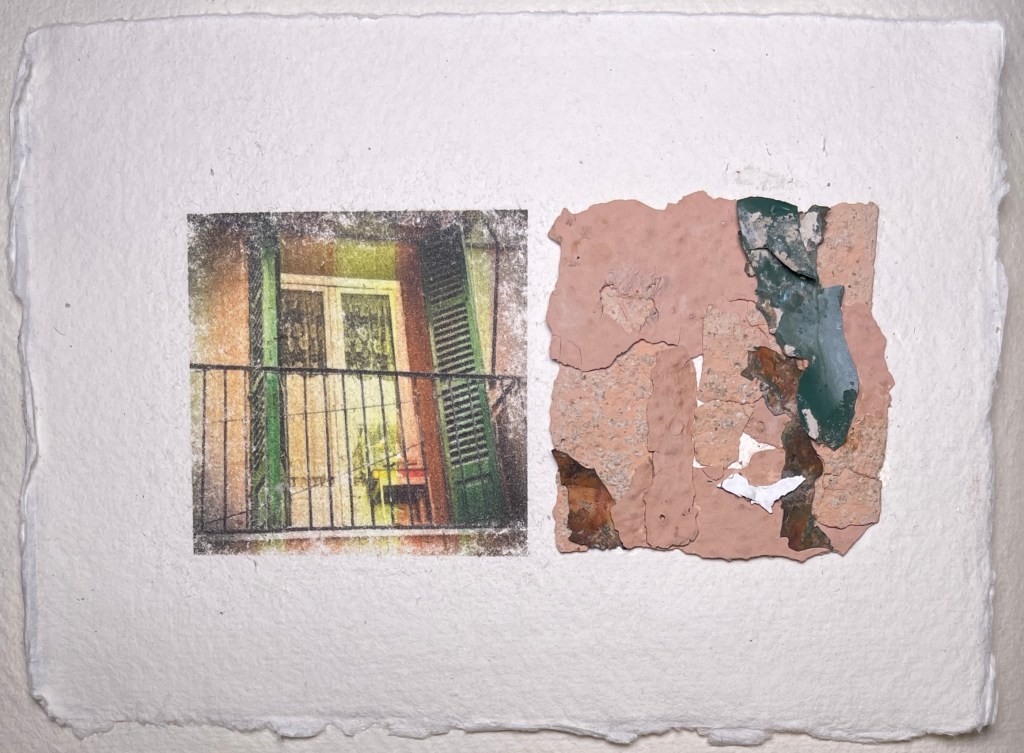
- Rubbish/ detritus from old buildings, crumbling walls and paint work.
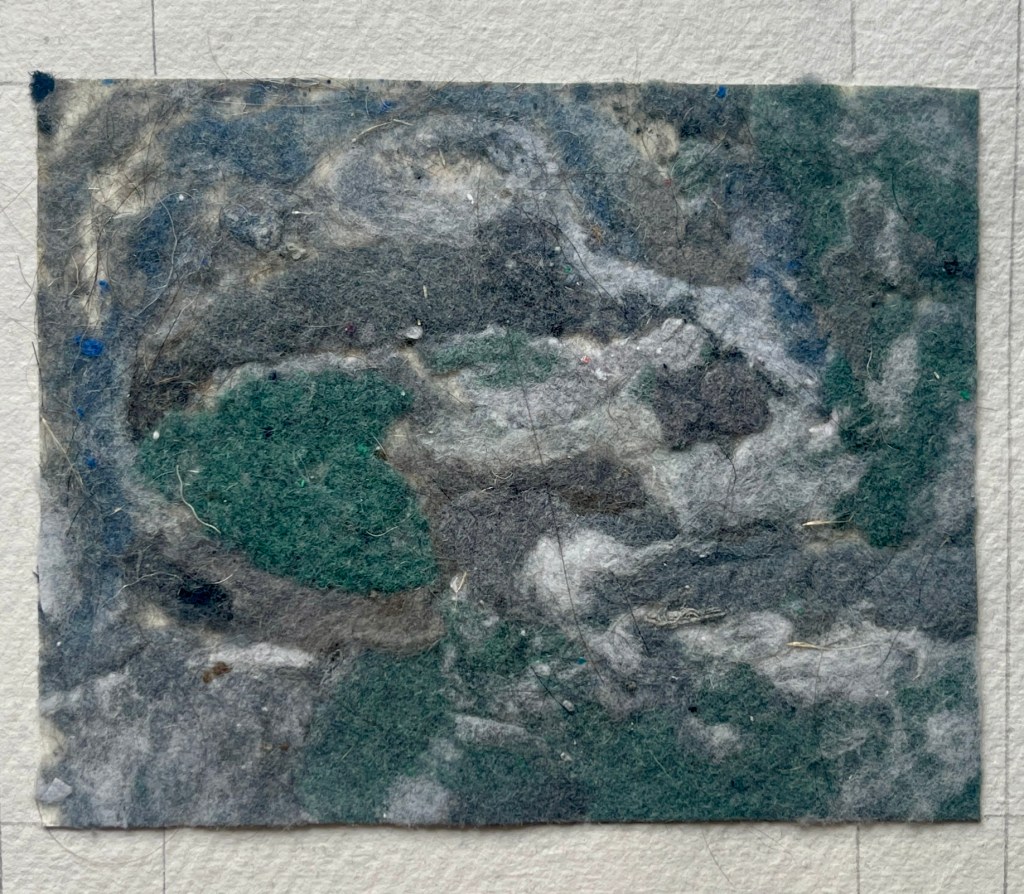
- Fluff and dust – historic rich with past presence and essence
- Prints and impressions wither from pressing, cyanotype, marks etc (mould) and impressions.
Female Mental Health –
- Shrouding it.
- Its manifestations
- Is presentations
- Its similes – ( manifestations of)
- Its disguises
- Societal pressures
Reworking and exploring :
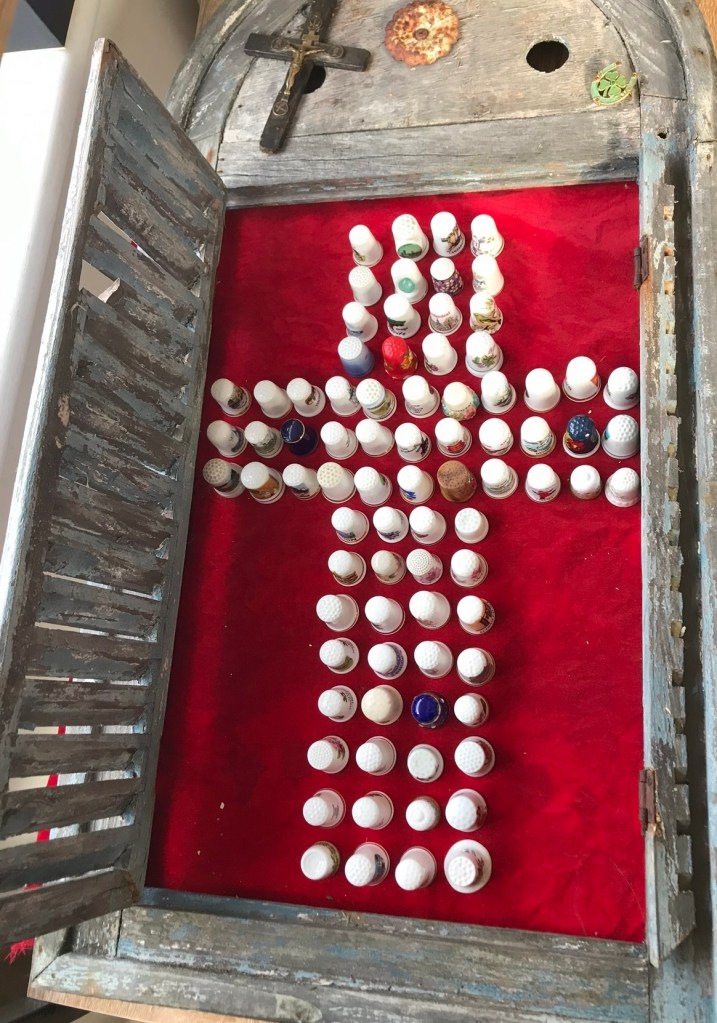
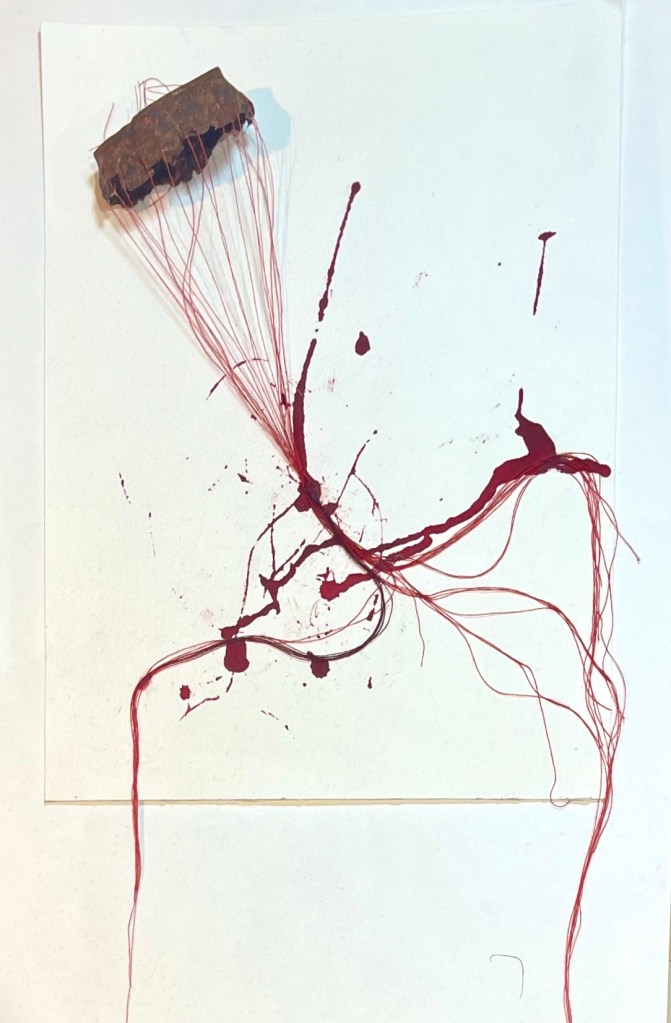
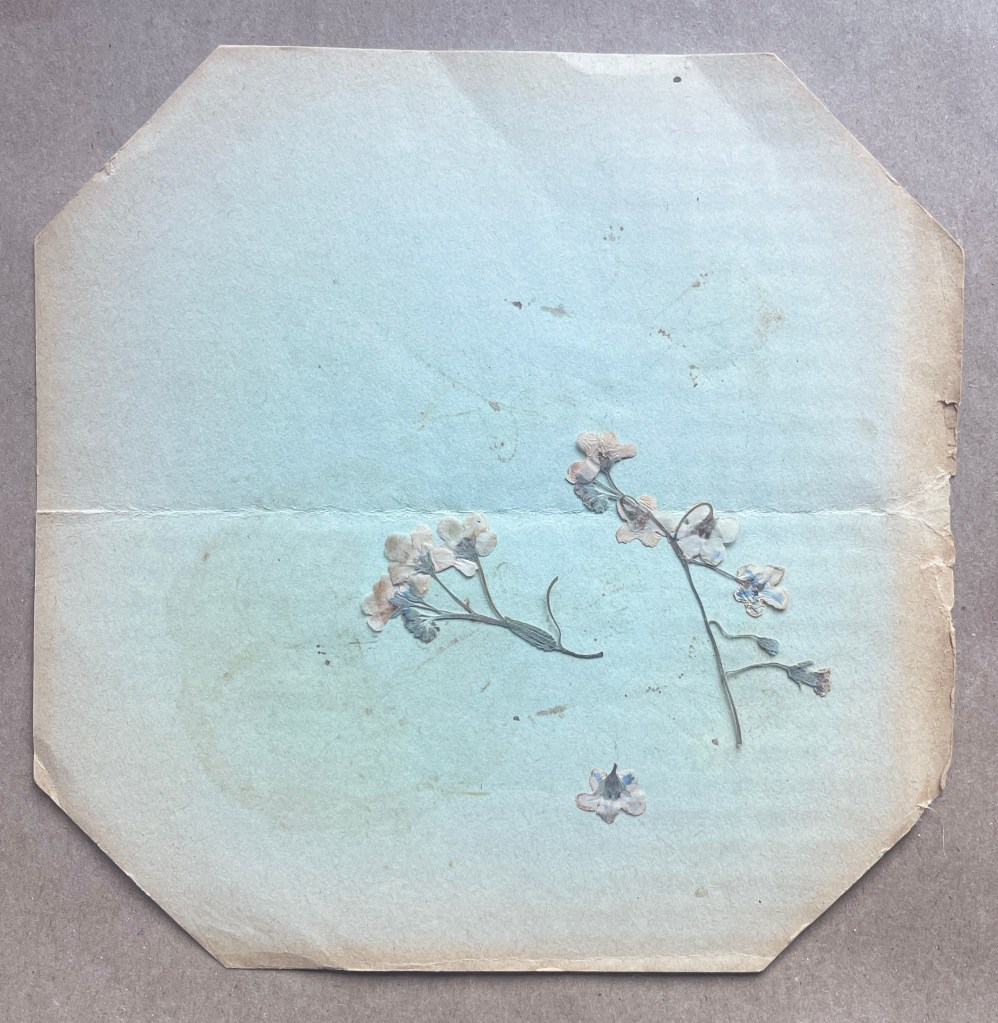
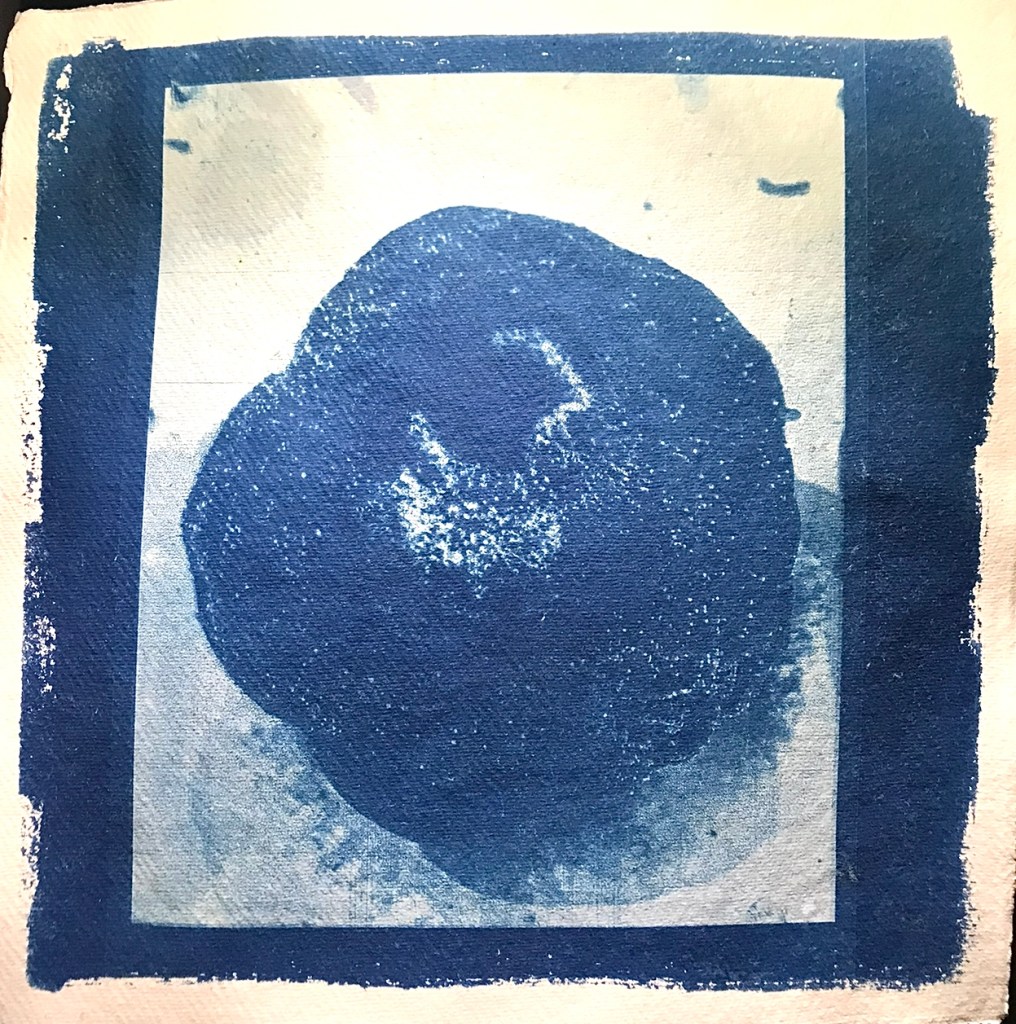
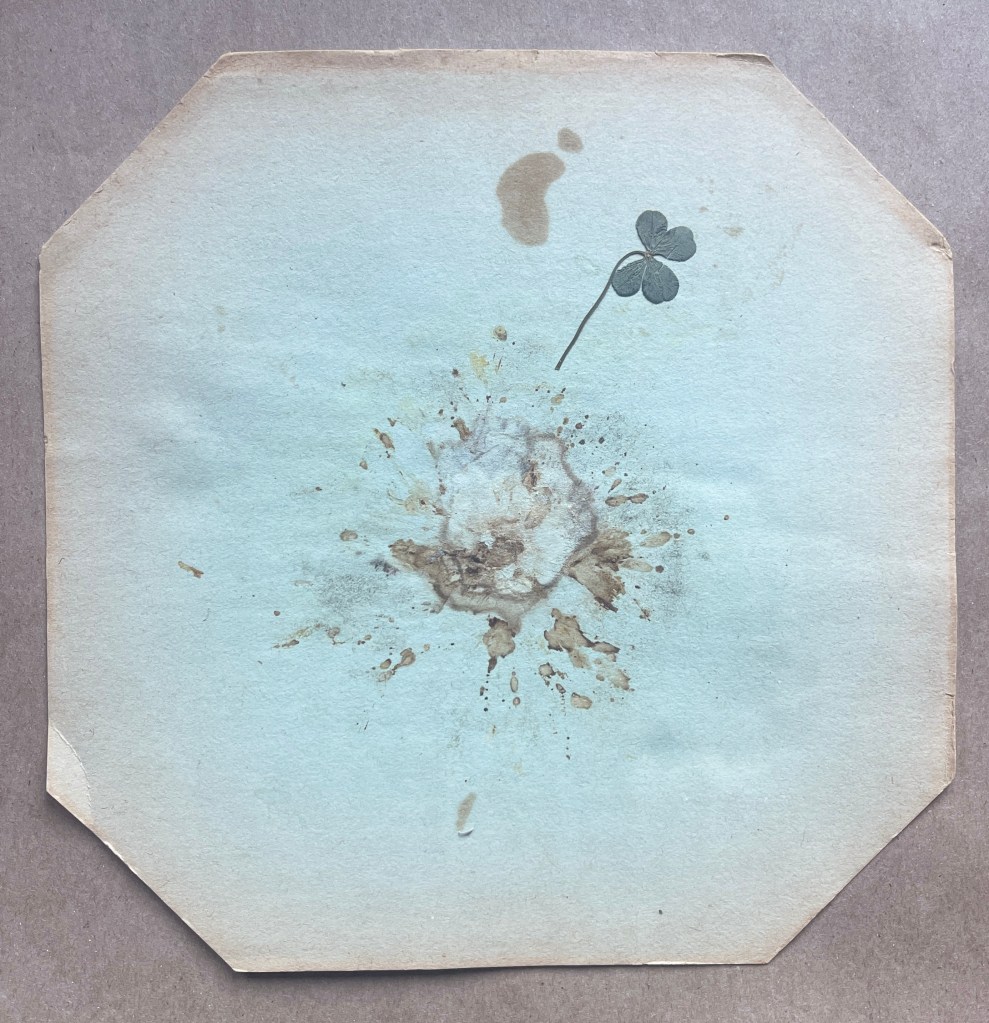
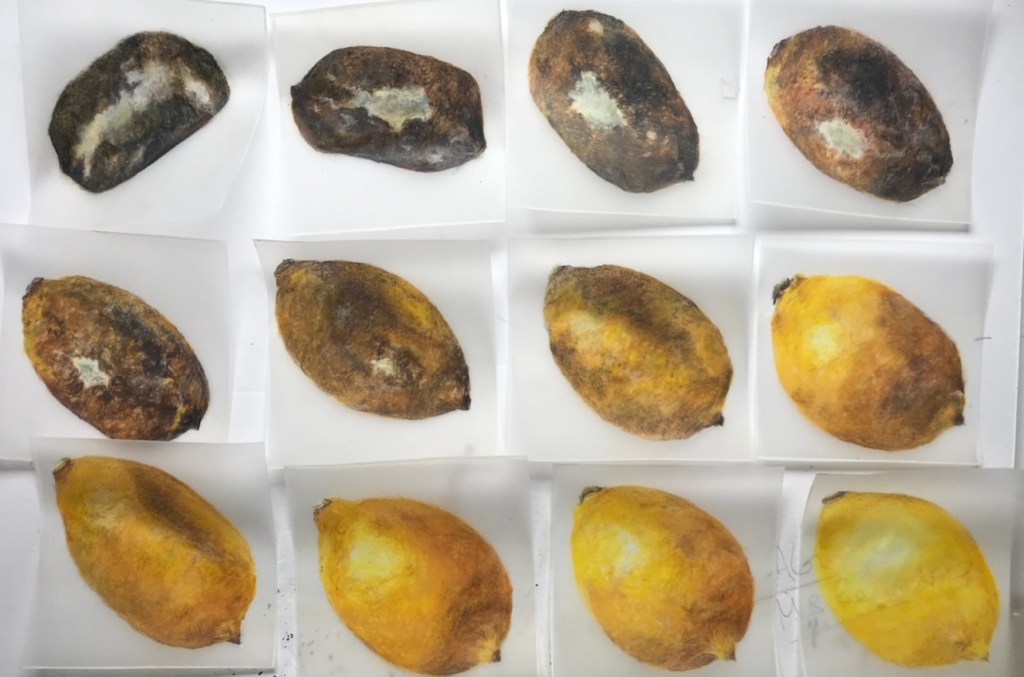
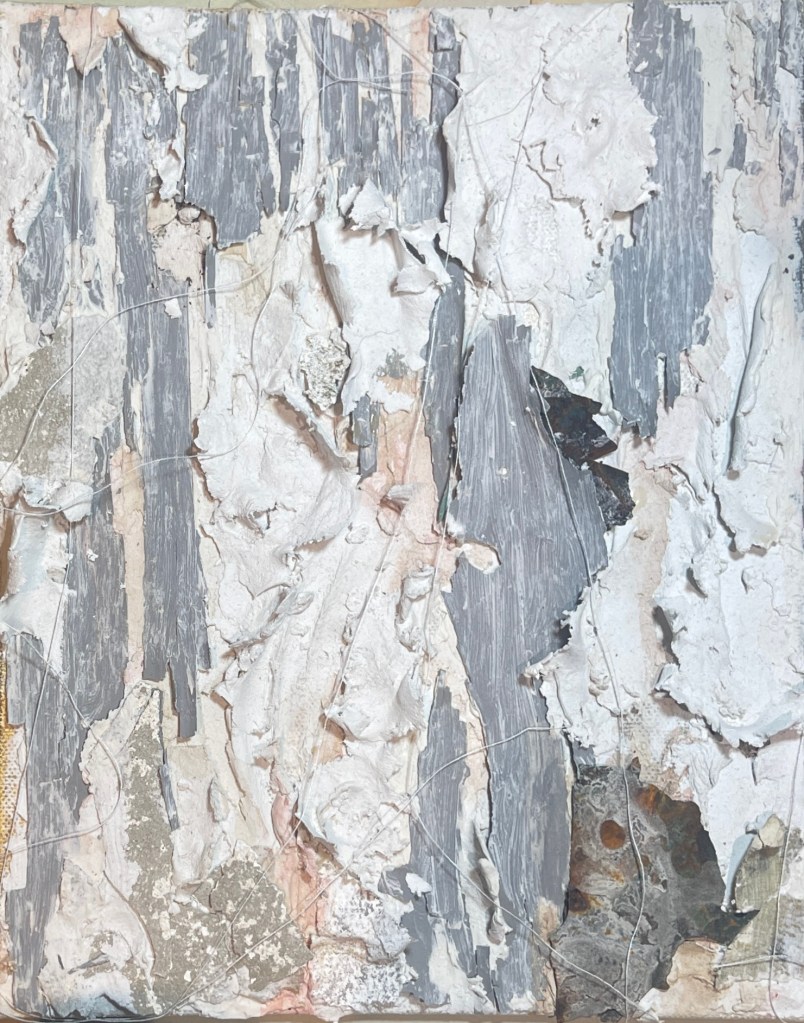
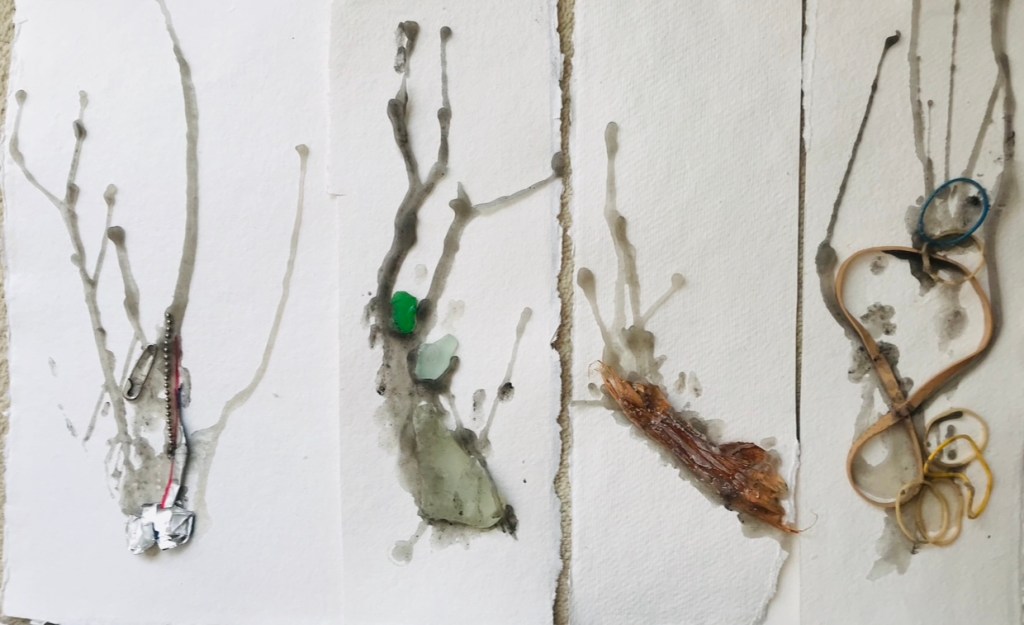
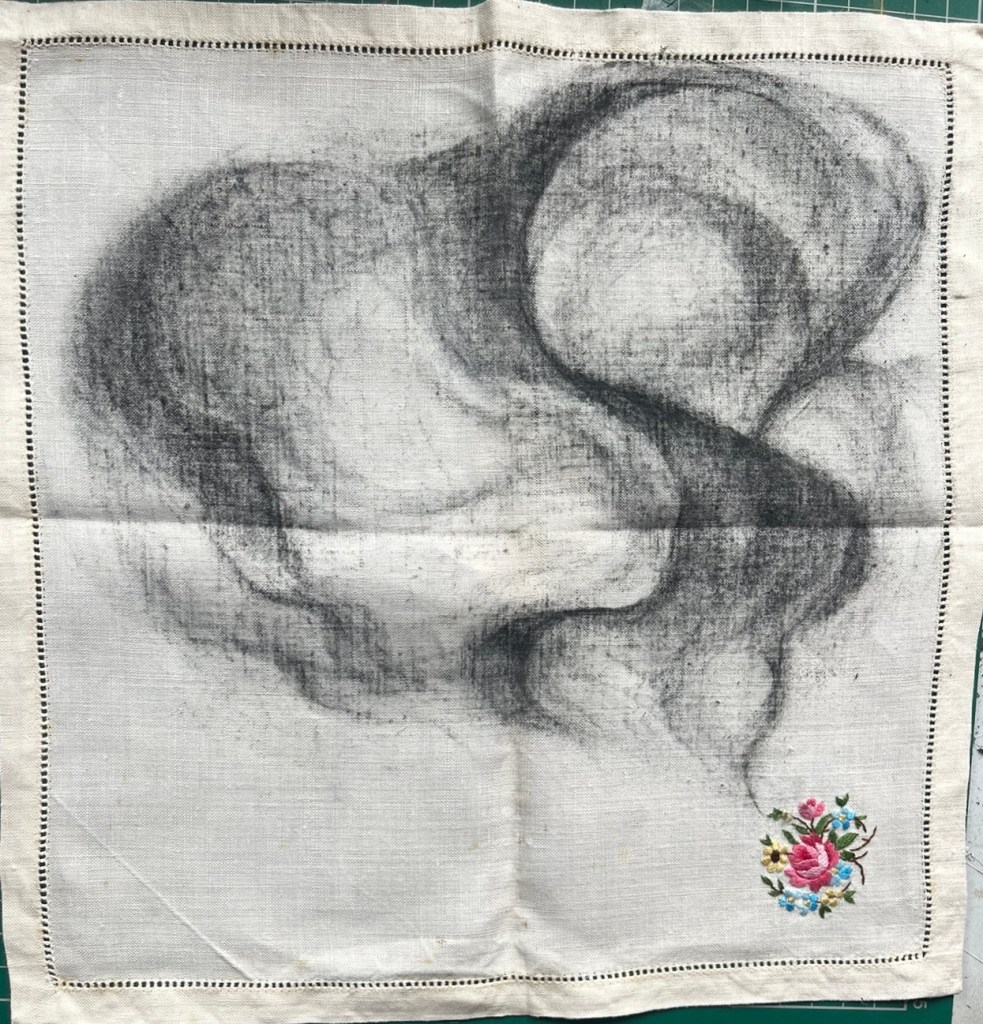
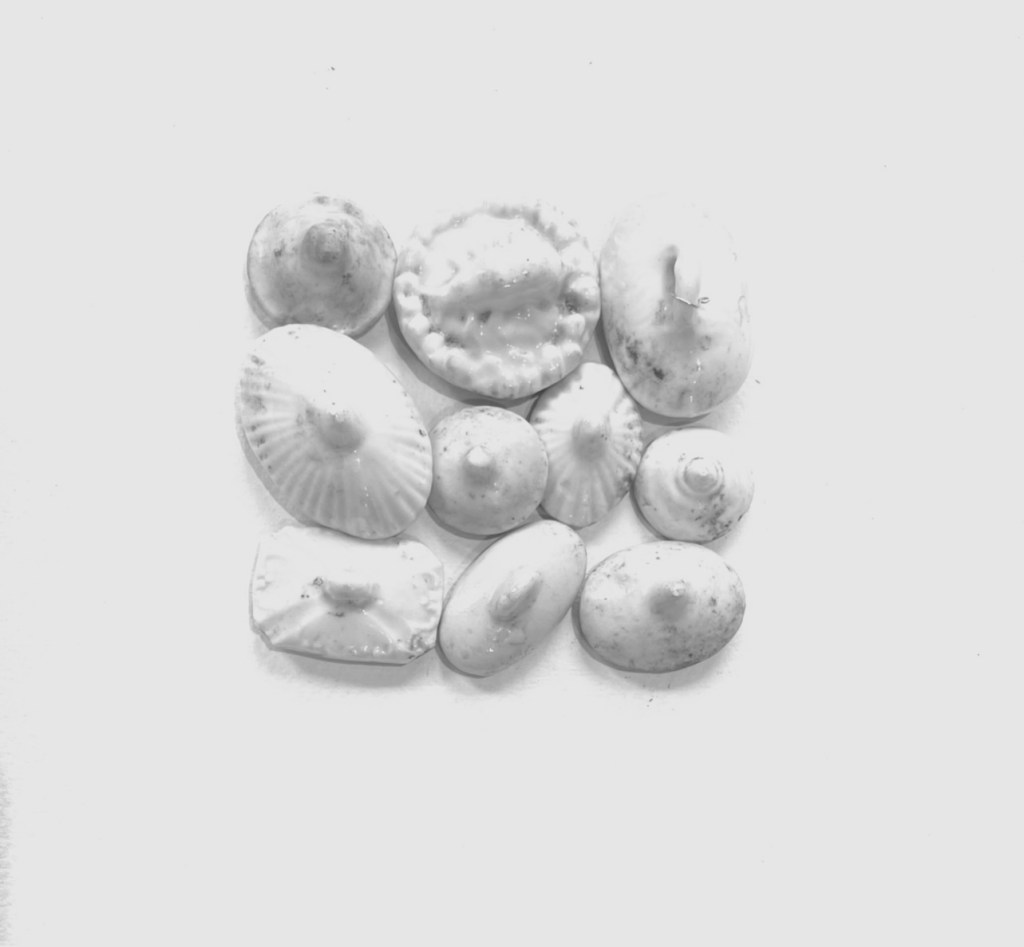
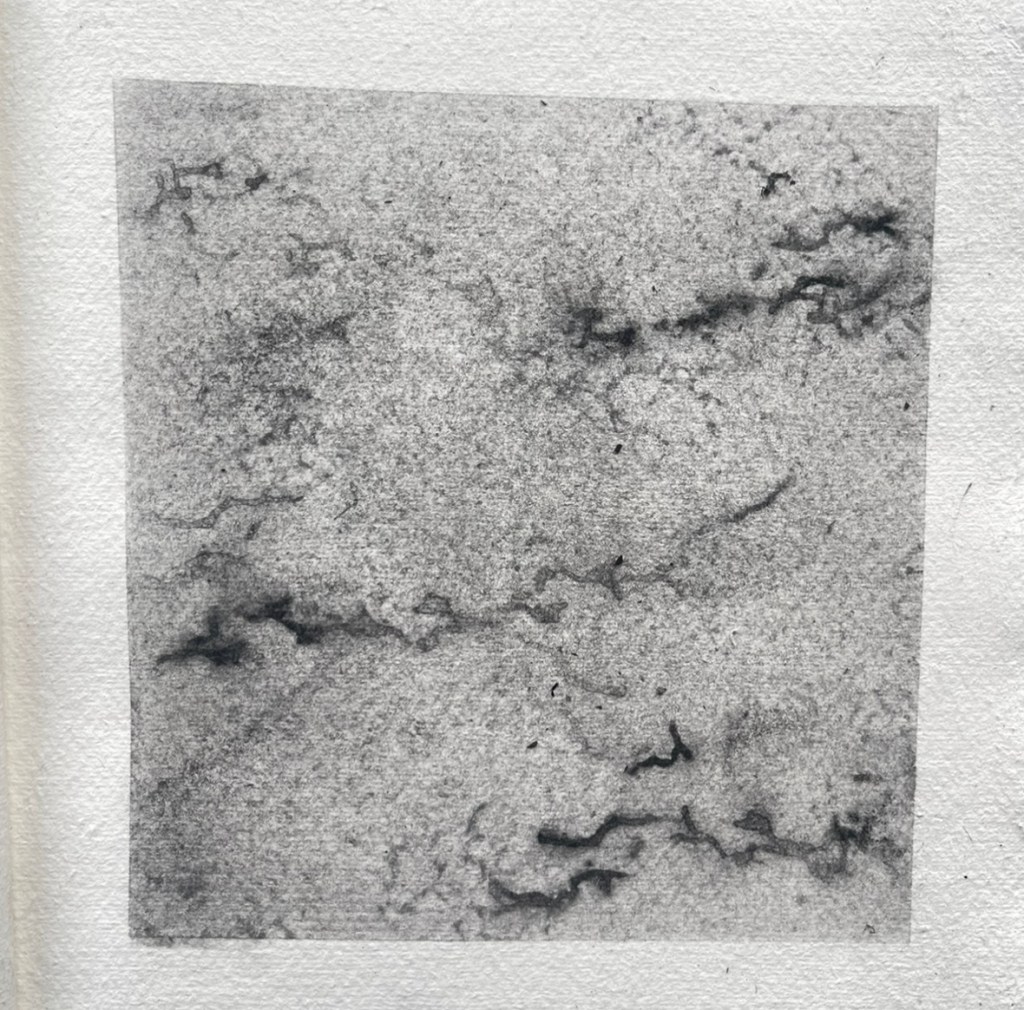
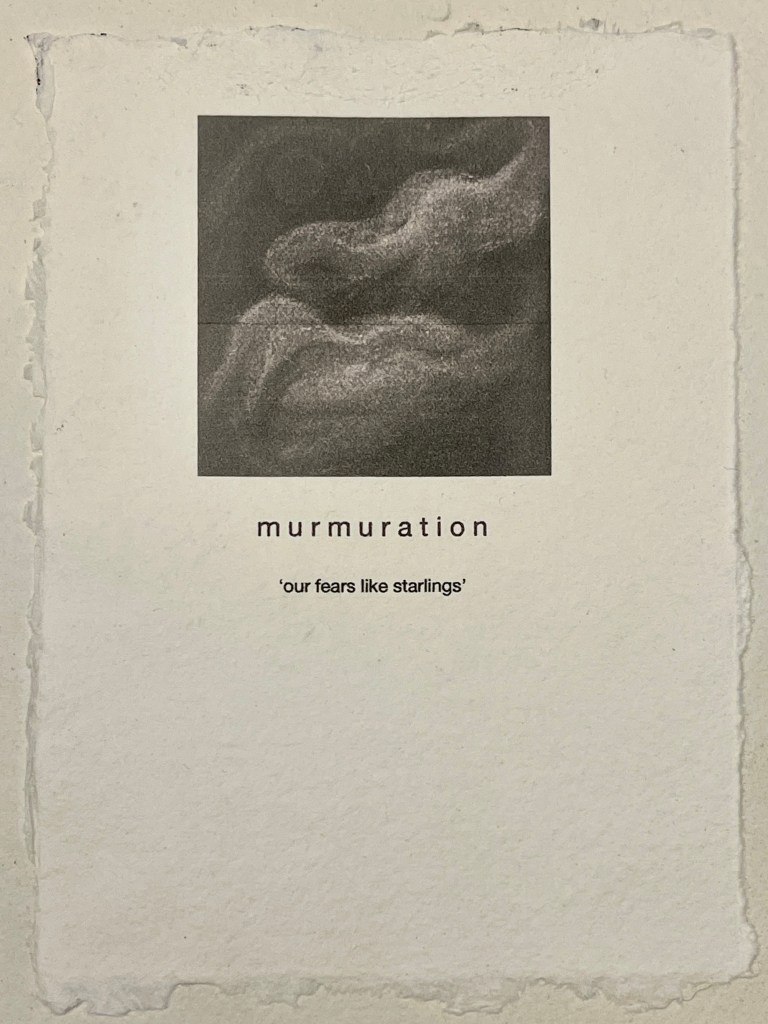
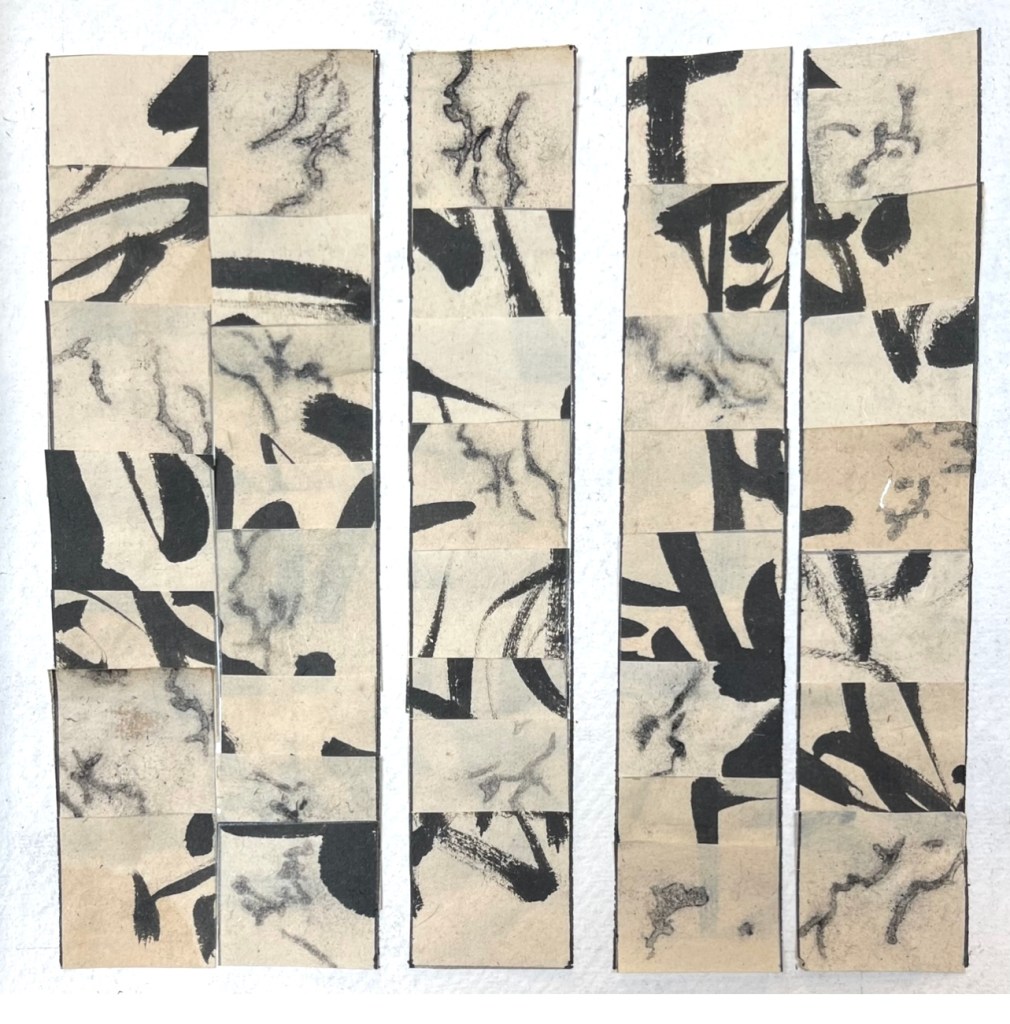
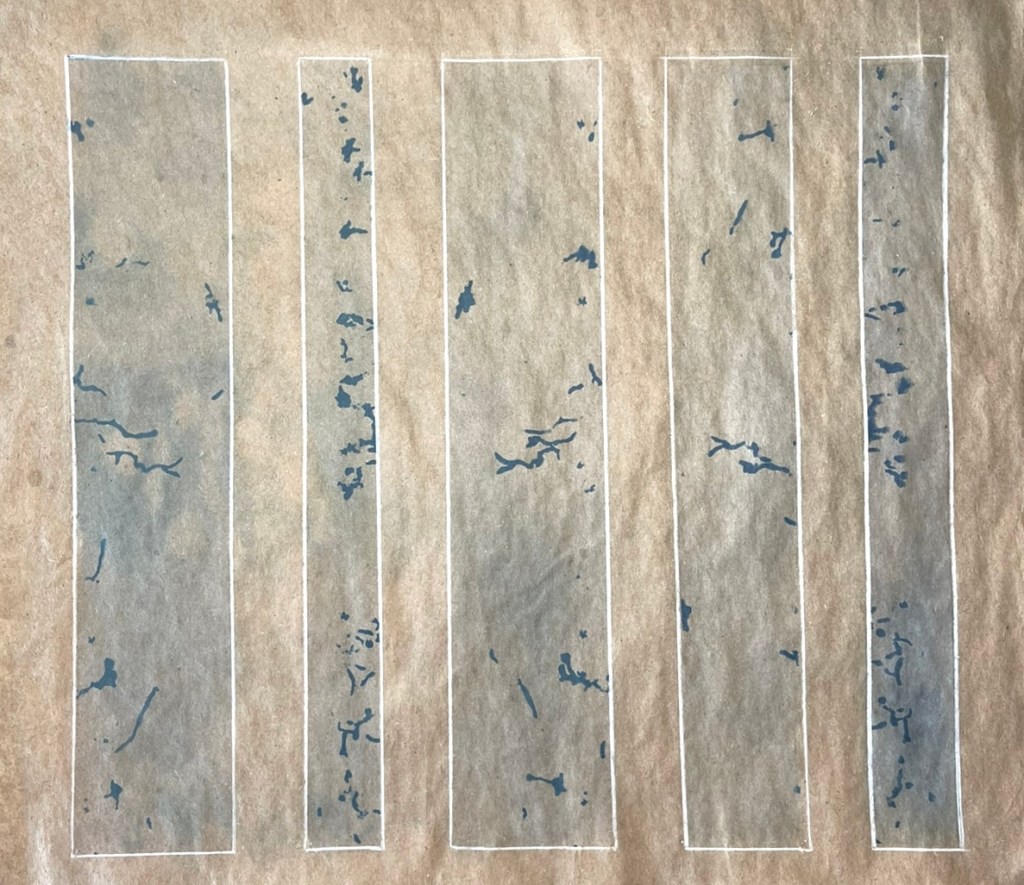
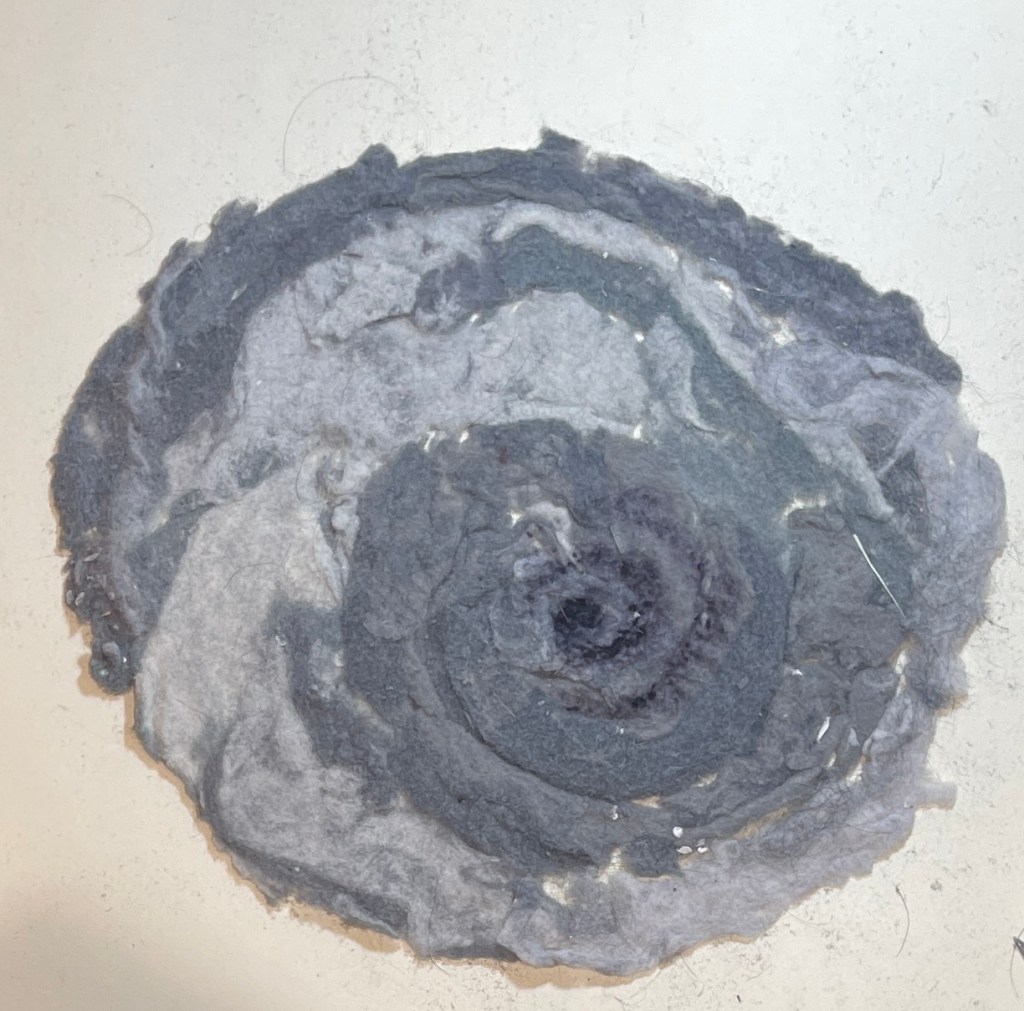
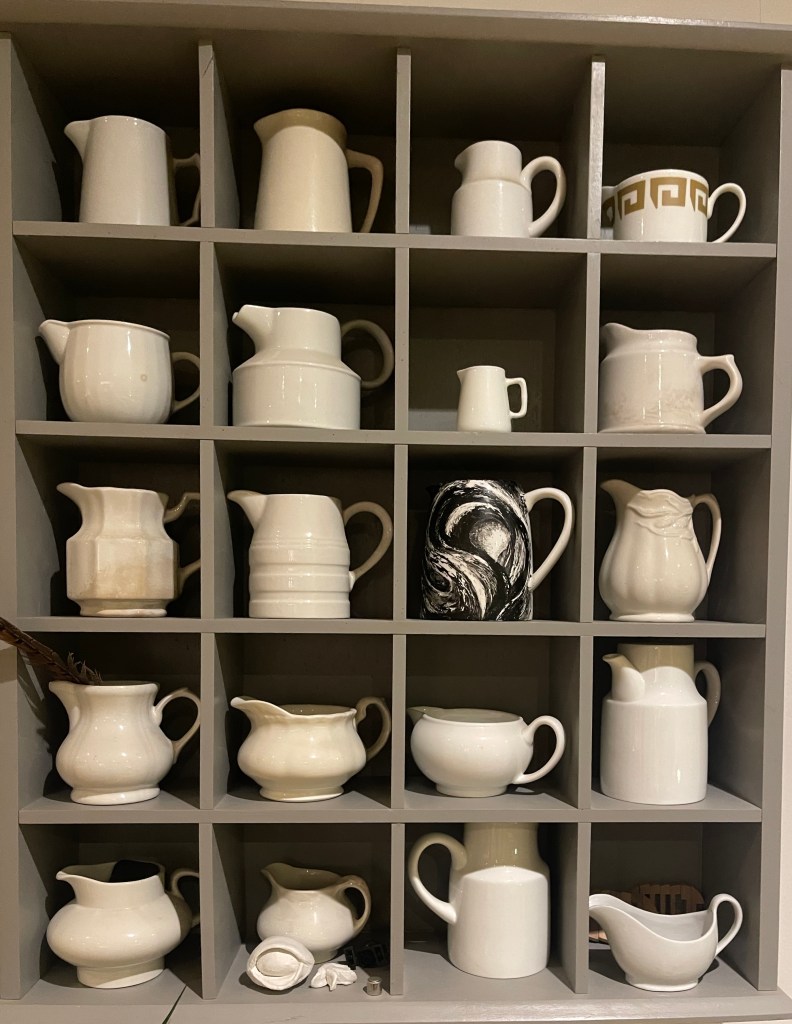
Project exploration :
Looking to a more visceral, tactile and immediate sense of presence with a 3D work that could be hung.
Placement - directly above a human head when standing.
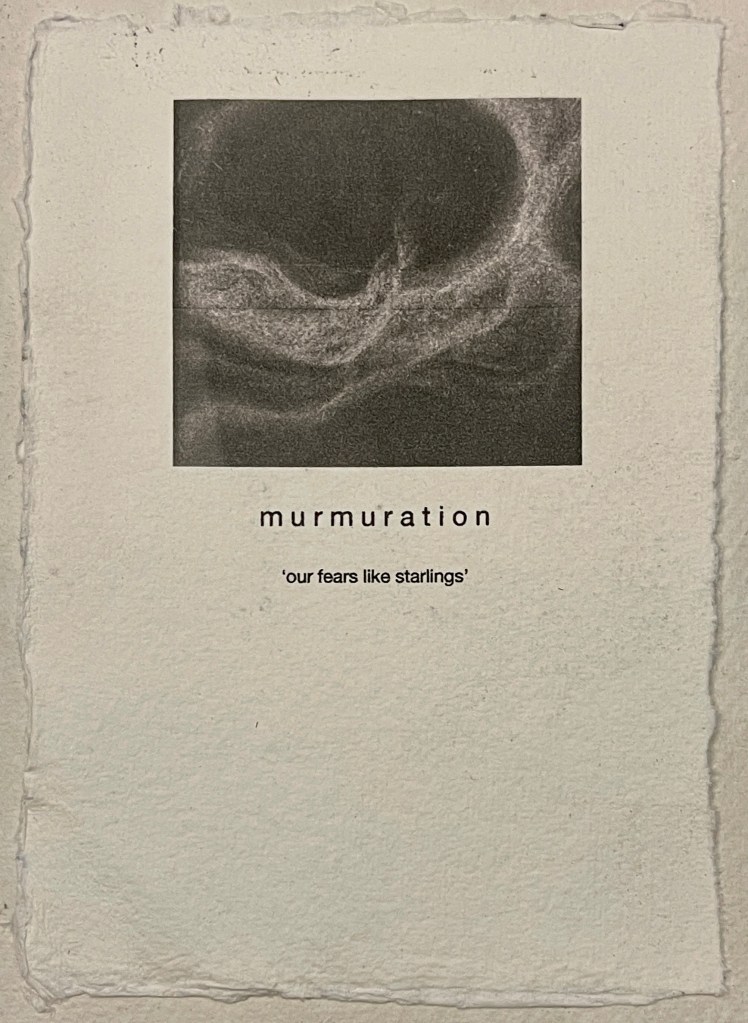
‘ Murmuration’ - Using found material – detritus, dust, fluff etc.
Collective narrative symbolic of time passing, overwhelming narrative of material collected, time, places , people, ( physical ) people ( metaphorical) place , distance.
Other material – Sculpting wire and mesh, clear water based glue.
Recent exhibition : Sarah Lucas @Tate Gallery :
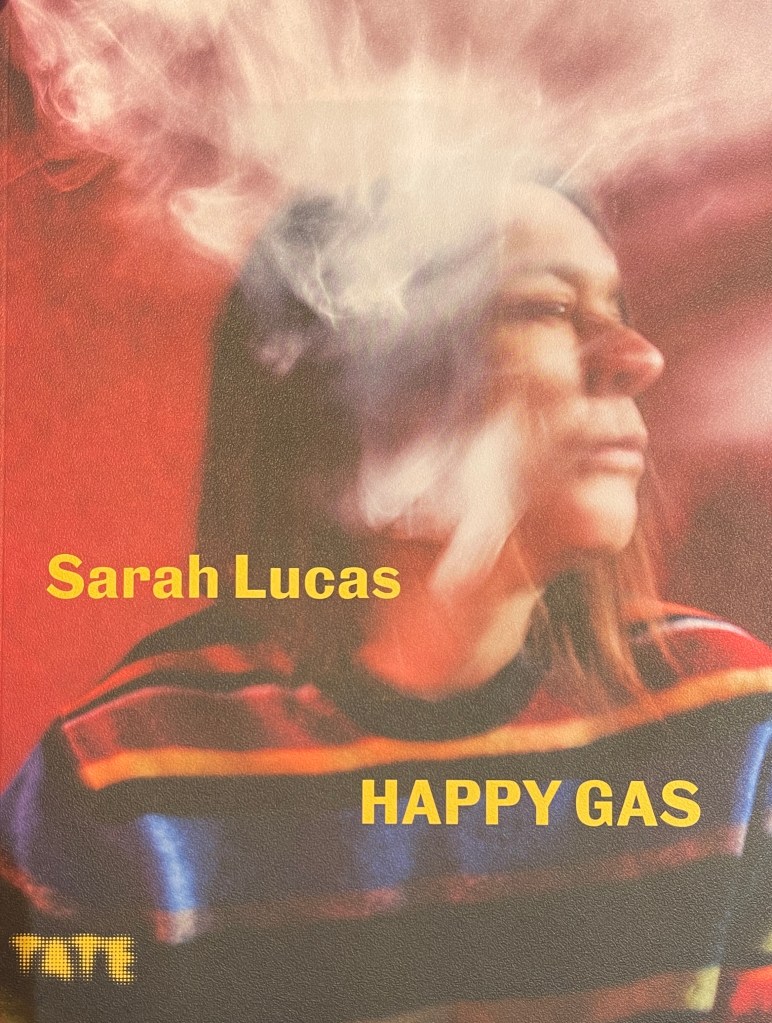
‘I make things spontaneously – materiality orientated process – difficult to always plan and formulate in advance – ideas come from the material them selves and possibilities I see in its manipulation. The process of creation comes from ideas inspired by the material and its possibilities – current themes are ever present – mental health , women , fragility time, trace.’ ( Lucas)
Lucas’s exhibition helped me to accept this way of thinking and generating work. Her manly 3D retrospective was enquiring and complex with themes and narrative ranging from radical feminism to the everyday, comical and pedestrian.
Her portaits from the 1990’s are vast wall paper hangings in one of the exhibition rooms, presenting a strong and powerful confidence of self and self belief. The ‘Eating a bananna pictures ‘ were quick pics by the artist Gary Hume ( who shared the studio) . It was only later Lucas felt the image was arresting and obviously contained a sexual connotations as if part of an advertising campaign. The images whilst ‘girlie’ in content are actually quite masculine, as are many of her images. Her more current ‘Red Sky ‘ portraits are are more considered and purposeful and relate to death and Mexico and energy. They were photographed while Lucas span around in a chair to give a sense of energy. They have a ghostly and supernatural quality with a strong sense of the fleeting, a tiny moment captured in time. A theme that again resonates with my work.
Lucas chair sculptures were bold and colourful , her use of found materials was clear and they contained a craft like quality to them , no apologies for the every day materials used. The occasional one is cast in bronze for a ‘higher level’ of presence and permanence. ( and collaboration) With out the existence of the found material sculptures the shiny bronze statues would hold less presence and purpose and narrative. There is great initial humour and bawdiness to the works with underlying deeper meanings, a common theme through out the exhibition. Questioning every day objects and the meanings associated with them.
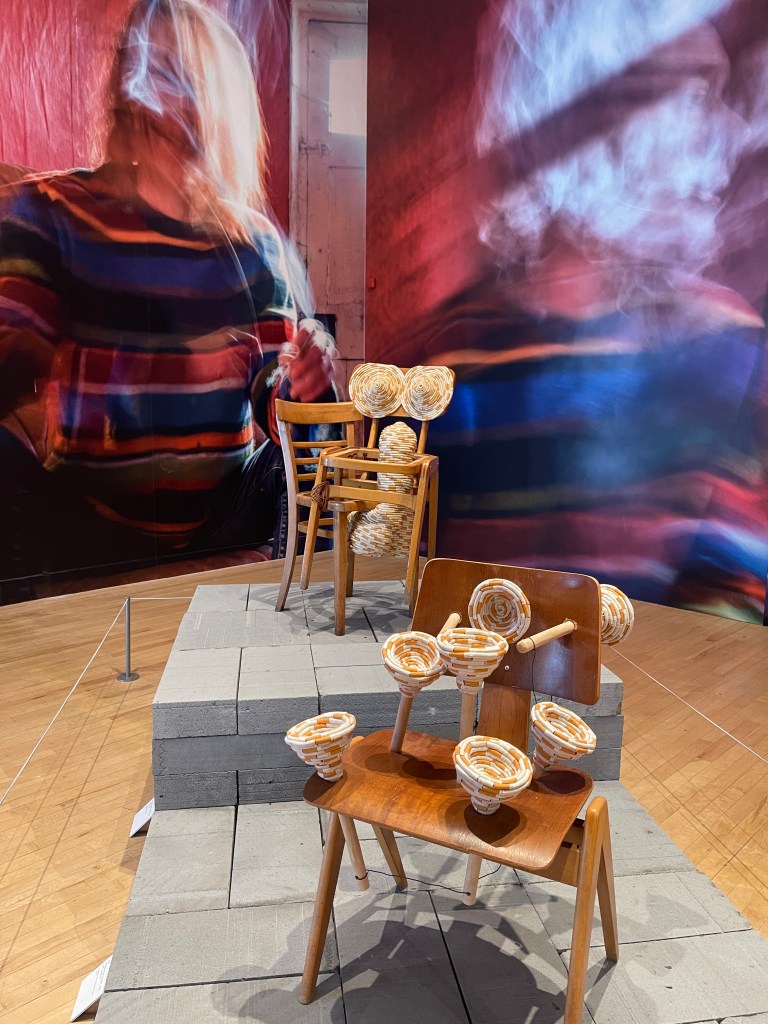
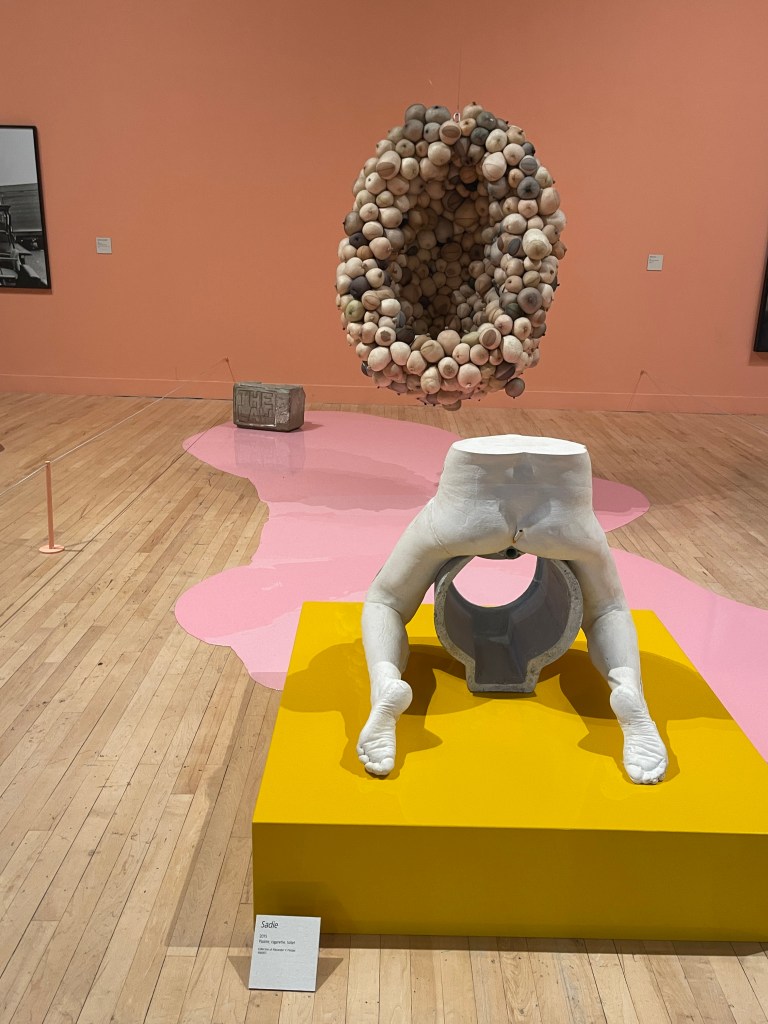
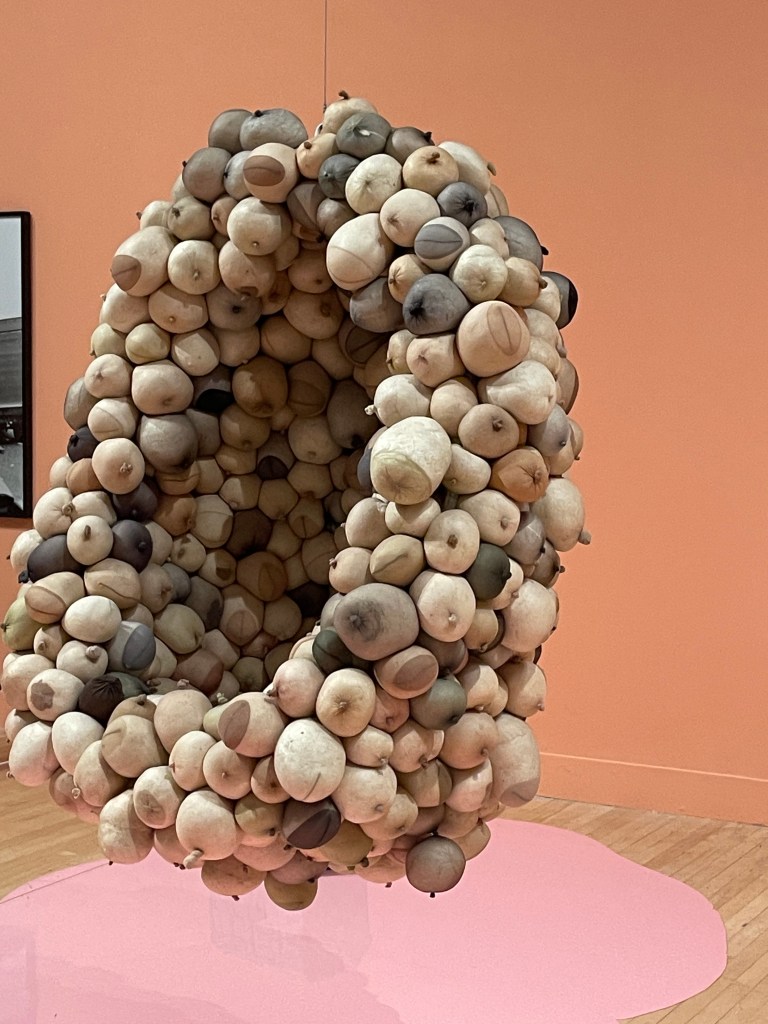
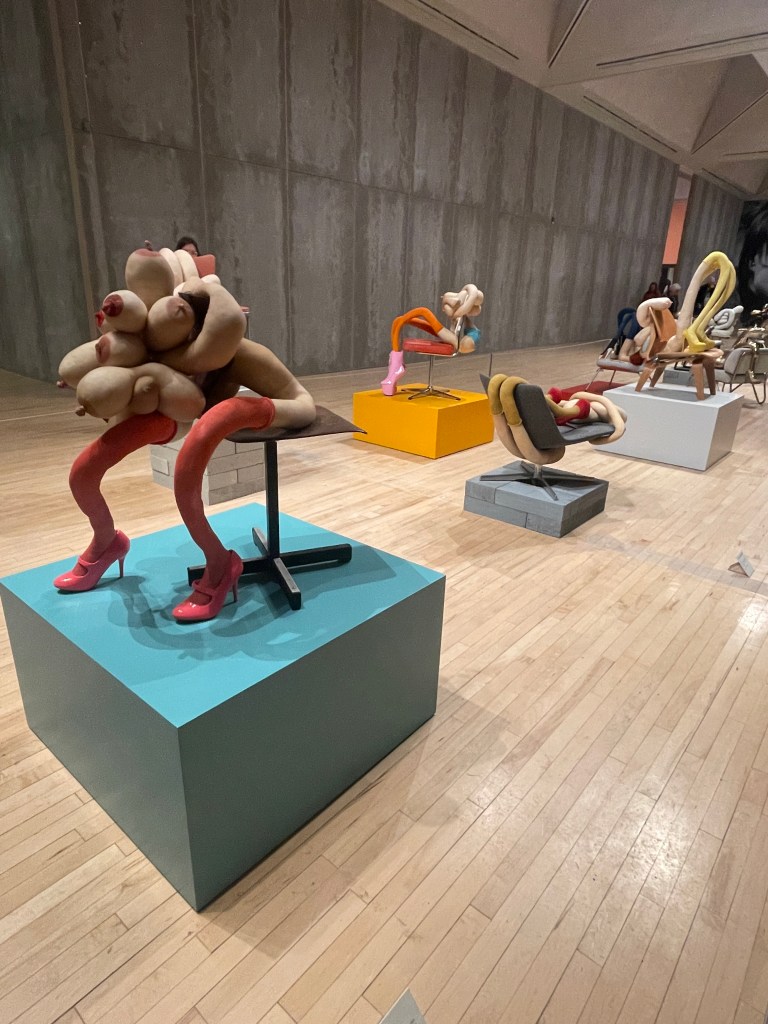
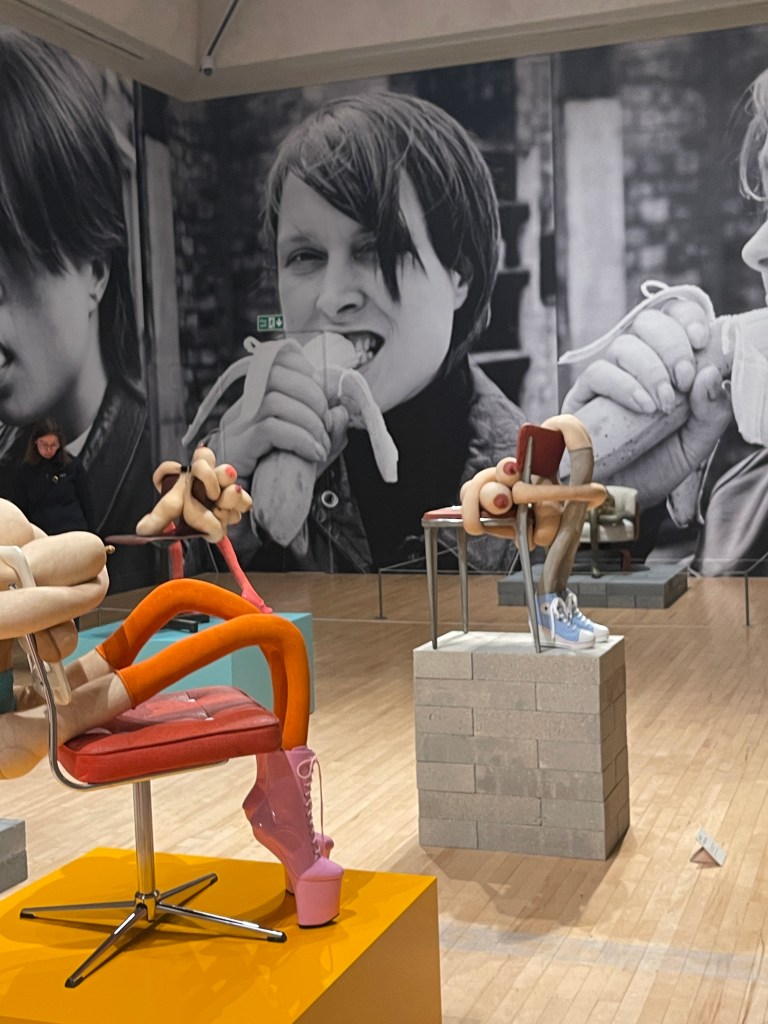
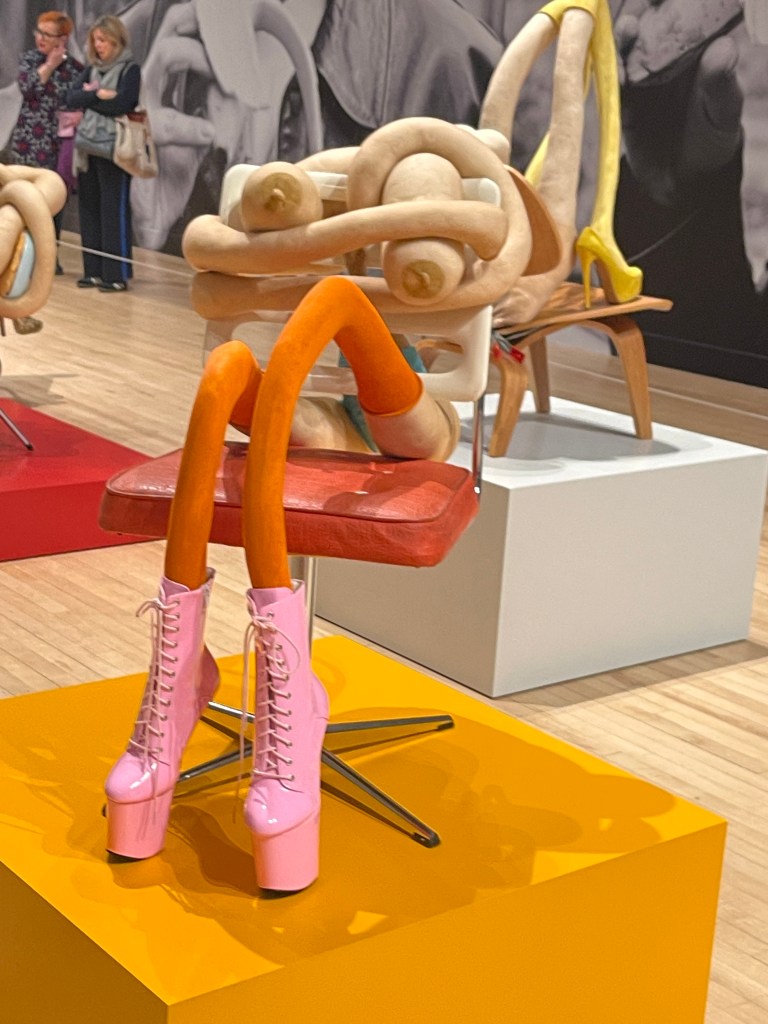
Key Themes Lucas include :
Fragile and tough
Male and female
Vulnerable and tough
Sad and Funny
Lucas pushes us to explore our own meanings and preconceptions .
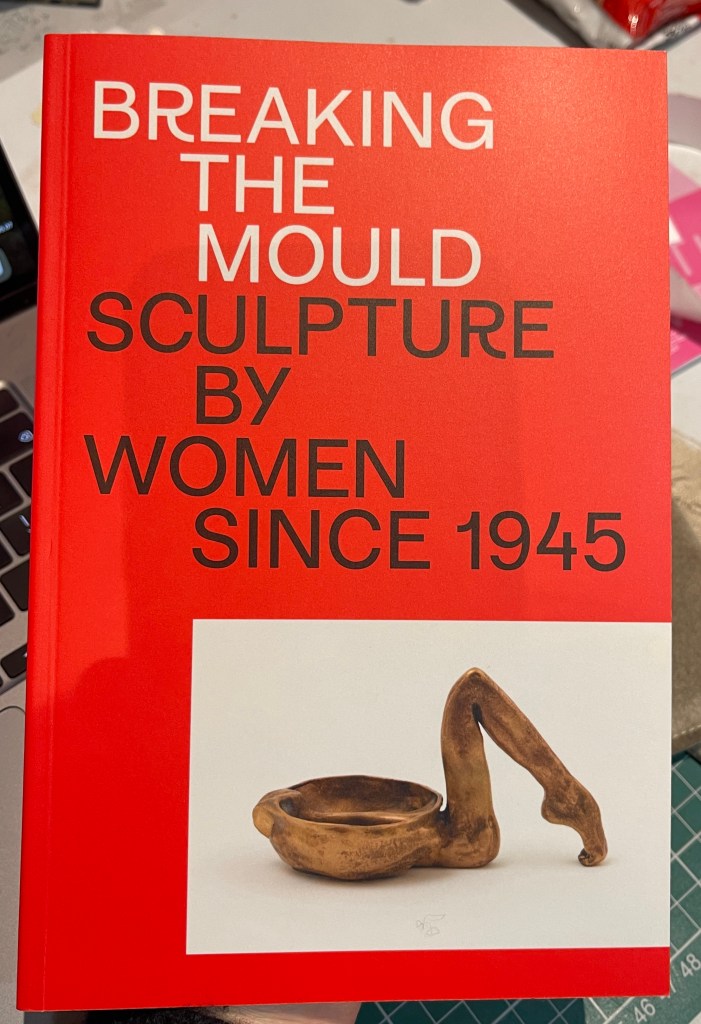
Sculpture by Women: This fascinating book was honest and open and contained texts and essays by artists and curators.
SHOUT AND WHISPER
In a 2002 interview with the feminist art historian Lisa Tickner, the artist Cornelia Parker commented: ‘I think we’re all made up of male and female parts in our psyches and we manifest whatever, depending, Parker goes on to state: ‘Sometimes you want to shout out loud, make a dramatic statement and sometimes you want to whisper.’
Parker’ work across a range of sensibilities manifests itself in layers of varied materiality. Bold ad physical exploding sheds to the study of the minuscule detritus
Rachel Whiteread, is equally experimental, bold and dextrous as exemplified in Untitled .
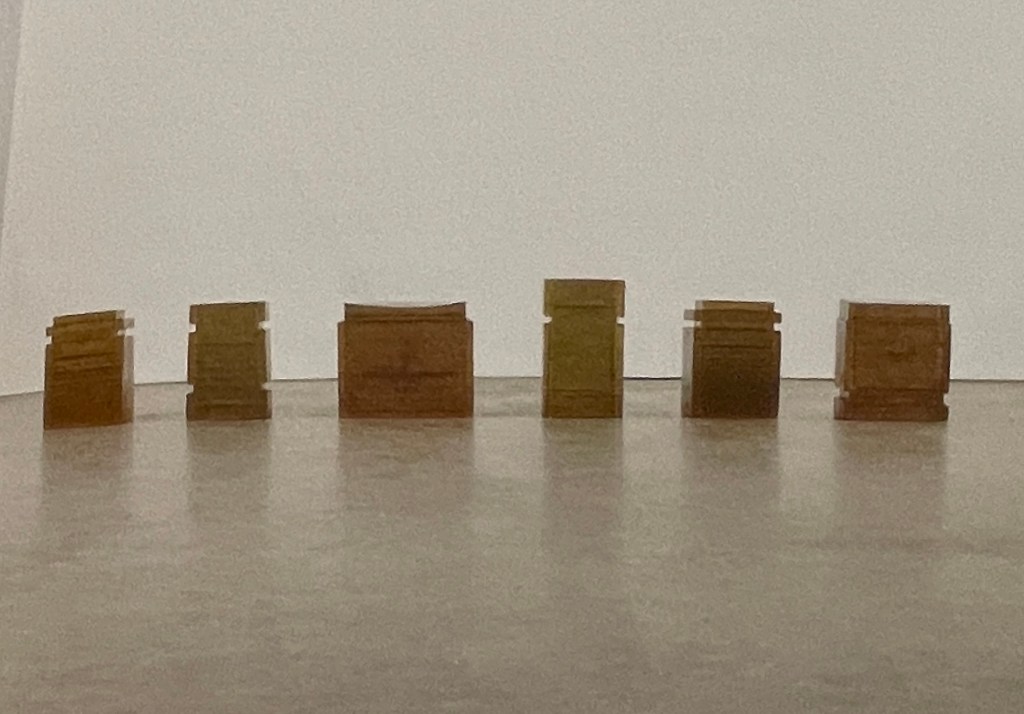
Untitles ( 6 spaces) 1994
Whiteread’s cast the void spaces found beneath six domestic chairs using translucent resin. The formed objects exude a lightness and weight despite at first seeming heavy and blocky. They are minimalist, seemingly bland and with out narrative yet heavy , on closer inspection, their surfaces reveal other stories – ‘the ethereal traces of our lives as imprinted on the worn surfaces of the objects that surround us. This powerful work prompts our recollection of both ‘male’ and ‘female’ precedents.’
The translucent forms of Eva Hesse’s multi-part installations engaging with a non -binary, male and female representation of form and narrative. Hesse continued to be experimental with her form and substance and continued to be informed by the ebb and flow of female cycles of decay.
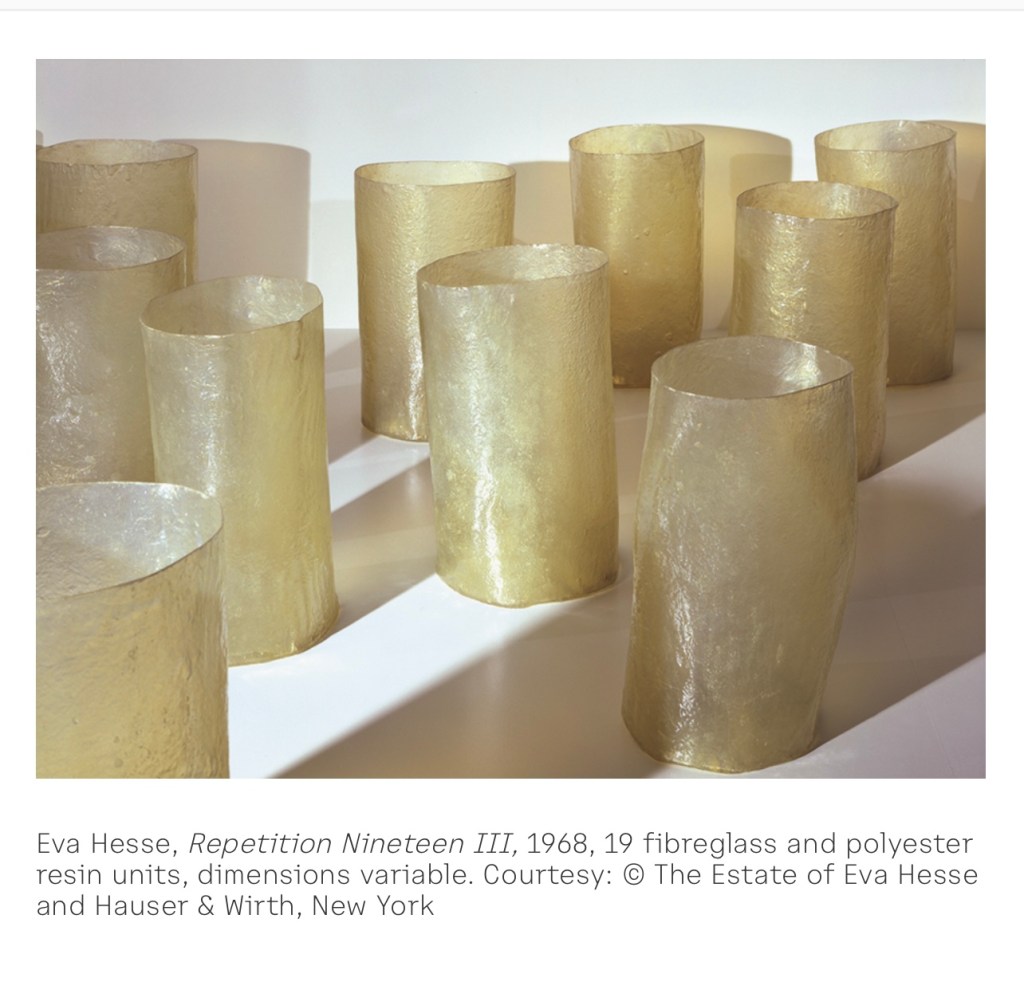
The ‘YBA’ generation of female sculpture was poignant and bold. Tracy Emin’s, tent and unmade bed left a visceral impression to the viewing public issues concerning, relationships, depression and mental health were not shied away from. Sarah Lucas played a large part in this open representation with everyday objects used to address issues of gender, sexuality and discrimination.
I was inspired by the sense of freedom and possibility of sculpture and the 3D form – a platform that serves the ‘found object’ and narrative of materiality so well with infinite potential. New media art, performance and film have to be part of the final representation of creativity as we present images on the global media platform. The opportunity to show animation is a bonus and an additional attribute to a work, engaging further in 3D imagery and movement feeds the hungry screen viewing public. I have experimented with this in regards to “Murmuration’. Its narrative is inclusive of fear, anxiety and degeneration of clarity and being.
Exhibition – Tate Britain
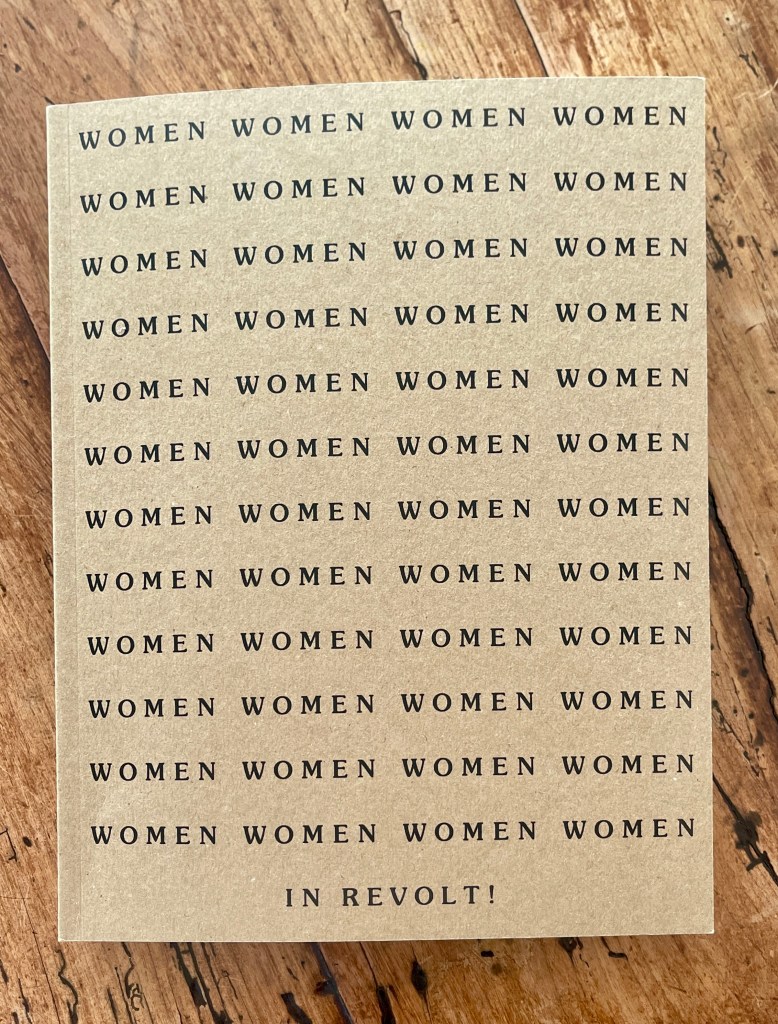
A visit to Tate Britain in January 2024 exhibition ’Women in Revolt’ unearthed the diverse struggles and issues surrounding second wave feminism circa 1970 - 1990. It surveyed the work produced by women artists of these two decades focussing on the British narrative of culture and politics of that era. The 5 year research project sought to highlight these female artists that art history overlooked or obscured. It served to shed light on the countries hard fought social change.
The exhibition illuminated and clarified that feminism was not just concerned with female power and rights but and over-all movement that was to reshape culture, class, race and sexuality with a focus on overthrowing the injustices surrounding these issues.
The exhibition is an important cultural and historical document of this time. It was a feast of visual narrative and varied art medium, powerful, angry and explicit it was an emotive, insightful and inspiring experience.
So much of the work on display was relevant to my narrative on ‘femaleness’ and ‘Veneration’ ( Shrine) a celebration of the female and empowering its attributes.
The work below by Helen Chadwick sees the artist wearing sculptural objects from PVC ‘skins’ stretched over metal frames. They included a cooker, sink, refrigerator, washing machine and cupboards.
Chadwick wrote: ‘The kitchen must inevitably be seen as the archetypal female domain where the fetishism of the kitchen appliance reigns supreme. By highlighting and manipulating this familiar domestic milieu, I have attempted to express the conflict that exists between … the manufactured consumer ideal/physical reality, plastic glamour images/banal routine, conditioned role-playing/ individuality.’
My work involving the material detritus from the ‘washing machine/tumble dryer’ carries with it the domestic narrative of the trope of the female domestic domain being in the home and continually performing mundane and bleak housework tasks. Weaving this material into the ‘murmuration’ works expands the conversation and meaning behind the work and is a purposeful in its inclusion to this end exploring avenues and causes of depression, anxiety and feeling unfulfilled.
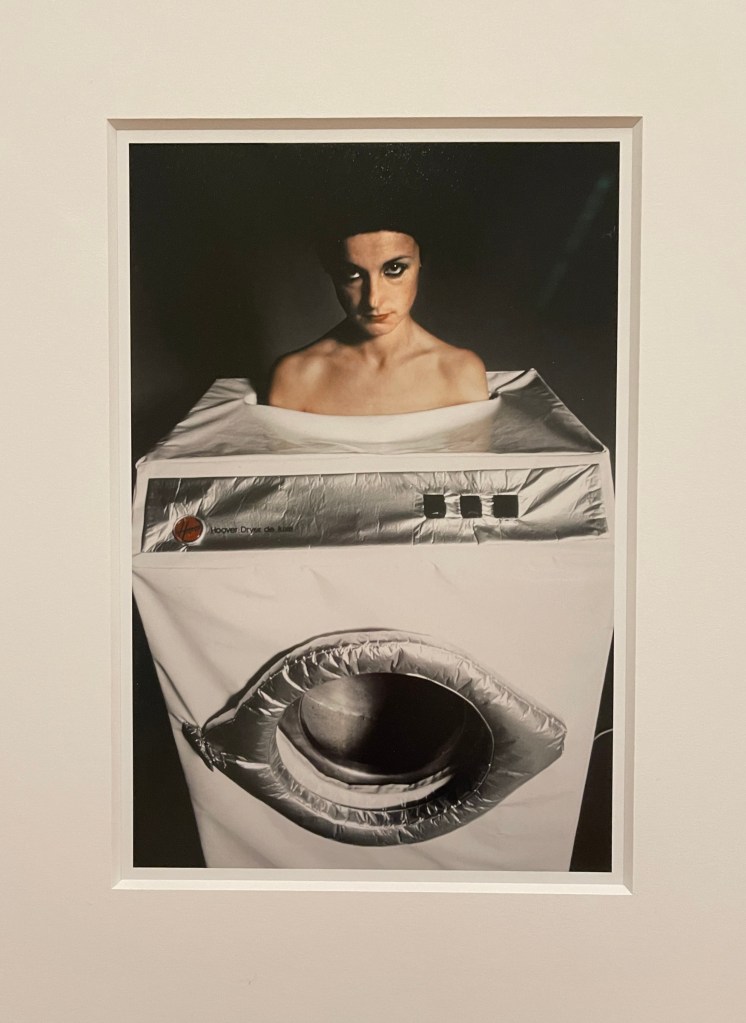
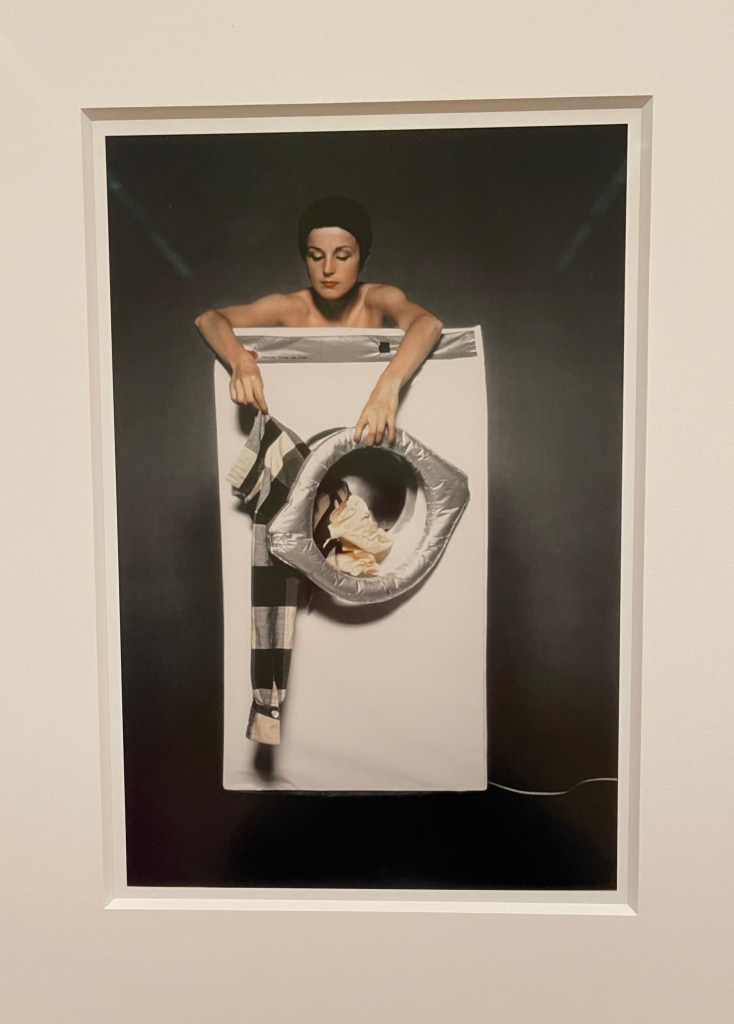
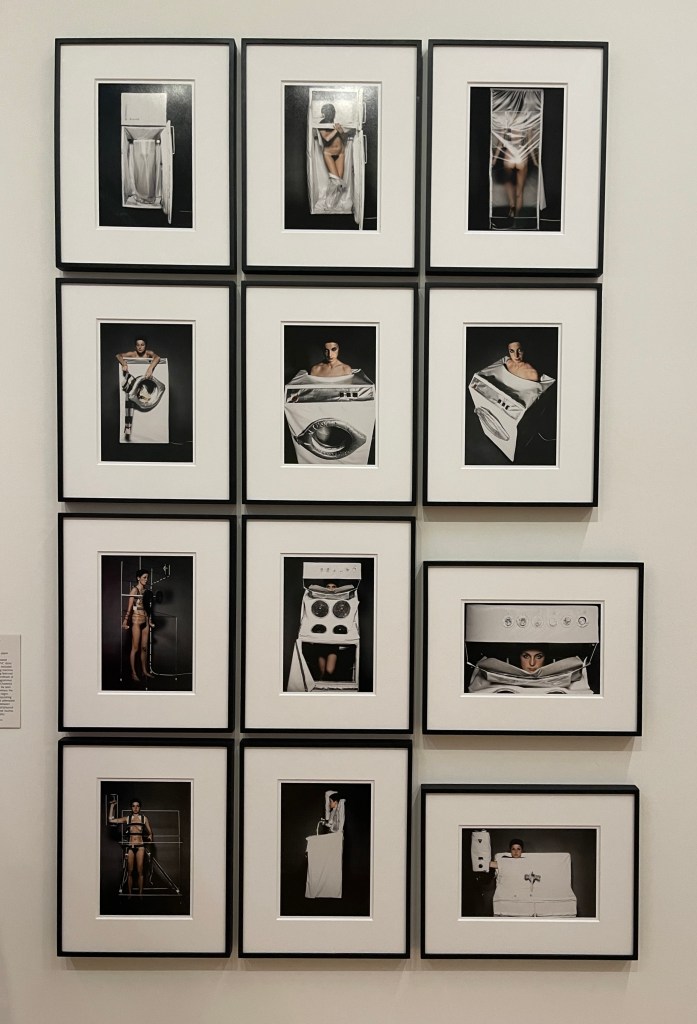
‘ In the Kitchen’ - Helen Chadwick 1977
Domestic Detritus
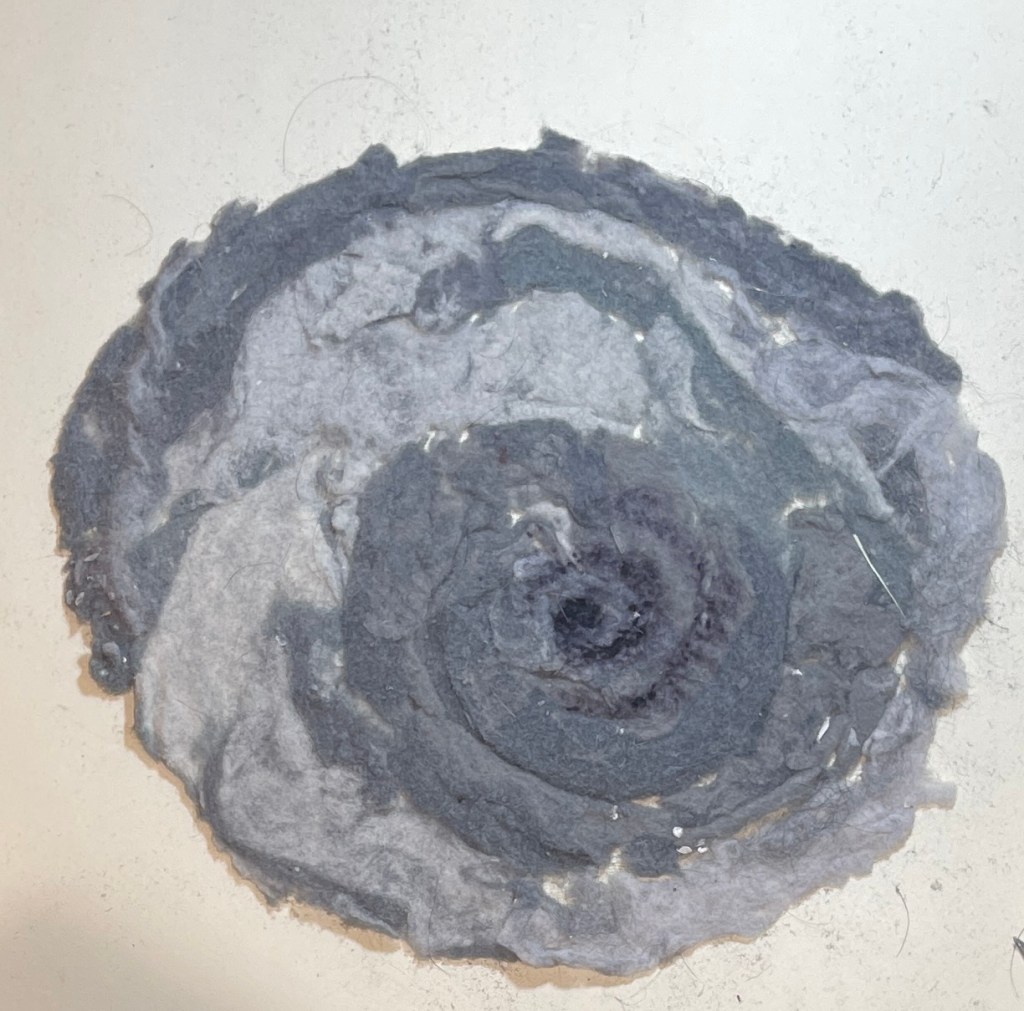
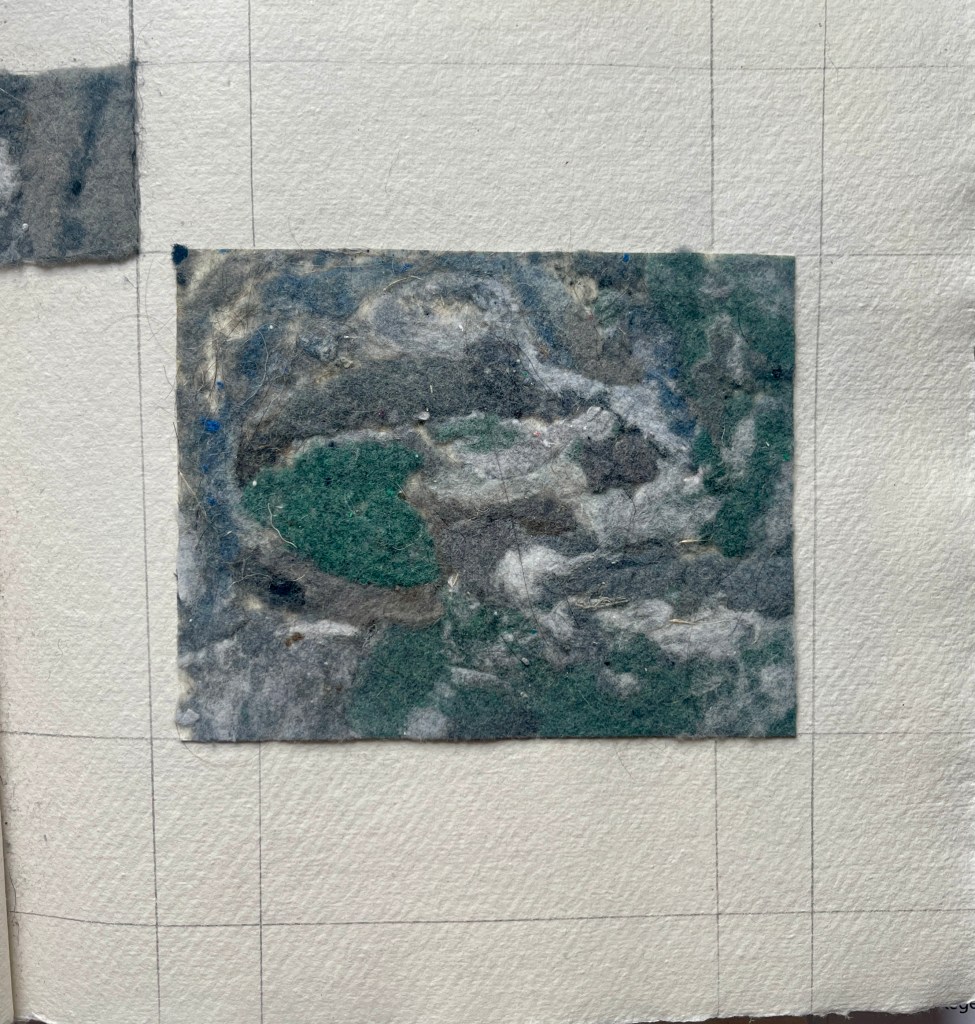
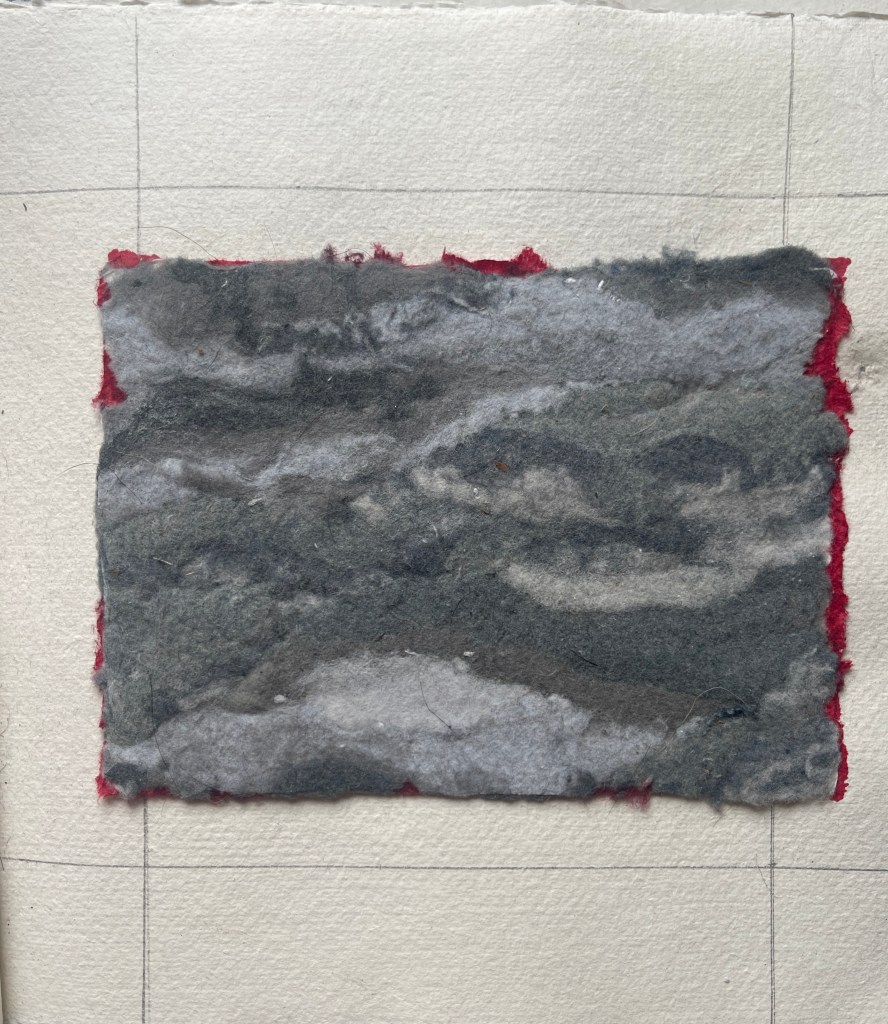
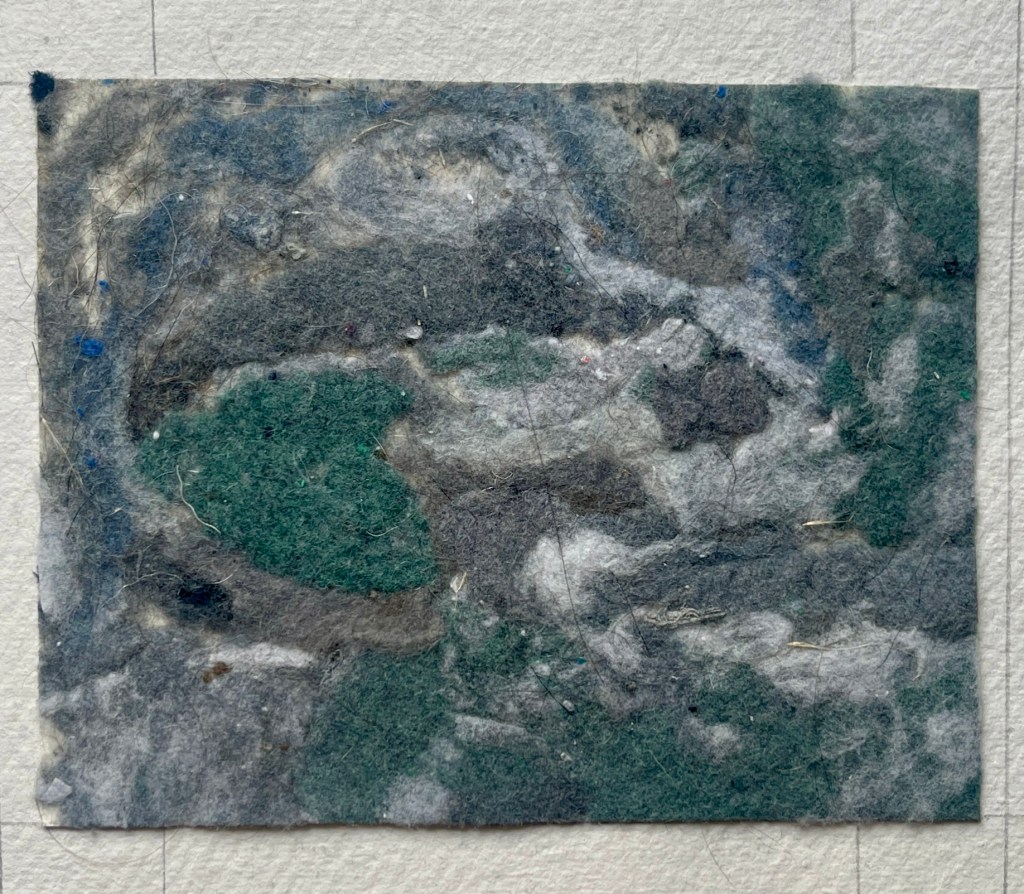
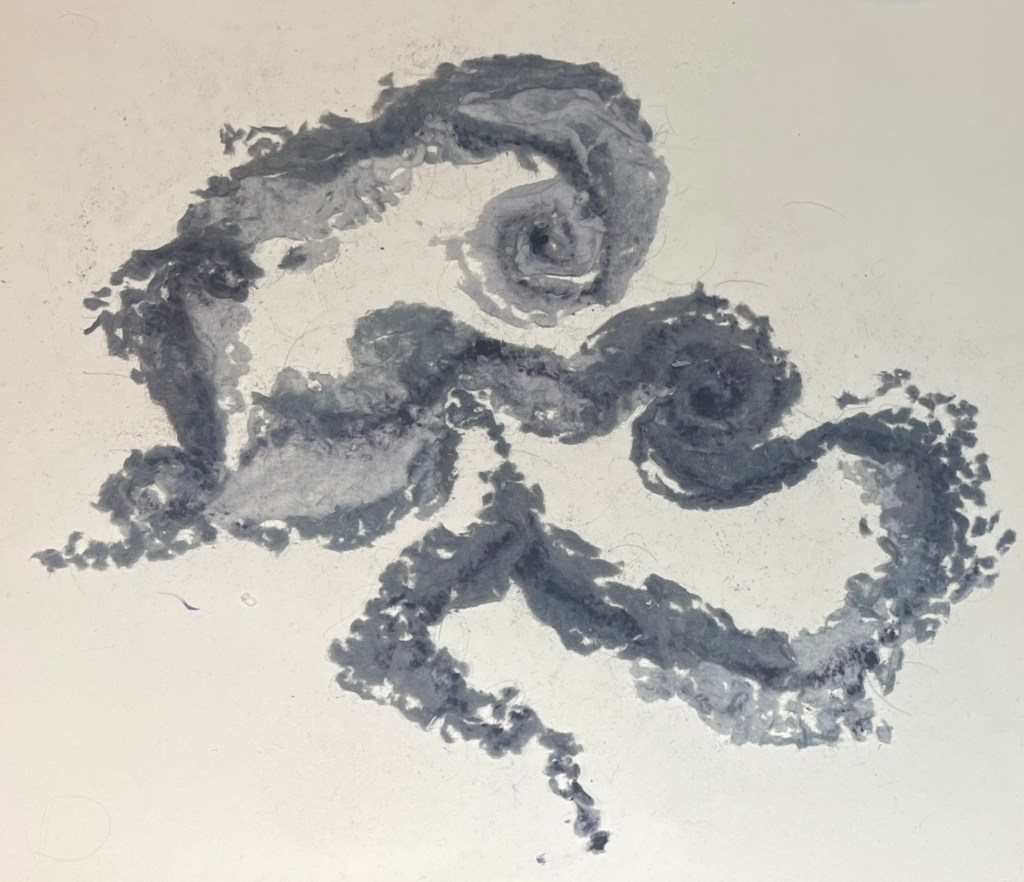
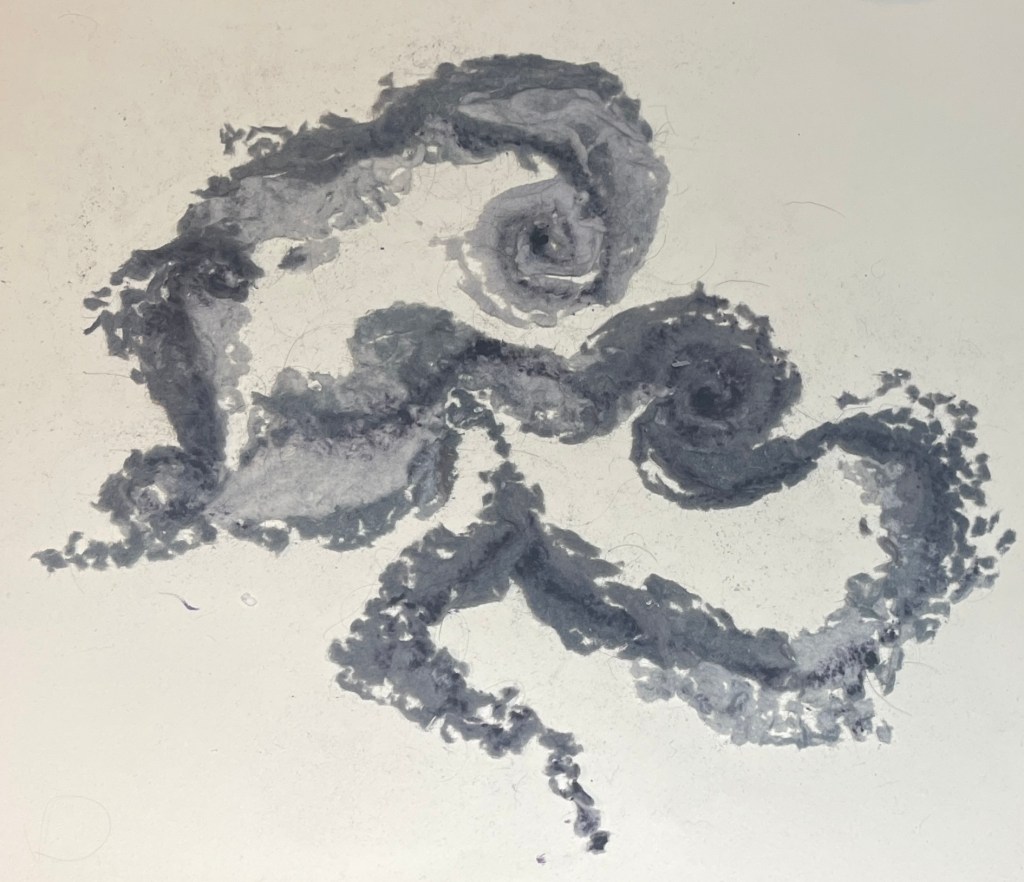
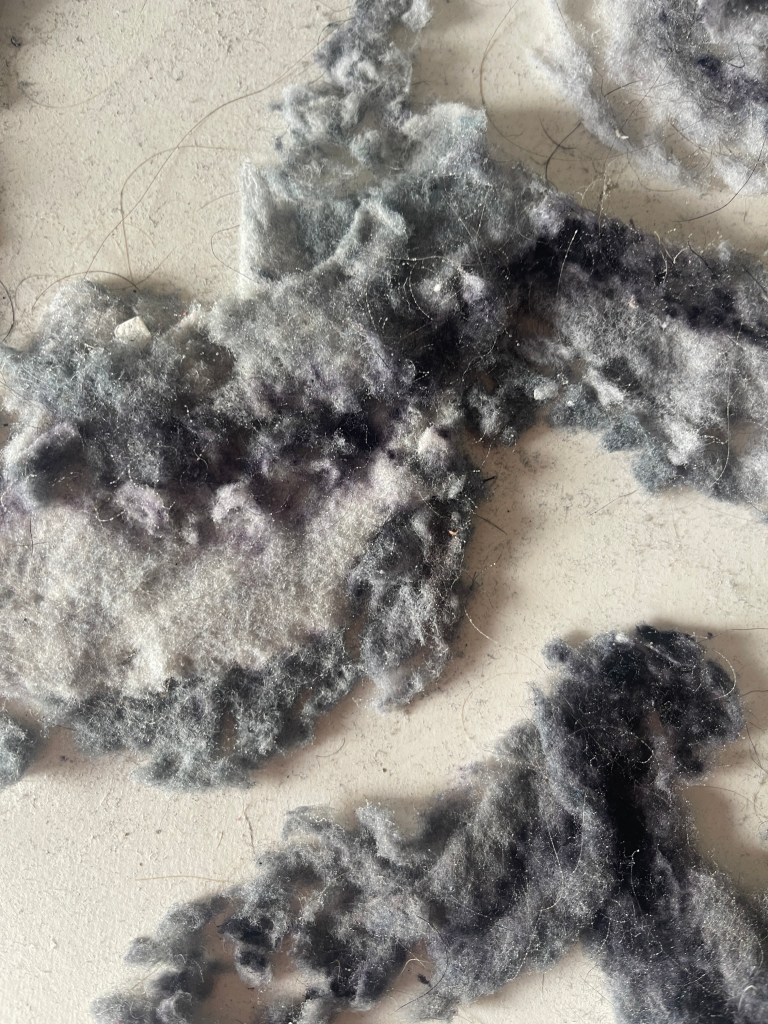
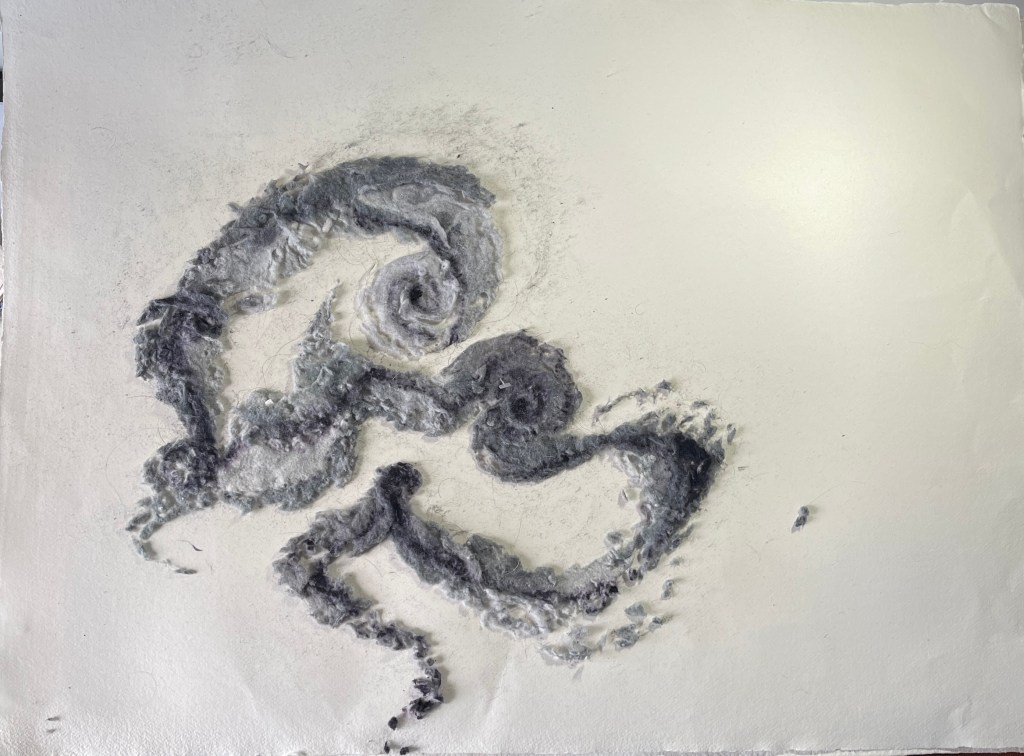
Working away from the ‘flattened ‘ contained imagery of my daily detritus to expand and open up the material I began to make a framework of wire sculpting mesh that would serve as the solid base on which to layer the dust and fluff debris …
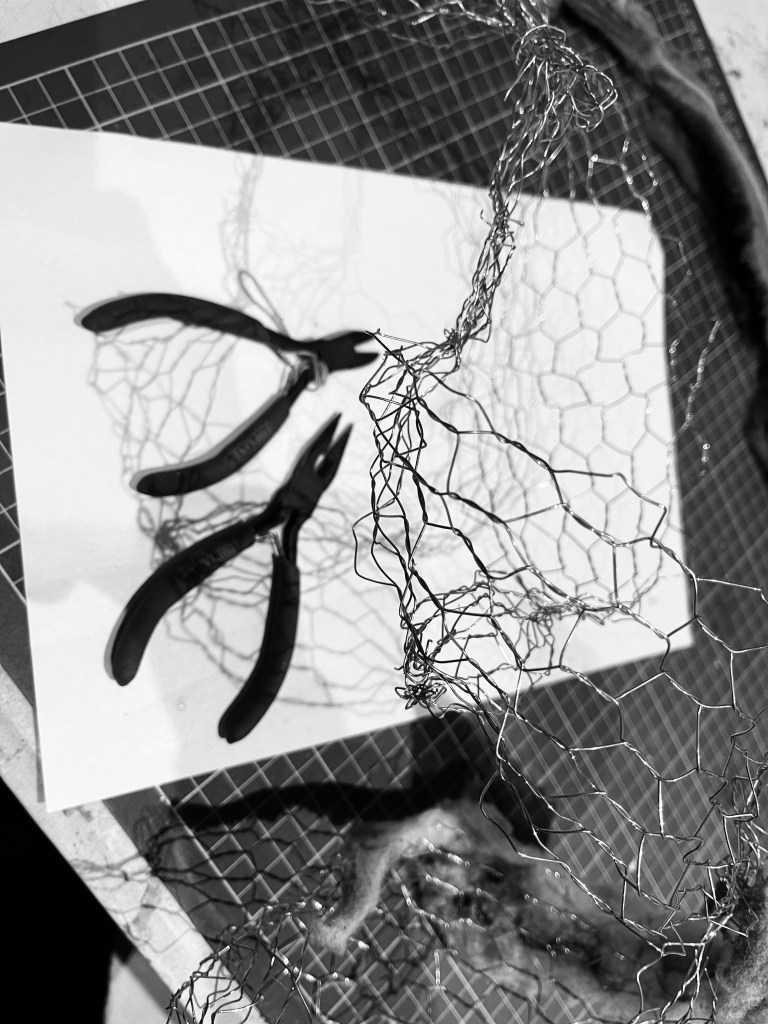
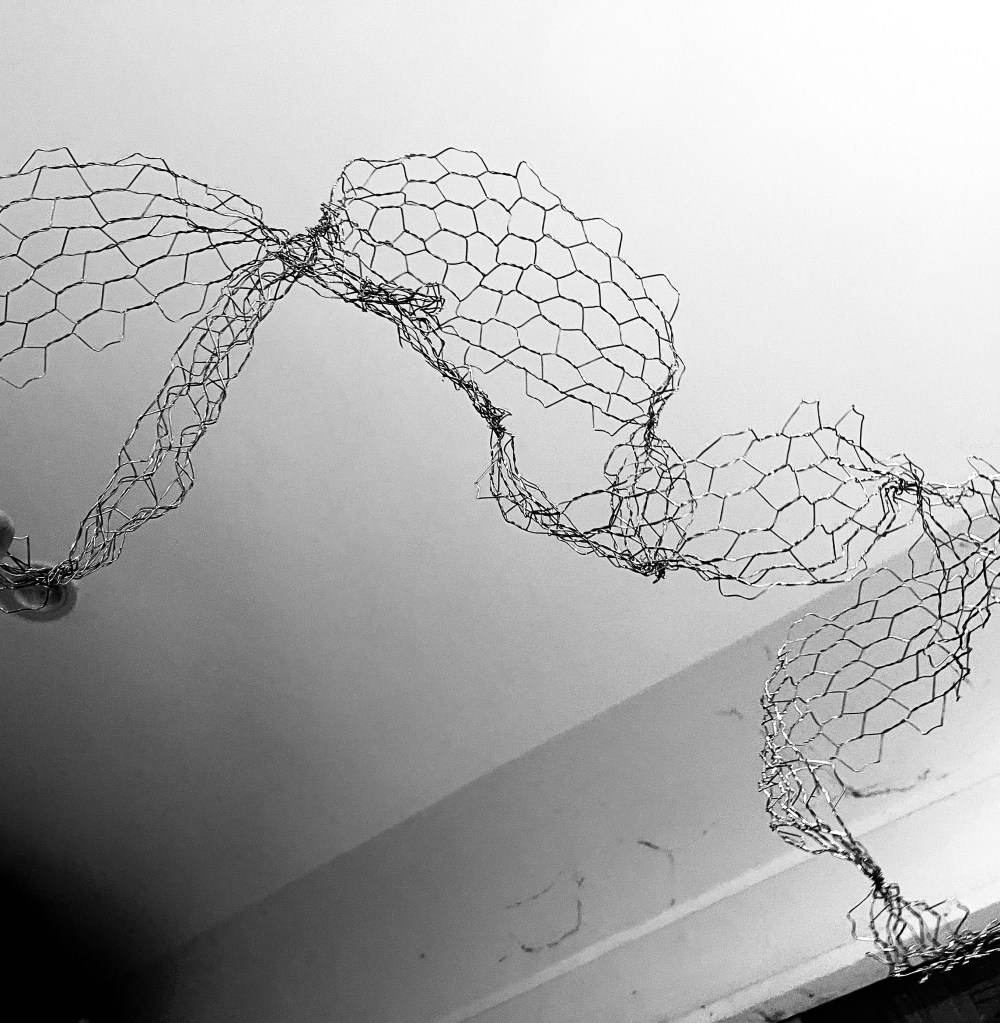
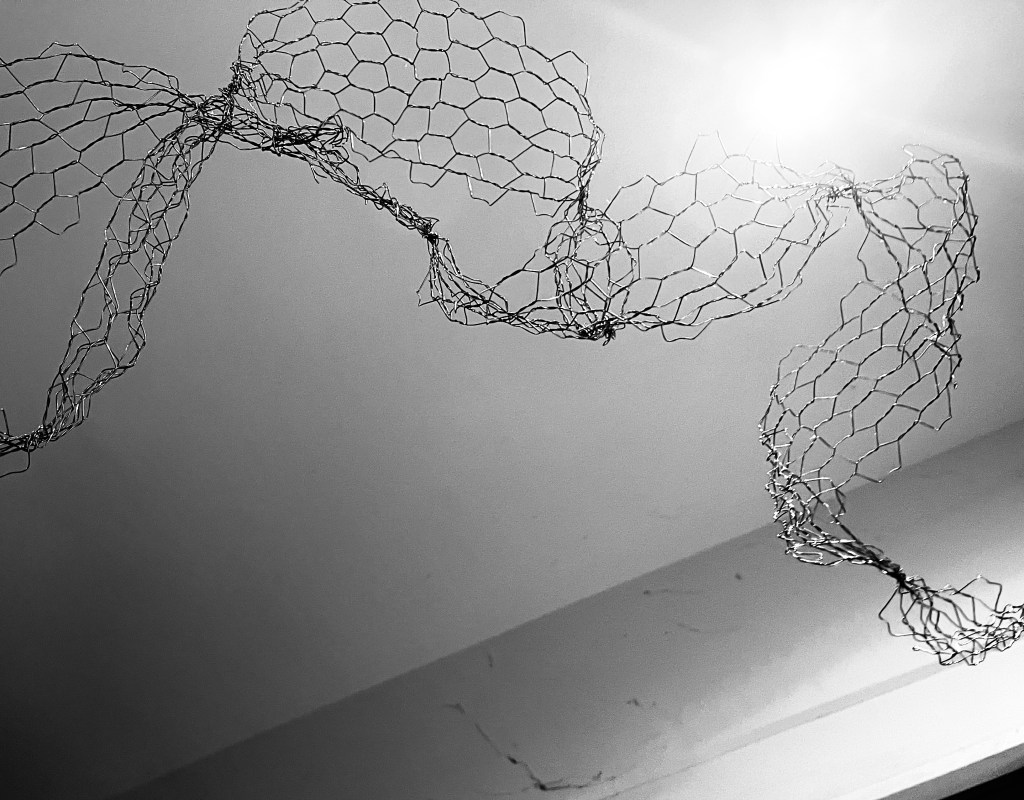
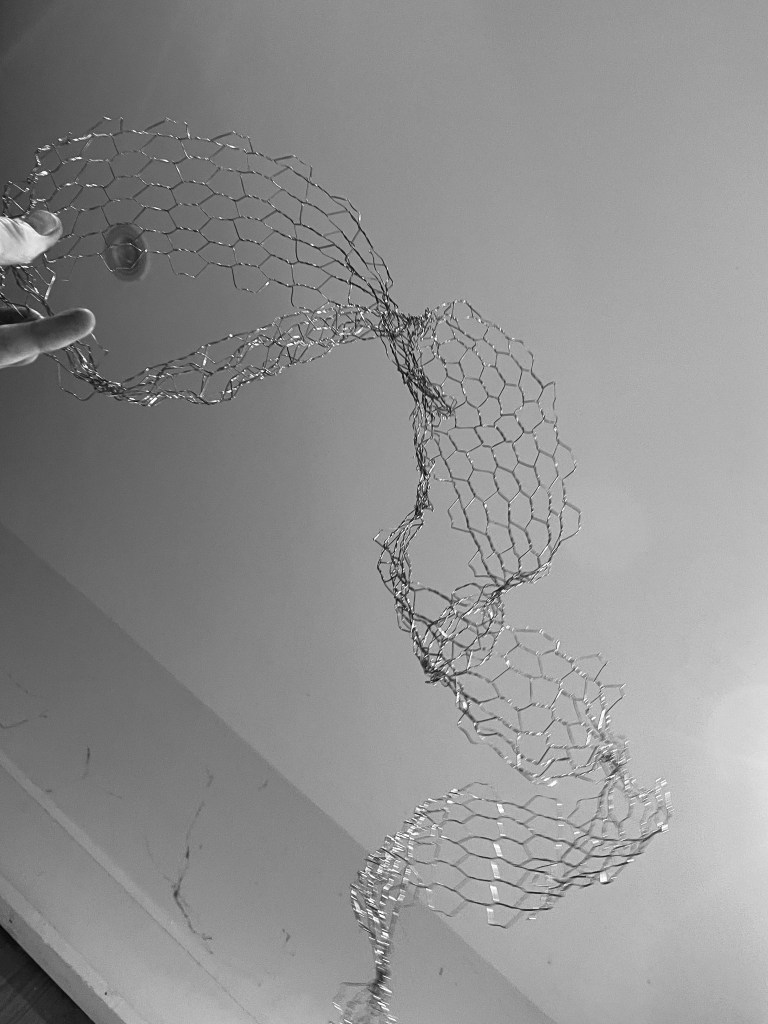
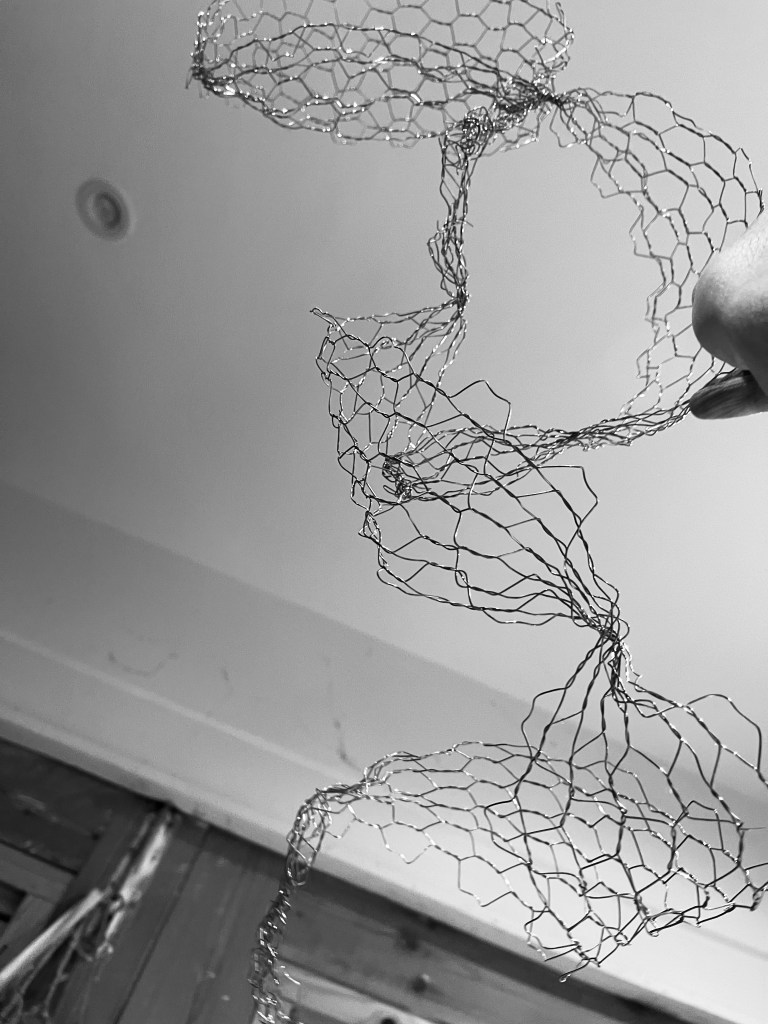
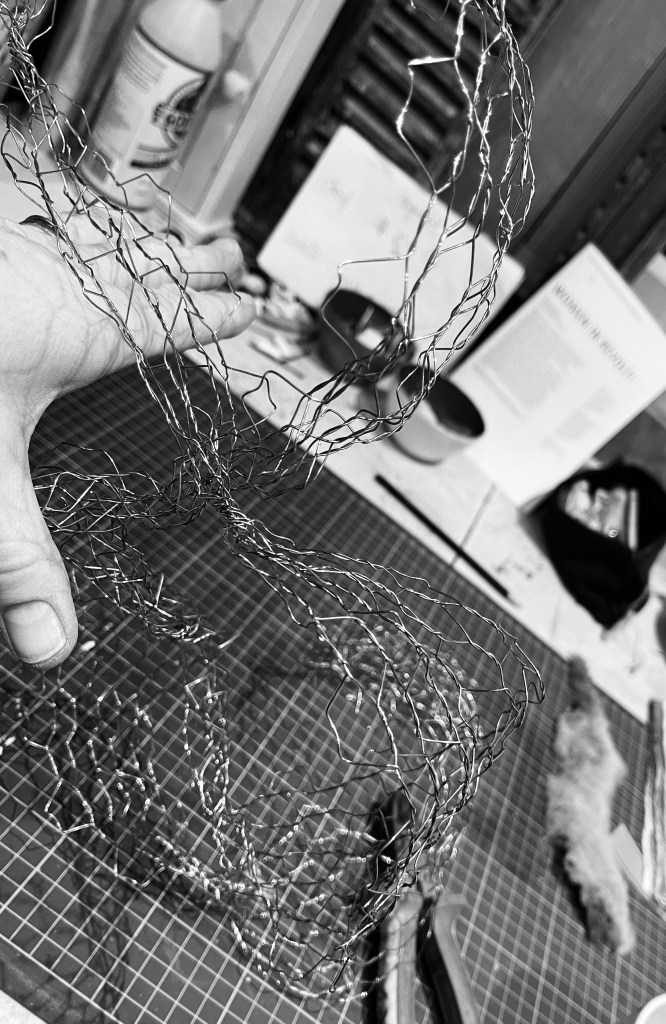
Layering up the sheets and lumps of dust, fluff and fibres. ( clothes fibres, hair, feathers etc ) Using clear PVA glue to attach to each other and the twisted frame, contorted nto an organic flowing shape reminiscent of a murmuration form.
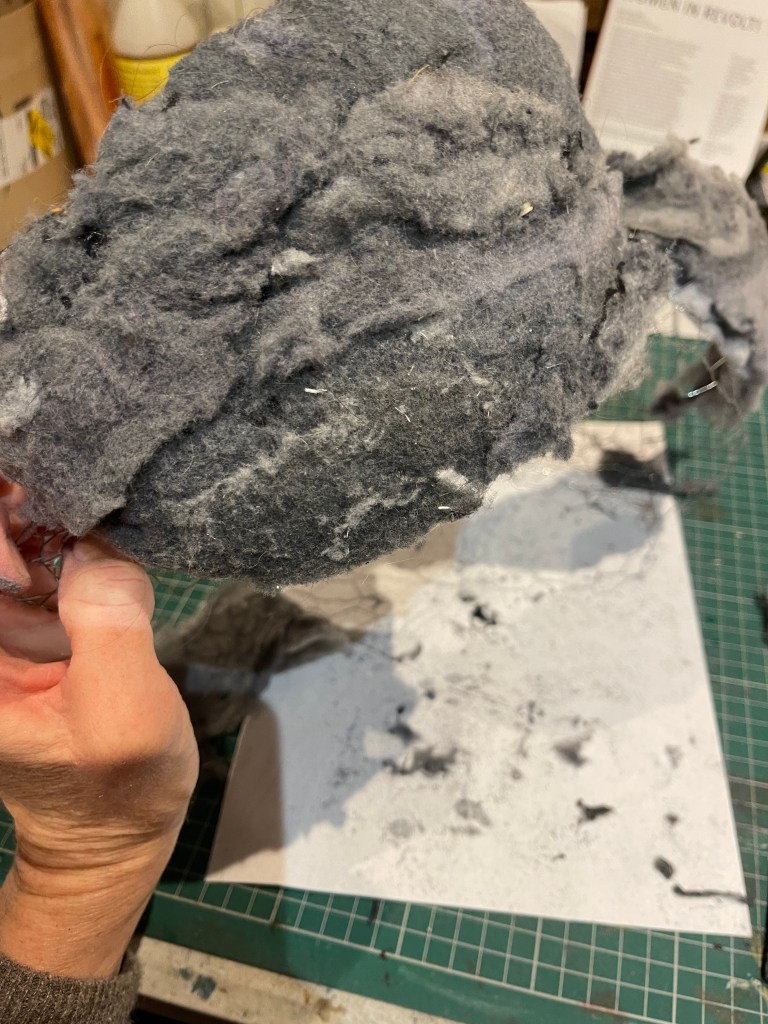
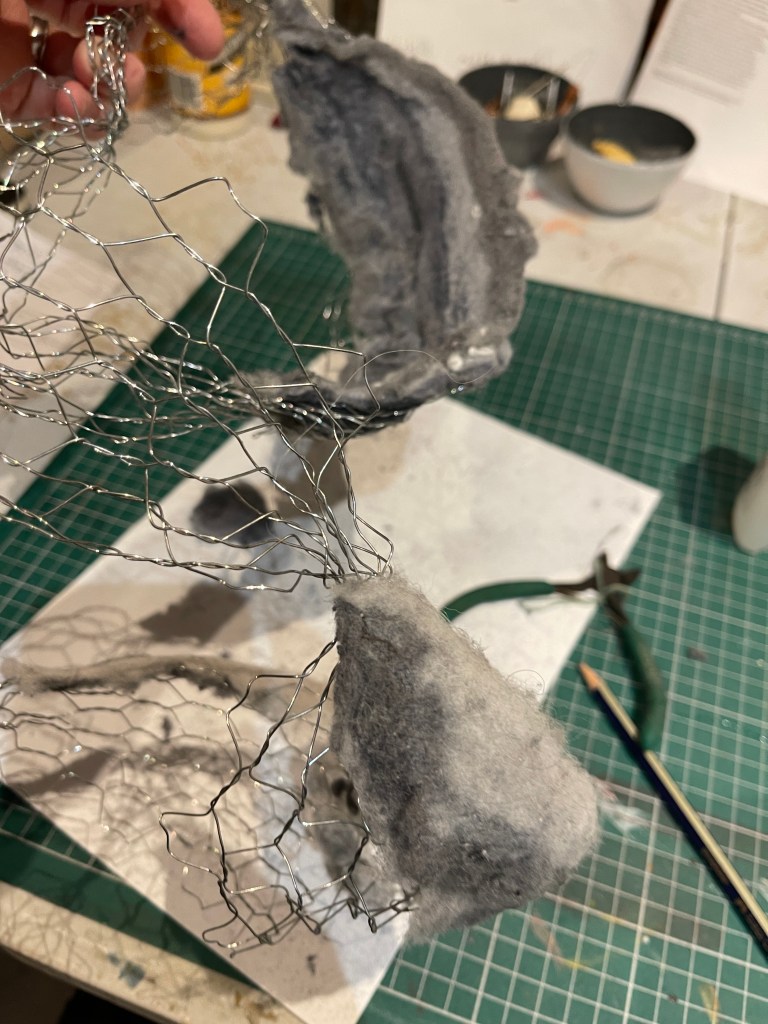
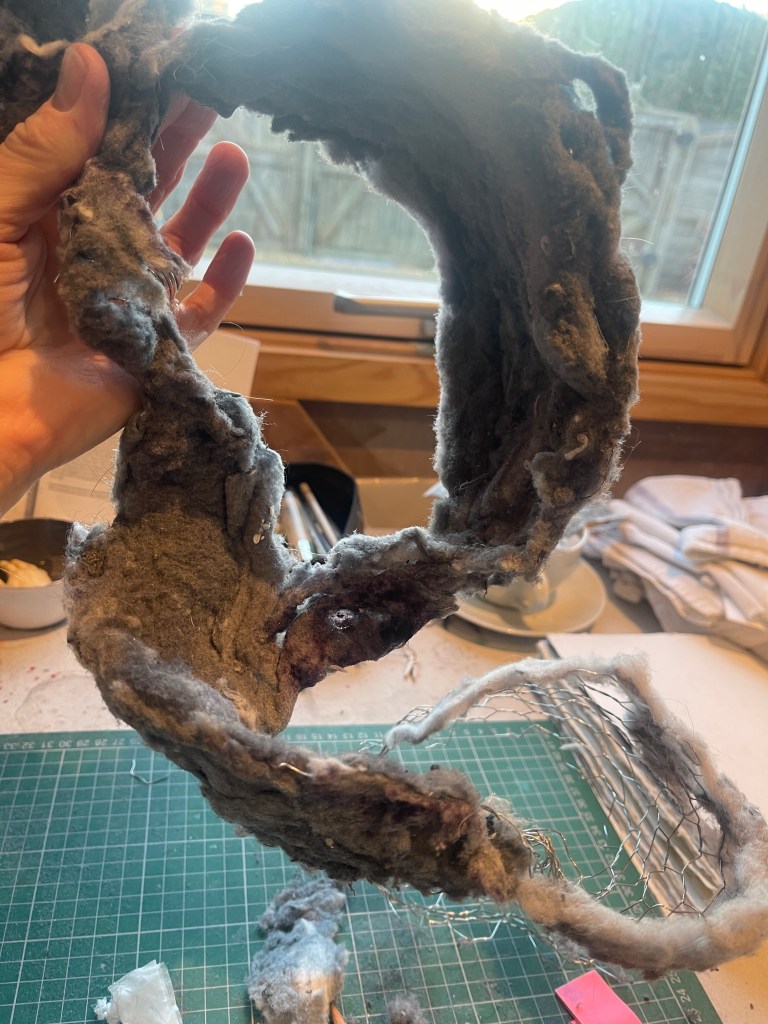
Unfinished images of first sculpture part – almost fully covered. Lying flat on surface. Approx size – 600mm x 400mm
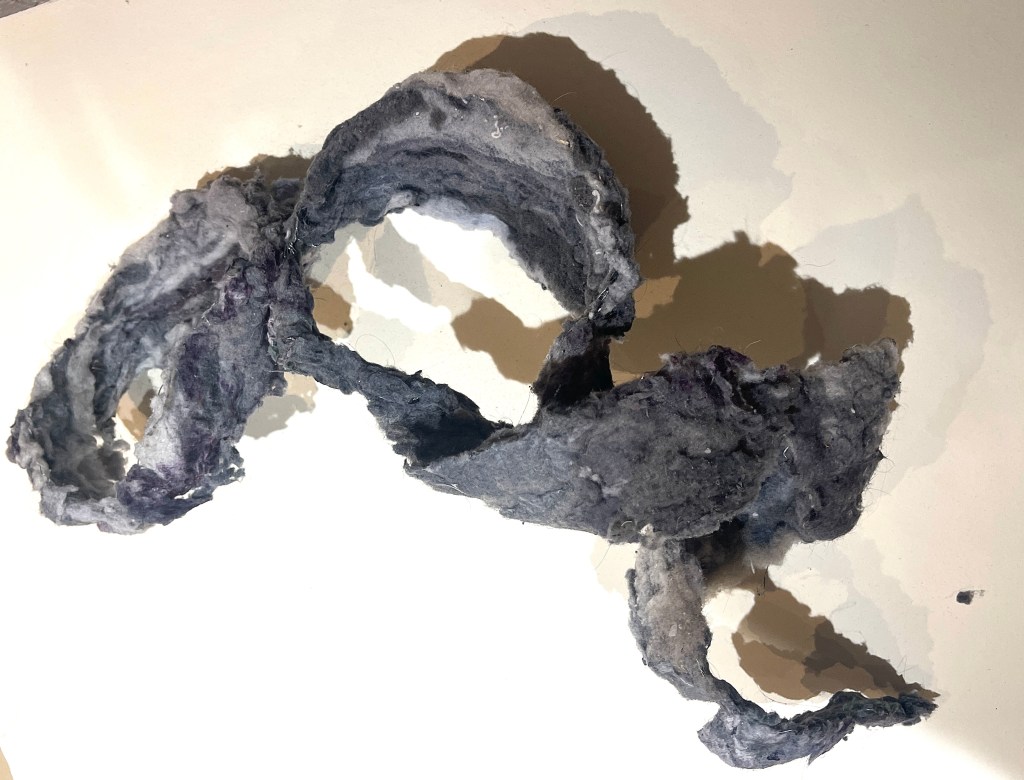
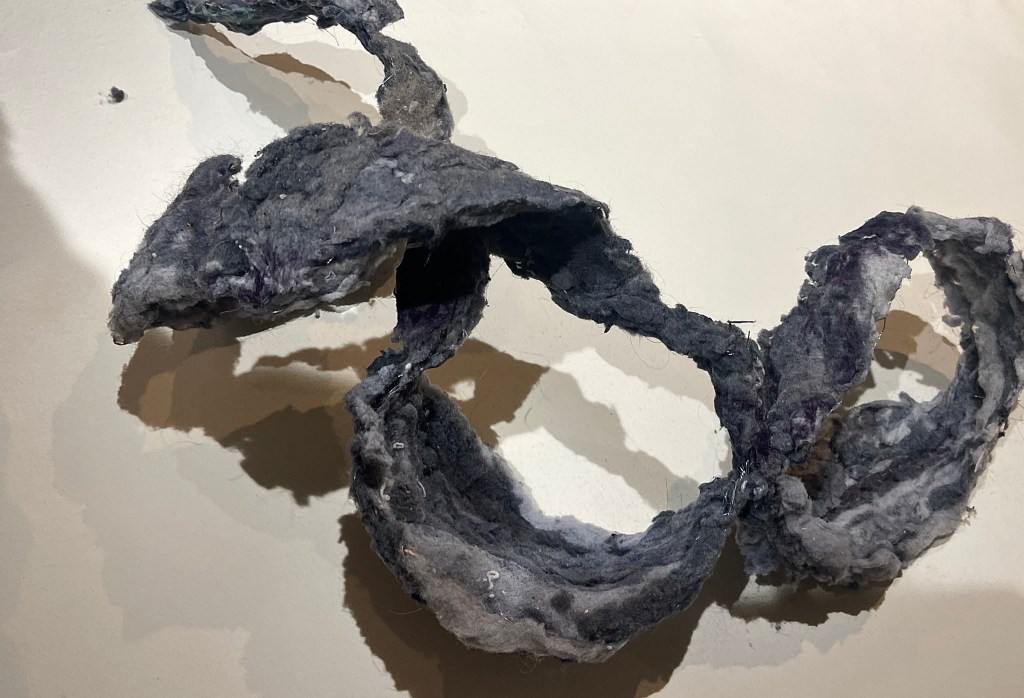
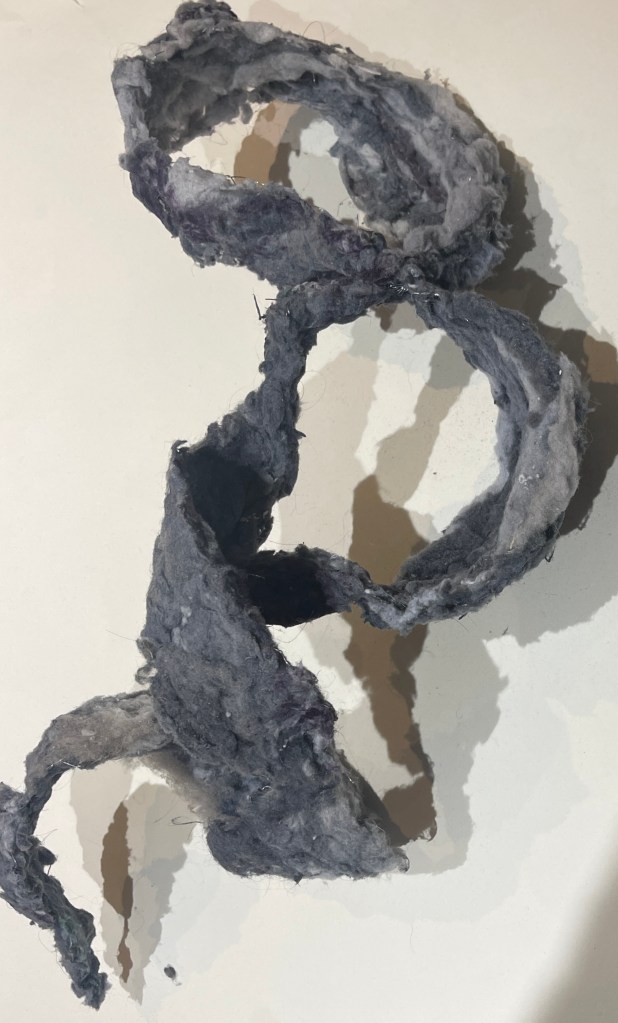
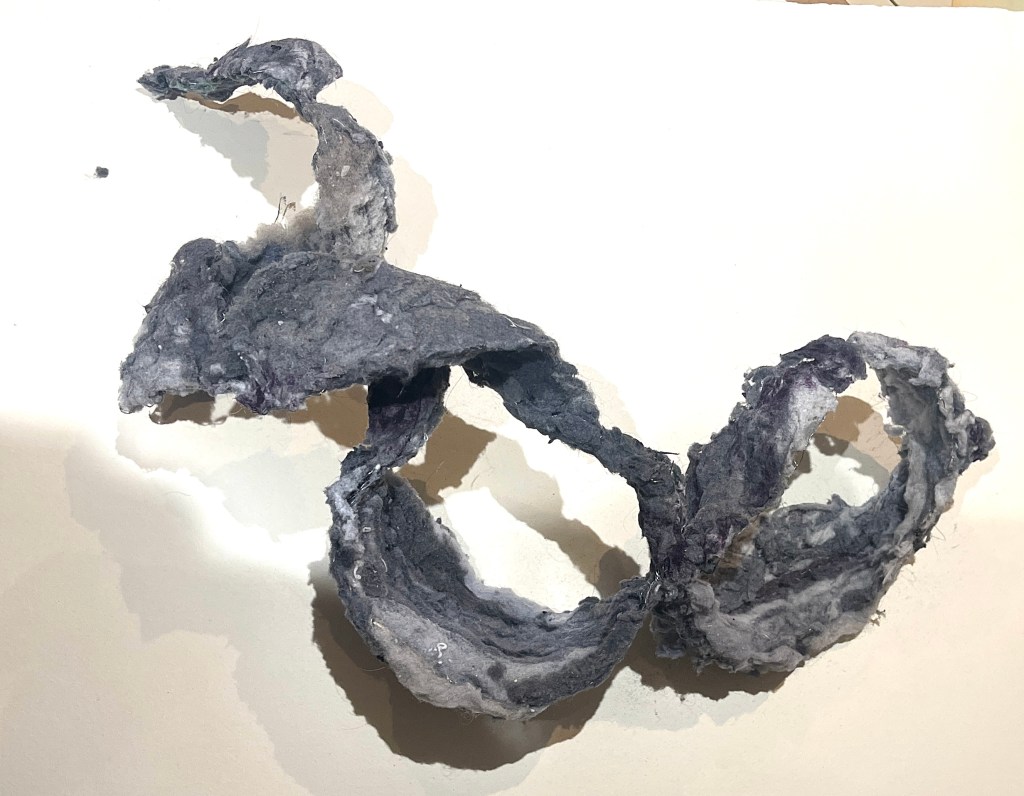
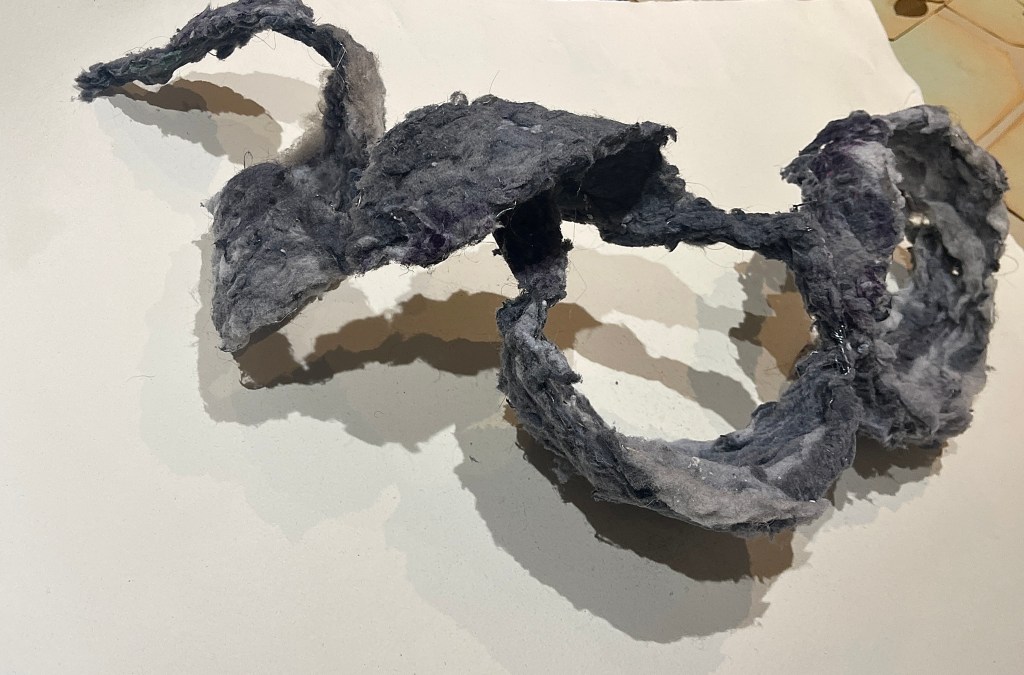
To do – Expand another section, Add more material , possible thinning with occasional aperture added.
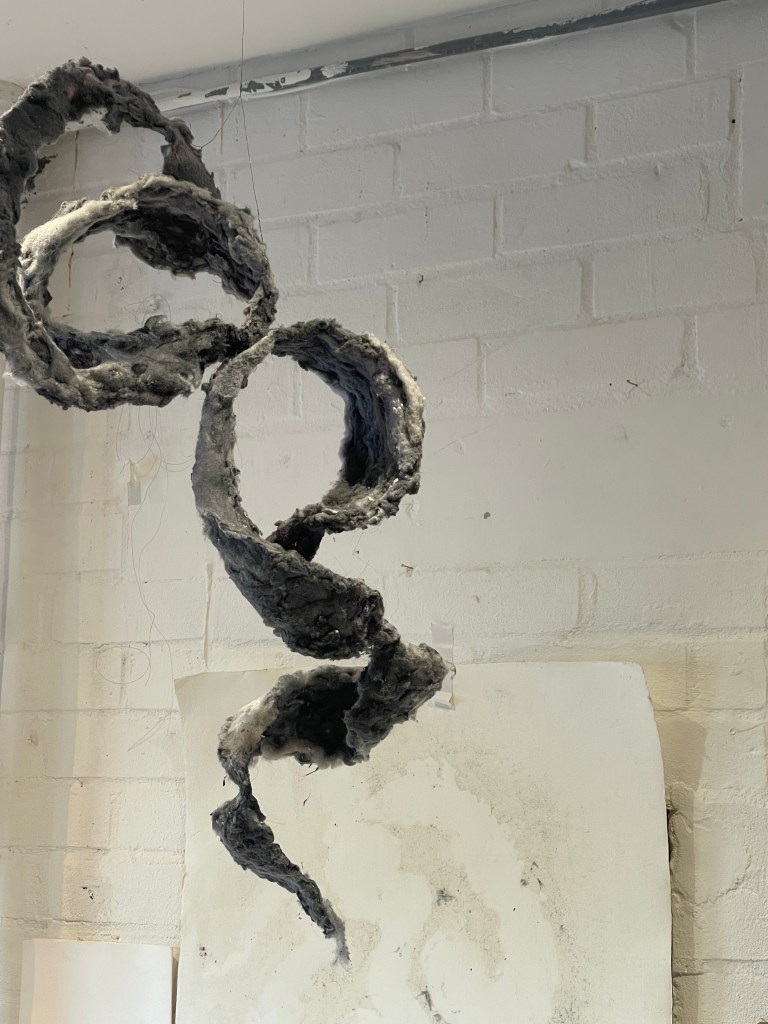
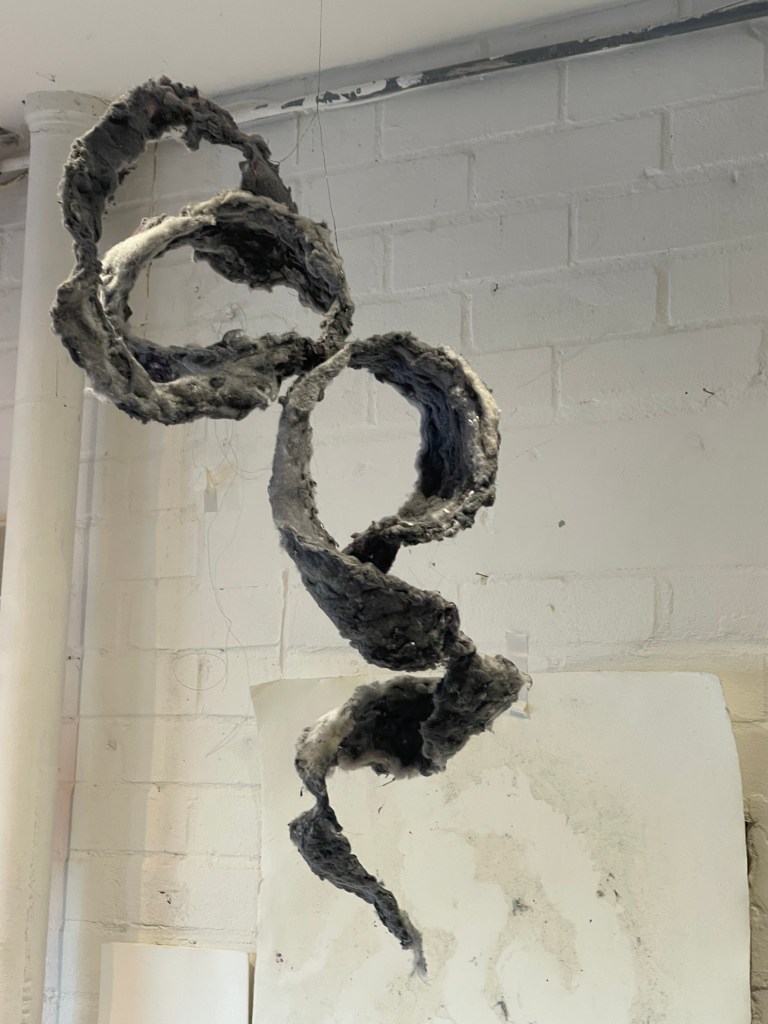
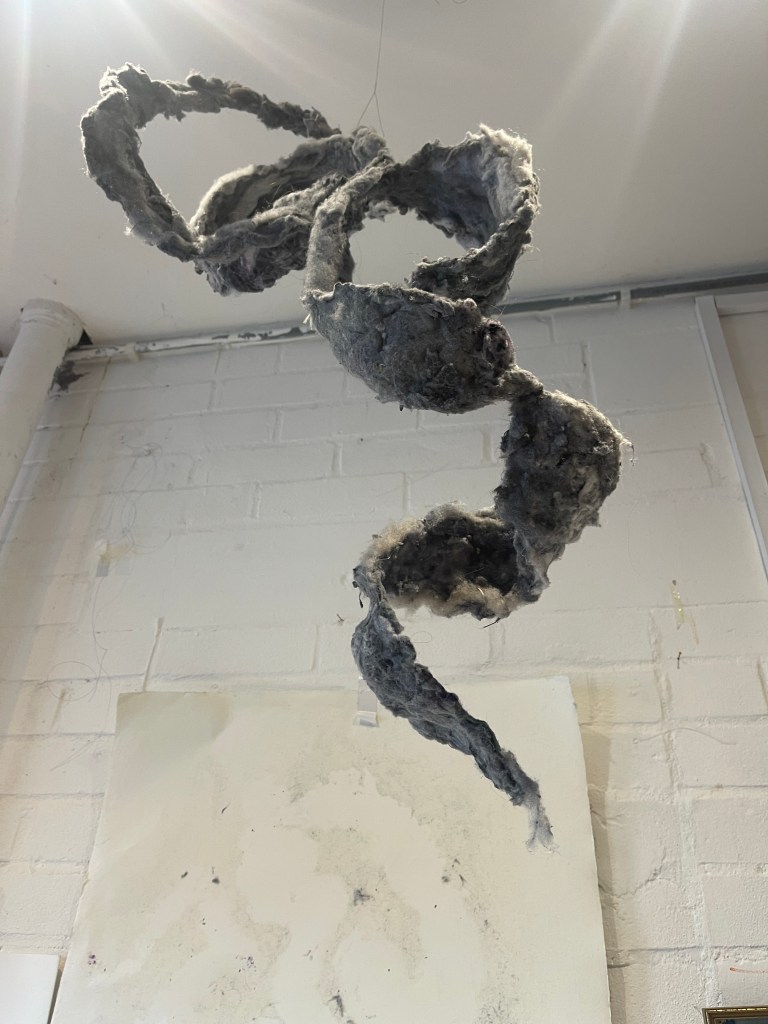
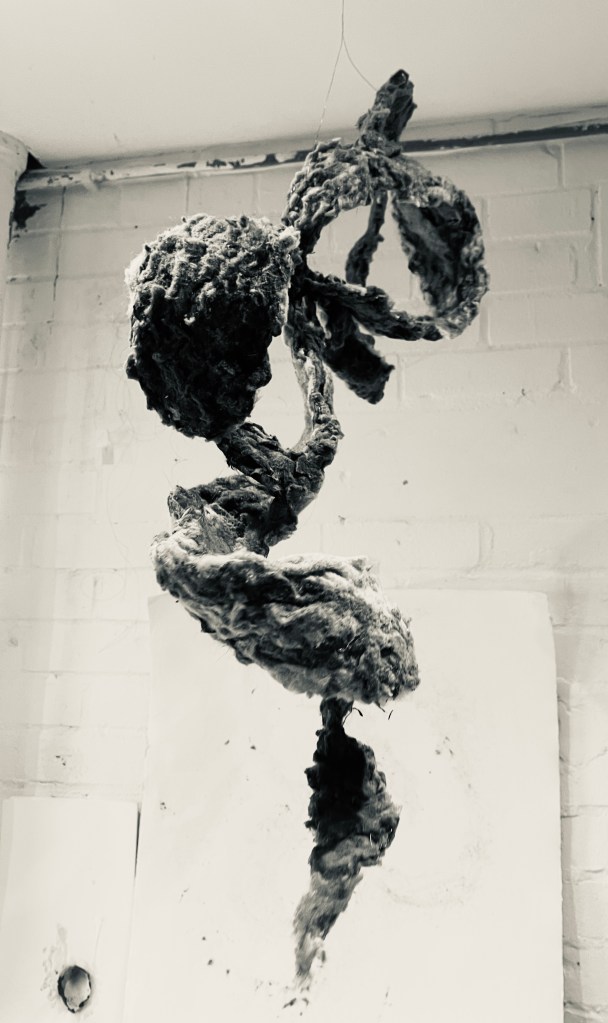
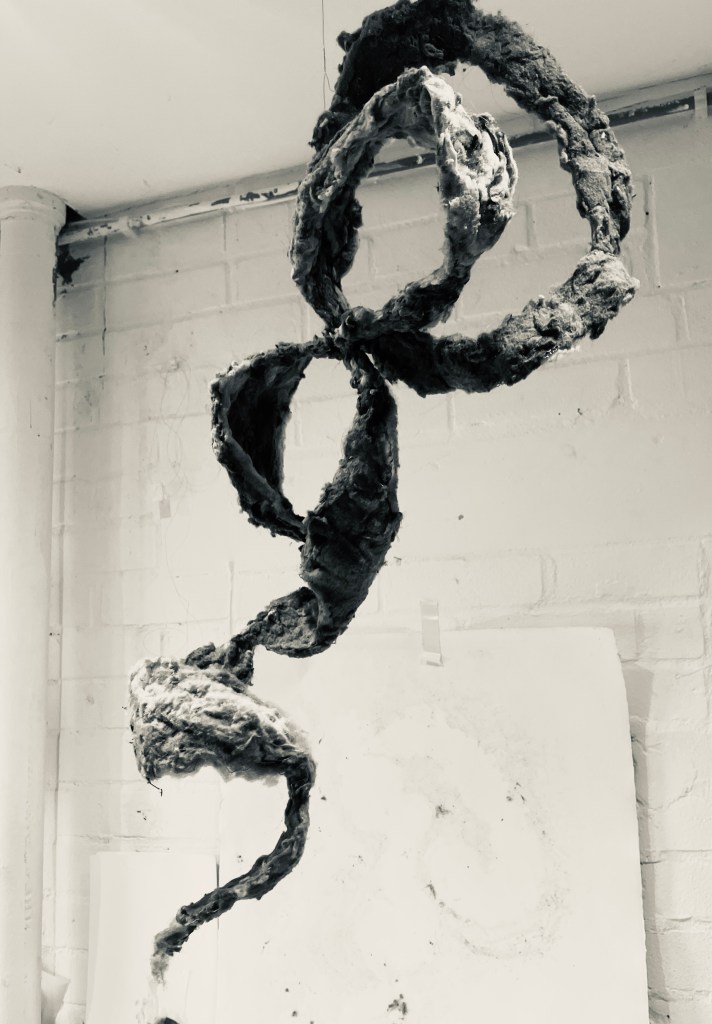
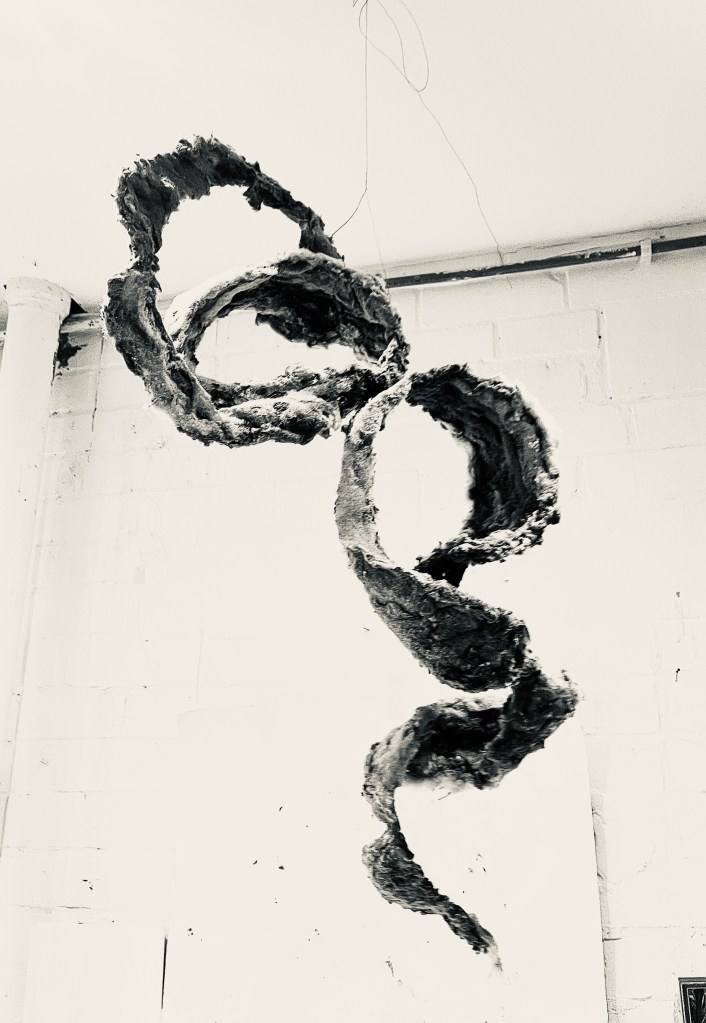
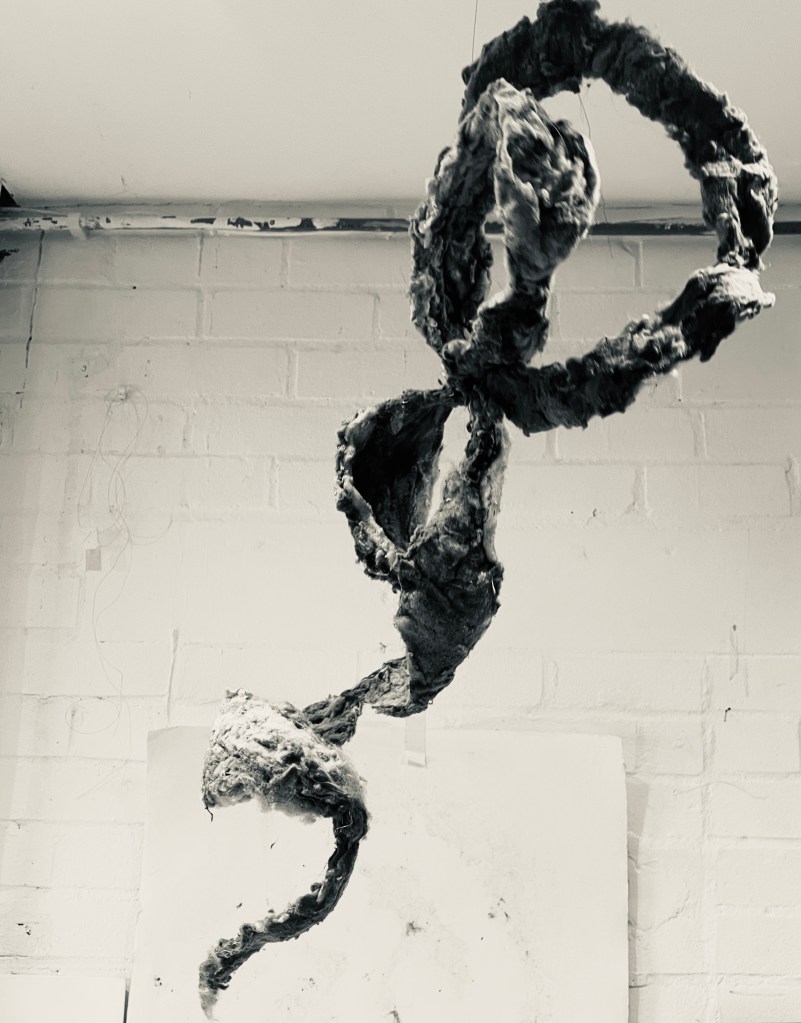
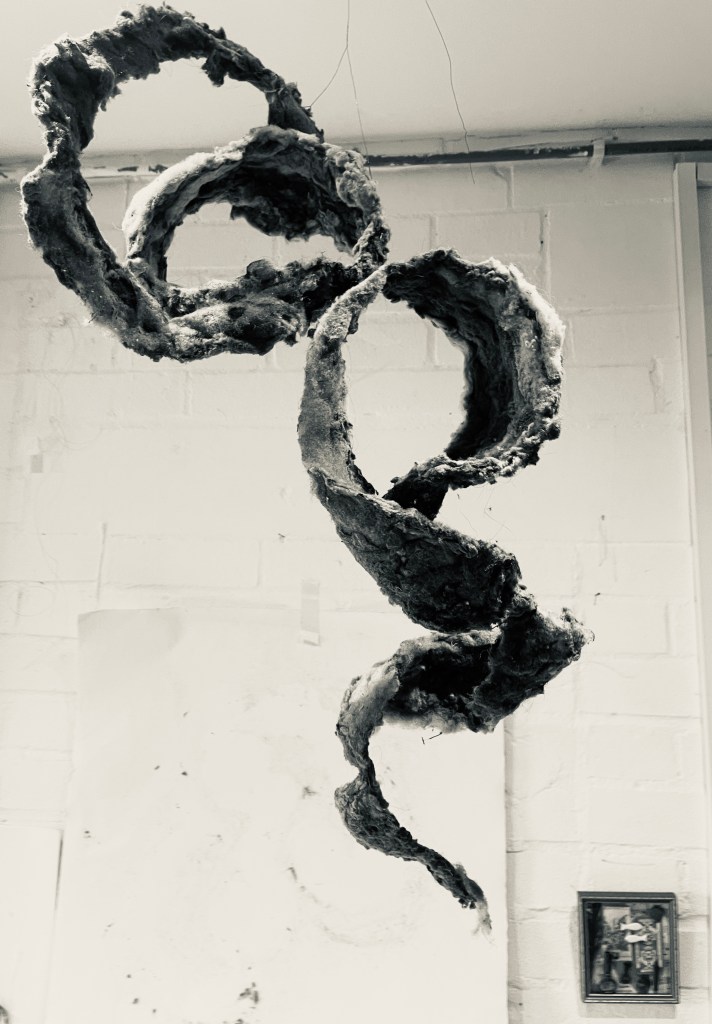
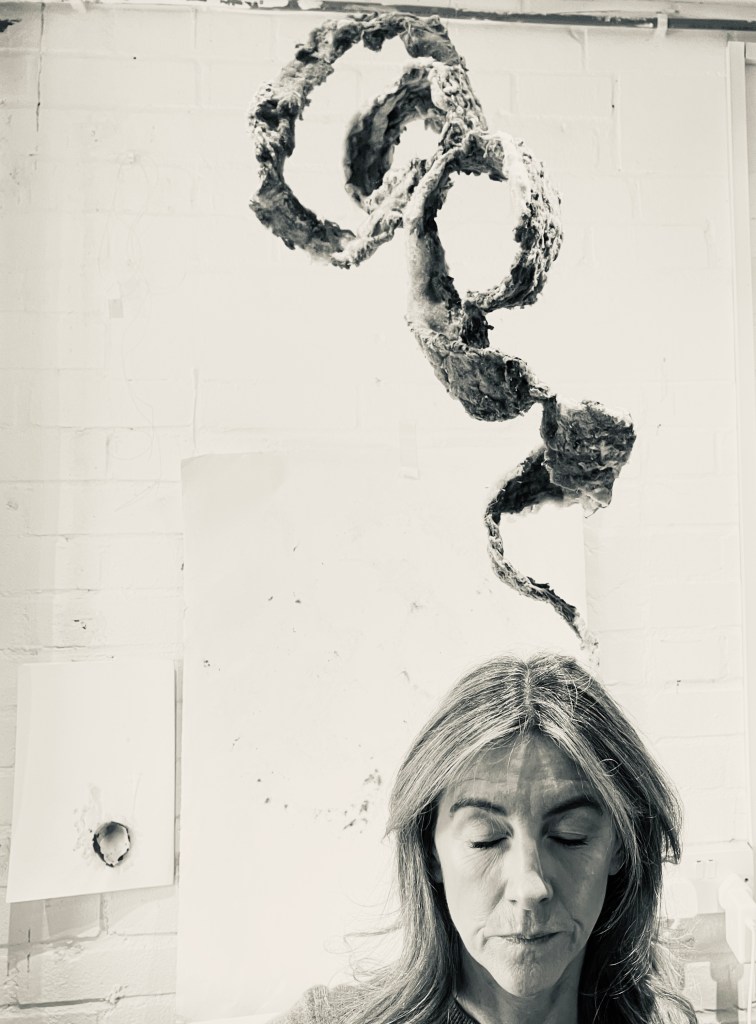
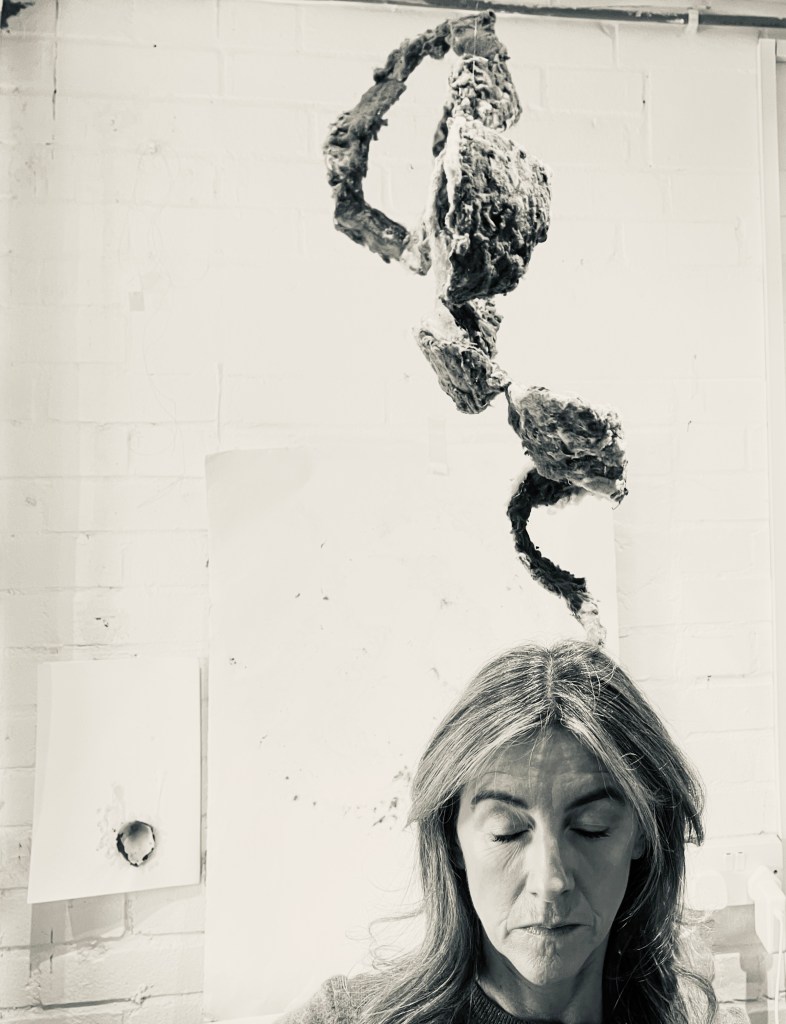
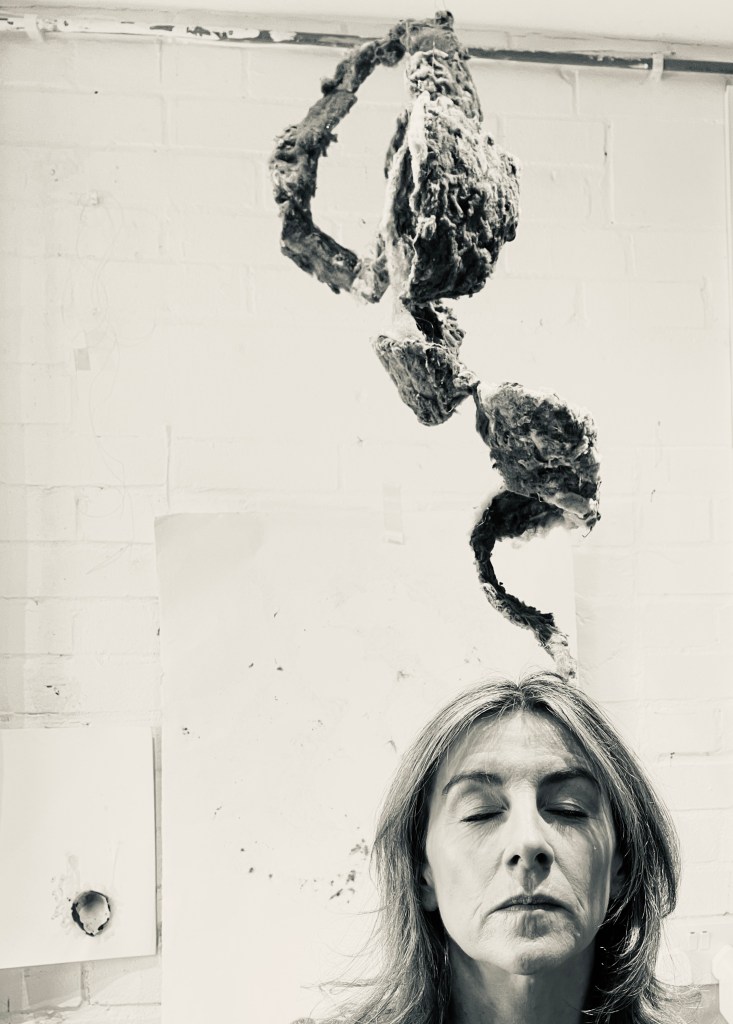
Invisible angst!
– the physical apparition of the anxiety, worry and fear hovering above us. The material embodying the uncomfortable, lumpy, nightmarish shape and form as it slowly rotated above me. Worming its way deep into my head.
Photographed in my studio. 2024.
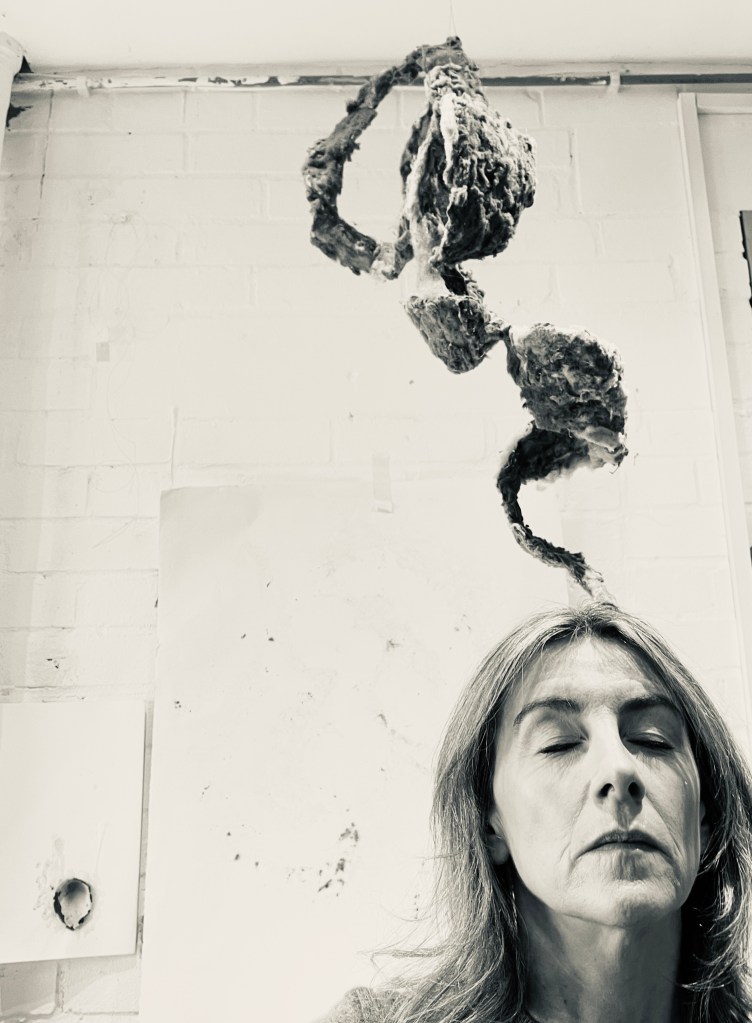
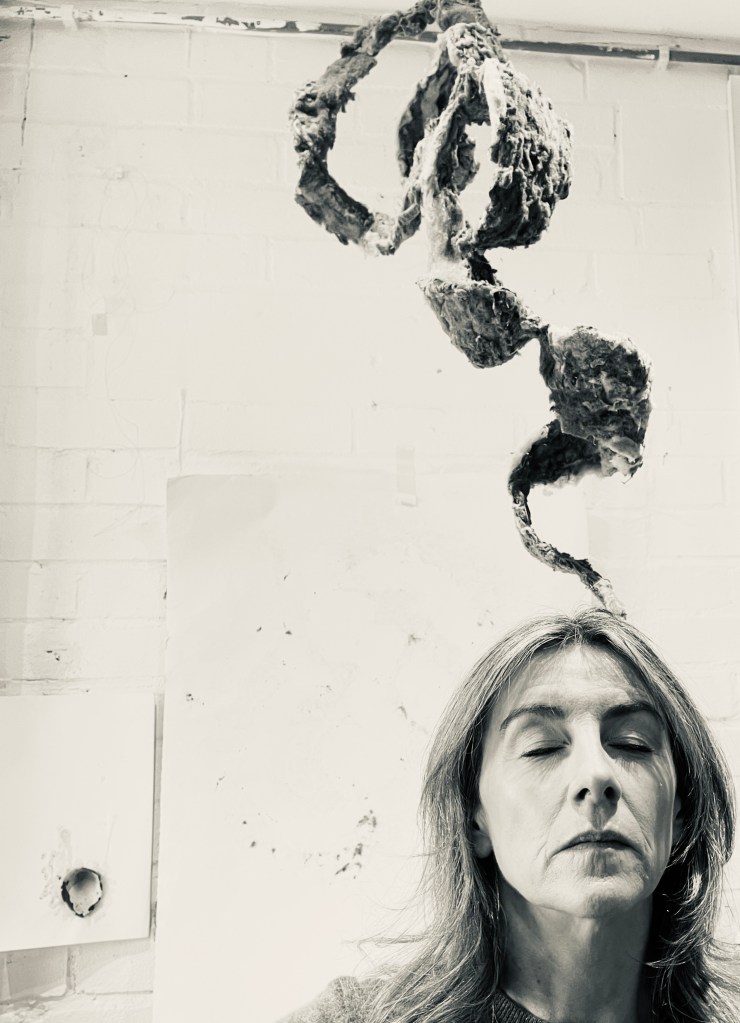
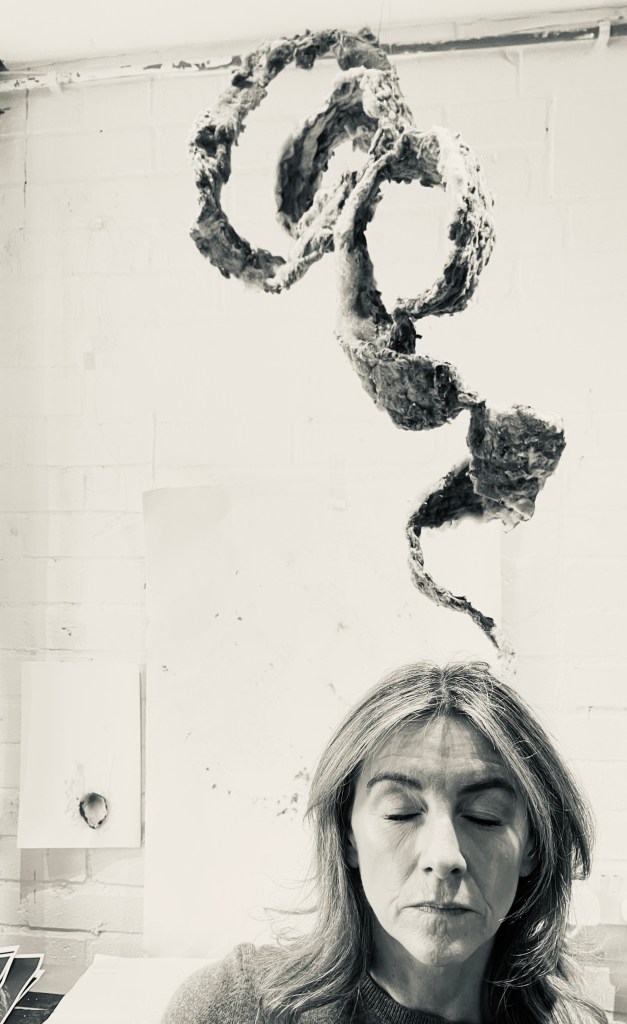
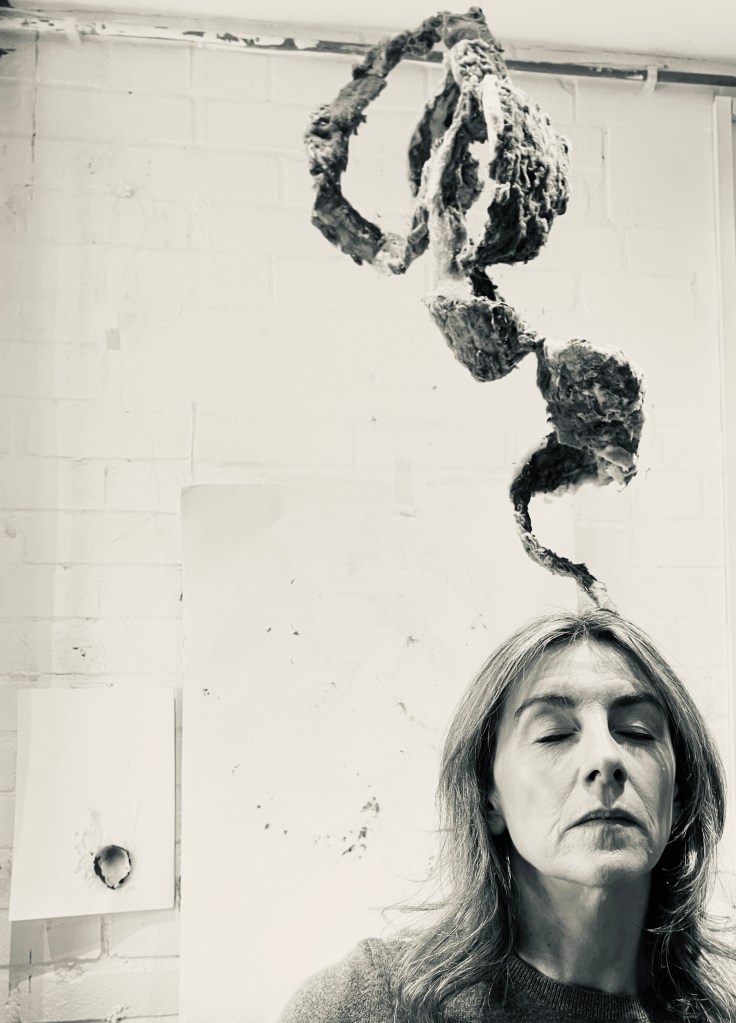
Pressure – environmental versus mental . – ‘Barograph’
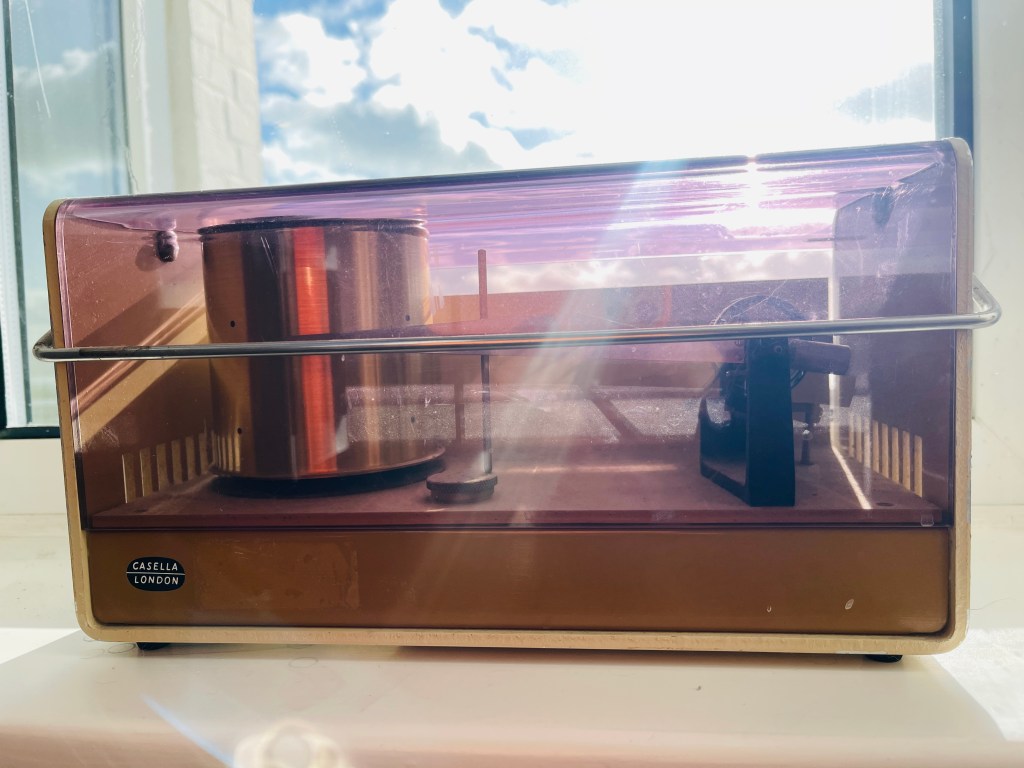
Looking into Female Mental Health, expressing emotions of anxiety, worry and pressure further I looked to the traditional and often antique delicate machines that measure air pressure, Barographs. There is of course a well documented link between our emotions and the weather, from the rose tinted effect the sun can have on us to the darker cold and bleaker days of winter.
These mood altering days affect our positivity and hence our abilities to be productive, creative and functional. These environmental undulations effect us unanimously and like the dark nights escalating fear and anxiety so do the dark, wet, grey heavy days.
The U.K has its fair share of these weather fronts and consequently as a population we do ‘suffer’ from them. The expression ‘ under a cloud’ or ‘under the weather’ a well used saying in our culture and others.
Exploring the the old sheets from the drums of the barograph I found them reminiscent of a medical examination, a brain scan or lie detector test. They were delicate and exact, wavering and moving across the time time. There were peaks and troughs, ‘ a good day and a bad day’ as the barograph recorded the undulating air pressure.
Vintage Barograph
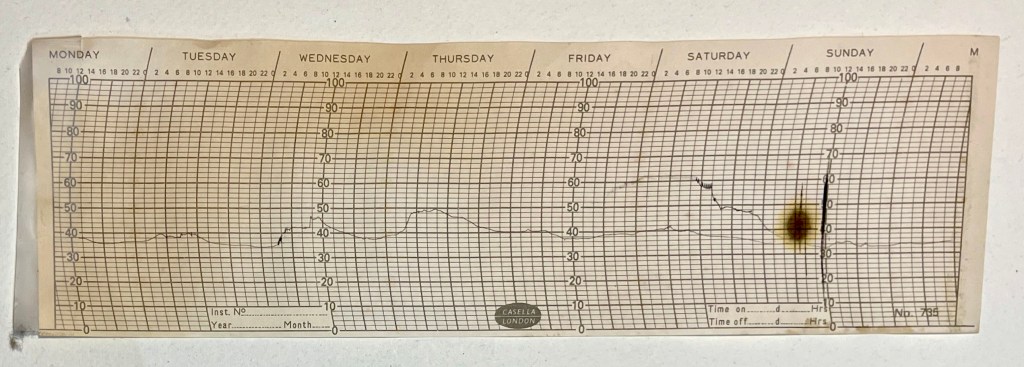
Barograph paper – Feint black line recording air pressure.
These beautifully crafted and exact instruments instruments held so much in common with the construction of the human emotions, sensitive and delicate.
To give them a greater sene of visual presence and drama I copied the lines made by the barographs arm in red silk thread below the inked line .
( photo of sheet and machines …
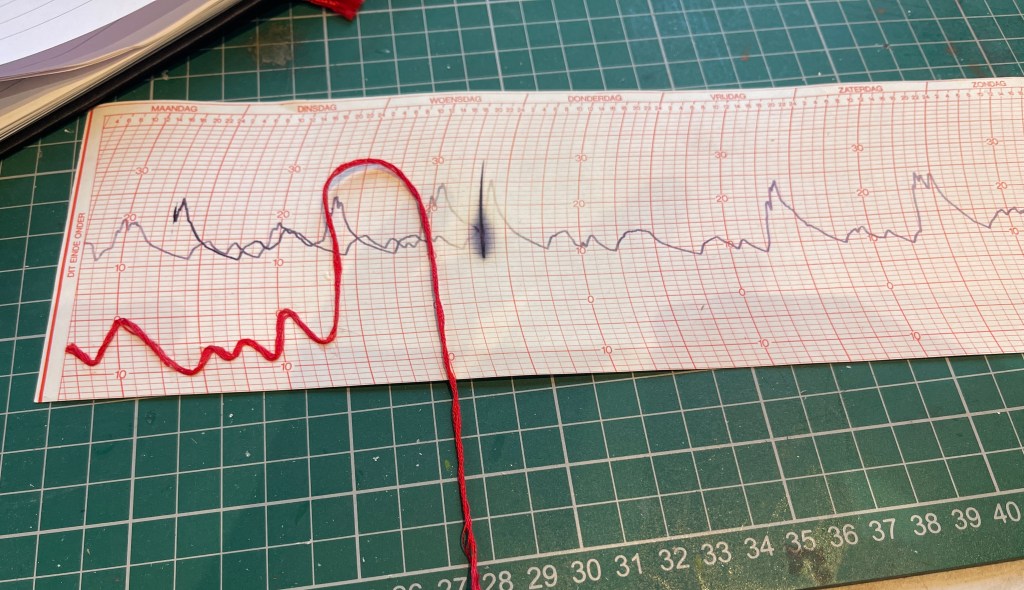
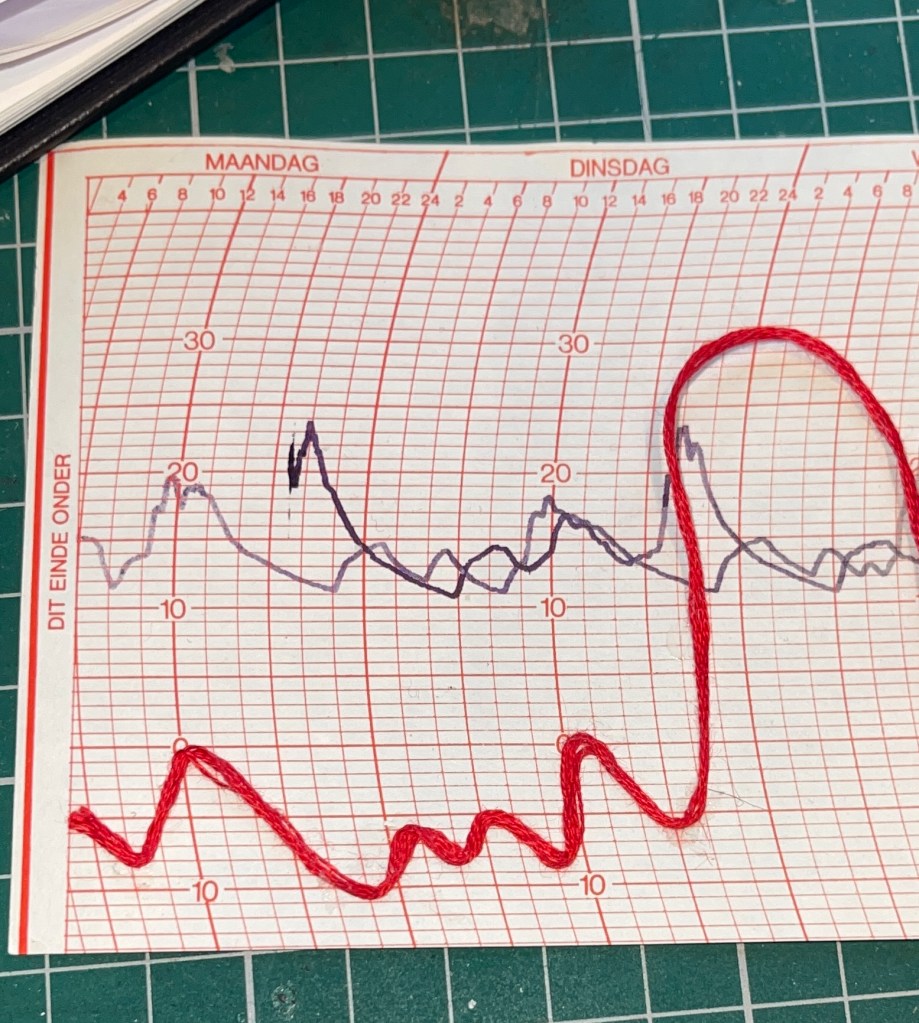
Disecting the thread at the end into its 6 parts..
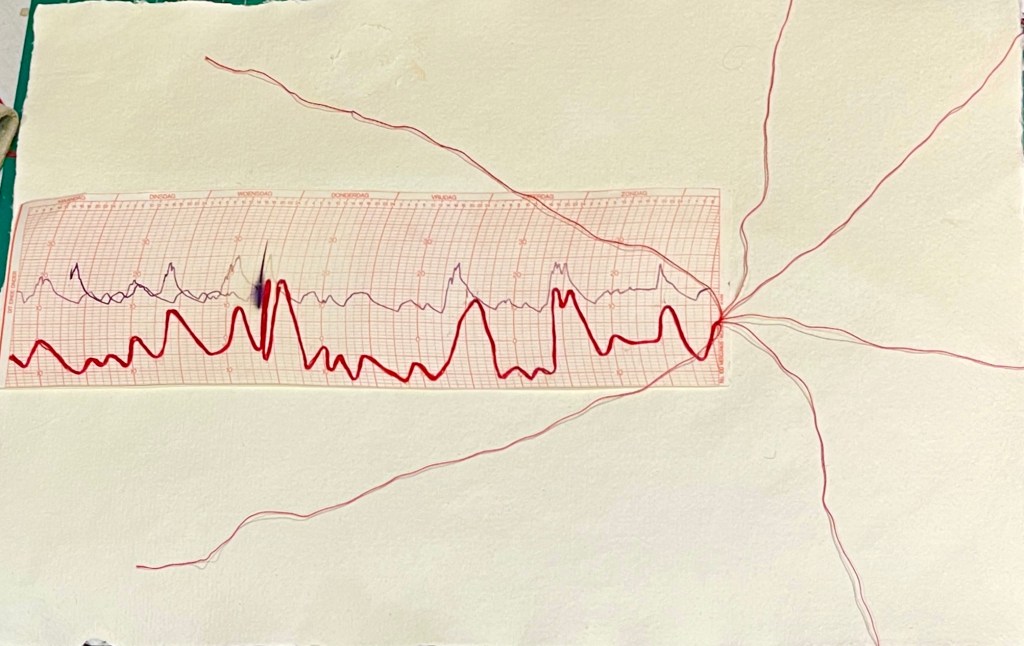
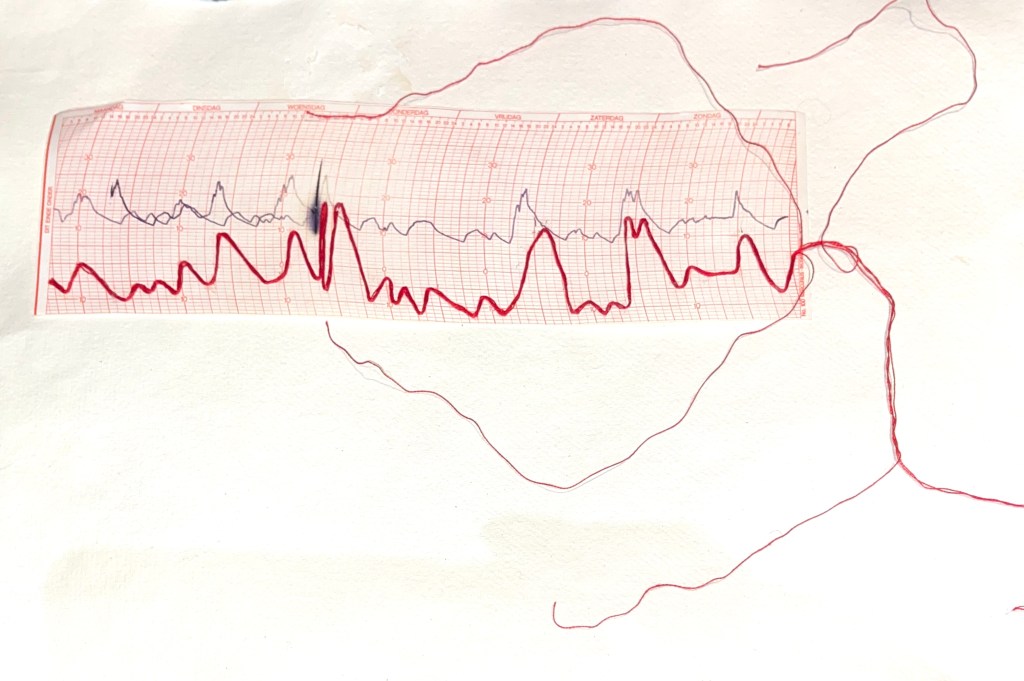
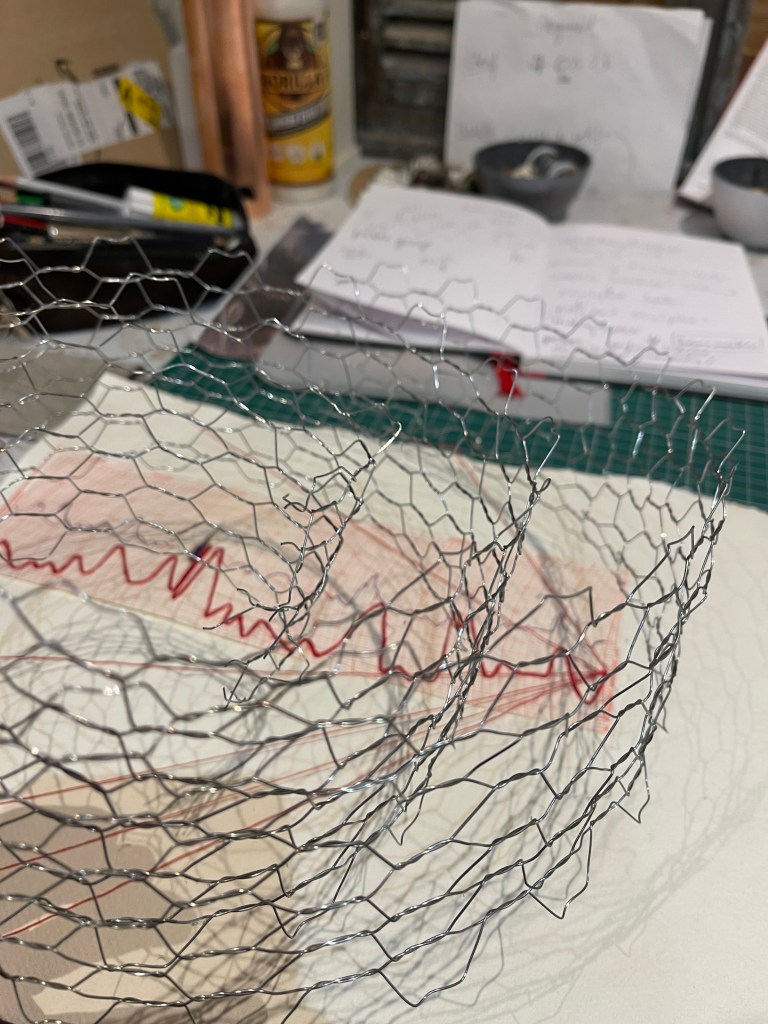
Emulating its original form on the barrel of the barograph I used wire mesh to construct a similar sized shape
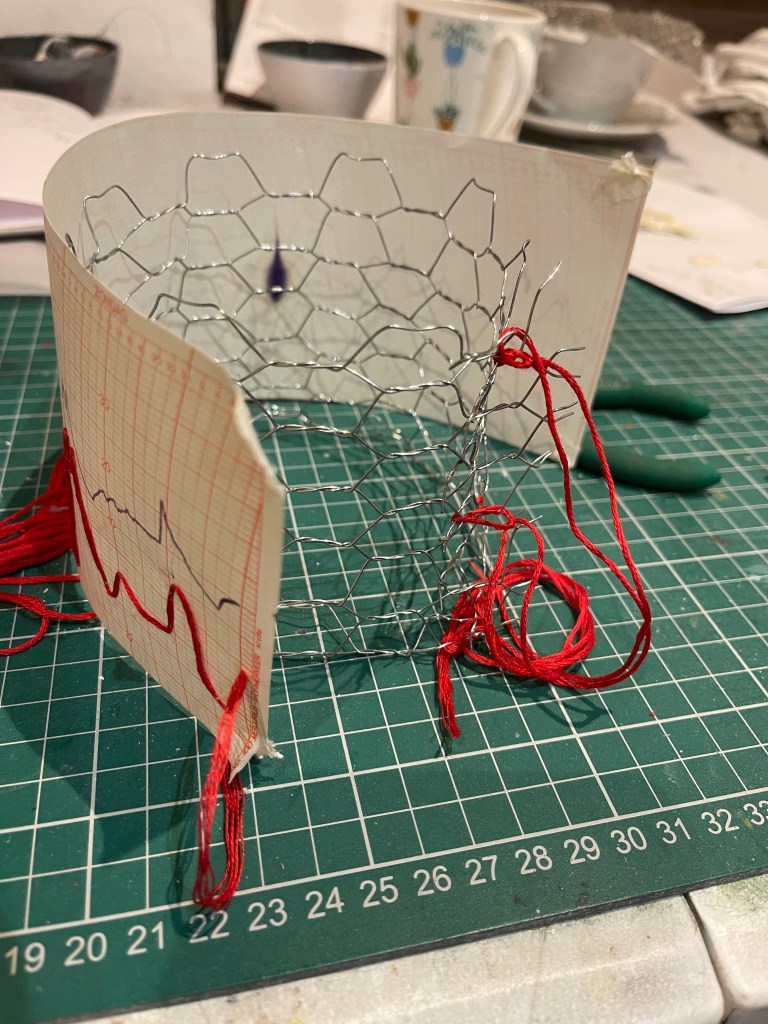
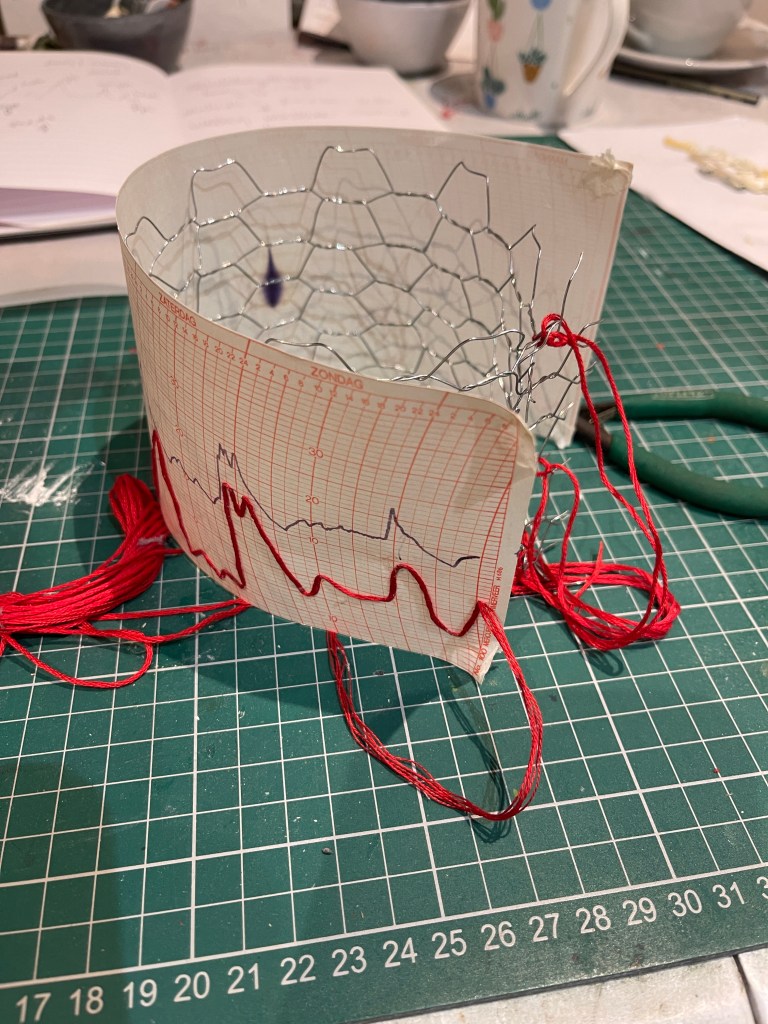
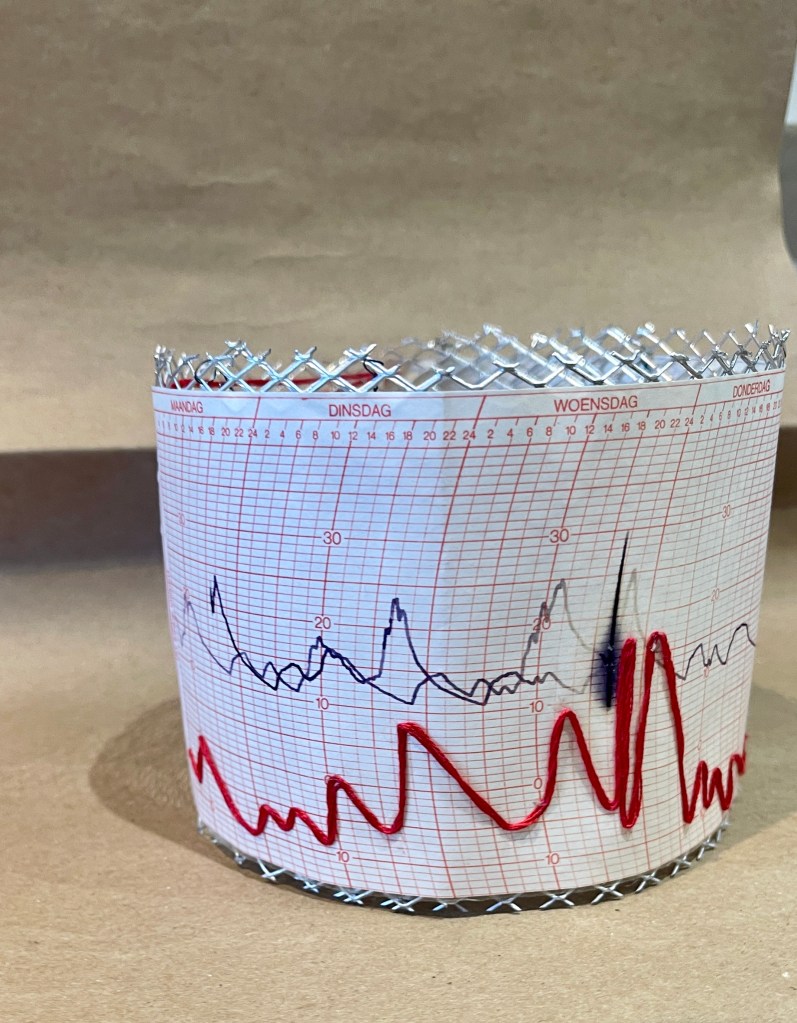
This was abandoned as it lacked a sense of narrative and seemed disconnected.. despite experimenting with a ‘bondage’ tie up to hint at constriction, repression and containment. This was discarded as it was too trite and moved away from the subtleties of the subject in question.
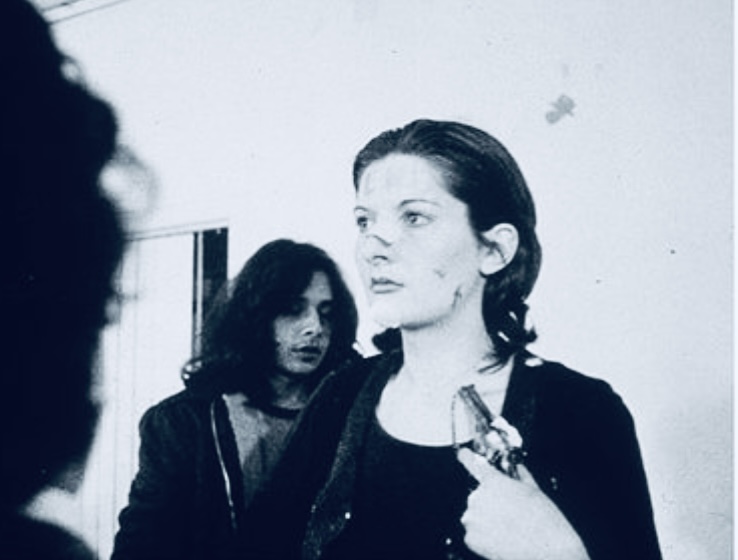
The narrative concerned individual stress and pressure points relating to life, a personal journey documented through time of the emotional roller-coaster. Taking inspiration from Sarah Lucas and Marina Abramovich who boldly put themselves in front of the camera viscerally and explicitly connecting to their work, I felt this was where this particular work needed to come from. At this point I was unsure how this may urnavel.
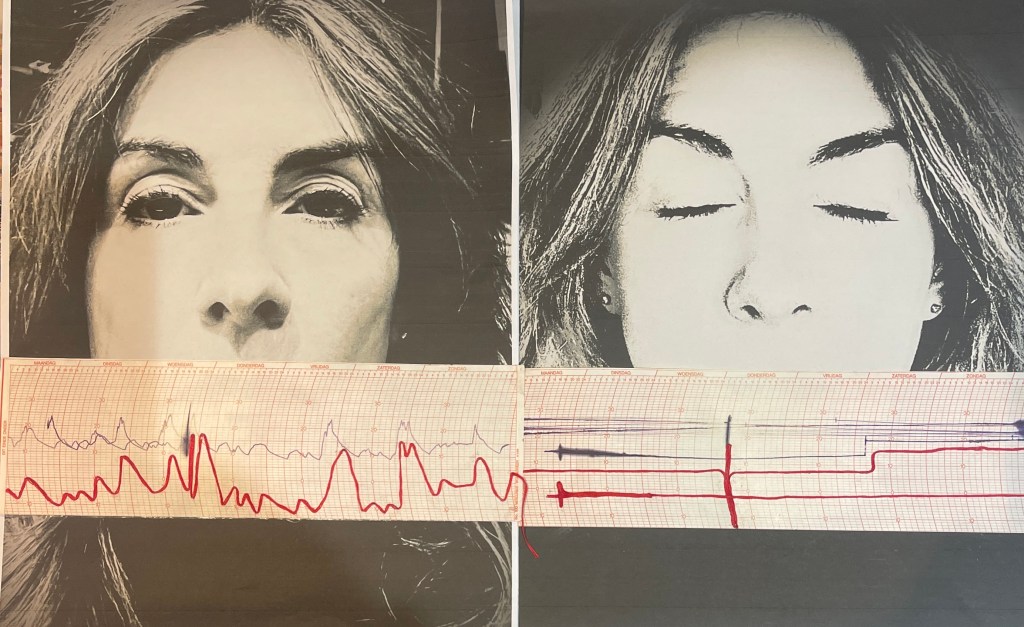
Investigating another barograph I found the pressure line to be remarkably constant. straight almost. Perhaps the reading was recorded over some still sunny, calm days. There was a sense a still and peace coming from this paper and was in such stark contrast to the jagged peaks and troughs of the previous machines recording. There was one sharp rise and sharp fall in the reading like a glitch or sudden wave of panic quickly dismissed and discarded.
I used the red thread to copy the lines
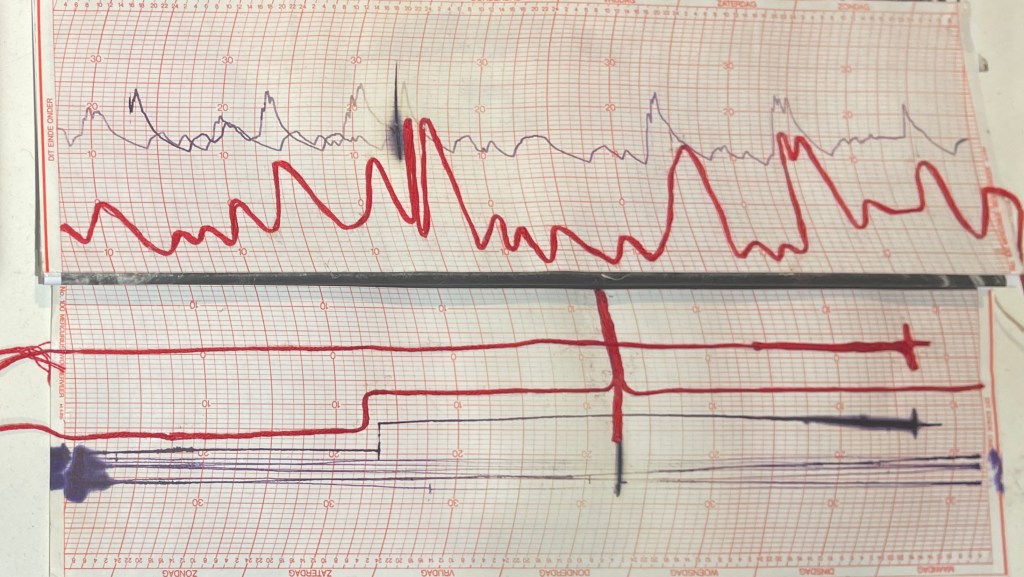
The two pages can be said to pertain to two very different set of circumstances. Wanting to directly relate these to the human emotion. I was reminded of a photograph I had come across when researching female emotions ; ( below) – The build up of the emotion in the first picture to the full scale scream in the last one as the ‘pressure’ builds……
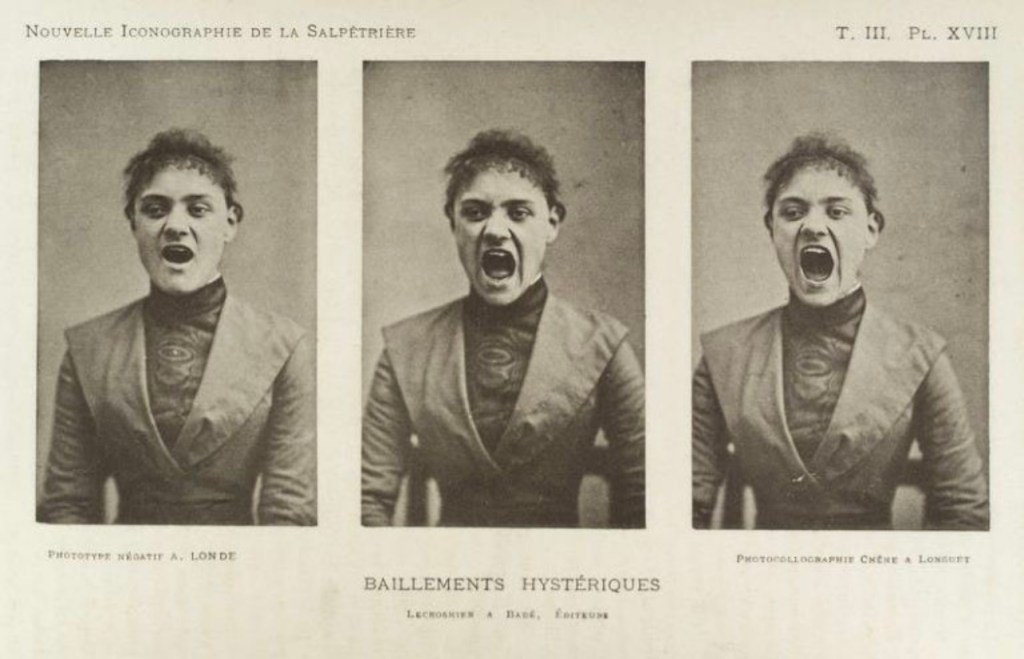
The photo is of Jean-Martins Charcots on hysterical patients . By the Welcome Collection.
I took some images of myself at peace and seemingly anxious and alert. I overlaid the sheets and found there to be another angle of unexpected outcome.
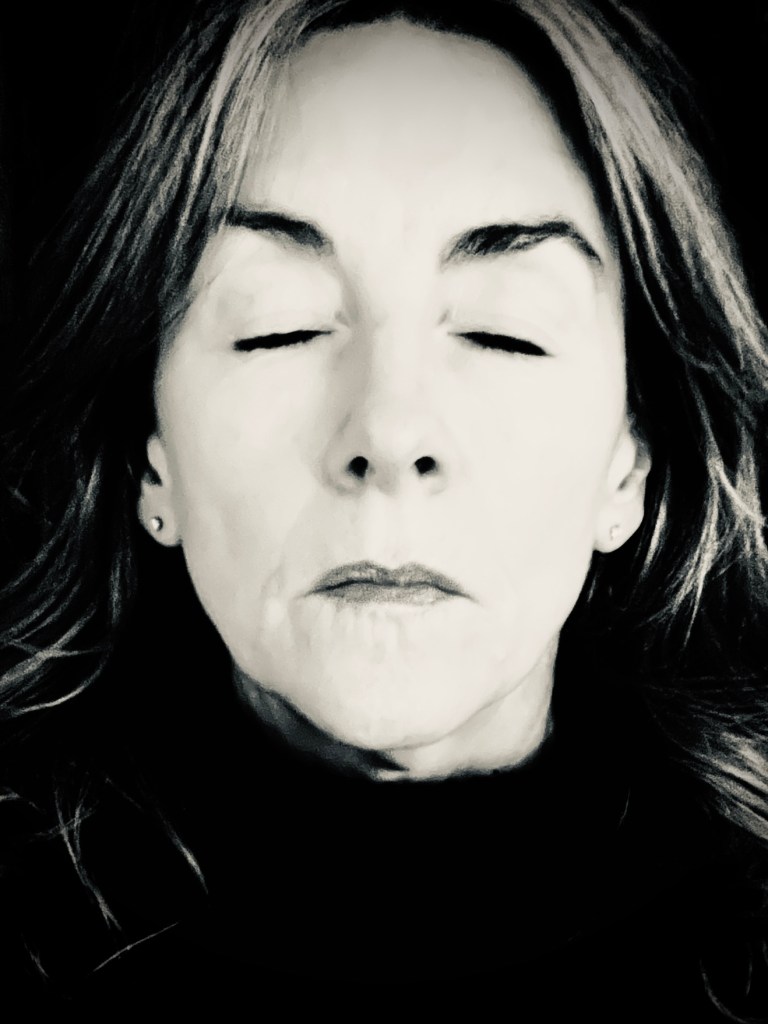
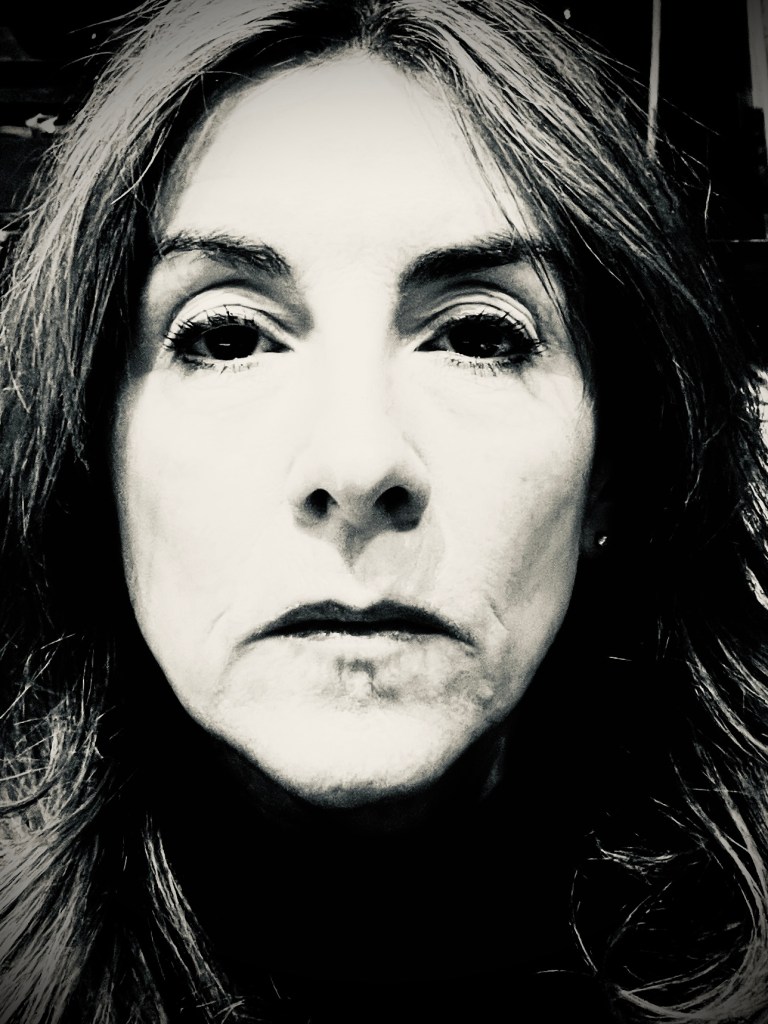
First rough draft of composition below:
Finally editing the photograph for better cohesion with colour and size and adding a title in a font that seemed to convey the sense of pressure, technical collaboration and design aesthetic. The enquiry was concerned with taking the ’emotional temperature’
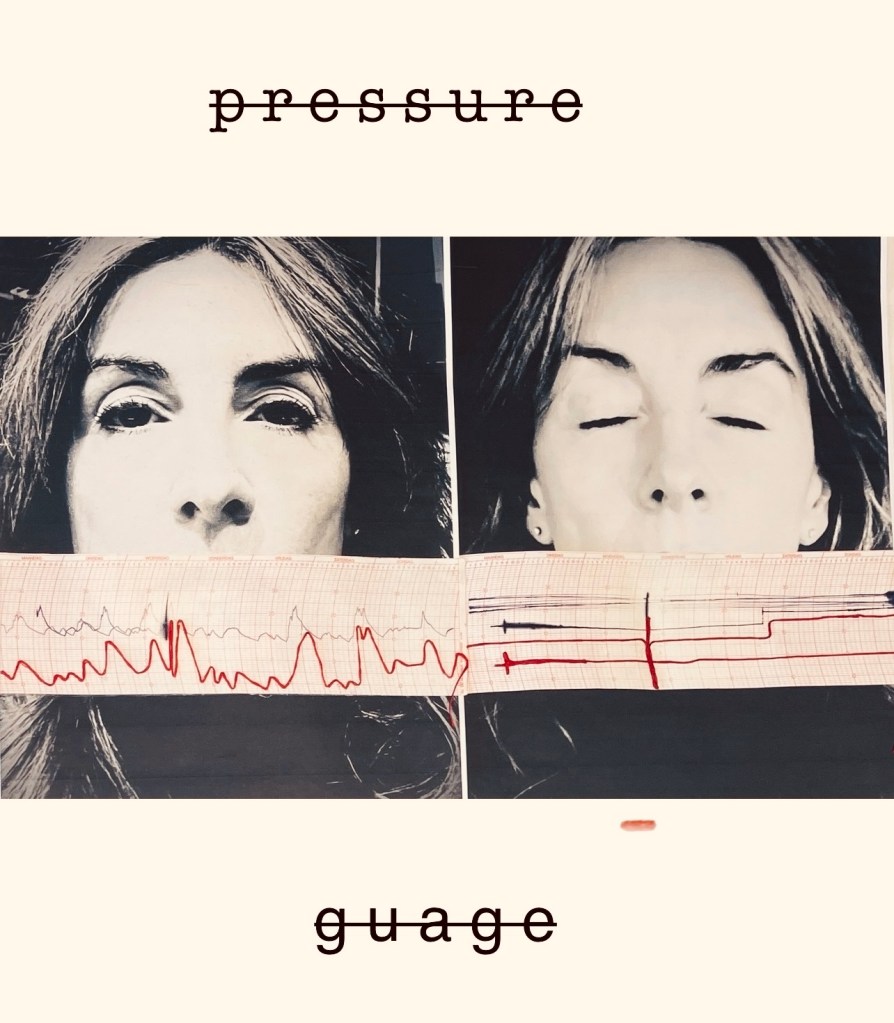
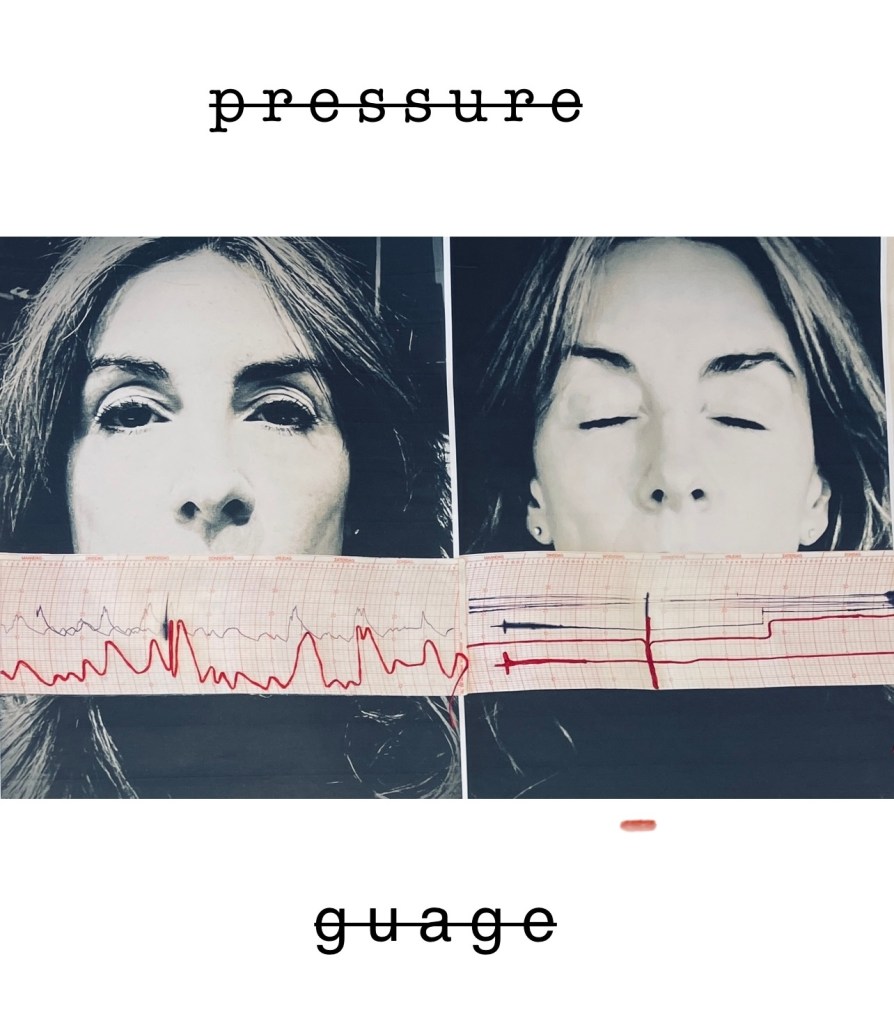
‘Emotional teperature’
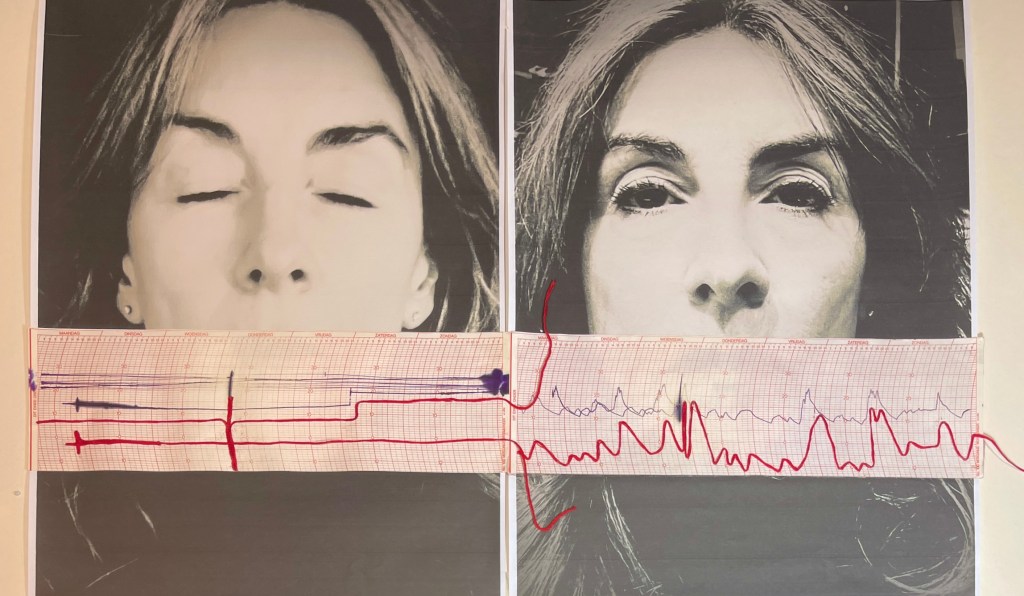
In conclusion the absence of the mouth has also taken away the voice of the work, a silencing of the expressed vocal emotion, a repression and a ban. This was not initially intended for the work but by moving the work around and placing the sheets in varied locations the power in the piece became more present.
The silencing that has been enforced upon the female by society, we are/were afraid to show emotion as it was considered a negative female response, a sign of weakness. Derogatory words are still regularly used by the male when describing a range of female emotions; for example ‘hysteria’ (as well documented by Louise Bourgeois work on the subject ) , while men are only ever considered to be aggressively angry, or passionate and opinionated.
This piece will become a further reference work for female repression and anyone who identifies with this feeling or being kept quiet, shut down and with out voice.
Home (maker) Found objects conveying the trope of woman and home/homemaker.
This work is in response the notion of ‘domesticity’ and the Home.
From the Oxford Dictioanry:
- ‘Domicile’ ( Formal or Law) – to treat a particular country as our home.
- ‘ Home’ Of , relating to, or being a place of residence, or base of operations.
- Of animal ” -: to return accurately to ones’s native areaof place of birth or origin from a distance: to return home.
‘At home’ – relaxed and comfortable, in harmony with the surrounding, on familier ground. out of jeopardy.
HOMEMAKER – : One who manages a household especially as a spouse or parent. The term was first used in 1861 – “woman considered as a domestic agent’
- a typically female rope and embedded in years of tradition fuelled by a patriarchic society and culture. It has been an ever present image in media from the earliest advertising in paper and print to film and all manner of social media. It was well documented by John Berger in ways of seeing and despite years of feminism and braking barriers the role of house keeper and home maker still traditionally and seemingly the majority falls upon the female. However looking beyond this narrative I wanted to explore the idea of home, its connection not only to ‘femaleness’ but the more visceral and darker side of the ‘home ‘ and its connotations to our being and presence.
Home has a grounded, positive narrative for many, it is a place of refuge, comfort, safety and security, perhaps even a haven. We are not all able to experience this basic human need, the physicality of home can be destroyed by war, violence, politics, relationships, financial struggles, mental and physical illness and all other related factors. The charity Shelter estimated that 309,000 were homeless in the UK alone in December 2023 , 30 % of that are female and includes 123.000 children. Globally the figure is mounting every day it stands at an estimated 1 billion people are home less and many more living in poor below standard. ( http://www.develoopmentaid.org. )
The necessity of home is instinctive and inherent within humans. Obtaining and keeping one is challenging, fraught and may be out of reach for some.
This work looks to encompass the fragility of home and emphasise the enormity of what is represents and holds. Specifically through eyes of the traditional ‘homemaker’.
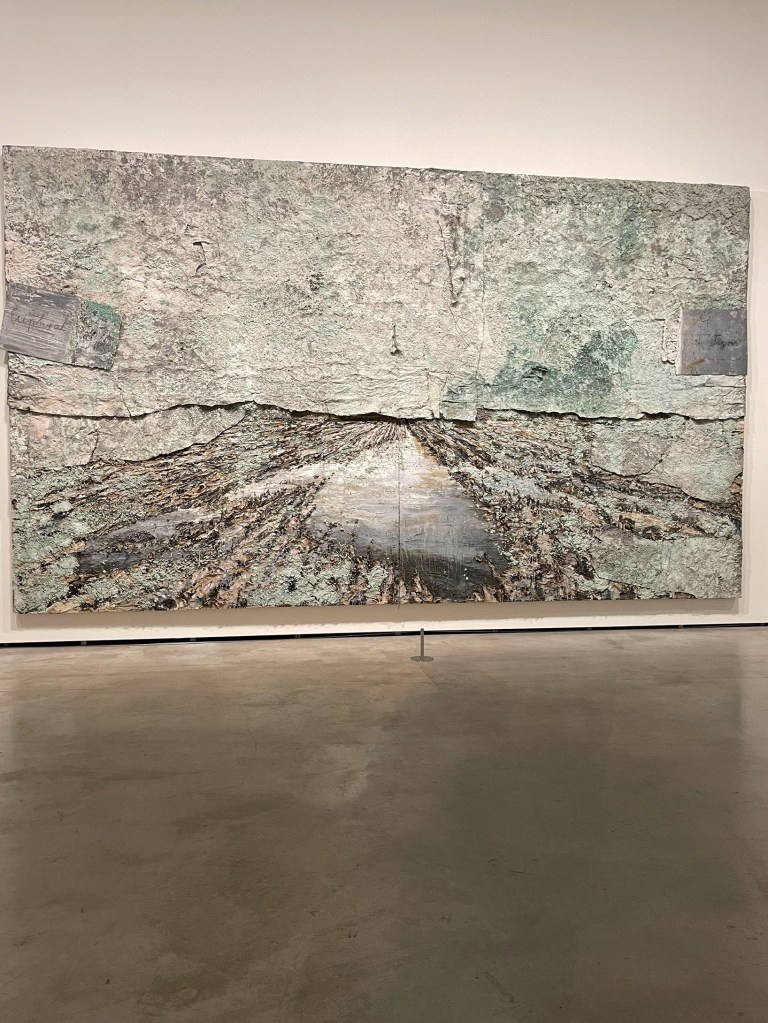
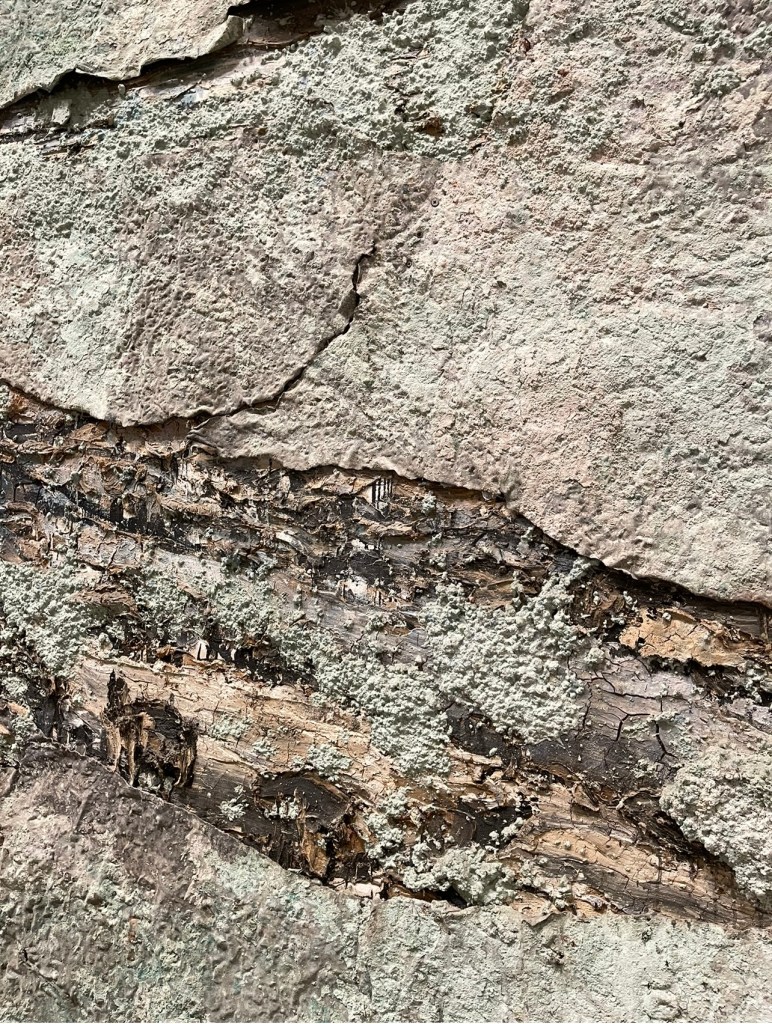
A visit last year to the Guggenheim in Bilbao allowed me to take in the enormous expansive work of Anselm Kiefer ( 1945 – ). One vast room was dedicated to a number of his works but it was one particular work that struck me, primarily the scale but also the diverse use of material. I took the pictures below knowing I would come back to explore Kiefer’s use of material and the quality and diversity of texture he was able to create .
Anselm Kiefer – The Land of the Two Rivers ( Zweistromland ) 1995
Detail below:
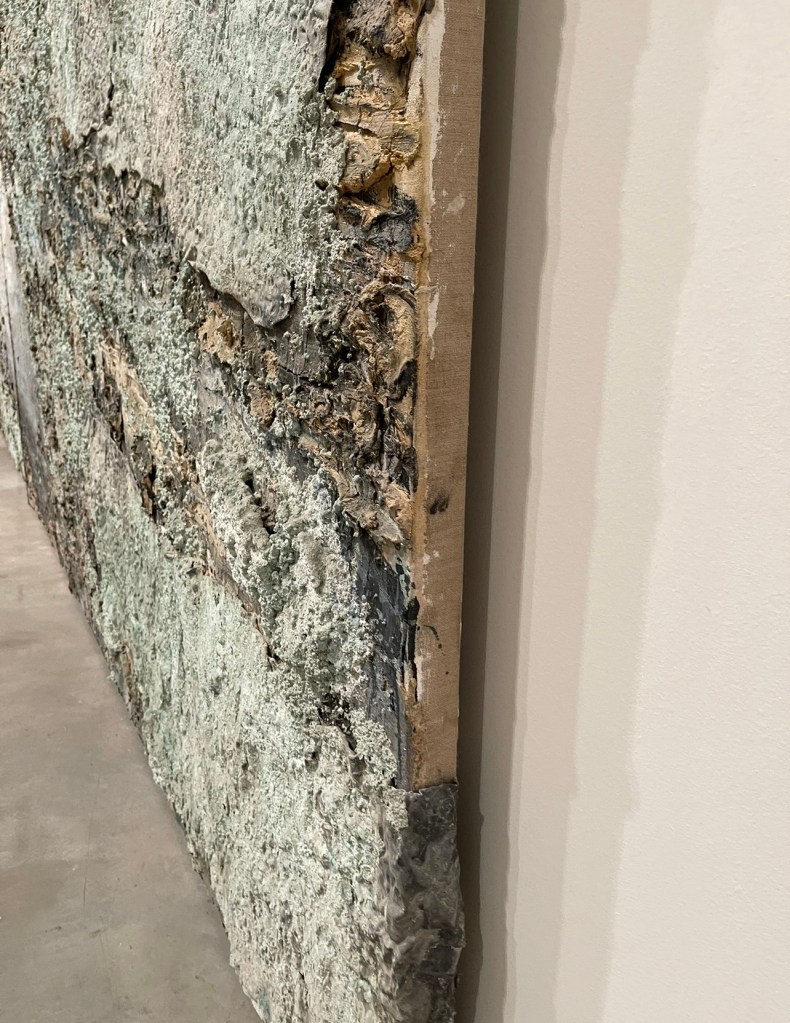
My local Pallant Art Gallery in Chichester has long exhibited a work that I was continually drawn to. On a vast scale, its focus on material quality of the work beautifully and exactly depicts the scene of a Thames Estuary.
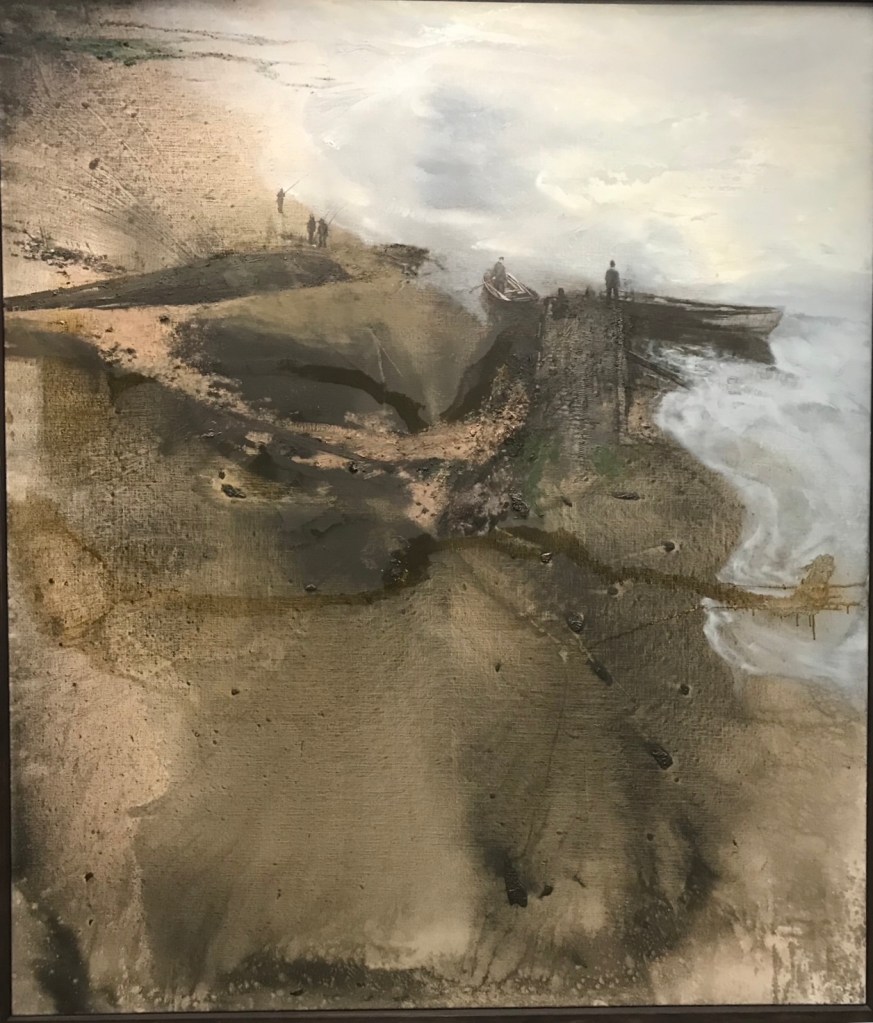
Michael Andrews ( 1928 – 1995)
Thames Painting : The Estuary. ( OIl and mixed media on canvas) 1994 -5)
detail :
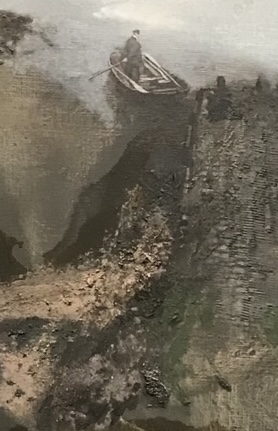
Inspired by the layering and colour of the emulsion, acrylic, lead, salt - produced by electrolysis using a zinc – plates condenser on canvas – (perhaps a little ot of my current league) by Kiefer and the colour and quality of material in Andrews work I was inspired to bring some core, raw material to my work. As yet these have been in found material of rubble , paint and plaster, clay but having worked with them I can see the enormous potential of creating depth , texture and viewer engagement with this array of material narrative.
This new work has come from directly from he material narrative of the found material, obtained from crumbling properties and structures I have explored The paint, plaster and rubble holds its own narrative of the past, dilapidation and debris. Working with the brittle material gave agency to the narrative and allowed the found matter to be heard.
Using a fixing modelling plaster and clay - to hold the separate pieces of found material together I began to construct work that spoke of th estress and necessity of creating a home.
Its fragile beginnings
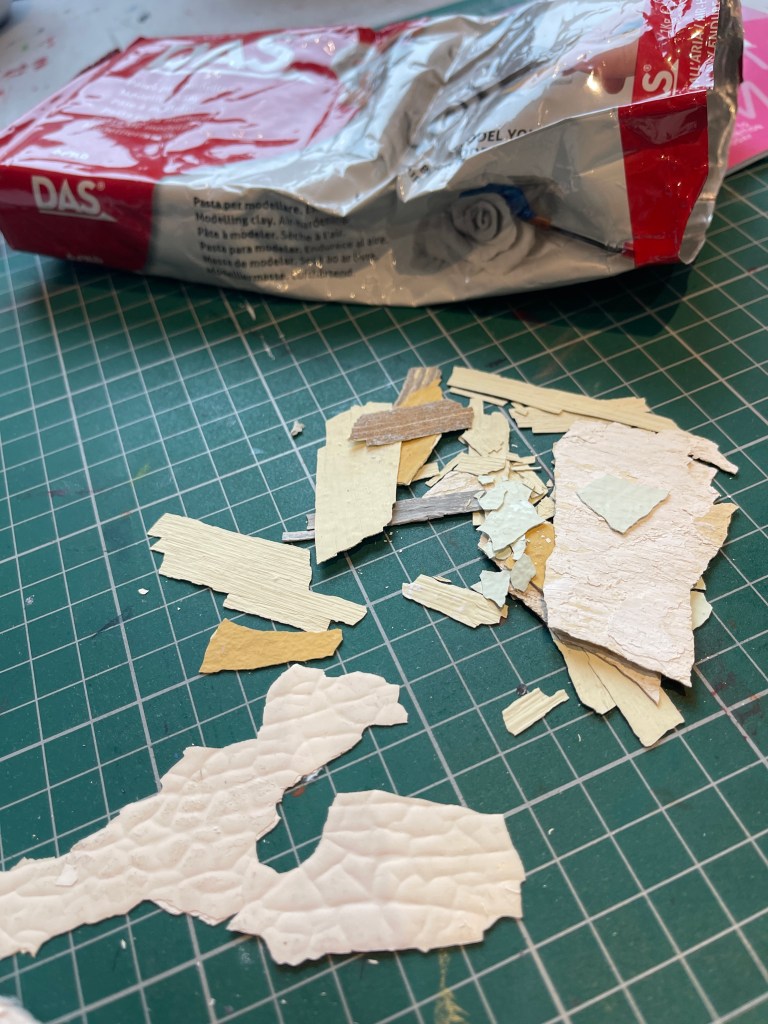
The fragility of the material is representative of the thoughts and anxieties that can surround the home… maybe its not a haven , not secure, safe, embracing and warm?
Is it metaphorically crumbling a under the weight of outside pressure, Is it physically destroyed, will it be taken away and lost.
Is there dread and fear when you think of home?
Do you want to come home?
Do you feel the enormity of creating home for you and for others?
Abandoned domesticity ?
Below – beginning to layer and build …..
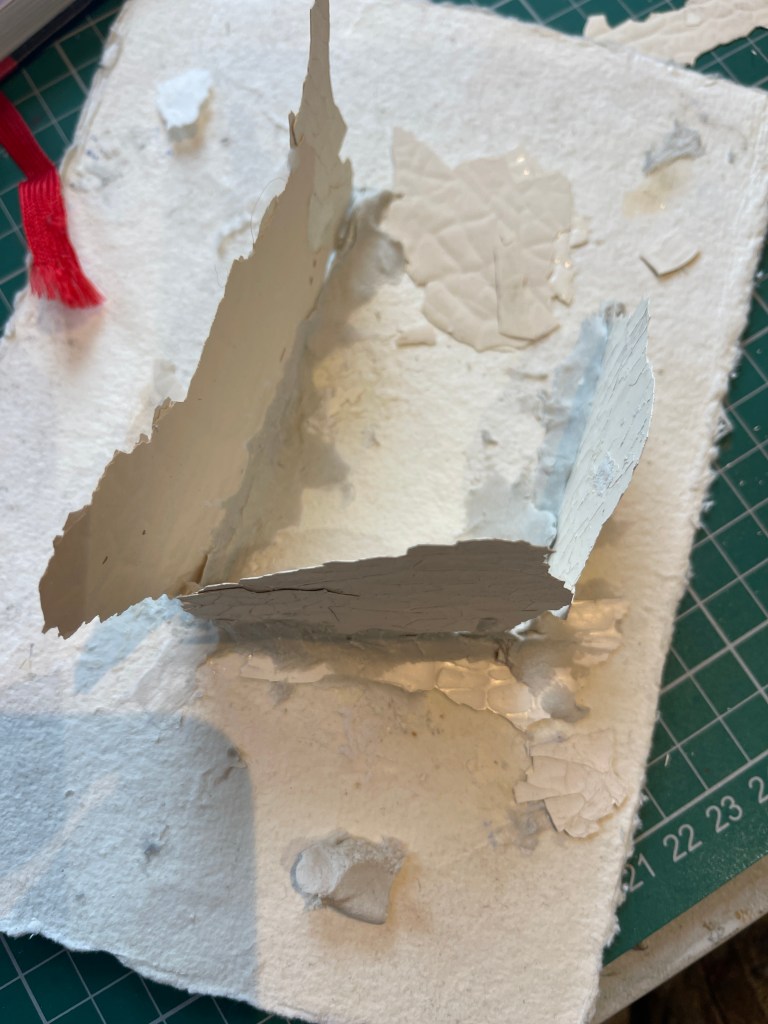
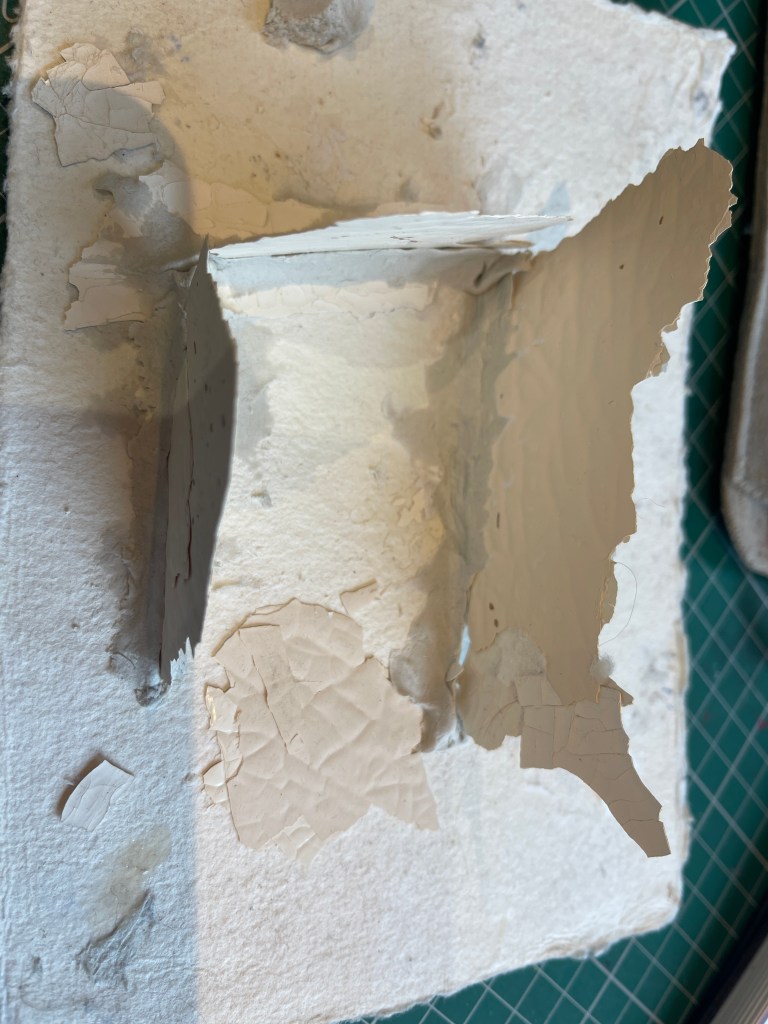
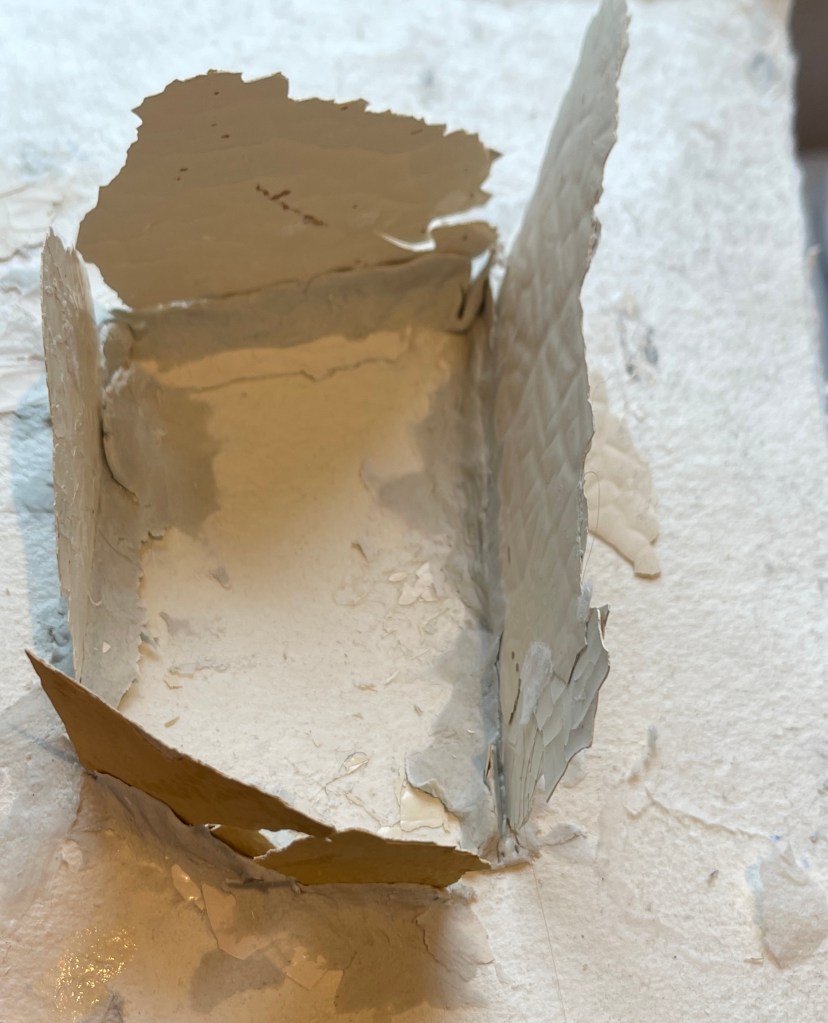
The structure is not a model of a house or trying to be – it is a notion of ‘Home’ and how the viewer might interpret this with positive or negative emotions corresponding to their own experiences of the place.
I was looking to find a concept or point that evoked a build but also a destruction. An ephemeral, fleeting quality usually unrelated to “home’ but perhaps now more poignant. Something beautiful and positive but also ugly and decaying, untouchable, out of reach.
Working with clay molding plaster and detritus from buildings..
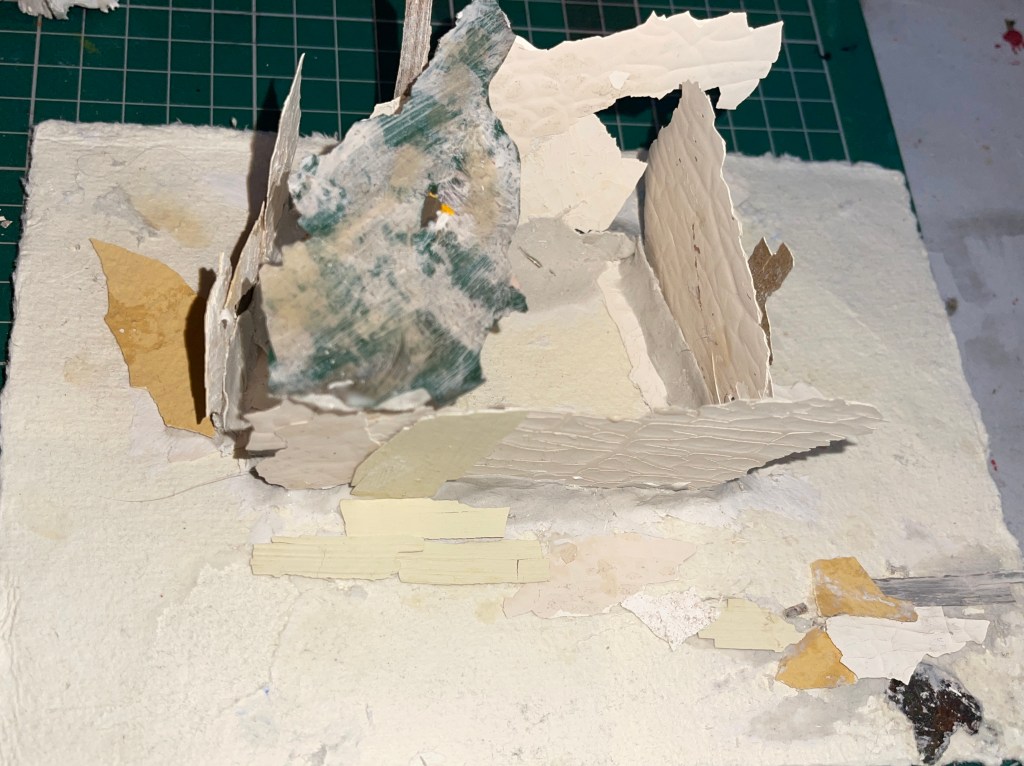
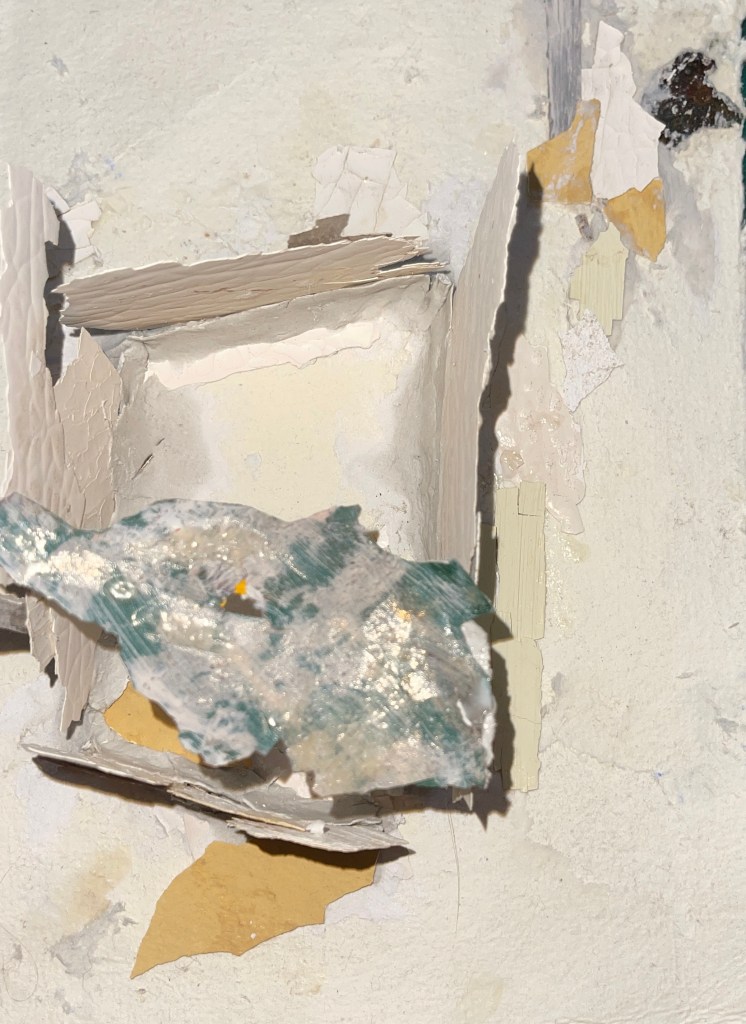
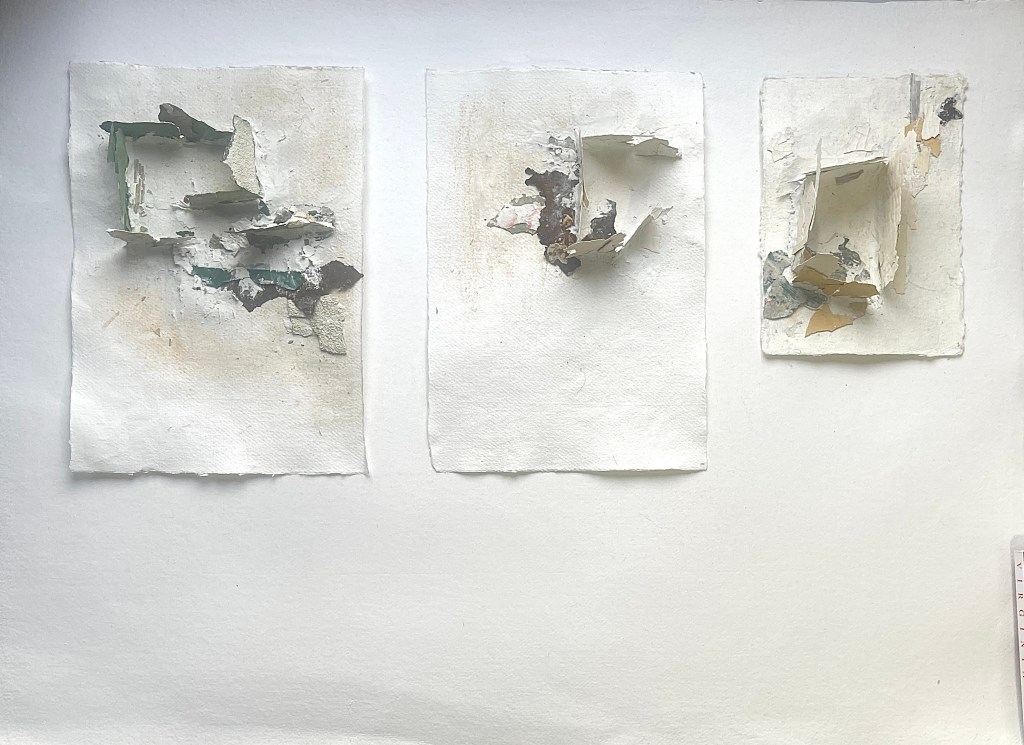
I used 350g Khadi paper for the bases as it was absorbant and strong. I wanted to create with out the use of glue so I had to structure and think carfully regarding the structural integrity of the sculpted forms.
I was aware-of creating home like imprints and spaces that sat on the surface almost as if in a garden like context – with their allotted space surrounding them. Each one was placed slightly differently in scale reminiscent of a row of dwellings…
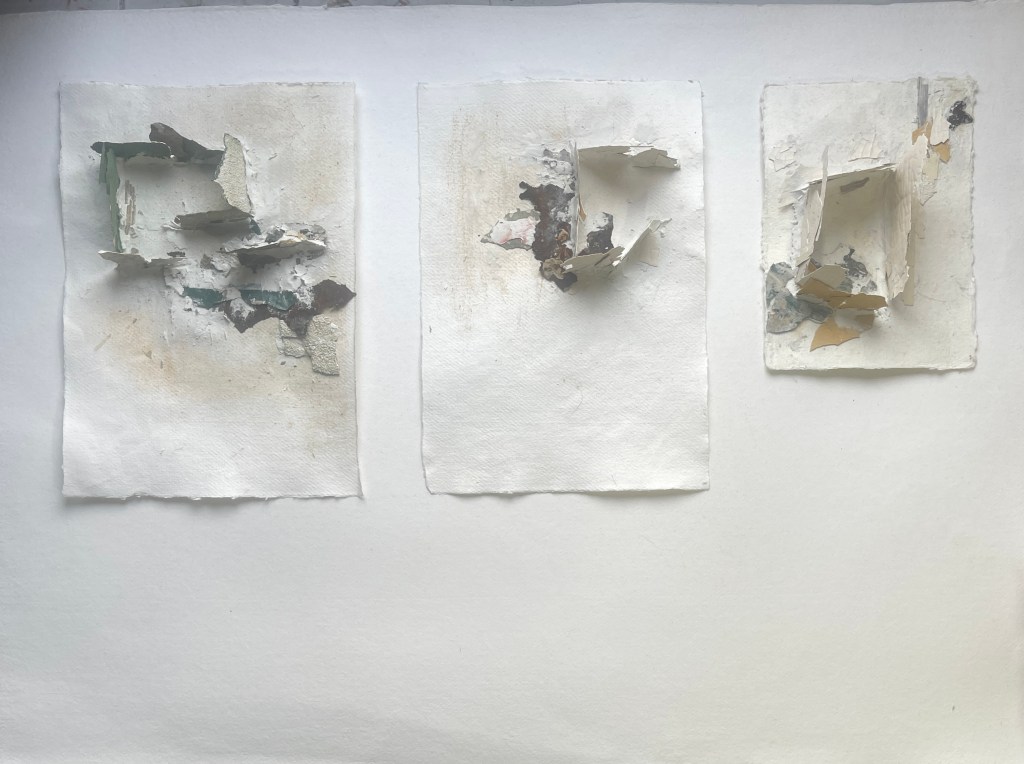
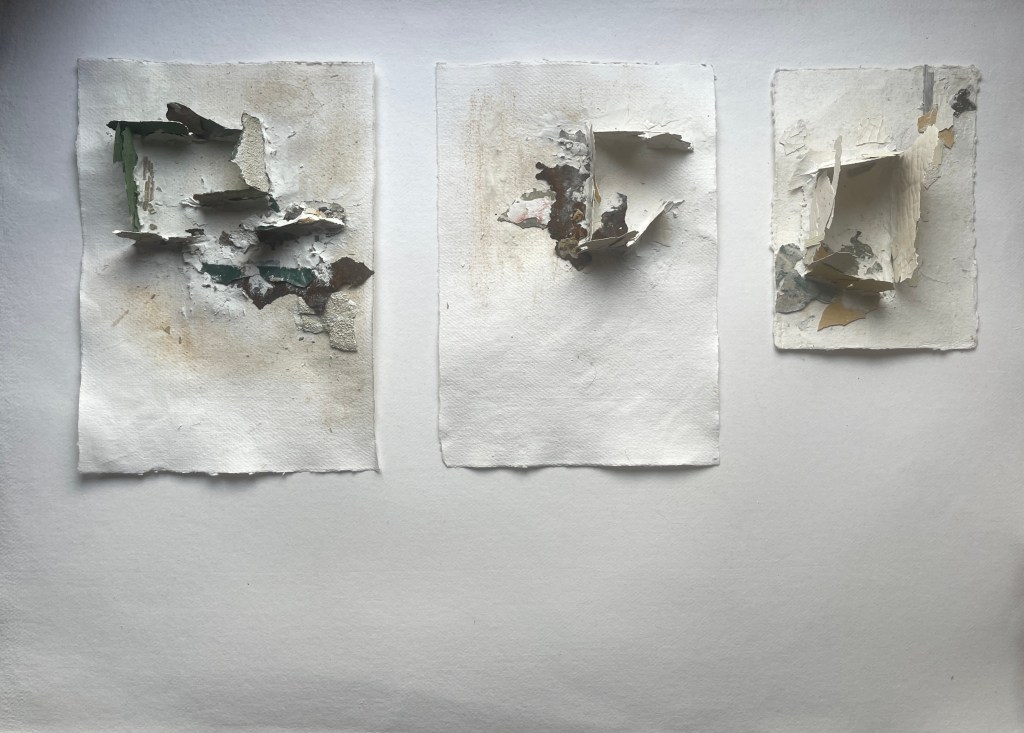
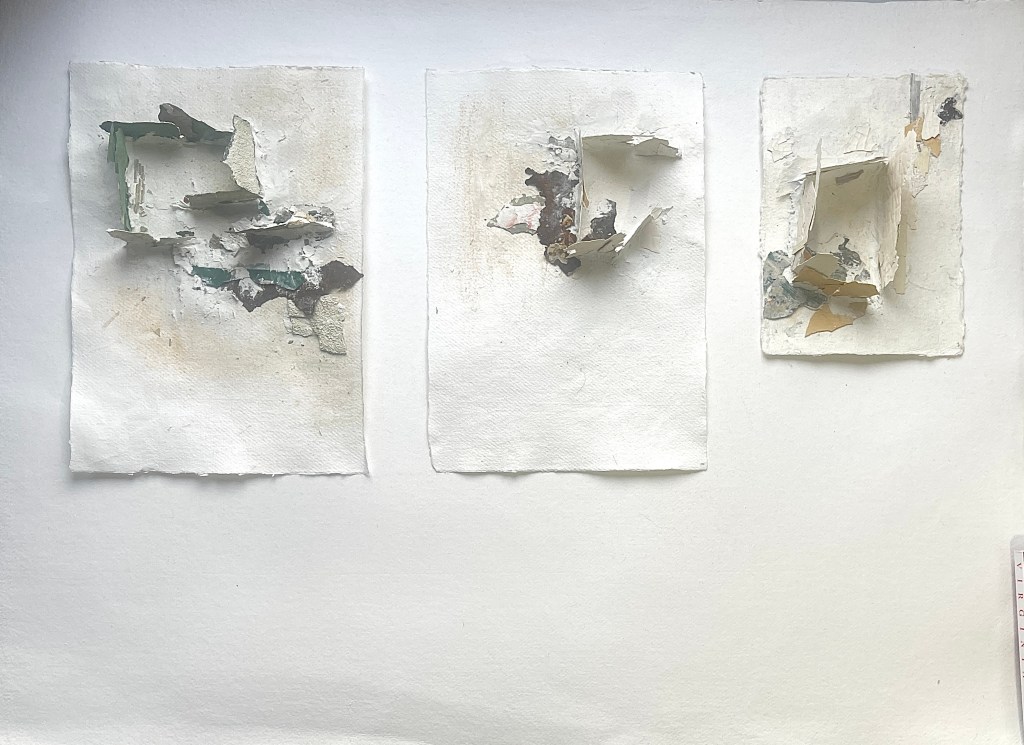
The images are difficult to photograph as they have a great play with light and shade on the varied sides and shapes of the structure.
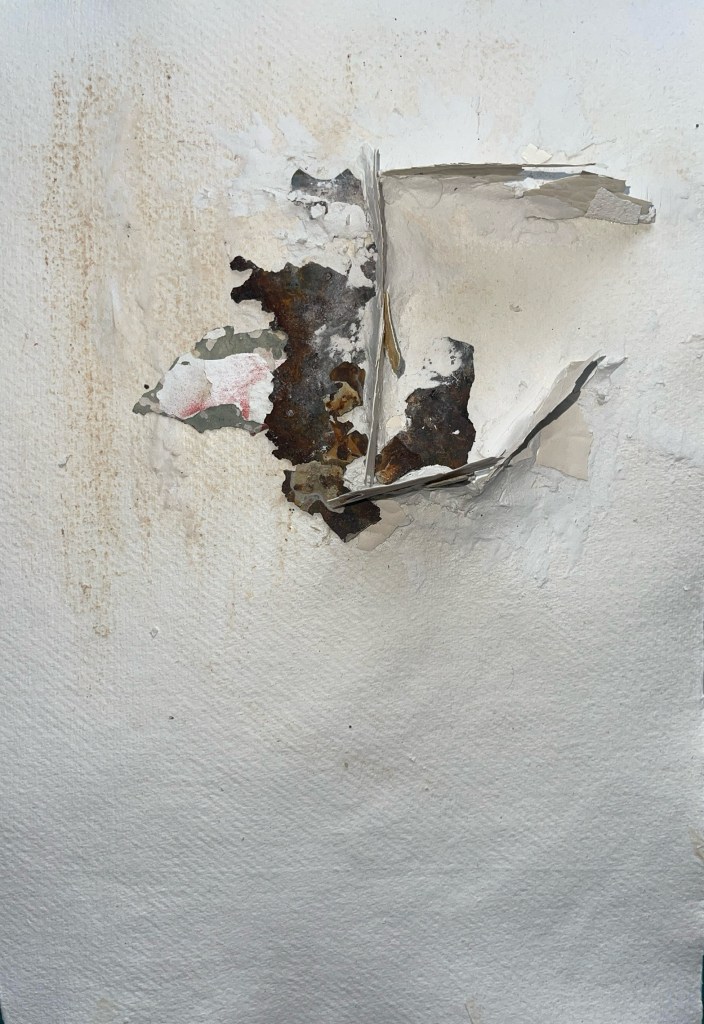
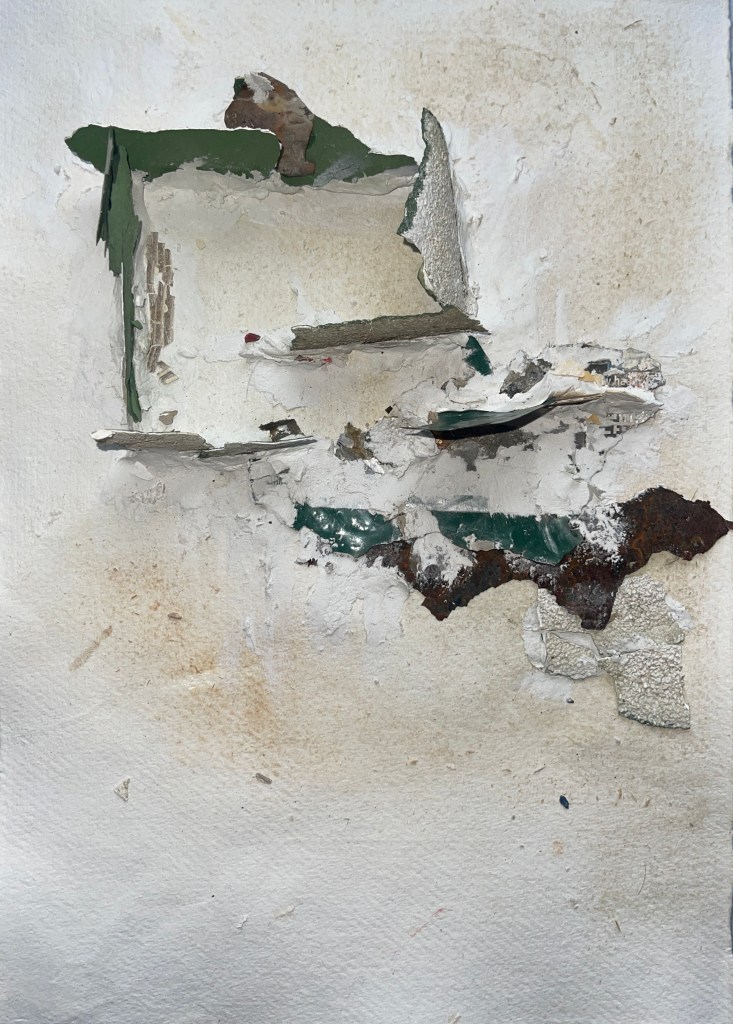
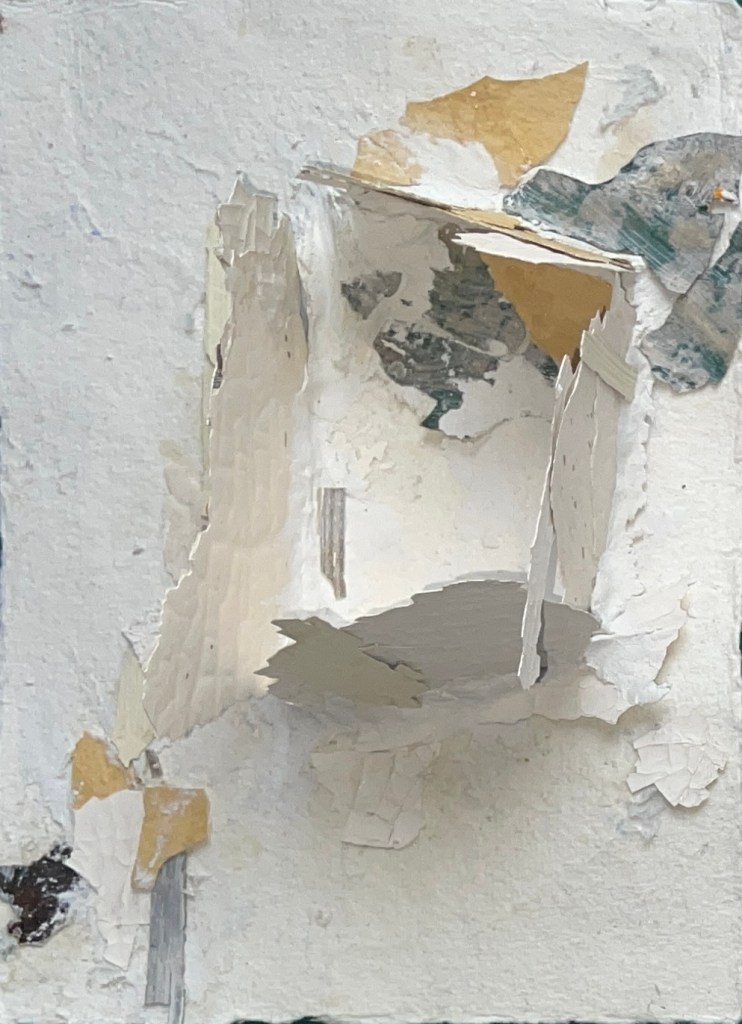
The work is 3D placed onto thick paper - it can be viewed flat and looked down upon or placed on a wall. These positioning arrangements disrupt the image, its shadow and light depending on viewpoint .
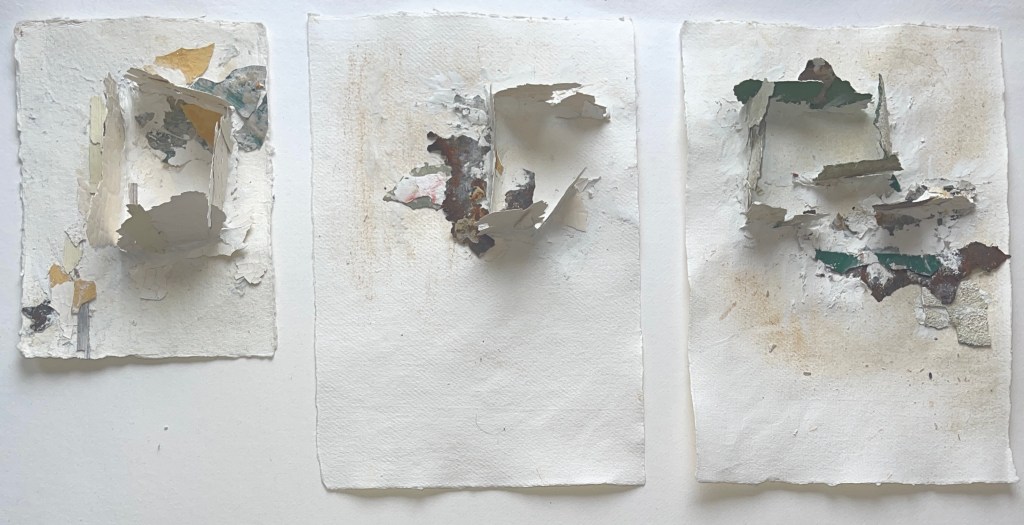
My recent ‘silent crit’ work has offered me more areas for exploration and contemplation for this wok ranging from war torn environments and the human implications and cost of global homelessness/ migration, land loss and the overall concept of ‘home’ plus the archaeological nature of past homes and our interest in the ruin.
Post the feedback I looked to upscale the works to a larger sheet format – I had collected some bigger pieces of detritus and rubble previously and was unsure to their suitability but with an A1 heavy duty Khadi paper I began to layer and explore the suitability of scale…
My method includes using the material to create colour and texture on the canvas. Scrapping and rubbing the paint pieces , dirt and fine clay and plaster onto the canvas to then immerse the objects into…. creating an area of layered material, the beginning of the narrative of the work before coming upon the 3D aspects – its scene setting and places the work in a specific area of the canvas and is the beginning of my composition…allowing the material to be manipulated in another way, exploring its other qualities such as colour and mark making.
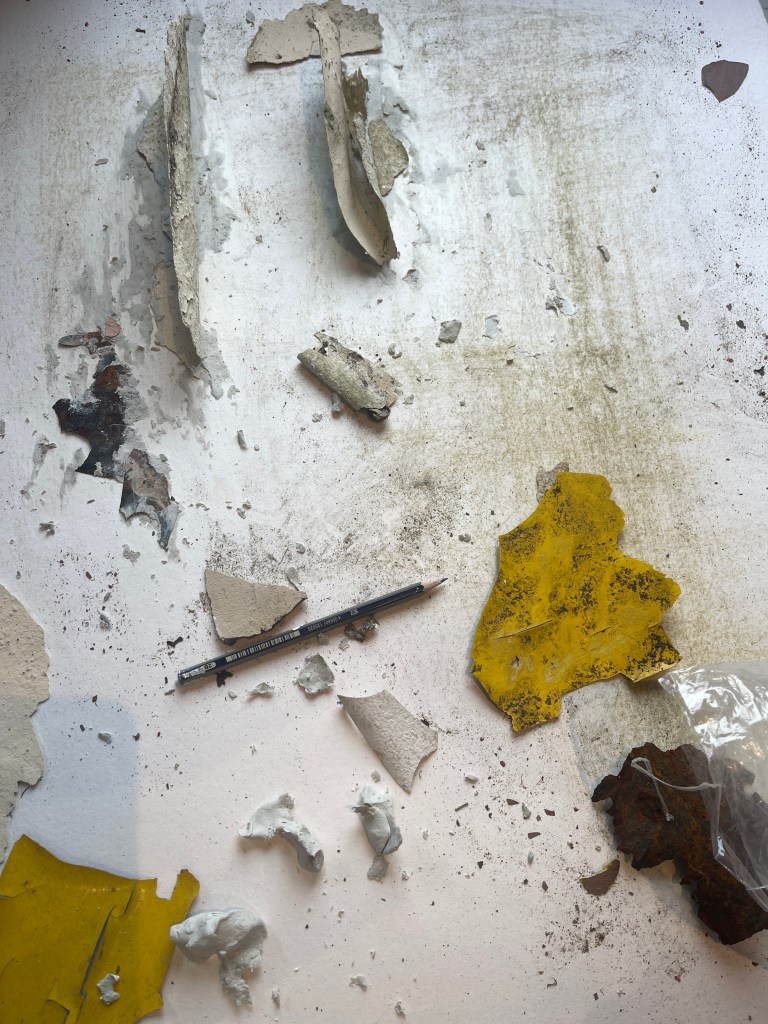
Begging to layer and create the structure that mimics a home or dwelling, ..
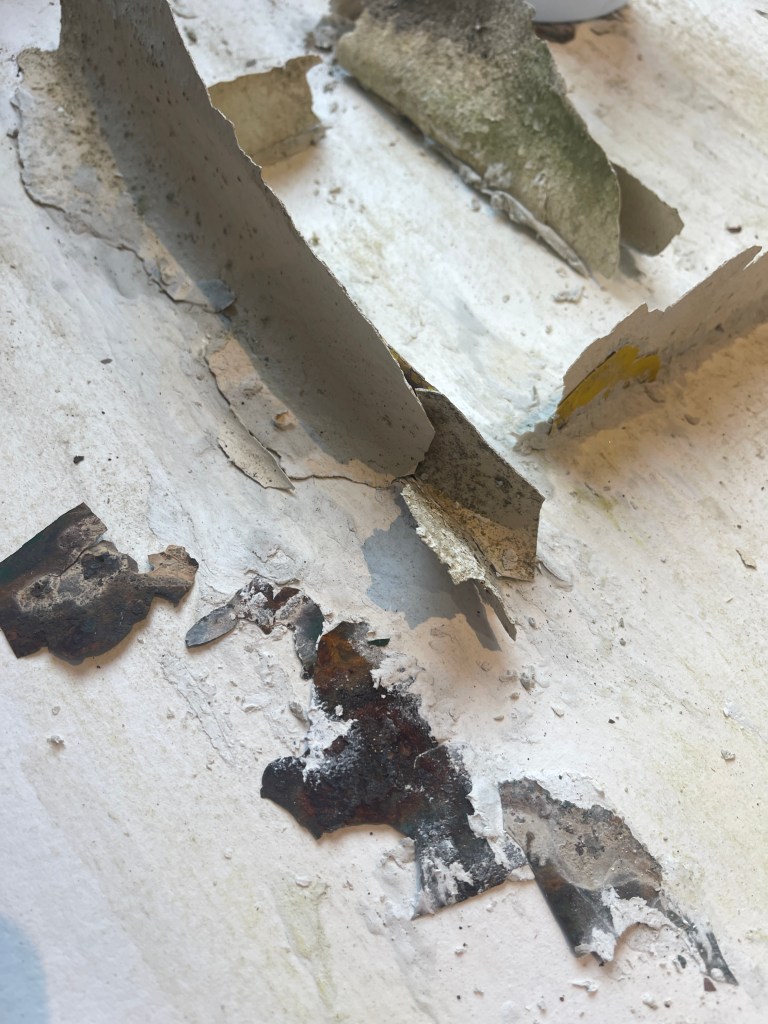
The clay and modelling plaster is key in assemblage of the material – using it t lay foundation and support for the larger structural pieces….
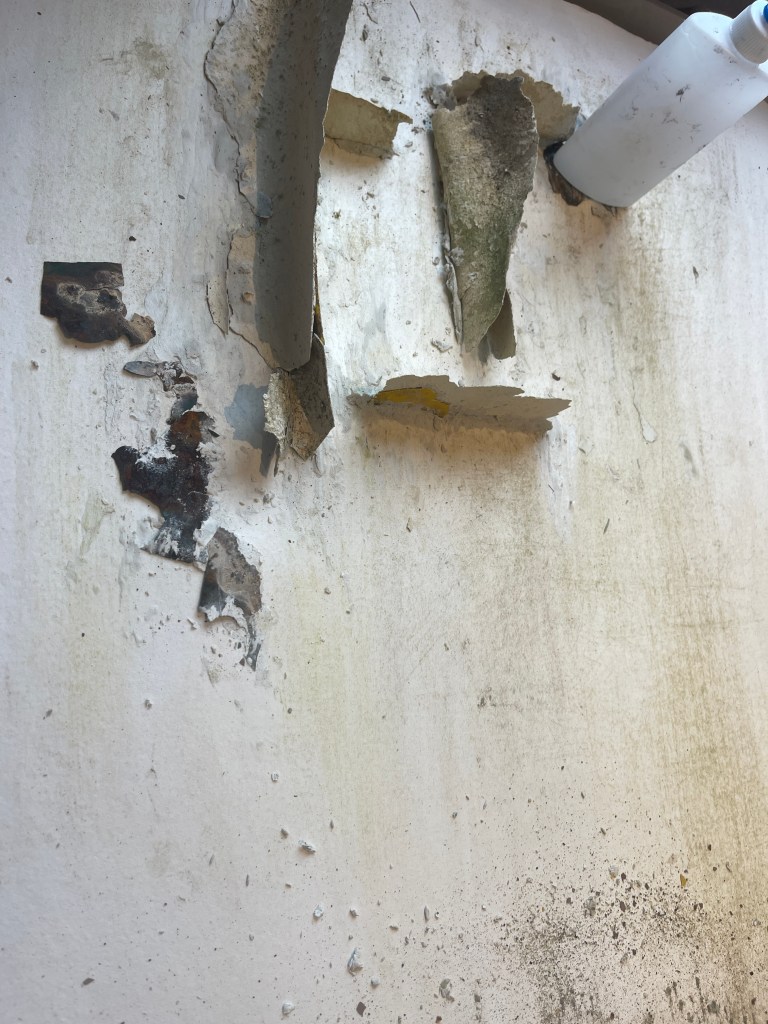
I wanted to include greater visual texture with this work and include as much of the remanent pieces that littered the canvas – primarily die to the size of the work so adding to narrative and texture – at this stage it was loose with more being generated as I worked.
It was important to be mindful of scale at this time in regards to practicality. Against my instinct to work only with natural or similar raw material I used some clear glue to allow more support and permanence to the work when hung on a wall for instance. At this stage I am unsure the work should sit on a flat surface to be viewed from above or hung traditionally. The nature of the subject matter suggests a flat surface to underline the necessity of actual land space with resonance to solidity and permanence would be pertinent…..
Section detail.
Showing the internal ‘wall’ of the structure with a strip of bright yellow denoting a more positive existance or presenceof being about the structure now in its fragile, desperate and unformed condition. A nod to the past existence or usage of the structure or alluding to some hope and positivity that it may become.
There is a literal and metaphorical interpretation of the work that came through clearly during the ‘silent crit’. The structures forming the manifestation of a state of mind or they are seen as an actual state of structural being ?
The detail below shows the inclusion the finer material placed and scattered around the work.
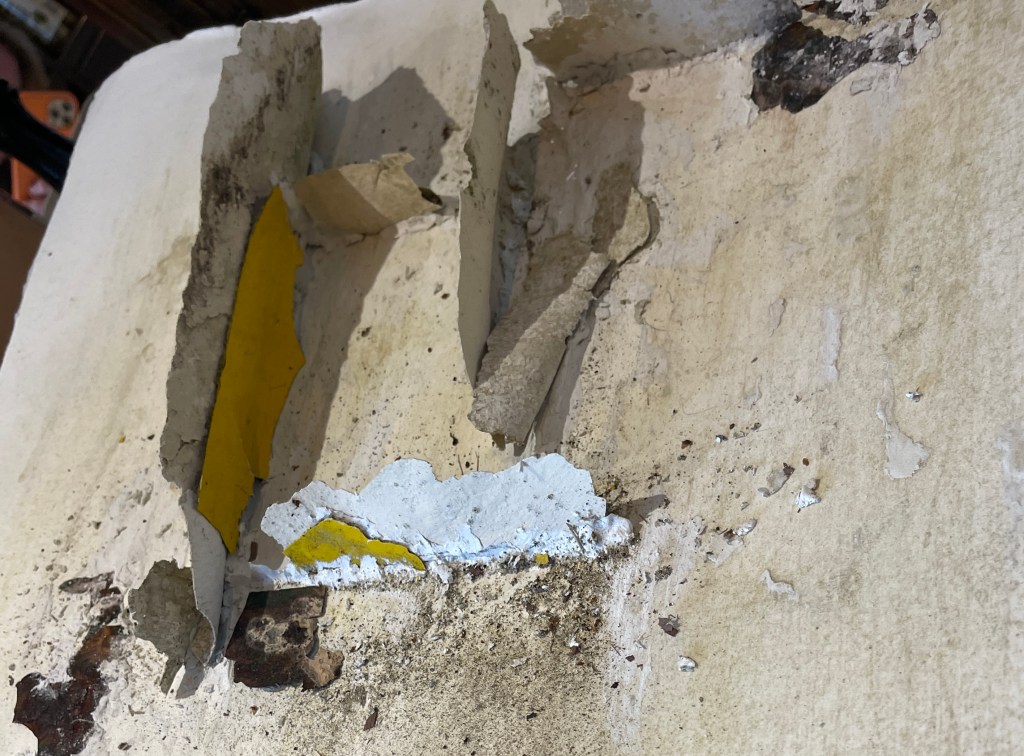
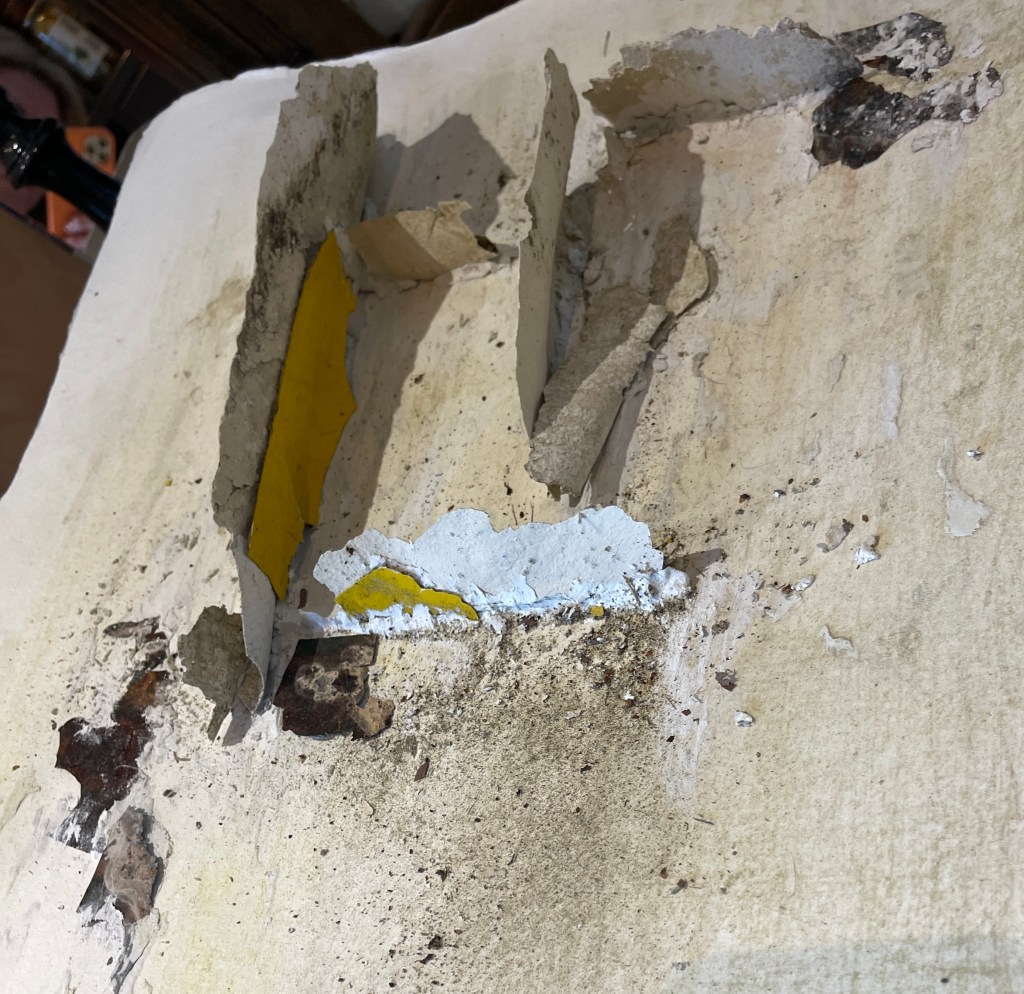
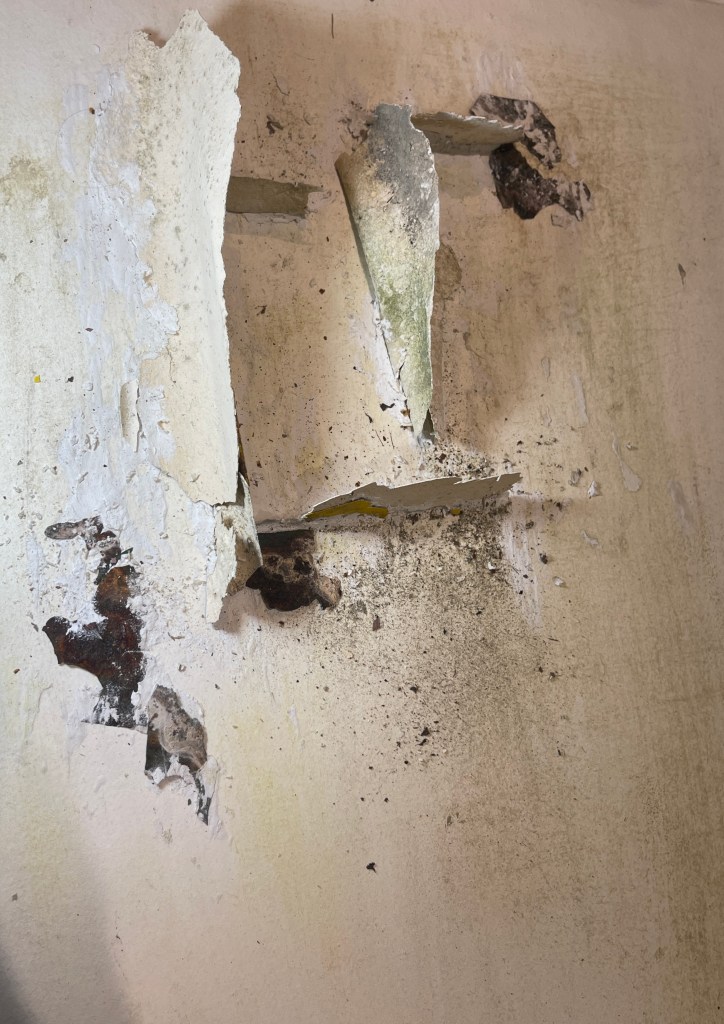
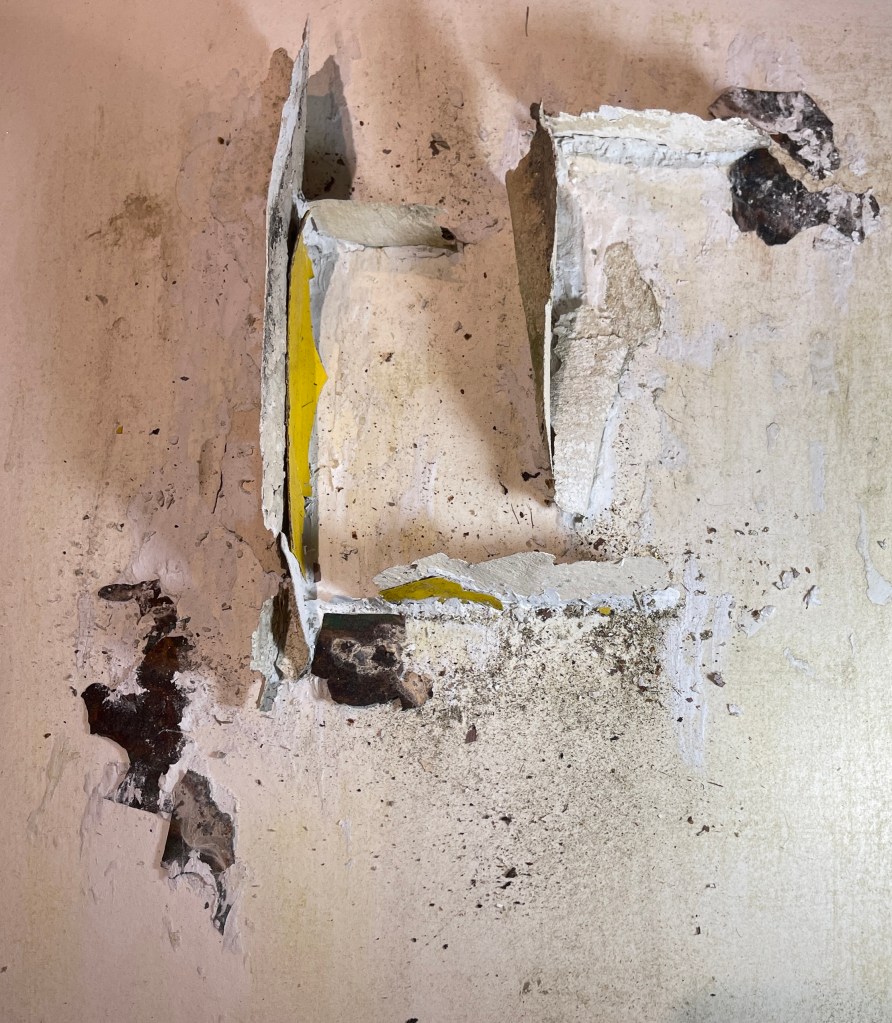
The works is viewed better interacting with it , moving around the canvas, viewing it from different angles reveals in internal and external structures, the layering and variety of material used and the variety of colour. Directly facing the work does not allow the richness and sculptural quality to be fully apparent.
A1 canvas below ‘Home’
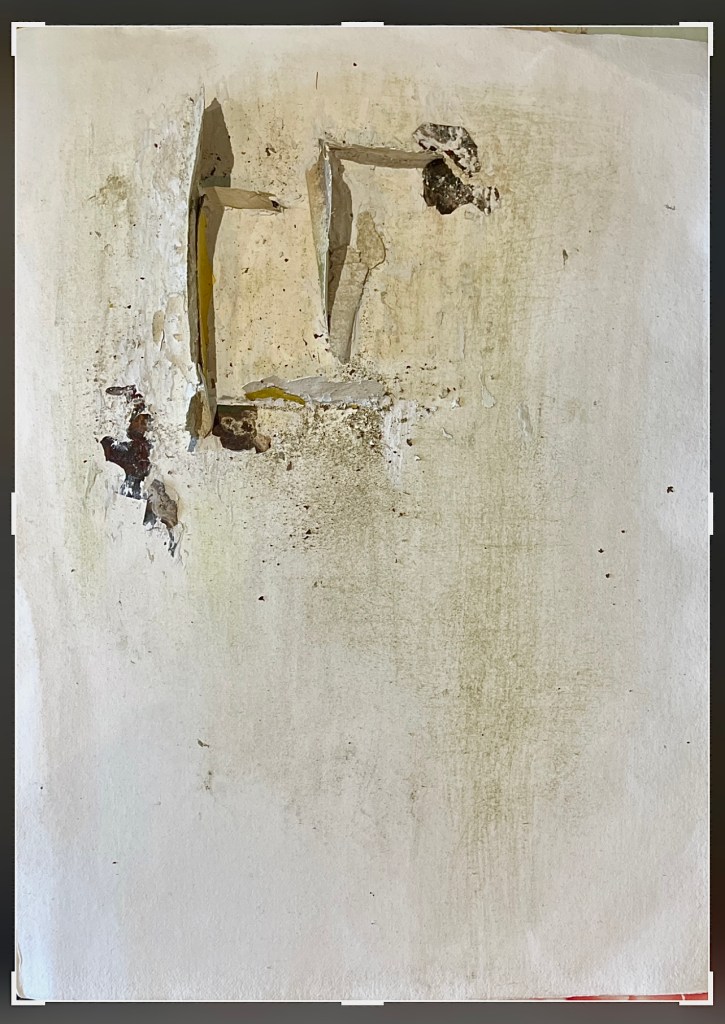
Light and shade also playing a role in the perception and narrative …
This section shows a range of light positions as if the sunlight were passing over a structure at various times of the day…
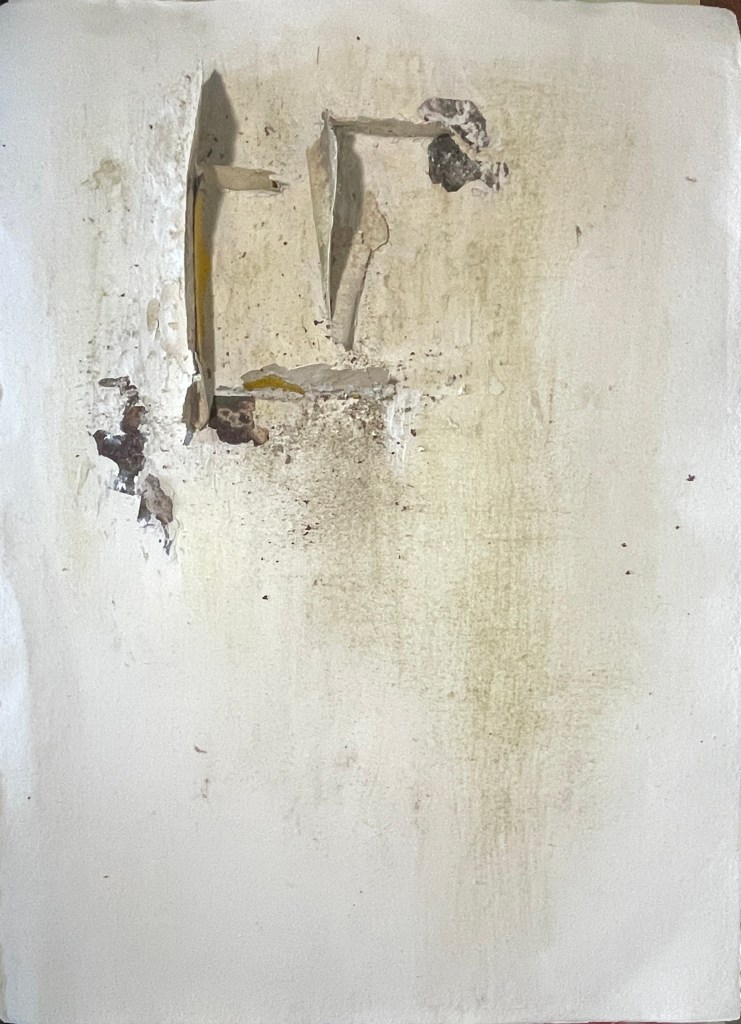
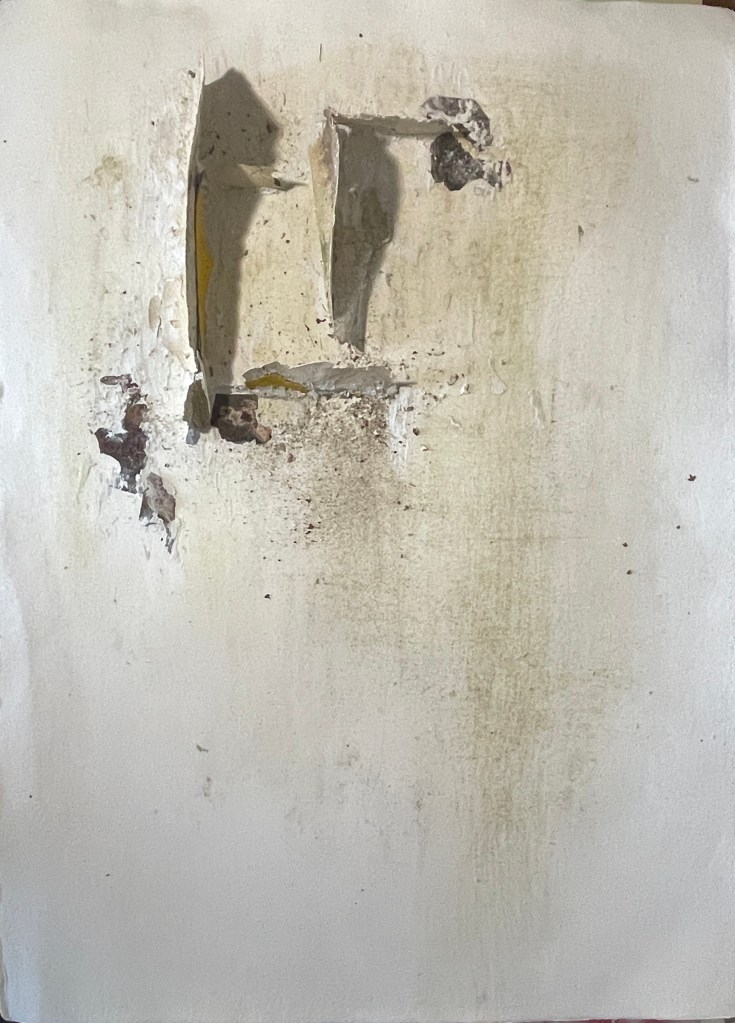
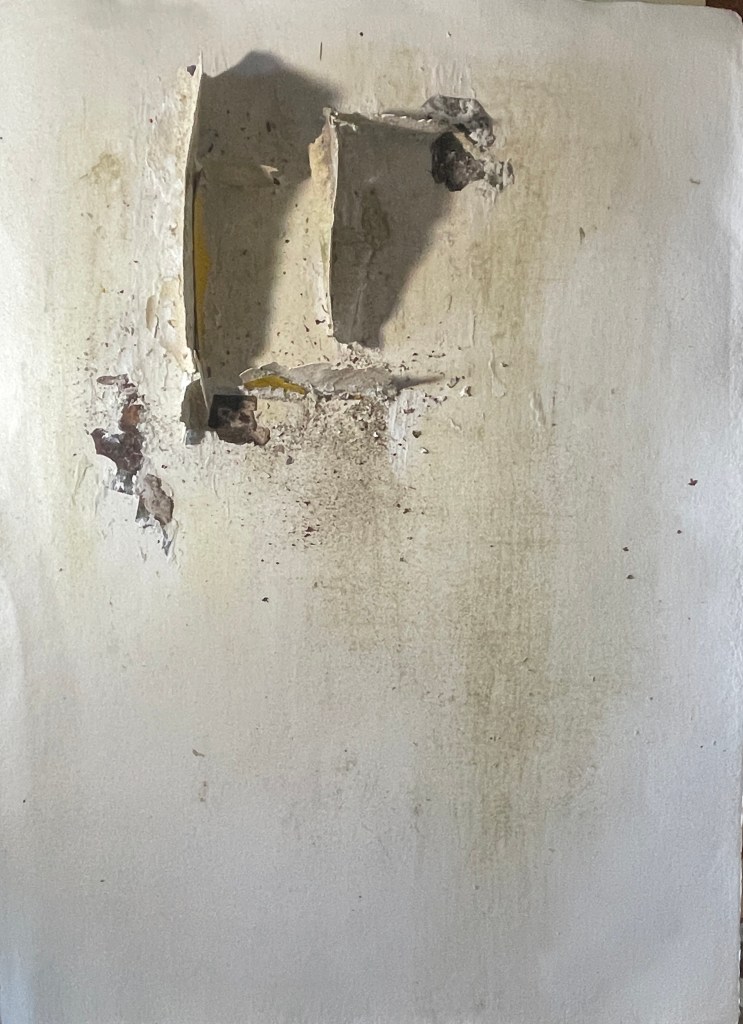
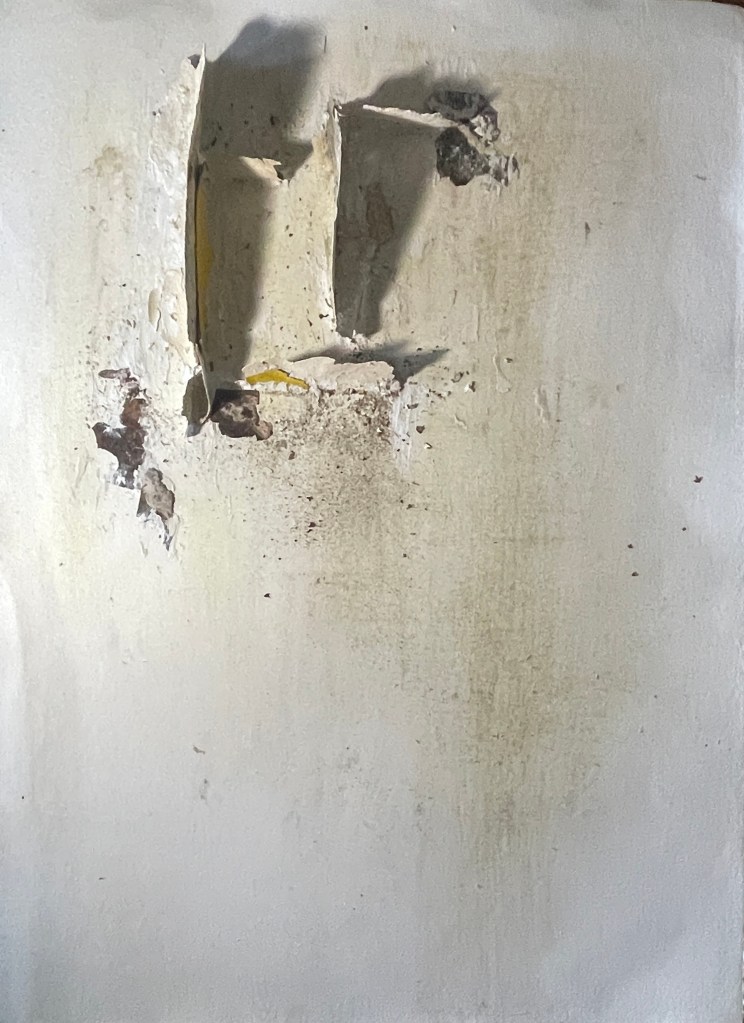
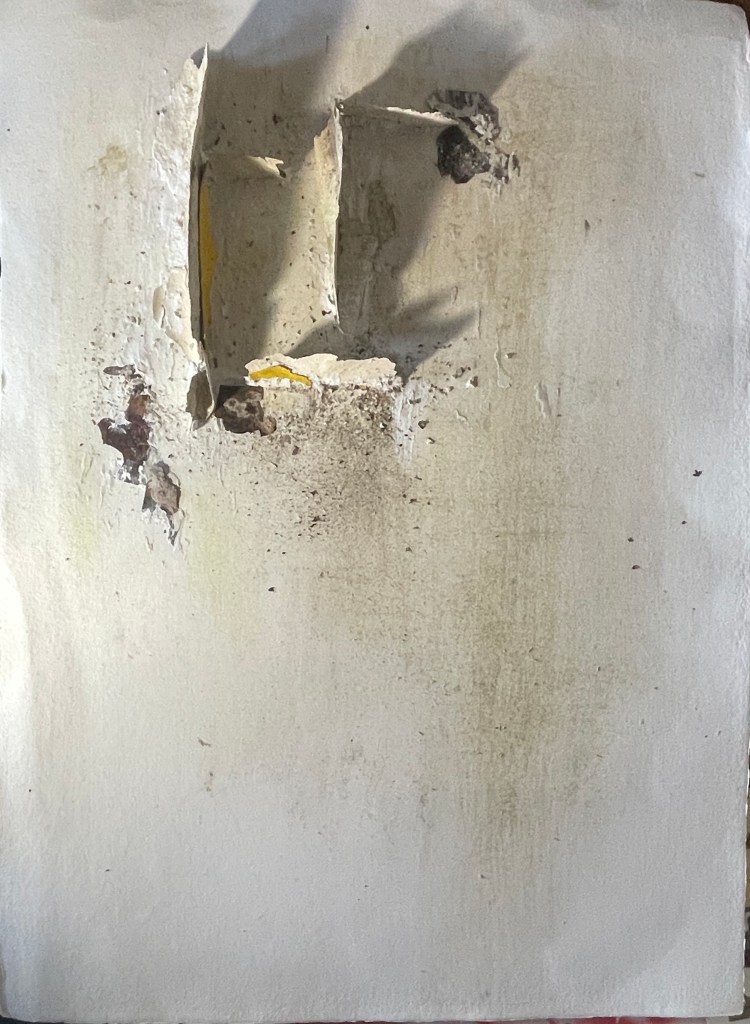
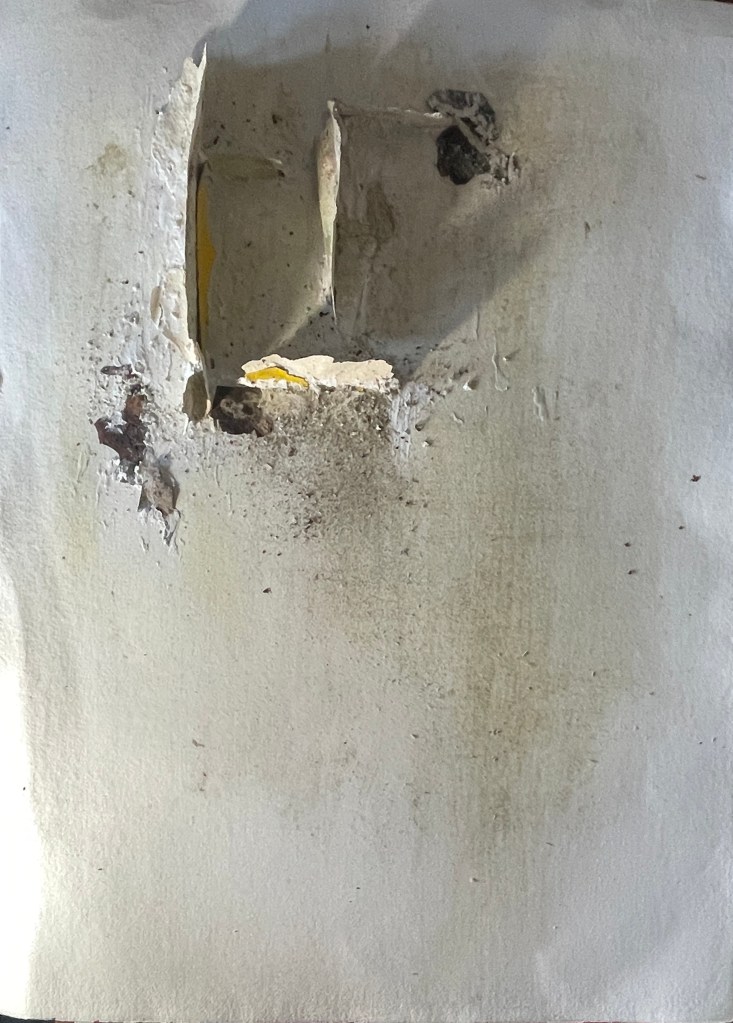
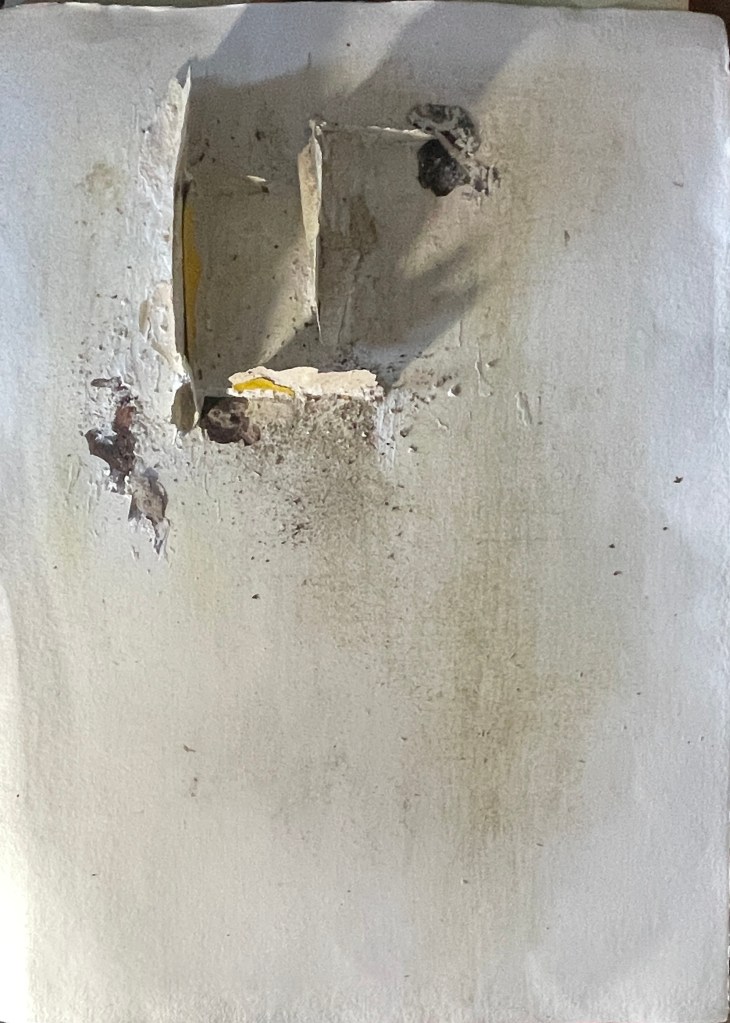
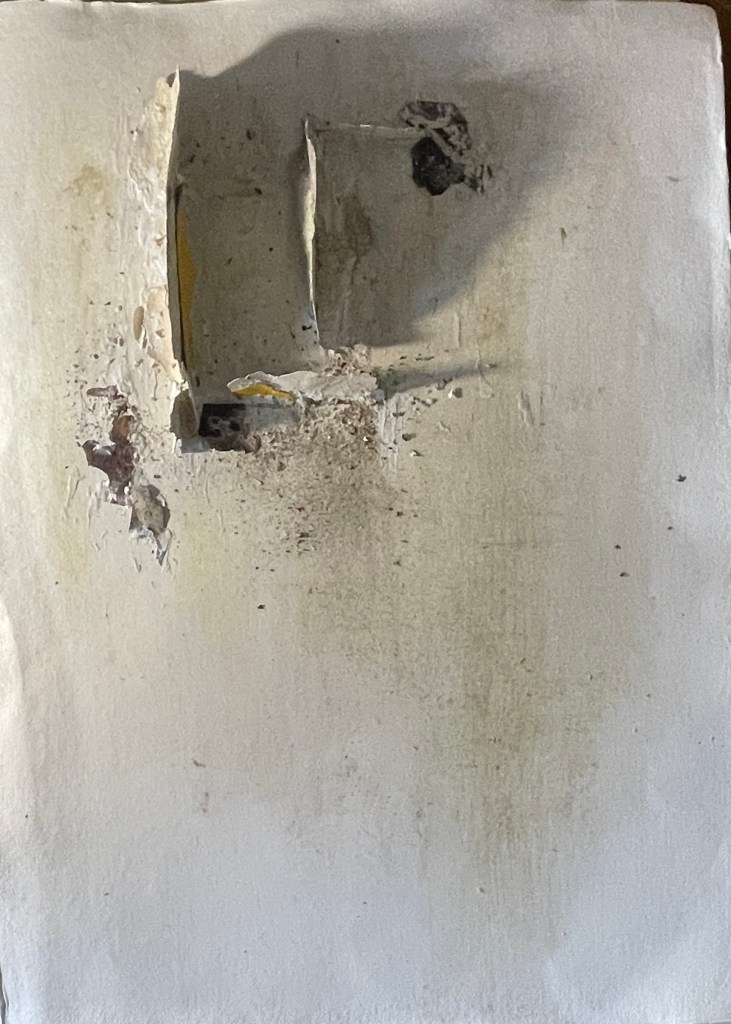
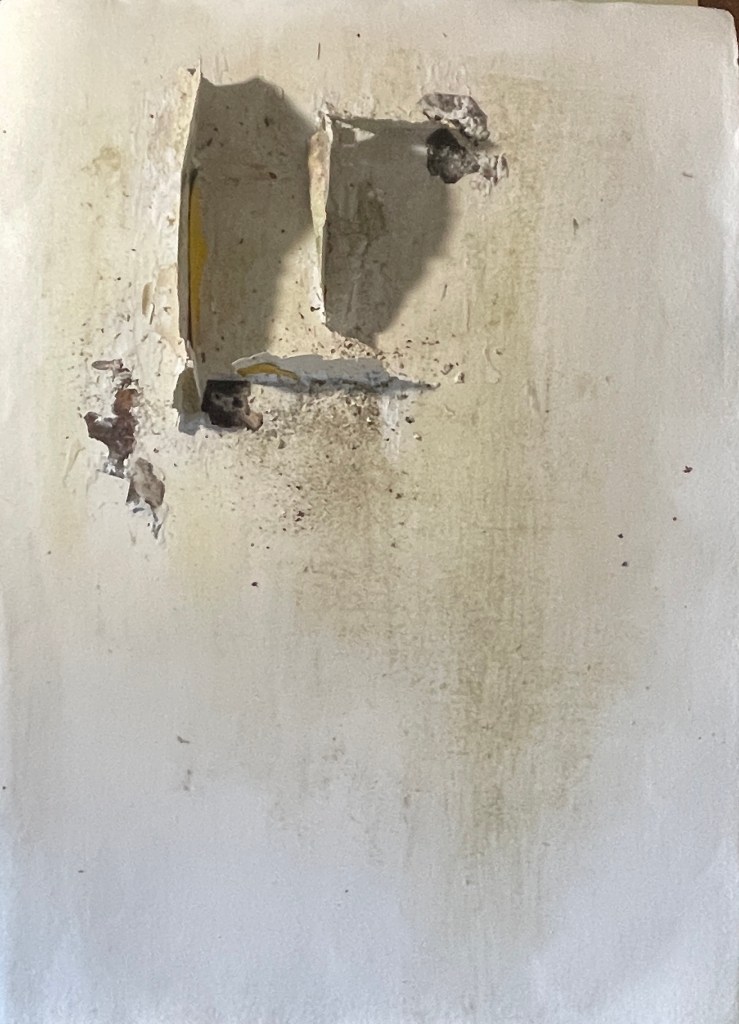
Changing position :
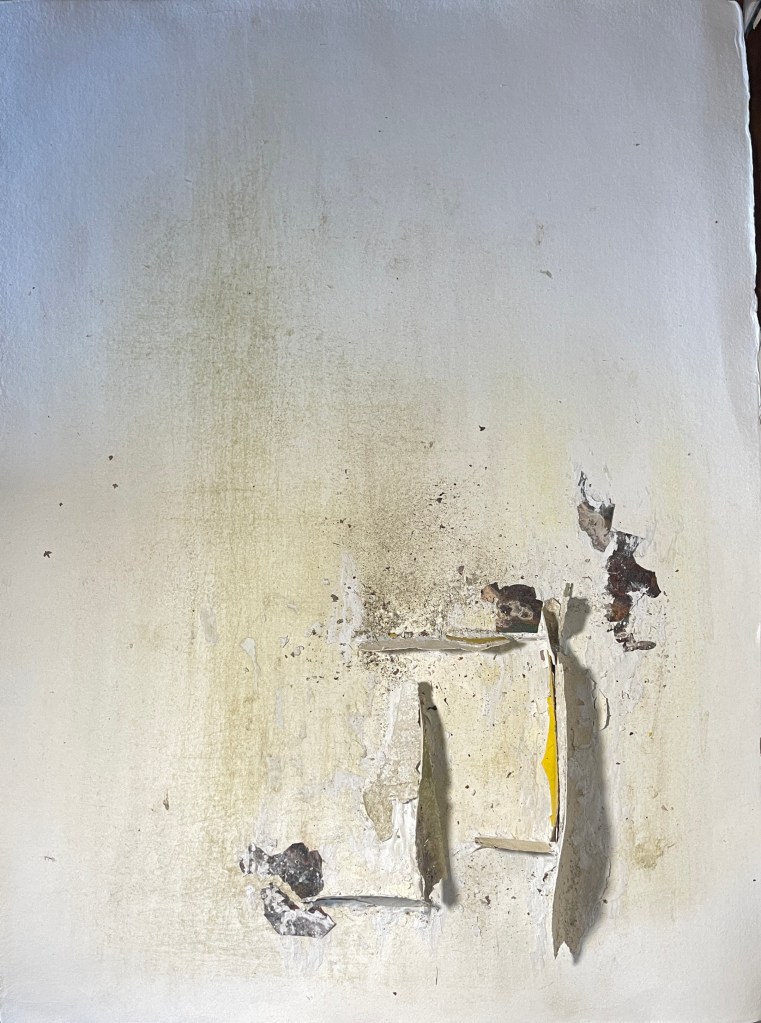
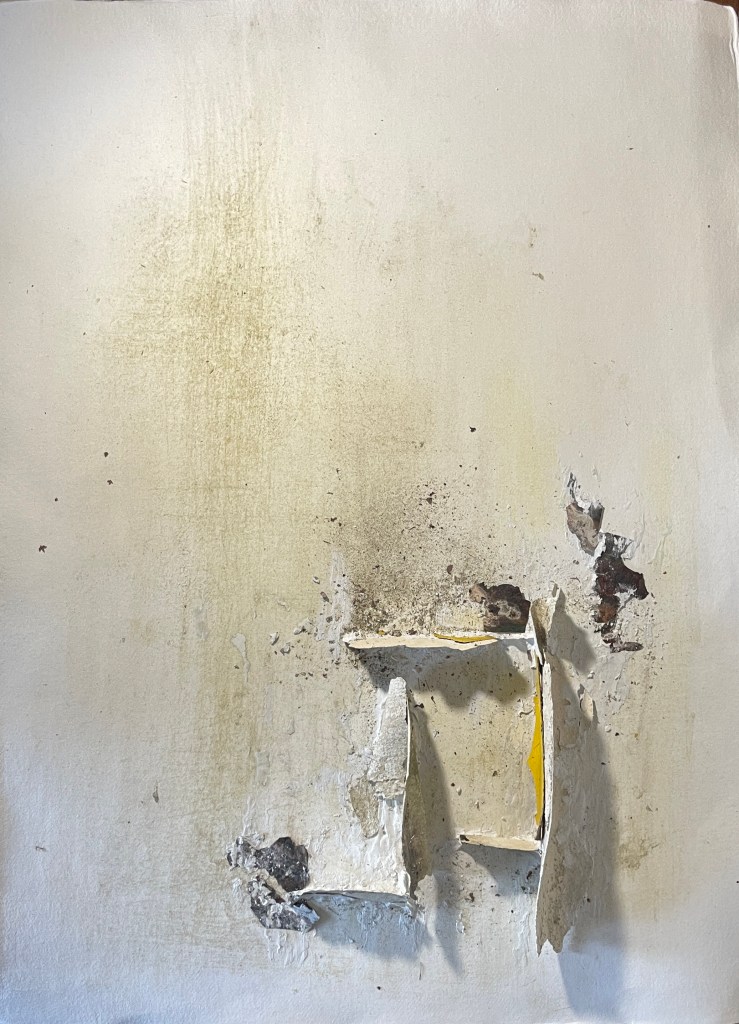
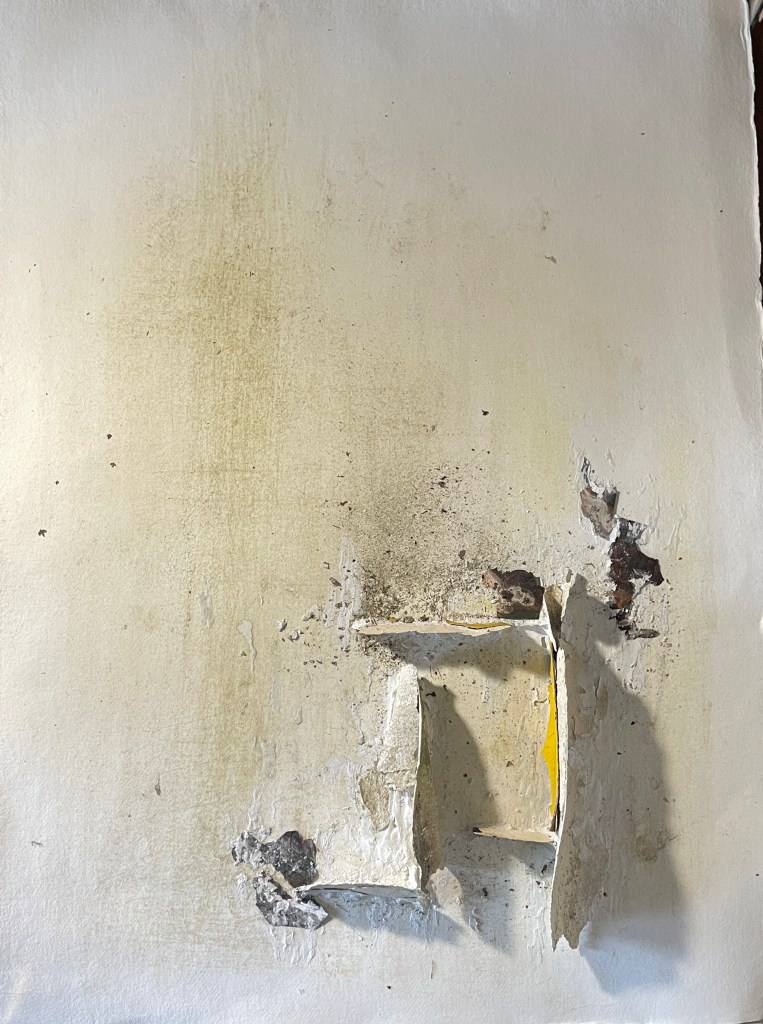
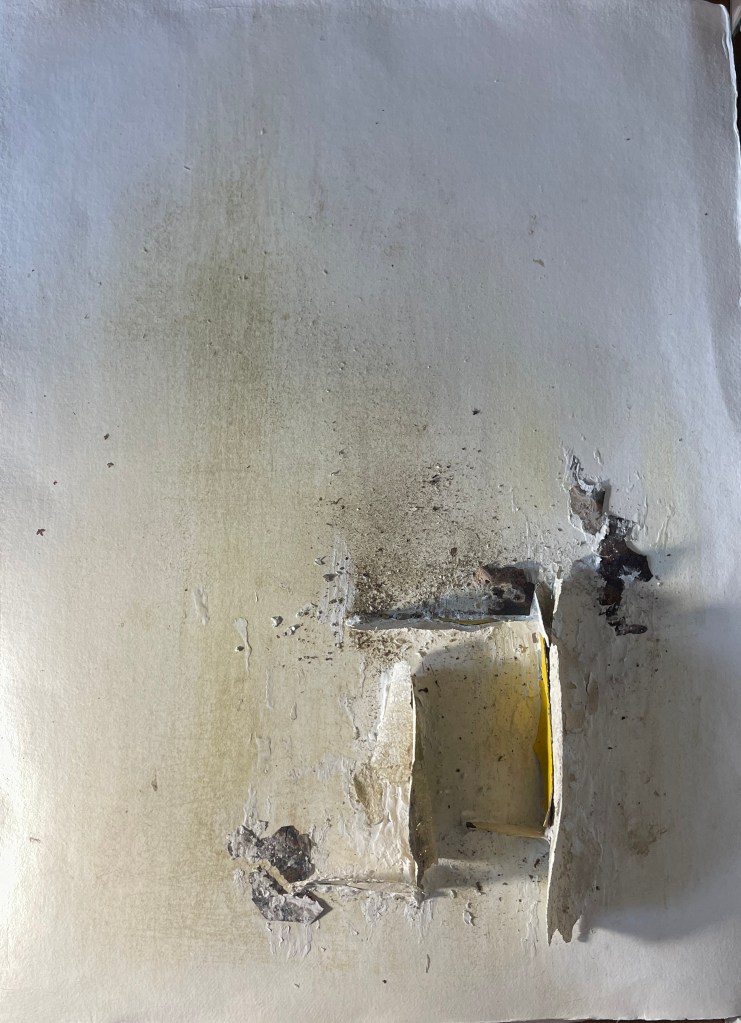
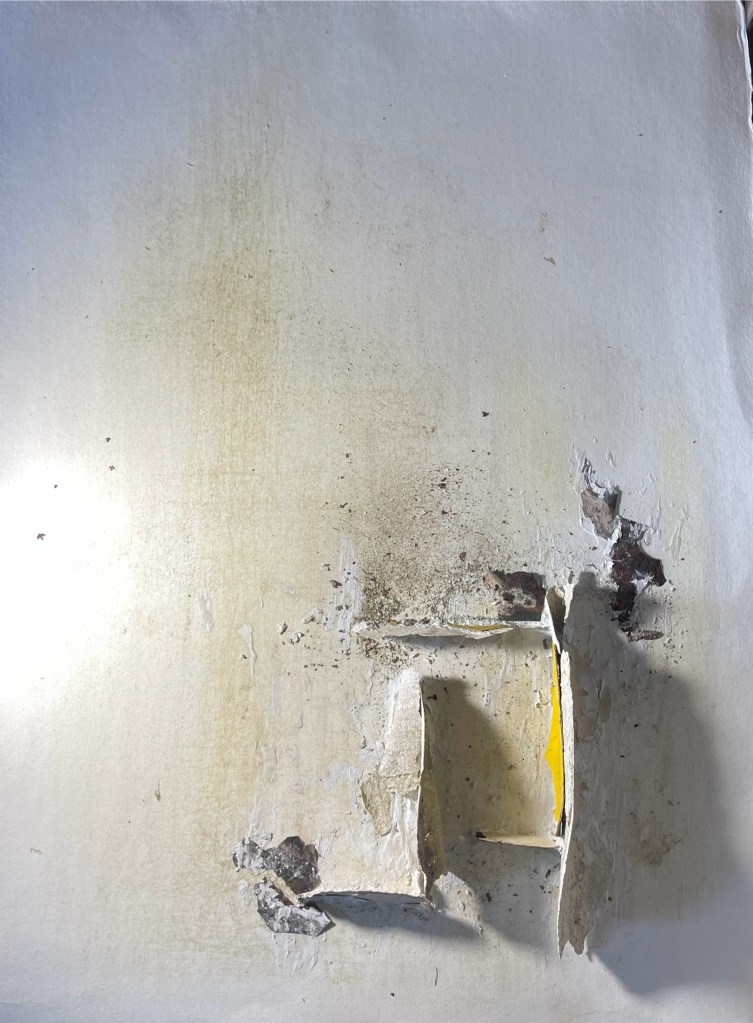
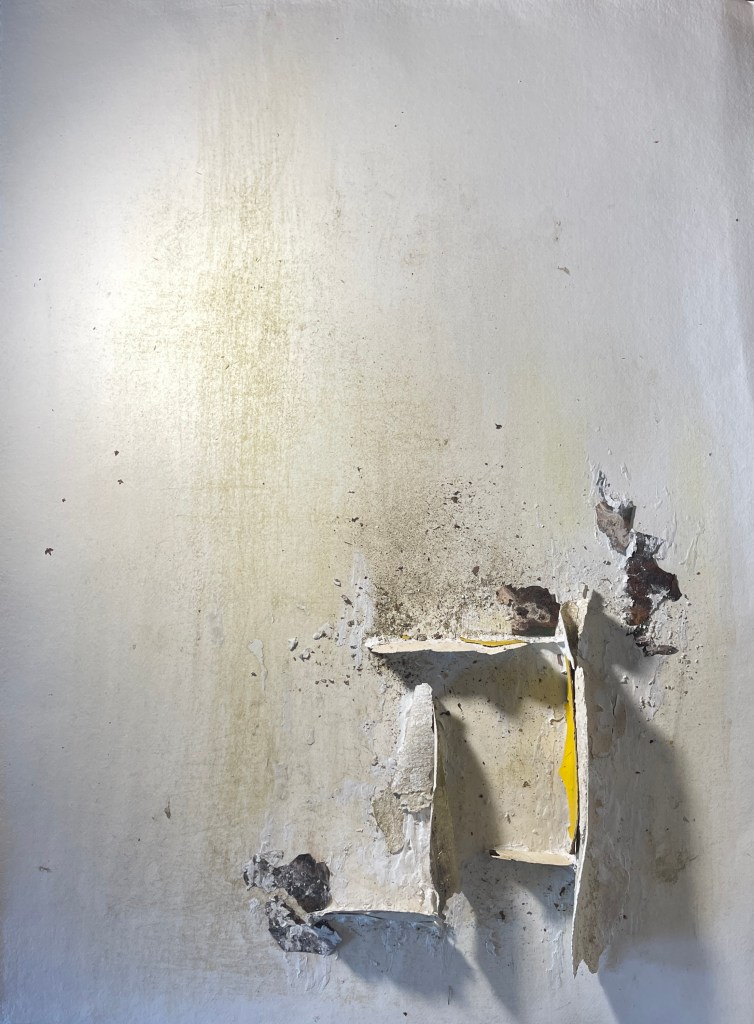
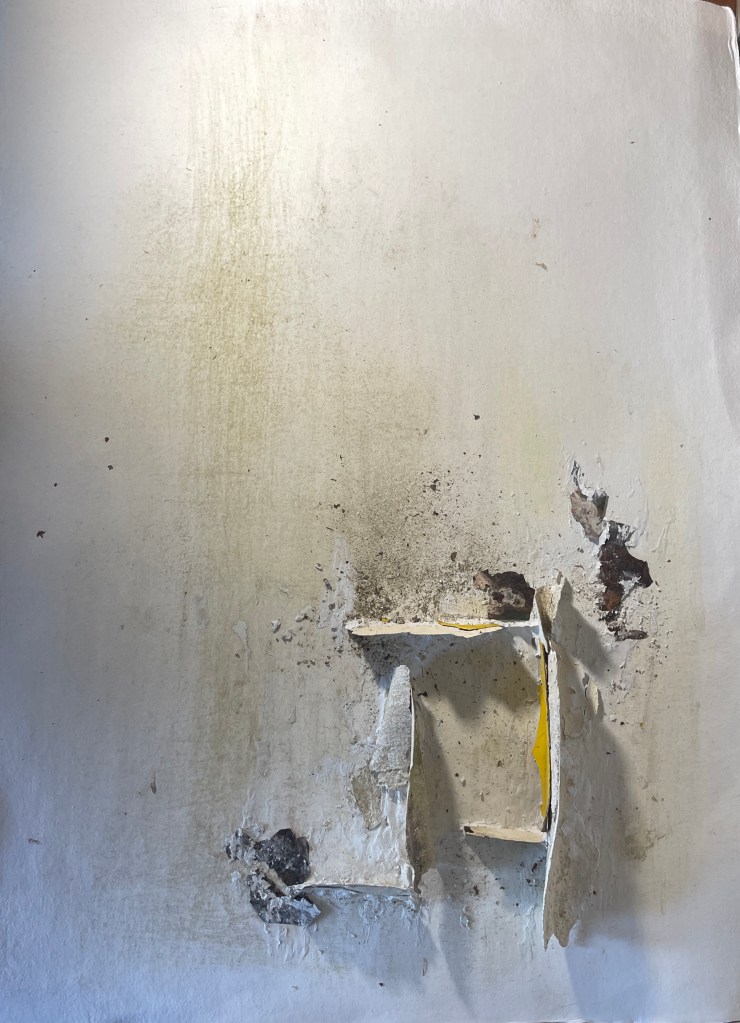
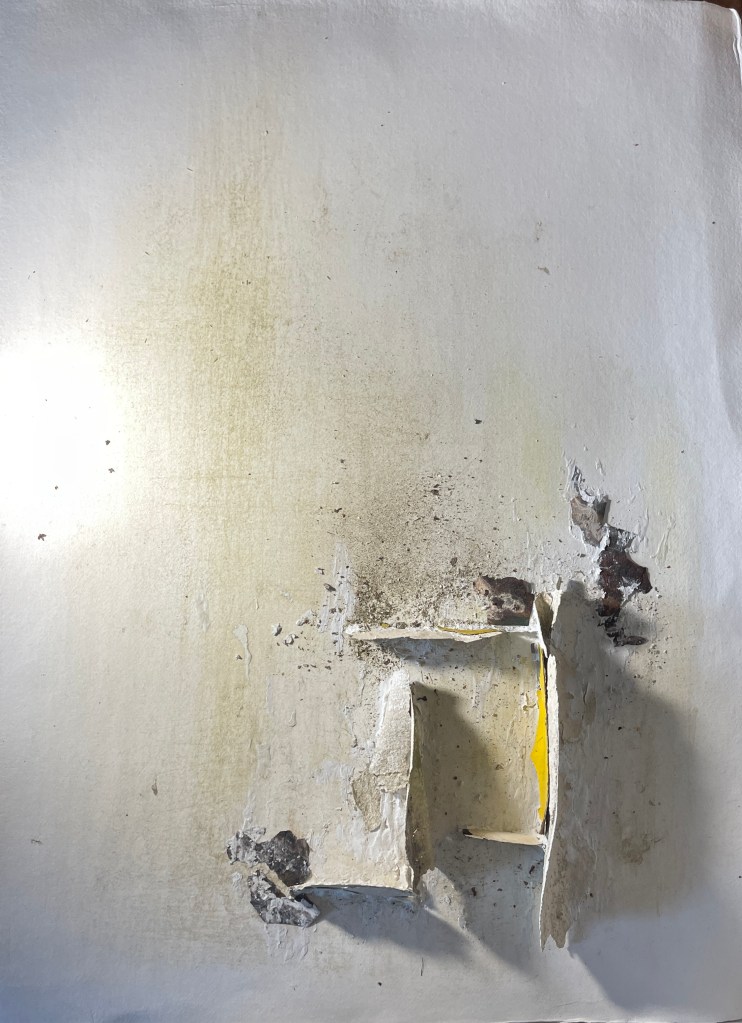
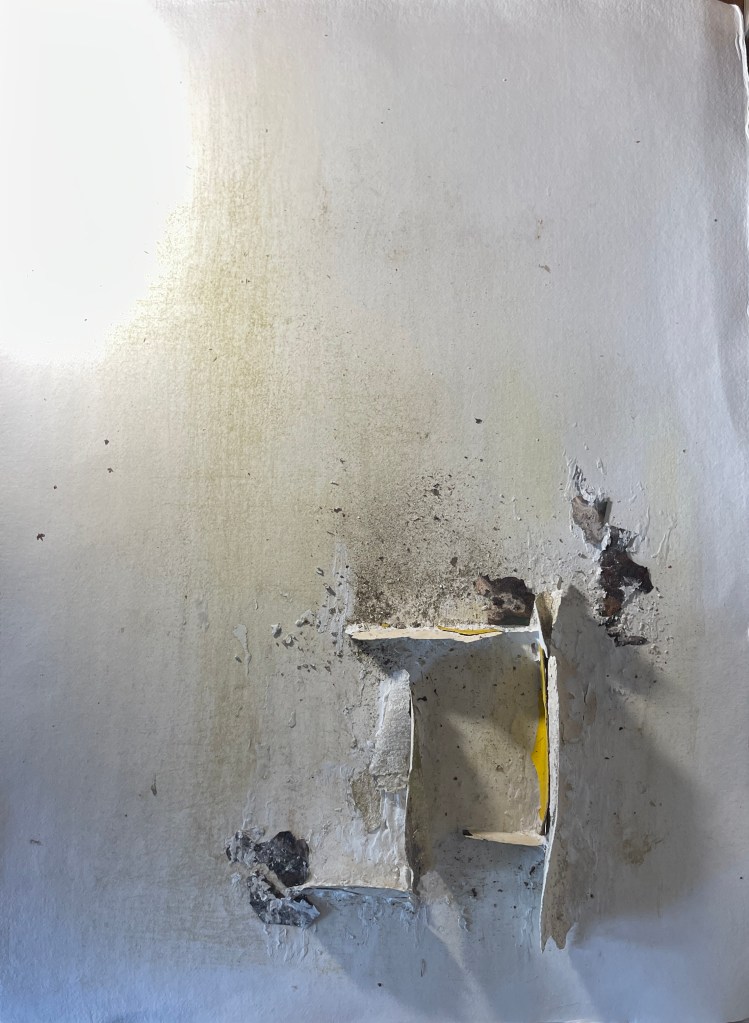
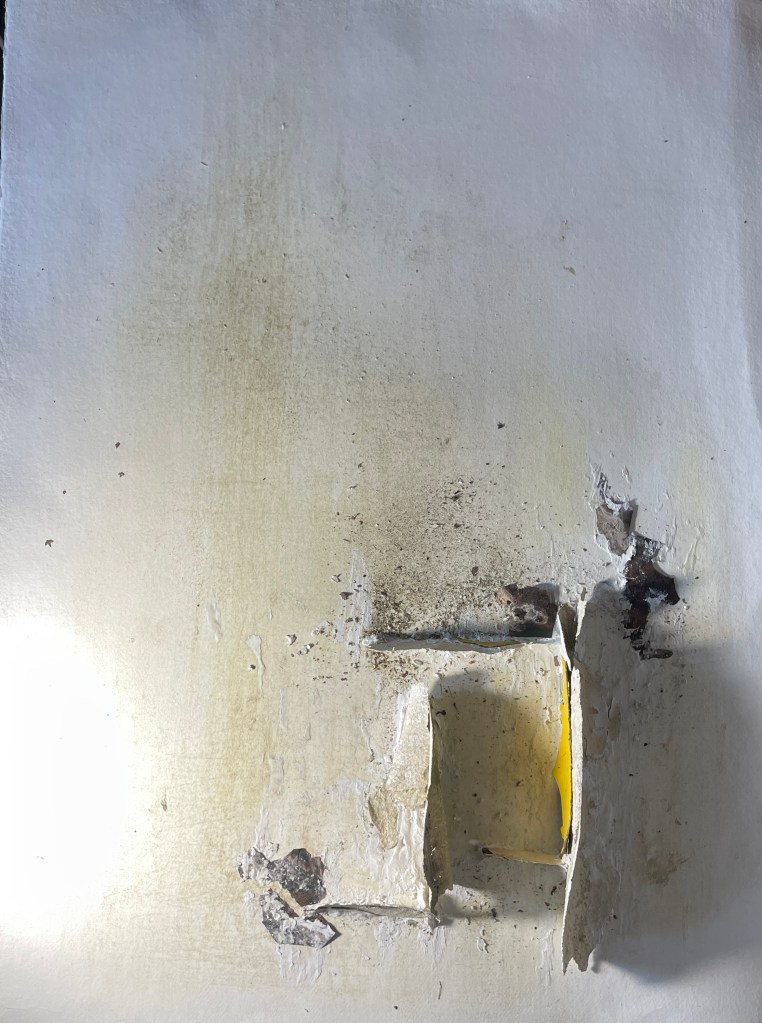
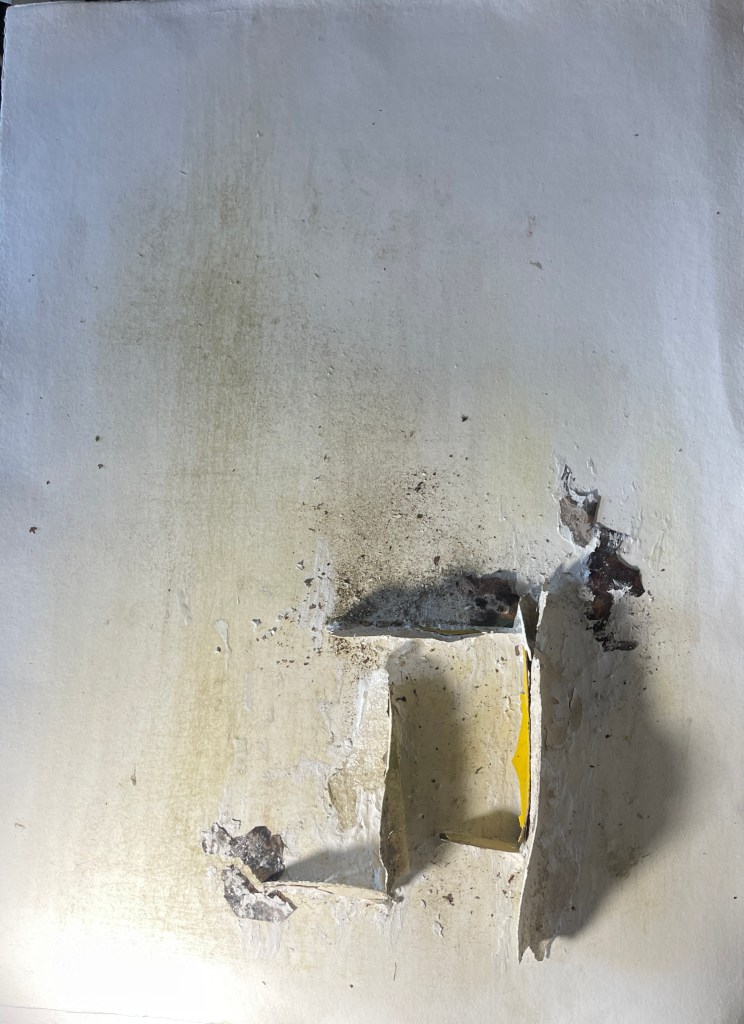
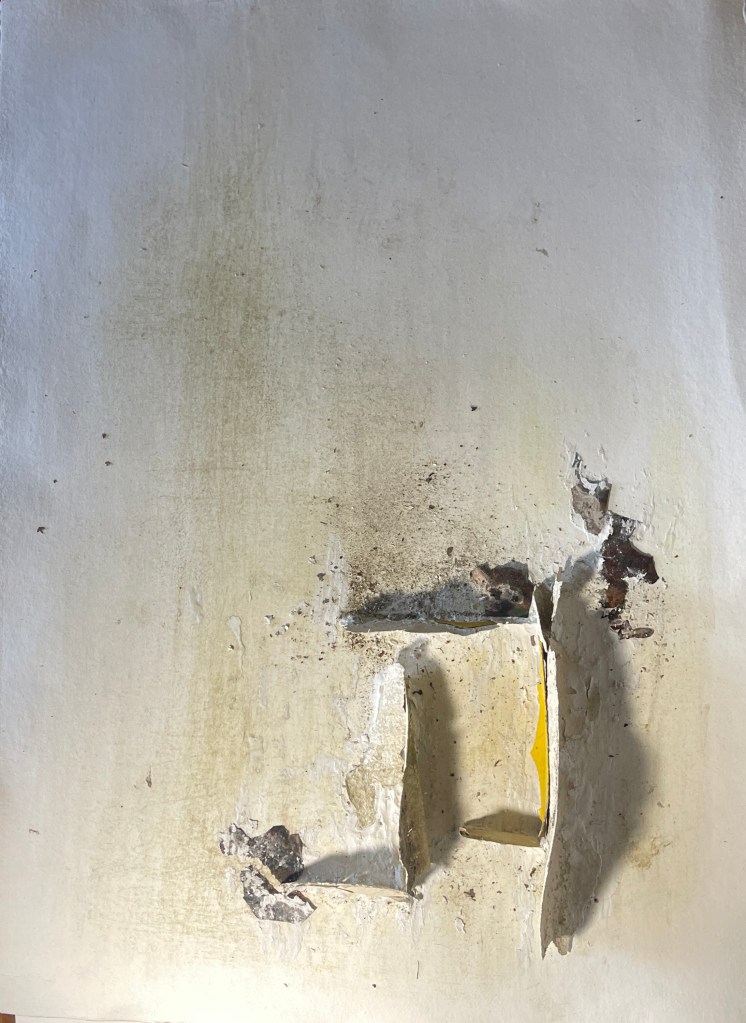
The work might take on a more literal feel with the notion of sunlight and physical structure. As a fragile notion of the mind concerned with the pressure or need to find a ‘home’ mentally and physically) perhaps this can also be relevant as the shadows cast doubt and distort the concerns pt and the image.
Variety of canvas size ‘Home’ series.
Materiality of detritus cont: –
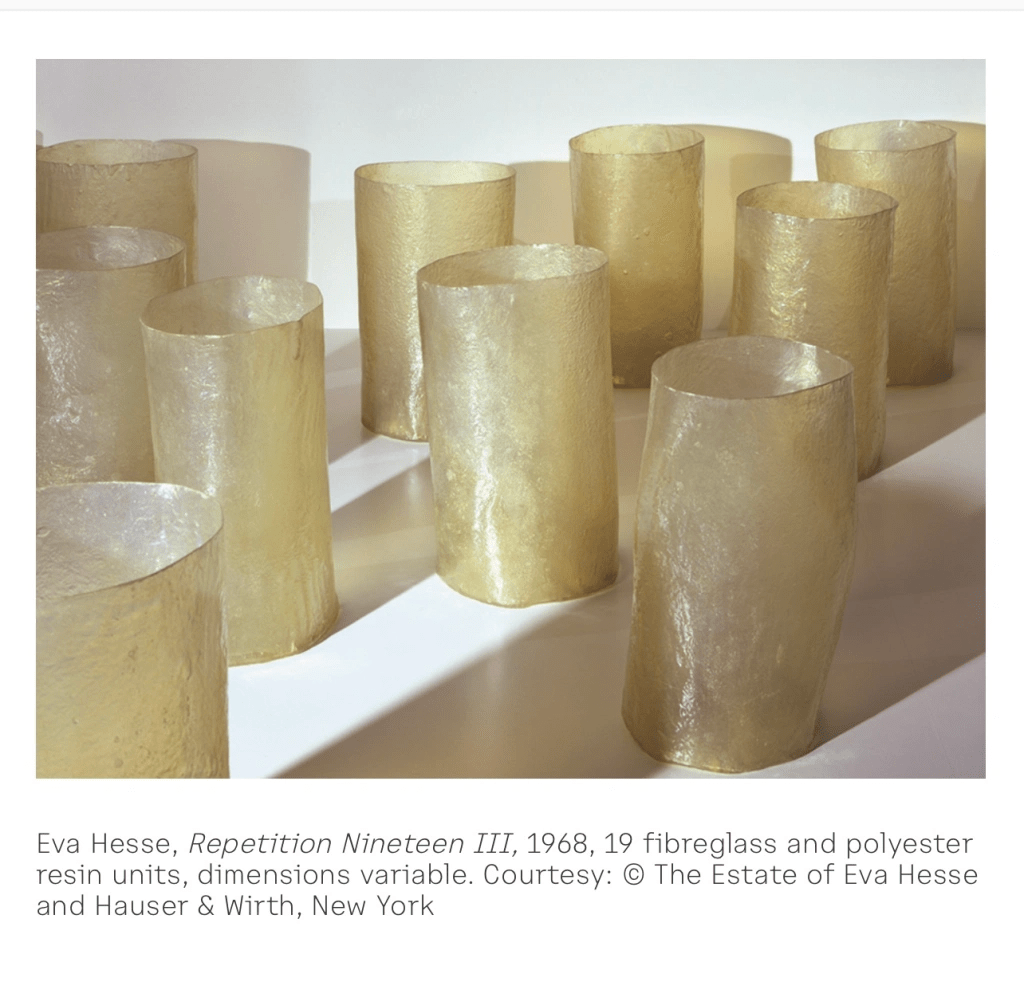
The translucent forms of Eva Hesse’s multi-part installations engaging with a non -binary, male and female representation of form and narrative. Hesse continued to be experimental with her form and substance and continued to be informed by the ebb and flow of female cycles of decay.
In regards to the female trope of domesticity and the ‘invisible woman ‘ concept as continually seen in society today as it was during the fist and second wave of feminism my concerns surrounding this and exploring this bias are numerous. Creating a work with a narrative regarding the woman and her relationship to home was important to me. Underpinning previous work concerning the notion of ‘home’ but including: family and nurturing as positive active roles, in the wider sense of community and directly with as family.
Taking Eva Hesse notions of female decay further and more literally….
Elevating the role of ‘home-maker ‘ to be cherished, admired and with the equal status of ‘provider’ or ‘hunter, gathering’ traditional male trope. I recognise that the ‘femaleness ‘ surrounding this trope is continuing to be broken down by society with gender diversity and fluidity.
My material for this work will be rich with narrative concerning; physical presence, time, routines of humanity and the existence that surrounds these routines. There are transient, etherial and traces of life in the material, plus physical aspects of human debris, hair, skin etc that we all live with and encounter on a daily. There is decay and a breaking down of material and a redistribution of part of us that might be washed or blown away. This delicate escaping or deconstruction of ourselves bit by bit is fascinating to consider as we ‘shed’ continually. Taking Eva Hesse notion of non binary and female decay further by using a material that directly reflects this inclusive narrative of living or decaying, literally and metaphorically.
The works evoke a sense of family and human form with out it actually being there, non binary and unspecific we are inherently drawn to see a group of object as relation able to each other, not individual as such. What is interesting about my chosen material of detritus /fluff from a domestic washing machine is that is brings together all various waste matter and remnants from a range of garments and individuals into one reconstituted mass.
Domestic Pelts
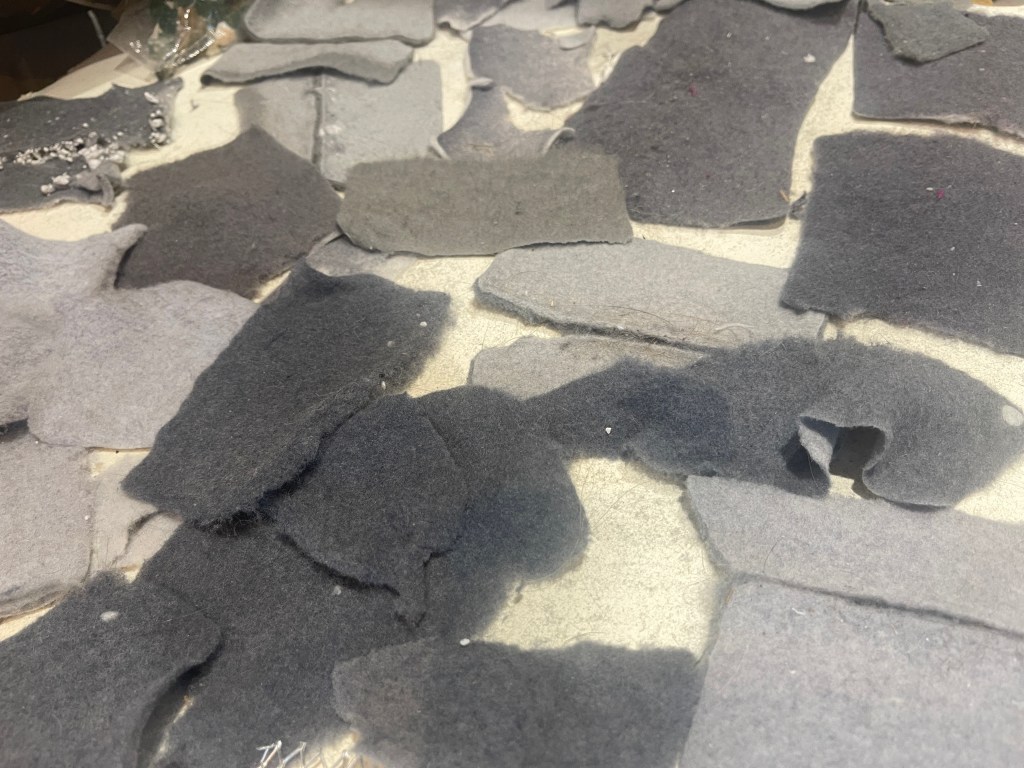
Perhaps a rather unpleasant or even repulsive to some the raw ‘domestic pelts’ from ( as I have named them) harvested from the tumble dryer, laid out ready to be put to work.
The material was highly fibrous, odourless, all of similar colour palette contained feathers, hair ( dog and human) cotton string and white tissue in dried ball format.
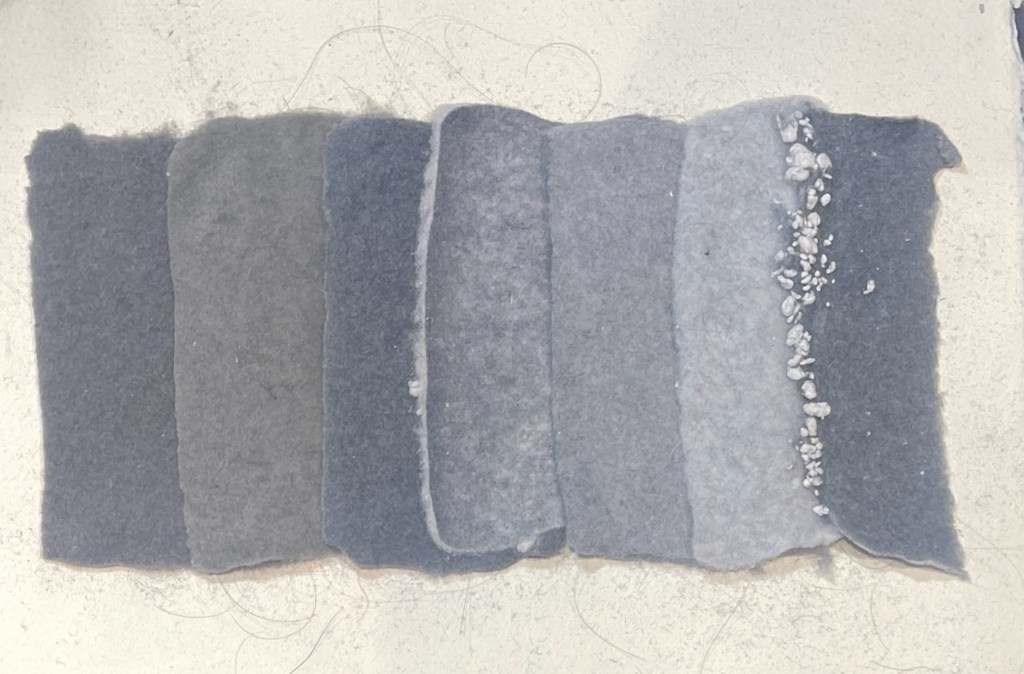
Working with the collected pelts over a period of weeks.
Using sculpting mesh I worked the felted matter into both sides of the fine wire. Rubbing and using a felting pin so the two sides would adhere to each other and bind between the mesh. This worked surprising well and meant th euse of glue was minimal to the adherence process.
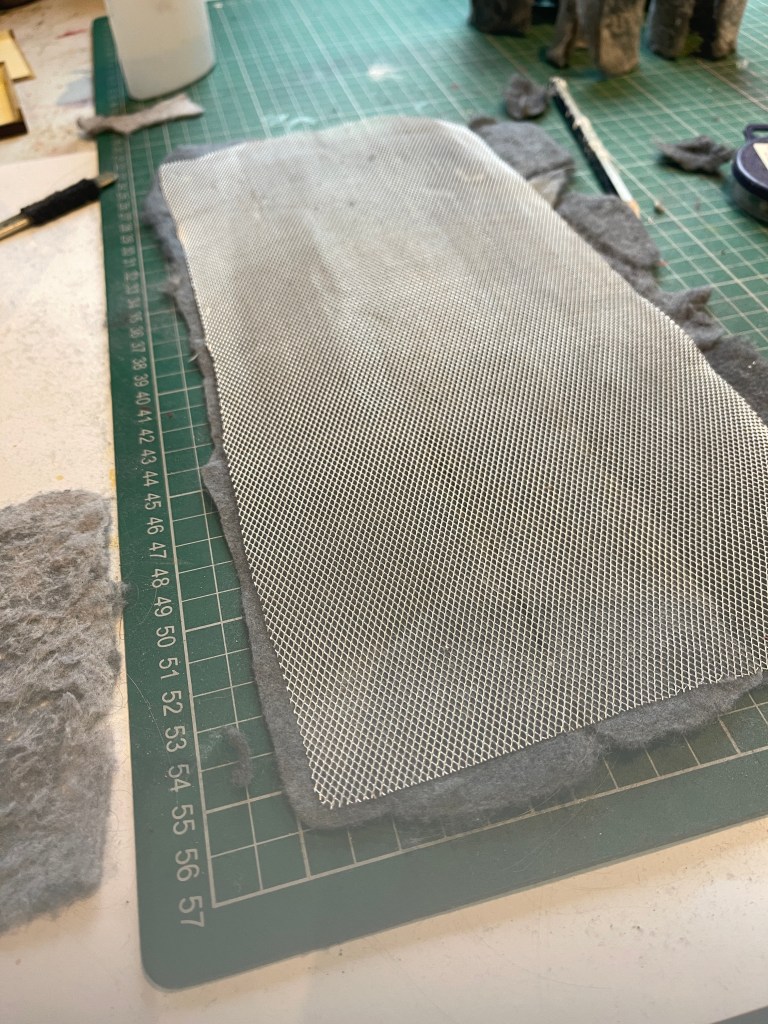
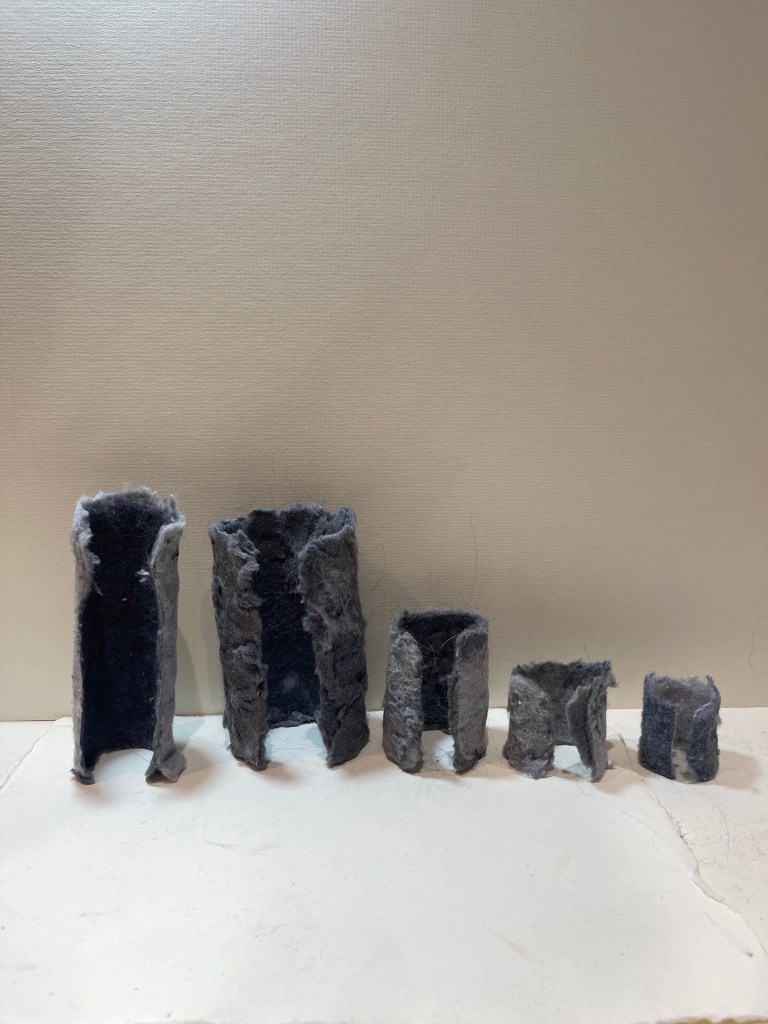
This process was repeated a number of times changing colours and size. The shaping of the forms was manipulated by hand rolling and pressing them into each shape. The variety in size of the pelts did dictate some of the forms, with the large piece being a patchwork of the dark felt colours.
‘The big one ‘ – size 170mm x 120mm ( D)
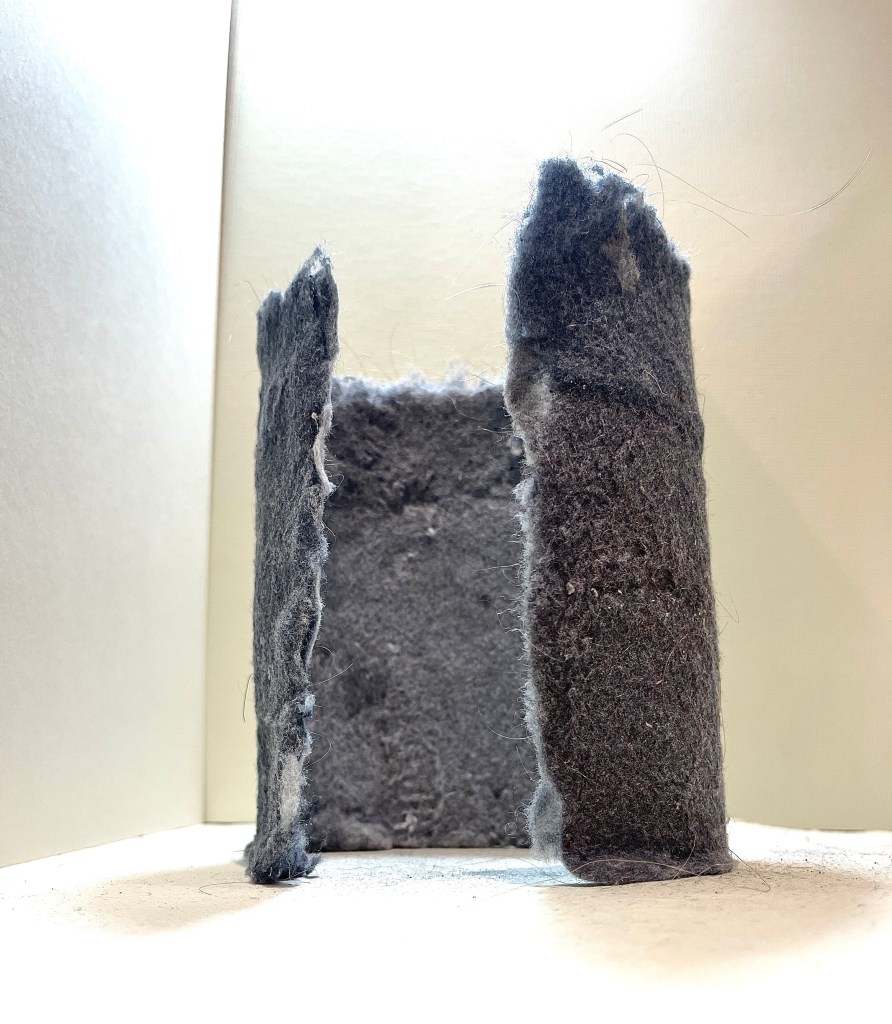
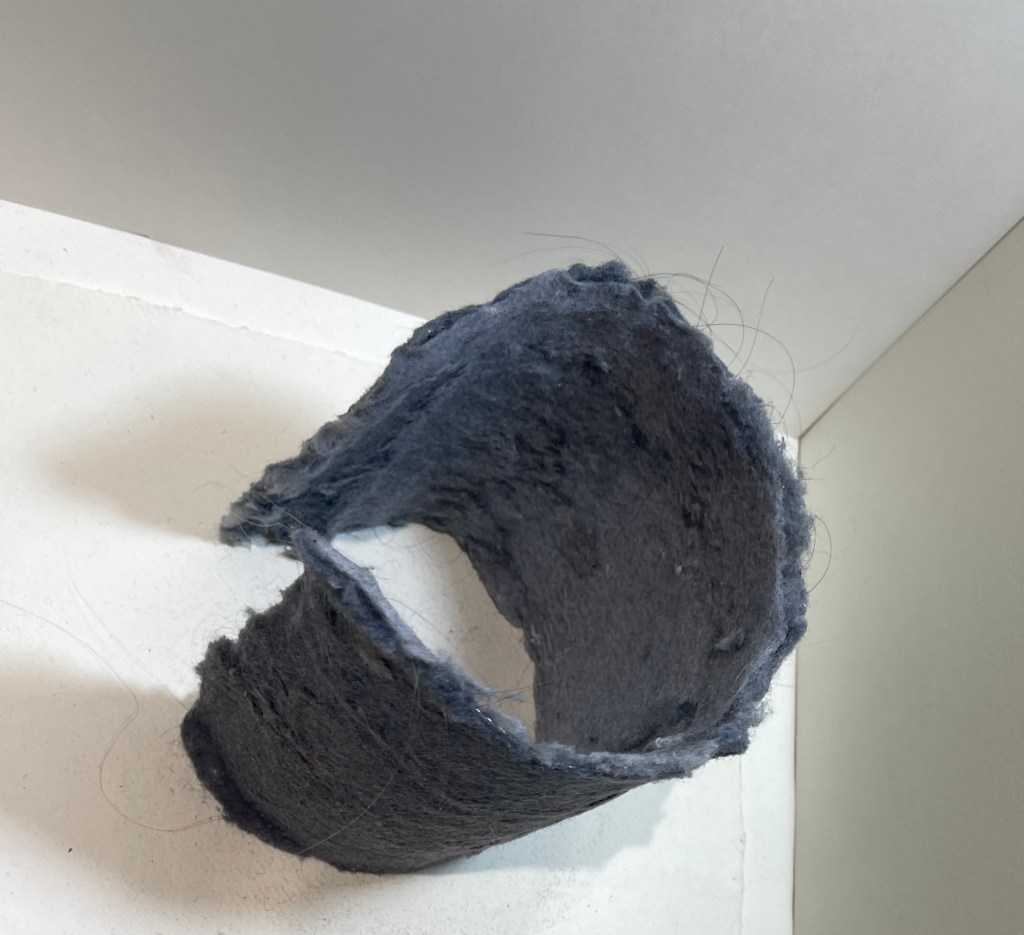
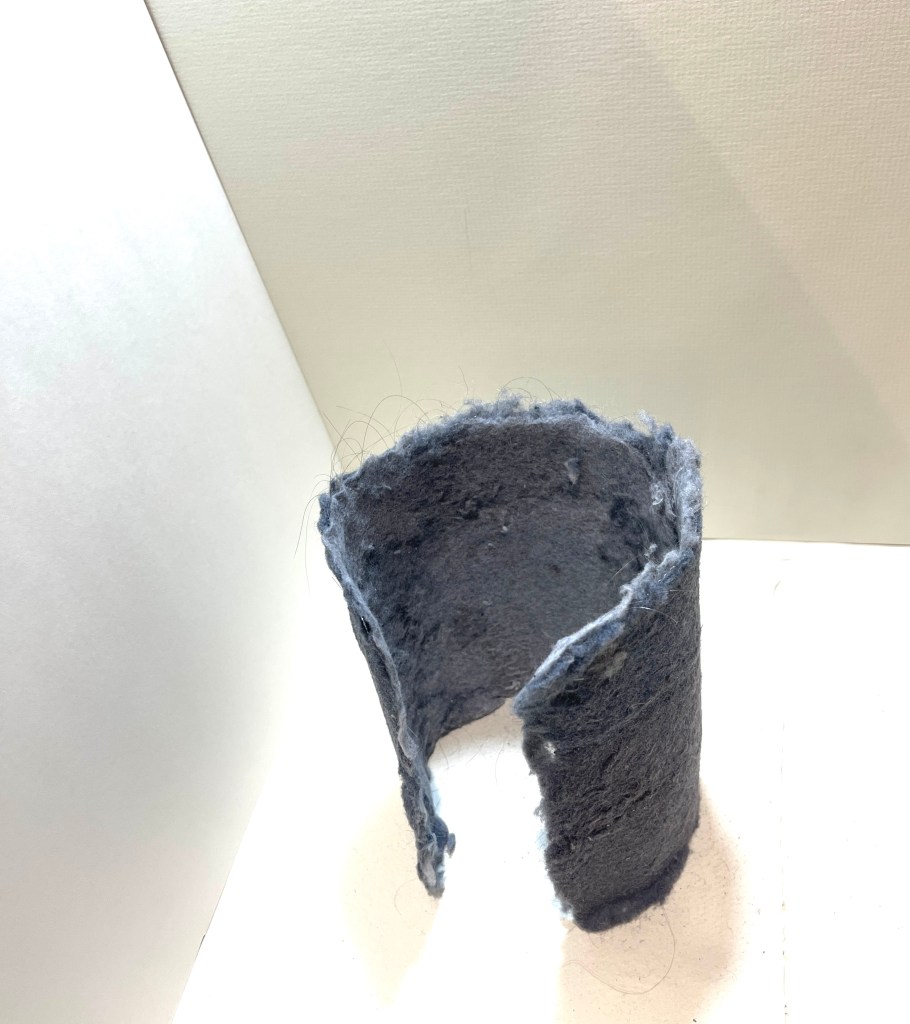
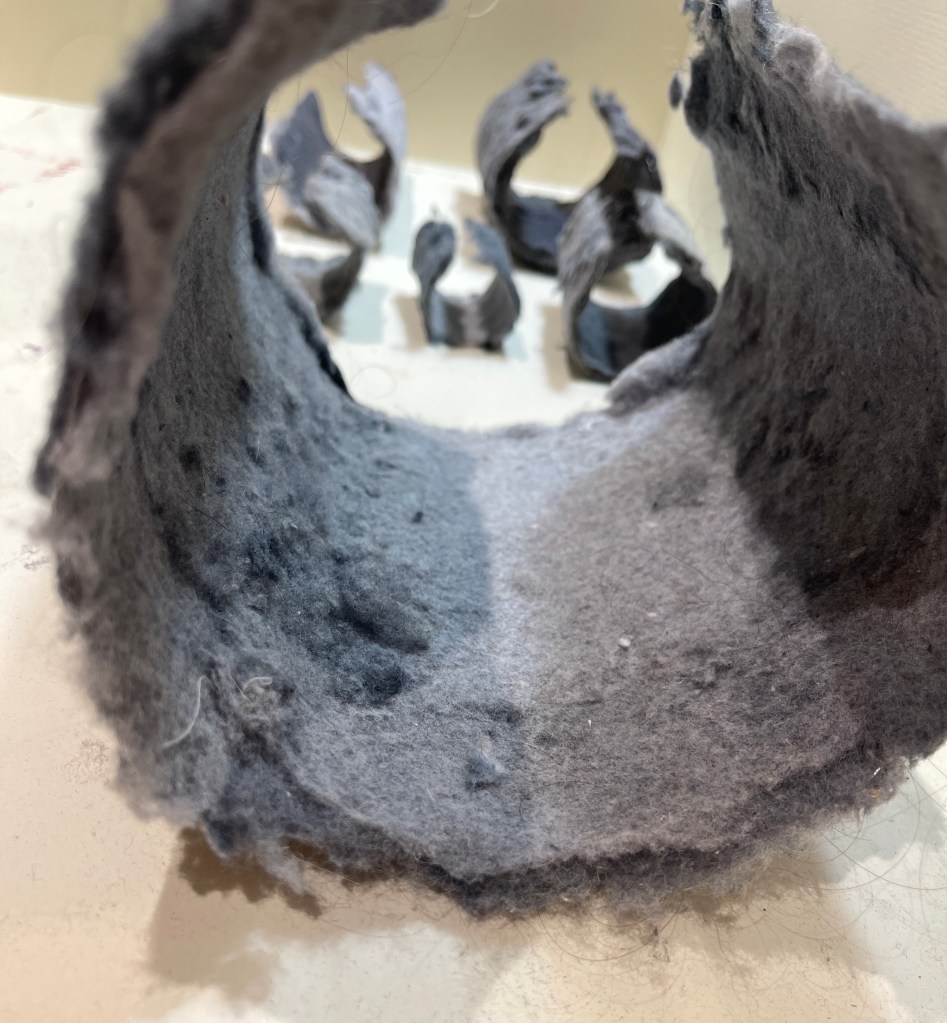
Perhaps too large considering limited material, it ate up a volume of pelts and stood rather proud and awkwardly. Its internal was lighter in colour than externally….It needed a reference and other sculptures to share space and offer narrative.
The next ones constructed were smaller and of varied size. I used the subtle colour as prominently as possible with each one. Below I began to look at the necessary curation of the objects and how they could be considered and related to, It became clear that this was an essential part of the work ..
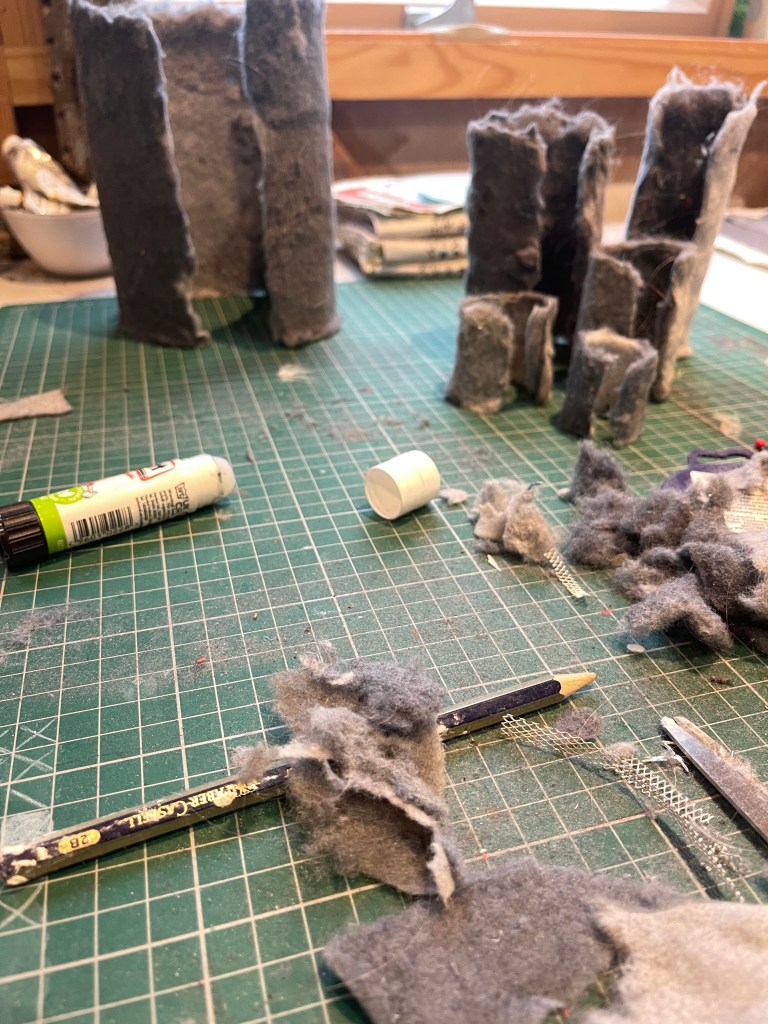
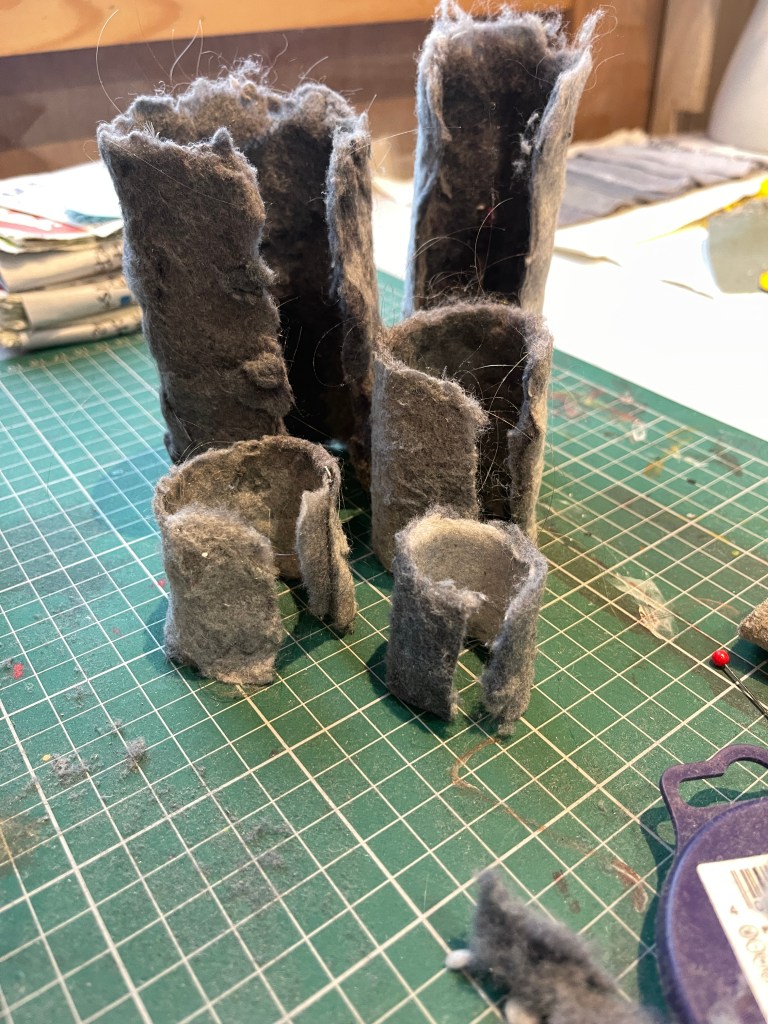
Placing them in a neutral setting for curation :
Open and lying down..
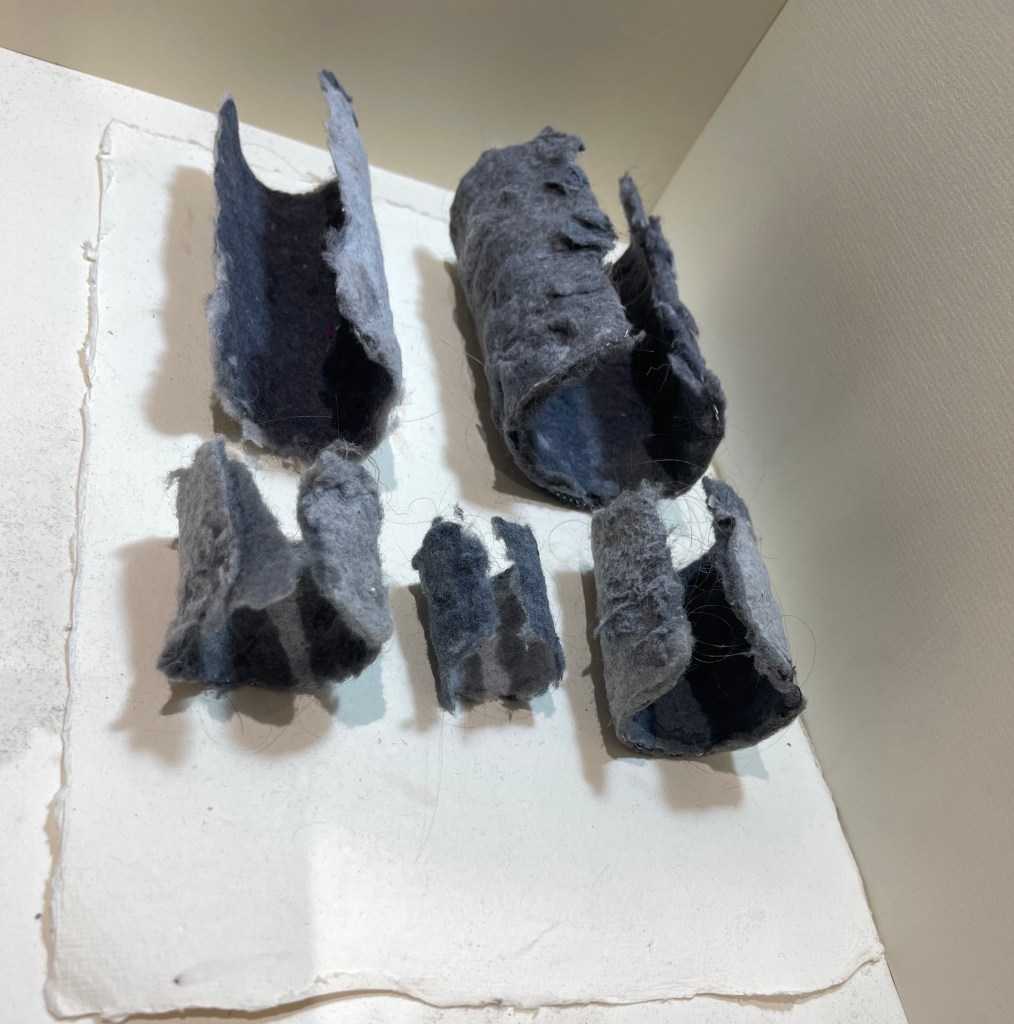
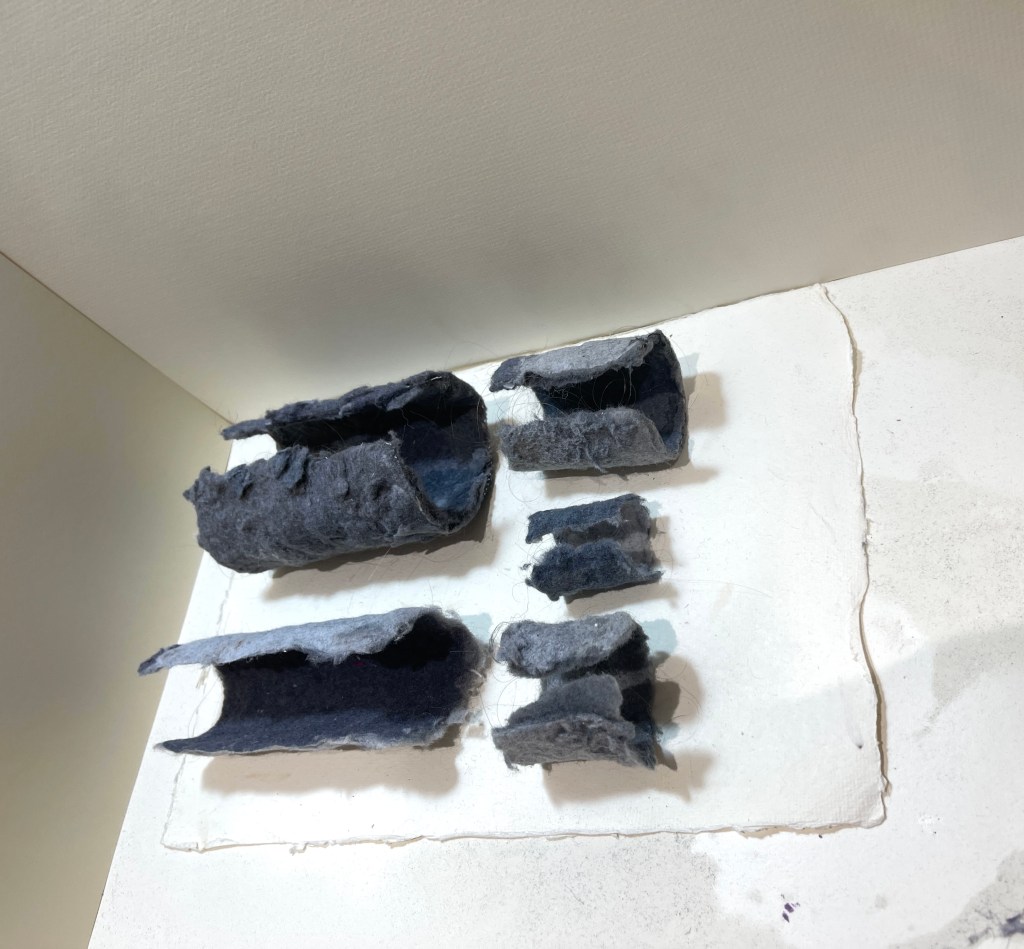
Viewed through the largest form…
Continually experimenting with position …
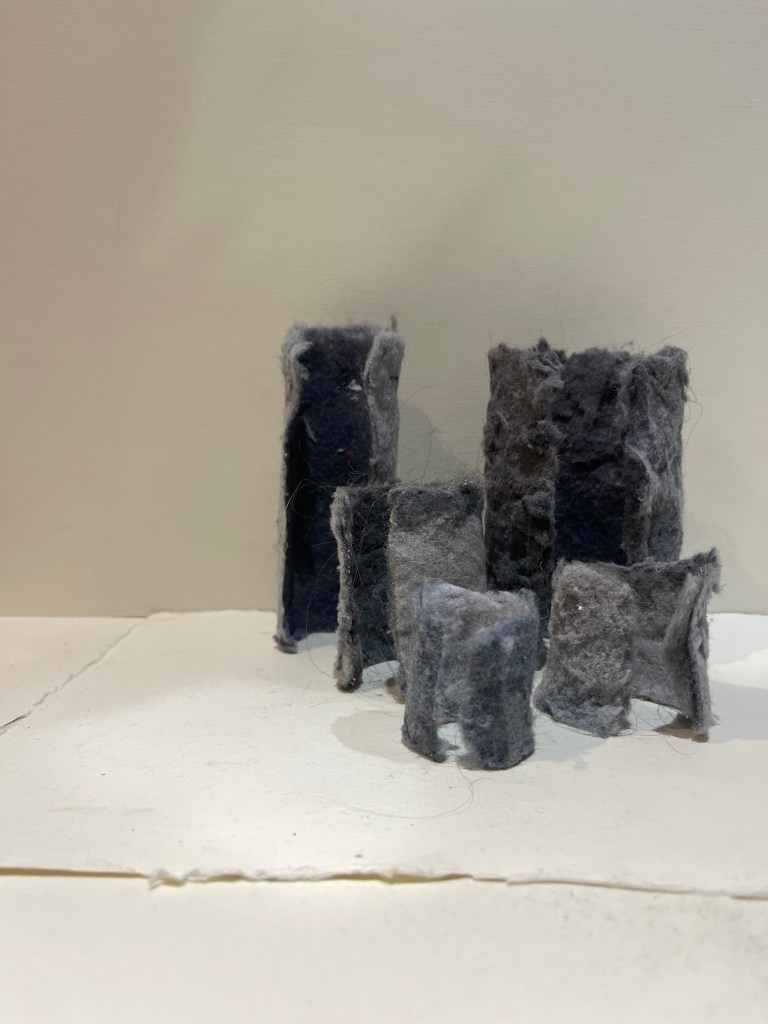
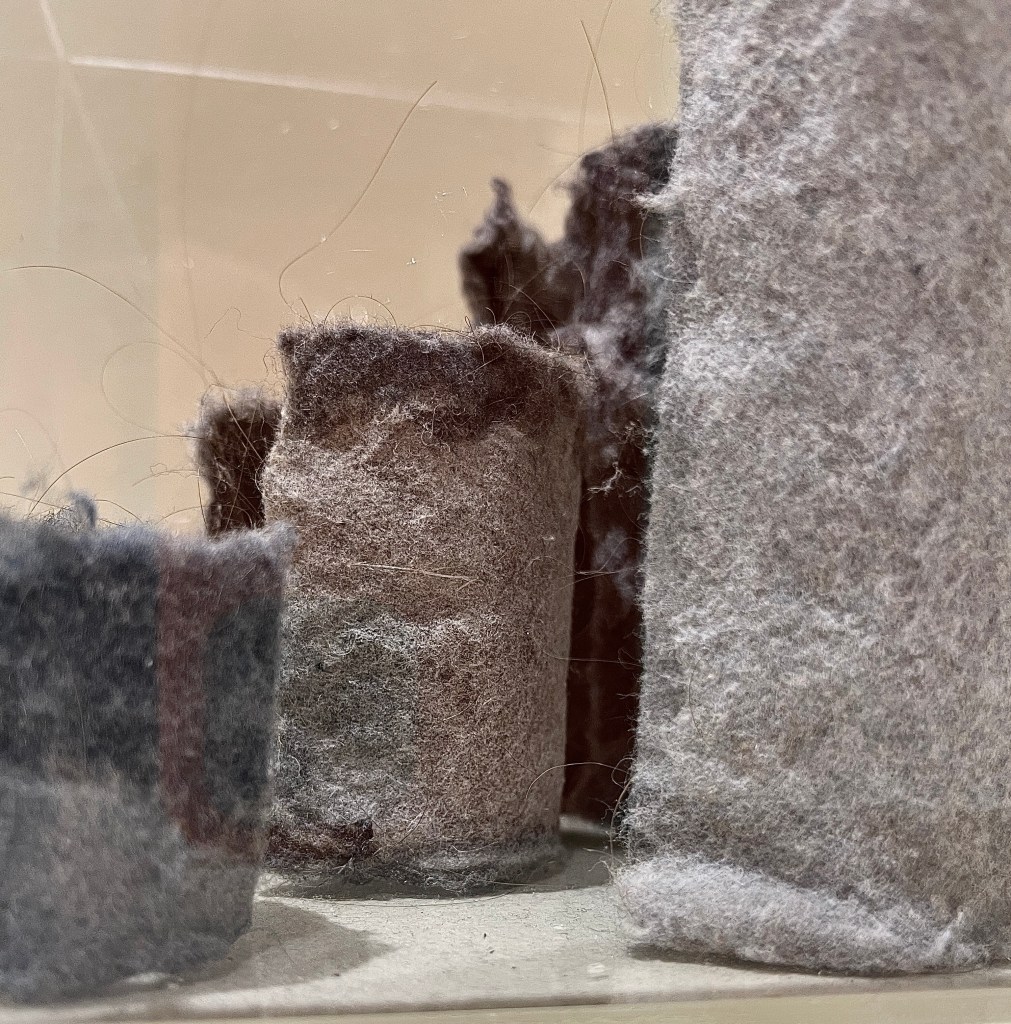
Te object did begin to feel humanoid, they were delicate, warm and soft to move around, needing attention every time this process was carried out. A strong wind blew the taller one over and tihs led me to seek out containment and protection for these delicate and fragile objects :
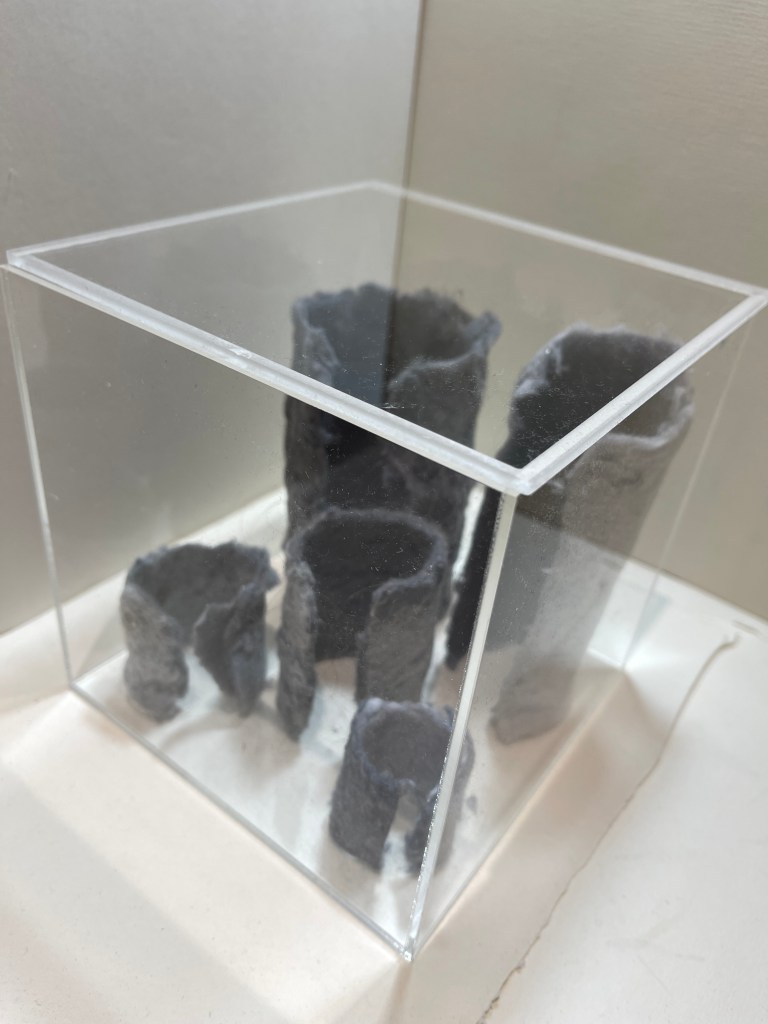
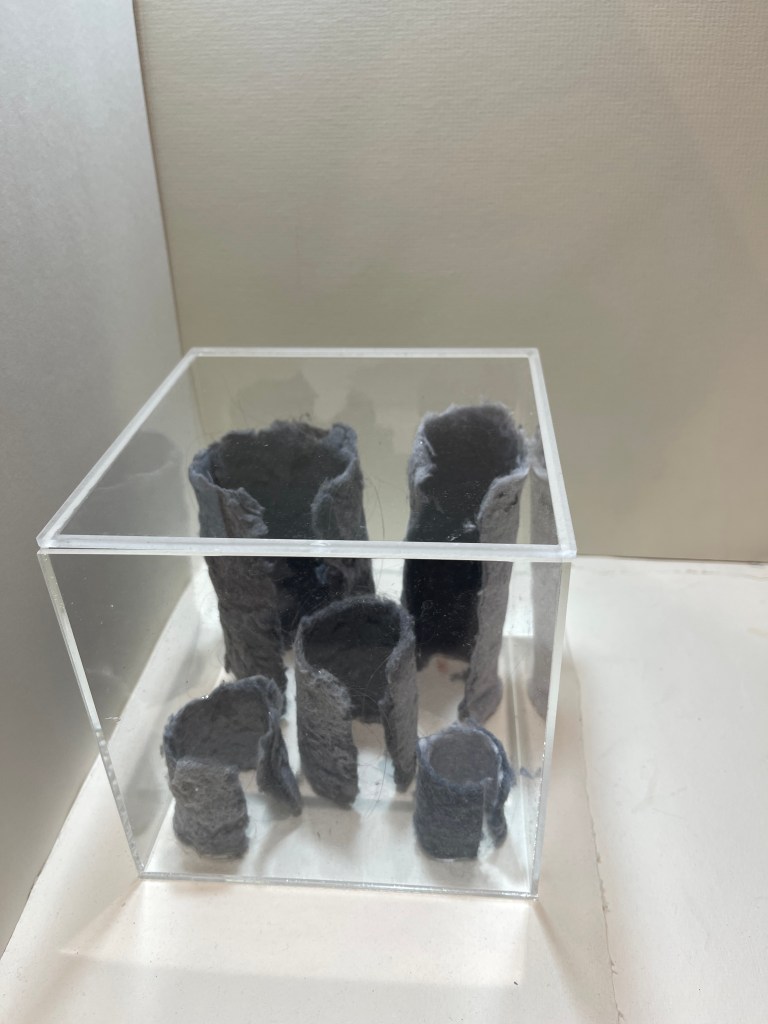
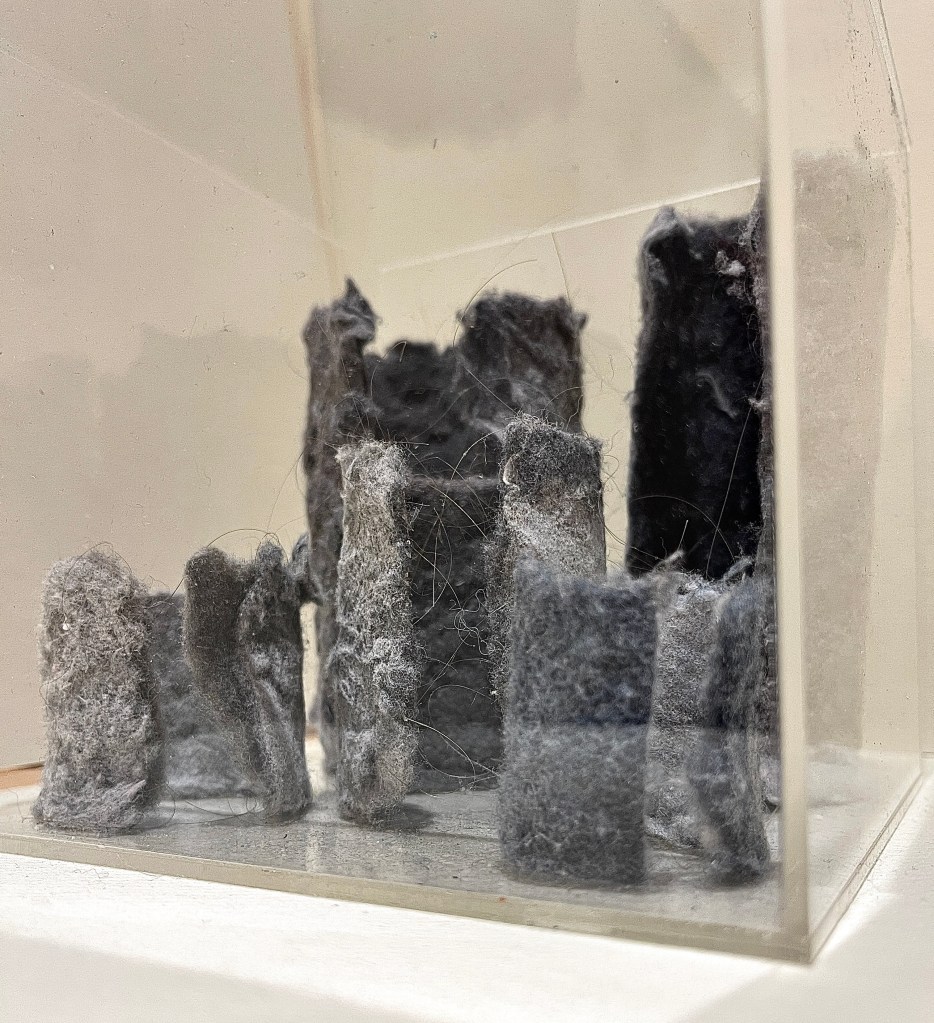
I acquired a perspex box for this purpose:
Immediately the objects seemed safe, settled, protected and essentially elevated to a new level of interest. The box offering a more enquiring nature from the viewer. Was this the “home’ the group of objects needed?
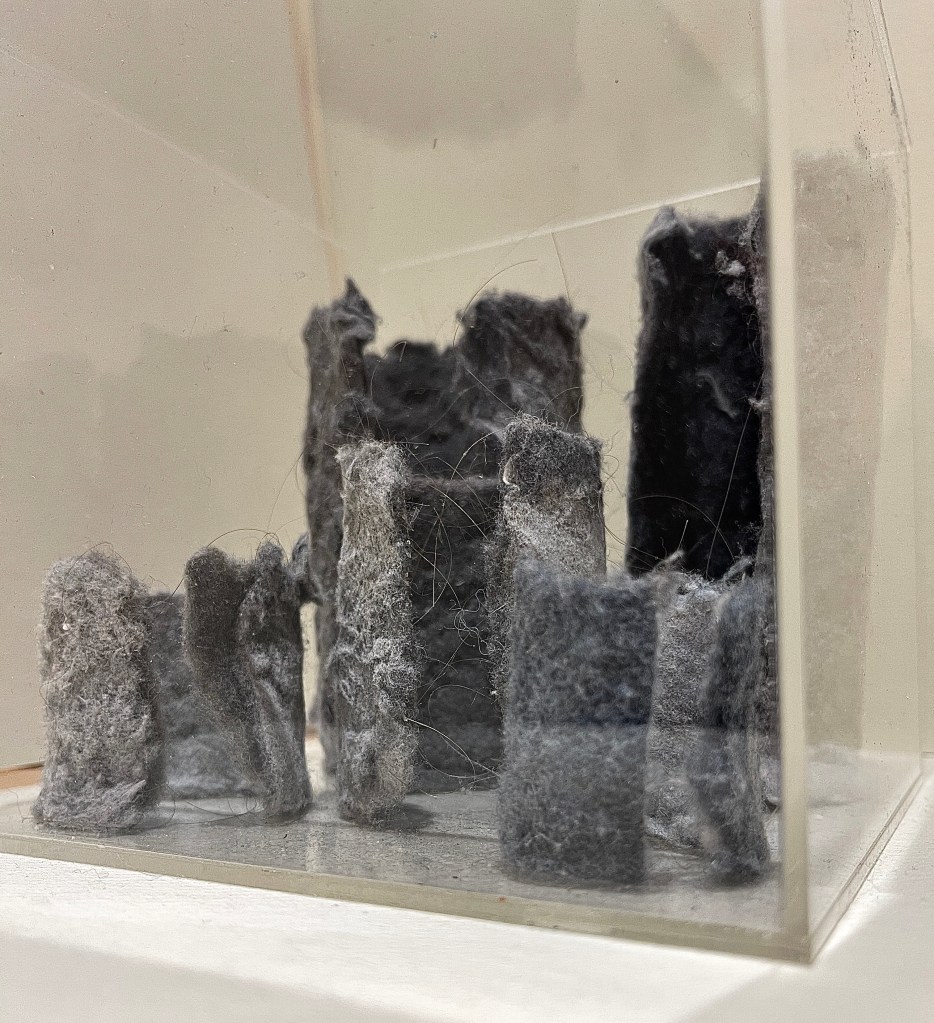
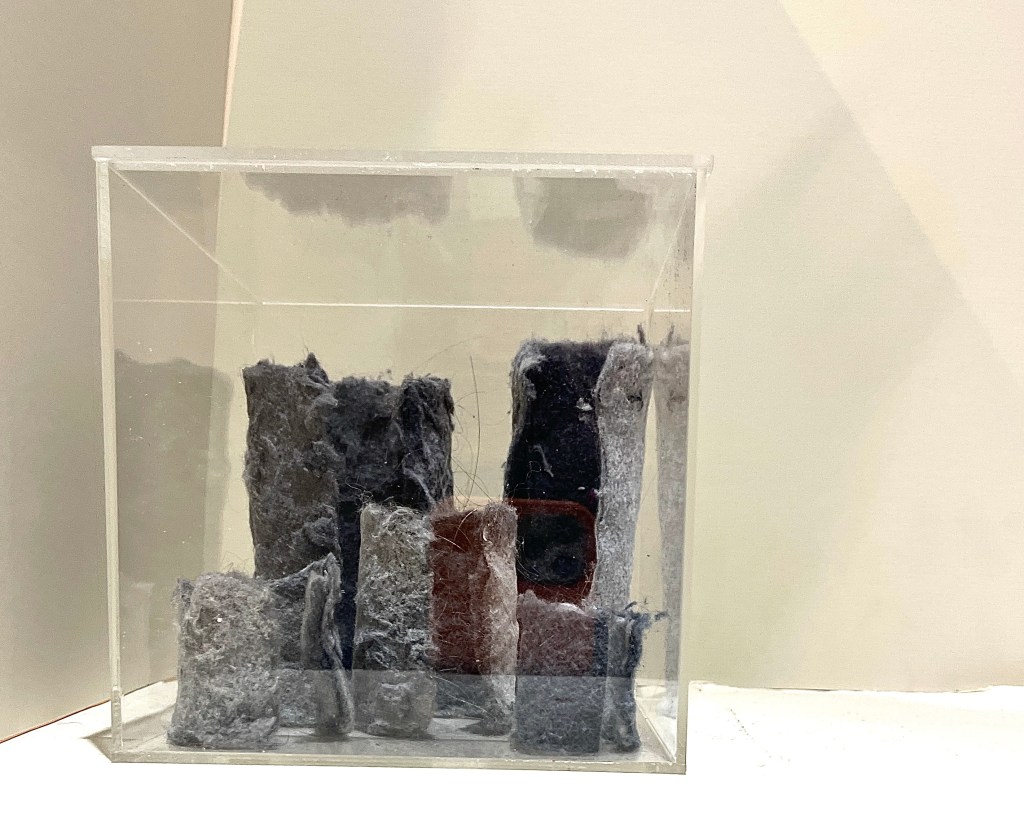
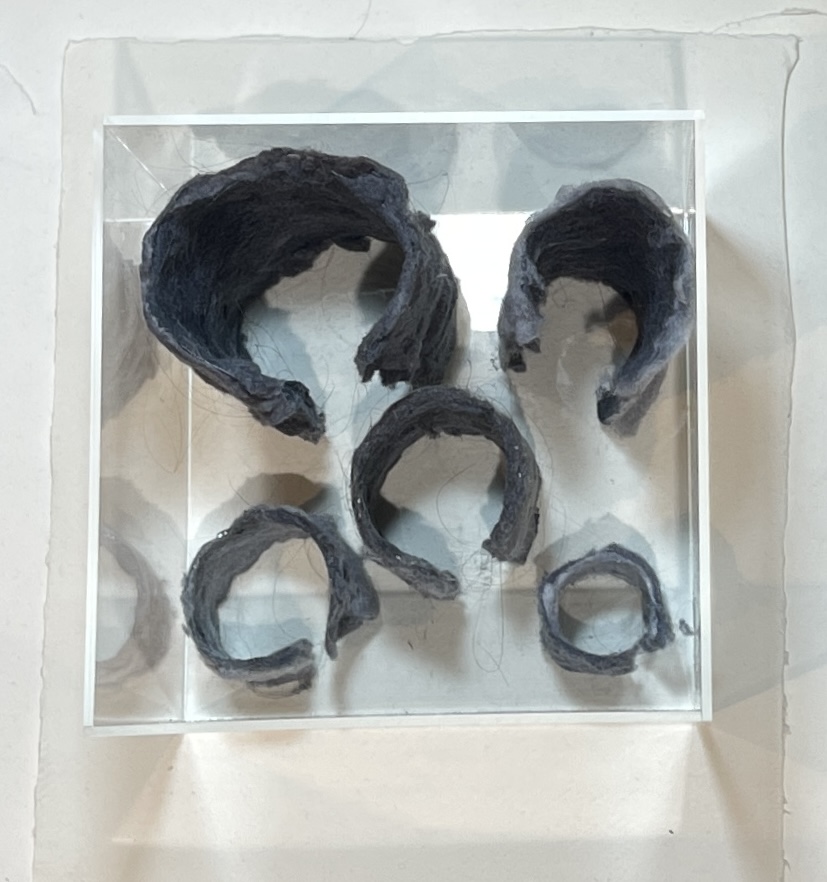
More curation of form and inclusion of the larger element :
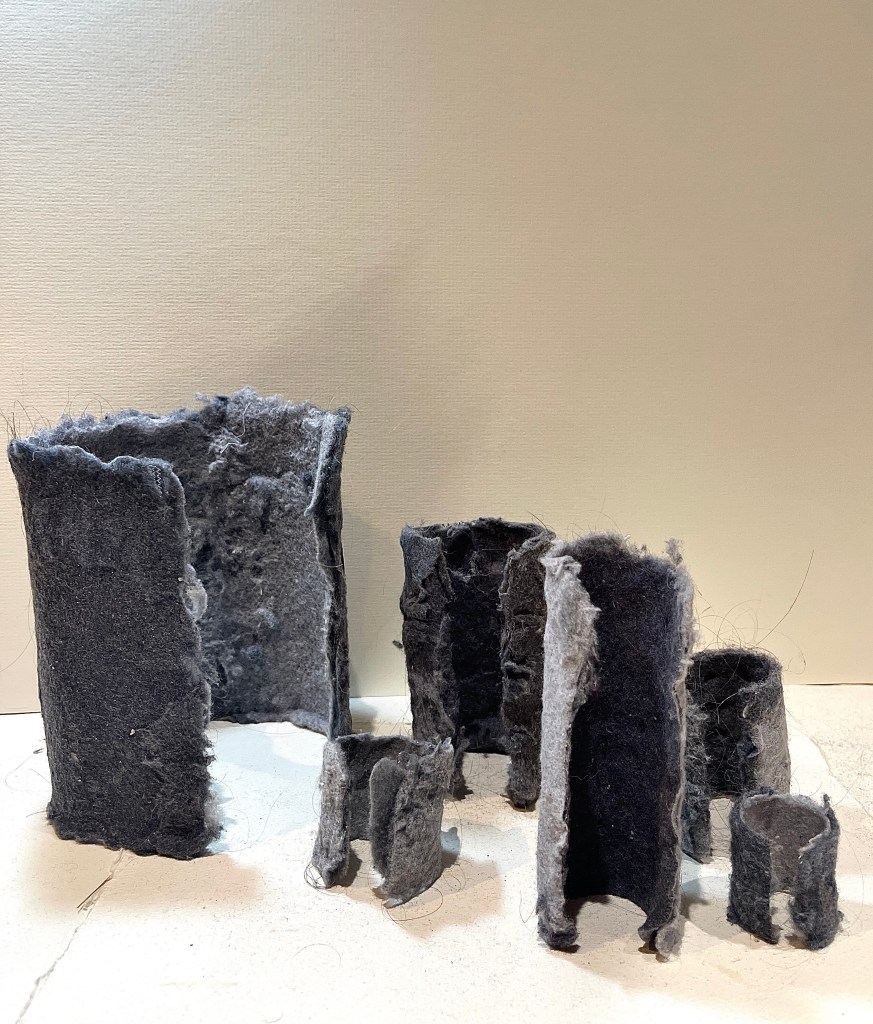
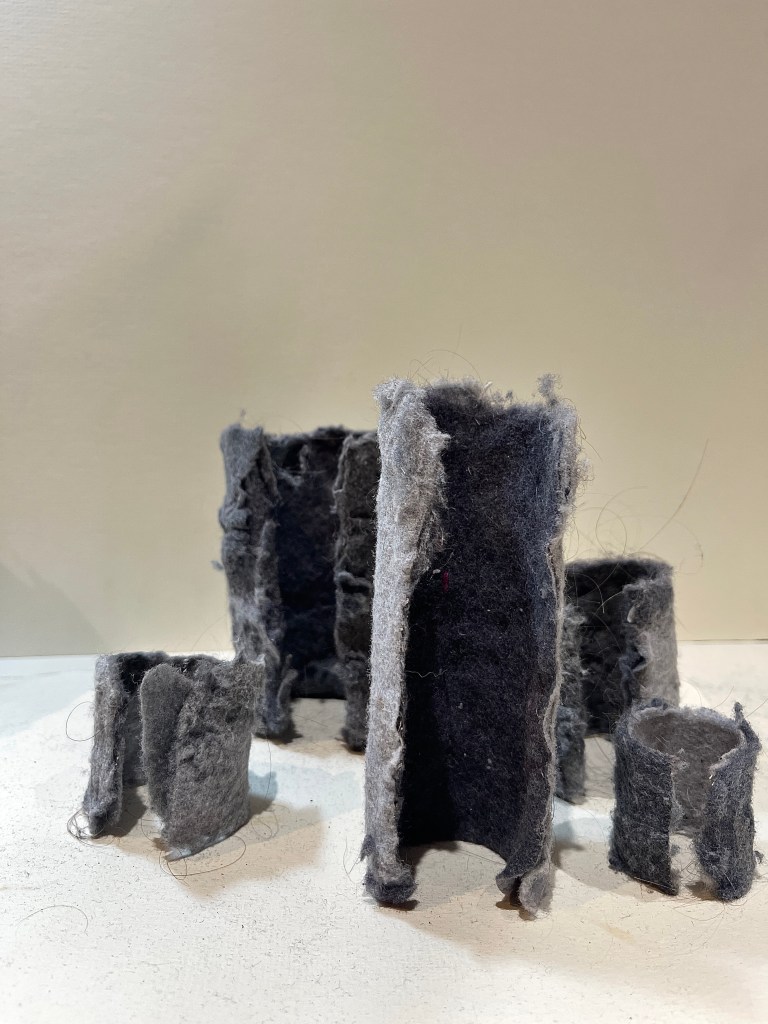
Enveloping the smaller forms into the larger one evoked a sense of protection and nurture.
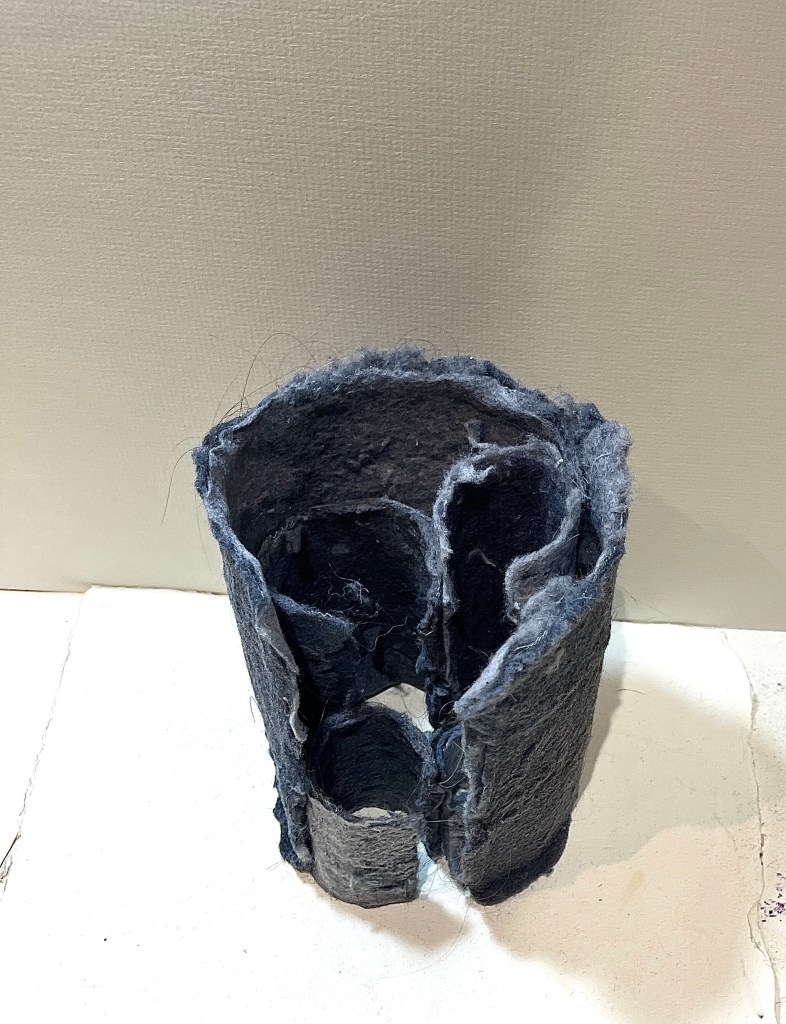
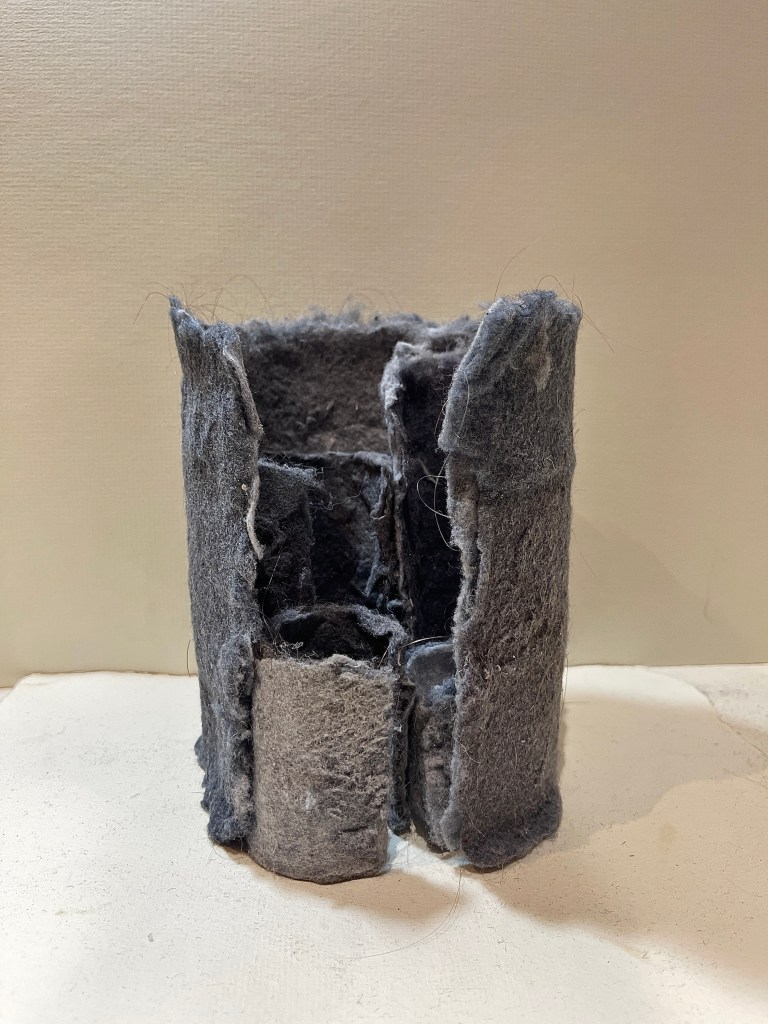
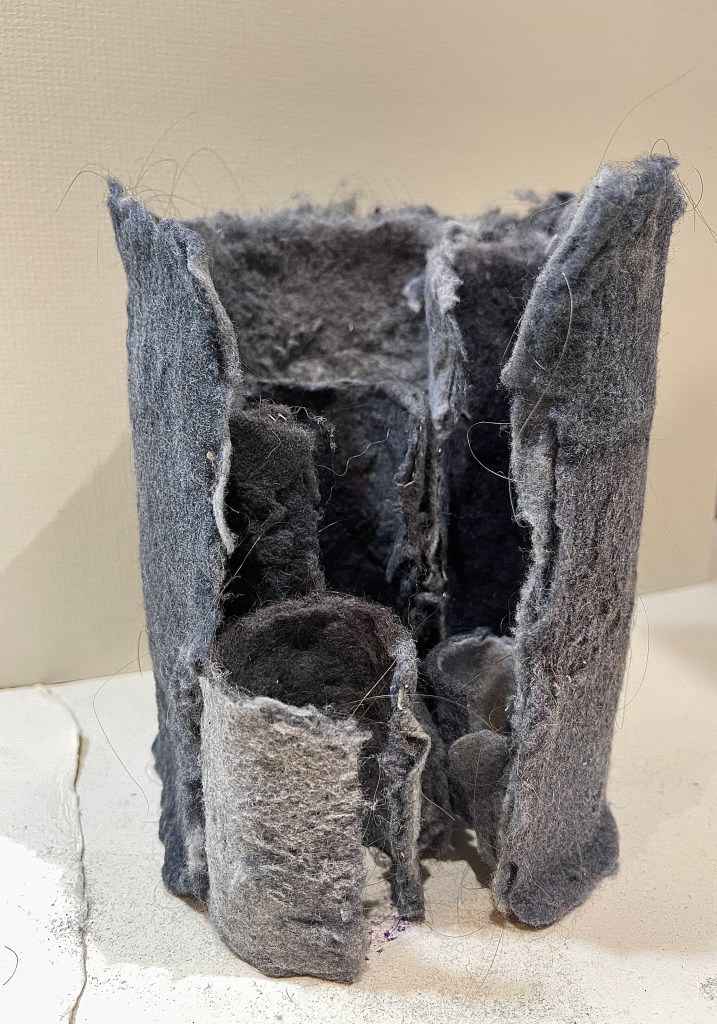
In conclusion :
The containment of the sculpture seemed the most appealing to me visually, however – a sense of security, protection and veneration is heightened by the vitrine like encasement. It does not show a strength of material theme however, its fragility, decomposing shredding nature is made all more apparent by this ‘need’ to enshrine.
The larger sculpture enveloping the smaller ones is more intricate and enquiring. There is a strong sense of protection, and the hidden, and the restrained concerning it. I believe it is this theme that strongly resonates with the narrative of the traditional male and female roles of ‘home maker’ and The ‘hunter gatherer and protector’. It also speaks of the internal working of machine and the domestic, the hidden body of toil and work associated with the domestic.
The work is not be be viewed altogether a negative context and interpretation can be seen on varied levels of family, love, protection, the home and also the darker side of female repression, gender stereotypes and fragility of the human condition. The rich material and its malleability has been rewarding and explorative. Constructing a sculptural piece and learning the importance of curation and placement within this. Influenced by the Fibre Arts movement emerging alongside the Feminist Art movement ( 1969) the work seems to hold a ‘femaleness’ of material and narrative.
 The Sharpe Gallery